
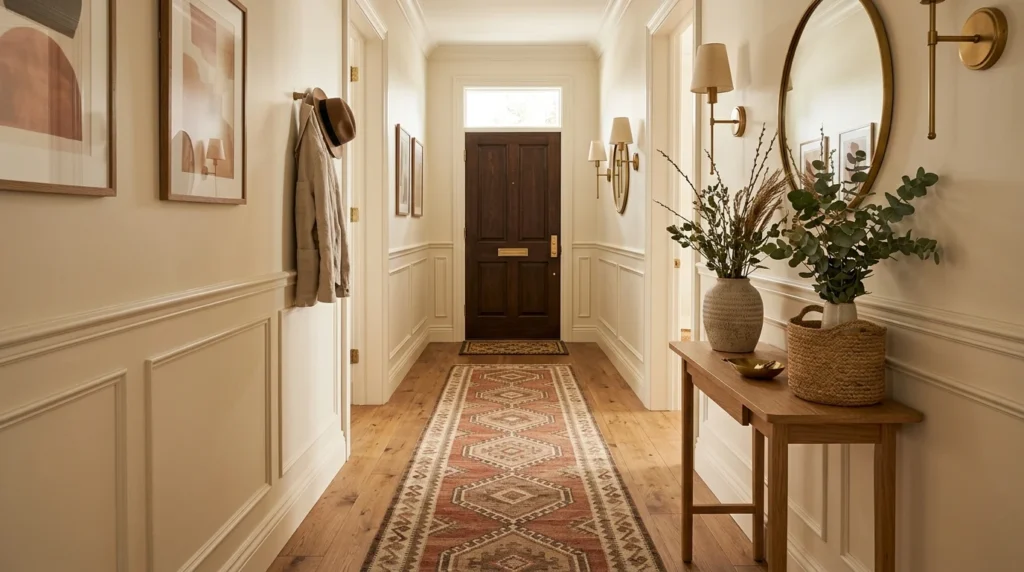
My entryway is a narrow strip of hardwood floor between my front door and the rest of the house, the kind of transitional space that’s easy to overlook entirely since nobody actually spends time lingering there, they just pass through on their way somewhere else. For years, that meant bare floor, scuffed and increasingly dull-looking from constant foot traffic, shoe scrapes, and the occasional muddy paw print. It wasn’t until I finally added a proper runner rug, mostly out of practical frustration with how quickly my floor’s finish was wearing down in that one heavily trafficked strip, that I realized how much that single addition also changed the entire first impression of walking into my home.
If your own entryway has been living with that same bare, overlooked floor, here are 19 ideas, each explained in detail, based on what I ultimately chose for my own narrow entry and what I’ve observed working well in other entryways since.
1. Choose a Durable, Low-Pile Material
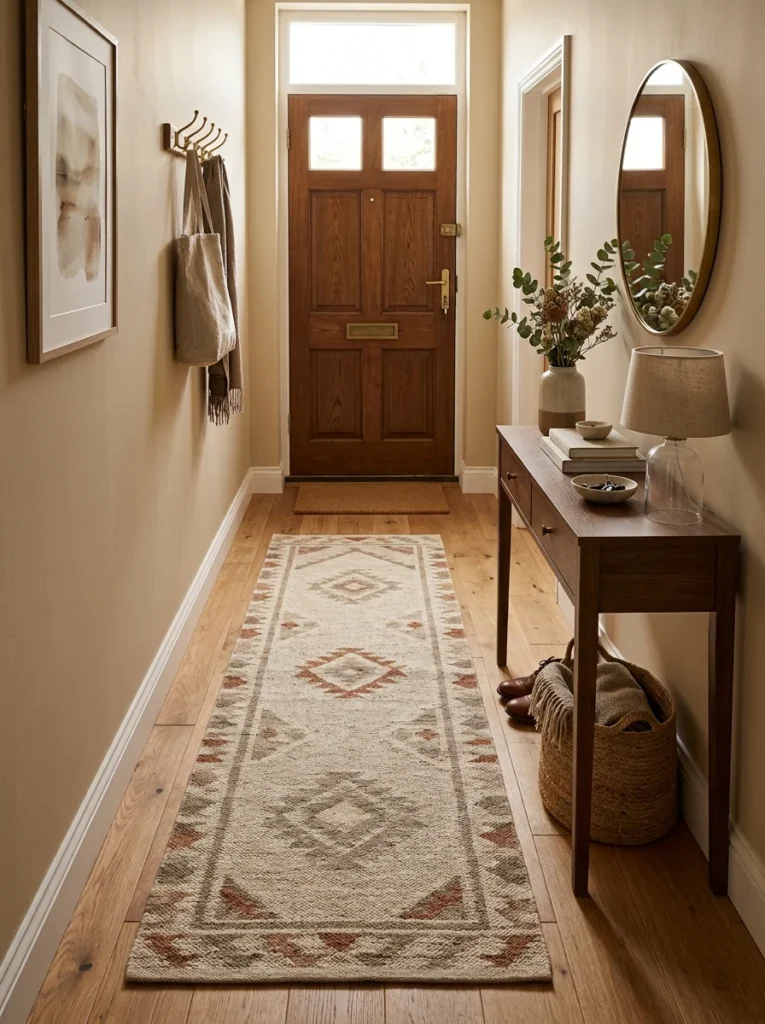
Given how much direct foot traffic an entryway runner handles daily, choosing a genuinely durable, low-pile material, flat-woven wool, a tightly woven synthetic blend, or a durable natural fiber, matters more here than in almost any other room of the house, where a plusher, higher-pile rug might reasonably prioritize comfort over sheer wear resistance. I chose a flat-woven wool runner specifically for this durability reason, and years of daily use, muddy boots, wet umbrellas, the occasional dropped grocery bag, have left it looking remarkably resilient compared to how a plusher rug would likely have fared under that same consistent wear. Low-pile rugs also tend to trap less dirt and debris within the actual fibers compared to a higher, plusher pile, making regular cleaning and vacuuming considerably more effective at actually removing the dirt an entryway rug inevitably accumulates from daily use. I’d recommend prioritizing this durability consideration above almost any other factor when shopping for your own entryway runner, since even the most beautiful pattern or color choice becomes disappointing relatively quickly if the underlying material can’t genuinely handle your household’s actual daily foot traffic.
2. Choose a Pattern That Hides Dirt Between Cleanings
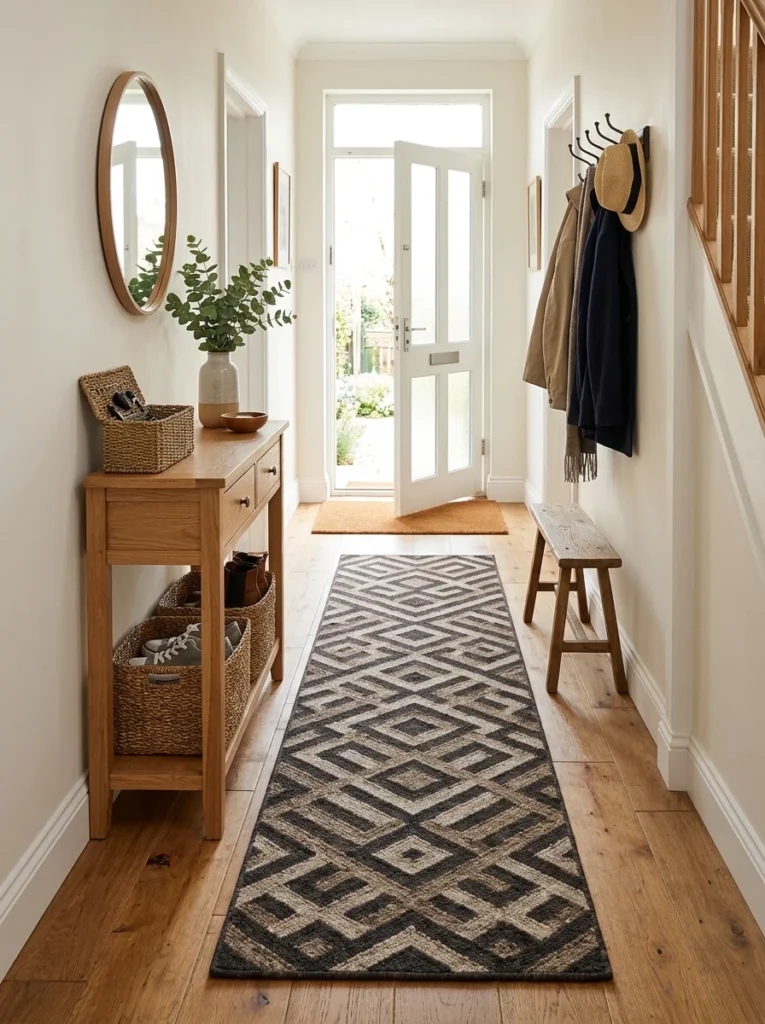
Beyond material durability, choosing a runner with a busier pattern or a darker, more variegated color palette genuinely helps disguise the everyday dirt and debris that inevitably accumulates in an entryway between regular cleanings, compared to a solid, light-colored rug that shows every speck of tracked-in dirt almost immediately after it’s cleaned. I chose a subtle geometric pattern in mixed earth tones specifically for this practical reason, and the variegated coloring genuinely does a better job of visually camouflaging daily wear and tear compared to a plainer, more solid-colored alternative I’d initially been considering. This is a particularly important practical consideration specifically for an entryway, more so than almost any other room, given how directly and immediately this space bears the brunt of whatever people are tracking in from outside on a daily basis. I’d recommend leaning toward pattern and color variation over a solid, pale color choice specifically for this application, even if your personal aesthetic preference generally favors simpler, more solid colors elsewhere throughout the rest of your home’s design.
3. Measure Carefully for a Proper Fit
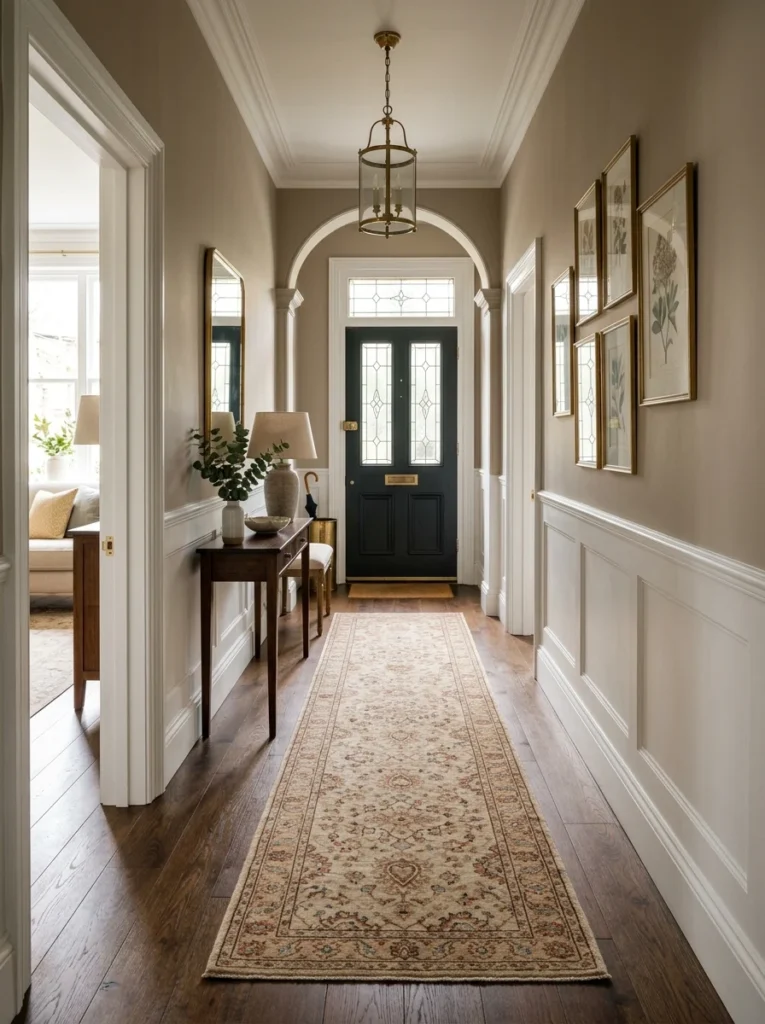
Getting your runner’s length and width correctly proportioned to your specific entryway’s dimensions matters considerably for how intentional and finished the final result looks, since a runner that’s noticeably too short leaves an awkward gap of bare floor at either end, while one that’s too long requires unsightly folding or trimming to actually fit the available space properly. I measured my own narrow entry hallway carefully before ordering, accounting for a small margin of visible floor on either side of the runner rather than having it stretch completely wall to wall, which is generally the more visually pleasing proportion for this specific application. I’d recommend leaving roughly four to six inches of visible floor on each side of your runner as a general guideline, adjusting based on your specific hallway’s overall width, and measuring the total length needed to extend a comfortable distance into the space without either falling awkwardly short of a natural stopping point or extending too far and creating a tripping hazard near a turn or doorway. This precise measurement matters more in an entryway specifically than it might in some other rooms, since this narrow, linear space leaves considerably less room for a slightly mismatched rug size to visually disappear or go unnoticed the way it might in a larger, more open room.
4. Layer a Smaller Accent Rug at the Door
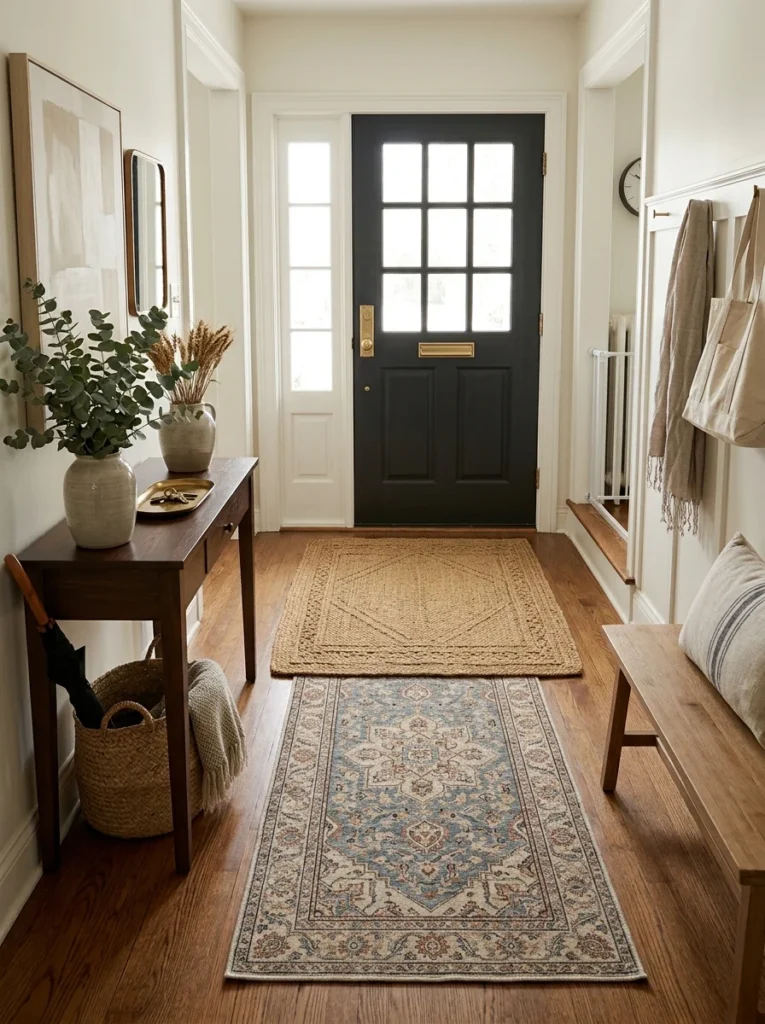
Rather than relying on your runner alone to handle the heaviest wear right at your actual front door, adding a smaller, more heavily durable accent rug or doormat specifically at that entry point, layered just inside or overlapping slightly with the start of your longer runner, provides an additional layer of protection precisely where the most direct dirt, moisture, and wear actually occurs. I added a simple, sturdy coir mat directly inside my door, positioned just before my main runner begins, and that additional layer has genuinely extended my more delicate runner’s lifespan by catching the heaviest initial dirt and moisture before it ever reaches the primary rug further down the hallway. This two-layer approach also creates a natural, functional transition zone, signaling where to actually stop and remove shoes or wipe feet before continuing further into the home, which I’ve found genuinely helps reinforce that household habit more effectively than a single continuous runner without any clear transitional marker. I’d recommend choosing your entry mat specifically for maximum durability and moisture absorption, prioritizing function over aesthetics for this particular piece, while allowing your main runner further down the hallway to carry more of the room’s actual decorative visual interest.
5. Coordinate Colors With Adjacent Rooms
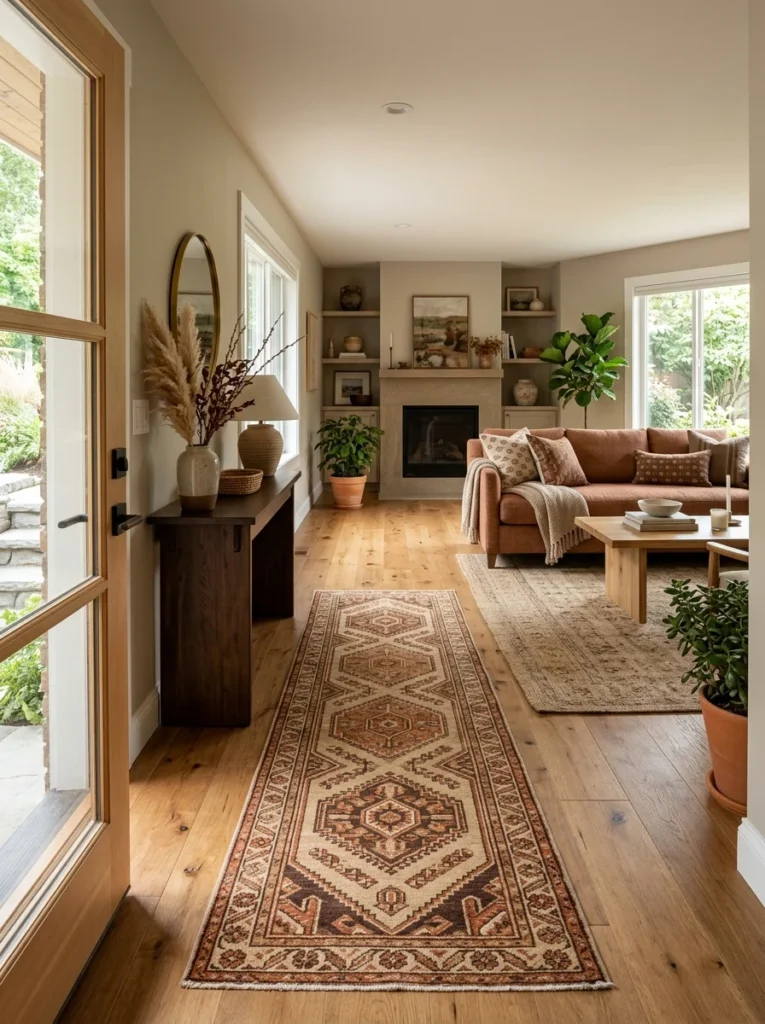
Since an entryway typically connects directly to several other rooms, a living room, a hallway leading to bedrooms, sometimes a kitchen, choosing a runner color palette that reasonably coordinates with what’s visible from those adjacent spaces creates a more cohesive overall flow throughout your home rather than an entryway that feels visually disconnected from everything surrounding it. My runner’s warm earth tones pull directly from my living room’s existing color palette, visible just beyond the entryway, creating a natural visual transition rather than an abrupt color shift the moment you step through the front door. I’d recommend standing at your front door and genuinely observing what’s visible from that specific vantage point, noting the colors and materials already present in whatever adjacent rooms are visible from that entry sightline, before finalizing your runner choice, since this broader context matters more for an entryway specifically than it might for a more enclosed, self-contained room elsewhere in your home. This doesn’t require an exact color match, but a general tonal relationship between your entryway runner and whatever’s visible beyond it genuinely improves how cohesive your entire home feels as guests move from room to room during an actual visit.
6. Choose a Vintage or Antique-Style Runner for Character
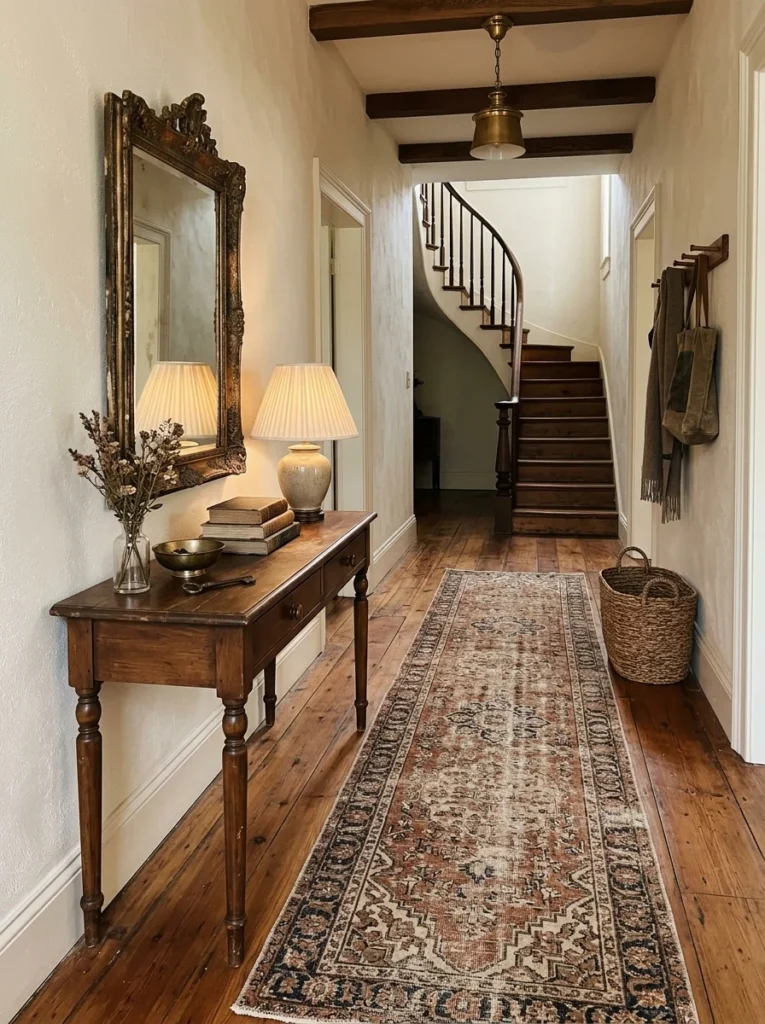
Rather than a new, uniformly manufactured runner, a genuinely vintage or antique-style rug, whether an actual antique find or a new rug intentionally designed with that same worn, faded, collected quality, brings character and history to an entryway in a way that a perfectly uniform, obviously new rug simply can’t replicate regardless of its pattern or color choice. A friend found a genuinely vintage Persian-style runner at an estate sale for her own entryway, and the slightly faded, well-worn quality immediately gives her entry a sense of established, collected history that a brand-new rug, however beautiful, typically takes considerably longer to develop through its own actual years of use and wear. New rugs specifically designed to mimic this vintage, distressed aesthetic have also become considerably more available and affordable in recent years, offering a similar visual effect without requiring the sometimes lengthy search process involved in sourcing a genuine antique piece in good enough condition for regular daily use. I’d recommend this specifically for entryways in older homes or those with an established traditional or eclectic design direction throughout the rest of the house, since this vintage character tends to feel most cohesive when it’s reinforcing rather than contrasting against your home’s broader existing style.
7. Add Non-Slip Backing for Safety
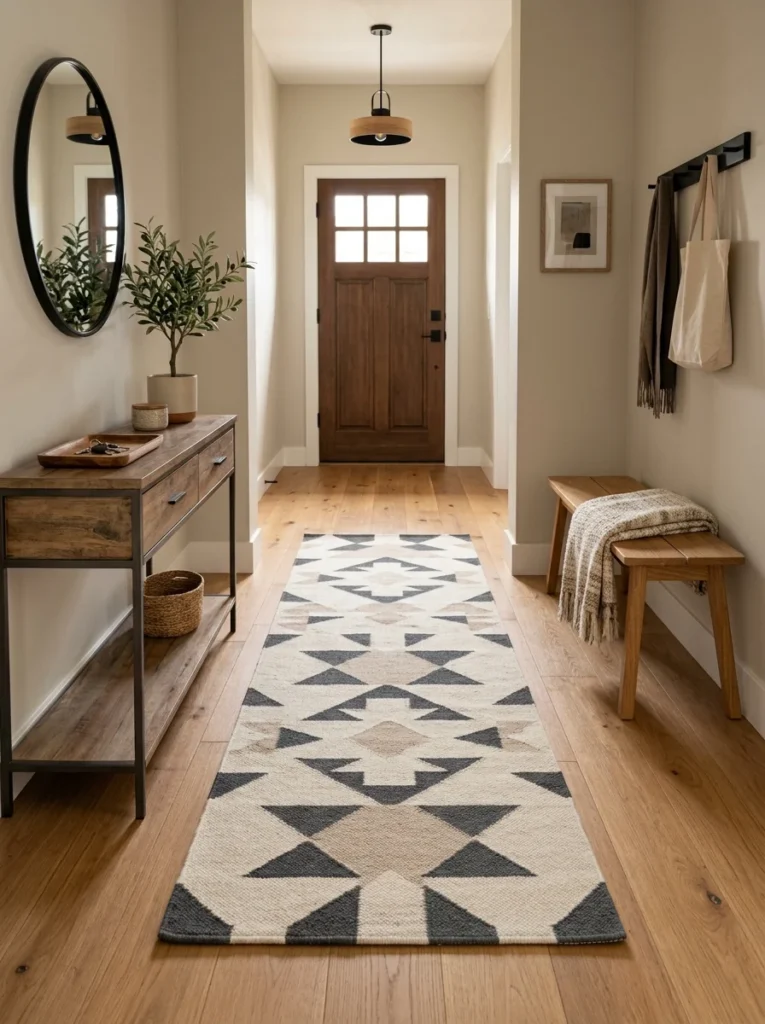
Given how frequently people move quickly through an entryway, often while carrying bags, wrangling kids, or juggling keys and a phone, ensuring your chosen runner includes proper non-slip backing, or adding a separate rug pad with non-slip properties beneath it, matters considerably for genuine household safety in a space where a sliding rug poses a real, meaningful fall risk. I learned this firsthand with my own first entryway runner attempt, a beautiful rug that unfortunately slid alarmingly on my hardwood floor until I added a proper rug pad specifically designed to grip both the rug and the floor beneath it. This is a genuinely important practical consideration that’s easy to overlook when shopping primarily based on color and pattern, but I’d recommend treating non-slip backing as a genuine requirement rather than an optional nice-to-have for any entryway rug, given the specific safety stakes involved in this particular high-traffic, often hurried transitional space. Rug pads designed specifically for hard flooring, rather than a generic pad meant for carpet-on-carpet layering, provide the most reliable grip for this particular hardwood or tile application that most entryways actually involve.
8. Choose a Bold Pattern to Make a First Impression
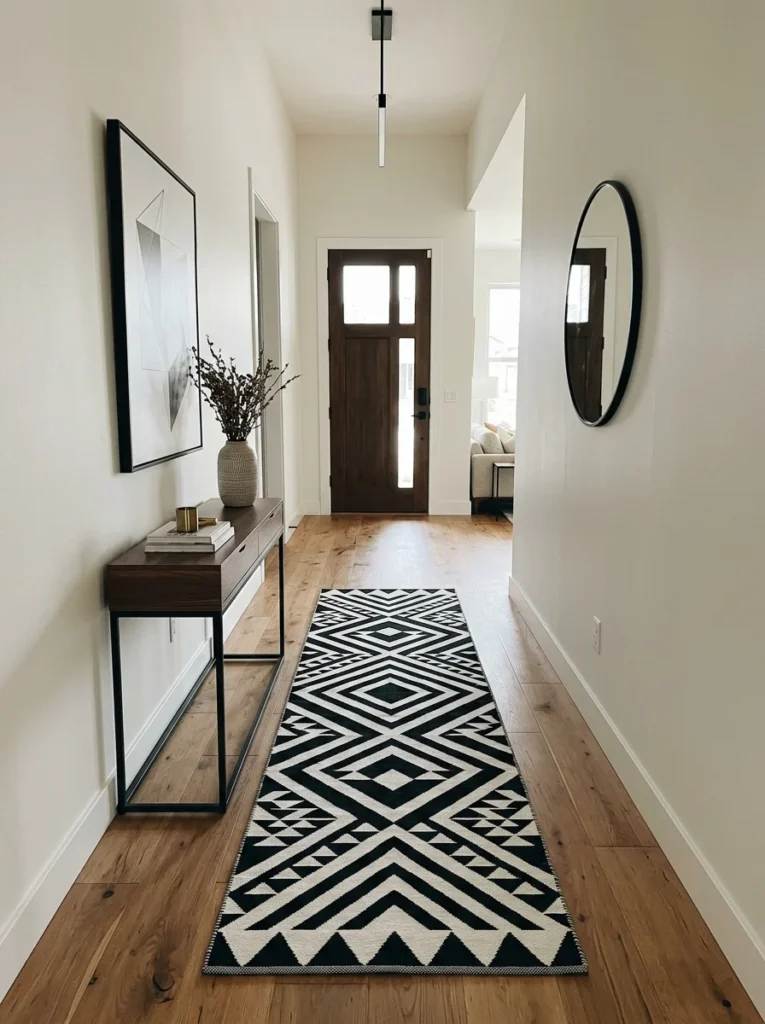
Since your entryway is genuinely the first interior space guests experience upon entering your home, choosing a bold, distinctive runner pattern creates a memorable, confident first impression that sets the tone for how the rest of your home’s design will be perceived and experienced. I’ve seen this done particularly well in a friend’s entryway using a striking geometric black and white pattern, and that bold choice genuinely makes an immediate, positive impression the moment guests step through her front door, before they’ve even had a chance to see any other room in her home. This is a particularly good opportunity specifically to experiment with boldness that you might hesitate to commit to in a larger, more prominently used room, since an entryway runner represents a relatively contained, lower financial risk compared to, for example, a similarly bold choice throughout an entire living room’s flooring. I’d recommend choosing your boldest pattern specifically for this application if you’re genuinely drawn to that direction, treating your entryway as the ideal, lower-stakes testing ground for a design choice you might not be ready to commit to at a larger scale elsewhere in your home.
9. Use a Simple Neutral for a Calming Transition
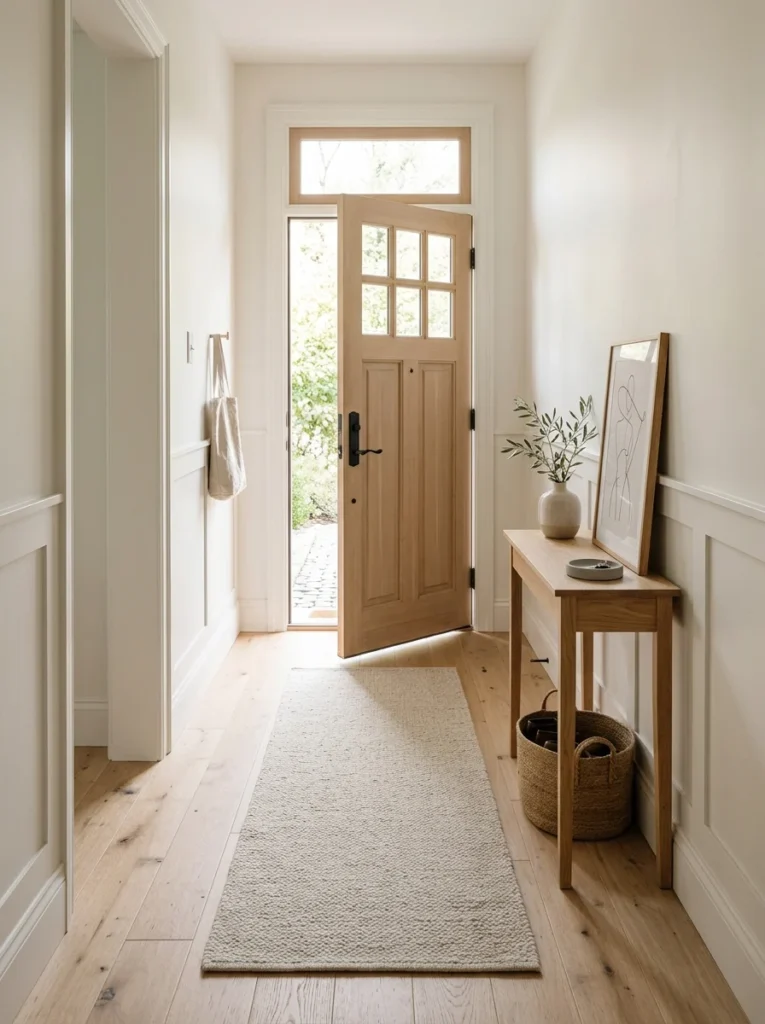
Rather than a bold, attention-grabbing pattern, some entryways benefit from the opposite approach entirely, a genuinely simple, calming neutral runner that creates a peaceful, uncluttered transition specifically for households wanting their entry to feel like a quiet decompression zone rather than an immediately busy, visually stimulating first impression. A friend chose a simple, solid oatmeal-toned runner for her own entryway specifically for this calming effect, appreciating how the understated choice lets the actual architectural details of her entry, a beautiful original front door, simple wainscoting, remain the space’s genuine visual focus rather than competing with a busier rug pattern for attention. This approach works particularly well in entryways with genuinely interesting existing architectural features worth highlighting, or for households specifically prioritizing a calm, serene home environment from the very moment anyone steps through the door. I’d recommend this specifically if your personal preference genuinely leans toward understated, minimal design throughout the rest of your home, since a bold entryway choice can feel visually disconnected from a broader neutral, minimalist aesthetic established everywhere else within the same house.
10. Layer a Runner Over Existing Flooring You’re Not Ready to Replace
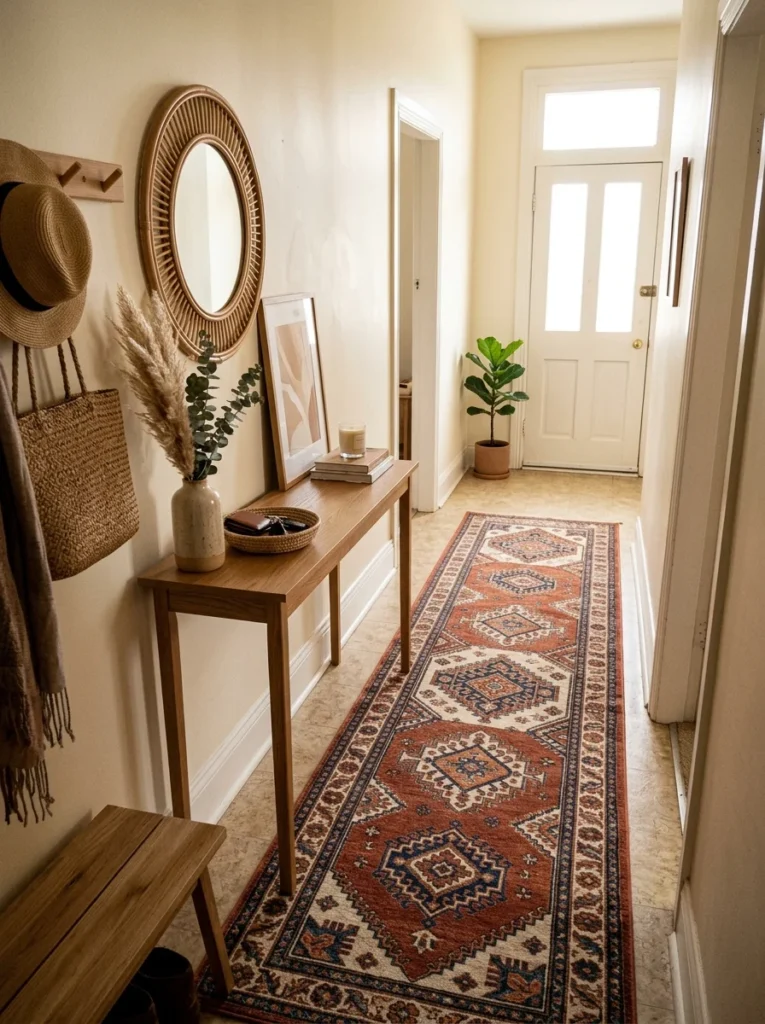
For anyone dealing with an entryway floor they’re not currently happy with but not ready to fully renovate or replace, a well-chosen runner can meaningfully improve the space’s overall appearance while covering and protecting whatever existing flooring lies beneath it, buying time before a larger, more involved flooring project eventually becomes feasible. A friend in a rental specifically used this strategy, covering dated linoleum flooring in her entryway with a beautiful runner that essentially transformed the visible portion of that space while leaving the underlying floor completely untouched and easily restorable to its original state when she eventually moves out. This is a particularly practical strategy for renters specifically, since a rug represents an entirely reversible, deposit-safe way to meaningfully improve an entryway’s appearance without any permanent alteration to the actual underlying flooring your landlord ultimately owns and controls. I’d recommend this specifically as a genuinely effective interim solution for anyone in this exact situation, whether renting or simply not yet ready for a full flooring renovation, rather than assuming a rug can only ever be a purely decorative addition layered on top of flooring you’re already otherwise happy with.
11. Choose a Washable Runner for High-Traffic Households
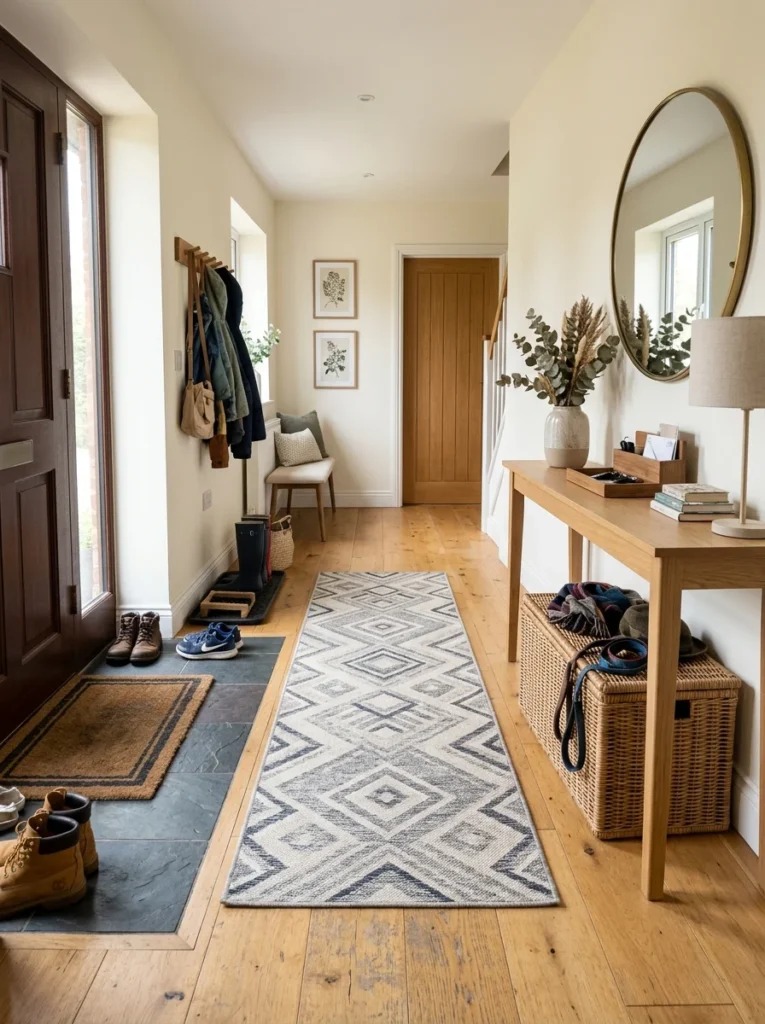
For households with young children, multiple pets, or simply particularly heavy daily foot traffic through the entryway, choosing a genuinely machine-washable or at minimum easily spot-cleanable runner material addresses the practical maintenance demands this specific room places on its flooring more directly than a rug requiring professional cleaning or careful, delicate spot treatment. A friend with three young kids and two dogs specifically sought out a washable runner for her chaotic, high-traffic entryway, and being able to simply toss the entire rug into her washing machine periodically has made maintaining that heavily used space considerably more manageable than her previous rug, which required professional cleaning whenever it developed a stain beyond what basic spot cleaning could address. This washable rug category has expanded considerably in recent years, now offering genuinely attractive patterns and colors rather than the more limited, purely utilitarian options that were previously available under this specific category. I’d recommend this specifically for any household dealing with young kids, pets, or simply a lot of daily foot traffic through their entryway, prioritizing this practical washability consideration over some of the more delicate, natural fiber options elsewhere on this list that genuinely require more careful, gentler maintenance.
12. Add a Runner That Continues Up the Stairs
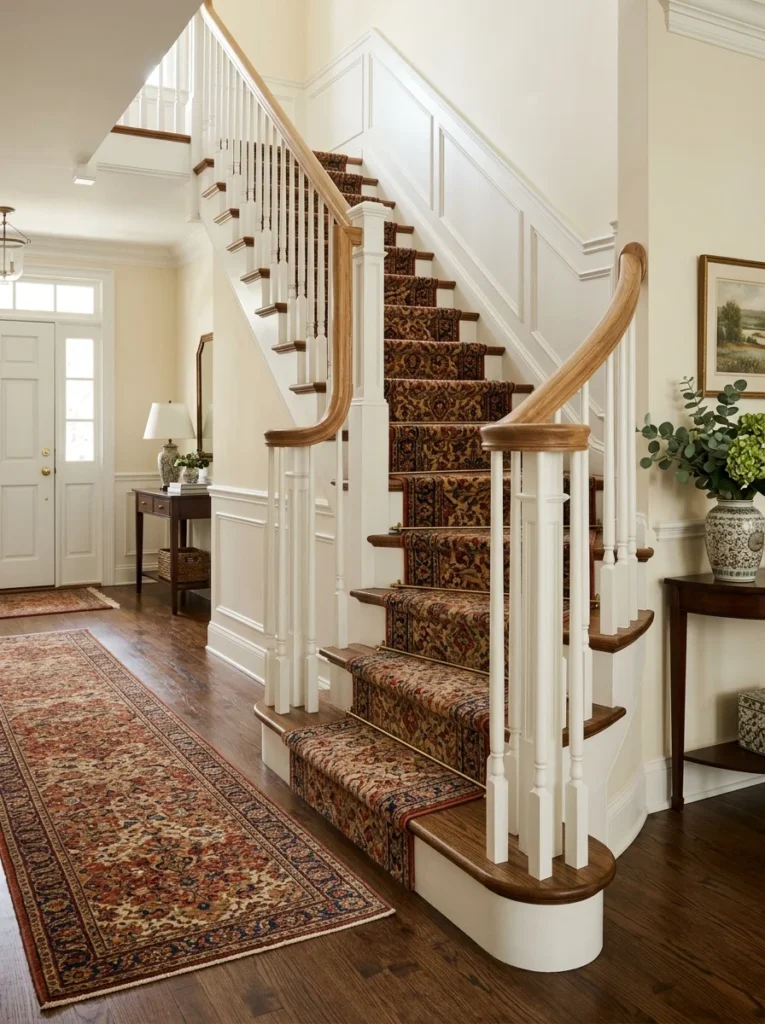
If your entryway connects directly to a staircase, choosing a coordinating or matching runner that continues from your entry floor up the stairs themselves creates a genuinely seamless, considered flow between these two connected spaces rather than treating the entryway floor and the staircase as two entirely separate, unrelated design decisions. A friend did exactly this in her own home, choosing a single coordinated pattern that flows from her entryway runner directly onto her staircase, and the visual continuity genuinely makes that entire connected space feel like one cohesive design statement rather than two separate rugs that simply happen to be positioned near each other. This requires more careful planning and typically a larger overall rug or runner purchase, or coordinating two separately sized but visually matched pieces, compared to addressing your entryway floor in complete isolation from any connected staircase. I’d recommend this specifically if your entryway does directly connect to a staircase within the same general sightline, since the visual impact of this coordinated continuity is considerably more noticeable and worthwhile in that specific architectural configuration than it would be in an entryway without any adjacent staircase to actually continue the runner onto.
13. Choose Jute or Sisal for a Natural, Textural Look
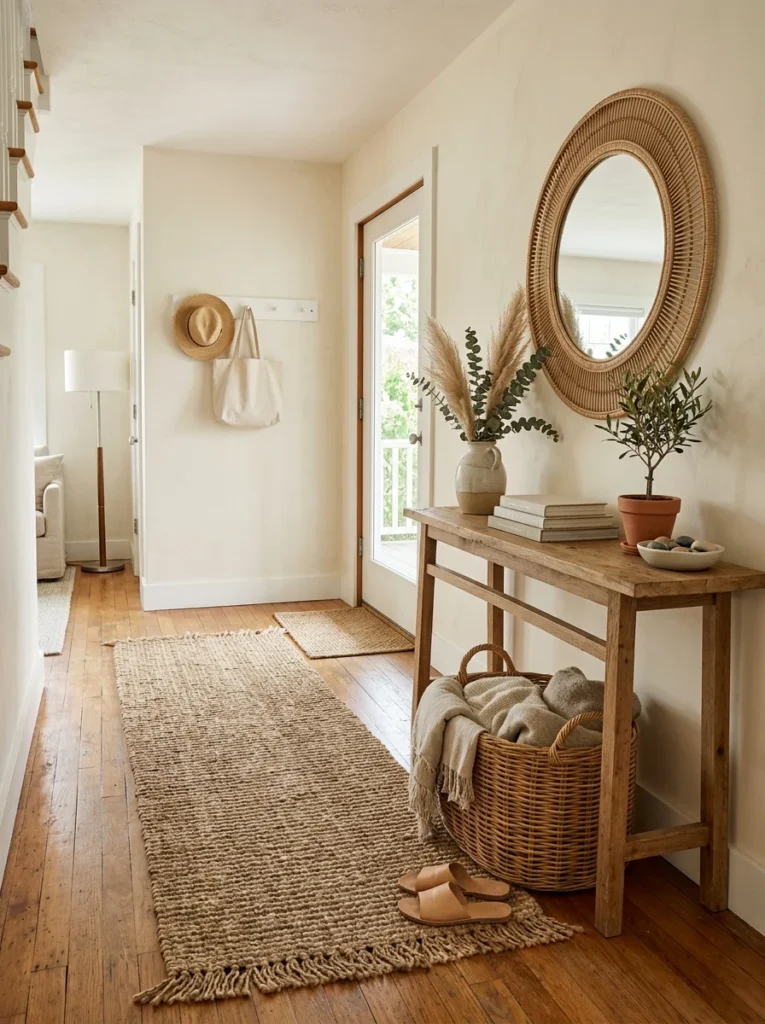
For entryways wanting a more organic, natural fiber texture rather than a traditional woven wool or synthetic pattern, jute or sisal runners bring genuine earthy texture and warmth, working particularly well in entryways with a coastal, farmhouse, or generally more relaxed, natural design direction throughout the rest of the home. A friend chose a simple sisal runner for her entryway specifically for this textural quality, appreciating how the natural fiber’s slightly rough, organic texture contrasts nicely against her home’s polished hardwood floors while reinforcing the more relaxed, natural aesthetic established throughout her broader home design. Natural fiber runners do tend to be somewhat less forgiving of moisture exposure compared to synthetic alternatives, making them a better fit for entryways in climates without frequent rain or snow tracked in regularly, or requiring more diligent immediate cleanup when moisture does occur to prevent potential staining or fiber damage over time. I’d recommend this specifically for households in drier climates or those willing to be somewhat more attentive about immediate moisture cleanup, while households in consistently wet or snowy climates might reasonably prioritize a more moisture-resistant synthetic alternative instead for this particular high-exposure application.
14. Use a Runner to Visually Widen a Narrow Hallway Entry
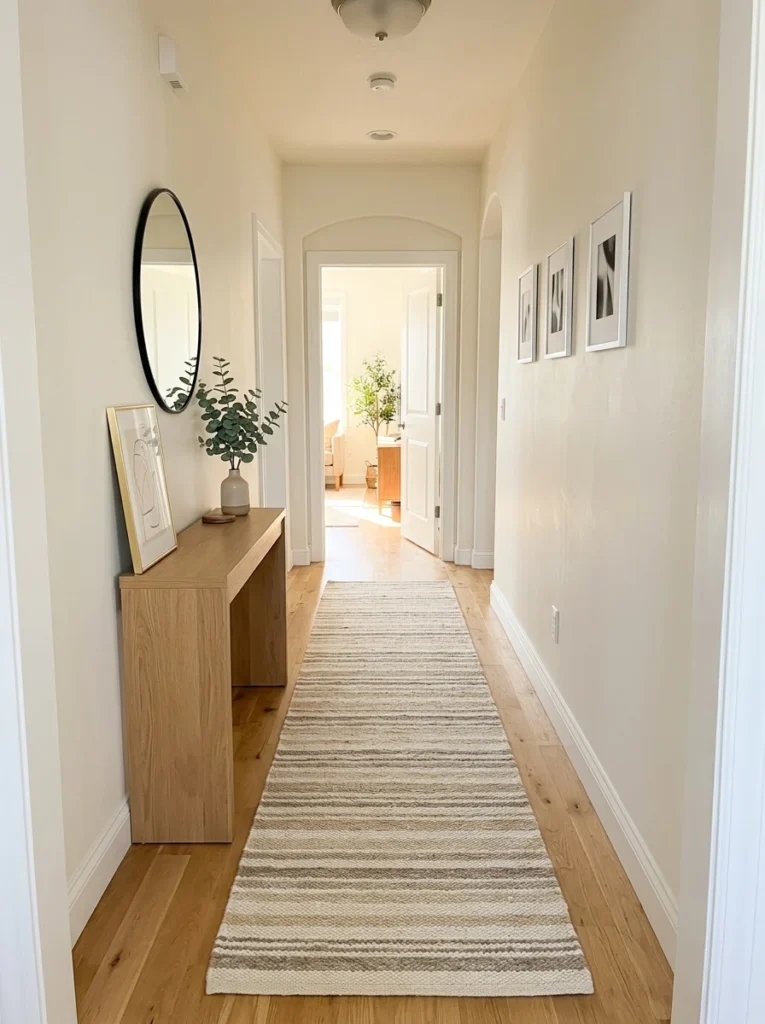
For genuinely narrow entryway hallways, choosing a runner with a pattern that includes some horizontal elements, subtle chevron shapes, horizontal stripes, or a pattern with a slightly wider visual rhythm, can help the space feel marginally wider than its actual physical dimensions, similar to how pattern orientation affects perceived proportions in other narrow spaces throughout a home. I considered this principle for my own narrow entry hallway, ultimately choosing a pattern with enough visual movement and horizontal rhythm that it doesn’t emphasize the hallway’s narrowness the way a strongly vertical stripe pattern might have instead. This is a more subtle effect compared to some of the other more dramatic ideas on this list, and I wouldn’t recommend basing your entire runner decision purely around this proportional consideration alone, but it’s worth factoring in as one additional consideration alongside your other priorities if you’re specifically dealing with a genuinely narrow entryway hallway. I’d recommend testing this principle with an actual rug sample or even just tape marking the intended runner’s boundaries on your floor beforehand, observing how different pattern orientations actually affect your specific hallway’s perceived width before committing to a final purchase.
15. Choose a Runner With Fringe for Traditional Character
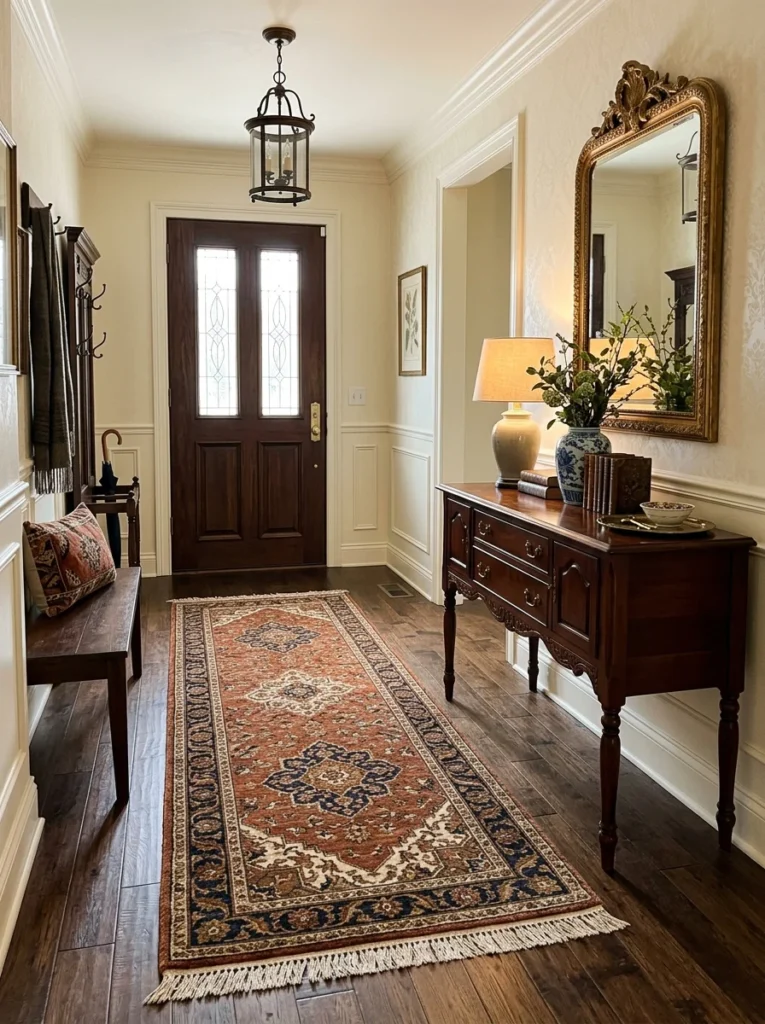
A runner featuring fringe along its short ends adds a traditional, slightly more formal quality reminiscent of classic Persian or Oriental rug design, working particularly well in entryways within homes leaning toward a more traditional, classic overall design aesthetic rather than a strictly modern, minimalist direction. A friend chose a fringed runner specifically for her more traditional entryway, and the fringe detail genuinely adds a level of formality and classic character that a plain, fringeless edge simply wouldn’t provide in that same traditional design context. Fringe does require slightly more maintenance attention than a plain edge, since it can fray, tangle, or catch on shoes and vacuum attachments if not occasionally straightened and cared for, a practical consideration worth weighing against the style’s aesthetic appeal for anyone specifically considering this option. I’d recommend this specifically for entryways within a broader traditional or classic home design direction, since fringe can feel somewhat mismatched or dated in a more strictly modern, minimalist entryway where a clean, fringeless edge would generally read as more visually appropriate and cohesive with that different overall aesthetic.
16. Add a Runner in a Bold Color to Complement a Neutral Front Door
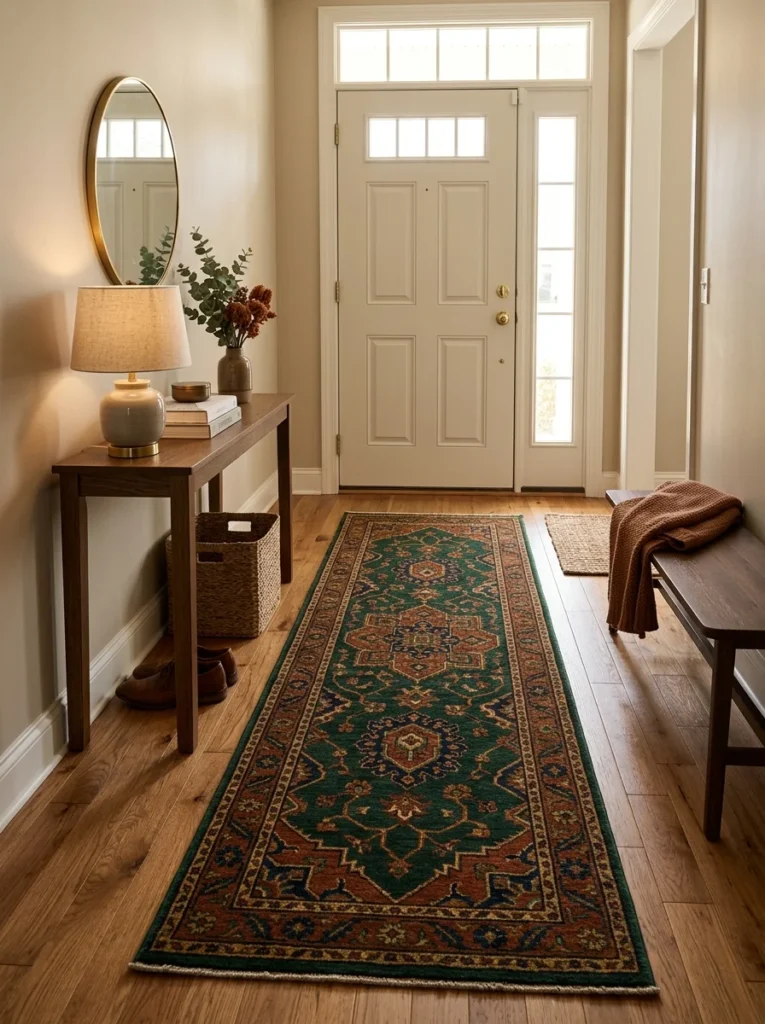
If your front door is painted a bold, statement color, choosing a runner that either coordinates with or intentionally contrasts against that door color creates a considered relationship between these two elements, both genuinely visible and prominent within that same entry sightline the moment someone approaches or enters your home. My own front door is a deep forest green, and my runner’s earth-toned pattern includes enough complementary warm tones that the two elements feel genuinely related rather than existing as two completely separate, unconnected color choices happening to occupy the same general entry area. I’d recommend considering your front door’s specific color, both from the exterior approach and from inside looking back toward it, when choosing your interior runner, since this relationship matters more for an entryway specifically than it might for interior design decisions elsewhere in your home that don’t have this same direct connection to your home’s actual exterior color choices. This consideration works in either direction, either choosing genuinely complementary, related tones or an intentional, confident contrast, but either way, thinking through this relationship rather than choosing your runner in complete isolation from your door color creates a more cohesive, considered overall entry experience.
17. Choose a Runner That Photographs Well for Real Estate Purposes
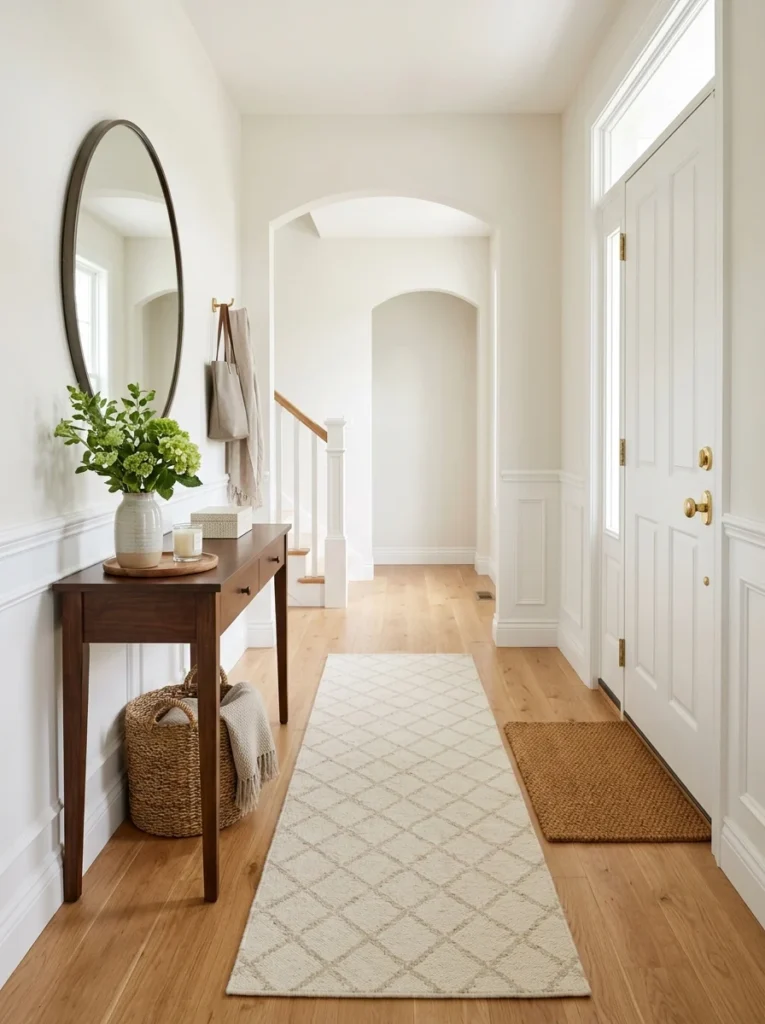
If you’re planning to sell your home in the foreseeable future, or simply want your entryway to photograph beautifully for any reason, choosing a runner with genuinely broad, timeless appeal, rather than an intensely personal or unusual color and pattern choice, ensures this particular first-impression space photographs and shows well to the widest possible range of potential buyers or visitors. A friend specifically chose a more neutral, broadly appealing runner for her entryway while preparing to eventually sell her home, reasoning that this particular high-visibility space, genuinely the first thing any potential buyer sees during a showing, warranted a more universally appealing choice compared to some of her more personal, bold color choices used elsewhere throughout rooms less central to that crucial first impression. This is a reasonable practical consideration to weigh specifically if resale is a genuine near-term concern, though it shouldn’t necessarily override your own genuine taste and preference if you’re planning to remain in your home for many years and simply want to enjoy the space fully during that time. I’d recommend discussing this specific consideration with a local real estate agent if resale timing genuinely factors into your current decision-making process for this particular high-visibility entry space.
18. Rotate Seasonally for a Fresh Entry
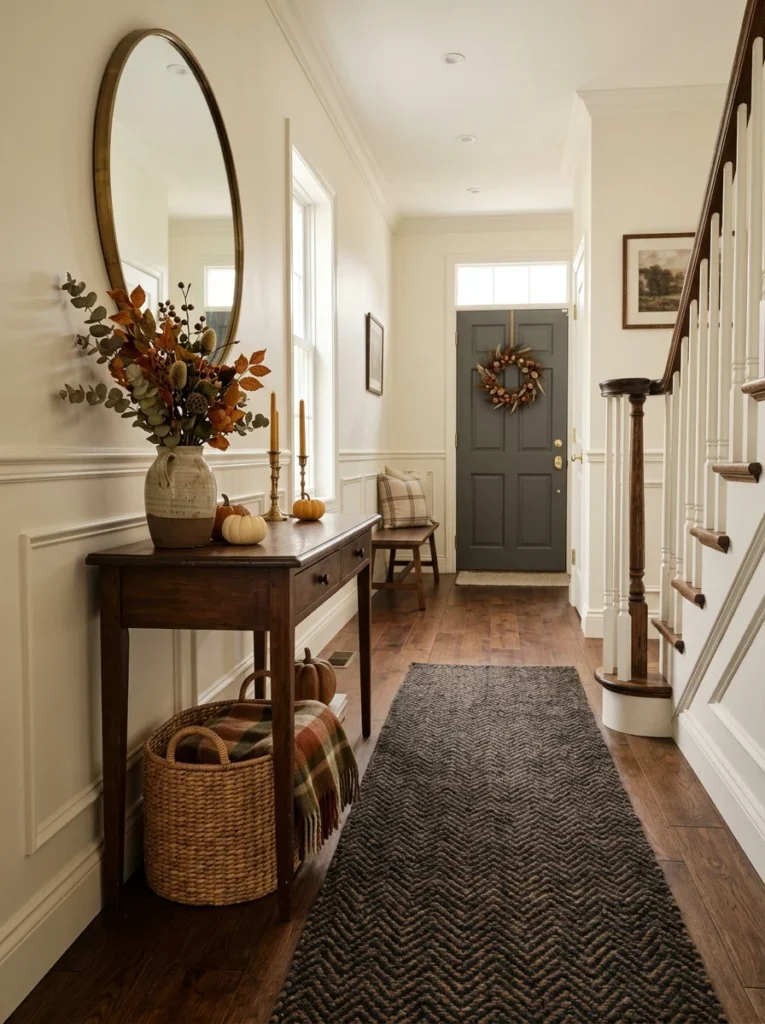
Rather than a single permanent runner used year-round, some households keep two coordinating runners in rotation, a heavier, more durable option for winter months when moisture and salt tracked in from outside pose the greatest wear concern, and a lighter, brighter option for spring and summer when those specific practical concerns matter less. A friend does exactly this, switching between a deep, dark-toned wool runner during colder months and a lighter, more breathable cotton runner during warmer seasons, and beyond the practical wear benefits, the seasonal swap genuinely keeps her entryway feeling fresh and connected to the current time of year rather than static and unchanging regardless of the season outside. This requires purchasing and storing two separate runners rather than committing to just one, representing a larger overall investment, but for anyone who genuinely enjoys this kind of seasonal home refresh and has adequate storage space for the off-season rug, it’s worth considering as an option beyond simply choosing one single runner meant to work equally well throughout every season of the year. I’d recommend this specifically for households in climates with genuinely distinct seasonal weather patterns, where the practical wear differences between winter and summer entryway conditions are significant enough to meaningfully justify this seasonal rotation approach.
19. Test Your Choice With a Paper Template Before Purchasing
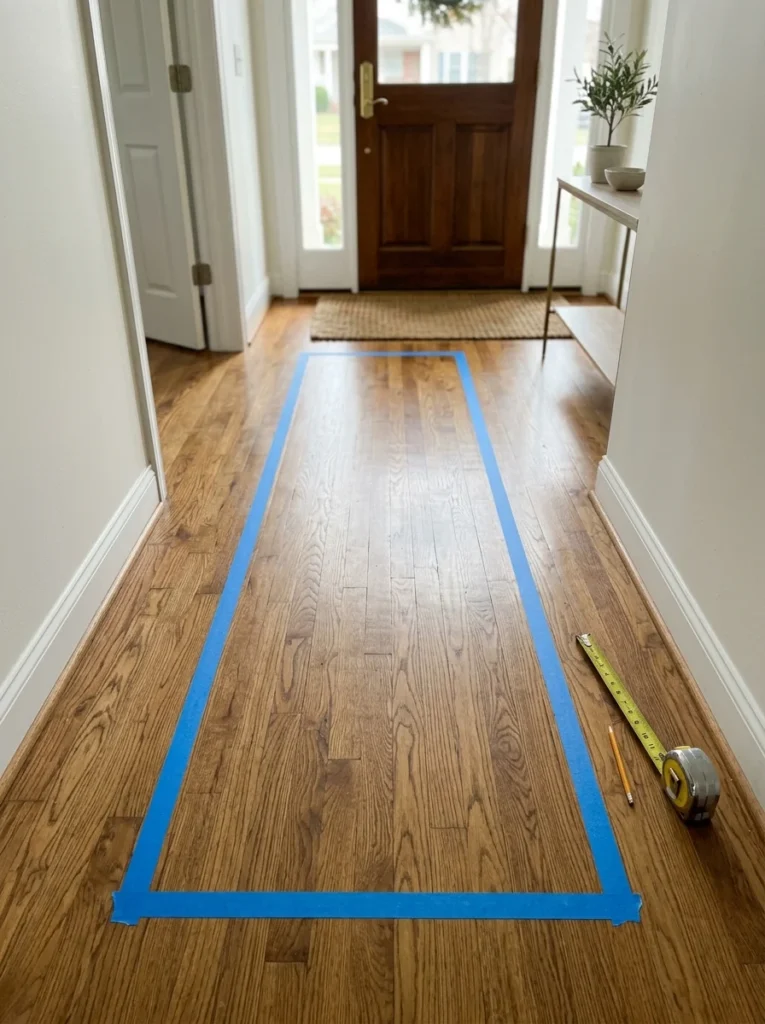
Before committing to any specific runner size or pattern, creating a simple paper or painter’s tape template on your actual entryway floor, outlining the exact dimensions you’re considering, lets you genuinely visualize how a specific runner will actually fit and look in your space before spending money on something that might not work as well as anticipated once you see it directly translated from a photo or product listing into your own actual physical entryway. I did exactly this before finalizing my own runner purchase, taping out the precise dimensions I was considering directly on my hallway floor, and that simple step helped me confirm my chosen size genuinely worked well within my specific space’s proportions before committing to the actual purchase. I’d recommend this practical step for anyone about to invest in a runner, particularly for a genuinely narrow or oddly proportioned entryway where getting the exact size right matters considerably more than it might in a larger, more forgiving room where a slightly mismatched rug size could more easily go unnoticed. This costs nothing beyond a few minutes with some painter’s tape or paper, making it one of the easiest, most valuable steps in this entire process regardless of which specific runner style or pattern you’re ultimately considering.
Final Thoughts
Looking back at those years of bare, increasingly worn hardwood floor in my narrow entryway, purely because I hadn’t gotten around to addressing what felt like a purely functional, easily overlooked transitional space, it’s genuinely surprising how much a single well-chosen runner ultimately improved both the practical wear on my actual floor and the overall first impression of walking into my home. Between all 19 of these ideas, the underlying theme is really that an entryway runner deserves more consideration than its relatively small footprint might initially suggest, since it’s simultaneously handling significant daily practical wear while also serving as the very first design statement anyone experiences upon entering your home.
If your own entryway is still working with bare, unprotected flooring, I’d suggest starting with the durability and non-slip backing considerations covered early in this list before getting too caught up in pattern and color choices alone, since those practical foundations matter more for this particular high-traffic space than they might elsewhere in your home. From there, layer in the style considerations that genuinely reflect your own taste and your home’s broader design direction, the same process that eventually led me to a runner I’m still genuinely happy walking across every single time I come home.
My name is James William, and I write about practical, real-world home decor ideas that don’t require a full renovation budget to make a genuine difference in how a room, or in this case, even a narrow hallway, actually feels.