
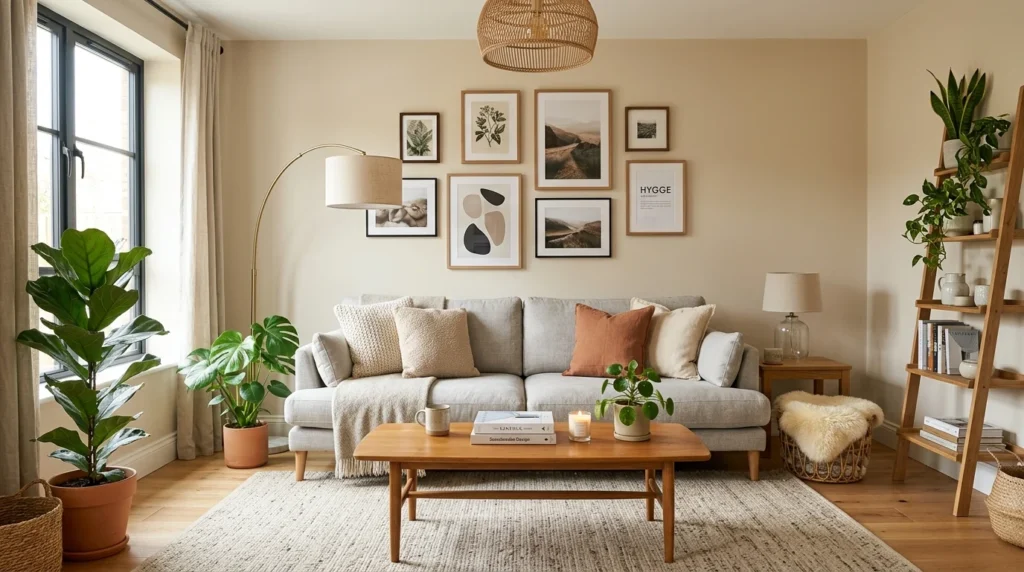
The most beautifully styled living rooms are not always the most expensively furnished ones. Some of the most impressive interiors created by professional designers are built on modest budgets, and some of the most expensive furniture collections produce rooms that feel cold, impersonal, and oddly unsatisfying. The difference between a living room that looks expensive and one that actually is expensive is not the price tags on the furniture — it is the quality of the decisions made in putting the room together.
Styling a living room well on a limited budget requires a different approach than styling one with unlimited resources. With unlimited resources, mistakes can be corrected by replacement. On a budget, every decision needs to be made more carefully because reversing a poor choice costs money the budget does not have. This actually produces better results in many cases — budget constraints force the kind of deliberate, thoughtful decision-making that produces rooms with genuine character rather than rooms that simply reflect whatever was most available and most expensive at the time of purchase.
This guide covers the complete process of transforming a living room on a limited budget — from the free interventions that cost nothing but time and attention, through the low-cost purchases that deliver disproportionate visual impact, to the strategic single investments that anchor the room and make everything else look more considered. Every idea in this guide has been selected on the basis of impact-to-cost ratio — how much visual and functional improvement it delivers relative to what it costs to implement.
Start Here: The Free Interventions
Deep Clean and Declutter First
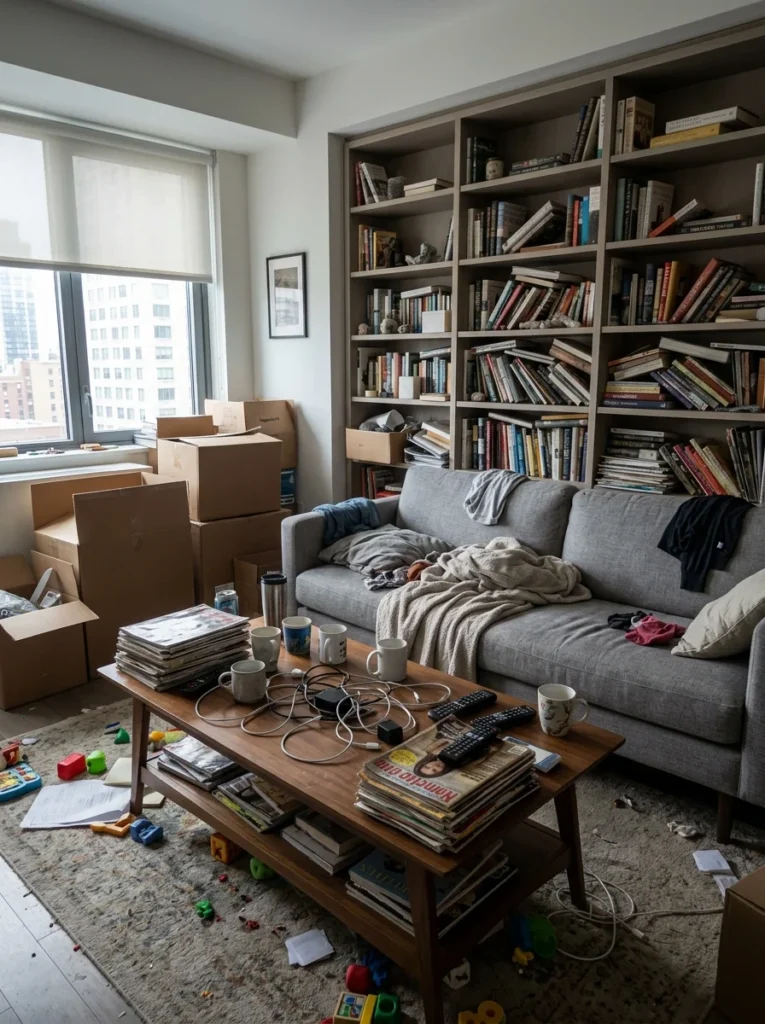
Before spending a single amount on anything new, the most valuable thing you can do for a living room that feels tired, cramped, or uninspiring is to clean it thoroughly and remove everything that does not genuinely belong there.
Clutter is the single most powerful force working against a living room looking expensive. A room filled with mismatched objects, unnecessary furniture, random decorative items accumulated over the years, and surfaces covered in things that have no clear home looks chaotic regardless of the quality of any individual piece within it. Conversely, a room that has been edited down to only the items that are used regularly or actively loved as decorative objects looks considered and intentional regardless of how much any individual piece cost.
Go through the room systematically. Remove anything broken, anything you no longer like, anything that belongs in another room, and anything that is sitting on a surface simply because it has nowhere else to go. Donate, store, or discard what is removed. Then clean every surface, every cushion, every window, and every piece of furniture thoroughly. A clean, decluttered room with modest furniture almost always looks better than a cluttered room with expensive furniture.
This step costs nothing and takes a few hours. It is also the step that most dramatically reveals the room’s actual potential — the space, the proportions, and the features that accumulated clutter had been obscuring.
Rearrange the Furniture
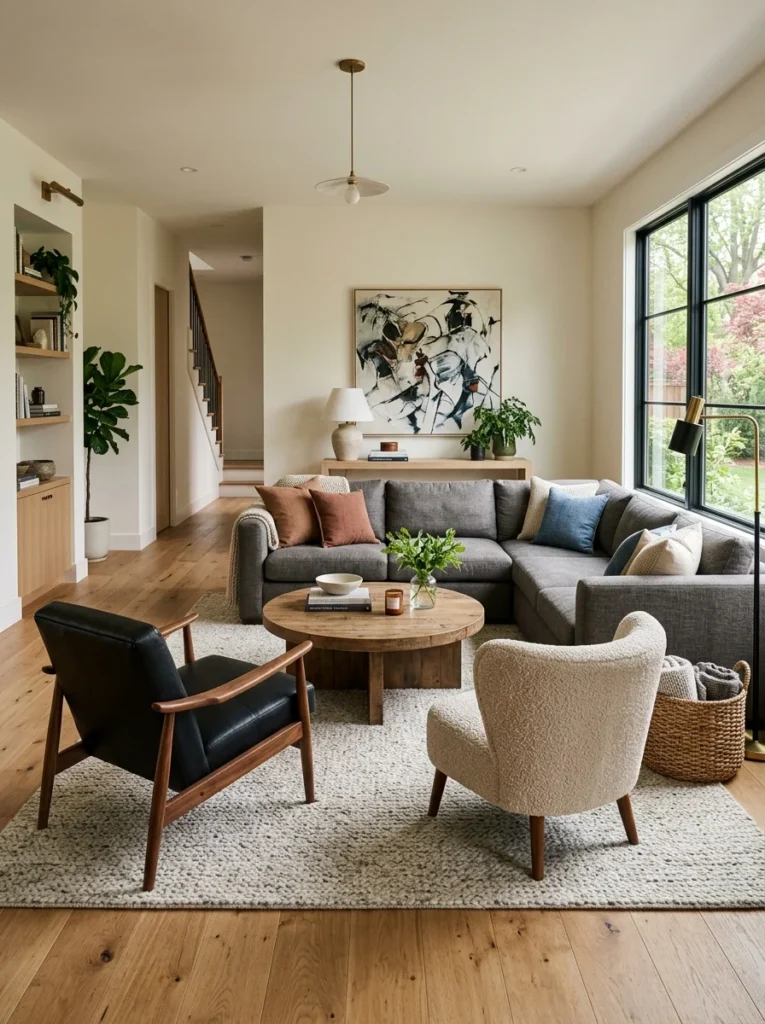
After decluttering, reassess your furniture arrangement before assuming that new pieces are needed. The same furniture in a better configuration can make a room feel dramatically different — more spacious, more functional, more inviting — without any new purchases.
Apply the principles from the furniture arrangement guide: identify the focal point, ensure traffic flow is unobstructed, pull furniture away from the walls and into the room, and group seating pieces together into a cohesive conversation zone. Test different arrangements using the floor plan method — drawing the room to scale and cutting out paper furniture shapes — before physically moving anything.
Many living rooms that feel wrong are simply arranged incorrectly. The sofa is against the wrong wall, the chairs are too far apart to facilitate conversation, the television is in the wrong position relative to the seating, or the room is lacking a clear focal point around which the arrangement is organized. Correcting these issues costs nothing and can produce a result that looks like a complete room transformation.
Move Pieces From Other Rooms
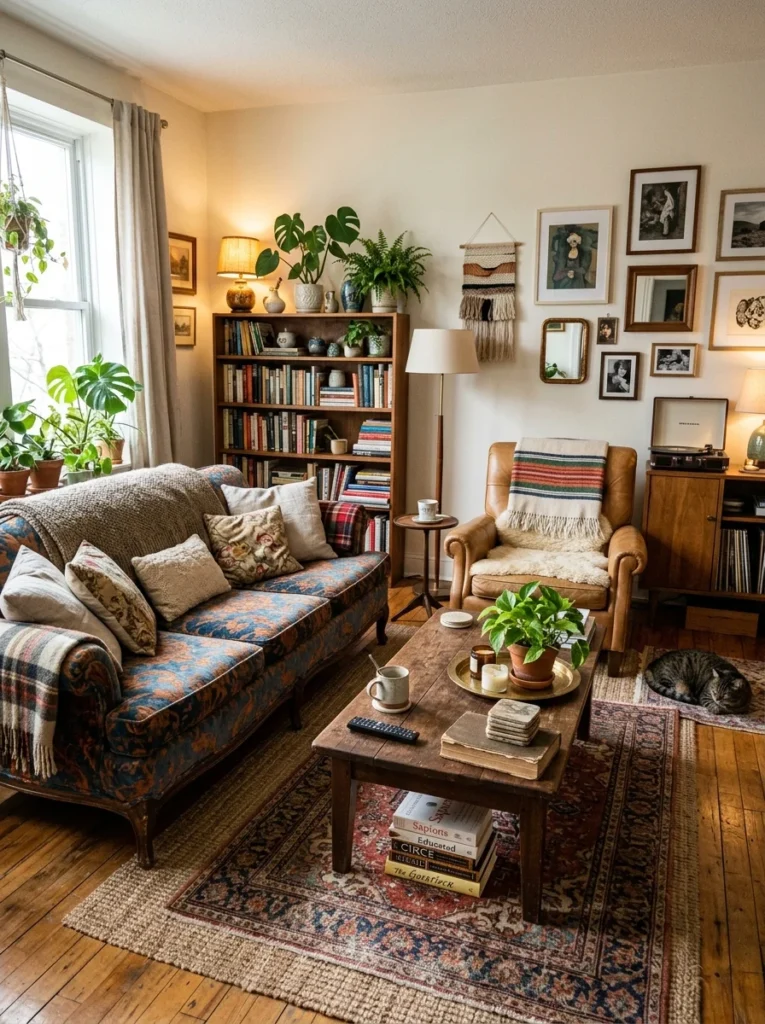
Before buying anything new for the living room, walk through every other room in the home and assess whether any piece of furniture, artwork, lamp, plant, or decorative object would work better in the living room than in its current location.
A lamp from the bedroom that is more stylish than the one currently in the living room, a plant from the kitchen that would look striking in a living room corner, a mirror from the hallway that would make the living room feel larger, or a piece of artwork stored in a spare room that would look better on the living room wall — these are all free improvements that require only the willingness to see each item as a potential resource rather than a fixed element of its current location.
This approach also has the benefit of revealing which rooms have a surplus of objects and which have a deficit, which can guide future purchasing decisions toward genuine needs rather than habitual additions.
The Highest-Impact Low-Cost Purchases
The Rug: The Single Most Transformative Purchase in Any Living Room
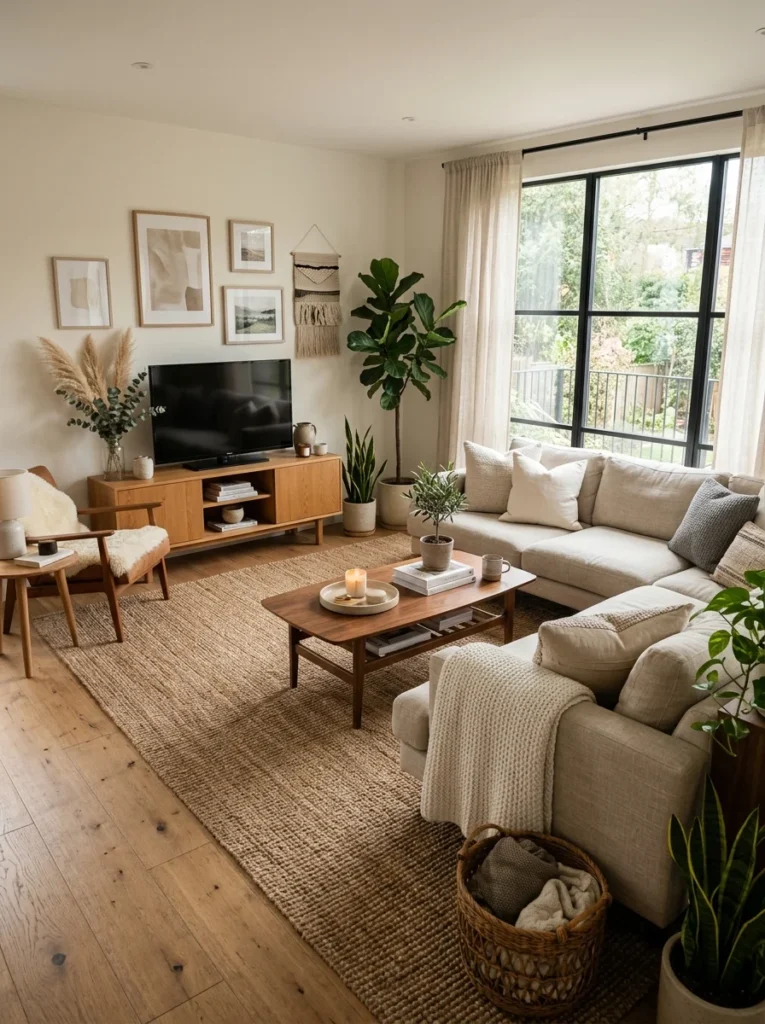
If there is one purchase that delivers more visual transformation per dollar spent than any other in a living room, it is the right rug. A good rug anchors the seating arrangement, defines the living zone within the room, adds warmth and texture underfoot, and — perhaps most importantly — makes all the furniture within it look more cohesive and intentional.
A living room without a rug, or with a rug that is the wrong size, almost always looks unfinished. The furniture pieces float on the floor without visual connection to each other. The seating arrangement lacks a defined boundary. The room feels like a collection of individual pieces rather than a composed interior.
The single most common and most damaging rug mistake is choosing one that is too small. A small rug placed only under the coffee table — with the sofa legs and chair legs sitting on bare floor around it — looks like a mat rather than a room-defining element. The rug needs to be large enough for at least the front legs of every seating piece to rest on it. In a larger living room, all four legs of every piece of furniture should sit on the rug entirely.
Before buying a rug, mark out the required size on the floor using masking tape and live with the marked area for a day or two. This reveals whether the size you are considering is actually appropriate for the space or whether you need to go larger. Almost everyone who does this exercise discovers they need a bigger rug than they initially planned for.
Natural fiber rugs — jute, sisal, and natural wool blends — are among the most affordable options and among the most universally beautiful. A jute rug in a warm natural tone suits almost every living room palette and provides excellent texture underfoot. Vintage-style rugs — distressed patterns with faded tones — are available at accessible price points and add a sense of history and character to the room that new rugs of similar quality rarely achieve.
Cushions and Throws: The Quickest Palette Refresh Available
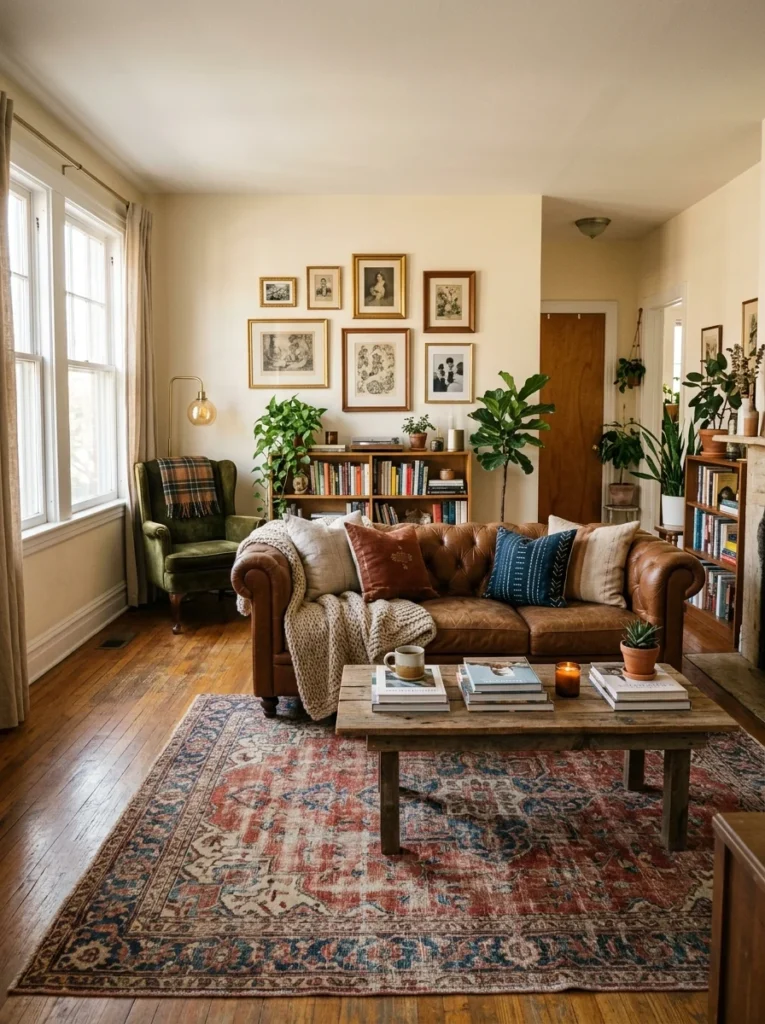
After the rug, cushions and throws are the most cost-effective styling tools available for a living room. They introduce color, pattern, and texture at the most visible level — the sofa, the primary piece of furniture in the room — and can transform the feel of a room more quickly than almost any other change.
The key to cushion styling that looks expensive rather than assembled is understanding the principles that designers use when selecting and arranging cushions. These principles are straightforward and apply regardless of budget.
Odd numbers work better than even numbers. Three cushions on a two-seat sofa, or five cushions on a three-seat sofa, reads more naturally and comfortably than two or four. Even numbers create a symmetry that can feel rigid and catalog-like. Odd numbers create a sense of natural arrangement that feels less deliberate and more considered.
Vary the sizes within a grouping. A combination of large square cushions at the back, medium square cushions in the middle layer, and a smaller rectangular lumbar cushion at the front creates a layered arrangement with visual depth. All cushions in the same size sit flat and look like a showroom display rather than a lived-in room.
Vary the textures while keeping the colors cohesive. A velvet cushion alongside a woven cushion alongside a linen cushion, all in tones from the same palette family, creates richness through material variation rather than color contrast. This is the approach that produces cushion arrangements that look expensive regardless of what each individual cushion cost.
A throw draped casually over one arm of the sofa — not folded symmetrically, not arranged to look deliberate, but draped in the way it would fall if someone had just used it — adds the final touch of warmth and lived-in comfort that makes a sofa look genuinely inviting rather than staged.
arrangements. Frames from charity shops, thrift stores, and discount retailers, painted to match in a single color — typically white, black, or a warm metallic — create a cohesive gallery wall at minimal cost.
The artwork within the frames does not need to be purchased. Personal photographs printed in black and white have a sophisticated, editorial quality that works well in gallery arrangements. Pages from old books, maps, or botanical illustrations have a character and history that mass-produced prints cannot replicate. Drawings, watercolors, or collages created personally add genuine originality. Abstract pieces created by simply applying paint to canvas or paper in the palette colors of the room can look deliberately artistic when framed well.
The arrangement of a gallery wall matters as much as its contents. Plan the arrangement on the floor before hanging anything on the wall — lay all the frames on the floor in the arrangement you are considering and adjust until the composition feels balanced. The most reliable arrangements have a clear overall shape — a rectangle, an organic cluster, or a horizontal row — rather than frames scattered randomly across the wall.
4 Large Single Artwork
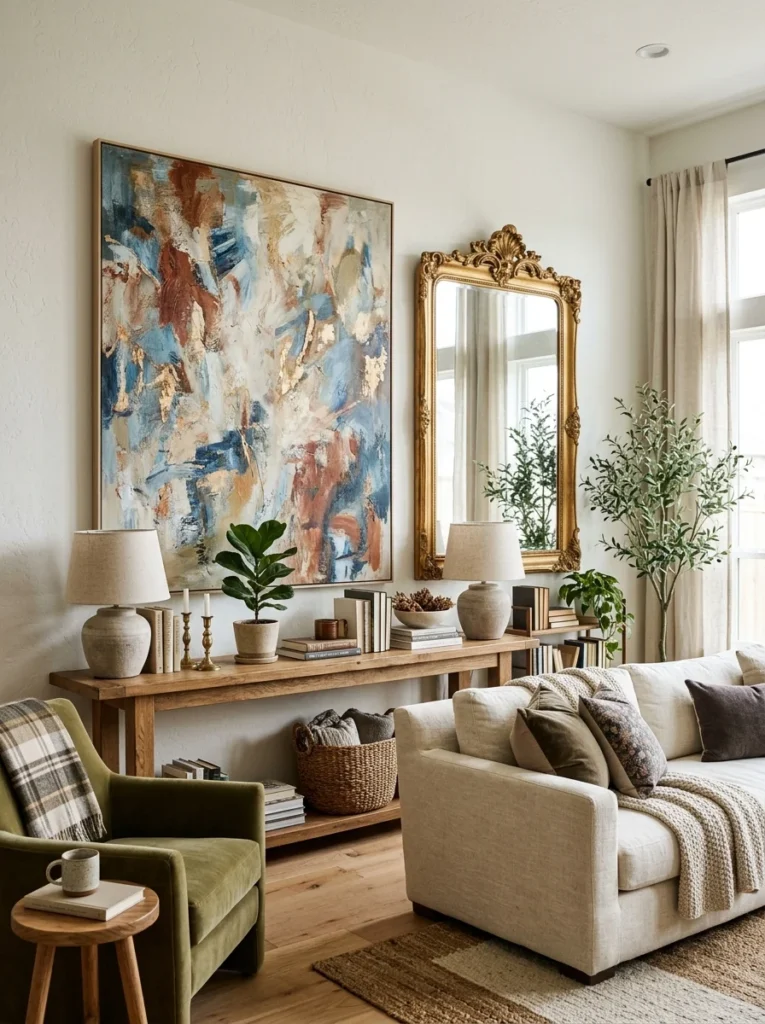
The alternative to a gallery wall is a single large piece of artwork that acts as an anchor for the entire room. A large artwork — anything over thirty-six inches in its longest dimension — on the main wall of a living room creates a focal point that gives the room a sense of scale and intention.
The most budget-friendly large artw
1 Lighting: The Change That Makes Everything Else Look Better
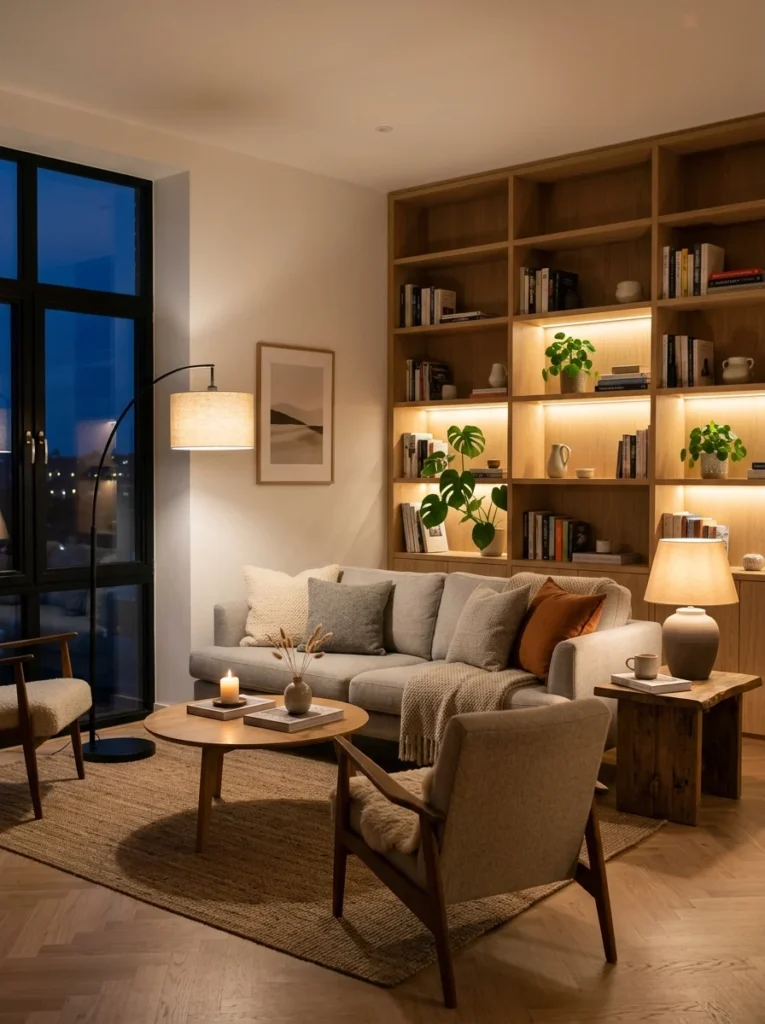
Lighting is the element that has the greatest impact on how a living room feels in the evening and one of the most neglected aspects of budget decorating. Most living rooms rely too heavily on a single overhead ceiling light that casts a flat, unflattering illumination across the entire room — an illumination that makes even beautiful furniture look ordinary and makes the room feel more like a workspace than a comfortable living environment.
The transformation from flat overhead lighting to layered, warm, ambient lighting is one of the most dramatic improvements possible in a living room, and it requires no structural work. The solution is simple: turn off the overhead light and replace it with a combination of lamps placed at different heights around the room.
A floor lamp in one corner provides soft upward light that illuminates the ceiling and creates a warm glow throughout the upper portion of the room. A table lamp on a side table or a console provides warm light at eye level when seated. A smaller lamp on a bookshelf or a surface in another part of the room adds a third source of light that gives the room depth and prevents any area from feeling dark.
The bulb choice is as important as the lamp placement. Warm white bulbs — with a color temperature of 2700 Kelvin — create the amber, flattering light that makes a room feel comfortable and intimate. Cool white bulbs — 4000 Kelvin and above — create a harsh, clinical light that works against any decorating effort. Replace every bulb in the living room’s lamps with warm white LED bulbs and observe the difference this single change makes to the room’s atmosphere at night.
Second-hand and vintage lamps are among the best value purchases available for budget living room styling. Lamp bases from charity shops, estate sales, and online marketplaces can be transformed with a new shade and a new bulb into statement pieces that look far more interesting than new budget lamps. A distinctive base — a ceramic vessel, a turned wood column, an interesting sculptural form — with a simple drum shade in a neutral linen creates a lamp that looks like a considered decorating choice rather than a budget compromise.
2 Paint: The Highest Impact Renovation-Level Change at a Low Cost
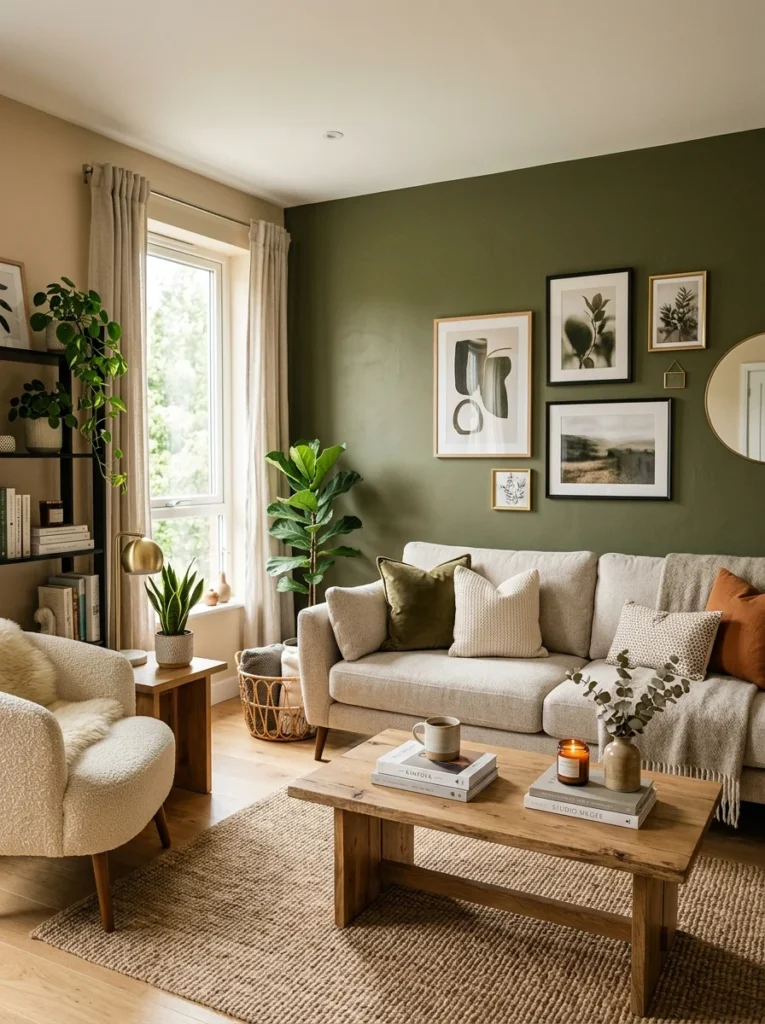
If the budget allows for one slightly larger expenditure, fresh paint on the walls delivers more visible transformation per dollar spent than almost any other renovation or decorating investment. A room with scuffed, dirty, or poorly colored walls looks tired regardless of how well it is furnished. The same room with freshly painted walls in a well-chosen color looks renewed and intentional.
The full cost of painting a living room — paint, primer, brushes, rollers, and tape — is modest compared to almost any furniture purchase. The time investment is a weekend. The result is a room that looks genuinely different rather than simply rearranged.
If repainting all four walls is not within the current budget or the current timeline, painting a single feature wall — the wall behind the main sofa or behind the television — with a more saturated or contrasting color makes a significant visual statement at a fraction of the cost of a full repaint. This approach is more effective when the feature wall color is chosen deliberately in relation to the rest of the room’s palette rather than selected in isolation.
Wall Decor Without Significant Spend
3 The Gallery Wall Approach
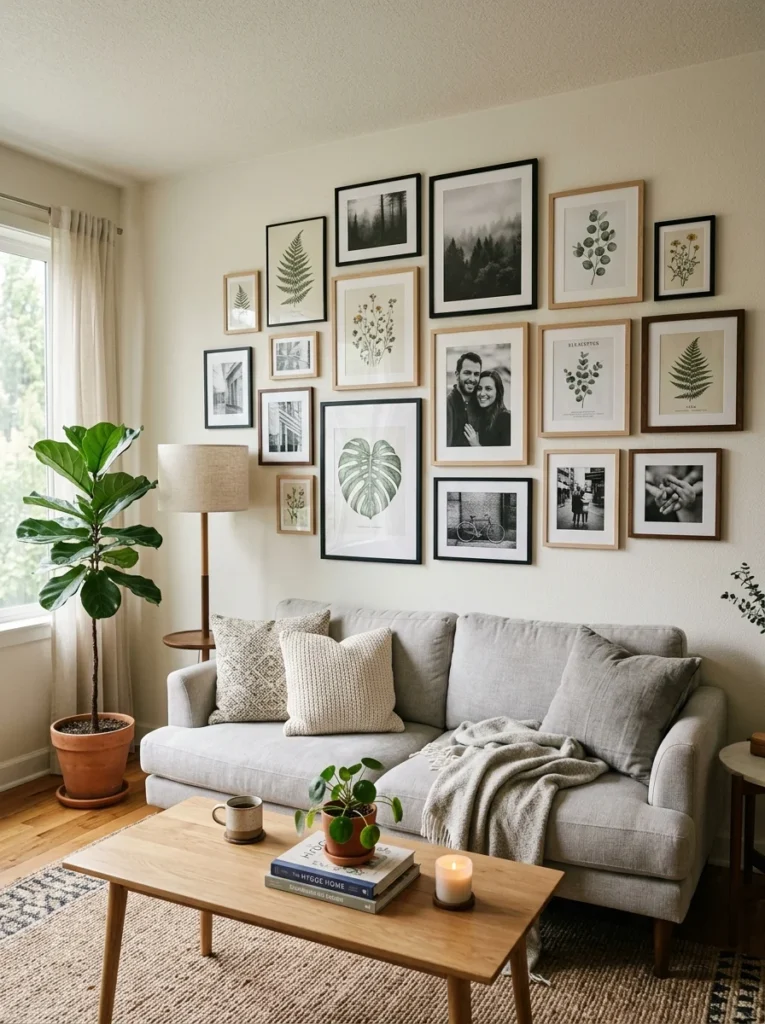
Bare walls make a living room feel unfinished regardless of how well the rest of the room is styled. Wall decor is essential — but wall decor does not need to be expensive.
A gallery wall — a curated arrangement of multiple frames on a single wall — is the most flexible and budget-friendly approach to living room wall decor because it allows a wide range of frame sources, artwork types, and compositionalork is one created personally — a large canvas painted in the palette colors of the room in a simple abstract composition. A large stretched canvas, a tube each of two or three colors from the room’s palette, and an afternoon of experimentation produces original artwork that is genuinely unique and costs a fraction of anything equivalent purchased from a gallery or a decor retailer.
Oversized framed mirrors serve the same visual anchoring function as large artwork while adding the additional benefit of reflecting light and making the room feel larger. A large mirror with a simple frame in a warm metallic or a natural material delivers both functions — decoration and spatial expansion — at a cost that is typically lower than large artwork of comparable scale.
5 Refresh What Is Already on the Walls
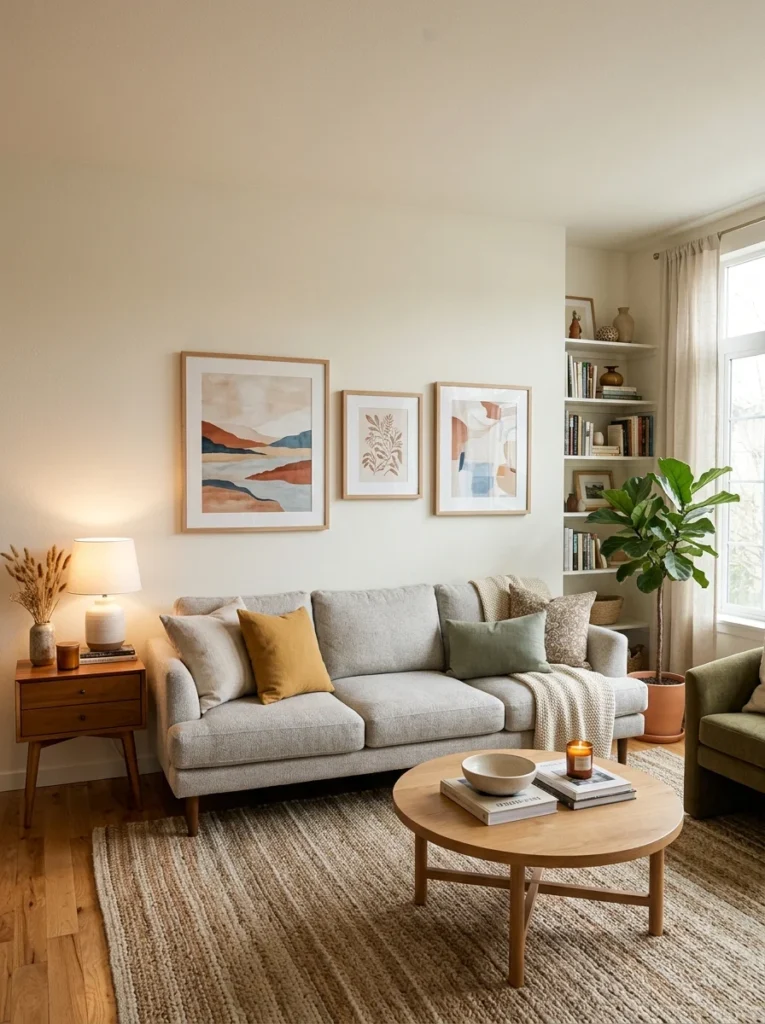
Before purchasing any new wall decor, reassess what is currently displayed and how it is displayed. Artwork hung at the wrong height, in frames that no longer suit the room, or in arrangements that have never been reconsidered since they were first put up can look worse than no artwork at all.
The standard rule for artwork hanging height is that the center of the artwork should sit at approximately 57 to 60 inches from the floor — roughly average eye level when standing. Artwork hung too high — a common mistake — is visually disconnected from the furniture below it and makes the room feel unbalanced. Lowering existing artwork to the correct height, without purchasing anything new, can make an immediate and noticeable improvement to the room’s overall composition.
6 Plants: The Living Decor That Works at Any Budget
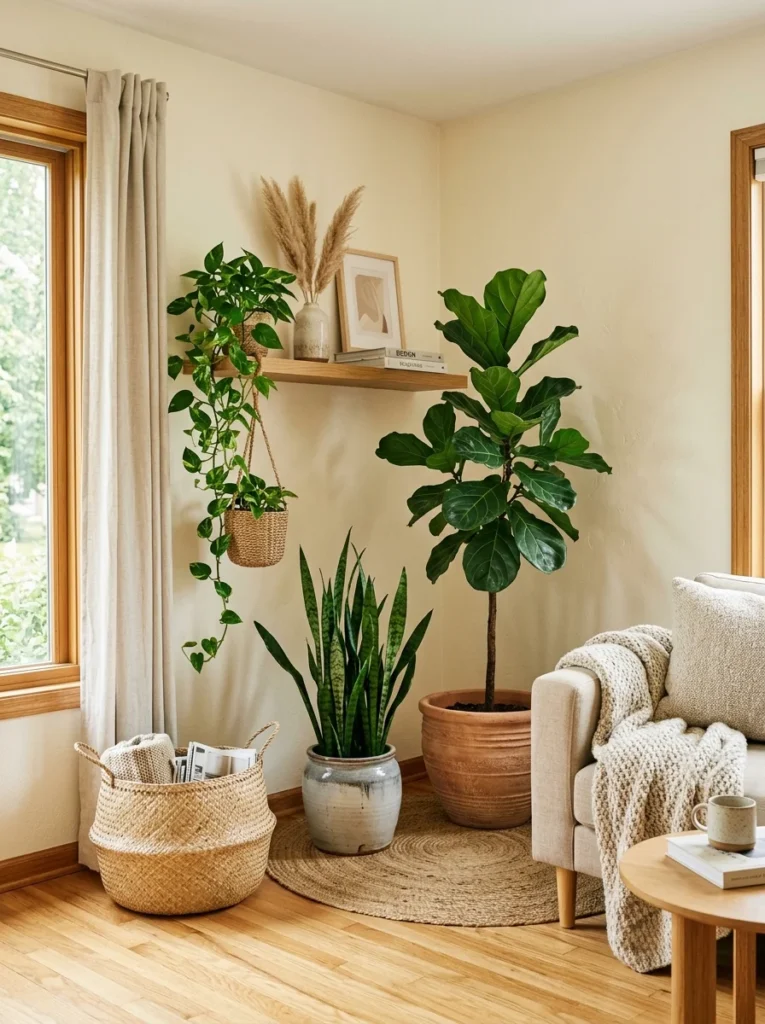
Plants are among the most versatile and most cost-effective decorating tools available for a living room. They introduce organic form, natural color, and living texture in a way that no manufactured decorative object can replicate, and they do so at a cost that ranges from very affordable for smaller plants to modest for larger statement specimens.
The most visually impactful plants for a living room are those with strong, distinctive forms — a large fiddle leaf fig in a simple white or terracotta pot, a tall snake plant in a woven basket, a trailing pothos on a floating shelf, or a cluster of different-sized plants in one corner. These plants make a genuine decorating statement rather than simply adding a small decorative note.
The container matters as much as the plant. An attractive plant in a cheap plastic nursery pot looks unfinished. The same plant in a simple terracotta pot, a woven seagrass basket, or a clean ceramic planter looks considered and intentional. Repotting or covering nursery pots with attractive containers is one of the most affordable improvements available for any plant-based decorating scheme.
Low-maintenance plants are the most practical choices for living rooms, particularly for people without strong gardening instincts. Pothos, snake plants, ZZ plants, rubber trees, and peace lilies all thrive in indoor conditions with minimal attention, tolerate the variable light levels of most living rooms, and grow to sizes that make a genuine decorating impact over time.
7 The One Statement Piece Strategy
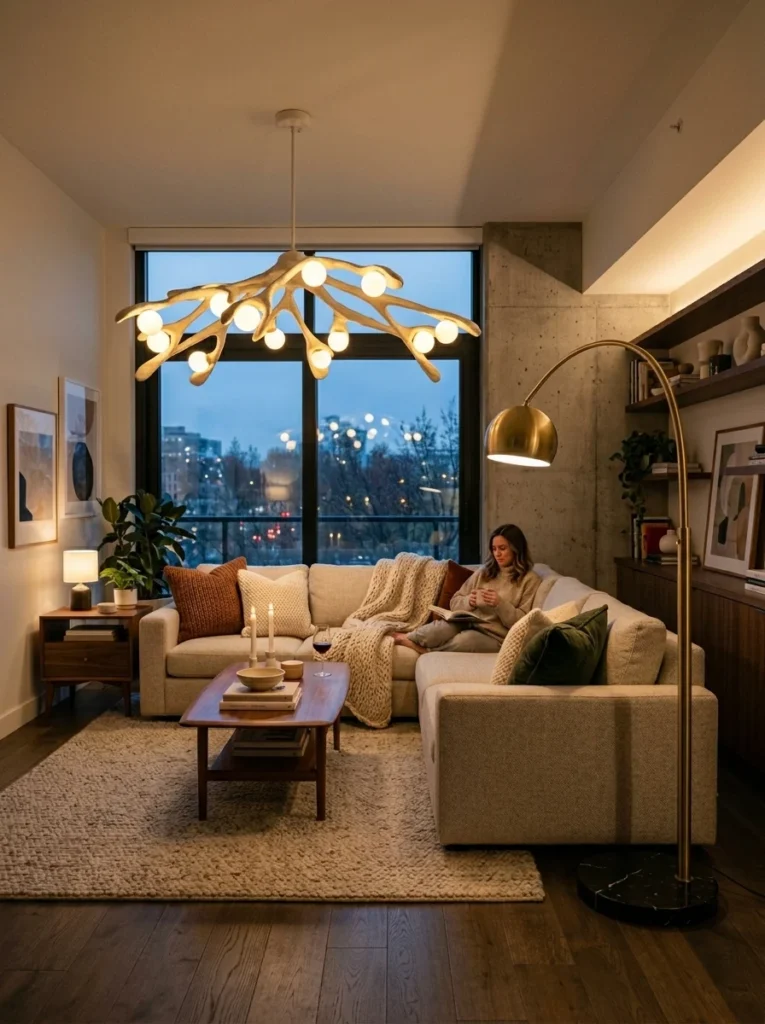
Every well-styled living room benefits from one piece that acts as an anchor — a single item of genuine quality or distinctive character that elevates the entire room and makes everything around it look more considered. On a budget, this strategy requires saving resources for one deliberate investment rather than spreading a limited budget across multiple average-quality purchases.
The statement piece in a living room can be several things. A distinctive floor lamp with a sculptural base and a warm shade changes the atmosphere of the room every evening when it is switched on. A large mirror with a beautiful frame reflects the room back on itself and makes the space feel larger and more finished. A genuinely well-made sofa in a good quality fabric anchors the entire seating arrangement with a piece that improves with time rather than deteriorating.
Identifying the right statement piece for your specific living room requires an honest assessment of what the room currently lacks most. A room with good furniture but poor lighting needs a statement lamp. A room with good lighting but bare walls needs statement artwork or a large mirror. A room with everything in order but no single piece of genuine quality needs one investment-grade piece that brings the rest up to its level.
The most cost-effective place to find statement pieces on a budget is the second-hand market. Charity shops, estate sales, online marketplaces, and antique fairs regularly yield pieces of genuine quality and distinctive character at prices far below their intrinsic value. A solid wood side table, a quality ceramic lamp base, a distinctive vintage mirror, or a well-made brass accessory purchased second-hand for a fraction of its replacement cost can become the statement piece that anchors the room without the cost of buying it new.
8 Styling Surfaces: The Final Layer
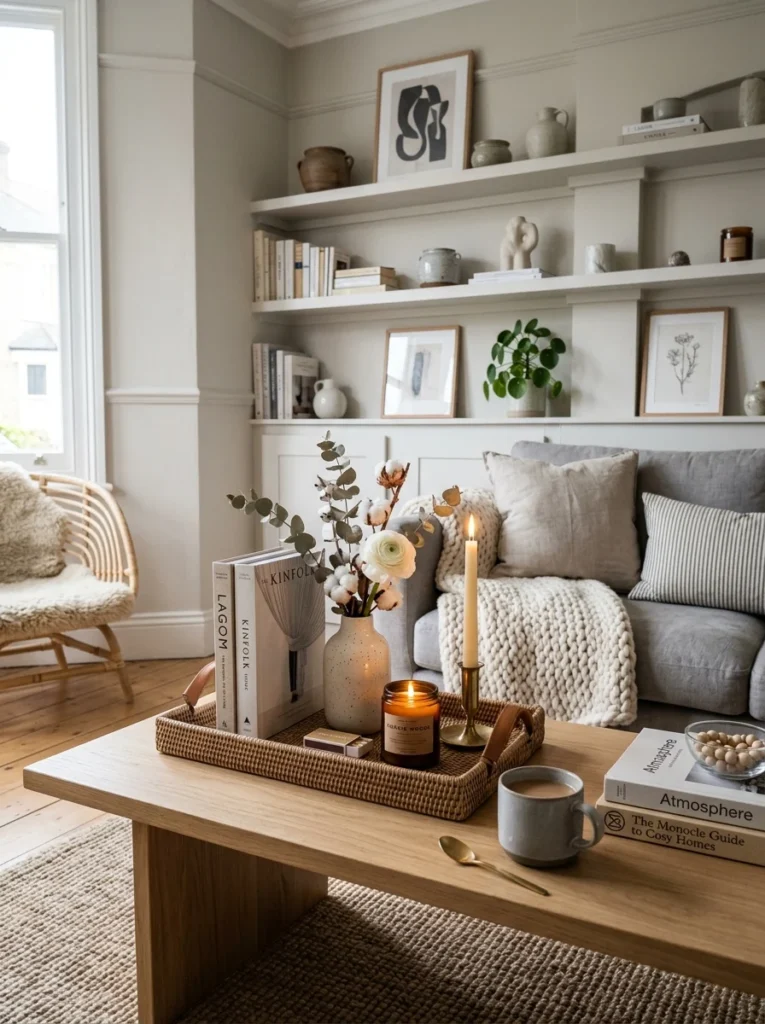
The surfaces of a living room — the coffee table, the side tables, the shelves, the mantelpiece, and the console — are the final layer of styling that determines whether the room looks finished and considered or assembled and incomplete. Surface styling requires no significant budget — it requires editing, composition, and the application of a few simple principles.
The most reliable principle for surface styling is grouping objects in odd numbers and varying their heights within the group. Three objects of different heights — a tall vase, a medium-height candle, and a low flat book or tray — read as a composed still life. Two objects of the same height read as a matching set placed without thought. One object reads as an afterthought. Three of varying heights reads as intentional curation.
The coffee table benefits from a simple tray that contains the surface’s objects and prevents them from floating randomly across the surface. A tray creates an implied boundary that makes the items within it look deliberately grouped rather than merely placed. Within the tray, a small plant or vase with a cutting, one or two books, and a single candle creates a coffee table surface that looks styled without looking staged.
Shelves benefit from the same principle applied horizontally — groups of three objects at varying heights, with deliberate empty space between groups rather than books and objects filling every available inch. Overcrowded shelves look cluttered regardless of the quality of the objects on them. Shelves with intentional space between groups look curated regardless of the cost of the objects displayed.
A Realistic Budget Plan
Pulling all of the above together, a realistic budget plan for transforming a living room prioritizes the changes that deliver the most visual impact for the lowest cost.
Begin with the free interventions — decluttering, rearranging, cleaning, and moving pieces from other rooms. These cost nothing and often reveal that the room needs less new purchasing than initially assumed.
Then address the paint if the walls need it. Fresh paint in a well-chosen color is the highest-impact low-cost change available and should come before any new furniture or decor purchases because it establishes the palette that everything else needs to work within.
Then invest in the rug if the current one is wrong or absent. This is the single purchase that makes the most difference to whether the seating arrangement looks finished or unfinished.
Then address the lighting — adding lamps, replacing bulbs with warm-toned alternatives, and positioning light sources at multiple heights around the room. This transforms the room’s atmosphere in the evenings at relatively modest cost.
Then address the cushions, throws, and plants — the styling layer that introduces texture, color, and life at the most accessible price points.
Finally, identify the one statement piece the room needs most and save specifically for it rather than spending the equivalent amount across multiple average-quality purchases.
This sequence — free interventions first, high-impact low-cost purchases next, one deliberate investment last — produces the most significant transformation for the most modest total expenditure.
Conclusion
A living room that looks expensive and feels genuinely beautiful is not the product of a large budget. It is the product of good decisions — decisions made in the right order, with clarity about what the room actually needs rather than what is simply available or appealing in the moment.
Declutter before you buy anything. Rearrange before you assume new furniture is needed. Paint before you purchase new decor. Invest in the rug before the cushions. Choose one statement piece of genuine quality rather than several pieces of average quality. Layer the lighting before the room is considered finished.
These principles apply at any budget level. At a modest budget they require more patience and more deliberate decision-making than at a generous one — but the result, when the principles are followed, is a living room that looks and feels better than many rooms that cost ten times as much to put together.
The best living rooms are not the most expensive ones. They are the most considered ones.