
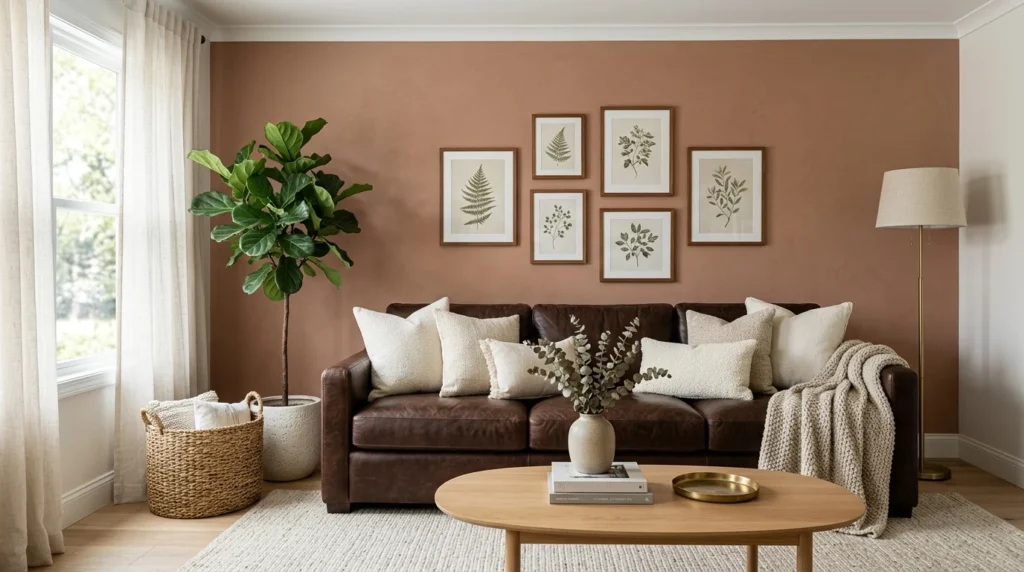
A few years ago, I inherited a massive dark brown leather couch from my uncle when he moved into a smaller apartment. My first instinct was honestly to sell it. Dark brown felt heavy to me, almost old-fashioned, and every living room photo I’d ever admired online seemed to feature light gray or cream sofas instead. It felt like the one piece of furniture that would fight against everything I was trying to do with the rest of the room. But money was tight that year, moving a couch that size felt like more trouble than it was worth, and part of me was curious whether I could actually make it work. So instead of selling it, I decided to build my living room around it rather than against it.
What happened next genuinely surprised me. Once I started experimenting with the right wall colors, textures, and accent pieces, that “heavy” dark brown couch became the most complimented thing in my house. Guests kept asking where I bought it, assuming I’d chosen it deliberately as a design statement rather than inherited it out of necessity. Since then, I’ve helped two friends style their own dark brown couches after they told me they were tired of feeling like their living rooms looked outdated, and I’ve picked up a long list of tricks for making this color feel current, warm, and intentional instead of dark and heavy. Here are 18 ideas that actually worked, along with a few practical tips I wish someone had told me at the start.
1. Pair It With Warm Terracotta Walls
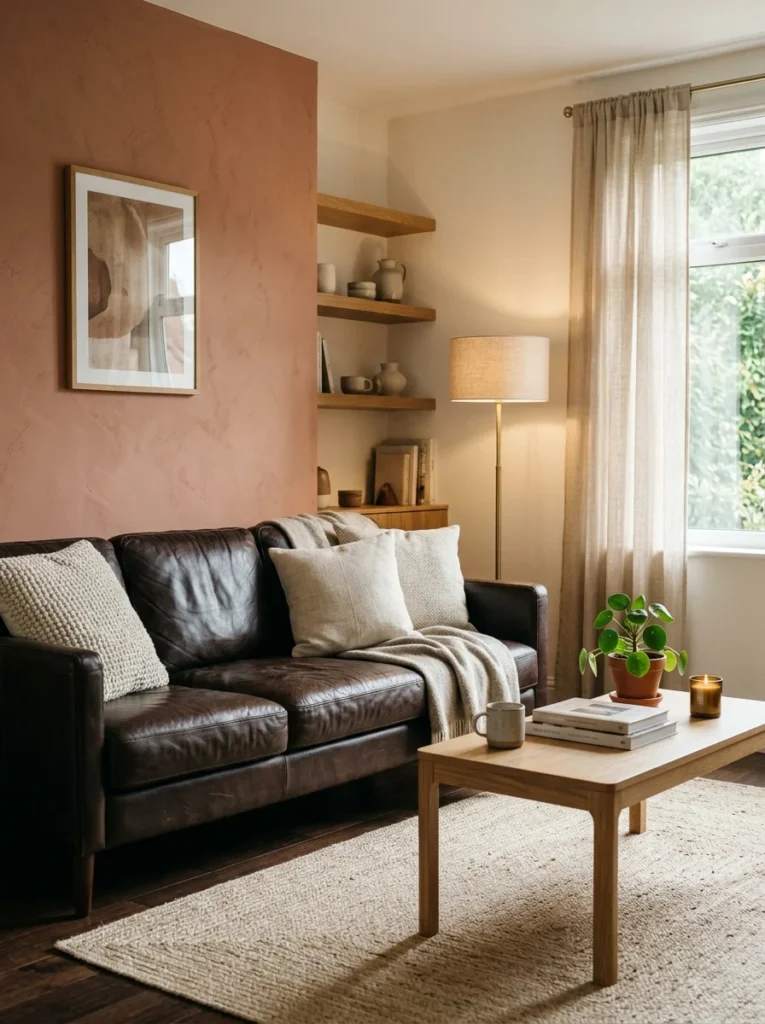
The first change I made was repainting one wall behind the couch in a muted terracotta tone. Dark brown and terracotta share the same warm undertones, so instead of clashing, they blended into a cohesive, earthy palette that felt intentional rather than accidental. It immediately made the room feel like it had been designed around the couch rather than the couch being an afterthought shoved against a random wall. I only painted the one accent wall behind the sofa, which kept the cost low and the commitment small in case I ended up not loving it. I did.
2. Add Cream or Ivory Throw Pillows for Contrast
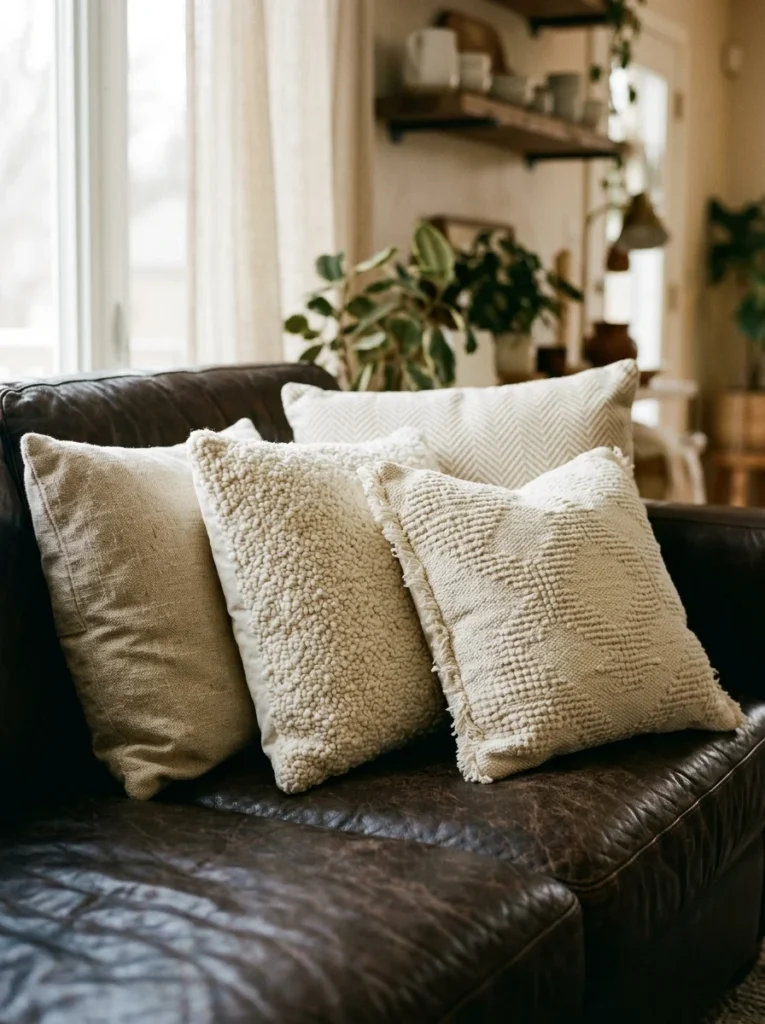
Dark brown can feel a little flat and heavy on its own, so I layered in cream and ivory pillows with slightly different textures — one linen, one boucle, one woven cotton. The contrast in color broke up the darkness and drew the eye upward instead of letting the couch feel like one solid block sitting low in the room. The mix of textures also kept the pillows from looking too matched or showroom-perfect, which is a small detail that makes a huge difference in how “designed” a space feels.
3. Use a Light Jute or Wool Rug Underneath
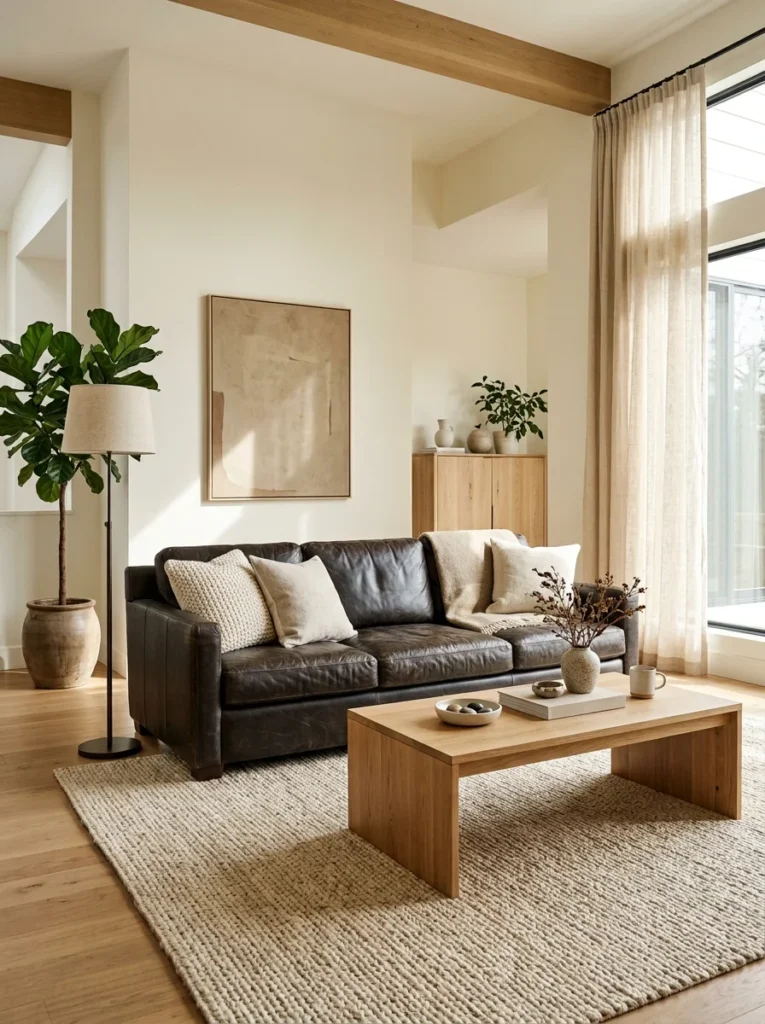
A pale jute rug under my couch did more for the room than almost any other single change I made. It grounded the dark furniture visually while keeping the overall space feeling airy instead of heavy and closed in. Wool rugs in oatmeal or ivory tones work just as well if you want something softer underfoot, and either option creates a strong horizontal contrast that balances out the vertical weight of a large dark sofa.
4. Bring in Brass or Gold Accents
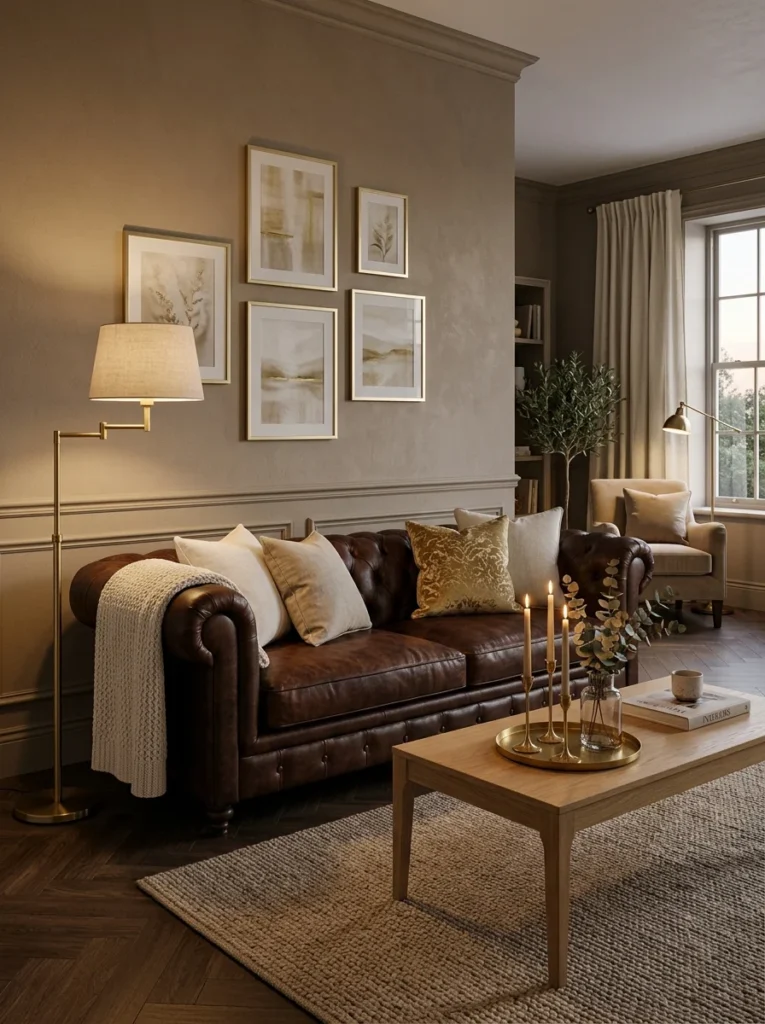
Dark brown and warm metallics were made for each other. I swapped my old silver lamp for a brass floor lamp, and even small touches like gold picture frames, a brass coffee table tray, or gold-rimmed candle holders made the whole setup feel more elevated and current, almost like a boutique hotel lobby rather than a mismatched thrift store find. Metallics catch the light in a way that plain fabric and leather simply can’t, and that little bit of shine goes a long way against a dark backdrop.
5. Go Bold With a Deep Green Accent Wall
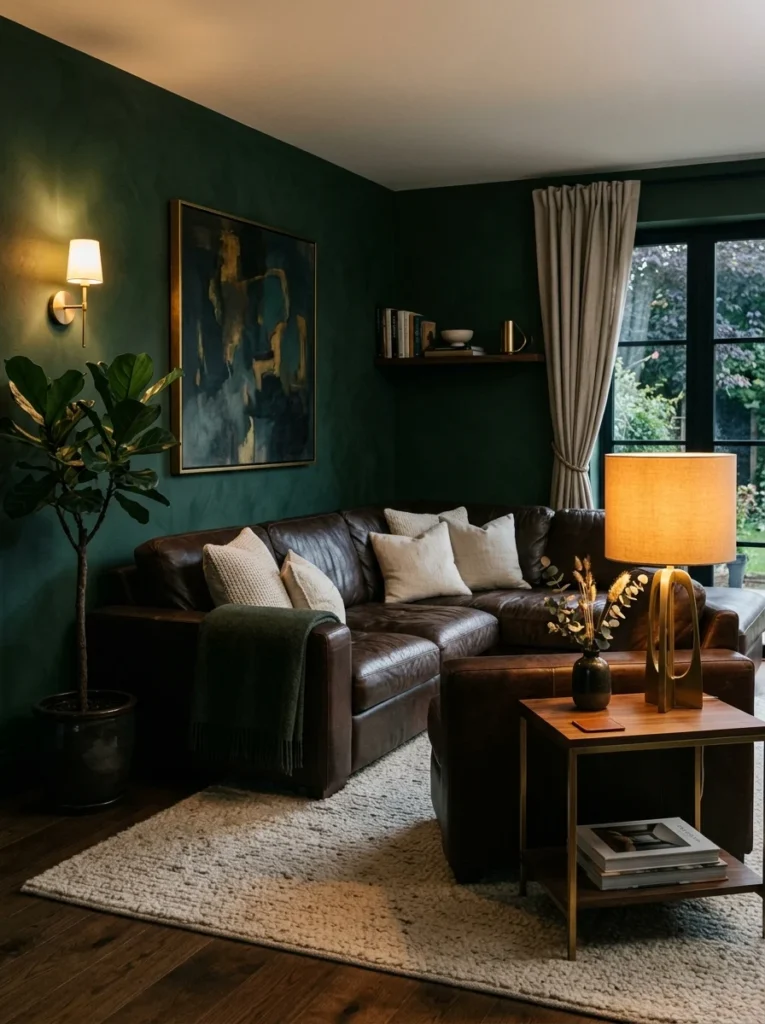
In a friend’s apartment, we painted the wall behind her dark brown sectional a rich forest green instead of playing it safe with a neutral tone. The two dark, saturated colors together created a moody, cocoon-like feel that photographed beautifully and made the room feel far more designed than a typical beige living room. It took some convincing to get her on board, since two dark colors together sounds risky on paper, but once it was finished, it became her favorite room in the house.
6. Layer in Natural Wood Furniture
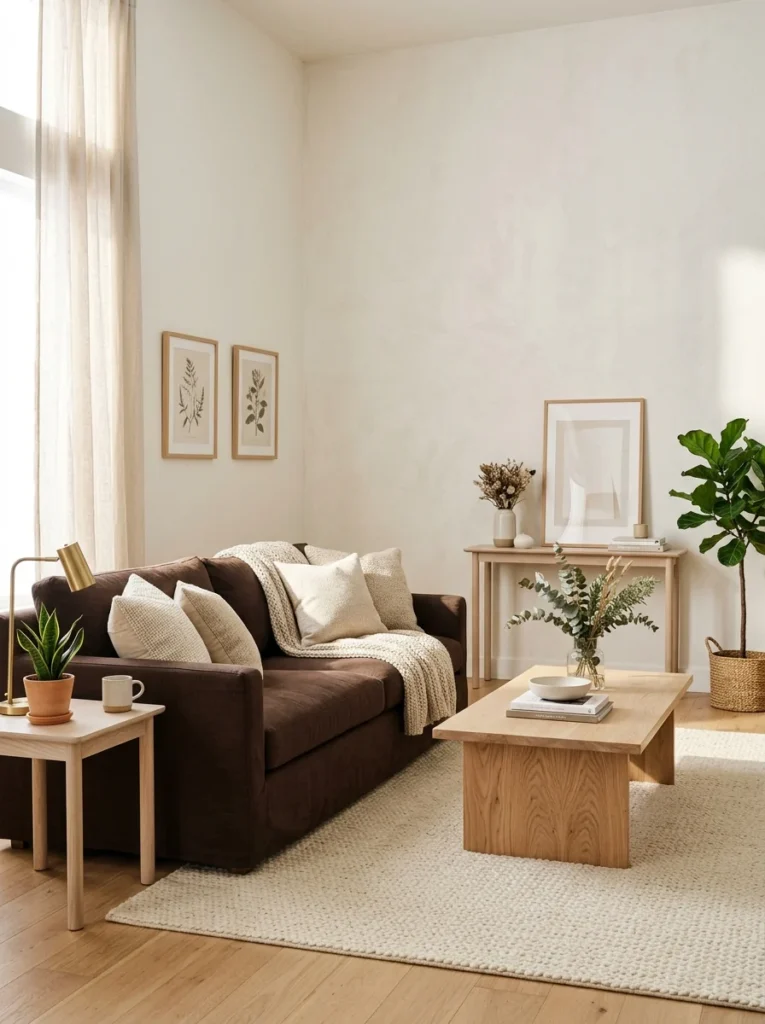
Pairing your couch with furniture in a lighter wood tone, like light oak or ash, keeps the room from feeling like one giant brown block from floor to ceiling. My coffee table and side tables are both a pale oak, and the tonal difference between the wood and the leather couch adds visual layering without introducing an entirely new color into the room. This is one of the easiest changes to make gradually, piece by piece, without a big upfront cost.
7. Use Sheer or Linen Curtains to Soften the Room
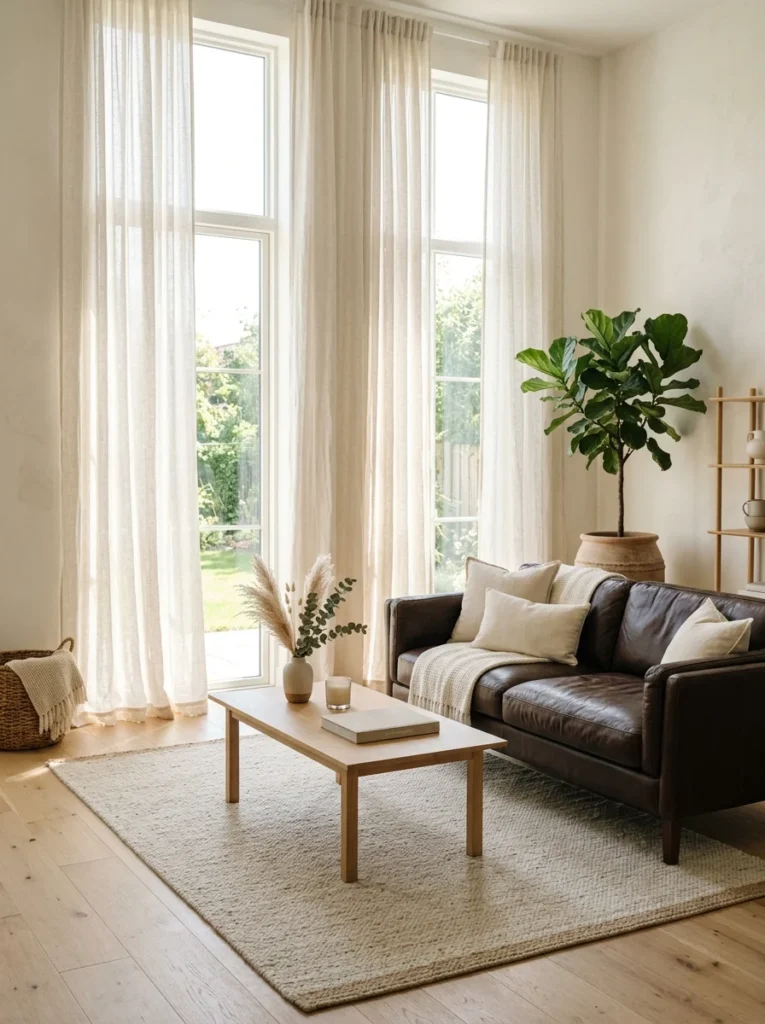
Heavy dark curtains next to a dark couch can make a room feel closed in and cave-like, no matter how nice the furniture itself looks. I switched to sheer linen curtains in a soft off-white, and the natural light that filtered through completely changed the mood of the space, keeping it bright and open even with a large dark sofa acting as the visual centerpiece of the room.
8. Add a Statement Mirror Across From the Couch
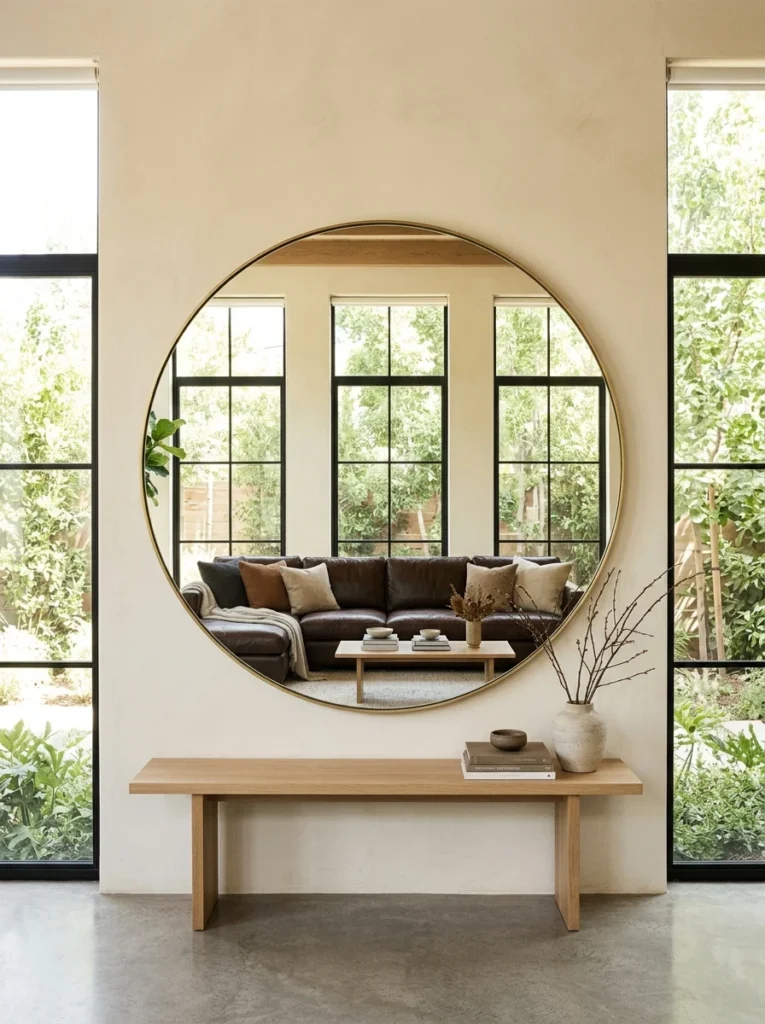
Placing a large round mirror on the wall opposite my couch helped bounce natural light around the room and made the space feel noticeably bigger than it actually is. It’s a simple, inexpensive trick, but it works especially well in living rooms where a dark couch takes up a lot of visual weight and could otherwise make the room feel smaller than it really is.
9. Mix in Mustard or Burnt Orange Accents
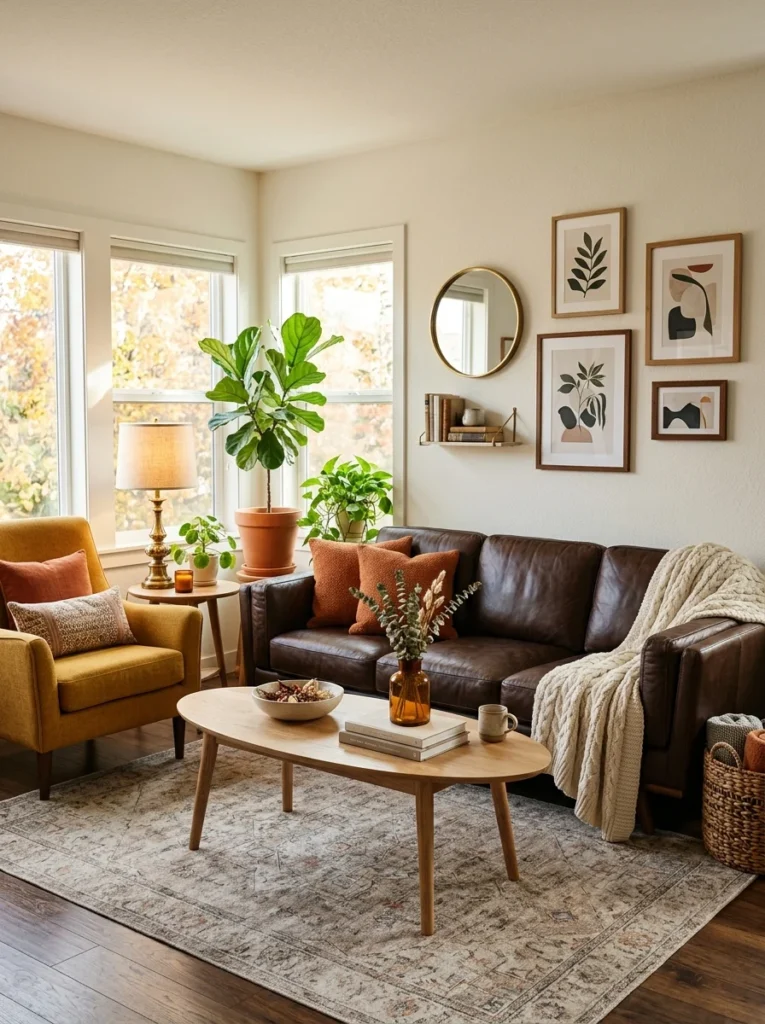
A single mustard-colored accent chair next to my brown couch turned out to be one of my favorite additions to the whole room. Mustard and burnt orange sit close to brown on the color wheel, so they feel harmonious rather than clashing, while still injecting some real personality and warmth into a space that could otherwise feel a bit too neutral or safe.
10. Choose a Chunky Knit Throw Blanket
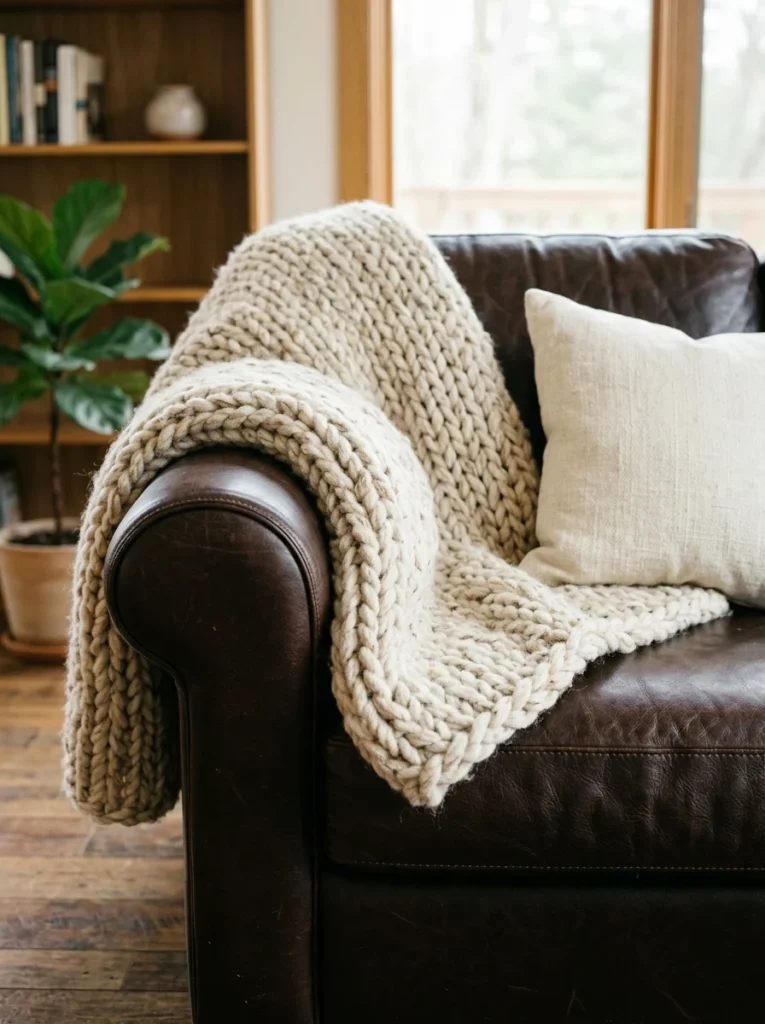
Draping a chunky, oversized knit throw over the arm of the couch instantly makes it feel more inviting and lived-in rather than stiff and staged. I found mine secondhand for a few dollars at a local shop, and the thick, nubby texture against the smooth leather created a nice contrast that made the whole seating area look intentionally styled rather than just functional furniture with nothing added to it.
11. Install Warm-Toned Ambient Lighting
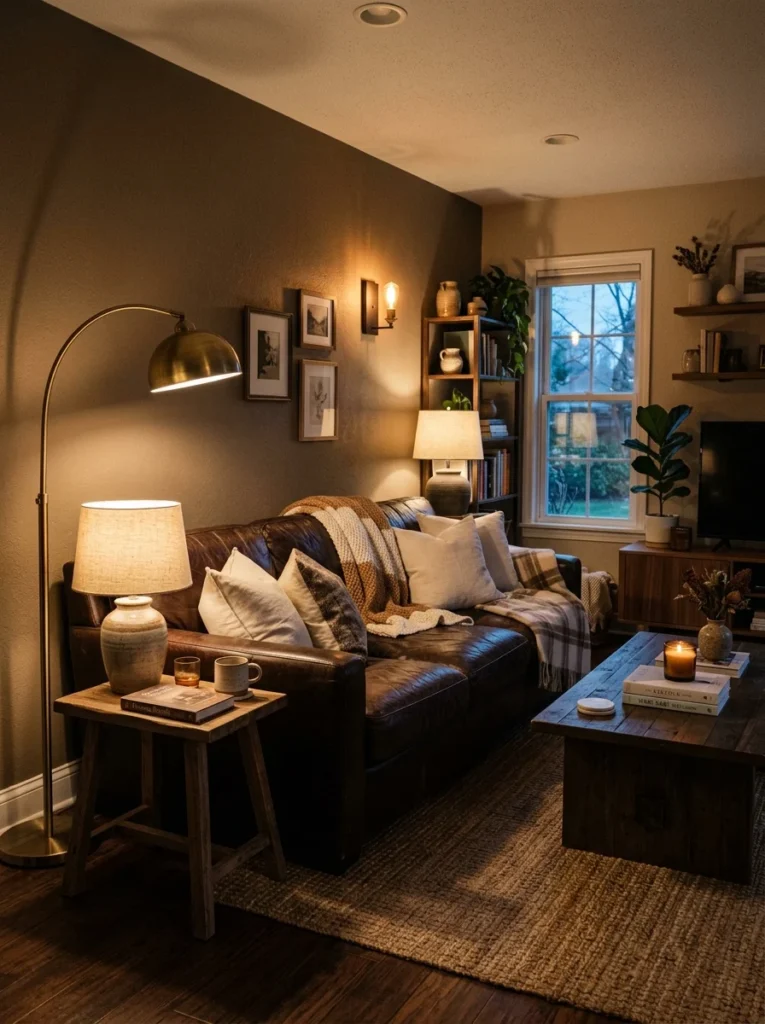
Overhead lighting can make dark furniture feel dull and flat, so I leaned heavily on lamps instead of relying on a single ceiling fixture. A mix of a floor lamp, a table lamp, and a couple of small accent lights with warm bulbs gave my living room a soft, golden glow in the evenings that made the dark brown couch look rich and inviting rather than gloomy or cave-like once the sun went down.
12. Use Botanical Prints or Framed Leaf Art
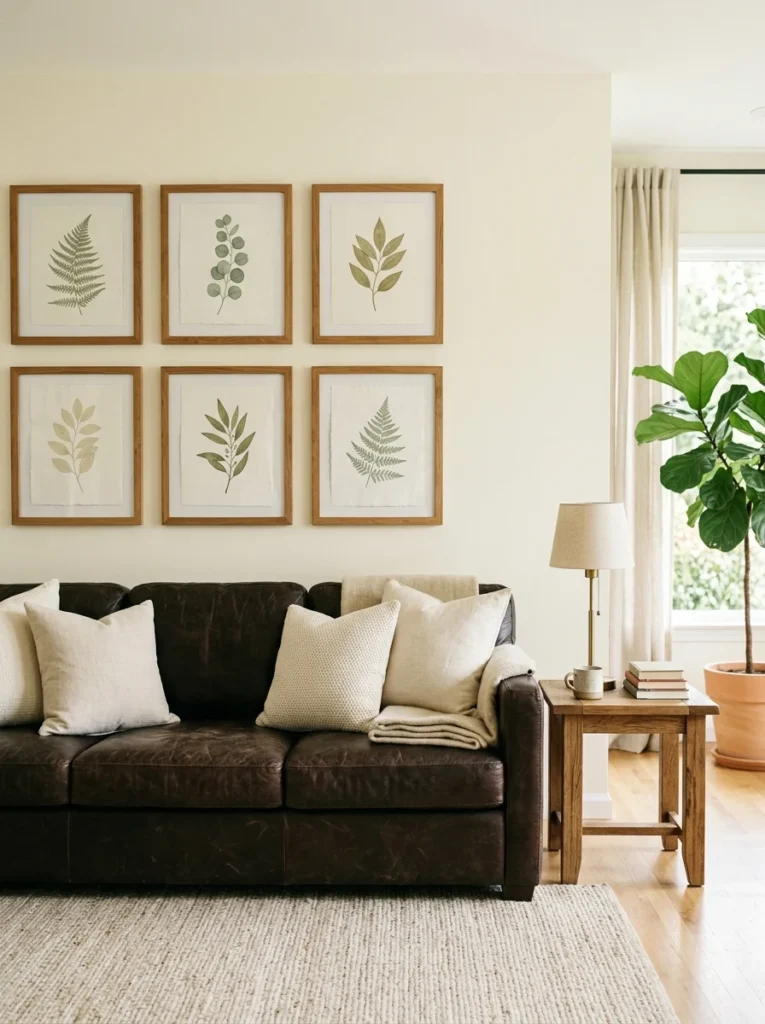
Simple framed botanical prints above my couch tied the natural, earthy tone of the leather into the rest of the room’s decor in a way that felt cohesive rather than random. Even inexpensive prints from an online marketplace looked intentional once matched with wood frames that echoed the couch’s warm undertone, proving that you don’t need original artwork to make a wall feel finished.
13. Add Large Leafy Plants Nearby
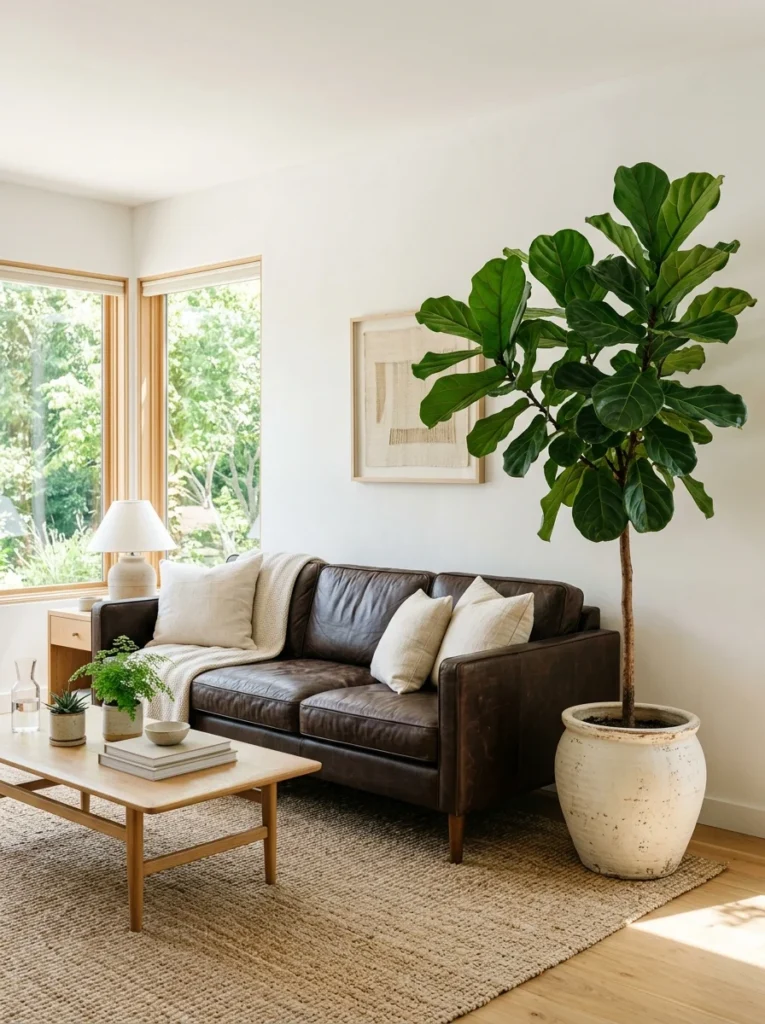
A tall fiddle leaf fig in the corner near my couch did double duty: it filled an otherwise empty, awkward space and added a pop of living green that contrasted beautifully against the deep brown upholstery. Plants are one of the cheapest and most effective ways to make any room, especially one anchored by dark furniture, feel fresher, more alive, and less static.
14. Try a Two-Tone Color Scheme With Navy
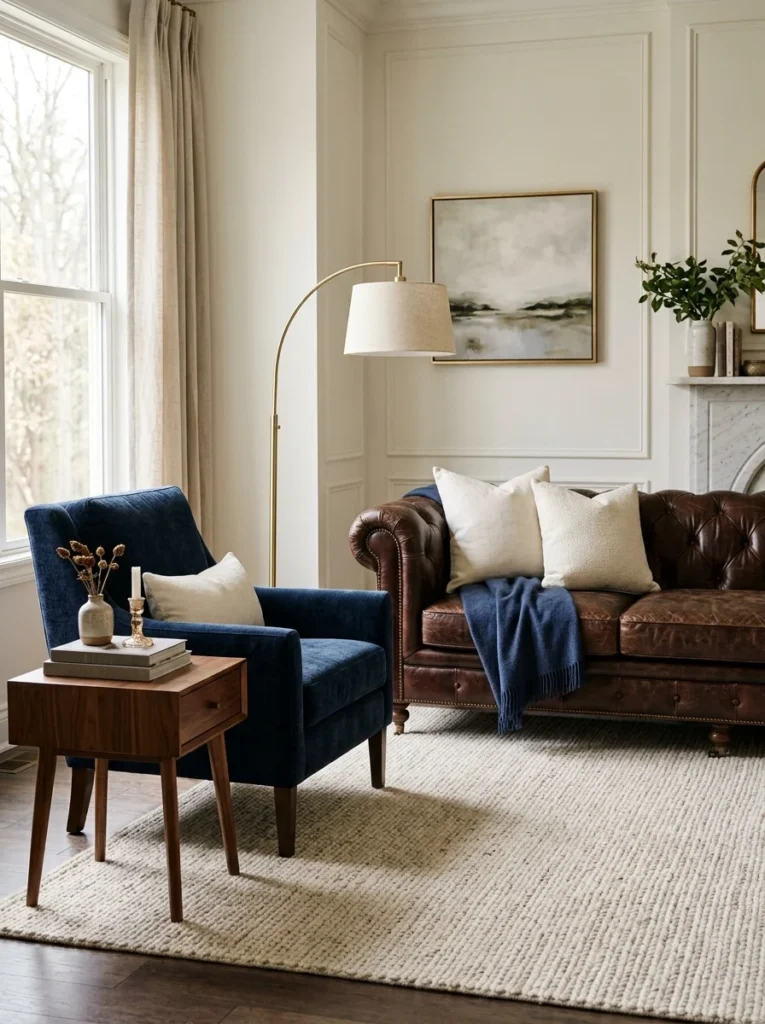
I didn’t expect navy blue to work with brown, but a navy accent chair next to my friend’s dark brown sofa turned out to be a surprisingly sophisticated combination. Both colors are deep and moody, so together they create a rich, layered look rather than competing for attention the way brown and black sometimes can. It’s a combination worth trying if you want something a little more unexpected than the usual neutral palette.
15. Use a Patterned Area Rug for Personality
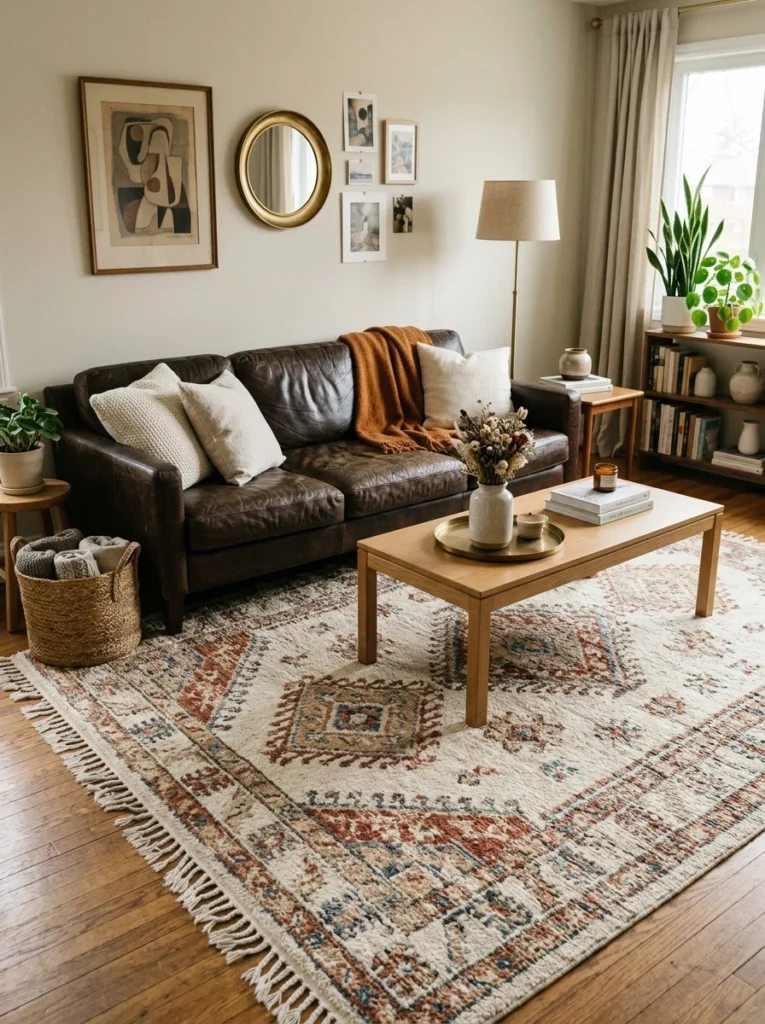
Instead of a plain neutral rug, I eventually switched to one with a subtle geometric pattern in cream, rust, and soft blue. It added personality and visual interest to the room without overwhelming the dark couch, and it helped tie together several of the accent colors I’d already introduced through pillows and artwork, pulling the whole room together in a way that felt cohesive rather than mismatched.
16. Add Textured Wall Paneling Behind the Sofa
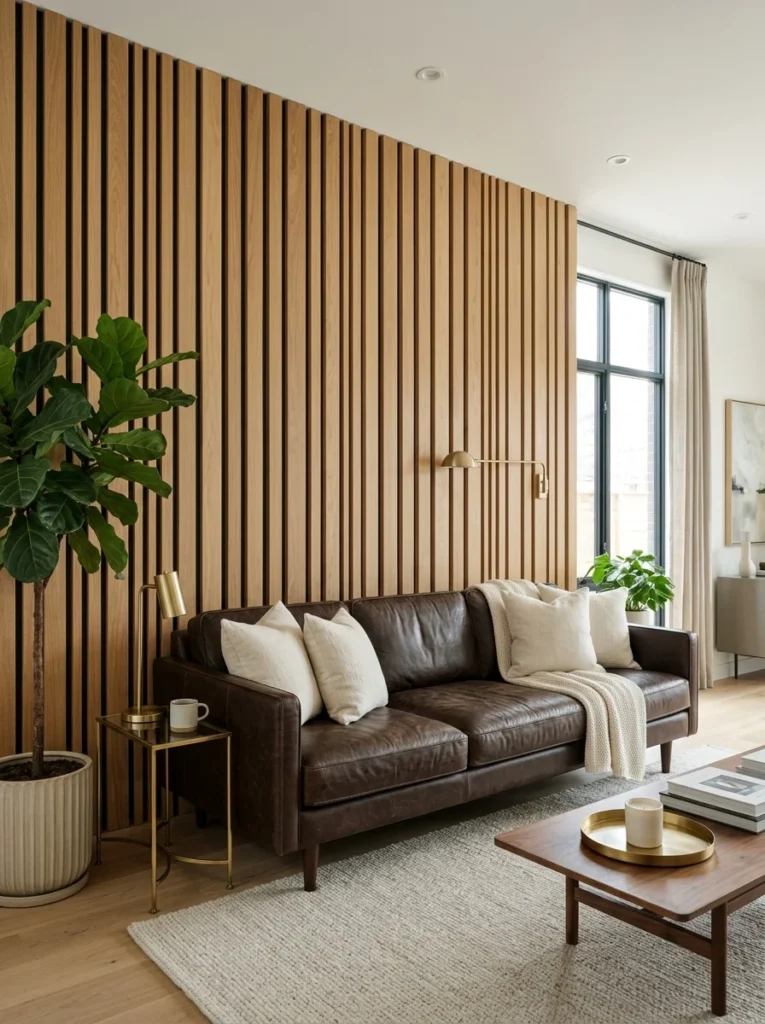
Simple wood slat paneling behind my couch, similar to what you’d see in a boutique hotel lobby, added architectural interest without much cost or effort. I stained the slats a slightly lighter tone than the couch itself, which created subtle contrast and made the seating area feel like a designed focal point rather than just furniture pushed up against a blank, empty wall.
17. Incorporate Woven Baskets for Storage and Texture
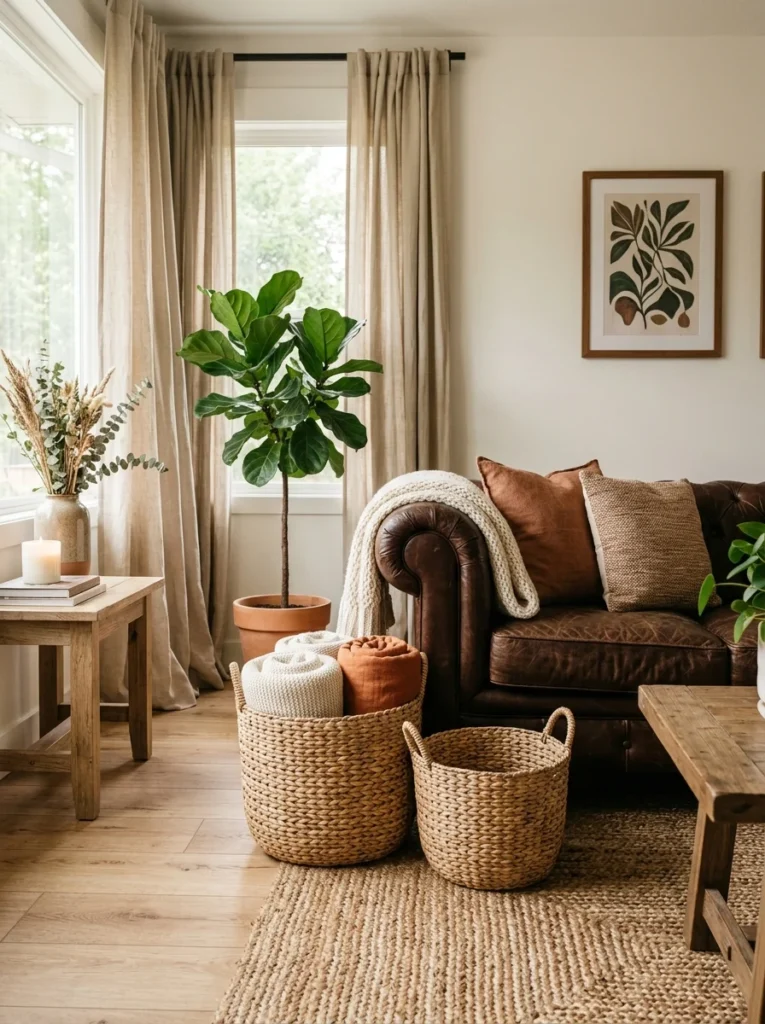
A couple of large woven baskets next to my couch double as blanket storage and a textural accent at the same time. The natural fiber material pairs well with leather and adds an organic, lived-in warmth that keeps the space from feeling too formal or stiff, while also solving the very real problem of where to put extra throw blankets and pillows when they’re not in use.
18. Balance Dark Upholstery With a Light Ceiling or Trim
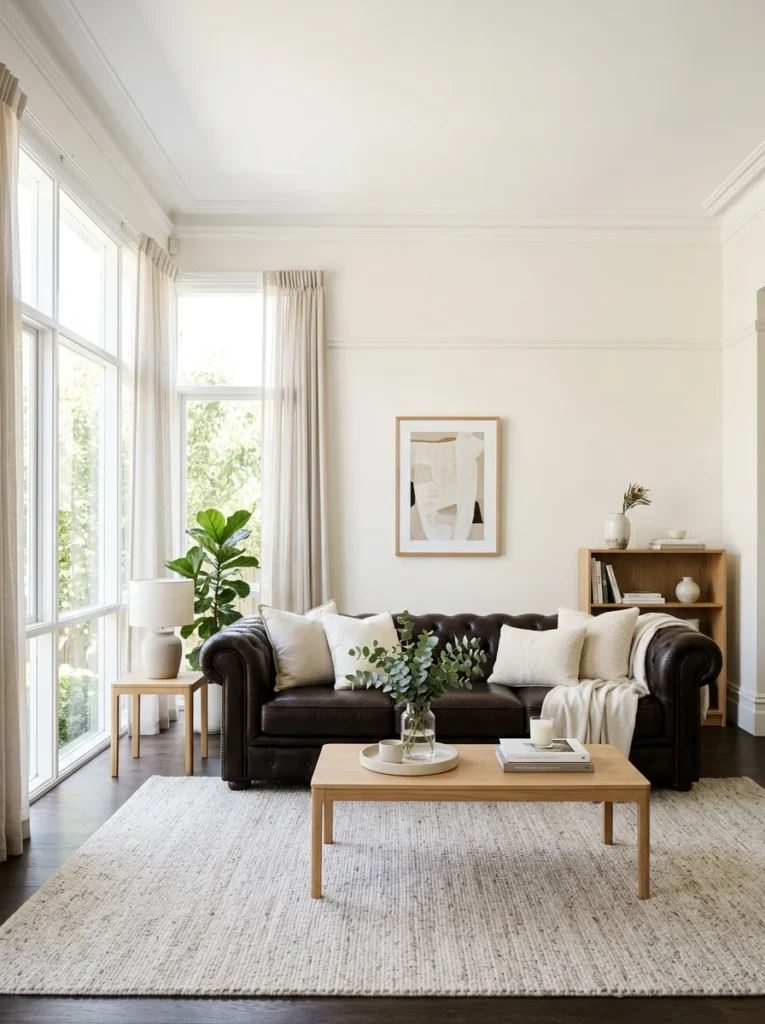
One of the simplest changes with the biggest visual impact was making sure my ceiling and trim stayed crisp white. With so much visual weight sitting low in the room from the dark couch, keeping the upper portion of the room light and bright prevented everything from feeling boxed in or heavy, and it’s a detail that’s easy to overlook when you’re focused on furniture and accessories instead of the architecture around them.
A Few Extra Tips Before You Start
If you’re working with a dark brown couch for the first time, my biggest piece of advice is to resist the urge to change everything at once. I made the mistake early on of buying too many new pieces in one weekend, and the room ended up feeling cluttered instead of curated. Slowing down and adding one or two elements at a time — a rug, then pillows, then lighting — gave me the chance to actually see how each change affected the room before committing to the next one.
It also helps to pay attention to the undertone of your specific couch. Some dark brown leather leans slightly red or auburn, while other pieces lean more neutral or even a little gray. Matching your wall colors and accents to that undertone, rather than just “brown” in general, makes a noticeable difference in how polished the final room looks.
Common Mistakes People Make With Dark Brown Couches
Before you start planning your own room, it’s worth knowing about a few mistakes I made or watched friends make along the way, since avoiding them will save you both time and money.
Matching everything too closely. My first instinct was to buy a rug, curtains, and pillows all in the exact same shade of brown as the couch, thinking it would look coordinated. Instead, the room looked flat and monotonous, like everything blurred into one indistinct mass. The couch only really shines when it has something lighter or brighter to contrast against.
Choosing cool-toned accent colors. Grays with blue undertones and stark white accessories tend to fight against the warmth of dark brown leather rather than complementing it. I learned to look for warm whites, creams, and neutrals with a hint of yellow or beige in them instead, which blend far more naturally with the couch’s undertones.
Skipping texture. A room with a leather couch, a smooth coffee table, and hardwood floors can end up feeling cold and showroom-like if there’s no softness anywhere. Adding a knit throw, a woven rug, or linen curtains breaks up all those hard, smooth surfaces and makes the space feel warmer and more comfortable to actually sit in.
Underestimating lighting. I didn’t realize how much my old, dim overhead light was working against me until I added a couple of warm-toned lamps. Dark furniture absorbs more light than pale furniture does, so a room with a dark couch often needs slightly more intentional lighting than a room built around lighter pieces.
How to Choose Accent Colors That Actually Work
Whenever I’m helping someone plan a room around a dark brown couch, I usually tell them to start by picking just one accent color first, rather than trying to plan the whole palette at once. Terracotta, mustard, forest green, and navy have all worked well in the rooms I’ve styled, but the right choice really depends on the mood you’re going for.
If you want the room to feel bright, open, and casual, lean toward warmer, lighter accents like cream, mustard, or soft terracotta. If you’re after something moodier and more dramatic, dark green or navy paired with brass accents tends to create a richer, more layered feel. Either direction works with a dark brown couch — it really just comes down to personal taste and how the rest of your home is styled.
Once you’ve picked that one anchor color, everything else becomes much easier to choose. I usually build outward from a single pillow fabric or a paint swatch, picking a rug, artwork, and smaller accessories that echo the same tone in different shades and textures rather than trying to match it exactly.
Frequently Asked Questions
Does a dark brown couch make a small living room feel smaller? Not necessarily. In my experience, a dark couch only makes a room feel smaller when everything else in the space is also dark or heavy. Balancing it with light walls, a pale rug, and plenty of natural light kept my own smaller living room feeling open rather than cramped.
What wall color goes best with a dark brown couch? Warm neutrals like terracotta, soft white, and muted sage all worked well in my experience, but I’ve also seen deep green and navy used successfully for a moodier, more dramatic look. It really depends on whether you want the room to feel bright and airy or rich and cozy.
Is dark brown furniture outdated? I don’t think so, and my own living room is proof that it can look just as current as any light-colored sofa when it’s paired with the right accents. Trends come and go, but a well-balanced room built around a quality piece of furniture tends to age better than one built entirely around whatever color happens to be trending that year.
Should throw pillows match the couch or contrast with it? In almost every room I’ve styled, contrast has worked better than matching. A dark brown couch already provides a strong, solid base color, so pillows in lighter or brighter tones tend to make the whole seating area feel more finished and intentional than pillows in the same brown family, which can end up disappearing into the couch instead of adding anything to it.
What flooring works best with a dark brown couch? Light hardwood, whitewashed wood, or pale tile all tend to balance out a dark couch nicely by keeping the lower half of the room from feeling too heavy. That said, I’ve also seen dark hardwood floors work beautifully when the walls and rug are kept light, so it really comes down to how much contrast you want in the room overall. If your existing floors are already dark, leaning even harder into light walls, rugs, and curtains helps keep the balance right.
Final Thoughts
Looking back, that inherited couch I almost sold ended up teaching me more about interior design than almost any other piece of furniture I’ve owned. Dark brown gets an unfair reputation for being outdated or hard to work with, but the truth is it’s one of the most versatile colors you can build a room around, as long as you balance it with the right contrast, texture, and lighting.
If you already have a dark brown couch and you’re not sure it fits your style, my honest suggestion is to start with just one or two changes from this list — maybe new pillows and a lighter rug — before committing to a full room overhaul. That’s exactly how my own living room came together, one small adjustment at a time, until a couch I almost got rid of became the piece everyone asks about the moment they walk through my door.
There’s also something worth saying about not rushing to replace furniture just because it doesn’t match a trend you saw online. Good quality pieces, especially leather ones, tend to last for decades if they’re taken care of, and a slightly unfashionable color is almost always easier and cheaper to work around than a whole new sofa is to buy. My uncle’s old couch has now outlasted two rounds of “on-trend” gray sofas that friends of mine bought and got tired of within a couple of years, which tells me the versatility of a good dark brown piece is underrated far more often than it should be.