
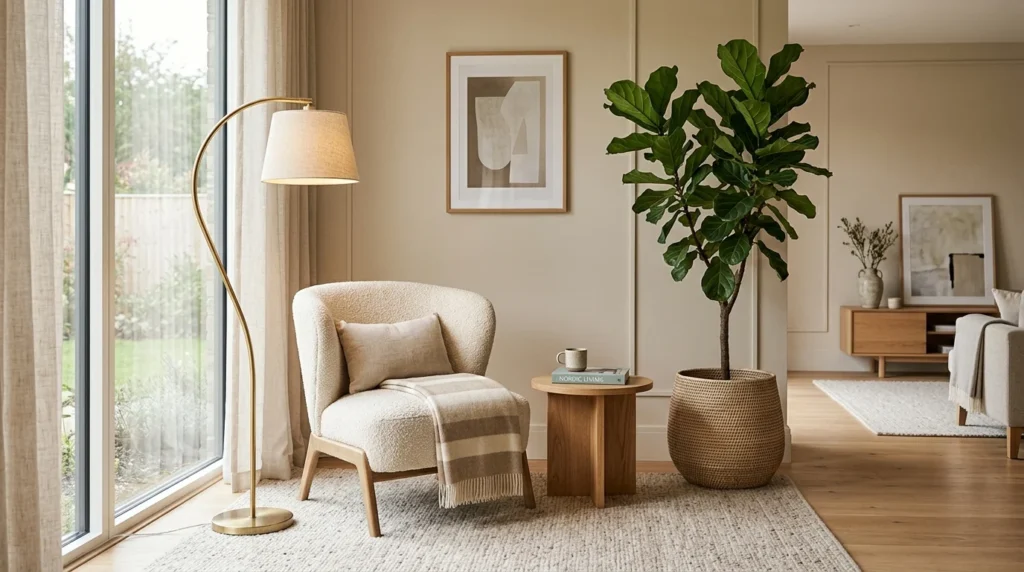
I have this one corner in my living room, tucked between my window and my bookshelf, that sat completely empty for the better part of two years. It wasn’t an awkward shape or a genuinely unusable space, I just never quite knew what to do with it, so it became the spot where things got temporarily set down and then somehow never moved again, a stray umbrella, a stack of mail, a plant that had clearly given up. It wasn’t until I finally sat in that corner one afternoon, genuinely trying to figure out what it wanted to be, that I realized how much unused potential I’d been ignoring in a room I otherwise cared about quite a bit.
If your own living room has a similarly overlooked corner, here are 16 ideas, each explained in detail, based on what I ultimately did with my own empty corner and what I’ve seen work well in other living rooms since.
1. Create a Dedicated Reading Nook
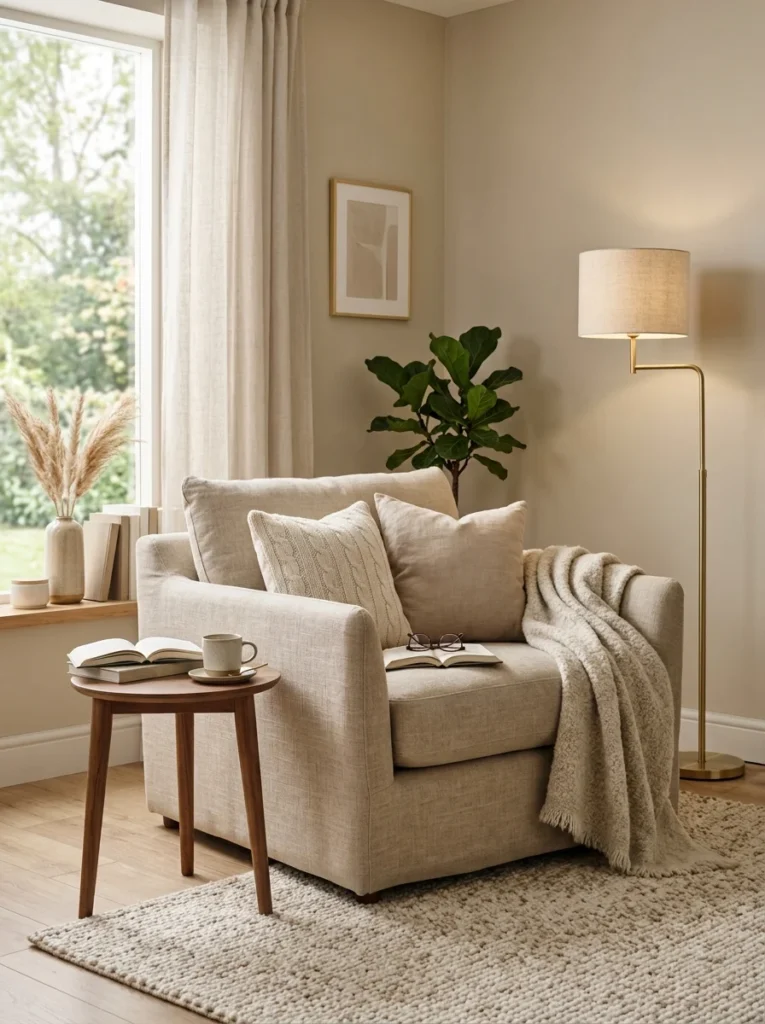
A single comfortable armchair, a small side table, and a floor lamp positioned in an empty corner can transform unused space into genuinely the most-used spot in your entire living room, which is exactly what happened once I finally committed to this idea for my own previously empty corner. I chose a slightly oversized, deeply cushioned chair specifically because comfort mattered more to me than matching my sofa’s exact style, and having a designated spot purely for reading, rather than always defaulting to the couch, has genuinely changed how often I actually sit down with a book rather than reaching for my phone instead. I’d recommend positioning the chair at a slight angle rather than facing directly into the corner, which tends to feel more inviting and less like you’re being punished by sitting in a corner, while also allowing the lamp to actually illuminate your reading material properly from over your shoulder. This idea works particularly well in corners near a window, where natural light supplements your reading lamp during the day, though it’s just as effective in a windowless corner with the right artificial lighting setup in the evening.
2. Build a Floor-to-Ceiling Bookshelf
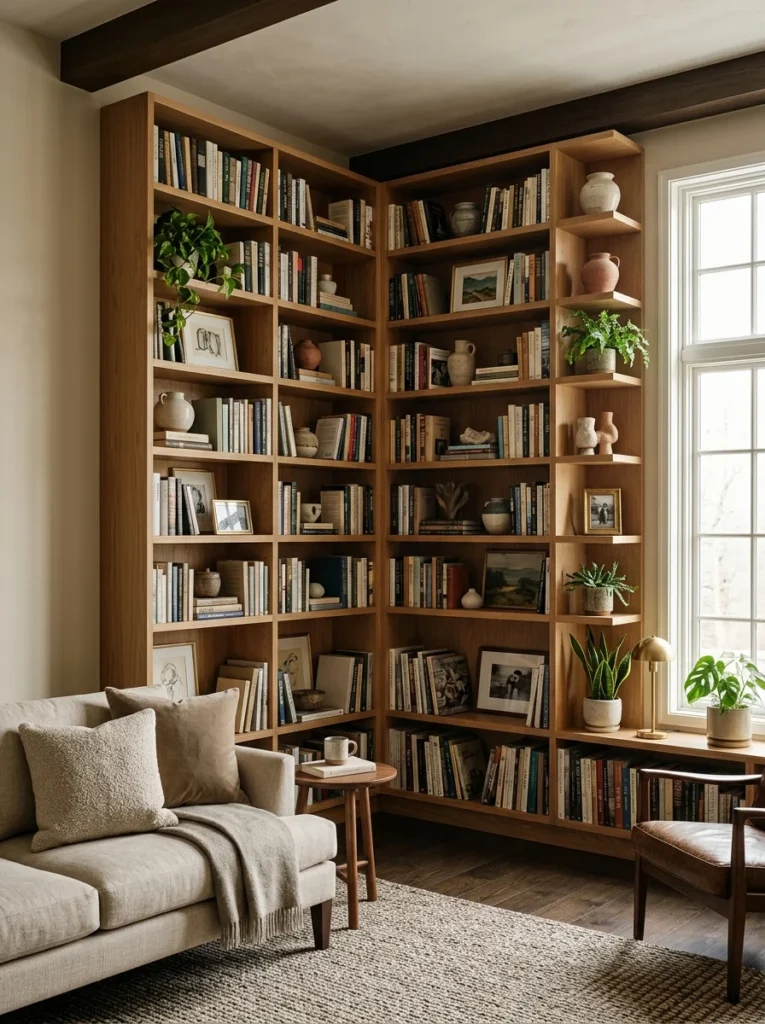
Rather than a freestanding bookshelf pulled slightly away from the wall, a built-in or built-in-style floor-to-ceiling shelving unit specifically designed to fit your corner’s exact dimensions maximizes storage and display space while giving that previously empty area genuine architectural purpose within the room. A friend had custom shelving built into an awkward corner of her living room specifically for this purpose, and the corner now holds her entire book collection along with curated decorative objects, transforming what used to be dead space into what she describes as her favorite feature in the entire room. This requires either custom carpentry or a modular shelving system specifically designed to wrap around a corner’s two intersecting walls, making it a more involved project than simply placing a standard rectangular bookshelf against one flat wall section. I’d recommend measuring your specific corner’s dimensions carefully and researching corner-specific shelving units, either custom-built or from manufacturers who specifically design for this configuration, rather than assuming a standard shelf designed for flat wall placement will work comfortably in a genuinely angled corner space.
3. Add a Floor Plant as a Living Sculpture
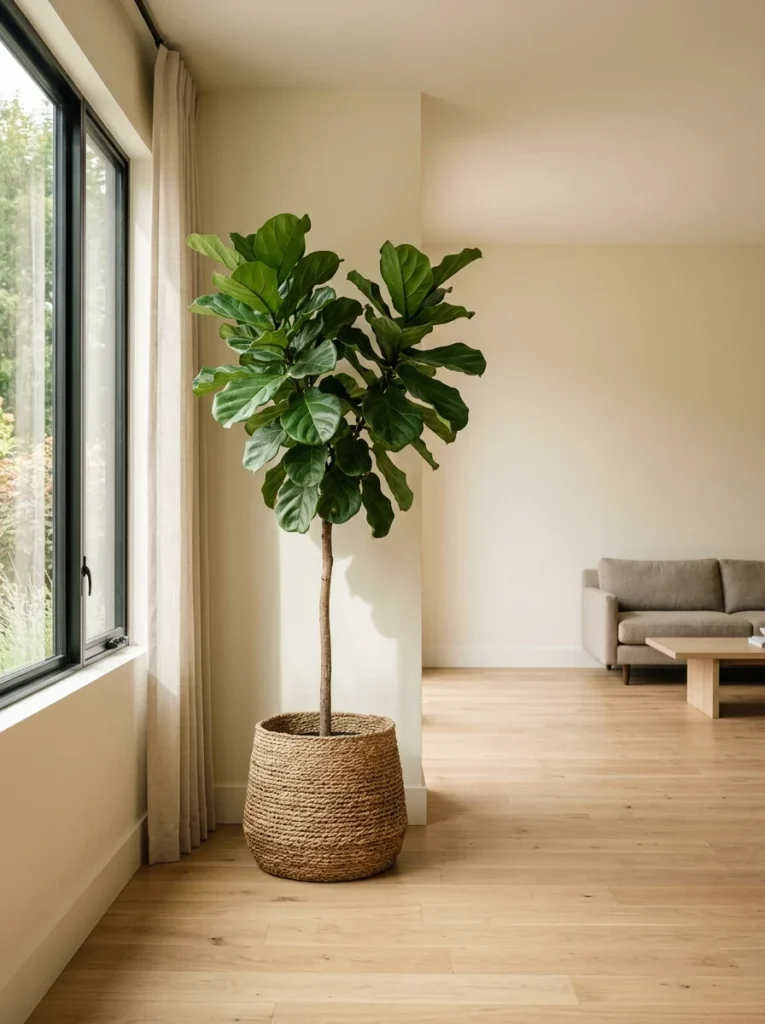
A single, appropriately scaled floor plant, positioned in an otherwise empty corner, brings genuine life, height, and organic texture to a space that would otherwise remain flat and undefined, functioning almost like a sculptural piece of living decor rather than purely functional greenery. I placed a tall fiddle leaf fig in my own corner before eventually adding the reading chair beside it, and even on its own, that single plant genuinely changed how the corner felt, giving it a clear sense of purpose and visual interest where there had previously been nothing at all. I’d recommend choosing a plant genuinely scaled to your specific corner’s height and width, since an undersized plant gets visually lost in a larger corner, while an oversized one can feel cramped and overwhelming in a more modest space. For corners without much natural light, low-light tolerant varieties like a snake plant or ZZ plant achieve a similar sculptural, life-bringing effect without requiring the more demanding light conditions that some larger statement plants, like a fiddle leaf fig, genuinely need to actually thrive over time.
4. Create a Mini Bar or Beverage Station
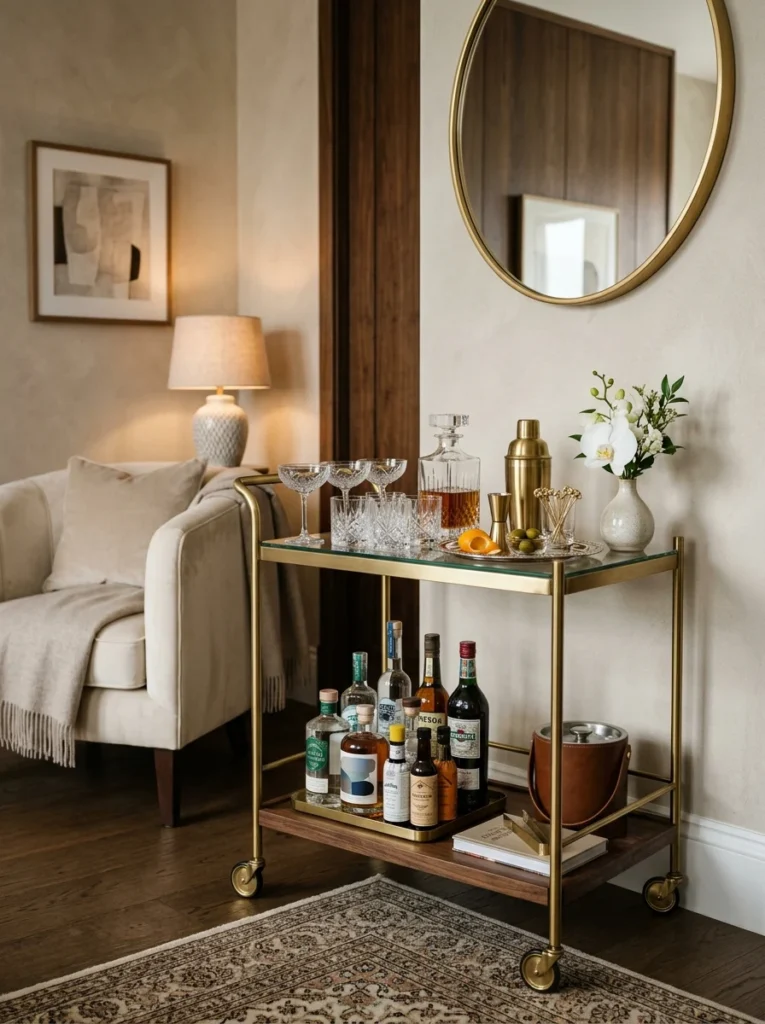
An empty corner offers genuine potential for a small bar cart or dedicated beverage station, complete with a few favorite spirits, glassware, and bar tools, creating a functional gathering point for entertaining without requiring the larger investment of built-in cabinetry elsewhere in the home. A friend transformed her previously unused living room corner into exactly this, using a simple bar cart with wheels that could be repositioned if needed, and it’s become a genuine focal point during her regular gatherings, with guests naturally congregating there rather than crowding her kitchen while she’s finishing food preparation elsewhere. This idea works particularly well for households that entertain regularly, giving that empty corner genuine daily and social function rather than existing purely as passive decor viewed but never actually used. I’d recommend choosing a cart or small console specifically scaled to your corner’s available space, and positioning it with enough clearance that guests can comfortably access it from multiple angles during an actual gathering without feeling cramped or in the way of other people moving through the room.
5. Build a Small Home Office Nook
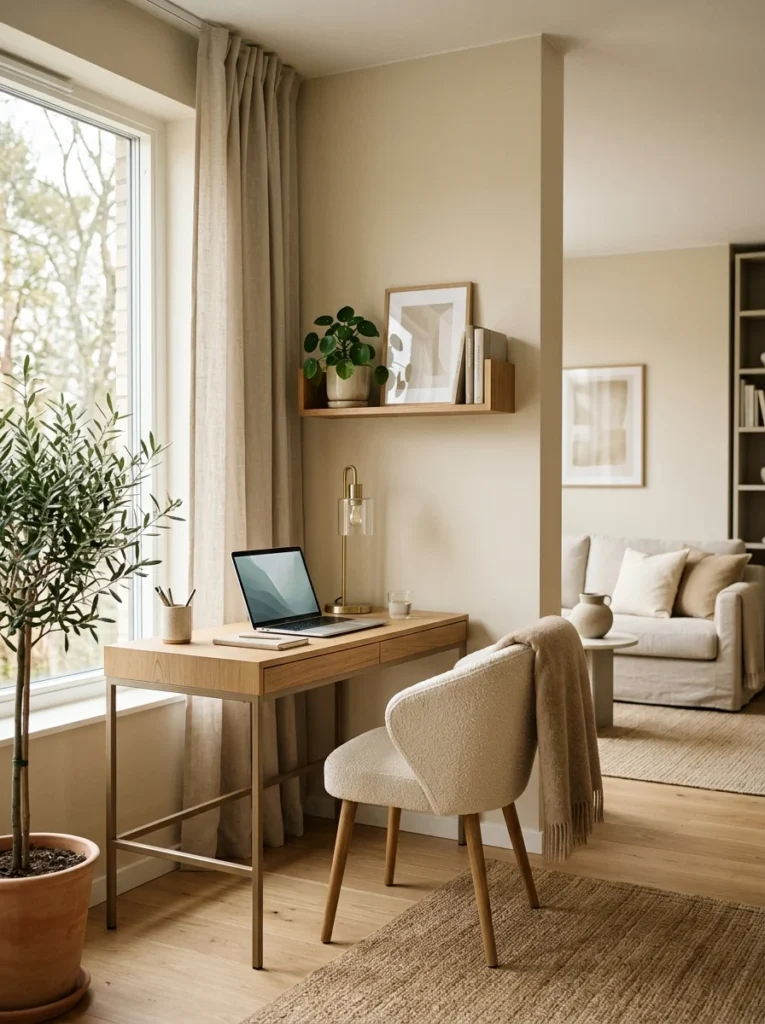
For anyone needing a compact workspace but lacking a dedicated home office room, an empty living room corner can accommodate a small desk, a chair, and perhaps a single shelf, creating a functional work-from-home spot without sacrificing an entire separate room to that purpose. I considered this option for my own corner before ultimately choosing the reading nook direction instead, but a friend who works from home regularly transformed her previously empty living room corner into exactly this kind of compact office setup, using a narrow desk specifically sized to fit that angled space without protruding awkwardly into the room’s main walking area. This works particularly well if you can position the desk facing outward into the room rather than directly into the corner itself, both for a more pleasant working view and to avoid that slightly claustrophobic feeling of staring directly at two intersecting walls throughout your workday. I’d recommend choosing furniture that can visually blend into your living room’s broader design when you’re not actively using it for work, since a nook that looks obviously like an office corner year-round can feel visually disconnected from the room’s primary living-space function during the majority of hours when you’re not actually working there.
6. Add a Statement Floor Lamp as Sculptural Lighting
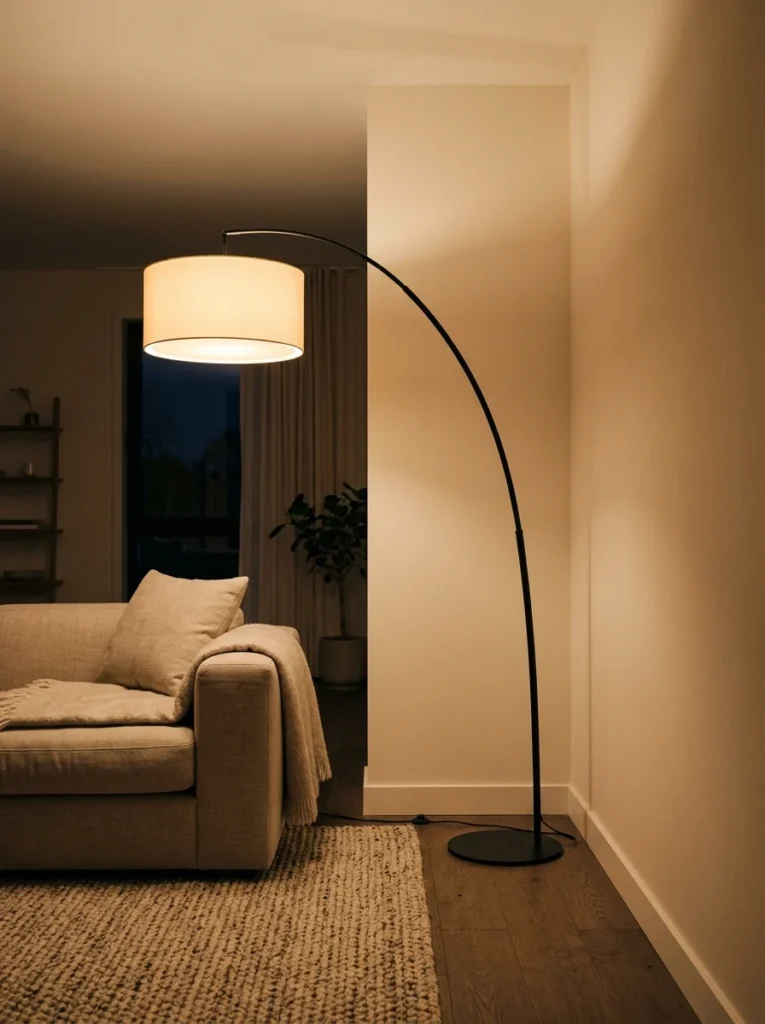
Sometimes the simplest solution for an awkward empty corner is a single, genuinely interesting floor lamp, chosen as much for its sculptural silhouette as for its actual lighting function, filling vertical space and adding visual interest without requiring any additional furniture or larger commitment. I’ve seen this done beautifully in a friend’s living room using an arc-style lamp with a dramatic curved arm, positioned specifically in a corner too narrow for a chair or table but perfectly suited to a floor lamp’s considerably smaller footprint. This is one of the lowest-commitment ideas on this entire list, requiring genuinely minimal floor space while still providing both functional evening lighting and a distinctive design element that fills what would otherwise remain a completely empty, undefined corner. I’d recommend choosing a lamp with a genuinely interesting shape or silhouette specifically for this purpose, rather than a purely utilitarian, forgettable design, since the lamp itself needs to carry more visual weight as essentially the corner’s sole decorative element compared to how the same lamp might function as just one supporting piece within a larger, more elaborate corner arrangement.
7. Create a Gallery Wall Corner
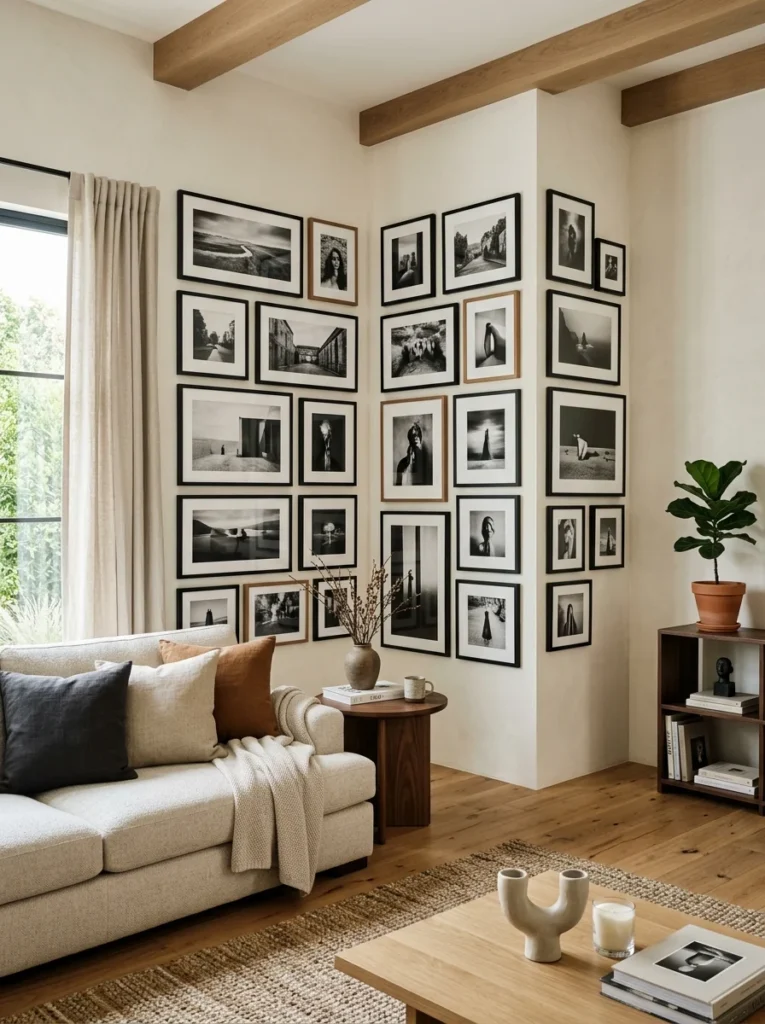
Rather than confining your gallery wall to a single flat wall section, wrapping framed art around an actual corner, continuing the arrangement across both intersecting walls, creates a genuinely immersive display that makes creative use of a space most people wouldn’t initially consider suitable for hanging art at all. A friend did exactly this in her living room, wrapping a collection of black-and-white photography around a previously blank corner, and the resulting three-dimensional quality of walking past art that continues around the actual angle of the room genuinely creates a more dynamic viewing experience than a flat gallery wall alone typically achieves. This requires more careful planning than a standard flat gallery wall, since you’re working with the actual physical angle where two walls meet rather than a single continuous flat surface, and I’d recommend laying out your intended arrangement on the floor first, accounting for that corner transition, before committing to any actual nail holes in either wall section. This idea works particularly well in a corner too narrow or oddly shaped for furniture but with adequate wall space on both sides for this kind of wraparound art display.
8. Add a Small Meditation or Yoga Corner
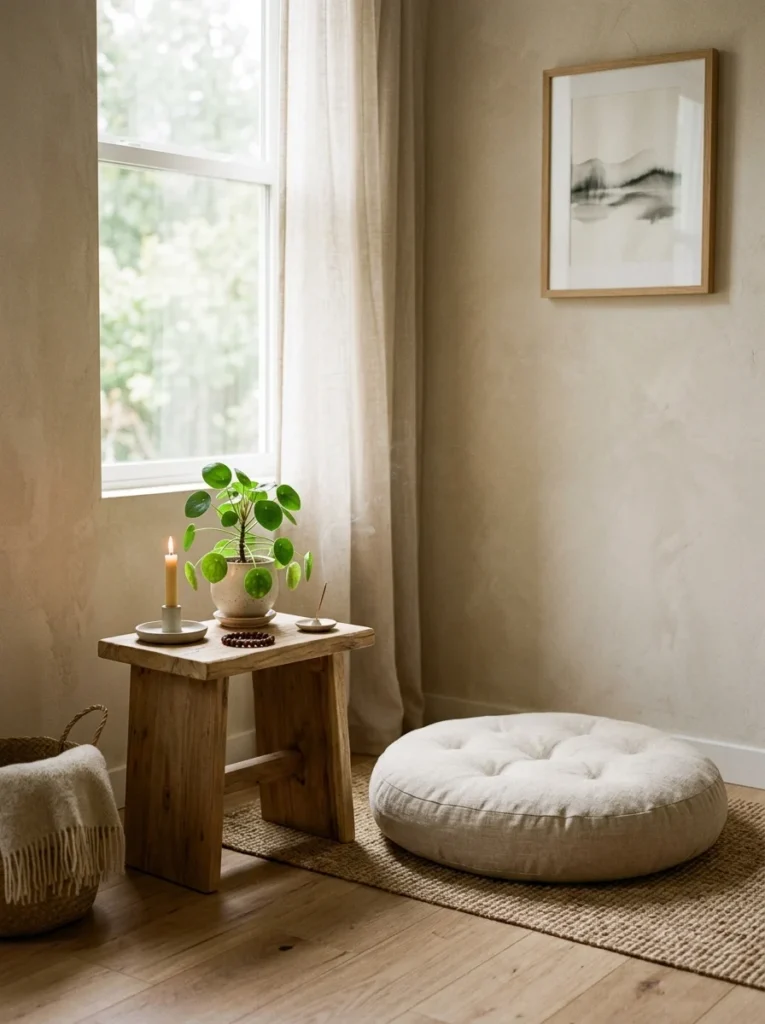
For anyone prioritizing mindfulness or a regular yoga practice, dedicating an empty corner specifically to this purpose, a simple cushion or small meditation bench, perhaps a small plant and a candle, creates a designated, calming spot within your main living space rather than needing an entirely separate room for this purpose. A friend transformed her living room’s previously empty corner into exactly this kind of small meditation spot, keeping the setup genuinely minimal, just a floor cushion and a small side table for a candle, and she’s mentioned that having this specific, designated spot has made her actually more consistent with her daily practice compared to when she was setting up and breaking down a temporary space each time. This works particularly well in a corner that receives some natural light or a peaceful view, if your living room’s layout allows for that positioning, since the ambiance of the specific spot genuinely matters for this particular use case more than it might for some of the other ideas on this list. I’d recommend keeping this corner’s overall styling minimal and uncluttered specifically, since the goal here is creating a calm, distraction-free spot rather than an elaborately decorated corner competing visually with the rest of your living room.
9. Use a Corner Shelf Unit for Curated Display
A dedicated corner shelving unit, specifically designed to fit the angle where two walls meet rather than a standard rectangular bookshelf, provides display space for curated decorative objects, books, and plants without requiring the deeper floor footprint that a chair or larger furniture piece would demand in that same space. I’ve seen this used particularly well in a smaller apartment living room where floor space genuinely couldn’t accommodate a reading chair or larger furniture addition, and the corner shelf unit provided meaningful additional storage and display space while barely encroaching on the room’s already limited walkable area. This style of shelving comes in various configurations, from simple wall-mounted floating corner shelves to full floor-to-ceiling corner units, giving you flexibility depending on exactly how much storage and display capacity your specific corner and broader living room actually need. I’d recommend this specifically for smaller living rooms where floor space is at more of a genuine premium, since a corner shelf’s minimal footprint makes it one of the more space-efficient options on this entire list for anyone dealing with a compact overall living room.
10. Add a Small Console Table With Styled Objects
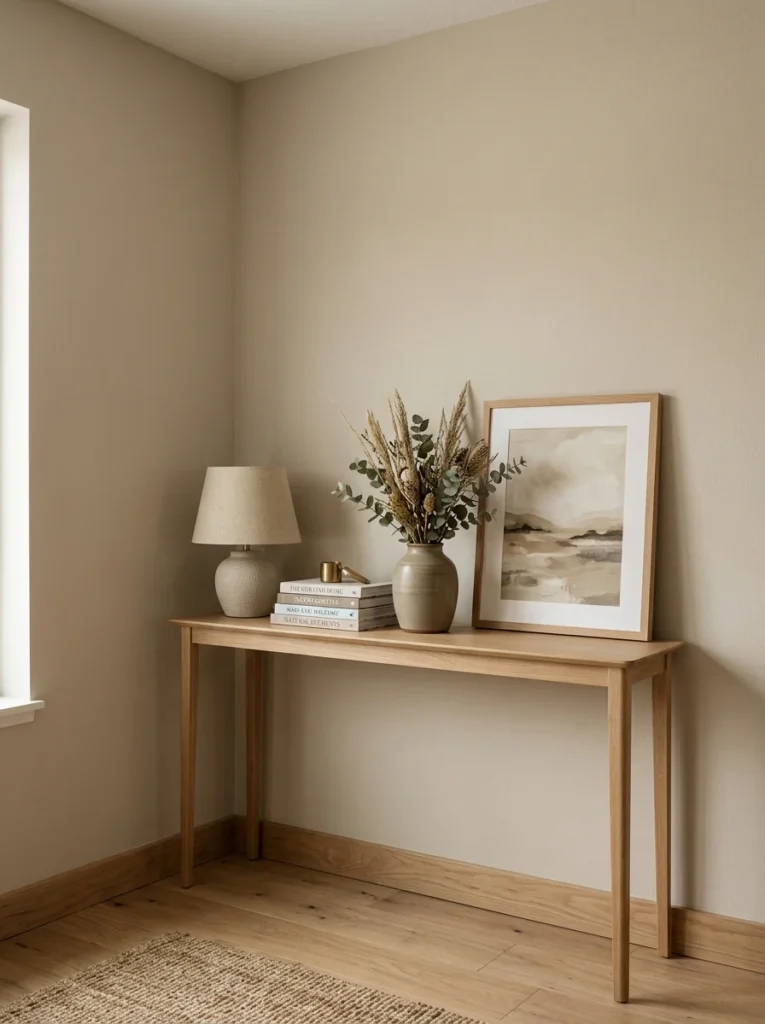
A narrow console table, specifically sized to fit an empty corner’s available space, provides a surface for styled decorative objects, a lamp, a small stack of books, a piece of art leaning against the wall behind it, transforming an empty corner into a genuinely considered vignette without requiring a full furniture piece like a chair or desk. A friend used exactly this approach in her living room’s previously unused corner, styling the console with a simple lamp, a small vase, and a leaned piece of art, creating a cohesive small display that fills the space without adding genuine seating or storage function beyond that surface itself. This idea works particularly well for corners too small or awkwardly shaped for a chair but with enough space for a genuinely narrow table, and it offers considerably more styling flexibility and opportunity for personal expression than a purely functional shelf or lamp alone might provide. I’d recommend choosing a console specifically scaled to your corner’s dimensions, generally quite narrow given how most living room corners are actually shaped, rather than assuming a standard-depth console table designed for a longer, flatter wall section will comfortably fit that more constrained corner space.
11. Create a Cozy Window Seat If Your Corner Includes a Window
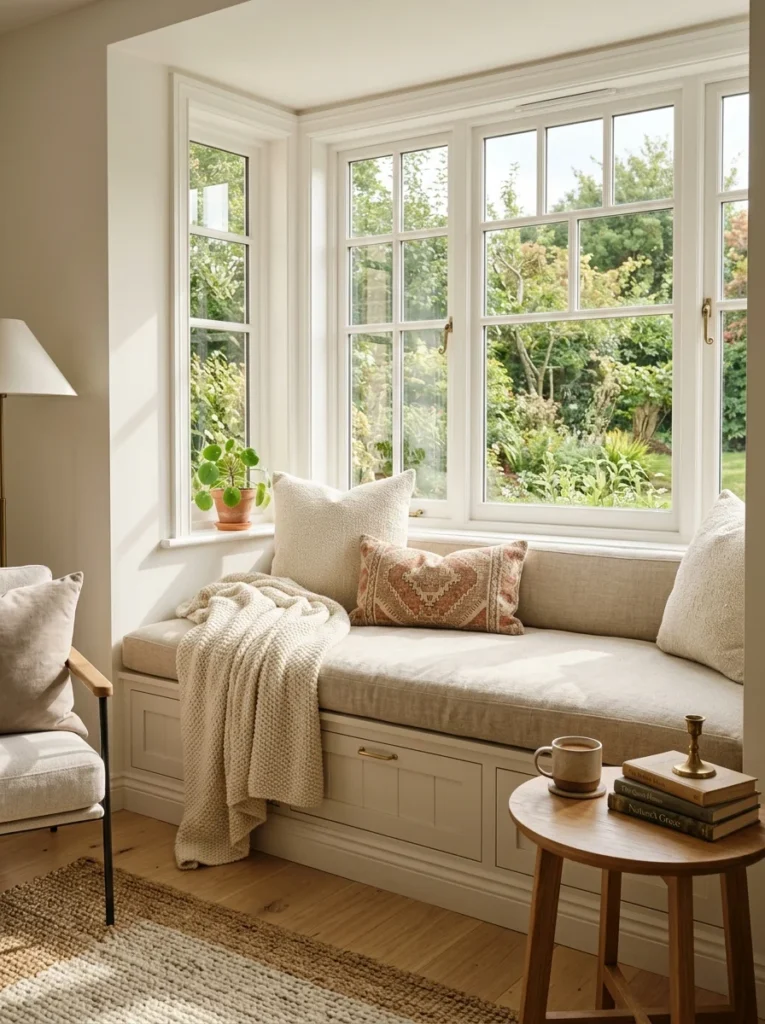
If your empty living room corner happens to include a window, building or purchasing a simple window seat, whether a genuine built-in bench or a freestanding daybed-style piece positioned beneath the window, creates a naturally inviting spot that takes full advantage of that existing architectural feature rather than treating the window and the empty floor space beneath it as two separate, unrelated considerations. A friend built a simple window seat into her living room’s corner window nook, complete with storage underneath and a few cushions, and it’s become both a favorite reading spot and a genuinely useful additional storage solution for blankets and extra pillows that would otherwise need to be stored elsewhere in the room. This requires either custom carpentry for a genuinely built-in bench or careful measuring to find a freestanding piece that fits your specific window’s width and the corner’s available depth, making this a moderately more involved project than some of the simpler ideas elsewhere on this list. I’d recommend this specifically if your empty corner does include a window, since the natural light and view genuinely enhance this particular idea considerably beyond what the same basic seating concept would achieve in a windowless corner elsewhere in the room.
12. Add a Corner Fireplace or Electric Insert
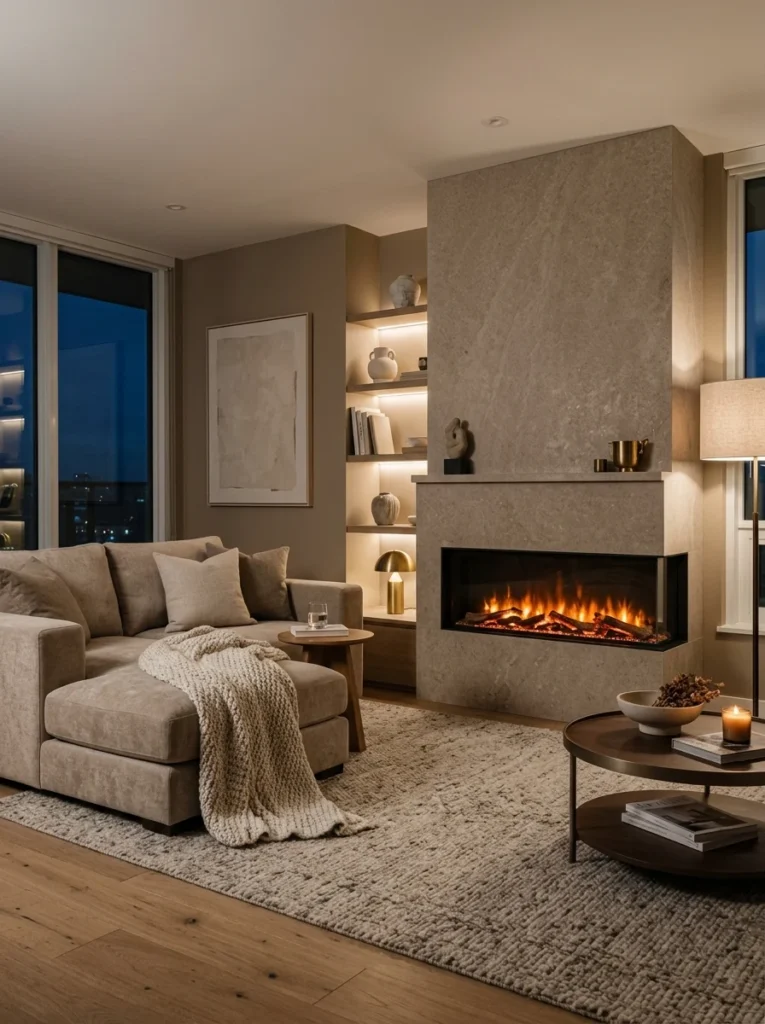
For a genuinely ambitious corner transformation, installing an electric fireplace insert specifically designed for corner installation creates both a functional heat source and a dramatic focal point that transforms a previously empty, purposeless corner into the room’s clear centerpiece. A friend added a corner electric fireplace to her previously unused living room corner during a broader renovation, and the addition genuinely changed how her family uses that entire section of the room, with everyone naturally gravitating toward that corner during colder months in a way they simply hadn’t before the fireplace’s installation. Modern electric fireplace inserts require considerably less installation complexity than a traditional wood-burning or gas fireplace, typically needing just a standard electrical outlet rather than any venting or gas line work, making this a more accessible project than it might initially sound for anyone specifically drawn to this idea. I’d recommend this specifically for a corner with enough surrounding floor space to actually arrange seating around it afterward, since a fireplace installed in a corner too tight to comfortably position any furniture nearby loses much of its intended function as an actual gathering point for the room.
13. Use Wallpaper or Bold Paint to Define the Corner
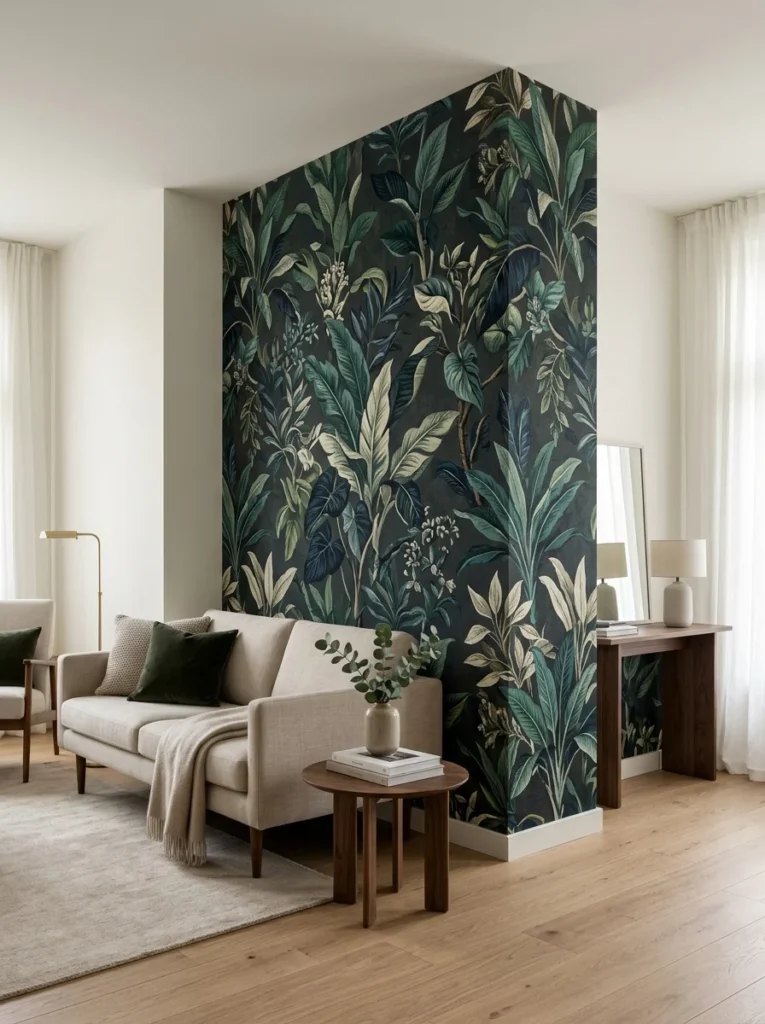
Rather than adding furniture or objects to fill an empty corner, sometimes simply applying a bold wallpaper or paint color specifically to that corner’s two wall sections, while keeping the rest of the room in a simpler, more neutral color, creates enough visual definition and interest on its own without requiring any additional furniture or decorative objects at all. A friend wallpapered just her previously empty corner in a bold botanical print, leaving the rest of her living room’s walls a simple white, and that contained pop of pattern gives the corner genuine visual presence and purpose despite containing no actual furniture or decor beyond the wallpaper itself. This is one of the more budget-friendly ideas on this entire list, requiring only paint or wallpaper rather than any furniture purchase, making it a particularly good starting point for anyone wanting to address an empty corner without a larger financial investment. I’d recommend this specifically as either a standalone solution for a corner too small or awkward for furniture, or as a complementary backdrop layered beneath one of the other furniture-based ideas elsewhere on this list, since the bold wall treatment and an added furniture piece can work together rather than needing to be mutually exclusive choices.
14. Create a Pet Corner With Style
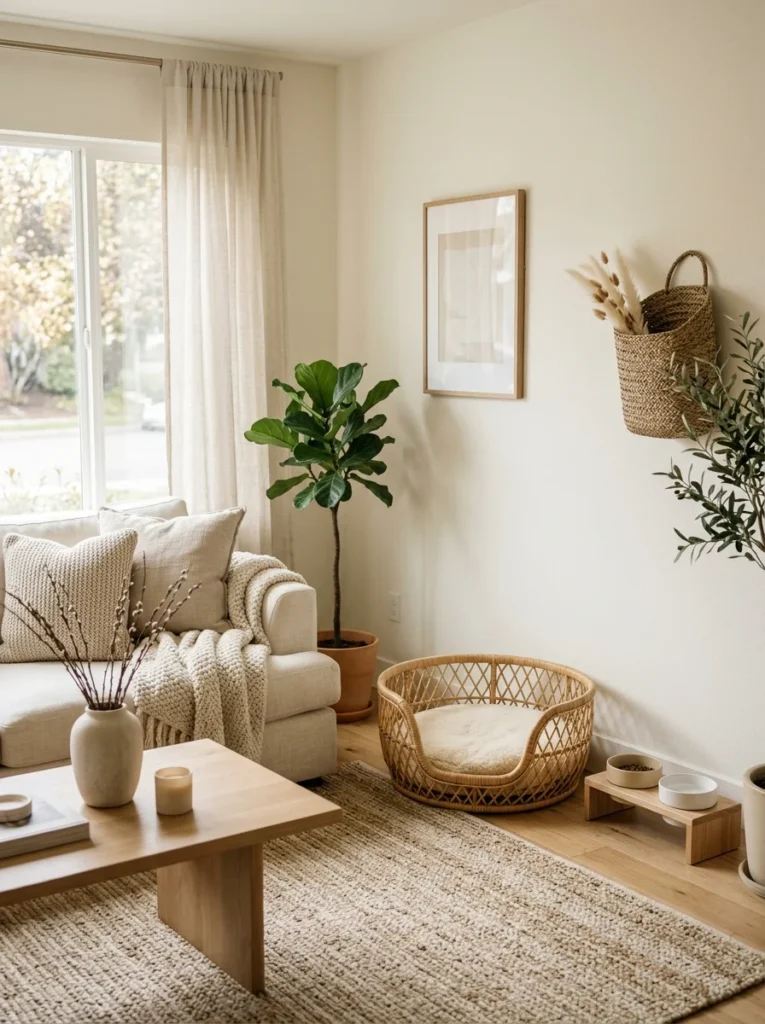
For households with pets, dedicating an otherwise empty living room corner specifically to a stylish pet bed, a small feeding station, or a cat tree designed to actually complement rather than clash with your existing decor, gives your pet a genuine designated spot while ensuring that necessary function doesn’t detract from the room’s overall considered design. A friend created exactly this kind of corner for her dog, choosing a woven pet bed in a neutral tone that coordinates with her living room’s existing color palette rather than a mismatched, obviously pet-store-purchased option that would have visually clashed with everything else in the carefully considered room. This approach requires genuinely searching out pet products specifically designed with aesthetics in mind, since much of the standard pet product market prioritizes function over style, but the resulting integration means your pet’s needs and your room’s overall design don’t have to exist in tension with each other the way they might with a more mismatched, purely functional pet corner setup. I’d recommend this specifically if your household includes pets and you’ve been keeping their bed or supplies in a more visually disruptive spot elsewhere in the room, since consolidating everything into one intentionally styled corner genuinely improves the room’s overall cohesion.
15. Add a Small Music Corner
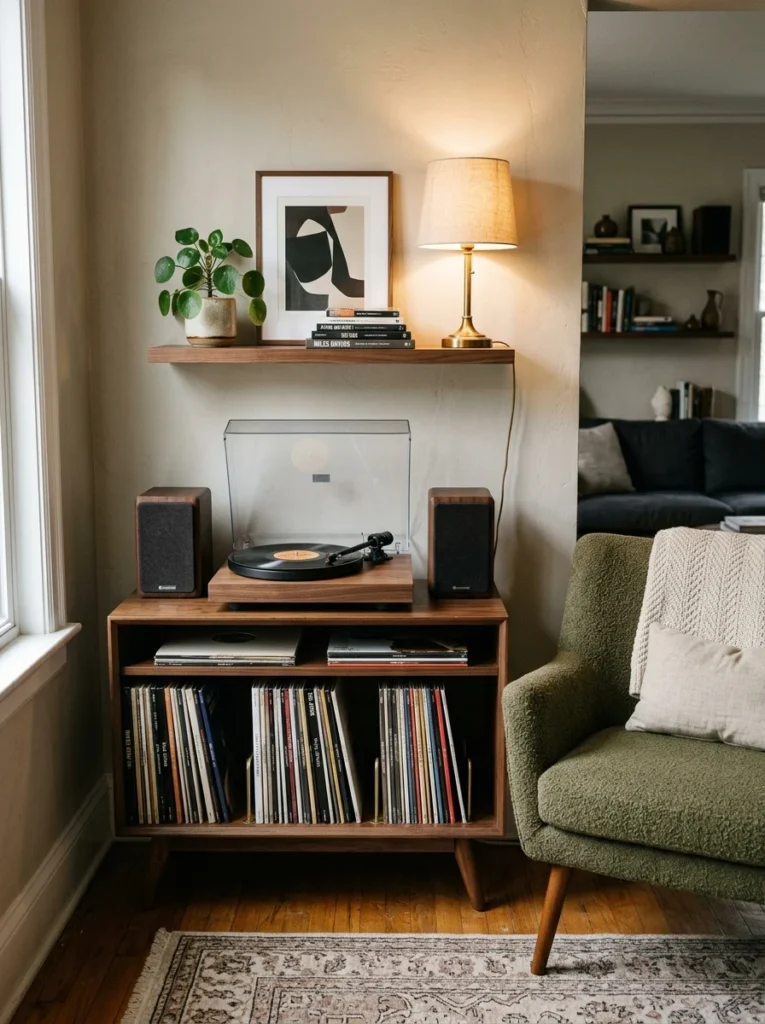
For music lovers, transforming an empty corner into a dedicated spot for a record player, a small speaker setup, and a curated collection of vinyl or CDs creates both genuine function and a distinctive personal touch that reflects your actual interests and hobbies rather than existing as purely generic, purchased decor. I’ve considered this direction for my own home, and a friend who did commit to it in her living room’s previously empty corner has genuinely made that spot one of her favorite places to unwind, playing records while relaxing rather than defaulting purely to streaming music through a phone or smart speaker elsewhere in the room. This idea works particularly well combined with a small chair or bench nearby, creating a spot where you can actually sit and enjoy the music rather than just having the equipment present without any accompanying place to genuinely relax and listen. I’d recommend this specifically if music is a genuine ongoing hobby or interest for you, since this idea, more than most others on this list, depends heavily on actual regular use to justify the space, rather than existing purely as a passive decorative choice disconnected from your real daily habits and interests.
16. Combine Multiple Small Elements Rather Than One Large Piece
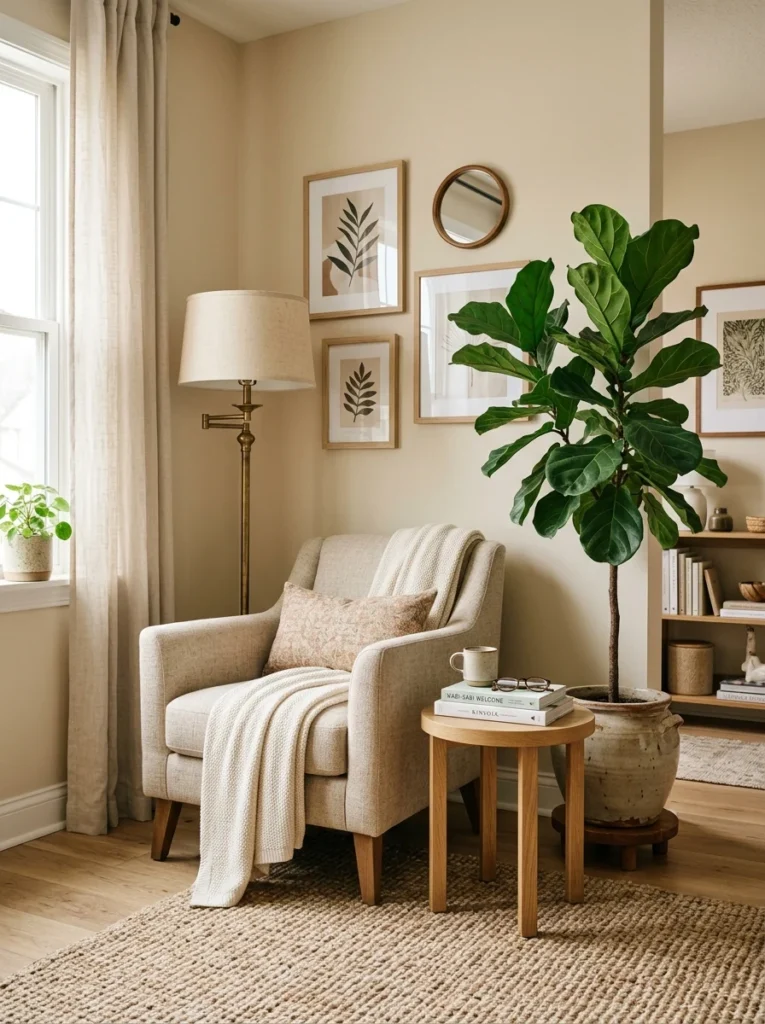
Rather than committing to a single larger furniture piece, sometimes combining several smaller elements, a small plant, a floor lamp, and a narrow shelf, works better in a genuinely awkward or oddly shaped corner that doesn’t comfortably accommodate any single larger item on its own. This is essentially what I ended up doing in my own corner, ultimately combining the reading chair with a small side table and my fiddle leaf fig rather than choosing just one of those elements in isolation, and the resulting layered combination fills the space more completely and interestingly than any single item would have achieved alone. I’d recommend this specifically for corners with genuinely unusual proportions or dimensions that don’t neatly match standard furniture sizing, since combining several smaller, more flexible pieces gives you considerably more ability to fine-tune the exact arrangement to your specific space’s particular quirks compared to trying to force a single larger piece into a corner that wasn’t quite designed for it. This approach also lets you build the corner up gradually over time, adding one element at a time as you find pieces you genuinely love, rather than needing to commit to and purchase an entire furniture arrangement all at once.
Final Thoughts
Looking back at those two years of walking past my own empty, purposeless corner without really considering what it could become, it’s genuinely satisfying how much a single afternoon of intentional thought eventually transformed into what’s now one of my favorite spots in the entire living room. Between all 16 of these ideas, the underlying theme is really that an empty corner represents genuine untapped potential rather than simply awkward, unusable space, and the right solution depends considerably on your specific room’s proportions, your household’s actual habits, and what function would genuinely serve you best in that particular spot.
If your own living room has a similarly overlooked corner, I’d suggest starting by honestly considering what you’re currently missing in your daily routine, more reading time, a spot to work from home, somewhere to actually enjoy a hobby, rather than choosing purely based on which idea looks best in inspiration photos. That’s ultimately the approach that led me to my own reading nook, and months later, that corner has become genuinely one of the most-used spots in my entire home, a transformation I never would have predicted during those two years of walking past it without a second thought.