
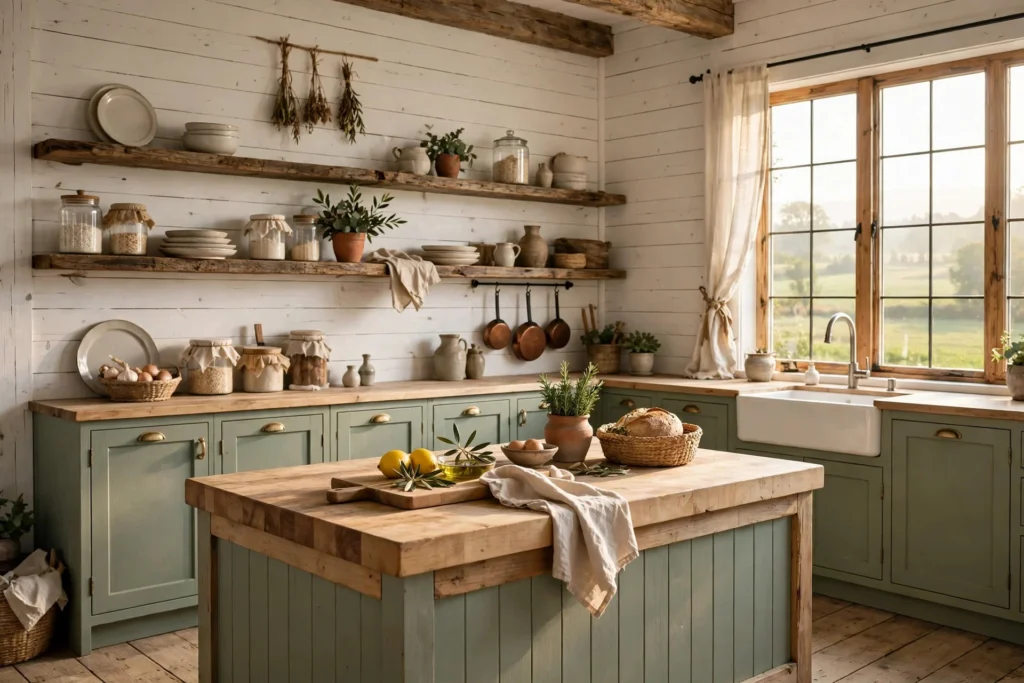
Farmhouse kitchen decor ideas work best when the room feels warm, useful, and a little bit worn in, not like a showroom. My own kitchen took years to get there, one small change at a time, and the funny thing is that the cheapest fixes made the biggest difference. A painted cabinet here, a wooden shelf there, and suddenly the room felt like the heart of the house instead of just a place to cook.
This list sticks to ideas that real kitchens can actually handle, from a shiplap backsplash to a dough bowl on the table. You do not need a full remodel or a big budget. Pick the one that catches your eye, try it this weekend, and let the rest follow when the room is ready for it.
1. Farmhouse Kitchen Decor Ideas Start With a Warm White Shiplap Backsplash
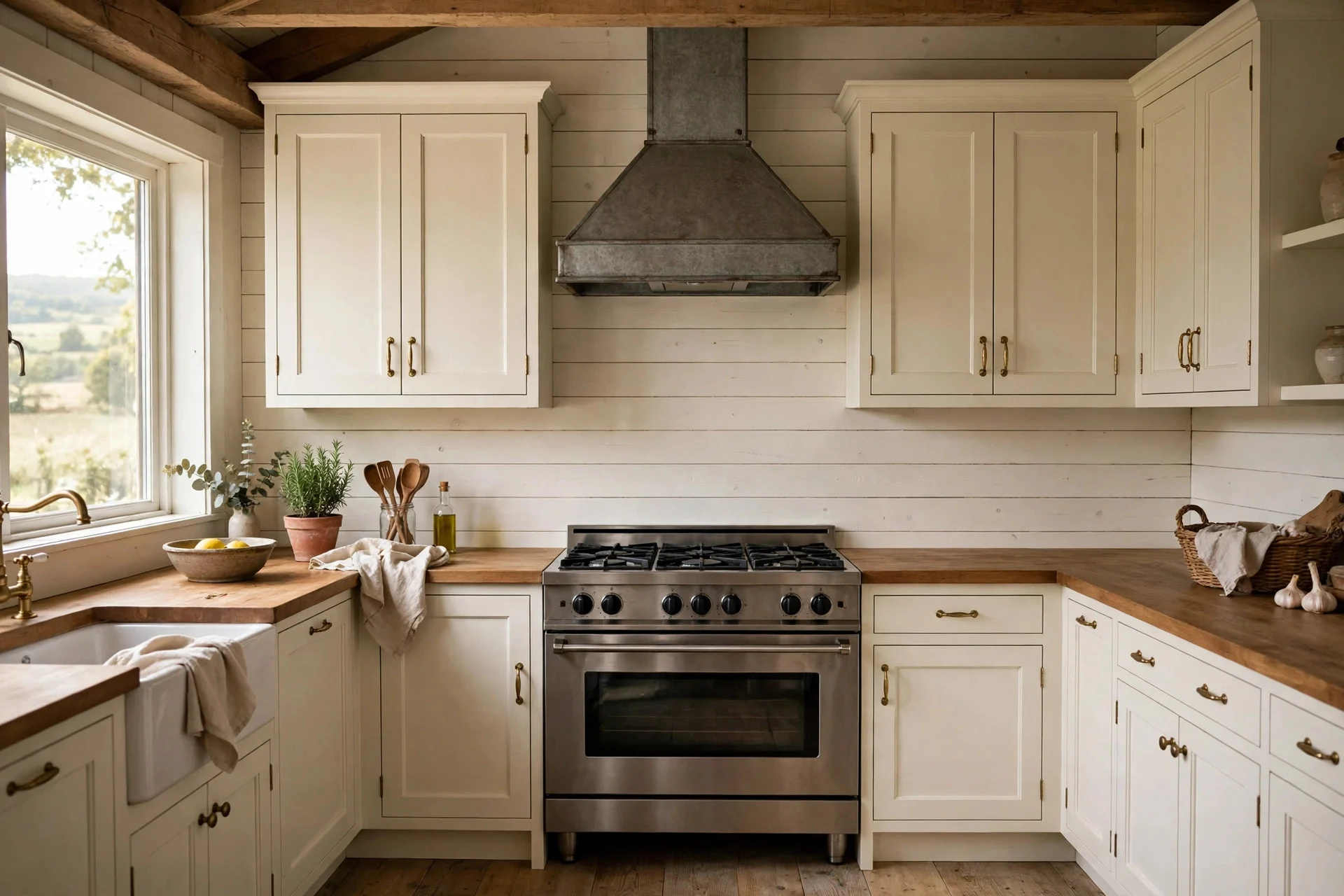
A warm white shiplap backsplash is the fastest way to give a plain kitchen that farmhouse feel. I put ours up over one long weekend, and the change was bigger than any new appliance we had ever bought. The thin lines between the boards add texture without shouting, and the white paint bounces light around even on grey mornings.
Measure the wall first, then cut the boards to fit around outlets and corners. Nail them up with a level in hand, fill the small gaps with caulk, and finish with two coats of wipeable paint. Seal the boards near the sink so splashes wipe off instead of soaking in, and step back before you add anything else, because the wall may already be doing enough.
Try this: leave the grout lines soft white instead of bright white so the boards look aged, not new.
2. Hang Open Shelving in Reclaimed Wood
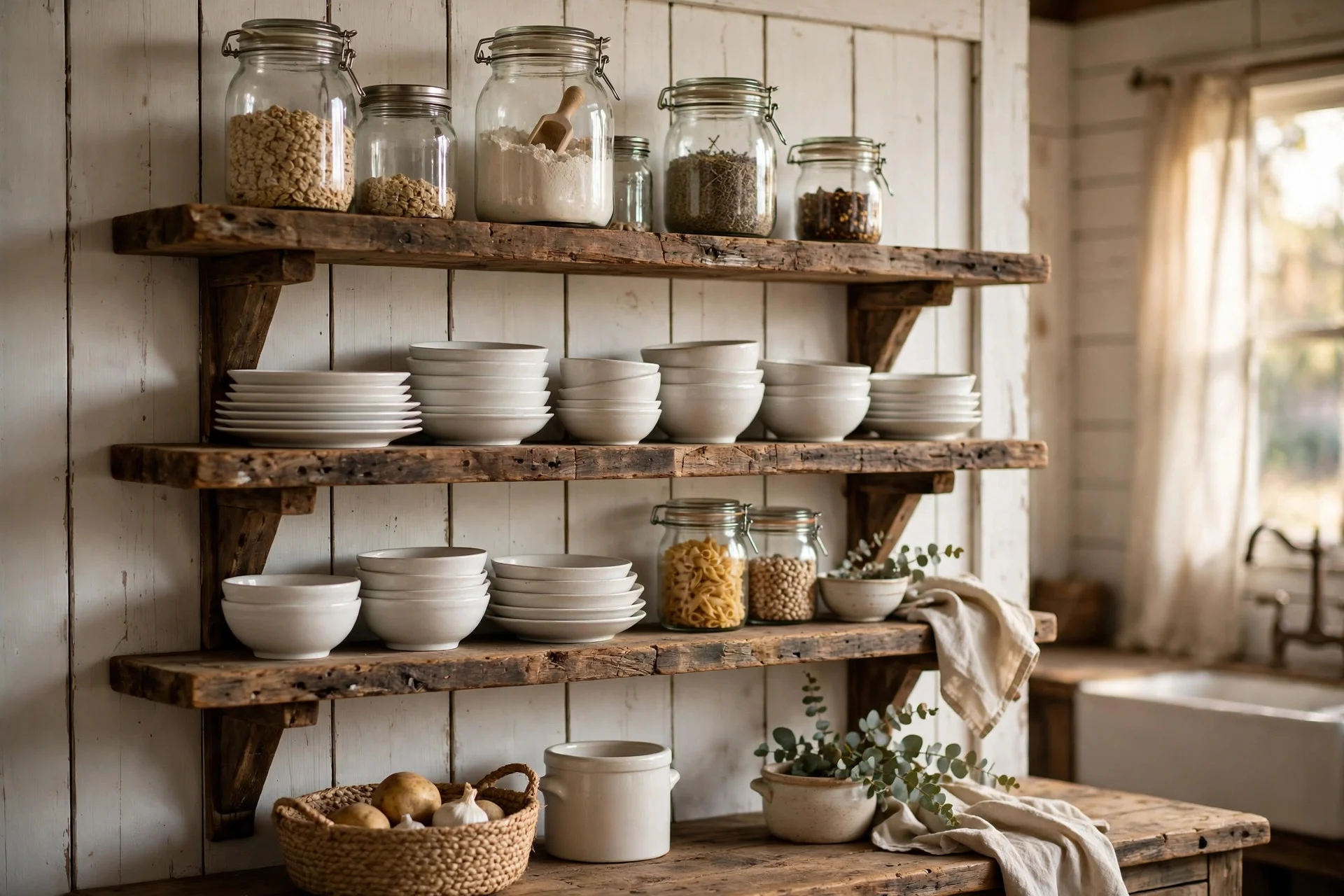
Open shelves in reclaimed wood turn everyday dishes into part of the decor, and they cost far less than new upper cabinets. I took down two cabinet doors in my kitchen just to test the idea, and three years later the shelves are still there. The worn wood softens the whole wall, and reaching for a plate feels easier when nothing hides behind a door.
Pick boards with knots and saw marks, and mount the brackets into wall studs because dishes get heavy fast. Keep the shelves to two or three, and leave breathing room between stacks so the wall does not look crowded. Mix plates and bowls with a small plant or a jar of wooden spoons, and put the pieces you use daily at arm height.
Try this: keep only your prettiest dishes on show and store the chipped ones in a drawer.
3. Choose a Farmhouse Sink With an Apron Front
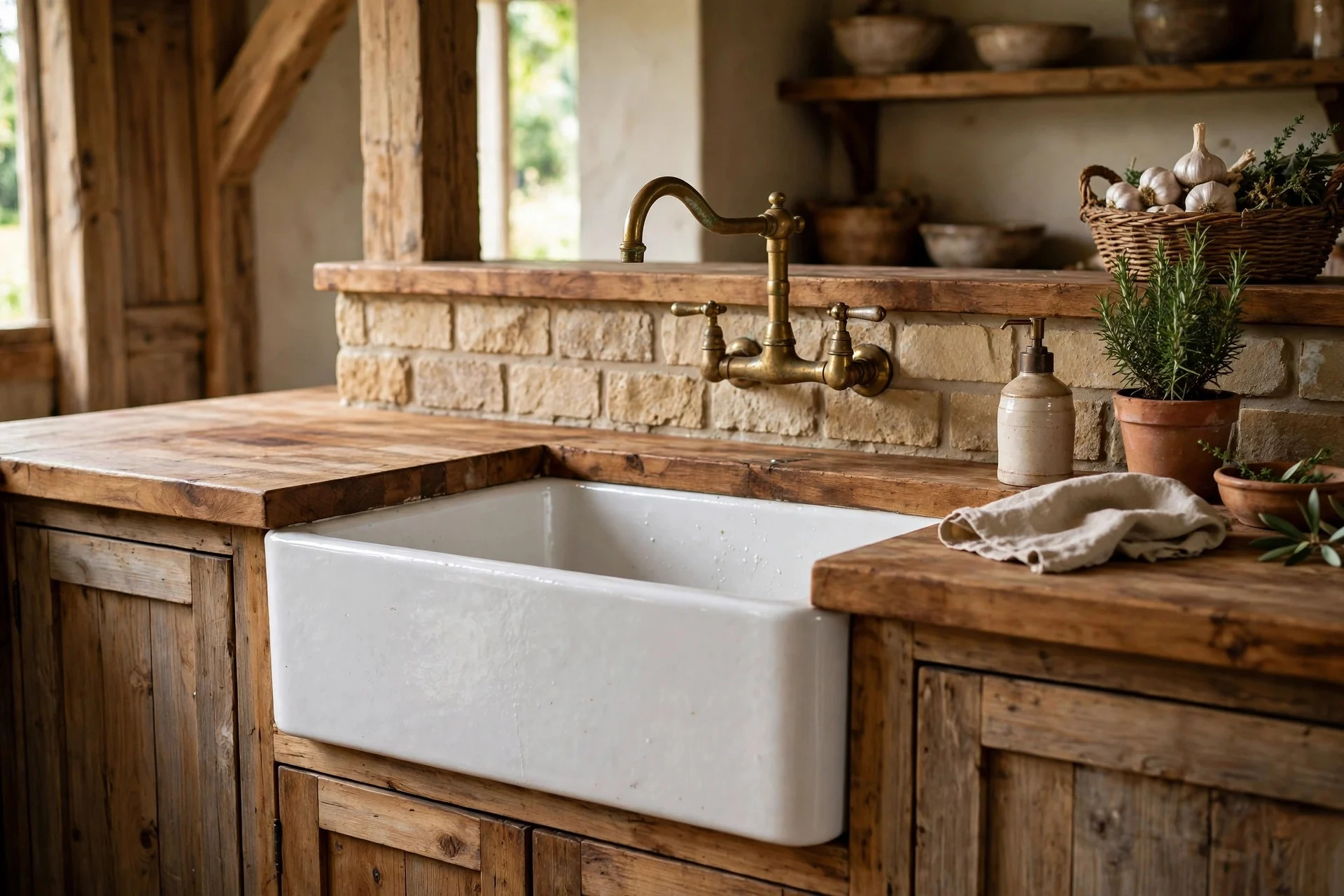
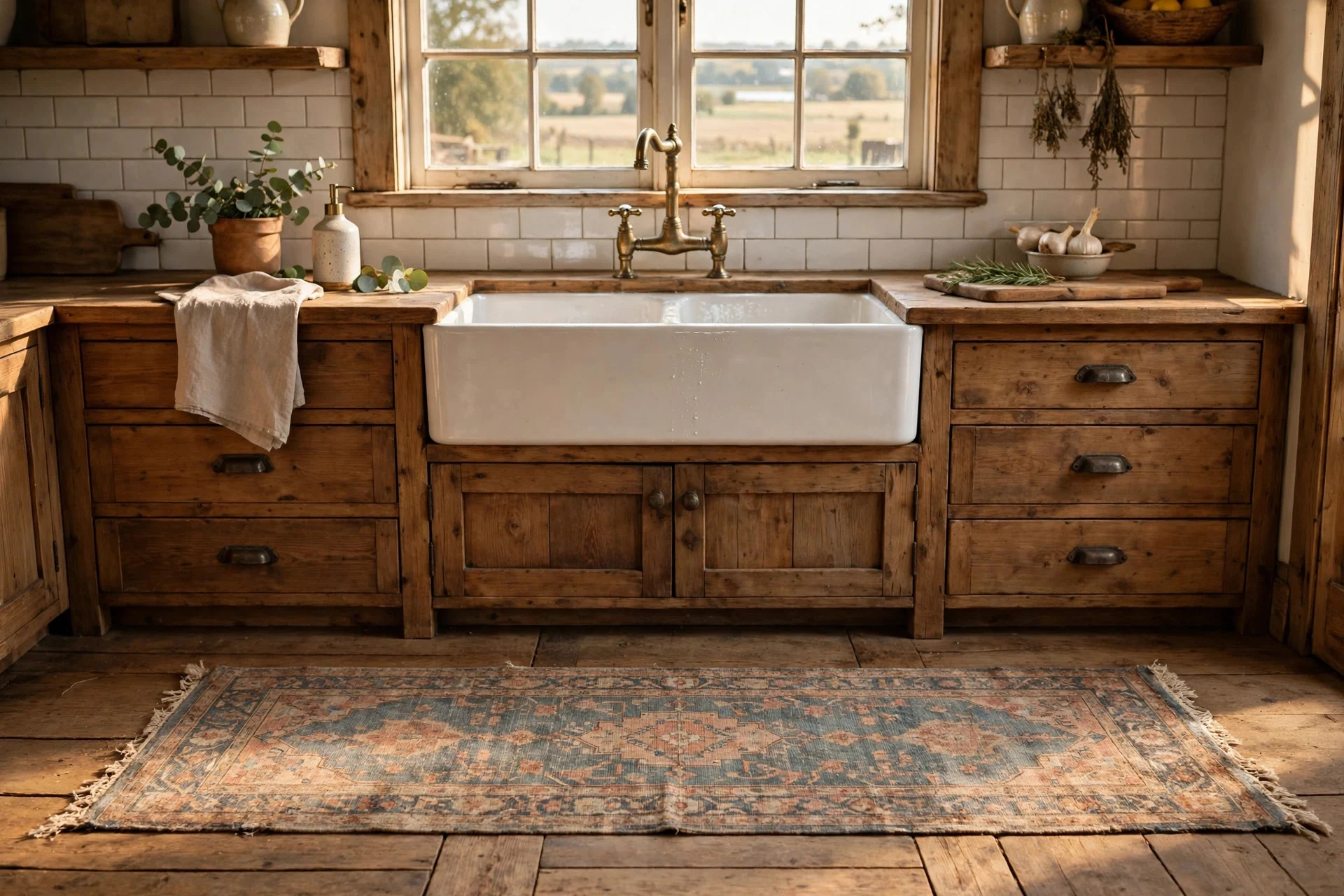
Nothing says farmhouse kitchen quite like a deep apron-front sink. I swapped our shallow steel sink for a white fireclay one, and washing up stopped feeling like a chore. The deep bowl swallows big roasting pans, and the front panel gives the whole run of cabinets a focal point that plain sinks never manage.
Check your cabinet size before you order, because an apron sink needs a special base cabinet and a sturdy support frame. A plumber can fit most models in a day, and a fireclay or cast iron finish will shrug off stains for years. Pair it with a simple bridge tap in aged brass or matte black so the sink stays the star.
Try this: keep a folded linen cloth draped over the apron edge for a soft, lived-in touch.
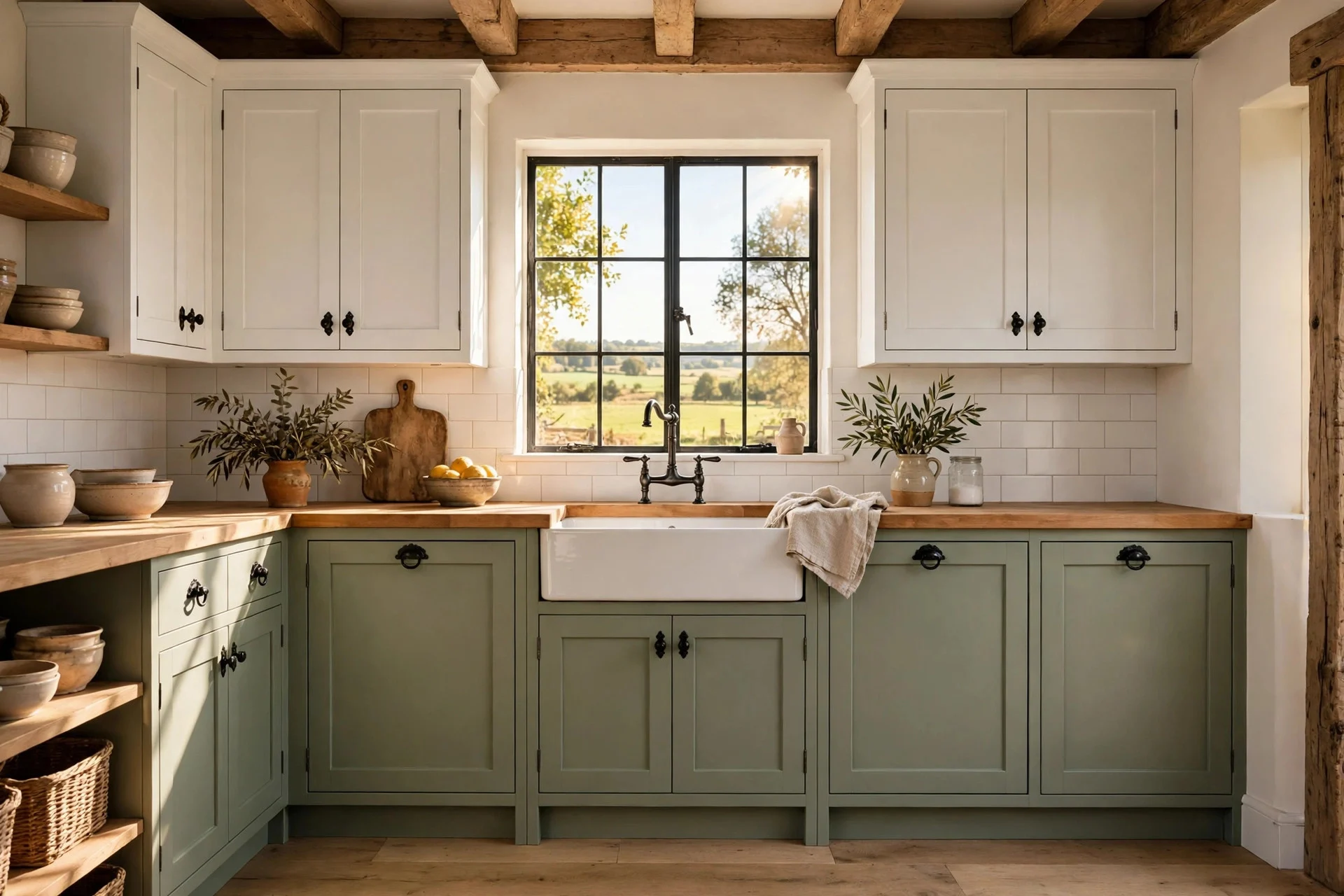
4. Paint the Lower Cabinets Sage Green
Painting just the lower cabinets sage green is the cheapest big change I have ever made in a kitchen. I did ours with a brush and a roller over a weekend, and the room went from plain white to calm and grounded without a single new cabinet. Sage sits beautifully next to wood, cream, and black iron, so almost nothing else in the room needs to change.
Clean the doors well, sand them lightly, and use a primer made for cabinets so the paint grips. Two thin coats of satin or eggshell paint beat one thick coat every time, and new knobs in black or aged brass finish the job. Let the paint cure for a full day before you hang the doors back, or you will leave fingerprints in the finish.
Try this: paint a single door first and live with it for a week before doing the rest.
5. Add a Butcher Block Island Top
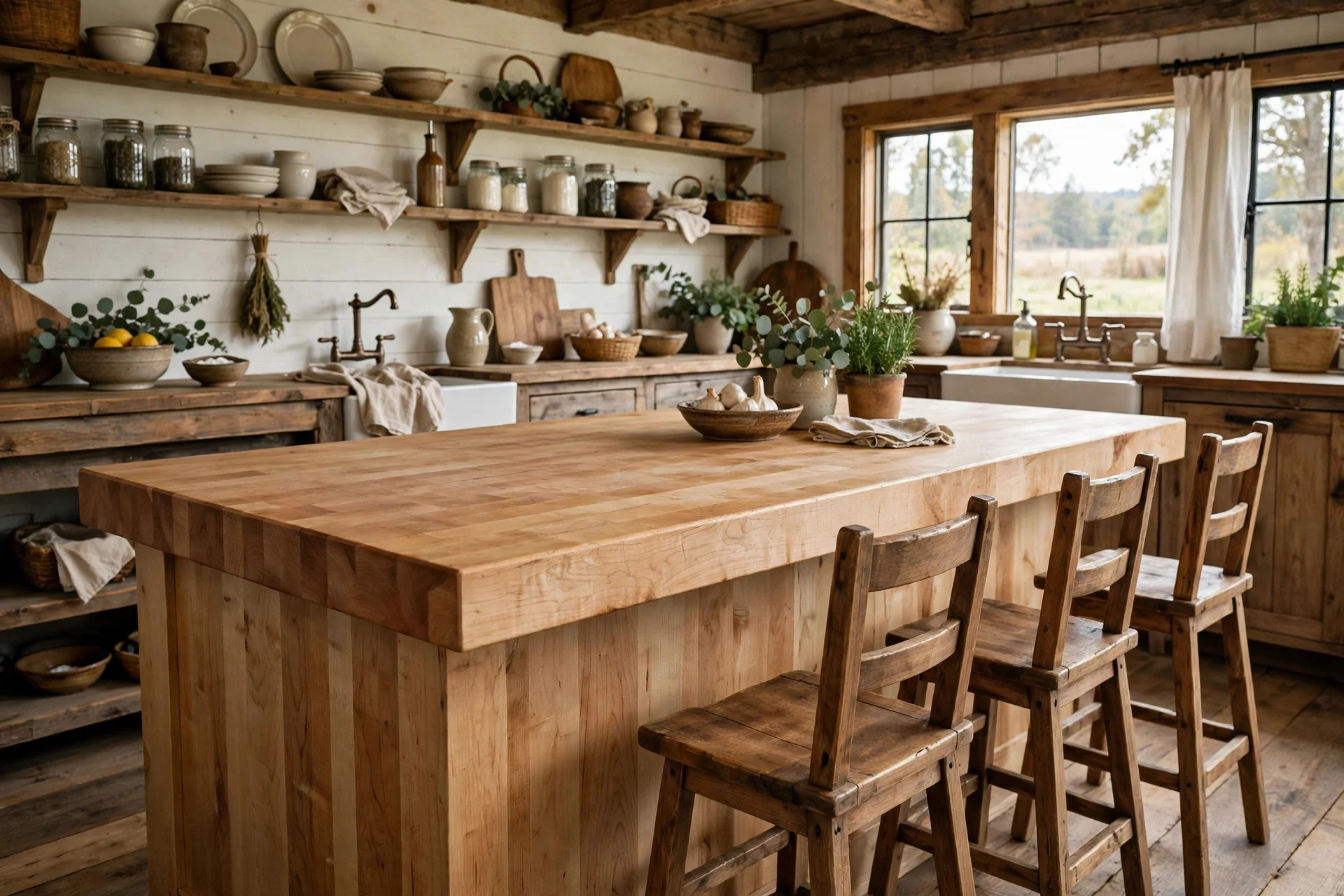
A butcher block top turns a plain island into the hardest-working spot in the kitchen. I replaced our old laminate top with thick maple, and now it is where we chop vegetables, roll out dough, and gather for coffee. The wood warms up the whole room, and the small knife marks that appear over time only make it look more loved.
Measure the island and order a slab with a slight overhang on each side for knees and stools. Seal it with food-safe oil, and re-oil it once a month for the first year so it stays protected. Wipe up water straight away, since standing water is the one thing that can stain the wood, and sand out any deep marks with fine sandpaper.
Try this: keep a wooden board and a jar of utensils on the island so it always looks ready to use.
6. Hang a Mason Jar Pendant Light
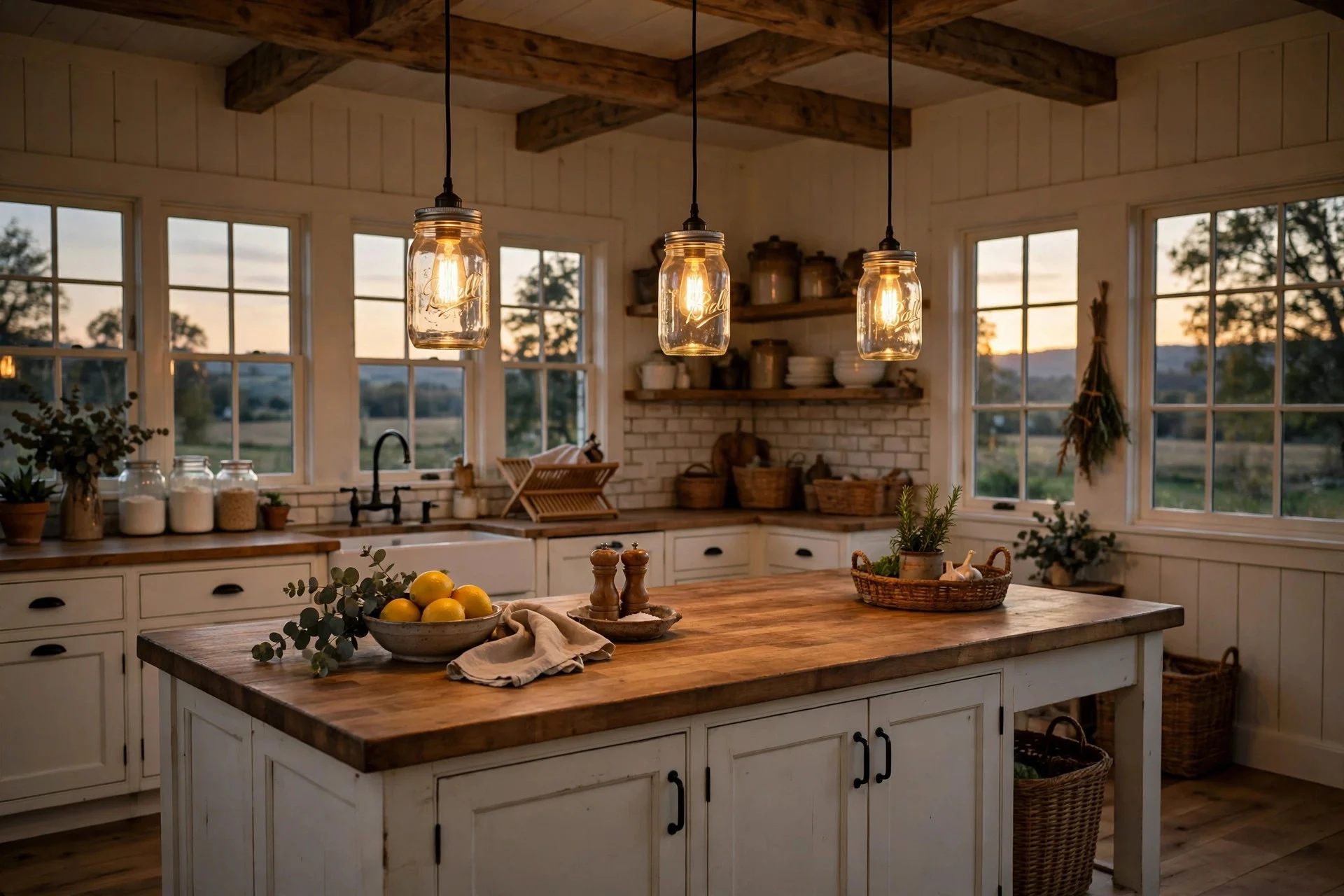
A mason jar pendant light is a small touch that makes a big difference over an island or a sink. I hung three over our island one evening, and the soft glow they throw at night still makes me smile. The glass jars catch the light, the wire and wood fittings keep the look honest, and the whole thing costs a fraction of a fancy chandelier.
Buy a ready-made kit or ask an electrician to wire one safely, because mains wiring is not a job to guess at. Hang the jars at the same height, about 75 centimetres above the worktop, and use warm bulbs so the light feels golden, not cold. Space them evenly, and check from the doorway that they line up before you tighten everything.
Try this: fill one jar with dried lavender for a pretty daytime detail when the light is off.
7. Display Vintage Enamelware on a Plate Rack
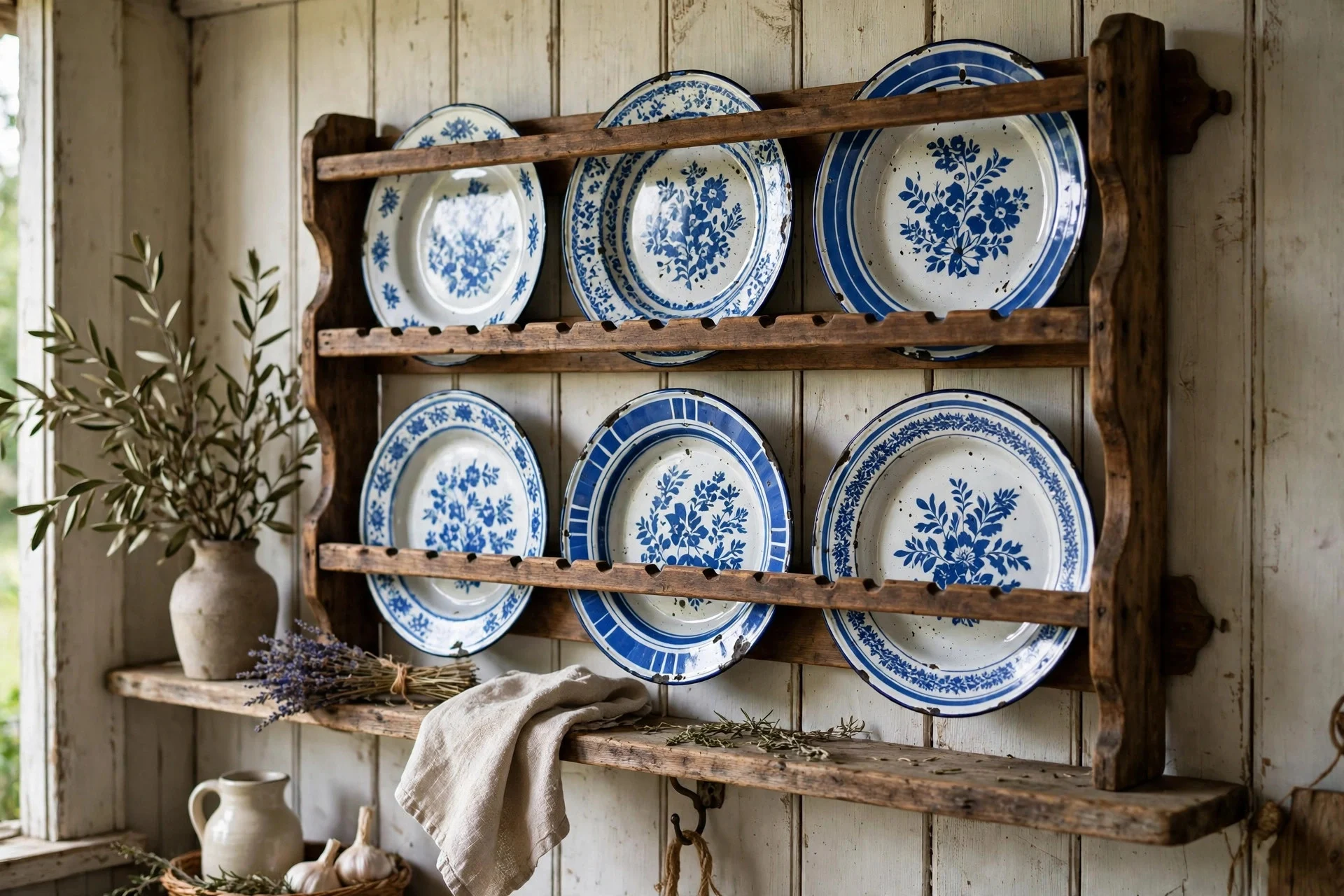
A plate rack full of vintage enamelware brings colour and history to a bare kitchen wall. I started with two chipped blue plates from a flea market, and the collection has grown slowly ever since. The soft white and blue enamel looks right at home next to wood and linen, and every plate has a small story behind it.
Fix a wooden plate rack to the wall with solid screws, and test it with your heaviest plate before you load it up. Arrange the plates by size, largest at the bottom, and leave a gap or two so each piece gets seen. Wash enamelware by hand, since the dishwasher can chip the edges, and keep an eye out at flea markets for the odd piece that fills a gap.
Try this: mix in one or two plain cream plates so the coloured enamel stands out more.
8. Lay a Runner Rug in a Faded Vintage Pattern
A runner rug in a faded vintage pattern softens a hard kitchen floor and makes standing at the sink far kinder on your feet. I resisted rugs in the kitchen for years, convinced they would get ruined, and now I wonder why I waited. The muted reds and blues pull the whole room together, and the worn look hides crumbs and splashes better than any plain rug.
Measure the space in front of your sink or cooker, and pick a low-pile rug that a chair or a door will not catch on. Choose a washable one if you can, or a flat-weave cotton rug that shakes out easily outside. Put a non-slip pad underneath so it never slides, and shake it out once a week to keep it fresh.
Try this: pick a rug colour pulled from your curtains or a favourite pot for a pulled-together look.
9. Mix Black Iron Hardware With Warm Wood
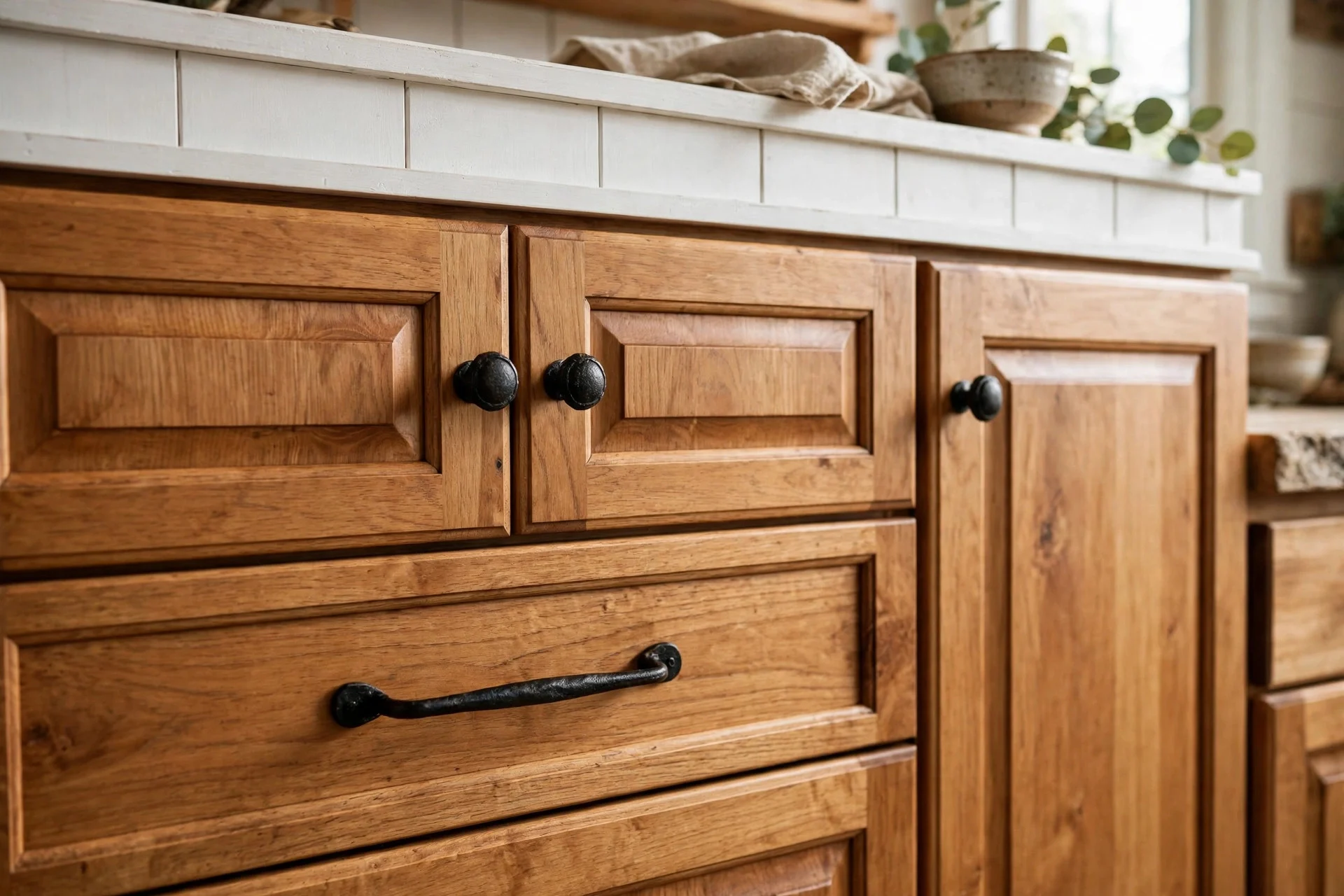
Black iron hardware against warm wood is the pairing that keeps a farmhouse kitchen from looking too sweet. I changed just the knobs and pulls in our kitchen, and the whole room suddenly felt more grounded. The dark metal gives your eye somewhere to rest, and it ages far better than shiny chrome, which shows every fingerprint.
Count every door and drawer before you order, and buy one spare knob in case one goes missing later. Remove the old hardware, fill any holes that do not line up, and fit the new pieces with a template so they sit straight. Keep the style simple, a plain pull or a round knob, and let the wood and the iron do the talking.
Try this: match your tap finish to the hardware so the dark metal feels planned, not random.
10. Style a Wooden Dough Bowl as a Centerpiece
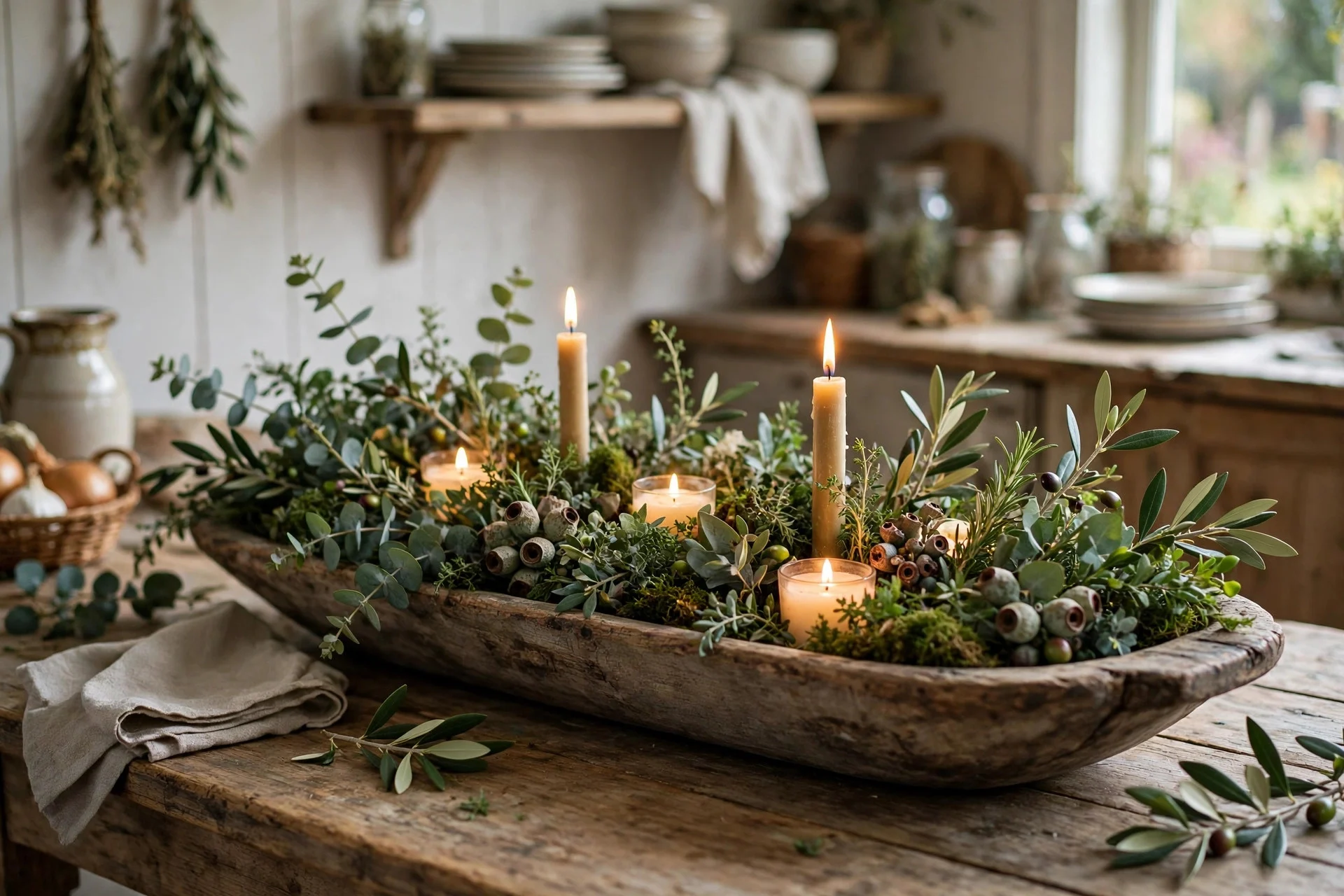
A wooden dough bowl makes the easiest centrepiece a kitchen table will ever have. I bought mine at a flea market for next to nothing, and it has held everything from apples to pinecones since. The long, low shape suits a table perfectly, and the worn wood tells you it has already lived a long life before it reached your home.
Start with the bowl empty on the table and add one layer at a time. A linen cloth underneath stops it sliding, then fill it with seasonal fruit, greenery, or candles in glass holders. Change the filling with the seasons, and keep the arrangement low so people can still see each other across the table.
Try this: add a few sprigs of eucalyptus for a fresh scent that lasts for weeks.
11. Hang Woven Baskets on the Wall
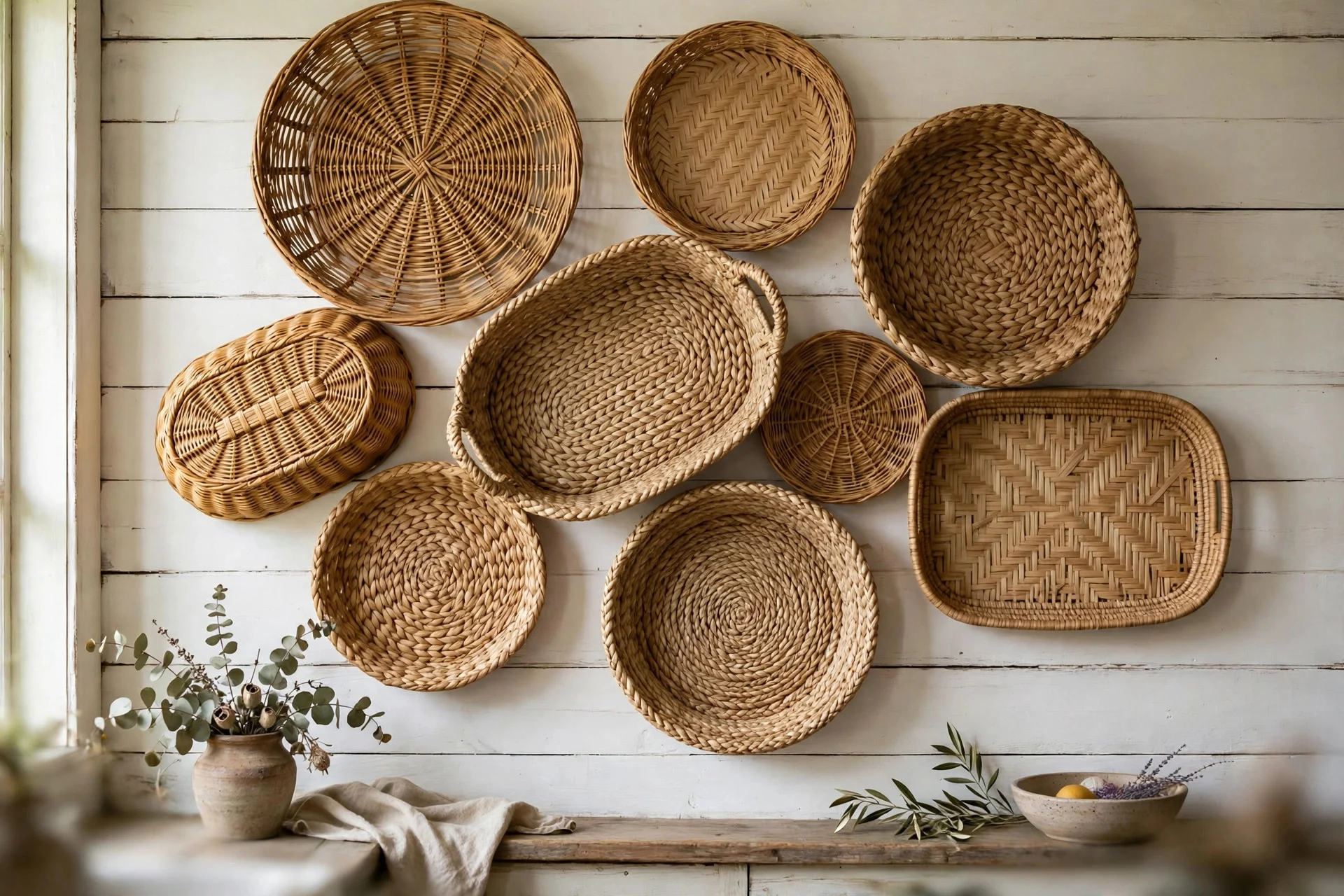
A wall of woven baskets adds texture where a kitchen wall would otherwise sit bare and flat. I hung my first basket on a whim, then added more over a year until the wall had a shape of its own. The mix of seagrass, rattan, and willow brings warmth that framed prints cannot match, and the whole thing cost less than one large picture.
Lay the baskets out on the floor first and play with the arrangement until it feels balanced. Hang the largest one near the centre, then work outwards with smaller ones, using a small nail or a removable hook for each. Keep the shapes varied, flat baskets with deep ones, so the wall has depth, and step back often to check the spacing.
Try this: hang the baskets above a sideboard or a small bench so the display has a base.
12. Add a Rolling Barn Door Pantry
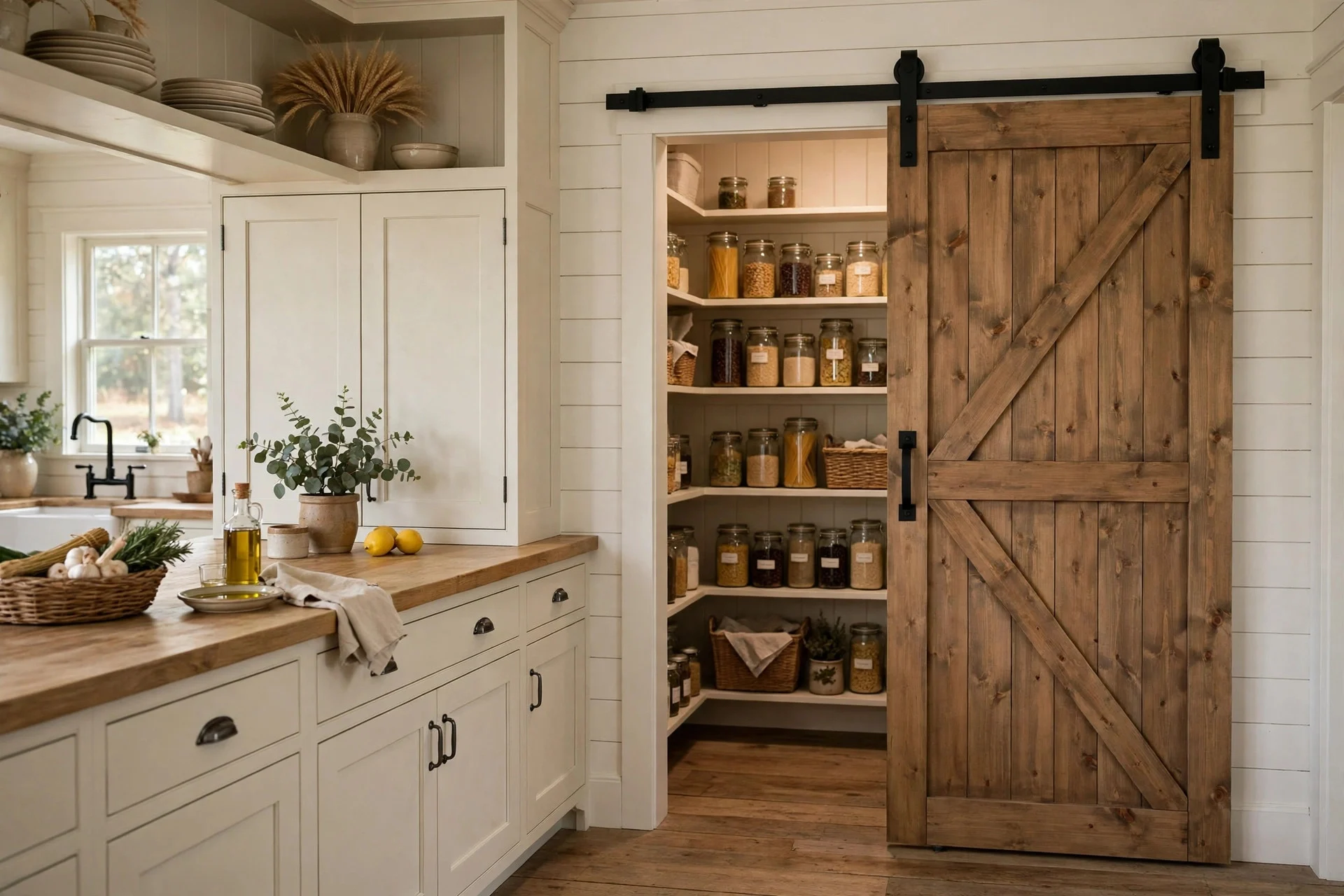
A rolling barn door turns a plain pantry into a feature worth looking at. I swapped our hinged pantry door for a sliding one, and the kitchen instantly felt bigger because nothing swings out into the walkway any more. The wood, the black rail, and the soft slide of the door all feel like they belong in a farmhouse.
Measure the opening and buy a door slightly wider than it, so it covers the gap fully when closed. Fix the rail into wall studs, because a solid wood door is heavy, and check the floor is clear along the whole slide path. Hang the door, adjust the rollers until it glides without wobbling, and add a simple pull handle to finish it.
Try this: paint the pantry shelves inside a soft cream so jars and tins stand out when you open it.
13. Use Glass-Front Cabinets to Show Off Dishes
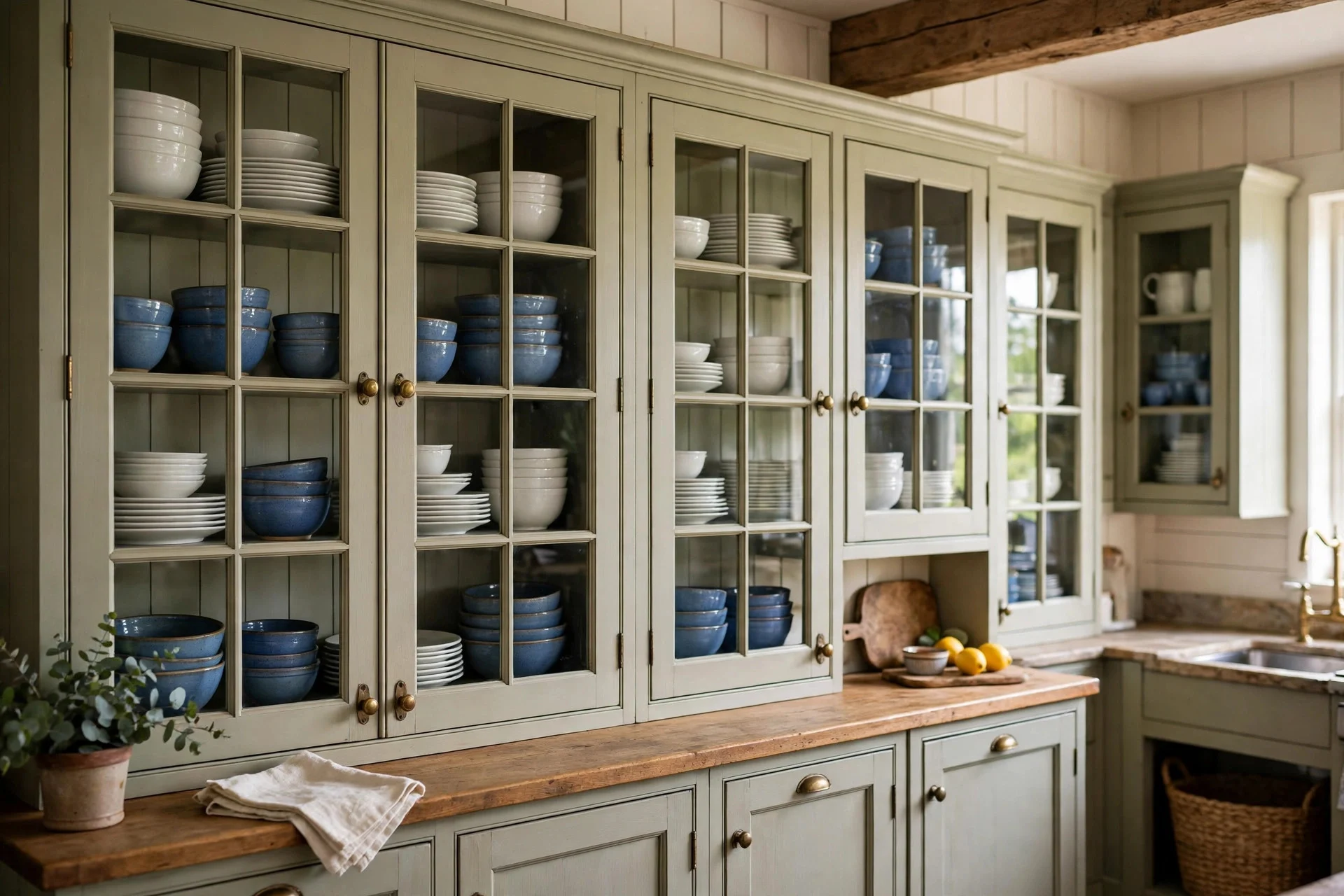
Glass-front cabinets let your prettiest dishes do the decorating while keeping the dust off. I changed two solid doors to glass in our kitchen, and the whole room felt lighter straight away. White plates, blue bowls, and a few glass jars look lovely behind the panes, and the cabinets stop feeling like big blank boxes.
You can swap just the centre panel of a door for glass, or buy ready-made glass doors to match your cabinets. Keep the shelves tidy, with stacks of plates and bowls grouped by colour, and put the everyday pieces at eye level. A small battery light inside the cabinet makes the dishes glow in the evening without any wiring.
Try this: line the back of the cabinet with beadboard for extra farmhouse texture.
14. Grow Fresh Herbs on the Windowsill
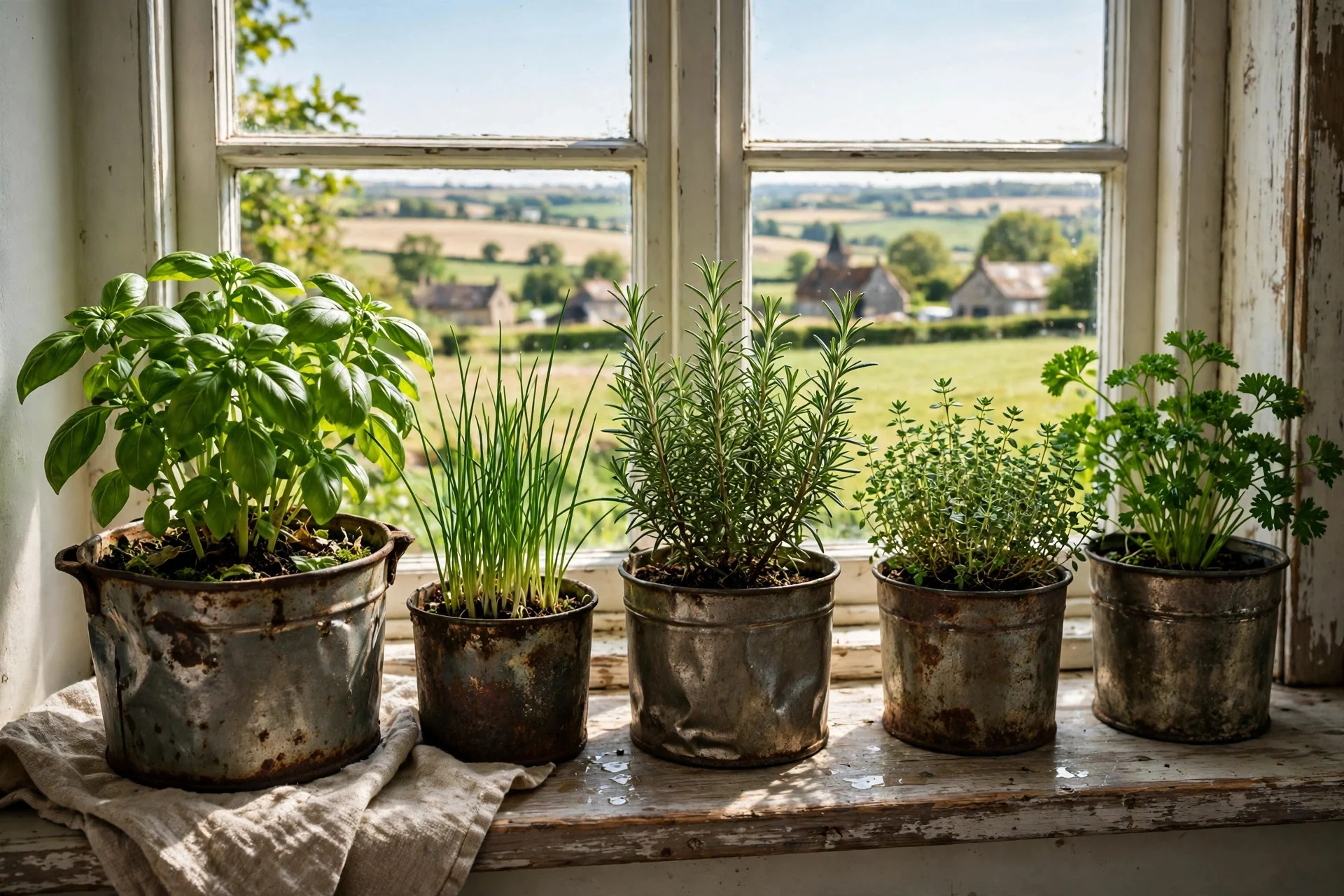
Fresh herbs on the windowsill are the cheapest farmhouse touch that also earns its keep at dinner. I keep basil, rosemary, and mint in old tin pots by my kitchen window, and snipping a few leaves into a pan still feels like a small luxury. The green softens the hard lines of the sill, and the smell when you brush past them is lovely.
Pick pots with drainage holes and a tray underneath to catch water, and set them where they get at least four hours of sun a day. Water when the top of the soil feels dry, not on a fixed schedule, and pinch the tops regularly so the plants grow bushy instead of tall and thin. Label each pot with a wooden marker so guests know what to snip.
Try this: start with mint in its own pot, since it spreads fast and crowds out its neighbours.
15. Bring In a Rustic Wooden Kitchen Table
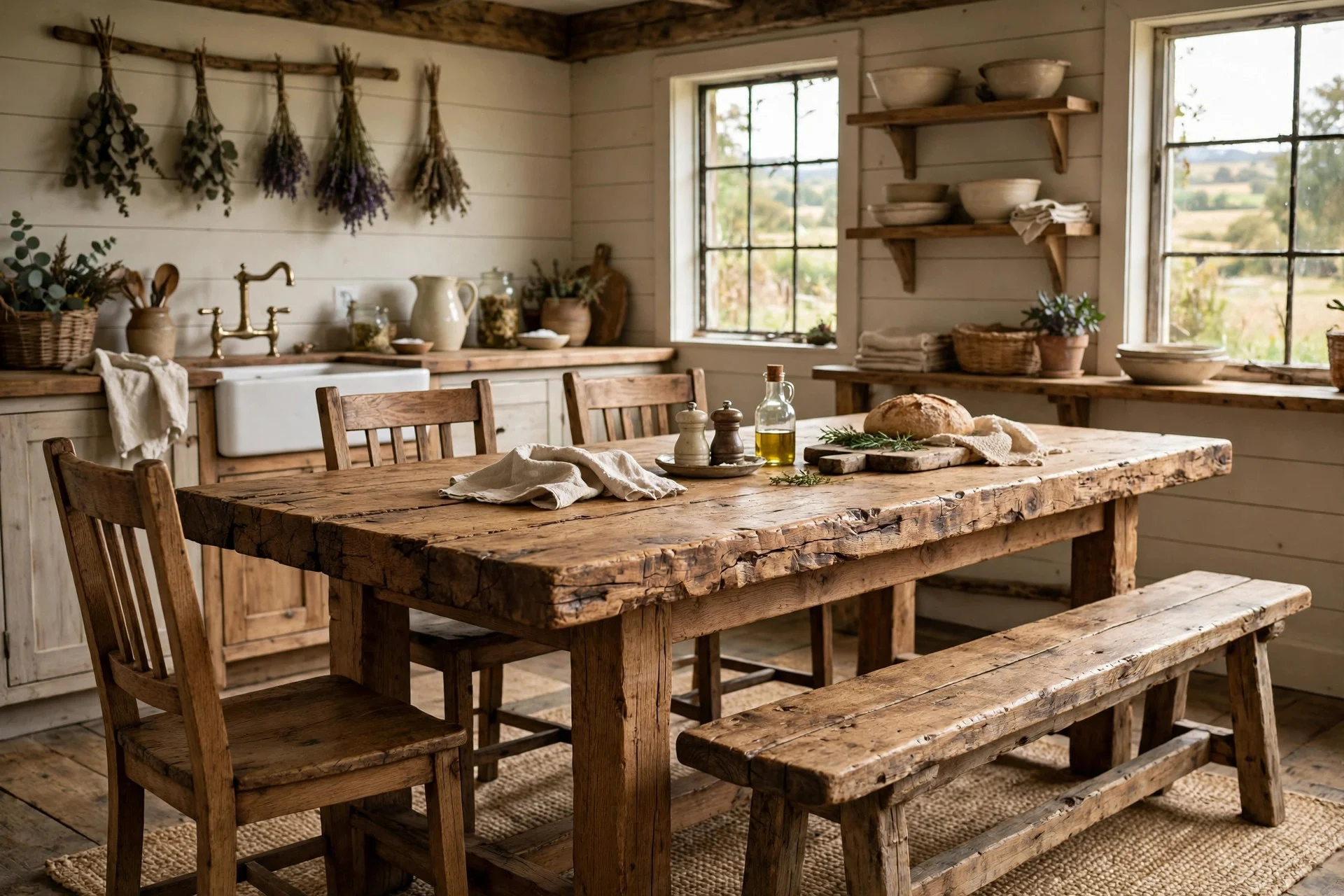
A thick wooden kitchen table is where a farmhouse kitchen lives, from breakfast to homework to long Sunday lunches. I found ours secondhand, a scarred oak table with a wobble we fixed with a folded bit of card, and it has hosted every family meal since. The marks and rings on its top are not damage; they are the record of real life.
Look for solid wood with sturdy joints, and sit at the table before you buy it to check the height feels right. A bench on one side seats more people than chairs and tucks away neatly, while mismatched wooden chairs add to the collected feel. Oil the top twice a year to keep it fed, and use placemats for hot dishes so the wood stays in good shape.
Try this: keep a simple linen runner down the middle and change it with the seasons.
16. Hang a Chalkboard for Menus and Notes
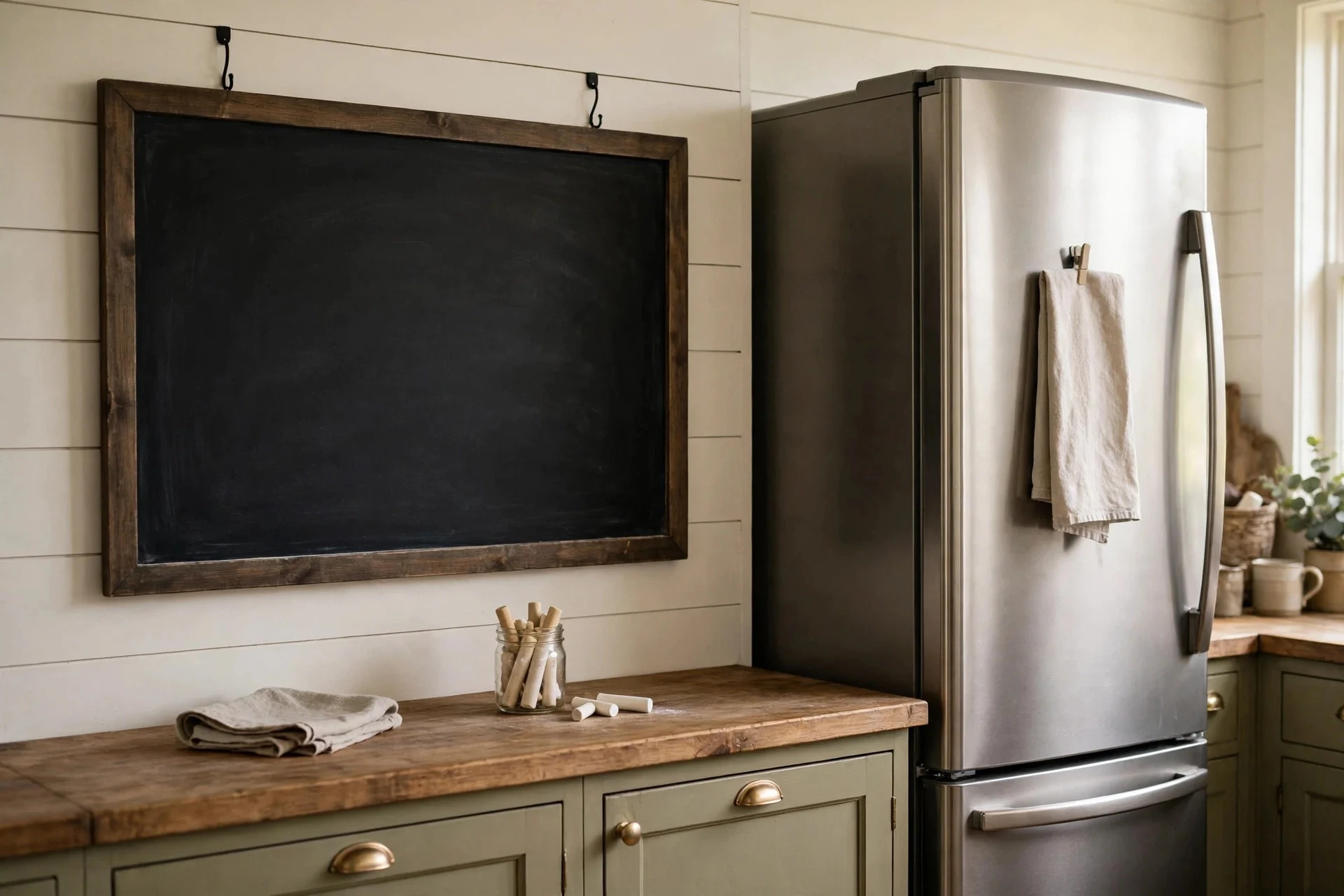
A chalkboard on the kitchen wall keeps the week organised and adds a handmade touch at the same time. I hung ours beside the fridge, and it now holds the weekly menu, the shopping list, and the odd reminder I would otherwise forget. The dark board against pale walls is a quiet contrast, and the handwriting makes the kitchen feel personal.
Hang the board at eye level where you naturally pause, near the fridge or the back door. Use proper chalkboard paint on a piece of plywood if you want a custom size, and season the surface by rubbing chalk all over it first so the first notes wipe off cleanly. Keep a small ledge or a jar of chalk nearby so writing a note takes seconds.
Try this: write the week’s menu every Sunday night so weekday cooking feels calmer.
17. Add Copper Pots on a Hanging Rail
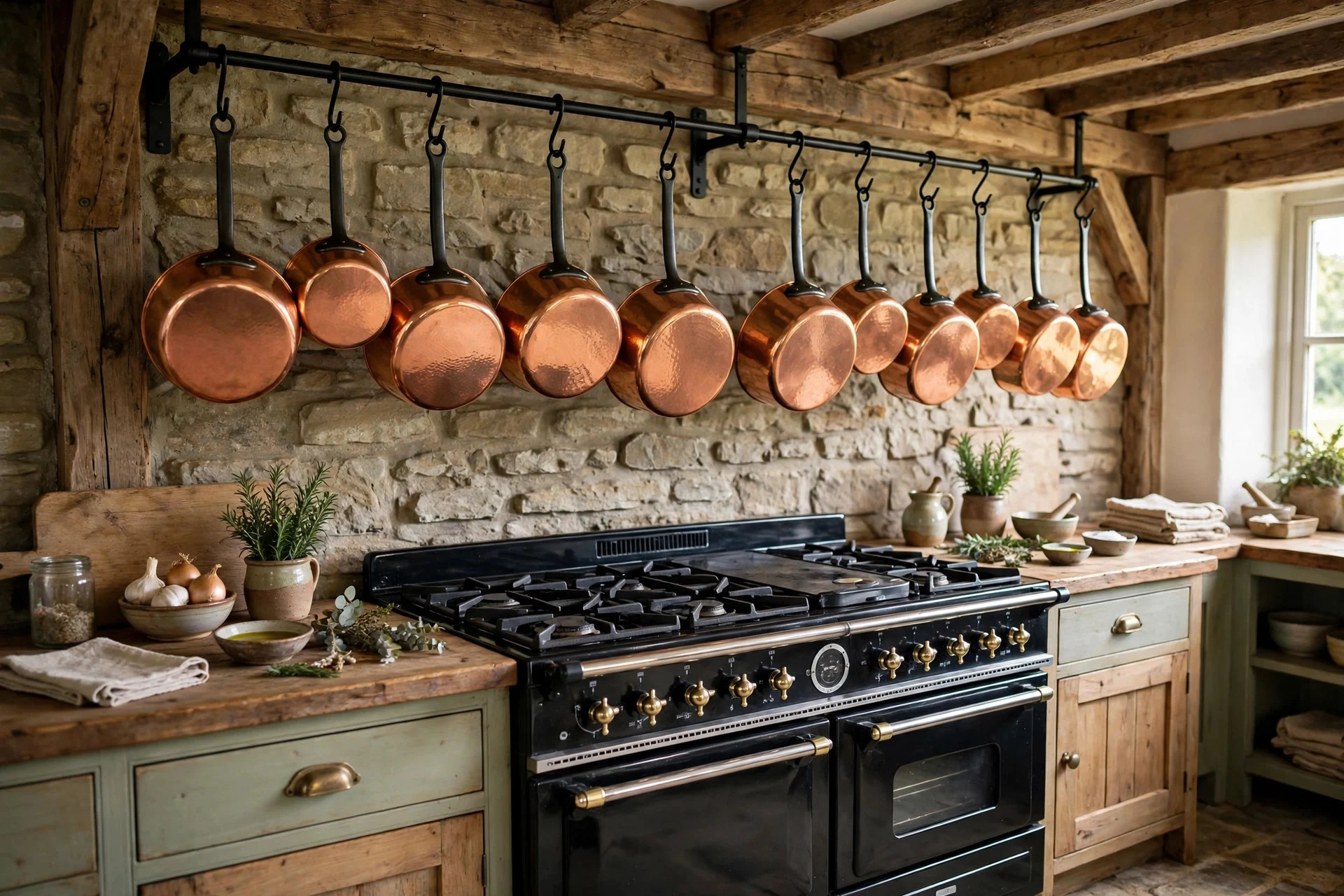
Copper pots on a hanging rail bring warmth and a working-kitchen feel to a plain ceiling or wall. I hung a simple black rail above our cooker, and the copper glows every time the sun comes through the window. The pots are always within reach, which means I actually use them, and the wall behind stays free for other things.
Fix the rail into ceiling joists or wall studs, because a full set of copper pots is heavy. Hang the largest pots at the ends and the smaller ones in the middle, with hooks that let each pot lift off easily. Polish the copper a few times a year if you like the shine, or leave it to age naturally for a softer, lived-in look.
Try this: hang a small bunch of dried herbs from the rail end for a pretty, useful extra.
18. Layer Linen Curtains on the Window
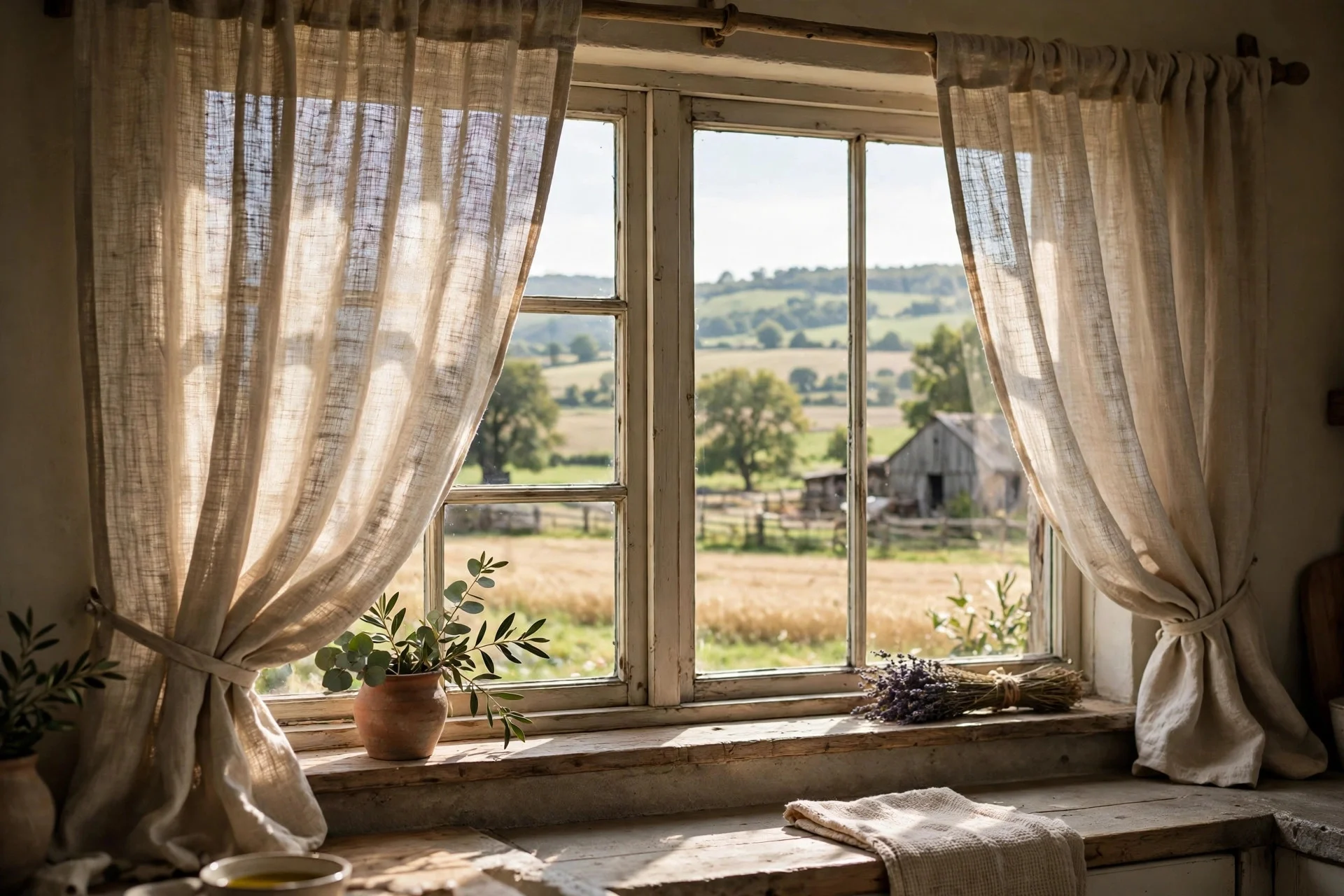
Linen curtains soften a kitchen window in a way that blinds never quite manage. I sewed a simple pair from washed linen in a natural flax shade, and the light that comes through them now feels golden instead of harsh. The fabric moves gently when the window is open, and the slight wrinkles are part of the charm, not a flaw.
Measure the window and cut the linen a few centimetres wider than the frame so it hangs in soft folds. Hem the edges, thread the panels onto a simple wooden or black iron rod, and hang them high so the window looks taller. Wash the linen in cold water and let it dry on the line so it keeps its soft, lived-in feel.
Try this: tie the curtains back with a strip of twine for a relaxed, open look on sunny days.
19. Finish With a Farmhouse Clock and Greenery
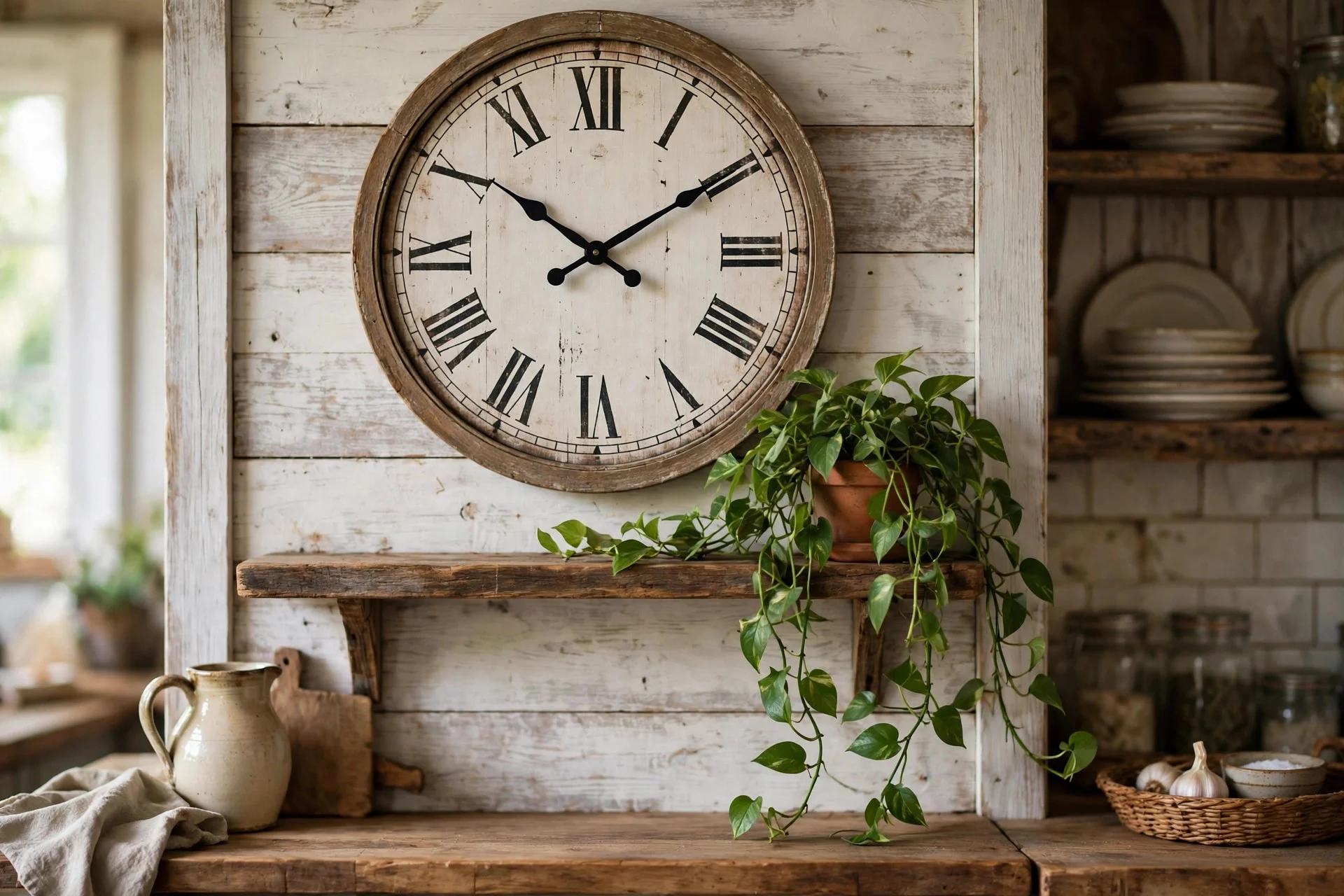
A large farmhouse clock and a little greenery are the finishing touches that pull the whole kitchen together. I hung a big round clock with Roman numerals on our last bare wall, added a trailing plant on the shelf below, and the room finally felt done. The clock gives the wall a focal point, and the green stops the wood and white from feeling too flat.
Hang the clock at eye level on the wall that needs it most, and check it sits straight from across the room. Pick a plant that likes kitchen life, like a pothos or a trailing ivy, and water it only when the soil feels dry. Keep the greenery simple, one or two plants, so the room stays calm instead of turning into a jungle.
Try this: set the clock five minutes fast so you are never late for dinner again.
What colours work best in a farmhouse kitchen?
Warm whites, soft sage green, pale blue, and creamy neutrals work best, with natural wood and black iron as accents. These colours feel calm and timeless, and they suit both small and large kitchens. Avoid very bright or cold tones, since they fight against the warm, worn-in feel that makes a farmhouse kitchen welcoming.
How can I get a farmhouse kitchen look on a small budget?
Start with paint and hardware, which cost the least and change the most. Paint the lower cabinets, swap the knobs for black iron pulls, add a runner rug, and hang a few woven baskets. Each of these costs very little on its own, and together they shift the whole feel of the room without any building work.
Are open shelves practical in a farmhouse kitchen?
Yes, if you keep only the dishes you use every day on them and store the rest in closed cabinets. Open shelves work best near the sink or cooker, where plates and bowls are within easy reach. Dust them once a week, and keep the stacks small so nothing topples when you grab a plate in a hurry.
What is the easiest first step for farmhouse kitchen decor?
The easiest first step is a shiplap backsplash or a painted cabinet, because both change the room in a single weekend. If even that feels like too much, start smaller: a dough bowl on the table, linen curtains on the window, and a runner rug on the floor will already make the kitchen feel more like a farmhouse.
Final Thoughts
A farmhouse kitchen does not need to be perfect to be beautiful. Mine has a wobbly table leg, a chipped enamel plate, and a rug that never quite sits straight, and I would not trade any of it. The rooms that feel most like home are the ones that show signs of real life, and farmhouse style is built for exactly that.
Start with the idea that made you smile, live with it for a week, and then pick the next one. Before long, the kitchen will feel like the warmest room in the house, and you will wonder why you waited so long to begin.