
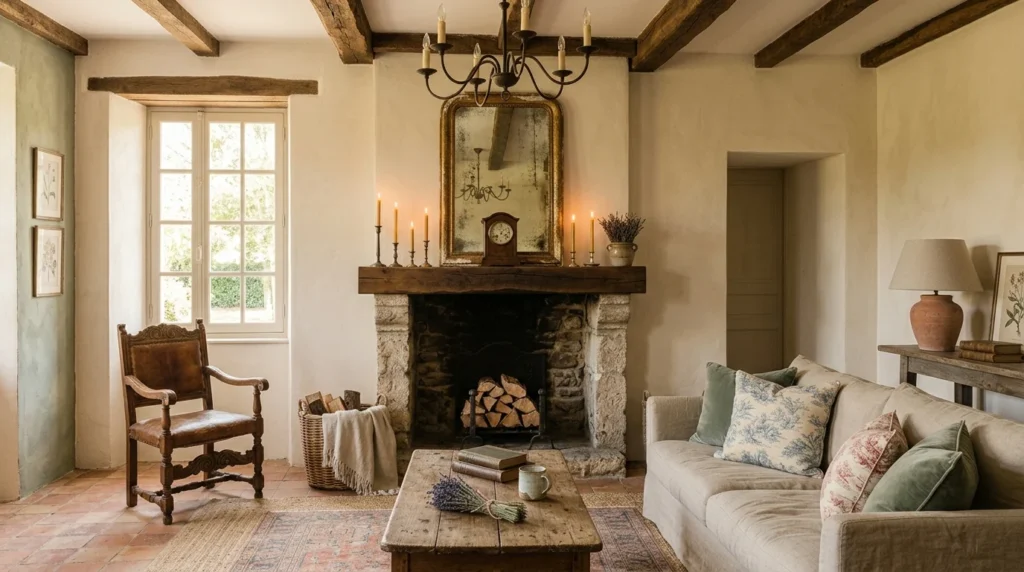
My grandmother’s living room in rural France had a particular smell — beeswax polish, old linen, and the faint smoke of a fireplace that had been used every winter for decades. I didn’t set out to recreate that exact room when I redecorated my own living room a couple of years ago, but somewhere in the process, standing back and looking at the finished space, I realized I’d unconsciously been chasing that same feeling the whole time. French country style gets reduced to a checklist of toile fabric and distressed furniture pretty often, but what actually makes it feel timeless, at least based on what I remember and what I’ve since learned trying to recreate it, has much less to do with any single item and much more to do with restraint, texture, and things that look like they’ve earned their place over time rather than been placed there for effect.
1. Choose Furniture With Visible Wear, Real or Intentional
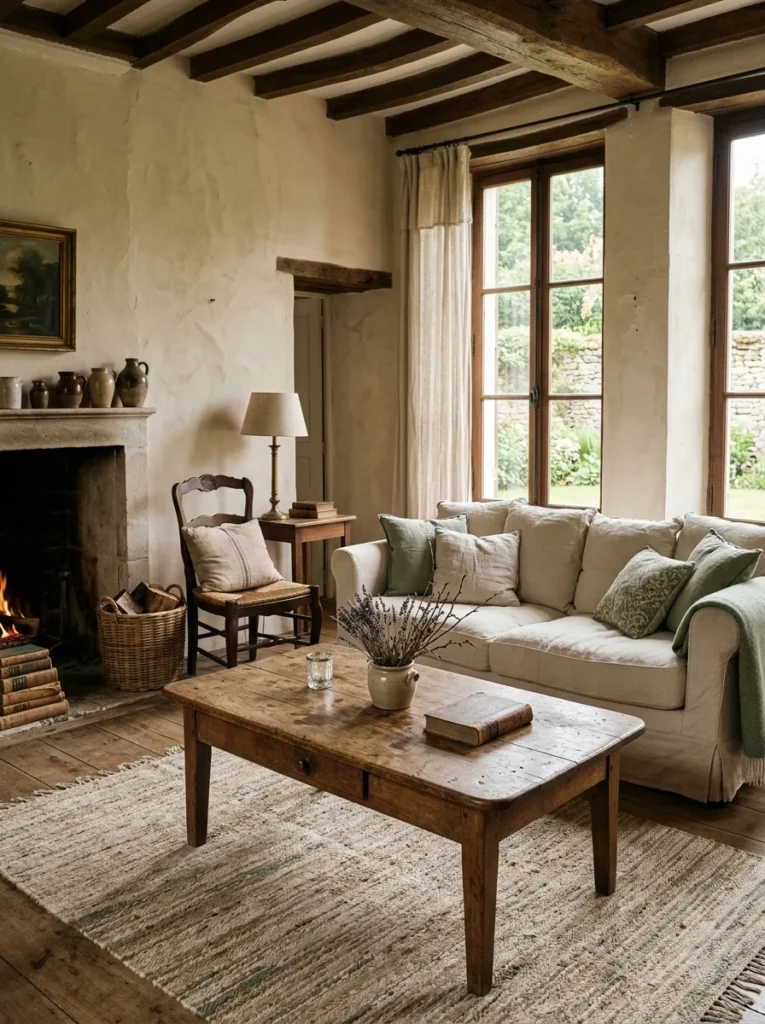
New furniture with a perfectly flawless finish never quite reads as French country, no matter how correct the shape or color is. I found a genuinely used wooden coffee table with small scuffs and worn edges at a secondhand shop, and it did more for the room’s character than any of the “new but distressed” pieces I’d looked at before finding it.
2. Layer Linen Textiles Throughout the Room
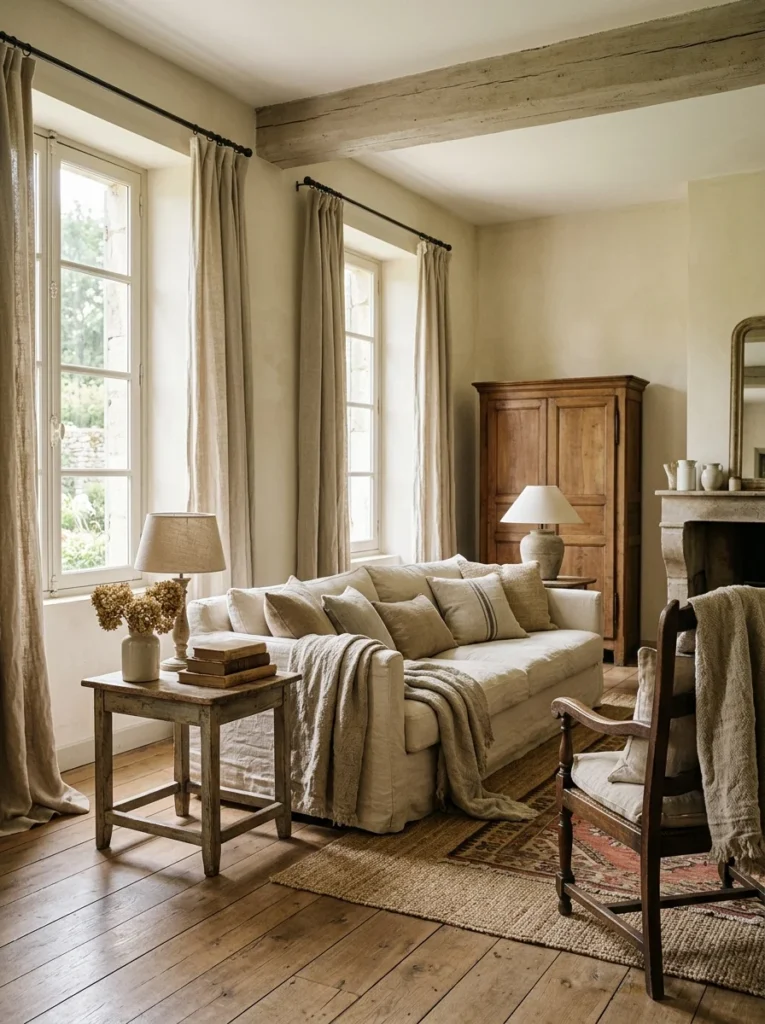
Linen curtains, a linen throw, and linen slipcovers on two of my chairs all work together to create a soft, slightly rumpled texture that feels lived-in rather than staged. I avoided anything too crisp or perfectly pressed, since that polish works against the relaxed feeling this style is going for.
3. Use a Muted, Earthy Color Palette
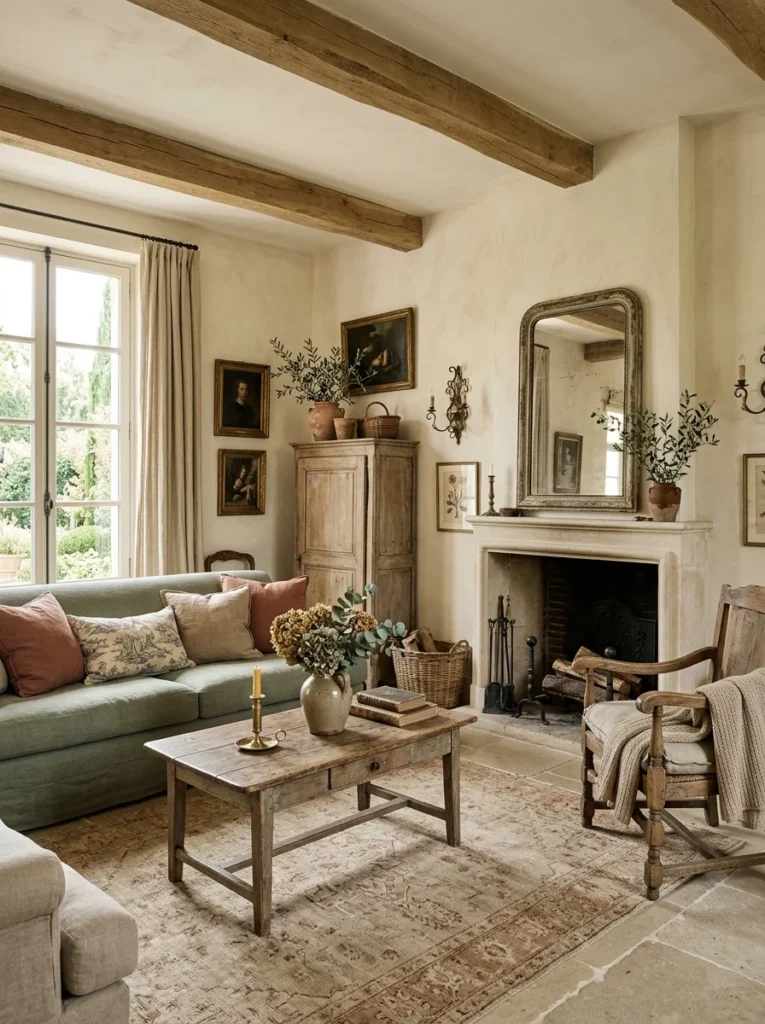
My walls landed on a soft, warm cream, paired with sage green accents and touches of dusty terracotta throughout the textiles and decor. Bright or highly saturated colors tend to pull a room toward a different, more modern aesthetic, while muted, earthy tones keep it feeling grounded and old-world.
4. Incorporate a Stone or Brick Fireplace as a Focal Point
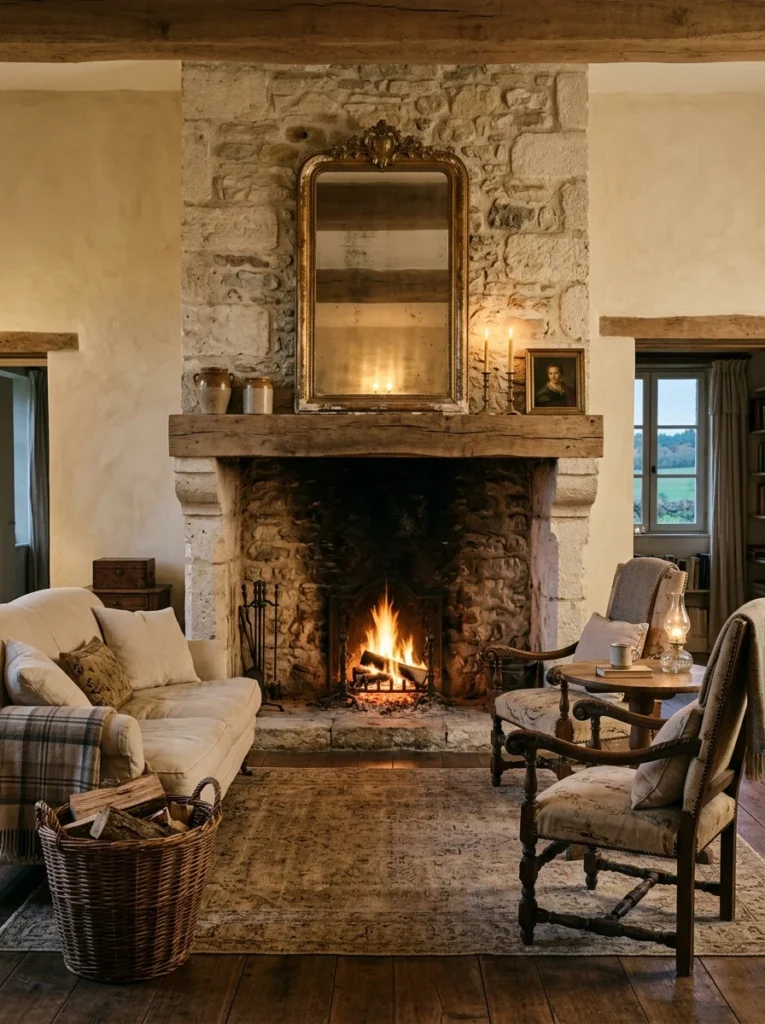
My fireplace surround was originally plain drywall, and adding a rough stone veneer around it gave the room the rustic anchor point that a lot of French country spaces are built around. Even in homes without a working fireplace, a stone-clad mantel and surround alone can carry a lot of that same visual weight.
5. Choose a Toile Fabric for Just One or Two Accent Pieces
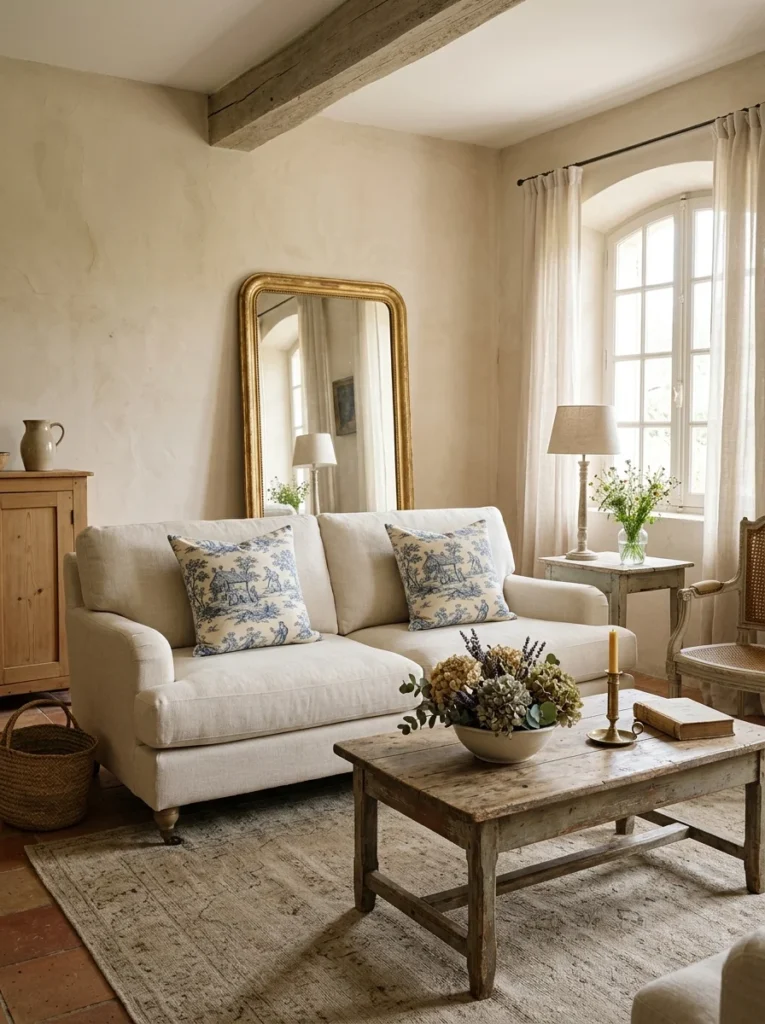
Toile is the fabric people associate most strongly with this style, but covering an entire room in it reads as costume rather than decor. I used it only on a pair of accent pillows, which gave a nod to the classic pattern without overwhelming the more neutral furniture around it.
6. Add a Wrought Iron Light Fixture
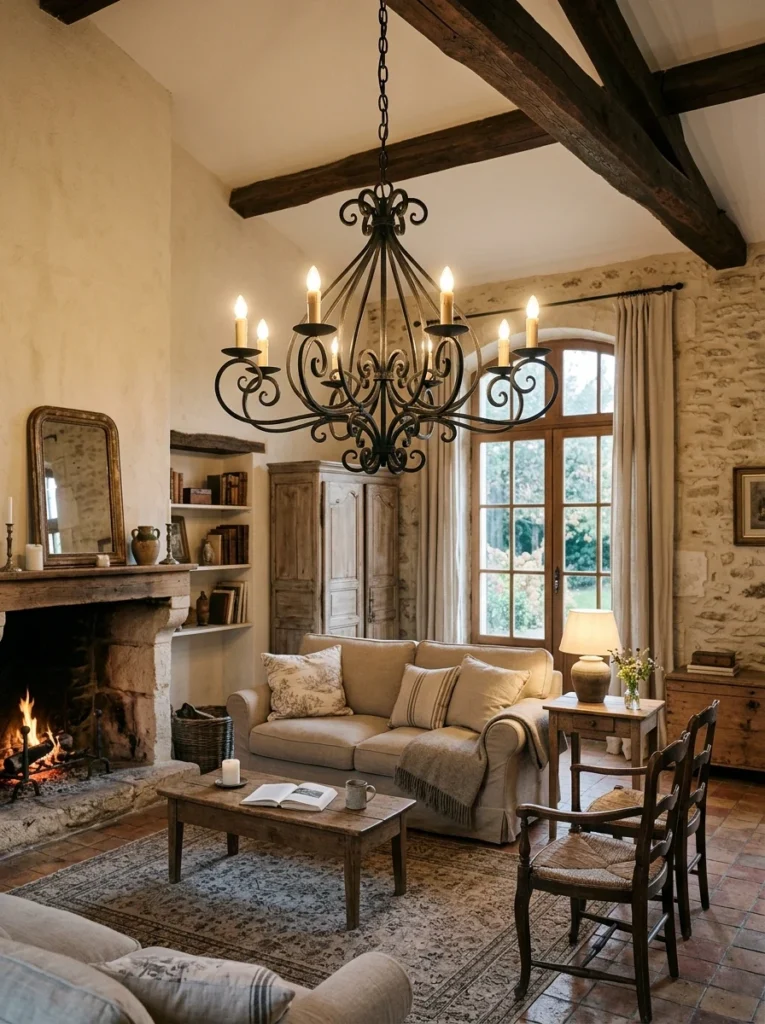
Swapping a plain modern chandelier for one with wrought iron detailing and candle-style bulbs added an old-world character to the room that no amount of furniture styling alone could achieve. It’s become one of the first things people notice walking in.
7. Use Reclaimed Wood Beams or Accents on the Ceiling
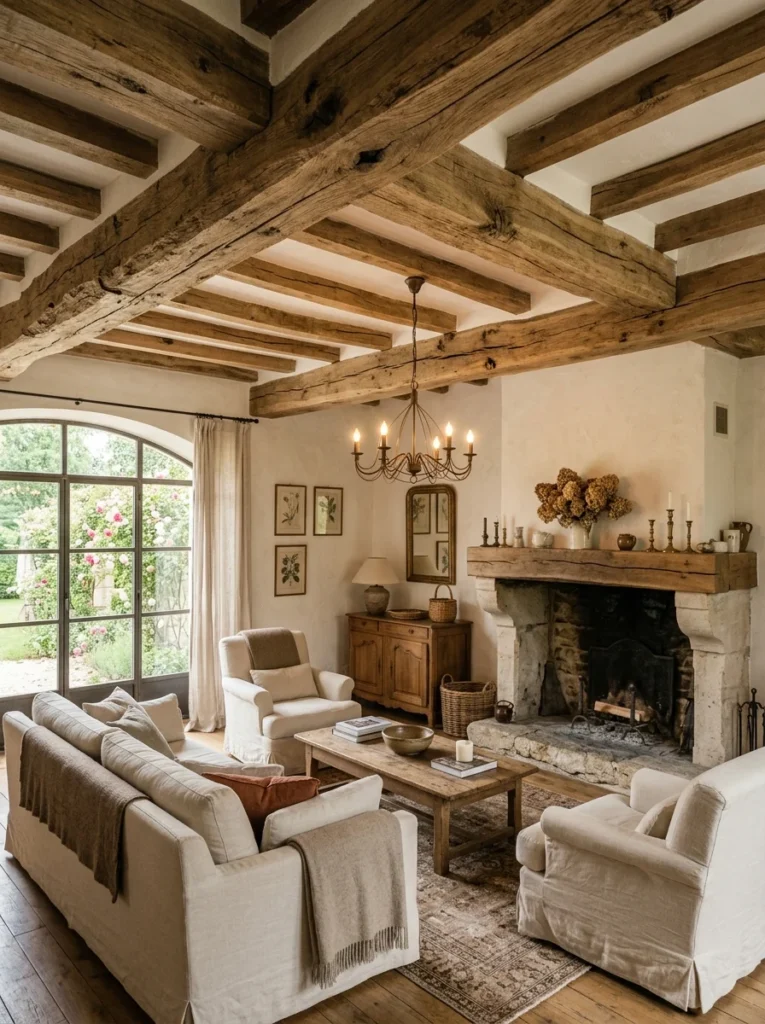
I couldn’t add full structural beams without a significant renovation, but a set of decorative wood beam accents installed across the ceiling gave the room a rustic, cottage-like structure overhead that changed the whole feel of the space looking up, not just at eye level.
8. Choose a Large, Weathered Wood Dining or Console Table
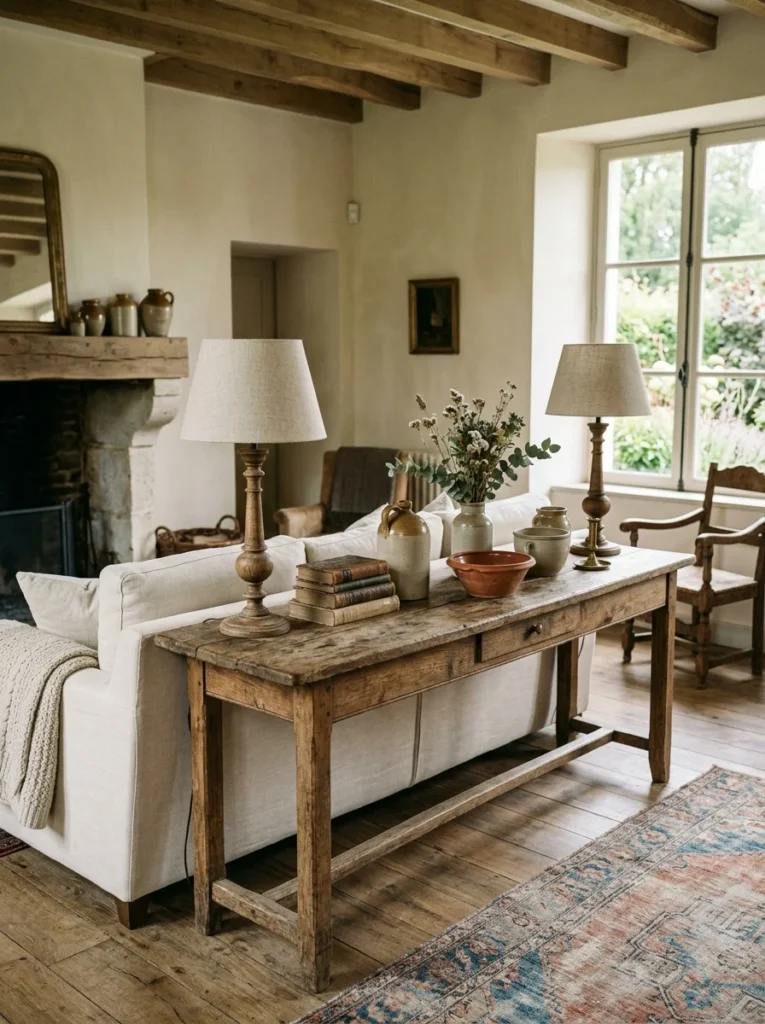
A long wooden console table behind my sofa, with visible grain and a slightly uneven, weathered finish, became one of the most functional and visually grounding pieces in the room, holding lamps, books, and a small collection of ceramic pieces.
9. Add Fresh or Dried Lavender as a Recurring Detail
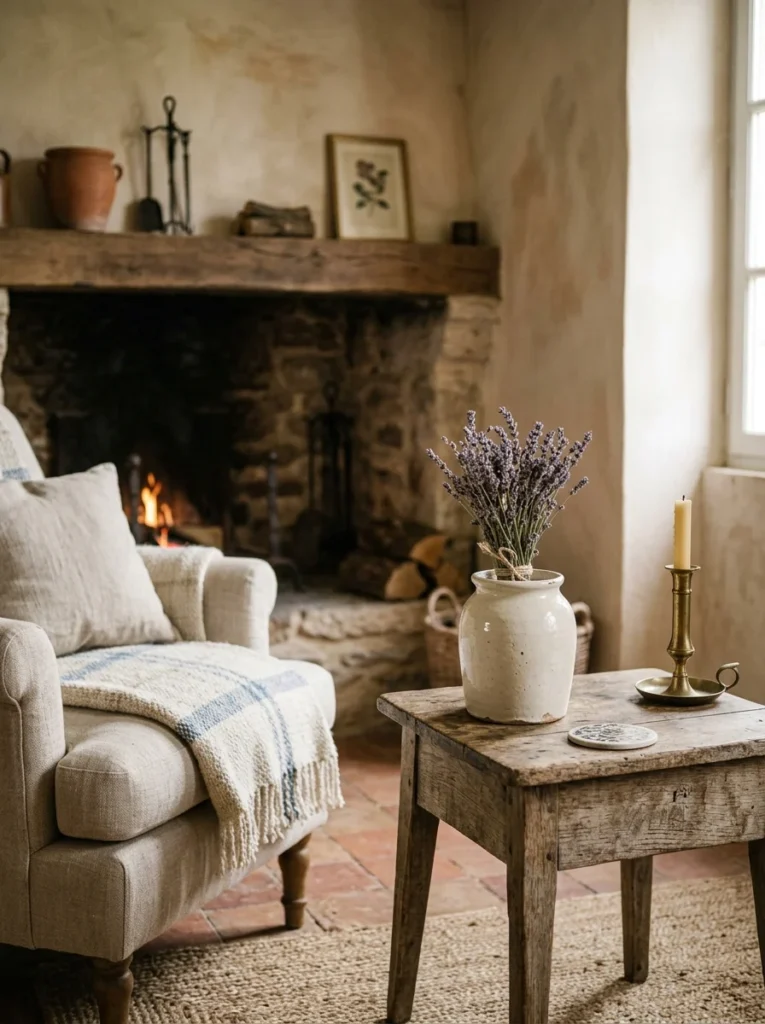
A small bundle of dried lavender in a simple ceramic vase, refreshed occasionally, brings in both a visual and faint scent detail that feels distinctly tied to this style’s origins without requiring any major purchase or commitment.
10. Use Woven Baskets for Both Storage and Texture
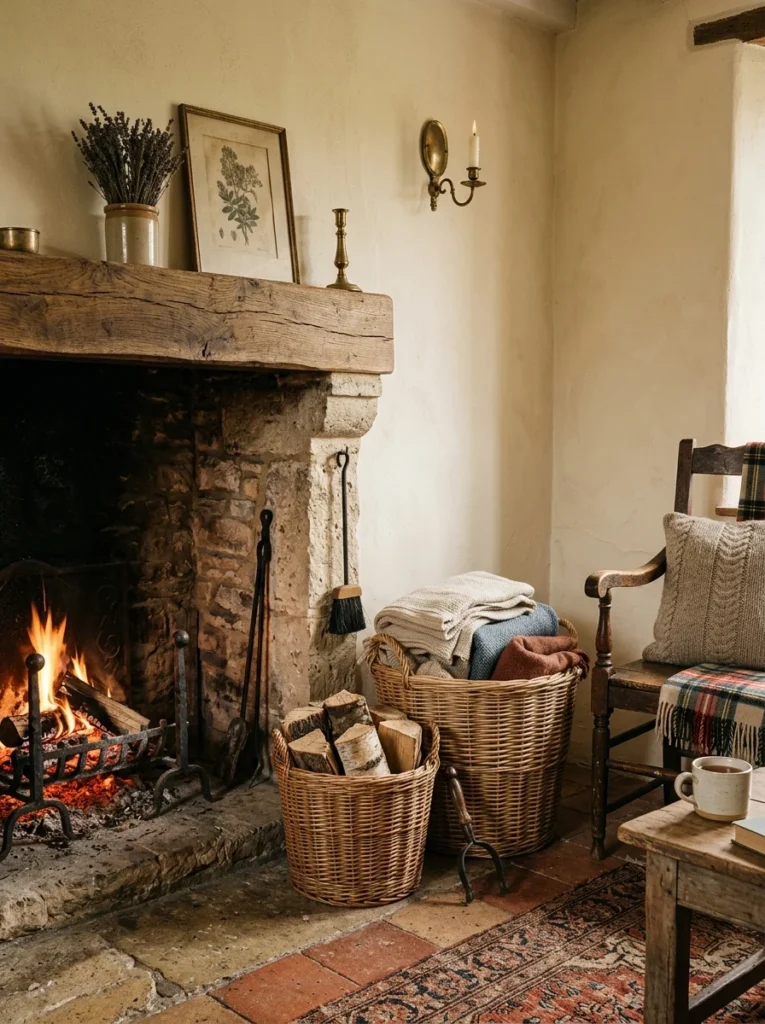
Woven baskets holding throw blankets or firewood near the fireplace add texture and practical storage at the same time. I avoided anything with sharp, modern lines here in favor of rounded, handwoven shapes that felt more consistent with the room’s overall softness.
11. Choose Curved, Carved Furniture Legs Over Straight Modern Ones
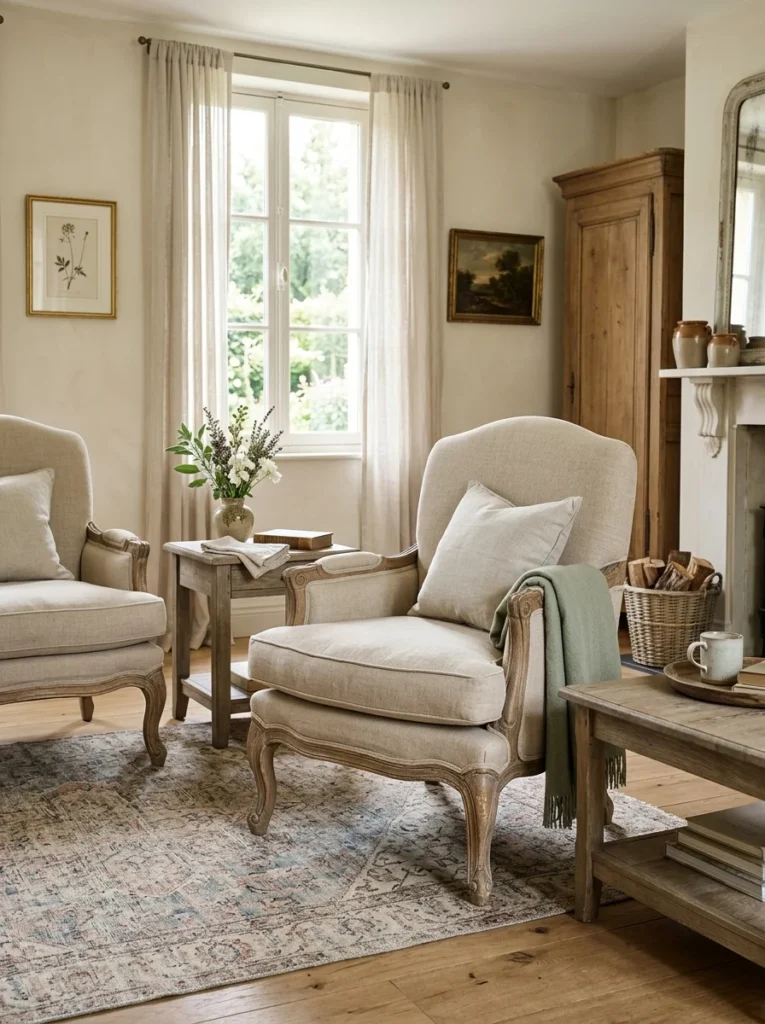
My armchairs have subtly carved, curved legs rather than the straight, tapered legs common in more modern furniture. It’s a small structural detail, but it reads immediately as more traditional and old-world the moment you actually look closely at the furniture in the room.
12. Layer Rugs for Warmth and Depth

Rather than one single rug, layering a smaller, more patterned rug over a larger neutral one added visual depth and warmth underfoot, a detail I noticed in several French country interiors before trying it myself and being genuinely surprised by how much richer it made the floor feel.
13. Use Antique or Vintage Mirrors With Ornate Frames
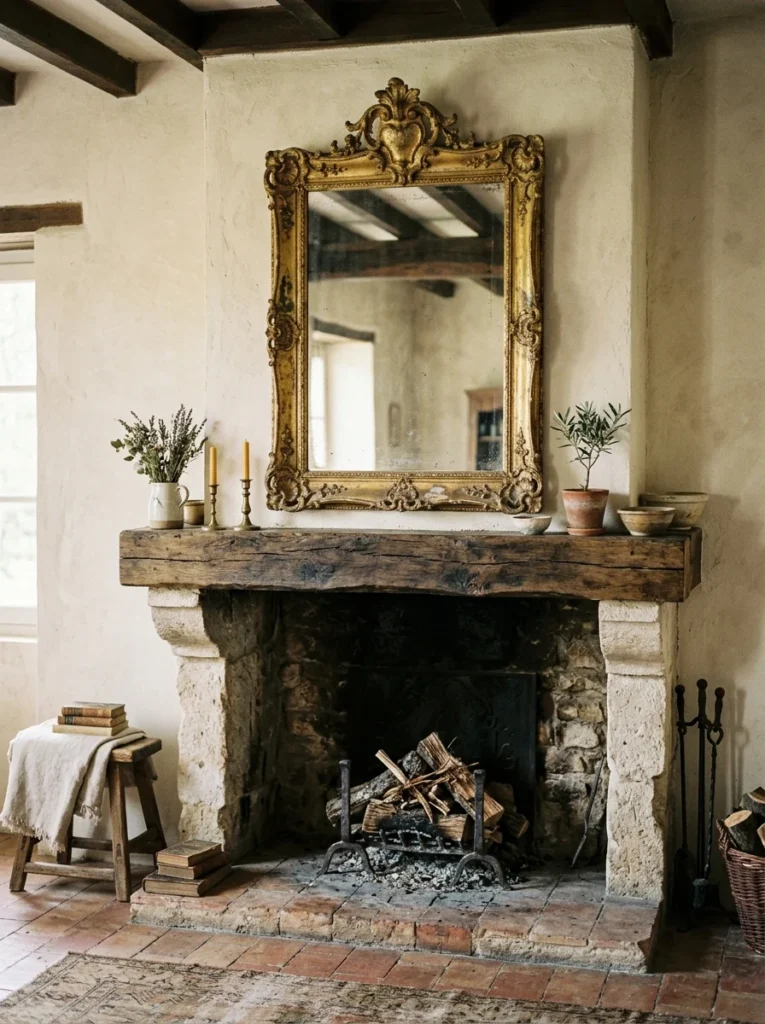
A gilded, slightly aged mirror frame above my mantel added a sense of history to the room that a plain modern mirror never could have. I specifically looked for one with some visible tarnish on the gold finish rather than a pristine, newly gilded frame.
14. Incorporate Ceramic or Pottery Pieces With Imperfect Glazes
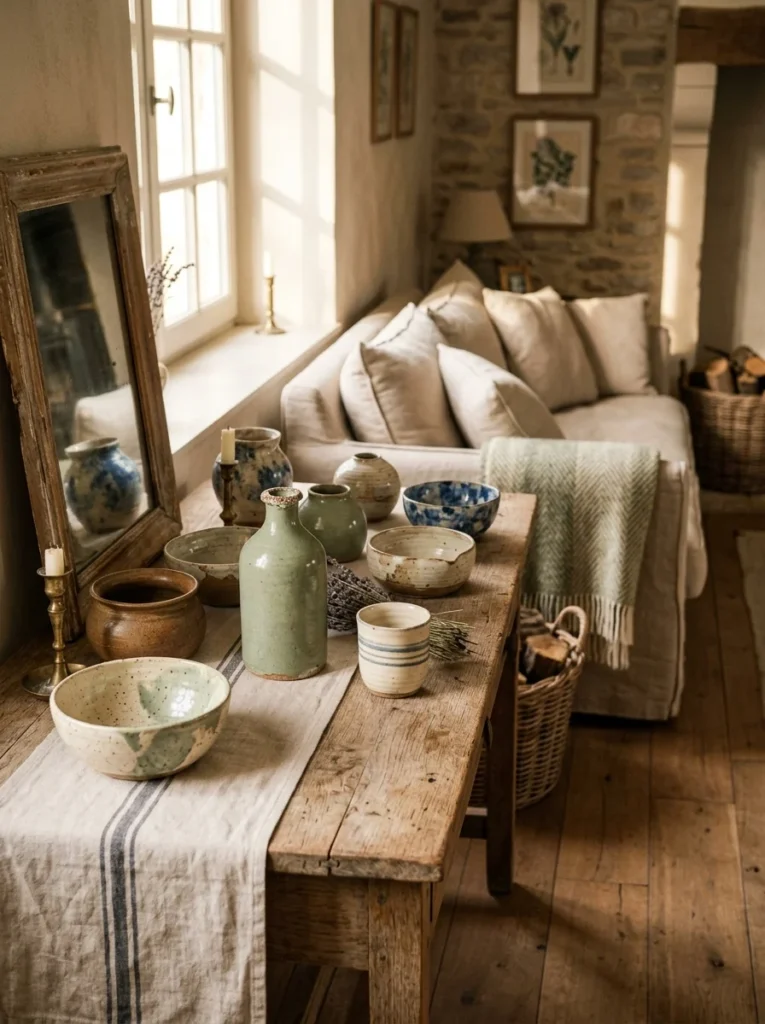
Handmade ceramic vases and bowls, with slightly uneven glazes and visible throwing marks, added a sense of craft and imperfection that machine-made decor simply doesn’t carry. These small details end up doing more work than larger furniture pieces in setting the overall tone.
15. Choose Botanical or Nature-Inspired Art
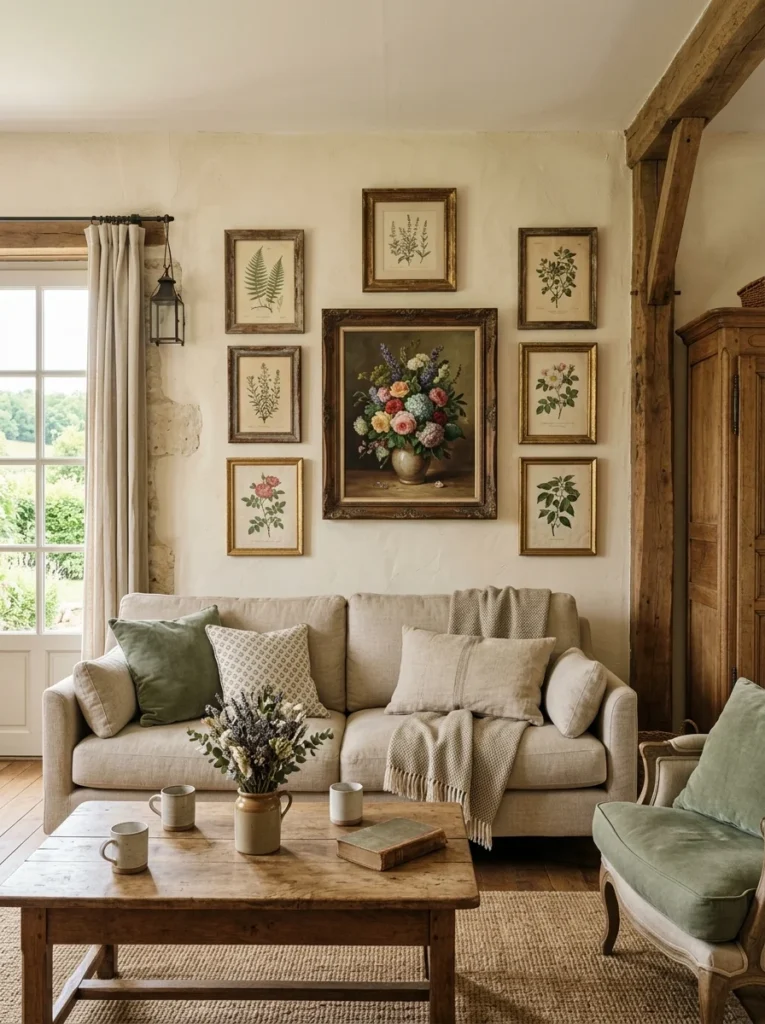
Simple botanical prints or a small still-life painting of fruit and flowers echo the countryside origins of this style far better than abstract or geometric art would. I found a set of vintage-style botanical prints at an estate sale that fit the room better than anything new I could have bought.
16. Let Some Furniture Pieces Be Genuinely Old, Not Just Styled That Way
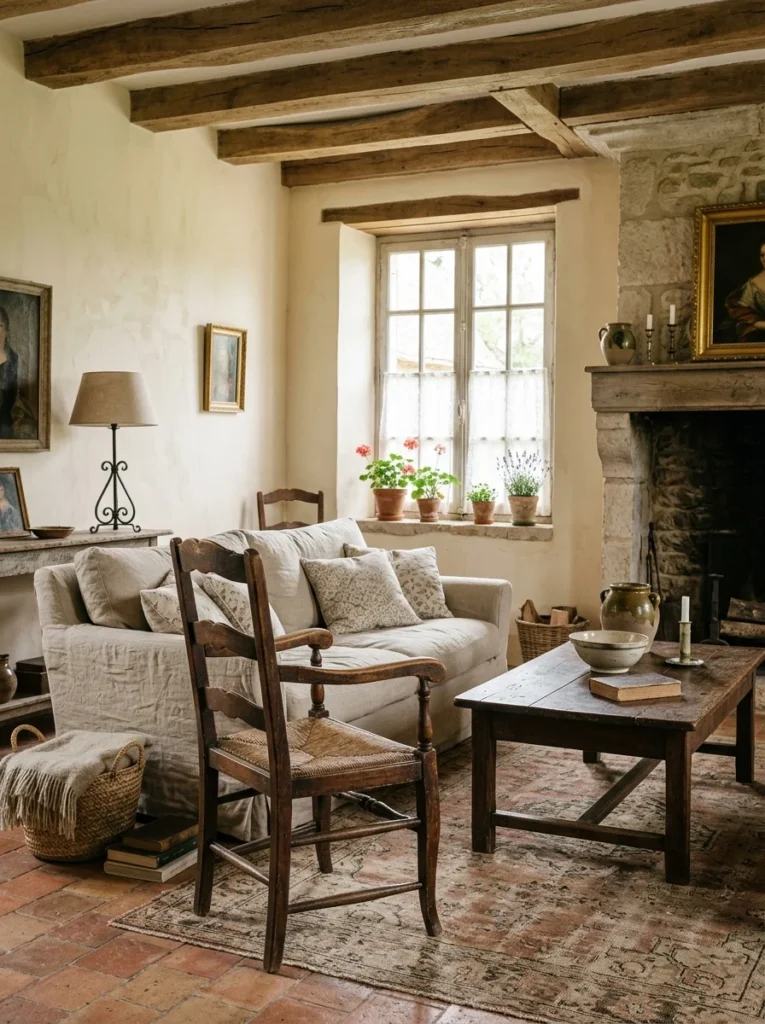
Beyond the coffee table, I inherited a small wooden side chair from a relative that’s genuinely close to a century old, worn in ways no amount of intentional distressing can quite replicate. Having at least one piece with real history in the room grounds everything else that’s been more deliberately chosen to match.
17. Use Candles and Warm, Low Lighting in the Evening
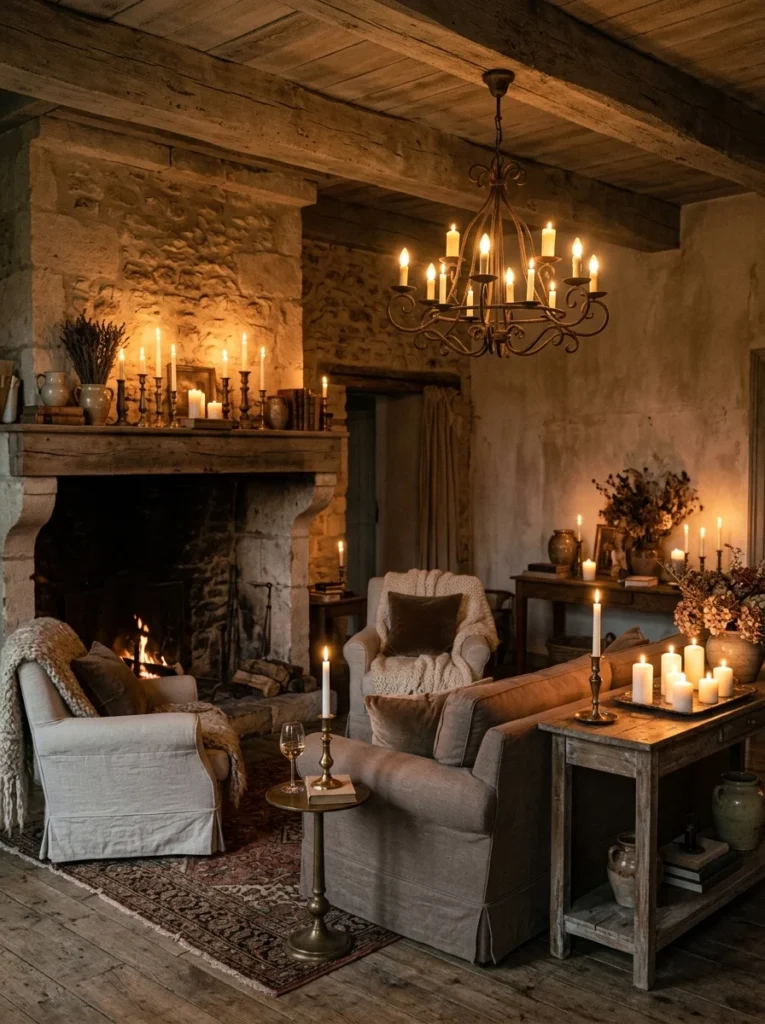
Beyond the wrought iron fixture, I keep several candles at different heights around the room for evenings, since the warm, flickering light suits this style’s cozy, old-world feeling far better than bright, even overhead lighting ever could.
18. Add a Vintage Clock as a Functional Focal Point
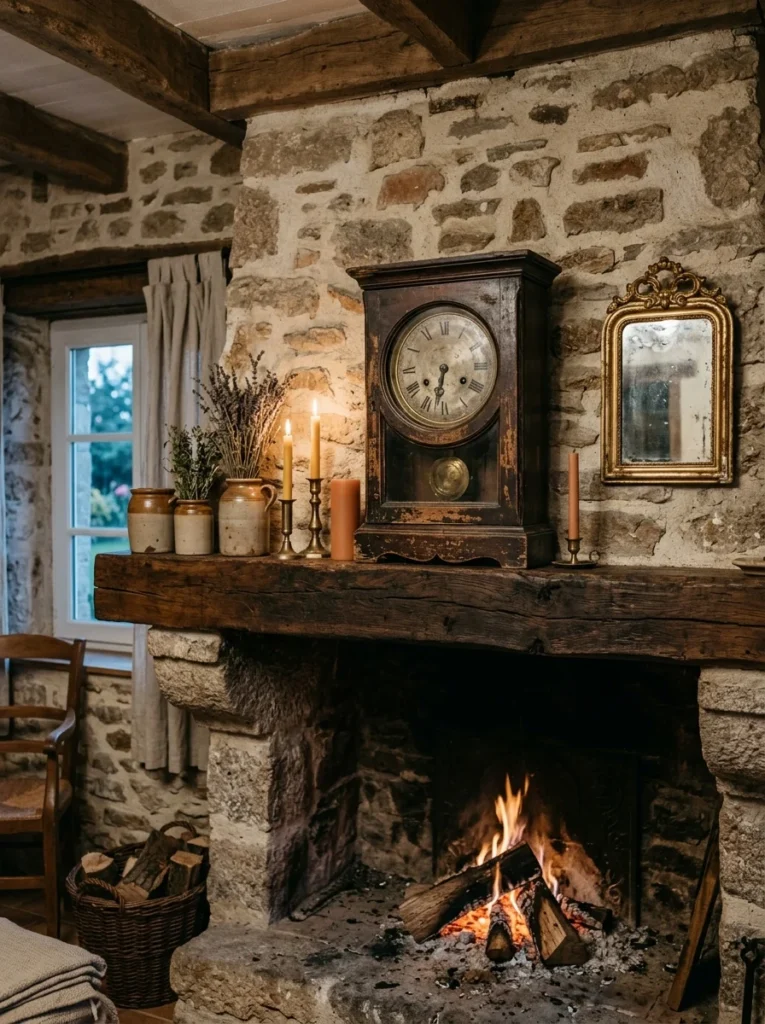
A weathered wooden mantel clock, found at the same secondhand shop as my coffee table, became a small but meaningful detail that ties the fireplace area together and adds a sense of quiet, unhurried time passing that suits the whole mood of the room.
19. Resist the Urge to Make Everything Match Perfectly
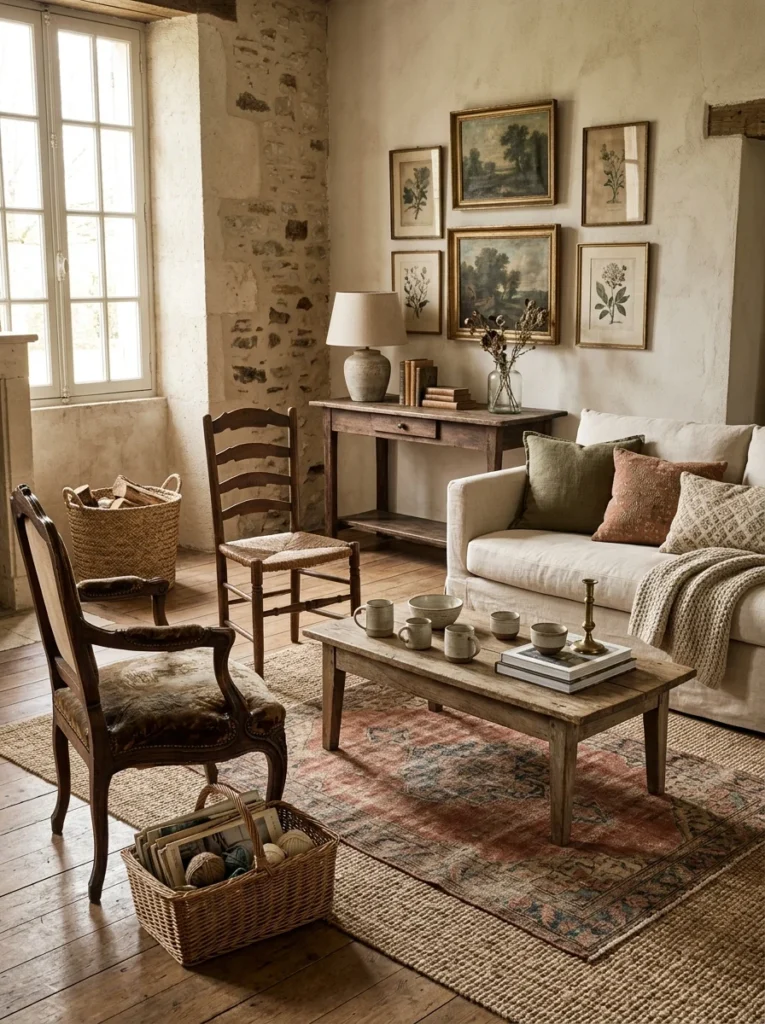
The biggest lesson from this whole process was learning to stop worrying about pieces matching exactly. My chairs, table, and accessories all come from different eras and sources, and that variety, rather than undermining the room, is actually what makes it feel like it was gathered slowly over years rather than purchased all at once from a single catalog.
Where I Actually Found Most of These Pieces
Since so much of this style depends on things that already look aged, it’s worth being specific about where these pieces actually came from, since “vintage” and “secondhand” can sound vague as advice on their own. The coffee table and mantel clock both came from the same local secondhand furniture shop, one I now check every few weeks rather than visiting once and giving up when nothing matched. The gilded mirror came from an estate sale I found listed online, and I’ll admit I almost skipped it because the listing photos made it look more damaged than it actually was in person, which taught me it’s worth going to see pieces directly rather than ruling them out from photos alone. The ceramic pieces came from a mix of a local pottery studio’s seconds sale, imperfect pieces sold at a discount, and a couple of genuinely old finds from flea markets during a trip that had nothing to do with decorating at all.
What Didn’t Work Along the Way
Not every attempt at this style landed well in my own room, and I think it’s worth mentioning the misses too. I initially bought a set of new “distressed” dining chairs meant to evoke that same worn character, and next to my genuinely old side chair, the difference was obvious in a way that undercut both pieces rather than blending them together. I eventually returned the new chairs and found older, mismatched ones instead, which solved the problem entirely. I also tried a heavily patterned wallpaper early on, assuming more pattern meant more old-world charm, and it ended up fighting with the toile pillows and layered rugs for visual attention. Stripping the wallpaper back to a plain, muted wall color let the textiles and furniture carry the pattern instead, which turned out to be a far better balance for the room as a whole.
What My Grandmother’s Living Room Actually Taught Me
Looking back at this project, I don’t think I was ever really trying to copy her living room exactly, since I couldn’t if I tried, most of what was in that room came from decades of her own life rather than any deliberate style choice. What I took from it instead was the underlying principle behind everything in that room: nothing there was chosen to look a certain way for other people. It accumulated because she used it, needed it, or genuinely loved it, and the style followed from that rather than the other way around. My own living room isn’t a perfect replica of hers and was never meant to be, but I think it’s gotten closer to that same feeling than any single piece of toile fabric or wrought iron fixture could have managed on its own.
A Few Practical Notes for Anyone Trying This Themselves
If you’re starting this kind of project, I’d recommend prioritizing secondhand and estate sale shopping over buying everything new, both for the cost savings and because genuinely aged pieces do something for the room that new furniture, however well-styled, struggles to replicate. Give yourself more time than you think you’ll need, since a lot of the best pieces in my own room were found gradually over months rather than during a single weekend of shopping, and that patience ended up being part of what made the final room feel authentic rather than assembled all at once.