
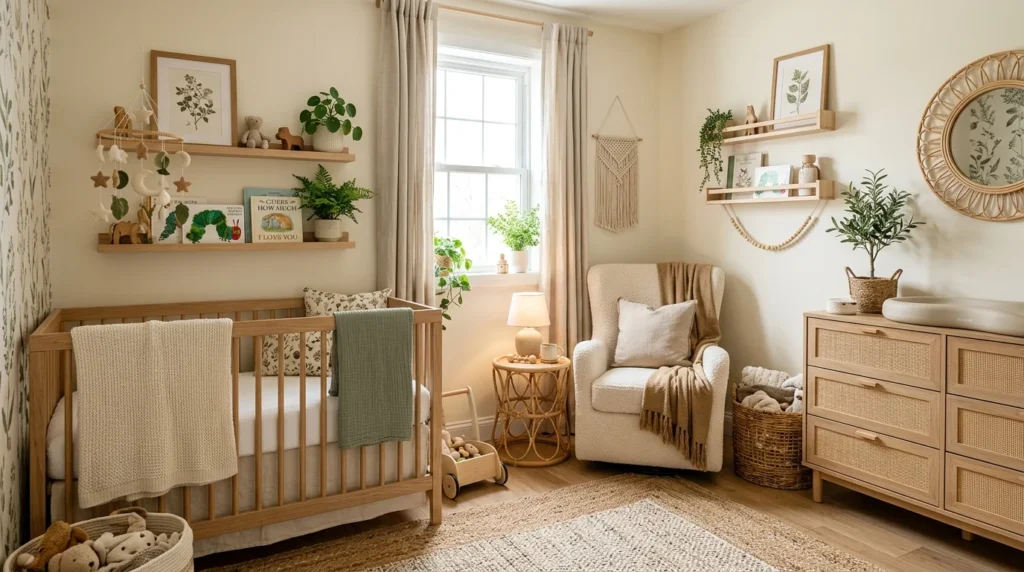
The gender-neutral nursery has moved from a niche design choice made by parents who did not know their baby’s sex before birth to one of the most consistently admired and most widely chosen nursery aesthetics in contemporary interior design. The shift reflects a broader cultural movement away from the rigid pink-for-girls, blue-for-boys convention that dominated nursery design for much of the twentieth century — a convention that is, in historical terms, surprisingly recent and by no means universal across cultures or periods.
What has driven the gender-neutral nursery from practical necessity — parents who want to prepare the room before knowing the baby’s sex — to genuine aesthetic preference is the quality of the design results it produces. Gender-neutral nurseries, when designed well, are consistently more beautiful, more timeless, and more characterful than conventionally gendered ones. The freedom to draw from the full palette of soft, muted colors rather than being constrained to pink or blue opens up a range of design possibilities that produce rooms of genuine sophistication. The focus on natural materials, organic forms, and thoughtful styling that characterizes the best gender-neutral nurseries creates interiors that grow with the child rather than needing to be completely redesigned when the baby’s preferences emerge.
This guide covers twenty gender-neutral nursery styles, palettes, and design approaches — from the most minimal and Scandinavian to the most warm and earthy, from the most nature-inspired to the most modern and graphic. Each style is presented with the specific colors, materials, furniture, and accessories that bring it to life, with guidance on how to create the look in a range of budgets and room sizes. The twenty ideas are not prescriptive — they are a resource from which parents can draw the elements that resonate most and combine them into a nursery that is genuinely their own.
The Foundation: What Makes a Nursery Truly Gender-Neutral
Before exploring specific styles, it is worth establishing what genuine gender neutrality in a nursery means and what it does not mean. A common misunderstanding is that gender-neutral means beige — that achieving gender neutrality requires draining all color from the nursery and filling it with safe, inoffensive, characterless neutrals. This interpretation produces nurseries that are technically gender-neutral but aesthetically lifeless.
True gender neutrality in a nursery means choosing colors, materials, patterns, and themes that are not culturally coded to a specific gender — not that the room has no color or no character. The full range of colors and themes that are not conventionally associated with one gender is vast: warm whites and creams, sage greens, terracottas, warm ochres, dusty mauves, charcoals, warm greys, natural wood tones, botanical themes, animal themes, celestial themes, geometric patterns, abstract art — all of these are genuinely gender-neutral and can be used to create nurseries of real beauty and personality.
The colors most consistently associated with gender are the specific bright pink and the specific bright blue of the conventional nursery palette. The muted, grey-toned versions of virtually every other color — and even the muted, grey-toned versions of pink and blue — are not gender-coded in the same way and can be used in a gender-neutral nursery without the associations of the conventional palette.
Style 1: The Warm Neutral Nursery
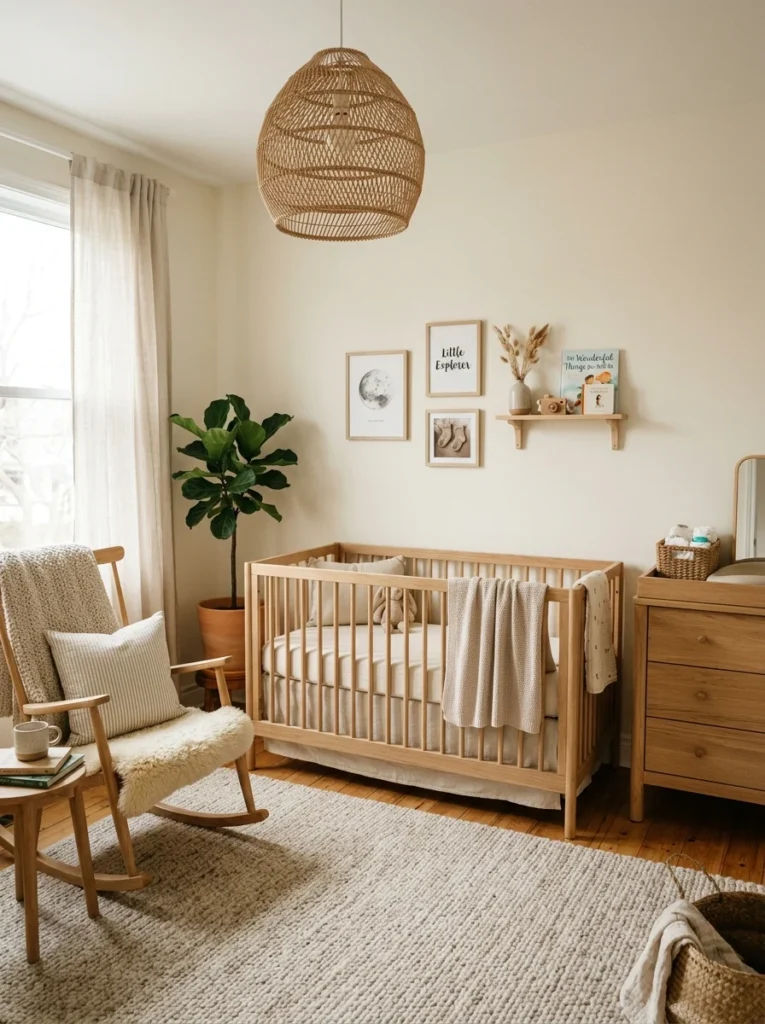
The Palette: Warm white walls, ivory and cream textiles, natural wood furniture, warm oatmeal textiles.
The Mood: Calm, warm, and effortlessly timeless. The warm neutral nursery is the most universally appealing gender-neutral palette because it creates a space that feels immediately welcoming and peaceful without committing to any color that might feel limiting as the child grows.
The warm neutral nursery works through texture rather than color contrast. When all the colors in the room are close in tone — warm white walls, a cream crib, oatmeal linen curtains, a natural wool rug — the visual interest comes from the difference in surface quality between each material. A chunky knit blanket draped over the nursing chair, a woven rattan mobile above the crib, a linen curtain with a subtle texture, and a smooth plaster wall all contribute to a layered richness that makes the room feel beautiful despite the narrow color range.
Furniture: A natural oak crib and dresser provide the room’s primary warm material element. Natural wood tones — oak, ash, or pine — have a warmth that brings any pale palette to life without introducing a color that competes with the neutrals.
Textiles: Linen and cotton in ivory, cream, and warm white. A chunky knit throw in a natural oatmeal tone adds texture and warmth to the nursing chair. A sheepskin rug on the floor beside the crib adds softness and luxury at ground level where it is most practically useful.
Accessories: A rattan or woven pendant light adds natural warmth overhead. Dried botanicals — pampas grass, cotton stems, dried seedheads — in simple ceramic or terracotta vases provide organic decoration without competing colors.
Style 2: The Sage Green Nursery
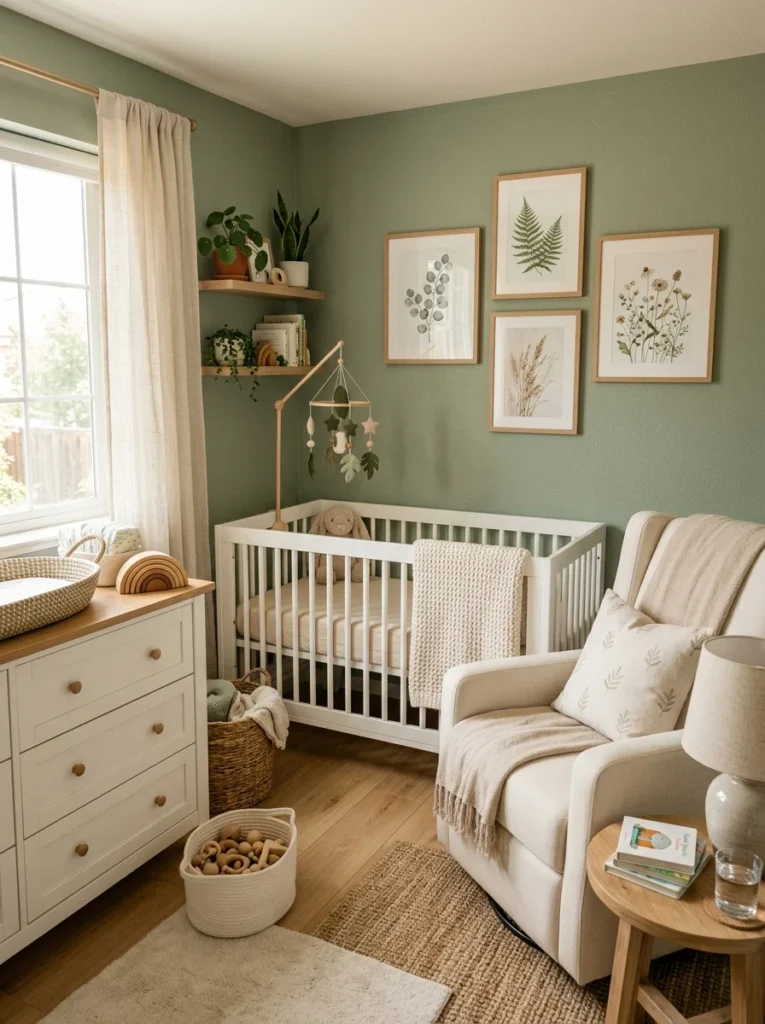
The Palette: Sage green walls, warm white crib and furniture, natural wood accents, cream and white textiles.
The Mood: Naturally calm, fresh without being energizing, and quietly beautiful. Sage green is the color that most naturally bridges the gap between the indoor nursery environment and the organic world outside it, creating a space that feels genuinely restful.
Sage green became one of the most popular nursery colors in contemporary design because it satisfies several nursery-specific requirements simultaneously. It is muted enough — sufficiently grey-toned — that it does not stimulate or energize the way brighter greens would. It is warm enough — with brown and yellow undertones — that it creates a cozy, sheltered feeling rather than a cool, clinical one. And it is natural enough — clearly connected to the color of foliage and growing things — that it creates an organic, peaceful atmosphere that suits a room designed for rest.
Wall color recommendations: Farrow and Ball Mizzle, Little Greene Sage, Dulux Pistachio Cream. All three are reliably beautiful in nursery applications and suit a range of furniture finishes and textile choices.
Furniture: A white painted crib and white dresser create a clean contrast against the sage green walls. Natural wood elements — a rattan nursing chair, a wooden side table, a wooden mobile frame — add warmth within the green and white palette.
Textiles: White and cream linen bedding in the crib. A sage green cellular blanket — safe for use in the room but not in the crib — draped over the nursing chair echoes the wall color. A warm-toned jute rug grounds the floor in a natural material that suits the palette.
Accessories: A simple botanical print — a leaf or fern illustration — in a natural wood frame above the dresser adds a decorative note that reinforces the nature-inspired quality of the palette. A small pothos or snake plant on a high shelf adds a living element that suits the green palette and thrives in nursery light conditions.
Style 3: The Earthy Terracotta Nursery/
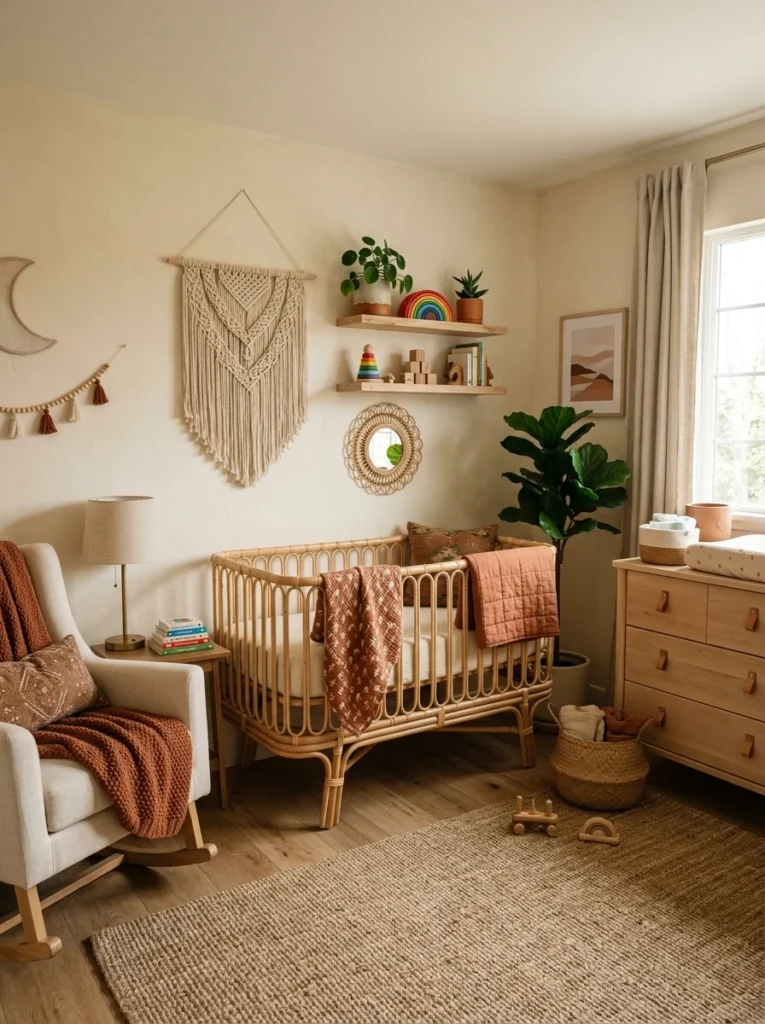
The Palette: Terracotta or warm rust as an accent color, warm cream or soft white walls, natural wood and rattan furniture, warm-toned textiles.
The Mood: Warm, grounded, and richly organic. The terracotta nursery draws from the earthy palette that dominates contemporary interior design and produces a room that feels both thoroughly modern and genuinely timeless.
Terracotta in a nursery is most effectively used as an accent color rather than a dominant wall color. Full terracotta walls in a nursery can feel heavy for a room designed primarily around rest and sleep — the richness of the color creates a warmth that is beautiful but potentially over-stimulating as a dominant element. Terracotta used as an accent — in cushions, in a textured throw, in a ceramic lamp base, in a piece of wall art — adds its characteristic warmth and richness to the palette without overwhelming the room’s restful quality.
Wall color: Warm cream or soft white with warm yellow undertones — a color like Dulux Natural Calico or Farrow and Ball Pointing — creates the pale, warm backdrop against which terracotta accents read most beautifully.
Furniture: Natural rattan crib or rattan-paneled crib for the most on-trend and most palette-appropriate option. Natural wood dresser in a warm oak or ash tone. A rattan nursing chair with a cushion in a terracotta or warm rust fabric.
Textiles: A terracotta knit blanket draped over the nursing chair. Warm cream linen crib bedding. A terracotta and cream patterned rug at floor level. A terracotta-colored wearable blanket or sleep sack as a safe crib textile.
Accessories: Terracotta ceramic plant pots with small plants on a floating shelf. A dried pampas grass arrangement in a simple terracotta vase. A mobile with warm-toned wooden elements above the crib.
Style 4: The Minimalist Scandi Nursery
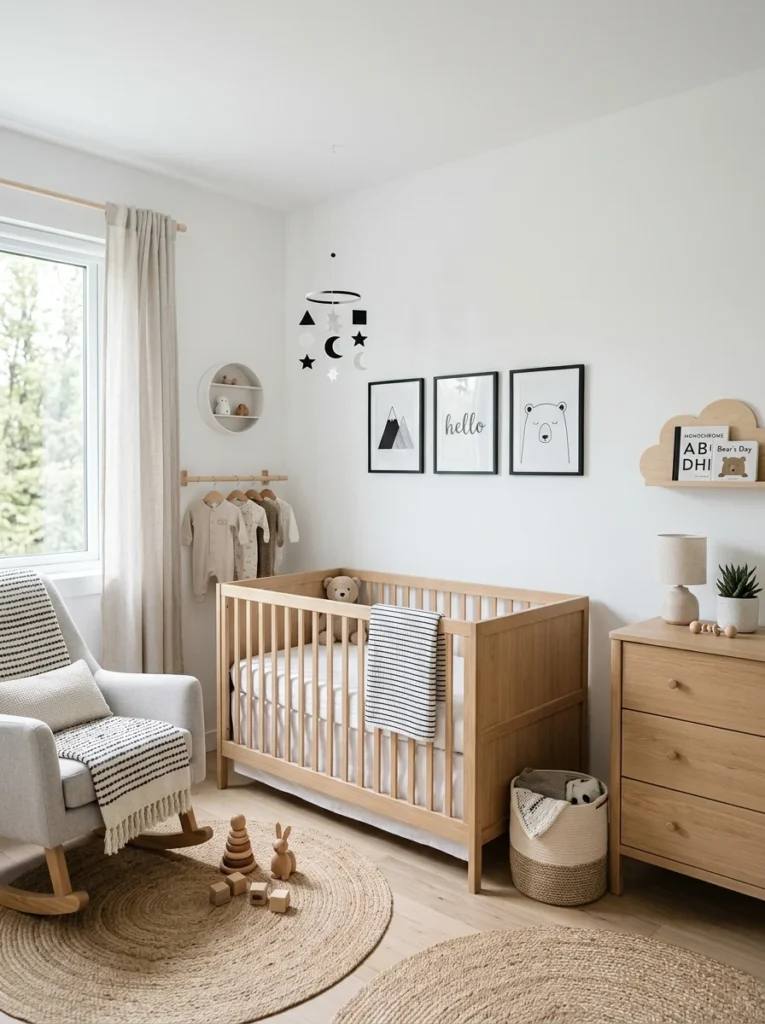
The Palette: White walls, white or natural wood furniture, minimal accessories in black and natural tones, clean lines throughout.
The Mood: Clean, ordered, and serenely calm. The Scandinavian minimalist nursery reduces the room to its essential elements — the crib, the changing station, the nursing chair, and a few carefully chosen accessories — and lets the quality of each element and the clarity of the space speak for themselves.
The minimalist Scandi nursery is the design approach most clearly aligned with the research on infant stimulation — infant brains are more easily overwhelmed by visual complexity than adult brains, and a visually simple, uncluttered environment is genuinely more supportive of infant calm than a highly decorated one. This does not mean the room needs to be bare — it means that each element in the room is chosen deliberately and that the total visual complexity of the finished room is kept intentionally low.
Wall color: True white or near-white with warm undertones — avoiding the stark, slightly blue quality of the brightest whites. Farrow and Ball All White or Dulux Timeless are reliable choices.
Furniture: A white or natural pine crib with clean, simple lines. A natural wood dresser without ornate detailing. A simple white glider with grey or white upholstery. All furniture in a consistent design language — no mixing of ornate and minimal styles within the same room.
Accessories: One large piece of simple artwork on the main wall — a single leaf print, a simple abstract in black and white, or a large initial letter — rather than a collection of smaller pieces. A single plant in a simple white ceramic pot. A minimal mobile with simple geometric wooden shapes above the crib.
Textiles: White linen crib bedding. A simple grey or natural wool rug. Black or charcoal throw on the nursing chair as the room’s single accent element.
Style 5: The Boho Nursery
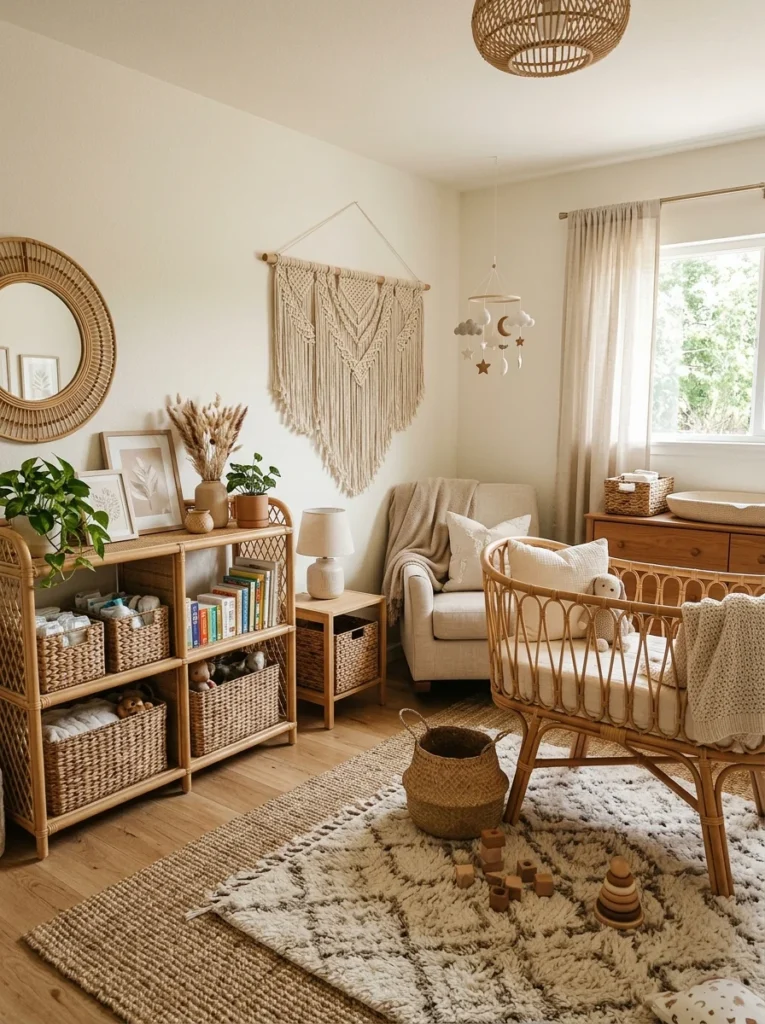
The Palette: Warm whites, natural wood, rattan and woven textures, macramé, dried botanicals, layered textiles in natural tones.
The Mood: Warm, textural, and organically beautiful. The boho nursery is one of the most popular and most consistently beautiful gender-neutral nursery aesthetics because its commitment to natural materials, layered textures, and organic forms produces rooms of genuine warmth and character.
The boho nursery is defined more by its material language than by a specific color palette — it is the combination of rattan, macramé, woven baskets, dried plants, linen textiles, and wooden elements that creates the boho aesthetic rather than any particular wall color or furniture finish. This material consistency means that a boho nursery can be executed in warm whites, in sage greens, in earthy terracottas, or in a combination of all three and still read clearly as a unified aesthetic.
Key materials: Rattan in the crib headboard or crib panels, the nursing chair, a pendant light shade, and storage baskets. Macramé in a wall hanging above the crib or beside the window. Woven baskets for storage on open shelves. Dried botanicals — pampas grass, dried flowers, cotton stems — as decorative elements throughout.
Furniture: A rattan-featured crib, a natural wood dresser, a rattan nursing chair with linen cushion. All pieces in natural, unfinished or lightly finished materials.
Textiles: Linen and cotton in natural, undyed, and warm cream tones. A layered rug situation — a natural jute rug with a smaller woven cotton rug on top — at the room’s center.
Accessories: A macramé wall hanging as the primary decorative element. A collection of rattan baskets on open shelves for storage. A mobile with natural wooden beads and rattan rings above the crib.
Style 6: The Forest and Nature Theme
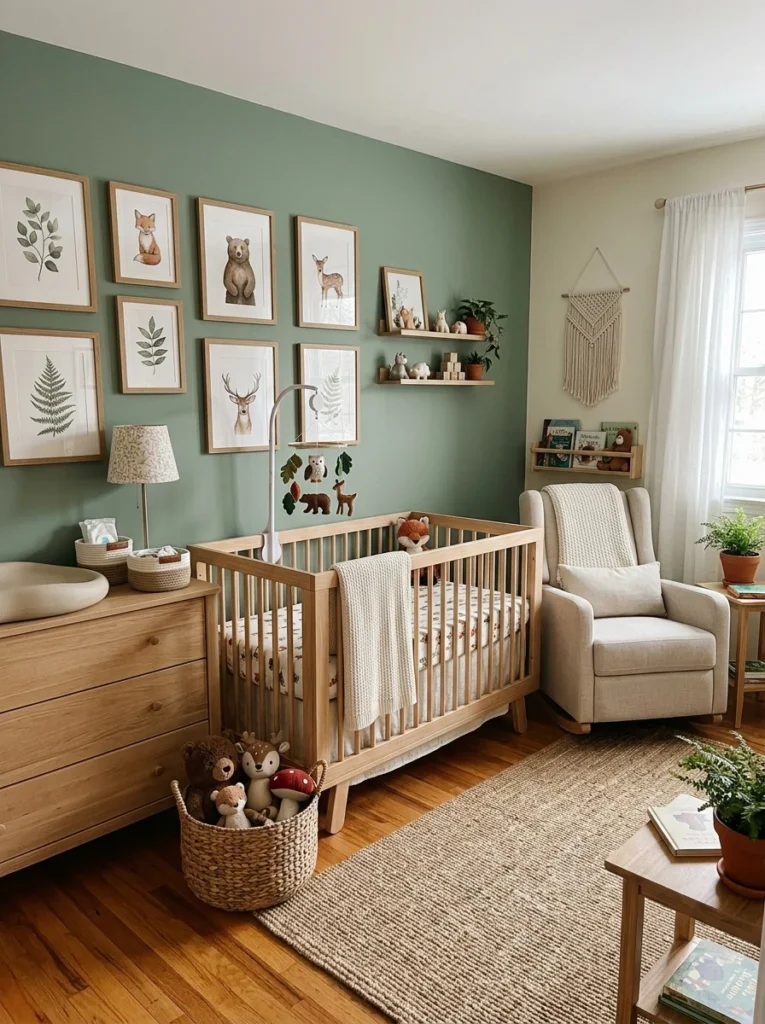
The Palette: Warm green in various tones, warm brown and wood accents, cream and white as the base, natural elements throughout.
The Mood: Enchanting, organic, and sheltering. The forest theme creates a nursery that feels like a protected natural space — a room that uses the imagery and palette of the natural world to create an environment of organic warmth and calm.
The forest theme in a gender-neutral nursery is not about literal woodland imagery — cartoon deer and mushrooms on every surface — but about the colors, textures, and forms of the natural world applied with restraint and quality. Sage and forest green walls, natural wood furniture, botanical prints, organic shapes in mobiles and accessories, and genuine natural materials throughout the room create the atmosphere of the natural world without resorting to literal representation.
Wall treatment: A deep sage or forest green on the primary wall behind the crib — the wall most visible when entering the room — with warm white or cream on the remaining walls. This approach uses the darker, richer green as a feature color that creates the forest atmosphere without making the entire room feel heavy.
Furniture: Natural wood crib and dresser. A dark wood or forest green nursing chair as an anchor piece in the room’s deeper green tones.
Accessories: Framed botanical prints in simple natural wood frames. A mobile with leaf shapes in various greens above the crib. Wooden animal figurines — forest animals such as foxes, rabbits, and hedgehogs — on the dresser or shelf. A large fiddle leaf fig or snake plant in a simple terracotta pot in the room’s corner.
Style 7: The Celestial and Stars Theme
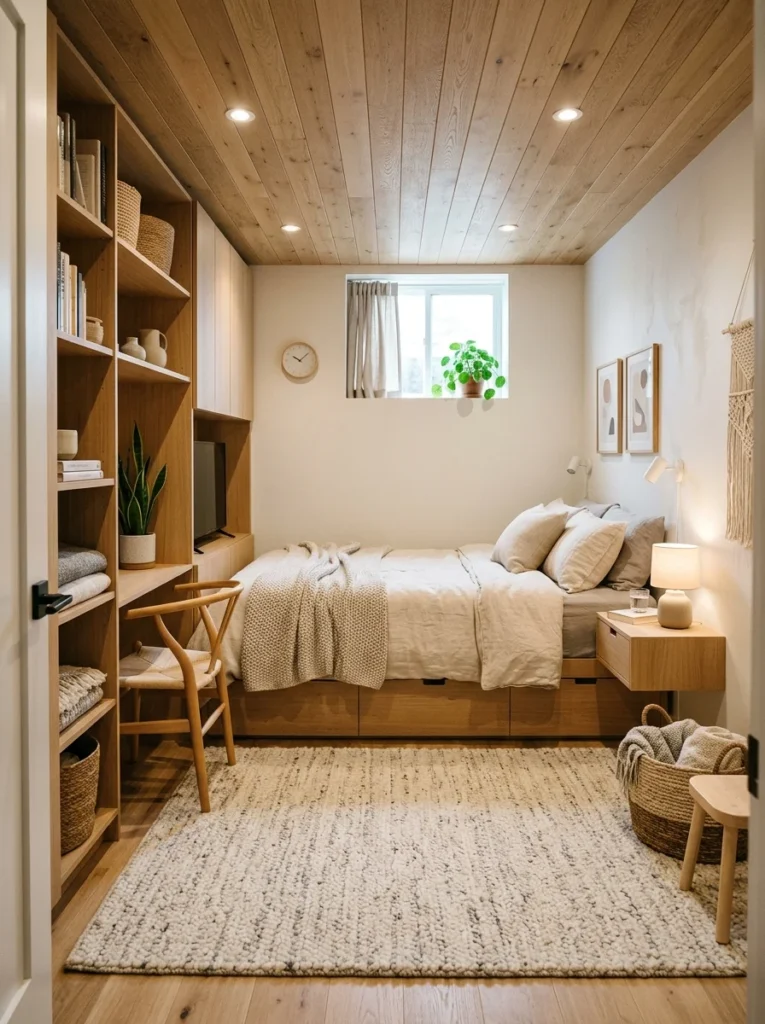
The Palette: Deep navy or soft dusty blue as accent, warm white and cream as the base, gold and brass metallics, star and moon motifs.
The Mood: Dreamy, magical, and quietly sophisticated. The celestial theme uses the imagery of stars, moons, and the night sky to create a nursery that feels both enchanting and calm — a room that evokes the quiet of nighttime and the wonder of the sky above.
The celestial theme is one of the most genuinely timeless nursery themes because its imagery — stars, moons, and planets — is universal, ageless, and not associated with any specific gender. It suits babies of any sex and grows with the child through the years when wonder at the natural world is a defining characteristic of childhood experience.
Wall treatment: Soft warm white walls as the primary color, with a celestial-themed wallpaper panel or a painted constellation mural on the feature wall behind the crib. Alternatively, a deep dusty navy on the feature wall with warm white stars applied with paint or decals.
Furniture: White painted crib and dresser as the base — the white provides the clean backdrop against which the celestial theme reads most clearly. A navy or dusty blue nursing chair as the primary accent piece.
Accessories: A star and moon mobile above the crib — in gold or brass tones for warmth. Gold star-shaped wall lights or sconces as supplemental lighting. Constellation print in a gold frame above the dresser. Gold or brass hardware on the dresser and other furniture pieces.
Textiles: White linen crib bedding. A navy and white star-patterned cellular blanket. A warm grey or navy rug on the floor. Gold throw cushion on the nursing chair.
Style 8: The Modern Graphic Nursery
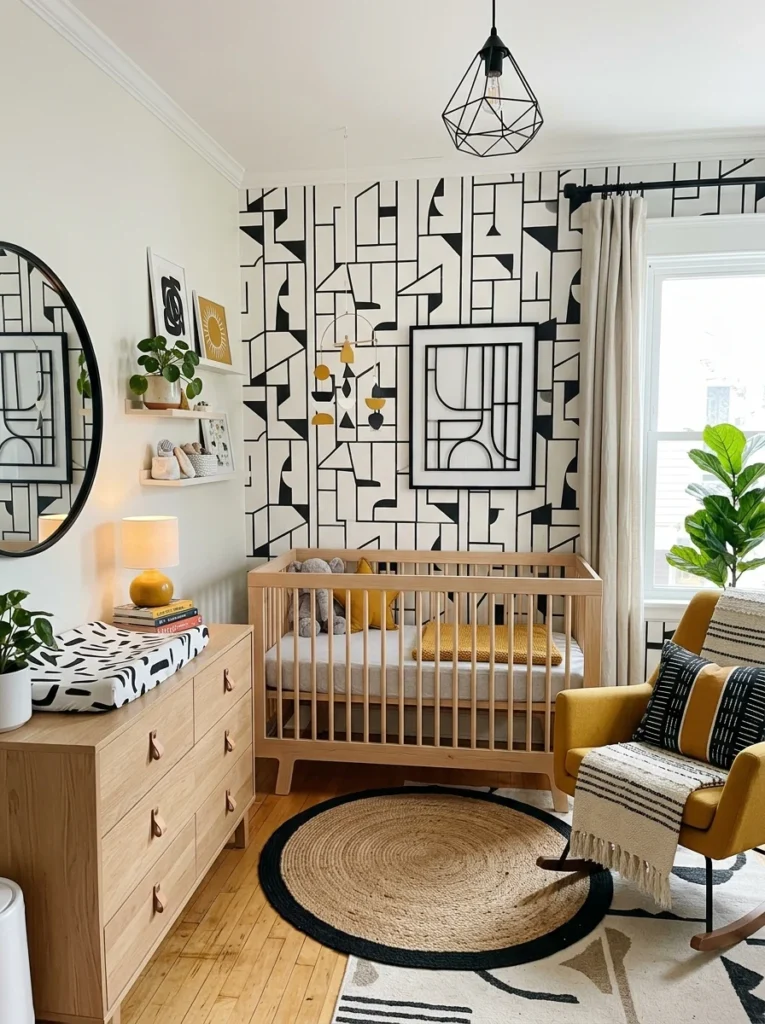
The Palette: Black and white as the primary color combination, with one warm accent color — mustard yellow, warm terracotta, or sage green.
The Mood: Bold, contemporary, and visually stimulating in a controlled way. The modern graphic nursery uses strong contrast and geometric pattern to create a room with genuine visual impact — a room that looks different from the typical soft, muted nursery aesthetic while remaining appropriate for an infant’s visual environment.
Research on infant visual development suggests that high-contrast black and white patterns are among the most visually engaging stimuli for newborns — whose color vision is limited in the first months — which gives the modern graphic nursery an evidence-based rationale alongside its aesthetic appeal. High-contrast patterns on nursery walls and accessories provide genuine visual stimulation for the developing infant eye.
Wall treatment: White walls as the primary surface, with a geometric black and white pattern on the feature wall — either through wallpaper, a painted pattern, or a large-scale graphic print. The pattern should be bold enough to read clearly from the crib position.
Furniture: White painted crib and dresser as the neutral base. A black-framed mirror or black-framed art prints on the wall for graphic punctuation.
Accent color: Mustard yellow in cushions, a throw, and a small rug at the floor. Or warm terracotta in the same positions. The accent color should appear in three to four places in the room to create coherence.
Accessories: Geometric mobile above the crib in black and white with the accent color. Black and white framed prints. Black-framed shelves on the wall.
Style 9: The Coastal and Natural Light Nursery
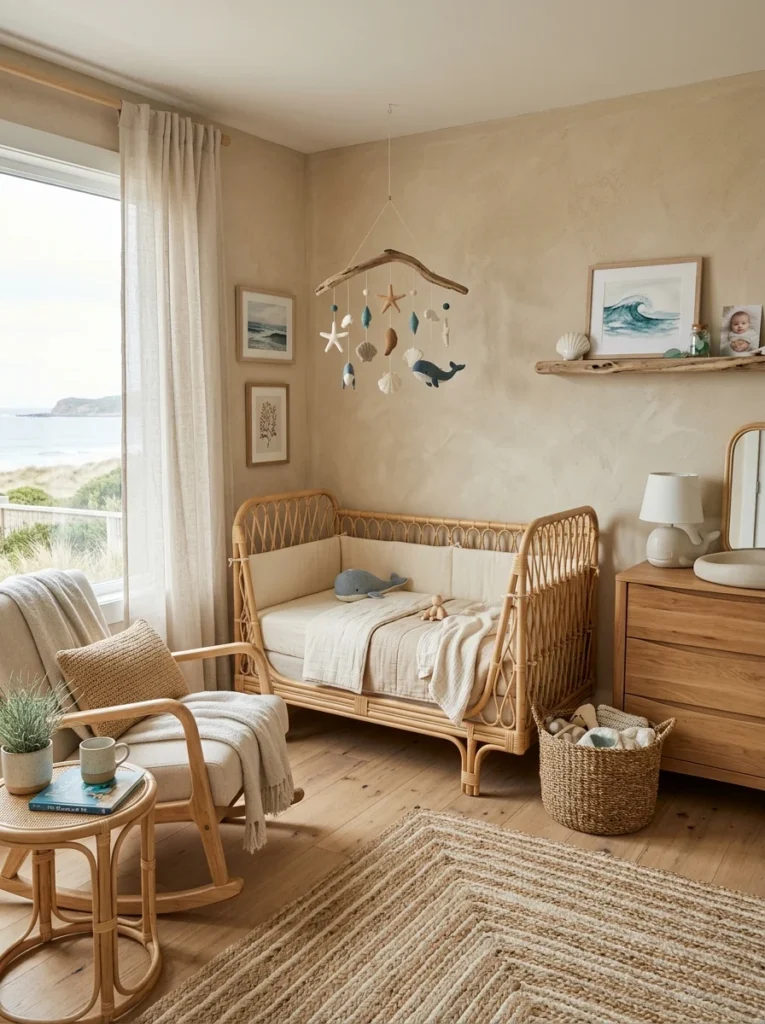
The Palette: Soft sandy beige, warm white, dusty blue as a gentle accent, natural rattan and driftwood textures.
The Mood: Light, airy, and naturally calming. The coastal nursery draws from the palette and textures of a natural shoreline environment — sand, sea glass, driftwood, and the soft blue-grey of coastal skies — to create a room that feels genuinely fresh and open.
Wall color: Warm sandy beige — a color with yellow and grey undertones that evokes beach sand — on all walls, with warm white ceiling. Or warm white walls with sandy beige textiles and accessories.
Furniture: Rattan crib in a natural or whitewashed finish. Natural driftwood-effect dresser or whitewashed wood dresser. A rattan nursing chair with a sandy linen cushion.
Accessories: A driftwood mobile or a mobile with natural shell-shaped elements above the crib. Simple framed prints of coastal plants — sea grass, coastal botanicals. Rattan storage baskets on open shelves.
Textiles: Sandy beige and white linen crib bedding. A soft dusty blue cellular blanket. A natural woven rug with a subtle stripe.
Style 10: The Mustard and Grey Nursery
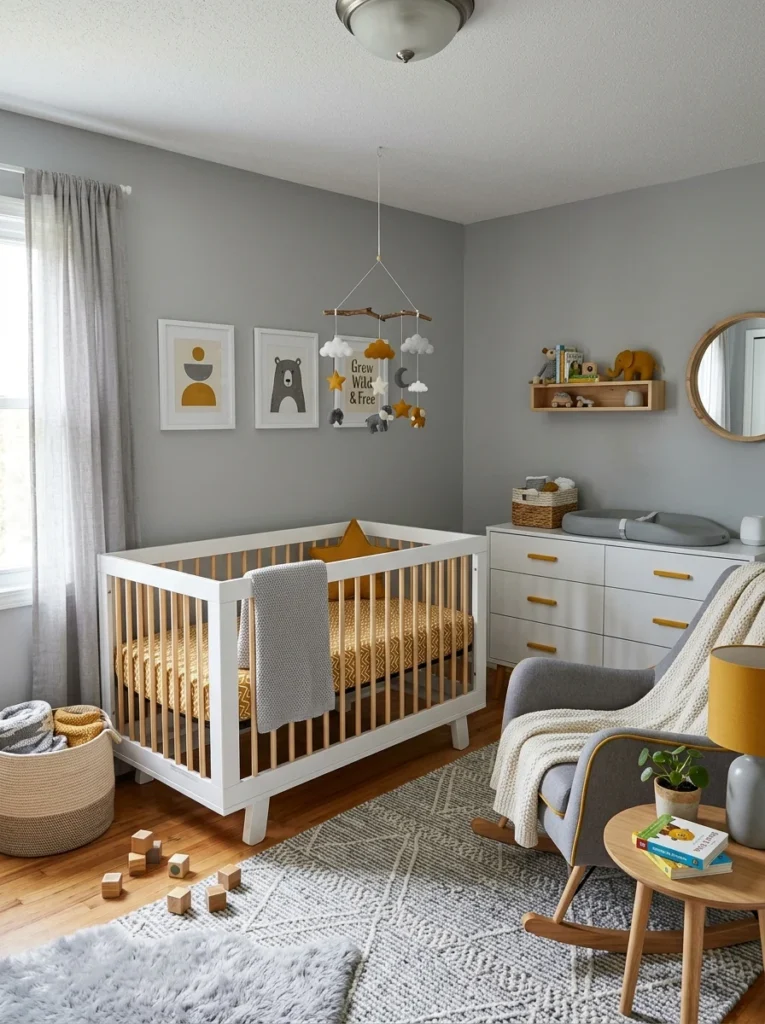
The Palette: Warm mustard yellow as the primary accent, soft grey walls, white furniture, natural wood accents.
The Mood: Cheerful without being loud, warm without being heavy, contemporary without being cold. The mustard and grey combination is one of the most successfully gender-neutral color pairings in nursery design — the warmth of mustard and the calm of grey balance each other perfectly.
Wall color: Soft warm grey — a grey with yellow or beige undertones to keep it from feeling cold — on all walls.
Furniture: White painted crib and dresser as the primary furniture. Natural wood side table and a grey or white nursing chair.
Accent elements: Mustard yellow in cushions, a knit throw, a small rug, and one or two decorative accessories. The mustard should appear consistently throughout the room — in at least four to five places — to read as a deliberate palette choice rather than a random addition.
Accessories: A mustard felt mobile above the crib. A geometric print in grey, white, and mustard in a simple frame. Grey and mustard patterned storage baskets.
Style 11: The Blush and Warm Neutral Nursery
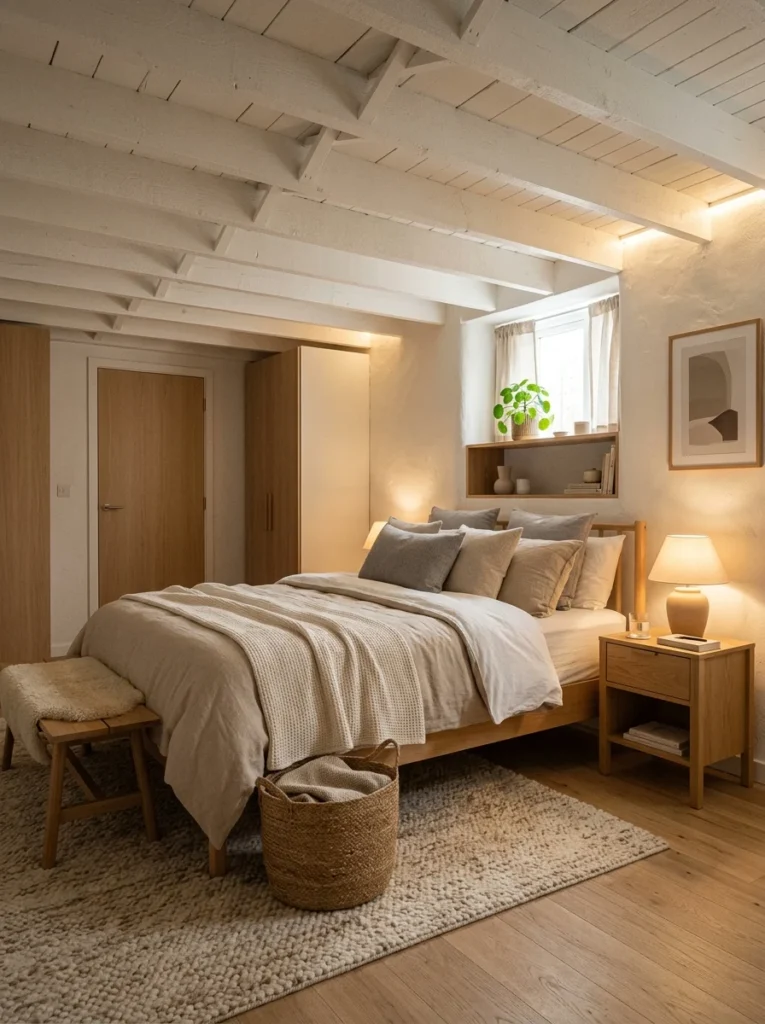
The Palette: Dusty blush pink — not bright or baby pink but the warm, terracotta-adjacent blush — warm cream, natural wood, and white.
The Mood: Soft, warm, and quietly sophisticated. Dusty blush — with its warm brown and terracotta undertones — is genuinely gender-neutral in a way that bright or baby pink is not. It is, essentially, a very diluted terracotta, and it suits babies of any gender in a way that its brighter counterpart does not.
This palette distinction is important: the blush that works in a gender-neutral nursery is the blush that, when placed beside a piece of terracotta, reads as belonging to the same family — warm, earthy, and organic. The blush that does not work in a gender-neutral nursery is the blush that reads as diluted bubble gum — still sweet and candy-pink in its associations.
Wall color: Warm cream or warm white as the primary wall color. Dusty blush as an accent on the feature wall behind the crib, or kept entirely in textiles and accessories.
Furniture: Natural wood crib and dresser in a warm oak tone. A rattan nursing chair with a blush linen cushion.
Textiles: Warm cream crib bedding with a dusty blush knit cellular blanket. A natural jute rug. A blush and cream patterned cushion on the nursing chair.
Style 12: The Rainbow Nursery — Done Tastefully
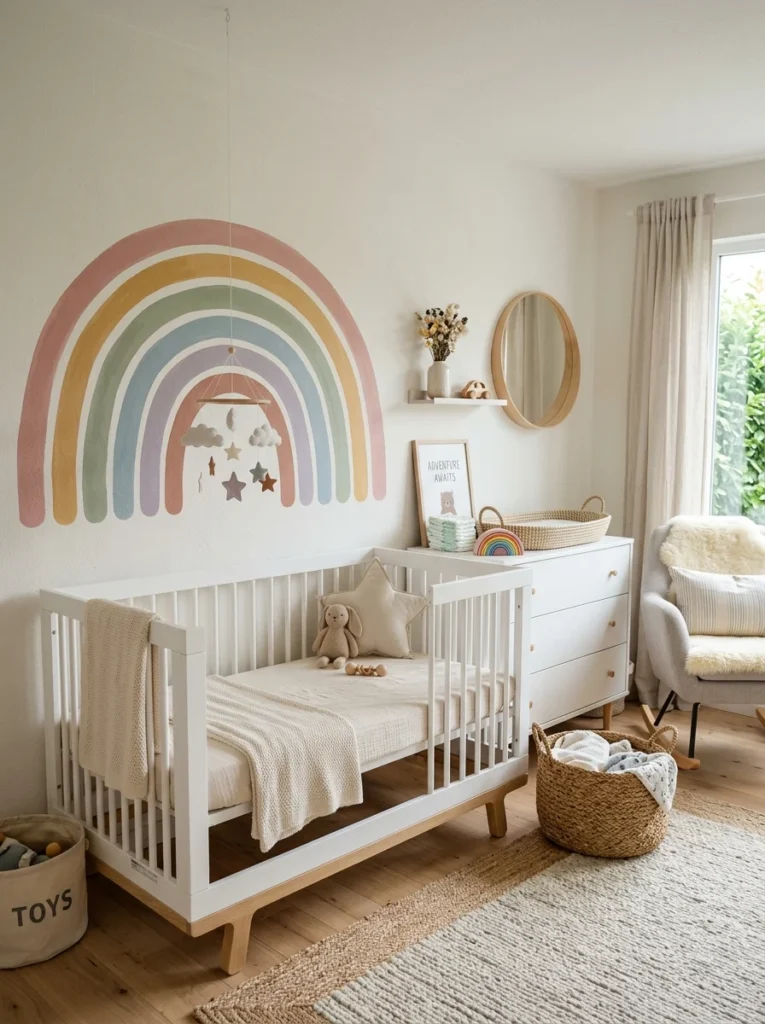
The Palette: A muted rainbow — every color of the spectrum in its most desaturated, grey-toned, pastel version — against a warm white background.
The Mood: Joyful without being chaotic, colorful without being overwhelming. A muted rainbow palette in a nursery — where each color is sufficiently toned down that the full spectrum can coexist without any one color dominating or clashing — creates a room of gentle, varied color that is genuinely cheerful.
The key to the rainbow nursery that looks beautiful rather than overwhelming is saturation control — every color in the rainbow must be at the same, very low saturation level. Dusty rose, pale sage, soft powder blue, muted lavender, pale mustard, and soft peach all at the same gentle, grey-toned saturation level create a cohesive rainbow palette. The same colors at full saturation create visual chaos.
Application: A rainbow arch — a painted semi-circle in muted rainbow colors — on the feature wall behind the crib is the most popular and most beautiful application of the rainbow theme in a nursery. The arch is a simple painted design that can be executed by any careful adult with patience and painter’s tape.
Textiles: A rainbow striped cellular blanket in muted tones. A multi-color knit mobile above the crib. Simple white linen crib bedding as the neutral base.
Styles 13 Through 20: A Quick Reference
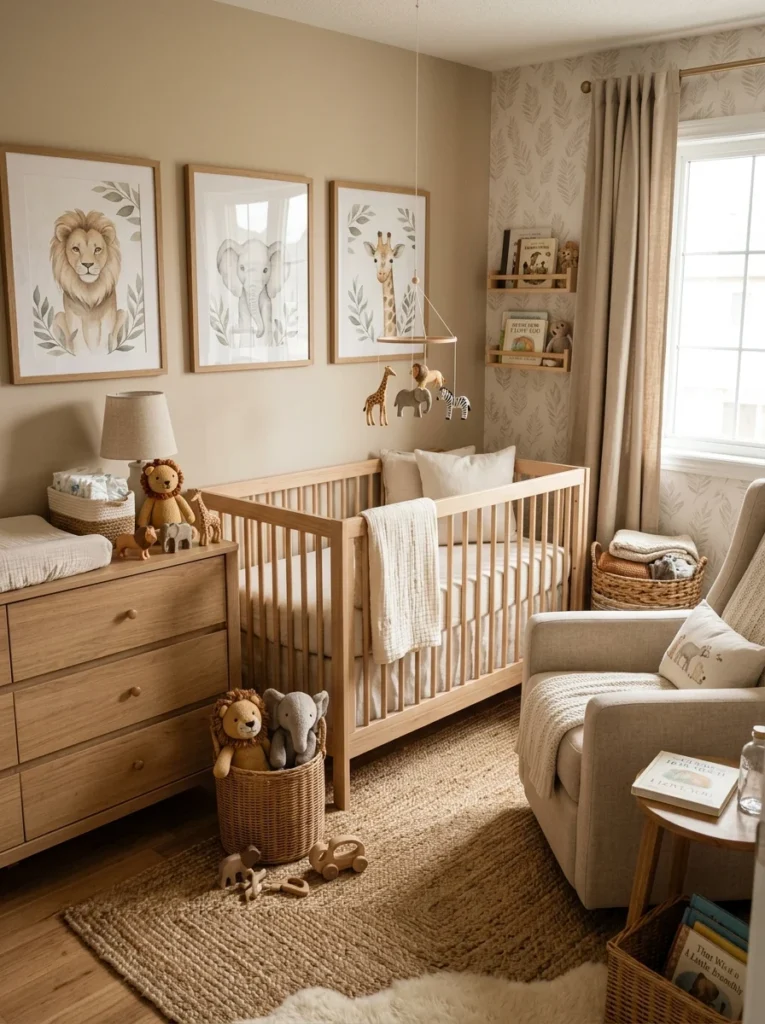
Style 13: The Safari and Animal Theme
Natural linen walls, animal-print cushions in muted tones, wooden animal figurines, a safari animal mobile. Warm cream and natural brown palette with black accents.
Style 14: The Cloud and Sky Theme
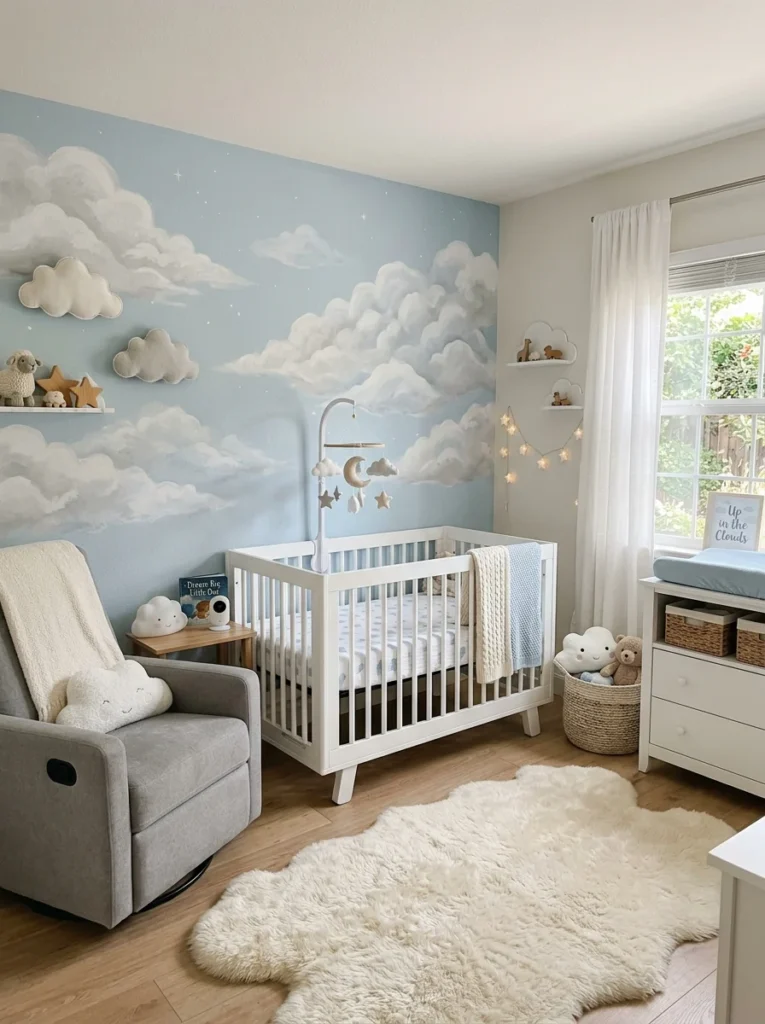
White walls with a hand-painted cloud mural or cloud-print wallpaper, soft blue and grey accents, a fluffy cloud mobile, white and sky blue textiles. Dreamy and gentle.
Style 15: The Vintage and Antique-Inspired Nursery
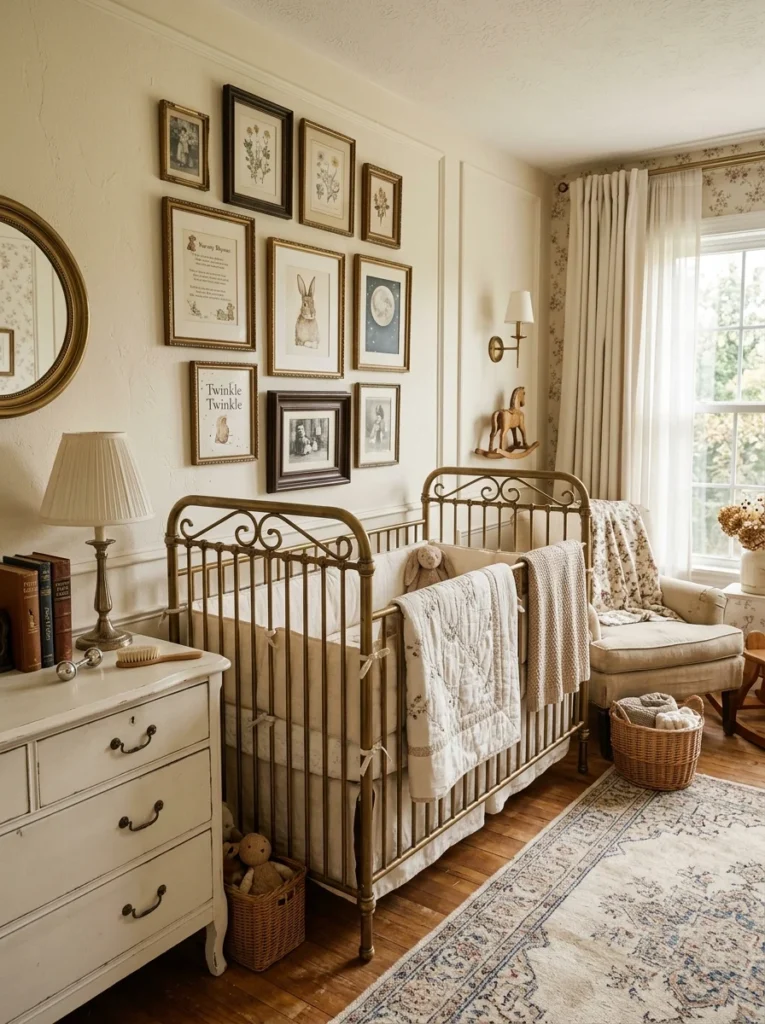
Warm cream and ivory palette, vintage-style botanical prints in antique frames, an ornate but safely certified crib, aged brass hardware, linen and cotton textiles in warm tones.
Style 16: The Plant-Filled Botanical Nursery
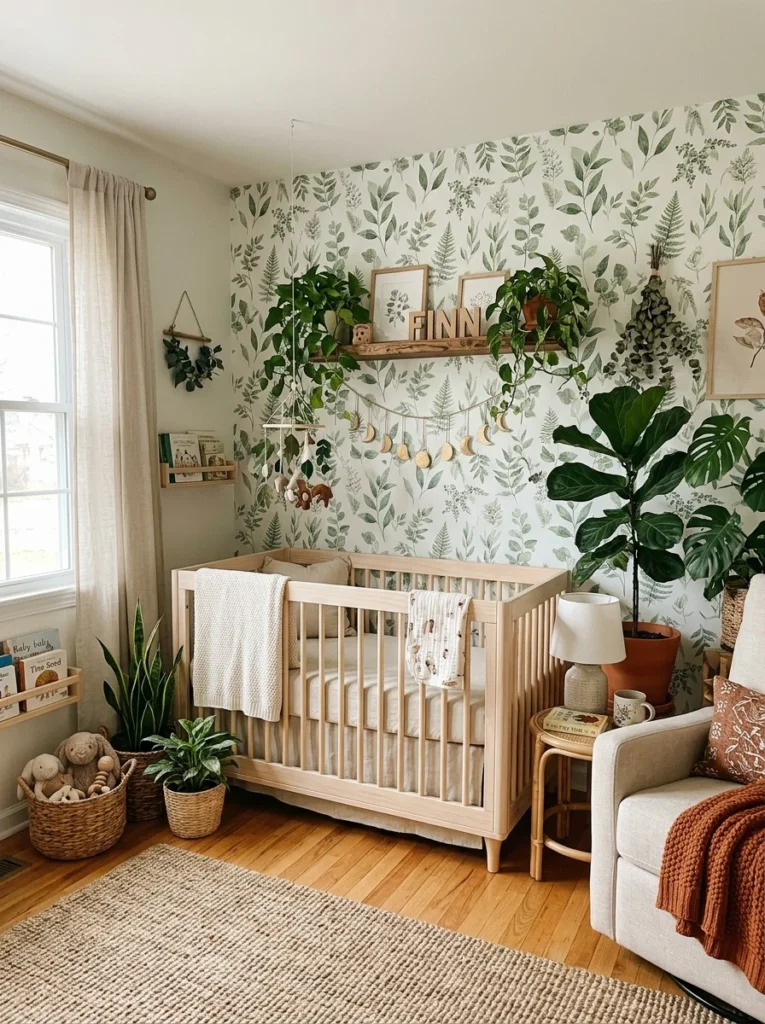
White walls, a botanical wallpaper on the feature wall, multiple plants of varying sizes on shelves, botanical print textiles, natural wood furniture. Green and white with natural accents.
Style 17: The Monochrome Black and White Nursery
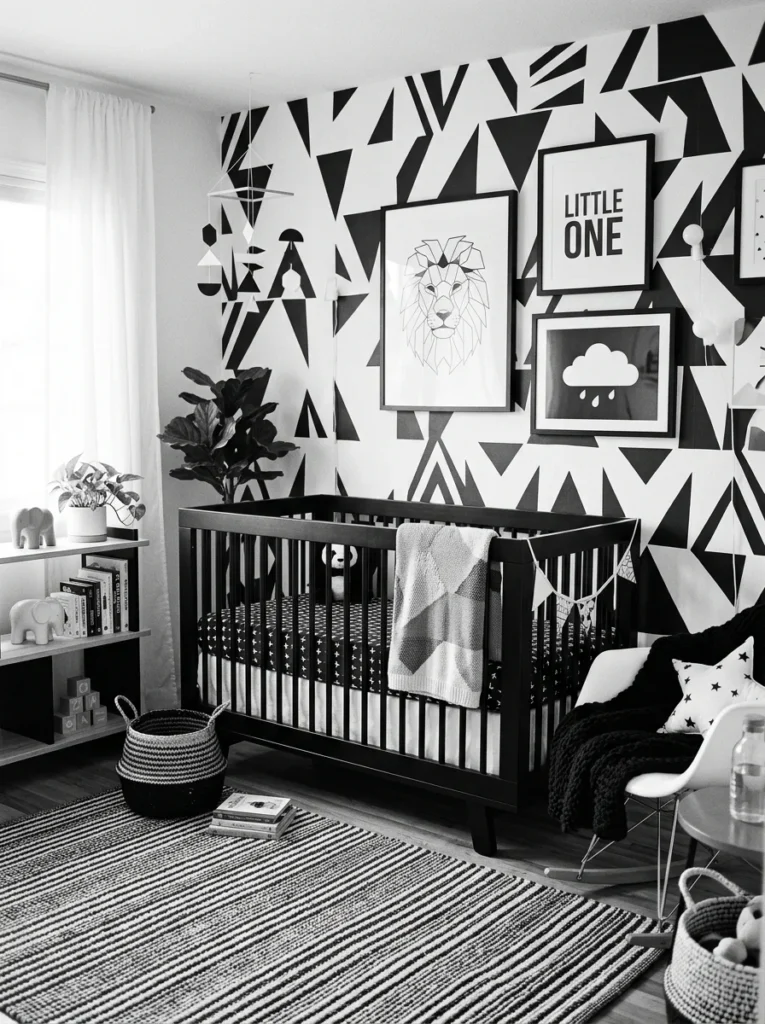
Stark black and white as the complete palette — white walls, white crib, black-framed art, black mobile, black storage baskets, white rug. Bold, graphic, and visually stimulating for infant development.
Style 18: The Earthy Desert Theme
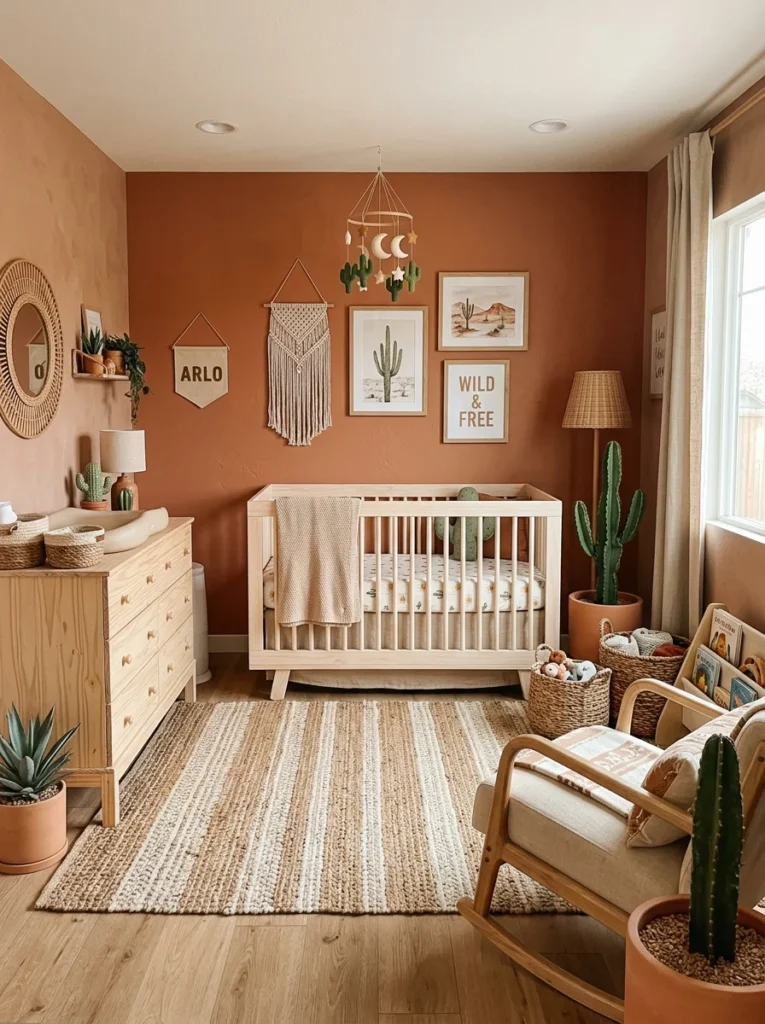
Warm terracotta and sandy beige walls, cactus-themed accessories in muted tones, natural rattan furniture, a warm sunset palette of terracotta, dusty peach, and warm cream.
Style 19: The Pastel Multi-Color Nursery
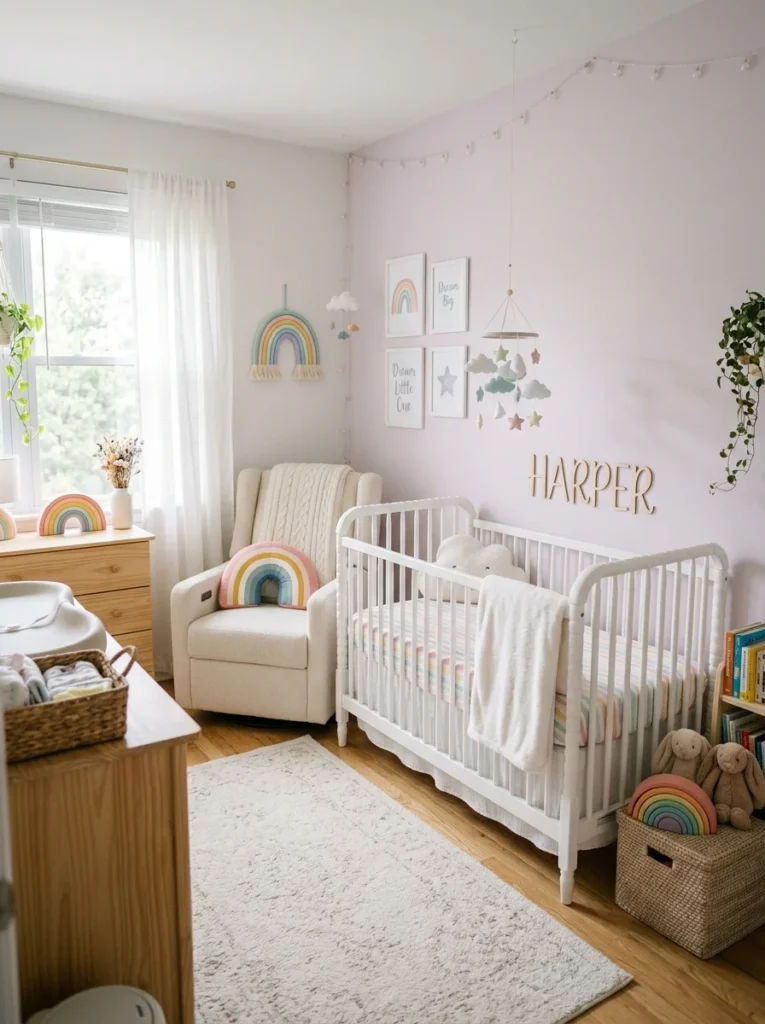
Soft pastel colors — pale pink, pale blue, pale yellow, pale green — in balanced proportions, white furniture, simple pastel textiles. Gentle, soft, and classically nursery-appropriate.
Style 20: The Mid-Century Modern Nursery
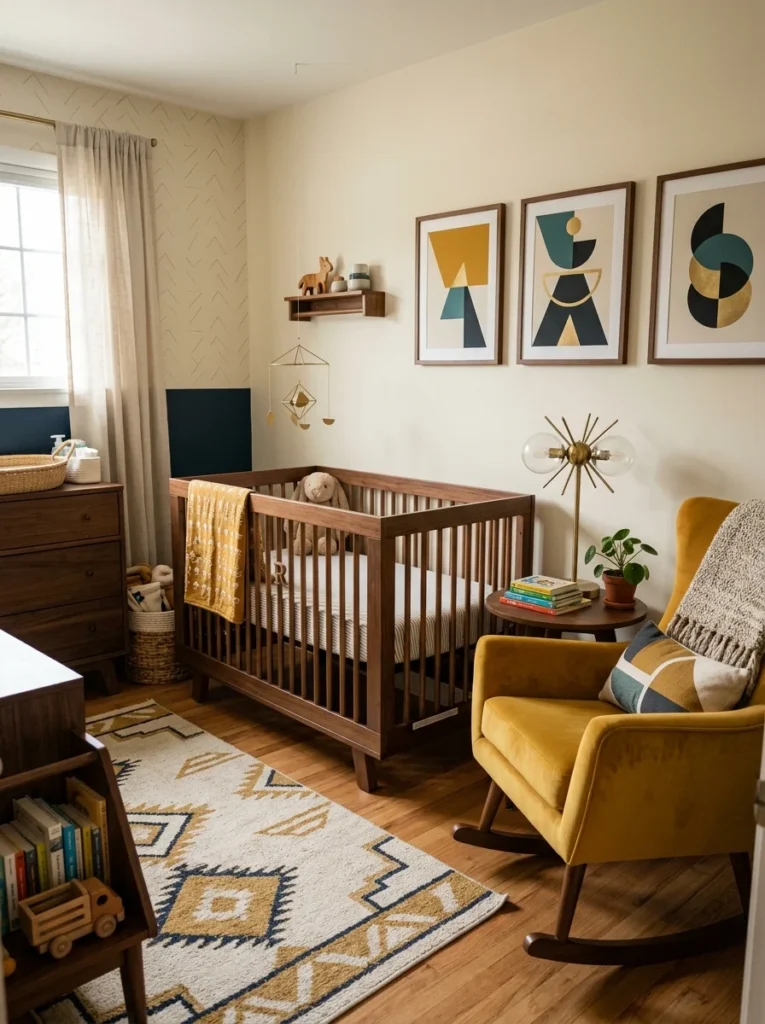
Warm walnut wood furniture with clean lines, a mustard yellow nursing chair, geometric patterns in black and white, retro-inspired lighting. Sophisticated, timeless, and genuinely design-forward.
Applying Gender Neutrality Without Losing Personality
The twenty styles above span an enormous range of aesthetic approaches — from minimal and graphic to warm and boho, from nature-inspired and botanical to modern and mid-century. What they share is the quality of being genuinely achievable in a gender-neutral palette, and the quality of producing nurseries that are beautiful and characterful rather than simply inoffensive.
The most important principle for creating a gender-neutral nursery with genuine personality is commitment. A nursery that is half sage green and half pink — a room where the gender-neutral palette was chosen but then supplemented with gender-specific accessories — reads as uncertain rather than intentional. A nursery committed fully to one of the twenty styles above — where the wall color, the furniture, the textiles, and the accessories all belong to the same aesthetic direction — reads as designed rather than assembled.
Commitment to a palette also means resisting the well-meaning gifts and additions that inevitably arrive in the months before and after a baby’s birth. Gifts in colors and styles that do not suit the nursery’s chosen direction need to be graciously received and either stored, returned, or used elsewhere in the house. The visual coherence of a thoughtfully designed nursery is worth protecting from the random additions that accumulate when every gift is incorporated regardless of its fit.
Conclusion
The gender-neutral nursery is not a compromise between a boy’s room and a girl’s room — it is an entirely different design approach that opens up a wider, richer, and more interesting range of aesthetic possibilities than either of the conventionally gendered alternatives. The twenty styles in this guide represent only a selection of the possibilities available — the real range of beautiful gender-neutral nursery design is as broad as the imagination that approaches it without the constraints of the conventional palette.
The best gender-neutral nursery is the one that reflects the genuine aesthetic preferences of the family preparing it — the colors, materials, and design approaches that the parents find beautiful and that create a space they feel proud of and happy to spend time in. A room that the parents love will be a room that the child grows up feeling cared for in, and that is ultimately what every nursery, regardless of its aesthetic approach, is designed to achieve.