
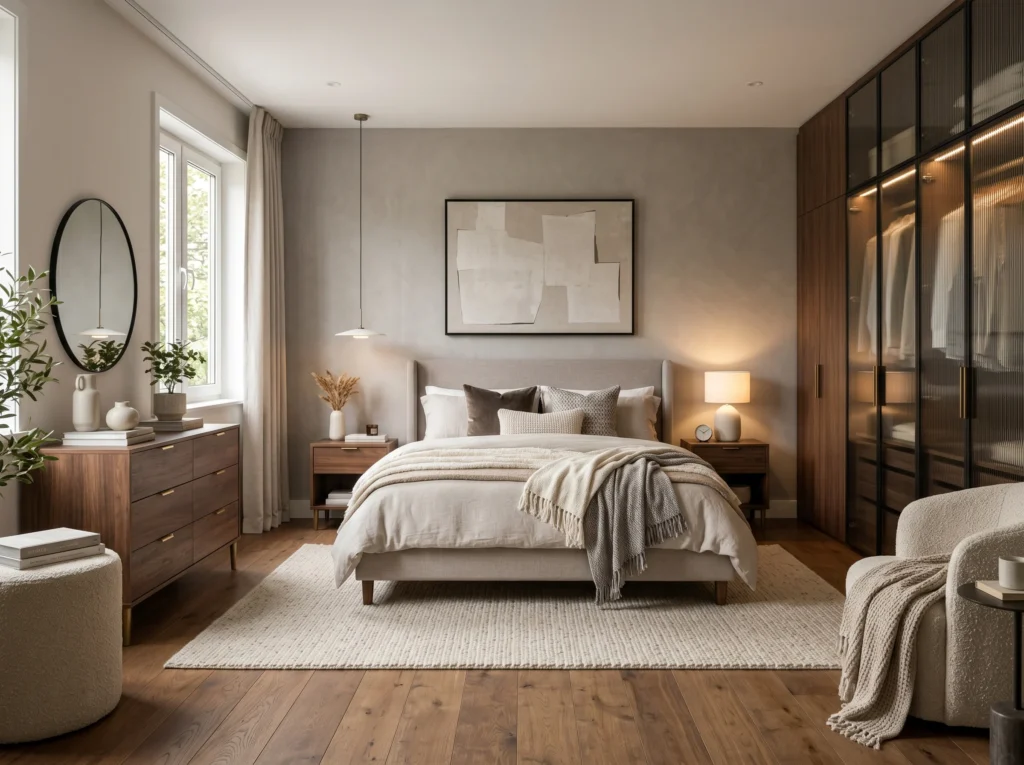
Buying bedroom furniture is one of the most significant home investment decisions most people make, and it is also one of the easiest to get wrong. The wrong sofa can be replaced relatively easily. The wrong dining table can be moved to another room. But the wrong bed frame, the wrong wardrobe, or the wrong dresser in a bedroom that does not suit them creates daily frustration that is expensive and disruptive to fix.
The mistakes people make when choosing bedroom furniture almost always come from the same source — they shop before they measure, they choose style before they consider function, and they buy individual pieces without thinking about how those pieces will work together in the actual room. A bed that looks beautiful in a showroom can make a small bedroom feel completely impassable. A wardrobe that seems like good storage value can block the only natural light source in the room. A dresser that matches the bed perfectly can leave no room to open the door properly.
This guide eliminates those mistakes by walking through every furniture decision in the bedroom — the bed, the wardrobe, the bedside tables, the dresser, and the extras — in the right order, with the right questions to ask at each stage. The result is a bedroom that works as well as it looks, in whatever size room you are working with.
Step One: Measure the Room Before You Do Anything Else
This is the single most important step in choosing bedroom furniture, and it is the one most consistently skipped. Measuring your room before you look at a single piece of furniture is not optional — it is the foundation that every other decision rests on.
You need four measurements before you begin. First, the overall dimensions of the room — length and width in both directions. Second, the ceiling height, which affects wardrobe choices. Third, the position and width of every door and window in the room, including which direction doors swing open. Fourth, any fixed features that cannot be moved — radiators, built-in alcoves, electrical outlets, light switches.
With these measurements, draw a simple floor plan on paper or use a free online room planning tool. This does not need to be an architect’s drawing — a rough scale sketch with accurate measurements is enough. This floor plan becomes your reference for every furniture decision that follows.
The standard clearance rules for bedroom furniture placement are as follows. You need at least 24 inches of clear walking space on each side of the bed that will be accessed regularly. You need at least 24 inches of clear space in front of any wardrobe or dresser drawer to open it comfortably. You need enough clearance for every door in the room — including the bedroom door, wardrobe doors, and en suite doors — to open fully without hitting any furniture.
If a piece of furniture you are considering does not leave these clearances, it is the wrong size for your room regardless of how much you like it.
The Bed: The Most Important Decision in the Room
The bed is the dominant piece of furniture in any bedroom. It occupies more floor space than anything else, anchors the visual composition of the room, and determines the scale of every other piece that sits alongside it. Getting the bed right is more important than any other single furniture decision.
Choosing the Right Bed Size
Bed size should be determined first by the size of your room and second by the number of people sleeping in it. Many people make the mistake of choosing the largest bed they can fit in the room without considering whether that leaves adequate living space around it.
A single bed measures approximately 36 by 75 inches. This is appropriate for children’s rooms and guest rooms where space is limited. A full or double bed measures approximately 54 by 75 inches and suits one adult comfortably or two adults in a room where space is tight. A queen bed measures approximately 60 by 80 inches and is the most popular size for couples — it offers genuine comfort for two people without requiring an excessively large room. A king bed measures approximately 76 by 80 inches and requires a room that is at least 12 by 12 feet to allow adequate clearance on all sides without the room feeling consumed by the bed.
The test for whether a bed size is right for your room is simple. Mark out the footprint of the bed on your floor plan and check the clearances. If there is less than 24 inches on both sides of the bed and at the foot of the bed, the size is too large for the room. Choose one size smaller and apply the test again.
Platform Bed Versus Bed With Legs
A platform bed sits close to the floor on a solid or slatted base. A bed with legs is elevated off the floor, with visible space beneath the frame. Both have genuine advantages depending on your room and your needs.
Platform beds have a low, grounded profile that works well in rooms with lower ceilings — the low bed makes the ceiling feel proportionally higher. They tend to look more modern and minimal. The disadvantage is that the under-bed space is either unavailable or very limited for storage.
Beds with legs allow the eye to see the floor beneath the frame, which creates a sense of openness and makes the room feel less heavy. They also allow for under-bed storage with flat storage containers. The disadvantage is that they can feel disproportionate in rooms with very low ceilings.
Storage Beds: When They Are Worth It
A storage bed — either with drawers on the sides or a hydraulic lift-up base — costs more than a standard bed but can eliminate the need for additional storage furniture in a small bedroom. This trade-off is almost always worth making in rooms under 120 square feet.
The hydraulic lift-up storage bed offers the most volume — the entire area under the mattress becomes accessible storage. This is ideal for seasonal items, spare bedding, and anything else that needs to be stored but not accessed daily. The side drawer storage bed offers less total volume but allows access to stored items without lifting the mattress, making it better for items used more regularly.
If your bedroom has limited wardrobe space or no room for a separate chest of drawers, a storage bed solves both problems simultaneously.
The Headboard: More Than Just Decoration
A headboard serves both a functional and decorative purpose. Functionally, it protects the wall from marks and provides a backrest for sitting up in bed. Decoratively, it is the most visible design element in the bedroom and sets the tone for the entire room.
The height and scale of the headboard should be proportional to the ceiling height. A tall upholstered headboard in a room with high ceilings creates a dramatic and luxurious effect. The same headboard in a room with low ceilings feels overwhelming and out of proportion. In low-ceiling rooms, a lower or mid-height headboard — or a simple panel headboard — maintains the right visual balance.
Padded and upholstered headboards add warmth, comfort, and acoustic softness to a bedroom. Wooden headboards are more structured and suit modern, Scandinavian, and rustic styles. Rattan and cane headboards work beautifully in natural and boho-inspired rooms. Metal headboards suit industrial and vintage styles.
The Wardrobe: Storage That Works for Your Life
After the bed, the wardrobe is the most functionally important piece of furniture in the bedroom. A wardrobe that is too small creates daily frustration and overflows into the room. A wardrobe that is too large overwhelms the space and dominates the room visually. Getting the size, style, and internal organization right makes an enormous difference to how the room functions every single day.
Built-In Versus Freestanding
Built-in wardrobes are fitted to the specific dimensions of the room, using every inch of available height and width. They tend to look cleaner and more integrated than freestanding wardrobes because there are no gaps above or beside them. The disadvantages are cost — built-ins are significantly more expensive than freestanding options — and permanence, as they cannot be moved if you relocate.
Freestanding wardrobes are more affordable, widely available, and moveable. The disadvantage is that they rarely fit perfectly into a room — there are usually gaps above and beside them that collect dust and look unfinished. This can be partially addressed by choosing wardrobes that are as tall as possible and positioning them carefully against walls.
In bedrooms with alcoves or recesses, fitted wardrobes built into the alcove make excellent use of space that would otherwise be awkward to furnish.
Sliding Doors Versus Hinged Doors
Sliding wardrobe doors are the right choice in rooms where floor space is limited, because they require no clearance in front of the wardrobe to open. The door slides sideways rather than swinging outward, which means the wardrobe can sit closer to the bed or other furniture without creating a clearance problem.
Hinged wardrobe doors require clear floor space in front of them equal to the width of each door panel. In a room where that clearance is available, hinged doors offer the advantage of full access to the entire wardrobe interior at once — with sliding doors, one panel is always partially hidden behind the other.
Internal Organization That Actually Works
The interior of a wardrobe matters as much as the exterior. A wardrobe with a well-designed internal layout stores more, keeps clothing in better condition, and makes getting dressed faster and less frustrating than one with a poor layout.
The standard wardrobe interior — one long hanging rail and one shelf above it — is the least efficient use of the available space. Most people’s wardrobes contain a mixture of long hanging items such as dresses and coats, short hanging items such as shirts and jackets, folded items, shoes, and accessories. A single long rail serves only the long hanging category well.
A better internal layout for most people is a combination of a full-height hanging section for long items, a double hanging section with two shorter rails stacked vertically for shirts and jackets, a shelf section for folded items and bags, and a drawer section or shoe storage at the base. Many wardrobe systems allow you to configure the interior yourself, which means you can design the layout around what you actually own.
Mirror Doors: Worth Considering
Wardrobe doors with mirrors serve two purposes simultaneously — they provide a full-length mirror for dressing and they visually expand the room by reflecting light and space. In a small bedroom, a mirrored wardrobe can make a dramatic difference to how open and bright the room feels.
The trade-off is that mirrored doors show fingerprints and require regular cleaning to stay looking good. They also reflect the whole room, which means a cluttered room will look twice as cluttered. If you choose mirrored wardrobe doors, the room needs to be kept consistently tidy to benefit from the effect.
Bedside Tables: Small Pieces That Matter More Than You Think
Bedside tables are one of the most overlooked furniture decisions in the bedroom, yet they are among the most frequently used pieces of furniture in the entire house. They hold your phone, your lamp, your water, your book, and everything else you need within arm’s reach at night and first thing in the morning. Choosing them well improves daily life in a way that is disproportionate to their size.
Size and Height
The most important practical rule for bedside tables is height. The surface of the bedside table should be at approximately the same level as the top of your mattress, or within two to three inches of it. A bedside table that is significantly lower than the mattress means reaching down awkwardly for things in the night. One that is significantly higher looks disproportionate and can feel uncomfortable.
The surface area of the bedside table should be large enough to hold the items you actually use — a lamp, your phone, a glass of water, and a book is a reasonable minimum. A surface that is too small creates a daily juggling act. In very small bedrooms, a wall-mounted floating shelf at the right height serves the same purpose with even less floor footprint.
Storage Options
Bedside tables come in three main formats. A table with a single drawer is the most common and suits most people’s needs — the drawer stores items that do not need to be on display such as chargers, hand cream, lip balm, and reading glasses. A table with an open shelf below the surface stores larger items such as books and offers a more open, airy look. A table with multiple drawers suits people who want more bedside storage and do not mind the additional visual bulk.
In rooms where floor space is genuinely tight, wall-mounted bedside shelves with a drawer or a small box underneath are the most space-efficient option. They leave the floor completely clear beneath them, which makes the room feel more open and is also significantly easier to clean.
Matching Versus Mixed
Matching bedside tables on both sides of the bed creates symmetry and a sense of calm and order. This is the most reliable approach and suits most bedroom styles. Mixed bedside tables — different designs on each side — can look intentional and interesting when done with care, but requires the two pieces to share something in common, whether that is material, color, height, or scale. Two completely different tables with nothing in common look accidental rather than considered.
The Dresser: Do You Actually Need One
A dresser or chest of drawers provides folded clothing storage that a wardrobe rail cannot offer. Whether you need one depends entirely on your wardrobe situation and your storage needs.
If your bedroom has a well-designed built-in wardrobe with a substantial drawer section, you may not need a separate dresser at all. Adding one simply to fill space or because it seems like a standard bedroom item adds furniture the room does not need and reduces the open floor area that makes the room feel comfortable.
If your wardrobe is primarily hanging space with limited drawers, or if you have more clothing than your wardrobe can handle, a dresser provides essential overflow storage that keeps clothing off the floor and out of sight.
Choosing the Right Size
Dresser size should be determined by the wall space available for it rather than by how much storage you would like. Measure the wall carefully, accounting for any doors or windows nearby, and choose a dresser that fits the space without crowding it. A dresser that is too wide for its wall creates a boxed-in feeling in the room.
Height is also worth considering. A low, wide dresser creates a horizontal emphasis that suits rooms with lower ceilings. A tall, narrow chest of drawers draws the eye upward and suits rooms where floor space is limited but vertical wall space is available.
Dresser With Mirror
A dresser with a mirror mounted above it serves both storage and grooming functions in one place. This combination works well in bedrooms where a separate full-length mirror and a dresser would take up more space than is available. The mirror above the dresser should be proportional to the dresser below it — roughly two-thirds to three-quarters of the dresser width is the most visually balanced ratio.
Additional Furniture: What to Include and What to Skip
Beyond the core pieces — bed, wardrobe, bedside tables, and dresser — there are several other furniture items that appear frequently in bedroom design. Whether any of them belong in your bedroom depends on your room size and how you actually use the space.
Bench at the Foot of the Bed
A bedroom bench at the foot of the bed adds a finishing touch that makes the room look more considered and complete. It also provides a practical surface for laying out clothing, sitting while putting on shoes, and adding a layer of decoration through texture and color.
In rooms where space is limited, a bench at the foot of the bed can make the room feel narrower if it blocks the view of the floor and reduces the walkway. In these cases, a narrow upholstered bench or a simple wooden stool is a better choice than a full-width bench.
Armchair or Reading Chair
A comfortable chair in the bedroom creates a secondary seating zone that makes the room feel more like a complete living space and less like a room that exists only for sleeping. It provides a place to read, to sit while dressing, or simply to enjoy the room without being in bed.
The practical requirement is space. A chair needs at least 30 to 36 inches of clear floor space around it to feel comfortable and accessible rather than squeezed in. In rooms under 150 square feet, a full armchair is usually too large and a smaller accent chair or a large floor cushion is a better option.
Vanity Table
A vanity table with a mirror provides a dedicated space for grooming and makeup that keeps those activities separate from the bed and the dresser. For people who use this kind of space regularly, it is a genuinely valuable addition. For people who rarely sit at a mirror to apply makeup or groom, it adds furniture and floor footprint without adding function.
Choosing a Consistent Style
Individual furniture pieces that are well-chosen in isolation can still create a chaotic bedroom if they do not share a visual language. Style consistency — or at least style compatibility — is what gives a bedroom the cohesive, designed quality that makes it feel intentional rather than assembled from random purchases.
You do not need to buy a matching furniture set. In fact, matching bedroom sets — bed, wardrobe, dresser, and bedside tables all from the same collection — often look rigid and impersonal. A more interesting and equally cohesive approach is to choose pieces that share one or two common elements — the same wood tone, the same metal finish, the same general design language — while varying in other ways.
The most reliable unifying element is material. A bedroom where every piece of furniture shares the same wood tone — all light oak, or all warm walnut, or all painted in the same color — reads as cohesive even if the shapes and styles of the individual pieces vary. Mixing wood tones without intention, on the other hand, creates visual conflict that is hard to resolve with any amount of styling.
Budget: Where to Spend and Where to Save
Bedroom furniture represents a genuine long-term investment, and allocating budget wisely makes the difference between a room that improves over time and one that needs replacing within a few years.
The bed and mattress deserve the largest portion of the budget. These are the pieces you interact with most directly every night, and poor quality in either one affects your sleep and your physical comfort in measurable ways. A well-made bed frame from solid wood or quality metal will outlast several generations of cheaper alternatives. A good mattress is even more important and should never be compromised on budget grounds.
The wardrobe deserves the second largest allocation, because it is the most-used storage piece in the room and a poorly made wardrobe — with drawers that stick, rails that sag, or doors that misalign — creates daily frustration that is disproportionate to the money saved.
Bedside tables and dressers offer the most opportunity to save without sacrificing quality. A simple solid wood bedside table or a well-made chest of drawers does not need to be expensive to be good. Second-hand and vintage options in these categories are often significantly better quality than new budget options, because older furniture was frequently made from solid wood rather than engineered board.
The bench at the foot of the bed, the reading chair, and any decorative extras are the lowest priority and can be added gradually over time as budget allows.
Conclusion
Choosing the right bedroom furniture comes down to three things done in the right order. Measure first — know exactly what space you are working with before you look at a single piece of furniture. Prioritize function — choose pieces that work well for how you actually live before worrying about how they look. Then choose style — find pieces that share a consistent visual language and work together as a cohesive whole.
A bedroom furnished with this approach — right size, right function, right style, in that order — is a room that feels genuinely comfortable to live in every day. It does not require a large budget or a professional designer. It requires clear thinking, accurate measurements, and the patience to make deliberate choices rather than impulsive ones.
The bedroom is the room you spend more time in than any other. It deserves furniture chosen with that level of care.