
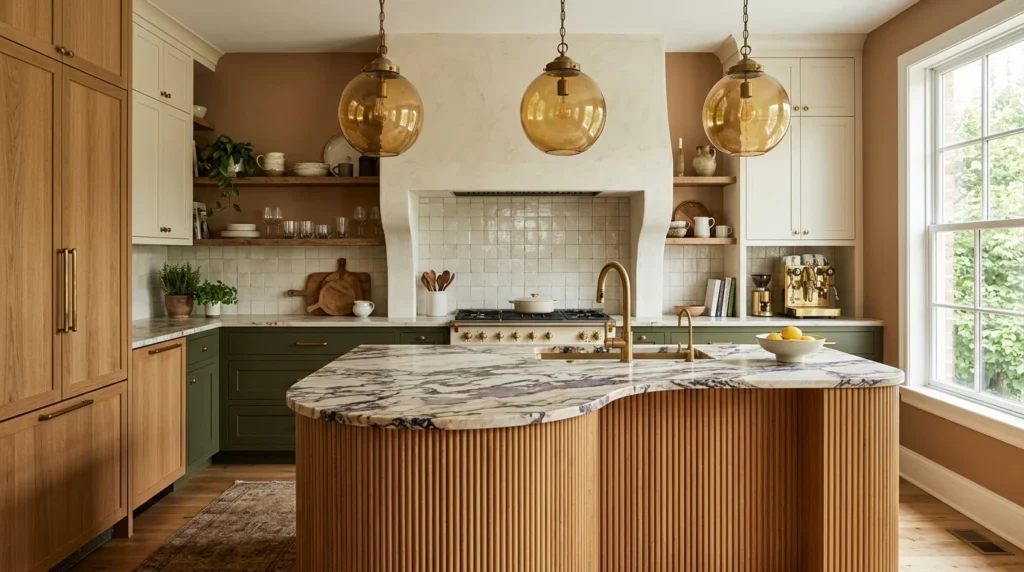
A few months ago I helped my sister renovate her kitchen, and somewhere between the third trip to the tile showroom and an argument over cabinet hardware finishes, I realized how much kitchen design has shifted since I redid my own galley kitchen a few years back. What used to feel like safe, timeless choices, all-white cabinets, brushed nickel everything, started to feel a little flat compared to what we kept finding in newer kitchens and showrooms. That renovation sent me down a genuine research spiral, and I ended up testing a few of these ideas in my own kitchen afterward, with mixed but mostly successful results, and a couple of purchases I still second-guess.
Here’s what I’ve learned about which kitchen trends are actually worth trying this year, based on my sister’s renovation, my own smaller updates since, and a fair amount of showroom wandering in between that ate up more weekends than either of us expected.
1. Warm Wood Tones Replacing All-White Cabinetry
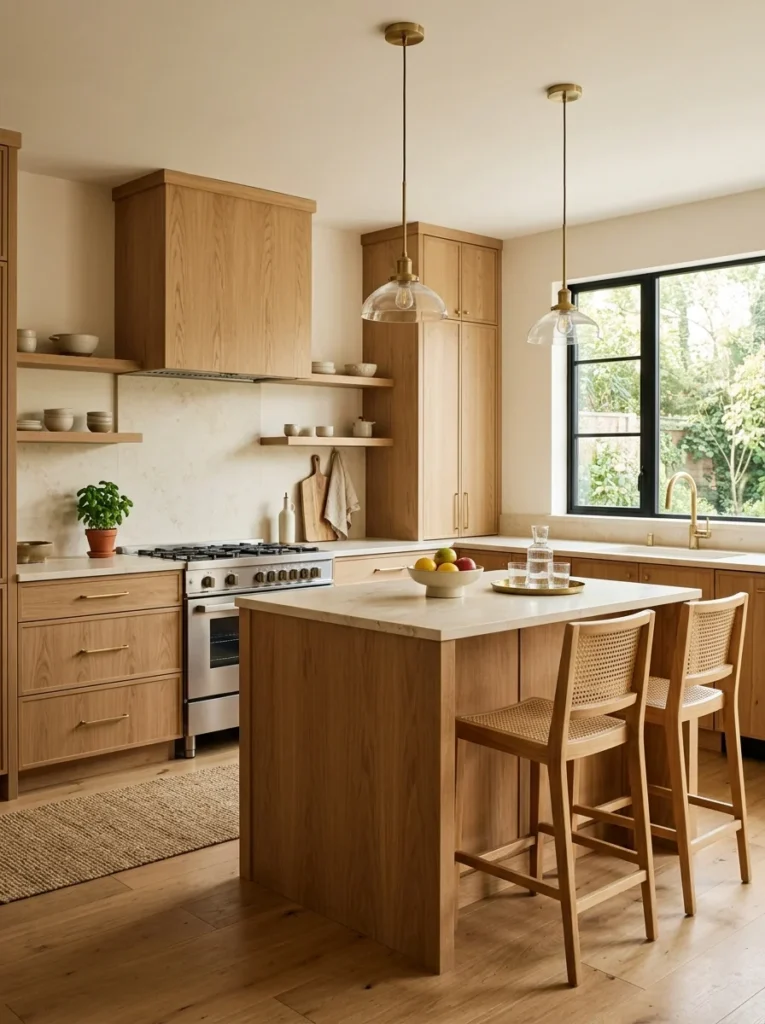
For years, all-white kitchens felt like the safest possible choice, and mine was no exception. My sister went with a warm oak cabinet finish instead, and the difference in how inviting her kitchen feels compared to my stark white one is honestly a little humbling. I’ve since added a warm wood island to soften my own space without a full cabinet replacement, and it’s made the whole room feel less like a showroom display.
2. Two-Tone Cabinetry for Visual Interest
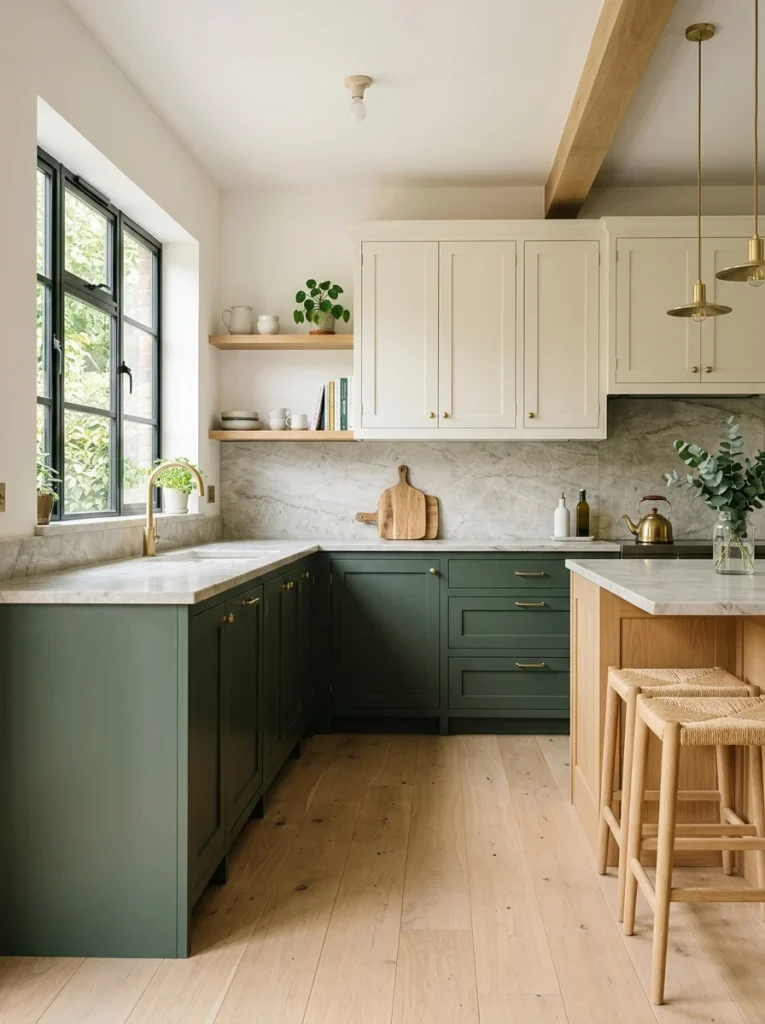
Rather than committing to one cabinet color throughout, my sister chose a deeper green for her lower cabinets and a lighter cream for the uppers. It’s a combination that reads as considerably more current than a single uniform color, and it gave her kitchen a sense of depth that flat, matching cabinetry never quite achieves on its own, splitting the visual weight of the room in a way that feels balanced rather than heavy.
3. Statement Range Hoods as a Design Centerpiece
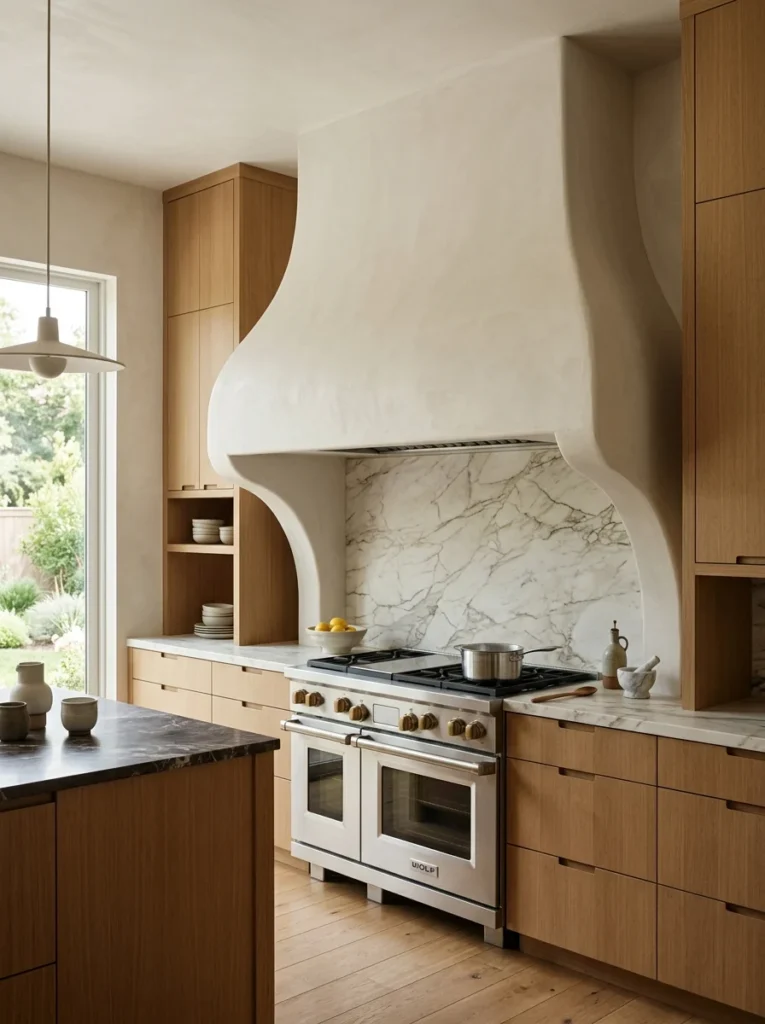
I used to think of a range hood as a purely functional necessity, tucked away and barely noticed. My sister’s contractor talked her into a bold, plastered range hood that now functions as the visual centerpiece of her entire kitchen, and I genuinely didn’t expect a ventilation fixture to become the first thing guests comment on when they walk into the room.
4. Unlacquered Brass Hardware That Ages Naturally
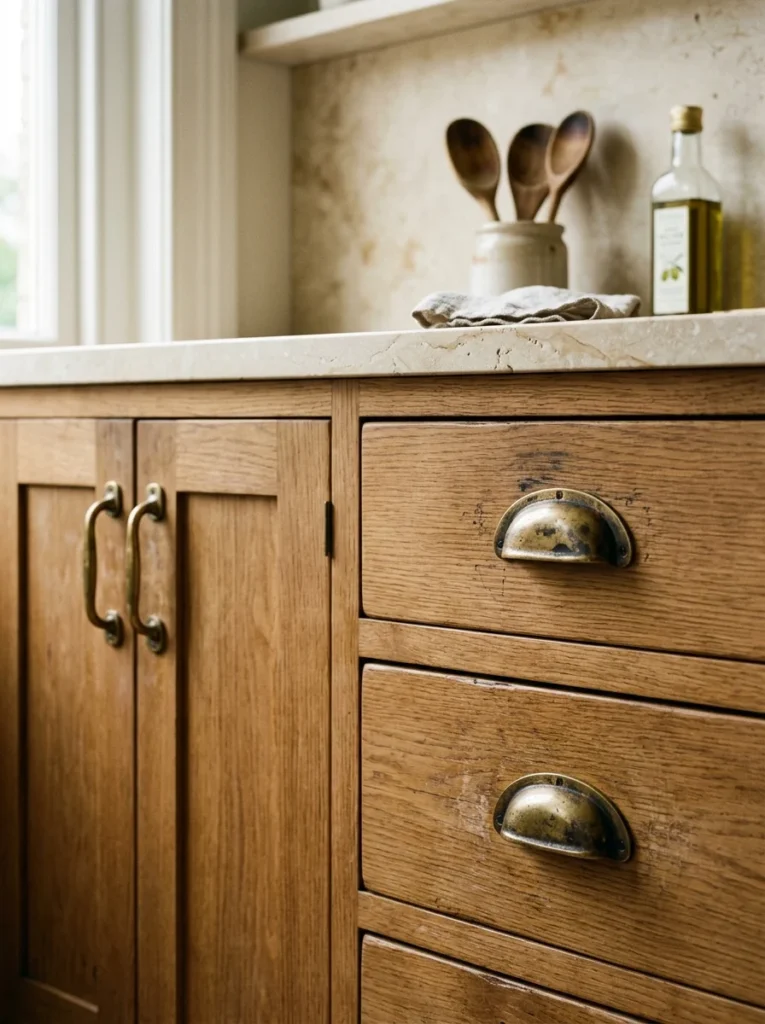
I swapped my kitchen’s polished chrome cabinet pulls for unlacquered brass ones last year, and watching them slowly develop a natural patina over time has been more satisfying than I expected. Unlike sealed brass, which stays shiny forever, the unlacquered version genuinely changes with use, picking up fingerprints and warmth in a way that feels alive rather than static, almost like the hardware is aging alongside the rest of the kitchen.
5. Fluted Cabinet and Island Detailing
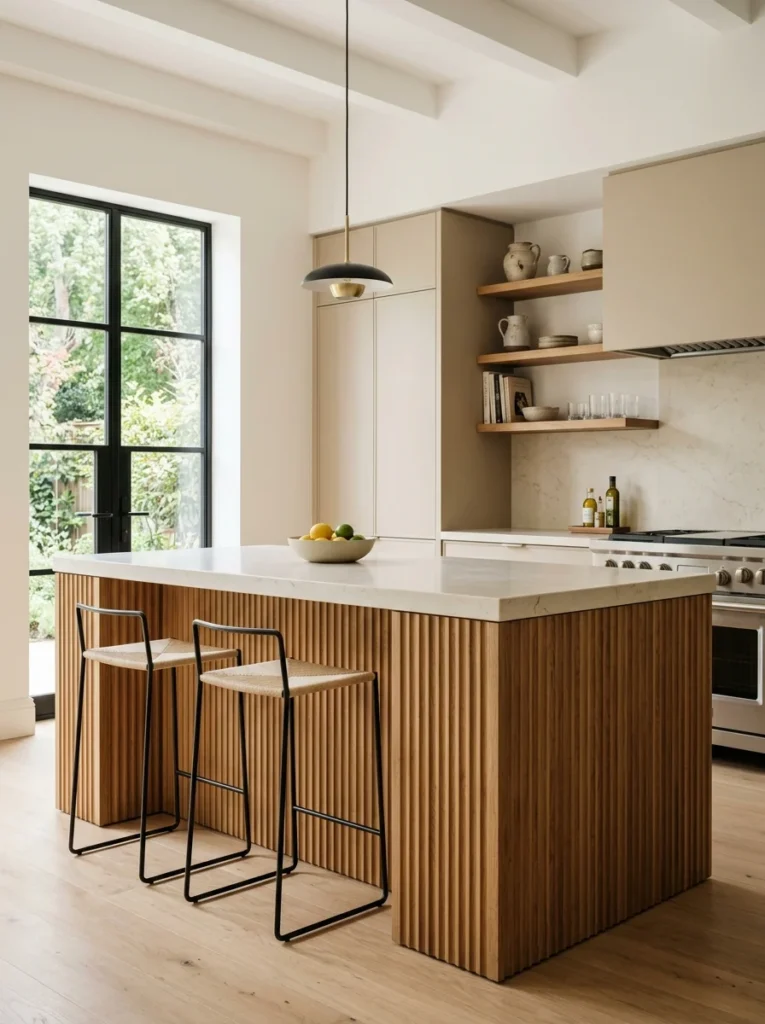
A subtly fluted texture on cabinet fronts or an island base has shown up in nearly every newer kitchen I’ve toured recently. My sister added it just to her island, and the ribbed detail catches light in a way that makes an otherwise simple, boxy shape feel considerably more considered and finished, without needing any additional color or hardware to carry that impression.
6. Curved Kitchen Islands Instead of Sharp Rectangles
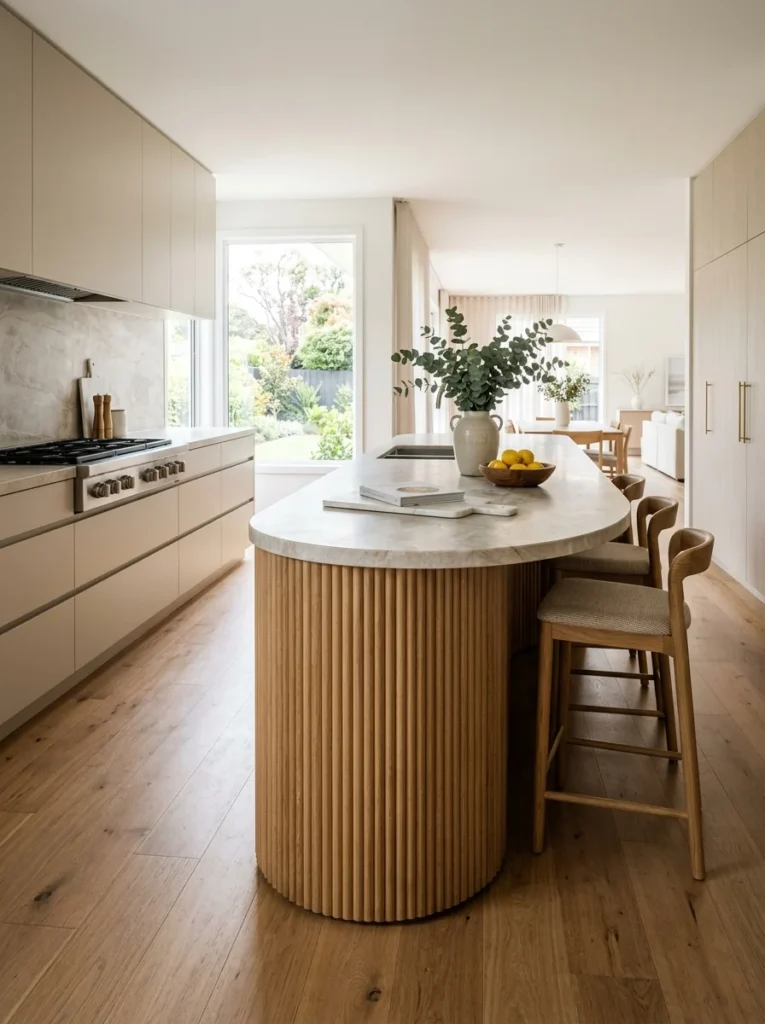
Sharp-cornered islands have dominated kitchens for as long as I can remember, but a rounded or curved island edge is becoming genuinely common in newer designs. My sister’s contractor rounded just one corner of her island specifically to ease the flow of traffic between the island and her stove, and it’s made cooking with more than one person in the kitchen noticeably less awkward than it used to be with the original rectangular plan.
7. Colorful Kitchen Islands Against Neutral Perimeter Cabinets
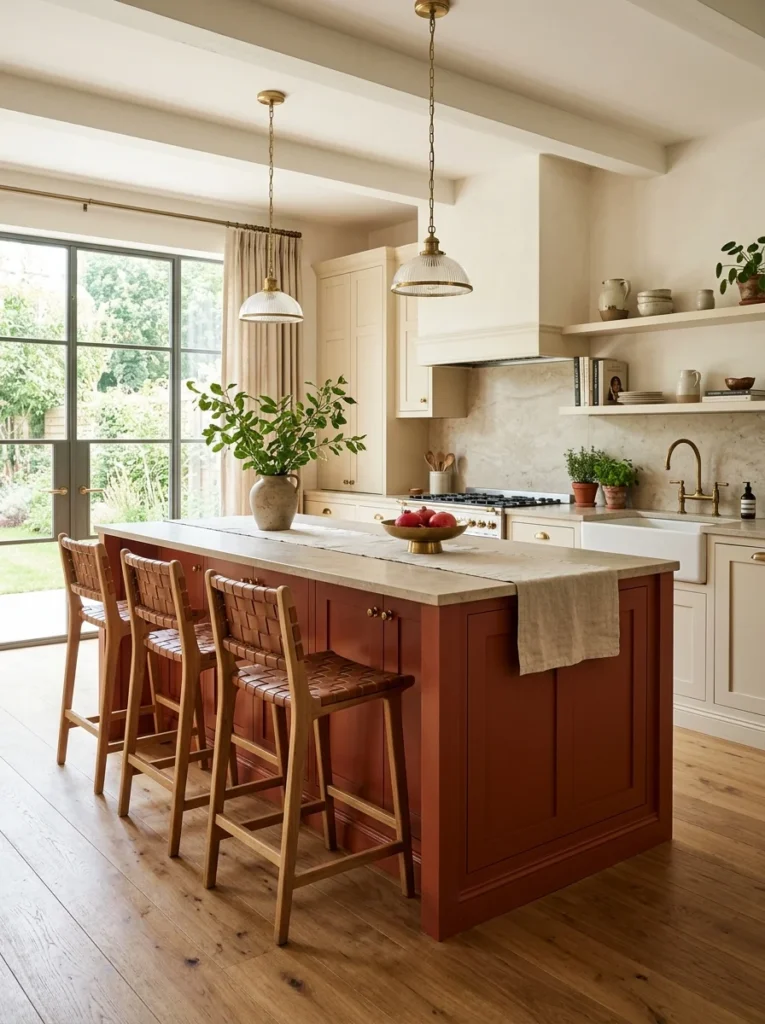
Rather than matching every cabinet in the kitchen, a bold-colored island paired with neutral surrounding cabinetry has become a popular way to introduce color without overwhelming the whole space. My sister’s deep terracotta island against her cream perimeter cabinets gives the room a clear focal point that a fully matched kitchen never would have achieved, drawing the eye directly to the center of the room the moment you walk in.
8. Open Shelving Mixed With Closed Cabinetry
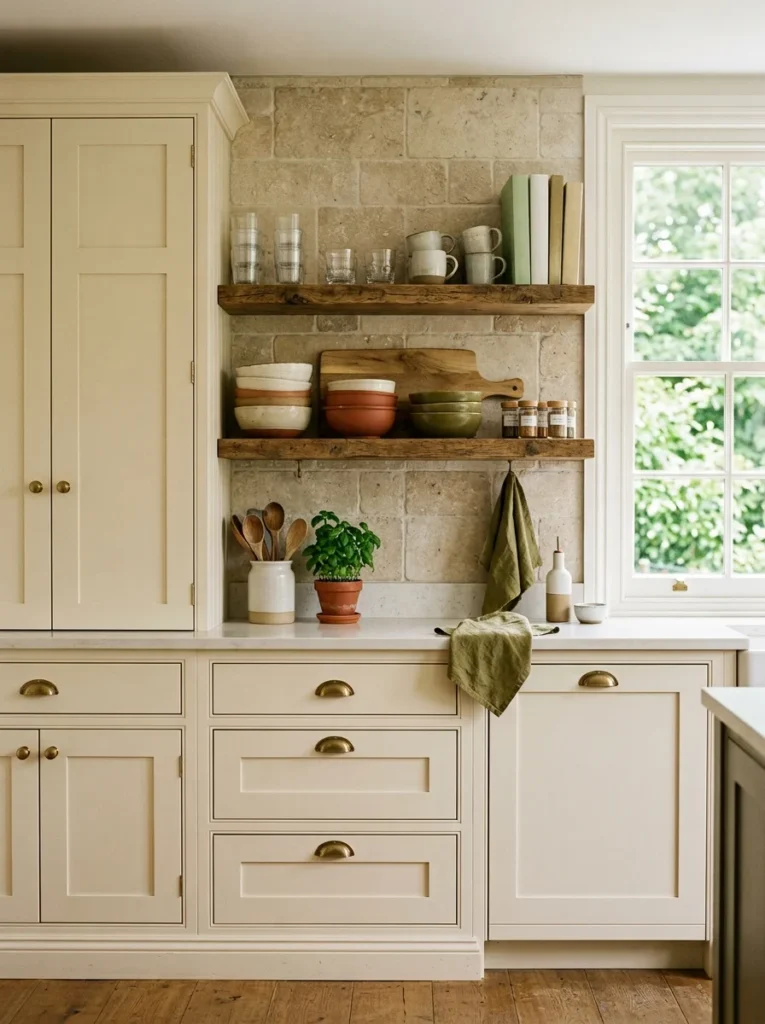
I was skeptical of open shelving for years, assuming it would just mean visible clutter that I’d have to keep perfectly styled at all times. Adding a small section of open shelving above my counter, mixed with closed cabinets everywhere else, gave me a spot to display a few pieces I actually like without committing to fully open storage throughout the whole kitchen.
9. Textured Zellige Tile Backsplashes
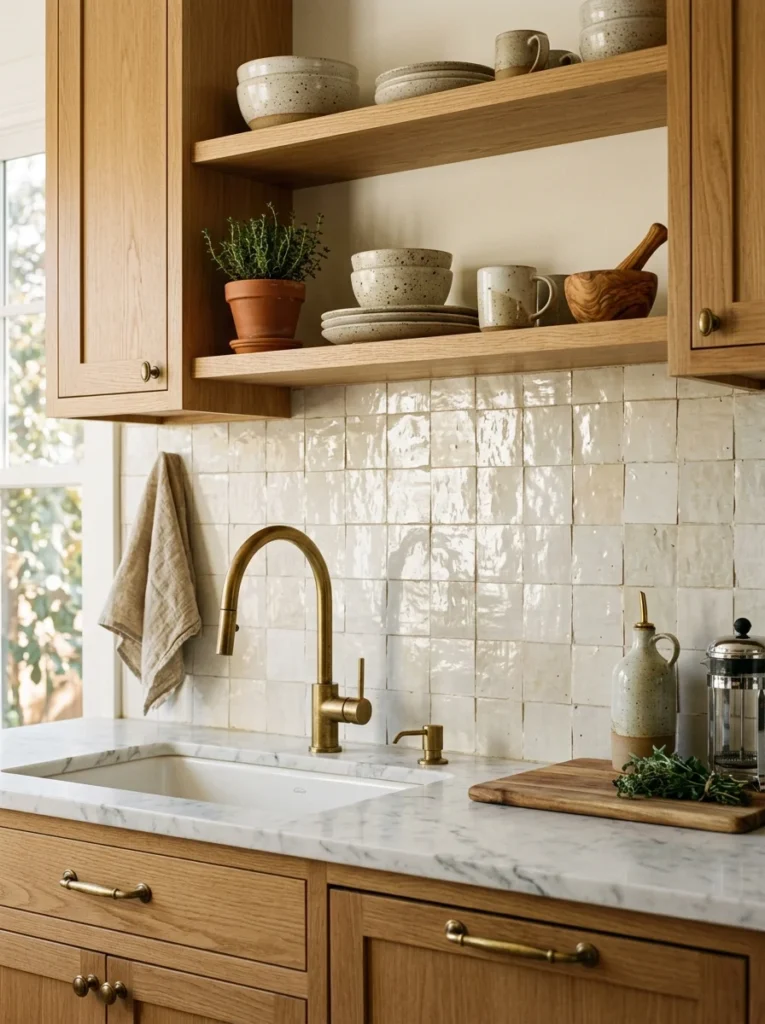
The slightly irregular, handmade look of zellige tile has become one of the most requested backsplash materials in newer kitchens, my sister’s included. Each tile catches light a little differently due to its natural variation, giving the backsplash a subtle movement that a perfectly uniform tile simply can’t replicate, especially noticeable in the late afternoon when sunlight hits it directly.
10. Waterfall Countertop Edges on Islands
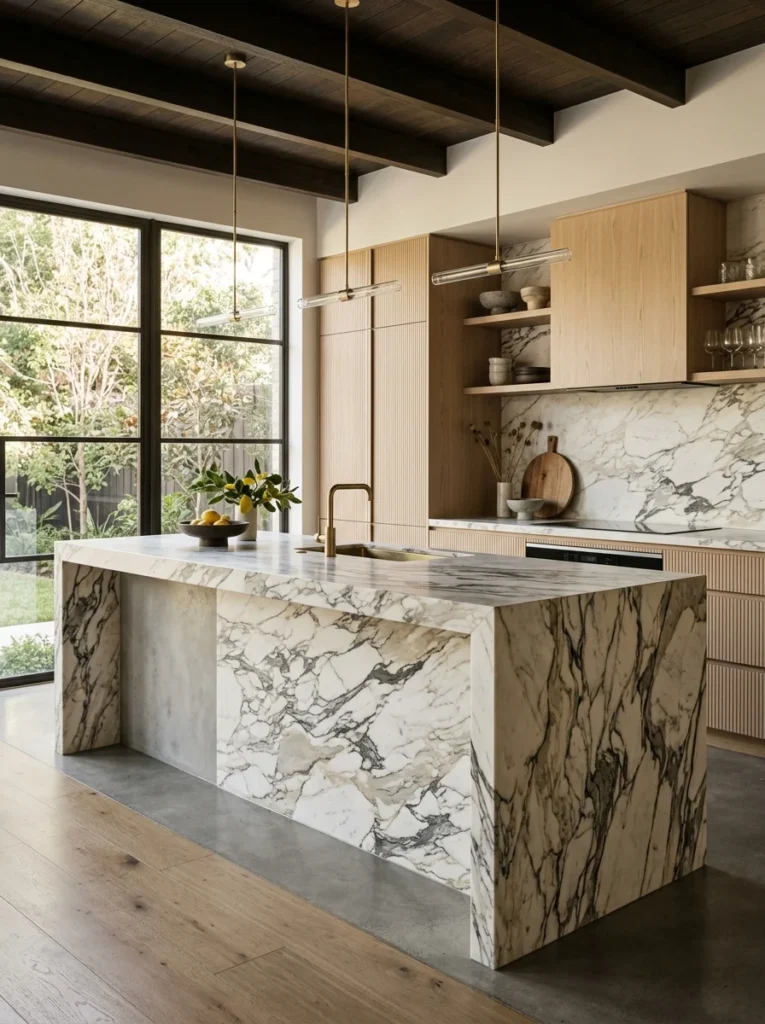
A waterfall edge, where the countertop material continues straight down the side of the island rather than stopping at the top, has become a defining feature in a lot of newer kitchen designs. My sister chose this for her island specifically, and it gives the piece a more substantial, sculptural presence than a standard countertop edge ever did, making it look almost like a solid block of stone rather than a topped cabinet.
11. Matte Black Fixtures Giving Way to Warmer Metals
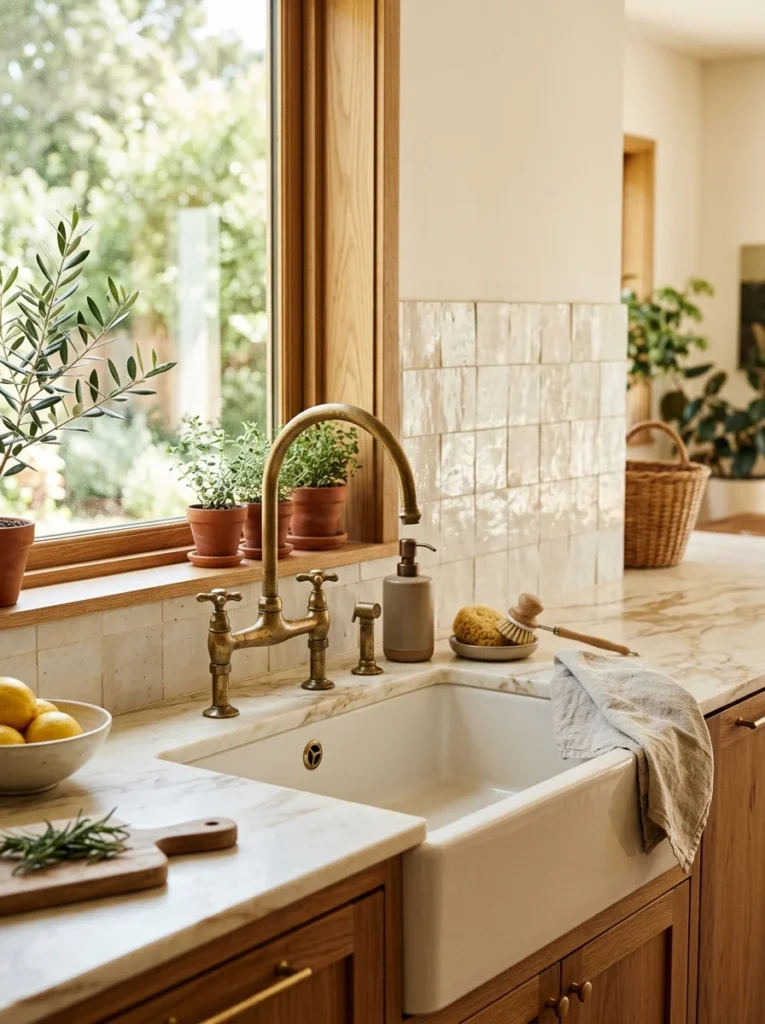
For a while, matte black seemed to be the default finish for every faucet and fixture in every kitchen I saw. I’ve noticed a real shift toward warmer tones like unlacquered brass, bronze, and even brushed gold replacing that starker black in newer kitchens, including the faucet my sister ultimately chose over the matte black option she originally had in mind before we started shopping.
12. Integrated Appliances Hidden Behind Cabinet Panels
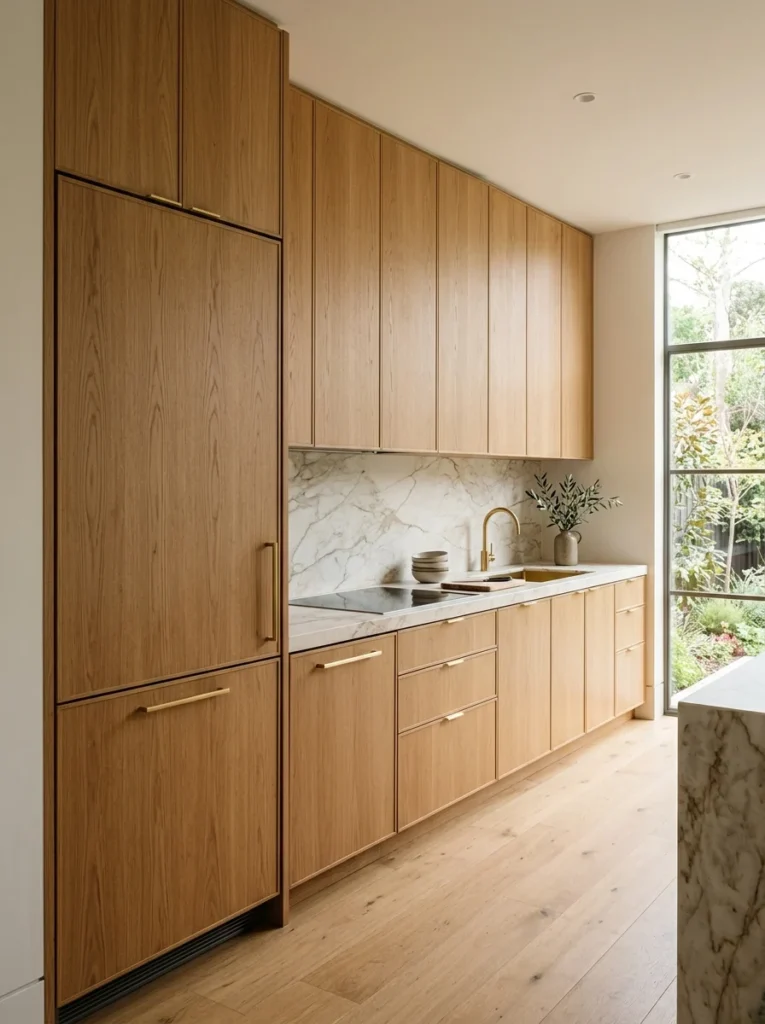
Rather than a visible stainless steel refrigerator and dishwasher breaking up a run of cabinetry, integrated appliances covered in matching cabinet panels have become increasingly common. My sister’s kitchen looks almost entirely uninterrupted by appliances at first glance, since her fridge and dishwasher are both fully paneled to match the surrounding cabinets, and most first-time visitors don’t even realize where the fridge is until she opens it.
13. Vintage or Vintage-Inspired Appliances in Bold Colors
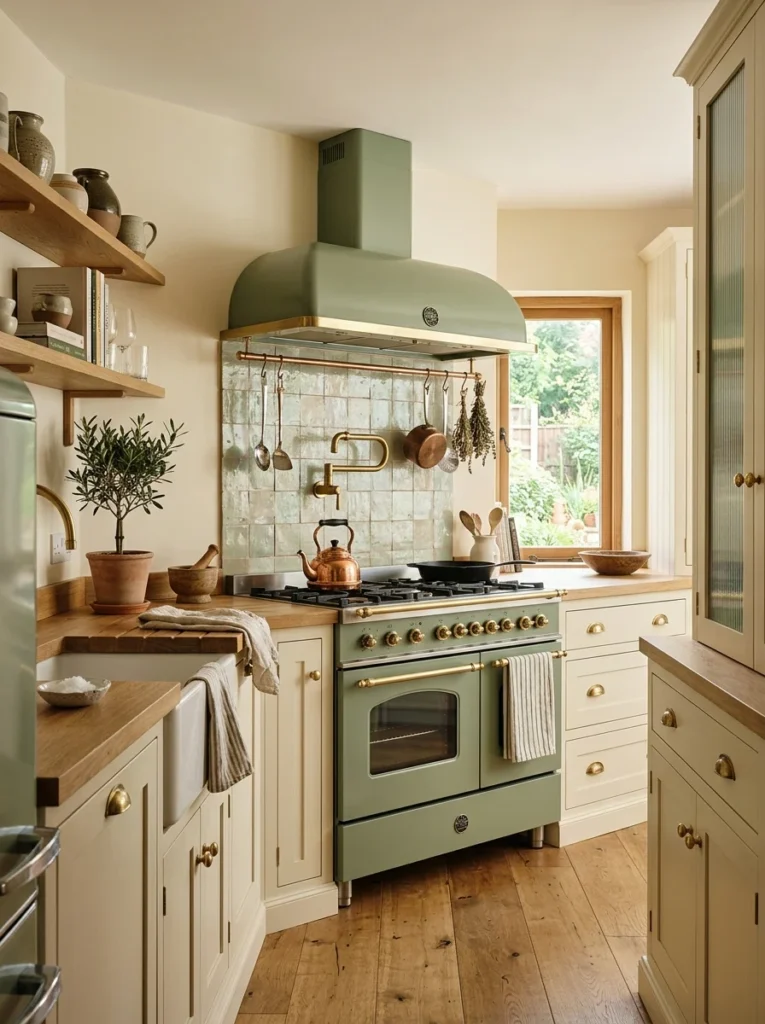
A colored, retro-styled range or refrigerator has become a genuine statement piece in several kitchens I’ve toured recently. My sister ultimately went with a more neutral appliance package to stay within budget, but a friend’s sage green vintage-style range has become the first thing anyone notices walking into her kitchen, easily outshining every other design choice in the room.
14. Butler’s Pantries for Hidden Prep and Storage
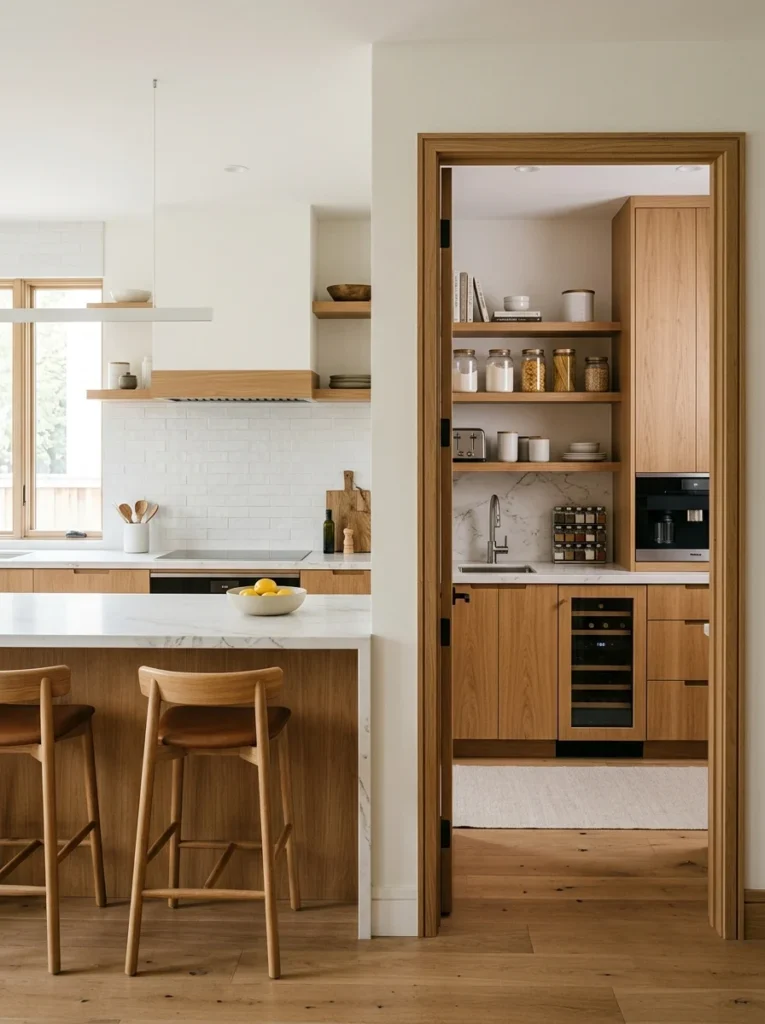
A small adjacent pantry space, tucked just off the main kitchen and used for extra storage, prep, and sometimes a second sink, has become a popular addition in newer builds and renovations with the space to accommodate it. My sister’s butler’s pantry keeps small appliances and pantry clutter entirely out of view from her main kitchen, which stays noticeably tidier as a result whenever she’s hosting.
15. Mixed Metal Finishes Instead of One Uniform Metal
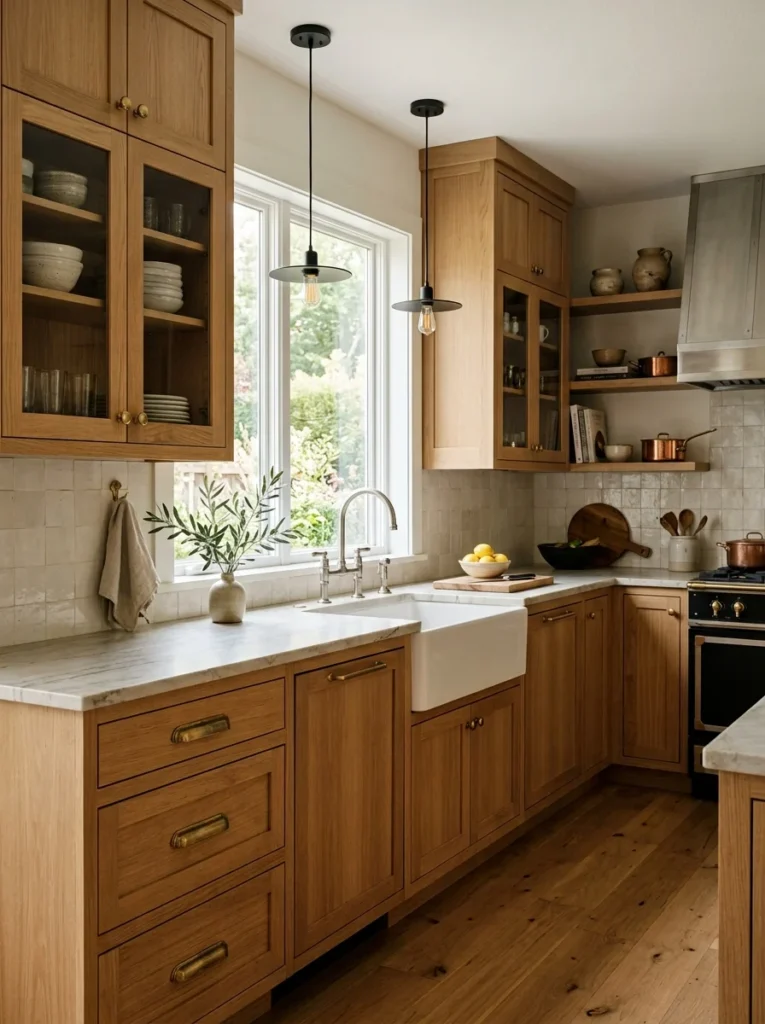
I used to think every metal finish in a kitchen needed to match exactly, down to the smallest cabinet knob. Mixing my brass cabinet hardware with a stainless steel faucet and black light fixtures actually reads as more intentional and collected than a fully matched metal palette, as long as one finish clearly dominates and the others play a supporting role rather than competing for attention.
16. Statement Lighting Over the Island
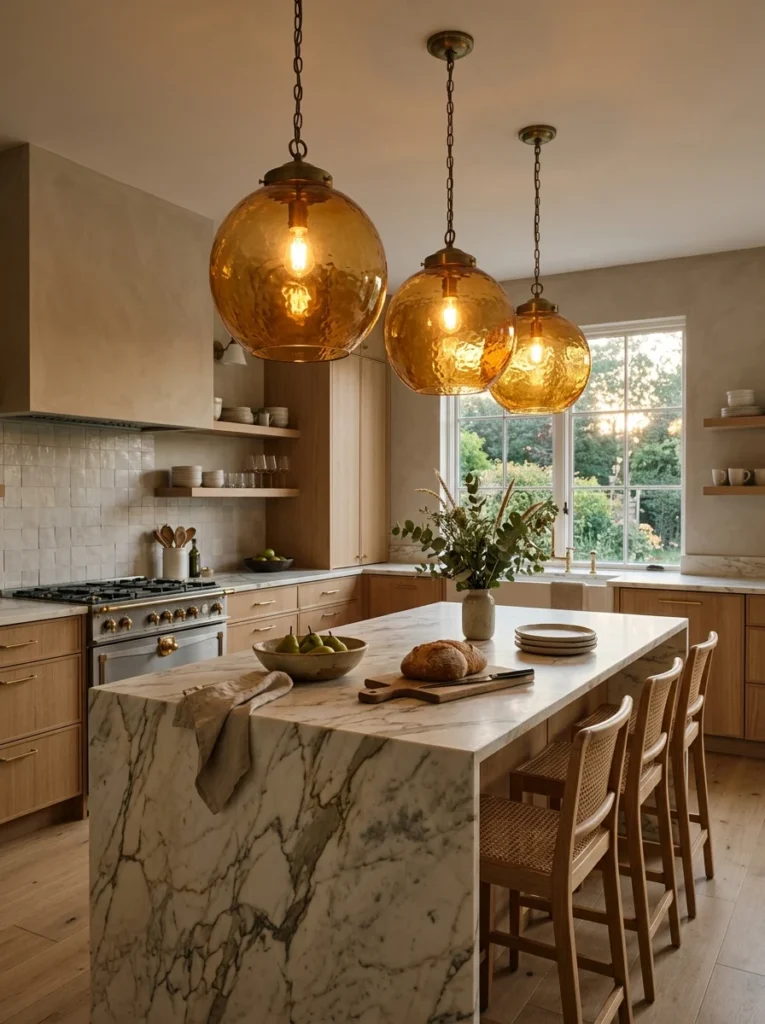
A single striking pendant or a cluster of smaller fixtures over the island has become one of the easiest ways to inject personality into an otherwise neutral kitchen. My sister chose a set of three amber glass pendants over her island, and it’s become one of the most photographed details in her entire renovation, appearing in nearly every photo she’s shared since finishing the project.
17. Compact, Multi-Zone Layouts for Small Kitchens
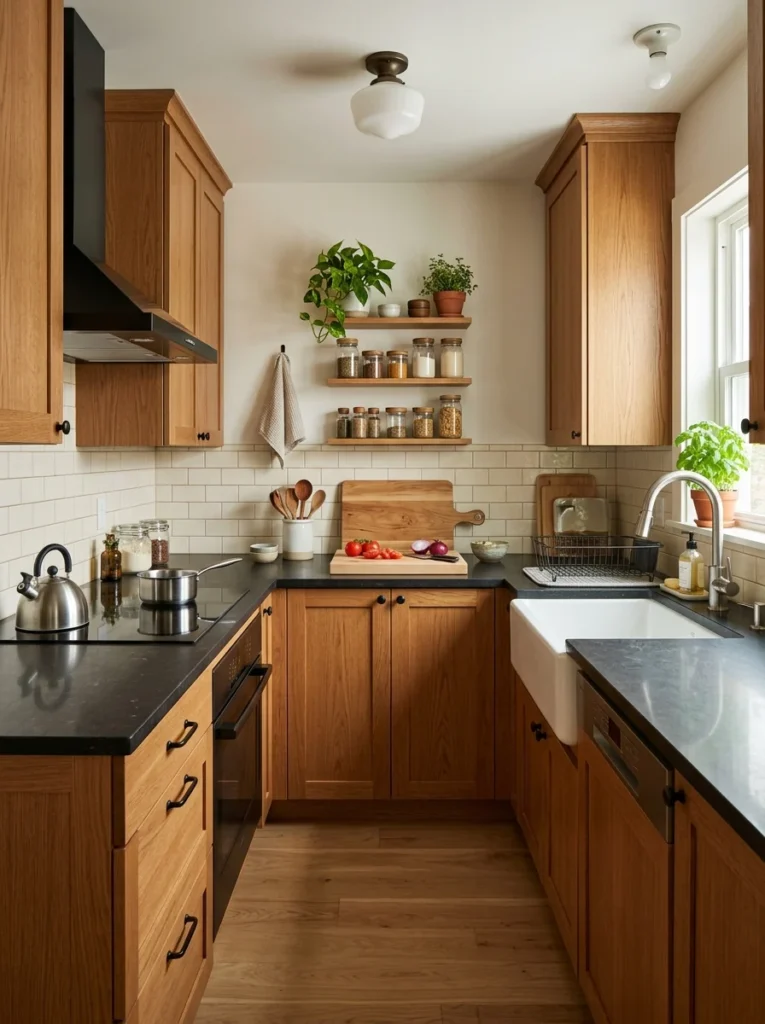
In smaller kitchens, designers have increasingly moved toward distinct zones, a prep area, a cooking area, a cleanup area, rather than one continuous run of cabinets and counter. I reorganized my own smaller kitchen with this in mind, and the deliberate zoning has made cooking with someone else in the kitchen noticeably less chaotic than it used to be when everything overlapped in one long counter.
18. Natural Stone Countertops With Visible Veining
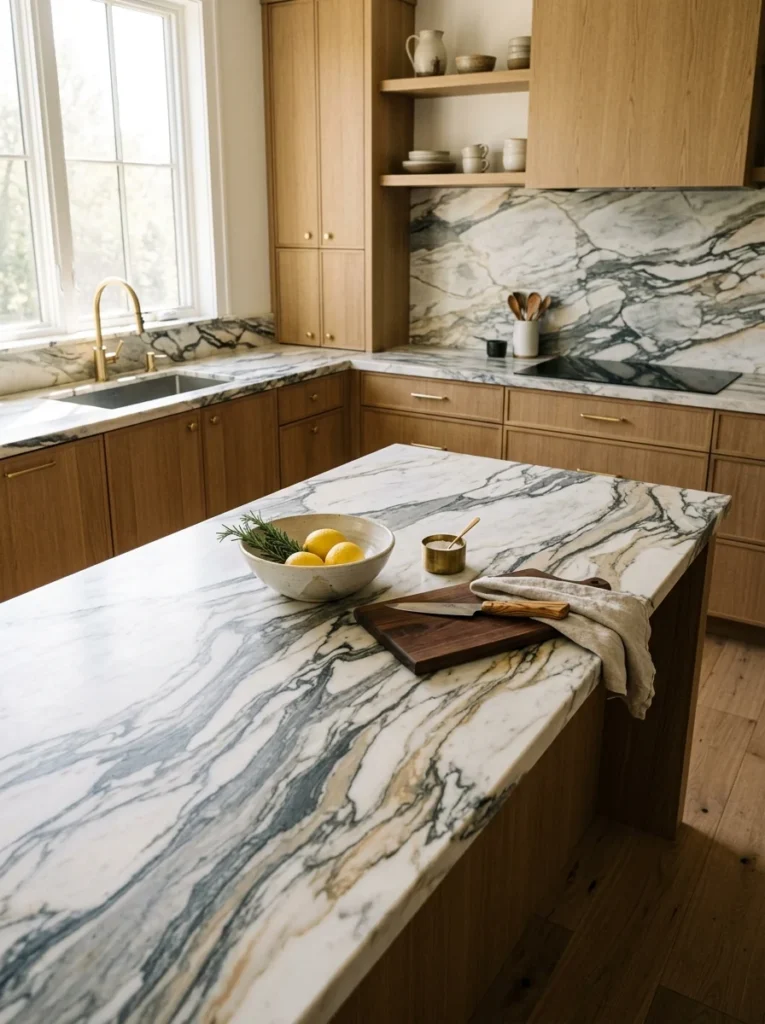
Rather than the uniform, engineered quartz that dominated kitchens for years, natural stone with bold, visible veining has become a genuine focal point again. My sister’s countertop has dramatic gray and gold veining running through it, and no two spots on the entire surface look quite the same, which she says makes the space feel more like a considered design choice than a mass-produced material chosen off a standard sample chart.
19. Hidden or Minimalist Cabinet Hardware
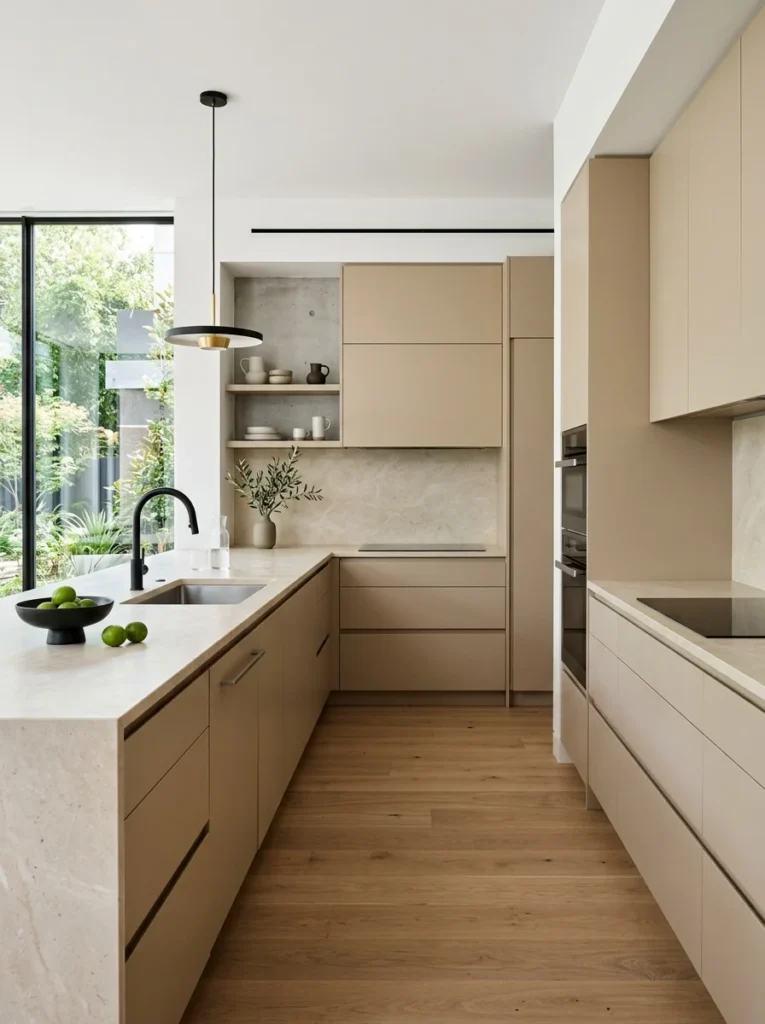
At the opposite end of the spectrum from bold brass pulls, some newer kitchens have moved toward nearly invisible hardware, recessed pulls or push-to-open cabinets with no visible hardware at all. A friend’s ultra-minimalist kitchen uses this approach throughout, and the effect is a remarkably clean, uninterrupted look across every cabinet front, front to back.
20. Warm, Earthy Paint Colors Beyond Classic White
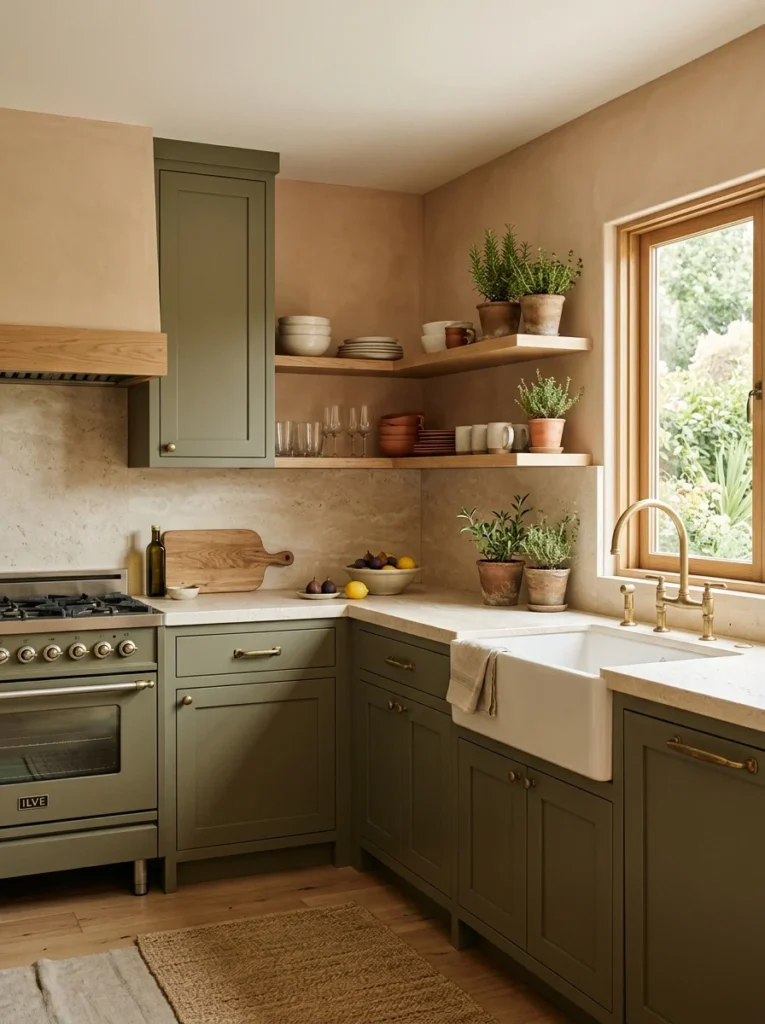
Beyond just wood tones, entire kitchens painted in warm terracotta, olive, or muted clay tones have become a genuine departure from the crisp white kitchens of recent years. My sister’s kitchen walls are a soft warm clay color that ties together the wood cabinetry and brass hardware in a way a stark white wall never would have managed on its own.
21. Dedicated Coffee or Beverage Stations
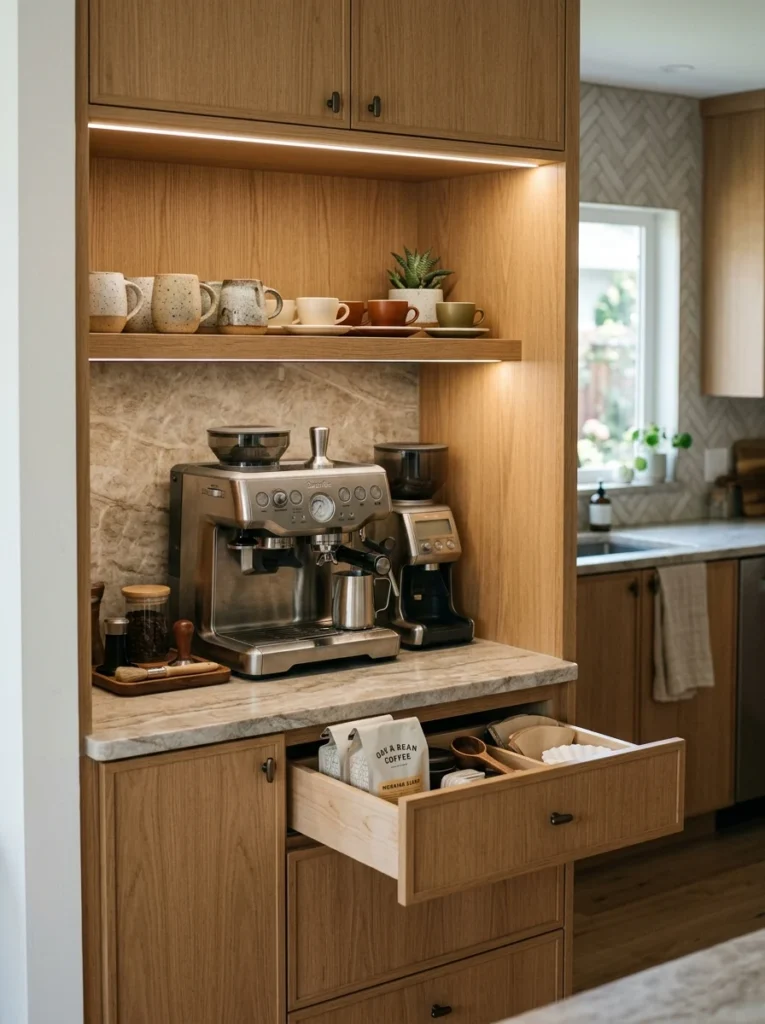
A small dedicated counter section for coffee, tea, or other drinks, sometimes with its own mini fridge or built-in machine, has become a popular addition in kitchens with the space to spare. My sister’s coffee station keeps that entire routine contained to one corner, away from her main prep and cooking areas.
22. Sculptural, Statement Faucets
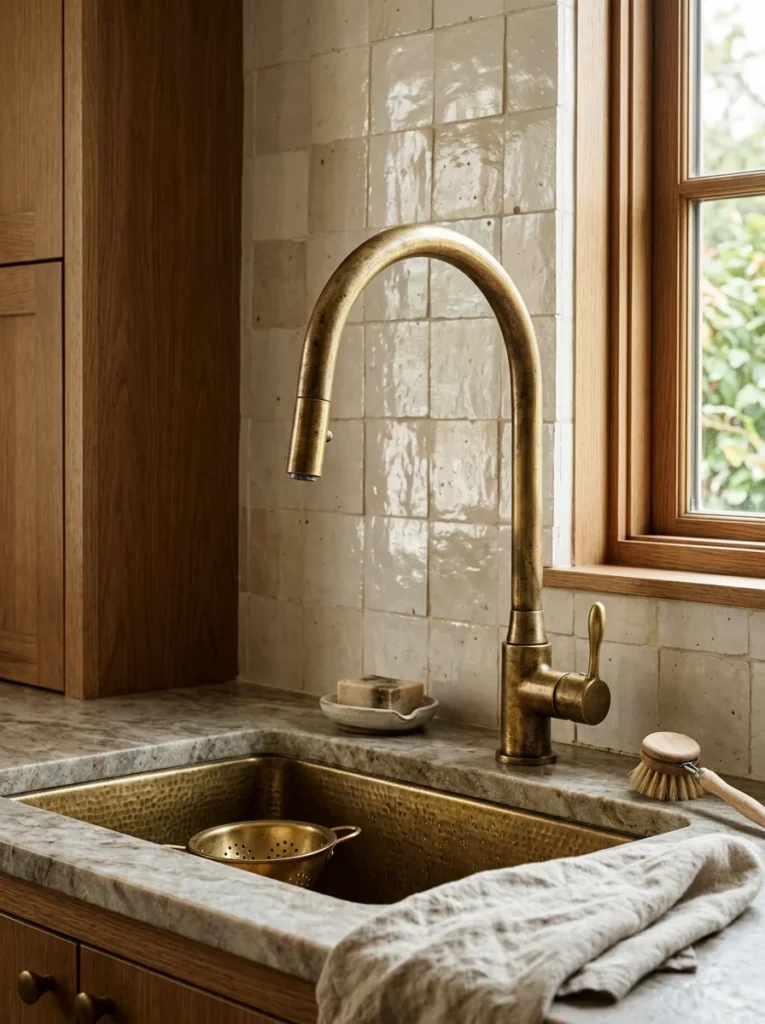
Rather than a purely functional faucet, several newer kitchens I’ve seen feature a genuinely sculptural faucet design as a small piece of functional art at the sink. My sister’s brass faucet has an unusually elegant curved silhouette that she specifically chose to be visible and admired rather than simply hidden behind everyday use, tucked away and unnoticed the way most faucets end up.
23. Reclaimed or Salvaged Materials for Character
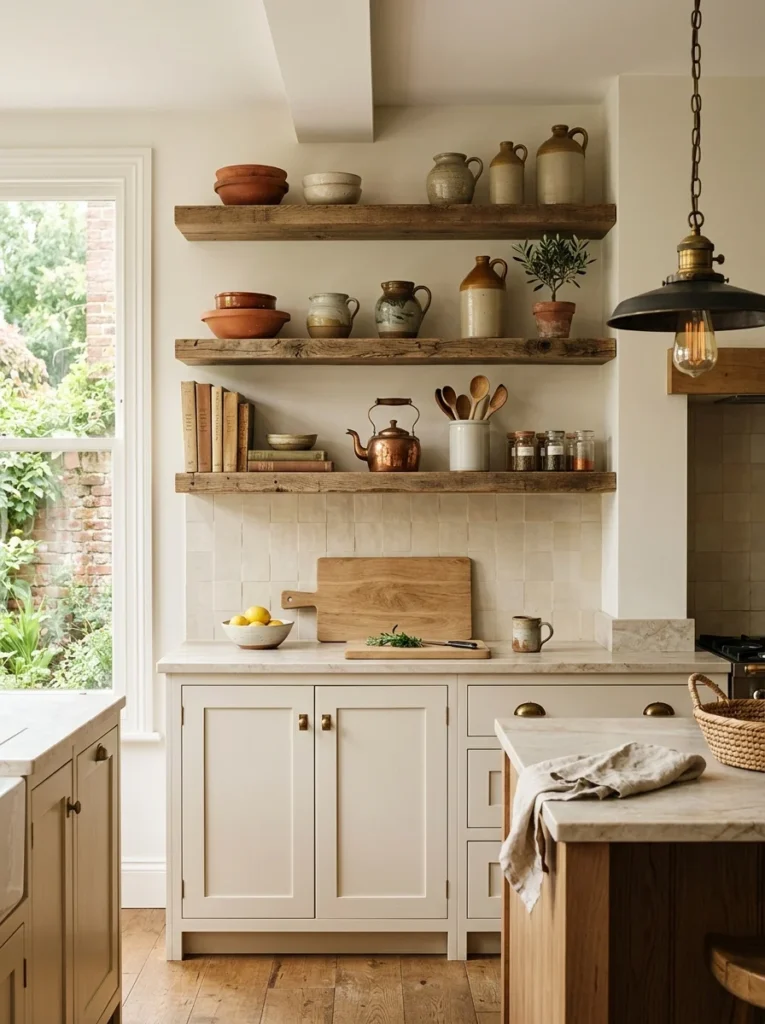
Incorporating a reclaimed wood shelf, a salvaged vintage light fixture, or an antique piece repurposed as an island base has become a way to add genuine history and character to an otherwise new kitchen. My sister’s open shelving is made from reclaimed barn wood, and it’s given her brand-new kitchen a sense of warmth that entirely new materials alone couldn’t have provided, no matter how carefully chosen the rest of the design was.
What My Sister’s Renovation Taught Me
Watching my sister go through this entire process taught me that the best kitchen trends aren’t necessarily the boldest or most photographed ones, but the details that genuinely change how a space functions day to day, alongside how it looks. Some of what we tried, like the curved island corner, turned out to matter more for daily cooking than either of us initially expected, while a few of the more photogenic choices ended up mattering less in practice than we assumed they would going in. If you’re considering an update to your own kitchen, my honest suggestion is to prioritize the changes that will actually affect how you move through and use the space, and treat the purely decorative trends as a welcome bonus layered on top rather than the main event.