
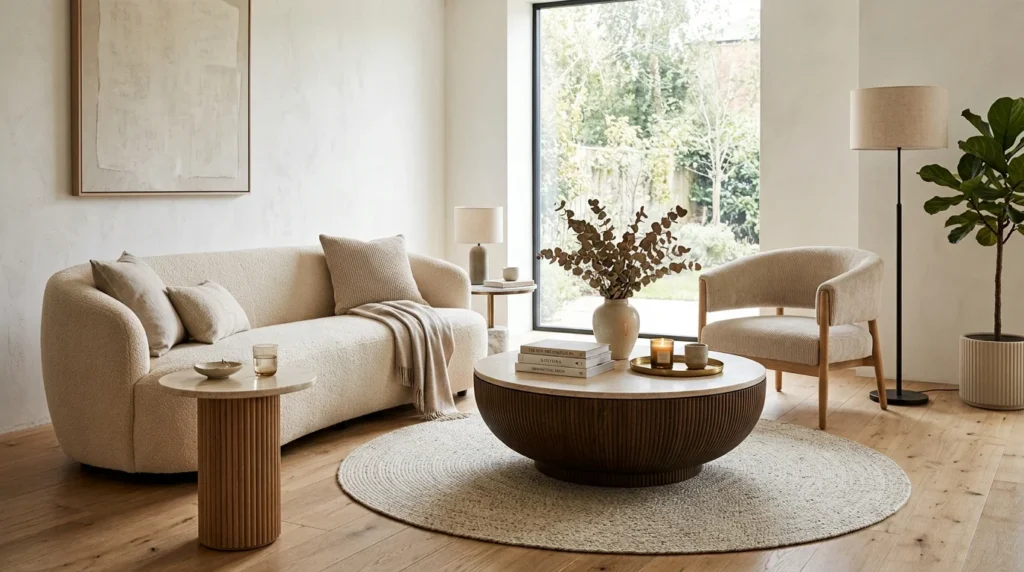
My living room used to feel like an obstacle course. Every piece of furniture had a corner, and every corner seemed to line up perfectly with wherever I happened to be walking at any given moment throughout the day. I stubbed my toe on the same rectangular coffee table so many times over one particularly clumsy winter that I finally gave in and replaced it with a round one, mostly out of frustration rather than any real design instinct. What I didn’t expect was how much that single swap changed the entire feel of the room, not just the number of bruises on my shins, which admittedly went down considerably as well over the following months.
Since then, I’ve become genuinely and increasingly curious about round furniture and its effect on a space, testing different pieces in my own living room and paying much closer attention to how friends have used round tables in their own homes over the years. Here’s what I’ve learned about using round tables to soften a room that might otherwise feel a little too rigid, one piece of furniture at a time.
1. Start With the Coffee Table if You’re Only Making One Change
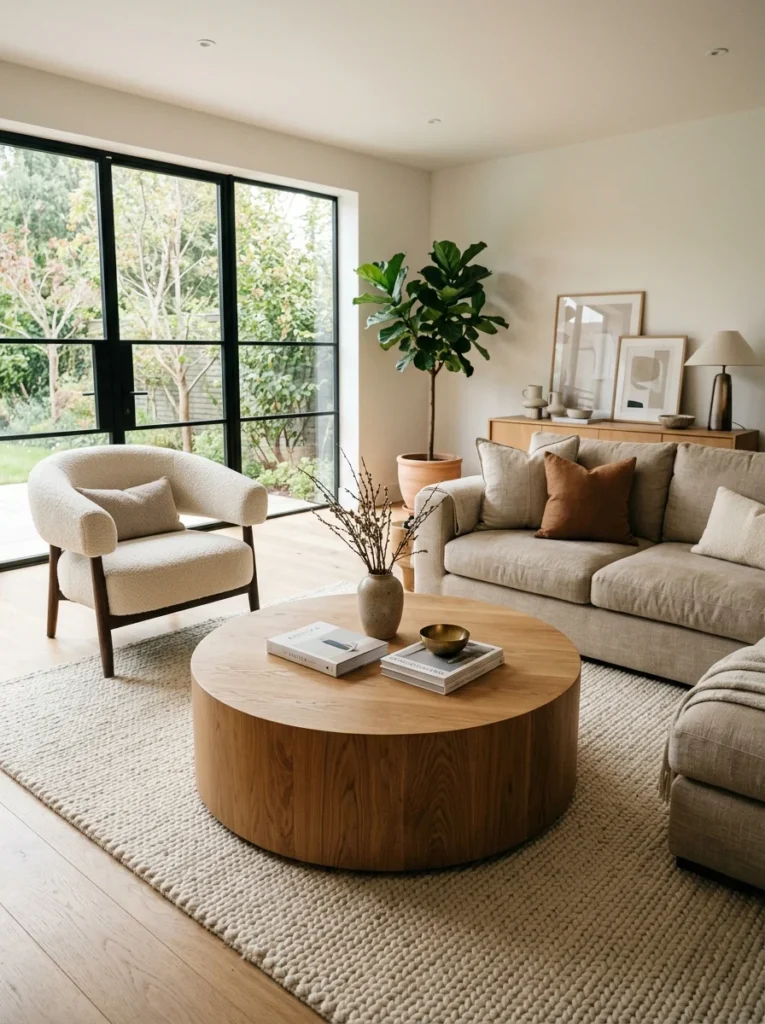
If you only swap out one piece of furniture to soften your living room, the coffee table is where I’d start. It sits at the center of most seating arrangements and gets walked around constantly, so a round shape immediately removes the hardest edges from the most trafficked part of the entire room. My own living room felt noticeably calmer within days of making this single change, before I’d touched anything else, which honestly surprised me given how small a swap it seemed at the time.
2. Choose a Round Table With a Pedestal Base for Easier Movement Around It
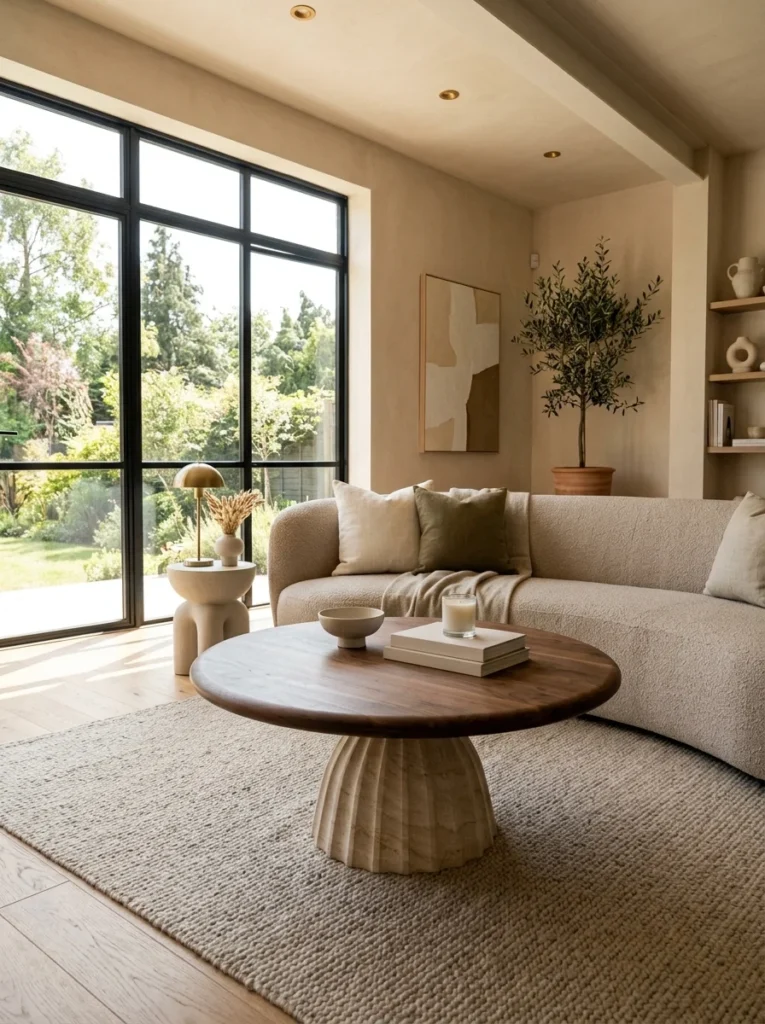
A round table with a single central pedestal base, rather than four separate legs, gives you more usable floor space to actually walk around it. I learned this after living with a four-legged round table for a while and realizing I was still navigating around individual legs the same way I had with my old rectangular table, just with a rounded top on top of the same obstacle course underneath, which somewhat defeated the whole purpose of switching in the first place. The pedestal design I eventually chose has made that entire side of the room feel considerably more open to move through.
3. Pair a Round Coffee Table With Two Smaller Round Side Tables
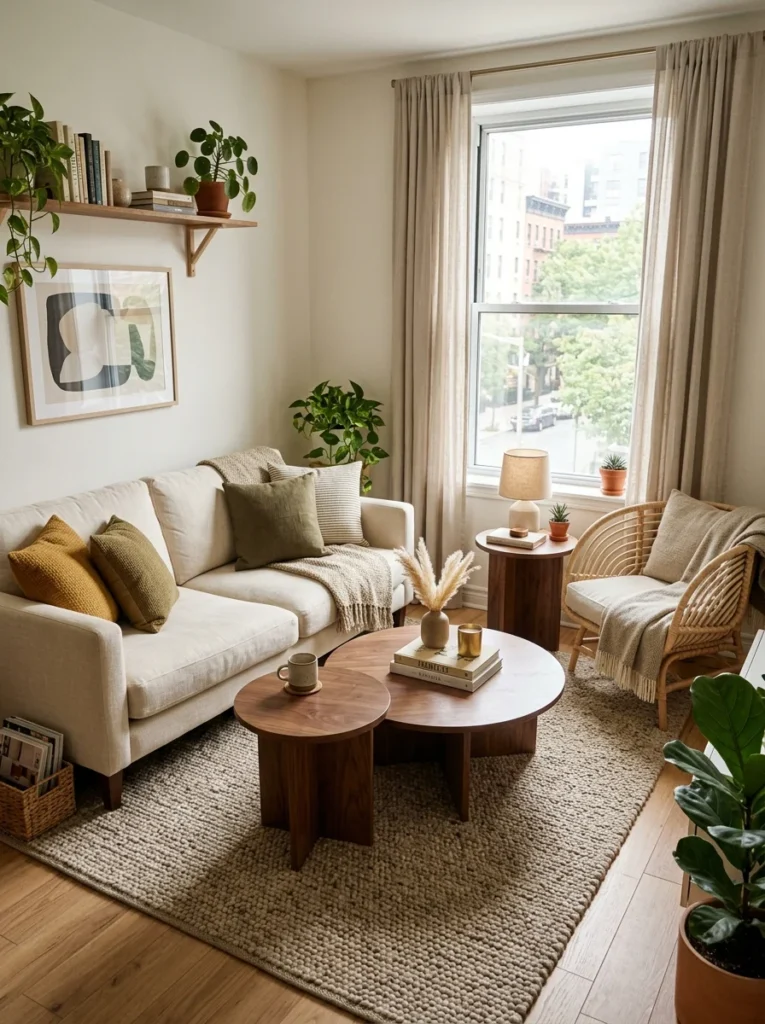
Rather than one large round coffee table, I’ve seen friends use two smaller round tables that can be pushed together or separated depending on the occasion. It’s a flexible setup that works particularly well for smaller apartments, since the tables can be pulled apart to create extra surface area when hosting, then tucked back together the rest of the time to save floor space during everyday use. It also means one table can move to a completely different spot in the room if needed, without leaving the seating area feeling incomplete.
4. Use a Round Dining Table to Soften an Open-Concept Space
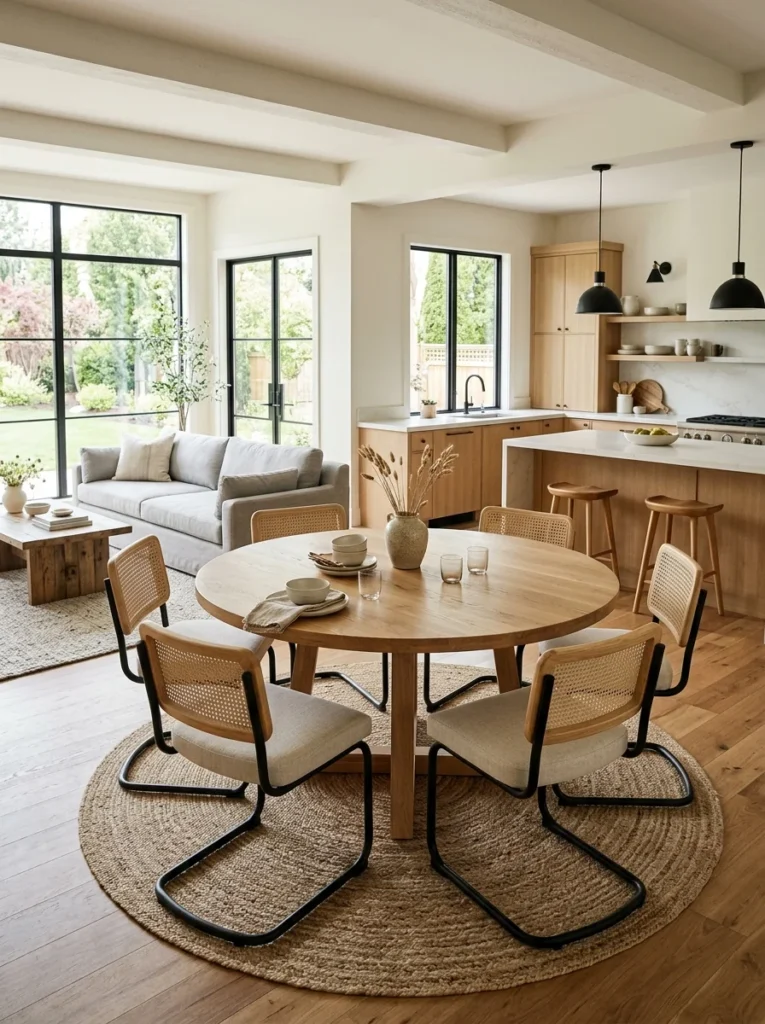
In an open-concept living and dining area, a round dining table breaks up what would otherwise be a room full of straight lines and hard angles. A friend replaced her rectangular dining table with a round one specifically because her open floor plan felt too boxy, and the round shape gave the whole space a noticeably softer, more flowing feel without changing anything else in the layout, right down to the same chairs and rug she’d already had. She’s mentioned more than once that guests seem to linger longer at the table now, which she credits partly to the more relaxed shape.
5. Choose a Round Side Table for an Awkward Gap Beside a Sofa
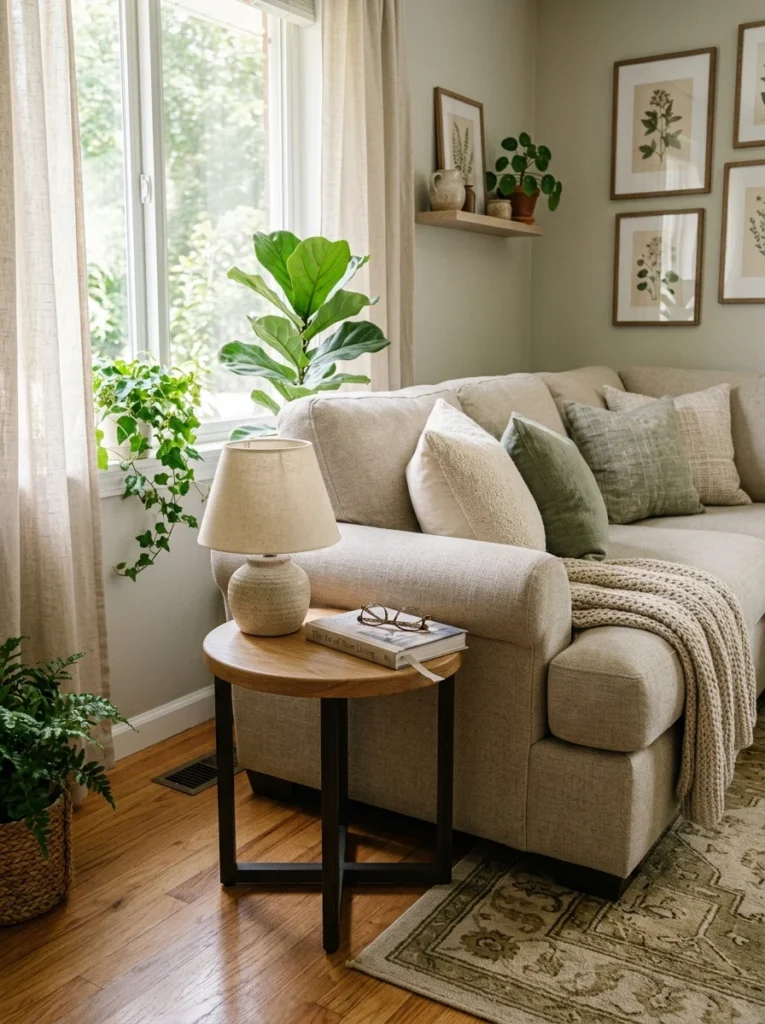
I had an oddly shaped gap beside my sofa for months that never quite fit a standard rectangular side table without looking crammed in. A small round table solved that problem completely, since its curved edge could nestle into the space without the sharp corner of a square table jutting out into the walkway, catching on clothing or bumping into knees every time someone walked past. It’s a small enough fix that I almost didn’t bother trying it, but the difference in how easily I could move through that corner of the room afterward made it worth the effort.
6. Add a Round Ottoman Instead of a Traditional Coffee Table
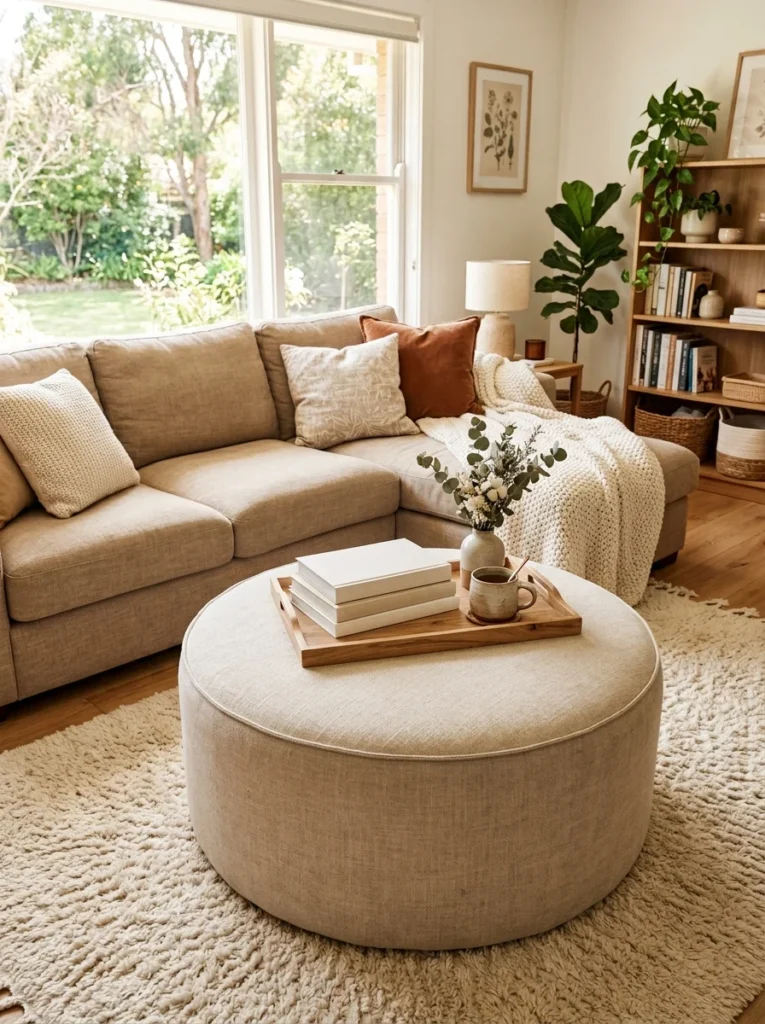
For a softer, more casual living room, a round upholstered ottoman can replace a traditional coffee table entirely. I tried this in a smaller apartment where floor space was tight, and the ottoman’s rounded, cushioned form made the whole center of the room feel more relaxed and less like a formal, furniture-store display, while doubling as extra seating whenever more guests showed up than my sofa could hold on its own.
7. Use a Round Table to Anchor a Circular Seating Arrangement
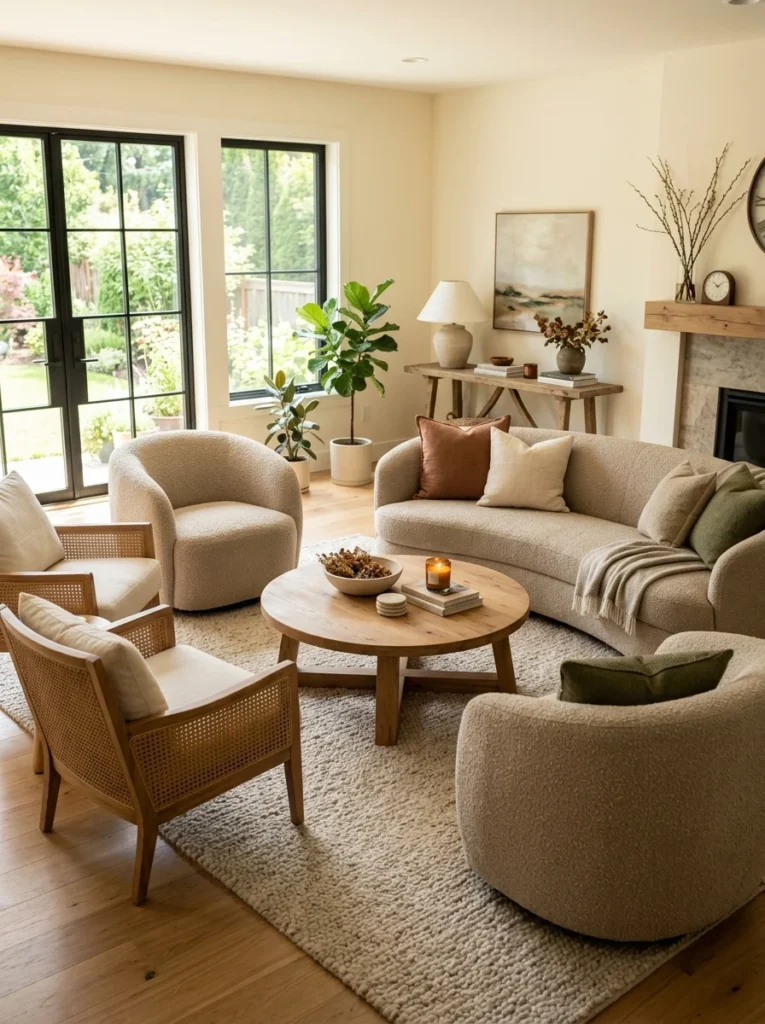
Arranging chairs or a sofa in a loose circle or curve around a round table creates a naturally inviting conversation area. I noticed this most clearly at a friend’s apartment where her seating was arranged around a round table rather than facing a straight line toward a television, and it made casual gatherings feel more like an actual conversation rather than everyone facing the same direction toward a screen most of the evening. It’s changed how I think about arranging seating in my own living room ever since that visit.
8. Choose a Round Table in a Material That Contrasts With the Rest of the Room
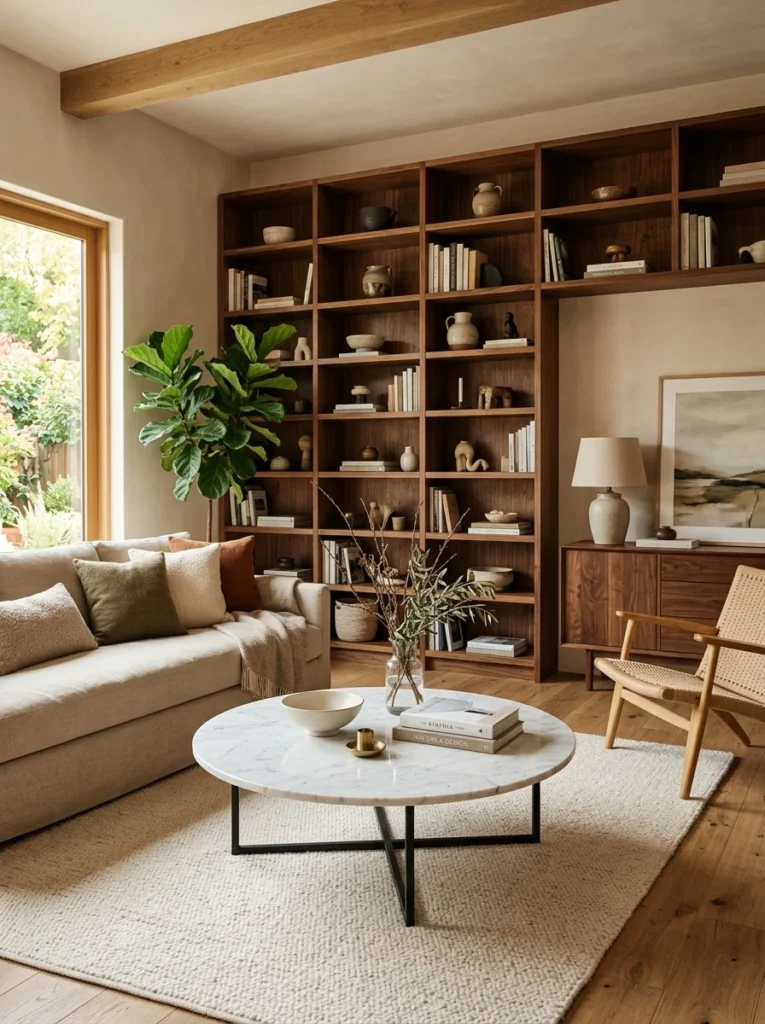
A round marble-topped table in my otherwise wood-heavy living room became an unexpected focal point precisely because the material stood apart from everything else. The contrast in both shape and material gave the table more visual presence than if I’d chosen something in a matching wood tone that blended into the rest of the furniture, disappearing rather than adding anything new to the room’s overall composition.
9. Use a Round Table to Break Up a Room Full of Sharp-Edged Furniture
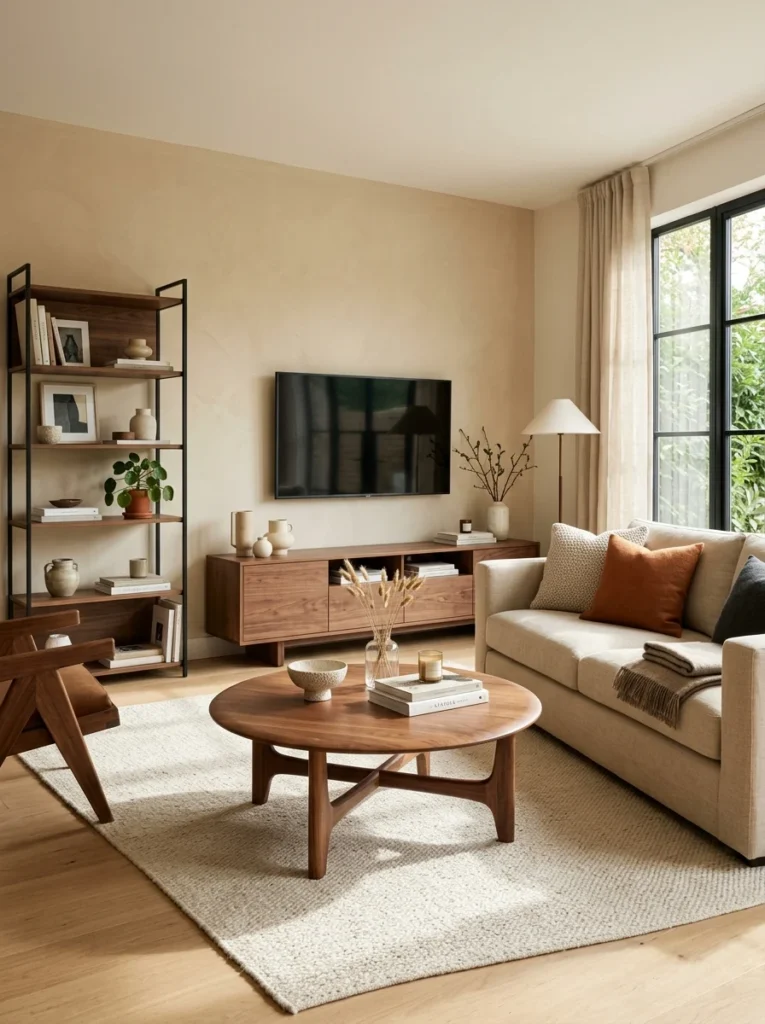
If your sofa, bookshelf, and media console are all rectangular, a single round table introduces a visual break that keeps the whole room from feeling too uniformly angular. I noticed this effect most strongly after adding my round coffee table to a room where literally every other piece of furniture had a hard right angle somewhere, and the single curved shape gave my eye somewhere to rest amid all those straight lines.
10. Choose a Scalloped or Fluted Edge for Added Softness
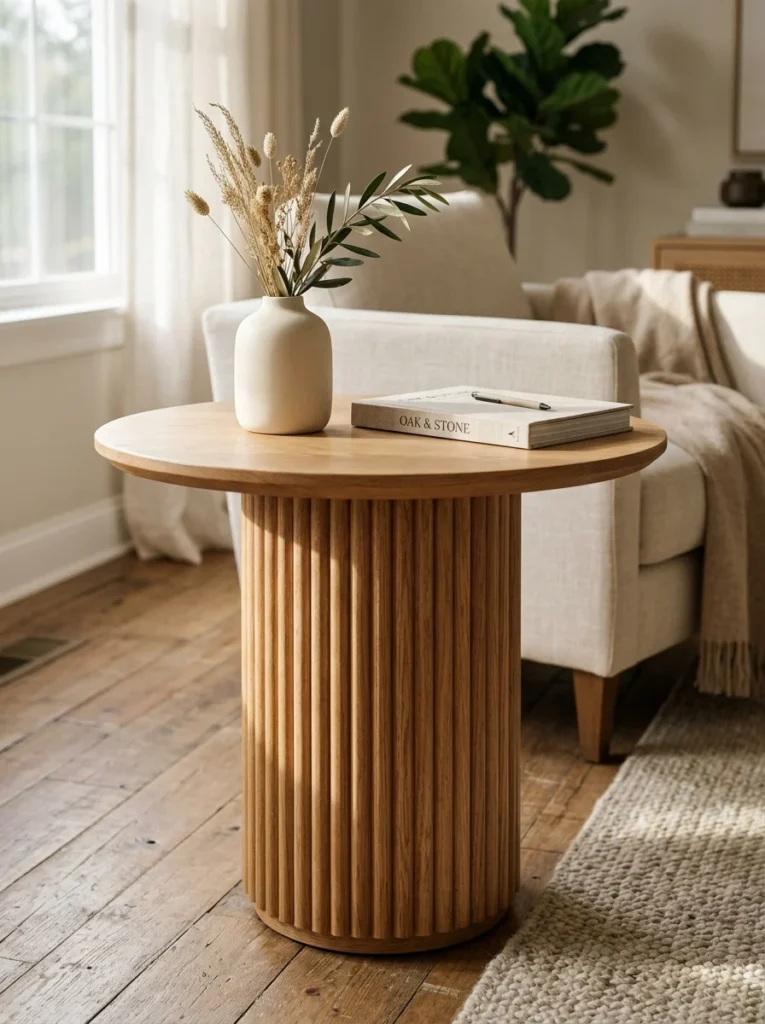
Beyond just being round, a table with a scalloped or fluted edge detail adds an extra layer of softness to its silhouette. A friend’s round side table has a subtly fluted base that catches light differently than a plain round pedestal would, giving it a bit more visual interest without straying into anything too ornate or fussy for an otherwise fairly simple, understated room.
11. Use a Round Table as a Bridge Between Two Different Seating Areas
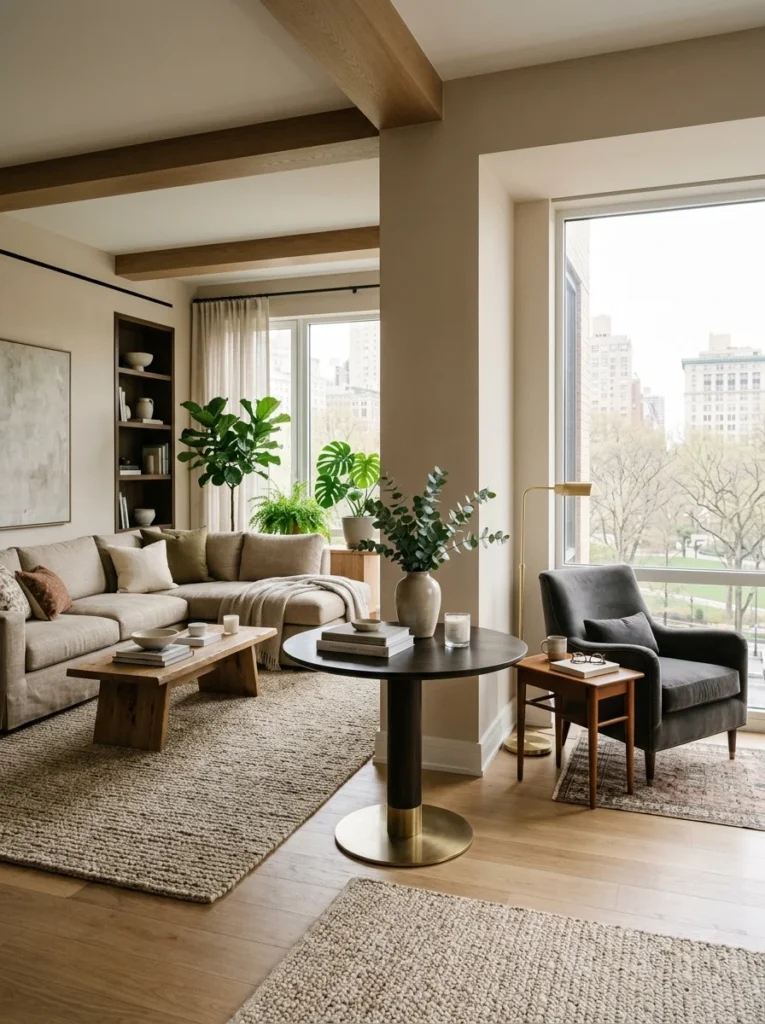
In a larger living room with two separate seating groups, a round table placed between them can act as a visual and physical bridge, softening the transition from one area to the other. It’s a trick I picked up from a friend’s larger apartment, where a round table filled the gap between her main sofa seating and a secondary reading nook without making the room feel divided into two disconnected halves that didn’t relate to each other at all.
12. Add a Round Table With a Lower Profile for a More Relaxed Feel
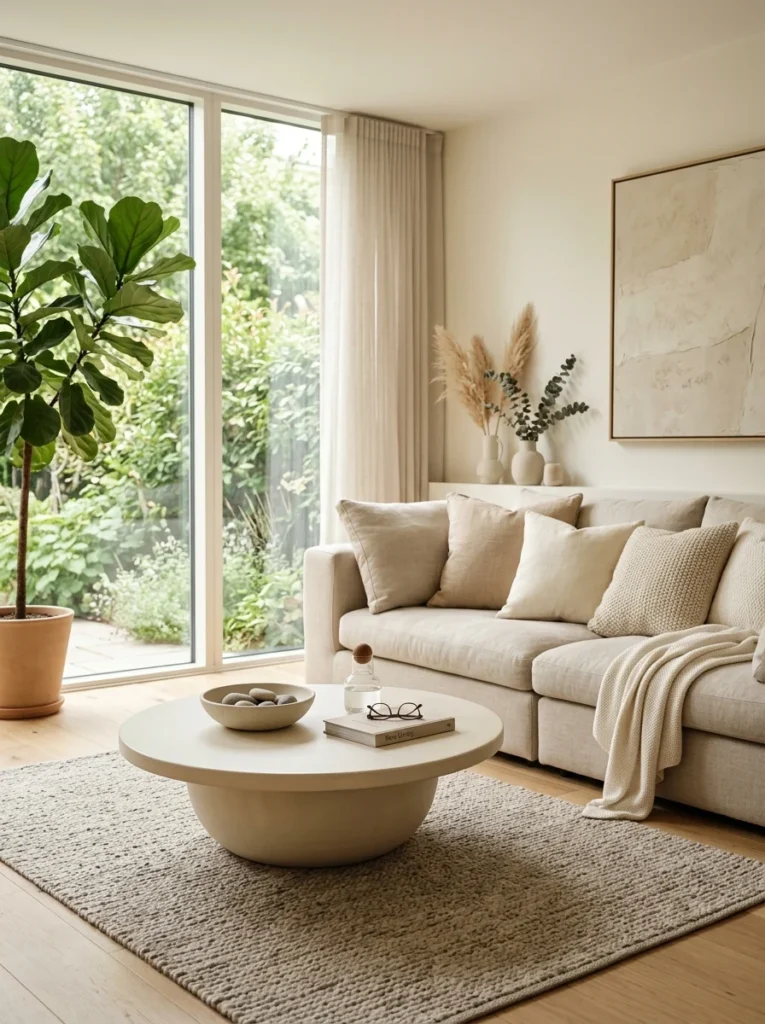
Choosing a coffee table that sits lower to the ground, in addition to being round, compounds the relaxed feeling of the room. My current round coffee table sits several inches lower than my old rectangular one did, and the combination of the round shape and the reduced height has made the whole seating area feel noticeably more laid-back, almost like the entire room relaxed along with the furniture itself.
13. Use a Round Nesting Table Set for Flexible Extra Surface Area
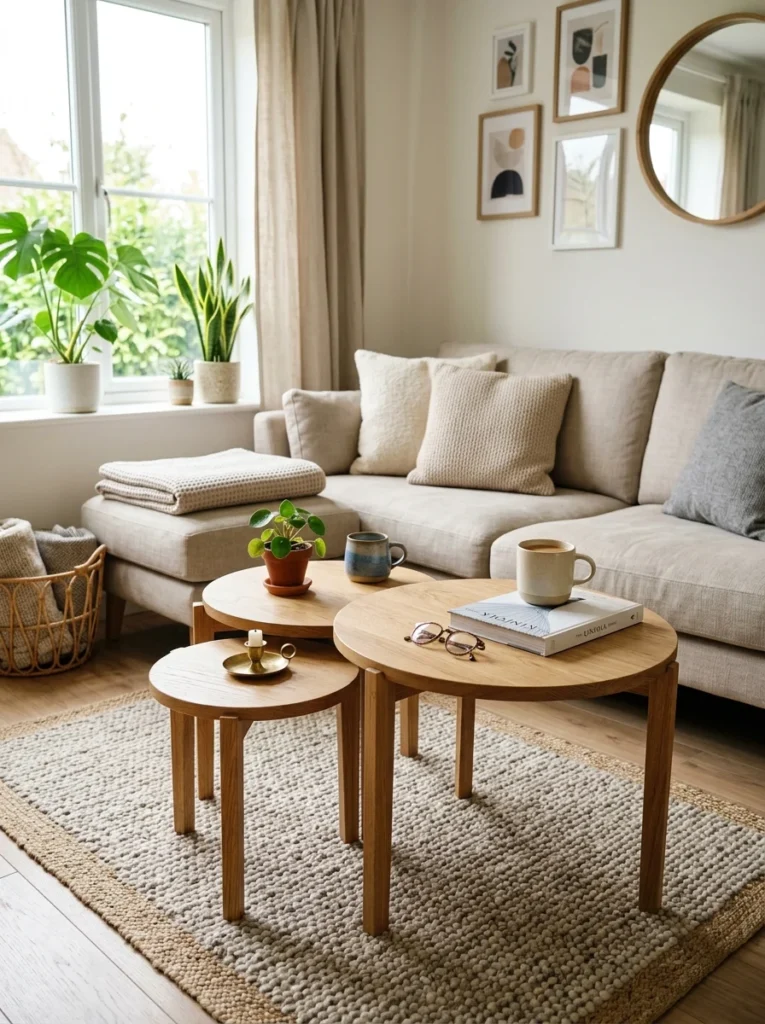
A set of round nesting tables, sized to tuck neatly under one another, gives you flexible extra surface area without committing to a single large piece. I keep mine mostly nested together most of the time, then pull the smaller ones out when I have guests over and need more spots to set down drinks, sliding them back into place once everyone’s gone home for the night.
14. Choose a Round Table With Curved, Tapered Legs Rather Than Straight Ones
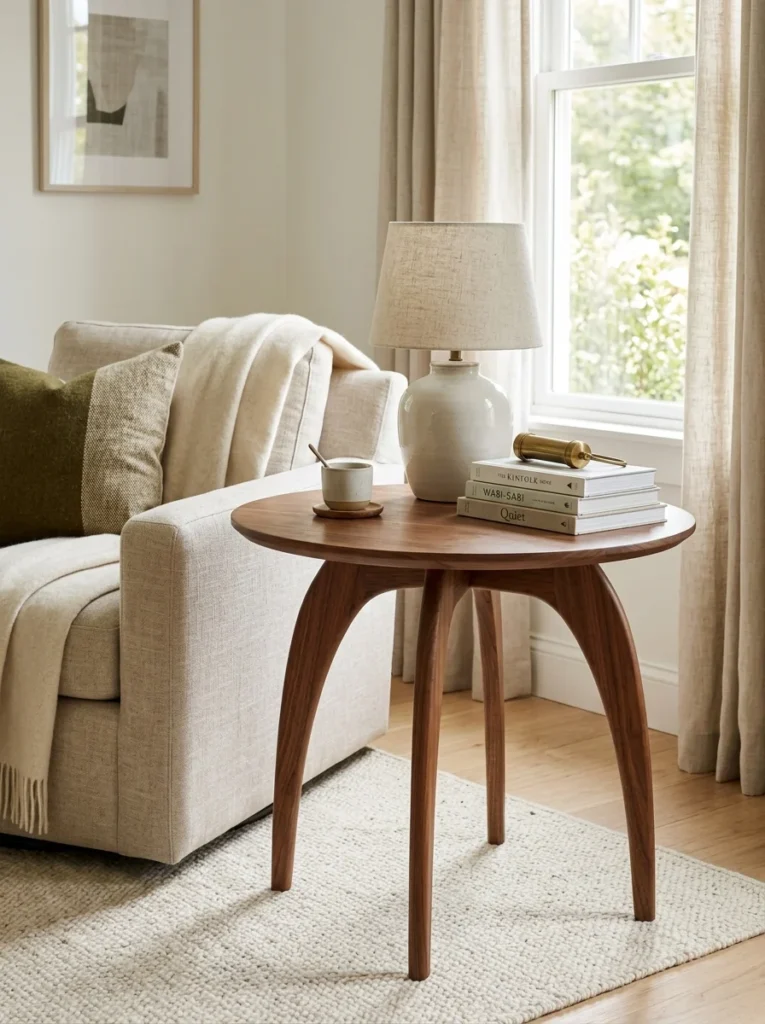
Even among round tables, leg shape matters. A round table with slightly curved or tapered legs reads as noticeably softer than the same tabletop on straight, angular legs. I noticed the difference clearly when comparing two similar round tables side by side in a showroom, where the one with curved legs felt considerably more organic and less rigid, almost like a completely different piece of furniture despite sharing an identical tabletop.
15. Use a Round Rug Beneath a Round Table to Reinforce the Softness
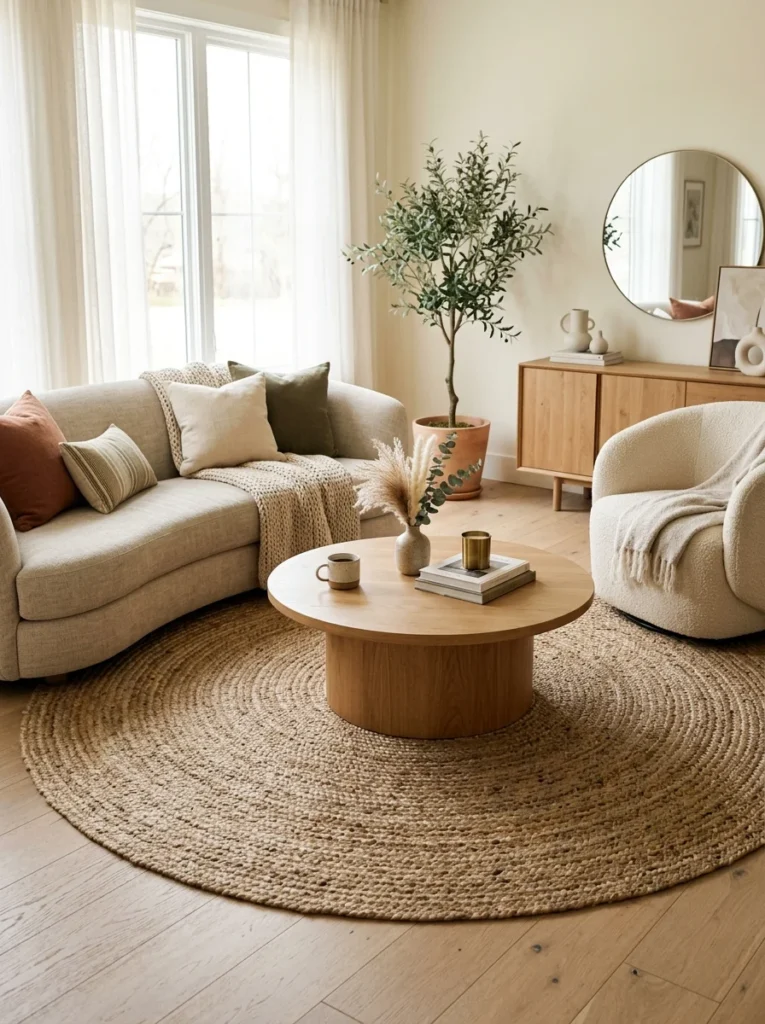
Placing a round rug directly beneath a round coffee table doubles down on the softened geometry of the space. I was initially worried this would look too matchy, but in practice it reinforced the round shape rather than feeling repetitive, especially since my rug’s edge extends well beyond the table itself rather than mirroring it exactly at the same diameter.
16. Choose a Round Table for a Small Entryway Instead of a Console
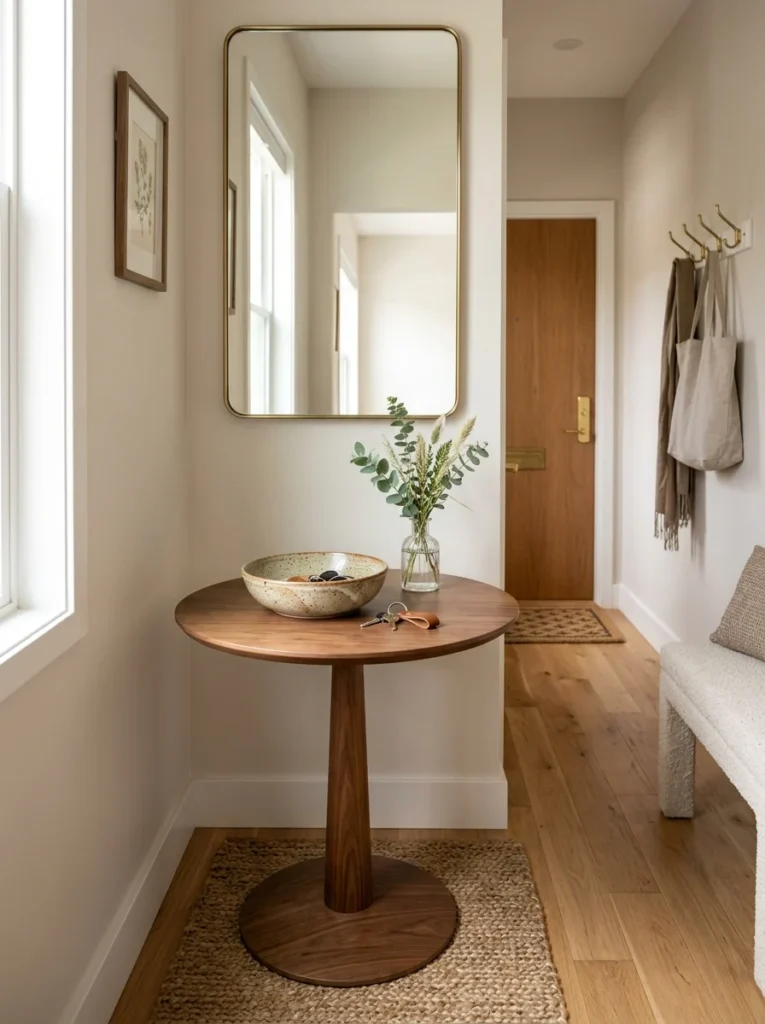
In a small entryway too narrow for a traditional rectangular console table, a round table with a compact footprint often fits more comfortably while still providing a spot to drop keys or mail. It also eliminates the sharp corners that tend to become a hazard in tight entry spaces where people are moving through quickly, often carrying bags, an umbrella, or juggling a phone in one hand while unlocking the door.
17. Add a Round Accent Table Beside an Armchair for a Cohesive Reading Corner
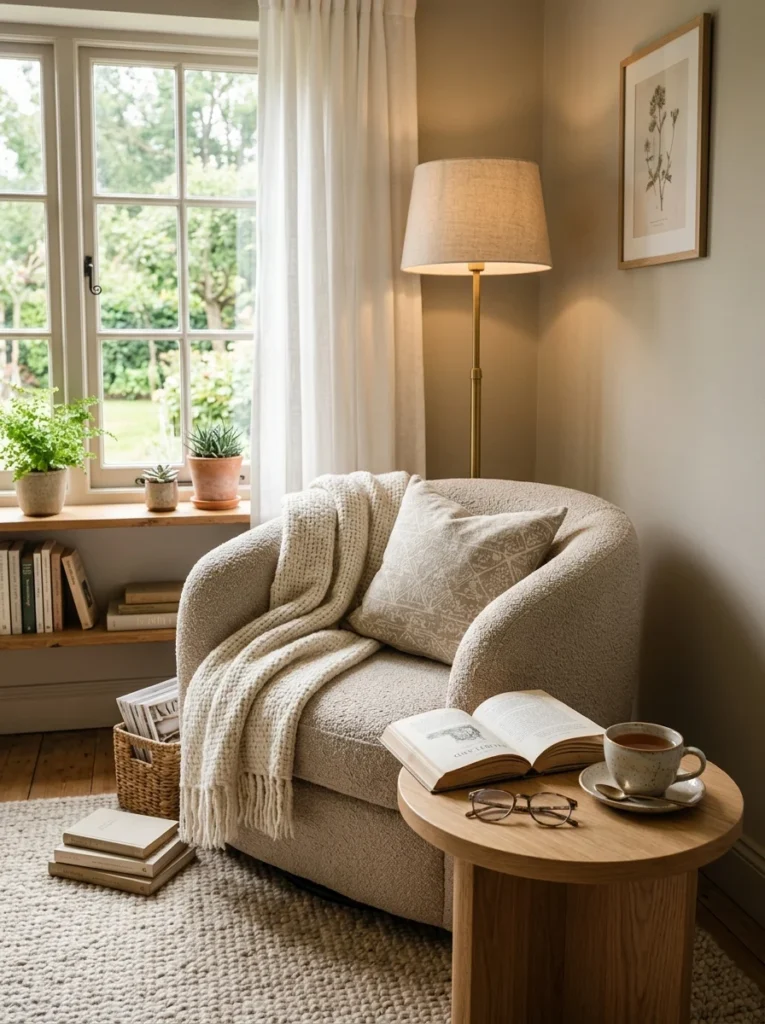
Pairing a round accent table with a single armchair creates a softer, more intentional reading corner than a mismatched rectangular table ever did in the same spot. The rounded table echoes the curve of a chair’s arm or back in a way that ties the small grouping together more naturally, even when the two pieces come from completely different sources, decades, or design eras entirely.
18. Don’t Feel Obligated to Make Every Table in the Room Round
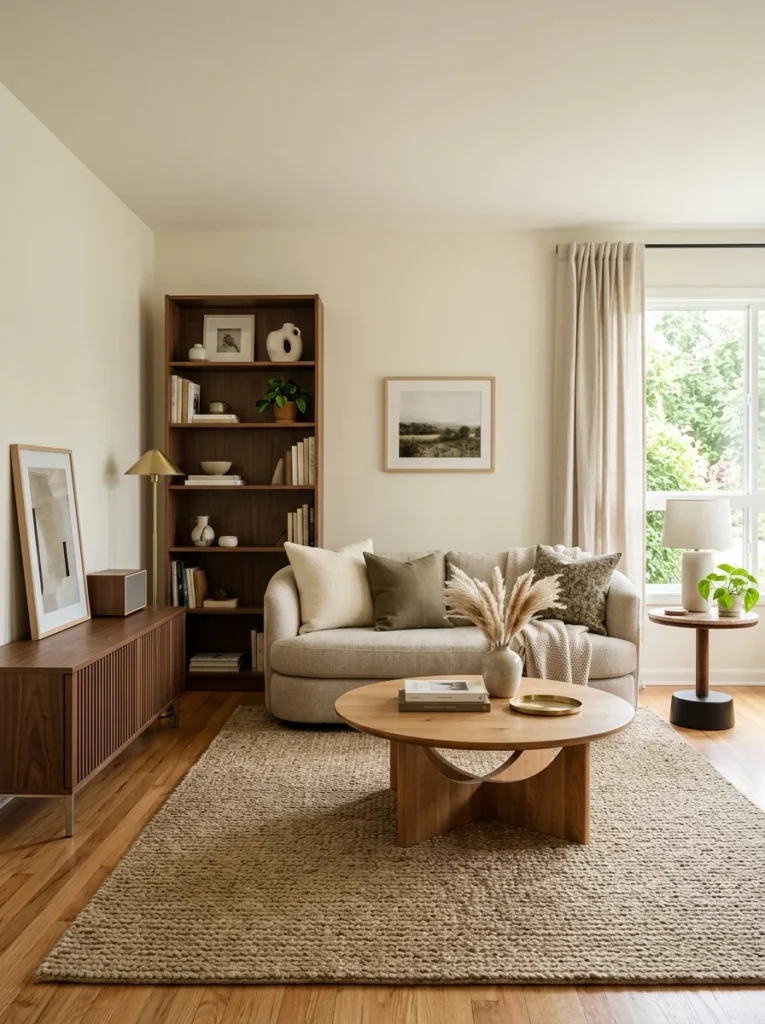
Despite everything I’ve learned about round tables softening a space, I’ve found that a room made up entirely of round furniture can start to feel a little indecisive, almost as if it’s avoiding structure altogether. Keeping one or two rectangular anchor pieces, like a bookshelf or console table, alongside the round pieces has given my own living room the best balance between softness and definition, rather than tipping entirely in one direction or the other.
What That Stubbed Toe Eventually, Genuinely Taught Me
Looking back, I never expected a moment of pure frustration with a coffee table corner to change how I think about furniture shapes altogether. What started as a practical fix turned into a genuine shift in how I approach every room I decorate now, paying attention not just to what a piece of furniture looks like, but to how its shape actually affects the way a room feels to move through and sit in day after day, month after month, well beyond the first impression it makes. If your own living room has started to feel a little too rigid or boxy, my honest suggestion is to start with just one round piece, most likely the coffee table, and see how much that single change shifts the feeling of the whole space before deciding whether to go further with anything else in the room around it.