
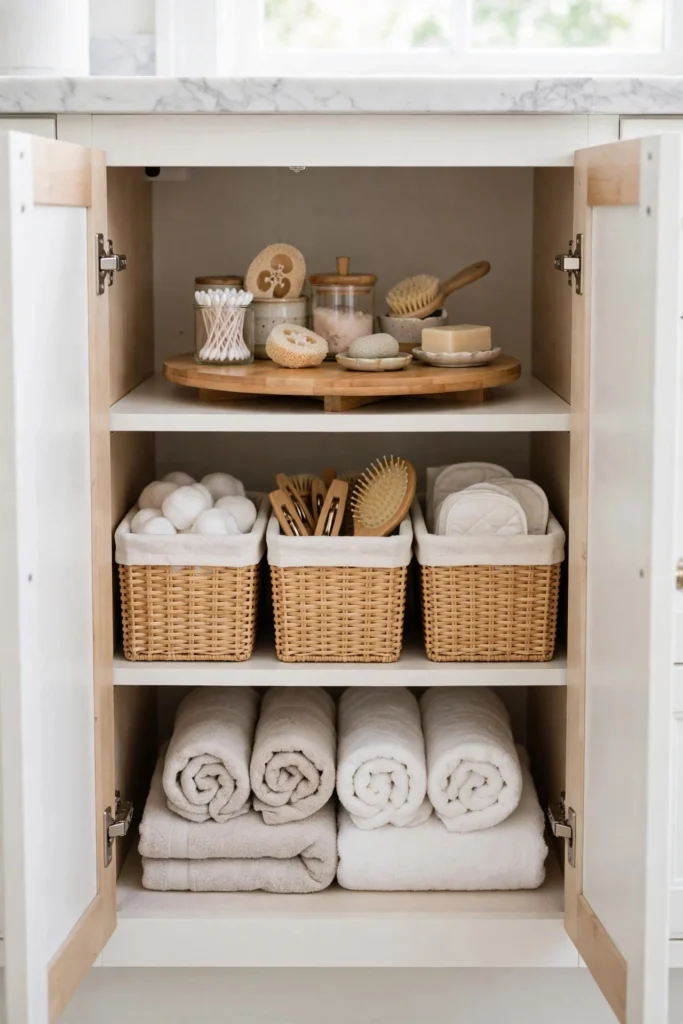
Open any bathroom cabinet and you’ll probably find the same scene: half-empty bottles, expired sunscreen, a tangle of cords, and that one drawer you have to shove closed. Bathroom storage fails because small items multiply and there’s no system — just shelves.
These 17 ideas give every item a defined spot using the cabinet space you already have. No renovation, no new vanity — just smart inserts, honest purging, and zones that make the morning routine faster.
1. Start With a Ruthless Purge
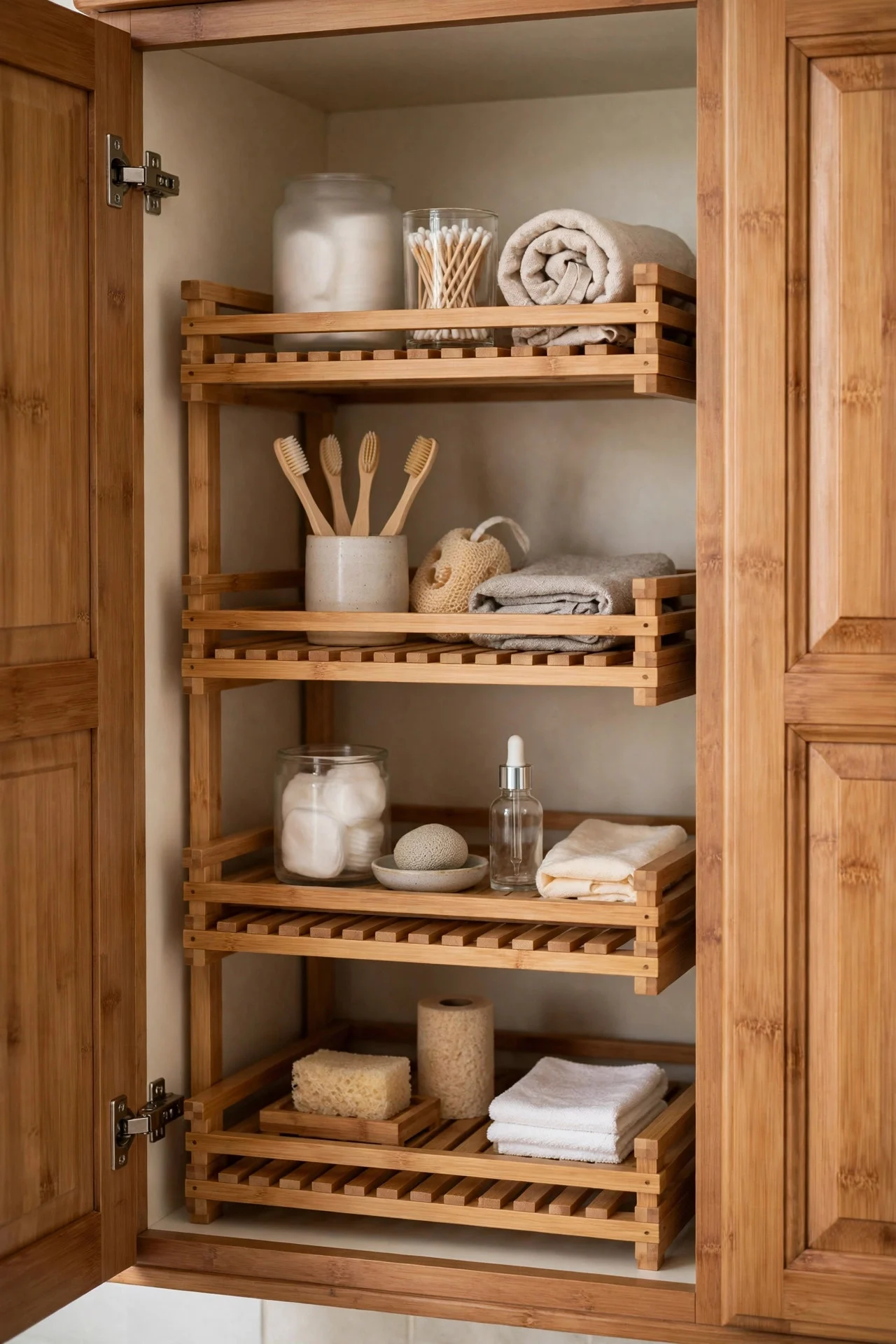
Before buying a single organizer, empty every cabinet and drawer onto the counter. Toss anything expired (sunscreen loses effectiveness after a year, mascara after three months), anything you haven’t touched in six months, and every hotel toiletry you’ll never use.
Group what’s left by category: daily skincare, hair, dental, first aid, cleaning. You’ll immediately see duplicates — three half-used conditioners — and you can consolidate. Most people throw away a third of what they find.
A label maker is the purge’s best friend — label the donate box, the trash bag, and the relocate bin so helpers don’t have to ask. Work in daylight; bathroom lighting hides how much you actually own.
Try this: Check expiration dates with a marker — write the month you opened it right on the bottle.
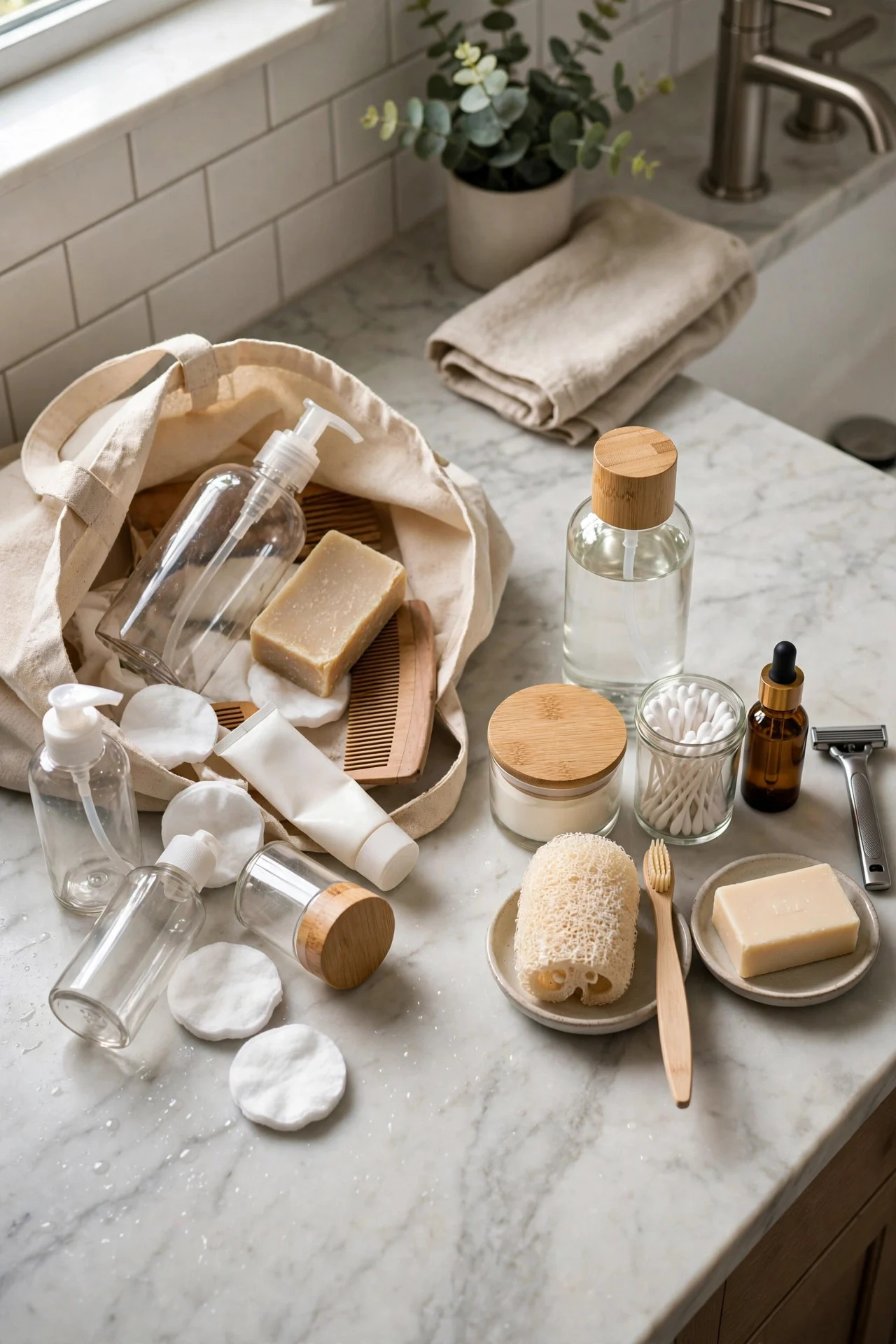
2. Add Stackable Shelf Risers
Cabinet shelves waste the vertical air between them. A stackable shelf riser doubles the usable space: daily items on top, backups below. A 10-inch-wide riser fits most vanity cabinets and medicine cabinets.
Use risers for the tallest items (shampoo bottles, sprays) on the bottom and shorter jars on top. Wire risers ventilate; bamboo ones look warmer. Measure your shelf height first — you need at least 12 inches of clearance.
Non-slip shelf liner under the riser stops it sliding when you pull items. For wire risers, choose ones with a flat top plate — small bottles tip through open wire grids. Two small risers beat one wide one in narrow cabinets.
Try this: Put the riser in the cabinet you open most — the payoff is daily.
3. Corral With Small Bins, Not One Big Box
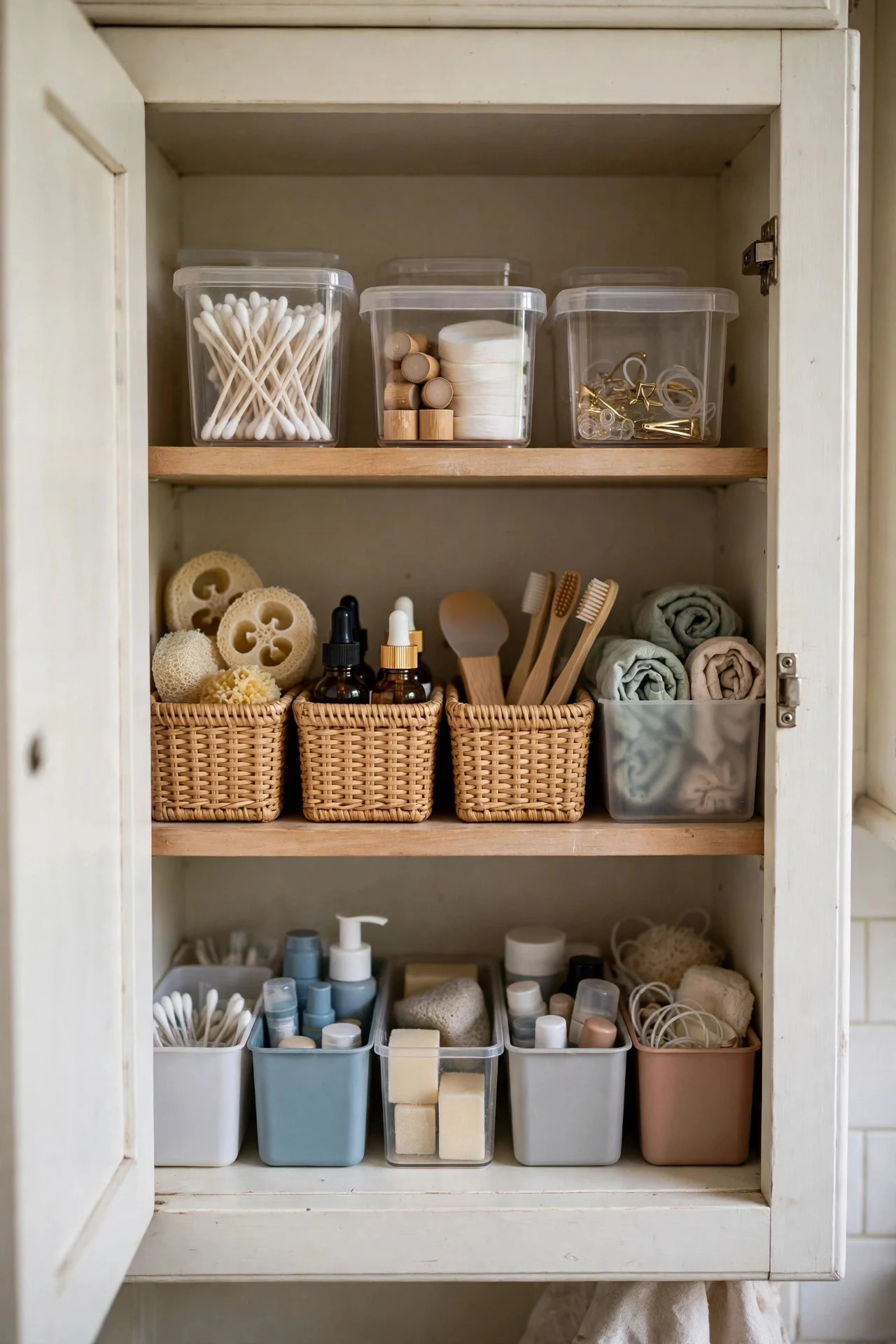
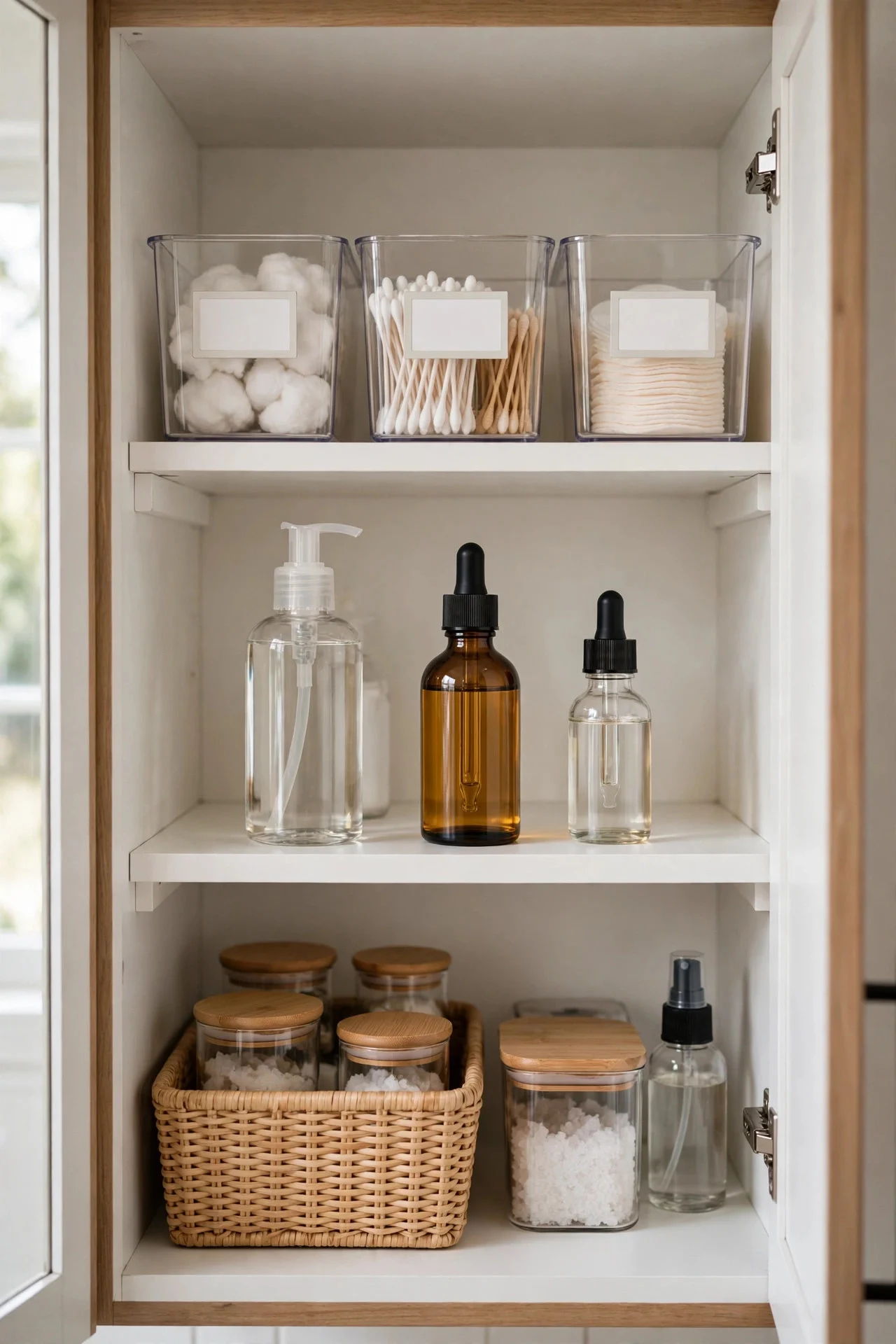
One big bin becomes a junk drawer. Three to four small bins (about 6×9 inches) create zones: one for skincare, one for hair tools, one for dental, one for first aid. You pull the bin, use what you need, slide it back.
Clear bins let you see contents; solid ones look tidier. Either way, label them — a label maker or simple masking tape works. Handles matter: you’ll pull these bins out daily.
Discount stores sell the same small bins as organizing brands at a quarter of the price — buy cheap, replace yearly. What matters is the zone system, not the bin pedigree. Clear bins win for shared bathrooms.
Try this: Use bins with a low front edge so you can see and grab without lifting the whole bin out.
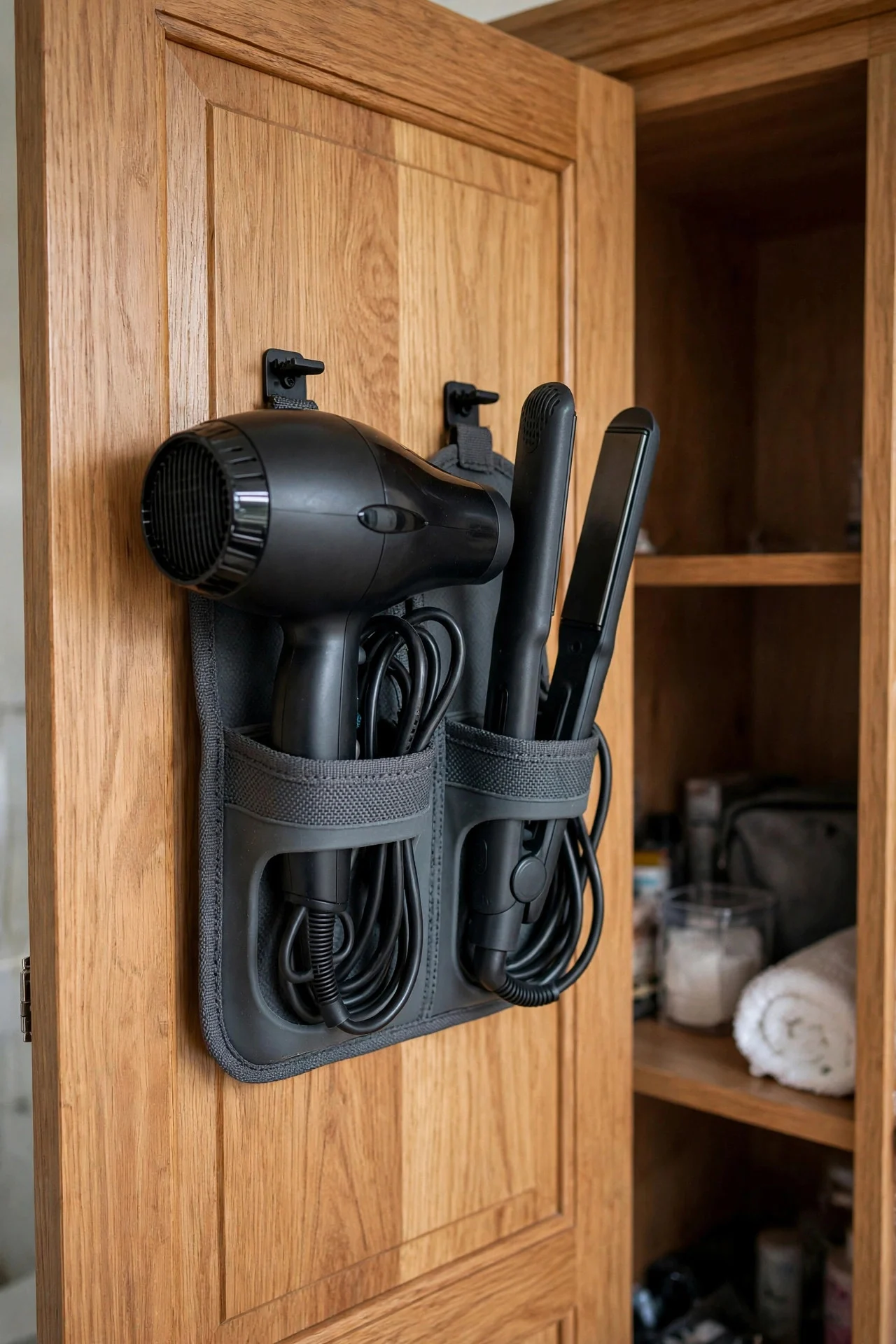
4. Mount the Hair Dryer on the Cabinet Door
Hair dryers and straighteners are the bulkiest bathroom items. A heat-resistant holder mounted inside a cabinet door keeps them upright, cords wrapped, and completely out of the way — no more tangled mess on the shelf.
Choose a holder rated for hot tools so you can stash a warm straightener safely. Mount at a height where the dryer clears the shelf below. Wrap the cord loosely; tight wrapping shortens cord life.
Let hot tools cool five minutes before storing, even in a heat-resistant holder — the holder handles warmth, not fresh-off-the-hair heat. Unplug everything after use; it’s the one safety rule worth nagging about.
Try this: Add a small adhesive hook beside it for the cord — no more cord spaghetti.
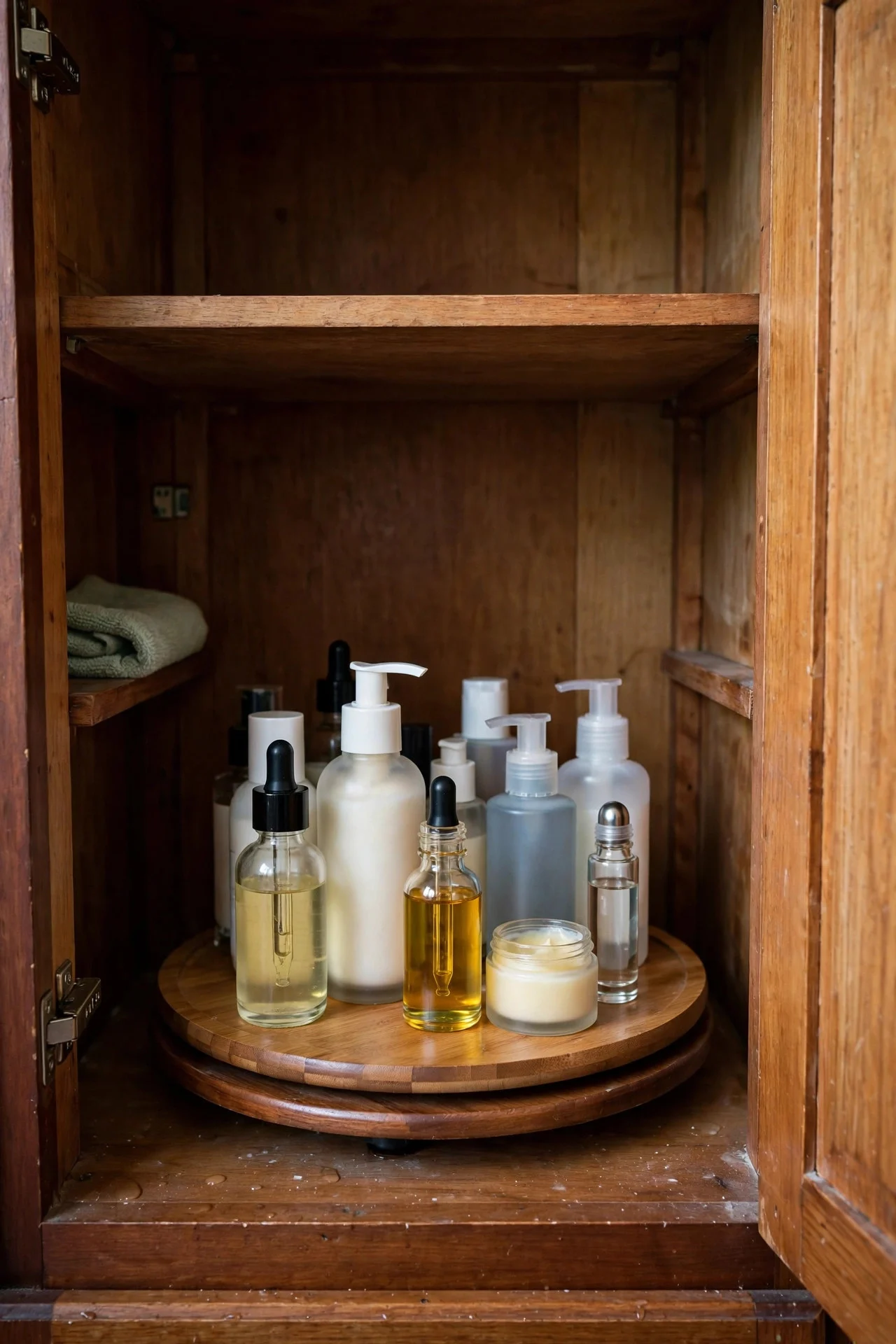
5. Use Lazy Susans in Deep Cabinets
Deep vanity cabinets swallow small bottles. A 10-inch lazy Susan turntable brings everything to the front with one spin — no more knocking over three bottles to reach the one in back.
One turntable per shelf is ideal; two-tier versions double the effect. Raised edges keep bottles from sliding off during the spin. This is the best fix for cabinets deeper than 16 inches.
A turntable with a 2-inch rim contains spills; rimless ones send bottles flying on a fast spin. Wipe the turntable monthly — product drips get sticky and gross fast in warm bathrooms.
Try this: Group one turntable by person — his, hers, kids — so nobody hunts through anyone else’s stuff.
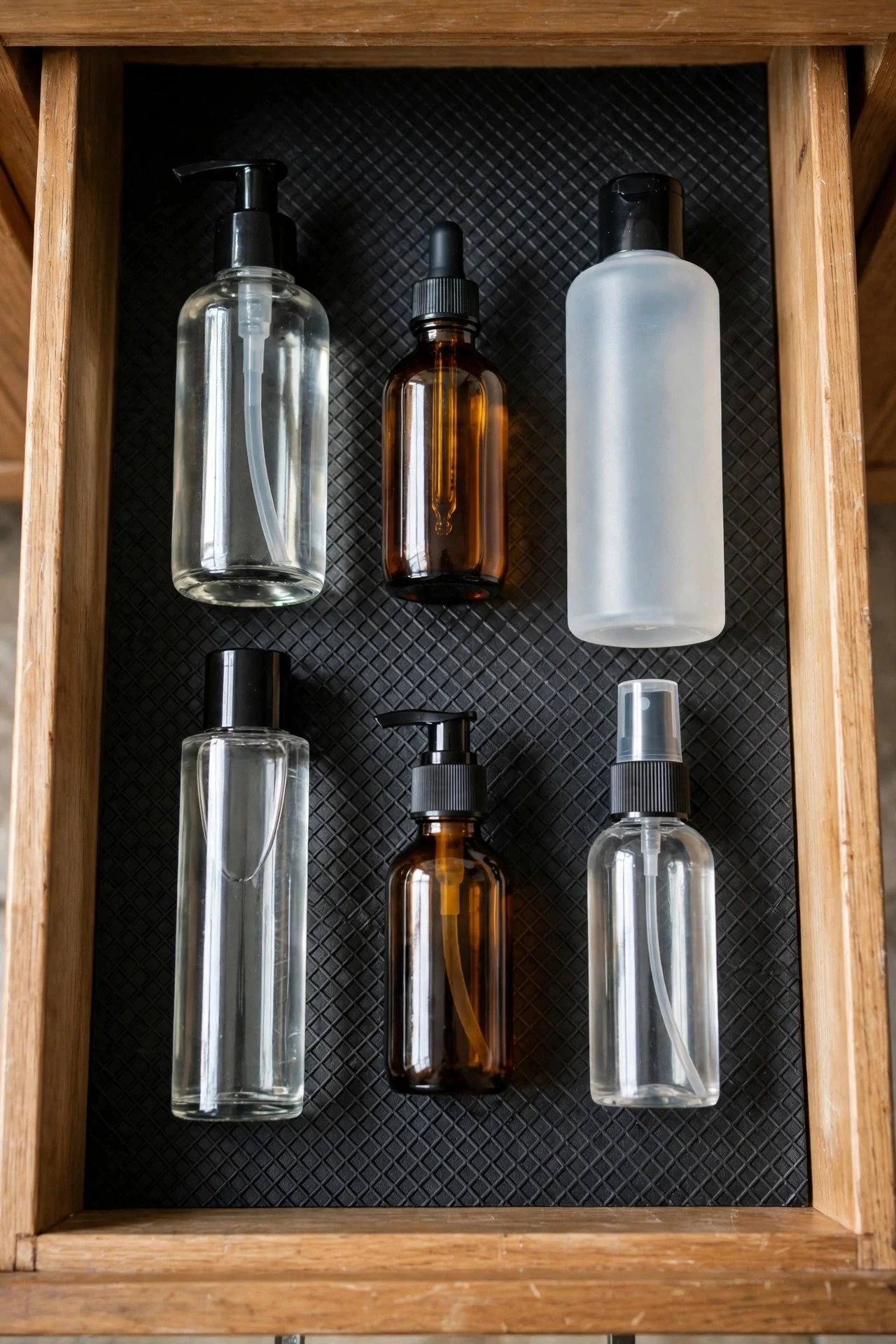
6. Line Drawers With Non-Slip Liners
Drawer contents slide into a jumbled pile every time you open and close them. A non-slip shelf liner cut to fit keeps bottles and tools exactly where you put them — and wipes clean when something leaks.
Cut the liner an inch smaller than the drawer so it lies flat without curling. Replace it yearly or when it gets sticky. This tiny upgrade makes every drawer feel twice as organized.
Cut liners slightly short rather than long — overlapping edges curl and trap gunk. Replace liners when they yellow; old liners get gummy and defeat the purpose. Keep the roll in the linen closet for quick swaps.
Try this: Keep a spare roll of liner; you’ll want it for kitchen drawers too once you see the difference.
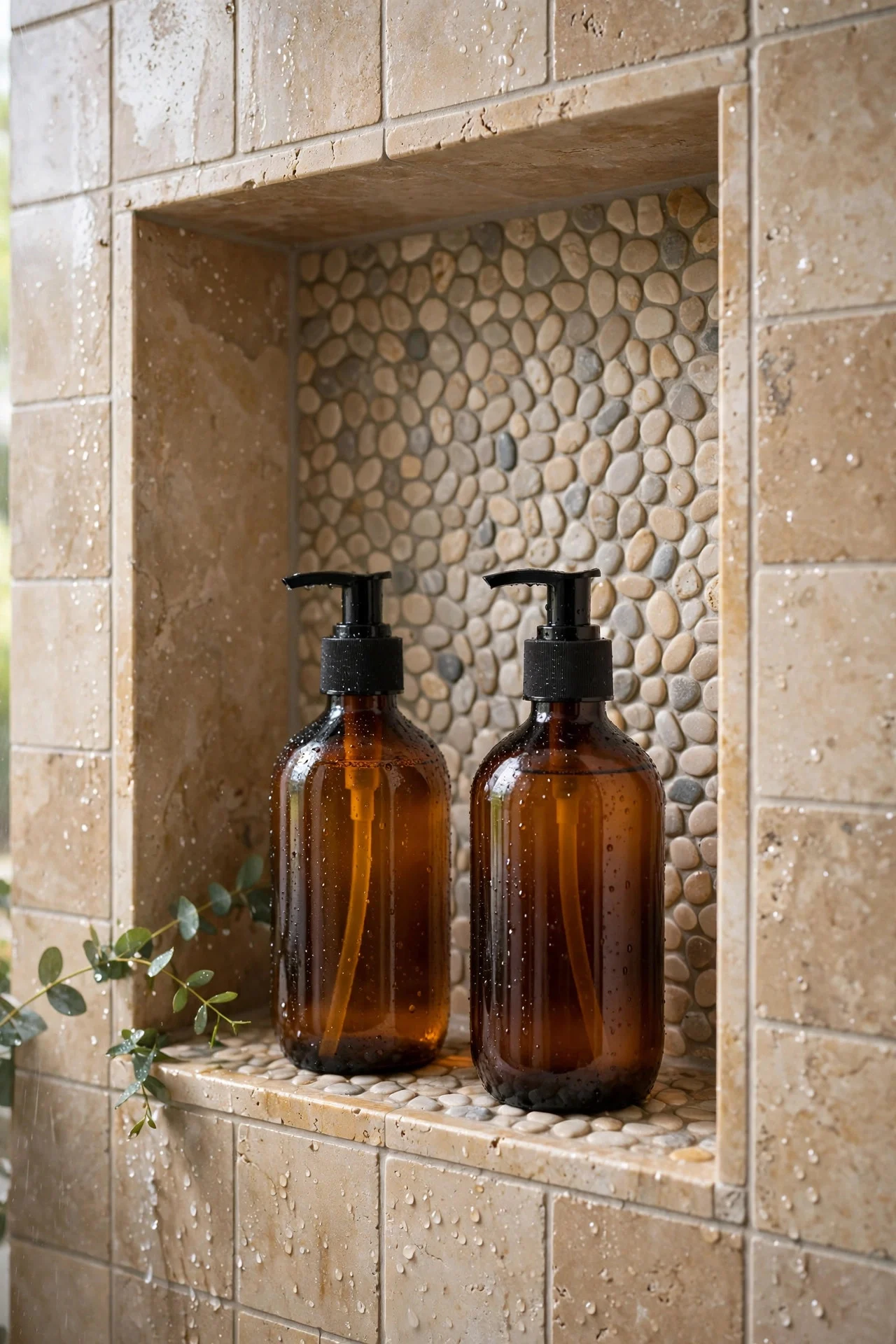
7. Decant Into Matching Pump Bottles
Visual clutter is half the problem. Decant shampoo, conditioner, and body wash into matching amber or frosted pump bottles — the cabinet looks calm even when it’s full, and you can buy cheaper refills.
Label each bottle clearly (a waterproof label or paint pen) so nobody conditions with body wash. Keep one set per shower and refill monthly. The uniform look alone makes the cabinet feel organized.
Never decant products with active ingredients that degrade in air (vitamin C serums, retinol) — keep those in original packaging. Decanting suits stable staples: shampoo, conditioner, body wash, hand soap.
Try this: Buy bottles with a locking pump head so they travel without leaking.
8. Hang Baskets on the Cabinet Interior Walls
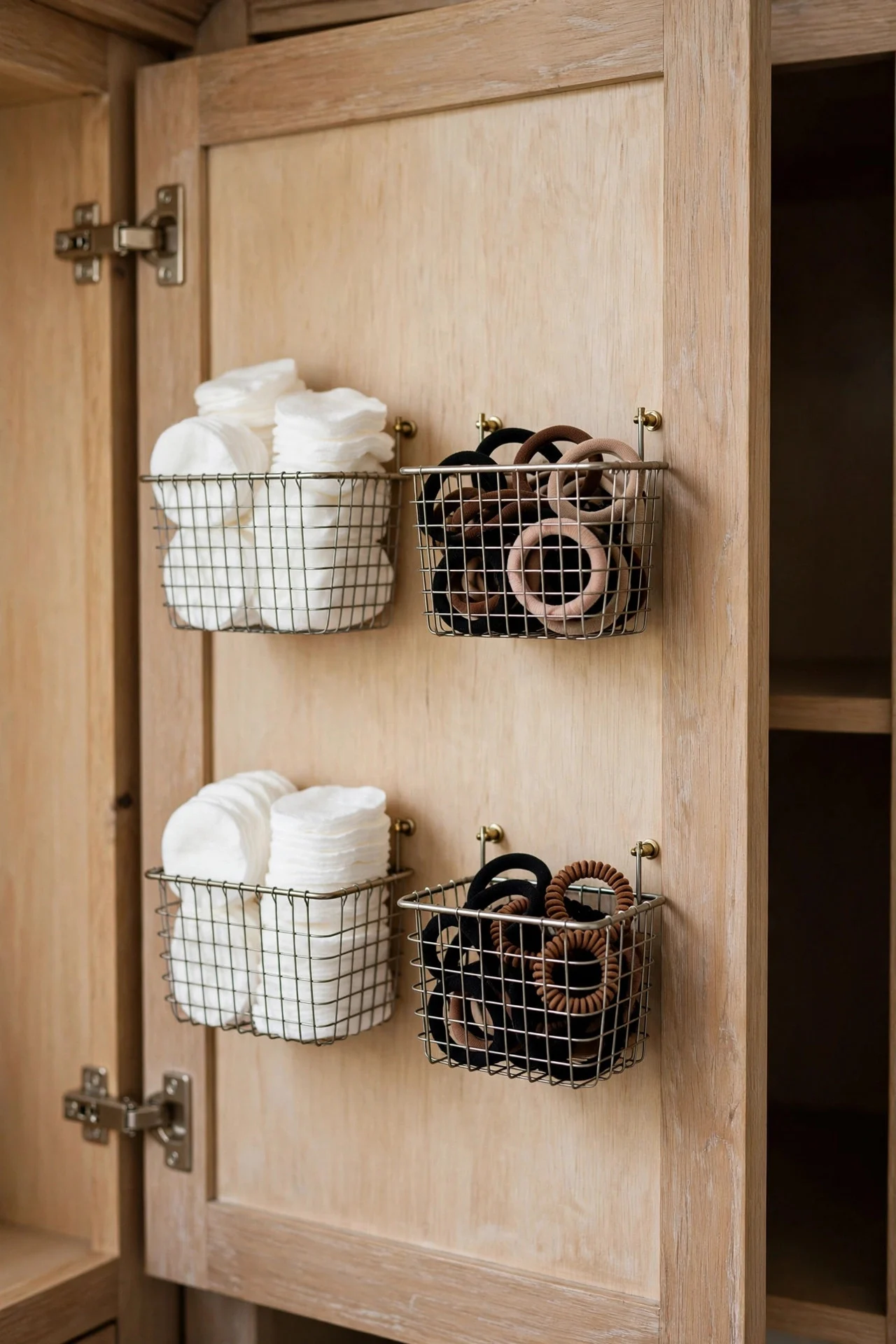
The inside walls of cabinet doors and the side walls of deep cabinets are free real estate. Small wire or adhesive baskets mounted there hold cotton pads, hair ties, tweezers, and other tiny items that vanish on shelves.
Adhesive mounts work on smooth cabinet interiors; screw-mounted baskets hold more weight. Keep them shallow (3–4 inches deep) so the door still closes. This is perfect for the fiddly stuff with no natural home.
Test adhesive mounts for 48 hours with weight before trusting them with glass bottles. Humidity weakens cheap adhesives; waterproof mounting strips hold best in bathrooms. Screw mounts win for anything over a pound.
Try this: Dedicate one door basket to “first aid” — bandages, ointment, thermometer — so it’s findable in a hurry.
9. Create a Backup Stock Zone
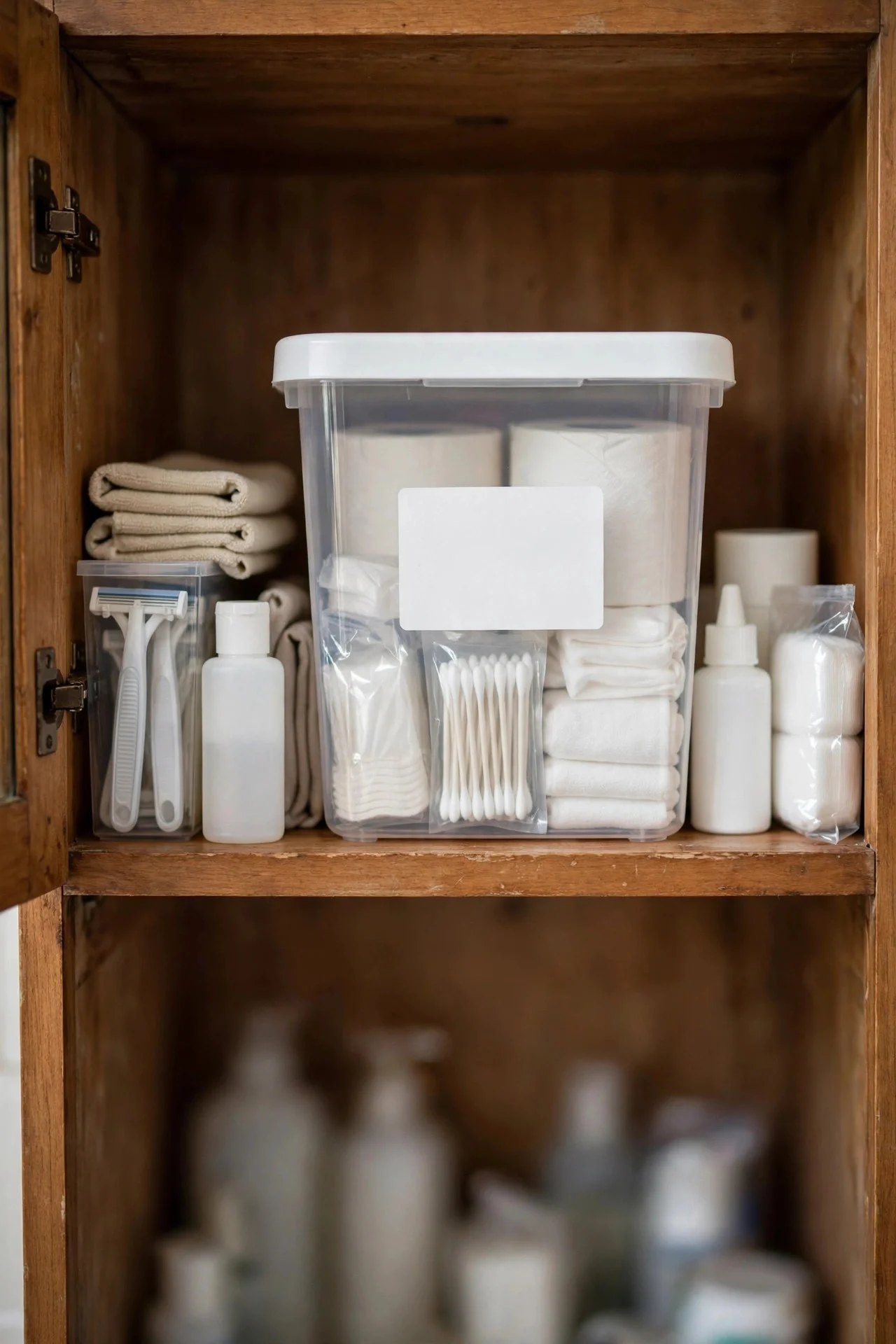
Backups (extra toothpaste, new razors, refill soap) shouldn’t mingle with daily items — they bury what you actually use. Dedicate the highest or deepest shelf to backups only, in one labeled bin.
When you open a backup, add it to the shopping list immediately — that’s the whole system. Keep a maximum of one backup per item; a stockpile is just clutter with a purpose. Review the zone every three months.
Photograph the backup zone after stocking it — the photo becomes your shopping reference. When the photo and the shelf stop matching, it’s restock time. One glance beats a written inventory.
Try this: Write the shopping list on a dry-erase strip stuck inside the cabinet door.
10. Store Medicines Up High and Locked
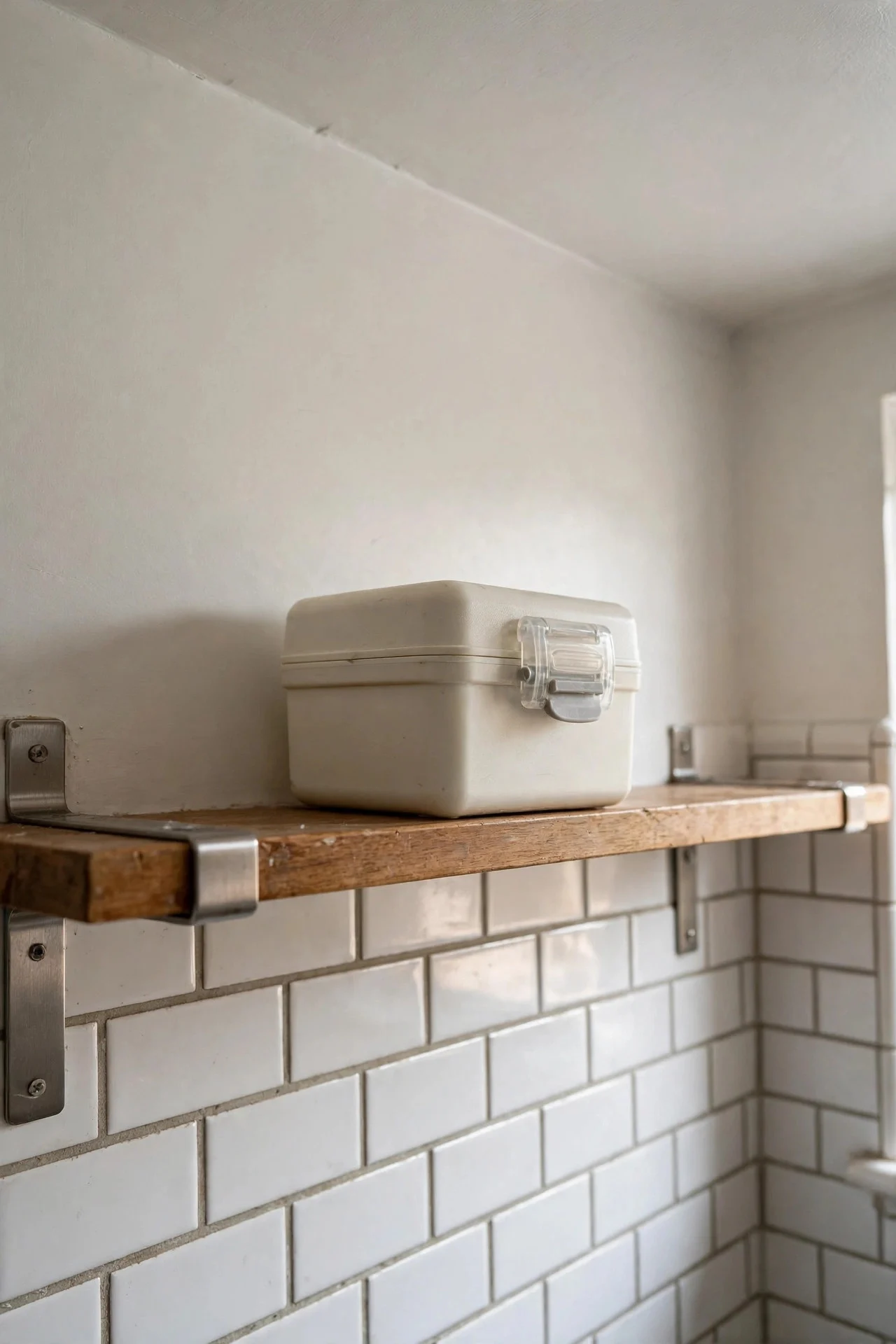
Medicines need their own rules: up high, out of kids’ reach, and in their original labeled bottles. A small lidded box or a high shelf keeps daily vitamins separate from occasional meds — and everything away from curious hands.
Check expiration dates twice a year; expired meds go to a pharmacy take-back, not the trash or drain. Keep a simple list of what’s inside taped to the box lid. In homes with kids, add a childproof latch to that cabinet.
Keep a printed list of emergency numbers inside the medicine box lid — poison control, pediatrician, pharmacy. In a real emergency you won’t want to search your phone. Review and update it yearly.
Try this: Keep a thermometer and basic first-aid supplies with the medicines — one grab in an emergency.
11. Use Drawer Dividers for the Top Drawer
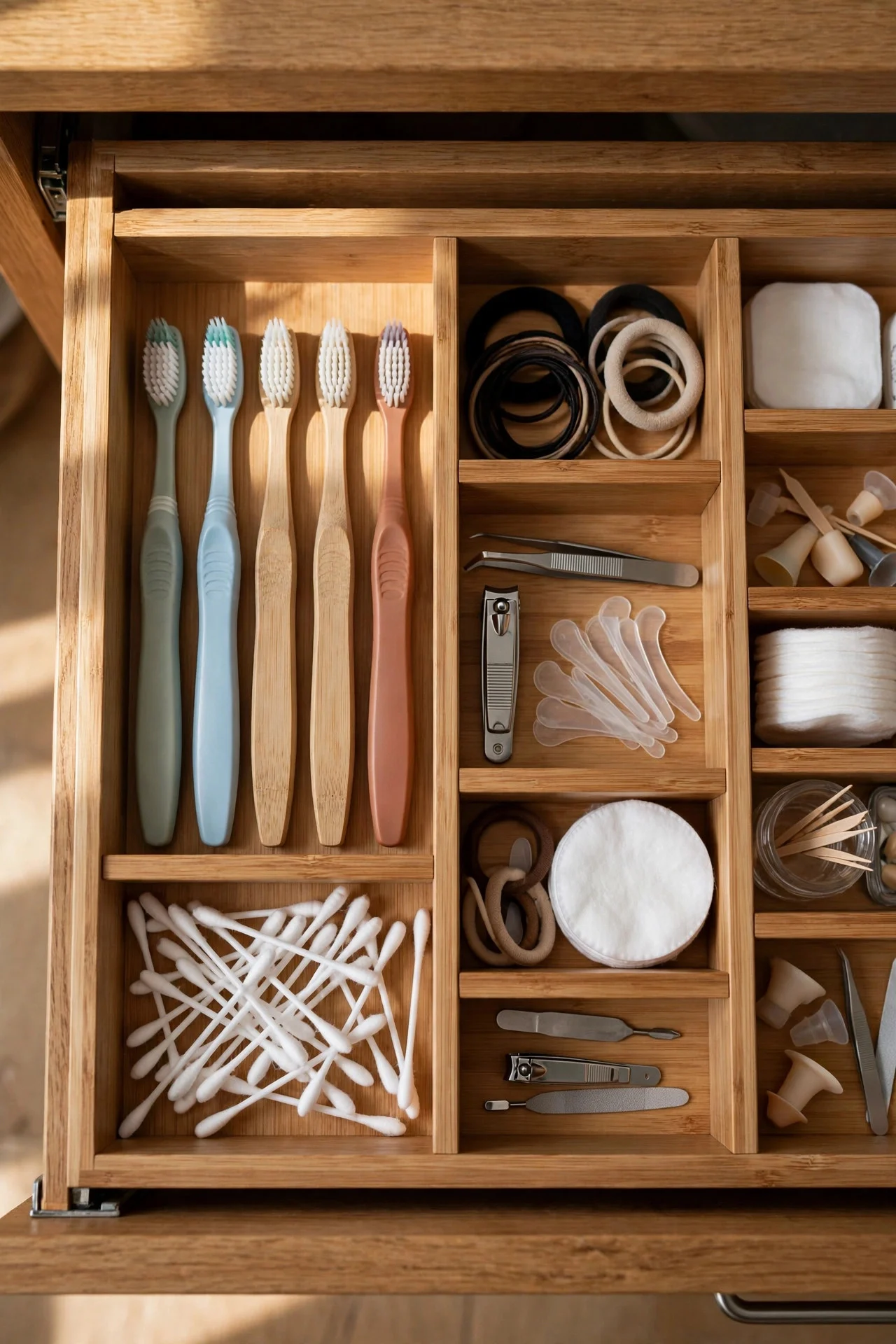
The top vanity drawer is prime real estate — it should hold only what you touch daily. Adjustable drawer dividers create slots for toothbrushes, deodorant, contact cases, and jewelry, so nothing migrates.
Measure the drawer interior and buy expandable dividers; they fit without tools. Leave one empty slot — drawers need breathing room or they become cramped. Clean the dividers quarterly; toothpaste splatter is inevitable.
Bamboo dividers resist bathroom humidity better than unfinished wood or cardboard. Wipe them down when you clean the drawer; toothpaste and humidity warp cheap dividers within months.
Try this: Keep a small cup for toothbrushes instead of laying them loose — drier and more hygienic.
12. Roll Towels Instead of Folding
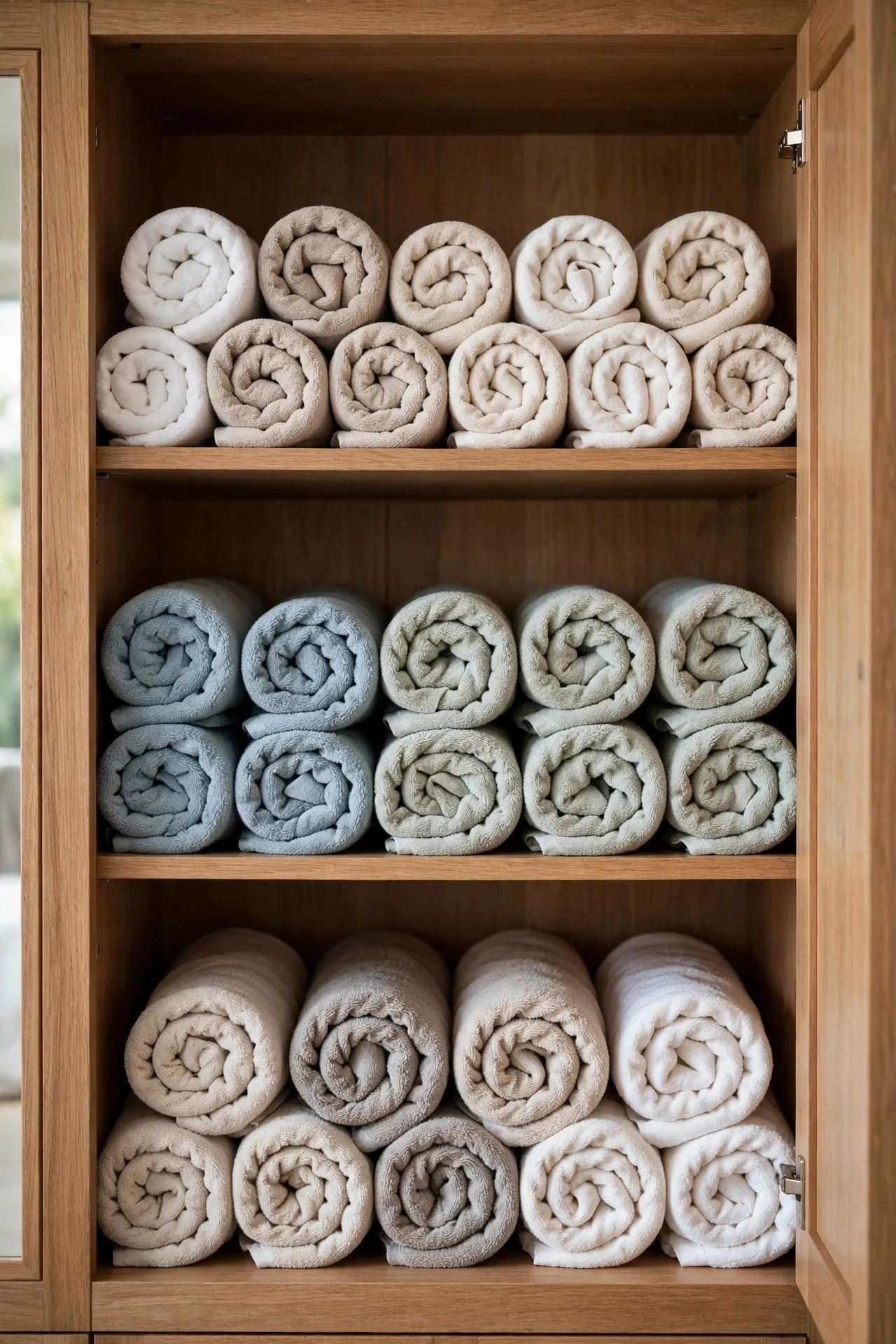
Rolled towels fit tighter, look better, and are easier to grab than folded stacks. In a linen cabinet or deep vanity shelf, rows of rolled hand towels and washcloths use every inch and look like a spa.
Roll tightly from one end; tuck the loose edge under. Sort by size — bath towels in back, hand towels in front. A basket of rolled washcloths by the sink means nobody digs through the linen pile.
Roll washcloths and hand towels; fold bath sheets — large towels roll into unwieldy logs. Store rolled items with the loose edge tucked underneath so they don’t unfurl. A basket keeps rolls from migrating.
Try this: Roll the towels you’ll use this week and leave the rest folded — best of both systems.
13. Add a Pull-Out Cabinet Organizer
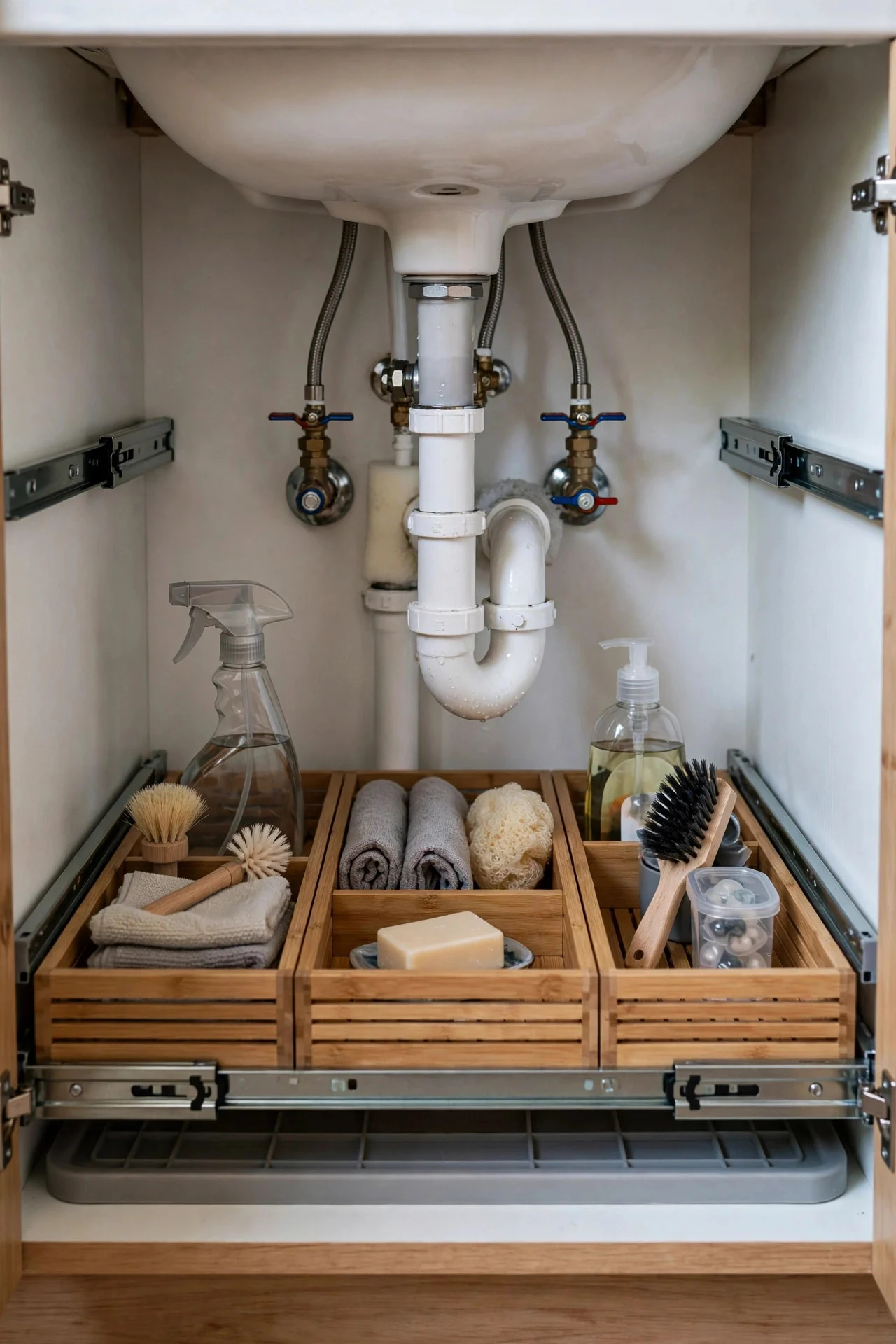
Under-sink cabinets are the worst offenders: pipes eat the space and everything falls behind them. A pull-out organizer on rails brings the whole shelf to you — cleaning supplies, extra toilet paper, all visible at once.
Choose a U-shaped design that fits around plumbing. Measure around your pipes before ordering; most units need 4–6 inches of clearance. Two-tier pull-outs double the storage in the same footprint.
Measure the cabinet opening, not just the interior — some pull-outs don’t fit through the door frame. Soft-close rails are worth the extra $10; slammed organizers crack plastic bins. Leave the pipes accessible for emergencies.
Try this: Put a leak-detecting tray under the organizer — it catches drips before they ruin the cabinet floor.
14. Keep Cleaning Supplies in a Caddy
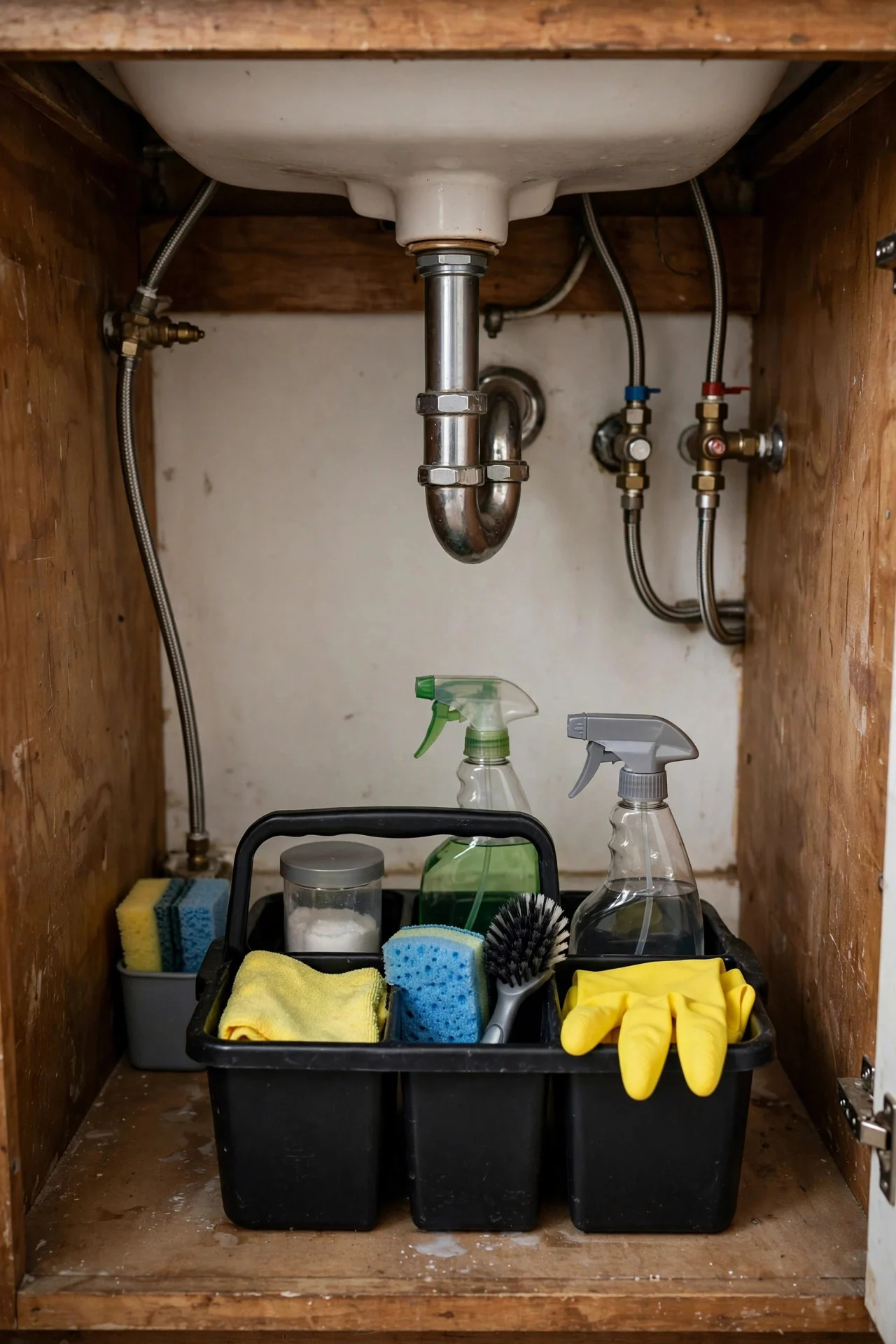
Bathroom cleaners scattered across three cabinets never get used. Keep them in one handled caddy under the sink: toilet cleaner, all-purpose spray, scrub brush, gloves. Grab the caddy, clean, return the caddy.
A caddy with compartments keeps bottles upright and prevents leaks from spreading. Restock it when something runs out — an empty caddy is a broken system. Keep it out of reach of small children with a cabinet latch.
Never mix bleach and ammonia-based cleaners in the same caddy — the combination creates toxic gas. Store them on opposite sides, or better, in separate caddies. Read labels before you consolidate anything.
Try this: Add a microfiber cloth to the caddy so you never hunt for one mid-clean.
15. Use the Space Above the Toilet Cabinet-Wise
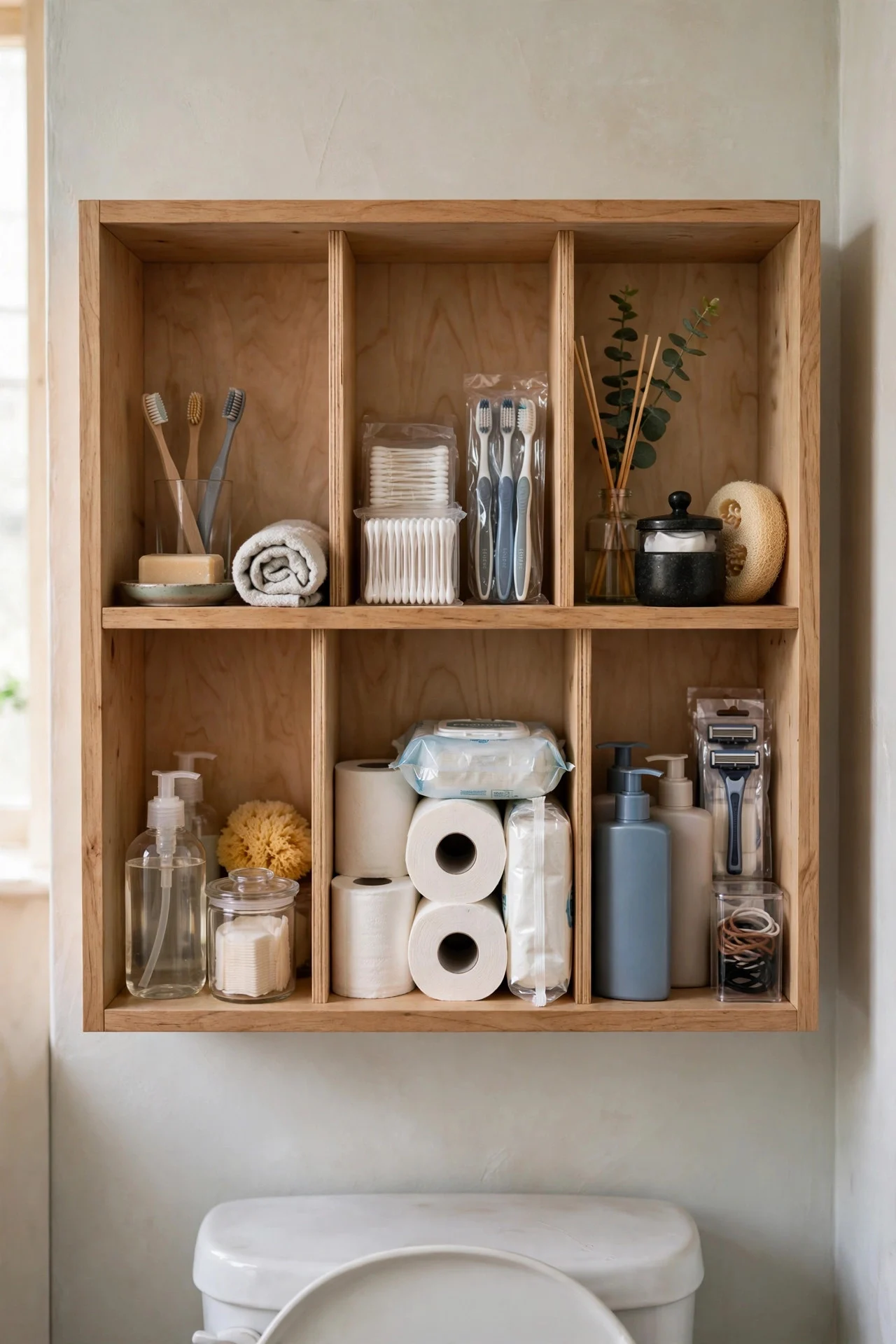
If you have an over-toilet cabinet or etagere, treat it as prime storage, not decoration. Daily items at eye level, backups above, rarely-used below. The same zoning rules apply — just vertical.
Keep the doors closed for a calm look; open shelving here collects dust fast. A small basket on the top shelf holds the items you use monthly. Wipe the shelves quarterly — bathroom humidity settles everywhere.
Line over-toilet cabinet shelves with washable liners — humidity and product drips stain raw wood fast. Keep a small step stool nearby; the top shelf is useless if you can’t reach it safely.
Try this: Store extra toilet paper in the lowest cabinet section — it’s the heaviest item, so keep it low.
16. Label Everything You’ll Forget
Labels feel fussy until you live with someone else. Label the bins, the decanted bottles, the backup zone — then nobody has to ask where the contact solution lives. A $10 label maker pays for itself in household peace.
Use clear, plain words (“DAILY”, “BACKUPS”, “FIRST AID”) rather than cute phrases. Waterproof labels survive bathroom humidity; paper ones curl and fall. Re-label when a bin’s purpose changes.
A label maker with waterproof tape is the only kind worth buying for bathrooms — paper labels curl and fall within weeks. Print in ALL CAPS for readability at a glance. Replace labels when contents change, not before.
Try this: Label the inside of the cabinet door with the zone map — new housemates learn the system in seconds.
17. Schedule a 10-Minute Monthly Reset
Every organization system decays. Once a month, spend ten minutes: toss empties, wipe one shelf, check the backup zone, and re-home anything that migrated. Put it on the calendar like an appointment.
Do it the same day you change your toothbrush head or replace a filter — piggybacking on an existing habit means you won’t forget. The monthly reset keeps the cabinet at day-one condition with almost no effort.
Pair the reset with replacing your toothbrush — both happen quarterly, and the pairing means you never forget. Set a recurring phone reminder for the first Sunday of each reset month.
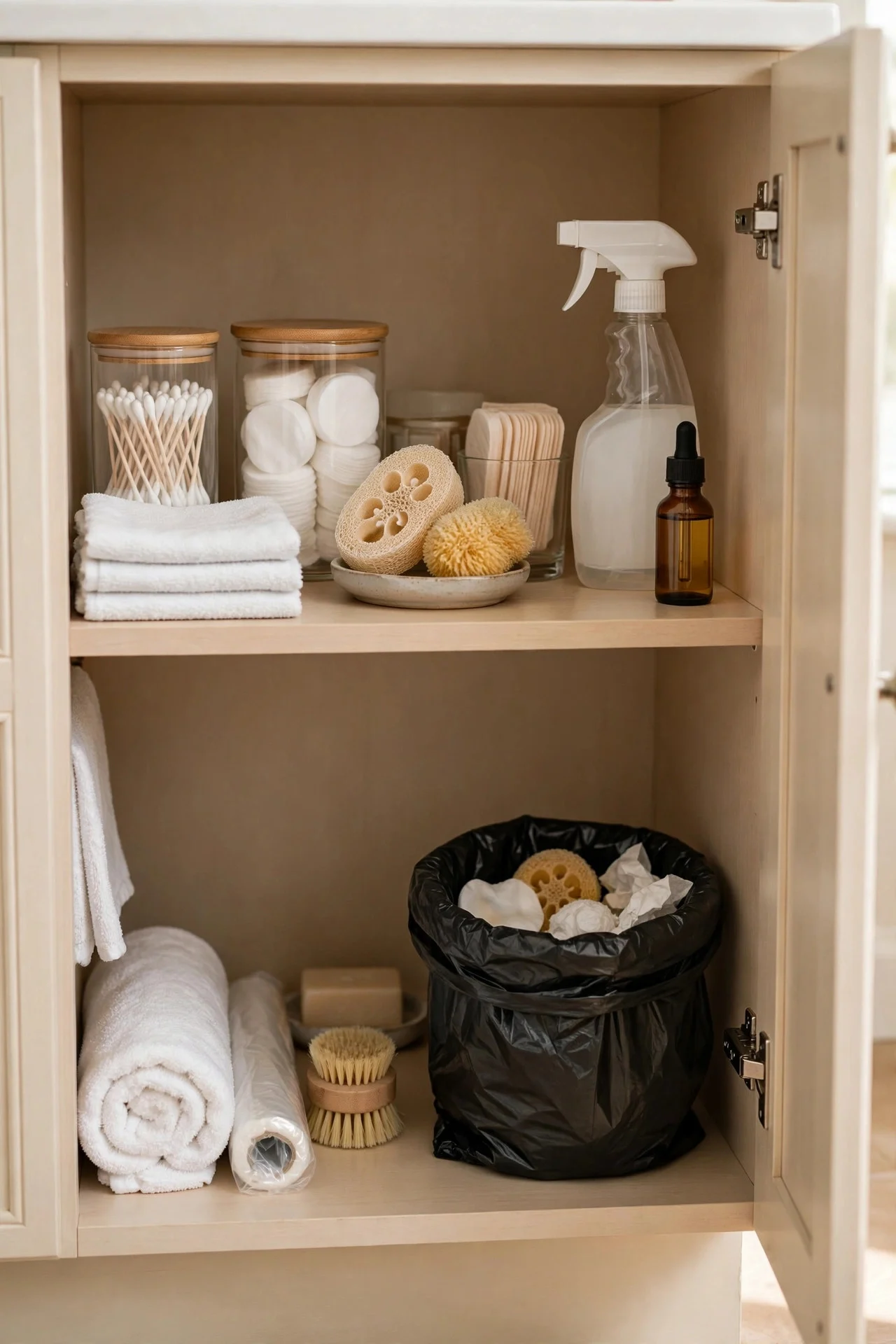
Try this: Keep a small trash bag in the cabinet during the reset so discards leave immediately.
Frequently Asked Questions
How do I organize a small bathroom cabinet with no drawers?
Use stackable risers, small bins, and a lazy Susan to create zones on open shelves. Mount holders inside the cabinet doors for tools, and hang baskets on interior walls for small items. Vertical layering replaces drawers.
What’s the best way to organize under the bathroom sink?
A pull-out organizer that fits around the pipes is the single best upgrade. Add a handled caddy for cleaning supplies and a leak tray underneath. Keep only bathroom items here — it’s not overflow storage for the house.
How often should I declutter bathroom cabinets?
Do a quick purge every three months (toss empties and expired items) and a full empty-and-reset once a year. The monthly 10-minute reset in between keeps things from sliding back into chaos.
Should I decant products into matching bottles?
For shower staples you buy repeatedly — shampoo, conditioner, body wash — yes. It cuts visual clutter and lets you buy cheaper refills. Don’t decant specialty products with specific dispensers or short shelf lives.
Final Thoughts
An organized bathroom cabinet isn’t about buying more organizers — it’s about fewer items, clear zones, and a system everyone in the house can follow. Purge first, zone second, maintain monthly, and the morning routine gets noticeably calmer.