
A rug is the one thing that can pull a whole living room together in an afternoon. I have moved sofas, swapped lamps, and repainted walls, and nothing changed the feel of the room as fast as the right rug underfoot. These living room rug ideas cover sizes, patterns, colours, and layering, so you can find one that fits your room and your budget. Pick one idea, try it, and see how the room settles around it.
Before you buy anything, look at what your room already has. Note the sofa size, the floor colour, and how much bare floor shows when everyone sits down. A rug that is too small makes even a good sofa look lost, while one that is too big can swallow a small room. Measure the seating area with painter’s tape first, then shop with those numbers in your pocket.
1. Living Room Rug Ideas That Start With a Bigger Rug
Most rugs people buy are too small, and I know because I did the same thing in my first flat. The rug sat in front of the sofa like a doormat, and the room never felt finished. A bigger rug pulls the sofa, chairs, and coffee table into one group, so the room reads as a single seating area instead of loose pieces. Measure your seating area, then add at least 15 centimetres on each side.
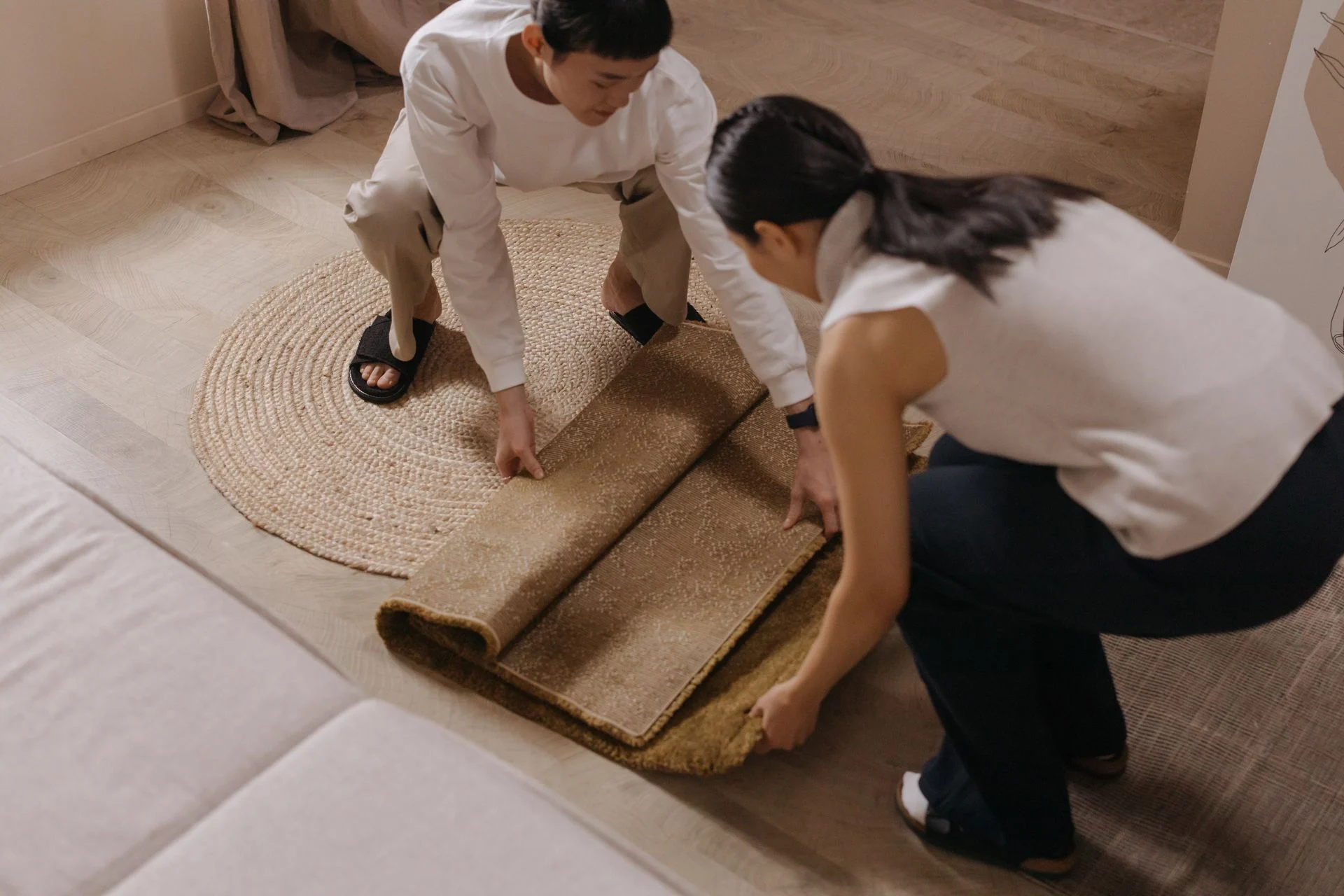
The photo shows a couple unrolling a natural-fibre rug on a wooden floor, with a round jute rug already in place beside it. That is the right way to test a size: roll it out, live with it for a day, and check that the front legs of the sofa sit on it.
Try this: tape out the rug size on the floor before you order anything.
2. Go Bold With a Colourful Geometric Rug
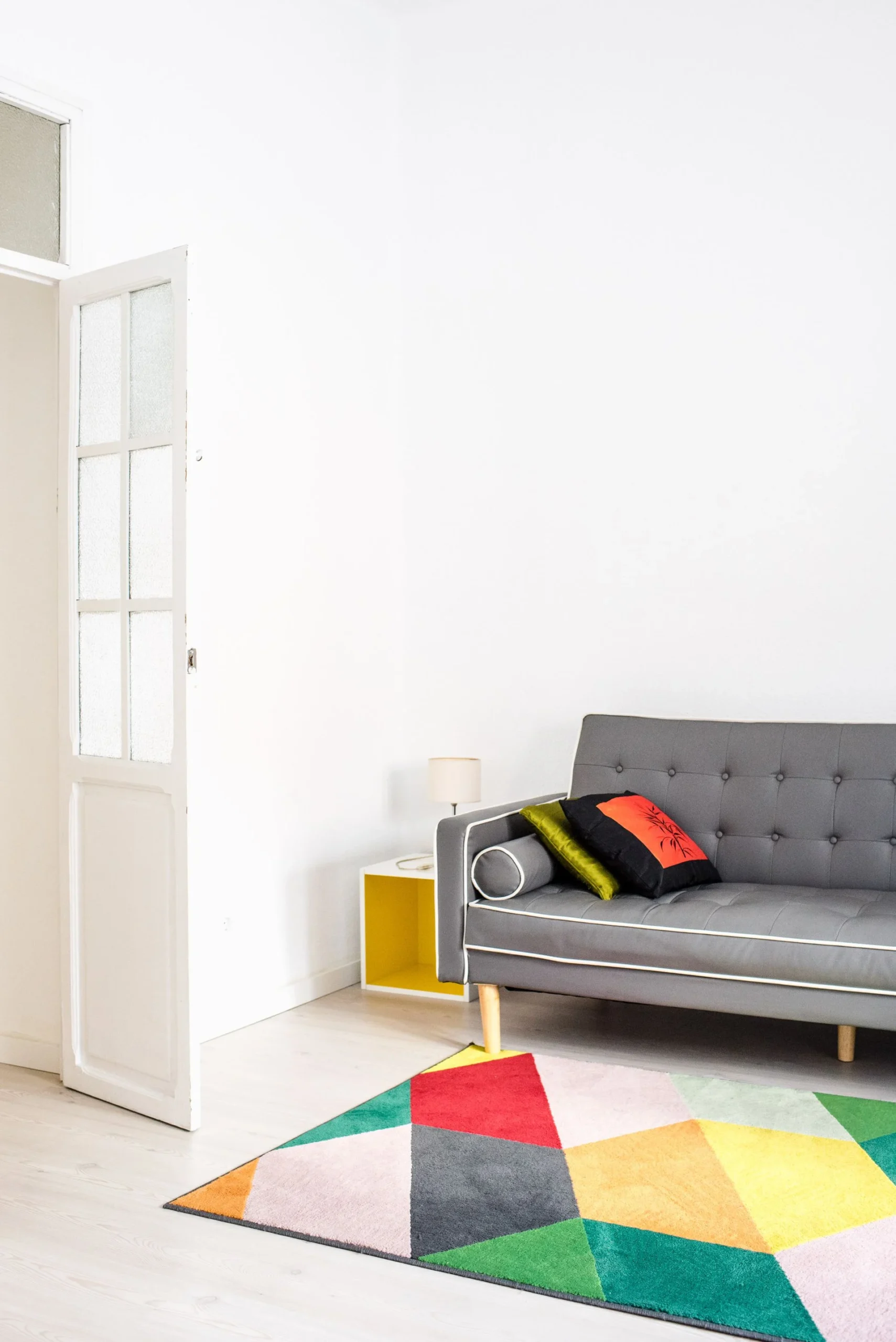
A plain grey sofa is a blank page, and a bold geometric rug is the fastest way to give it a point of view. The rug in this photo mixes red, yellow, green, pink, and grey blocks, and it works because the sofa stays quiet and lets the floor do the talking. I tried this with a plain sofa and a loud rug, and the room finally had a centre.
Start by pulling one colour from the rug into a cushion or a throw, so the rug does not feel like a stranger in the room. Keep the walls and the big pieces calm, and let the rug carry the pattern.
Try this: pick the rug first, then match one cushion to its brightest colour.
3. Layer a Small Patterned Rug Over a Larger Flat Rug
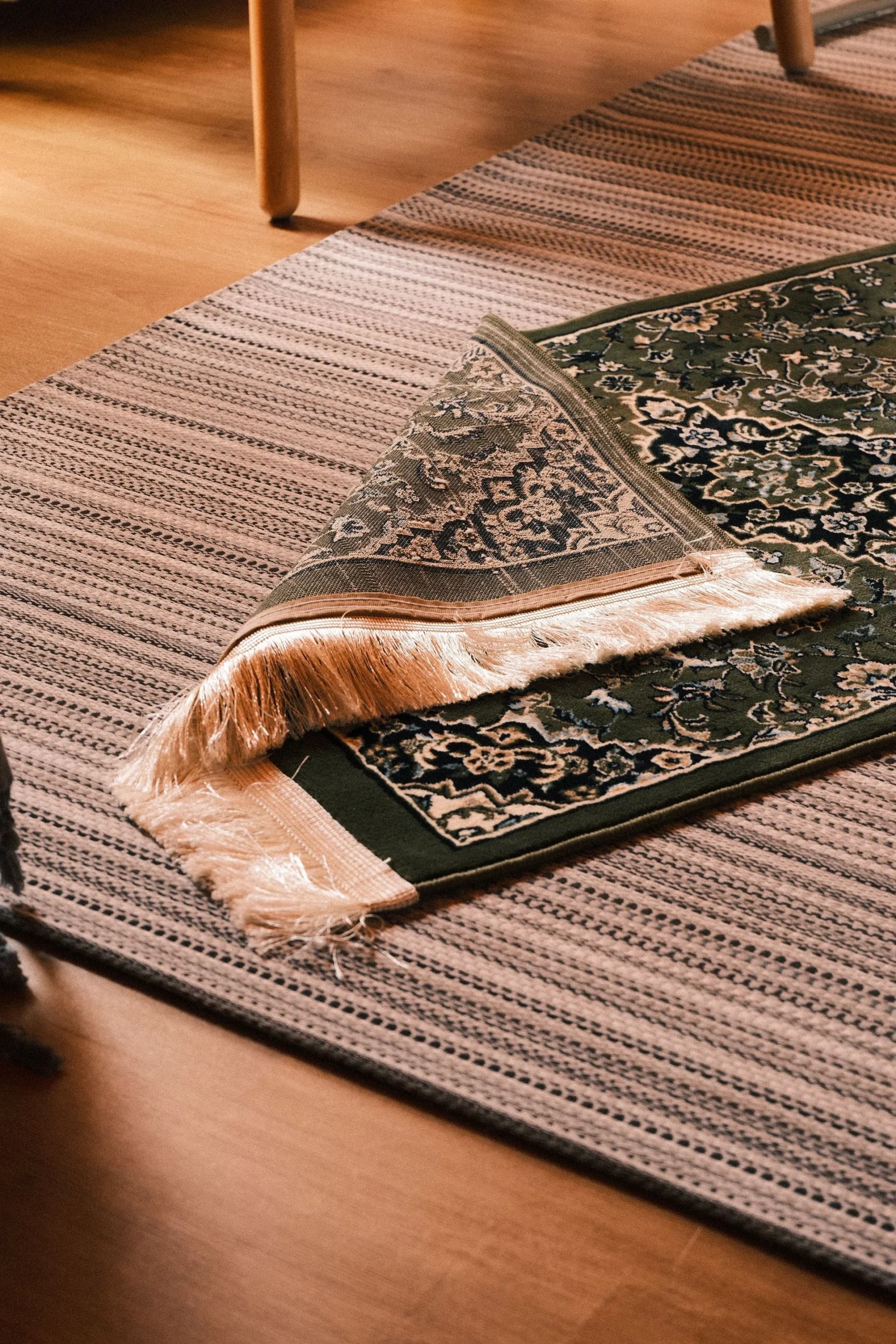
Layering is the trick I reach for when one rug feels too plain and a new one feels too dear. A large flat rug covers the floor and quiets the room, then a smaller patterned rug on top adds colour and softness where your feet actually land. The two rugs should share at least one colour, or the top one will look like it fell there by mistake.
This photo is a close-up of layered rugs, not a full living room: a dark patterned rug with a fringed edge lies over a striped woven rug on a wooden floor. Use it as a guide for the pairing, then check the layers from the doorway.
Try this: lay the big rug first, then place the small one at a slight angle.
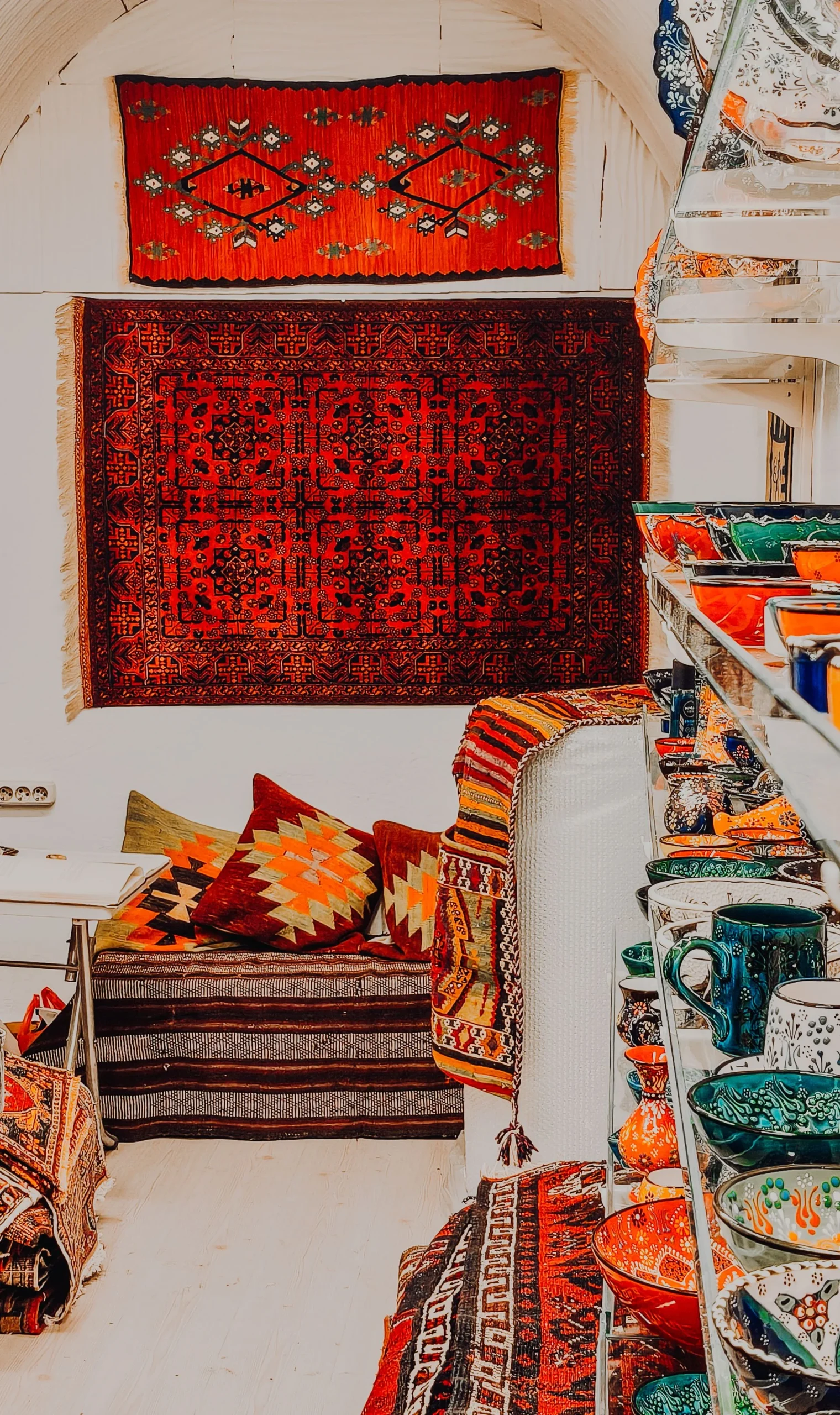
4. Bring Home a Bohemian Patterned Rug
A bohemian rug is for rooms that like colour, pattern, and a bit of happy mess. Red patterned rugs, bright cushions, and woven textures can make a plain white room feel warm and lived in within a day. The key is to let the rug set the mood and keep the rest of the room simple enough to breathe.
This photo shows red patterned rugs on the wall and floor of a colourful bohemian-style room filled with cushions and pottery, so take the pattern idea from it rather than copying the wall hangings. One patterned rug on the floor gives you the same warmth without turning the room into a shop display.
Try this: choose one patterned rug, then add plain cushions in two of its colours.
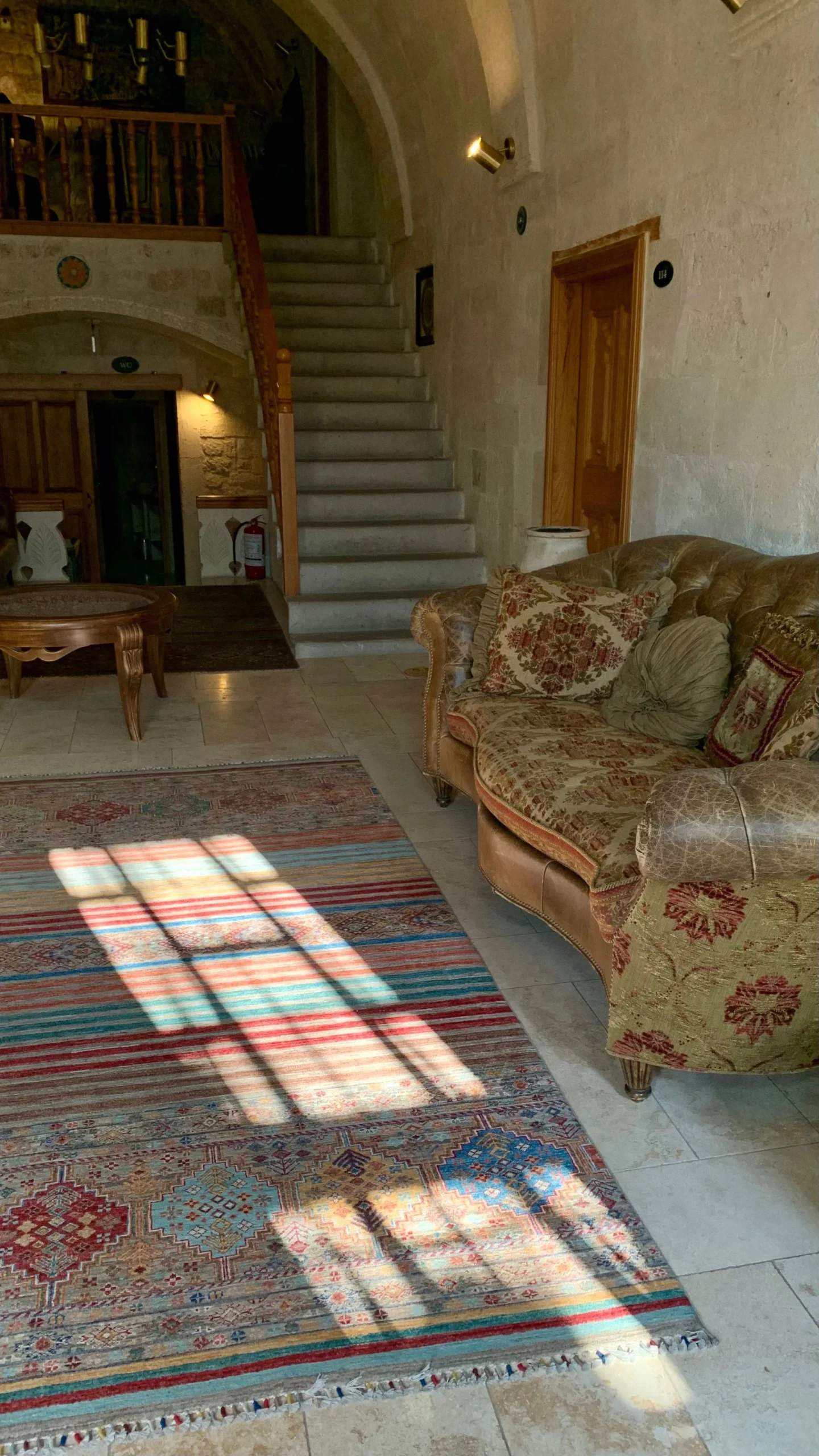
5. Choose a Vintage-Style Rug for an Old-Soul Room
A vintage-style rug suits rooms with wood, stone, and furniture that has a few years on it. The long patterned rug in this photo sits in a sunlit room with a floral sofa and a staircase, and the stripes and faded colours feel right at home there. A rug like this hides small marks well, which is a gift if you have kids or a dog.
Measure the walkway before you buy, because a long rug needs clear floor on both ends to look calm. Leave a border of bare floor around it, and keep the sofa legs either fully on or fully off the rug. Don’t make this mistake: a rug that stops halfway under the sofa looks like it shrank in the wash.
Try this: pick faded reds and blues if your sofa already has a floral print.
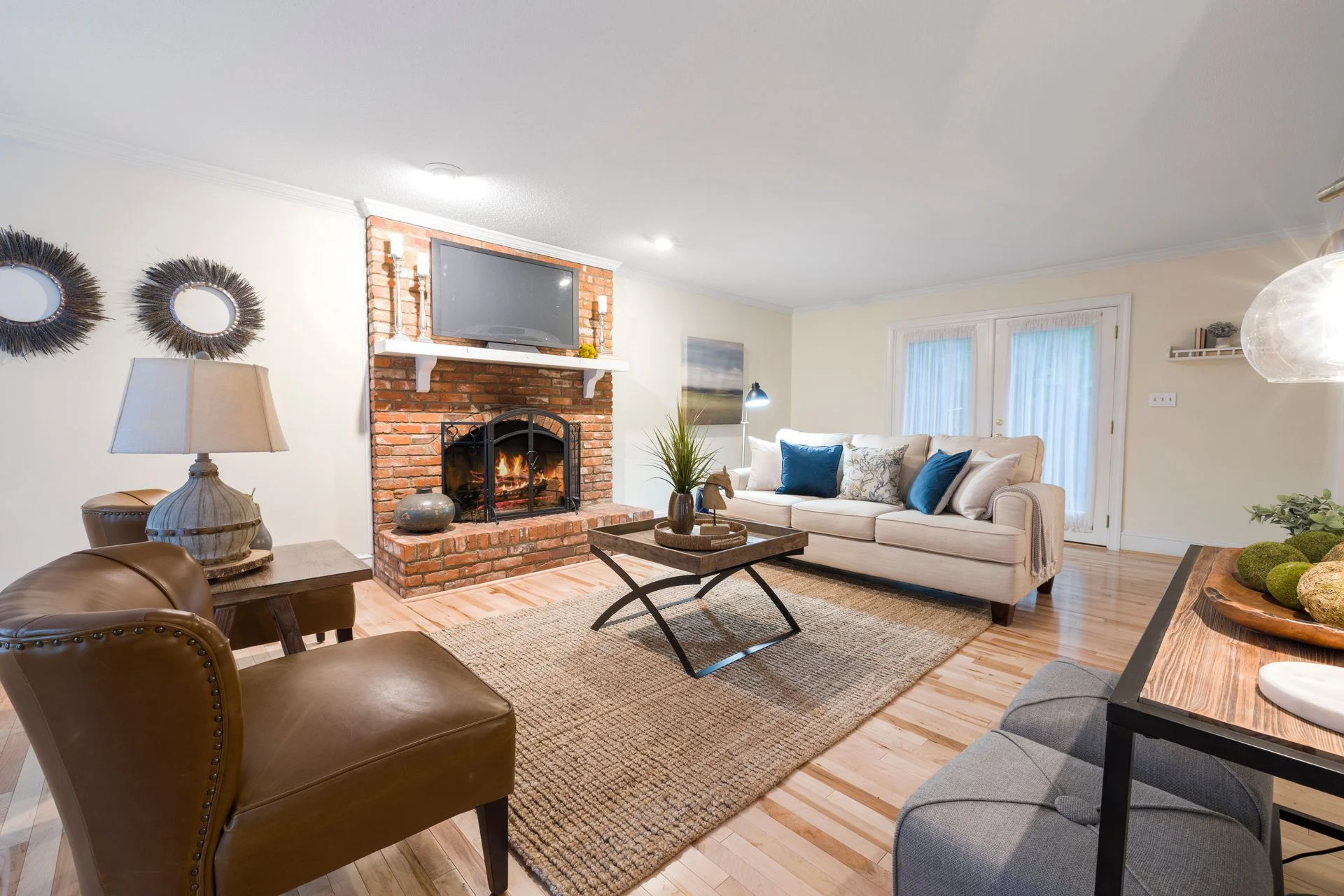
6. Warm Up the Fireplace With a Thick Textured Rug
A fireplace wall can feel cold and hard, even when the fire is lit, and a thick textured rug is the soft answer. The beige rug in this photo sits under a dark coffee table in front of a brick fireplace, and it turns the whole seating area into a place where people want to sit and stay.
Leave a safe gap between the rug edge and the fireplace opening, and pick a rug you can vacuum easily. I tried a pale rug too close to the hearth once, and the soot marks taught me to keep a hand-width of bare floor there. A low pile is easier to clean, while a deeper pile feels softer under bare feet.
Try this: sit on the floor and check the rug feels soft before you buy it.
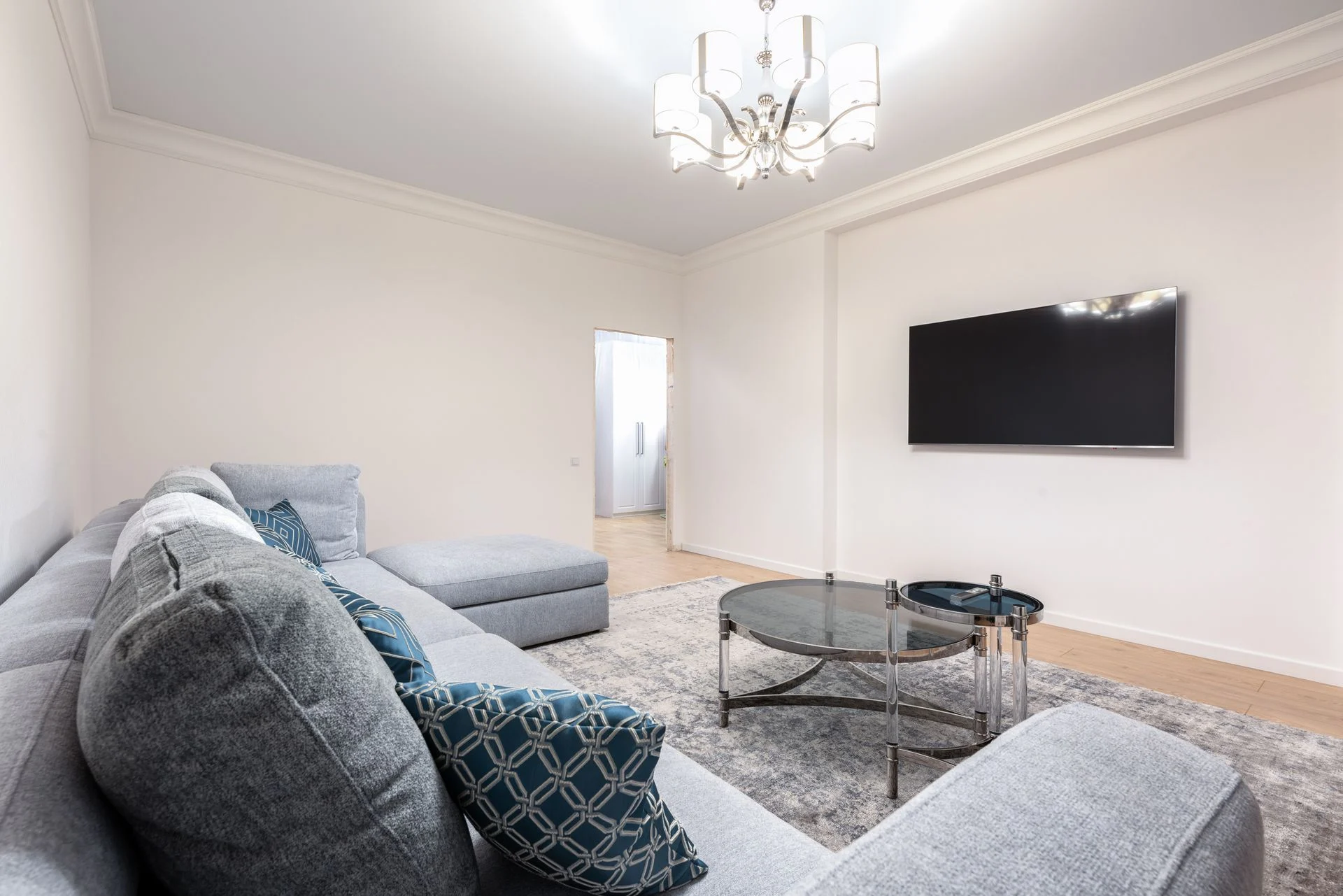
7. Slide a Large Rug Under Your Sectional
A sectional sofa is a big block of furniture, and without a rug under it the room can feel like a showroom. The light grey rug in this photo runs under the whole sectional and the glass tables, so the seating area reads as one calm zone. The rule I use is simple: the rug should reach under the front legs of every seat, and ideally under the whole sofa.
Start by pushing the sectional back, rolling the rug into place, and then sliding the sofa over it. Check from the doorway that the rug sticks out evenly on all sides. A rug that is too short on one side will bug you every single day.
Try this: measure the sectional first, then buy a rug at least 30 centimetres longer.
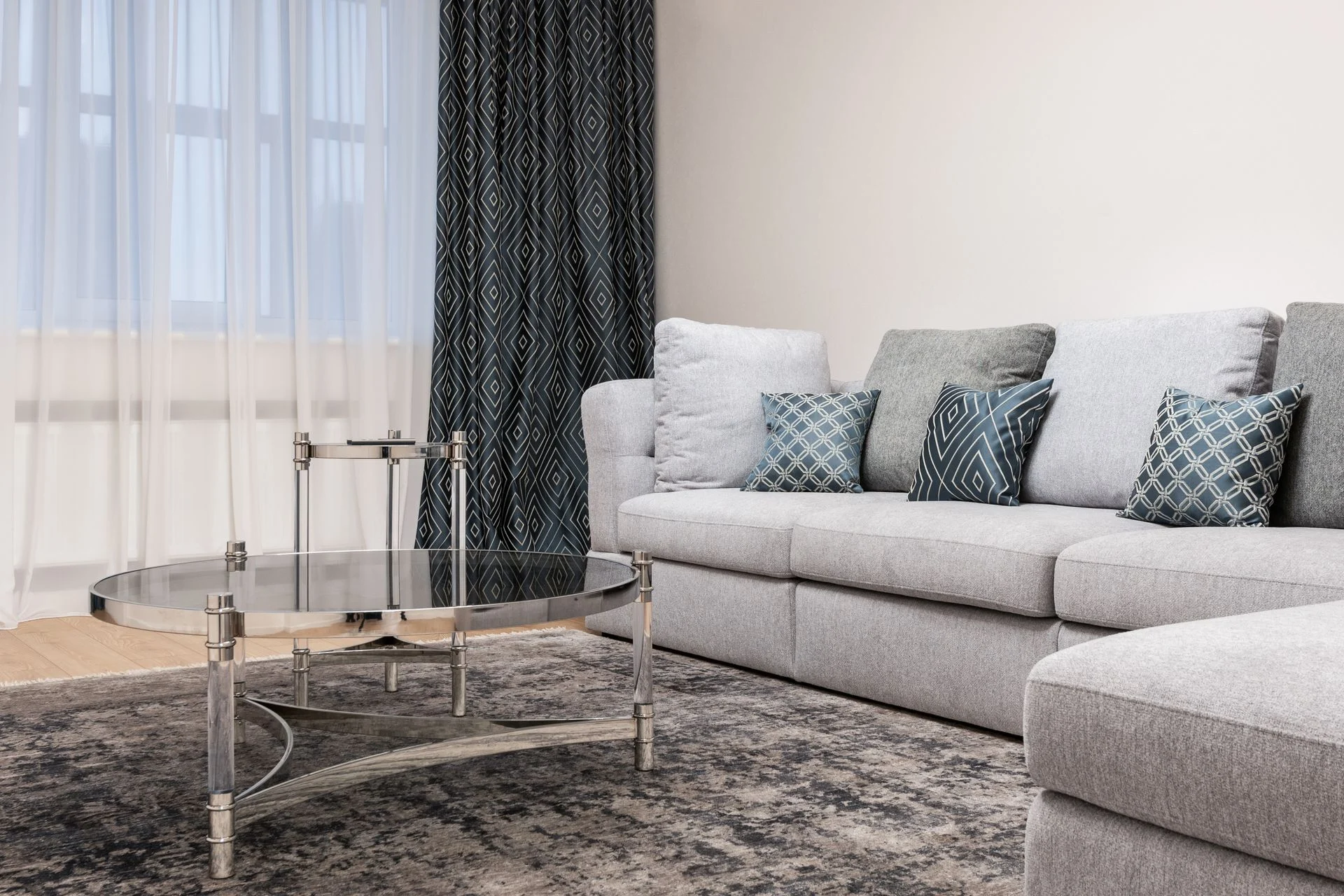
8. Put a Rug Under the Coffee Table, Not Just Around It
A lot of people place the rug in front of the sofa and leave the coffee table sitting on bare floor, and the room ends up looking split in half. The dark mottled rug in this photo sits under both the glass coffee table and the front of the sofa, so the table belongs to the seating group. I tried this after years of a table that drifted, and the room felt steadier at once.
Pick a rug that is wider than the coffee table by at least 20 centimetres on each side. That way the table has room to breathe, and you can still see the rug pattern around it. A rug with a soft pattern works well here, since the table will cover the middle.
Try this: centre the rug on the table, not on the sofa, then check both sides.
9. Add a Colourful Rug to a Reading Corner
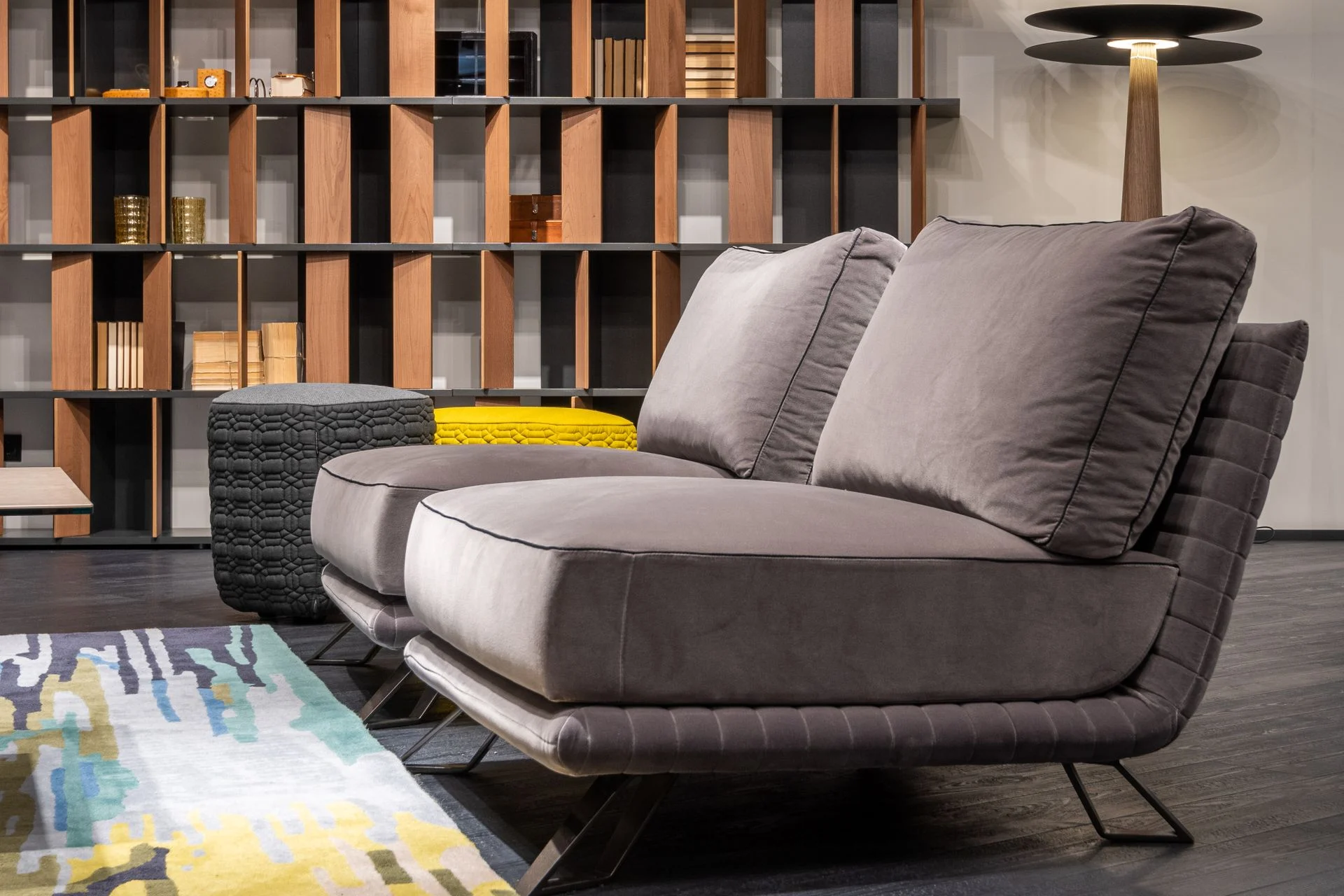
A reading corner needs a rug that says this spot is for slowing down. A bright rug under a settee or an armchair marks the corner as its own little room, even when it shares the floor with the rest of the living room. I tried a plain rug in my reading corner first, and it felt like a waiting room, so I swapped in colour and never looked back.
In this photo only a strip of the colourful yellow, green, and blue rug shows beside the settee, because most of it sits under the furniture and the poufs. That is fine in real life too: the rug still does its job, even when the furniture covers most of it.
Try this: place the rug first, then angle the chair so it faces the light.
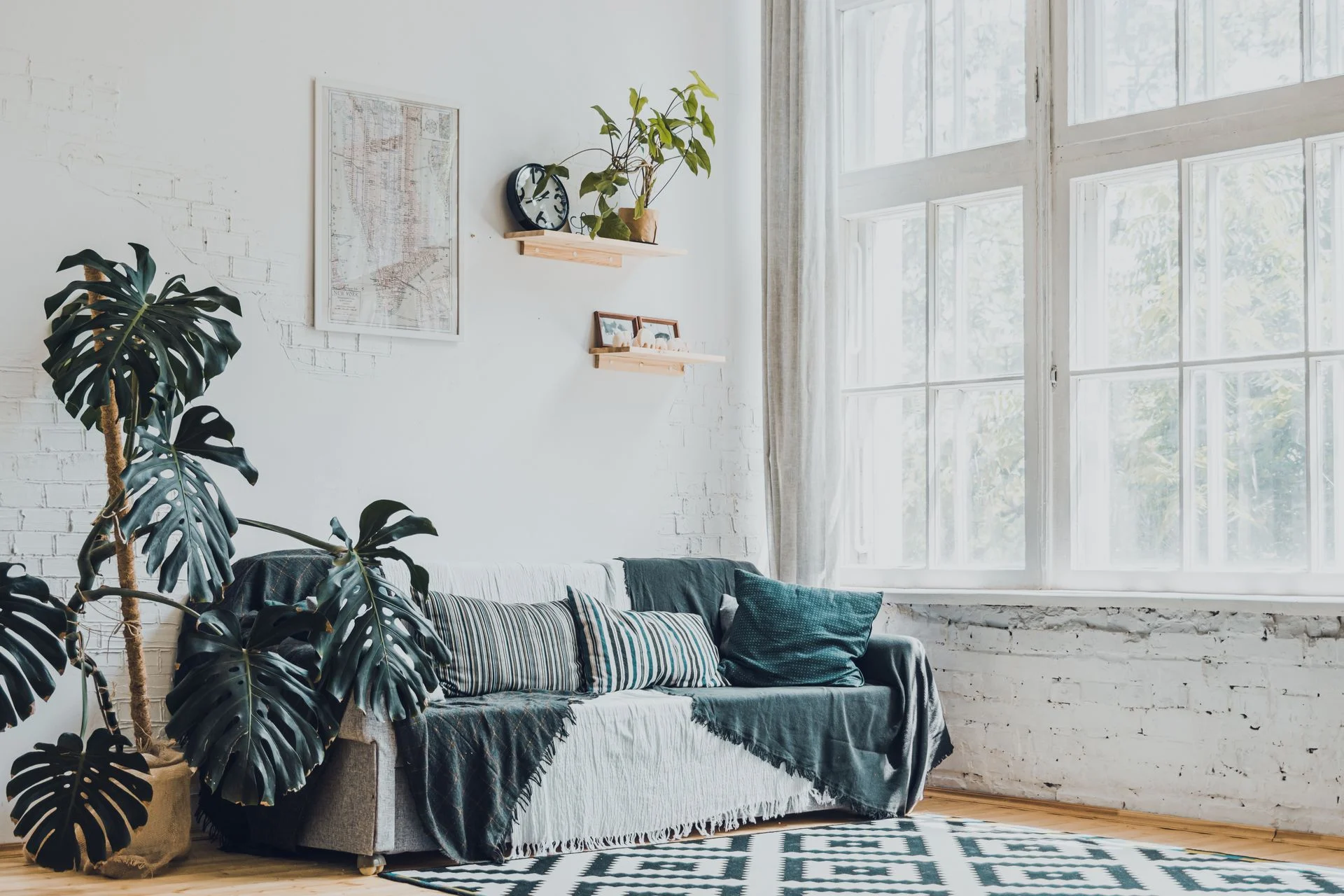
10. Pair a Black-and-White Rug With Big Green Plants
Green plants and a black-and-white rug are a pairing that almost never fails. The bold diamond pattern in this photo sits under a teal sofa, and the big monstera leaves soften the sharp lines of the rug. If your room has a lot of plants, a graphic rug stops the room from feeling like a jungle and gives your eye a clear pattern to rest on.
Keep the rest of the room simple when the rug is this bold: plain cushions, one throw, and let the plants do the rest. If the pattern feels too strong, pull the rug a little further under the sofa so less of it shows. A rug with a clear pattern also hides the odd fallen leaf better than a plain pale one.
Try this: match the rug to the darkest leaf green in the room.
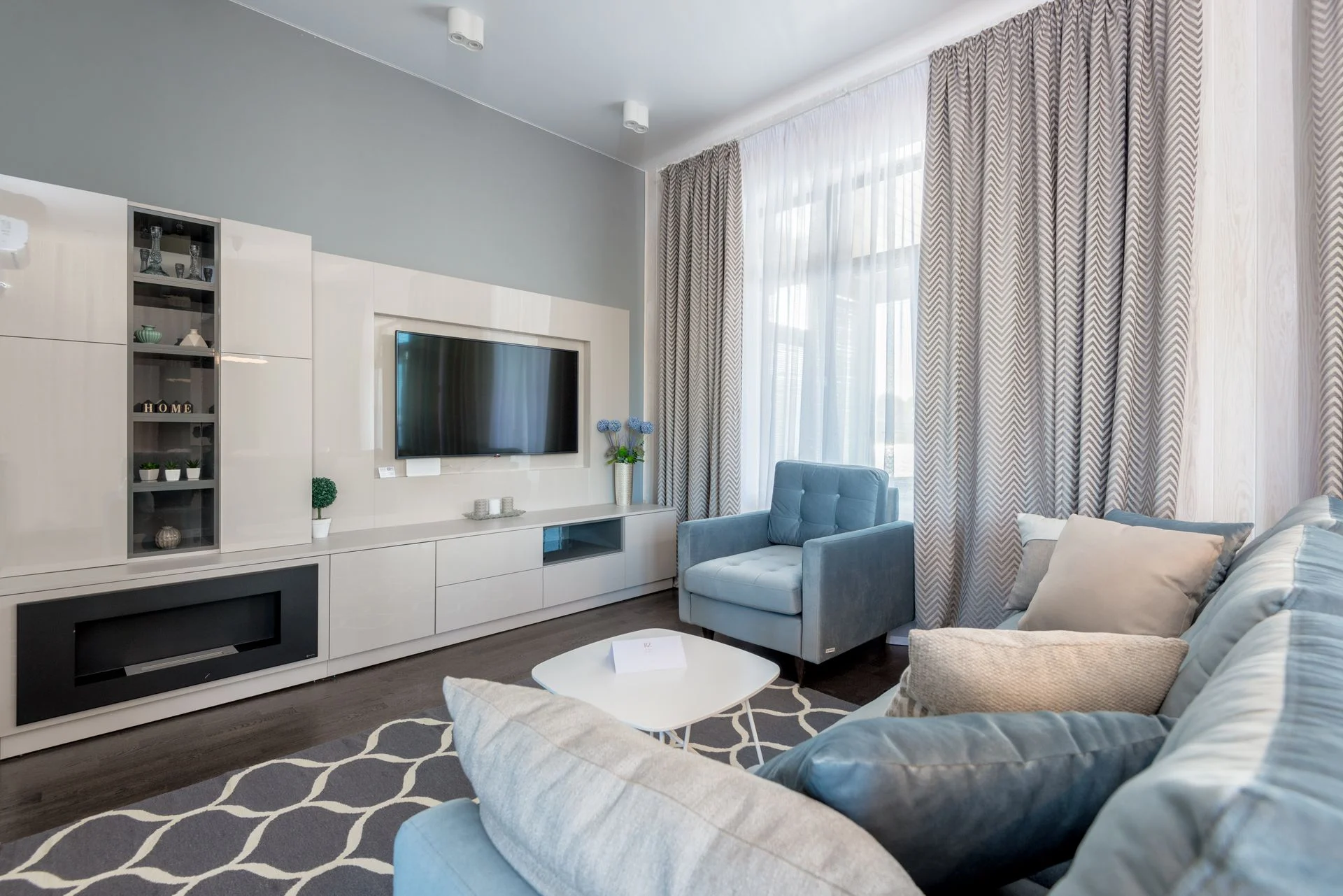
11. Pick a Rug That Pulls Colour From Your Sofa
When a rug shares a colour with the sofa, the room looks planned even if everything else is simple. The dark rug with a white trellis pattern in this photo picks up the blue-grey of the sofa and the armchair, so the whole seating area hangs together. This is the easiest way to choose a rug colour: look at your sofa, then find a rug that holds that same colour in its pattern.
Start with the sofa colour, then check the rug against it in daylight before you buy. A rug that looks blue-grey in the shop can turn purple at home under warm lamps, so bring a cushion with you if you can.
Try this: hold a sofa cushion against the rug in the shop before you pay.
12. Let a Classic Ornate Rug Do the Talking
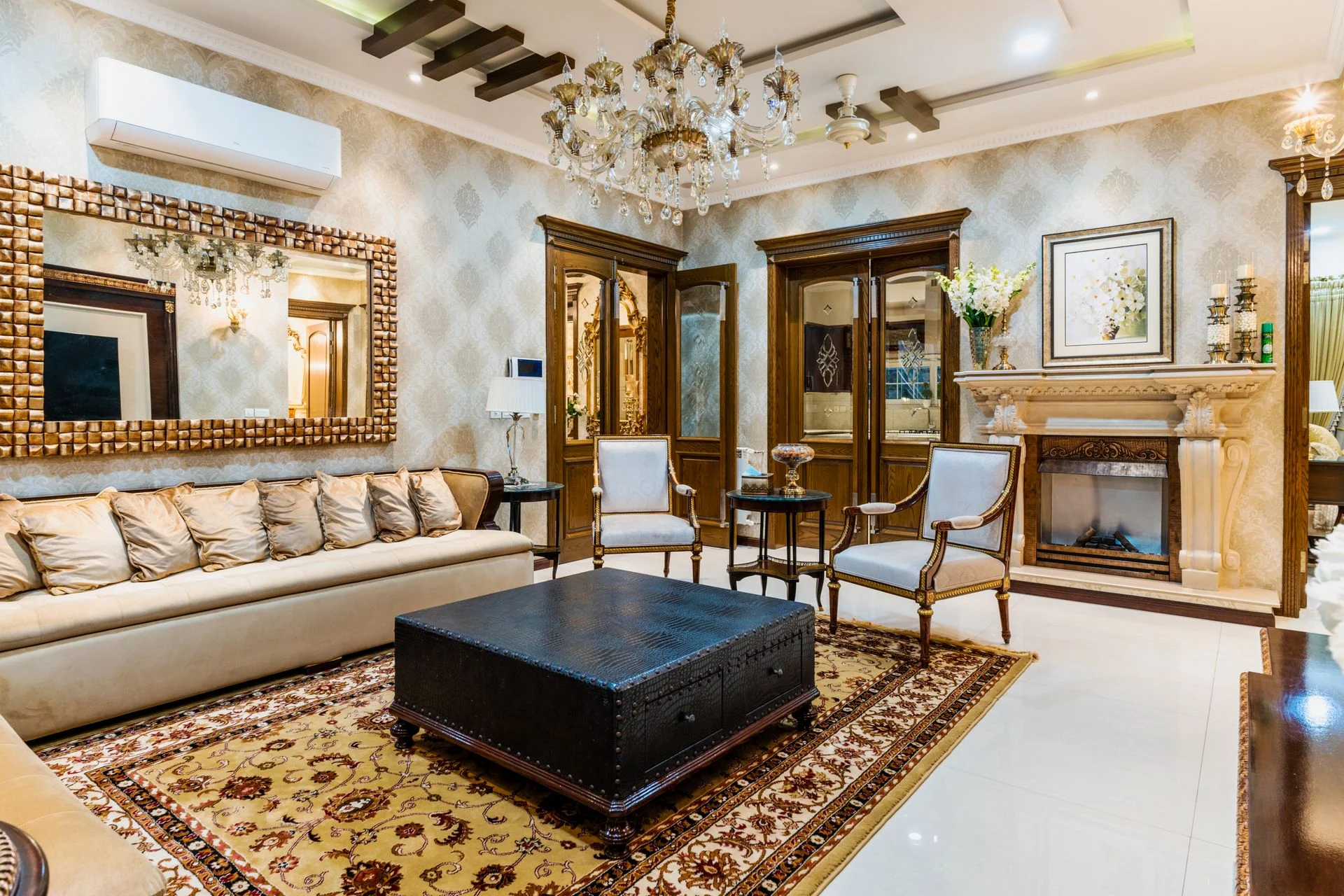
Some rooms need a rug that carries the whole look, and a classic ornate rug does exactly that. The gold and red patterned rug in this photo sits under a dark coffee table in a grand room with a chandelier, and it holds its own against all that furniture. If your room already has strong pieces, an ornate rug will not fight them; it will sit under them and tie them together.
Keep the rug clean and the edges straight, because a crooked ornate rug looks messy fast. Vacuum it gently, and turn it once a year so the pattern wears evenly. If the rug is the star, keep the cushions plain and let the pattern breathe.
Try this: choose one ornate rug and keep every other pattern in the room small.
13. Lighten a Dark Room With a Pale Faded Rug
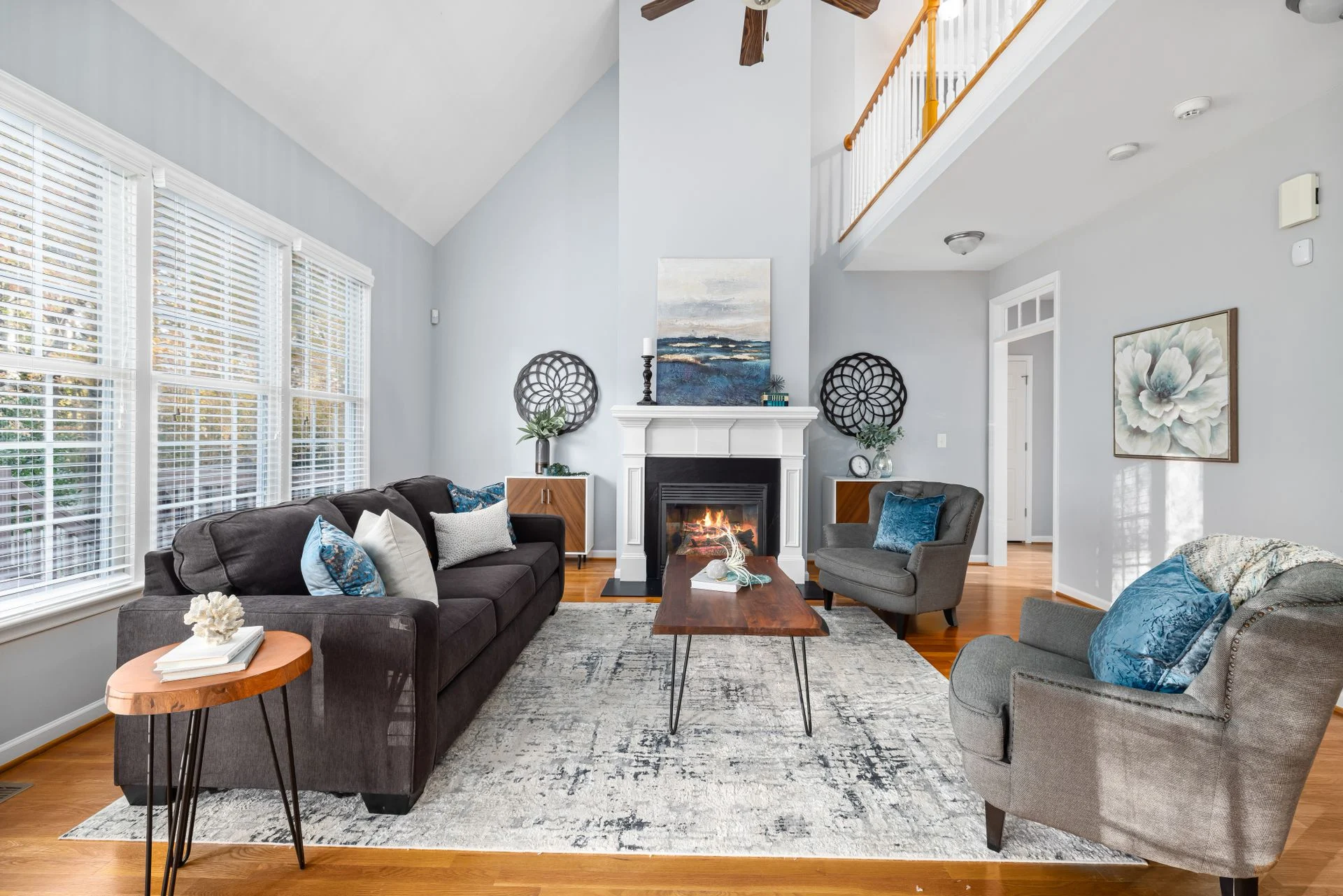
A dark sofa and dark wood can make a room feel heavy, and a pale faded rug is the lightest way to lift it. The light grey and white rug in this photo sits under a wooden coffee table in front of a fireplace, and it bounces the daylight back up into the room. A faded pattern is kind to real life too: it hides dust, pet hair, and the odd spill far better than a plain white rug ever will.
Pick a rug with a soft, worn-looking pattern rather than a crisp new print. That way it looks good from day one and better after a year of use. Keep the rug big enough to reach under the front legs of the sofa, or the light patch will look like a mistake.
Try this: test the rug colour in daylight, not just under shop lights.
14. Try a Rich Red Rug Under a Glass Table
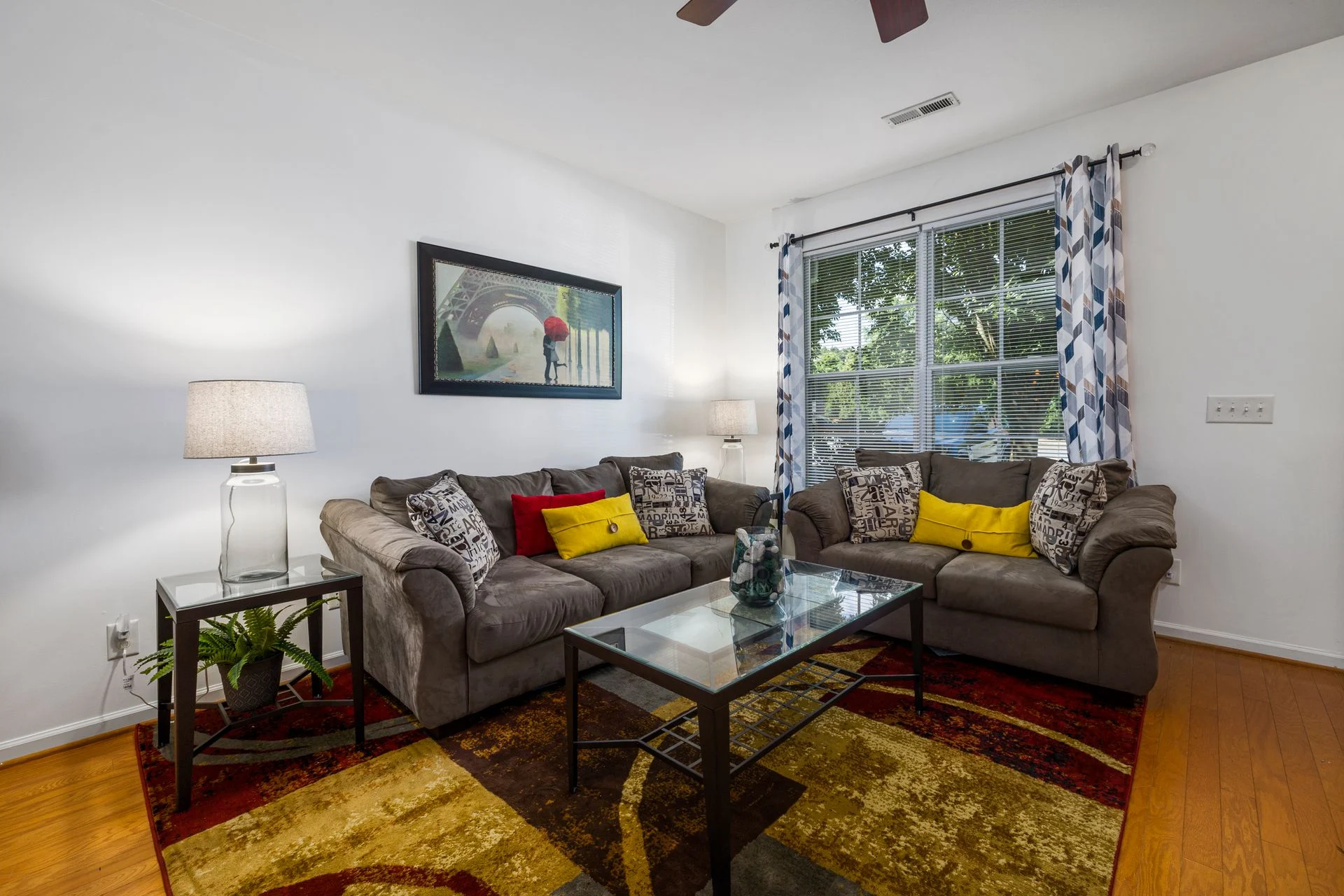
A glass coffee table shows off the rug underneath it, so this is the place to be brave with colour. The rich red and gold rug in this photo fills the space under a glass table between two grey sofas, and the yellow cushions pick up the warmth. Because you can see straight through the table, the rug pattern becomes part of the table itself.
Start with the rug, then add cushions in one of its warm colours so the room feels joined up. Keep the rug flat and the corners weighted, because a curling corner under glass shows at once. A low pile works best here, since a thick rug can make a glass table wobble.
Try this: place the rug first, then set the glass table on top and step back.
15. Add a Black-and-White Zigzag Rug for Sharp Contrast
A black-and-white zigzag rug is a strong choice, and it works best when the rest of the room stays calm. The grey sectional and plain walls in this photo let the sharp pattern do all the work, and the rug gives the room a clear edge. I like this look in rooms that feel a bit flat, because the pattern adds energy without adding another colour.
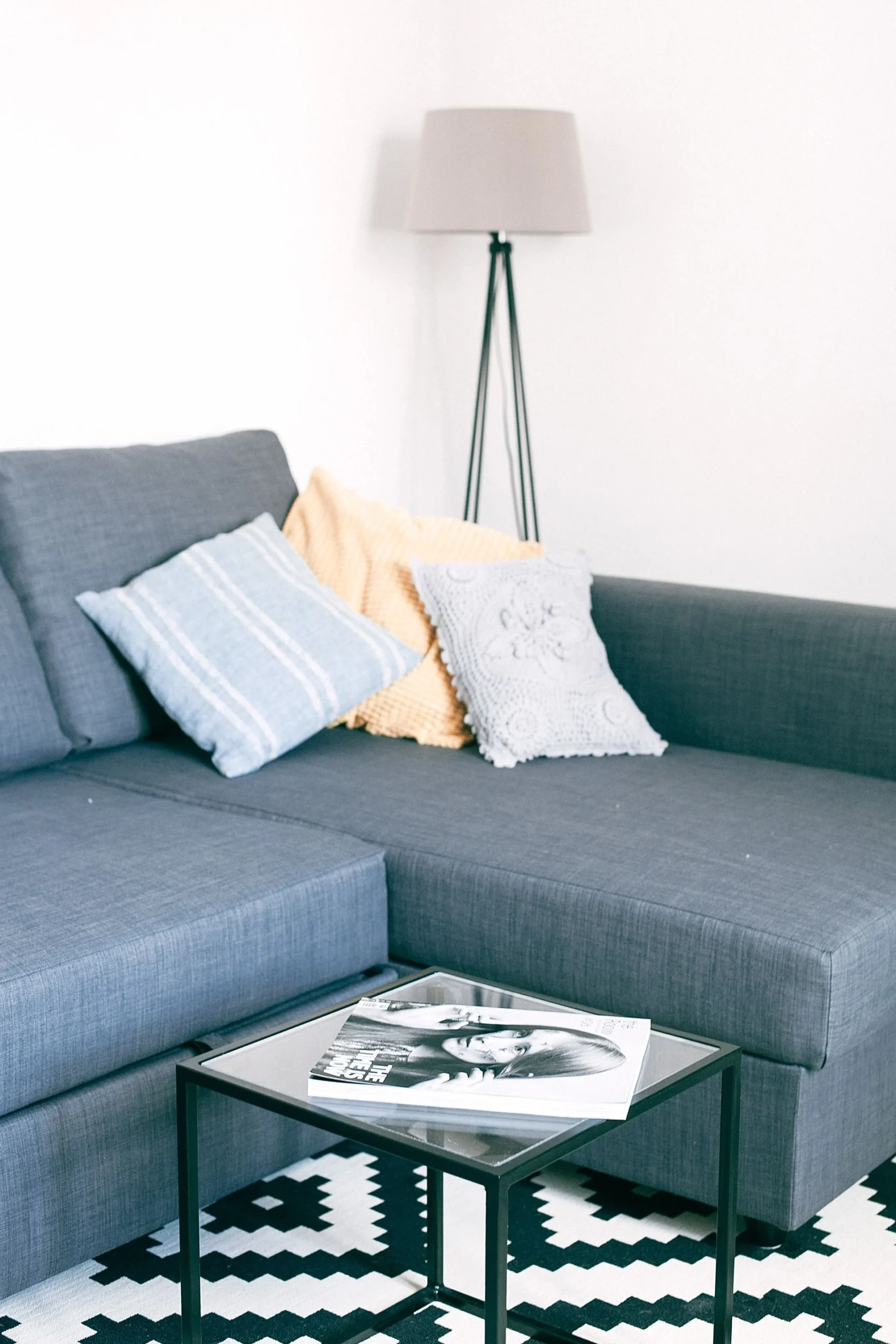
In this photo only the front strip of the black-and-white zigzag rug shows under the glass side table, with the rest hidden beneath the sectional. That is worth knowing before you buy a bold pattern: most of it may sit under furniture, so make sure you love the part that shows.
Try this: buy the rug in a plain colour first if the zigzag feels too bold.
16. Run a Long Rug Down an Open-Plan Living Room
Open-plan rooms need help to feel like rooms, and a long rug is the simplest way to draw the line. The faded red and blue rug in this photo runs down the length of the seating area beside a grey sectional, and it tells your eye where the living room ends and the rest of the space begins.
Start by marking the seating zone with the rug, then place the sofa along its long edge. Leave a strip of bare floor between the rug and the wall so the room can breathe. If the rug is too short, the seating area will feel cut off, so measure the full length of the sofa first.
Try this: walk the length of the rug and check it feels like one room.
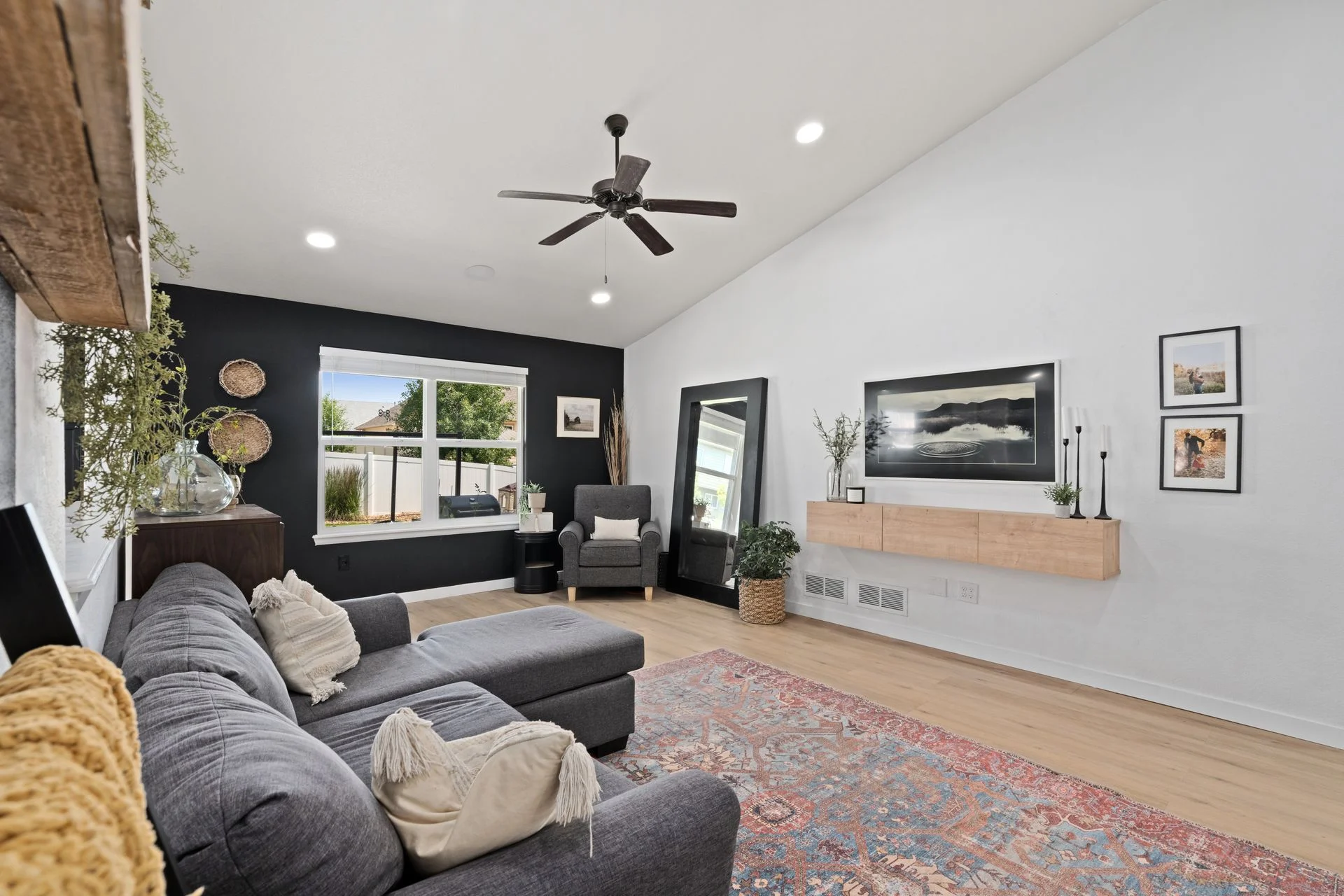
17. Keep the Rug Plain and Let the Chairs Shine
When your chairs are the stars of the room, the rug should step back and let them shine. The plain light grey rug in this photo sits under two patterned tub chairs with red cushions and a big seascape print on the wall, and it works because it does not compete with any of them.
Pick a plain rug in a soft tone that matches your floor or your walls, and let the chairs carry the colour. Keep the rug big enough to sit under the front legs of both chairs, so the group feels joined. A plain rug shows crumbs more easily, so pick a low pile you can vacuum in a minute.
Try this: choose the rug colour from your wall paint, not from the chairs.
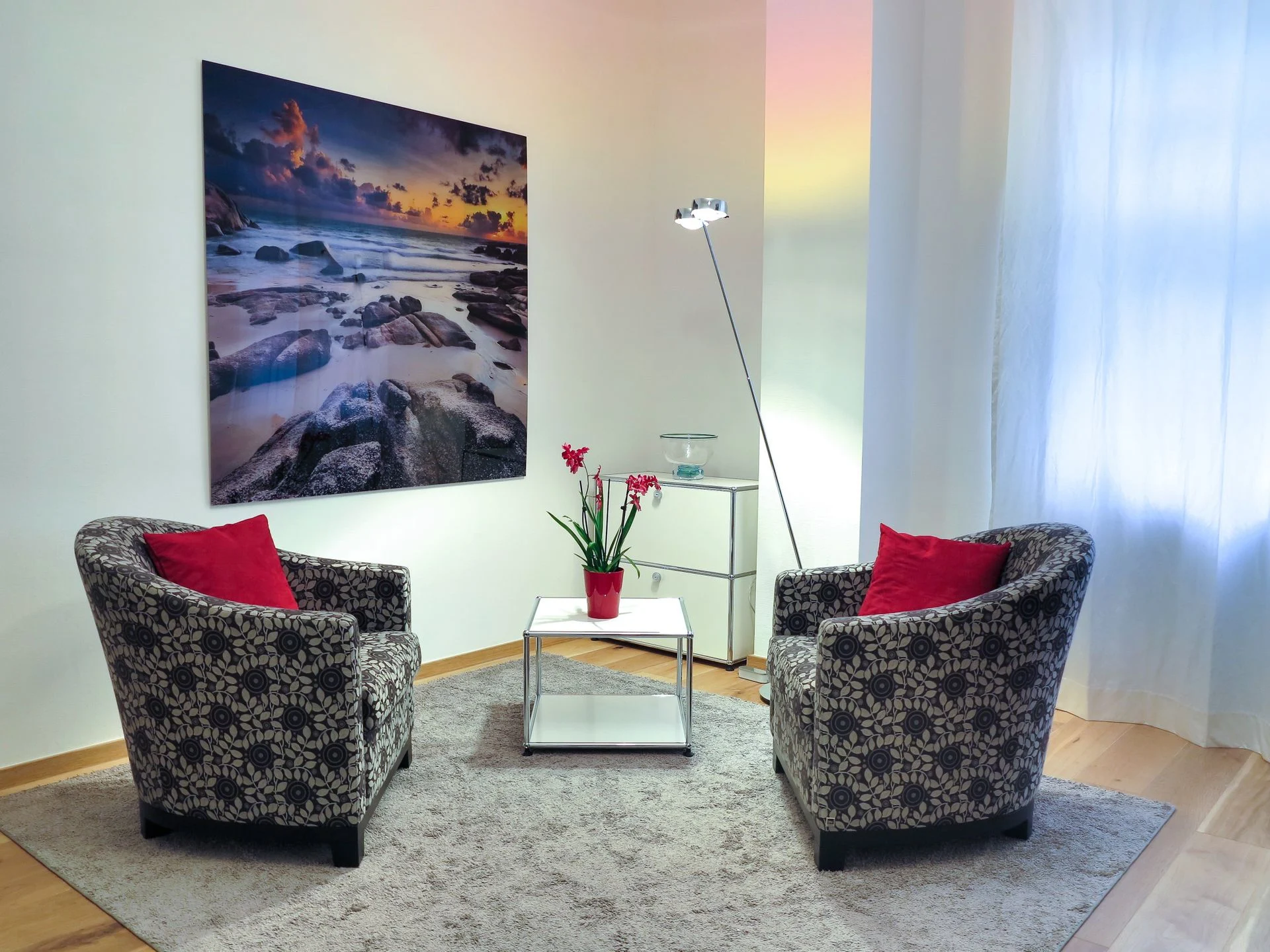
18. Choose a Cream Textured Rug You Can Feel Underfoot
A cream textured rug is the quiet luxury of a living room: it does not shout, but your feet notice it every morning. The rug in this photo has a soft raised pattern in cream and grey, and it sits on a herringbone wood floor beside a white sofa. A rug with texture adds warmth to a pale room without adding colour, which is handy when you love a calm look.
This photo is a close-up of the rug, with only the edge of the white sofa and a side table in frame, so judge the texture from it and picture the full rug in your own room.
Try this: run your hand over the rug in the shop before you buy it.
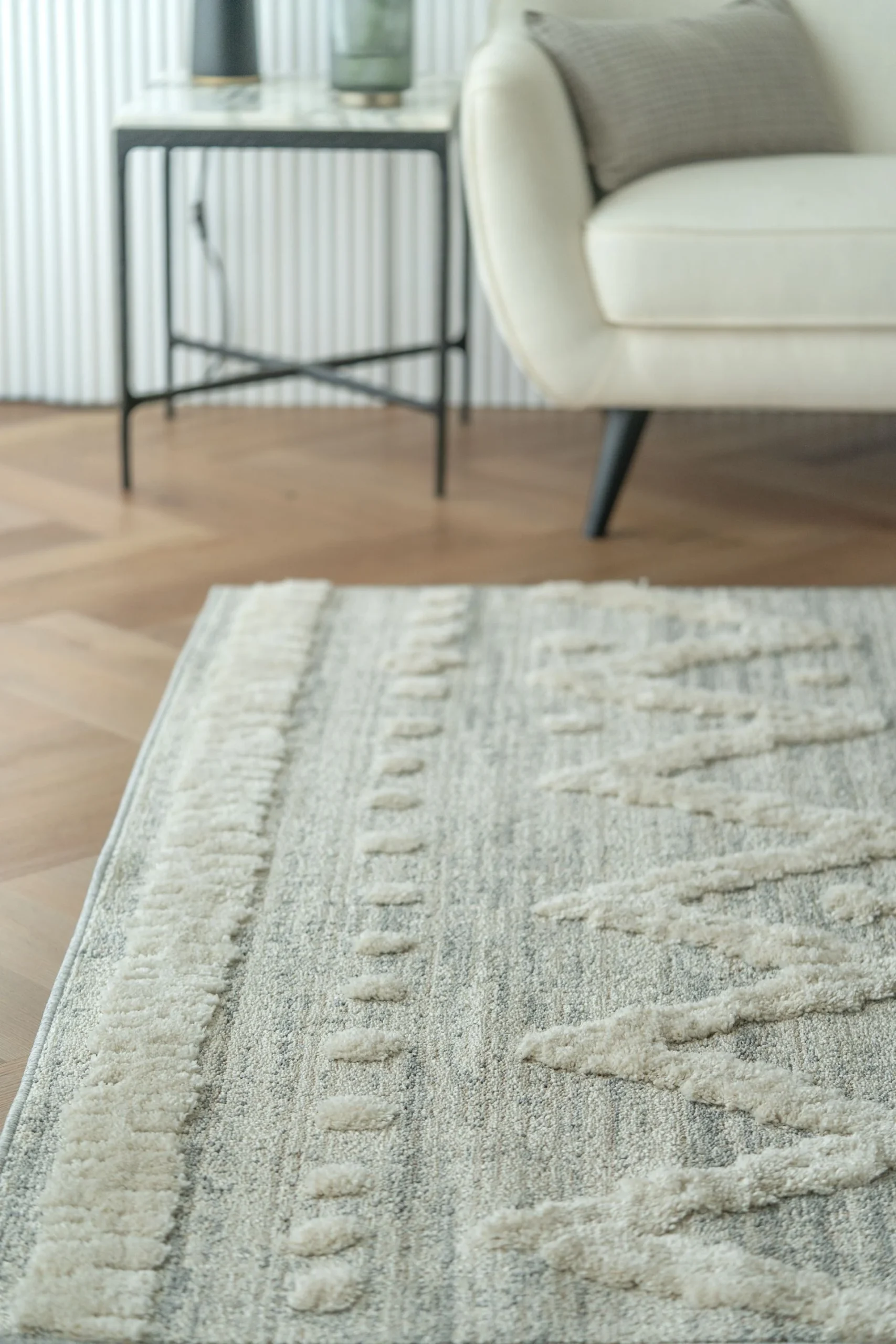
19. Size the Rug Right for a Small Living Room
Small living rooms punish a wrong rug size more than big rooms do, so this is the idea to get right first. The light grey rug in this photo sits under a beige sectional in a small apartment living room, and it is just big enough to hold the sofa and the coffee table without touching the walls. A rug that fits this way makes the room look bigger, because your eye reads one calm floor instead of a rug island and bare floor around it.
Start by measuring the sofa and the table together, then buy a rug that fits both with a little room to spare. If you are torn between two sizes, pick the bigger one.
Try this: mark the rug size with tape and live with the outline for a day.
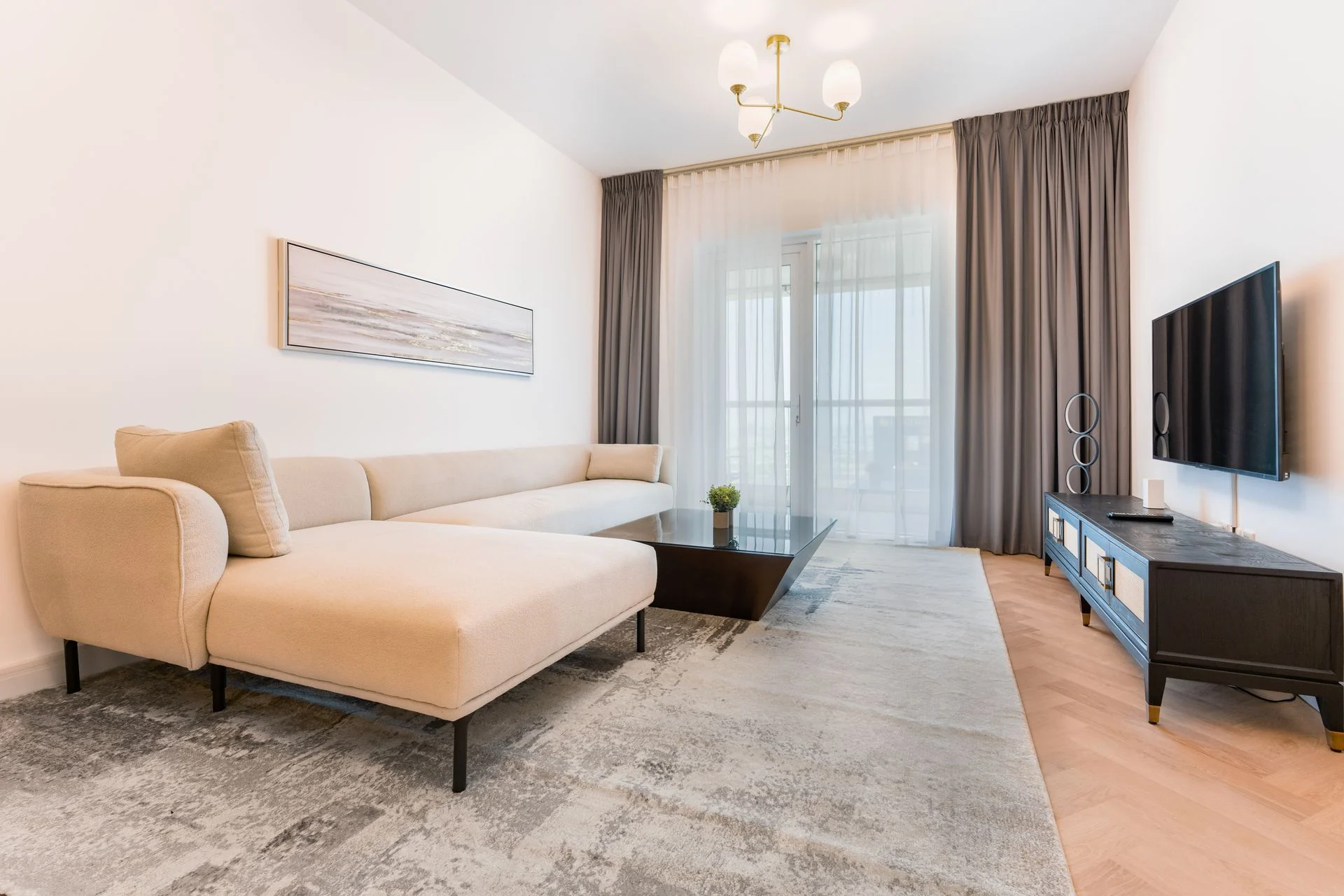
20. Lay the Rug First, Then Arrange the Furniture Around It
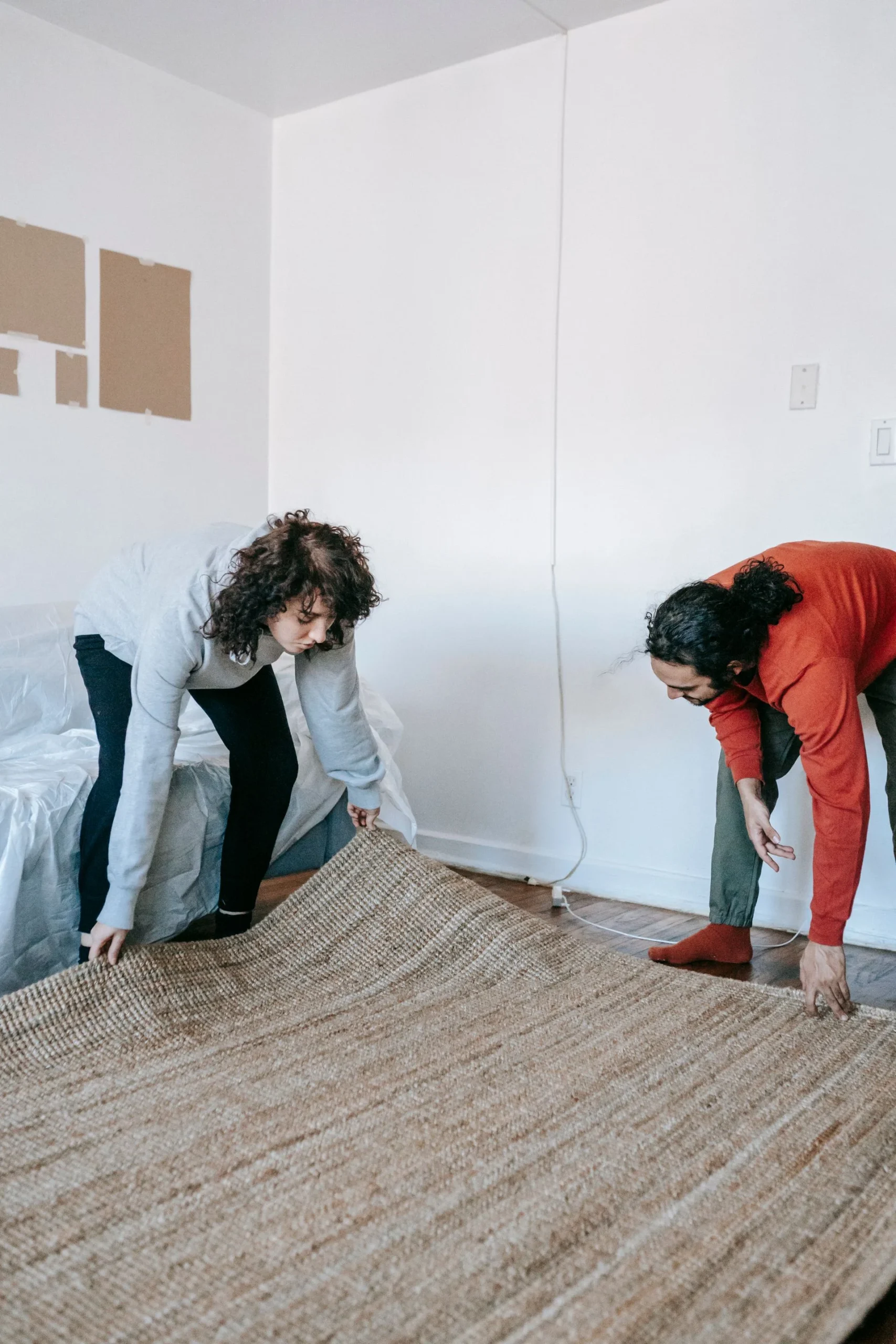
When you move into a new place, lay the rug before the furniture arrives, and the room will arrange itself around it. The couple in this photo are laying a large woven rug in an empty room, and that empty floor is the best time to get the placement right. A rug laid first sets the centre of the room, so the sofa, chairs, and table all land in the right spots.
Start by sweeping the floor, then roll the rug out and check it from the doorway. Move it until the edges sit evenly, and add a rug pad underneath so it does not slip on a hard floor. Once the rug is set, bring in the sofa first and place its front legs on the rug.
Try this: lay the rug and rug pad together before any furniture arrives.
What size rug should I buy for my living room?
Buy a rug that is big enough to sit under the front legs of your sofa and chairs. For most rooms that means a rug at least 20 centimetres wider than the sofa on each side. If you are unsure, tape the size on the floor and live with the outline for a day before you order.
Should the rug go under the sofa or in front of it?
Put at least the front legs of the sofa on the rug. A rug that only sits in front of the sofa looks like a mat, and the seating area feels split. If the rug is big enough, slide it fully under the sofa for a calmer look.
Can I layer two rugs in a living room?
Yes, layering works well when the two rugs share a colour and the top rug is smaller. Use a large flat rug as the base and a smaller patterned rug on top where your feet land. Keep the top rug at a slight angle or centred, and check it from the doorway.
How do I keep a light-coloured rug clean?
Vacuum a light rug twice a week and deal with spills at once with a clean cloth and a little mild soap. A rug pad underneath helps, and a faded pattern hides marks better than a plain pale rug. Take shoes off at the door if you can.
Final Thoughts
The best rug is the one that fits your room, your sofa, and the way you actually live. Start with the size, pick a pattern you will still like in a year, and let the rug pull the seating area together. If you get it wrong, a rug is easy to move, swap, or roll up and try somewhere else, so there is no need to overthink it.
Pick one idea from this list, measure your room, and try it this weekend. Your living room will feel calmer, warmer, and more finished, and your feet will thank you every morning.