
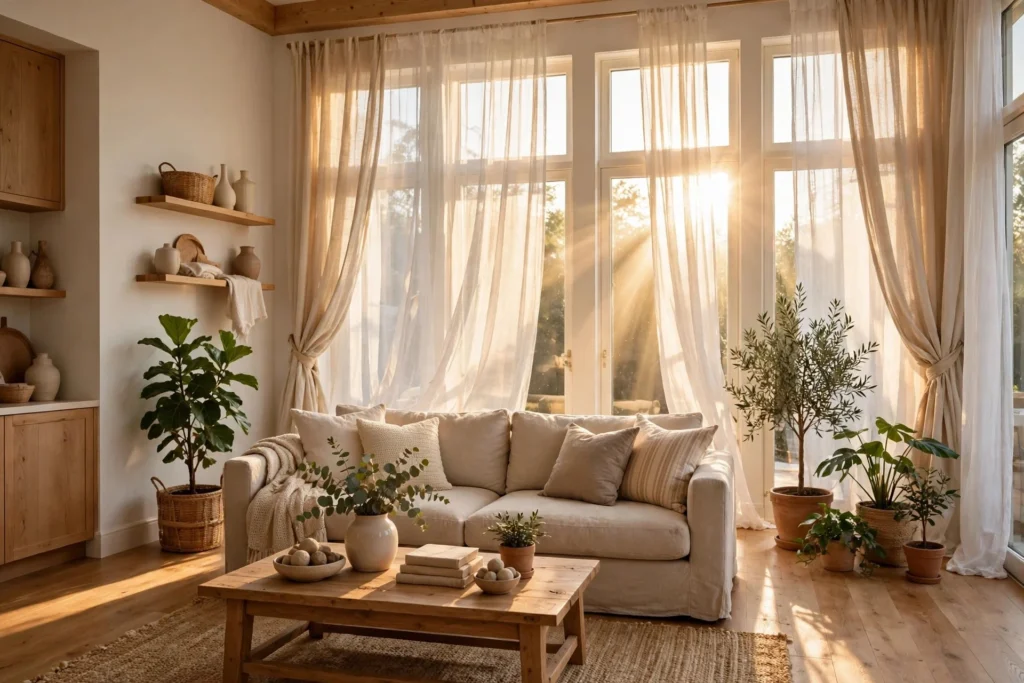
Finding the right living room curtain ideas can change how a room feels without changing a single piece of furniture. Curtains soften hard edges, control the light, add colour and pattern, and make tall windows look finished instead of bare. I have swapped curtains in my own living room more times than I care to admit, and each time the room felt like a different place by dinner.
The trick is to start with what your room actually needs. A dark room needs light-filtering fabric, a sunny room needs lining, and a small room needs height. Pick the problem first, then pick the curtain. The eleven ideas below cover the most useful options, from simple sheers to layered drapes, so you can find one that fits your windows, your budget, and the way you live.
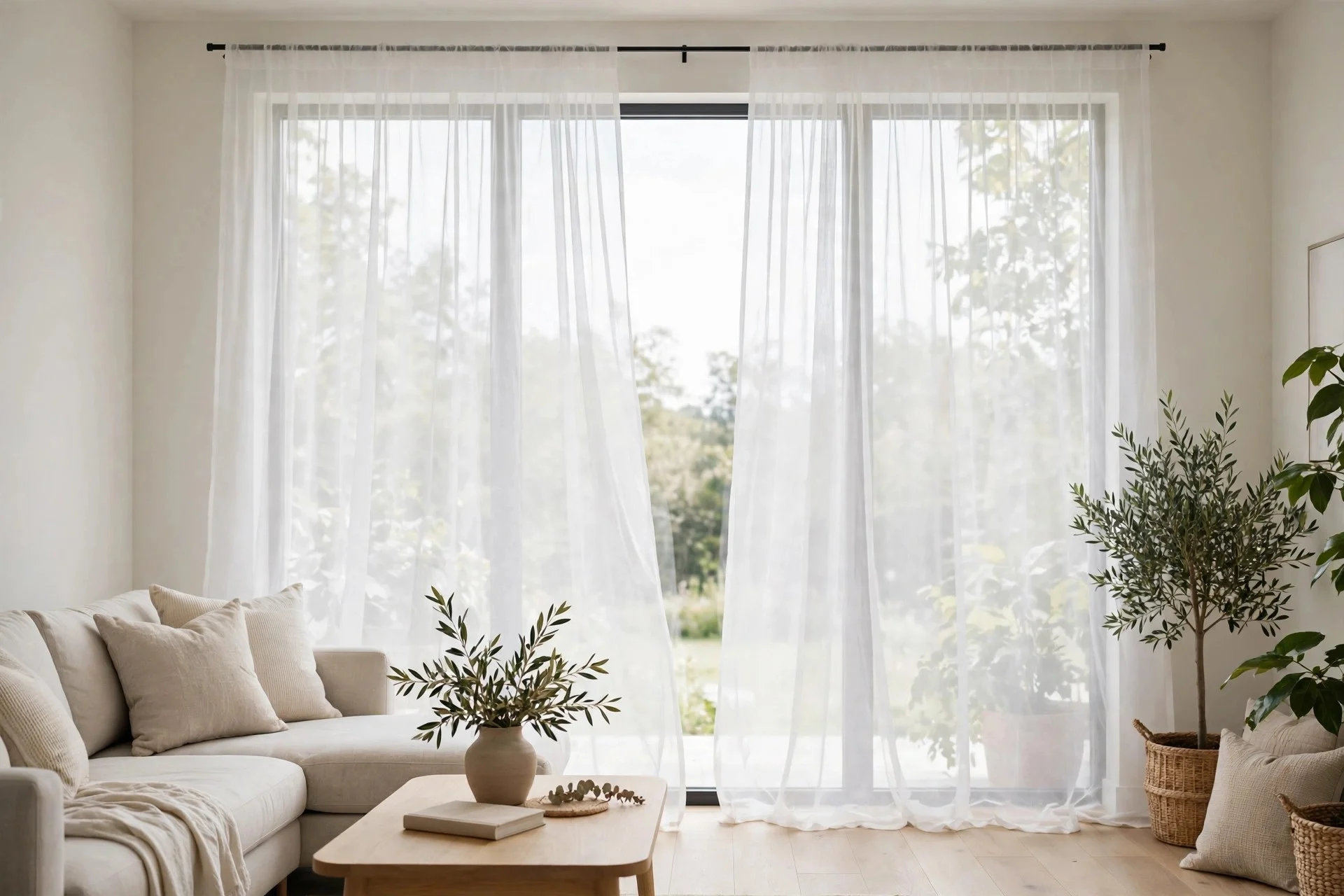
1. Living Room Curtain Ideas That Start With Sheer White Panels
Sheer white curtains are the easiest place to start, and I tried this first in a rented flat where I could not change much else. They let daylight pour in while softening the view from the street, so the room feels bright but still private. Hang them on a slim rod above the frame and let them fall just to the floor. They work alone in summer and as a base layer under heavier drapes in winter.
Choose a lightweight voile or fine linen-blend sheer, and buy two panels per window so they gather nicely instead of hanging flat. Wash on a gentle cycle and hang them back while still slightly damp, so creases drop out on their own.
Try this: hang sheers high and wide, at least four inches above and beyond the frame, so the window looks taller and the light feels softer all day.
2. Floor-Length Linen Curtains That Pool Just Right
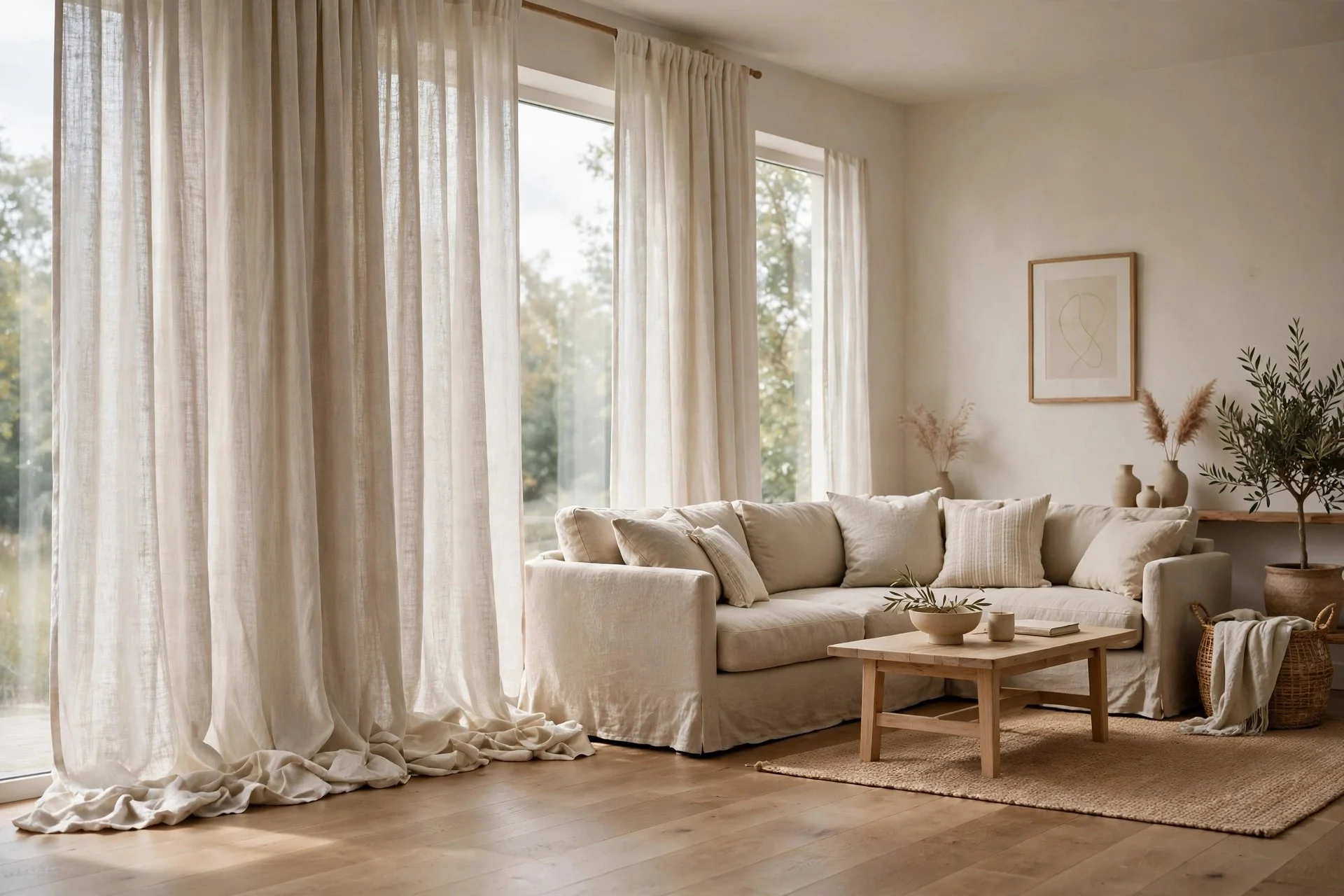
Linen curtains have a relaxed, lived-in look that suits almost any living room, from a calm neutral scheme to a busier family space. I hung a pair in my own living room last spring and the first thing I noticed was how much calmer the room felt. The fabric moves gently when a window is open, and the natural texture stops plain walls from looking flat.
Measure from your rod to the floor, then add half an inch so the hem just kisses the floor, or two inches if you like a soft puddle. Steam them after hanging, and do not worry about a few wrinkles. That is part of linen’s charm, and ironing them flat takes the life out of them.
Try this: pick a washed linen in warm white or natural flax, and let the hem rest on the floor for a relaxed look that never feels stiff.
3. Blackout Curtains for Late Mornings and Movie Nights
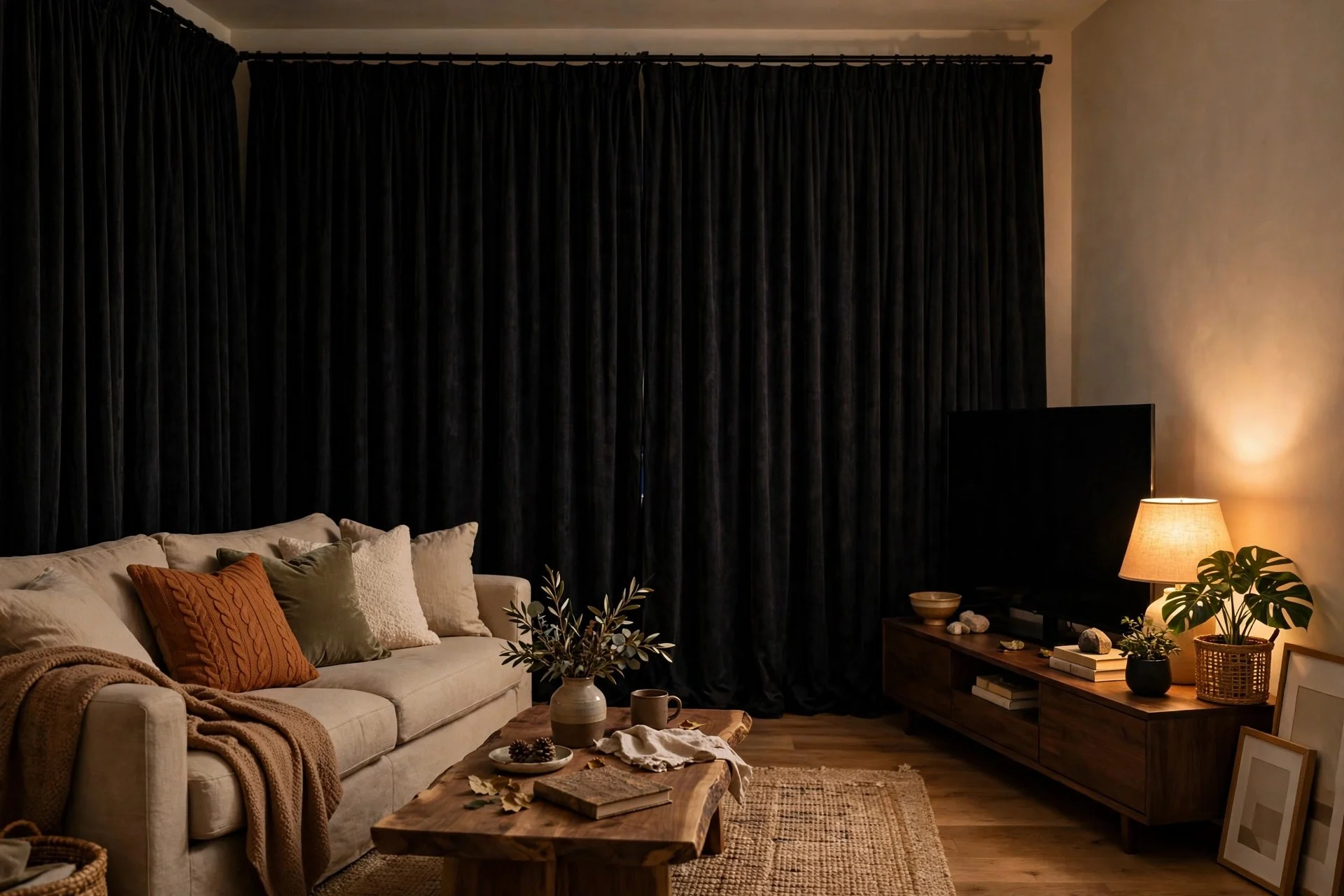
Blackout curtains are not just for bedrooms. In a living room they cut glare on the television, keep a sunny room cool in summer, and give you real privacy after dark. I made the mistake once of buying cheap unlined curtains for a west-facing window, and by four in the afternoon the sofa was too hot to sit on. Proper blackout lining fixed it in one afternoon.
Look for curtains with a sewn-in blackout lining rather than a thin coating, and hang them so the panels overlap in the middle and cover the frame at the sides. That stops the thin strips of light that sneak in around the edges and spoil the effect.
Try this: choose blackout curtains in a colour you already have in the room, so they read as normal drapes and not as a practical afterthought.
4. Layered Sheers and Drapes for Depth and Flexibility
Layering is my favourite way to make a window look thought-through. A sheer panel sits closest to the glass for daytime privacy, and a heavier drape hangs in front for evenings, cold weather, and colour. You get two looks from one window, and you can change the mood just by drawing one layer instead of the other.
Use a double rod or a track with two channels, and keep the sheer simple so the outer drape does the talking. Pick the outer fabric first, then choose a sheer in a matching white or cream. Leave a small gap between the layers so each one hangs freely and does not bunch up behind the other.
Try this: draw the heavy drapes back during the day and leave the sheers closed, so you keep privacy without losing any daylight.
5. Bold Patterned Curtains as the Room’s Focal Point
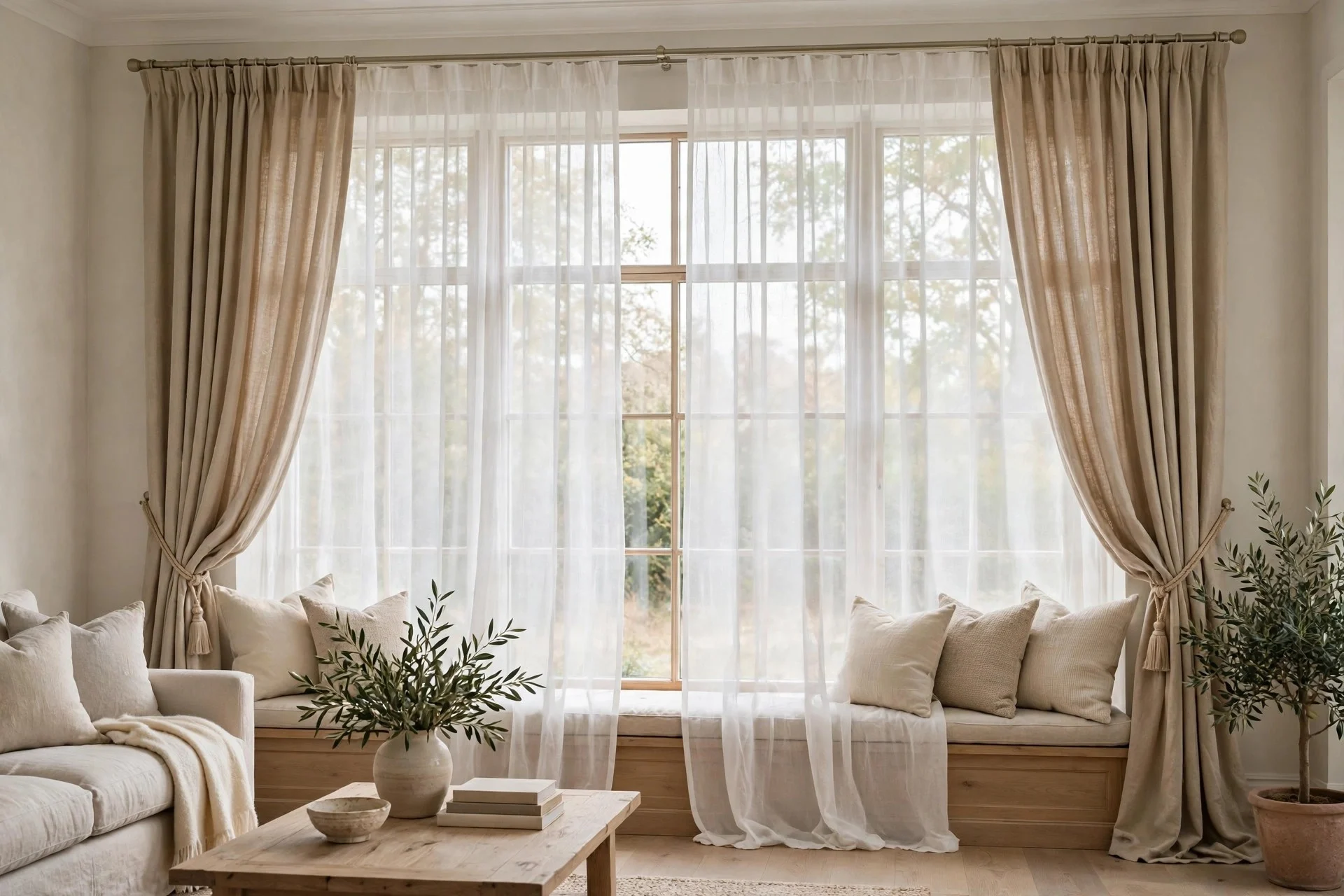
If your sofa and walls are plain, patterned curtains can carry the whole room. A large floral, a bold stripe, or a classic check adds colour and character in one move, and it is far cheaper than a new sofa. I tried this with a green botanical print in a beige room, and suddenly the plain rug and cushions made sense. The curtains tied everything together.
Keep the rest of the room calm when the pattern is loud. Pick one colour from the curtain fabric and repeat it in a cushion or a throw, and leave the other colours alone. Hang patterned curtains from a simple rod so the hardware does not fight with the print.
Try this: order a fabric sample first and tape it to the wall for a few days, so you can see the pattern in morning and evening light before you commit.
6. Velvet Curtains for a Warm and Cosy Feel
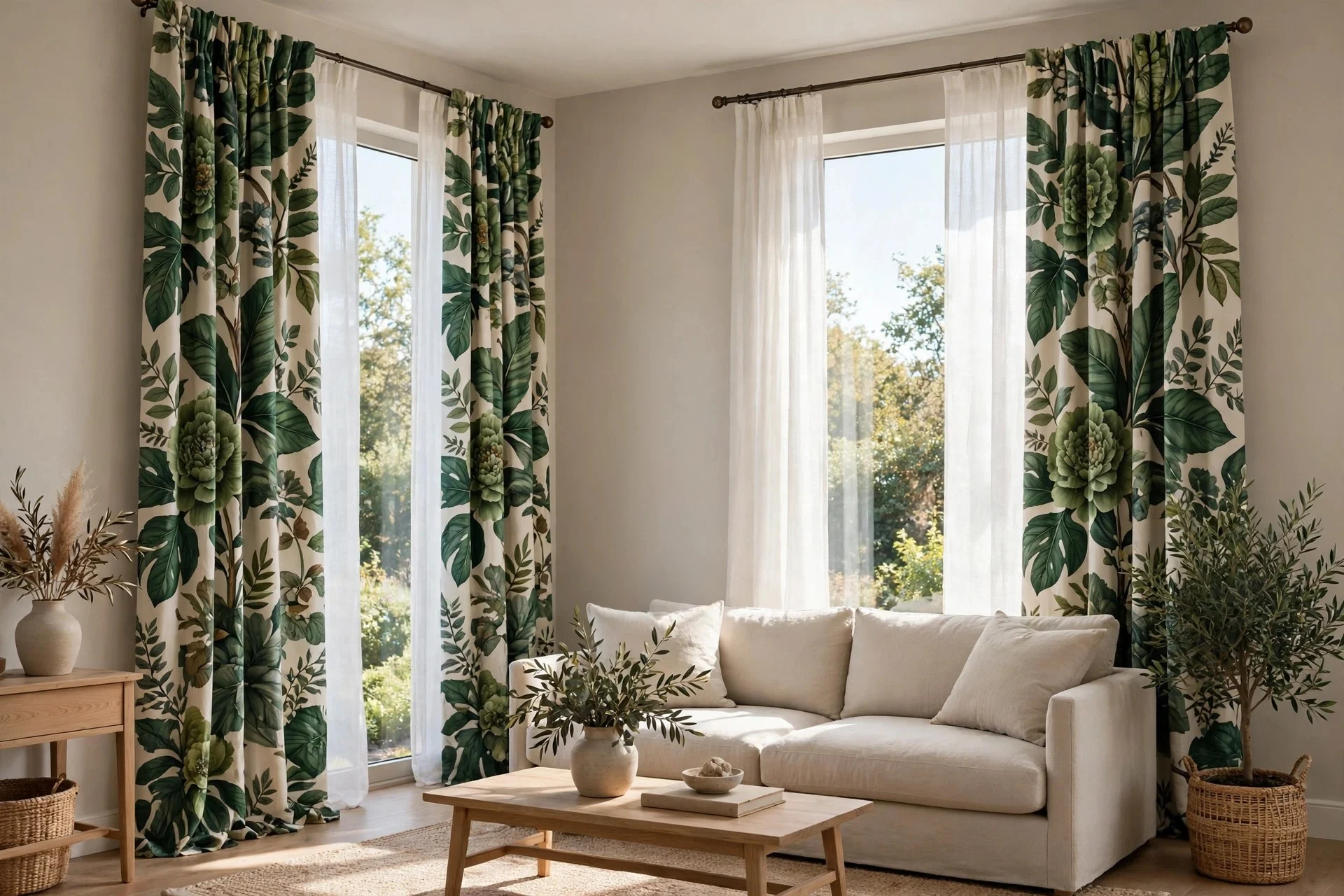
Velvet curtains make a living room feel warm the moment you walk in, which is why they work so well in winter and in rooms that feel cold or echoey. The fabric catches the light in a soft way, and it hangs in deep, heavy folds that look expensive even at a modest price. I hung a pair of deep green velvet curtains in a north-facing room, and the space finally felt snug instead of stark.
Choose cotton velvet if you can, and hang it from a strong rod with solid brackets, because velvet is heavy. Brush the fabric gently downwards after hanging to even out the pile, and keep the panels full, at least twice the window’s width in fabric.
Try this: pair velvet curtains with a warm-toned lamp and a soft throw, and the whole corner will feel like the cosiest seat in the house.
7. Statement Curtain Rods That Finish the Look
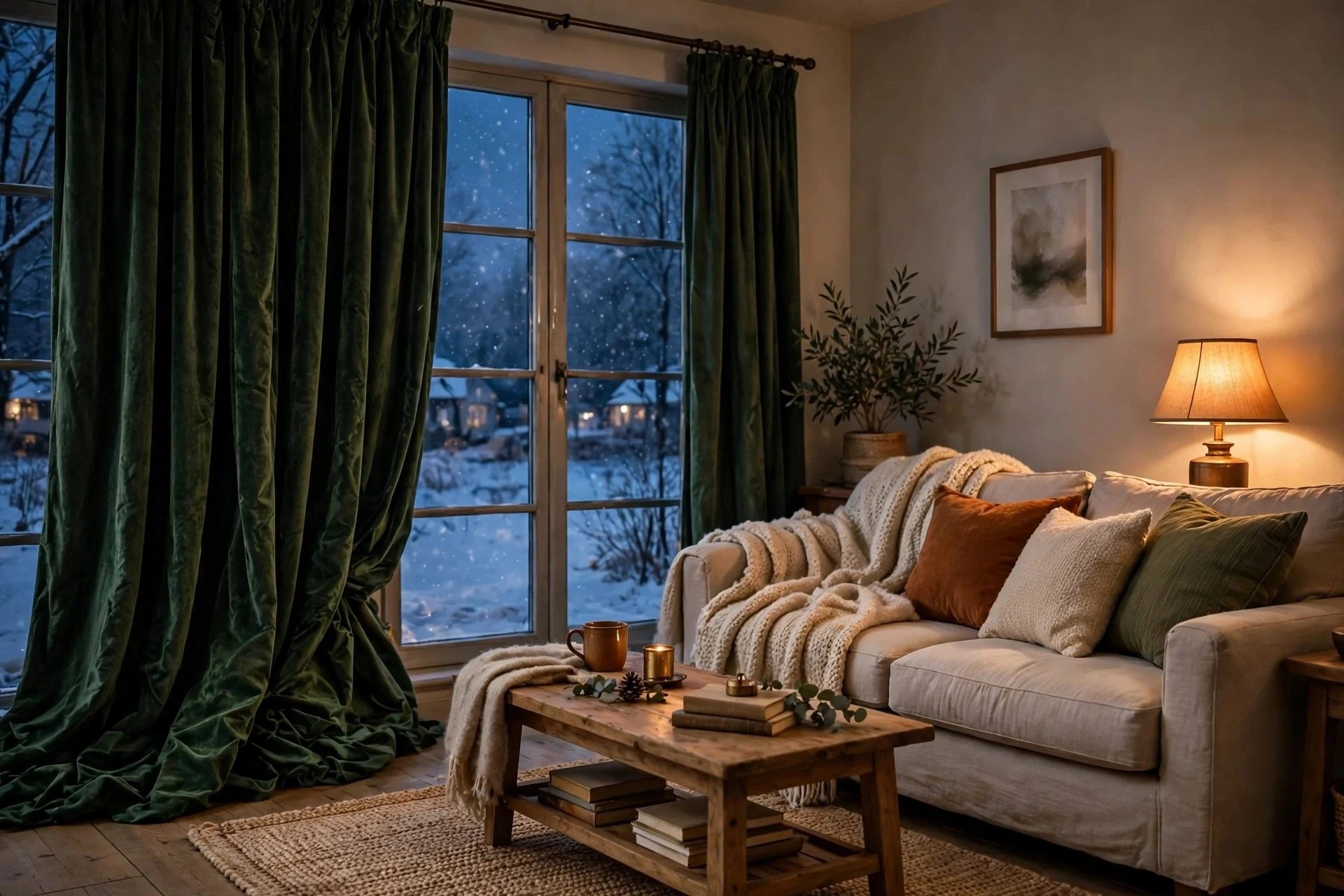
The rod is easy to forget, but the wrong one can spoil good curtains. A slim black metal rod suits a modern room, a warm brass rod lifts a neutral scheme, and a chunky wooden rod fits a rustic or country-style living room. I once hung lovely linen curtains on a flimsy rod that sagged in the middle, and the whole window looked tired. A sturdier rod fixed it straight away.
Pick a rod that is wider than the window, with finials that suit the room, and fit it high, near the ceiling if you can. Check the weight rating before you buy, especially for velvet or lined curtains, and use a centre bracket for any rod longer than about six feet.
Try this: match the rod finish to another metal in the room, like a lamp base or a picture frame, so the hardware feels planned rather than random.

8. Tiebacks and Holdbacks That Shape the Drape
Tiebacks change how curtains sit during the day, and they are a small detail that makes a big difference. A simple fabric tieback pulls the curtain into a soft curve and lets in more light, while a metal holdback on the wall holds heavier drapes neatly to the side. I skipped tiebacks in my first flat and the curtains just hung straight down, blocking half the window. Adding them opened the room up at once.
Fit holdbacks about a third of the way up from the floor, and test the position before screwing anything in. Hold the curtain where it looks right, step back, and check it from the sofa. Rope tiebacks suit a classic room, while a plain leather loop suits a modern look.
Try this: use tiebacks only on one side if your window is narrow, so the curtain sweeps across and the room still feels balanced.
9. Colour-Matched Curtains That Blend With the Walls
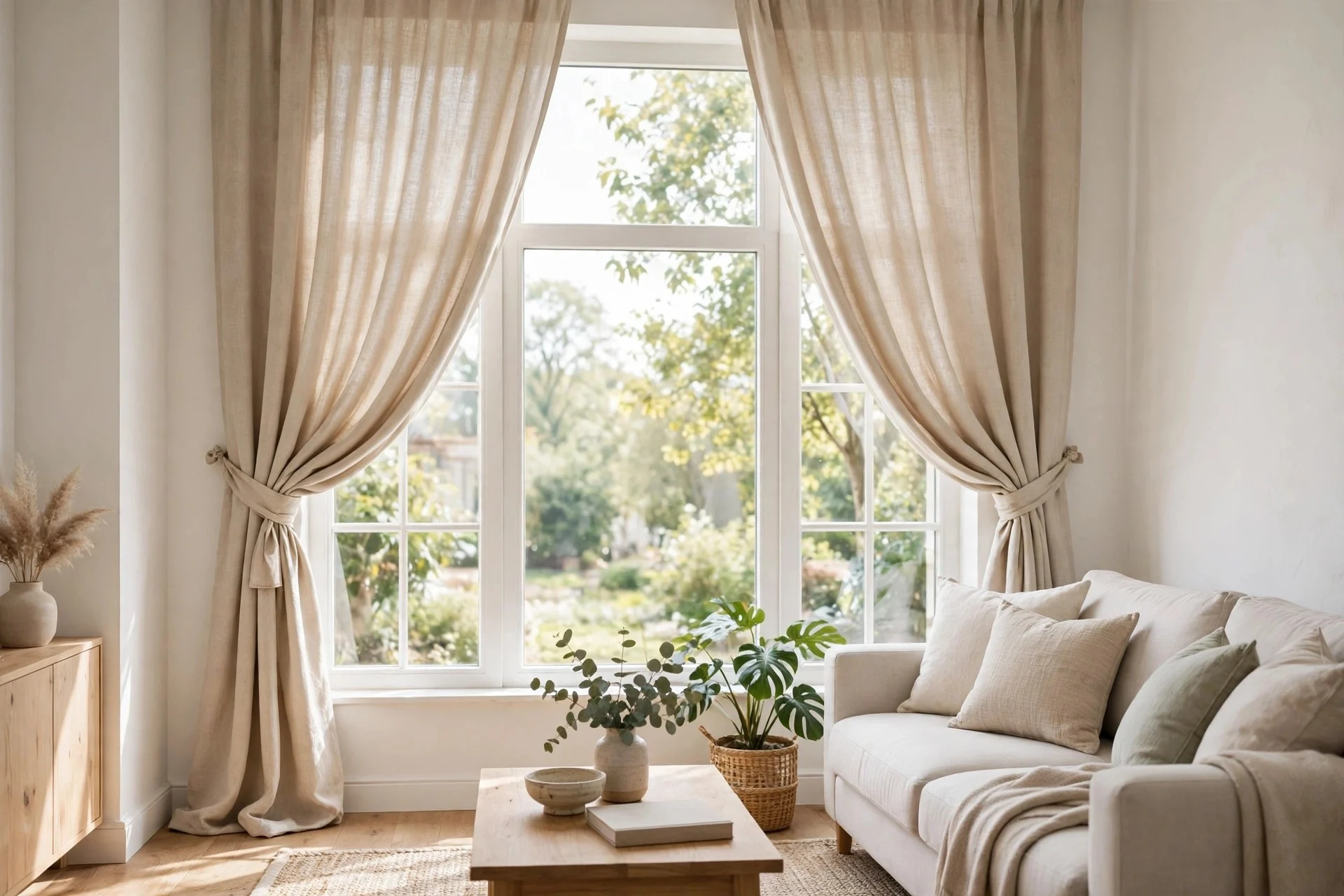
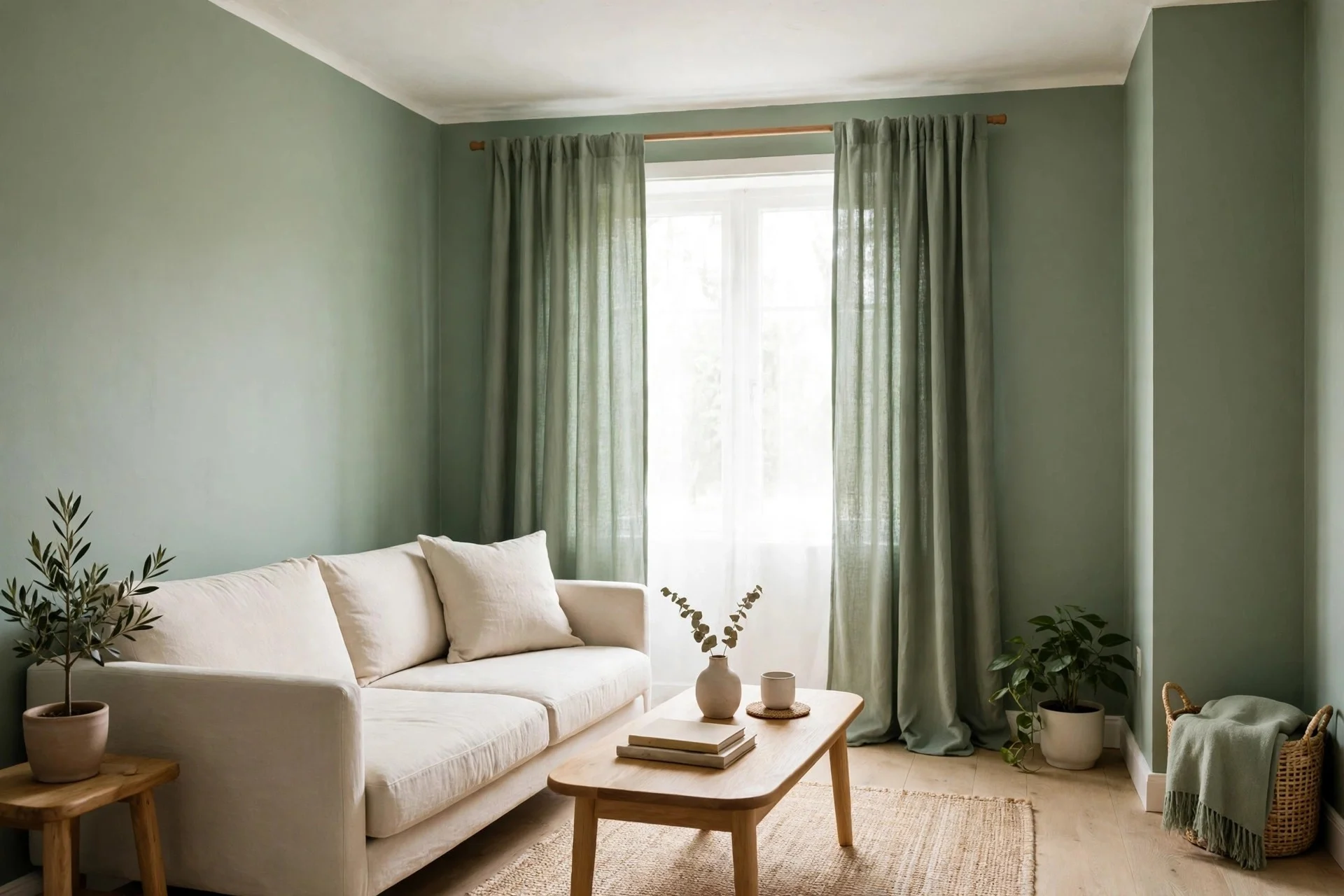
Matching your curtains to your wall colour is a quiet trick that makes a small living room feel bigger. When the fabric is a shade or two darker or lighter than the paint, the window blends into the wall instead of cutting the room in half. I tried this in a small room painted soft sage, and the curtains seemed to disappear in the best way. The room felt longer and calmer.
Take a paint chip to the shop, or order samples and hold them against the wall in daylight. A solid colour works best here, with no pattern to break the blend. Keep the fabric simple too, in linen, cotton, or a plain weave, so the texture does the work.
Try this: if you cannot find an exact match, go one shade darker than the wall, which hides the join and still keeps the room feeling calm.
10. Bay Window Curtains That Follow the Curve
Bay windows are lovely but awkward to dress. A straight rod leaves gaps at the angles, and short curtains make the bay look unfinished. The fix is a bay rod that bends around each angle, with enough panels to cover the whole curve. I measured a bay twice before ordering, and I am glad I did, as the angles were not quite even.
Measure each section separately, and order a rod made for bays, with a bend at each joint. Hang full-length panels at each end and a lighter panel in the middle for privacy without blocking the view. Let them fall to the floor or the window seat, and keep the fabric light so the bay still feels open.
Try this: hang sheers inside the bay and heavier drapes on the outer wall, so you get privacy at the glass and a soft frame around the whole bay.

11. Café Curtains for Privacy Without Losing the Light
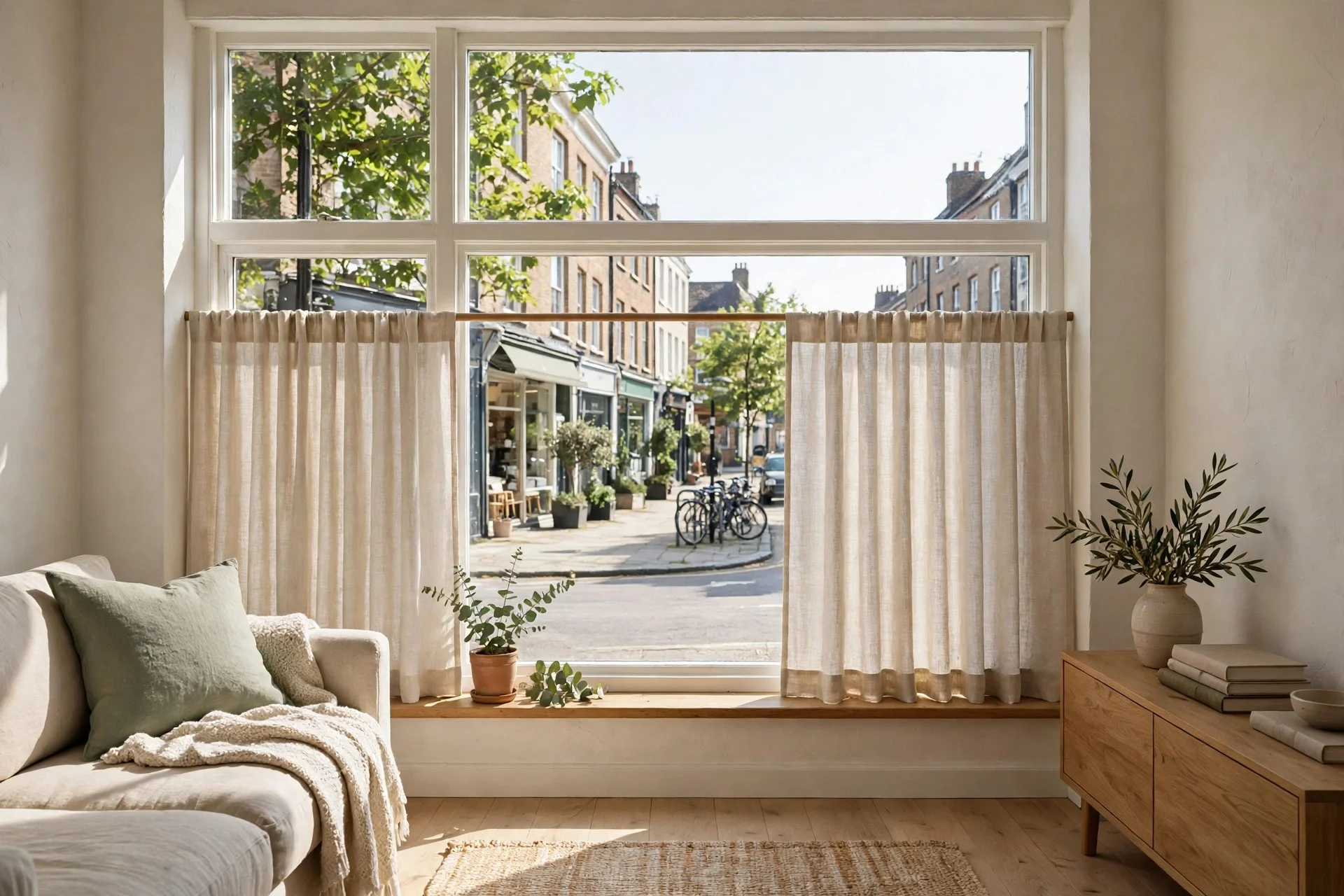
Café curtains cover only the lower half of a window, perfect for a living room that faces the street. They block the view in at eye level, but leave the top half open, so daylight still floods the room. I tried this on a ground-floor window where full curtains felt too heavy, and the room stayed bright while passers-by could no longer see straight in.
Fit a slim tension rod at about half the window’s height, and choose a light fabric like linen, cotton, or a fine check. Hem it so it ends just below the middle of the glass, and keep the gather loose so it does not look stiff. Pair it with a blind above for full privacy at night.
Try this: use café curtains on a low living room window and leave the top bare, so the room keeps its light and still feels private.
How long should living room curtains be?
Floor length suits most living rooms. Measure from the rod to the floor and aim for the hem to just touch the floor, or to rest on it by half an inch. Short curtains that stop at the sill can look unfinished unless they are café curtains, which are meant to end halfway down the window.
Should living room curtains touch the floor?
Yes, in most cases. A hem that kisses the floor looks tidy and makes the window feel taller. A slight puddle of one to two inches looks relaxed with linen or velvet, but avoid a long puddle in a busy family room, where it will collect dust and get stepped on.
What colour curtains go with a grey sofa?
Almost any colour works, but the safest choices are warm white, soft sage, navy, or a warm mustard if you want contrast. Pick a colour that already appears in a cushion, rug, or artwork, so the curtains feel connected to the room instead of random.
Are sheer curtains enough for privacy at night?
No, not on their own. Sheers give good privacy during the day, but at night, when the lights are on inside, people outside can see through them. Layer sheers with heavier drapes or a blind if you need full privacy after dark.
Final Thoughts
The best curtains are the ones that solve a real problem in your room, whether that is glare, cold, privacy, or a plain wall that needs colour. Start with one idea from this list, measure carefully, and order a sample before you buy the full length. A small swatch in your own light tells you more than any photo online.
Once the curtains are up, live with them for a week before you judge them. Open them in the morning, close them at night, and see how the room feels at different times of day. The right pair will make the whole living room feel finished, and you will wonder why you waited so long to change them.