
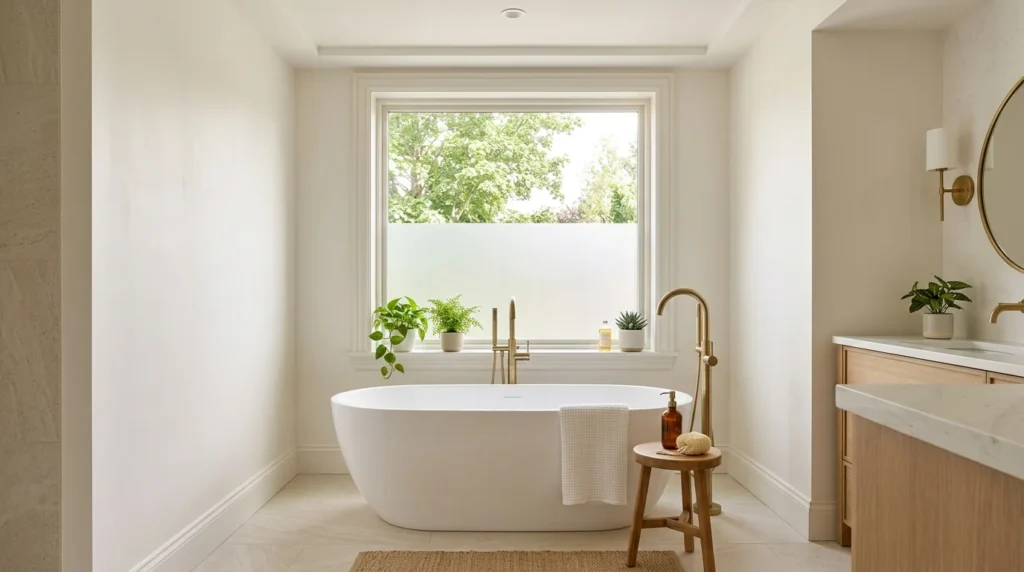
My bathroom has a single window directly above the tub, facing my neighbor’s kitchen window just close enough that for the first several months in this house, I showered with the blinds closed and the room noticeably darker than I would have liked. It felt like an unsolvable tradeoff at the time, privacy or natural light, pick one, until a friend mentioned frosted window film almost in passing, and I realized I’d never actually looked into the genuine range of options available specifically for bathroom windows. What followed was a surprisingly interesting research process, and the solution I eventually landed on finally let me have both privacy and the natural light I’d been sacrificing for months.
If your own bathroom window has you stuck in that same closed-blinds, dim-room compromise, here are 15 ideas, each explained in detail, based on what I researched, tested, and ultimately installed in my own bathroom, along with a few additional options I’ve seen work well elsewhere.
1. Frosted Window Film
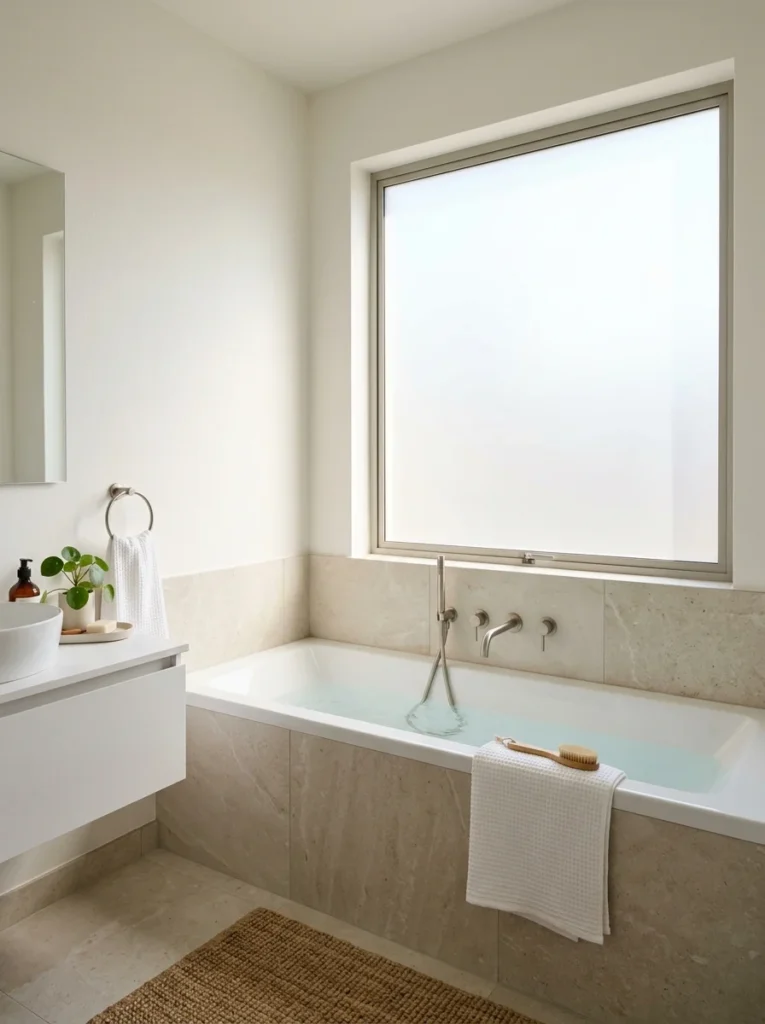
Frosted or etched-glass-look window film was the solution I ultimately chose for my own bathroom, and it remains one of the most popular options specifically because it provides genuine privacy while still allowing a considerable amount of natural light through, unlike blinds or curtains that block light along with visibility. The film applies directly to your existing glass using just water, no adhesive or professional installation required, which made it an appealing weekend project rather than something requiring a contractor or window replacement. I chose a simple, uniform frosted texture rather than a more elaborate decorative pattern, since I wanted the effect to read as a genuine etched-glass upgrade rather than an obviously applied film, and from just a few feet away, most people genuinely can’t tell it’s not permanently etched into the glass itself. This is also one of the most affordable options on this entire list, and I’d recommend it as a strong starting point for anyone wanting a meaningful privacy improvement without a significant investment or any permanent alteration to the window itself, since the film can be removed relatively easily if you ever want to revert to clear glass.
2. Frosted or Etched Glass Replacement
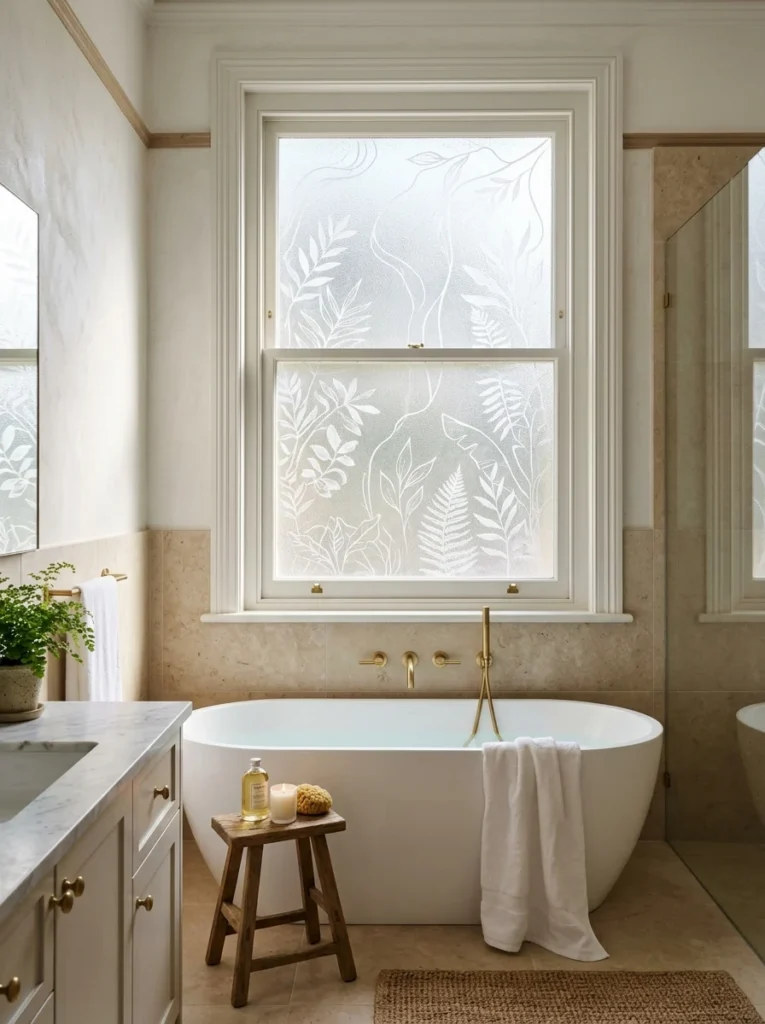
For a more permanent solution than applied film, actually replacing your bathroom window’s clear glass pane with genuinely frosted or acid-etched glass achieves the same light-while-private effect but as a permanent, built-in feature of the window itself rather than an applied surface treatment. A friend chose this route during a full bathroom renovation, replacing her window’s clear glass with a subtly textured, etched pane, and the effect is nearly identical to quality window film but without any concern about the film eventually peeling, bubbling, or needing replacement after several years of use. This is considerably more expensive than applying film to existing glass, since it requires either replacing the entire window unit or having a glass company custom-cut and install a new etched pane into your existing frame, making it more realistic as part of a larger bathroom renovation project rather than a standalone weekend fix. I’d recommend this specifically if you’re already planning a fuller bathroom renovation involving window replacement anyway, since the incremental cost of choosing etched rather than clear glass during that larger project is considerably more reasonable than treating it as an isolated, standalone window replacement.
3. Frosted Vinyl With Decorative Patterns
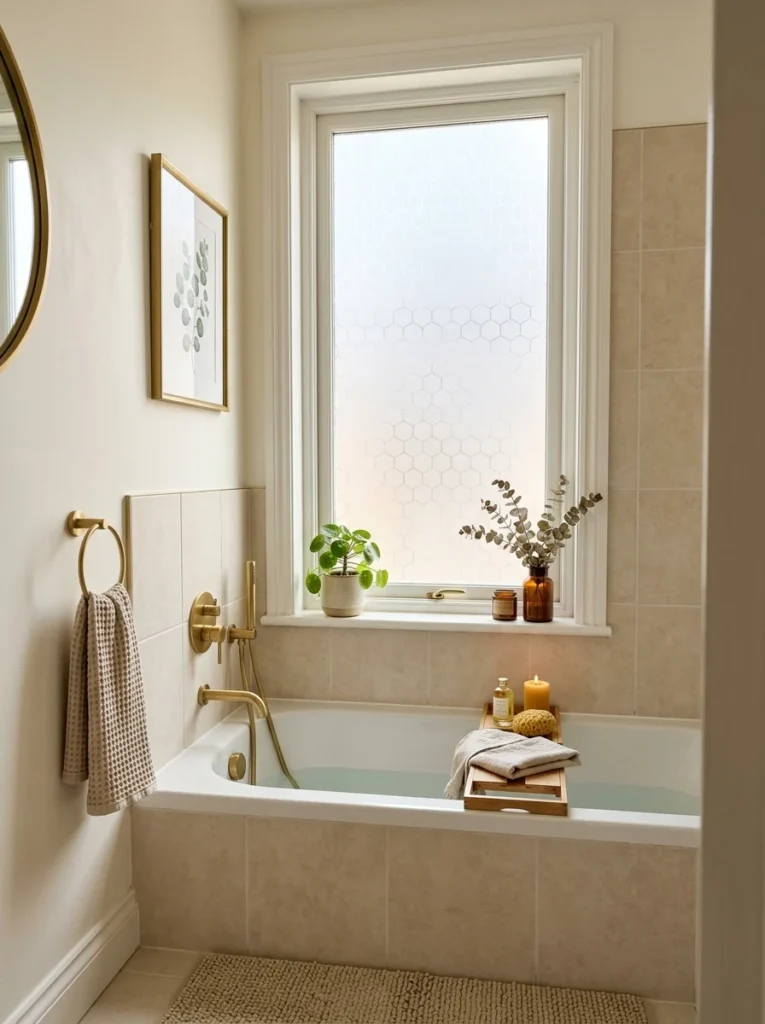
Beyond a simple uniform frosted texture, decorative window film comes in an enormous range of patterns, geometric designs, botanical motifs, simple stripes or dots, that add genuine visual interest to the window itself while still providing the same fundamental privacy benefit as plain frosted film. I considered a subtle botanical leaf pattern for my own bathroom before ultimately choosing the simpler uniform frost, but a friend who chose a geometric honeycomb pattern for her powder room window has a genuinely striking result that functions almost like decorative art on the window rather than a purely practical privacy solution. This works particularly well specifically in a powder room or secondary bathroom where the window itself might be more visually prominent or where you want the window treatment to actively contribute to the room’s overall design rather than simply disappearing into the background. I’d recommend choosing a pattern scale appropriate to your specific window size, since an intricate, detailed pattern can look busy and overwhelming on a very small window, while the same pattern might read as an appropriately scaled design feature on a larger window.
4. Frosted Bottom, Clear Top Combination
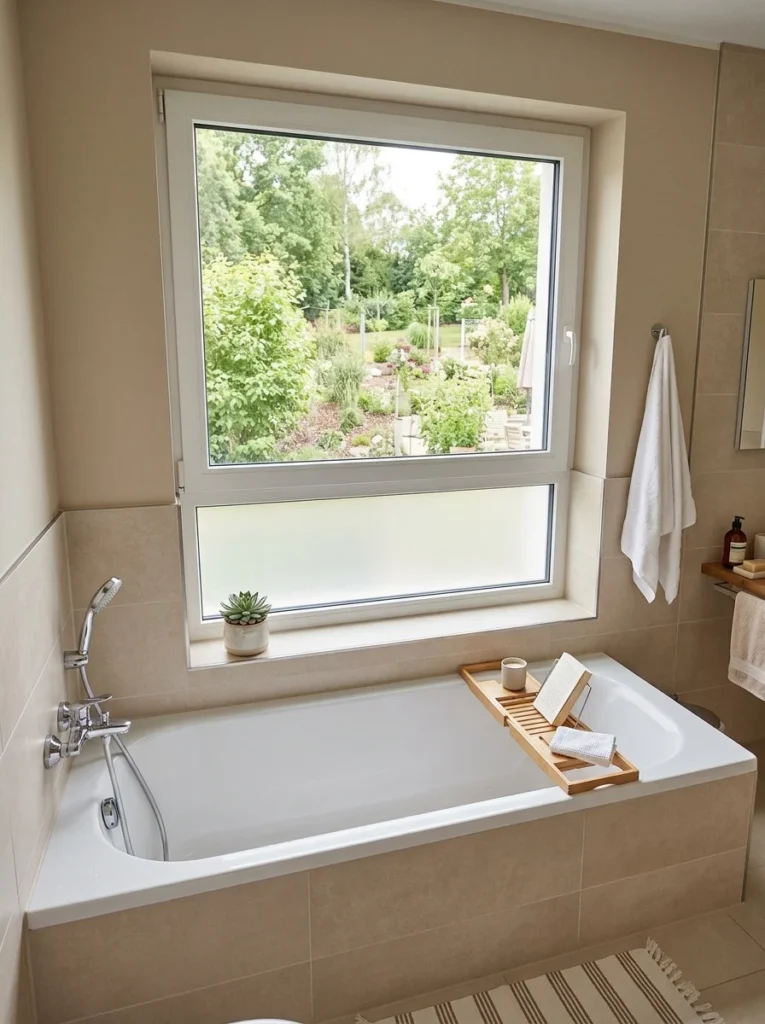
Rather than covering your entire window pane in frosted film, applying frosted film only to the lower portion of the window, typically up to shoulder or eye height for someone standing, while leaving the upper portion clear, provides privacy specifically where it matters most while still allowing an unobstructed view and maximum natural light through the window’s upper section. I actually did a version of this in my own bathroom, applying frost up to about five feet from the sill, since my window sits low enough that full coverage felt unnecessarily light-blocking for the upper portion that neighbors genuinely can’t see into regardless. This approach requires more precise measuring and cutting during film application compared to covering the entire pane uniformly, since you need a clean, straight line dividing the frosted and clear sections, but the resulting balance between privacy and light typically justifies that slightly more involved installation process. I’d recommend measuring your specific window’s height relative to typical eye level from both inside and outside before deciding exactly where that frosted-to-clear transition line should sit, since this varies depending on your window’s height and how it’s actually positioned relative to your property’s specific sightlines from outside.
5. Sheer or Semi-Sheer Curtains
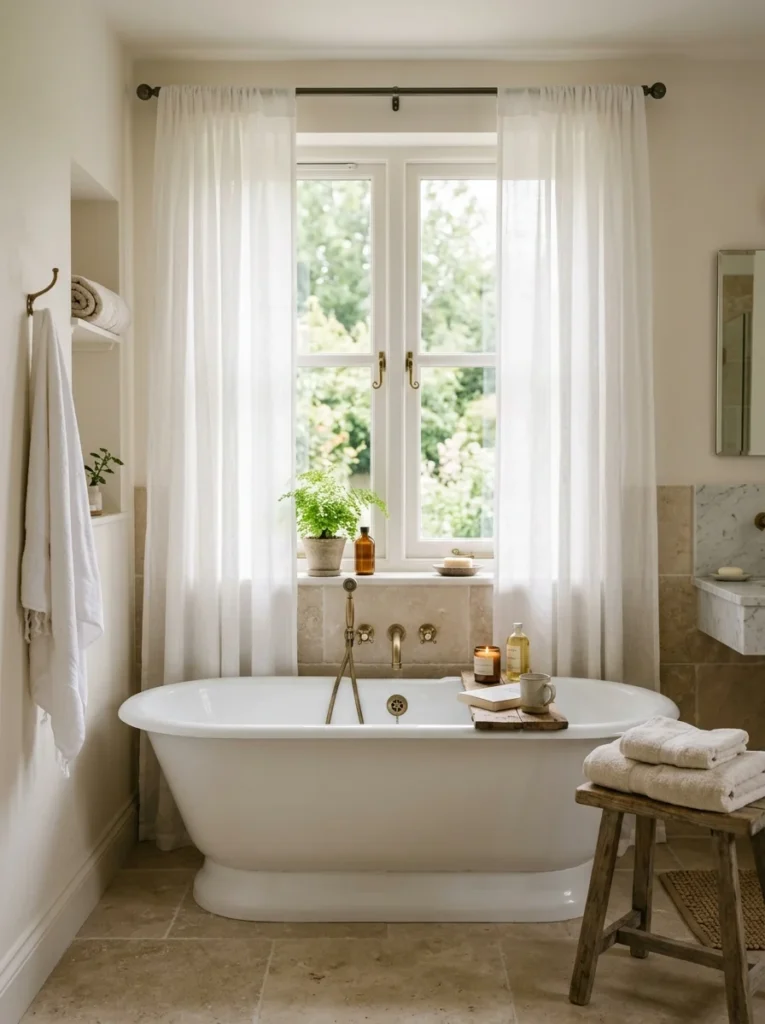
For bathrooms where a softer, more traditional window treatment feels more appropriate than window film, lightweight sheer curtains provide a gentle layer of privacy while still allowing considerable natural light to filter through the fabric, though it’s worth noting this approach generally provides less complete privacy than frosted glass or film, particularly after dark when interior lights are on and a bathroom’s windows become more visible from outside. A friend uses simple white linen sheers on her bathroom window specifically because she wanted a softer, more textile-based look consistent with the rest of her home’s window treatments rather than the more architectural, permanent quality of frosted glass. This option works best for bathroom windows that don’t face directly onto a neighbor’s window or a heavily trafficked area, since the privacy level, while real during daylight hours, isn’t as complete or reliable as some of the more solid options elsewhere on this list. I’d recommend pairing sheers with a secondary, more substantial privacy layer, a roller shade or additional frosted film, specifically for use during evening hours when interior lighting makes sheer fabric alone considerably less effective at maintaining genuine privacy.
6. Top-Down Bottom-Up Cellular Shades
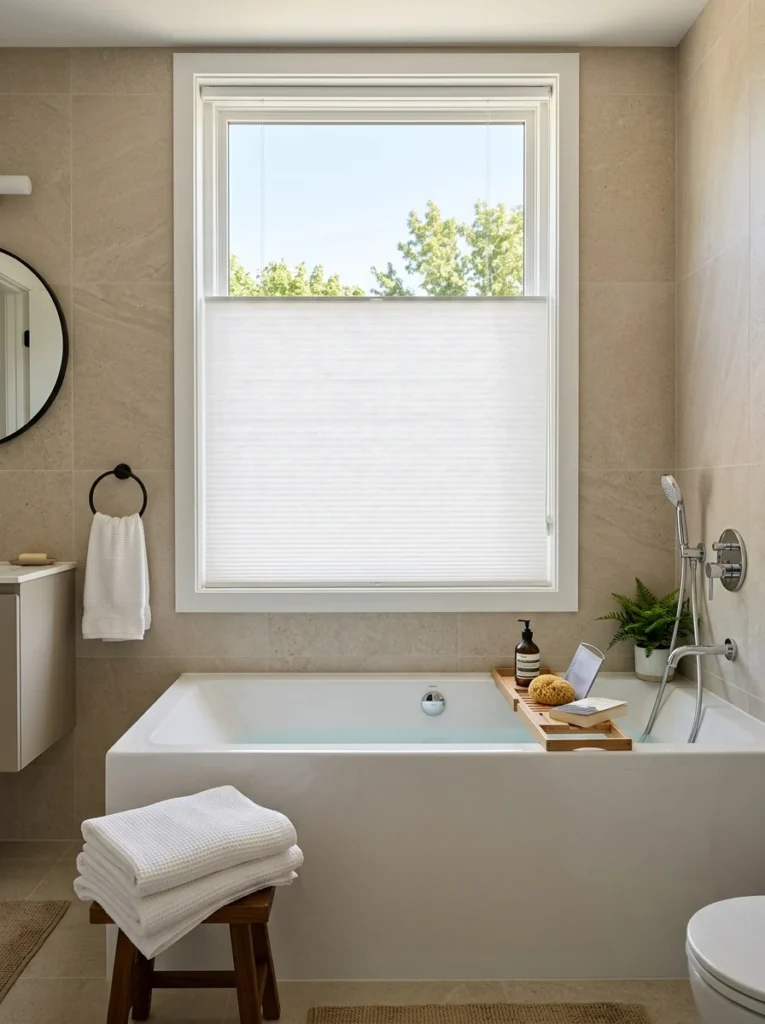
A specific style of window shade that can be adjusted from either the top or the bottom independently, top-down bottom-up cellular shades let you maintain privacy across the lower portion of your window, blocking sightlines from ground level or a neighboring window, while still allowing the upper portion to remain open for natural light. I looked into this option seriously before choosing frosted film, and a friend who ultimately chose this route for her own bathroom appreciates the flexibility of being able to adjust exactly how much of the window is covered depending on the specific situation and time of day. This tends to be a more expensive option compared to basic window film, given the more complex shade mechanism required to allow that independent top and bottom adjustment, but it offers genuine flexibility that a fixed frosted film or glass simply can’t match, since you can fully open the shade entirely when privacy genuinely isn’t a concern. I’d recommend this specifically for bathroom windows in a position where privacy needs actually vary meaningfully throughout the day or depending on specific circumstances, rather than a bathroom where privacy is consistently needed at essentially all times regardless of the hour.
7. Faux Wood Blinds
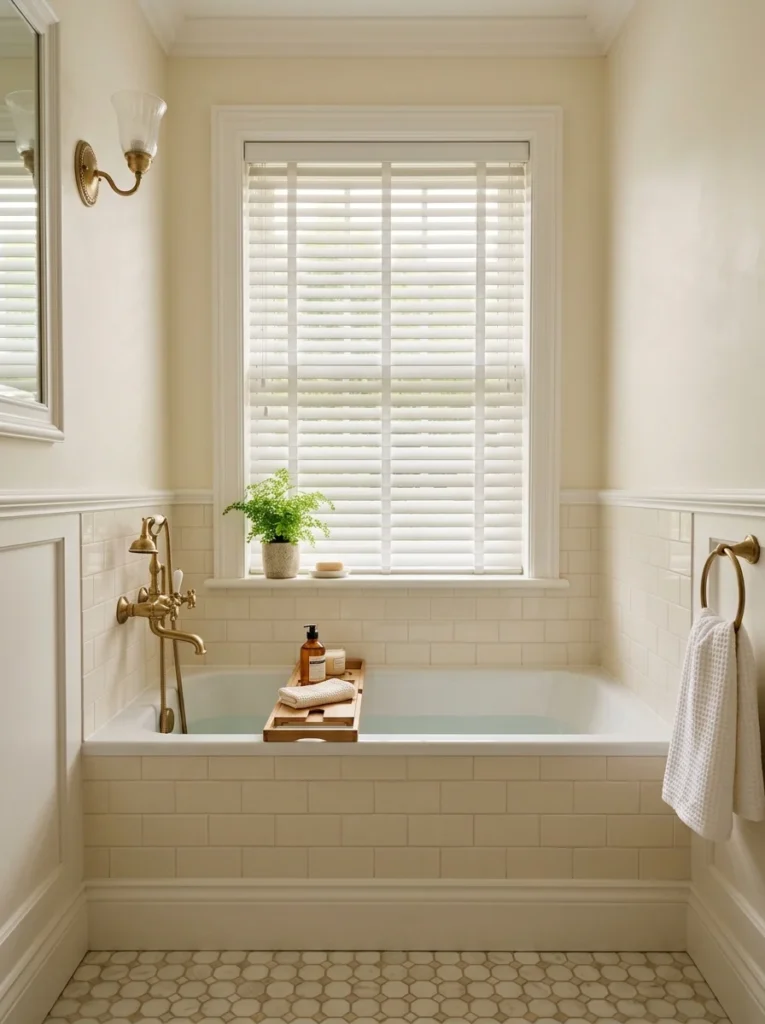
Faux wood blinds provide a genuinely effective, moisture-resistant privacy solution specifically suited to a bathroom’s humid environment, where genuine wood blinds can warp or deteriorate over time from consistent exposure to steam and moisture that faux wood, typically a PVC or composite material, handles considerably better. A friend chose white faux wood blinds for her bathroom specifically for this durability reason, appreciating that she doesn’t need to worry about warping or damage the way she might with actual wood blinds in a room that regularly deals with hot shower steam. This is one of the more traditional, widely available privacy solutions, and adjustable slats mean you retain genuine flexibility to control both privacy and light throughout the day, tilting the slats to allow some light through while still blocking direct sightlines, or closing them completely when maximum privacy is needed. I’d recommend choosing a moisture-resistant faux wood specifically over genuine wood for any bathroom application, regardless of how attractive genuine wood blinds might look in photos, since the practical durability difference in a consistently humid environment genuinely matters over the blind’s actual lifespan.
8. Roller Shades With Blackout or Room-Darkening Fabric
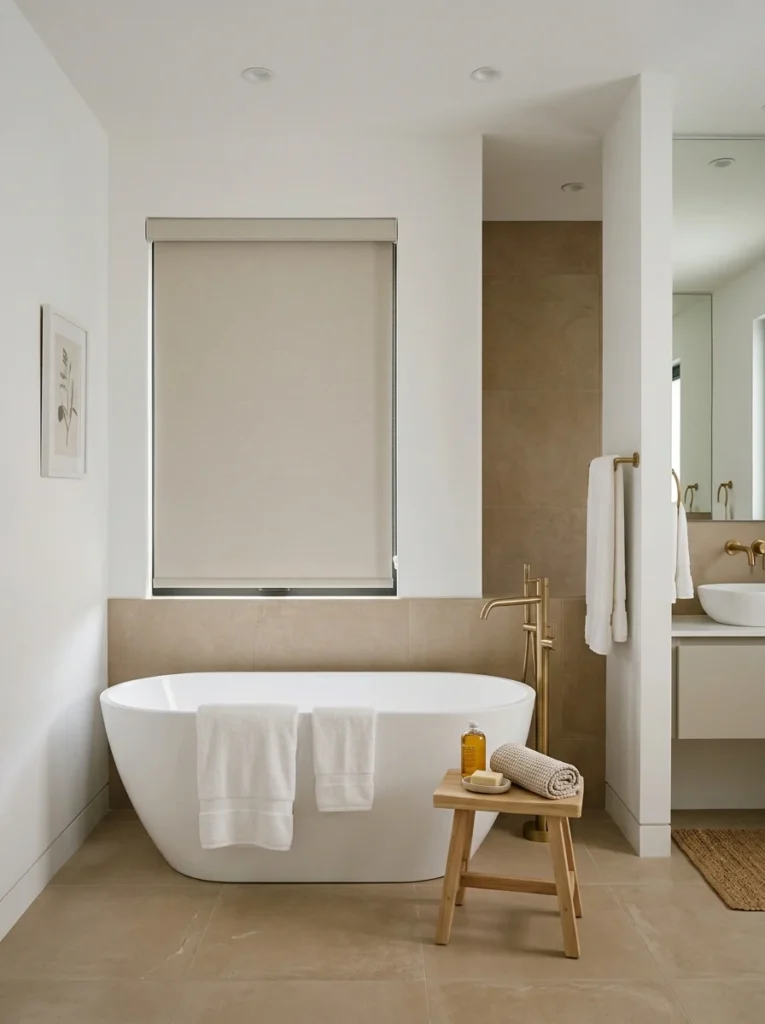
For bathrooms wanting maximum privacy and light control in a single, relatively simple window treatment, a roller shade in a blackout or room-darkening fabric provides complete coverage when fully lowered while rolling up neatly and completely out of view when full light and an open window feel are preferred. I considered this option for my own bathroom before choosing frosted film, since I specifically wanted some natural light to remain even when the shade equivalent, my frosted film, was providing privacy, whereas a blackout roller shade fully lowered blocks essentially all light along with all visibility. This works particularly well for bathrooms where complete darkness is occasionally desired, whether for a relaxing bath by candlelight or simply personal preference, giving you that full-blackout option unavailable with frosted film or glass, which always allows some diffused light through regardless of privacy needs. I’d recommend this specifically if maximum flexibility between fully private and fully open matters more to you than maintaining some baseline level of natural light at all times, since the tradeoff with this particular option is genuinely binary rather than the more consistent middle-ground light diffusion that frosted glass or film provides.
9. Stained Glass or Decorative Glass Inserts
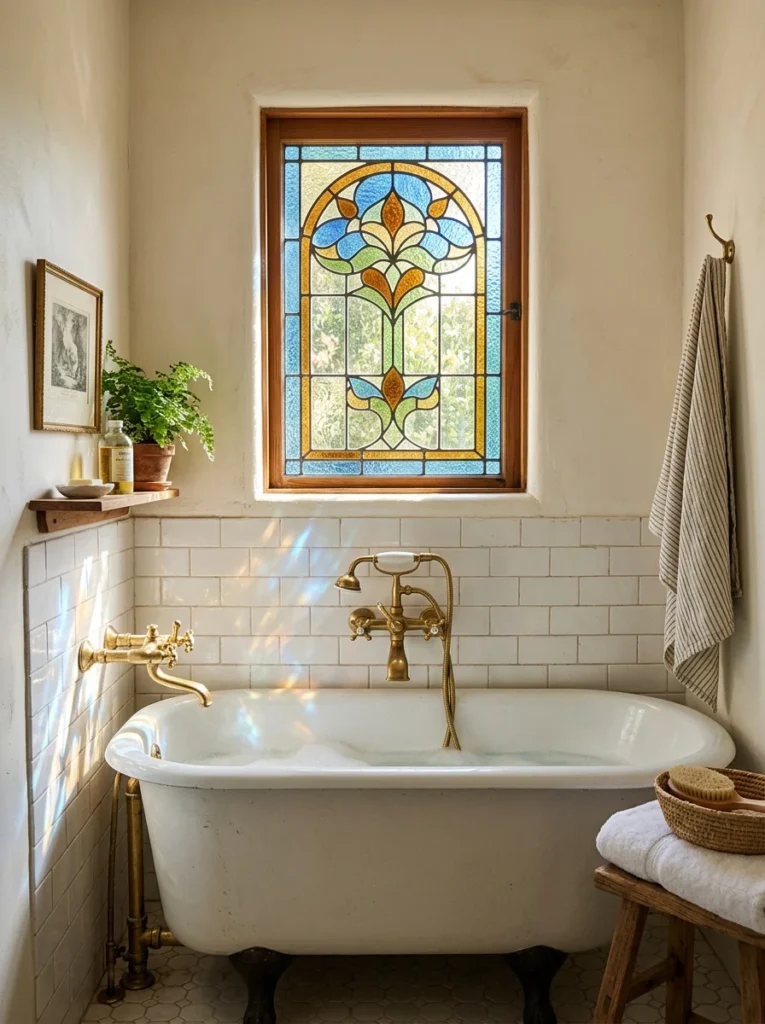
For a genuinely distinctive, artistic approach to bathroom window privacy, stained glass or decorative leaded glass inserts, whether a full custom stained glass window or a smaller decorative panel inserted into a portion of your existing window, transform the privacy solution into a genuine piece of functional art. A friend commissioned a custom stained glass panel for her powder room window, incorporating colors that echo her tile choices elsewhere in the room, and the result functions simultaneously as her window’s privacy solution and one of the room’s most distinctive design features. This is considerably more expensive and involved than most other options on this list, typically requiring a custom glass artist or specialized supplier, along with proper installation into your existing window frame, making it more realistic as a considered investment for a bathroom you’re particularly excited to make distinctive rather than a standard, budget-conscious solution. I’d recommend this specifically for a smaller powder room or a bathroom where you’re genuinely willing to invest in a truly custom, artistic window treatment, since the cost and complexity involved make it a less practical choice for a purely functional, budget-focused privacy solution.
10. Exterior Landscaping for Natural Screening
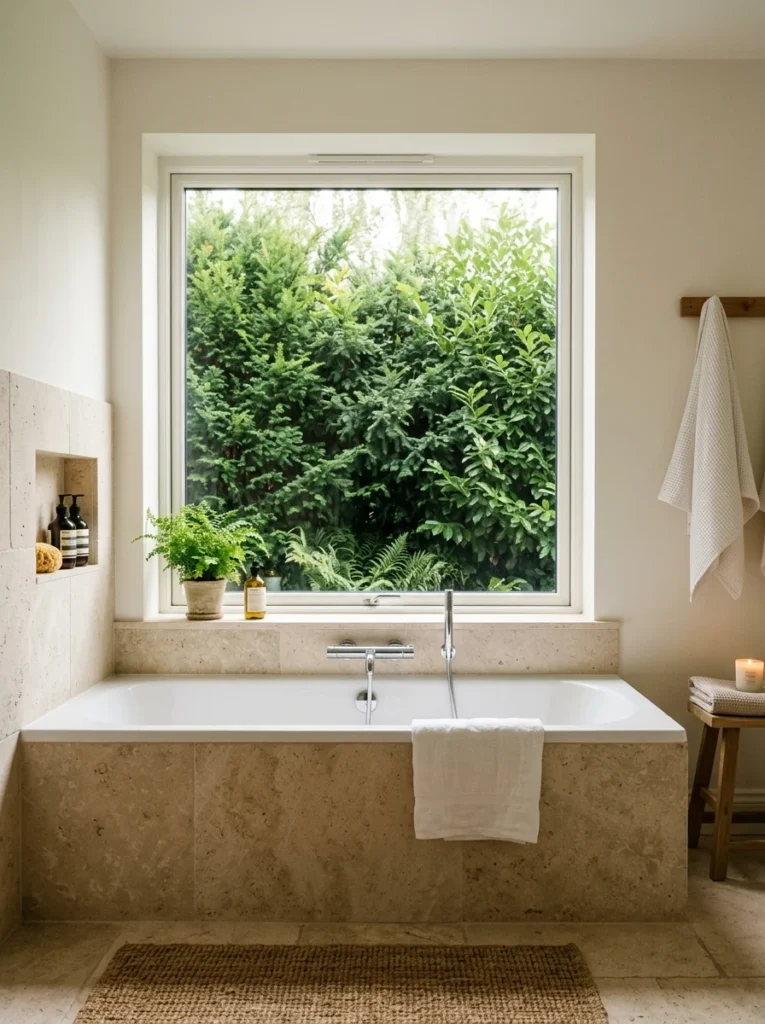
Rather than addressing privacy purely through the window treatment itself, strategically planted shrubs, small trees, or a trellis with climbing vines positioned outside your bathroom window can provide a genuine natural screen that blocks direct sightlines from outside while allowing you to keep the window’s interior treatment considerably more minimal or even entirely absent. A friend with a ground-floor bathroom window planted a dense evergreen shrub directly outside specifically for this purpose, and the natural screening has been effective enough that she rarely bothers closing any interior window treatment at all, relying primarily on the exterior landscaping for her actual privacy. This approach obviously only works for windows with appropriate exterior access for planting, ruling it out for upper-floor windows or windows without adjacent usable outdoor space, and it also requires patience, since shrubs and trees take time to grow into a genuinely effective privacy screen rather than providing an immediate solution the way applied window film does. I’d recommend this specifically as a longer-term, complementary strategy alongside a more immediate interior solution, rather than relying on it as your sole privacy method while waiting years for plantings to mature into genuinely effective coverage.
11. Pebbled or Textured Glass Block Windows
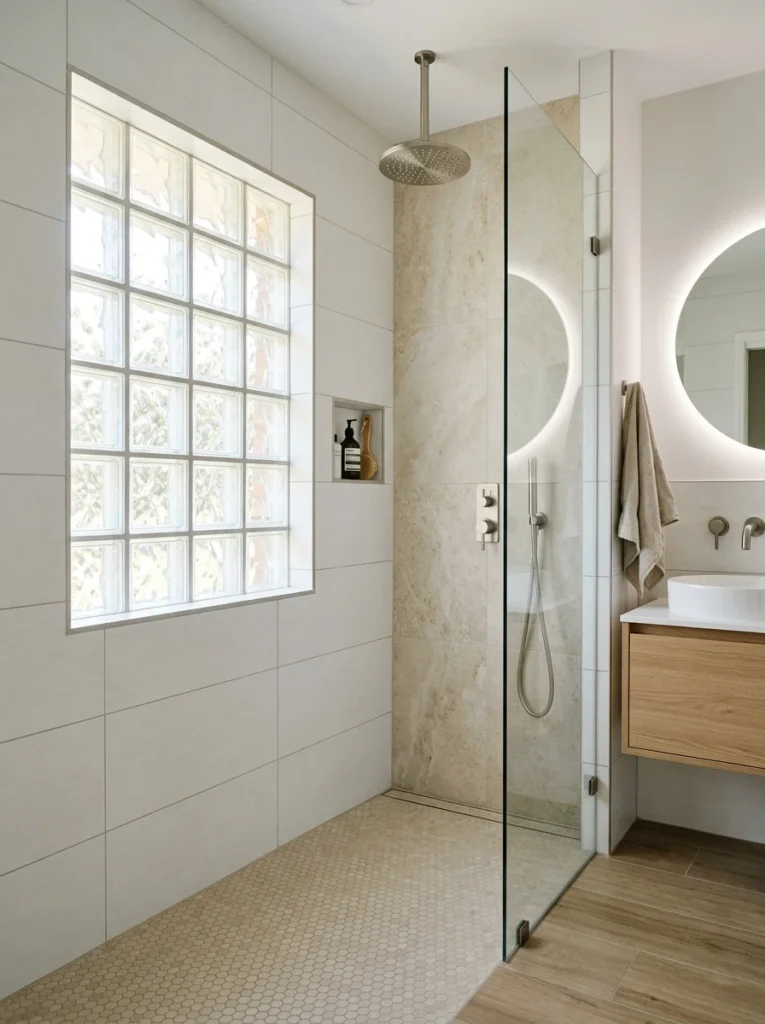
For bathrooms with significant window replacement flexibility, particularly during a full renovation, replacing a standard window entirely with glass block, individual textured glass units mortared together similar to brick, provides an extremely effective, permanent privacy solution while still allowing substantial diffused natural light through the textured glass surface. A friend used this approach for her walk-in shower’s window, since the shower’s specific location made privacy an especially critical concern, and the glass block provides essentially complete visual privacy while the room still receives considerable natural light throughout the day. This is a more architectural, permanent renovation choice compared to most other options on this list, typically requiring a full window opening modification rather than simply treating or replacing the glass within an existing standard window frame, making it best suited for a genuine full bathroom renovation rather than a simpler standalone privacy upgrade. I’d recommend this specifically for a shower or tub area with particularly acute privacy concerns, since glass block provides a level of permanent, essentially foolproof privacy that other lighter treatments like film or shades can’t quite match, though the tradeoff is losing the ability to ever open that window for ventilation unless specific ventilating glass block units are incorporated into the design.
12. Combine Multiple Layers for Maximum Flexibility
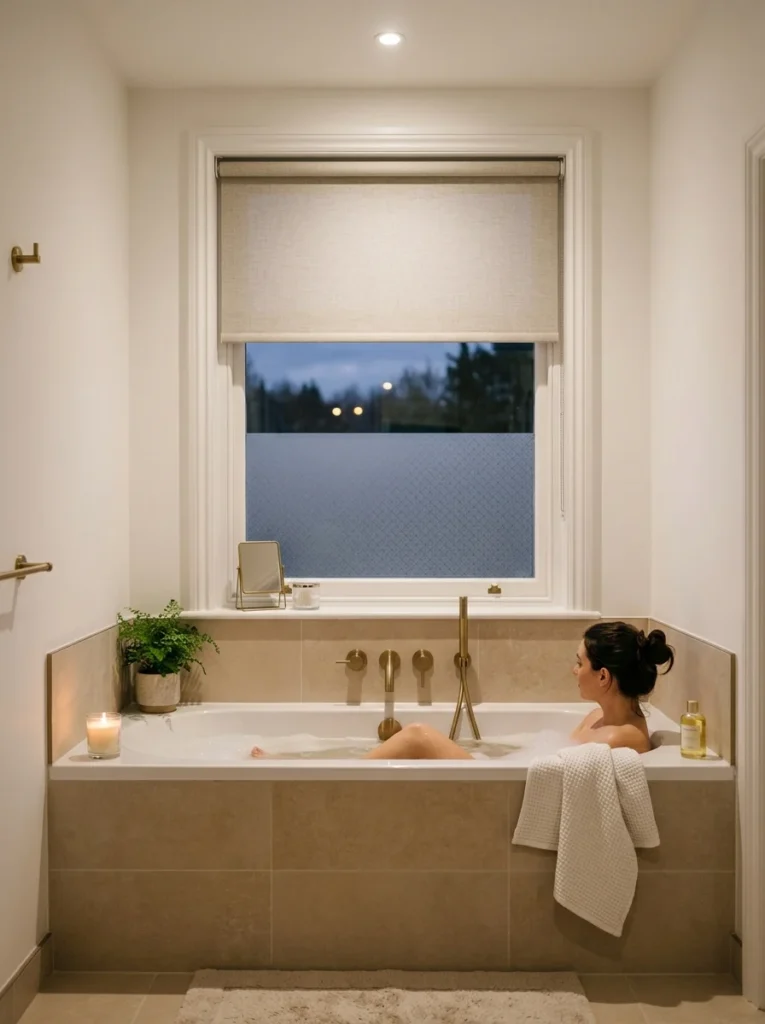
Rather than relying on a single privacy solution, layering two different approaches, frosted film paired with a simple roller shade, or sheers combined with faux wood blinds, gives you genuine flexibility to adjust your exact level of privacy and light depending on the specific situation, time of day, or personal preference in any given moment. My own bathroom actually uses this layered approach, frosted film as the baseline permanent privacy layer, supplemented by a simple roller shade I can lower for additional coverage during evening hours when interior lighting makes even frosted glass somewhat more visible from outside after dark. This layered approach costs more than committing to just one single solution, since you’re purchasing and installing two separate treatments rather than one, but the added flexibility genuinely addresses the different privacy needs that exist at different times, daytime versus nighttime, or shower versus simply using the sink, that a single fixed solution can’t fully accommodate on its own. I’d recommend this specifically for bathroom windows facing genuinely close neighboring properties, where the stakes of getting privacy wrong feel higher and the added cost of a layered approach feels more clearly justified by the resulting peace of mind.
13. Choose Frosted Shower Glass Instead of a Curtain for Enclosed Showers
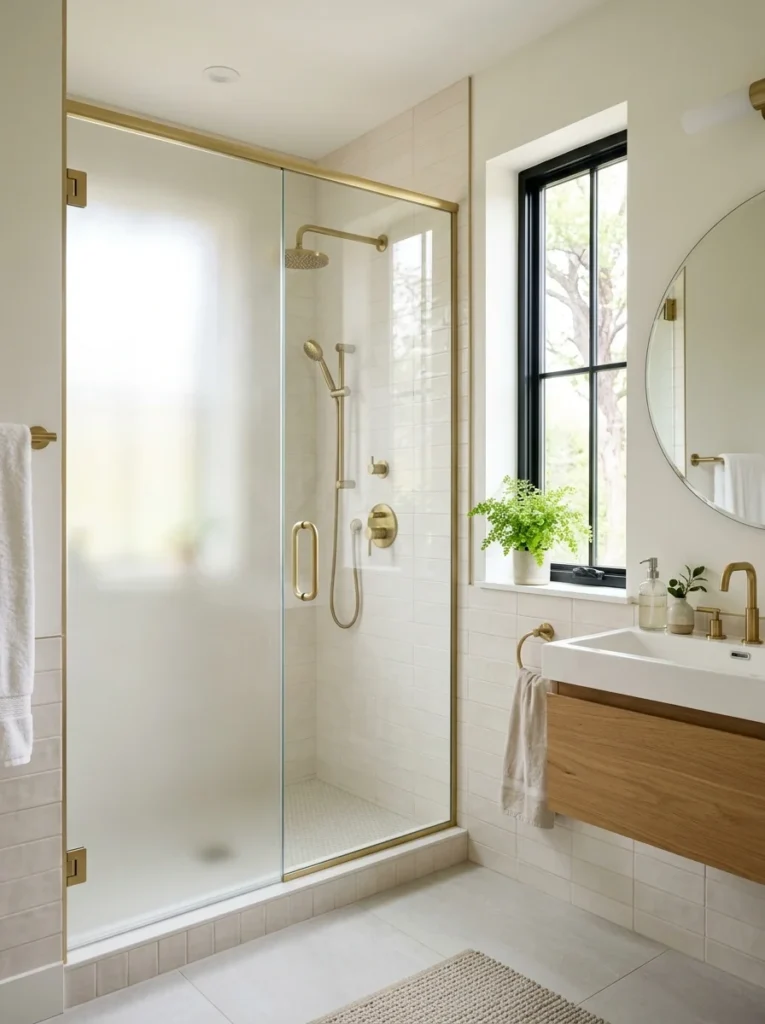
For bathrooms where the actual window sits directly adjacent to or within view of an enclosed glass shower, choosing frosted rather than clear glass for the shower enclosure itself addresses privacy at that specific interior point, which matters particularly for households with multiple people using the bathroom throughout the day where interior, not just exterior, privacy becomes a genuine consideration. A friend chose frosted shower glass specifically for this reason, since her bathroom’s layout means the shower is visible directly from the door, and frosted shower glass addresses that interior sightline concern separately from whatever treatment she’s chosen for the actual window itself. This is technically a slightly different category from window privacy specifically, but it’s worth considering together as part of a comprehensive bathroom privacy plan, since window treatments alone don’t address interior visibility concerns within a shared household bathroom that a family or multiple roommates use throughout the day. I’d recommend evaluating your bathroom’s overall layout and who actually uses the space regularly before finalizing your privacy plan, considering both the window and any glass shower enclosure together as one cohesive privacy strategy rather than addressing them as completely separate, unrelated decisions.
14. Use a Window Well or Recessed Sill for Added Depth
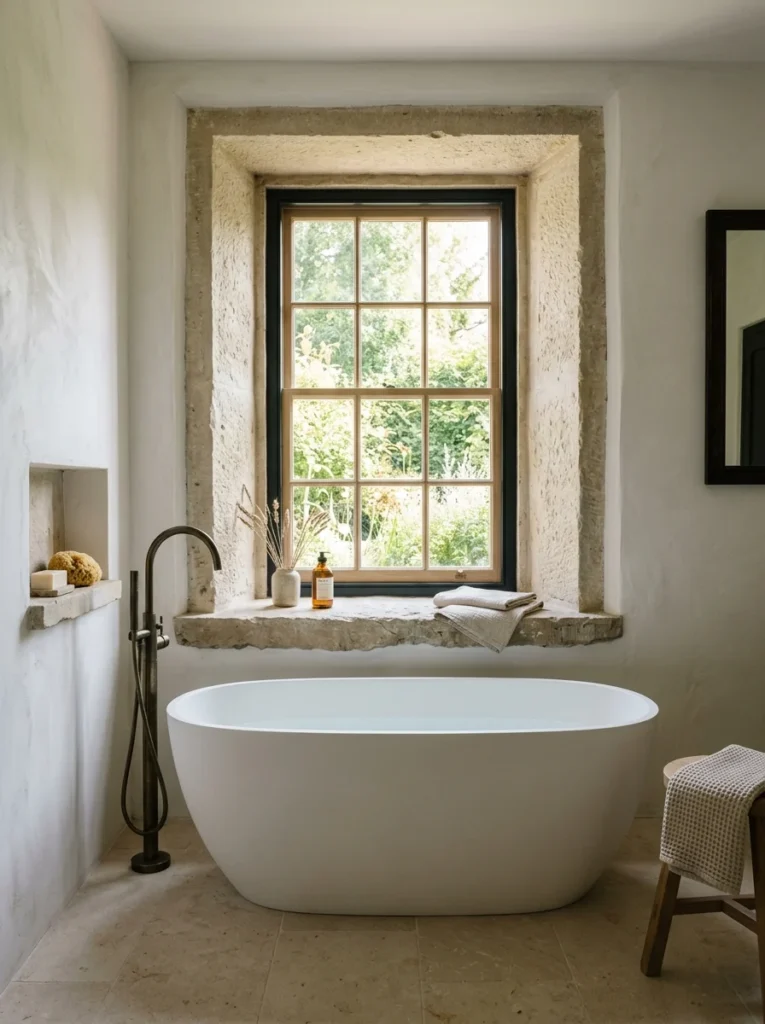
If you’re planning a full bathroom renovation involving structural changes, building out a slightly recessed window well or deeper sill can create additional physical distance between the window glass itself and anyone standing in the bathroom, which subtly reduces how directly visible the interior is from outside even without any additional glass treatment, purely through that added architectural depth and the shadow it creates. A friend’s contractor suggested this approach during her renovation specifically for a bathroom window positioned at an angle where full privacy treatment felt slightly excessive given the specific sightlines involved, and the deeper sill alone provided enough additional visual buffer to meet her actual privacy needs without any frosted glass or film required at all. This is a more subtle, architectural solution rather than a direct window treatment, and it works best specifically for windows where the sightline concern is relatively minor to begin with, rather than a window that’s very directly and closely visible from a neighboring structure where this approach alone likely wouldn’t provide sufficient privacy on its own. I’d recommend this specifically as a complementary architectural consideration during a fuller renovation involving structural window changes anyway, rather than a standalone solution to pursue in isolation for an existing window that isn’t otherwise being modified.
15. Consult Your Specific Sightlines Before Choosing Any Solution
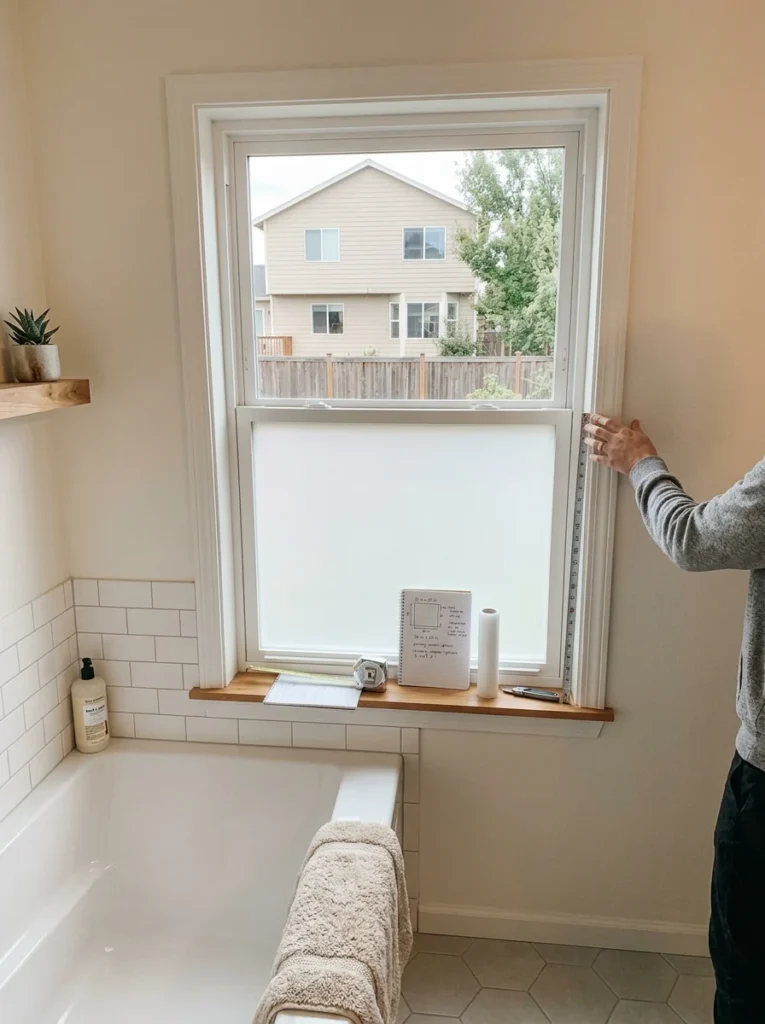
The final and genuinely most important piece of advice applies regardless of which specific option from this list you’re considering, and it’s the step I wish I’d taken more seriously before spending time researching options that ultimately weren’t necessary given my bathroom window’s actual specific circumstances. Before choosing any privacy solution, I’d recommend actually standing outside at various points around your property, and if possible having a friend do the same at different times of day, specifically observing what’s genuinely visible through your bathroom window from those various vantage points, since the actual privacy concern is often less severe, or sometimes more severe, than initial assumptions might suggest without this direct verification. My own window, once I actually checked from my neighbor’s likely sightline rather than just assuming based on the two houses’ general proximity, turned out to have less direct visibility than I’d initially feared, which meant I could reasonably choose a less aggressively opaque solution than I might have otherwise selected out of unverified worry alone. I’d recommend this direct verification step before investing in any specific solution from this list, since it genuinely changes which option actually makes sense for your particular window’s specific circumstances rather than assuming a maximum-privacy solution is automatically necessary without confirming your window’s actual real-world visibility first.
Final Thoughts
Looking back at those first several months of showering with the blinds closed and the room noticeably dimmer than I wanted, purely out of an assumption that privacy and natural light were fundamentally incompatible in a bathroom, it’s genuinely satisfying how simply and affordably that supposed tradeoff got resolved once I actually researched the available options. Between all 15 of these ideas, the underlying theme is really that bathroom window privacy doesn’t have to mean sacrificing natural light entirely, and the right solution depends considerably on your specific window’s location, your budget, and how much flexibility you actually need between fully private and fully open at different times.
If your own bathroom window has you stuck in a similar closed-blinds compromise, I’d suggest starting with frosted window film specifically, given how affordable, quick to apply, and genuinely effective it is for most standard bathroom privacy needs, before considering any of the more involved or expensive options elsewhere on this list. That’s ultimately the solution that worked for my own bathroom, and months later, I still notice and appreciate the natural light every single time I walk in, something I’d genuinely forgotten was possible during those earlier months of keeping the blinds permanently closed.
My name is James William, and I write about practical, real-world home decor ideas that don’t require a full renovation budget to make a genuine difference in how a room feels and functions.