
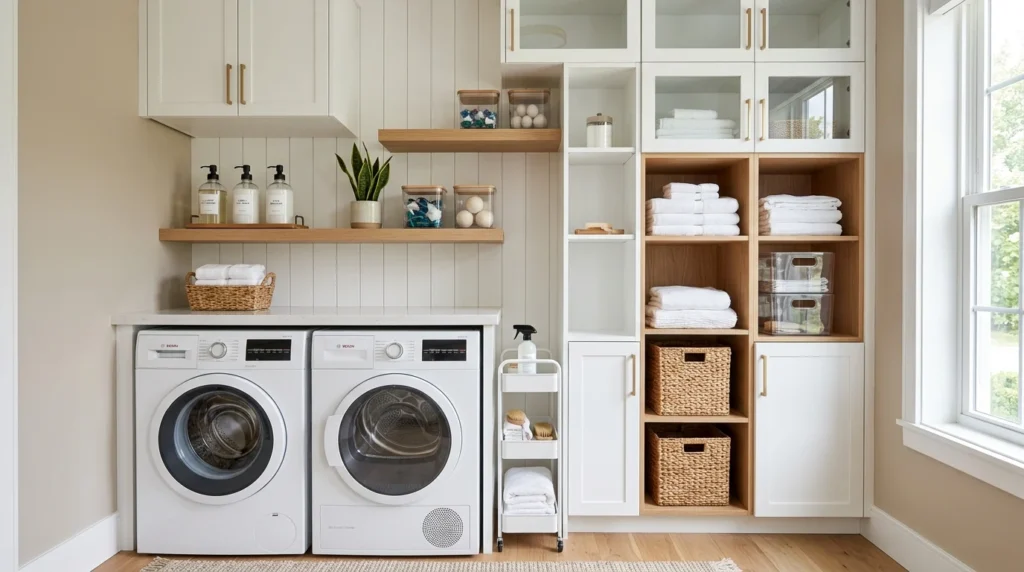
Even after I’d finally addressed my narrow laundry closet’s basic layout a while back, I realized there was a second, separate problem I hadn’t fully solved, the actual storage system for everything that lives in that room beyond just the washer and dryer themselves. Detergent bottles in various states of fullness, a tangle of mismatched hangers, a single sock that had been sitting on top of the dryer for what was clearly several weeks at that point, all of it technically had a home in the room but none of it had an actual system behind where things went. That realization sent me down a second round of research, this time focused specifically on storage rather than layout, and the difference between a laundry room that simply contains your supplies versus one that actually organizes them turned out to be considerably more significant than I’d initially expected.
If your own laundry room’s storage still feels more like accumulated chaos than an actual system, here are 17 ideas, each explained in detail, based on what I ultimately implemented and what I’ve seen work well in other laundry rooms since.
1. Decant Detergent Into Matching Containers
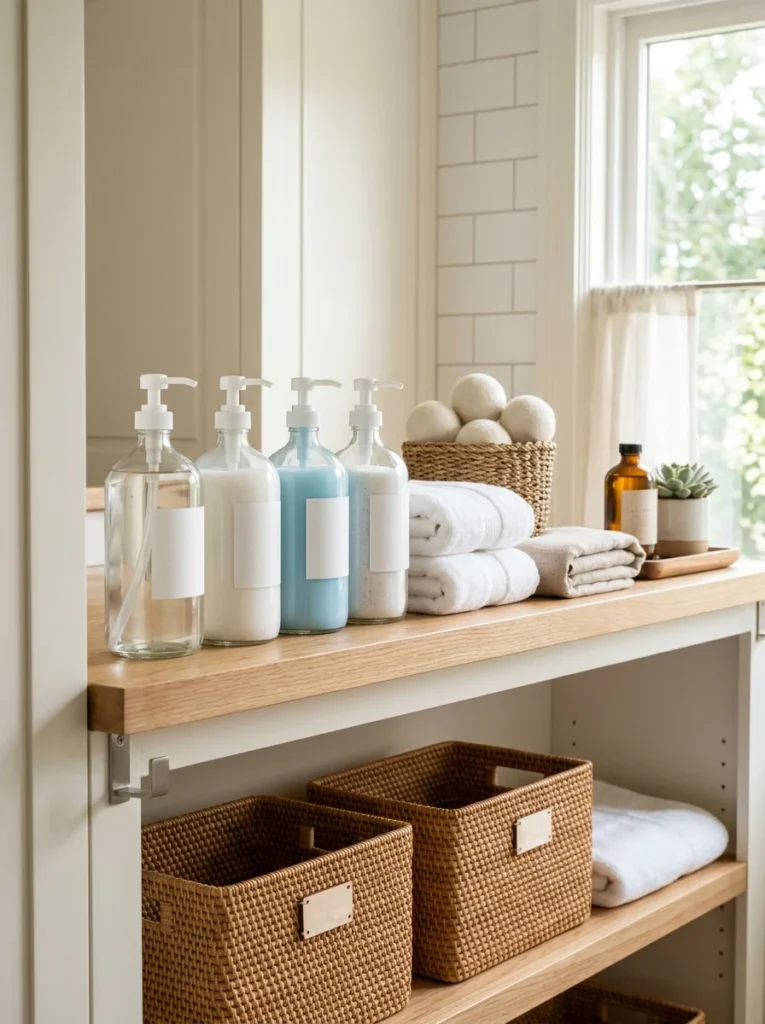
Switching from an assortment of mismatched detergent bottles in various states of fullness to matching, refillable containers creates immediate visual order while also letting you actually see how much product remains at a glance, rather than needing to pick up and shake a bottle to gauge the remaining amount. I decanted my detergent, fabric softener, and stain remover into simple glass containers with clearly labeled pumps, and beyond the improved appearance, being able to see exactly how much product remains has genuinely helped me avoid running out mid-wash more often than I’d like to admit happened under my previous system. I’d recommend choosing containers with a wide enough opening to make refilling genuinely easy rather than a narrow spout requiring a funnel every time, since a refilling process that’s more annoying than necessary tends to result in the habit eventually being abandoned in favor of reverting back to original, mismatched packaging. This is one of the more visually impactful, relatively low-cost storage upgrades available for any laundry room, transforming a shelf of mismatched product packaging into something that looks considerably more intentional and put together.
2. Install Adjustable Shelving for Changing Needs
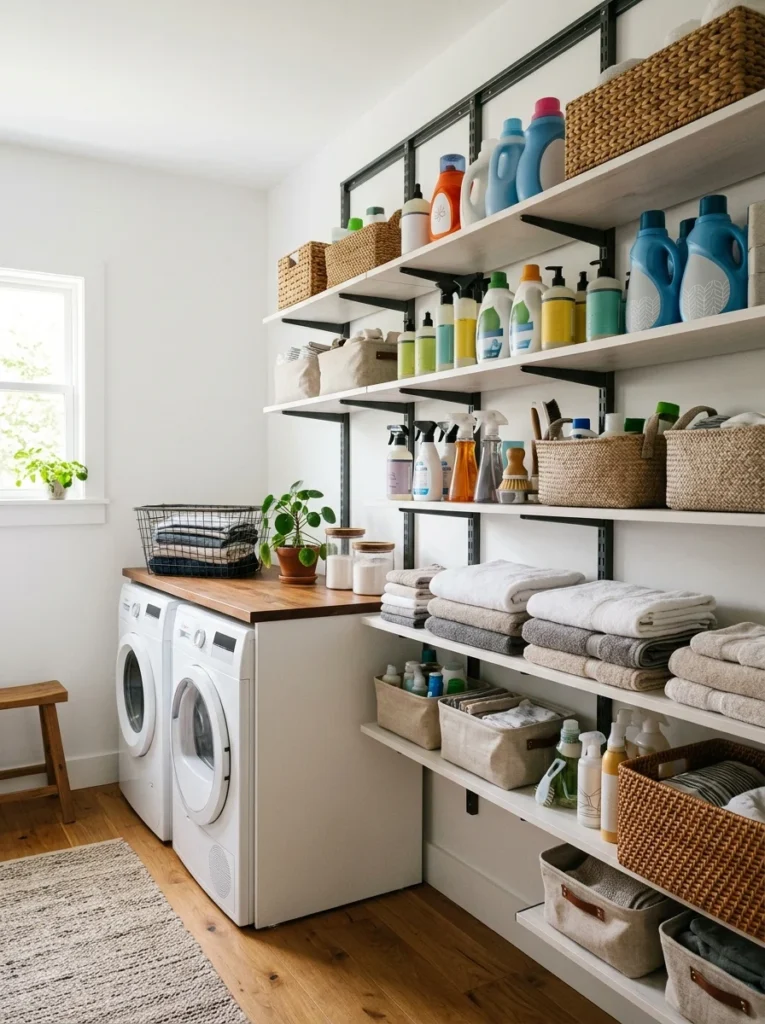
Rather than fixed shelving with predetermined spacing, adjustable shelving systems let you reconfigure your storage as your actual needs change over time, whether that’s accommodating a new appliance, a growing collection of cleaning supplies, or simply reorganizing based on what you’ve learned actually works well after living with an initial setup for a while. I installed an adjustable track shelving system specifically for this flexibility, and I’ve genuinely reconfigured the shelf spacing several times since the initial installation as my storage needs shifted, something a fixed shelf system simply wouldn’t have accommodated without a full replacement. I’d recommend this specifically for anyone setting up laundry room storage from scratch or undertaking a genuine renovation, since retrofitting adjustable shelving into an already finished space is considerably more involved than incorporating it during initial installation. This system also makes better use of your available vertical space over time, since you can adjust shelf height to precisely match whatever specific items you’re currently storing rather than living with generic, evenly spaced shelving that doesn’t account for the actual varied heights of detergent bottles, folded towels, or other items you’re likely storing in this particular room.
3. Add a Rolling Cart for Mobile Supply Storage
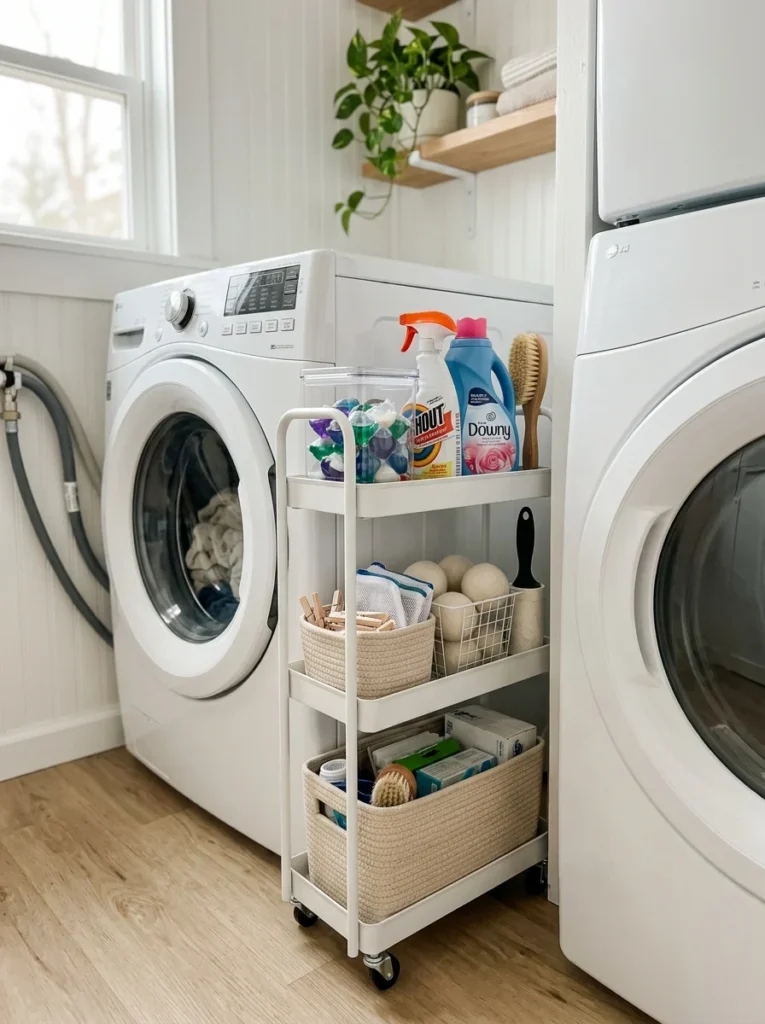
A slim rolling cart tucked into a narrow gap beside your washer or dryer provides mobile storage that can be pulled out for easy access during actual laundry tasks, then tucked back into that otherwise wasted sliver of space the rest of the time. I use exactly this solution in my own narrow laundry closet, keeping detergent pods, a stain stick, and a small sewing kit on the cart, and being able to roll it directly beside whichever machine I’m currently using has genuinely streamlined my actual laundry routine compared to reaching into a fixed shelf across the room each time. I’d recommend measuring your available gap space carefully before purchasing, since these slim carts come in various specific widths, and even a small miscalculation can mean the difference between smooth sliding access and a cart that doesn’t actually fit your particular space. This solution works particularly well in genuinely tight laundry rooms where fixed shelving isn’t a realistic option given the room’s limited overall footprint, providing meaningful storage capacity without requiring any permanent installation or structural modification to the room itself.
4. Use Clear Bins for At-a-Glance Contents
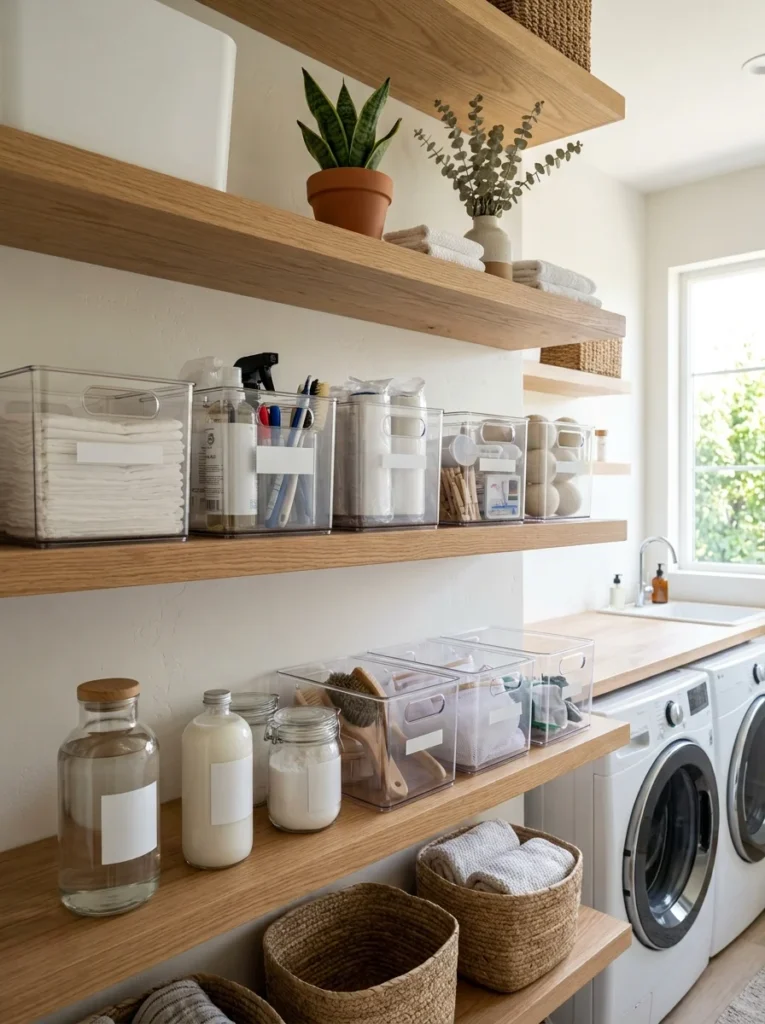
Storing miscellaneous laundry supplies, dryer sheets, stain treatment products, lint roller refills, in clear rather than opaque bins lets you identify contents at a glance without needing to open and check multiple containers each time you’re searching for something specific. I switched my miscellaneous supply storage to clear acrylic bins specifically for this reason, and being able to see exactly what’s inside each container without opening it has genuinely sped up my process of locating whatever specific item I need during an actual laundry task. I’d recommend this specifically for supplies you access relatively infrequently, since these are exactly the items you’re most likely to forget the specific location of over time, making the visual identification benefit of clear storage considerably more valuable compared to items you use daily and would remember the location of regardless of container transparency. This works particularly well combined with the earlier idea about decanting detergent into matching containers, creating one cohesive, easily scannable storage system across your entire laundry room’s various supply categories.
5. Install a Pegboard for Customizable Tool Storage
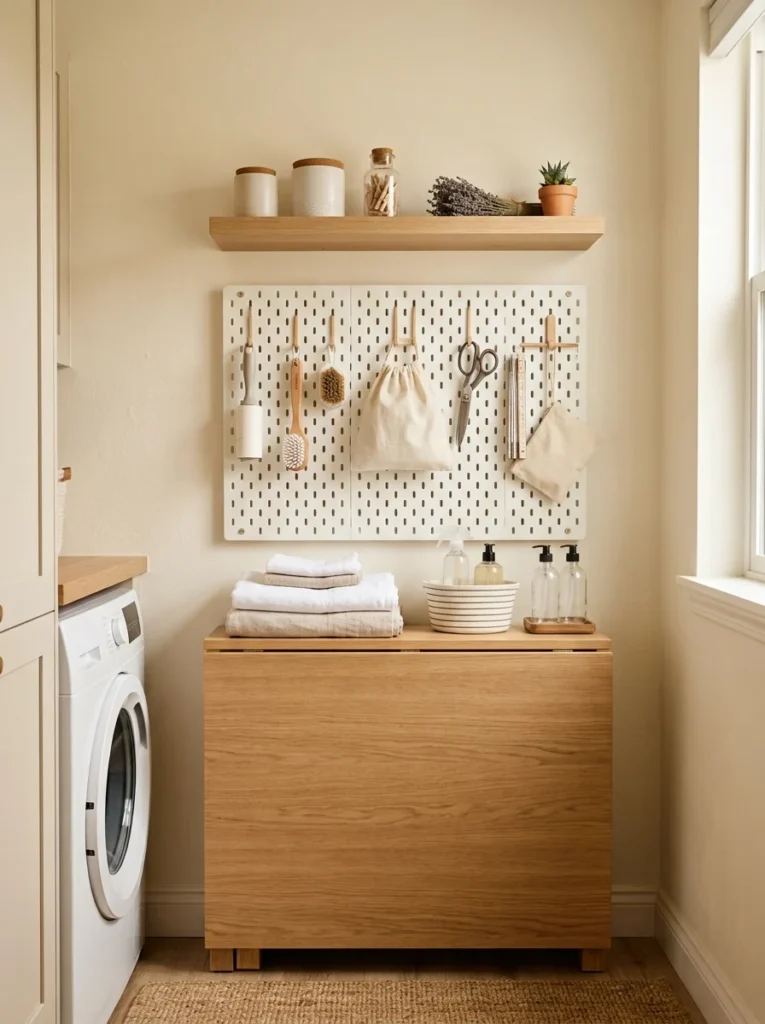
A pegboard mounted on an available wall section provides infinitely reconfigurable storage for laundry-adjacent tools and supplies, a small brush for stain treatment, a lint roller, a sewing kit, letting you rearrange the exact configuration as your specific needs and collection of items change over time. I installed a small pegboard section specifically above my folding counter, and the ability to move hooks and small shelf attachments around as needed has made this one of the more genuinely flexible storage solutions in my entire laundry room compared to fixed shelving or cabinetry. I’d recommend painting the pegboard to match your surrounding wall color if you want it to blend in as more of a subtle texture rather than a visually prominent feature, or choosing a contrasting color specifically if you want the pegboard itself to serve as more of a deliberate design statement within the room. This solution works particularly well for genuinely small laundry rooms where wall space represents your primary remaining storage opportunity once floor space has already been claimed by your actual machines and any necessary walking clearance.
6. Add a Built-In Hamper Sorting System
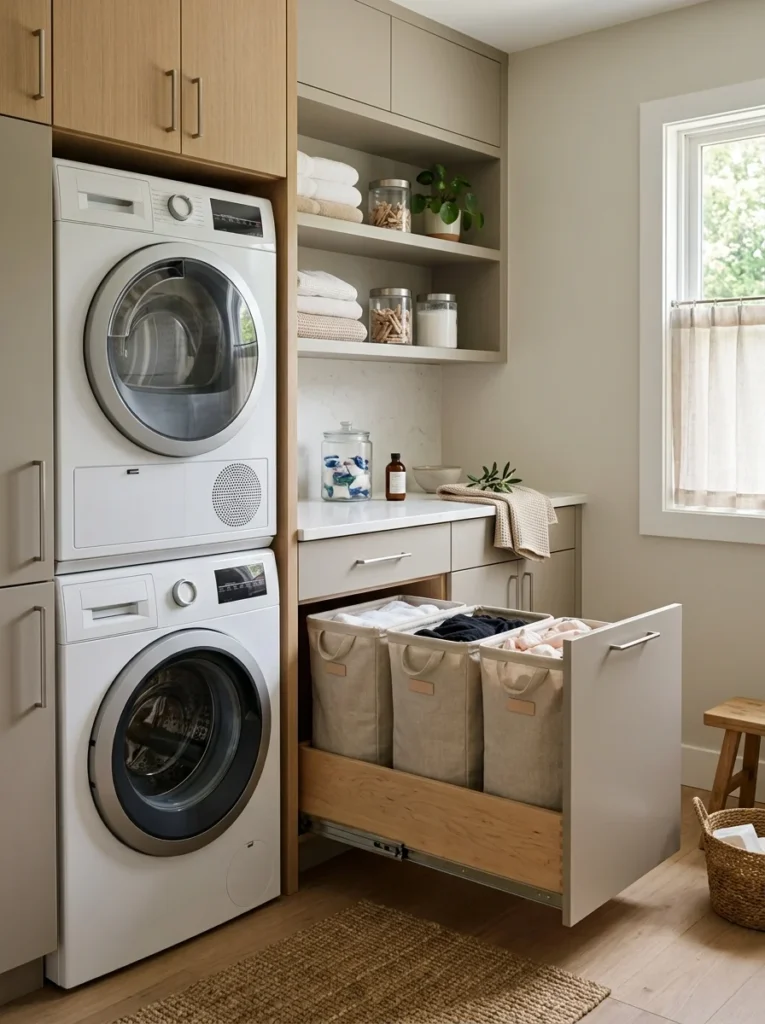
Rather than a single hamper requiring manual sorting before each wash, a built-in system with multiple sections, one for lights, one for darks, sometimes a third for delicates, means laundry arrives at your washer already pre-sorted, genuinely saving time on actual wash day compared to sorting everything from one large pile at the point of actually starting a load. I built a simple slide-out frame holding three separate fabric bins into an available gap in my laundry room specifically for this purpose, and having laundry pre-sorted before it even reaches the washer has meaningfully streamlined my actual laundry routine beyond what I initially expected from what seemed like a fairly minor organizational change. I’d recommend positioning this sorting system somewhere central to your household’s actual laundry drop-off habits, ideally somewhere family members naturally pass by regularly, since a sorting system tucked into an inconvenient spot is considerably less likely to actually get used consistently compared to one positioned along an already established daily path through the house.
7. Use Over-the-Door Storage for Small Items
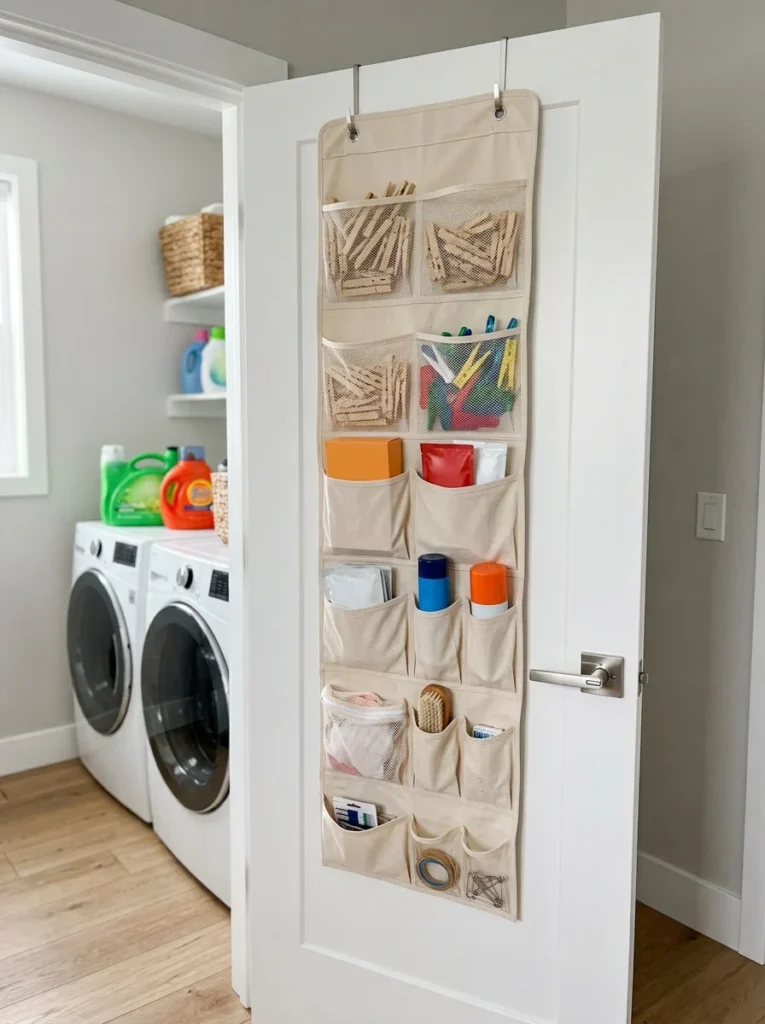
The inside of your laundry room door, an area that goes completely unused in most homes, can hold an over-the-door organizer specifically for smaller items, spare clothespins, a stain stick, dryer sheets, taking advantage of space that would otherwise contribute nothing to the room’s overall storage capacity. I installed a simple fabric over-the-door organizer specifically for this purpose, and it now holds several small items I use often enough to want easily accessible but that don’t necessarily need dedicated shelf space elsewhere in the room. This is one of the lowest-cost, lowest-effort storage additions available for any laundry room, typically requiring no tools at all since most over-the-door organizers simply hang over the top of a standard door without any actual mounting hardware needed. I’d recommend keeping items in the door organizer relatively lightweight, since anything too heavy can cause the organizer to sag or shift over time, potentially interfering with the door’s ability to close properly, a small but genuinely annoying problem if the weight distribution isn’t managed thoughtfully from the start.
8. Add a Drying Rack That Folds Flush to the Wall
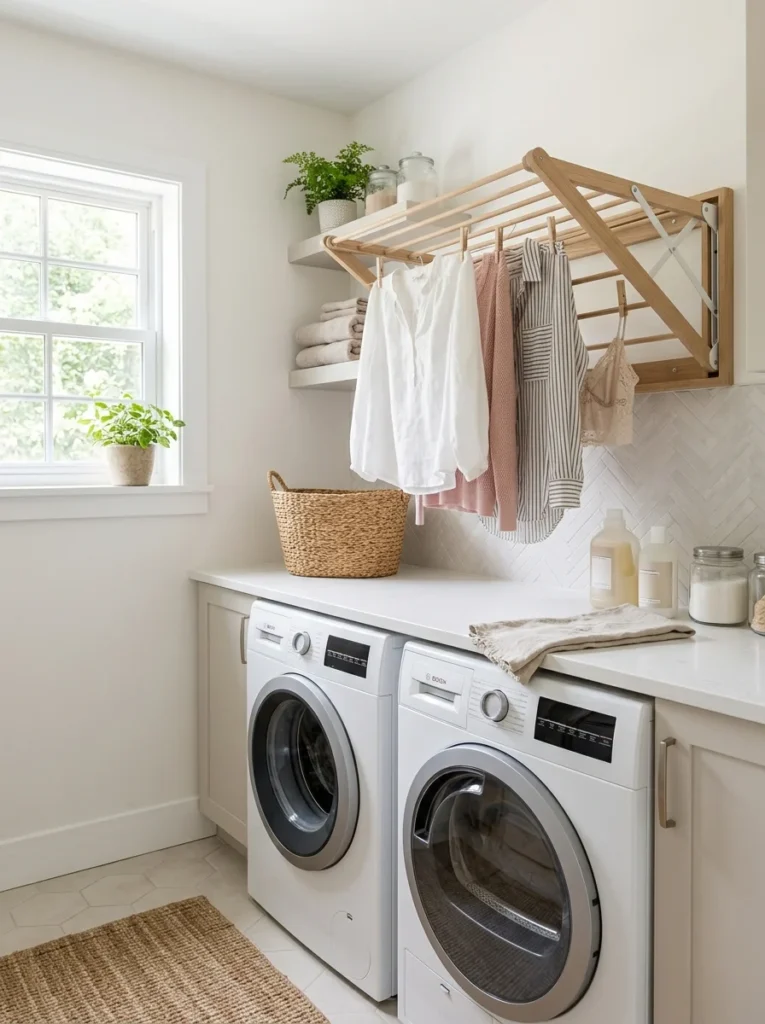
A wall-mounted drying rack that folds completely flat when not in use provides genuine air-drying capacity without permanently occupying floor space the rest of the time, an important consideration in a laundry room where floor space is often already at a genuine premium given the machines and walking clearance the room already requires. I installed exactly this style of rack specifically for delicate items requiring air drying, and being able to fold it completely flat against the wall between uses means it doesn’t interfere with my room’s overall function the rest of the time the way a permanently unfolded standalone rack would. I’d recommend choosing a rack rated for adequate weight capacity based on your typical laundry load, since a rack designed for just a few lightweight items will sag or potentially fail if you’re regularly hanging heavier wet garments across its full length. This solution works particularly well combined with the hanging rod idea often paired with small laundry room layouts, giving you two complementary air-drying options depending on the specific item and how much space each garment actually requires.
9. Store Ironing Supplies in a Dedicated Vertical Slot
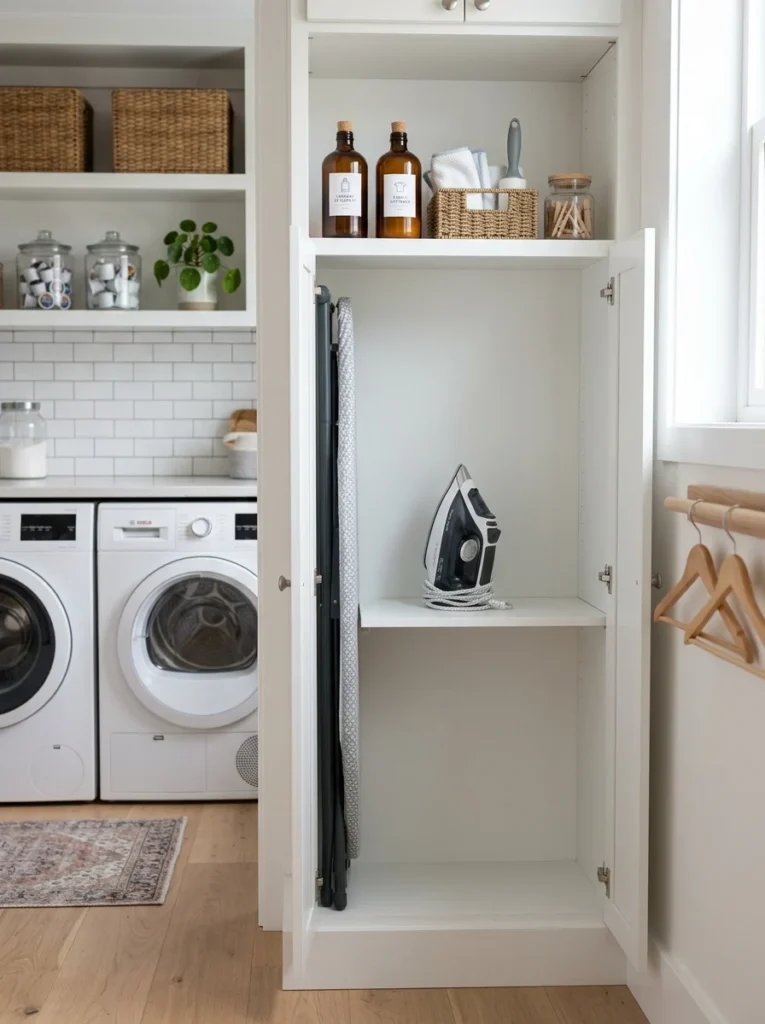
A narrow, dedicated vertical storage slot specifically sized for your ironing board and iron keeps these bulky items contained and out of the way without requiring a full closet or larger storage footprint, addressing a genuine storage challenge these particular oddly shaped items present compared to more standard, easily shelved laundry supplies. I built a simple narrow cabinet specifically for this purpose, with a slot sized precisely for my ironing board’s folded dimensions and a small shelf above for the iron itself, and having a genuine dedicated spot for these two items has eliminated the previous problem of them being propped somewhat precariously in whatever corner happened to have available space. I’d recommend measuring your specific ironing board’s folded dimensions carefully before building or purchasing any dedicated storage solution, since ironing boards vary somewhat in their folded width and length depending on the specific model, and a slot that’s even slightly too narrow won’t actually accommodate your particular board despite appearing to be an appropriate general size on paper.
10. Use Stackable Baskets for Folded Laundry Staging
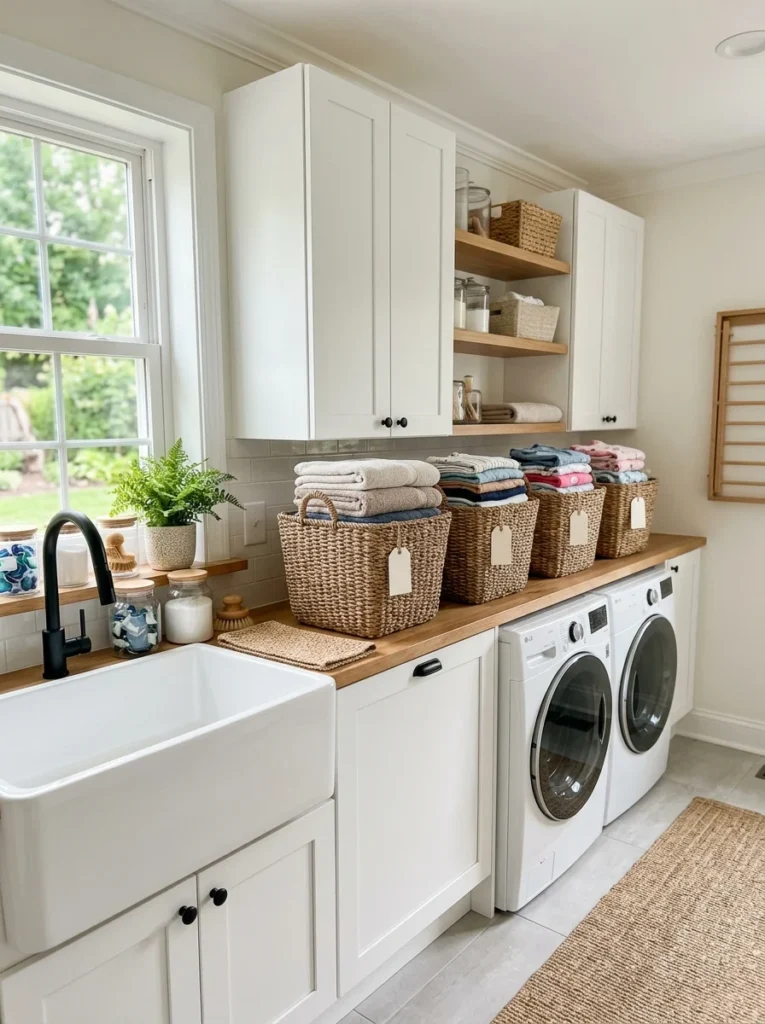
Stackable wire or wicker baskets, one assigned per household member, provide a designated staging area for folded laundry awaiting distribution to individual bedrooms, preventing the common problem of folded clothes sitting in a single undifferentiated pile that then requires additional sorting before actually being put away. I use exactly this system with individually labeled baskets for each household member, and having laundry already sorted by person as it comes off the folding counter has genuinely reduced the friction of actually getting clean clothes distributed to where they belong rather than accumulating in a single growing pile somewhere in the laundry room. I’d recommend choosing baskets that stack securely without wobbling, since a precarious stack becomes a genuine hazard and annoyance in a room where you’re also managing other tasks and equipment simultaneously. This system works particularly well for larger households specifically, where the organizational benefit of per-person sorting becomes considerably more valuable than it would be for a single person or couple without this same multiplied sorting complexity to manage.
11. Add a Fold-Down Shelf Above the Machines
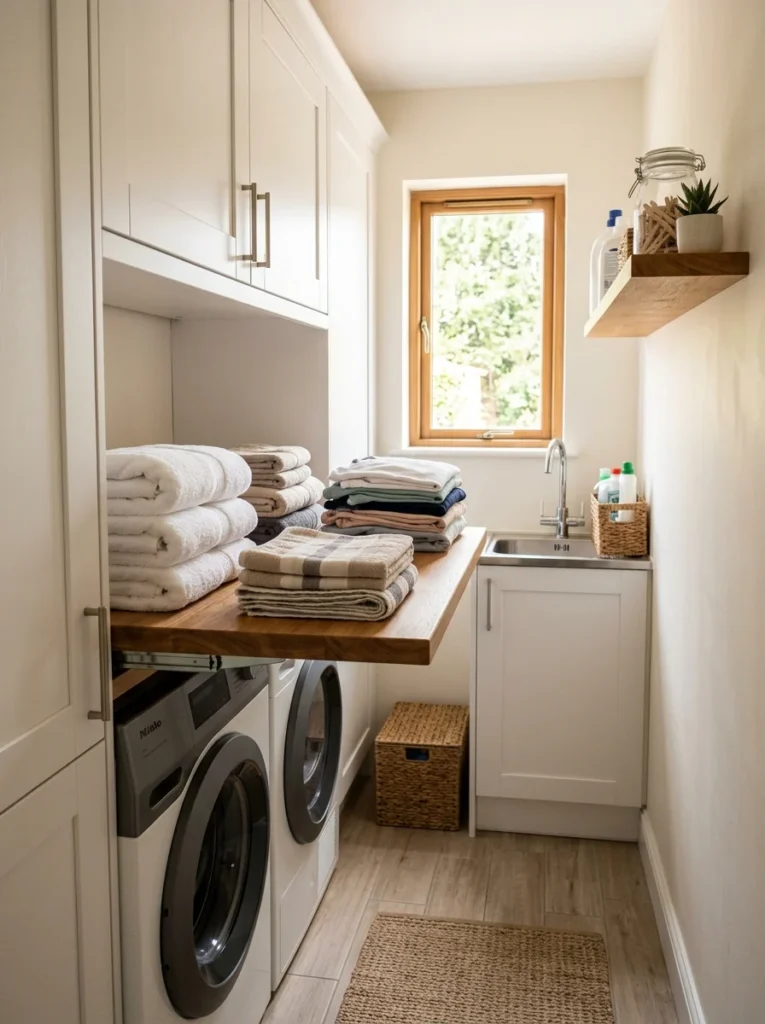
A hinged, fold-down shelf installed above your washer and dryer provides additional counter space exactly when needed for folding or sorting, then folds flat against the wall the rest of the time, addressing a genuine space constraint in laundry rooms too narrow for a permanent fixed counter without sacrificing valuable walking clearance. A friend with an especially narrow laundry closet installed exactly this solution, and being able to fold the shelf up out of the way when it’s not actively needed for folding has meant her already tight room doesn’t feel further cramped by a permanent, fixed surface that would otherwise reduce her available walking space throughout the rest of the day. I’d recommend choosing sturdy, well-rated hinges specifically for this application, since a shelf holding a full load of folded laundry needs to reliably support that weight without sagging or feeling unstable during actual use. This solution pairs particularly well with genuinely tight laundry rooms where a permanent fixed counter simply isn’t feasible given the room’s overall constrained dimensions.
12. Install a Utility Closet With Designated Zones
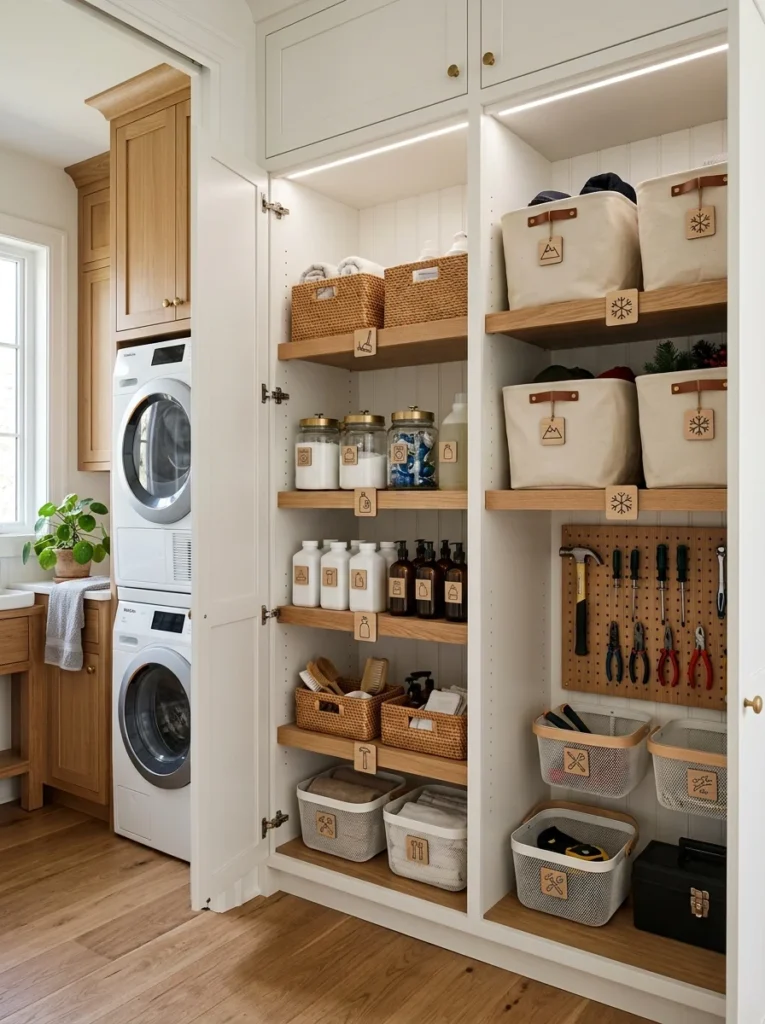
Rather than open shelving alone, a closed utility closet with clearly designated zones, cleaning supplies on one section, laundry products on another, seasonal storage on a third, keeps items organized within distinct categories while also concealing less attractive supplies behind closed doors rather than leaving everything visibly displayed on open shelving. I converted an existing closet adjacent to my laundry room specifically into this kind of zoned utility storage, and having clear, consistent zones has genuinely reduced the tendency for items to drift into whatever available space happens to be nearest rather than their actual designated, logical spot. I’d recommend physically labeling each zone within the closet itself, not just individual containers, since this reinforces the overall organizational system and makes it considerably easier for other household members to actually maintain the system correctly rather than defaulting back to placing items wherever seems convenient in the moment. This works particularly well for laundry rooms with adjacent closet space available, giving you considerably more storage capacity than the laundry room’s own walls and shelving alone could typically accommodate.
13. Use a Labeled Bin System for Lost Socks and Small Items
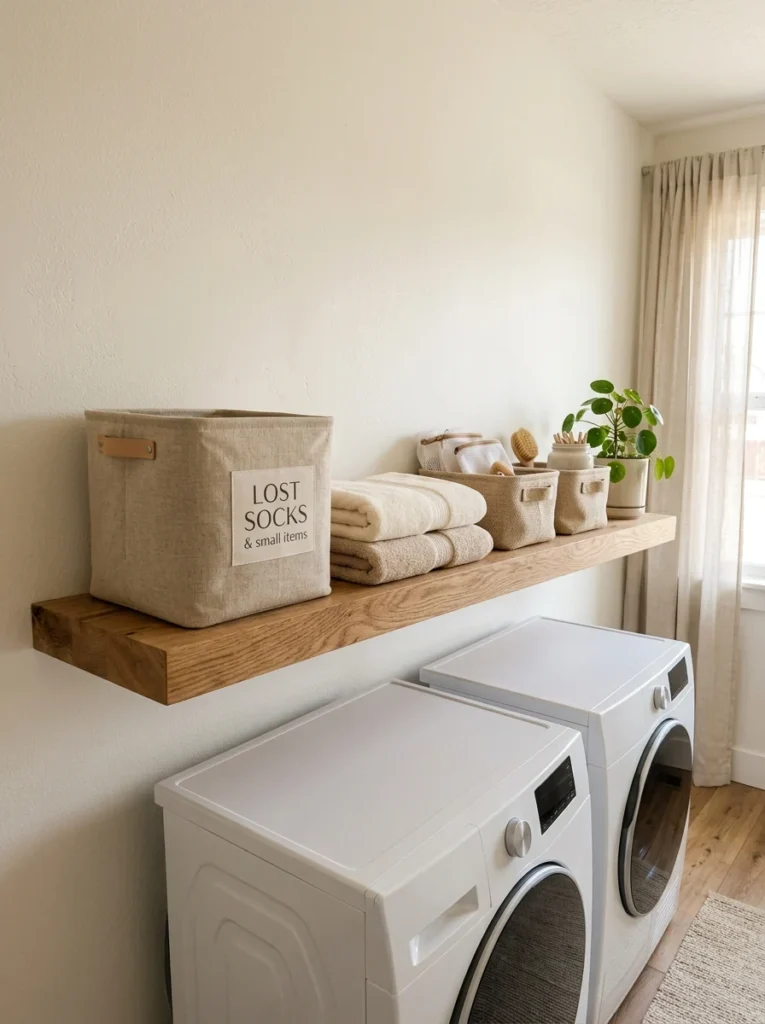
A dedicated, clearly labeled bin specifically for lost socks, buttons, and other small items that inevitably turn up during laundry but don’t have an obvious immediate home addresses a genuinely universal laundry room frustration, giving these orphaned items a designated holding spot rather than scattering loosely across various surfaces throughout the room. I keep a small labeled bin specifically for this purpose, periodically going through it to reunite socks with their missing partners or finally admit defeat and discard genuinely unmatched singles after enough time has passed without a match turning up. I’d recommend positioning this bin somewhere immediately accessible near where you’re actually unloading the dryer, since that’s the specific moment these orphaned items typically get discovered, and a bin that’s genuinely convenient to reach in that moment is considerably more likely to actually get used consistently rather than the stray item ending up set down somewhere else entirely instead. This is a small, low-cost addition, but it addresses a genuinely common household frustration that most laundry rooms don’t have any dedicated solution for at all.
14. Add Under-Sink Storage if Your Room Includes a Utility Sink
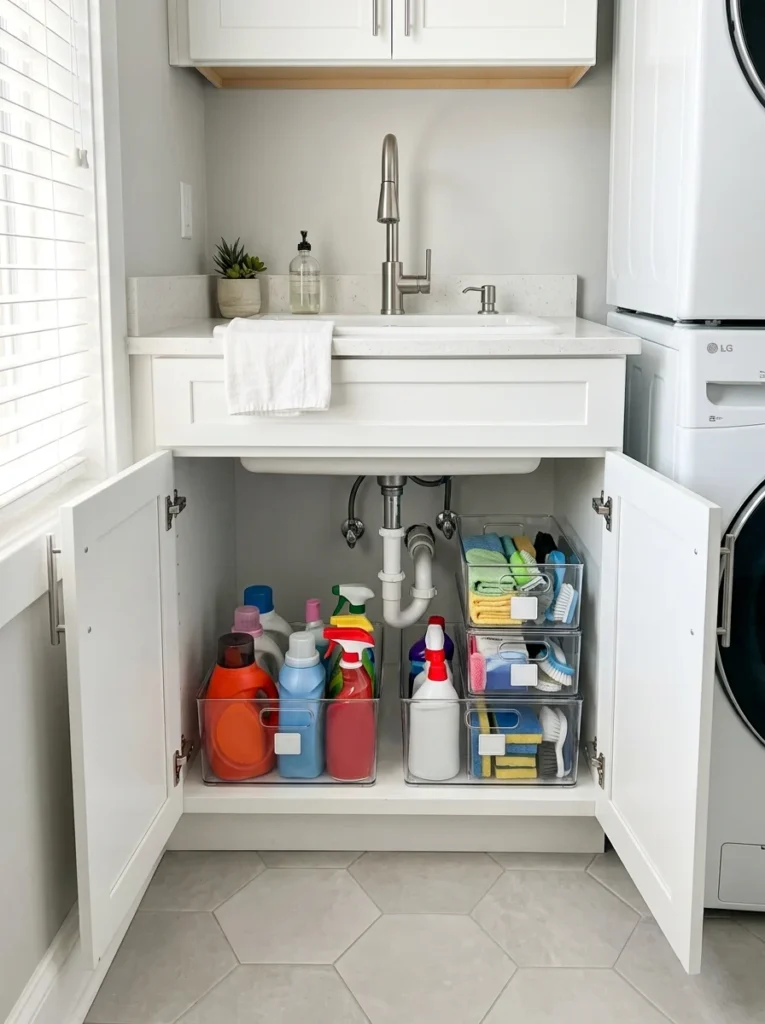
If your laundry room includes a utility sink, the cabinet space beneath it offers valuable additional storage capacity for cleaning supplies or stain treatment products, provided you organize that space thoughtfully rather than letting it become a disorganized jumble the way under-sink cabinets so often tend to become throughout a home. I use simple stackable bins within my own under-sink cabinet specifically to prevent this common problem, keeping cleaning supplies grouped by category rather than loosely piled together in a way that makes locating anything specific considerably more frustrating than it needs to be. I’d recommend measuring around your sink’s plumbing before purchasing any storage bins for this space, since the pipes themselves take up meaningful room and can complicate fitting standard rectangular bins compared to a completely open, unobstructed cabinet space elsewhere in the room. This addition provides genuinely valuable extra storage capacity if your laundry room happens to include a sink, addressing an area that’s frequently underutilized or poorly organized even in laundry rooms that have otherwise been thoughtfully set up elsewhere.
15. Use a Vertical Broom and Mop Closet
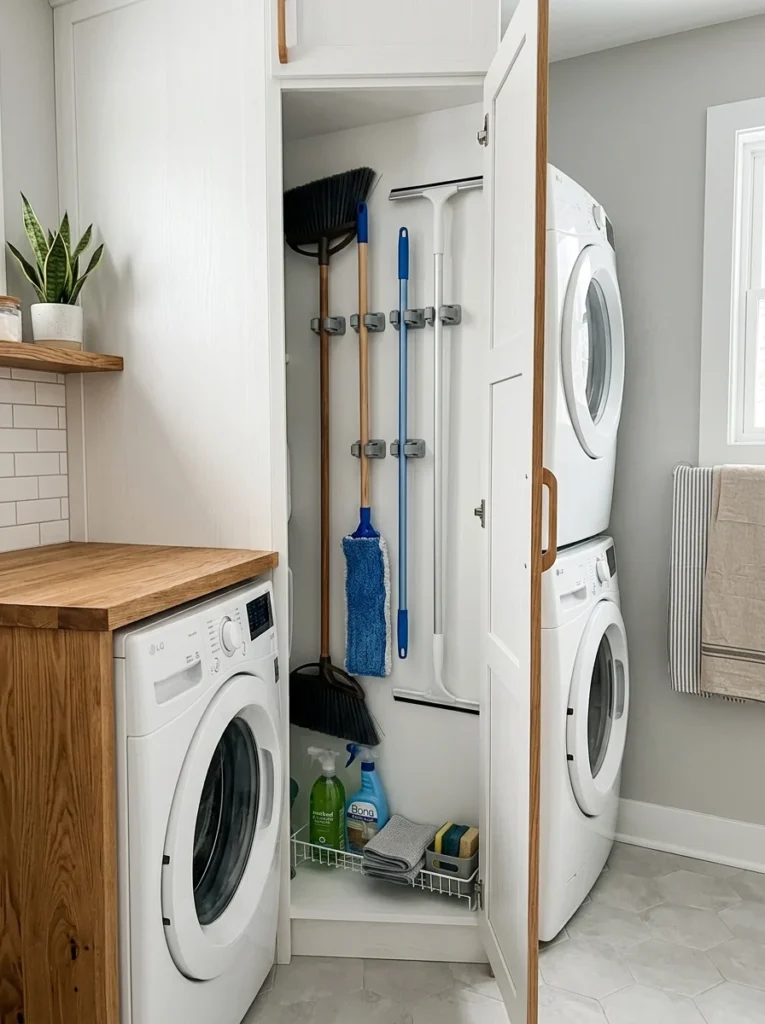
A narrow, dedicated vertical storage slot specifically for brooms, mops, and other tall cleaning tools keeps these frequently used items organized and easily accessible without leaning precariously against a wall or corner where they’re prone to sliding down and creating a minor hazard or annoyance. I built a simple narrow slot specifically for this purpose using a repurposed section of cabinetry, with small clips inside to hold each tool’s handle securely in place rather than simply propped loosely and potentially toppling over each time the door opens. I’d recommend measuring your tallest tool’s full length before finalizing this storage slot’s height, ensuring genuine adequate clearance for whatever specific brooms or mops you own rather than assuming a standard height will necessarily accommodate every tool in your particular collection. This addition addresses a genuinely common laundry room frustration, since these tall cleaning tools frequently end up stored in this exact room but rarely have a dedicated, well-organized spot, more often simply leaned against whatever wall happens to be nearest and available.
16. Add a Small Chalkboard or Whiteboard for Laundry Notes
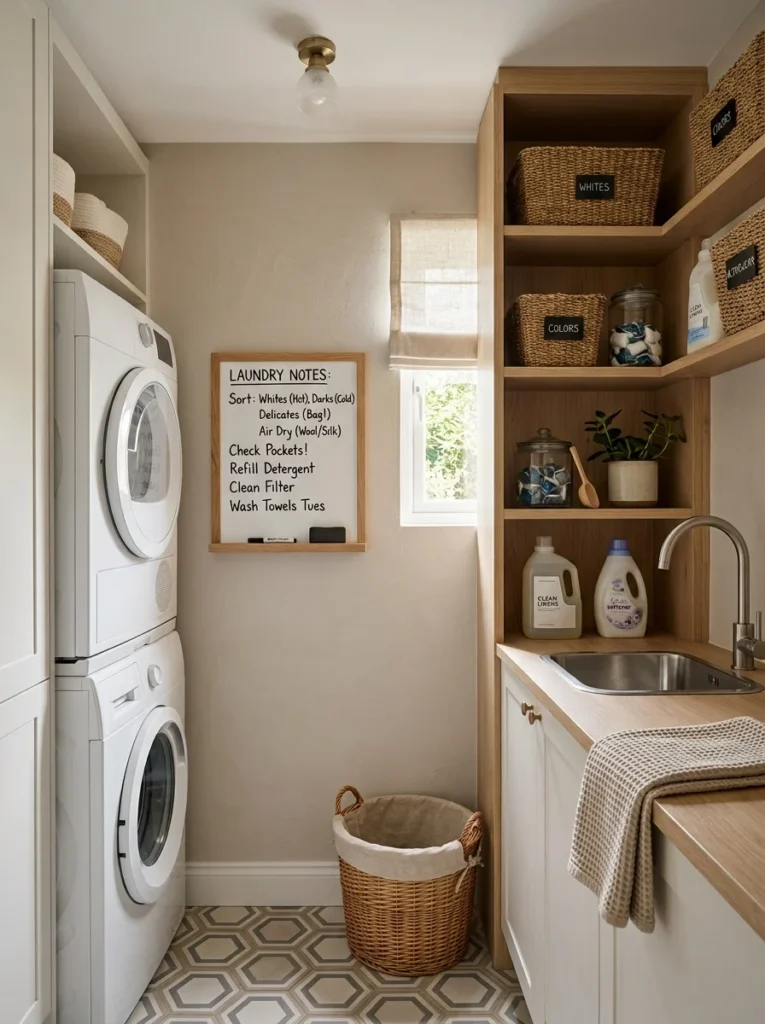
A small chalkboard or whiteboard mounted in your laundry room provides a spot for household notes specifically related to laundry, a reminder about a delicate item requiring special care, a note about which load is currently running, functioning as a small but genuinely useful communication tool for households where multiple people share laundry responsibilities. I installed a small chalkboard specifically for this purpose, and being able to leave a quick note about a load in progress or a garment needing special attention has reduced some of the miscommunication that previously happened when multiple household members were using the same laundry room without any clear way to communicate about what was currently happening or needed. I’d recommend keeping this board’s designated purpose specifically focused on laundry-related notes rather than letting it become a general household message board, since a more focused, specific purpose tends to actually get used consistently, while a broader, less defined purpose often results in the board being overlooked or forgotten entirely. This is a particularly useful addition for larger households or shared living situations where laundry room coordination genuinely benefits from this kind of simple, visible communication tool.
17. Reassess and Edit Your System Every Few Months
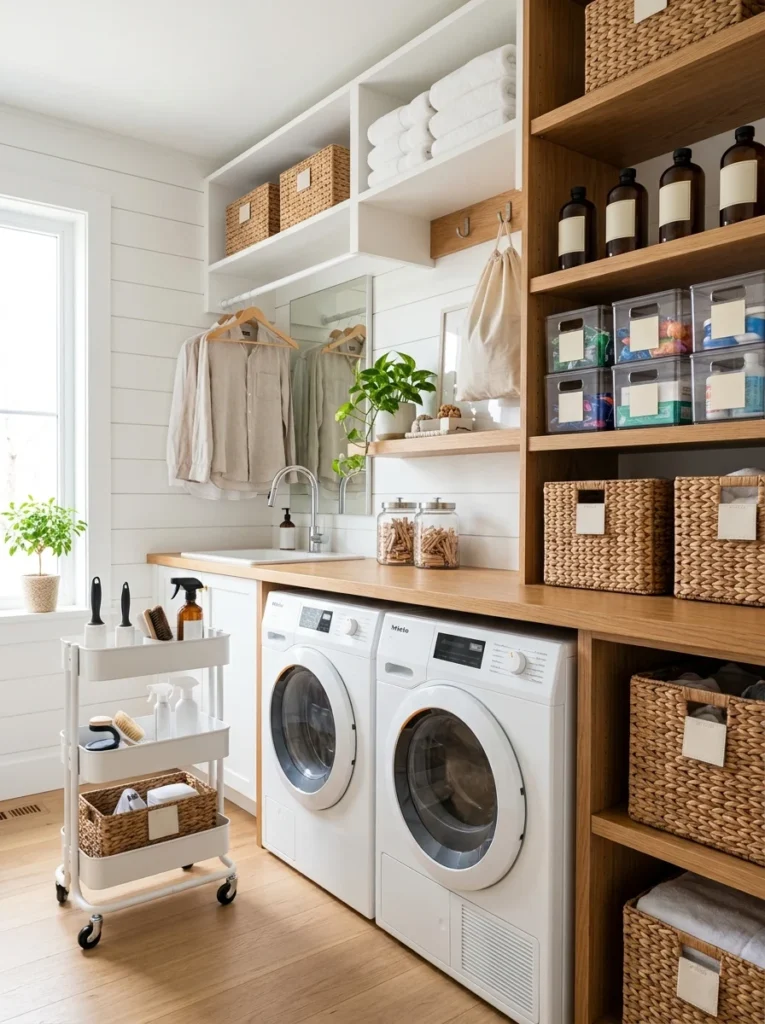
The final piece of advice applies to laundry room storage just as it does to any other organizational system throughout a home, periodically stepping back and honestly reassessing whether your current setup still genuinely serves your household’s actual needs, rather than assuming the initial organizational effort is permanently finished and complete once established. I do a genuine review of my own laundry room storage every few months, checking whether the current zones and systems still make sense given how my household’s actual habits and needs have evolved since the initial setup, and adjusting accordingly rather than forcing an outdated system to keep working simply because it was the original plan. I’d recommend building this same periodic reassessment into your regular household routine, treating your laundry room’s storage system as a living, evolving arrangement rather than a single, static project completed once and never revisited again. This ongoing attention is really what prevents even a genuinely well-designed initial system from gradually sliding back into the same kind of accumulated chaos that likely motivated you to address this storage question in the first place.
Final Thoughts
Looking back at that room full of technically-stored but genuinely disorganized supplies, mismatched detergent bottles, a tangle of hangers, that one mysterious lingering sock, it’s genuinely satisfying how much a real organizational system, rather than just accumulated storage, changed my actual daily experience of doing laundry. Between all 17 of these ideas, the underlying theme is really that laundry room storage benefits from the same intentional system-building that any other frequently used space in your home deserves, rather than simply accepting whatever informal arrangement happens to develop naturally over time without much active planning.
If your own laundry room’s storage still feels more like accumulated chaos than an actual functioning system, I’d suggest starting with the detergent decanting and clear bin ideas covered early in this list, since those changes are genuinely quick, affordable, and immediately noticeable improvements before tackling any of the more involved building or installation projects elsewhere on this list. From there, layer in the more substantial changes gradually, the same way my own laundry room’s storage system eventually came together, until a space that once genuinely frustrated me every time I walked in became one I now find quietly, genuinely satisfying to use.