
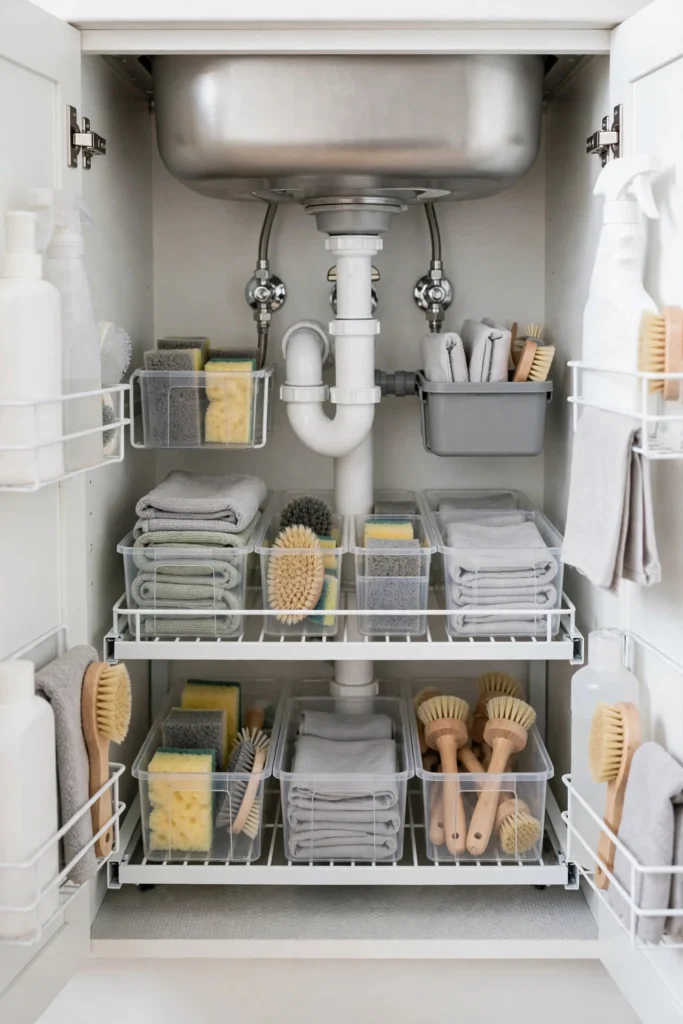
The cabinet under the sink is the Bermuda Triangle of every home. Pipes eat the middle, the space is dark and damp, and cleaning supplies go in one by one until opening the door feels like a small avalanche. Kitchen or bathroom, the problem is identical: great location, terrible usability.
The fix is working around the plumbing instead of fighting it. These 13 under-sink storage ideas — split between kitchen and bathroom — use the awkward space smartly, keep moisture in mind, and turn the most dreaded cabinet in the house into one that actually works.
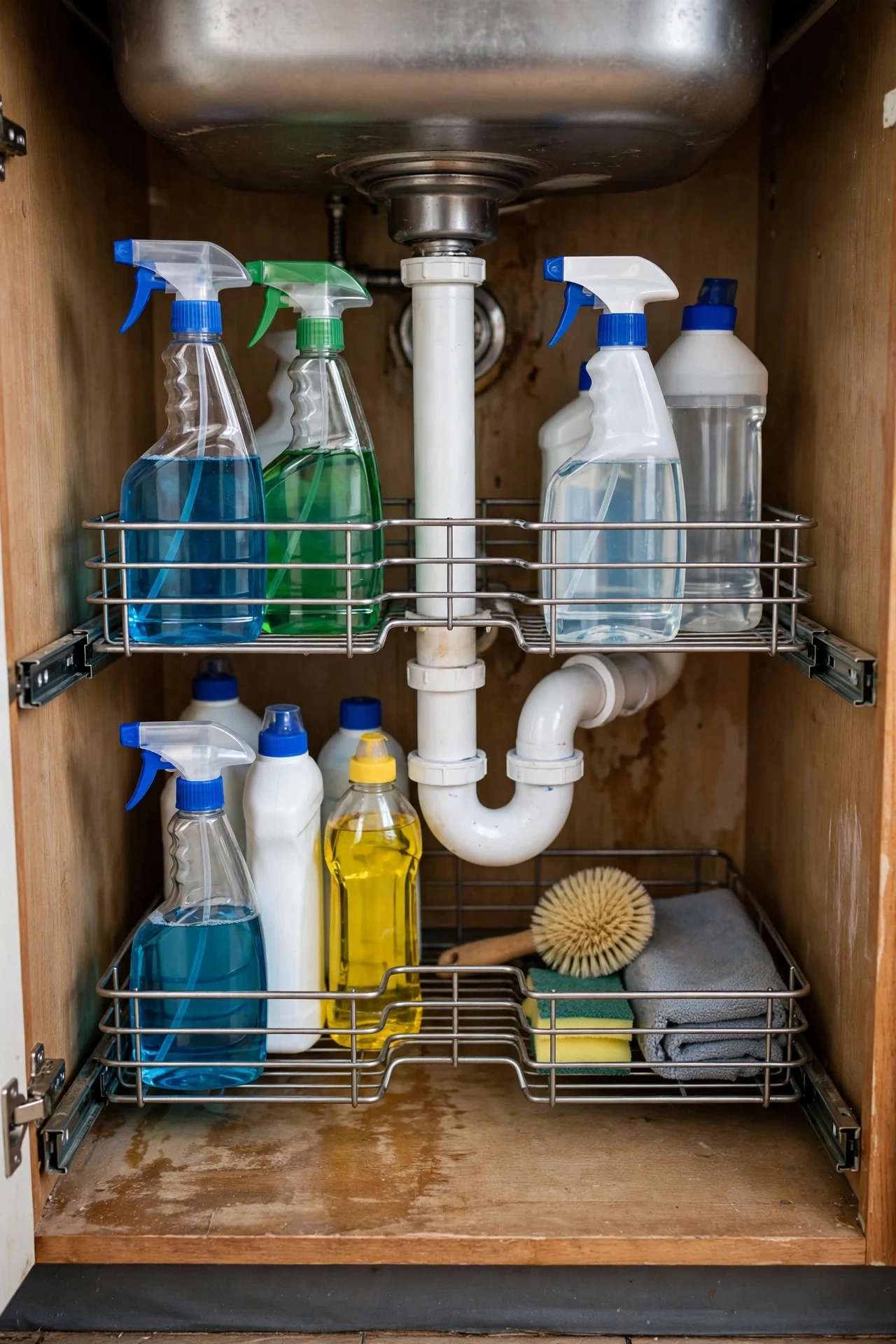
1. Install a Two-Tier Sliding Organizer
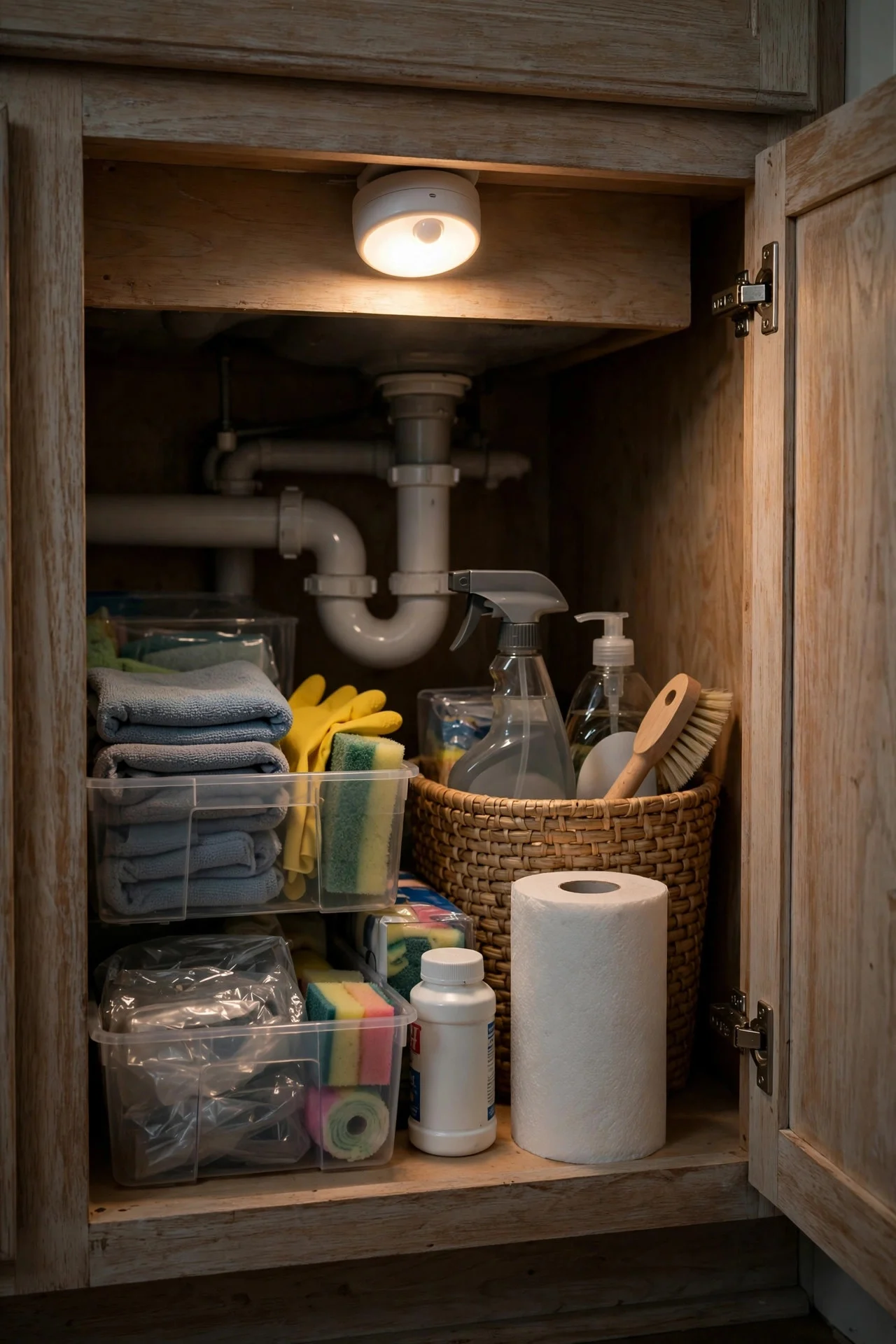
The single best under-sink upgrade is a two-tier sliding organizer ($25–35) that fits around the pipes. The lower tier slides out like a drawer, so bottles in the back are reachable without emptying the whole cabinet. It instantly converts dead space into usable storage.
Measure around your pipes first — the organizer’s center cutout needs to clear the drain assembly. Most are adjustable for standard single and double-basin setups.
Try this: Put daily dish soap and sponge on the sliding tier, backups on the fixed upper tier — frequency decides placement.
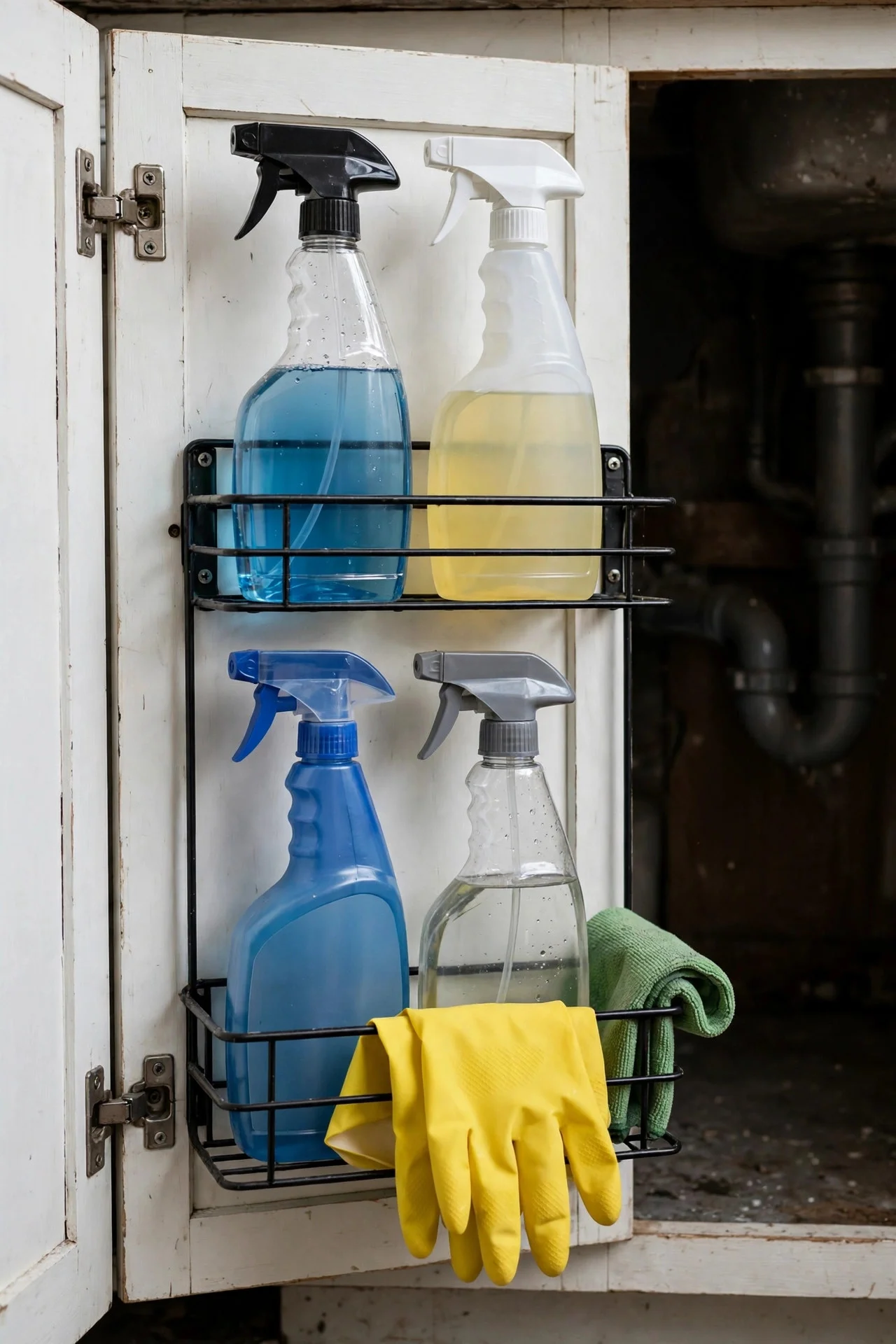
2. Hang Supplies on the Cabinet Door
The inside of the cabinet door is prime real estate that most people ignore. A door-mounted rack or a row of adhesive hooks holds spray bottles, gloves, and sponges — the small items that otherwise clutter the floor of the cabinet.
Check the door’s clearance over the pipes before mounting anything. Slim wire racks designed for cabinet doors run about $10–12.
Try this: Hang rubber gloves on a hook inside the door — they dry faster and stop collecting dust on the cabinet floor.
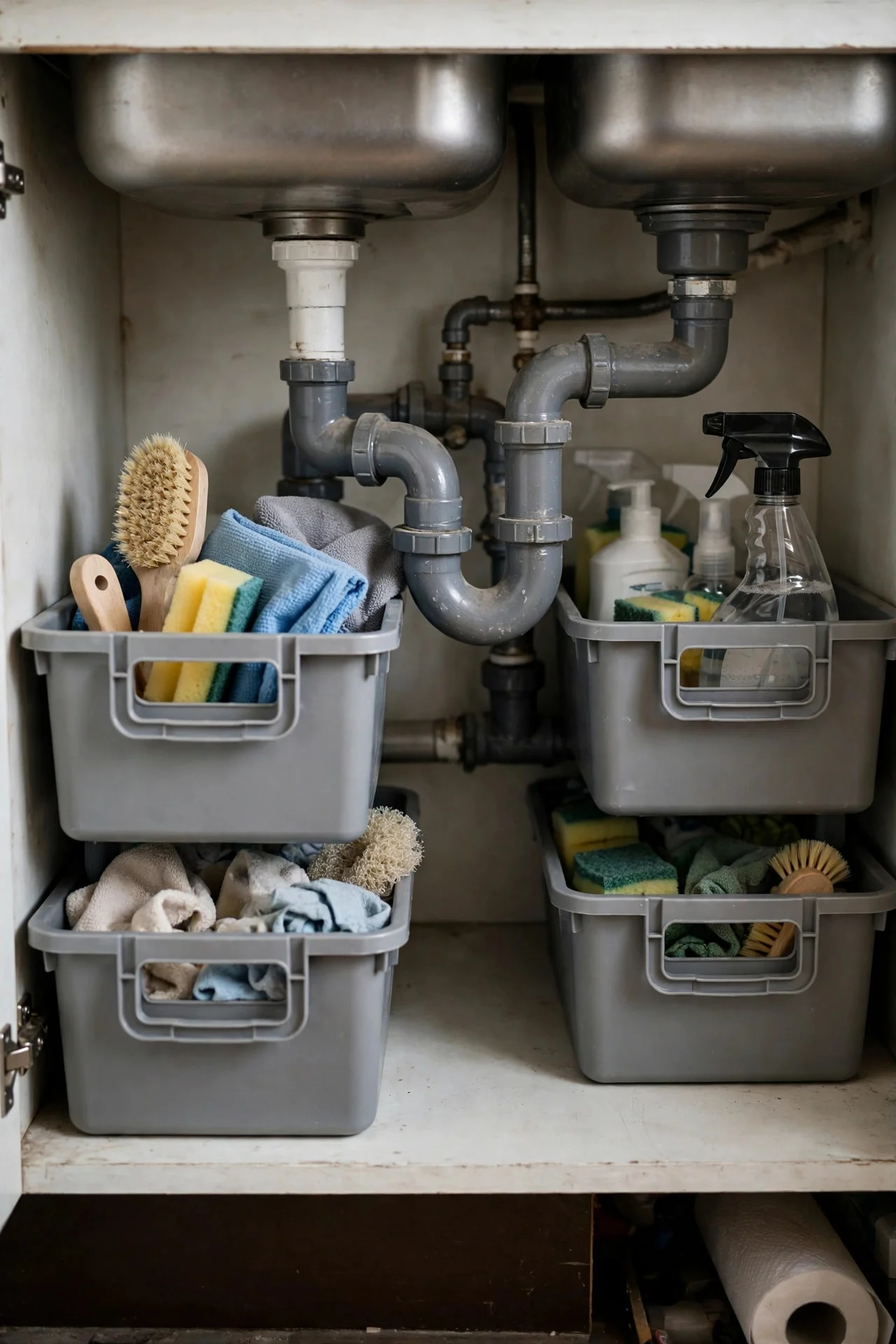
3. Use Stackable Bins Around the Pipes
Instead of one jumbled pile, use two or three small stackable bins positioned around the drain pipes — one for dishwashing supplies, one for cleaning products, one for trash bags and extras. Pull out a bin and you see everything at once.
Choose bins with handles so they slide out easily, and keep them under 10 inches tall so they clear the pipes. Clear bins let you see contents without pulling them out.
Try this: Line the bins with shelf liner — it catches drips and keeps bottles from sliding around.
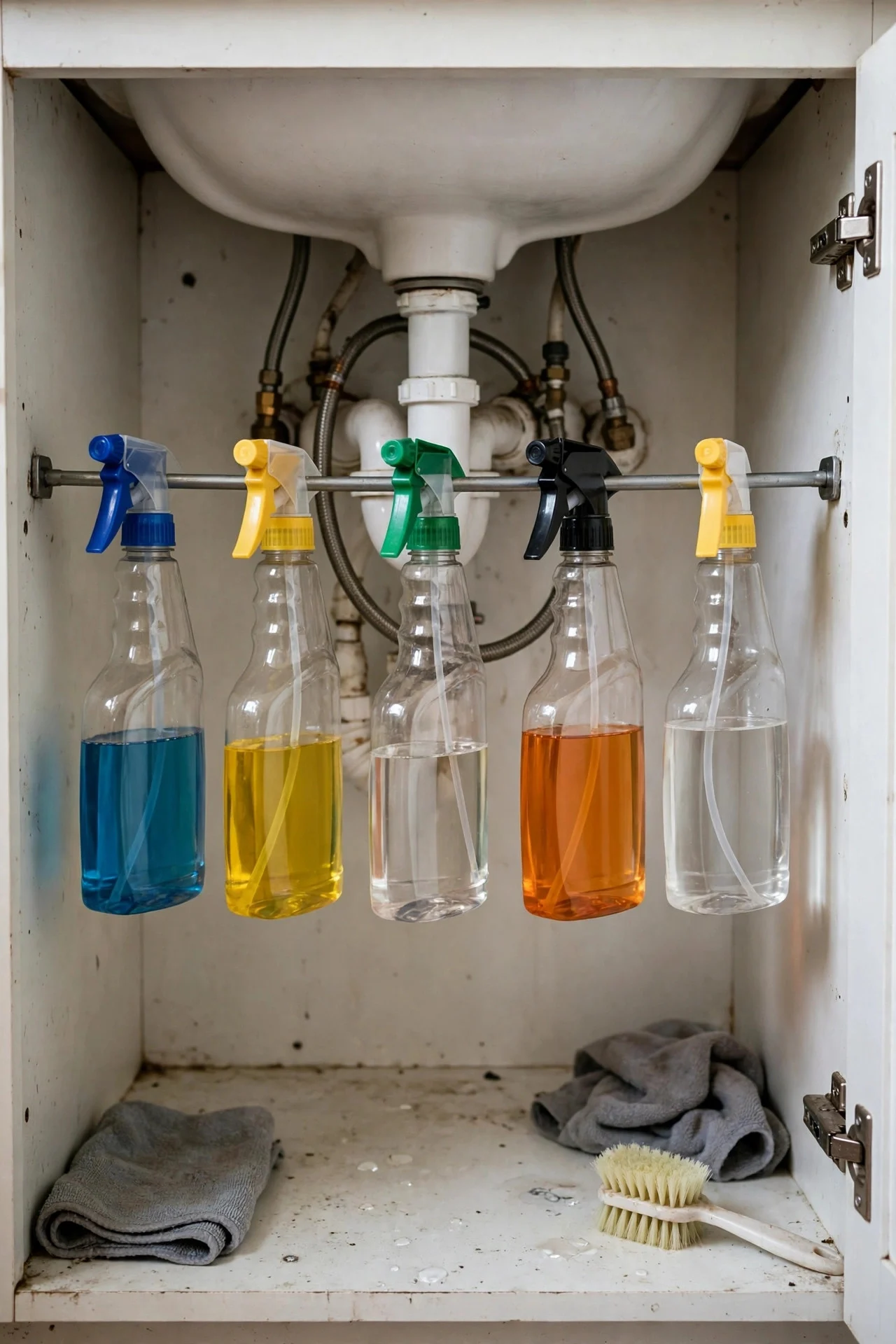
4. Add a Tension Rod for Spray Bottles
A tension rod mounted high across the cabinet creates a hanging rail for spray bottles — hook their triggers over the rod and they dangle neatly in a row, freeing the entire cabinet floor below. A $6 rod, five minutes, done.
This works best in kitchen sinks with tall cabinets. Measure the width and buy a rod that fits snugly — too loose and it’ll collapse under the weight.
Try this: Hang the most-used cleaner closest to the door so you grab it without reaching past the others.
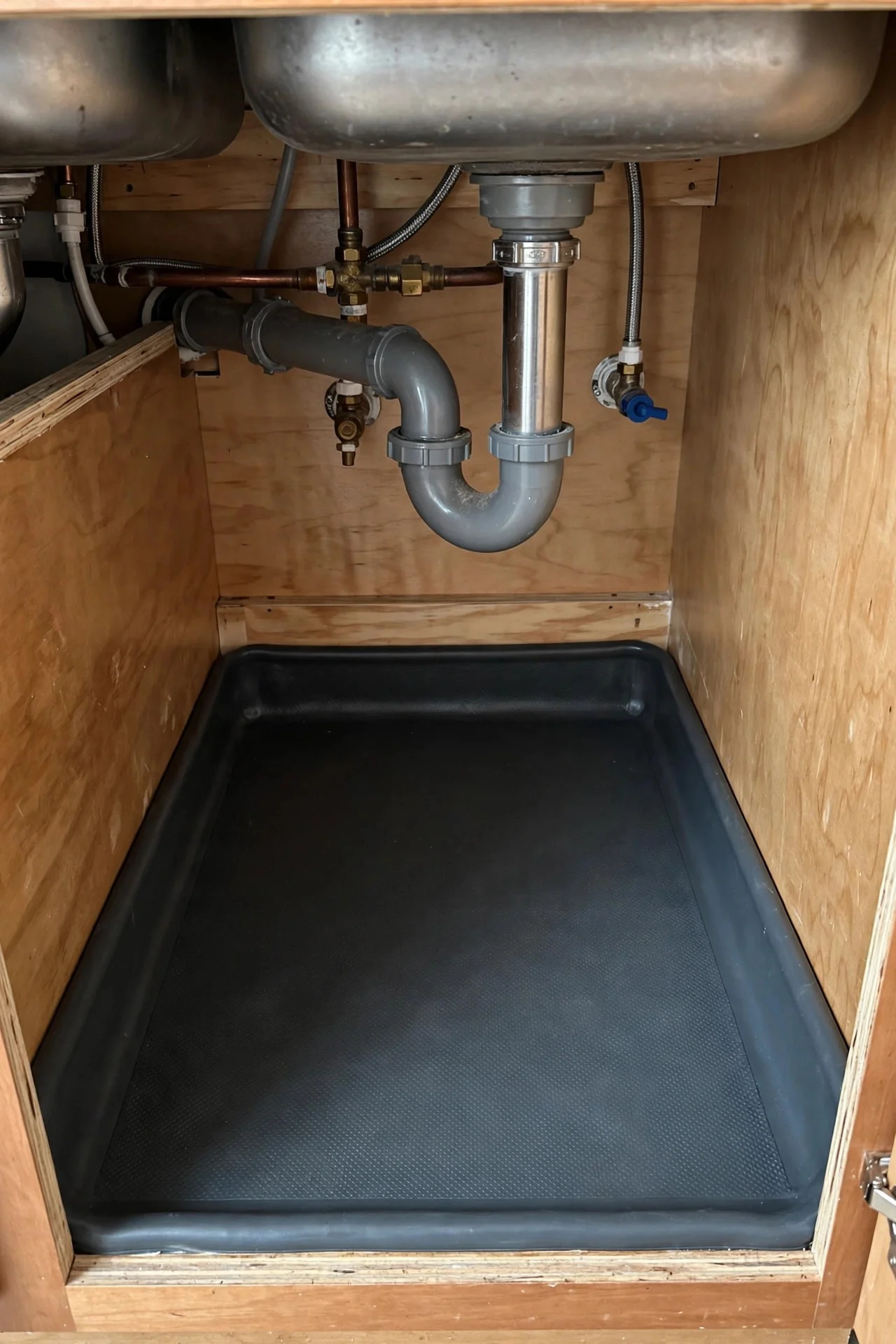
5. Lay Down a Waterproof Cabinet Mat
Before organizing anything, protect the cabinet. A waterproof mat or tray ($10–15) cut to fit the cabinet floor catches leaks, drips, and the occasional exploded soap bottle — saving the wood from the slow rot that ruins most under-sink cabinets.
Get one with a raised lip so spills stay contained. Wipe it down quarterly; it takes two minutes and prevents the musty smell that haunts old cabinets.
Try this: If you already have water stains, sand them lightly and seal with polyurethane before laying the mat — it stops the damage spreading.
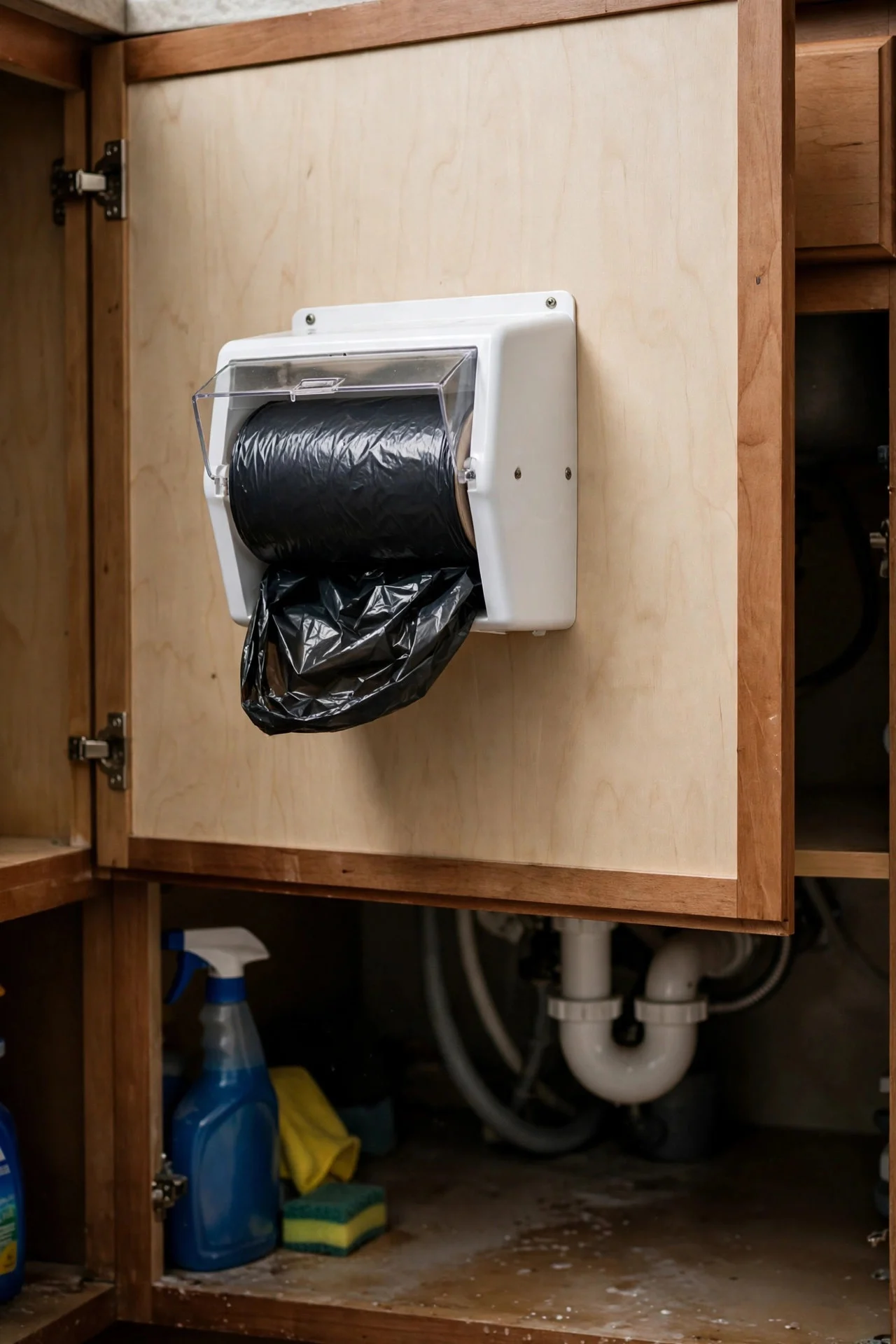
6. Store Trash Bags on a Wall-Mounted Dispenser
Trash bags take up surprising space as a bulky box or roll. A wall-mounted bag dispenser inside the cabinet door or side wall holds a full roll in a 3-inch footprint and dispenses one bag at a time.
The grocery-bag style dispensers also work for reusing shopping bags as small trash liners — mount one in the bathroom cabinet for the tiny bin.
Try this: Keep one spare roll behind the dispenser so you never run out mid-kitchen-cleanup.
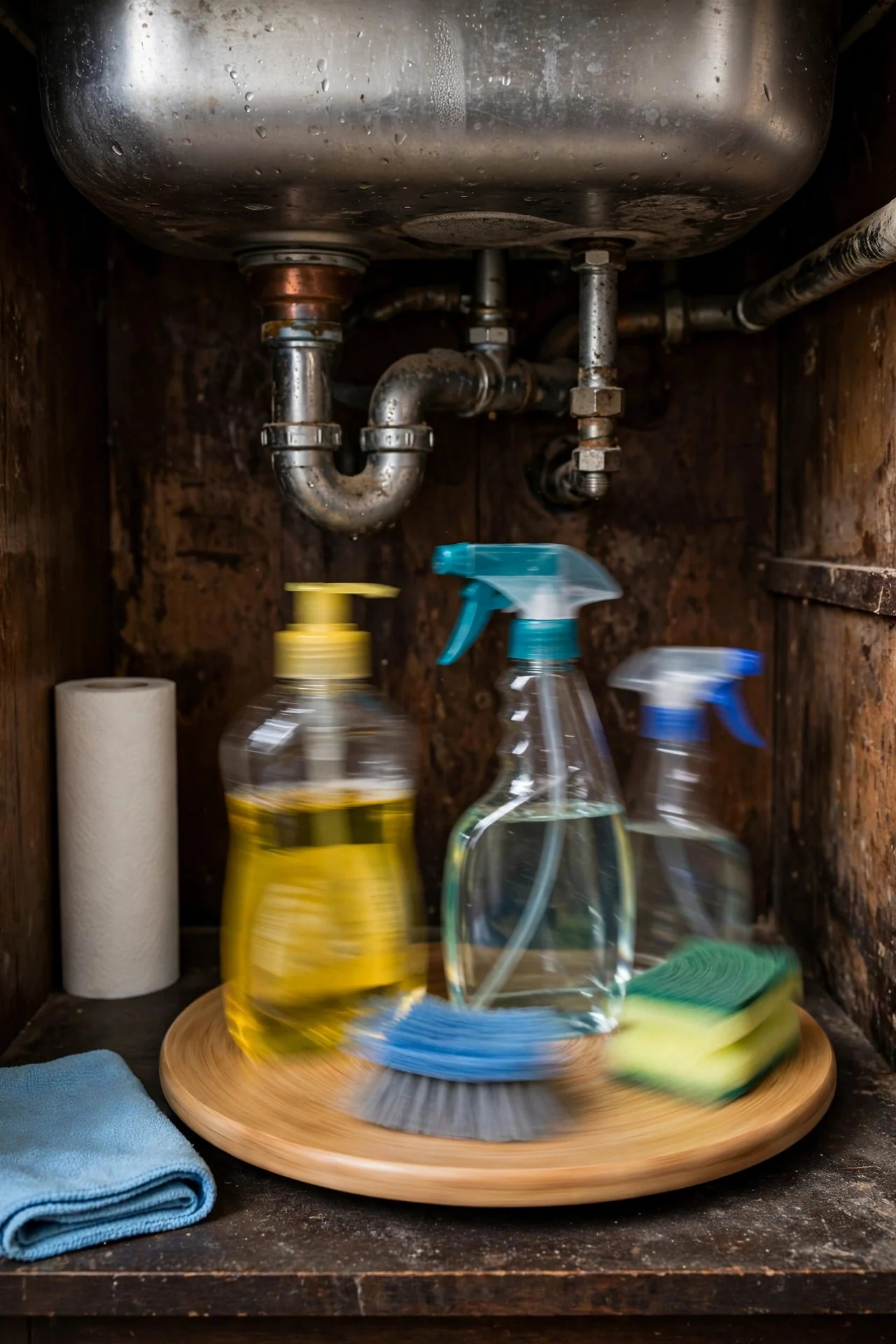
7. Use a Lazy Susan for Cleaning Products (Kitchen)
A small turntable ($10) in the kitchen under-sink cabinet spins cleaning products to the front — no more knocking over three bottles to reach the oven cleaner. It’s the same trick as the spice cabinet, applied to the messiest zone in the kitchen.
Choose a turntable with a non-slip surface and a raised edge. Keep the tallest bottles in the center so they don’t tip when it spins.
Try this: Group the turntable by task: daily dish items on one side, deep-clean products on the other.
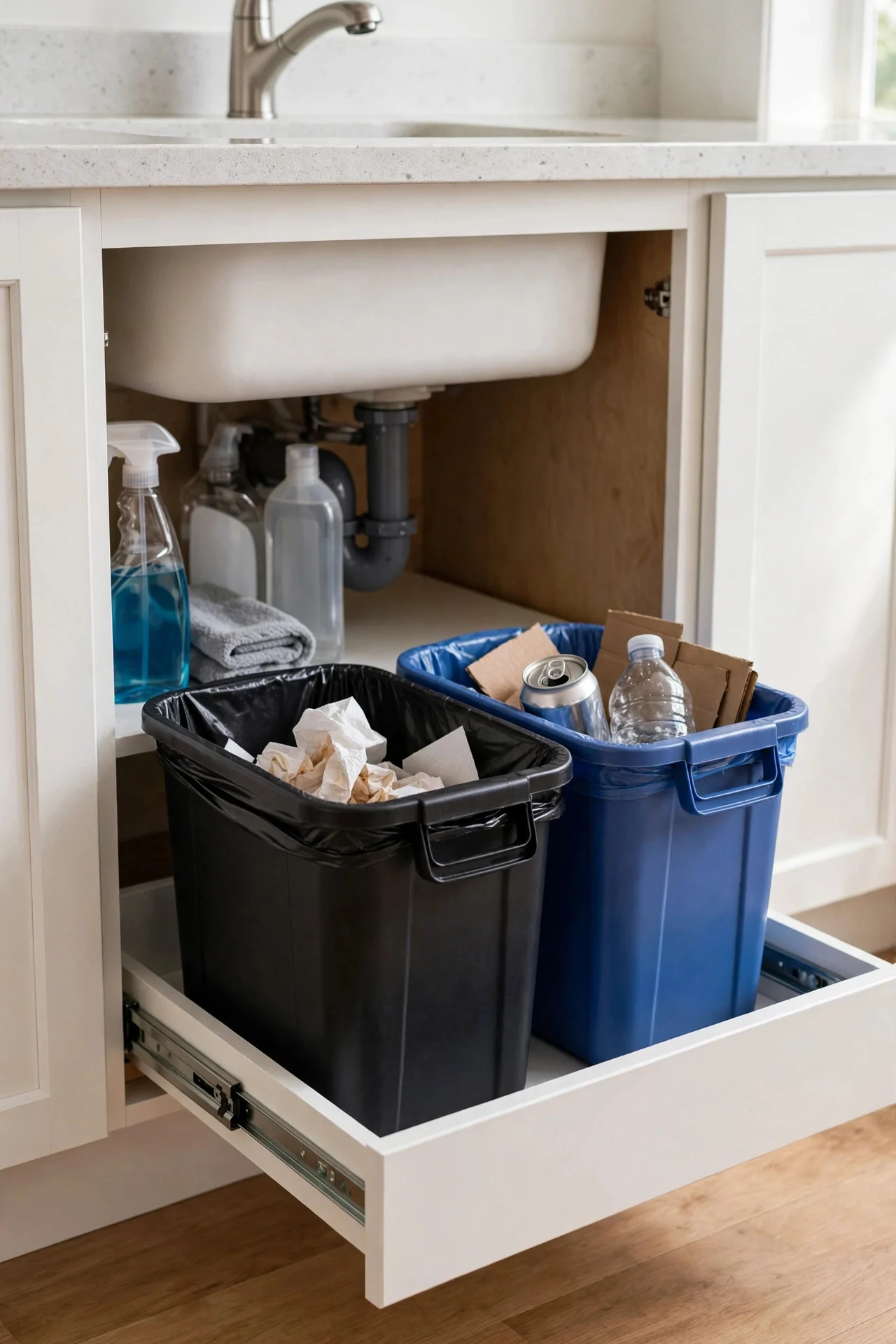
8. Add a Pull-Out Trash and Recycling Bin
If your kitchen trash currently lives beside the cabinet, moving it inside on a pull-out frame ($40–60) frees floor space and hides the ugliest item in the kitchen. The frame mounts to the cabinet floor and glides out with a tug.
Measure your cabinet opening — the bin needs about an inch of clearance on each side. A double bin (trash + recycling) is worth it if the width allows.
Try this: Line the cabinet floor with the waterproof mat first — bins drip, and you’ll thank yourself later.
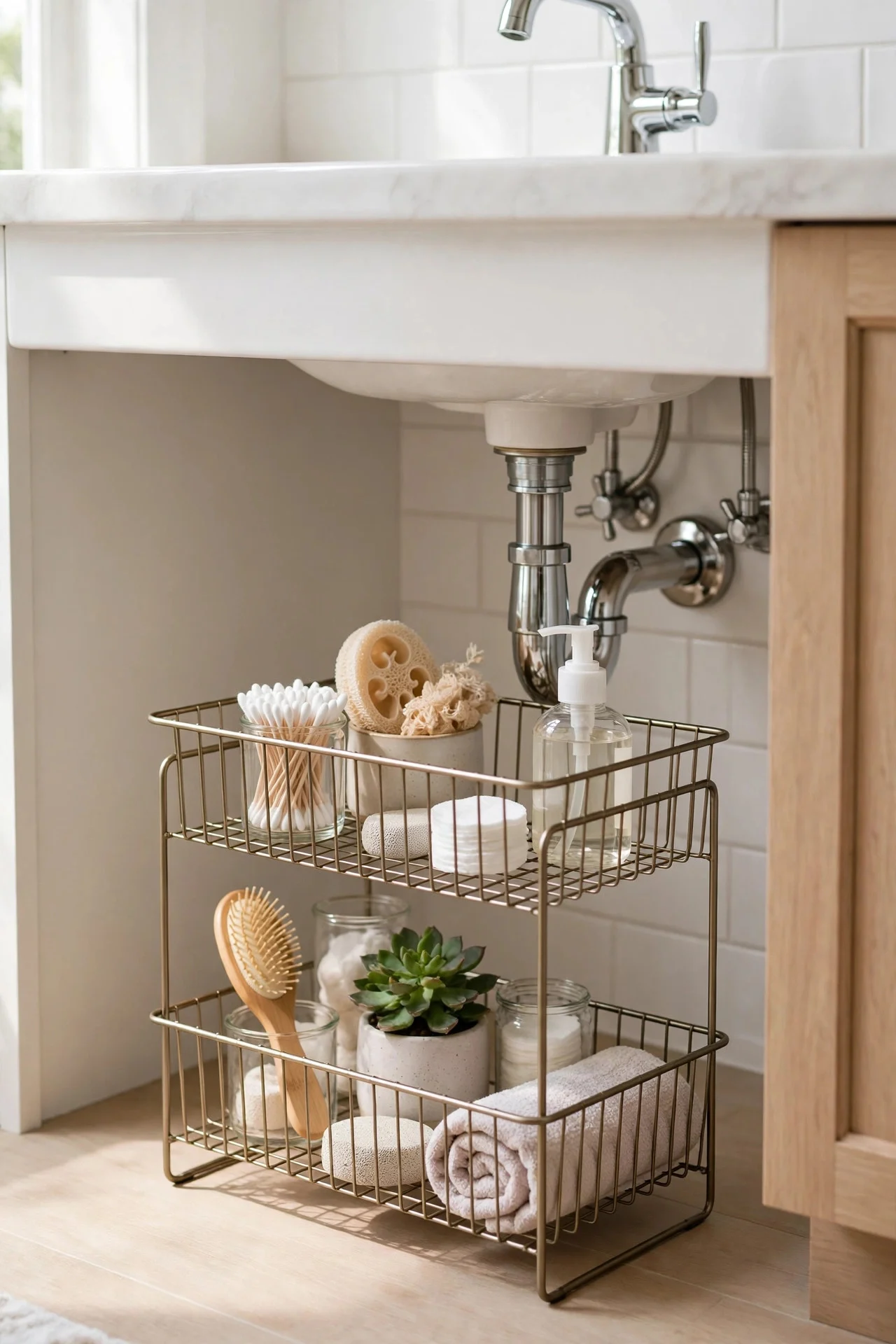
9. Organize Bathroom Supplies in Tiered Baskets
Bathroom under-sink cabinets are smaller and damper than kitchen ones. A two-tier wire basket unit ($15–20) stacks toiletries vertically — everyday items up top, backups below — without anything sitting in potential moisture on the cabinet floor.
Wire beats solid shelves here because air circulates, which matters in a humid bathroom. Keep a small dehumidifier bag in the cabinet if yours runs damp.
Try this: Decant bulky shampoo and conditioner into smaller pump bottles for the cabinet — the big bottles live in the shower.
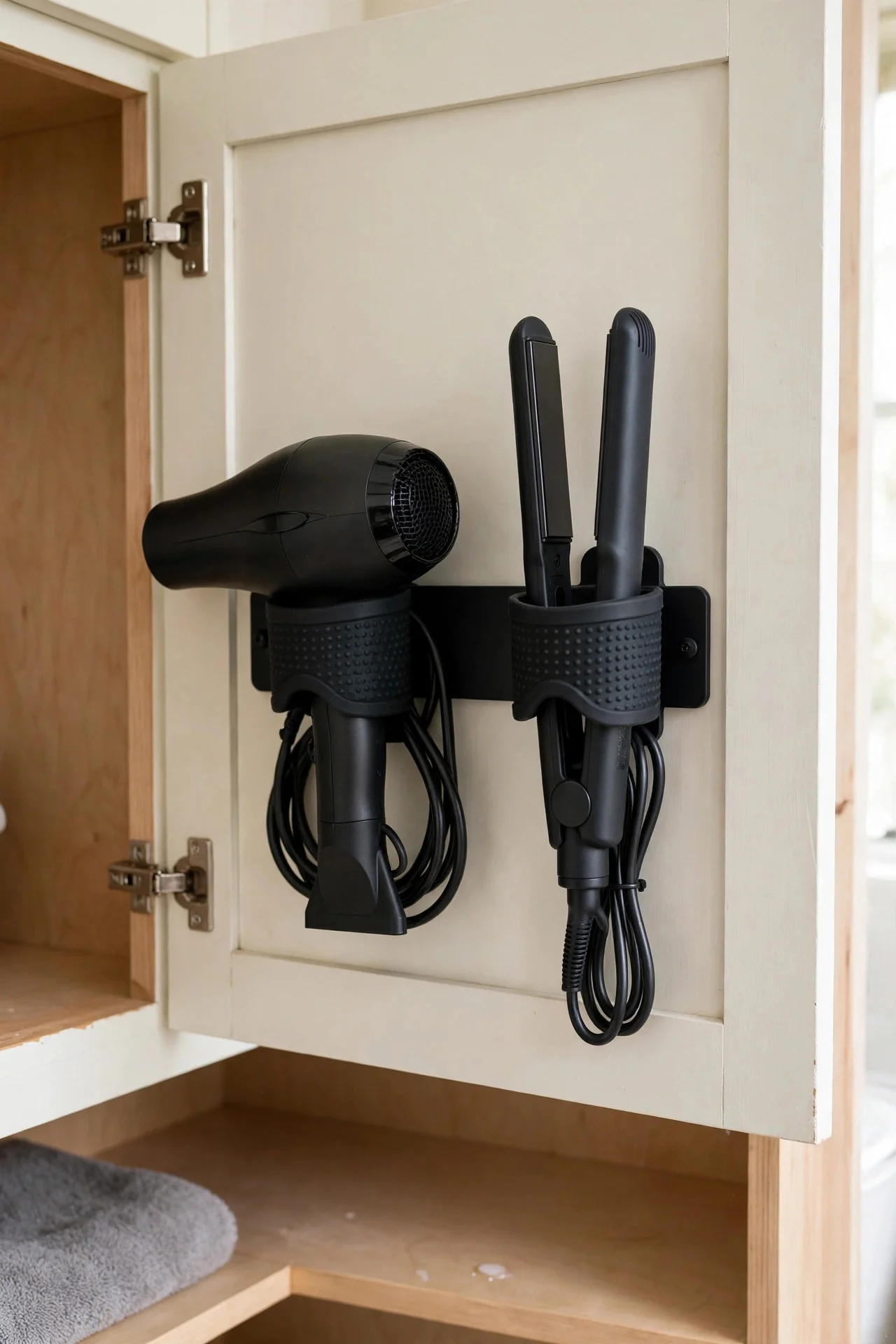
10. Mount a Hair Tool Holder on the Door (Bathroom)
Hair dryers, straighteners, and curling irons are the worst under-sink offenders — cords everywhere, hot tools against wood. A heat-resistant door-mounted holder ($15) keeps them upright, separated, and cool enough to store safely.
Mount it on the inside of the cabinet door and let tools cool for a few minutes on the counter before stowing. Never wrap cords tightly around hot tools — it damages both.
Try this: Add a small adhesive hook beside the holder for the cord of your most-used tool — no more tangled nests.
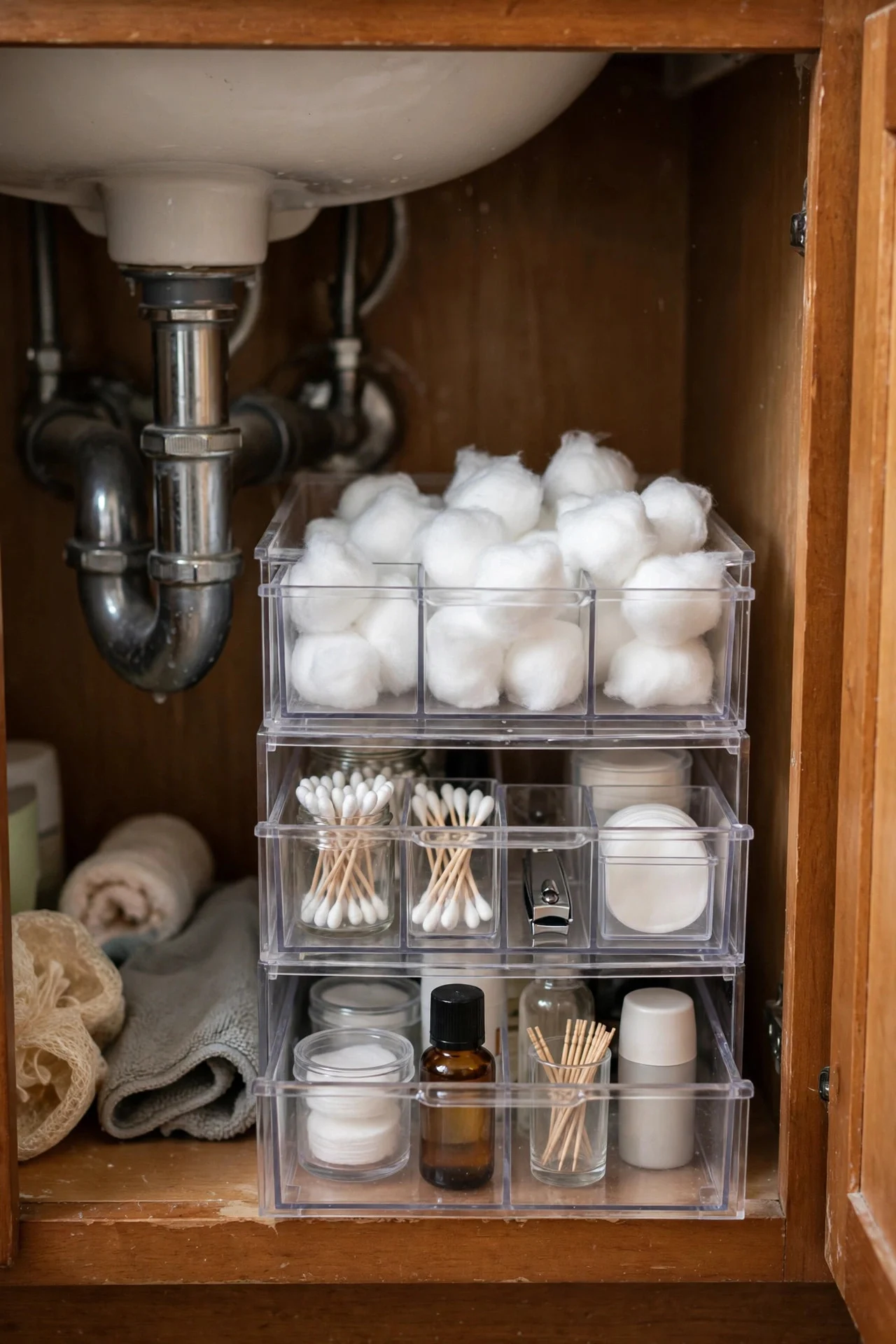
11. Use Clear Drawers for Small Bathroom Items
Cotton balls, bandages, spare razors, and travel toiletries vanish in a dark cabinet. A small set of clear stackable drawers ($12–18) on the bathroom cabinet floor keeps every category visible and separated.
Two or three drawers are plenty — more than that and you’re storing a pharmacy. Label the drawer fronts so family members return things to the right spot.
Try this: Keep a small “travel” drawer pre-packed with mini toiletries — grab it before trips instead of assembling one each time.
12. Install Motion-Sensor Lights in the Cabinet
Under-sink cabinets are dark caves, and you can’t organize what you can’t see. A battery motion-sensor puck light ($10 for a multi-pack) stuck to the cabinet ceiling switches on when the door opens.
This single upgrade makes every other idea on this list work better — you’ll actually use the bins and racks if you can see them. Change batteries about twice a year.
Try this: Put one in the kitchen cabinet AND the bathroom — the pack usually comes with enough for both.
13. Purge Expired Products Twice a Year
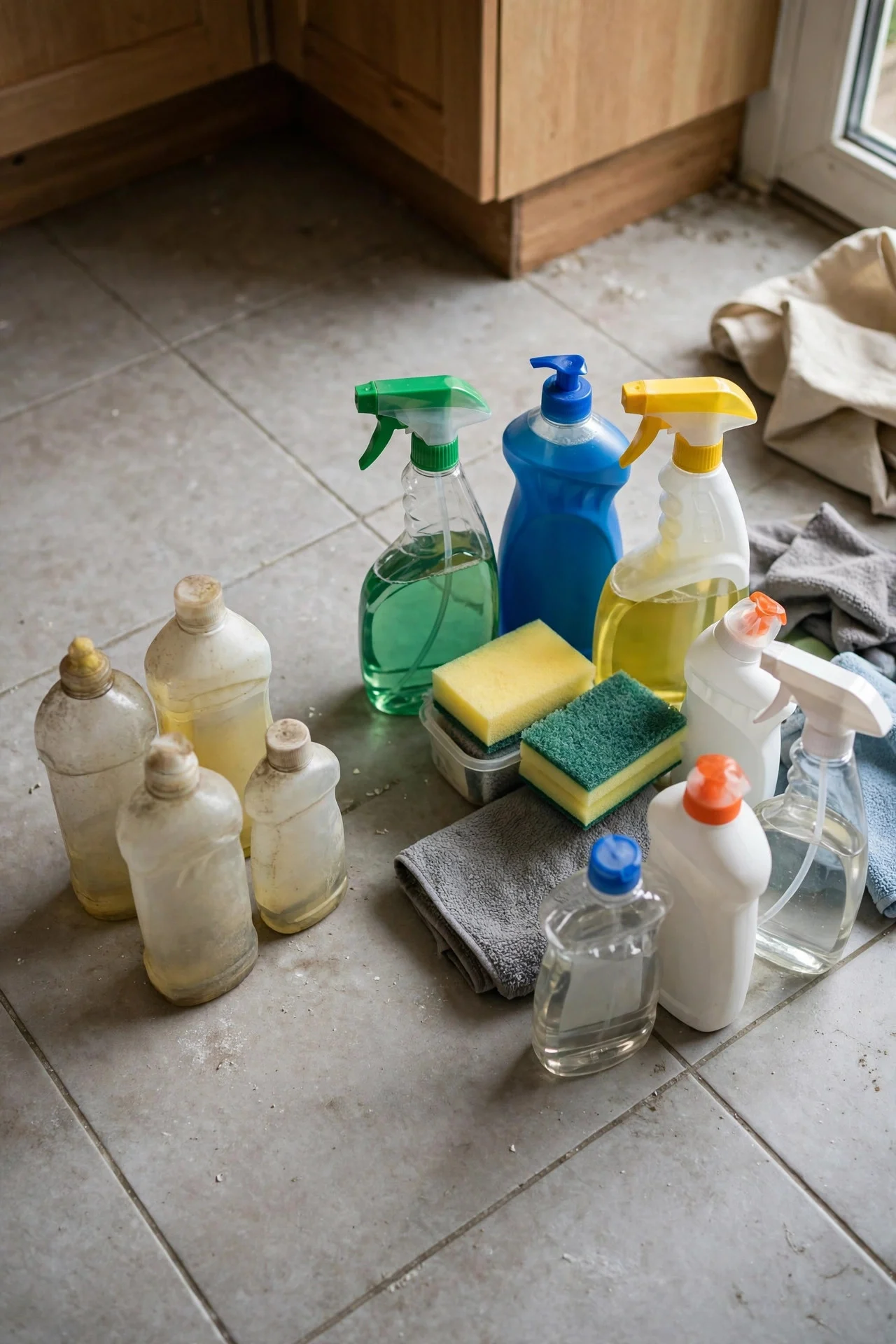
Under-sink cabinets accumulate half-empty bottles of products you bought, tried once, and abandoned. Twice a year, pull everything out, toss the expired and the never-used, and wipe the cabinet down. It takes 20 minutes and usually removes a third of the contents.
Check dates on anything with active ingredients — old cleaners lose effectiveness, and expired sunscreen and medicine should never be kept. Donate unopened duplicates to a shelter.
Try this: Do the purge when you change smoke alarm batteries — an existing twice-a-year habit makes it automatic.
Frequently Asked Questions
How do I organize under the sink with pipes in the way?
Work around them: use bins positioned on either side of the drain, a sliding organizer with a center cutout, the cabinet door for hanging storage, and a tension rod above. Never try to store through the pipes — store around them.
How do I keep the under-sink cabinet dry?
Lay a waterproof mat with a raised lip on the cabinet floor, fix any slow drips promptly, and use wire baskets instead of solid shelves in damp bathrooms so air circulates. Check for leaks quarterly.
What’s the best storage for under a bathroom sink?
Tiered wire baskets for toiletries, a door-mounted holder for hot hair tools, and small clear drawers for tiny items. Keep everyday items at the front and backups behind or below.
Should cleaning supplies go under the kitchen or bathroom sink?
Keep kitchen cleaners under the kitchen sink and bathroom cleaners under the bathroom sink — hauling products between rooms is why cabinets get messy. One small caddy per sink covers daily needs.
Final Thoughts
The under-sink cabinet will never be glamorous, but it can stop being a disaster. Start with the waterproof mat and the light — protection and visibility first. Then add the sliding organizer or bins around the pipes, use the door, and purge twice a year. It’s the least-seen cabinet in the house; make it the best-organized one anyway.