
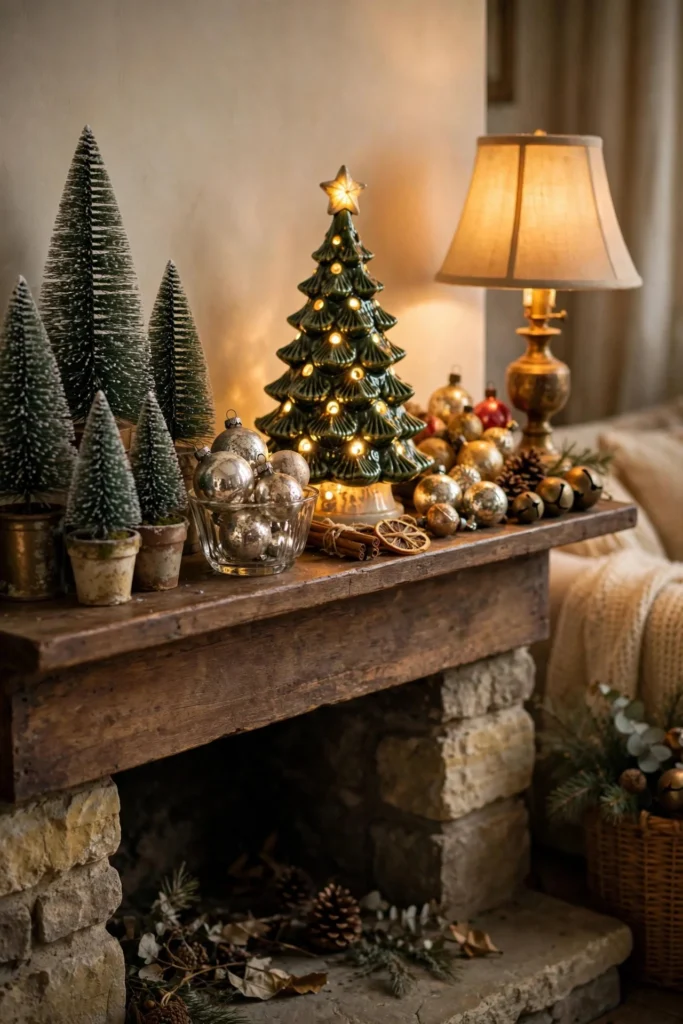
There’s a reason vintage Christmas decor never really goes out of style: it carries memory. A mercury-glass ornament your grandmother hung, a ceramic tree that lit up someone’s childhood living room — these pieces feel like Christmas in a way no trend ever will. Nostalgic decorating isn’t about being old-fashioned; it’s about surrounding yourself with things that mean something.
These 14 vintage Christmas decor ideas blend genuine antiques with faithful reproductions, so you can get the look on a flea-market budget or straight from a reproduction shelf. Every idea includes where to find pieces and how to style them so they look collected, not cluttered.
1. Bottle-Brush Trees in Every Size
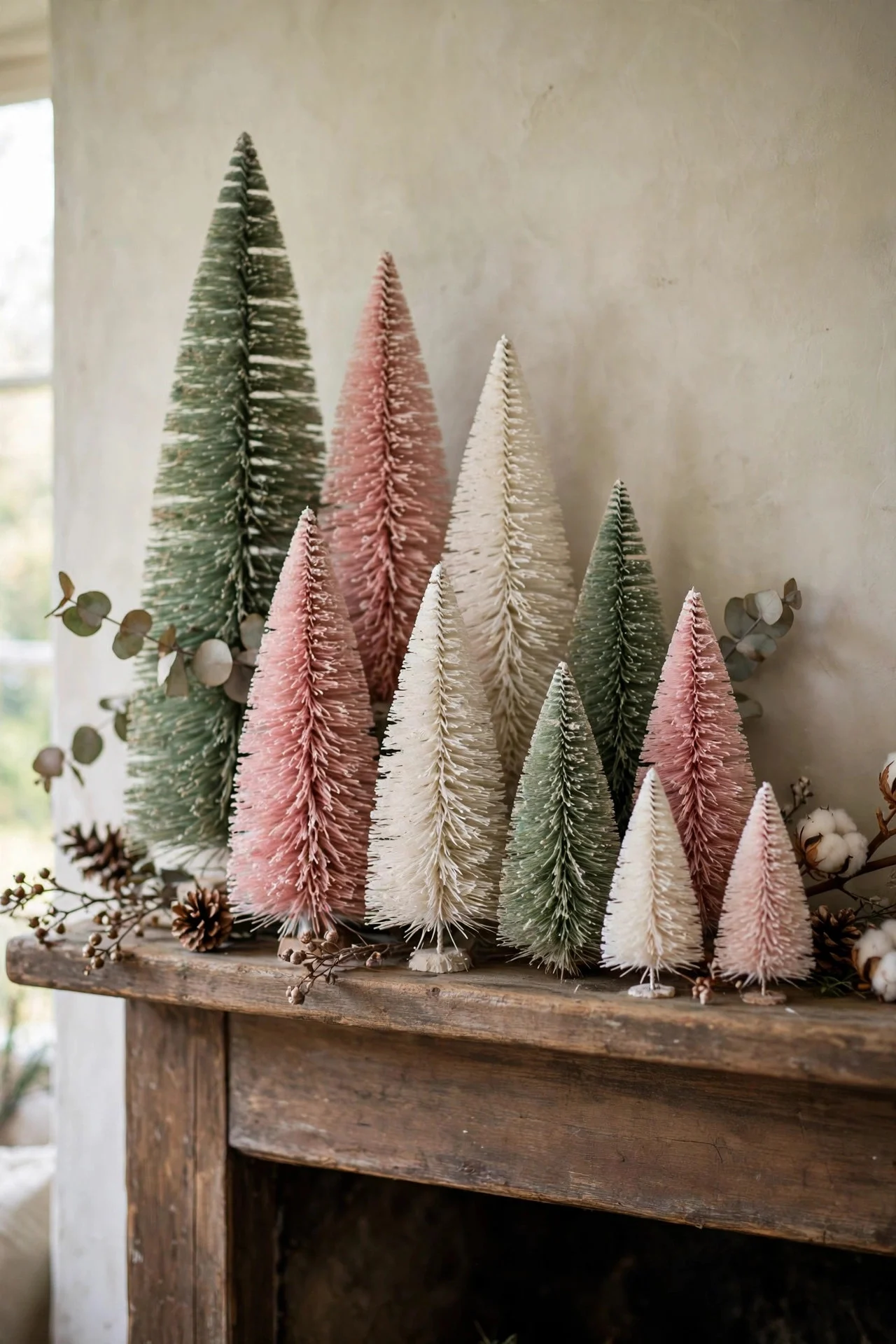
Those little bristly trees — bottle-brush trees — are the backbone of vintage Christmas styling. They were everywhere in the 1950s, dyed in faded greens, pinks, and whites, and grouping them is the whole trick: cluster five to nine in graduated heights on a mantel, windowsill, or sideboard.
Mix authentic vintage finds (check the base for old price stickers — that’s the charm) with new reproductions in matching faded tones. Keep them to two or three colors per grouping so it reads as a collection rather than a craft store explosion.
Try this: Set a cluster inside a vintage silver tray or wooden dough bowl — the container makes the grouping look deliberate.
2. Mercury Glass Ornaments
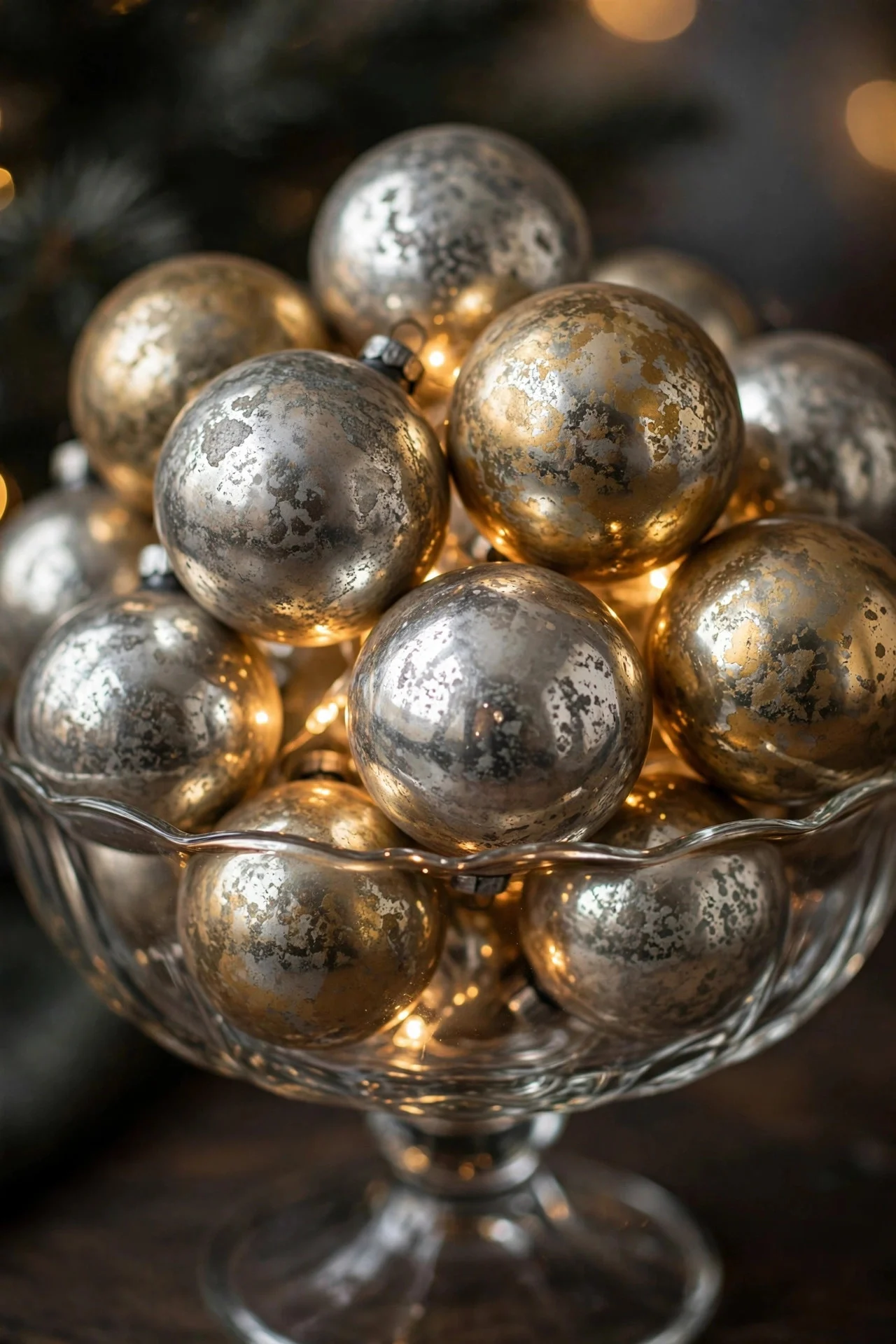
Mercury glass — that mottled, silvered finish — was the height of Victorian Christmas fashion, and it still looks impossibly elegant. Hang genuine antique ornaments (they’re lighter than they look, with hand-painted details) on the tree’s outer branches where the light catches them.
Can’t find or afford antiques? Good reproductions run $3 to $6 per ornament and fool everyone from three feet away. Mix shapes — balls, teardrops, finials — in silver, gold, and one accent like dusty rose for a tree that glows.
Try this: Pile mercury glass balls in a footed glass compote or punch bowl — a five-minute centerpiece with maximum shine.
3. A Strand of Vintage Tinsel
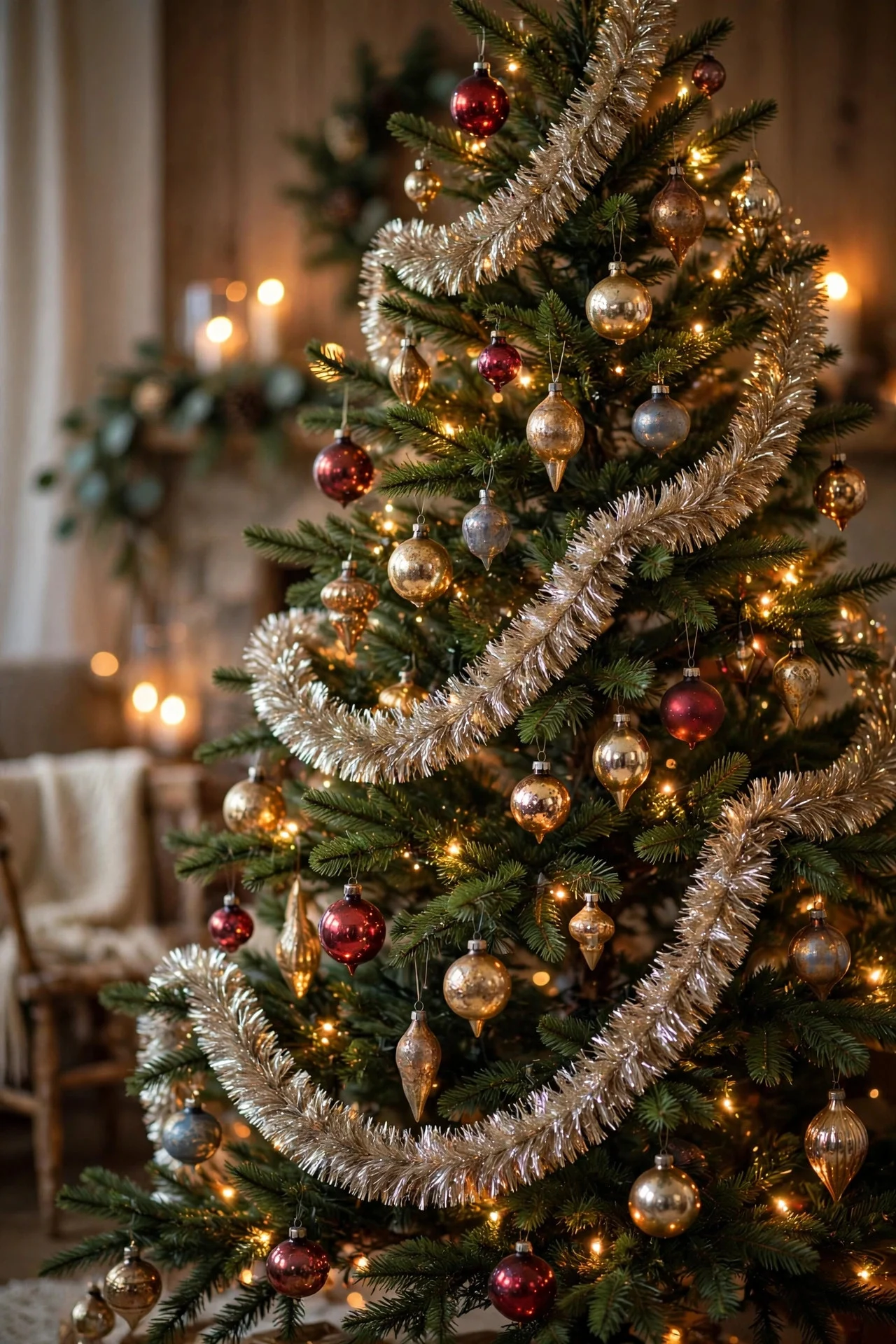
Real vintage tinsel was made with lead — heavy, drapeable, and utterly unlike the plasticky stuff sold today. If you find old tinsel at an estate sale, handle it carefully and keep it away from kids and pets. But the look? Nothing modern drapes like it.
For the rest of us, the trick is restraint: one or two strands on the tree, draped in long swags rather than tossed. Or skip the tree entirely and drape a single strand along a mantel garland, where its shimmer catches candlelight beautifully.
Try this: Lead-free “vintage-style” tinsel from specialty sellers gives you 90% of the look with none of the worry.
4. Shiny Brite Ornaments
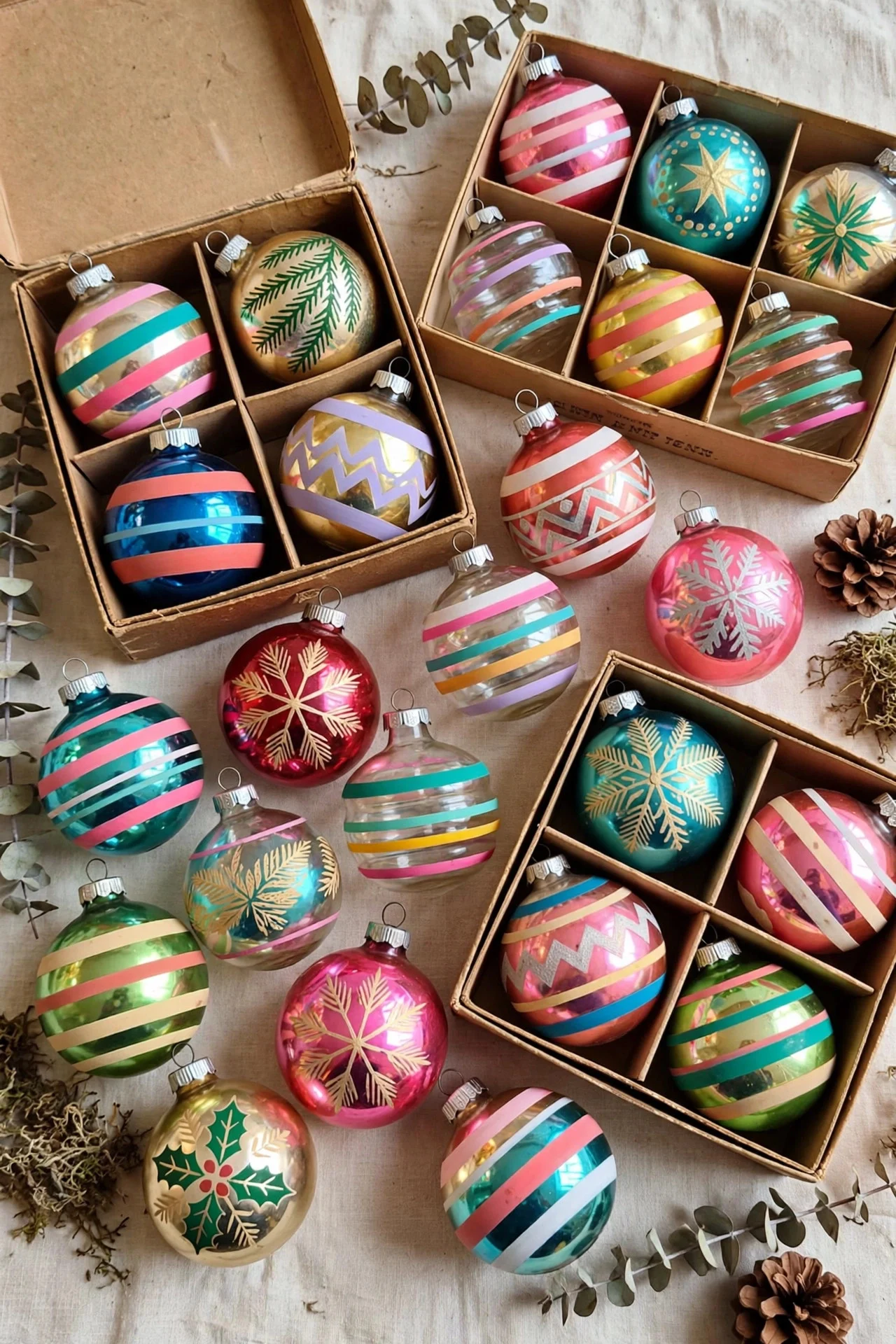
Shiny Brites — those American-made glass ornaments from the 1940s through the 60s — are the most collectible Christmas ornaments in the country for good reason. The hand-painted stripes, stenciled snowflakes, and indented “reflector” shapes are tiny works of art, and the original boxes are half the fun.
Hunt them at estate sales and flea markets, where boxes often go for $10 to $25. Display a few in their open boxes on a shelf — the packaging is part of the nostalgia. On the tree, group them rather than scattering; a cluster of six reads as a statement.
Try this: Hang Shiny Brites at eye level on the tree’s front — they’re the ornaments guests will actually lean in to look at.
5. Popcorn and Cranberry Garland
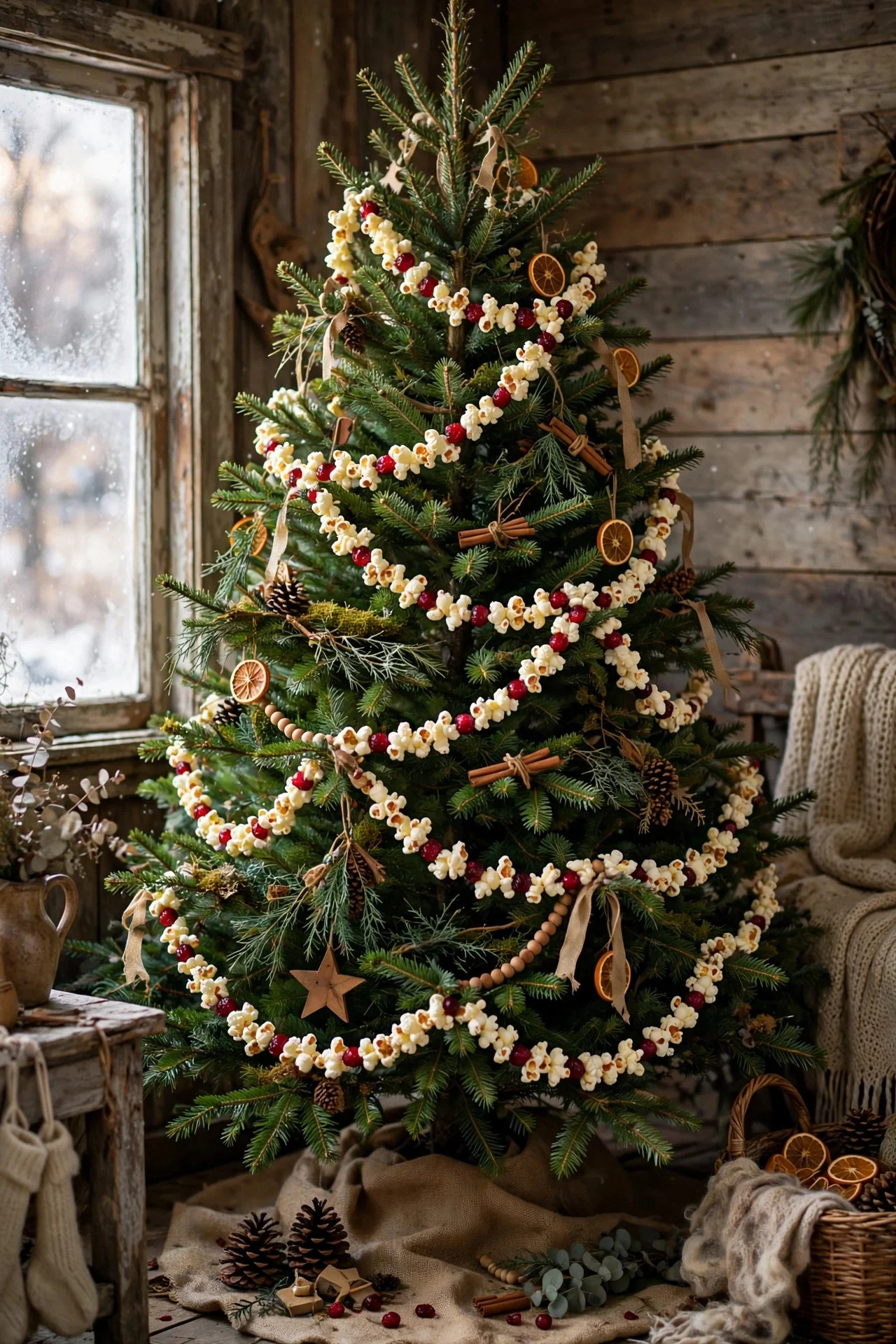
Before plastic garlands, there was string: popcorn and cranberries threaded on heavy-duty thread, made by hand at the kitchen table. It takes about an hour to string 6 feet (use a darning needle and waxed dental floss — it doesn’t tangle), and the result is pure Americana.
Real cranberries last about a week indoors before softening, so time it for the week of Christmas — or use wooden cranberry beads for a permanent version. Either way, drape it in loose swags on the tree or across a mantel.
Try this: Make it a family project with hot cocoa — the slightly uneven, handmade look is the entire point.
6. A Ceramic Christmas Tree
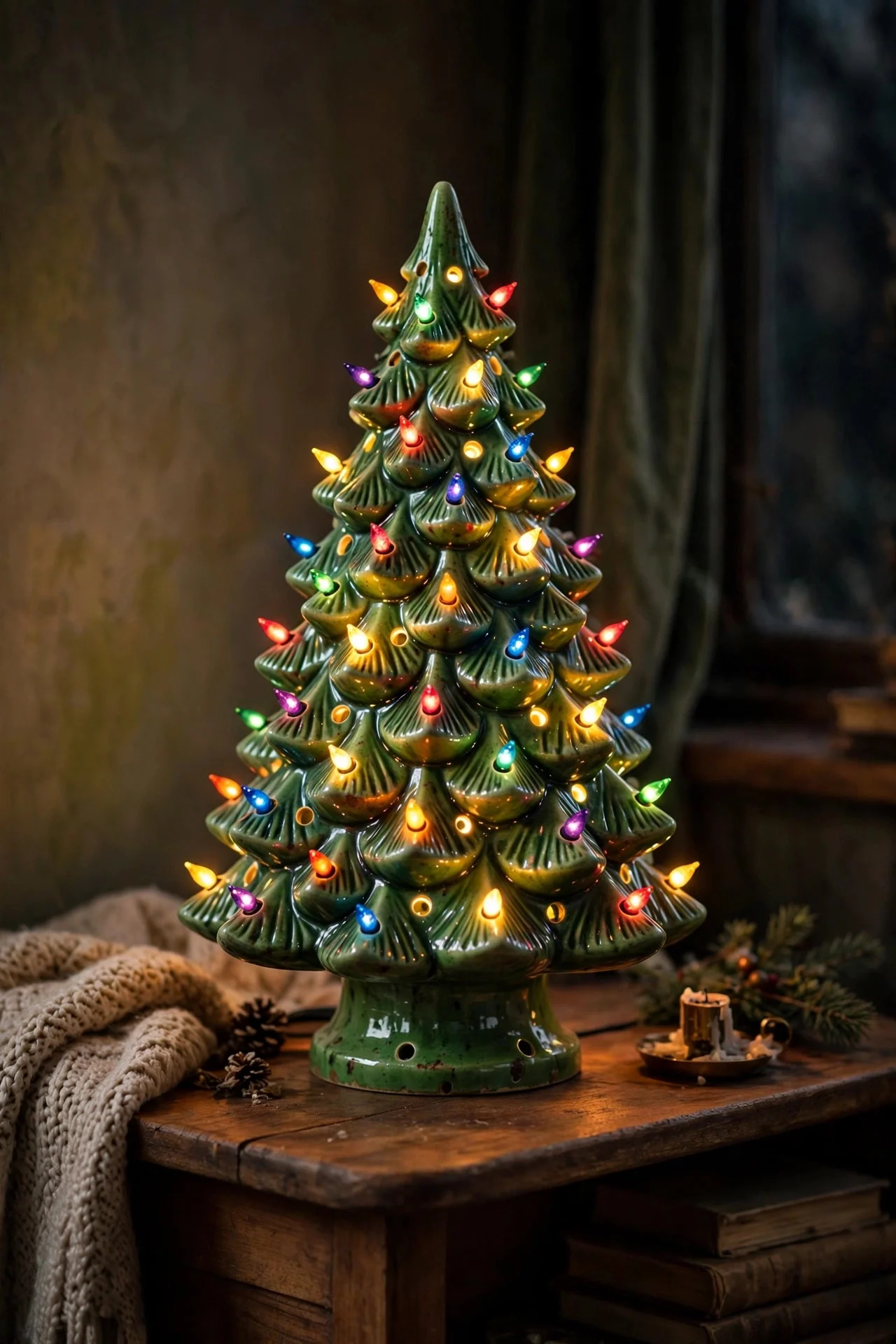
The light-up ceramic Christmas tree — green glaze, little plastic peg lights — is maybe the single most nostalgic object in American Christmas decor. If your grandmother had one, you know exactly the warm glow I’m talking about. Originals from the 70s turn up at thrift stores for $15 to $40.
Style it where it can glow in the evening: a side table, a bedroom dresser, the kitchen counter. The 14-to-18-inch size has the most presence. Modern reproductions exist, but the vintage glaze has a depth the new ones can’t quite match.
Try this: Replace any burnt-out peg lights with warm-white ones — cool white ruins the vintage glow instantly.
7. Putz Houses Village
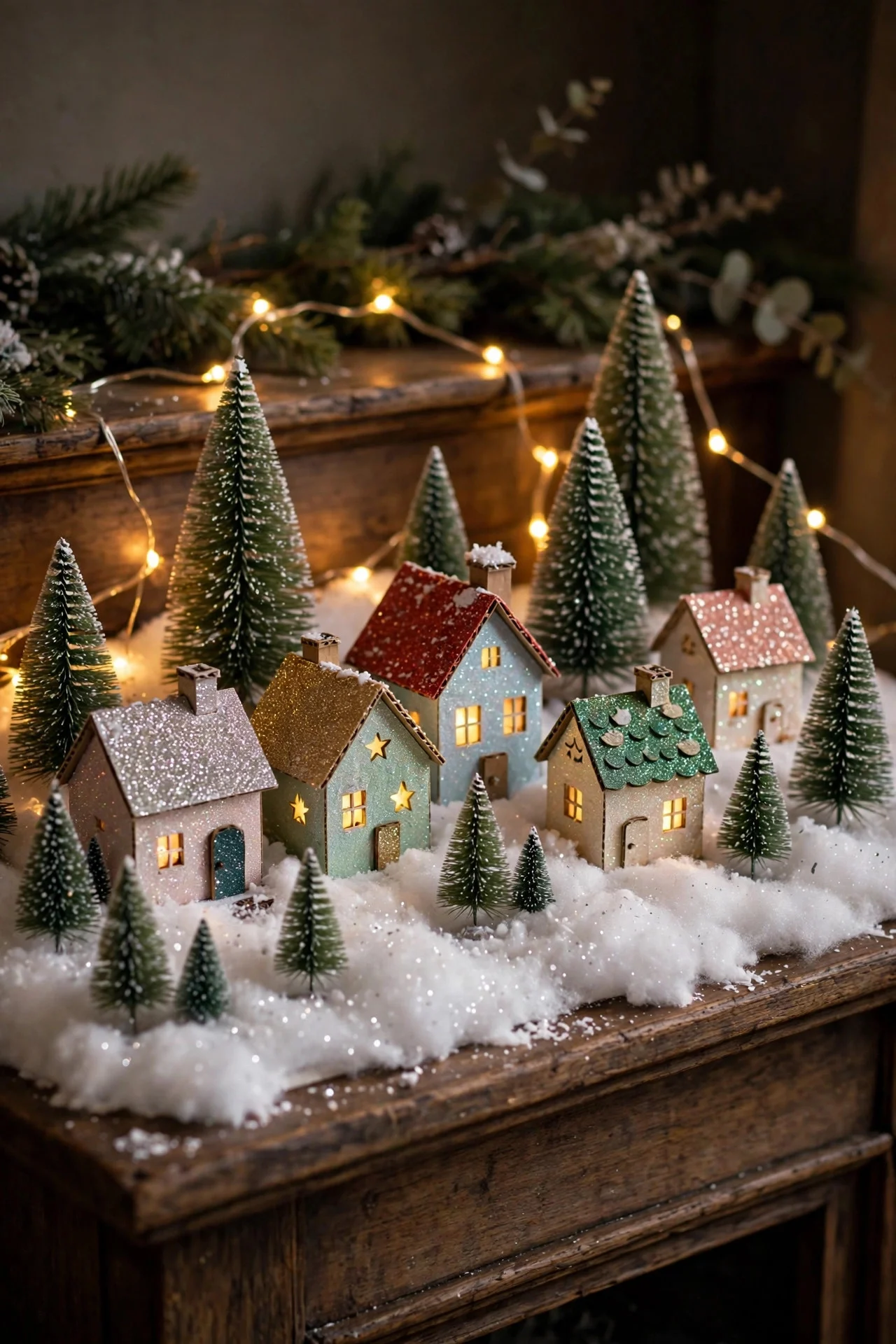
Putz houses — those tiny cardboard and glitter cottages from 1930s-50s Germany and Japan — make the most charming little village. Arrange five to ten on a mantel or console with bottle-brush trees between them and a string of warm fairy lights behind for glow.
Look for the telltale details: coconut-fiber “snow” roofs, cellophane windows, hand-painted doors. A snowy white bedsheet or quilt batting underneath hides the table and unifies the scene. Keep the village low and spread out rather than stacked.
Try this: Add tiny warm-white lights inside one or two houses — glowing windows at dusk are pure magic.
8. Vintage Santa Figurines
Mid-century Santa figurines — chalkware, papier-mâché, celluloid — have a rosy-cheeked charm no modern Santa can touch. The best ones show their age: crazed paint, worn felt trim, a slightly lopsided smile. Group three to five of graduated sizes on a mantel or bookshelf rather than scattering singles around the house.
Estate sales and flea markets are the hunting grounds; expect $5 to $20 for common pieces, more for unusual ones. Check for the “Made in Japan” stamp on the bottom — it’s the mark of the golden age of dime-store Christmas, roughly 1940 to 1960.
Try this: Place one Santa peeking from a bookshelf between ordinary books — the surprise is half the delight.
9. Old-Fashioned Paper Chains
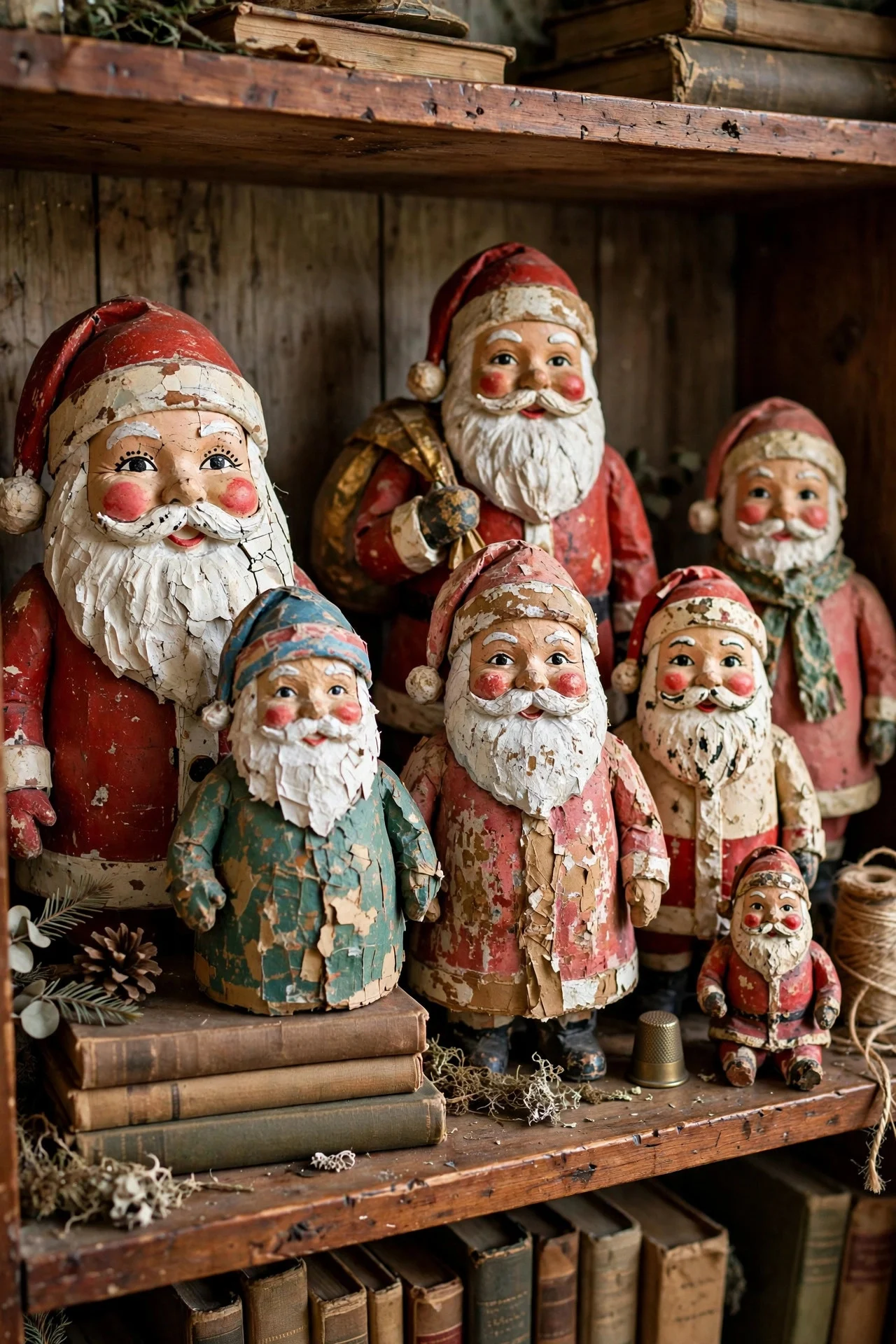
Construction-paper chains are the humblest vintage decoration and somehow the most joyful. Red and green loops, glued or stapled, draped across a mantel or doorway — every grandparent made these, and making them again connects you to that lineage directly.
Use vintage-style patterns if plain feels too kindergarten: old sheet music, book pages, or kraft paper with stamped designs. A 10-foot chain takes about an hour and 60 strips of paper. Drape, don’t stretch — the loops should hang soft.
Try this: Write one gratitude or memory on each strip before linking — by Christmas you have a garland of the year’s best moments.
10. Heirloom Stockings, Not Matching Sets
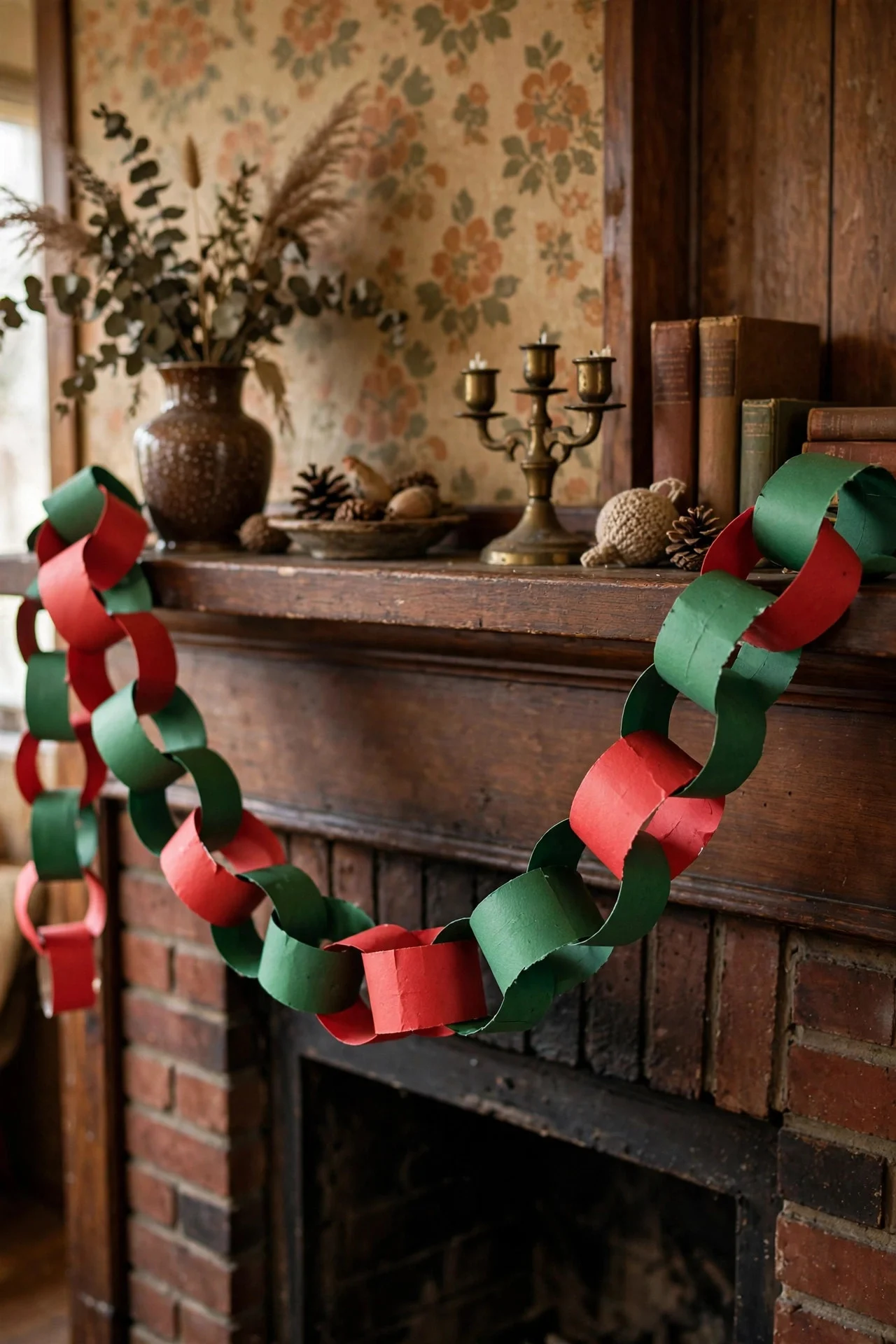
The vintage approach to stockings: every family member’s own, collected over years, none matching. A needlepoint stocking from 1985 next to a felt one from last year tells your family’s story in a way a coordinated set from a catalog never will. Mismatched is the point.
If you’re starting fresh, hunt thrift stores for old needlepoint and quilted stockings — the handmade quality of vintage ones is obvious. Hang them with simple brass hooks and let the variety be the design. Add names with iron-on letters if the stockings came nameless.
Try this: Hang stockings in birth order — it’s a small storytelling detail guests always notice.
11. A Bowl of Vintage Ornaments
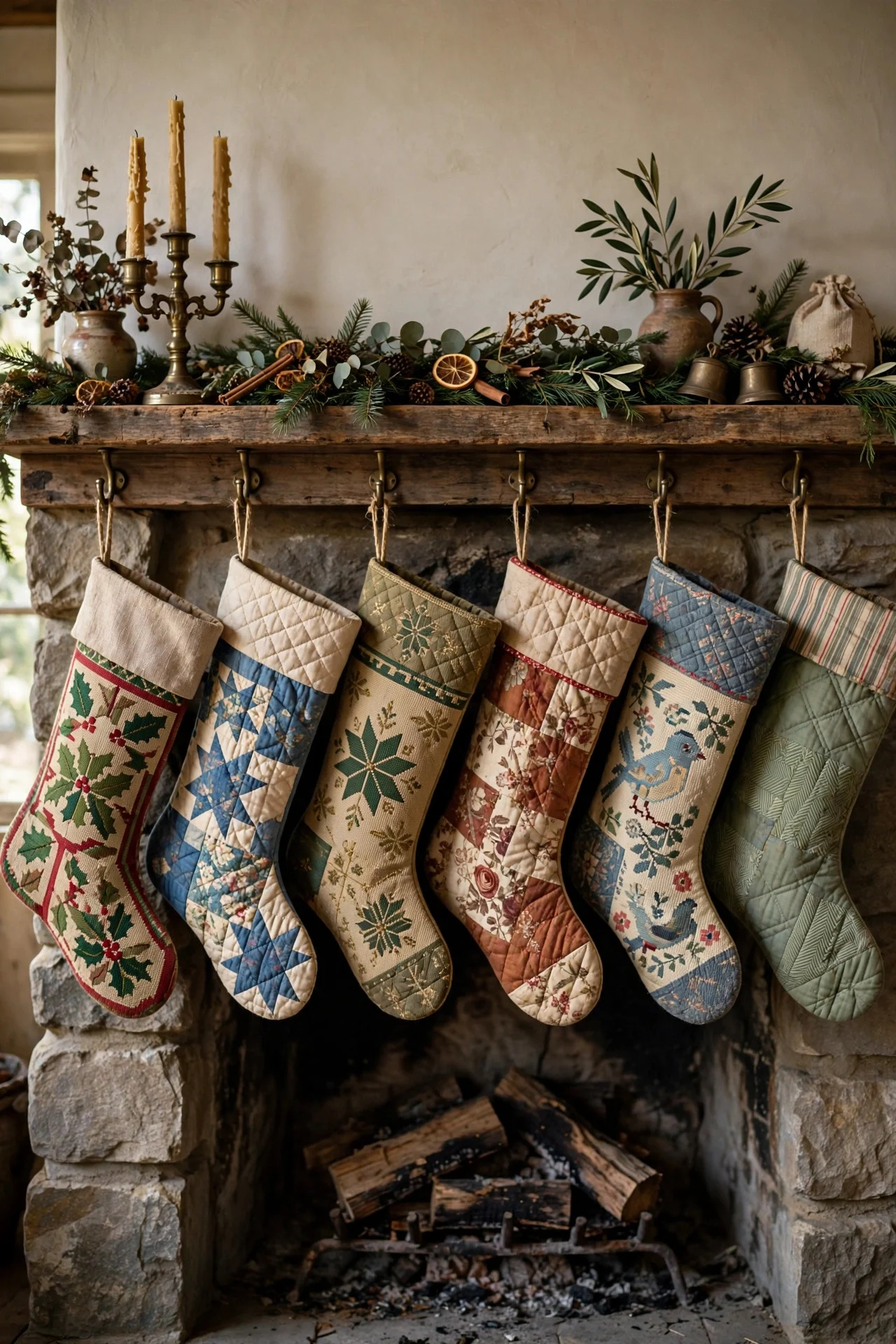
Not every vintage ornament needs to hang. Fill a large wooden or silver bowl with a jumble of old glass balls, icicles, and finials, and set it on the coffee table or dining sideboard. The pile catches light from every angle and invites people to pick pieces up and look closely.
This is also the perfect fate for ornaments too fragile or faded for the tree — chipped paint and worn silvering just add character in a bowl. Mix in pine sprigs or a strand of fairy lights for fullness. It takes five minutes and looks like a museum display.
Try this: Use ornaments all in one color family (all silvers, all reds) — the monochrome pile looks curated, not random.
12. Retro Pink and Silver Palette
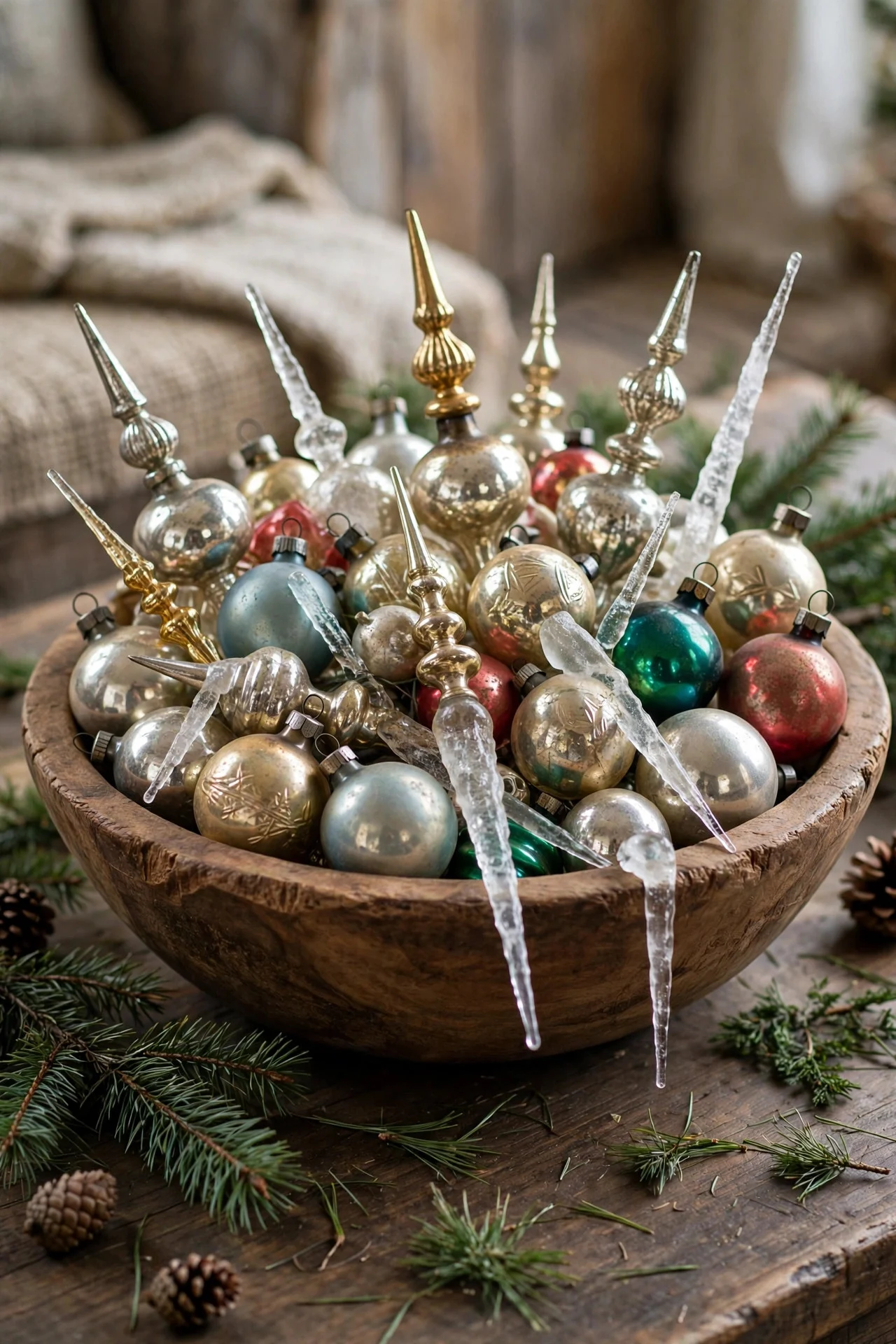
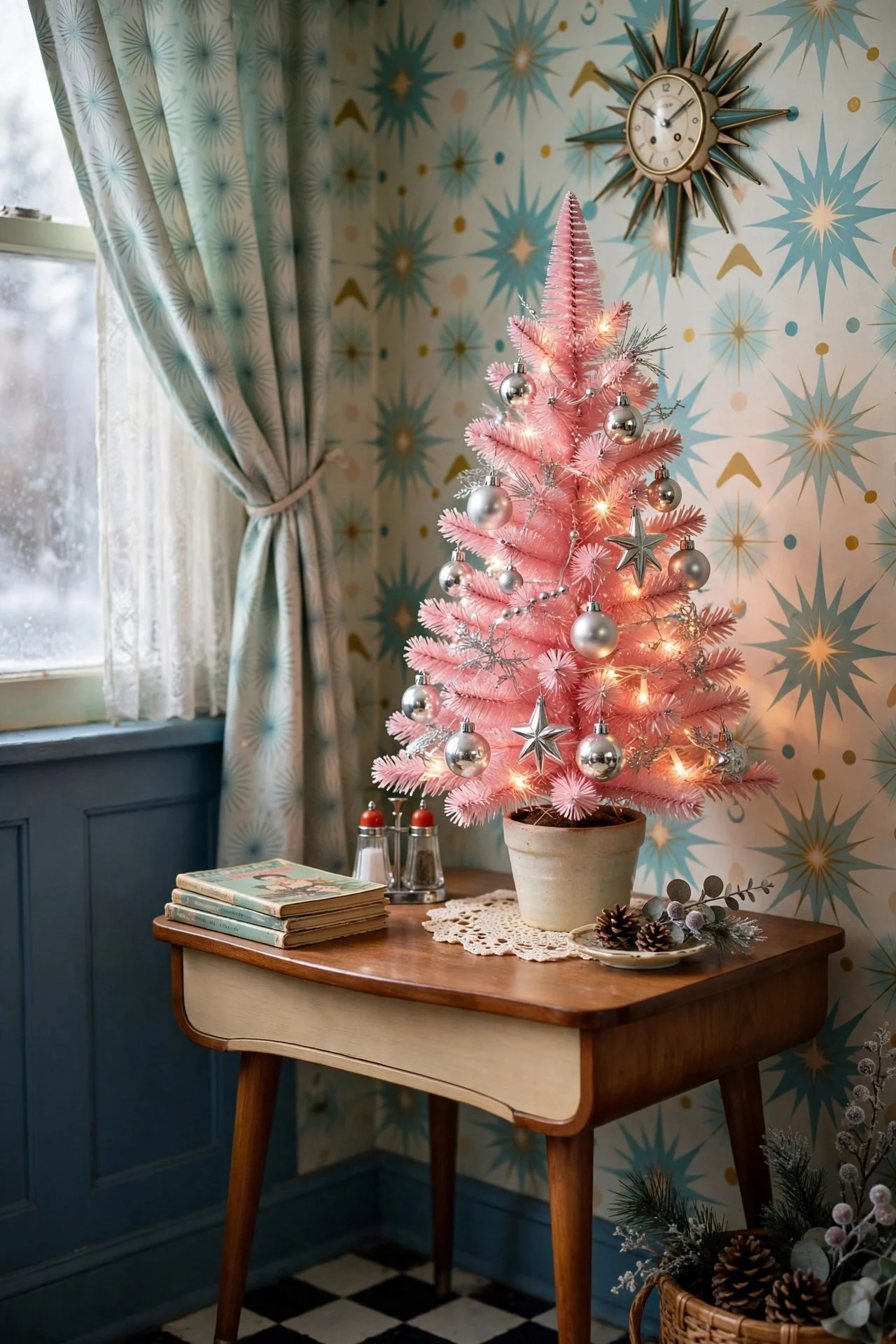
Before red-and-green ruled, 1950s Christmas went pastel: pink, mint, silver, and white, often on an aluminum tree. A retro-pink Christmas tree — yes, really — is a showstopper in the right room, and pink bottle-brush trees plus silver ornaments get you there without committing to a full pink fir.
Keep the rest of the room neutral so the pastel palette pops rather than clashes. Silver tinsel garland, pink glass balls, white fairy lights. It’s kitschy in the best way — knowing, joyful, and incredibly photogenic.
Try this: Start small: a 3-foot pink tree on a side table lets you test the look before going full retro.
13. Vintage Christmas Postcards Display
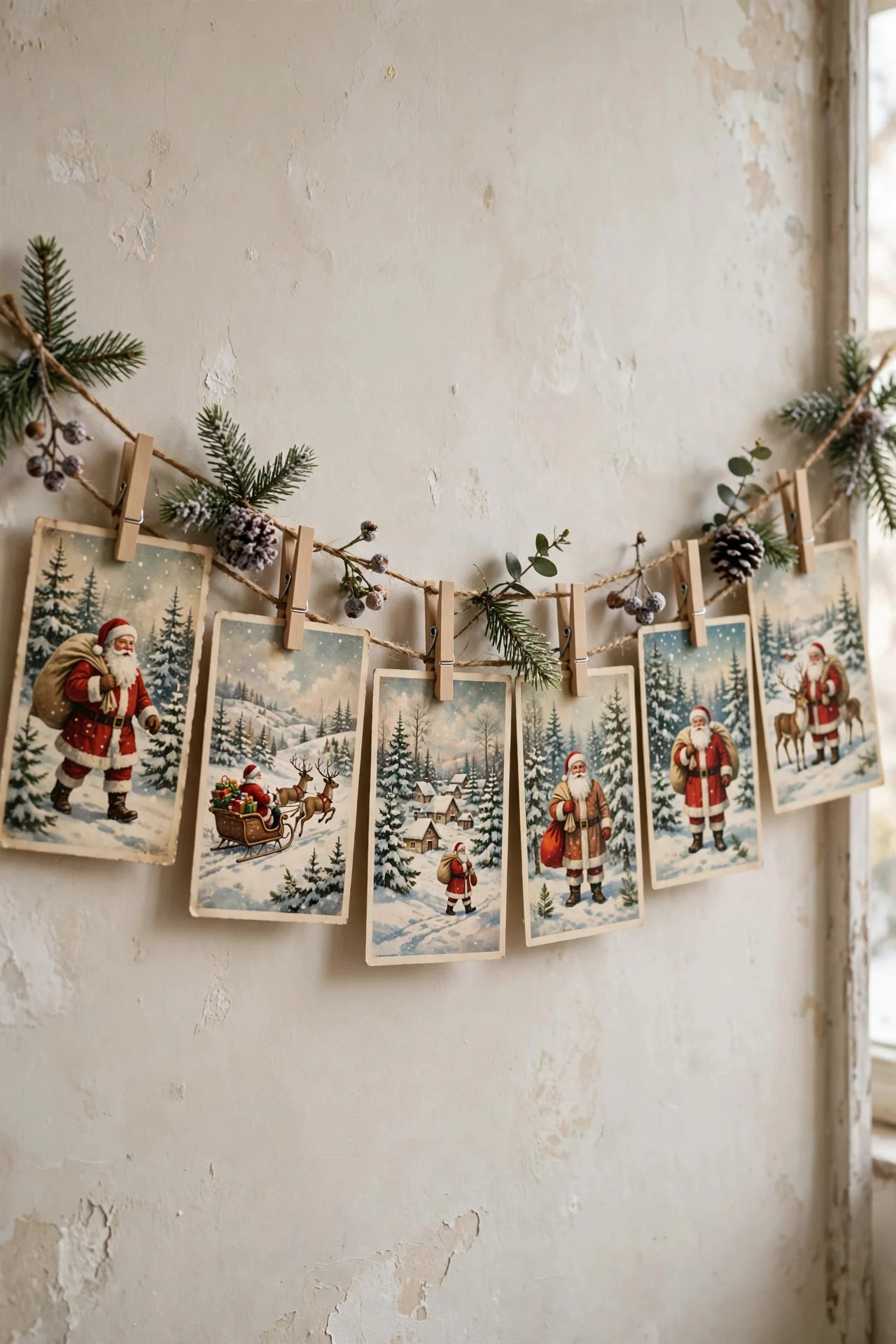
Old Christmas postcards — Santas, snow scenes, “Merry Christmas” in gold script — are inexpensive ($1 to $5 each at antique malls) and endlessly charming. Clip a dozen to twine with mini clothespins and hang as a garland, or frame four to six in a grid for instant gallery art.
Look for postally-used cards with handwritten messages on the back; the 1910s-1940s messages (“Hope to see you at Christmas — Mother”) are tiny time capsules. A garland of them across a mantel beats any store-bought banner.
Try this: Tuck postcards into your tree branches like ornaments — the paper against green is unexpectedly beautiful.
14. The Old Sled by the Door
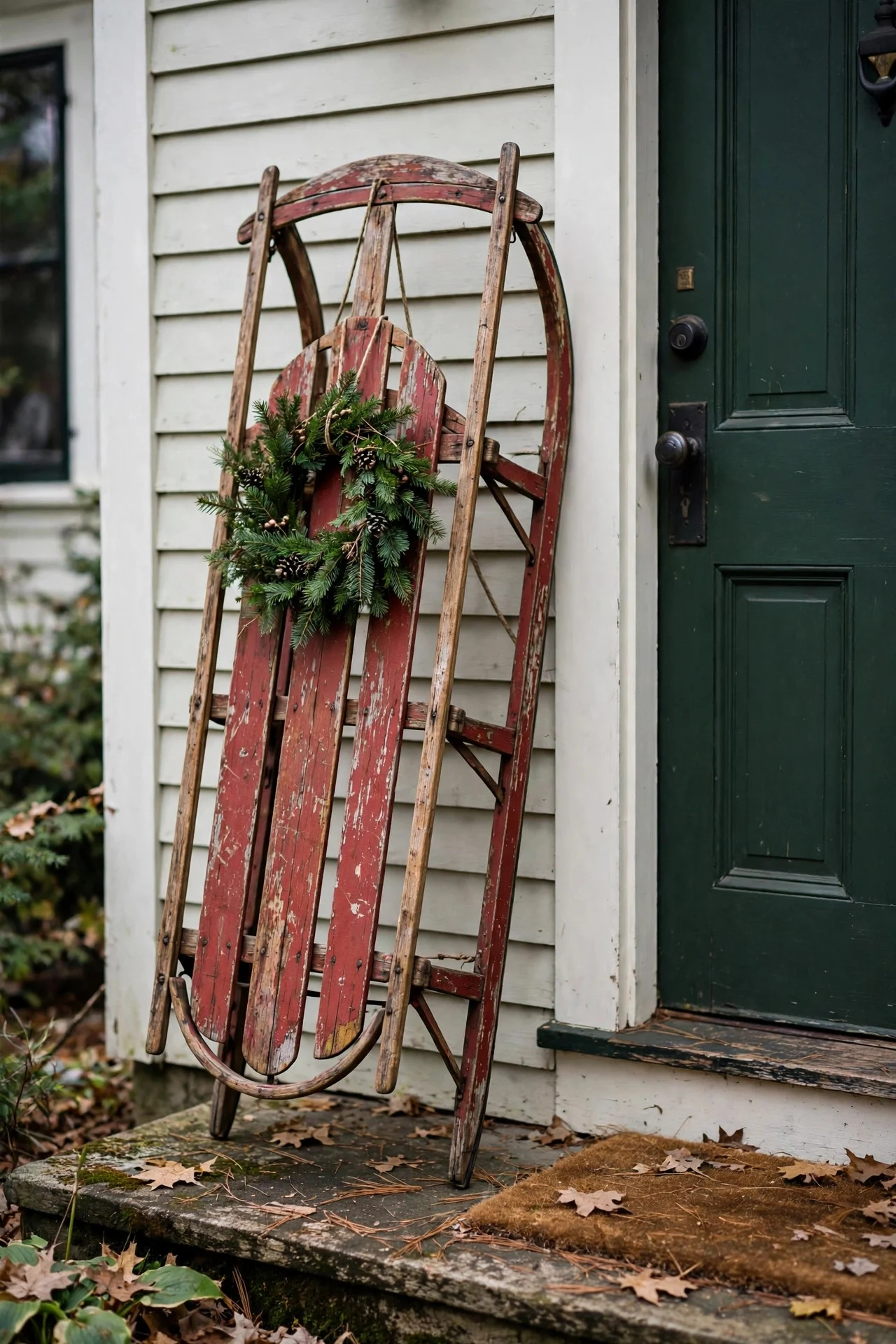
A vintage wooden sled leaning by the front door or on the porch is the ultimate nostalgic greeting. The worn runners, faded paint, chipped decals — every mark is character. Lean it at a slight angle against the wall, add a small wreath on the front, and you’re done.
Real vintage sleds run $30 to $80 at flea markets; reproductions cost less and spare you the guilt of leaving an antique in the weather. Either way, keep it under cover — a porch roof is fine, open yard is not. One sled, one wreath, zero fuss.
Try this: Drape a plaid scarf over the sled’s seat — it suggests someone just came in from the cold.
Frequently Asked Questions
Where can I find real vintage Christmas decorations?
Estate sales are the goldmine — whole collections often sell for a fraction of their value. Flea markets, antique malls, and thrift stores are next best. Online, search Etsy and eBay for specific terms like “Shiny Brite ornaments” or “putz house” rather than generic “vintage Christmas” to find the good stuff.
How do I tell if a Christmas ornament is actually vintage?
Look for clues: “Made in Japan” or “West Germany” stamps, hand-painted details with slight imperfections, metal caps (not plastic), and original boxes with period graphics. True antique glass ornaments are noticeably lighter and more delicate than modern reproductions. When in doubt, the box art usually dates it.
Are vintage Christmas lights safe to use?
Be cautious. Old light strings with cloth cords or C7 bulbs can be fire hazards — inspect for cracked insulation and never leave them unattended. Many collectors display vintage strings unplugged and use modern LED reproductions for actual lighting. If you love the look, buy new “vintage-style” LED strings; they mimic the glow safely.
How do I mix vintage pieces with my modern decor?
Group vintage items together rather than scattering singles — a cluster reads as a collection, a lone piece reads as clutter. Keep your modern backdrop simple so the vintage pieces stand out, and limit yourself to one era per grouping (all 1950s, or all Victorian) for cohesion.
Final Thoughts
Vintage Christmas decor works because it’s personal. Nobody else has your grandmother’s ornament box or the Santa you found at that flea market in Ohio — and that’s exactly the point. Trends come and go, but a mercury-glass ball that’s hung on forty trees carries something no store can sell.
Start where you are: raid the attic, ask relatives what’s in their basement, spend a Saturday at estate sales. Buy what makes you feel something, group it with intention, and let the mismatched, the worn, and the handmade be the whole aesthetic. That’s not just decorating — that’s keeping Christmas.