
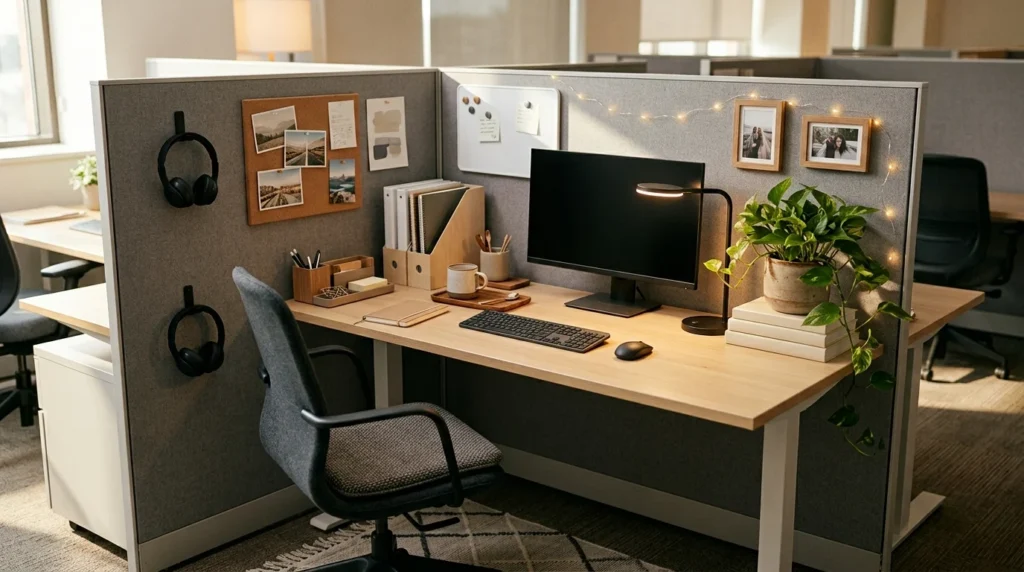
I spent the first three years of my office job sitting in a completely bare cubicle, telling myself I’d “get around to decorating it eventually.” It wasn’t until a coworker mentioned she genuinely looked forward to coming into her cubicle each morning, mostly because of how she’d set it up, that I realized how much of a difference this actually makes. I went home that weekend, ordered a small handful of things, and spent the following month slowly turning my gray, forgettable little box into a space that actually felt like mine.
What I didn’t expect was how much better I started feeling during the workday itself. Small changes in lighting, a bit of greenery, some personal touches — none of it sounds like it should matter much in an eight-by-eight cubicle, but the cumulative effect was real. Since then I’ve helped a few coworkers redo their own spaces, and I’ve picked up a long list of ideas that work well within the typical constraints of cubicle life: limited wall space, no nails allowed, shared lighting, and a strict “keep it professional” expectation. Here are 21 of them.
1. A Small Desk Lamp With Warm Lighting
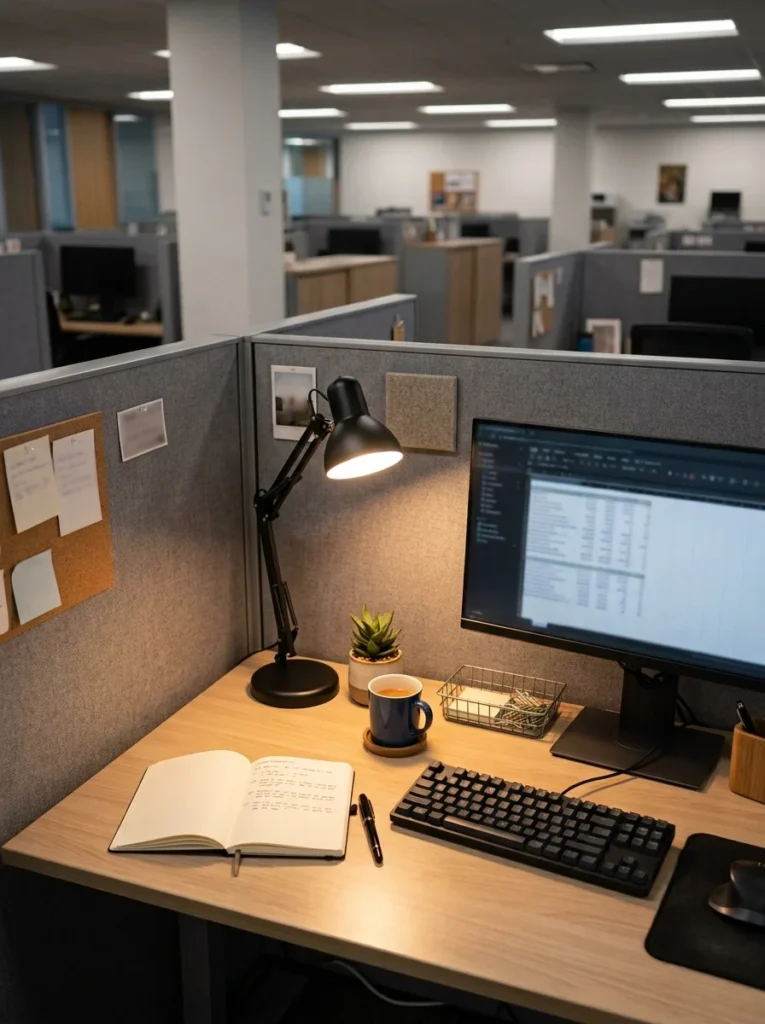
Overhead fluorescent lighting is one of the biggest culprits behind that flat, draining feeling so many cubicles have, and adding a small desk lamp with a warm-toned bulb made an immediate difference for me. I chose one with an adjustable arm so I could angle it exactly where I needed extra light for reading documents, while still leaving it off entirely on brighter days when the overhead lighting was sufficient on its own.
The color temperature of the bulb matters more than people usually expect. I switched from a cool white bulb to a soft warm one, and the difference in how the whole cubicle felt was surprisingly dramatic, shifting from clinical and sterile to something closer to a cozy reading corner. A lamp also gives you a small amount of control over your environment in a space where almost everything else, from the temperature to the overhead lighting, is dictated by the building itself. I’ve found that switching my lamp on first thing in the morning, even before the rest of the office lights come on, has become a small ritual that helps me mentally transition into work mode. If your workplace has rules against certain lamp types for safety reasons, LED options run cool to the touch and are almost always a safe choice, and they tend to use very little energy compared to older incandescent bulbs.
2. A Low-Maintenance Desk Plant
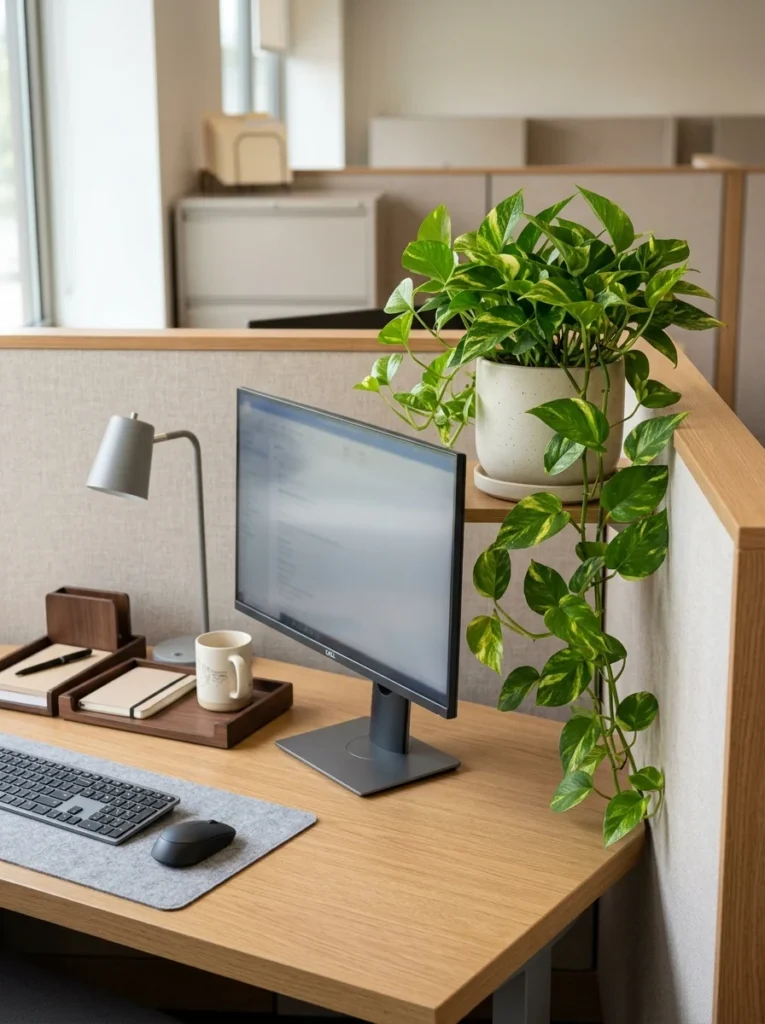
A small plant on the corner of my desk turned out to be one of the cheapest, most effective changes I made. I started with a pothos, mostly because I’d heard it was nearly impossible to kill, and it’s thrived on nothing but the ambient light from my desk lamp and whatever daylight makes it into the office through nearby windows.
Having something living and green in an otherwise entirely artificial environment genuinely changes the feel of the space, and there’s something calming about glancing over at it during a stressful moment in the workday. Succulents, snake plants, and ZZ plants are all similarly forgiving choices if natural light is limited, since cubicles rarely get direct sun for more than a few hours, if at all. I water mine on a simple weekly reminder rather than trying to remember on my own, which has kept it alive far longer than any plant I’ve owned at home. If you’re worried about maintenance entirely, a well-made faux plant can still add the same visual softness to the space, though I’d always recommend trying a real low-maintenance option first, since the actual act of caring for something small during the workday adds a nice little break in an otherwise screen-heavy routine.
3. Removable Wall Hooks for Vertical Storage
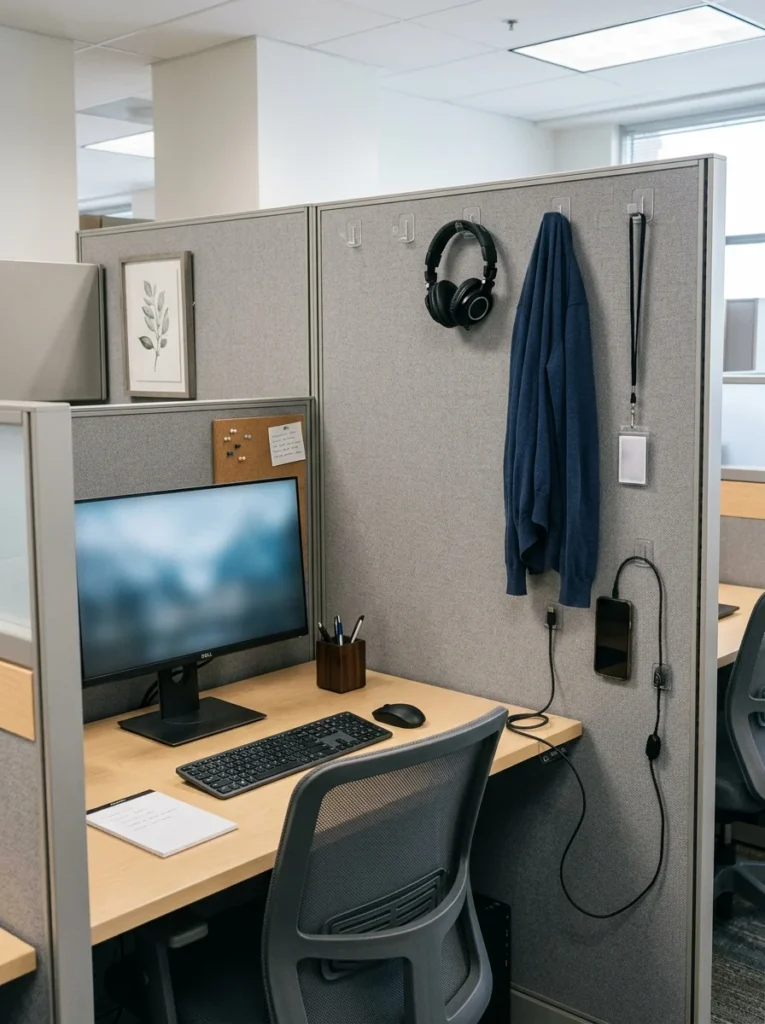
Cubicle walls are almost always fabric-covered, which makes them surprisingly good for removable hook systems that don’t require any drilling or damage. I added a couple of small adhesive hooks to hold my headphones and a spare cardigan, which kept both off my desk surface and within easy reach at the same time.
This turned out to be one of the most practical changes on this whole list, since decluttering the actual desk surface made the entire space feel calmer and more organized, even before I added anything decorative at all. Command-style hooks designed for fabric cubicle walls hold reasonably well for lightweight items, though I’d avoid hanging anything too heavy, since the fabric backing isn’t meant to bear much weight. I also used a couple of small hooks specifically for cables, keeping charging cords from tangling into a mess at the back of the desk. This kind of vertical organization matters more in a cubicle than almost anywhere else, since floor and desk space are both so limited that anything you can move off the horizontal surfaces and onto the walls instead genuinely opens up the whole space.
4. A Small Framed Photo or Two
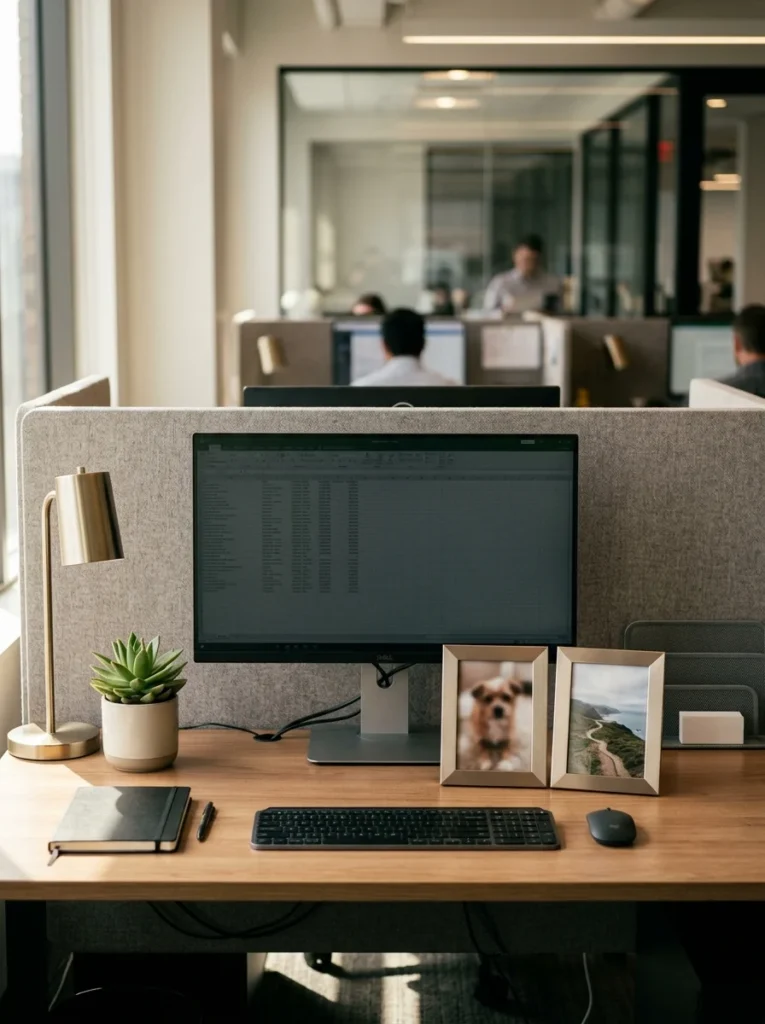
A couple of small framed photos on my desk, one of my dog and one from a trip a few years back, gave the space a personal touch without taking up much room or looking unprofessional. I kept the frames simple and coordinated in finish, rather than mismatched, which made even just two photos look intentional rather than cluttered.
I’d recommend keeping this to just one or two photos rather than an entire gallery, since cubicle desks tend to be small enough that too many frames quickly eat into usable workspace. Choosing photos that make you smile when you glance at them, rather than ones chosen purely for how they look, matters more than people expect, since you’ll be seeing them dozens of times a day. A small easel-back frame that doesn’t require wall space works well if your desk surface has room, while a magnetic photo frame is a good option if your cubicle has a metal surface somewhere, like a file cabinet or the underside of an overhead shelf. This is one of the simplest, lowest-cost changes on this entire list, and yet it’s often the first thing coworkers notice and comment on.
5. A Corkboard or Fabric Pinboard
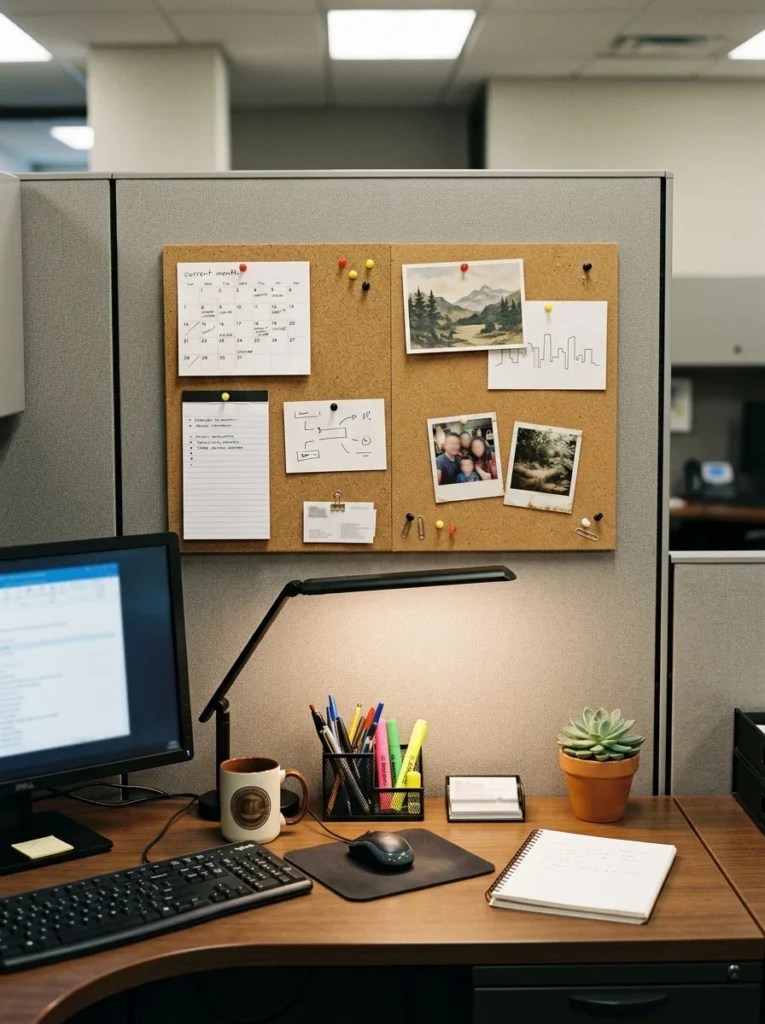
I mounted a small corkboard on the one section of hard wall available in my cubicle, using it for a mix of reminders, a small calendar, and a few postcards collected over the years. It became a genuinely useful organizational tool as well as a decorative one, giving me somewhere to pin important notes that wouldn’t get buried under other paperwork on my desk.
If your cubicle walls are entirely fabric, a fabric pinboard designed to attach directly over the existing wall covering works just as well without needing a hard mounting surface. I organized mine loosely into sections, with reminders and deadlines on one side and more personal items like postcards and photos on the other, which kept it functional rather than purely decorative clutter. Rotating what’s pinned up every month or so kept the board feeling fresh rather than becoming background noise I stopped actually noticing. This is a particularly good option for anyone whose job involves a lot of task switching, since having visual reminders directly in your line of sight tends to work better than notes buried in a notebook or a digital list you have to remember to check.
6. A Small Area Rug Under Your Chair
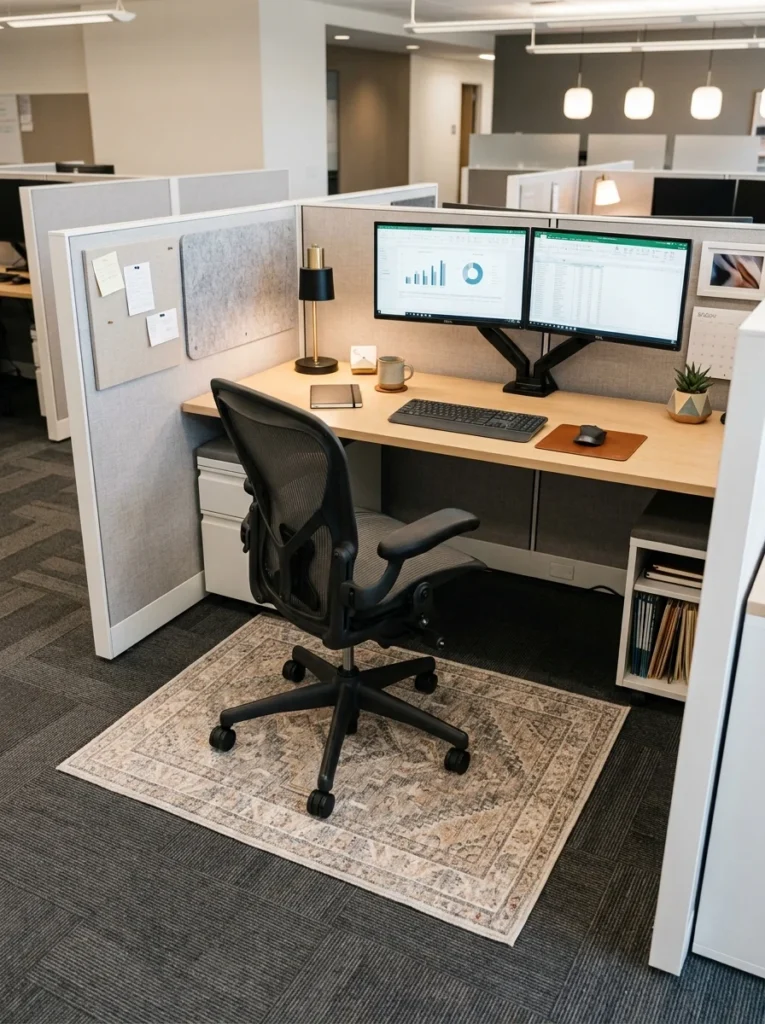
This idea surprised even me when a coworker suggested it, but a small rug placed under my desk chair made the cubicle feel noticeably more like an actual room rather than a gray box with carpet tile flooring. I chose a simple patterned rug just large enough to cover the area where my chair rolls, which also had the added benefit of protecting the carpet tile underneath from wear over time.
Beyond the practical benefit, the rug added a splash of color and pattern at floor level that most cubicles completely lack, since decor efforts tend to focus entirely on the desk and walls while ignoring the floor. I secured mine with a bit of rug tape to keep it from sliding around under my rolling chair, which solved the one practical issue I ran into after switching. This is a relatively low-cost addition that most people never think to try, and it’s consistently one of the details visitors to my cubicle comment on first, mostly because it’s such an unexpected touch in a space that’s usually entirely floor-to-ceiling gray and beige.
7. A Small Speaker for Background Music
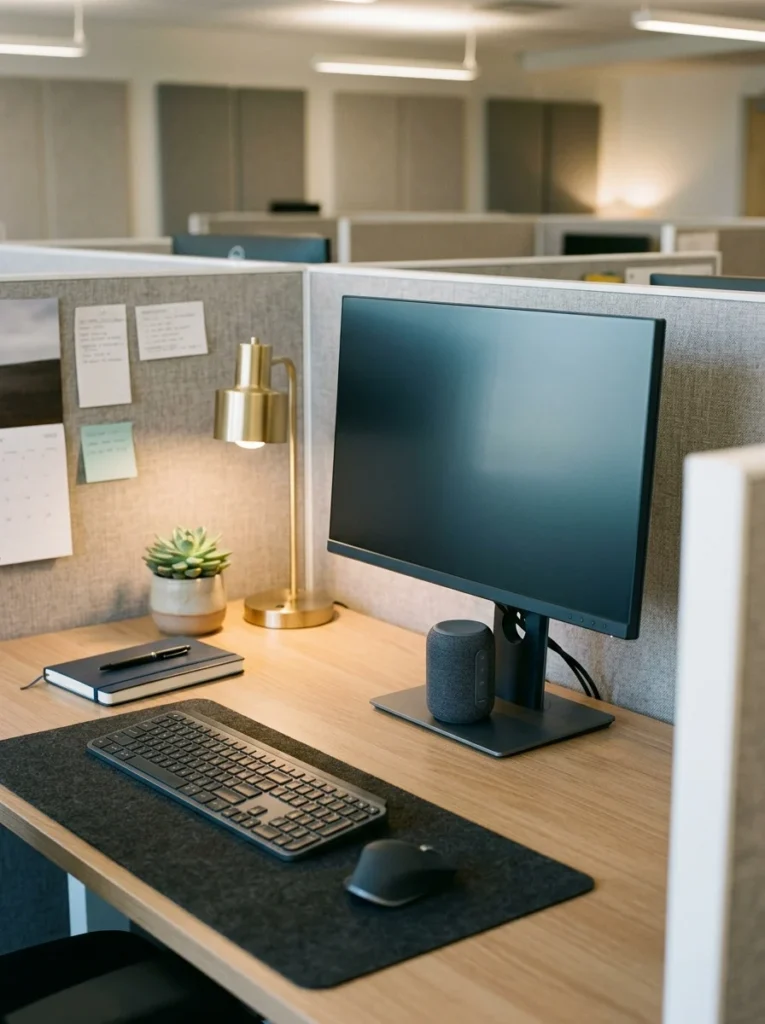
With permission from my workplace, I added a small desktop speaker for quiet background music or podcasts during focused work time, using headphones during calls or when working near others who might be bothered by it. Having actual sound quality, rather than relying on tinny laptop speakers, made a genuine difference in how enjoyable those quieter work stretches felt.
I’d recommend checking your workplace’s policy before adding anything like this, since open office environments vary widely in how they handle ambient noise. A small bluetooth speaker that connects easily to your phone or laptop works well and doesn’t require any additional cables cluttering the desk. Keeping the volume low enough that it doesn’t carry beyond your own cubicle walls is important both for courtesy and for actually being able to focus, since music that’s too loud tends to become a distraction rather than a helpful background element. This addition has become one of my favorite parts of quieter afternoons at the office, giving the space a bit more personality and making long stretches of focused work feel less isolating.
8. A Whiteboard for Quick Notes and To-Do Lists
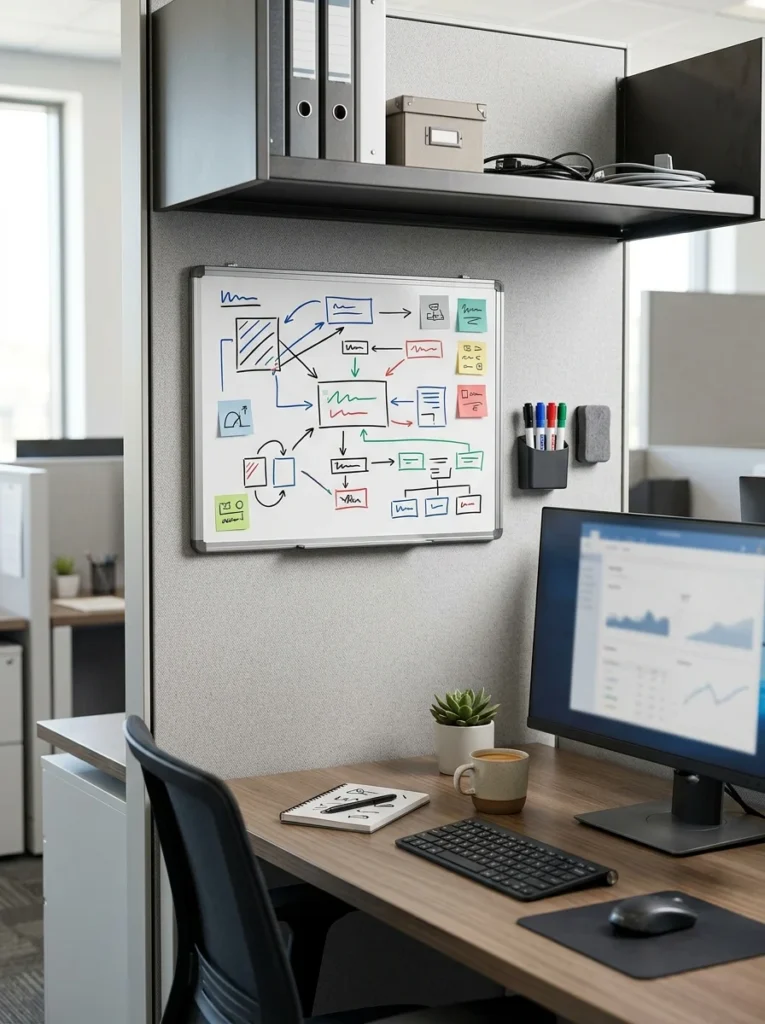
A small magnetic whiteboard mounted on the metal surface of my cubicle’s overhead shelf gave me a place to jot quick notes, sketch out ideas during calls, or keep a running to-do list visible without needing to open another app or notebook. It’s become one of the most genuinely useful additions to the whole space, blending decor with real functionality.
I keep a small magnetic cup nearby holding a couple of dry-erase markers and an eraser, so the whole system stays self-contained and doesn’t require digging through a drawer every time I want to jot something down. Color-coding with a couple of different marker colors, one for deadlines and one for general notes, made the board even more useful without adding much extra effort. If your cubicle doesn’t have a metal surface, adhesive-backed whiteboard sheets are available that stick directly to fabric or hard walls without requiring any tools. This addition strikes a nice balance between decorative and practical, which matters in a workspace where purely decorative choices sometimes feel harder to justify than ones that also serve an obvious function.
9. A Comfortable Seat Cushion
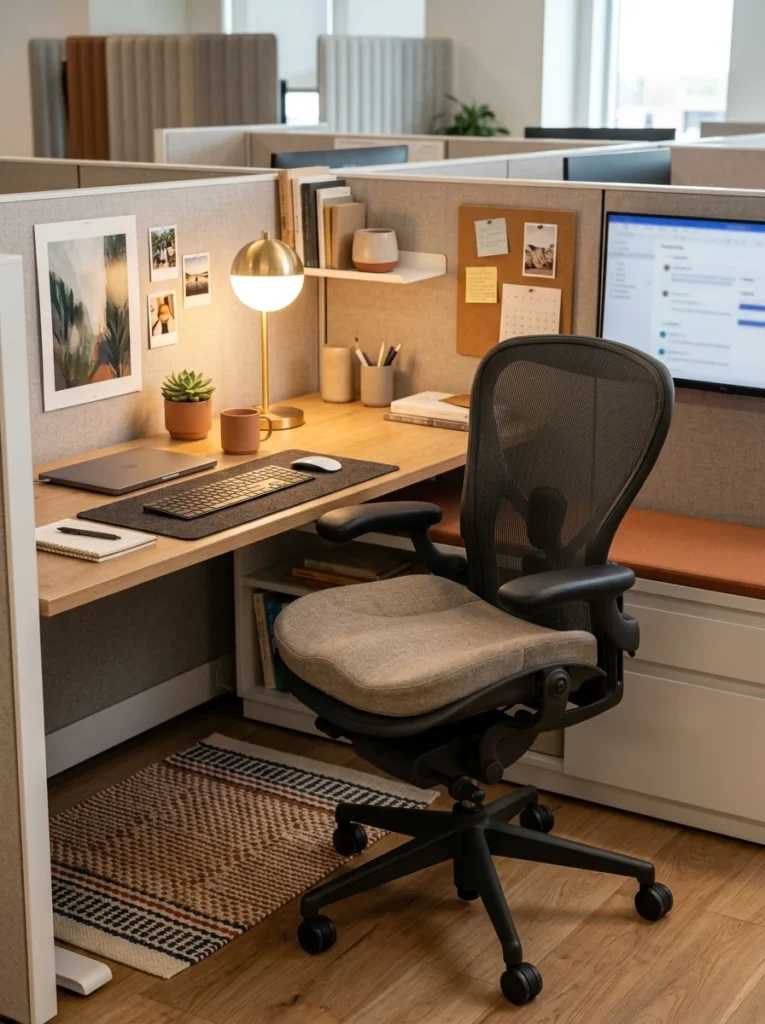
Standard office chairs are rarely designed with long-term comfort in mind, and adding a supportive seat cushion made a bigger difference to my actual day-to-day comfort than almost anything else on this list. I chose one with a slight gel layer for pressure relief, and the improvement in how my lower back felt by the end of the day was noticeable within the first week of using it.
Beyond the physical comfort, choosing a cushion in a color or pattern that coordinates with the rest of your cubicle decor adds a small but meaningful splash of personality to a chair that’s otherwise identical to every other chair in the building. I’d recommend looking for a cushion with a non-slip bottom, since ones without this tend to shift around throughout the day, undermining a lot of the comfort benefit they’re meant to provide. This is one of those upgrades that might not look like traditional “decor” at first glance, but it directly affects how pleasant the space feels to actually sit in for eight hours a day, which is really the whole point of decorating a cubicle in the first place.
10. A Small Motivational Print or Quote
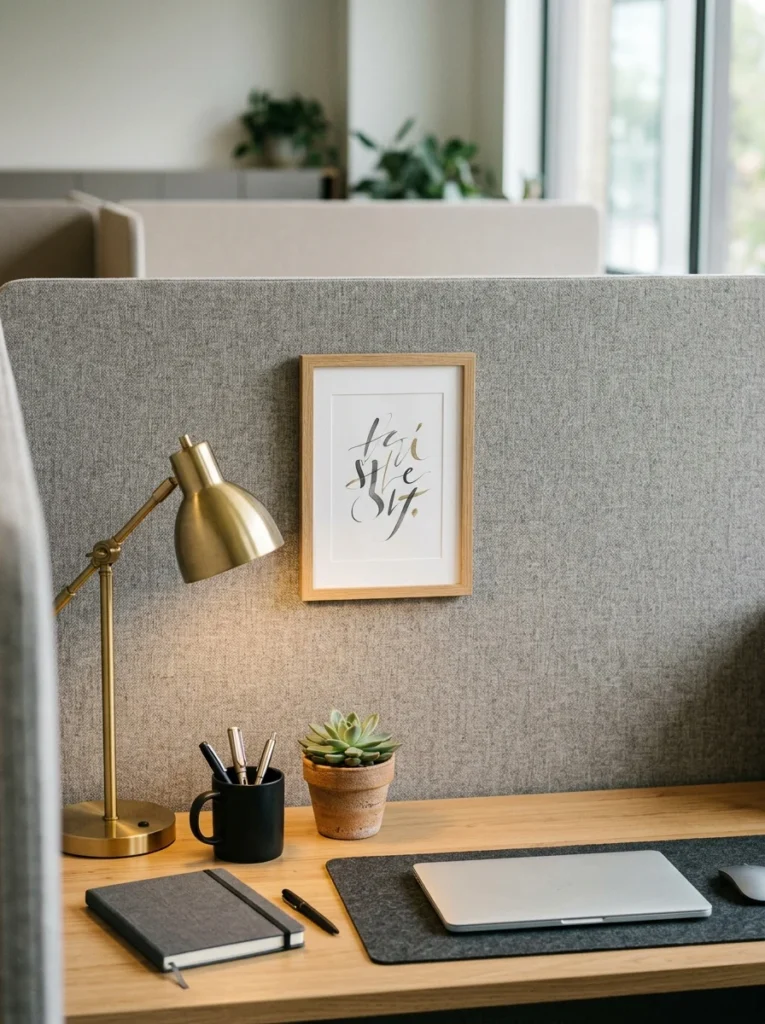
I added a small framed print with a quote I genuinely find motivating, rather than a generic inspirational phrase, and it’s become something I glance at during stressful moments throughout the day. Choosing something personally meaningful rather than a mass-produced motivational poster made the difference between it feeling authentic versus feeling like standard office decor nobody actually reads.
I’d recommend keeping the design simple and the frame small, since anything too large or busy can quickly overwhelm the limited wall space most cubicles have to work with. A print that ties into a personal goal, a favorite book, or even an inside joke with a close coworker tends to feel more genuine than anything generic. Rotating this piece occasionally, especially during particularly demanding periods at work, has helped me tailor the message to whatever I actually need to hear at that point in time. This is a small addition, but it’s had an outsized effect on my mood during difficult weeks, mostly because I chose something that actually resonates with me rather than picking whatever was popular or widely available.
11. Coordinated Desk Organizers
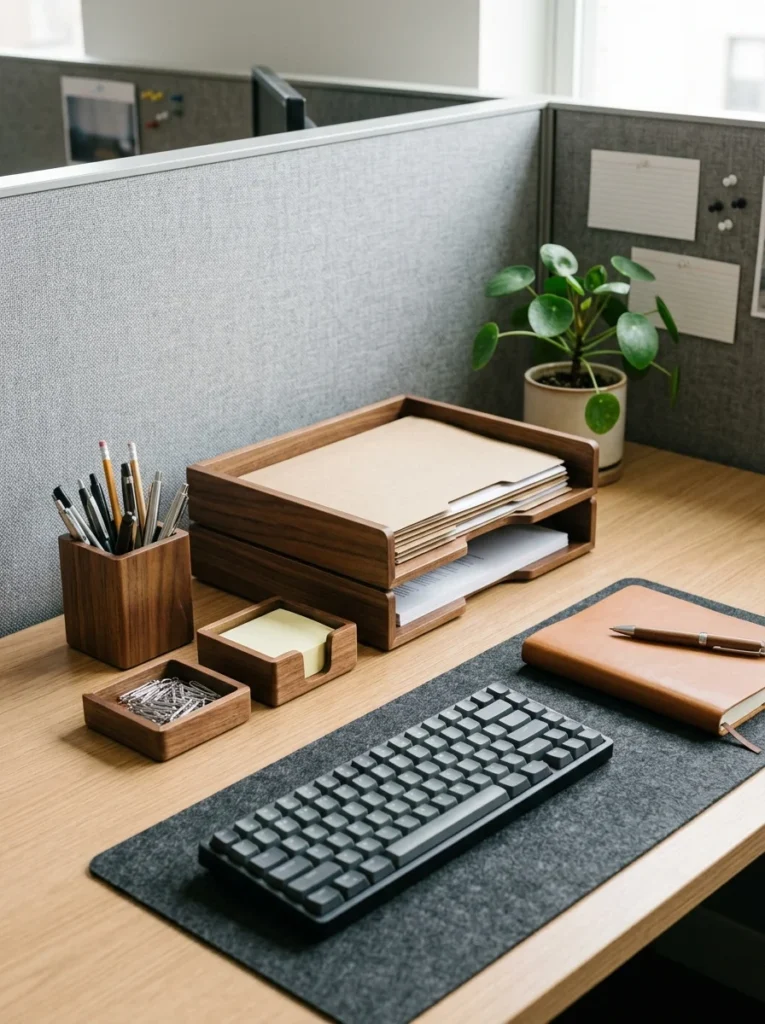
Mismatched pens, loose paperclips, and a jumble of sticky notes made my desk feel chaotic even when the actual clutter was minimal, so I invested in a small set of coordinated desk organizers, all in the same material and color, to bring some visual order to the surface. It’s a small change, but having everything in matching containers made the whole desk look considerably more put-together.
I chose a simple set with a pen cup, a small tray for paperclips and other tiny items, and a slightly larger tray for incoming paperwork that needs attention. Keeping the color palette consistent with the rest of my cubicle decor, rather than buying whatever organizers happened to be cheapest regardless of appearance, tied the whole space together more cohesively. A woven or wood-finish set adds warmth that plain plastic organizers usually lack, which fits well with the overall cozier feel I was going for throughout the rest of the cubicle. This is one of those changes that’s more about subtraction than addition in a sense, since the real benefit comes from reducing visual chaos rather than adding anything particularly decorative on its own.
12. A Small Essential Oil Diffuser or Scented Item
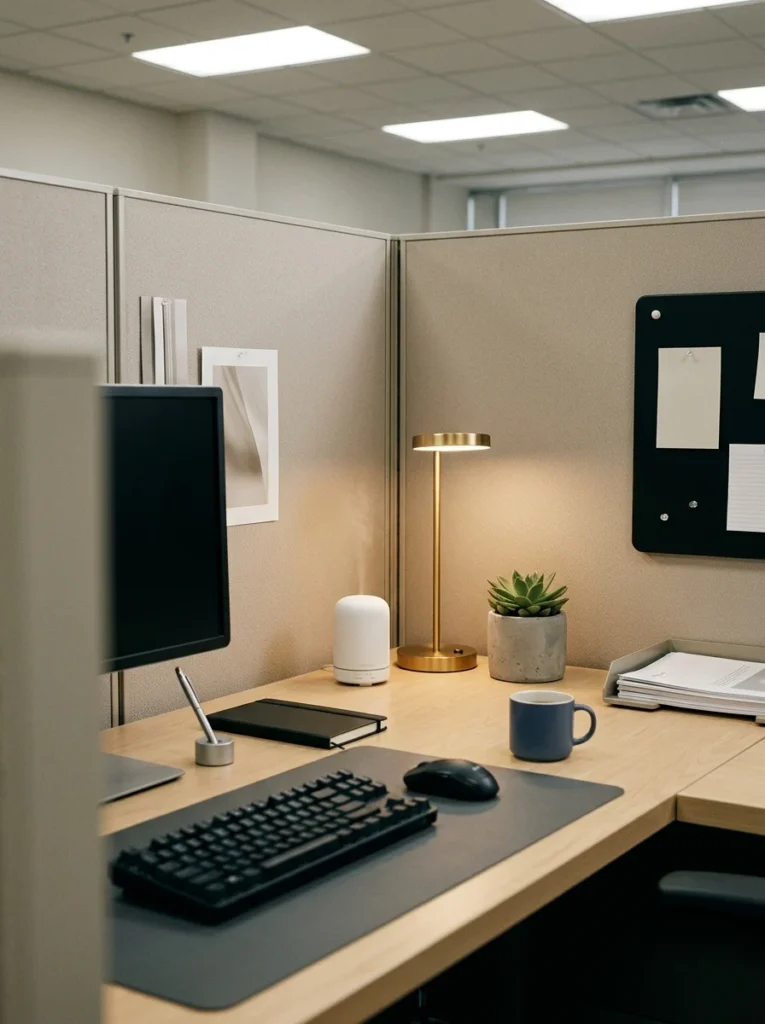
With consideration for coworkers who might be sensitive to strong scents, I added a small, low-output essential oil diffuser to my desk, using it sparingly with mild scents like lavender or citrus. Even a subtle, occasional scent made the space feel a bit more like a spa corner and a bit less like a sterile office environment, especially during particularly stressful weeks.
I’d strongly recommend checking with immediate neighbors before introducing any kind of scent into a shared office environment, since fragrance sensitivities are common and what smells pleasant to you might genuinely bother someone else nearby. A small candle warmer, used without an open flame for obvious workplace safety reasons, is another option that provides a similar effect. I keep mine set to the lowest output setting and only run it for short stretches during the day rather than continuously, which has kept it from becoming an issue for anyone nearby while still giving me the small sensory boost I was after. This is definitely one of the more situational ideas on this list, and it’s worth skipping entirely in workplaces where scent isn’t appropriate or welcome.
13. A Small Personal Calendar or Planner Stand
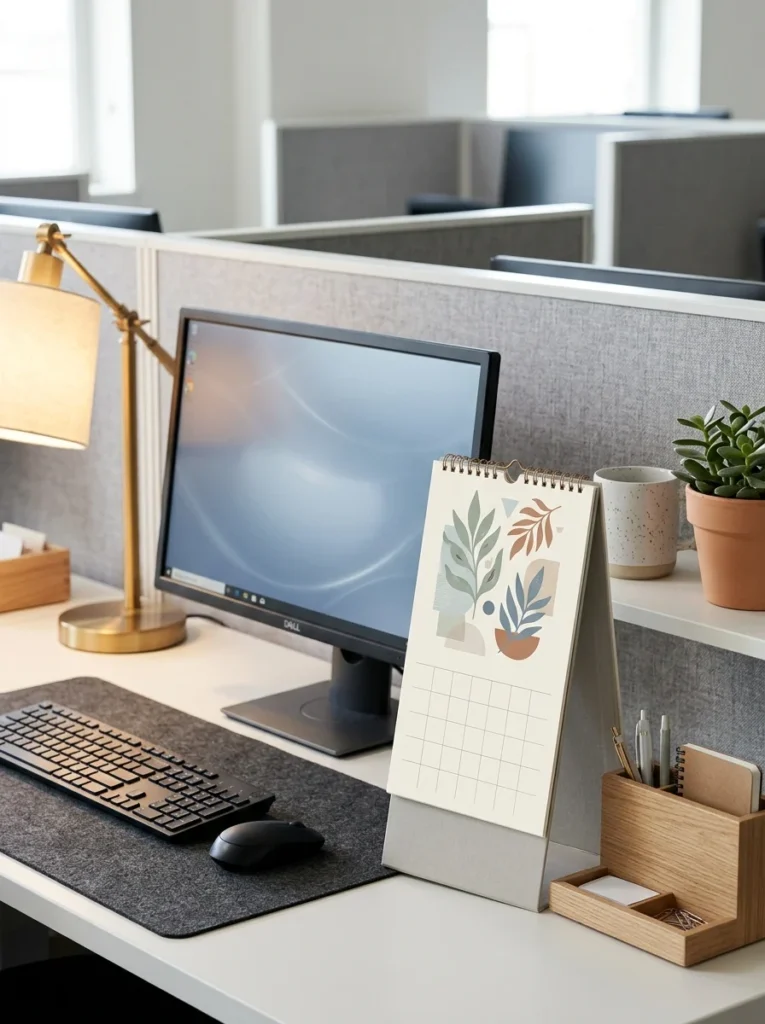
Beyond whatever digital calendar my workplace uses, I added a small physical desk calendar that sits propped up near my monitor, which has genuinely helped me stay oriented day to day in a way that glancing at a screen doesn’t always accomplish. Choosing a design with a pleasant aesthetic, rather than a purely utilitarian one, meant this practical item doubled as a decorative piece too.
I switched to a calendar featuring simple illustrations that change monthly, which gives me something small and new to look forward to as each month turns over. A small planner stand or easel-style calendar takes up minimal desk space while still being easy to glance at throughout the day. This is another example of an addition that blends function and decor almost seamlessly, which tends to work particularly well in professional environments where purely decorative items sometimes feel like they need to justify their presence. Having a tactile, physical calendar alongside my digital one has also genuinely helped me feel less tied to my screen throughout the day, even if only in a small way.
14. Battery-Operated String Lights
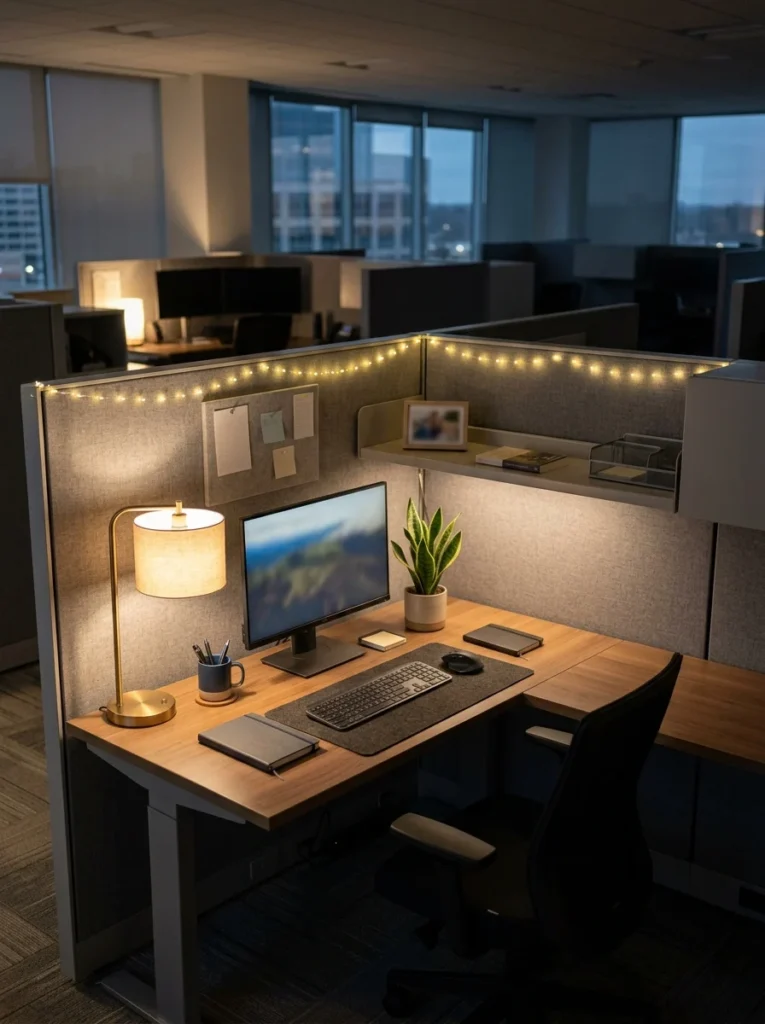
With permission from my workplace’s safety policies, I added a small strand of battery-operated LED string lights along the top edge of my cubicle wall, giving the space a soft, warm glow that supplements the overhead fluorescent lighting nicely. Battery-operated versions avoid the need for an additional outlet or a visible cord running across the desk, which keeps the whole look tidy.
I chose warm white lights rather than colored ones, since the goal was softening the space rather than making it look festive or juvenile. A small remote or built-in timer let me turn them on each morning without having to reach up to the strand itself. This addition works particularly well in cubicles with especially harsh overhead lighting, since the warm glow from the string lights helps counteract some of that clinical, flat feeling. I’d always recommend checking your workplace’s specific policies before adding anything electrical, since some offices have strict rules around this for fire safety reasons, but where they’re allowed, this has been one of the most transformative and low-cost changes on this entire list.
15. A Small Personal Fan or White Noise Machine
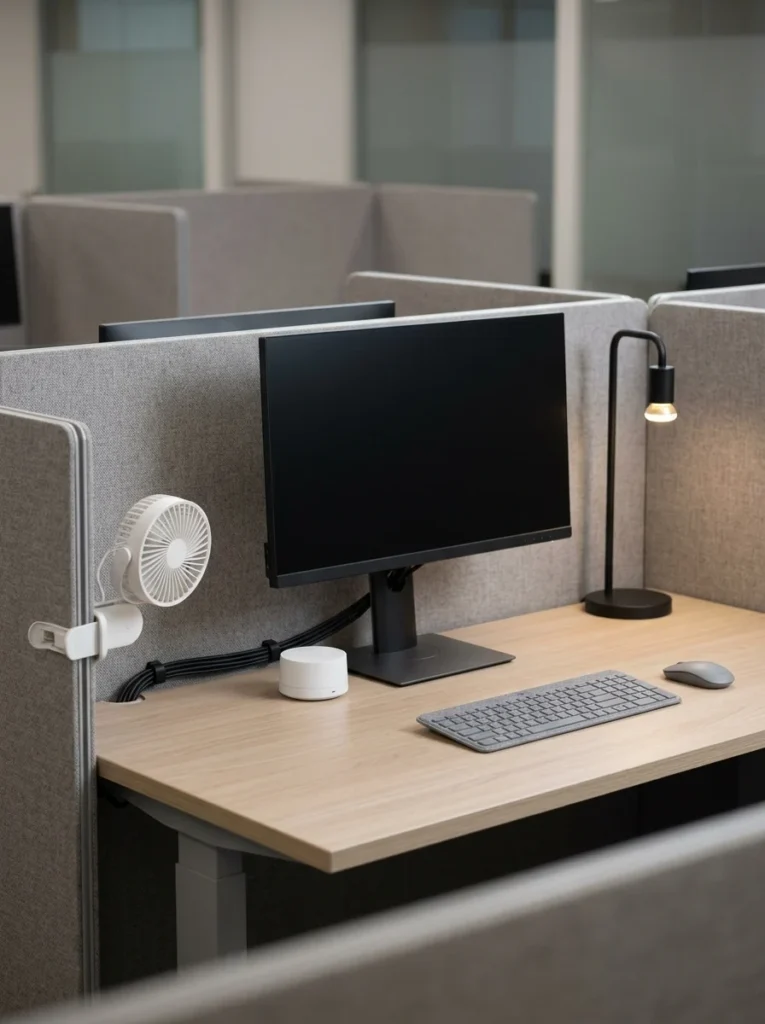
Shared office temperature settings rarely please everyone, and adding a small personal desk fan gave me some individual control over my immediate environment on days when the office ran warmer than usual. A compact, quiet model that clips onto the edge of the desk kept it from taking up any surface space at all.
On the opposite end, a small white noise machine has been just as useful on louder days, helping mask nearby conversations and keyboard noise that can otherwise make focused work difficult in an open cubicle environment. I keep mine set to a low, steady sound rather than anything with noticeable variation, since a consistent background noise tends to fade into the background far more effectively than something with peaks and lulls. Both of these additions are more about comfort and function than traditional decor, but they’ve made a real difference in how pleasant and controllable my immediate environment feels, which ties directly into the overall goal of making a cubicle feel like a space that’s actually yours rather than just an assigned square footage.
16. A Small Bulletin of Personal Goals
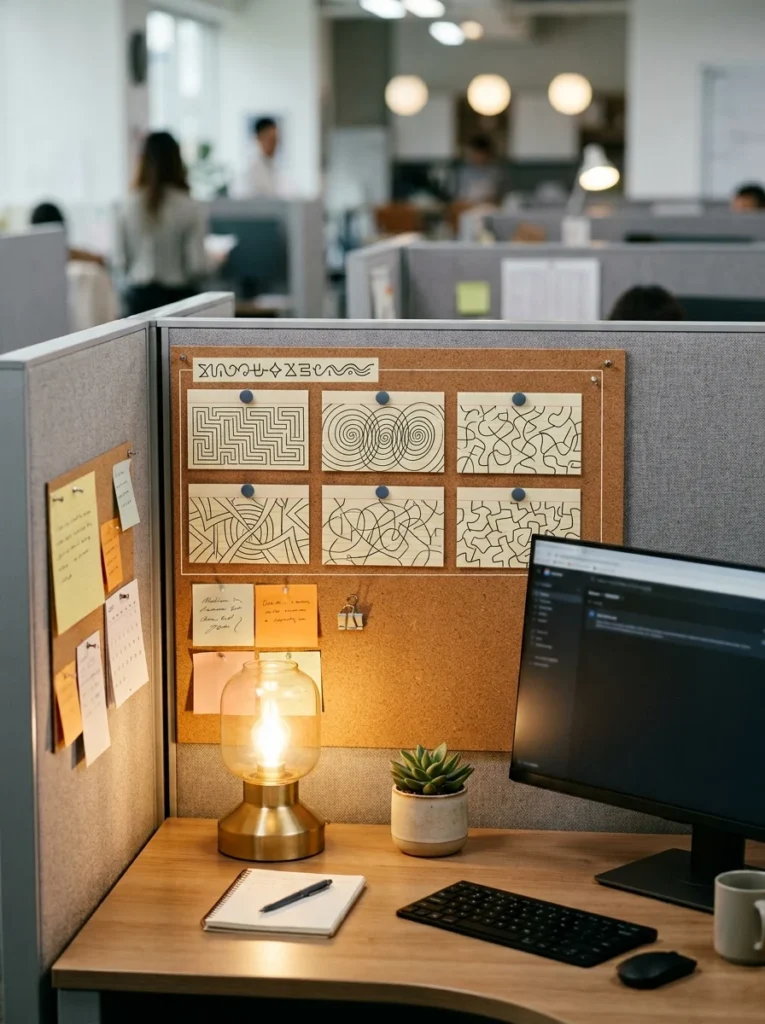
I added a small section of my corkboard specifically dedicated to personal and professional goals, written on simple index cards and updated every few months as things get accomplished or priorities shift. Having them visible throughout the day has kept me accountable in a way that a hidden note in a planner never quite managed to do.
I keep this section separate and visually distinct from the more practical reminders and deadlines pinned elsewhere on the board, using a different color of card so my eye can quickly distinguish between the two categories. Crossing off or replacing a card once a goal is achieved has become a small, satisfying ritual that I look forward to. This idea works particularly well for anyone who finds visual accountability more motivating than digital tracking apps, since there’s something different about a physical reminder sitting in your peripheral vision throughout the workday compared to a goal buried in a phone app you have to remember to open.
17. A Small Collection of Books or Reference Materials
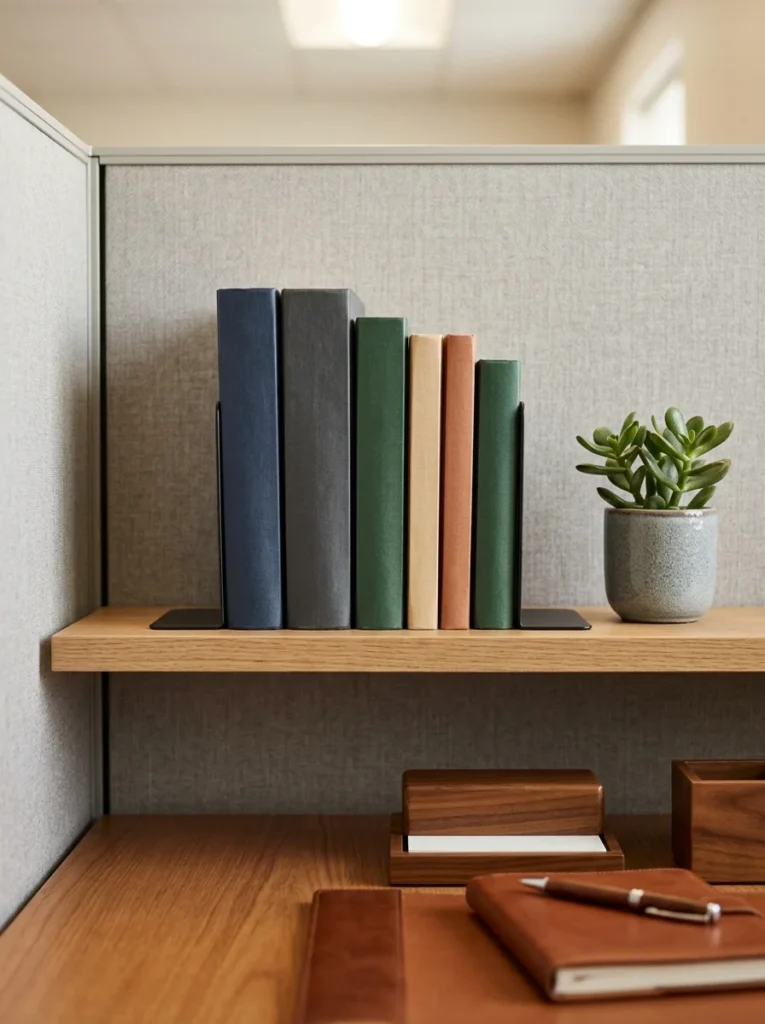
A small shelf or stack of books relevant to my field, along with a couple of personal favorites, gave my cubicle a bit more character while also serving as handy references I actually use during the workday. I kept the collection intentionally small, just five or six books, rather than trying to bring in an entire home library that would overwhelm the limited shelf space available.
Choosing a mix of practical, work-related titles and one or two personal favorites struck a nice balance between professional and personal, which felt appropriate for a shared office environment. A simple bookend, chosen to coordinate with the rest of my desk organizers, kept the small stack from toppling over throughout the day. This addition has occasionally sparked genuinely nice conversations with coworkers who noticed a particular title and wanted to talk about it, which is a small but meaningful side benefit of adding personal touches to an otherwise fairly anonymous workspace.
18. A Small Snack and Tea Station
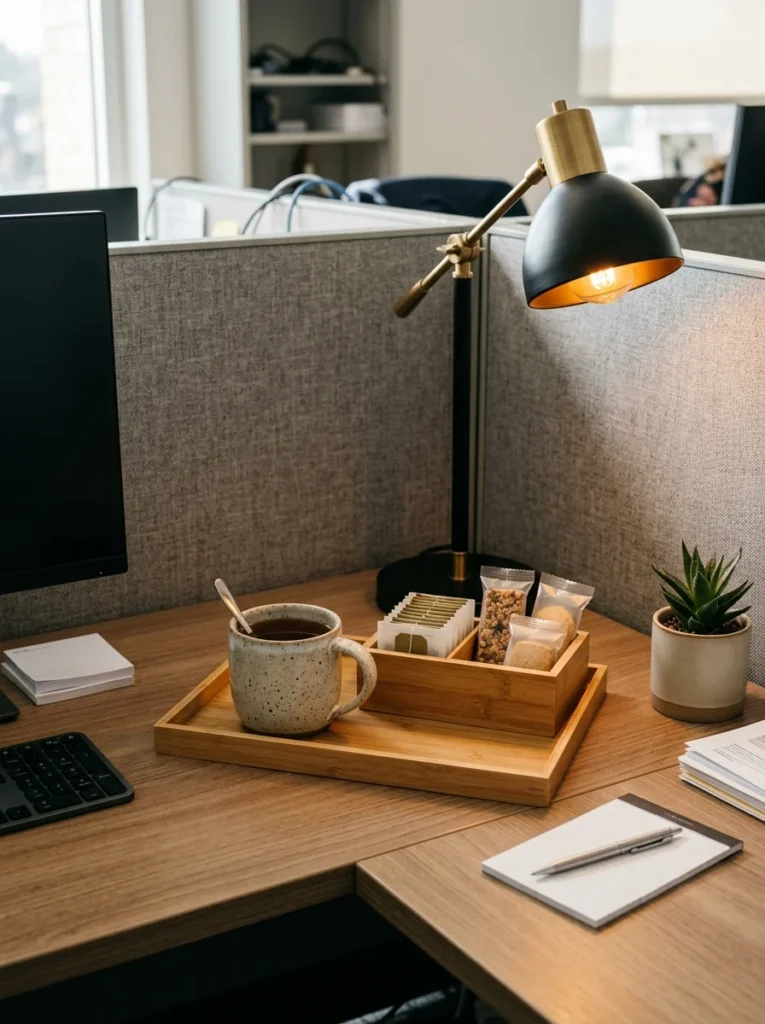
Dedicating a small corner of my cubicle to tea bags, a mug, and a couple of healthy snacks meant I didn’t need to make as many trips to the break room throughout the day, which sounds like a minor convenience but genuinely added up over time. A small tray kept everything contained and tidy rather than scattered loosely across the desk.
I chose a mug that I genuinely like looking at and using, rather than a generic promotional one from a work event, since it’s something I hold and see multiple times throughout the day. Keeping the snack portion small and rotating what’s stocked kept this from becoming a source of clutter or mindless snacking, and I’ve found having tea specifically available has become a nice small ritual during mid-afternoon energy dips. This corner takes up a relatively small footprint but adds a genuinely comforting, homey element to the workspace that a lot of cubicles otherwise completely lack.
19. A Personalized Nameplate or Door Sign
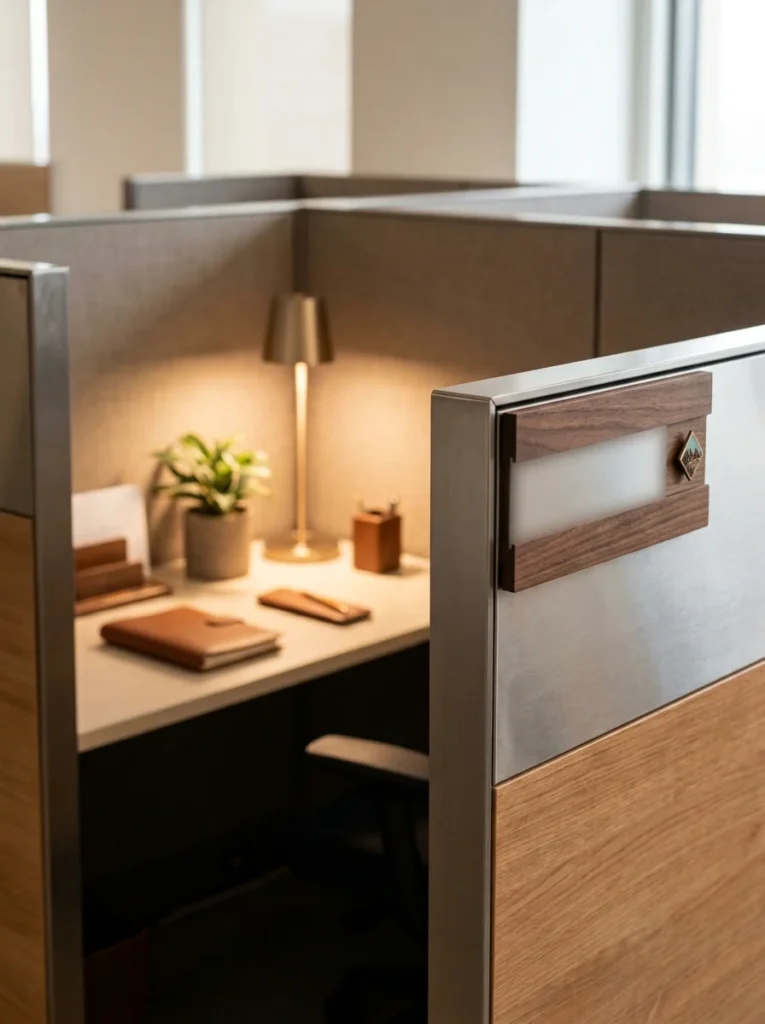
A simple, well-designed nameplate at the entrance to my cubicle, rather than the generic printed name tag provided by the office, added a small but noticeable touch of personalization right from the entrance. I chose a design in a material and font that matched the rest of my desk decor, which tied the whole look together even before someone stepped fully into the space.
This is a particularly good option for anyone in a role where people frequently stop by, since a nicer nameplate creates a slightly better first impression than the standard laminated paper insert most cubicles come with by default. Some offices allow small decorative magnets or accessories to be added around the nameplate itself, which is another opportunity to inject a bit of personality into an otherwise standardized element of the workspace. This is a small, low-cost change, but it’s often the very first thing anyone notices about a cubicle, since it’s usually the first element visible before someone even steps inside.
20. A Small Vertical File Organizer
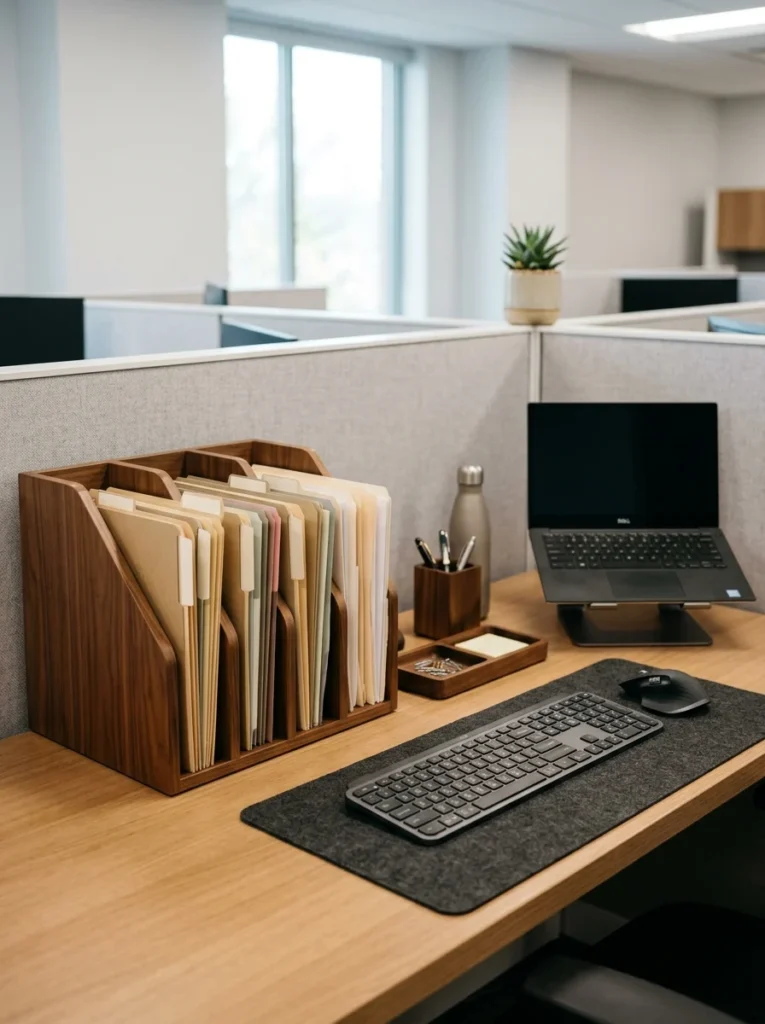
Paperwork tends to pile up flat on cubicle desks, taking up valuable surface space and creating visual clutter even when everything is technically organized. Switching to a vertical file organizer, with clearly labeled sections for different categories of documents, freed up a surprising amount of usable desk space while also making it far easier to find things quickly.
I chose a wood-finish organizer rather than plain plastic, which coordinated better with the rest of my desk accessories and looked considerably nicer sitting in plain view rather than being tucked away in a drawer. Labeling each section clearly, using the same label maker I use for other organizational projects around the desk, kept the system consistent and easy to maintain over time. This is another example of an addition that’s primarily functional but has a real decorative side benefit, since a tidy, organized desk surface simply looks and feels better than one buried under loose, flat stacks of paper.
21. A Signature Scent-Free Candle Warmer or Small Decorative Object
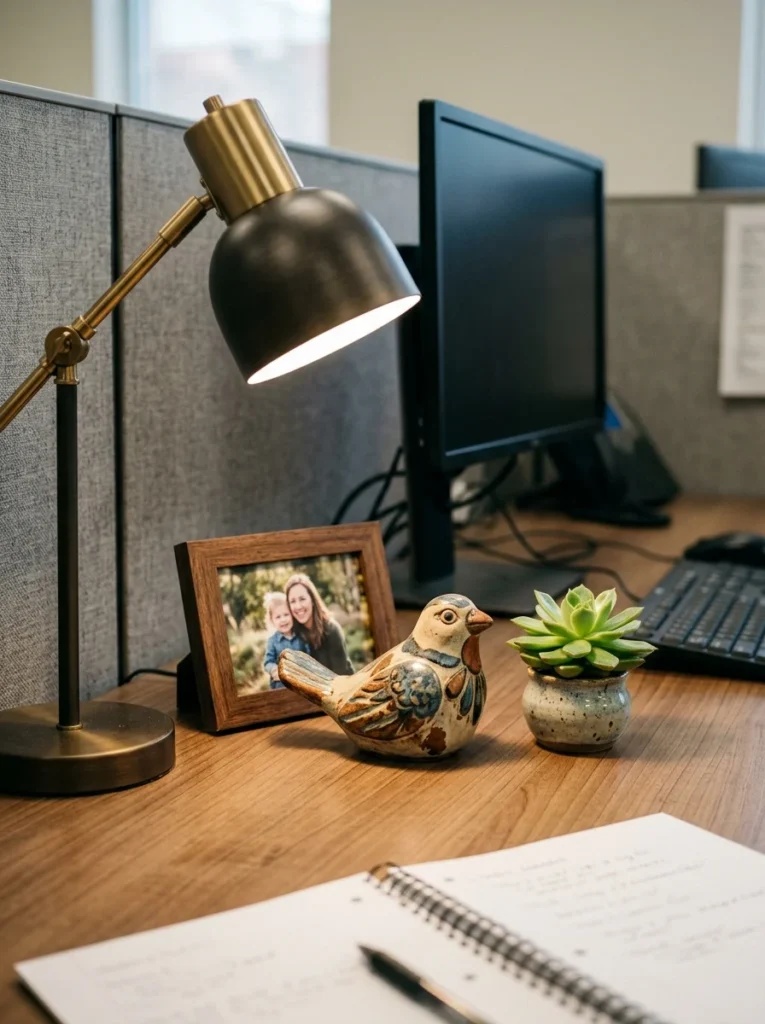
Finally, I added one small, purely decorative object to my desk that serves no functional purpose at all beyond making me happy to look at — in my case, a small ceramic figurine picked up on a trip a few years ago. Every other item on this list serves some practical function alongside its decorative value, but I’ve found it genuinely worthwhile to include at least one thing that exists purely for the joy of having it nearby.
Choosing something with personal meaning, rather than a generic decorative object bought purely to fill space, made this small addition feel far more significant than its size would suggest. It’s become something of a conversation starter with coworkers who ask about its origin, and it’s also just a small, consistent source of happiness throughout an otherwise fairly routine workday. My advice for this last item specifically is to resist the urge to overthink it. The goal is simply choosing one thing that makes your particular corner of the office feel a little more like a space that belongs to you rather than an anonymous square of gray fabric walls.
Final Thoughts
Looking back at everything I’ve added to my cubicle over the past few years, none of these changes were expensive or complicated on their own, but together they transformed a space I used to dread sitting in for eight hours a day into somewhere I genuinely don’t mind spending my time. The cumulative effect of small, thoughtful touches turned out to matter far more than any single dramatic change could have.
If you’re thinking about redoing your own cubicle, my honest suggestion is to start with whichever one or two ideas from this list solve a problem you’re actually experiencing right now, whether that’s harsh lighting, a cluttered desk, or simply a lack of personality in the space. Let the rest build gradually from there. That’s exactly how mine came together, and it’s made the workday feel noticeably better in ways I genuinely didn’t expect from something as small as a cubicle.