
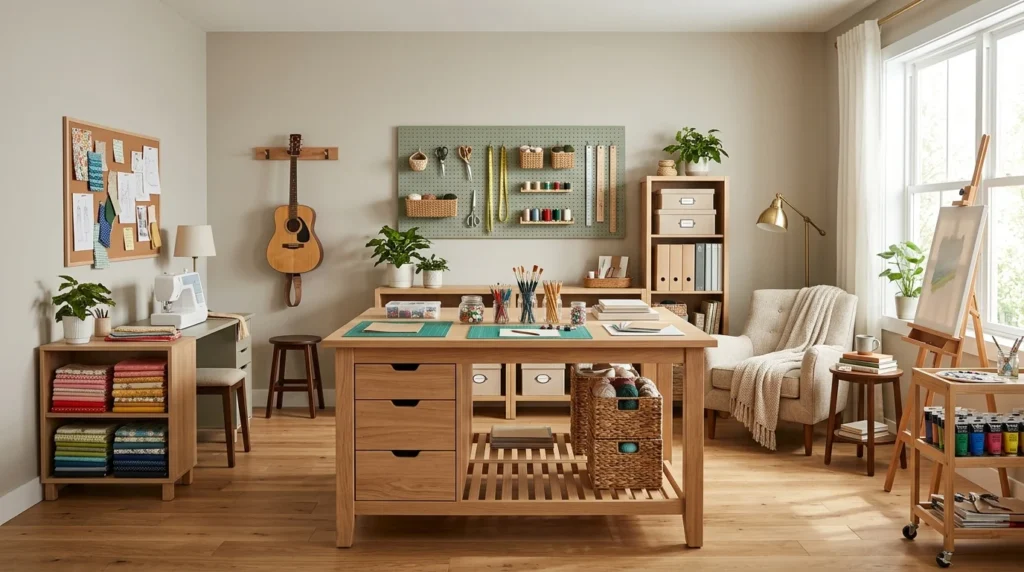
For the longest time, my hobbies lived wherever there was empty space — a sewing machine on the kitchen table, paints stacked in a closet, a half-finished puzzle shoved under the couch whenever guests came over. It wasn’t until I converted our spare bedroom into an actual hobby room that I realized how much having a dedicated creative space changes the way you actually use it. Suddenly I wasn’t packing everything away after twenty minutes, which meant I was picking projects back up far more often instead of losing momentum every single time.
It took me almost two years to get the room to where it is now, mostly because I kept discovering new things I wanted to make space for. Along the way I picked up a lot of layout and storage tricks, both from my own trial and error and from a few friends who tackled their own hobby rooms around the same time. Here are 21 ideas that actually made a difference, whether you’re working with a full spare room or just carving out a corner of an existing space.
1. A Dedicated Craft Table With Built-In Storage
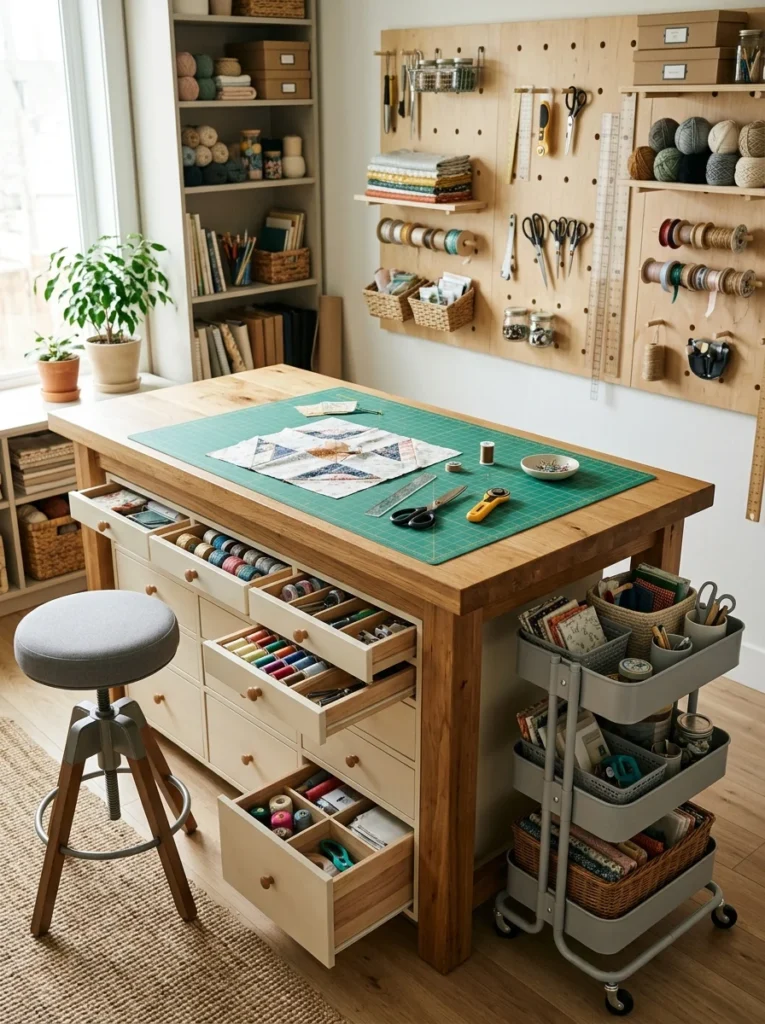
The single biggest change I made was investing in a proper craft table instead of using a regular dining table that had to be cleared off constantly. I found a table with drawers built directly into the sides, which meant scissors, tape, and small tools had a permanent home within arm’s reach instead of living in a bin somewhere across the room. Having a surface that stays set up, rather than one that needs to be cleared and reset every time, removed the biggest barrier that used to keep me from starting projects on busy weeknights.
I also raised my table slightly using bed risers, since I found myself hunched over a standard-height table for hours at a time, which wasn’t great for my back. A slightly taller surface, closer to counter height, made a noticeable difference once I started standing for parts of my projects instead of always sitting. If a dedicated table isn’t in the budget, even a folding table that gets set up in the same spot every time, paired with a rolling cart for supplies, gives you most of the same benefit. The real goal is minimizing the setup and teardown time between deciding to work on something and actually starting, since that gap is usually where motivation quietly disappears.
2. A Pegboard Wall for Tools and Supplies
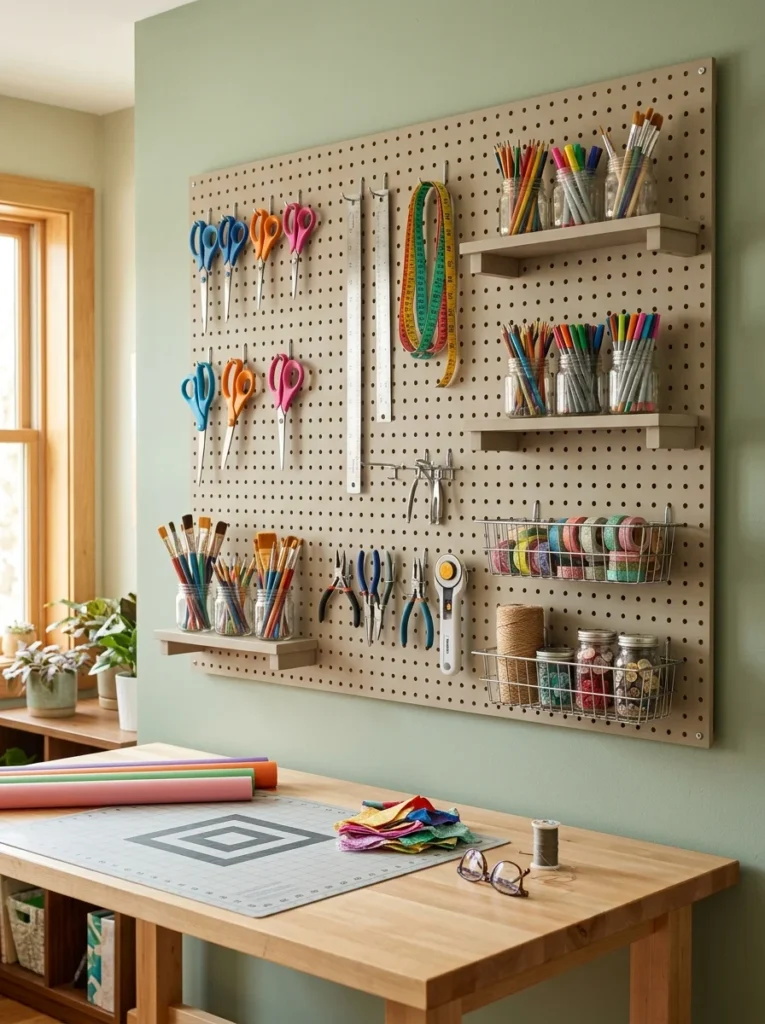
I installed a large pegboard above my craft table, and it completely changed how I store frequently used tools. Instead of digging through drawers, everything from scissors to paintbrushes to measuring tapes hangs in plain sight, which also means I can see at a glance what I own instead of buying duplicates of things I already had buried somewhere.
Painting the pegboard a color that matches the rest of the room, rather than leaving it the default beige it usually comes in, made it feel like an intentional design feature instead of a garage organizer bolted to the wall. I used a mix of hooks, small shelves, and baskets attached to the pegboard, which let me store items of very different shapes and sizes on the same system. Labeling isn’t strictly necessary, but tracing an outline around each tool’s spot with a marker made it much easier to notice when something was missing and needed to be returned. This is one of those upgrades that seems purely functional at first, but ended up being one of the most visually satisfying parts of the whole room once everything had its place.
3. A Cozy Reading Nook in the Corner
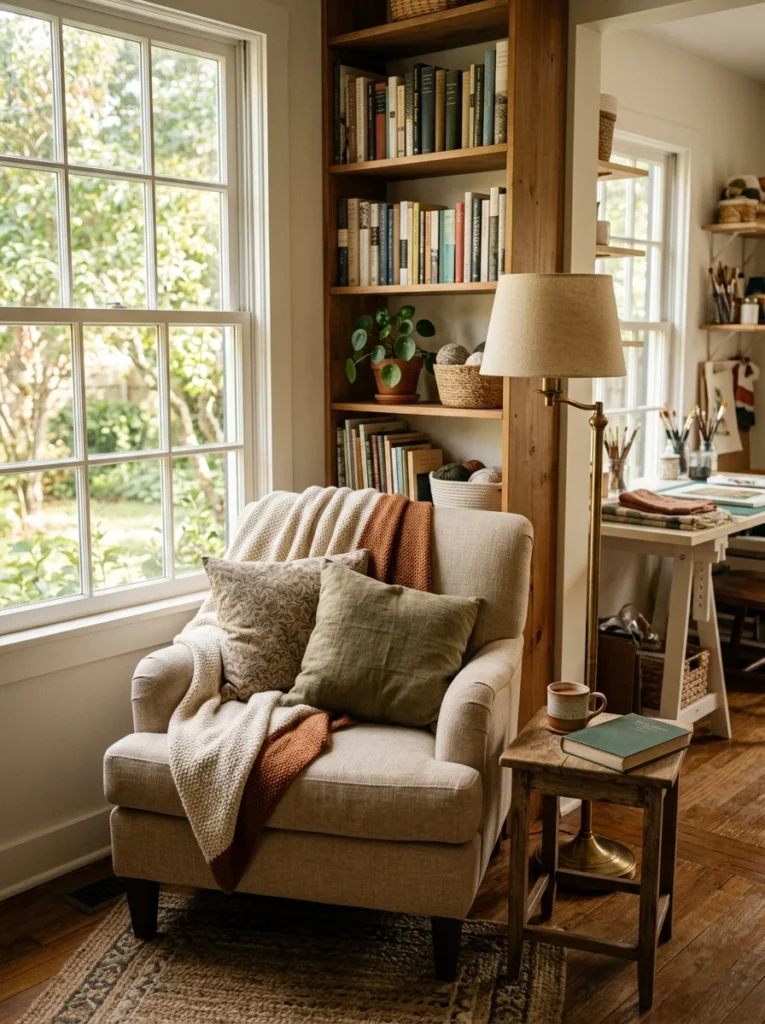
Not every hobby involves supplies and mess, and I made sure to carve out a reading nook in one corner of the room for exactly that reason. A comfortable armchair, a small side table, and a floor lamp with warm lighting turned an otherwise unused corner into the spot I actually spend the most time in on quiet evenings.
I positioned the chair near the window to take advantage of natural light during the day, and added a soft throw blanket and a couple of pillows to make it genuinely inviting rather than just functional. A small bookshelf within reach meant I didn’t have to get up and search for whatever I was currently reading, which sounds like a small thing but actually makes a real difference in how often I use the space. If floor space is tight, even a simple reading chair tucked into an otherwise awkward corner, paired with good lighting, accomplishes the same goal. The nook doesn’t need to be large to work — mine is barely wide enough for the chair and a small table, but it’s become one of the most-used parts of the entire room precisely because it asks so little of me to actually sit down and use it.
4. A Music and Instrument Corner
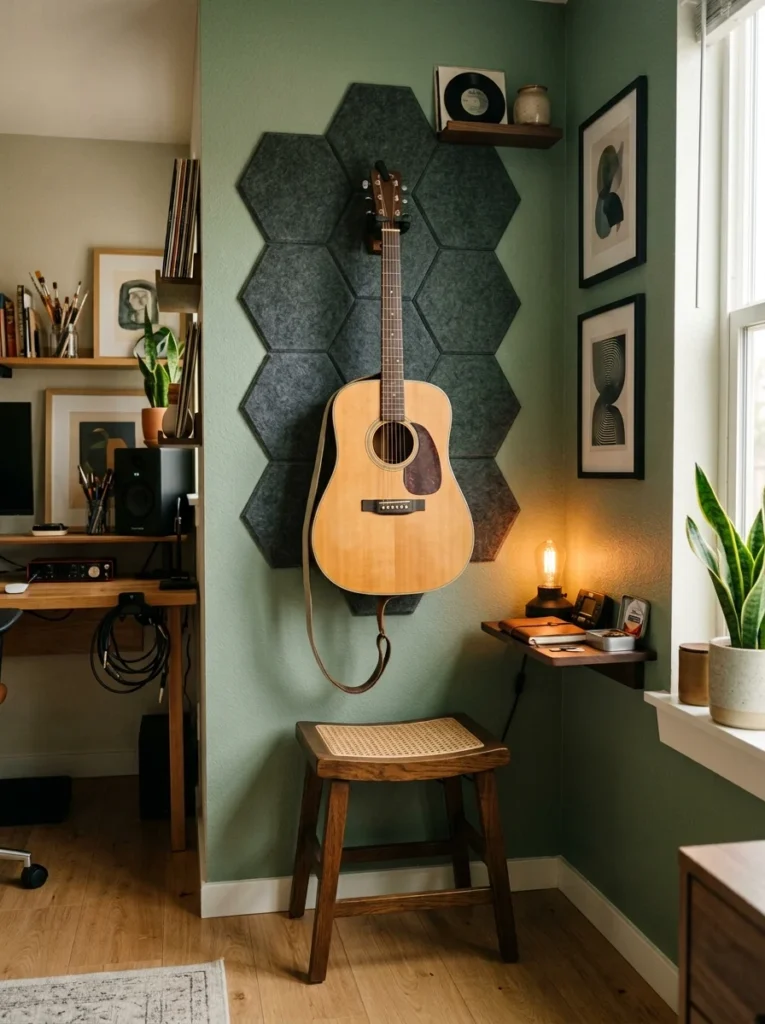
My partner plays guitar, and giving that hobby its own dedicated corner of the room, rather than letting the instrument live in a case in the closet, meant it actually got played far more regularly. A wall-mounted guitar hanger keeps it visible and easy to grab, and a small stool nearby means there’s always a spot to sit down and play for a few minutes without any setup required.
We added a section of acoustic foam panels on the wall behind this corner, both to slightly improve the sound and to add some visual texture that distinguishes this zone from the rest of the room. A small shelf holds sheet music, a tuner, and spare strings, keeping everything needed within reach instead of scattered around the house. If you play a smaller instrument, even a simple stand and a nearby chair accomplishes the same basic goal of making it easy to pick up and play spontaneously. The underlying principle that applies to almost every hobby on this list holds especially true for music: anything that has to be dug out of storage before you can use it gets used dramatically less often than something that’s already sitting out, ready to go.
5. An Art Studio Easel Setup
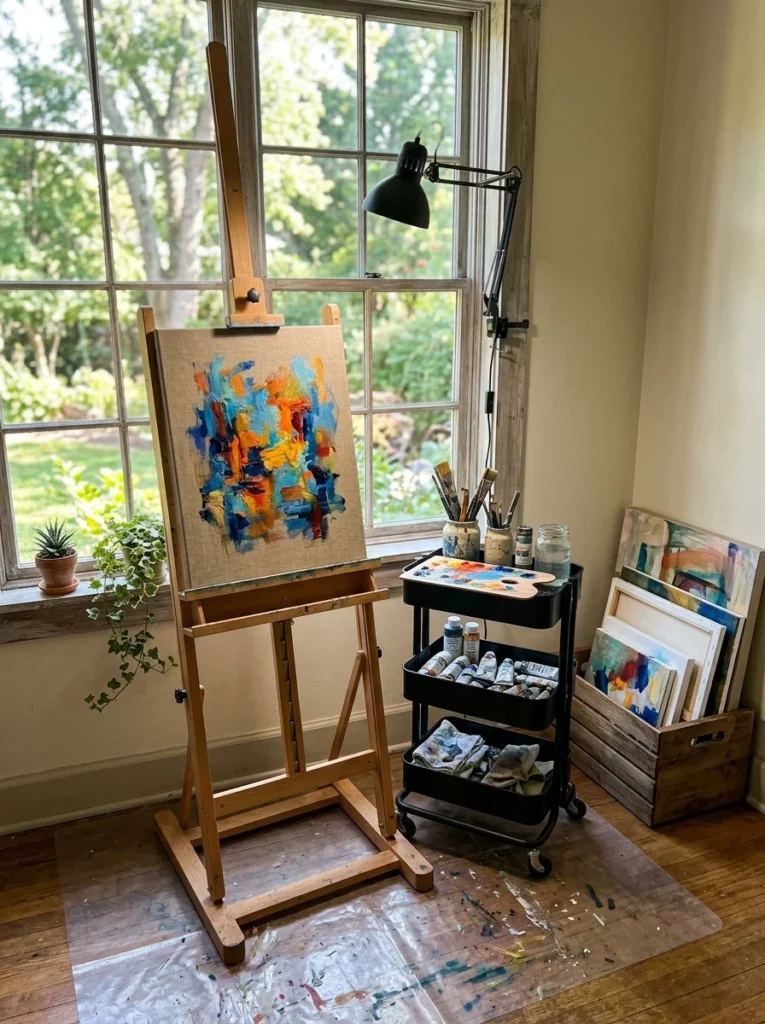
For anyone into painting or drawing, a proper easel setup makes an enormous difference compared to working flat on a table. I positioned mine near the window for natural light, with a small rolling cart beside it holding paints, brushes, and a jar for water, so everything I needed stayed within arm’s reach without cluttering the floor.
I also laid down a cheap vinyl floor mat underneath the easel to protect the carpet from drips and splatters, which gave me the freedom to work more loosely without constantly worrying about mess. A north-facing window, if you have one, provides the most consistent, even light throughout the day, though I’ve made do with a simple daylight-balanced lamp clipped to the easel on days when the natural light isn’t cooperating. Storing finished or in-progress canvases upright in a simple wooden crate nearby, rather than leaning them randomly against walls, kept the space feeling organized even during messier projects. This corner of the room has genuinely become the place I do my best creative thinking, largely because everything is already set up and waiting rather than requiring effort to access.
6. A Sewing and Fabric Station
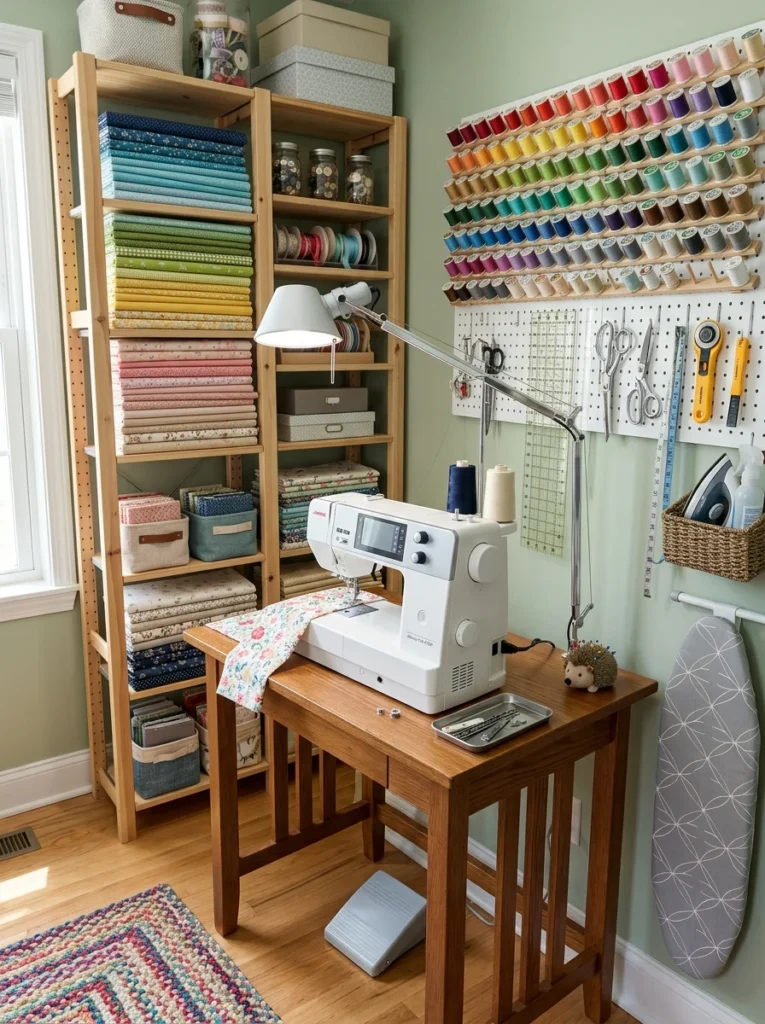
My sewing machine used to live in its case in the closet, which meant it came out maybe twice a year for actual emergencies rather than regular use. Giving it a permanent spot on a small dedicated table, with a nearby shelf for fabric, thread, and patterns, changed that completely, and I now sew far more often simply because the barrier to starting dropped so dramatically.
I organized fabric by color on open shelving rather than folding it away in opaque bins, partly because it looks genuinely beautiful displayed that way, and partly because I can see my full stock at a glance when starting a new project. A pegboard section nearby holds spools of thread on dowels, keeping them visible and tangle-free. Good task lighting matters enormously here, since sewing involves a lot of close, detailed work, so I added a bright adjustable lamp directly above the machine in addition to the room’s general lighting. A small ironing board that folds flat against the wall when not in use rounds out the station without taking up permanent floor space, which was important in a room that also needed to accommodate several other hobbies simultaneously.
7. A Puzzle Table That Stays Set Up
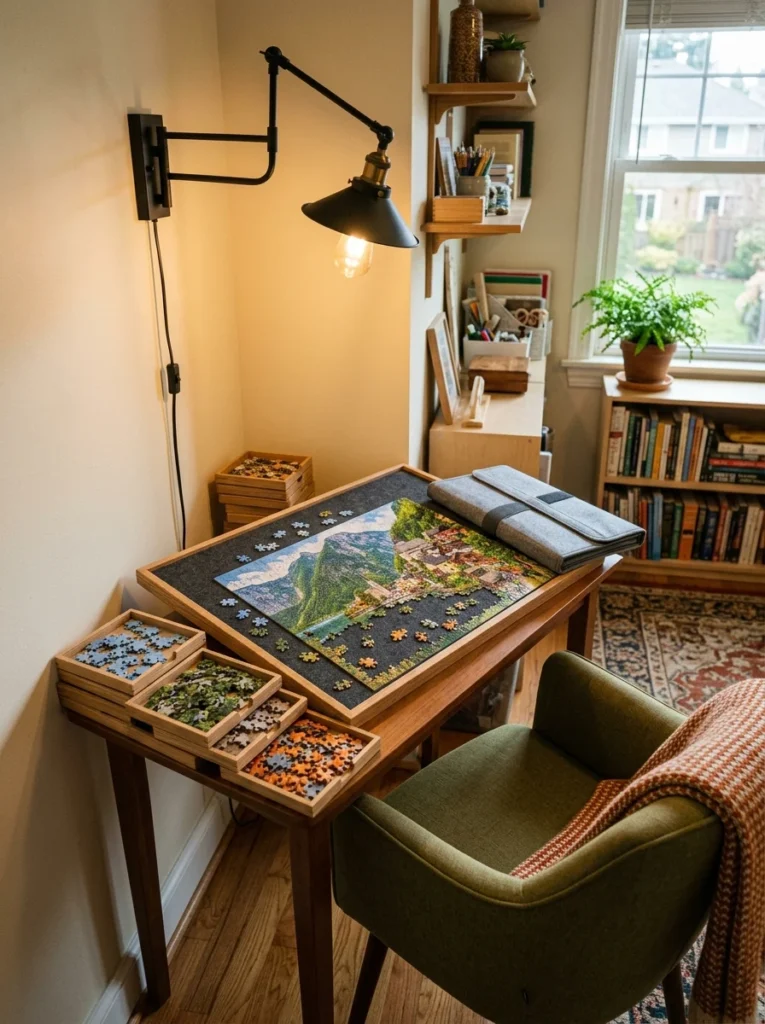
Puzzles are one of those hobbies that often get abandoned halfway through simply because the table they’re on needs to be cleared for dinner. I solved this by adding a small dedicated puzzle table with a felt-lined surface, tucked into a corner where it never needs to move for any other purpose.
A puzzle board with raised edges keeps pieces from sliding off, and a set of stackable sorting trays nearby makes it much easier to organize edge pieces separately from the rest during the early stages of a puzzle. I also picked up a simple fitted cover that lets me protect an in-progress puzzle from dust or curious pets without having to break it down between sessions. This corner doesn’t need to be large — mine is barely large enough for a card table — but having a spot where a puzzle can sit untouched for as long as it takes to finish has meant I actually complete far more of them than I used to when everything had to be swept back into the box after every session.
8. A Plant and Gardening Corner
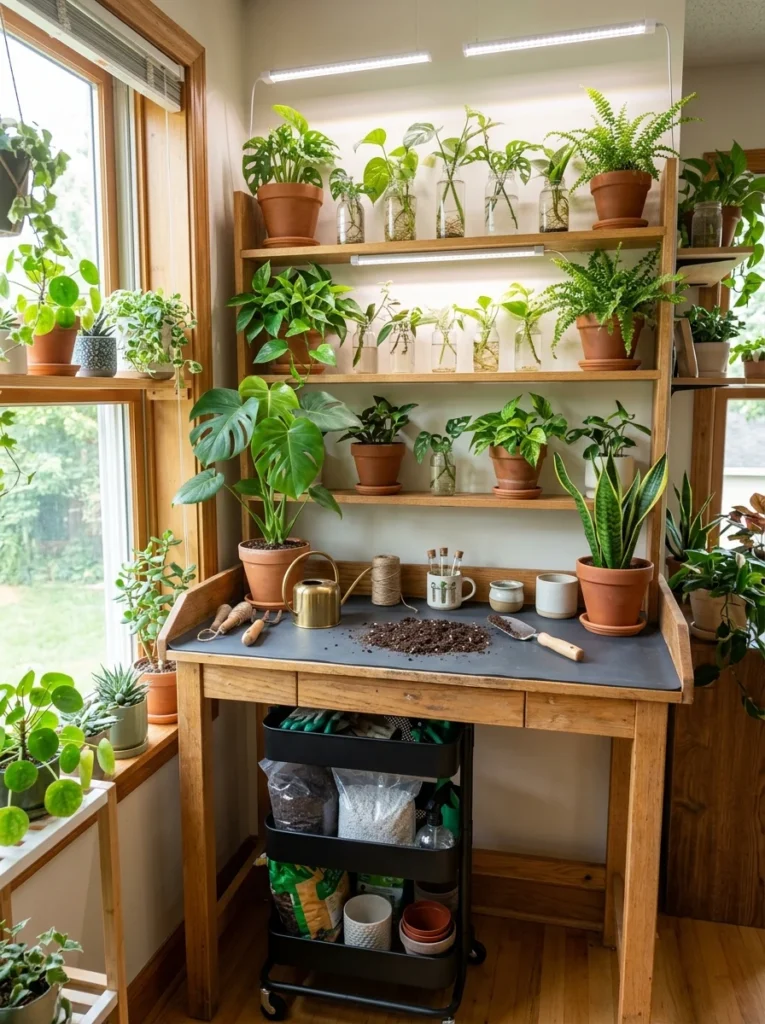
Even without an actual garden, I carved out a small corner of the room for potting plants, propagating cuttings, and generally indulging my slightly obsessive houseplant habit. A simple potting bench with a waterproof surface handles the messier parts of the process, while open shelving above it displays the plants themselves alongside a small collection of watering cans and grow lights.
I lined the potting bench surface with a rubber mat that’s easy to wipe down after repotting sessions, which saved my floors from a lot of accidental spilled soil. A grow light on a simple timer keeps propagating cuttings healthy even in a room without much direct sun, and it’s become almost a small greenhouse corner within the larger space. If a full potting bench isn’t practical, even a small rolling cart dedicated to plant supplies, kept near a sunny window, accomplishes much the same goal. This corner has become surprisingly meditative for me, and I find myself drawn to it on stressful days even when I don’t have a specific plant task that needs doing.
9. A Vinyl Record Listening Lounge
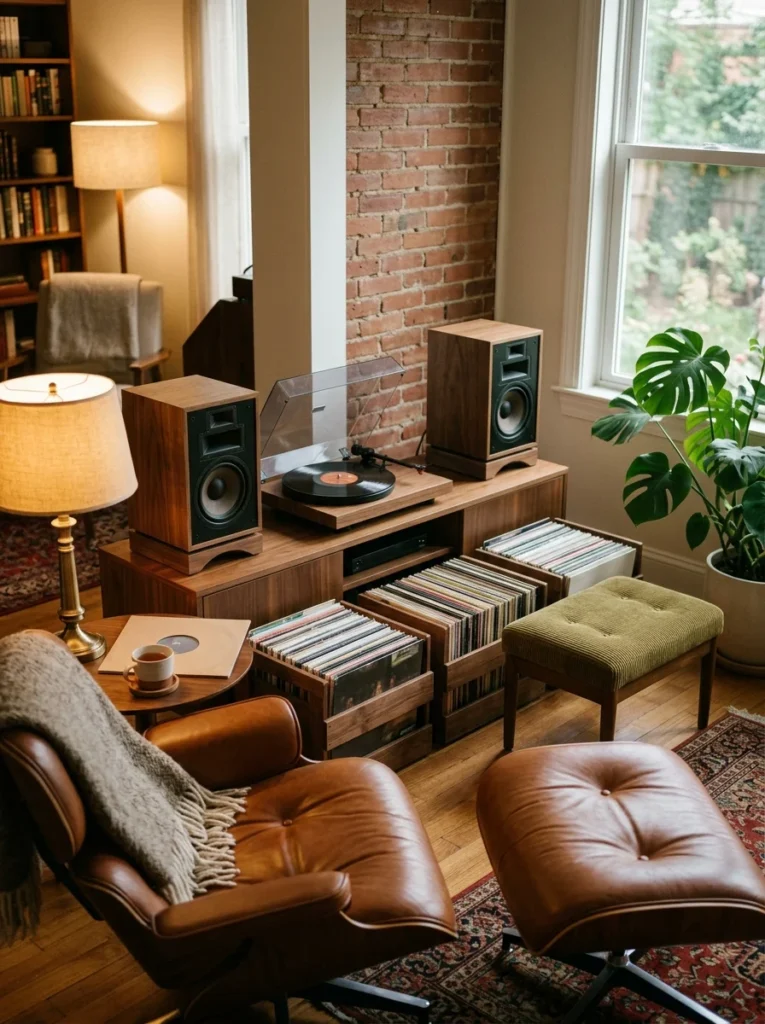
For anyone who collects vinyl, a small listening corner with a record player, a shelf of albums organized for easy browsing, and a comfortable chair turns the simple act of listening to music into its own dedicated ritual rather than background noise. I positioned mine near the reading nook, since the two activities pair naturally, and added a small side table just large enough to hold a drink and whatever album sleeve I’m currently looking at.
Organizing records upright rather than stacked flat prevents warping and makes browsing dramatically easier, so I invested in simple record crates that let albums stand vertically, sorted loosely by genre. A pair of decent speakers, rather than relying on tiny built-in ones, made a noticeable difference in how satisfying this corner actually is to use. I also added a small cushioned stool nearby specifically for flipping through records without having to crouch on the floor, which sounds minor but genuinely gets used every single time I’m browsing for something to play. This corner has become one of the most-used parts of the whole room on weekend mornings.
10. A Photography Backdrop Area
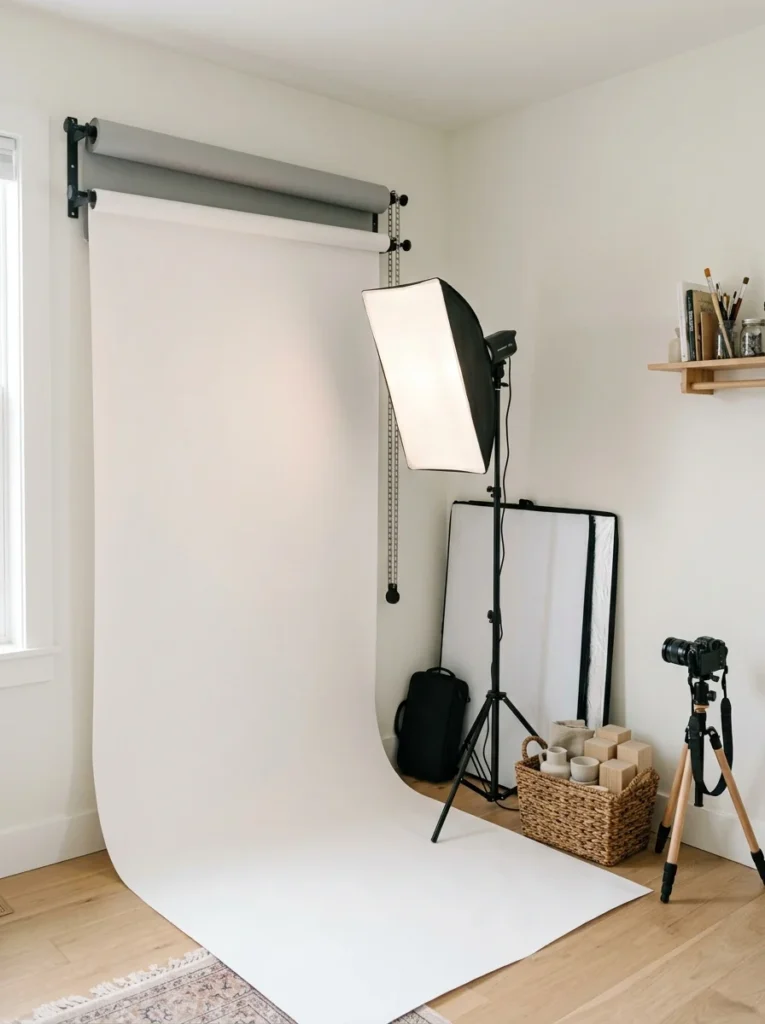
If you shoot product photos, portraits, or just enjoy photography as a hobby, a small dedicated backdrop area removes the hassle of setting up lighting and backdrops from scratch every time inspiration strikes. I mounted a simple wall-mounted backdrop roll holder in one corner, along with a portable light stand that folds flat against the wall when not in use.
A neutral gray or white backdrop paper works for the vast majority of casual photography needs, and having it permanently mounted, ready to unroll, meant I actually used this corner regularly instead of only for occasional planned shoots. I keep a couple of reflector panels and a small collection of props in a nearby basket, so a spontaneous photo idea doesn’t require digging through the whole house to gather what’s needed. Even in a fairly small footprint, this corner has paid for itself many times over in how much more consistently I’ve kept up with photography as an actual hobby rather than something I only did a few times a year when I felt sufficiently motivated to set everything up from scratch.
11. A Board Game Closet or Shelf
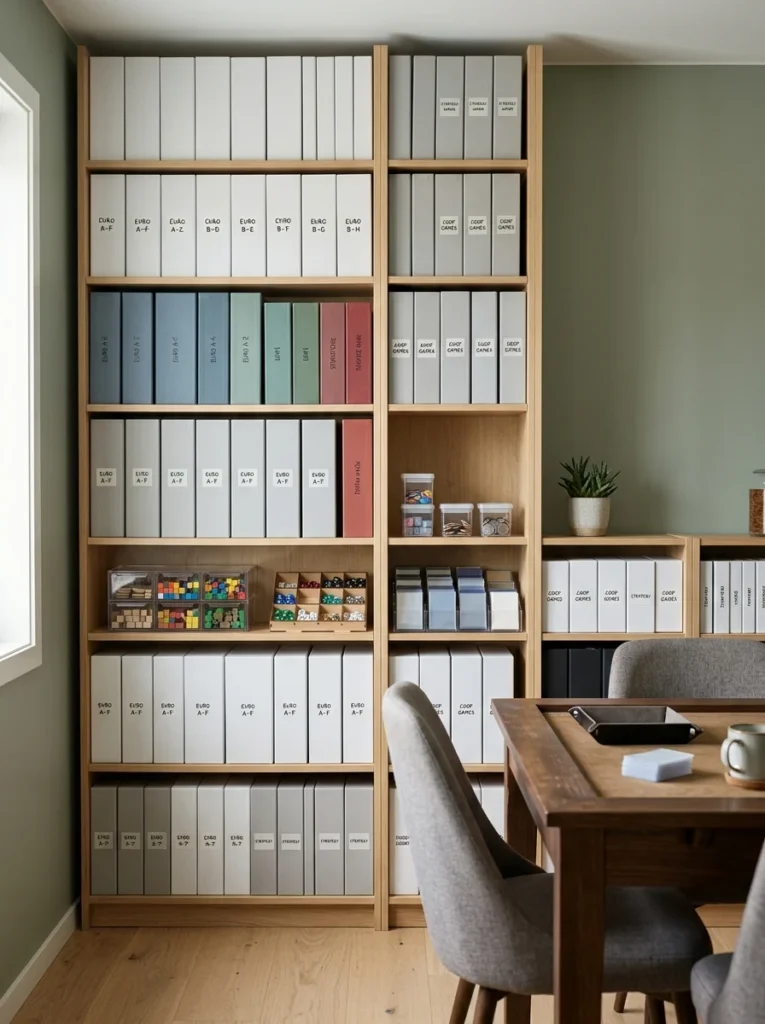
Board games take up an enormous amount of shelf space if you own more than a handful, and organizing them properly made a huge difference in how often we actually pulled one out to play. I dedicated a full closet to games, removing bulky original boxes where possible and repackaging components into slim, labeled storage boxes that stack far more efficiently.
A simple label on each box listing the game name, player count, and approximate playtime meant we could scan the shelf and pick something appropriate for the evening in seconds rather than pulling out three different boxes before finding the right fit. I organized by roughly how often we play each game, keeping favorites at eye level and rarely played titles higher up or lower down. If a full closet isn’t available, even a single dedicated bookshelf, organized with the same labeling system, achieves much the same result. This kind of organization sounds like a small, almost obsessive detail, but it directly translates into how often the games actually get played instead of gathering dust in a chaotic pile in the back of a closet somewhere.
12. A Yoga and Meditation Corner
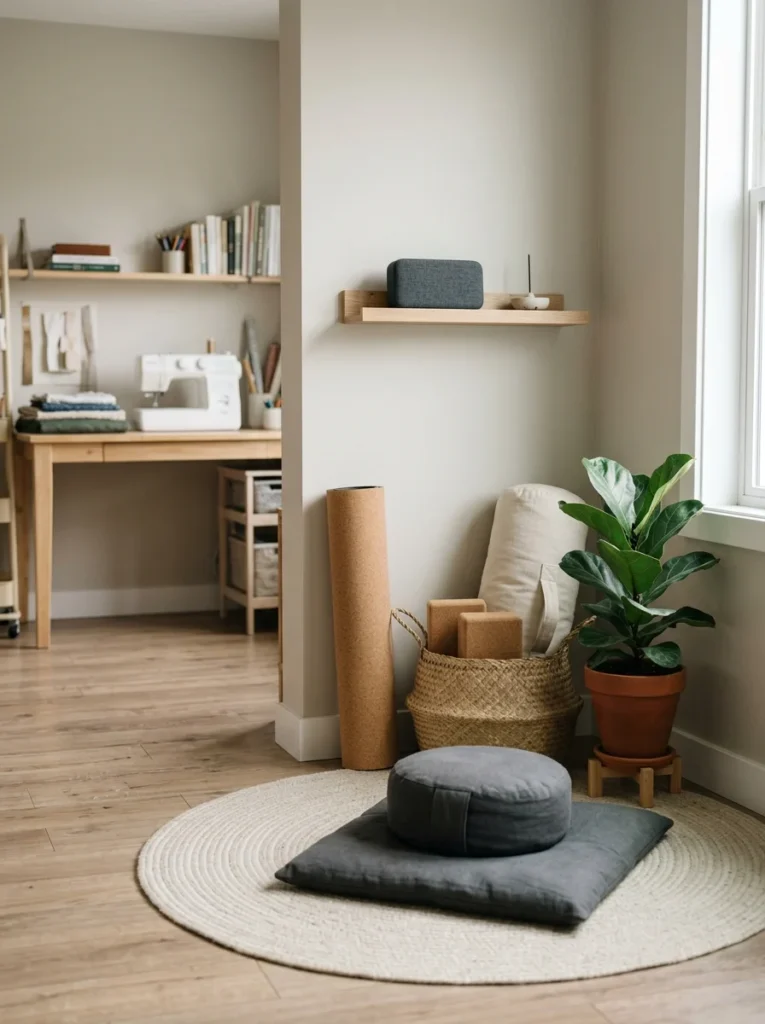
A small, clutter-free corner with just enough room for a yoga mat became an unexpectedly important part of the room for me. I keep the mat rolled and leaning against the wall alongside a couple of blocks and a bolster, all stored in an open basket so setup takes about ten seconds rather than requiring a search through a closet.
Keeping this corner visually calm mattered a lot, so I avoided placing anything busy or cluttered nearby, instead adding a single plant and a small cushion for seated meditation. A soft area rug underneath, distinct from the flooring in the rest of the room, helps signal that this particular zone is meant for a slower, quieter kind of activity than the craft table or music corner nearby. I also added a small bluetooth speaker specifically for this corner, tucked onto a nearby shelf, so calming music or a guided meditation is only a tap away. This is one of the smallest corners in the entire room by footprint, but it’s had one of the biggest impacts on how I actually use the space day to day.
13. A Journaling and Writing Desk
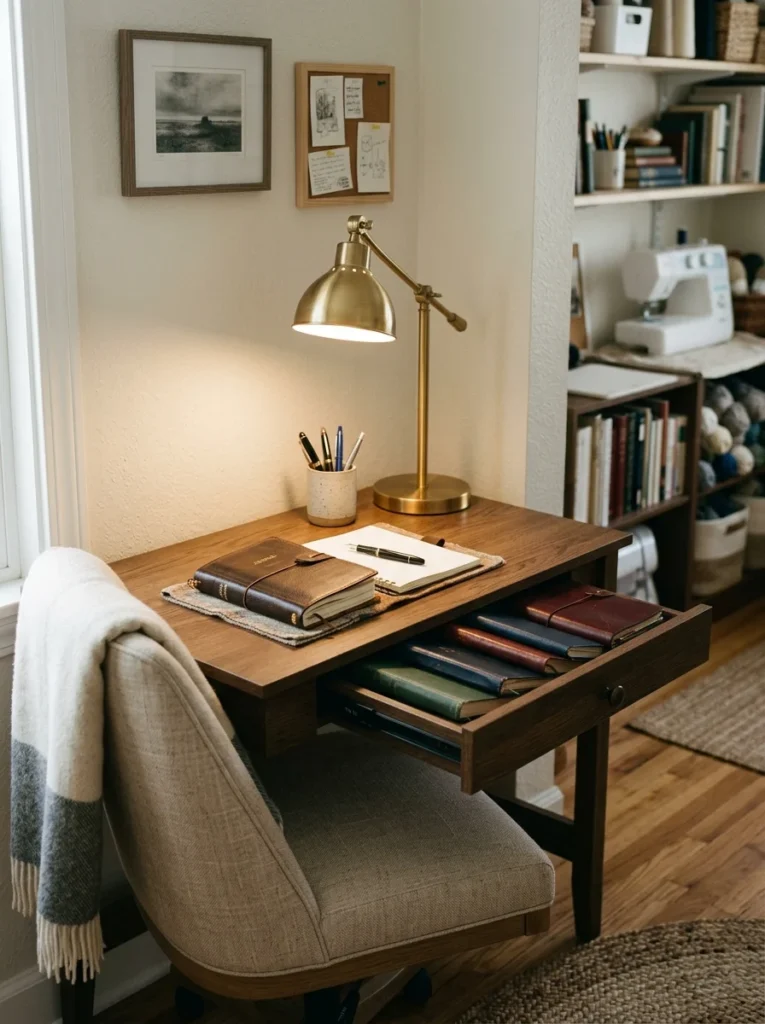
Separate from the larger craft table, I added a small secondary desk specifically for journaling and writing, since I found that mixing it in with messier craft supplies meant I rarely sat down to actually write. This desk stays almost entirely clear, holding only a lamp, a cup of pens, and whatever journal I’m currently using.
Keeping this surface deliberately empty, rather than letting other supplies migrate onto it over time, took some discipline, but it’s made a real difference in how often I actually sit down to write versus just thinking about it. A comfortable chair that’s distinct from my craft table stool signals to my brain that this is a different kind of activity, even though the two desks sit only a few feet apart in the same room. I positioned this desk facing a blank wall rather than a window, since I found the view outside more distracting than helpful when I’m trying to focus on writing specifically. A small drawer holds a backlog of finished journals, which I like keeping nearby rather than storing elsewhere in the house.
14. A Chalkboard or Whiteboard Wall
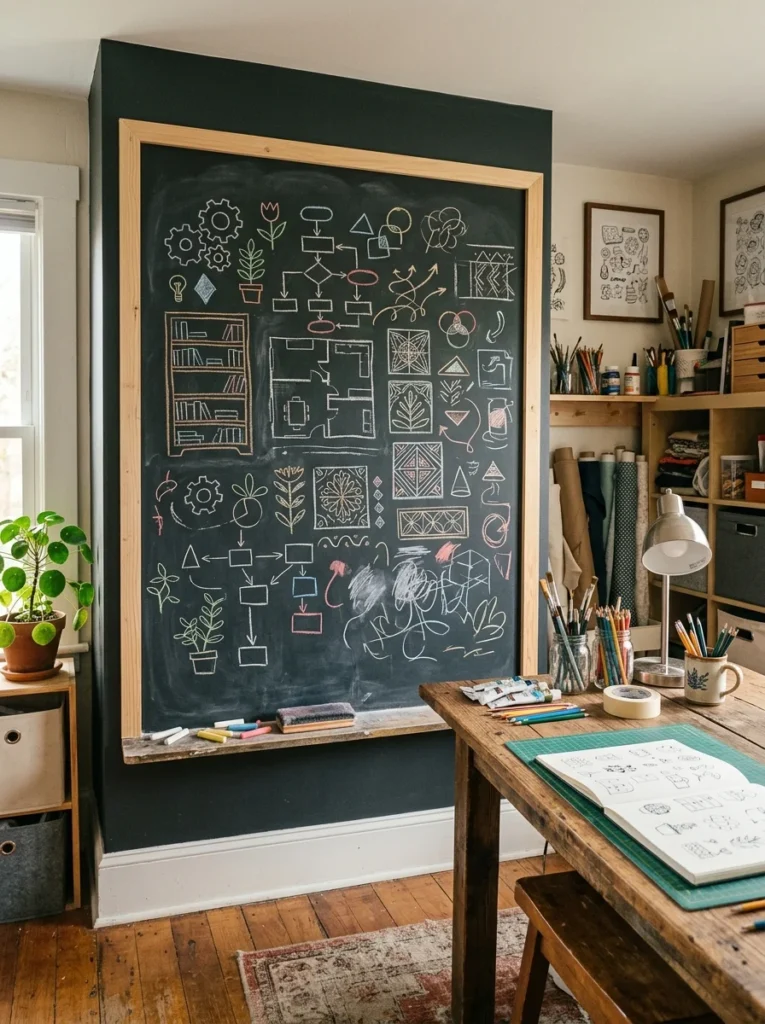
Painting one wall with chalkboard paint gave the room a large, endlessly reusable surface for sketching ideas, jotting project plans, or just doodling without worrying about wasting paper. It’s become a genuinely useful planning tool as much as a creative outlet, since I map out bigger projects there before committing to actual materials.
I framed the edges of the chalkboard section with simple wood trim, which made it look like an intentional design feature rather than a rough painted rectangle on the wall. A small shelf beneath it holds chalk and an eraser, keeping supplies within reach without needing to search elsewhere. A whiteboard section works just as well if chalk dust isn’t appealing, and some people split the difference with half of one wall in each finish. This wall has become a strange kind of communal creative space in the room, since visitors often end up adding their own doodles or notes when they visit, which has turned it into something closer to an evolving piece of collaborative art than a purely functional planning tool.
15. A Small Woodworking Bench
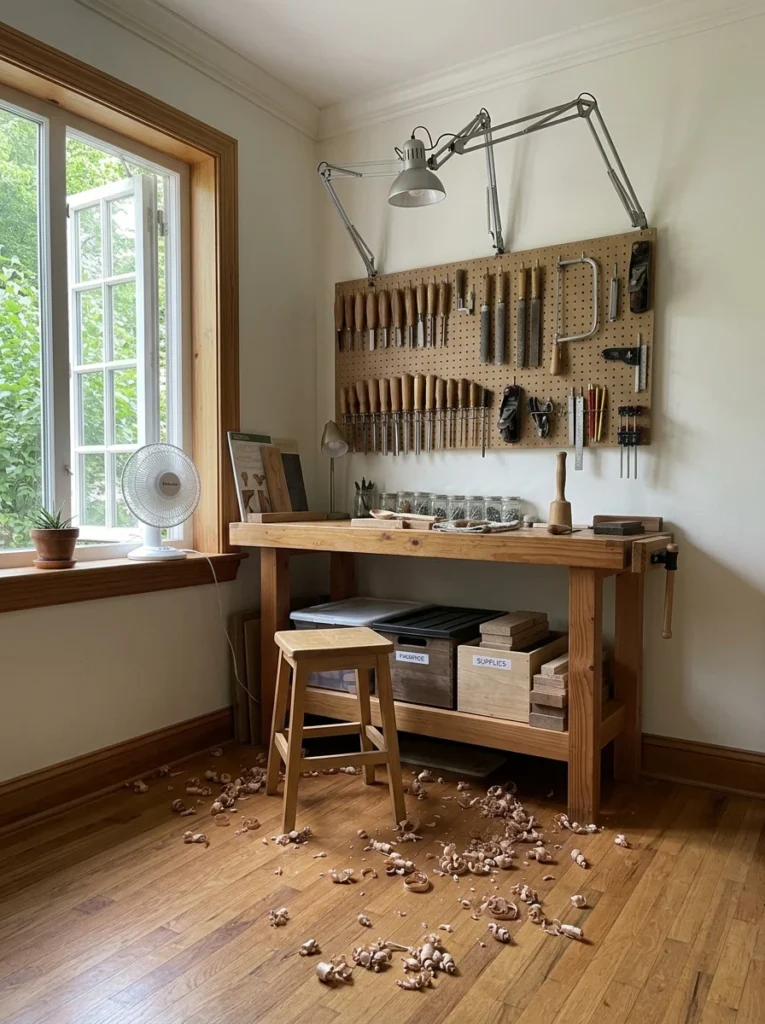
Even in a spare bedroom rather than a garage, I managed to fit a compact woodworking bench along one wall for smaller-scale projects. It’s nowhere near as robust as a proper workshop setup, but it’s more than sufficient for the smaller carving, whittling, and simple furniture repair projects I actually spend my time on.
A vinyl mat underneath catches wood shavings and sawdust, making cleanup dramatically easier than it would be on carpet. I keep hand tools organized on a nearby section of pegboard, similar to the craft supplies elsewhere in the room, and store larger power tools in a covered bin underneath the bench when not in use to keep them protected from dust. Good ventilation matters more here than almost anywhere else in the room, so I keep a window cracked and a small fan running whenever I’m doing any sanding or cutting. This corner required the most compromise in terms of scale compared to a real workshop, but having any dedicated woodworking space at all, rather than none, has meant I actually finish small projects instead of letting half-started ones pile up in the garage indefinitely.
16. A Model Building and Detail Work Station
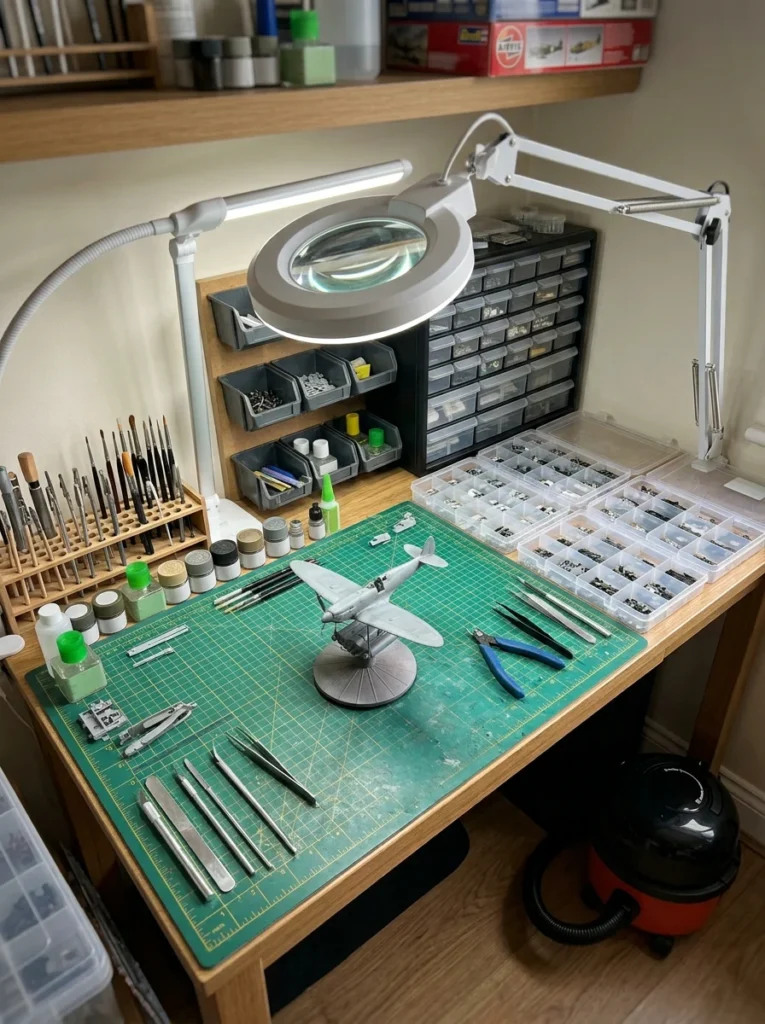
For hobbies involving small, intricate work like model kits or miniature painting, a well-lit station with excellent organization for tiny parts makes an enormous difference. I set up a small desk with a magnifying lamp and a series of shallow, labeled trays for sorting parts by kit or by color before assembly.
A self-healing cutting mat protects the desk surface from craft knives, and a small parts organizer with dozens of tiny compartments keeps miniature pieces from getting lost or mixed between projects. Good lighting is absolutely essential here, so in addition to the magnifying lamp, I added an adjustable desk lamp with a daylight-balanced bulb to reduce eye strain during longer sessions. I also keep a small vacuum handy specifically for this station, since sanding and trimming small plastic parts creates a surprising amount of fine debris that regular sweeping doesn’t handle well. This station takes up relatively little floor space compared to almost everything else on this list, but the level of organization it requires is higher than almost any other hobby corner in the room.
17. A Vision Board or Inspiration Wall
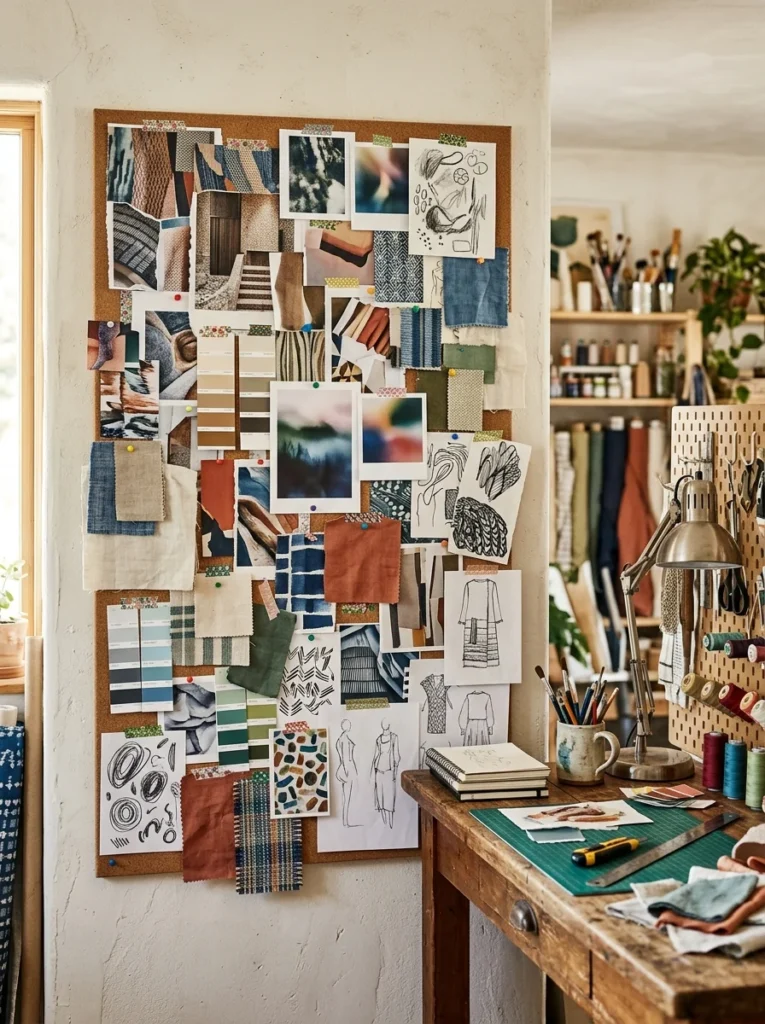
One section of wall near my craft table is dedicated entirely to a rotating collection of inspiration: torn magazine pages, fabric swatches, printed photos, and sketches pinned up using a cork board and a scattering of washi tape. It’s not meant to be permanent or polished, and I intentionally let it stay a little chaotic and ever-changing rather than treating it like a finished art piece.
I’ve found this wall genuinely useful for working through the early, undefined stages of a new project, when I’m still figuring out a color palette or general direction rather than committing to specifics. Swapping pieces in and out regularly keeps it feeling fresh rather than becoming background noise I stop actually looking at. A simple cork board works fine for this, though I’ve also seen people use a section of the pegboard mentioned earlier for the same purpose, pinning inspiration alongside their actual tools. This corner costs almost nothing to set up but has become one of the most genuinely useful parts of the room for actually generating new project ideas rather than just storing supplies for ones already decided on.
18. A Baking and Recipe Testing Nook
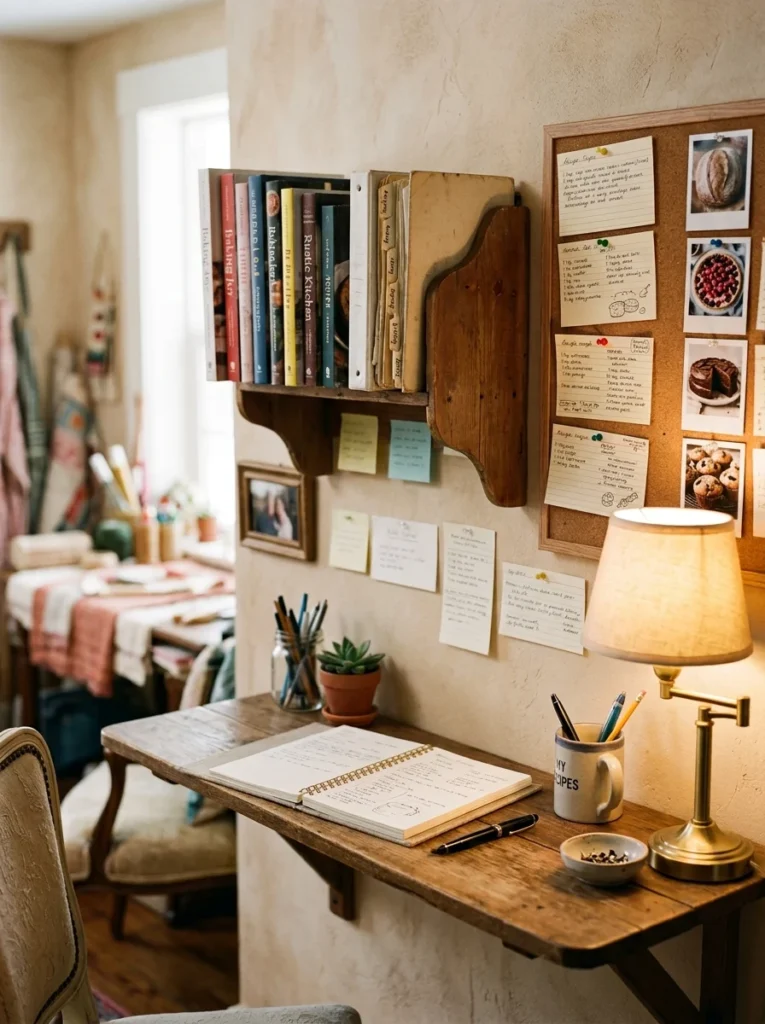
Since our hobby room shares a wall with the kitchen, I added a small nook with a narrow counter specifically for recipe development notes, ingredient lists, and cookbook storage, even though the actual baking happens next door. It sounds like an odd addition, but having a dedicated spot to write out recipe adjustments and keep a running notebook of results has made my baking hobby feel far more organized than it used to.
A small shelf holds a rotating collection of cookbooks alongside a binder of printed recipes I’ve adjusted over time, with notes scribbled in the margins about what worked and what didn’t. A corkboard nearby holds a few favorite recipe cards and photos of finished bakes that turned out particularly well. This nook doesn’t involve any actual food preparation, which keeps it clean and separate from the mess of the kitchen itself, but it’s become the planning hub for a hobby that would otherwise leave notes scattered across random scraps of paper throughout the house.
19. A Comfortable Gaming Setup
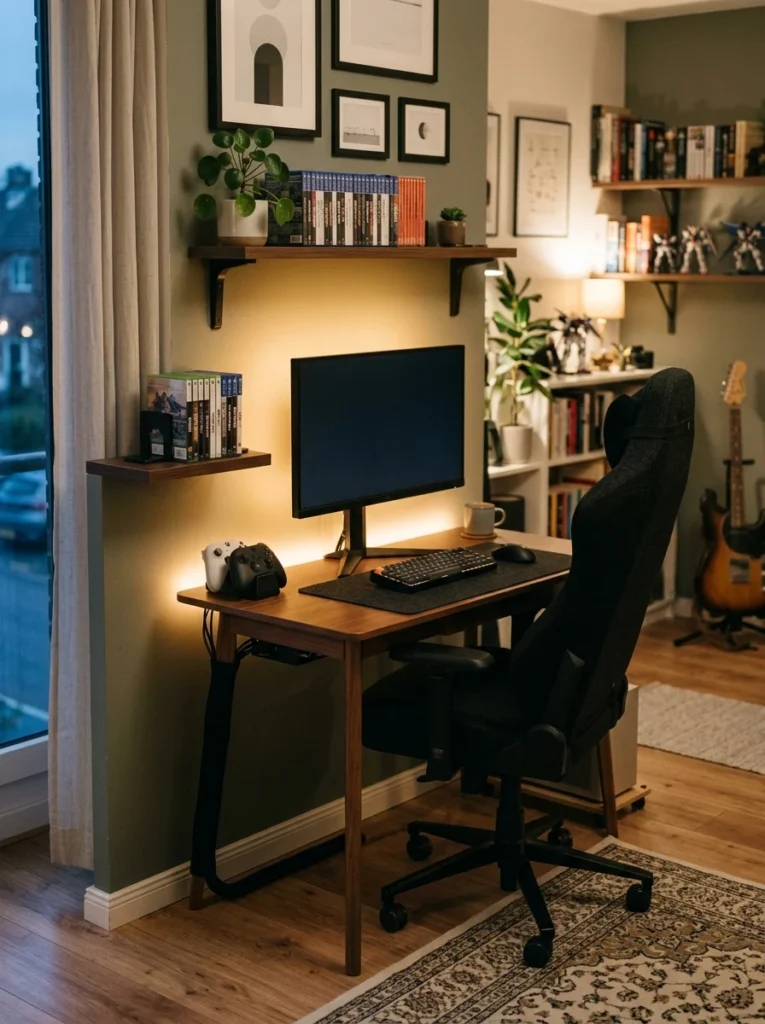
For hobbies centered around video games, a comfortable dedicated setup with a proper chair, good lighting, and cable management makes a bigger difference to actual enjoyment than most people expect. I positioned a small desk and monitor in one corner, angled away from windows to reduce glare, with a proper gaming chair rather than a leftover dining chair that used to leave my back aching after long sessions.
Cable management turned out to matter more than I initially expected, since a tangle of visible cords made the corner feel messy no matter how nice the rest of the setup was. Running cables through a simple sleeve and mounting a power strip underneath the desk cleaned up the look considerably. I added a couple of LED strip lights behind the monitor, both for ambiance and to reduce eye strain during evening sessions in a dimly lit room. A small shelf nearby holds controllers and game cases, keeping them from cluttering the desk surface itself. This corner ended up being surprisingly compact once properly organized, fitting comfortably alongside all the other hobby stations in the room without dominating the space.
20. A Knitting and Crochet Basket Corner
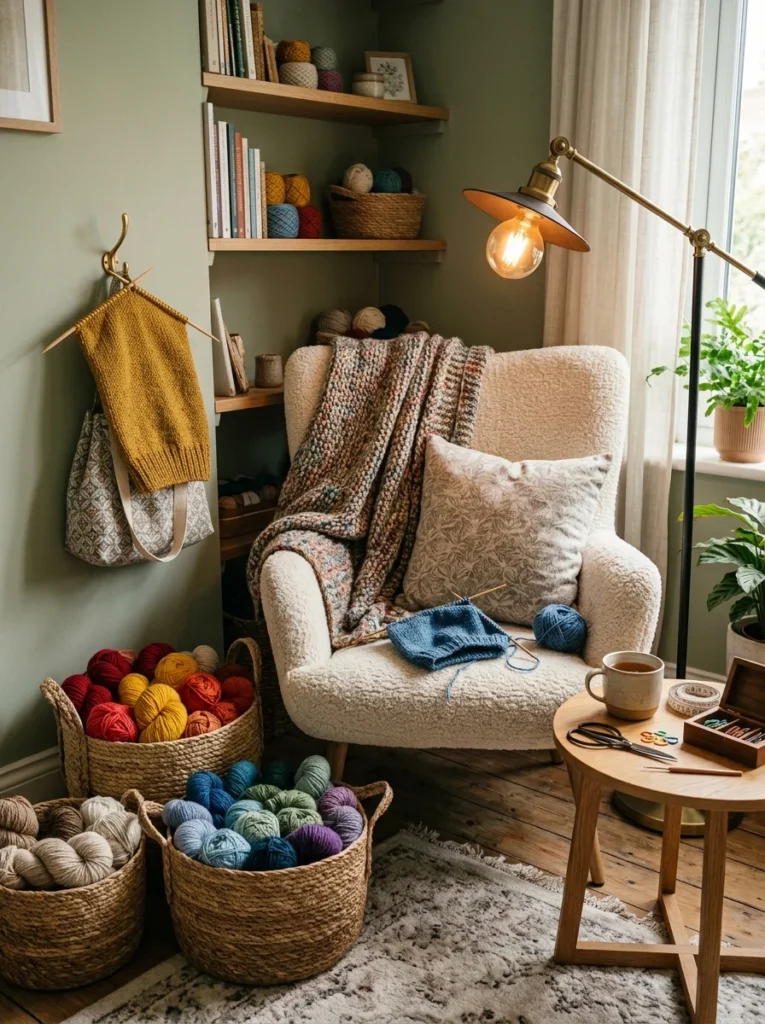
Yarn crafts benefit enormously from a cozy, comfortable spot rather than a formal workstation, so I set up a simple corner with a soft chair, good task lighting, and a collection of woven baskets for organizing yarn by color and weight. Unlike the sewing station, which requires a table and machine, this corner is deliberately minimal, since the whole appeal of knitting and crochet for me is being able to sit comfortably and work without much setup at all.
I keep current projects in progress in a small project bag hung on a hook beside the chair, so picking up exactly where I left off takes seconds rather than requiring me to dig through a larger stash. The yarn baskets themselves are arranged more for visual appeal than strict organization, since a wall of colorful yarn has become a genuinely nice piece of decor in its own right. A small side table holds scissors, a tape measure, and a pin cushion for blocking finished pieces. This corner overlaps somewhat with the reading nook in terms of activity level, and the two spaces often get used interchangeably depending on my mood on any given evening.
21. A Scrapbooking and Memory-Keeping Station
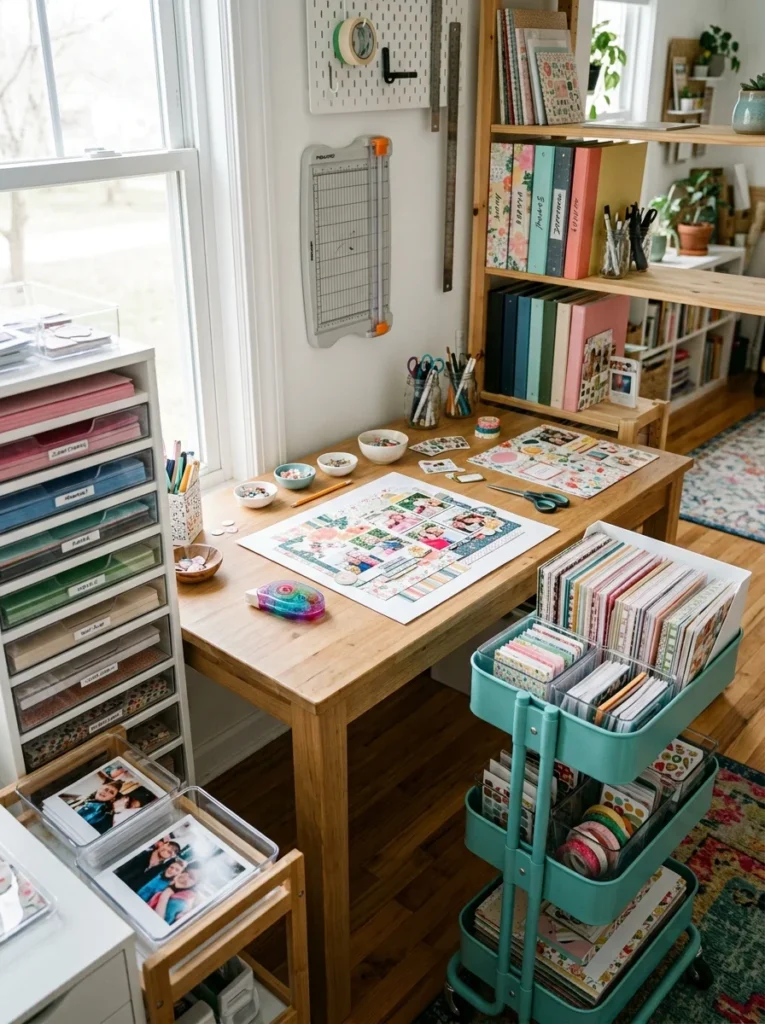
The last corner of the room is dedicated to scrapbooking and general memory keeping, with a flat surface for laying out pages, a rolling cart of paper and embellishments, and a set of drawers organized by color and pattern for quick access while assembling a layout. This overlaps somewhat with the general craft table, but having supplies specifically organized for this particular hobby meant I wasn’t constantly searching through unrelated craft materials to find the right piece of patterned paper.
A paper trimmer mounted on the wall nearby keeps a bulky tool accessible without taking up desk space, and a rolling cart holds current photo prints waiting to be incorporated into a layout. I keep finished albums on a nearby shelf, displayed rather than boxed away, which serves as a nice reminder of the projects I’ve actually completed rather than only seeing the in-progress mess of supplies. This station required the most trial and error of anywhere in the room in terms of finding a workable organization system, since scrapbooking involves such a wide variety of small embellishments and paper types, but the eventual system of labeled drawers sorted loosely by color has held up well over time.
Final Thoughts
What surprised me most about this whole process wasn’t any single station or piece of furniture, but how much more consistently I actually engaged with each hobby once it had a proper, dedicated home. Projects that used to sit half-finished for months because setup felt like too much effort now get picked back up regularly, simply because everything is already out and ready to go.
If you’re thinking about setting up your own hobby room, my honest advice is to start with whichever one or two hobbies you actually do most often, rather than trying to accommodate everything at once. Mine grew gradually over about two years, one corner at a time, and that slower approach let me figure out what storage and layout actually worked through real use rather than guessing upfront. A hobby room doesn’t need to be finished on day one to be worth starting.