
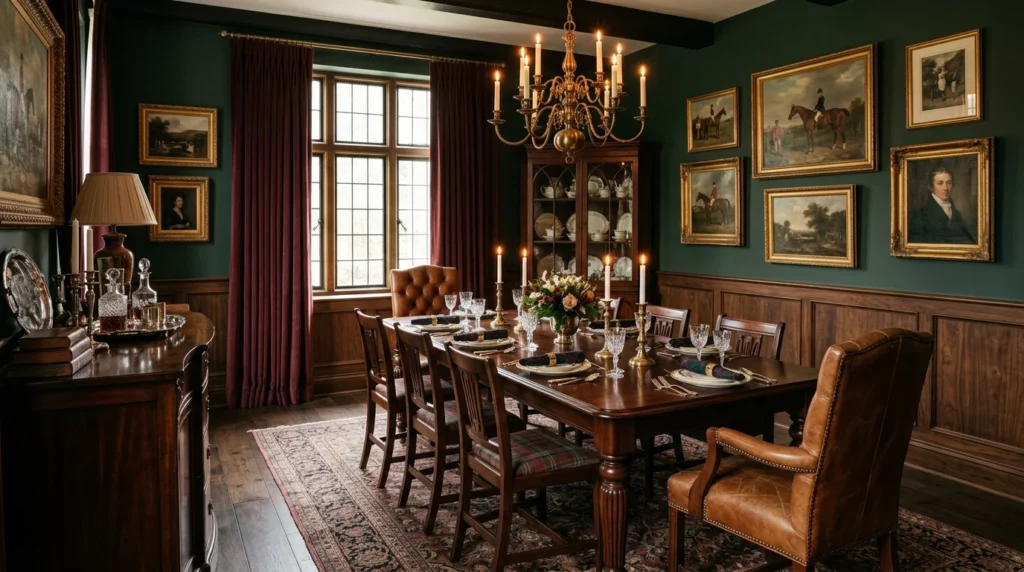
I’ve always been drawn to that old-money, “quiet luxury” look, but for a long time I assumed it was completely out of reach unless you had a decorator and an unlimited budget. That changed the year I redid my own dining room after spending an embarrassing amount of time studying the Ralph Lauren Home aesthetic — all that rich mahogany, hunter green, brass, and leather that makes a room feel like it belongs in an English countryside estate rather than a regular suburban house. What I discovered along the way is that this look is far more about a handful of consistent design choices repeated thoughtfully than it is about spending a fortune on any single piece.
My dining room went from a plain rental-beige box to a room that genuinely makes people slow down when they walk in, and I did it gradually, piece by piece, over about a year. Below are 18 ideas pulled directly from that process, each one something I either did myself or watched a friend do successfully in their own home, along with the reasoning behind why it works so well for this particular style.
1. Dark Wood Wainscoting or Paneling
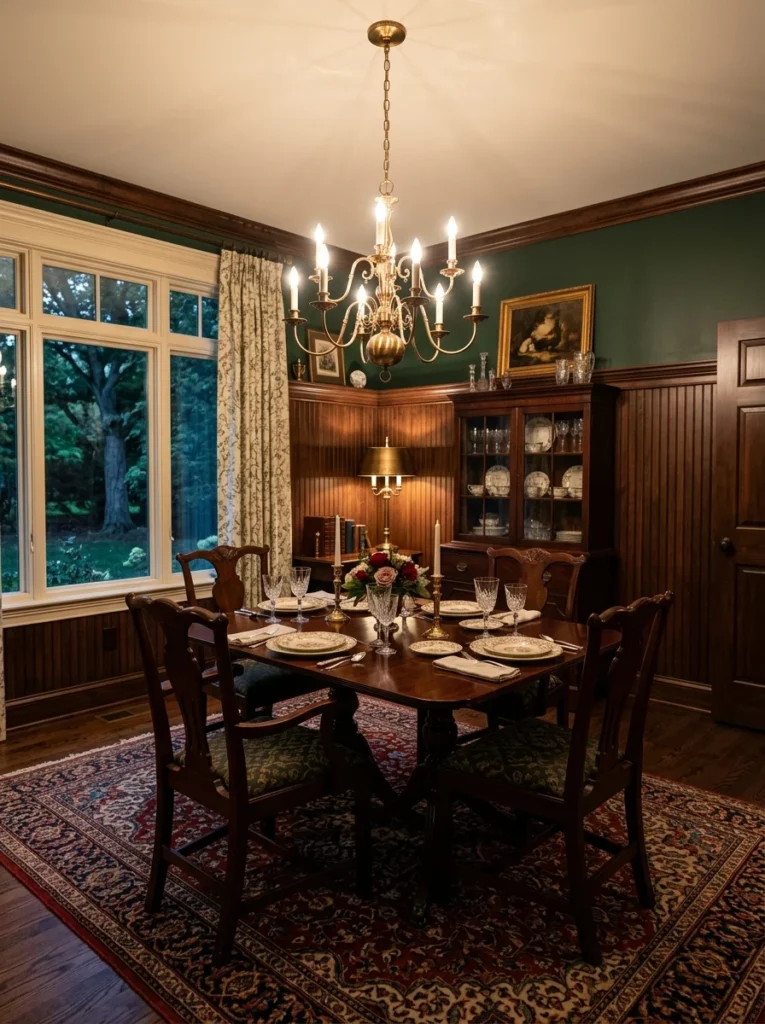
Nothing sets the tone for a Ralph Lauren-style dining room faster than dark wood paneling on the lower half of the walls. I installed simple beadboard wainscoting and stained it a deep walnut, which instantly gave the room a sense of permanence and history, even though the house itself is only about twenty years old. The trick is choosing a stain that leans warm rather than gray, since the whole aesthetic depends on rich, saturated wood tones rather than the cooler, more contemporary finishes you’d see in a modern farmhouse.
I capped the wainscoting with a simple wood chair rail, which also gave me a practical excuse to switch the wall color above it to something bolder without worrying about the transition looking abrupt. If full paneling isn’t in the budget, even wainscoting on just the lower third of the wall, paired with a slightly darker baseboard than usual, starts to create that same layered, tailored feeling. I’ve also seen friends achieve a similar effect with peel-and-stick wood panel wallpaper in a walnut finish, which is a far more budget-friendly route if you’re renting or not ready to commit to real millwork. Either way, the goal is the same: give the lower half of the room some visual weight and texture instead of leaving it as flat, plain drywall, which is really the foundation everything else on this list builds on top of.
2. Hunter Green or Deep Navy Walls
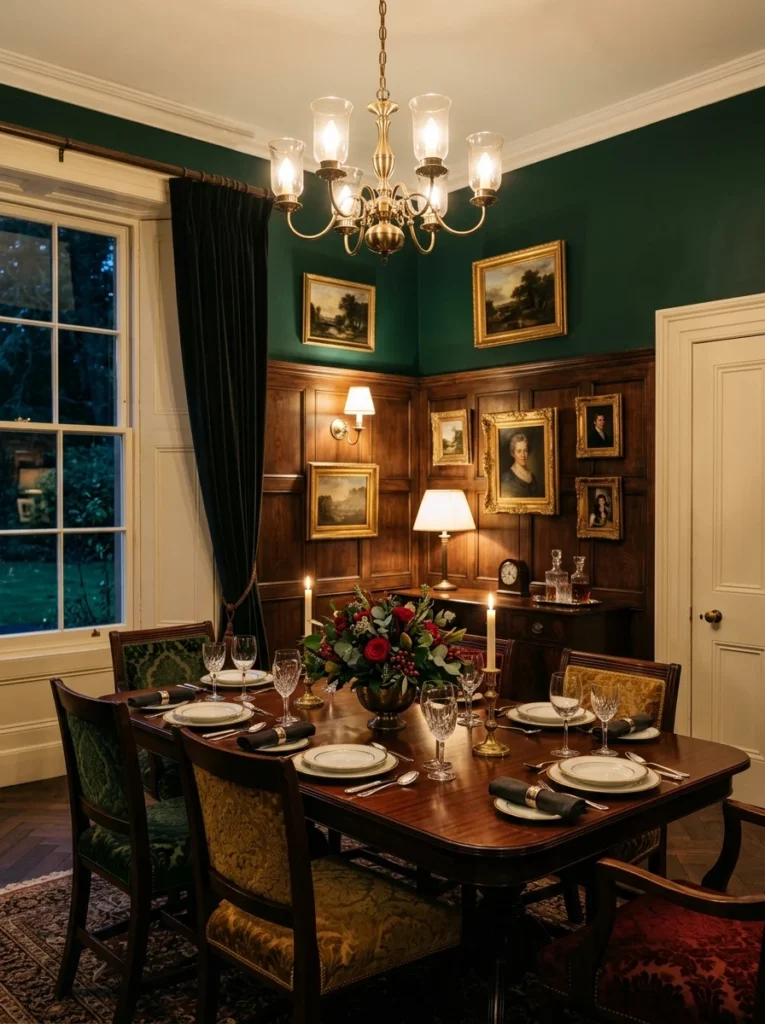
Above my new wainscoting, I painted the upper walls a deep hunter green, which is probably the single most recognizable color in the entire Ralph Lauren design world. It reads as traditional, masculine, and a little bit clubby in the best way, evoking old libraries and hunting lodges without feeling like a costume. Navy works just as well if green isn’t your preference, and I’ve seen both used successfully depending on the room’s lighting and the homeowner’s existing furniture.
What surprised me most was how much the paint sheen mattered. I used a soft eggshell finish rather than a flat matte, which let the color pick up a subtle warmth from lamplight in the evenings instead of looking dull and flat under artificial light. I’d also recommend testing the color at different times of day before committing, since a green that looks perfect in the afternoon sun can shift dramatically once the sun goes down and your overhead lighting takes over. In my case, the hunter green looked almost black in low light, which actually worked beautifully with the candlelit dinners I started hosting once the room was finished, but it’s worth knowing in advance rather than being surprised by it. Pairing the dark wall color with white or cream trim around the windows and doorways kept the room from feeling like a cave, giving the eye somewhere bright to rest.
3. A Substantial Brass Chandelier
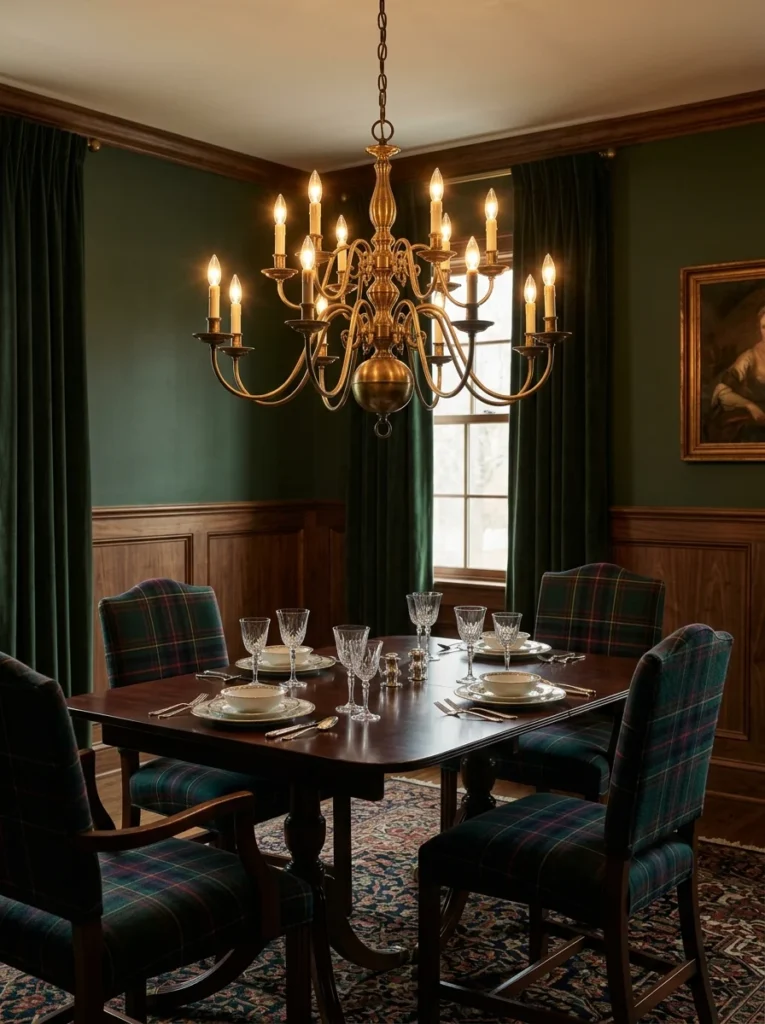
Lighting makes or breaks this whole look, and nothing signals “elegant traditional dining room” faster than a substantial brass chandelier hanging above the table. I splurged slightly here compared to other parts of the room, but even a secondhand brass fixture from a local antique shop, cleaned up and rewired by an electrician, gave me the same effect as a brand-new designer piece for a fraction of the cost.
The key detail I learned through trial and error is scale. My first chandelier was far too small for the room and ended up looking almost apologetic hanging above the table, like it was trying not to be noticed. I sized up considerably on my second attempt, choosing a fixture with multiple arms and warm candle-style bulbs, and the difference was dramatic. A general rule I picked up from a lighting showroom employee is to add the room’s length and width together in feet, and use that number in inches as a rough guide for chandelier diameter. My room is roughly ten by twelve feet, so a chandelier around twenty-two inches across ended up being close to right. Dimmable warm bulbs are non-negotiable in my opinion, since the whole aesthetic depends on soft, golden lighting rather than the harsh, bright white light that so many modern fixtures default to. I also lowered mine slightly more than a typical installation guide would suggest, since a chandelier that hangs a bit lower over the table tends to read as more intimate and traditional rather than corporate or sterile.
4. Tartan or Plaid Upholstery Accents
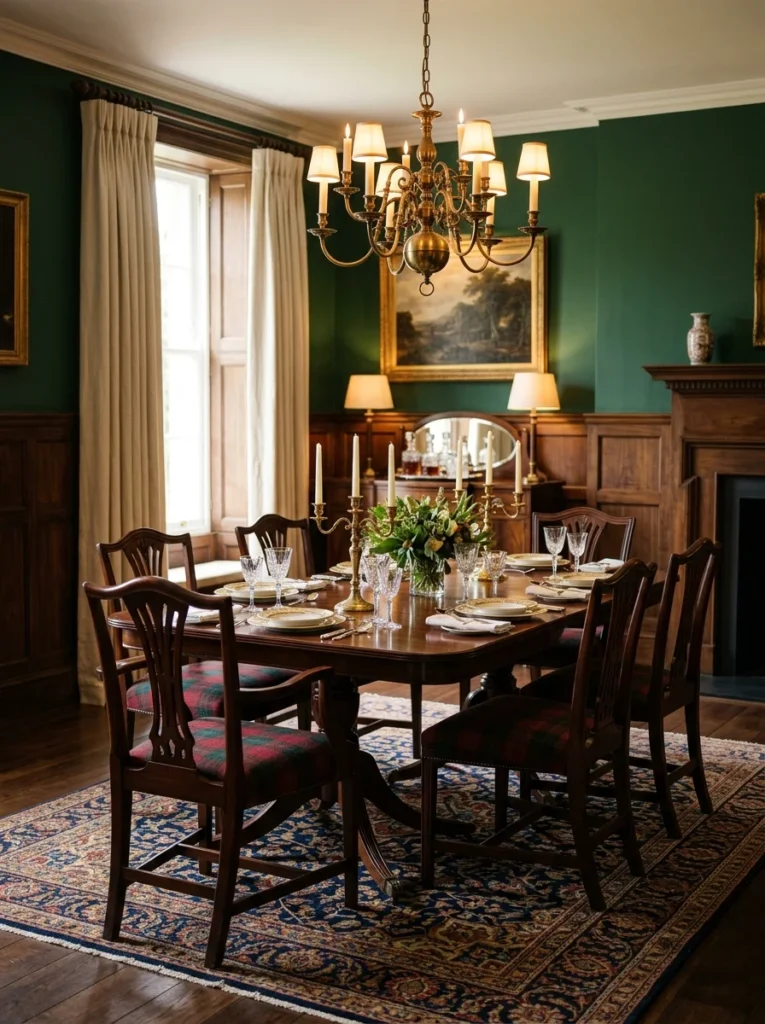
I was hesitant about plaid at first, worried it would tip the room into looking like a hunting cabin rather than an elegant dining space, but a small dose turned out to be exactly right. I reupholstered the seats of my dining chairs in a deep red and green tartan fabric, keeping the chair frames themselves in a simple dark wood so the pattern didn’t overwhelm the room.
If reupholstering isn’t practical, tartan or plaid throw pillows on a bench seat, a table runner, or even fabric-covered dining chair cushions tied on with ribbon can introduce the same pattern in a much smaller, more flexible dose. I’d recommend choosing just one place in the room for the pattern to live rather than scattering it across curtains, chairs, and rugs simultaneously, since restraint is really what separates this look from feeling costume-like rather than genuinely elegant. My sister took a completely different approach in her own dining room, using a plaid wallpaper on just one accent wall instead of fabric, which achieved a similarly rich, layered feeling without any upholstery work at all. Either method works, but I’d caution against combining more than one or two plaid patterns in the same room, since even traditional, tailored spaces like this one rely on a controlled color and pattern palette rather than an anything-goes approach.
5. Equestrian-Inspired Artwork
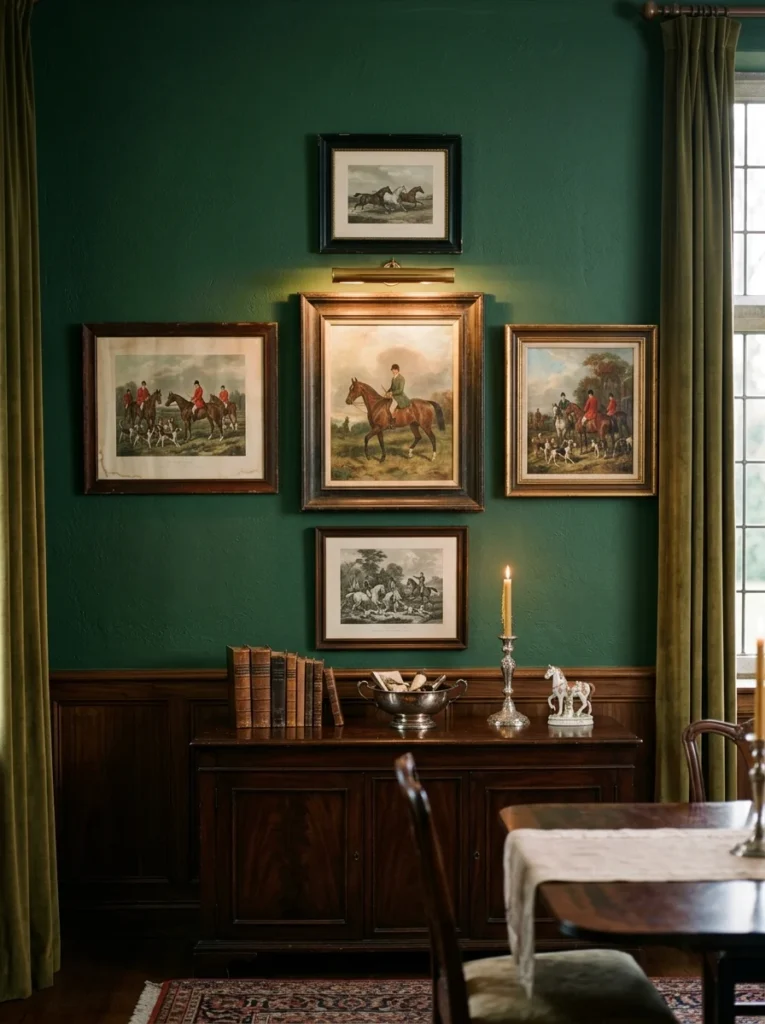
Horses, riding scenes, and equestrian imagery show up constantly throughout Ralph Lauren’s actual design work, and bringing a piece or two into my own dining room added an authentic touch of that world without requiring an actual interest in horseback riding. I found a set of vintage-style fox hunting prints at a local estate sale for almost nothing, framed them in simple black frames, and hung them in a small grouping on one wall.
What I’ve learned since is that authenticity matters here more than perfection. Slightly worn, vintage-feeling prints work better for this aesthetic than crisp, obviously new artwork, since the whole point is evoking a sense of history and heritage rather than looking freshly purchased. Thrift stores, estate sales, and online marketplaces are goldmines for this kind of art if you’re patient and willing to look through a lot of options. A friend of mine took a different route and commissioned a simple oil-style painting of a horse from an independent artist online for less than the cost of a mass-produced canvas print from a big box store, which gave her dining room a genuinely one-of-a-kind piece instead of something anyone could recognize from a chain retailer. Even a single well-chosen equestrian piece, properly framed and thoughtfully placed, does more for this style than a dozen generic decorative items scattered around the room.
6. A Substantial Wood Dining Table
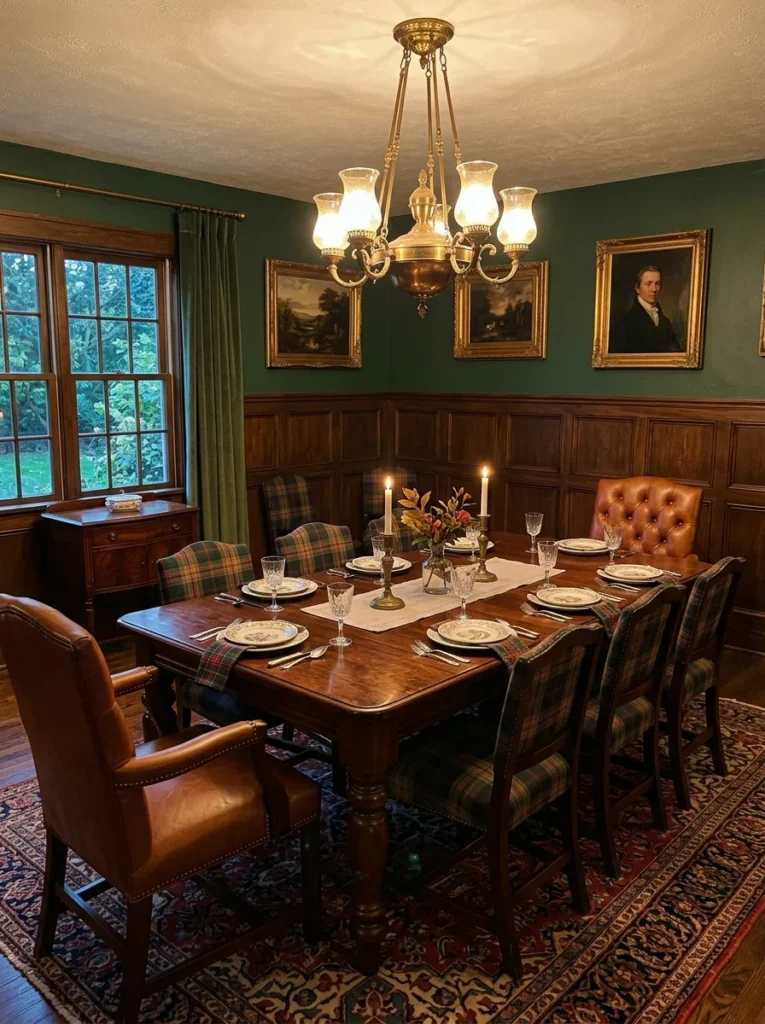
The table itself needs to feel like an heirloom, whether it actually is one or not. I found mine secondhand, a solid mahogany table with turned legs that had clearly seen decades of use, complete with a few scratches and water rings that I chose to embrace rather than sand away entirely. New furniture, even well-made new furniture, often lacks the patina and slight imperfection that makes this style feel authentic rather than staged.
If buying secondhand isn’t appealing, a new table in a similarly dark, traditional wood tone with turned or carved legs can achieve much of the same effect, especially once it’s been lived with for a while and picked up its own small marks of daily use. I’d steer away from anything too sleek, glossy, or minimalist here, since clean modern lines work against this aesthetic rather than for it. A pedestal or trestle base rather than simple straight legs also tends to read as more traditional and substantial, giving the table visual weight that matches the rest of the room’s heavier, richer elements. My table seats eight comfortably, and I’ve found that a slightly oversized table, even in a modestly sized room, actually reinforces the sense of generous, old-world hospitality that this whole style is built around.
7. Leather Dining Chairs or a Leather Bench
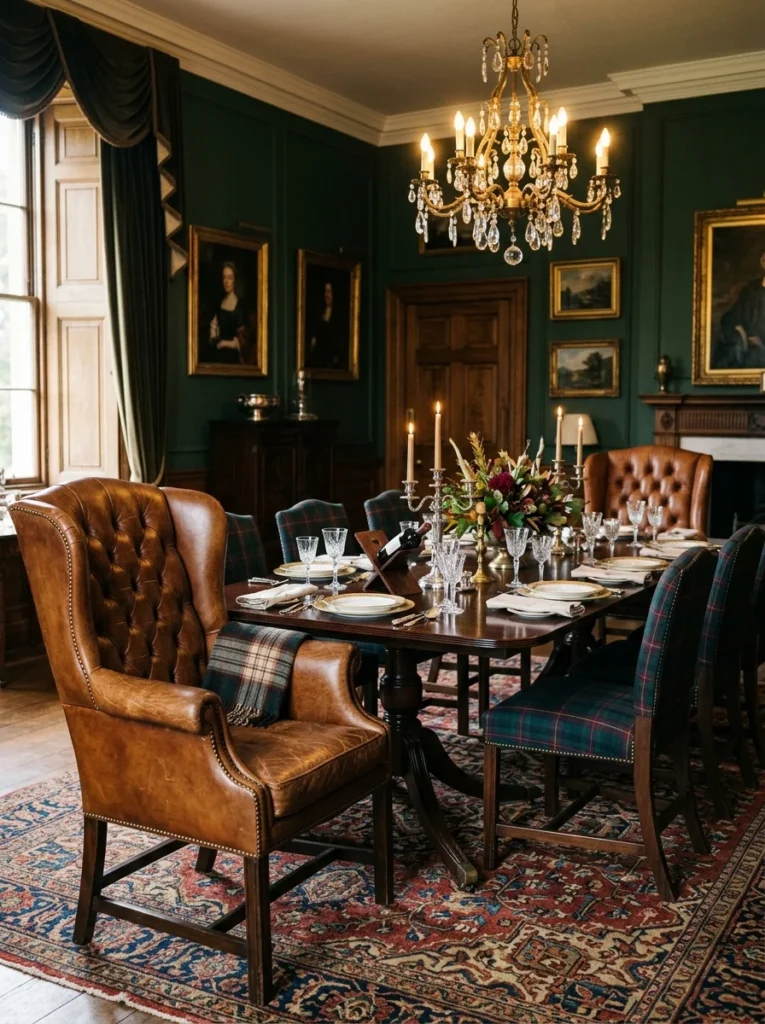
Leather shows up throughout traditional English-inspired interiors, and I incorporated it through a set of leather-seated host chairs at either end of my table, while the side chairs stayed upholstered in the tartan fabric mentioned earlier. The contrast between the two materials kept the room from feeling monotonous while still staying firmly within the same warm, traditional color palette.
Cognac or deep brown leather works particularly well here, since it echoes the wood tones already present in the paneling and table while adding a slightly different texture and sheen. I bought my host chairs secondhand and had a local upholsterer do minor repairs to a couple of small tears, which ended up costing far less than buying new leather chairs would have. A leather bench along one side of the table is another option I’ve seen work beautifully in smaller dining rooms, since it takes up less visual space than a full set of chairs while still introducing that same rich material. Whatever route you choose, I’d recommend avoiding anything with a modern, minimalist silhouette, since the leather itself needs traditional detailing like nailhead trim or tufting to really read as part of this particular aesthetic rather than a generic contemporary leather chair.
8. Brass or Antique Hardware Throughout
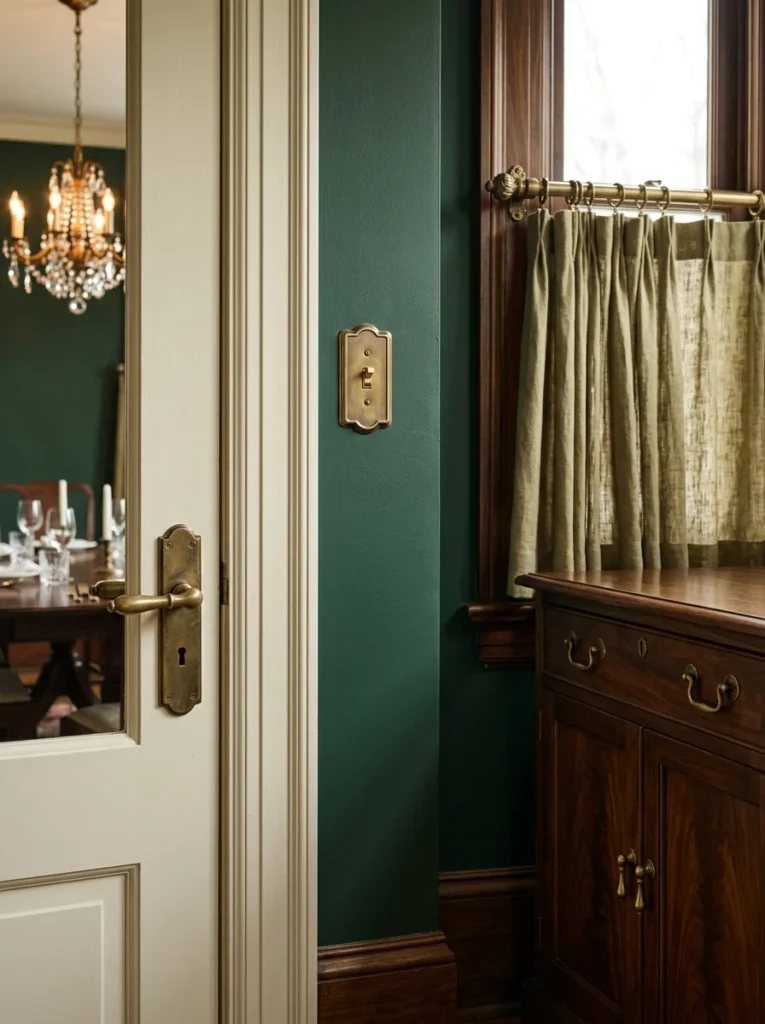
Small details matter enormously in this style, and swapping out plain builder-grade hardware for brass or antique-finish pieces made a bigger difference than I expected for a relatively small investment. I replaced the door handle, the light switch plates, and even the curtain rod brackets in my dining room with brass versions, which tied together with the chandelier and created a consistent metal finish throughout the space.
This is one of those details that most guests won’t consciously notice, but they’ll feel the overall cohesion even if they can’t quite articulate why the room feels so put-together. I’d recommend doing an inventory of every metal surface in the room, from cabinet pulls to outlet covers, and gradually replacing anything mismatched with a consistent warm metal finish, whether that’s polished brass, aged brass, or bronze. It doesn’t need to happen all at once. I spread this particular project out over several months, picking up pieces whenever I found good deals, and the gradual approach kept it from feeling like a huge expense while still achieving a fully cohesive look by the time everything was in place.
9. A Vintage Bar Cart or Drinks Trolley
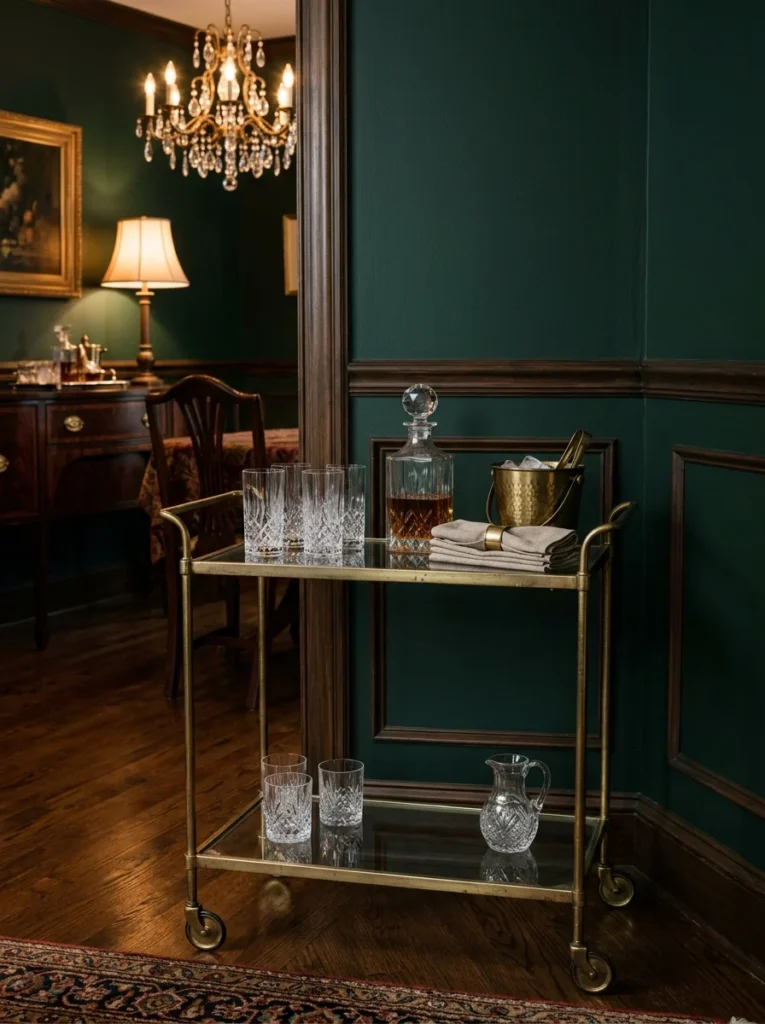
A brass and glass drinks trolley in the corner of my dining room became one of my favorite additions, both for how it looks and for how genuinely useful it is when hosting. It’s a classic feature of this style, evoking the same old-world hospitality as the rest of the room, and it solved a real practical problem of where to keep glassware and a few bottles without cluttering the sideboard.
I found mine at an antique mall for a reasonable price, though vintage bar carts also show up regularly at estate sales and on secondhand marketplaces if you’re willing to search a bit. Styling it well matters just as much as the cart itself. I kept mine relatively simple, with a few crystal glasses, a decanter, and a small brass ice bucket, rather than overloading it with too many bottles and accessories. A small stack of cocktail napkins or a linen bar towel draped over the edge adds a lived-in, hospitable touch without looking cluttered. If a full bar cart doesn’t fit your space, even a small tray on the sideboard with a decanter and a couple of glasses can introduce the same idea on a smaller scale, signaling that this is a room meant for lingering, entertaining, and genuine hospitality rather than just quick, functional meals.
10. A Gallery Wall of Vintage Frames
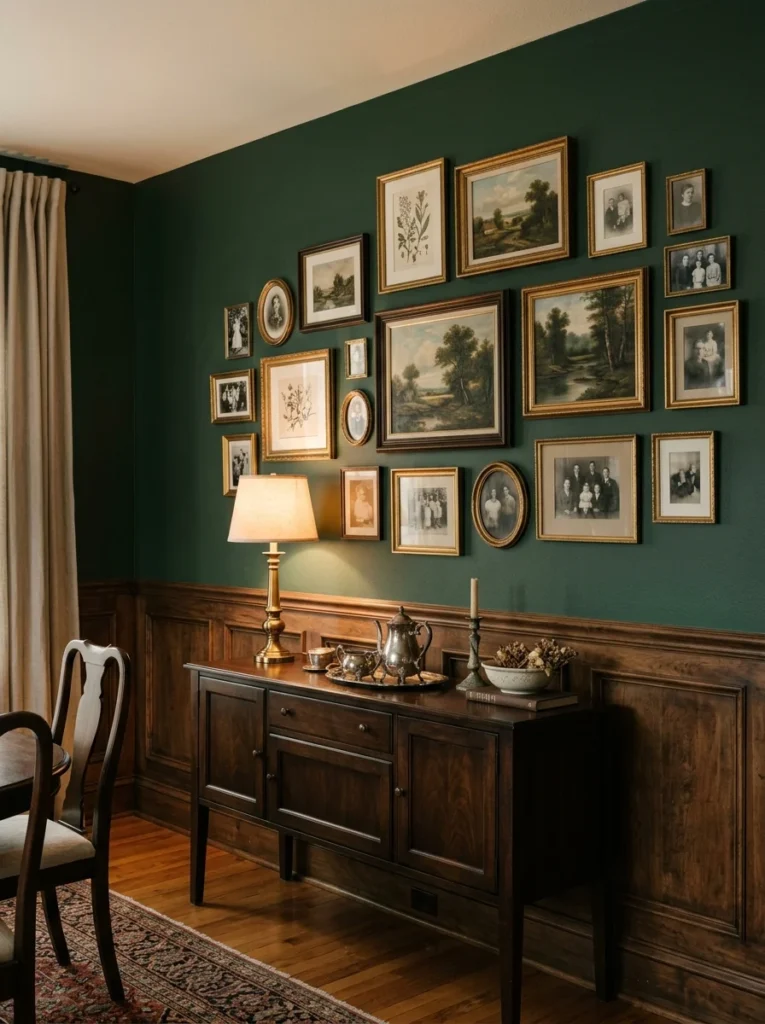
Beyond the equestrian art mentioned earlier, I built out a small gallery wall near the sideboard using a mix of vintage frames I collected over time, some holding family photos and others holding small botanical or landscape prints. The mismatched but coordinated frame styles, mostly gold and dark wood, gave the wall a collected-over-generations feeling rather than looking like it was purchased and hung all in one afternoon.
The trick to making a gallery wall feel intentional rather than chaotic is sticking to a consistent color story even while mixing frame styles and sizes. I kept my selections limited to warm gold, brass, and dark wood frames, avoiding anything in silver, black, or bright colors that would have broken the cohesive feeling of the rest of the room. I also laid everything out on the floor first, arranging and rearranging until the spacing felt balanced, before committing to any nail holes in the wall. This is a project that genuinely benefits from patience, since rushing it tends to result in a wall that looks cluttered rather than curated. Building it gradually over time, adding a new piece every few months as I found things I loved, ended up creating a far more personal and authentic result than if I’d tried to buy everything at once from a single store.
11. A Persian or Oriental Rug Under the Table
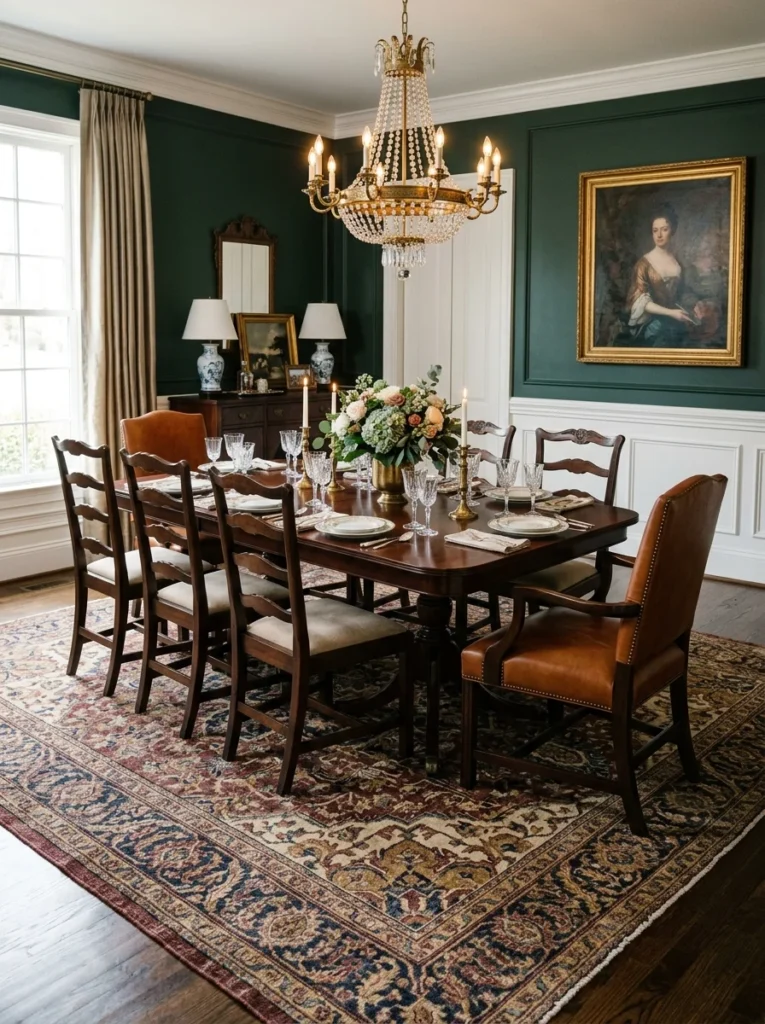
A patterned rug underneath the dining table added warmth, sound absorption, and another layer of that rich, traditional color palette to the room. I chose a Persian-style rug in deep reds, blues, and gold tones, which picked up colors already present in the tartan chair fabric and tied the whole room together visually.
Sizing matters quite a bit here. I made the mistake initially of buying a rug that was only slightly larger than the table itself, which meant chairs constantly caught on the rug’s edge when guests pulled them out. I’d recommend measuring so that the rug extends at least twenty-four inches beyond the table on all sides, giving enough room for chairs to slide out smoothly even when fully pulled back from the table. Authentic hand-knotted Persian rugs can be a significant investment, but I’ve found that well-made machine-loomed versions in similar patterns achieve nearly the same visual effect for a fraction of the price, especially once they’re partially hidden under a table and chairs anyway. A slightly worn, vintage-looking rug also tends to suit this aesthetic better than something that looks brand new and pristine, echoing the same “lived-in heritage” feeling that runs throughout the rest of the room.
12. Monogrammed or Embroidered Table Linens
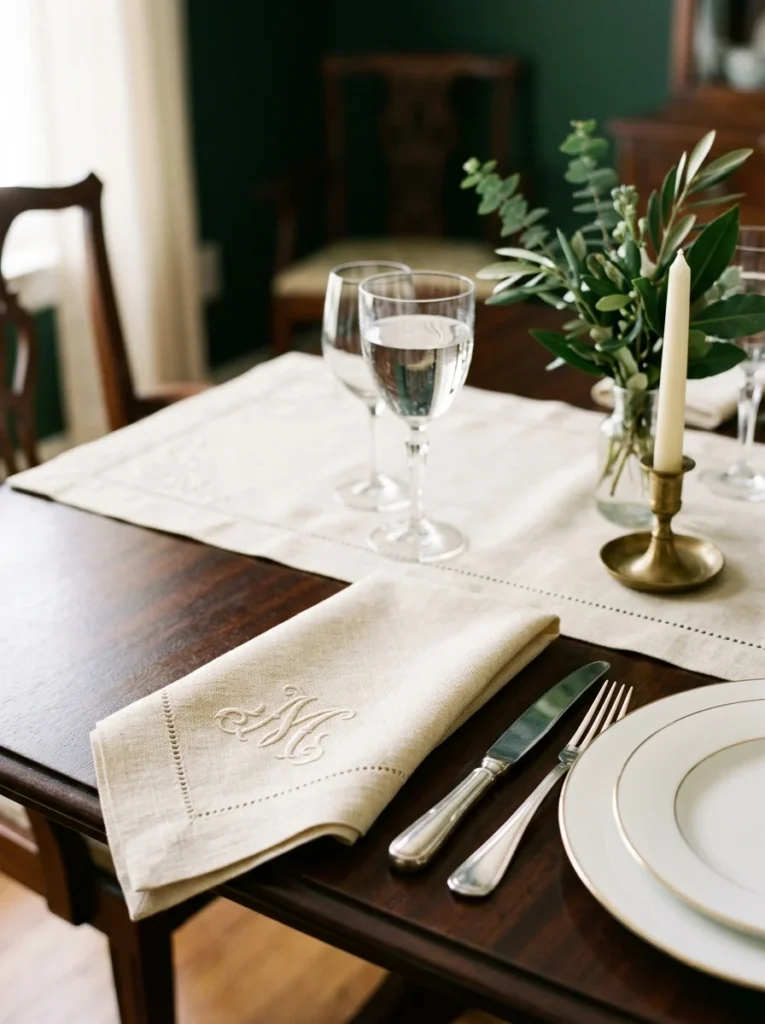
Small personal touches like monogrammed napkins added a surprising amount of polish to my table settings for very little cost. I bought a set of plain linen napkins and had them monogrammed at a local shop, which gave every dinner, even a casual weeknight meal, a small sense of occasion that plain paper napkins simply couldn’t match.
A monogrammed tablecloth or table runner works just as well if napkins alone feel like too small a detail, and I’ve since added a set of embroidered placemats that get rotated depending on the season. This is one of those details that costs relatively little but photographs beautifully and genuinely elevates the everyday experience of eating in the room, not just how it looks when no one’s using it. If monogramming isn’t available locally or feels like an unnecessary expense, simply choosing high-quality linen napkins in a rich color, ironed and neatly folded, achieves much of the same polished, intentional feeling. The goal throughout this whole style is really about signaling care and attention to detail, and table linens are one of the easiest, most affordable ways to do that on a daily basis rather than only when hosting a formal dinner party.
13. A Traditional Sideboard or Buffet
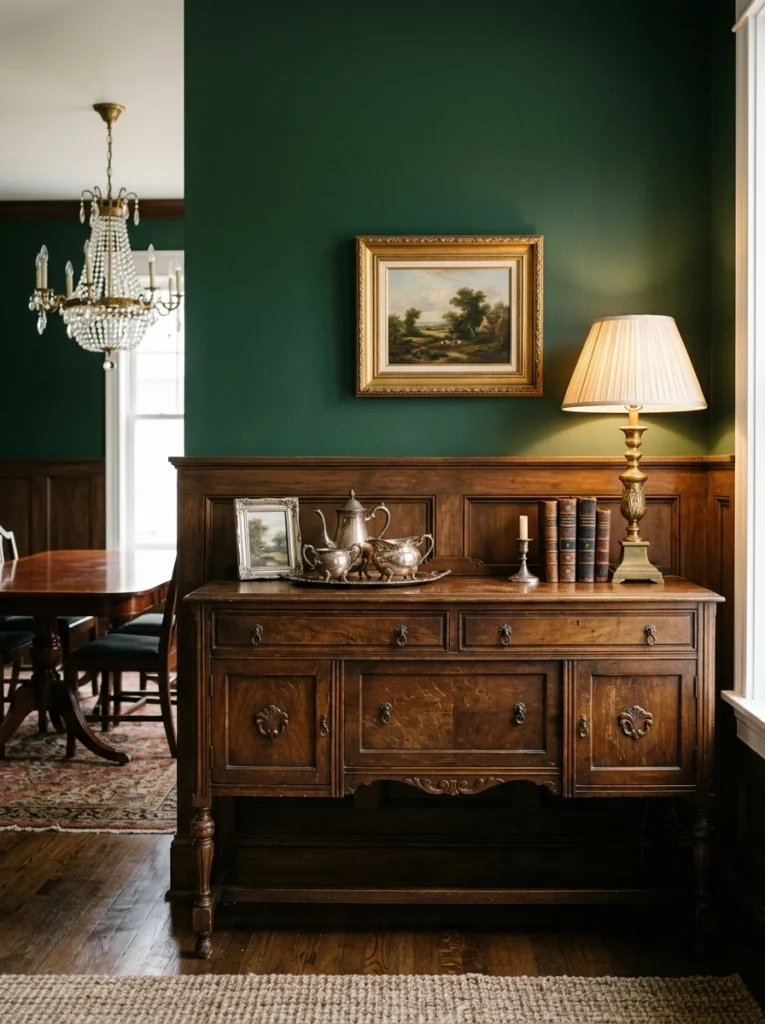
A dark wood sideboard along one wall gave me both extra storage and another surface to layer in decorative objects like the lamp, a stack of books, and a small collection of silver-plated serving pieces I’d been gradually collecting from estate sales. I found mine secondhand, again choosing a piece with some visible age and character rather than something brand new and flawless.
Styling the top of the sideboard turned out to matter almost as much as the piece itself. I avoided overcrowding it, instead choosing a handful of taller and shorter objects grouped in odd numbers, which is a simple styling trick that tends to look more natural and balanced than symmetrical, evenly spaced arrangements. A table lamp on one end added warm lighting at a different height than the chandelier, which helps create the kind of layered lighting that makes a room feel considered rather than lit by a single overhead source. If floor space is limited, even a narrower console table against the wall can achieve a similar effect on a smaller scale, giving the room a secondary furniture piece that reinforces the traditional, collected-over-time feeling running throughout the rest of the space.
14. Library-Inspired Wallpaper or Faux Bookshelves
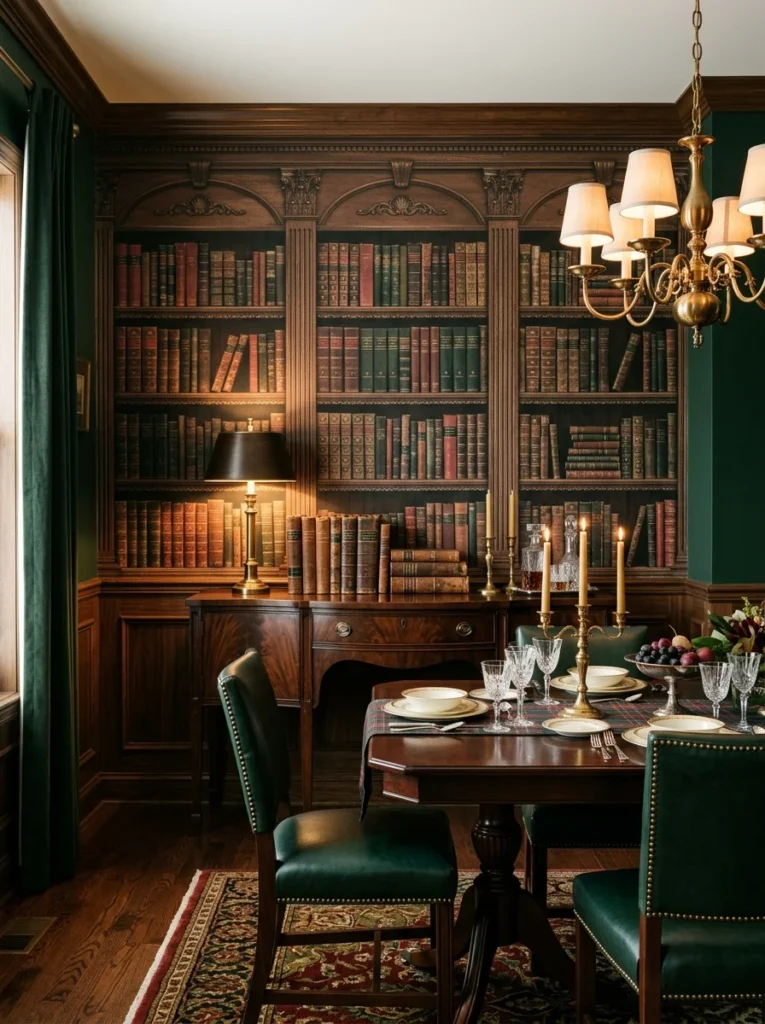
In a friend’s dining room, we used a wallpaper printed to look like built-in bookshelves on one accent wall, since a full wall of real books wasn’t practical in her space. The effect was surprisingly convincing from a normal viewing distance, and it introduced that same intellectual, old-money library feeling that’s so central to this particular aesthetic without requiring any actual carpentry or a real book collection.
If you do have books to display, even a small bookshelf or a stack of leather-bound volumes on the sideboard achieves a similar effect using real materials instead. I’ve collected leather-bound books from thrift stores over the years specifically for this purpose, since their spines add rich color and texture wherever they’re placed, whether that’s a shelf, a stack on a side table, or tucked into a corner of the sideboard. The specific titles matter far less than the visual texture and color the spines provide, so it’s worth watching for sets in deep reds, greens, and browns rather than the bright, glossy dust jackets typical of modern books. This detail works especially well combined with the wood paneling and equestrian art mentioned earlier, reinforcing the same overall sense of heritage and intellectual richness throughout the room.
15. Tailored, Floor-Length Drapery
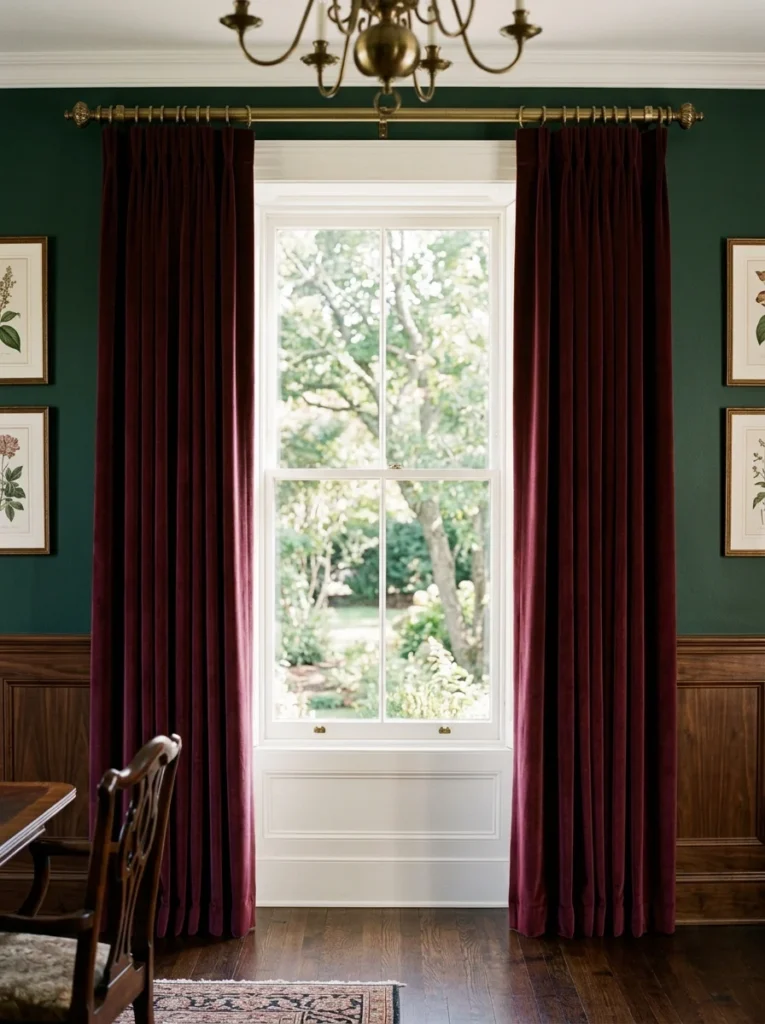
Simple, tailored curtains in a rich fabric made a bigger difference to my windows than I expected. I chose floor-length panels in a deep burgundy velvet, hung high above the window frame and wide enough to fully clear the glass when open, which made the windows themselves look taller and more substantial than they actually are.
Velvet, in particular, suits this style extremely well, since its texture and light-catching quality echo the same richness found in the leather chairs and brass fixtures elsewhere in the room. I avoided anything with a modern, minimal header style, instead choosing pleated curtains that hang in structured, even folds, which reads as more traditional and tailored than simple grommet-top panels. A decorative curtain rod in brass or bronze, rather than a plain black or white one, continued the same warm metal theme running throughout the space. If velvet feels too heavy or expensive for your budget, a rich damask or a solid heavyweight cotton in a deep jewel tone can achieve a similar effect. The main goal is simply avoiding anything sheer, casual, or overly minimal, since substantial, floor-length drapery is doing a lot of quiet work to make the whole room feel formal and considered.
16. Glass-Front China Cabinets
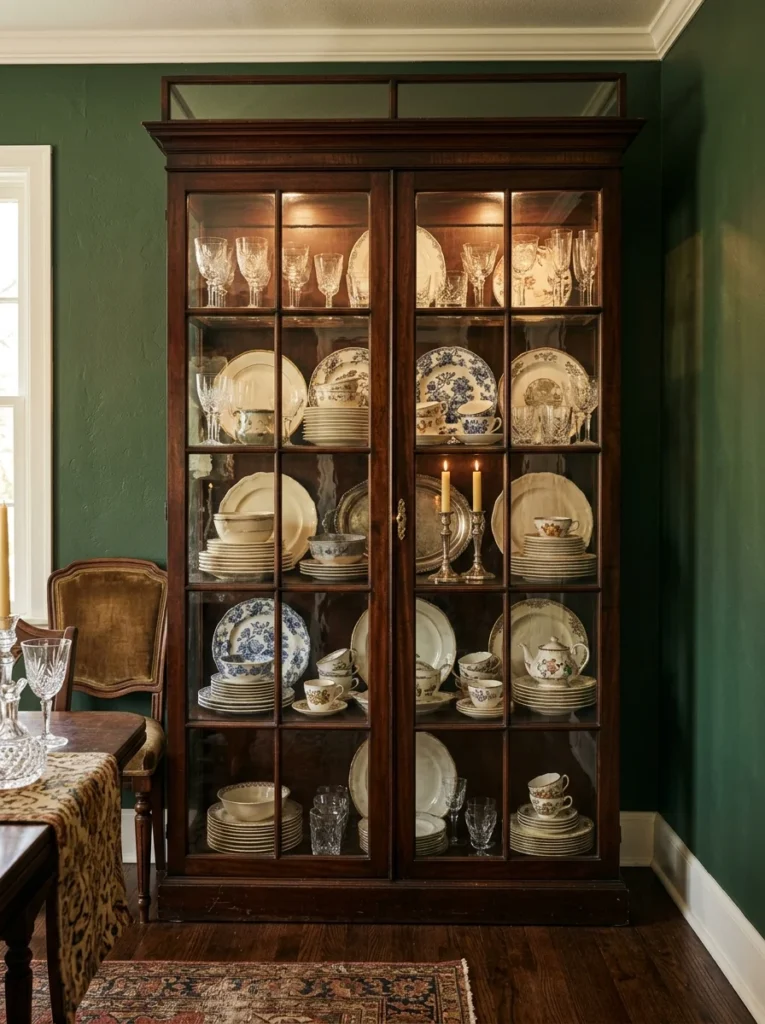
Displaying good dishware, rather than hiding it away in closed cabinets, is a hallmark of this style, and a glass-front cabinet in the corner of my dining room let me show off a set of vintage china I’d collected over several years without cluttering the rest of the room. The cabinet itself was another secondhand find, a dark wood piece with slightly wavy antique glass panes that added even more character than a modern reproduction would have.
Styling the interior matters here too. I arranged the dishes by color and size rather than by set, which created a more visually interesting display than simply stacking matching plates in neat, uniform piles. A few decorative objects, like a small silver tray or a pair of candlesticks, tucked in among the dishware added extra visual interest without overcrowding the shelves. If a full cabinet isn’t practical in a smaller dining room, even open shelving styled with a smaller curated collection of dishware and glassware can achieve a similar effect on a more modest scale. The underlying idea is the same either way: good dishware deserves to be seen and enjoyed as part of the room’s decor, not hidden away and only brought out for special occasions.
17. Candlelight as the Primary Evening Light Source
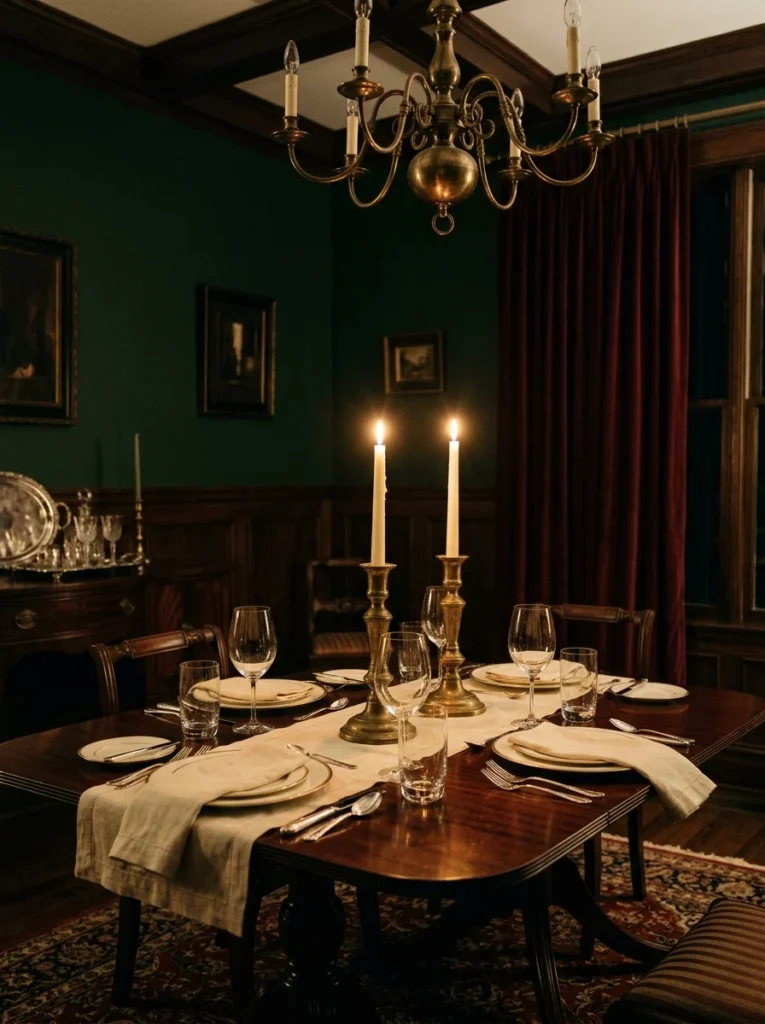
Once the room itself was finished, I started relying on candlelight far more than I ever had before, and it completely changed how the space felt in the evenings. A pair of substantial brass candlesticks on the table, paired with the dimmed chandelier overhead, created a warm, flattering light that made even an ordinary Tuesday dinner feel like something a little more special.
I’d recommend investing in a couple of well-made candlesticks or a low candelabra rather than scattering many small tealights around the table, since fewer, more substantial pieces tend to look more elegant and intentional than a cluttered arrangement of tiny candles. Unscented candles are worth seeking out for the dining table specifically, since scented varieties can compete with the smell of the food. This is genuinely one of the lowest-cost changes on this entire list, and yet it’s had one of the biggest impacts on how the room actually feels to sit in, rather than just how it looks in photographs. Combined with the dimmable chandelier, candlelight lets the room shift easily between a bright, functional space for daytime tasks and a warm, intimate setting for evening meals.
18. A Curated Collection of Silver Serving Pieces
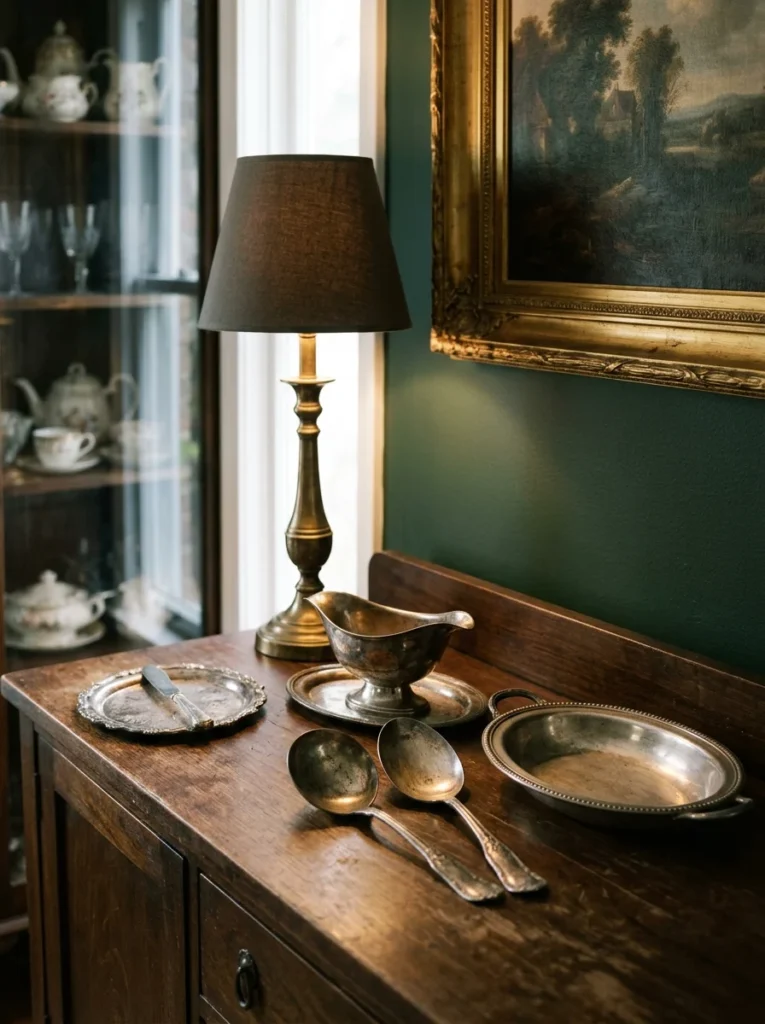
Finally, a small collection of silver or silver-plated serving pieces, displayed on the sideboard or tucked into the glass-front cabinet, added a final layer of old-world polish to the room. I started collecting mine gradually from estate sales and antique shops, picking up a gravy boat, a set of serving spoons, and a small tray over the course of about a year rather than buying an entire matching set all at once.
Tarnish, in moderation, actually suits this aesthetic rather than working against it, since a slightly aged patina reinforces the same sense of history running throughout the rest of the room. I only polish mine occasionally, before hosting a larger dinner, rather than keeping everything mirror-bright at all times. If silver feels too formal or expensive, silver-plated pieces achieve nearly the same visual effect for a much lower cost, and they’re often easy to find secondhand since so many people move away from formal entertaining and sell off pieces they no longer use. Displaying even a few of these pieces, rather than keeping them locked away in a drawer for special occasions only, reinforces the room’s overall sense of everyday elegance, which is really the whole point of this style: making ordinary meals feel a little more considered and special, not just saving the good dishes and silver for once or twice a year.
Final Thoughts
Looking back at the whole process, what strikes me most is how few of these changes actually required significant money all at once. The dark paint, the secondhand furniture, the thrifted art and silver pieces, and even the wainscoting were all spread out over the better part of a year, added gradually as I found good pieces or had a free weekend to tackle a project. What ties it all together isn’t any single expensive purchase, but the consistency of the color palette, the materials, and the overall sense of history and warmth running through every choice.
If you’re drawn to this style but feel overwhelmed by the idea of redoing an entire room at once, my honest advice is to start with paint and lighting, since those two changes alone will do more to set the tone than almost anything else on this list. From there, let the room build gradually, one thoughtful piece at a time, the same way mine did. That slower approach is really what makes a space feel collected and elegant rather than staged, and it’s exactly the feeling this whole aesthetic is built around in the first place.