
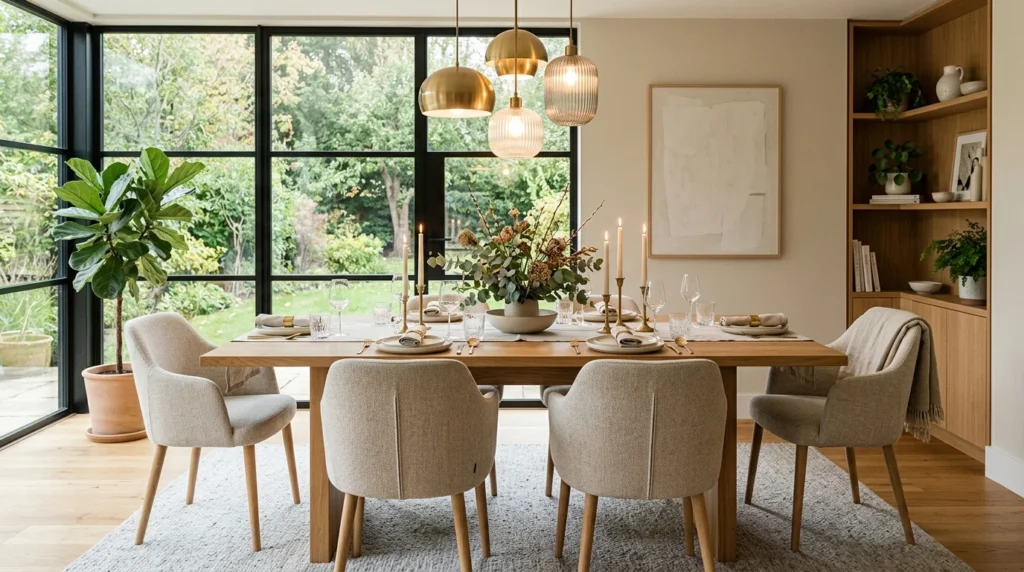
The dining table is the most important piece of furniture in the dining room, and one of the most important in the entire home. It is the surface around which meals are shared, conversations happen, homework is completed, celebrations take place, and the daily rhythm of family life unfolds. No other single piece of furniture serves as many functions or occupies as central a position in the social life of a household as the dining table.
Given this centrality, choosing the right dining table deserves significantly more thought and care than most people give it. The typical dining table purchase follows a familiar and frequently unsatisfying pattern — a table is seen in a showroom, it looks approximately right, it appears to be approximately the right size, and it is purchased without the measurements, the floor plan assessment, or the careful consideration of how it will actually function in the specific room it is destined for. The result is a table that is too large for comfortable movement around it, or too small to seat the household comfortably, or in a shape that creates awkward dynamics at the dinner table, or in a style that never quite works with the rest of the room.
This guide eliminates that pattern by providing the complete framework for choosing a dining table correctly — in the right sequence, with the right measurements, and with a clear understanding of how every decision affects both the function and the appearance of the finished dining room. It covers measurement and clearance requirements first, then shape selection, then size by number of people, then material options, then style matching, and finally the practical considerations that affect long-term satisfaction with the choice.
Every household’s dining table needs are different, and the right table for a family of six in a large formal dining room is entirely different from the right table for a couple in a small open-plan apartment. This guide addresses the full range of situations and gives specific, actionable guidance for each.
Section 1: Measure Before You Shop — The Non-Negotiable First Step
The single most important principle in choosing a dining table is measuring the room before looking at any table. This principle is stated consistently in every good furniture buying guide because it is consistently ignored, and the consequences of ignoring it — a table that does not fit the room properly — are expensive and disruptive to correct.
The Minimum Clearance Rule
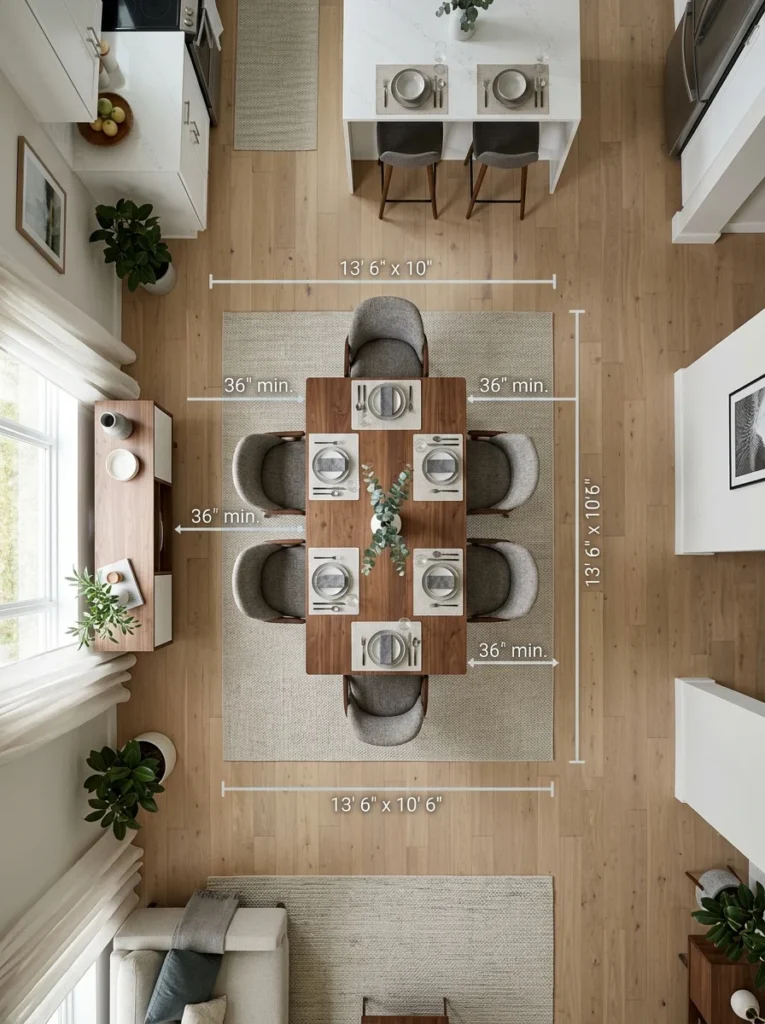
The dining table does not occupy only the floor space of its own footprint. It requires clear space around every side that will be used for seating — space for chairs to be pulled out from the table, for people to sit comfortably without the chair back touching the wall or adjacent furniture, and for people to move around the room without squeezing past occupied chairs.
The minimum clearance between the edge of the dining table and any wall, cabinet, or other furniture on sides where chairs will be pulled out is 36 inches. This is the minimum — the amount of space that allows a chair to be pulled back enough to sit down and stand up, and that allows a person to walk behind an occupied chair with slight sideways orientation. A clearance of 42 to 48 inches is more comfortable and allows people to walk behind occupied chairs without needing to orient sideways at all.
On sides of the table where no chairs will be placed — typically one short end of a rectangular table pushed toward a wall or window — the minimum clearance can be reduced to 24 inches, as this side requires only enough space to walk past the table end without obstruction rather than enough space to pull out a chair.
How to Calculate the Maximum Table Size for Your Room
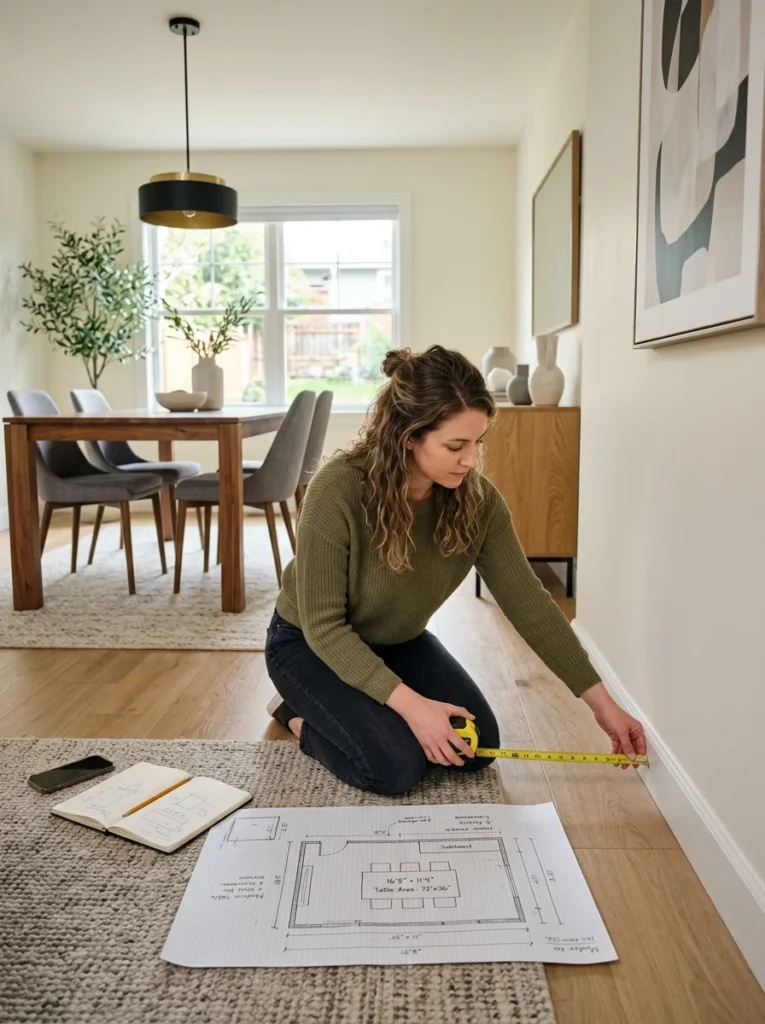
With the room’s dimensions measured and the clearance requirements established, calculating the maximum table size the room can accommodate is straightforward.
For the table length in a rectangular room: subtract the minimum clearance on each seating side from the room’s dimension in that direction. If the room is 14 feet long and the table will have chairs on both long sides, subtract 36 inches on each side — 72 inches total — from the 168-inch room length, leaving a maximum table length of 96 inches or 8 feet.
For the table width in the same room: subtract the minimum clearance on each short end from the room’s width. If the room is 11 feet wide and both short ends of the table will have chairs, subtract 36 inches on each end — 72 inches total — from the 132-inch room width, leaving a maximum table width of 60 inches or 5 feet.
In practice, a table at the absolute maximum size calculated by this method will feel tight. Choosing a table that is 6 to 12 inches shorter and narrower than the calculated maximum provides the minimum clearance on all sides while giving the room a more comfortable, less crowded feeling in daily use.
Draw a Floor Plan
Before purchasing any table, draw a simple floor plan of the dining room to scale and mark out the footprint of the table being considered, including the chairs in their pulled-out position on every side. Walk through this marked arrangement on paper — trace the path from the kitchen doorway to the table, from the table to the serving area, from the table to the buffet or sideboard if there is one. Any path that passes through the table or chair zone with less than the minimum 36-inch clearance is a traffic flow problem that will create daily frustration.
This floor plan exercise takes fifteen minutes and prevents one of the most common and most costly furniture buying mistakes.
Section 2: Table Shape — The Decision That Defines the Dining Dynamic
The shape of the dining table affects the social dynamics of the room as profoundly as its size. Different shapes create different relationships between the people seated at them, suit different room proportions, and work better or worse for different numbers of diners. Understanding the specific qualities of each shape makes the shape decision straightforward rather than arbitrary.
Rectangular Tables — The Most Versatile and Most Common
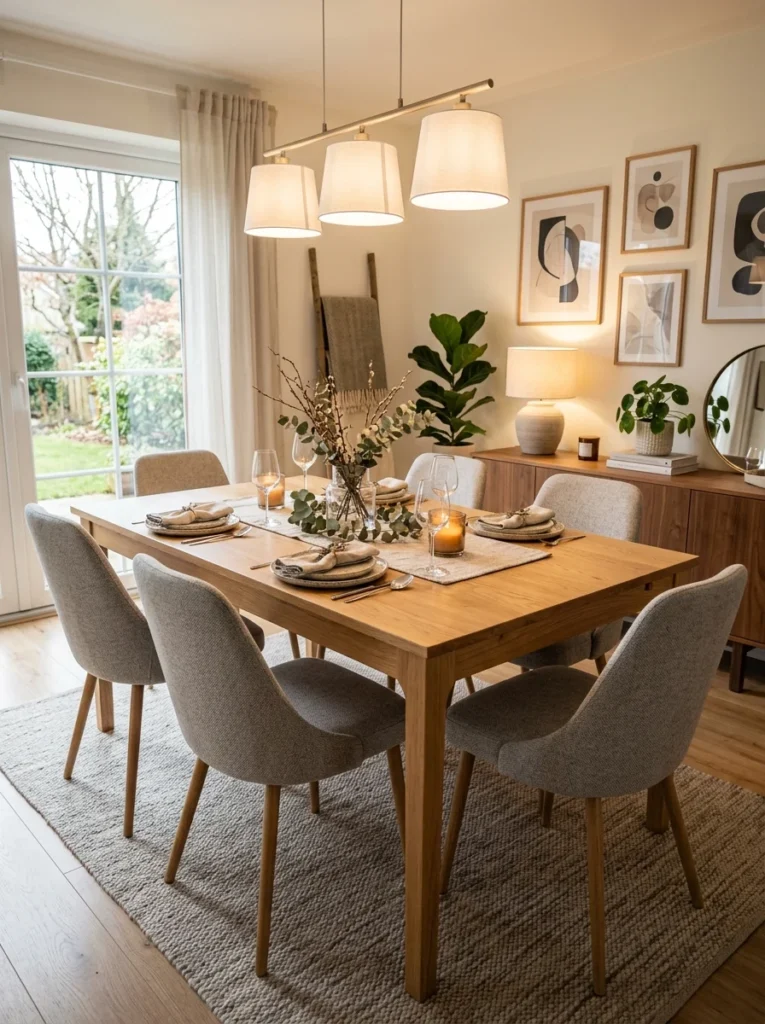
The rectangular table is the most widely used dining table shape globally, and its dominance is justified by genuine versatility rather than convention. A rectangular table seats the most people for its footprint, suits the proportions of most dining rooms — which are typically more rectangular than square — and creates a clear spatial logic within the room by running parallel to the longest walls.
The social dynamic of a rectangular table is hierarchical — the seats at the ends of the table are traditionally the positions of seniority or hosting, while the seats along the sides are the positions of the majority. This hierarchy suits formal dining and family situations where a clear seating arrangement is natural and comfortable. For more informal households where an egalitarian seating arrangement is preferred, the rectangular table can feel slightly formal — a quality that suits some households and feels slightly stiff in others.
Rectangular tables are the best shape choice for households that regularly entertain larger groups, because they can be extended with leaves to seat significantly more people than their base configuration, and they can be positioned against a wall when not in use to free up floor space in a smaller room.
Round Tables — The Best Choice for Conversation and Small Spaces
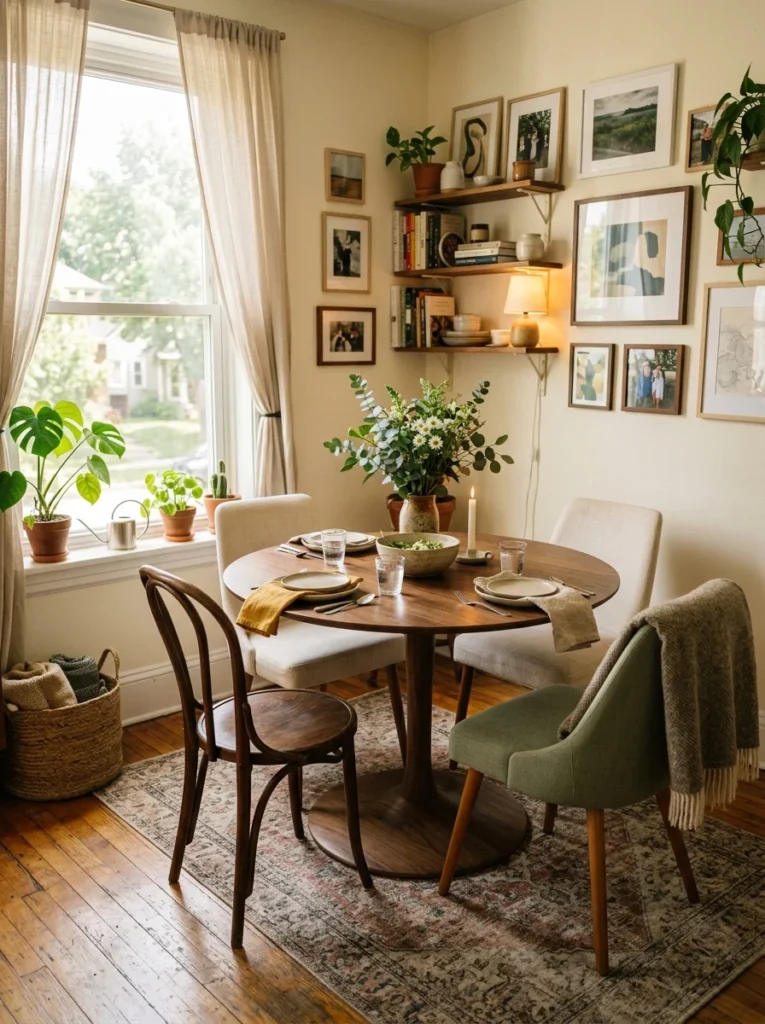
A round table is the shape that most naturally facilitates conversation. With no corners, no ends, and no sides, every seat at a round table is equidistant from every other seat, and every diner has an equally good view of and access to every other diner. This geometry creates the most democratic and the most convivial dining dynamic of any table shape — the feeling of gathering around a table rather than sitting along one.
Round tables are also the most space-efficient shape for small dining rooms because they eliminate the wasted corner space of rectangular tables. A rectangular table that seats four requires a significantly larger floor footprint than a round table that seats the same four people, because the corners of the rectangular table create zones that are occupied by the table but not by any seated diner.
The primary limitation of round tables is the maximum number of people they can seat. As a round table increases in diameter to accommodate more diners, the distance across the center of the table increases proportionally, making the diners on opposite sides increasingly distant from each other and making the serving of food across the table increasingly awkward. A round table of 60 inches in diameter — approximately the maximum practical size for a standard dining room — seats six people comfortably, with eight being possible but somewhat crowded.
Round tables do not extend with leaves as naturally as rectangular tables — round extension tables exist but are less common and less elegant in their extended form — which limits their ability to accommodate occasional larger gatherings beyond the standard seating capacity.
Square Tables — For Square Rooms and Small Gatherings
A square table suits a square dining room with a naturalness that rectangular tables in the same space cannot match — the symmetry of a square table in a square room creates a visual harmony that rectangular furniture in a square room tends to disrupt. Square tables also create a convivial, intimate dining dynamic similar to that of a round table, with all diners seated an equal distance from each other and with equal access to the center of the table.
The practical limitation of a square table is that it scales poorly. A square table that seats four comfortably — at approximately 36 to 48 inches per side — is an excellent intimate dining table. The same table scaled to seat eight — requiring approximately 72 inches per side — is too large for most dining rooms and creates a distance across the table center that makes conversation and serving impractical.
Square tables are best suited to households of two to four people with a square or near-square dining room, or as café-style tables in kitchen breakfast nooks where the intimate scale of the square suits the casual, close dining dynamic of the space.
Oval Tables — The Best of Both Shapes
An oval table combines the spatial efficiency and conversation-friendly geometry of a round table with the capacity and proportional suitability of a rectangular table. Like a round table, an oval has no corners — the curved ends eliminate the wasted corner zones of rectangular tables and create a softer, more flowing visual quality in the dining room. Like a rectangular table, an oval has a clear long axis that suits rectangular room proportions and accommodates more diners along its length than a round table of comparable width.
The oval table is particularly well suited to dining rooms where the long, narrow proportions of the room make a rectangular table feel slightly harsh and angular but where a round table would be too small to seat the household comfortably. The oval’s elongated form fills the room’s length while its curved ends soften the visual impact of the table against the room’s walls.
Oval tables are less common than rectangular tables in most furniture retail environments, which can limit the options available at any given price point, but they are widely available in quality furniture collections and are worth seeking out for rooms where their specific combination of qualities suits the space well.
Section 3: Table Size by Number of People — A Practical Guide
With the shape determined and the maximum size calculated from the room’s dimensions, the final sizing decision is confirming that the chosen table can seat the number of people the household needs to accommodate in daily use and in occasional entertaining situations.
Sizing for Two to Four People
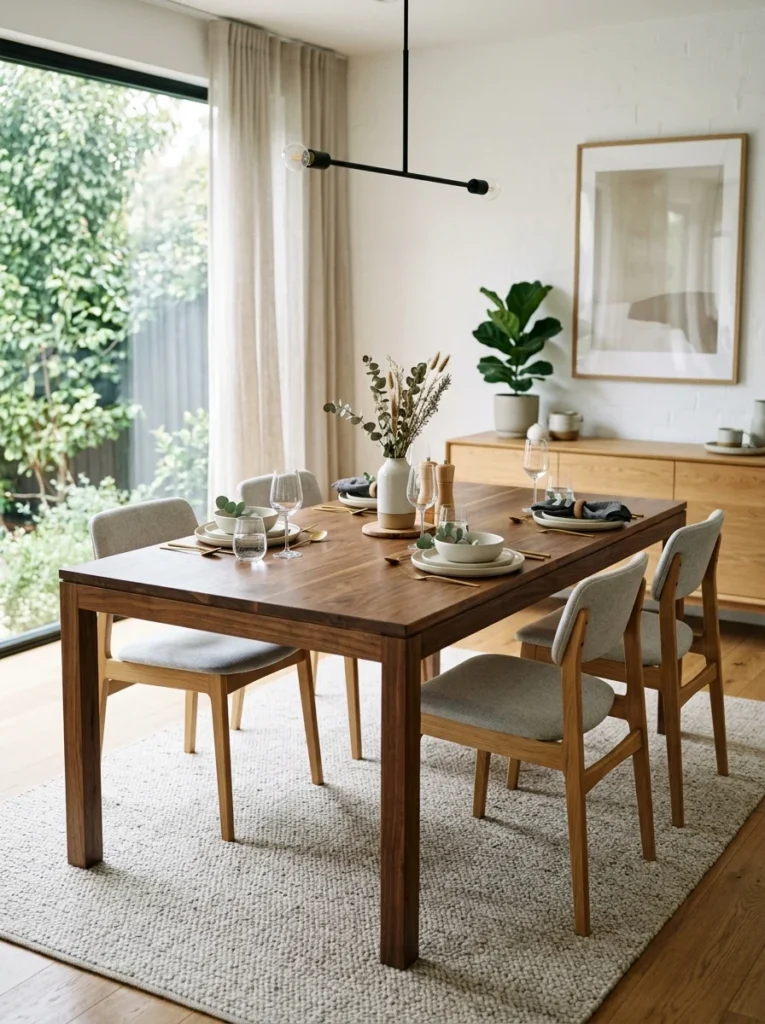
A household of two people with occasional guests needs a table that is comfortable for two in daily use and expandable or large enough for four when guests are present.
For a round table: a diameter of 36 inches seats two people comfortably and four people with moderate proximity. A 42-inch diameter seats four people comfortably.
For a rectangular table: a length of 48 inches seats two people on the long sides with generous space, or up to four people with two on each long side. A length of 60 inches seats four comfortably with room to spare.
An extendable rectangular table with a base length of 48 inches that extends to 72 or 84 inches is an excellent solution for a small household that occasionally entertains larger groups — the table operates at its compact base size for daily use and expands to full capacity for entertaining.
Sizing for Four to Six People
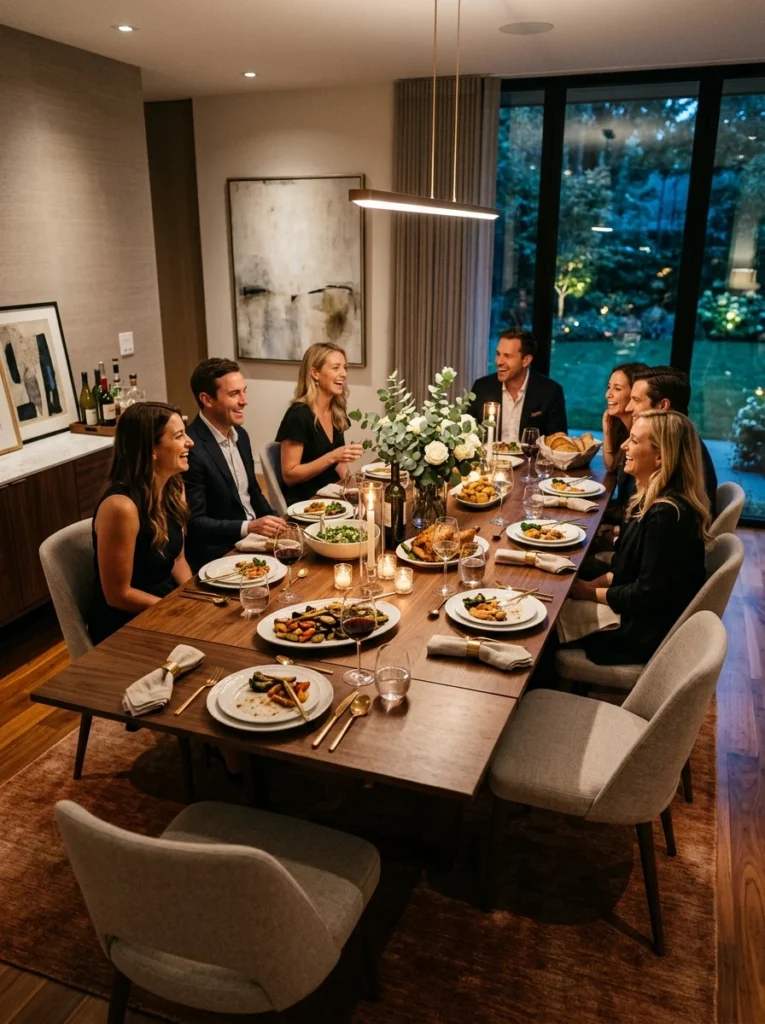
A household of four to six people represents the most common dining table sizing requirement, and most dining table collections are designed with this range as the primary target.
For a round table: a diameter of 48 inches seats four people comfortably. A diameter of 60 inches seats six people comfortably.
For a rectangular table: a length of 60 to 72 inches seats four to six people comfortably, with 60 inches accommodating four people with generous space or six people with moderate proximity, and 72 inches accommodating six people comfortably.
Sizing for Six to Eight People
A household of six to eight people, or a household that regularly entertains groups of this size, needs a table that is both large enough for comfortable daily use and capable of accommodating the full gathering.
For a rectangular table: a length of 72 to 84 inches seats six to eight people comfortably, with 84 inches being the preferred length for eight people who want genuine elbow room rather than simply fitting around the table.
For a round table: a diameter of 72 inches seats eight people, though the distance across the center of a 72-inch round table — 6 feet — makes conversation across the table and serving from the center challenging.
The Extendable Table Solution
An extendable table — one with a mechanism for inserting additional table surface sections, called leaves, to increase the total table length — is the most practical solution for households whose regular dining needs and occasional entertaining needs are significantly different in scale.
The most common and most reliable extension mechanism is the butterfly leaf — a leaf that folds in half and stores within the table base, deploying by separating the table halves and unfolding the leaf in the center without requiring the leaf to be stored separately. Tables with butterfly leaves can be extended in seconds without removing any items from the table surface, which makes them genuinely practical for regular use rather than a mechanism reserved for occasional large gatherings.
When evaluating an extendable table, assess the quality of the extension mechanism as carefully as the quality of the table itself. A mechanism that is stiff, that leaves a visible gap between the leaf and the table halves when extended, or that creates a noticeable level difference at the leaf joins is a persistent frustration. A well-engineered extension mechanism operates smoothly, joins seamlessly, and maintains the level surface of the table in both its compact and extended configurations.
Section 4: Table Materials — Choosing What Lasts and What Works
The material of the dining table affects its appearance, its durability, its maintenance requirements, and its suitability for the household’s lifestyle. A dining table in a family with young children has different material requirements than one in a household of adults who dine formally. Understanding the properties of each material makes the selection appropriate to the specific situation rather than based purely on appearance.
Solid Wood — The Most Enduring Choice
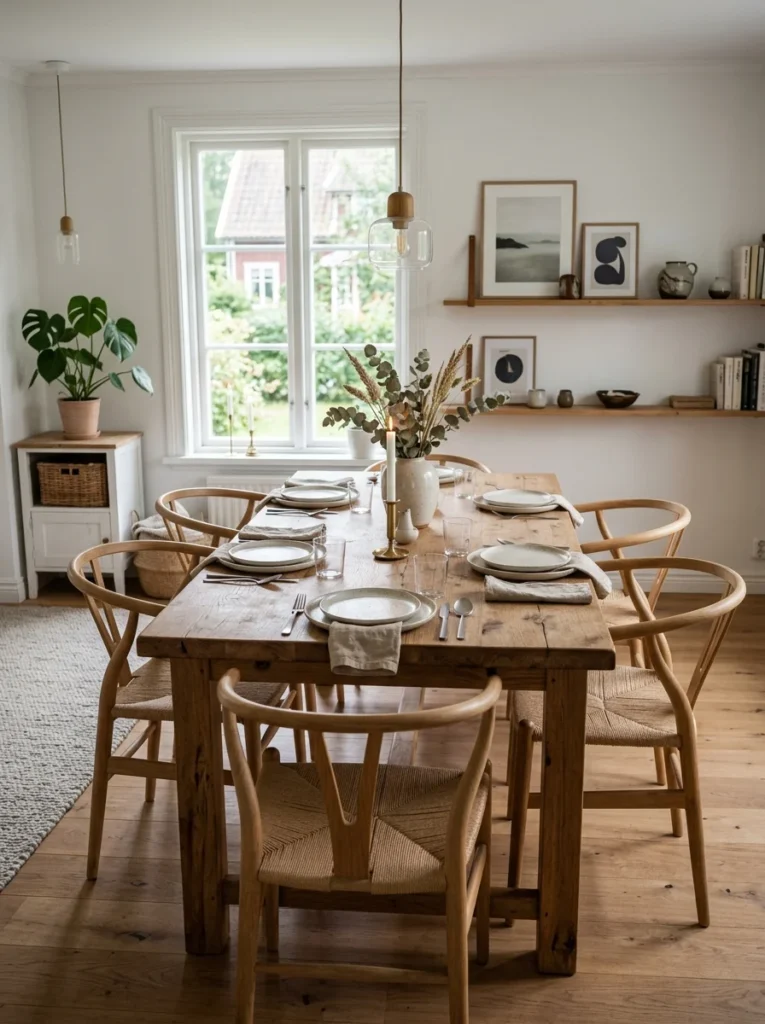
Solid wood dining tables are the most enduring, most repairable, and most characterful option in the dining table market. A well-made solid wood table — in oak, walnut, teak, maple, or another durable hardwood — improves with age rather than deteriorating, develops a patina over time that adds character and history to the piece, and can be refinished if the surface becomes significantly marked or worn.
The natural variation in grain, color, and texture between individual pieces of solid wood means that no two solid wood tables are identical — each one is a genuinely unique object that carries the character of the specific tree it came from. This individuality is one of the qualities that makes solid wood furniture so consistently valued.
The practical consideration of solid wood in a dining context is its response to moisture and temperature changes. Solid wood expands and contracts with changes in humidity and temperature — a property that can cause cracking, warping, or join separation if the wood is not properly dried and finished before use, or if it is placed in an environment with extreme humidity fluctuations. A properly manufactured solid wood table from a reputable maker uses kiln-dried timber and appropriate joinery methods that accommodate the wood’s natural movement without structural damage.
Engineered Wood and Veneered Tables
Tables made from engineered wood — MDF or particleboard — with a veneer surface of real wood or a laminate finish are significantly more affordable than solid wood tables while providing a similar visual appearance. They are more dimensionally stable than solid wood — they do not expand and contract with humidity changes — and are available in a wider range of finishes and colors.
The limitation of engineered wood tables is their repairability. A scratched or damaged solid wood surface can be sanded and refinished. A damaged veneer surface typically cannot be repaired to match the surrounding area — once the veneer is chipped, scratched through, or lifted, the damage is permanent. For households with young children or with high-use dining situations where surface damage is likely, the repairability of solid wood is a meaningful practical advantage over veneered alternatives.
Marble and Stone Tables
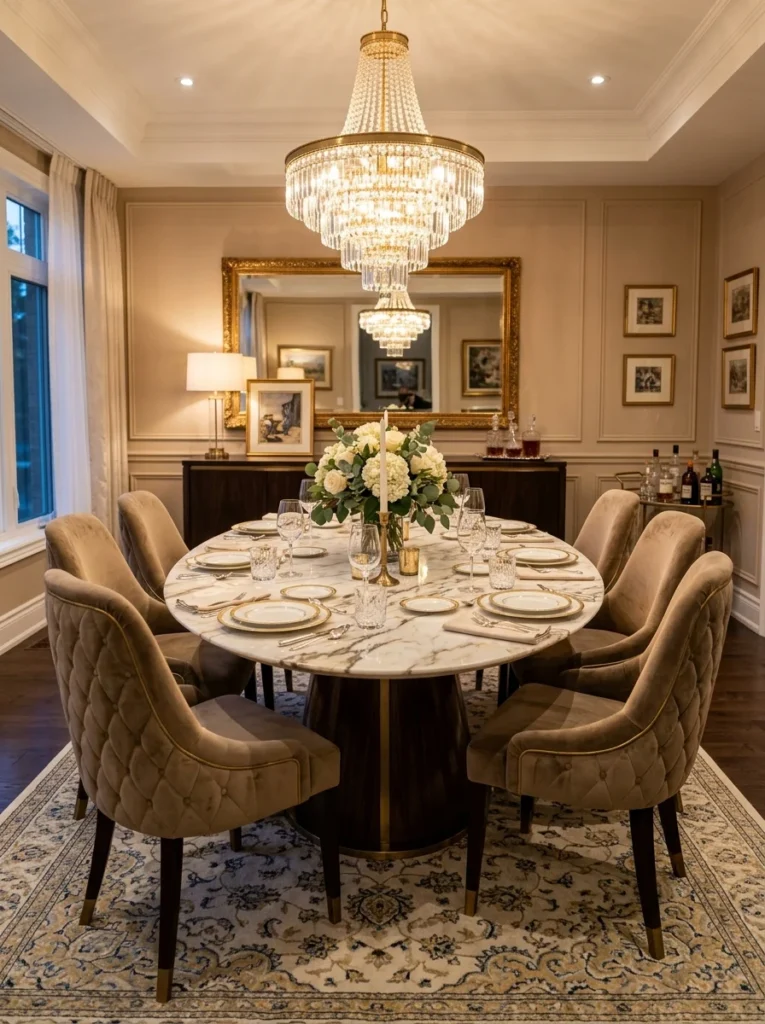
A marble or stone dining table is one of the most visually impressive furniture choices in interior design — a large marble table top is a genuinely dramatic object that makes a powerful design statement and transforms the dining room into a space of evident quality and sophistication.
The practical considerations of marble and stone in a dining context are significant. Natural marble is porous and susceptible to staining from wine, acidic foods, and oils — all of which are commonly encountered on a dining table surface. Marble requires regular sealing to maintain its stain resistance, and even sealed marble can be stained by prolonged contact with acidic substances. Engineered stone surfaces — marble-look quartz and sintered stone — provide a similar visual appearance with significantly better stain resistance and no sealing requirement, and are increasingly the preferred choice for households who want the marble aesthetic without the marble maintenance.
Stone and marble tables are also extremely heavy — a large marble table top can weigh several hundred kilograms — which makes them difficult to move and requires a base structure robust enough to support the weight securely.
Glass Tables
A glass dining table — a tempered glass top on a metal, wood, or stone base — has a distinctive transparency that creates a visual lightness in the dining room. The glass top allows the floor to be seen beneath it, which makes the room feel larger and the table feel less visually dominant than an opaque surface of the same size. This quality makes glass tables particularly effective in small dining rooms where reducing the visual weight of the furniture is a design priority.
The practical limitations of glass dining tables are significant for households with frequent use and high expectations for table surface appearance. Glass shows fingerprints, smudges, water marks, and food residue far more readily than any other table material — maintaining the clean, pristine appearance of a glass table requires wiping it down after every use. Glass also has no resistance to scratching from cutlery — the surface of a glass dining table used regularly with metal cutlery will acquire visible scratch marks that accumulate over time and are not repairable.
Section 5: Style Matching — Connecting the Table to the Room
A dining table chosen purely on the basis of size and material without reference to the style of the room it will occupy can produce a table that is functionally correct but aesthetically incongruent — a piece that works practically but never quite fits the room visually. Style matching ensures that the table belongs in the room as naturally as every other element.
Matching the Table to Existing Furniture
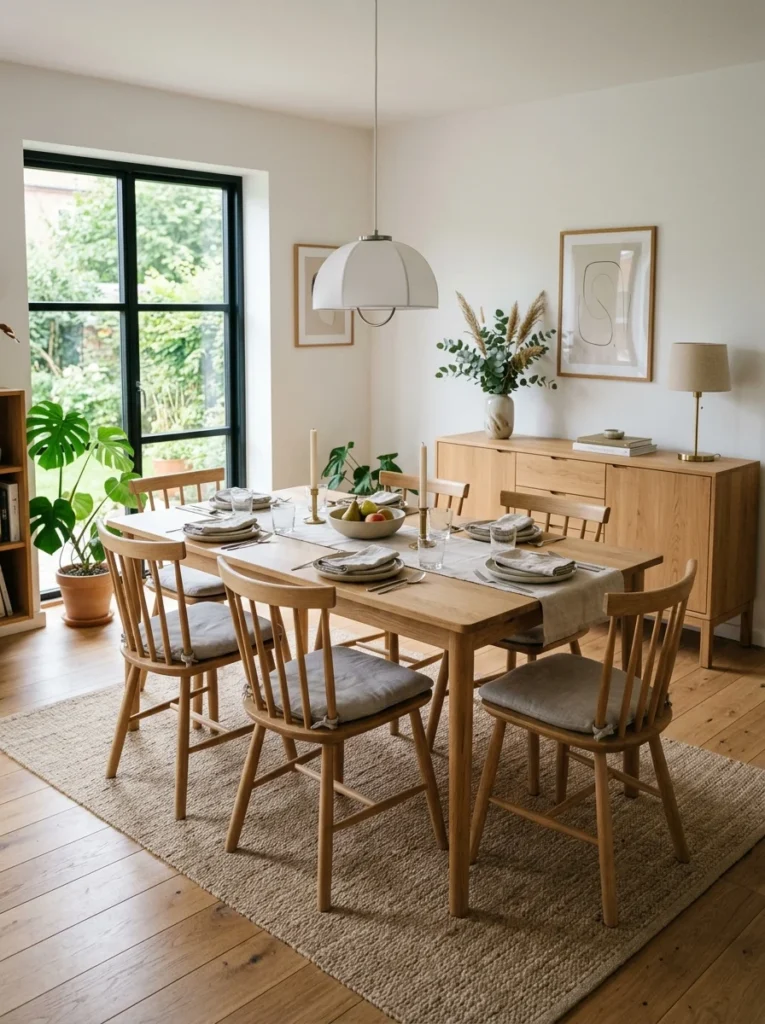
The most reliable approach to style matching is to identify the dominant design language of the existing furniture in the dining room and adjacent spaces and choose a table that shares at least two or three of the key characteristics of that language — the material, the finish, the leg style, the proportional quality, or the decorative detailing.
A dining room furnished with clean-lined contemporary pieces in natural oak and matte black metal is looking for a dining table with those same characteristics — a table in natural oak with tapered legs, or a table with a walnut top and a powder-coated metal frame. A dining room furnished with traditional carved wood pieces in a rich dark stain is looking for a table that shares the warmth, the ornamental quality, and the material character of the existing furniture.
Introducing a table that shares no characteristics with the room’s existing furniture — a glass and chrome table in a room furnished in warm traditional wood, or a heavily carved dark wood table in a room of Scandinavian minimalism — creates a visual conflict that no amount of styling effort fully resolves.
Mixing Styles Intentionally
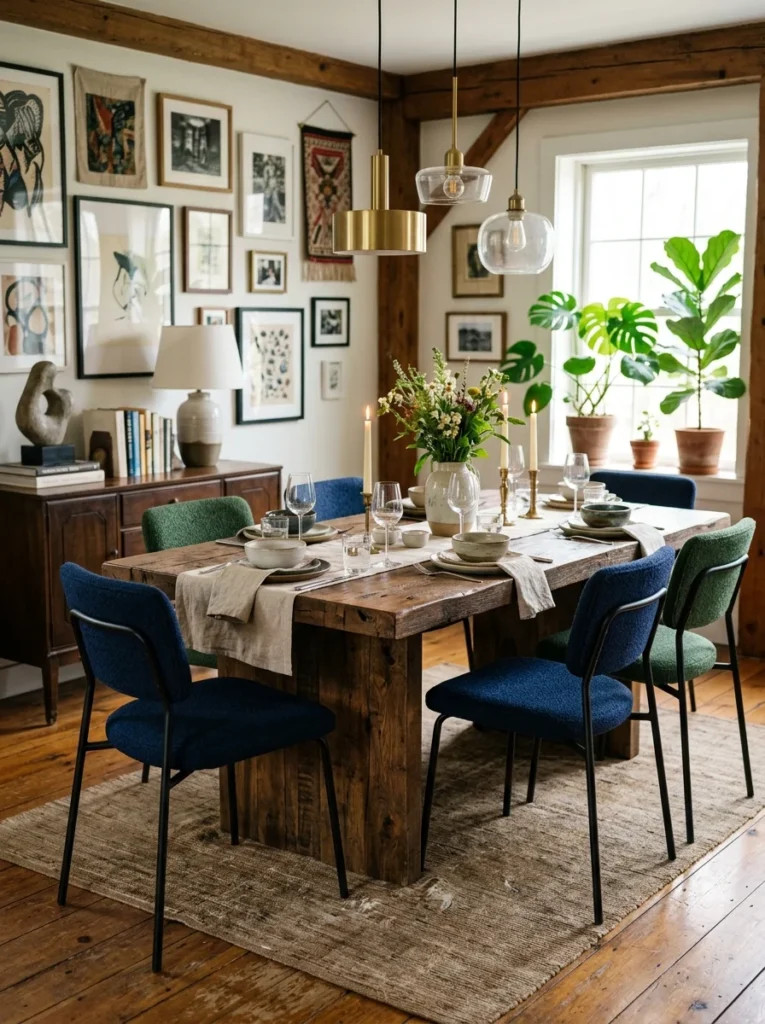
Mixing a dining table of one style with chairs of a different style — a rustic farmhouse table with modern upholstered chairs, or a contemporary marble table with vintage rattan chairs — is one of the most effective contemporary dining room design strategies when done with deliberate intention. The combination of contrasting elements creates visual interest and personality that a perfectly matched set of table and chairs rarely achieves.
The key to successful style mixing is ensuring that the two elements share at least one connecting quality — a material, a color, a scale, or a finish — that ties them together visually even as their overall styles contrast. A reclaimed wood farmhouse table paired with contemporary upholstered chairs in a fabric that echoes the warm tones of the wood creates a contrast that reads as intentional. The same table with chairs in a cool grey metal that shares nothing with the warm wood creates a contrast that reads as accidental.
The Table Leg Question
The leg style of a dining table has a significant effect on the table’s visual weight, its proportion relative to the room, and its compatibility with different chair heights and styles.
Four individual legs — the most traditional and most common configuration — provides the most flexibility in chair placement because each leg is in a corner of the table, leaving the center of each side completely clear for chairs to be pulled in without leg obstruction. The visual quality of four-leg tables ranges from light and contemporary with tapered or hairpin legs to substantial and traditional with turned or carved legs.
A pedestal base — a single central column supporting the table top — has no corner legs, which means chairs can be placed anywhere around the table without leg obstruction. This is particularly valuable for round and oval tables where corner legs are absent but where the placement of individual legs at intervals around the table perimeter would obstruct some chair positions. A pedestal base also creates a clear visual lightness at the base of the table — the open floor visible beneath the table on all sides gives the table a floating quality that suits rooms where visual lightness is a priority.
A trestle base — two leg assemblies at each end of the table connected by a central stretcher — provides excellent structural stability for large tables and has a visual quality that suits farmhouse, industrial, and rustic dining room styles. The trestle end assemblies create a visual frame at each end of the table that gives the piece a substantial, grounded presence.
Section 6: Practical Considerations for Long-Term Satisfaction
The Chair Height Compatibility Test
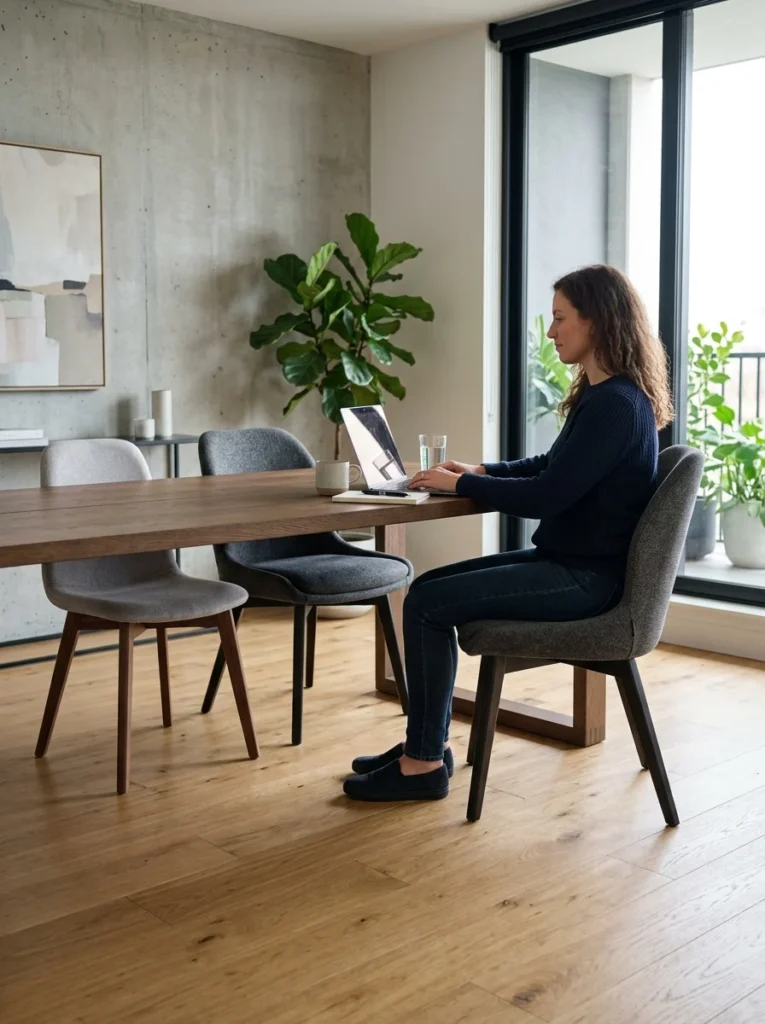
Dining chairs and benches must be compatible in height with the dining table for comfortable seated dining. The standard relationship between dining table height and chair seat height — the distance from the floor to the top of the seat cushion — is a gap of approximately 10 to 12 inches between the chair seat and the table surface. This gap allows most adults to sit comfortably at the table with their thighs parallel to the floor and their arms resting on the table surface without hunching or reaching.
Standard dining tables are between 28 and 30 inches in height. Standard dining chairs have seat heights between 17 and 19 inches. This combination produces the correct 10 to 12-inch gap for comfortable dining. Before purchasing any dining chair alongside a dining table, confirm that the specific seat height of the chair and the specific height of the table produce a gap within the comfortable range.
The Surface Protection Question
Every dining table surface — regardless of material — benefits from some level of protection during use. A set of placemats under every place setting protects the table surface from scratches caused by plates and cutlery, heat damage from hot dishes, and staining from spills that are not immediately wiped up. Coasters under every glass protect the surface from water rings.
These protective measures are practical habits that preserve the appearance of the table surface indefinitely and allow the household to enjoy the table without the anxiety of surface damage that leads to an overprotective attitude toward a piece of furniture that is meant to be used freely and comfortably.
Delivery and Access
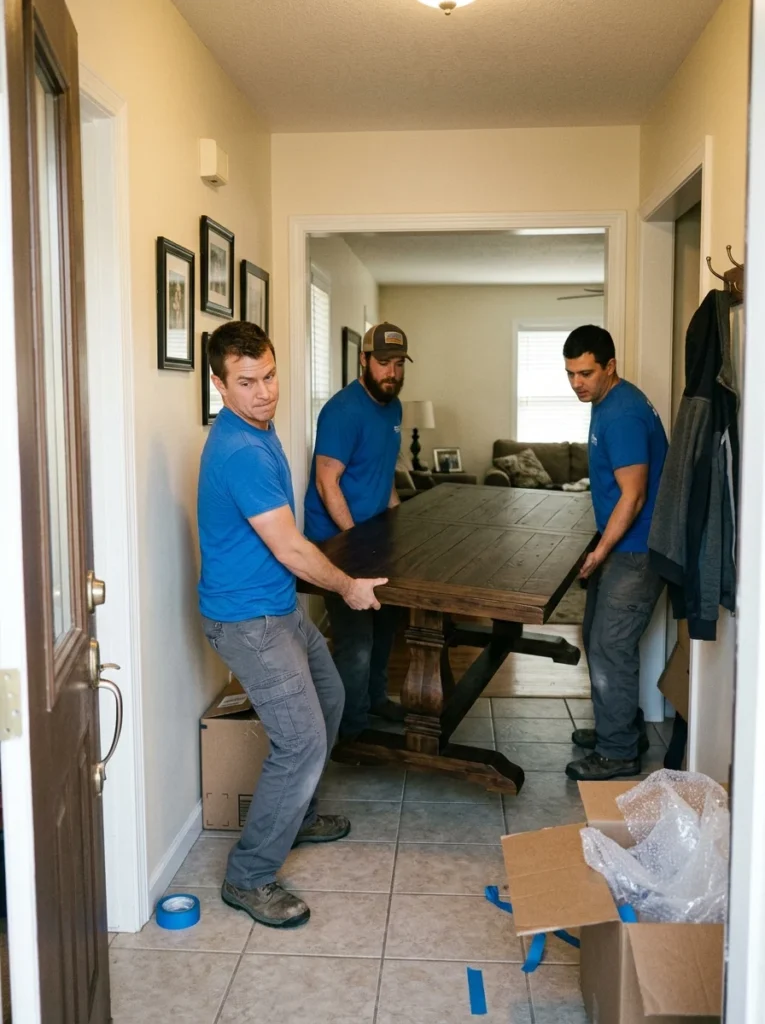
Before finalizing a dining table purchase, confirm that the table can be physically delivered to its intended location. Large dining tables — particularly one-piece tops in solid wood, stone, or glass — can be very heavy and very awkward to maneuver through standard doorways, around tight corners, and up stairs. Measure the widths of all doorways, hallways, and stairwells between the delivery entrance and the dining room before purchasing a table that may not physically reach its destination without disassembly.
Most solid wood tables can be disassembled — legs removed and transported separately from the top — which resolves most access challenges. Stone and glass tables are significantly more difficult to disassemble and require specialist delivery services in most cases.
Conclusion
Choosing the right dining table is a decision that rewards patience, measurement, and careful consideration of how the table will actually be used rather than how it looks in isolation. The table that is right for a specific household in a specific room is determined first by the room’s dimensions and clearance requirements, then by the shape that suits both the room’s proportions and the household’s social dynamic, then by the size that serves the regular dining needs and the occasional entertaining requirements, then by the material that suits the household’s lifestyle and maintenance preferences, and finally by the style that connects the table naturally to the room it will occupy.
A dining table chosen in this sequence — with measurement first and appearance second — is a table that works correctly from the first day it is in the room and continues to work correctly for every year of daily use that follows. It is a table that feels like it belongs in the room rather than one that was placed there by default. And it is a table that earns its position as the center of the home’s social life — the surface around which the meals, the conversations, and the shared experiences that define daily family life take place.