
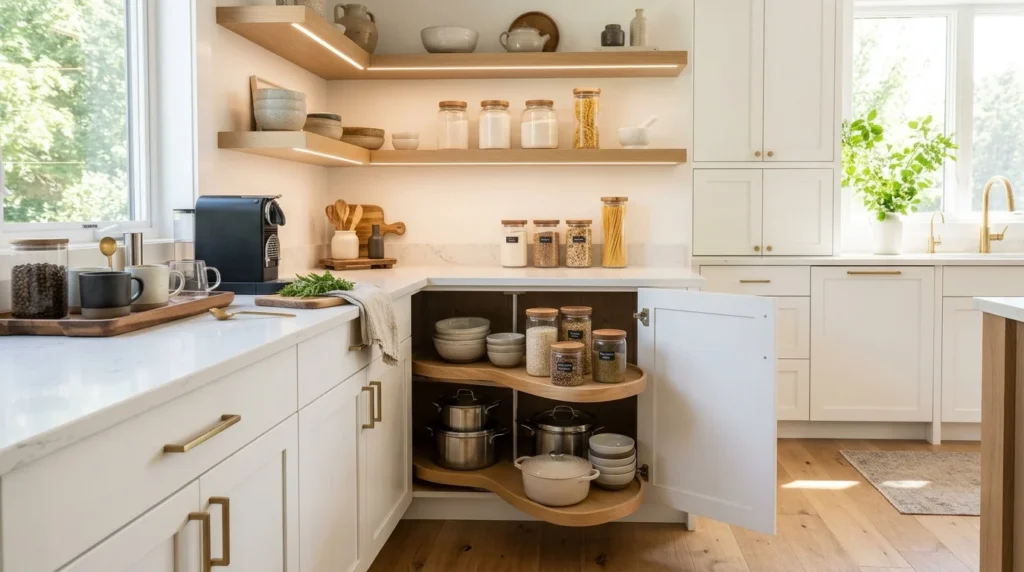
For the first two years I lived in my current house, the corner cabinet in my kitchen was basically a black hole. I’d shove a mixing bowl or a slow cooker in there, close the door, and quietly forget it existed until months later when I’d need it again and spend fifteen minutes on my knees digging around with a flashlight. It’s a strange thing, how a kitchen can have plenty of cabinet space on paper and still feel cramped, simply because one of the biggest cabinets in the room is nearly unusable. I remember catching myself buying a duplicate of a casserole dish because I genuinely couldn’t remember whether the one I already owned was buried somewhere in that corner or had been given away years earlier.
Once I finally got fed up and started researching corner storage solutions, I realized how much variation there actually is depending on your specific cabinet layout, budget, and whether you’re willing to do a full renovation or just retrofit what’s already there. I ended up trying three different solutions in my own kitchen over the years as my needs changed, and I’ve helped a couple of friends tackle their own corner cabinet frustrations too. Here are 16 ideas that actually made a difference, ranging from simple drop-in fixes to bigger cabinetry changes, whether you’re working with what you already have or planning something more permanent.
1. Lazy Susan Turntables
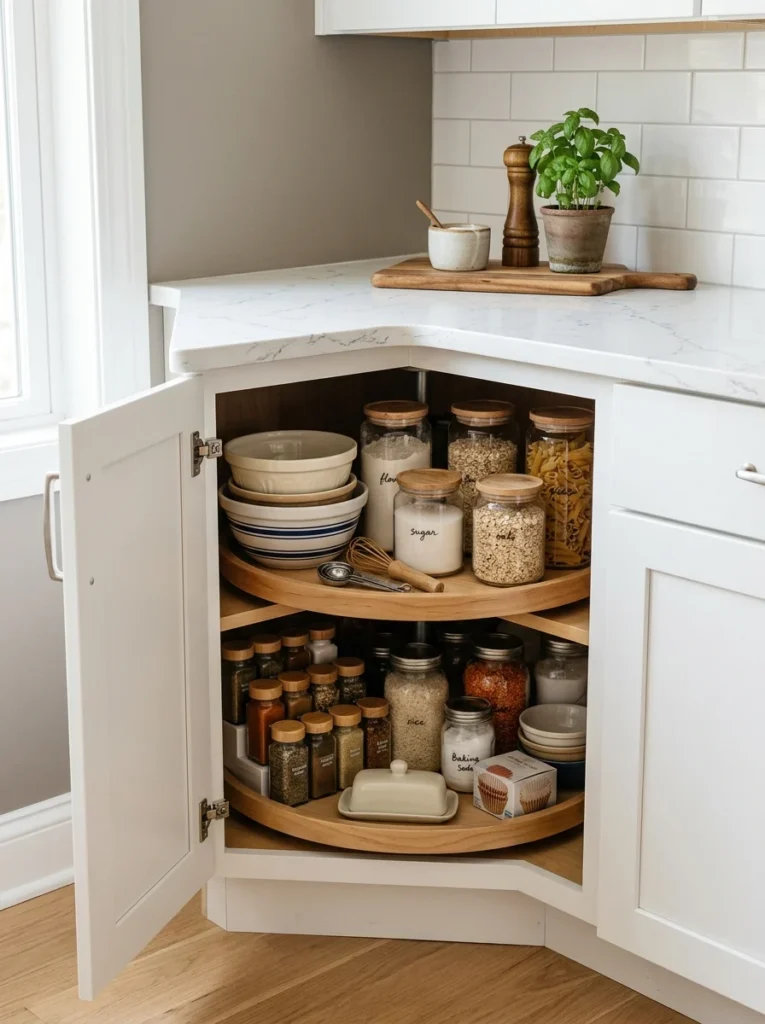
This is the classic solution for a reason, and it was the first thing I tried in my own kitchen. A simple rotating turntable lets you spin the entire contents of the cabinet into view instead of reaching blindly into the back corner. I went with a two-tier version, which effectively doubled my usable storage compared to a single flat shelf, and spinning it to find what I need has become second nature after years of use. The only adjustment I had to make was being a little more thoughtful about weight distribution, since an unevenly loaded tray can wobble slightly as it spins.
2. Kidney-Shaped Lazy Susans
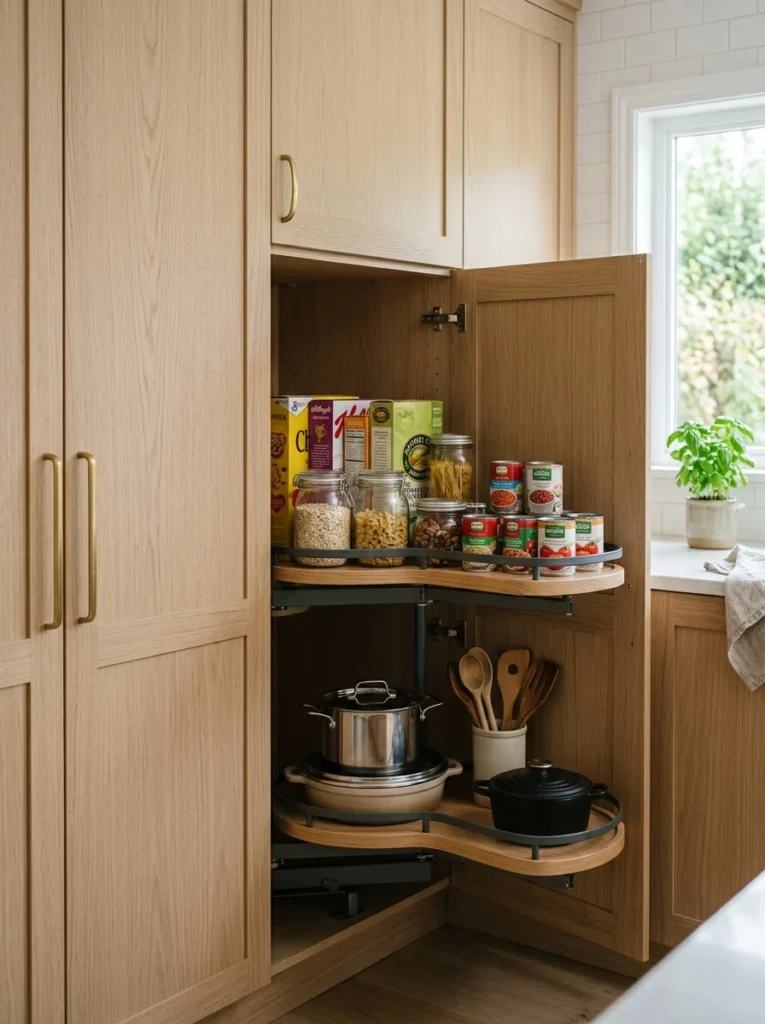
Standard round turntables leave a fair amount of wasted space in a square cabinet, since the corners around the circle go unused. Kidney-shaped, or “pie-cut,” turntables are designed to follow the cabinet’s actual shape more closely, capturing storage space that a round tray would otherwise waste. I switched to this style during my second kitchen update, and I noticed the difference immediately in how much more I could fit, particularly for taller items like cereal boxes that had never quite fit well on the rounded tray before.
3. Pull-Out Corner Drawers
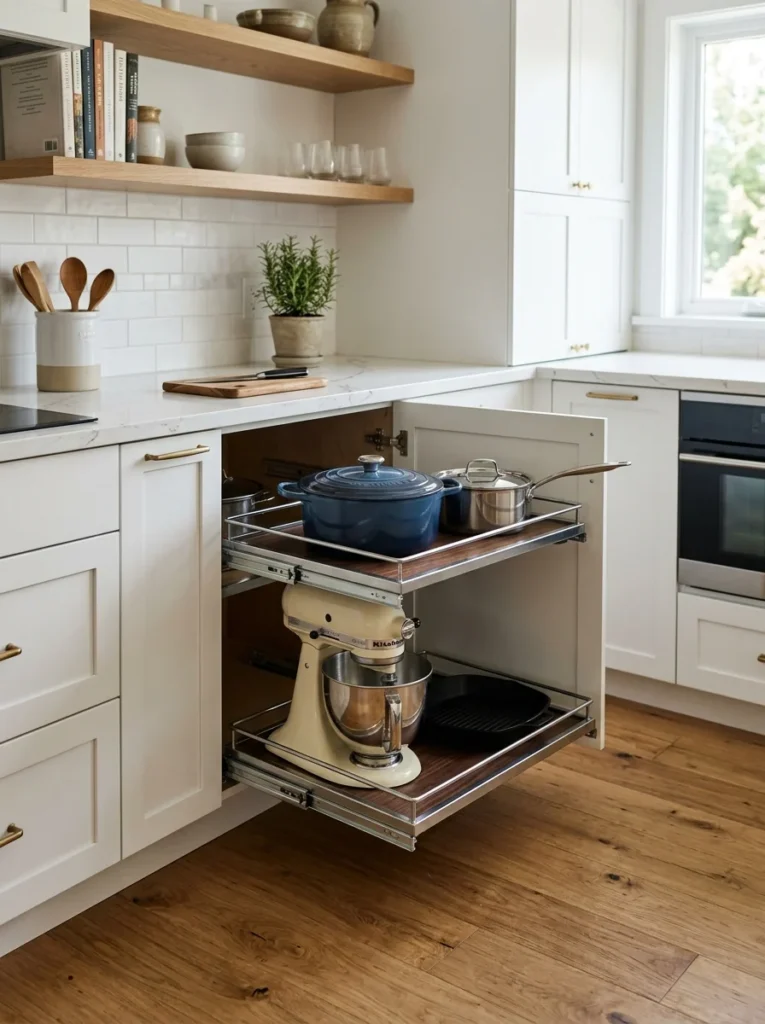
Rather than a spinning tray, pull-out drawer systems extend the entire shelf outward on a track, bringing everything in the cabinet within easy reach without any twisting or spinning required. A friend installed this system after getting frustrated with her lazy Susan tipping items over during use, and she’s found it far easier to load and unload heavier items like stand mixers and large pots. The smooth glide of a quality track also means less strain on the shoulders and back compared to reaching in and spinning a heavy, fully loaded turntable.
4. Diagonal Corner Cabinets With Full-Height Shelving
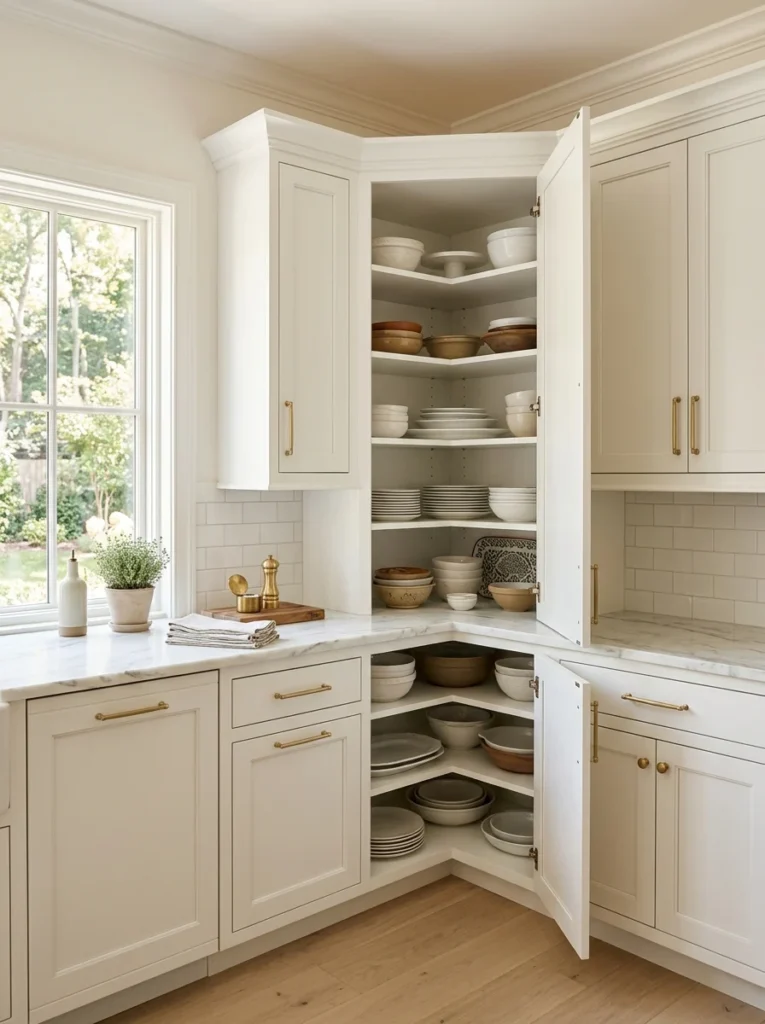
Some cabinet layouts use a diagonal corner unit with a single door set at a 45-degree angle, paired with adjustable full-height shelving inside. This maximizes vertical storage and works well for stacking plates, bowls, or pantry items that don’t need to be spun around to access. I’ve seen this used effectively in kitchens where the overall footprint is tight and every inch of vertical space matters, since the diagonal door angle also tends to make the walking path around the corner slightly more comfortable than a straight door swinging directly into the room.
5. Blind Corner Pull-Out Systems
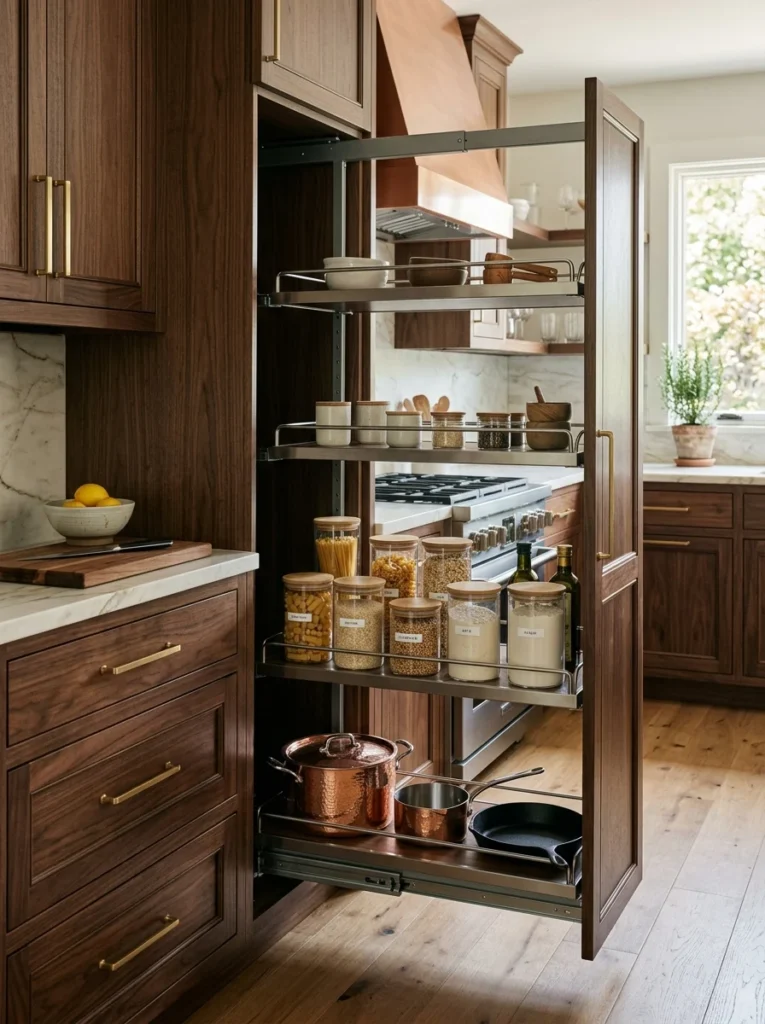
Blind corner cabinets, the kind where one cabinet extends behind the neighboring one and creates a hidden, hard-to-reach pocket of space, benefit enormously from a specialized pull-out system designed specifically for that shape. These systems use a swinging or sliding mechanism that pulls the hidden shelves out from behind the blind wall, converting what used to be dead space into fully usable storage. This was the exact problem I had in my own kitchen, and installing this system felt like gaining an entirely new cabinet for free. It took a full Saturday to install with a friend’s help, since the mechanism needed to be carefully leveled, but the difference it made was worth every bit of the effort.
6. Corner Drawer Stacks Instead of a Single Cabinet
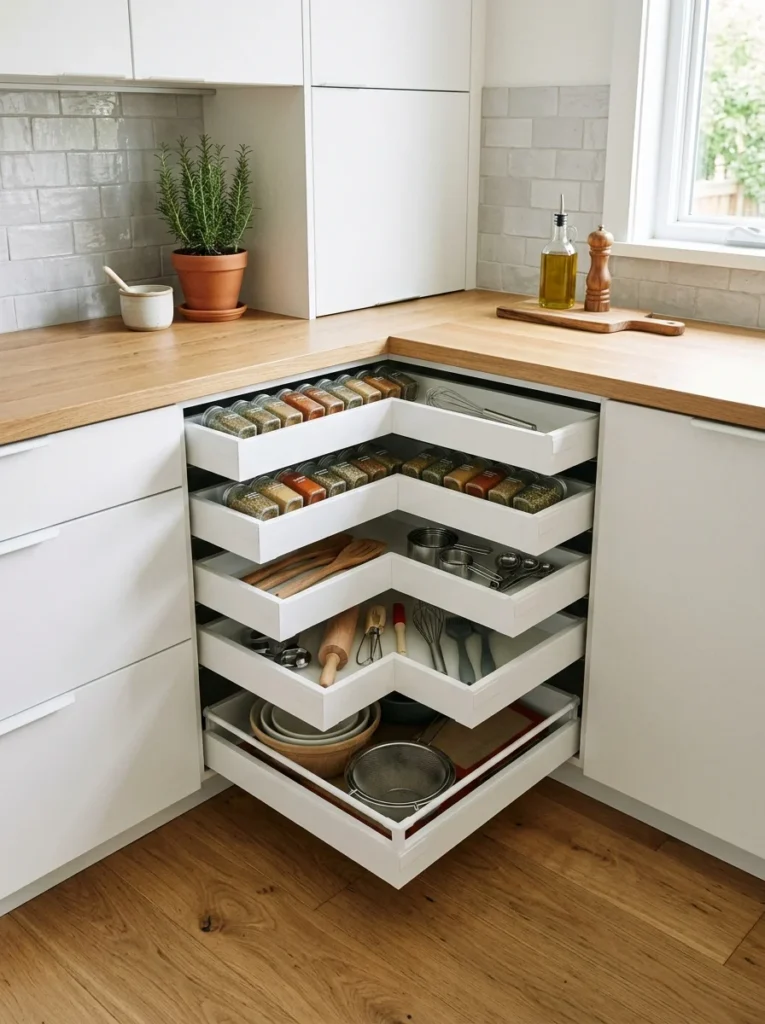
Rather than one large cabinet with a single door, some kitchen designs use a stack of smaller corner drawers instead. Each drawer pulls out independently, which makes it easier to see and access items without disturbing everything else in the cabinet. A friend renovating her kitchen chose this layout specifically to store spices, small appliances, and baking supplies in separate, clearly defined drawers rather than one crowded space, and she’s mentioned that meal prep goes noticeably faster now that she isn’t rifling through one deep cabinet to find three different things at once.
7. Corner Cabinet With a Curved Door Front
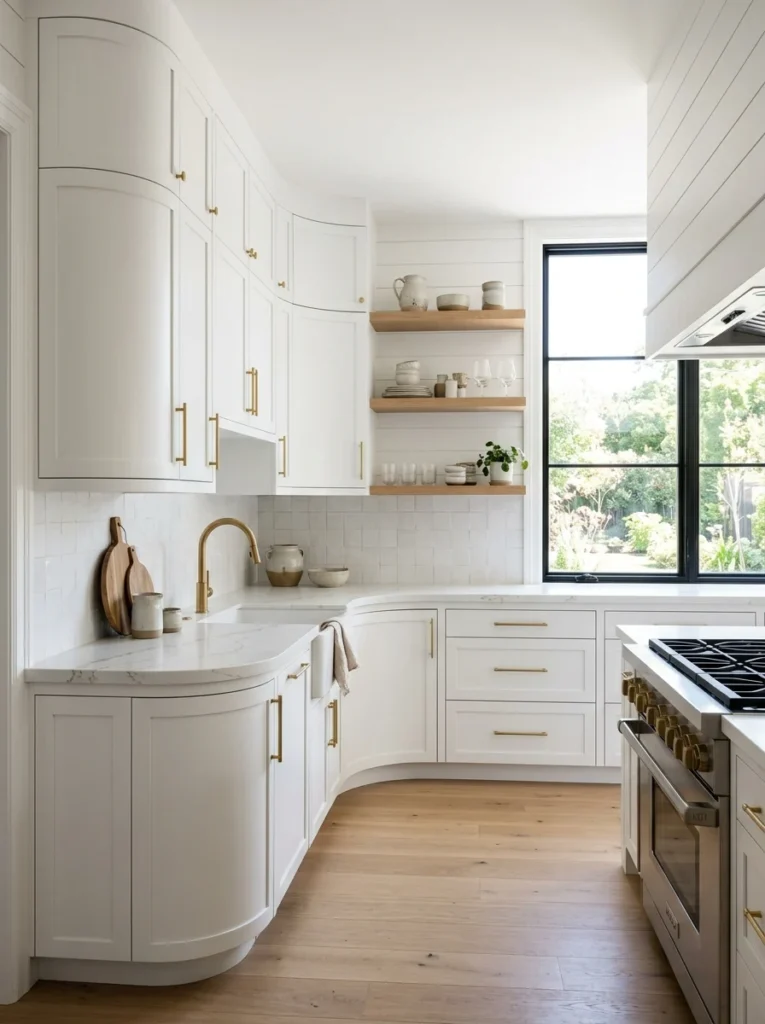
A curved cabinet door that follows the angle of the corner, rather than a straight door set diagonally, creates a smoother visual transition between the two runs of cabinetry. Beyond the aesthetic benefit, curved doors sometimes allow for slightly more interior clearance since the door swing follows a gentler arc. I’ve seen this used in more upscale kitchen renovations where the corner cabinet is meant to be a design feature rather than just a storage afterthought, and the seamless curve tends to draw the eye in a way a sharp angle never quite manages.
8. Open Corner Shelving for Display and Access
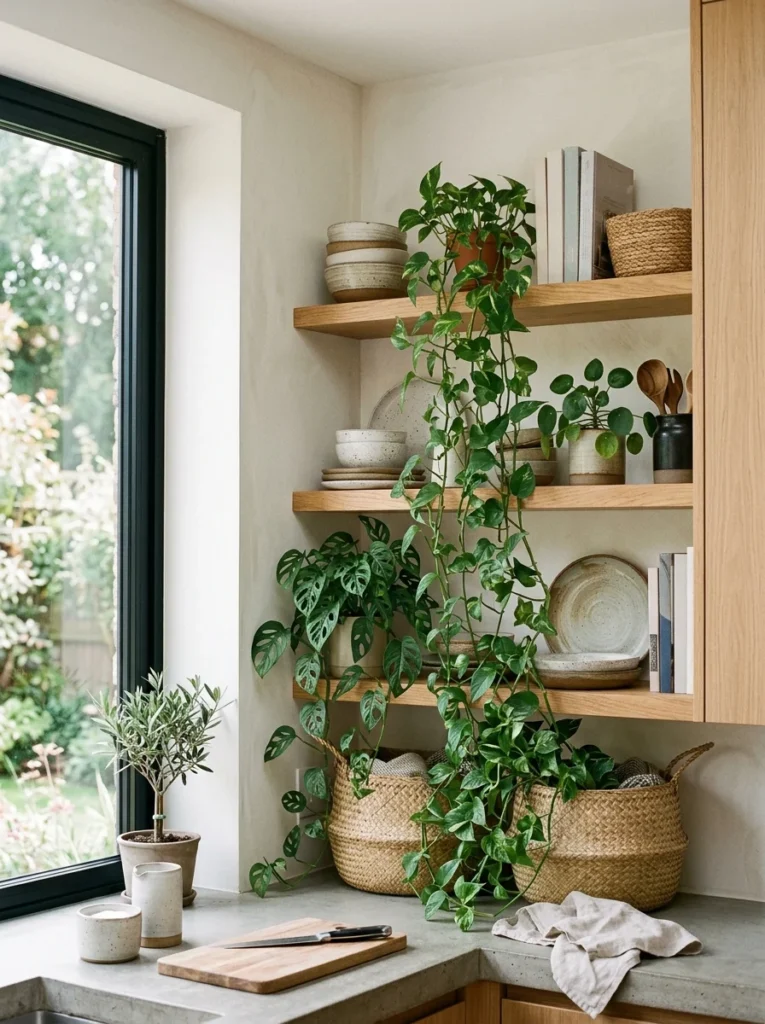
Removing the cabinet doors entirely and replacing them with open shelving turns the corner into a display area for cookbooks, plants, or frequently used dishware. While this sacrifices some closed storage, it completely eliminates the reach-and-dig problem since everything is visible and immediately accessible. I did this in a small section of my own kitchen for items I use daily, keeping the deeper, harder-to-reach cabinets below for things I only need occasionally, which gave the corner a nice mix of everyday function and a little visual personality.
9. Corner Cabinet Converted Into a Coffee or Beverage Station
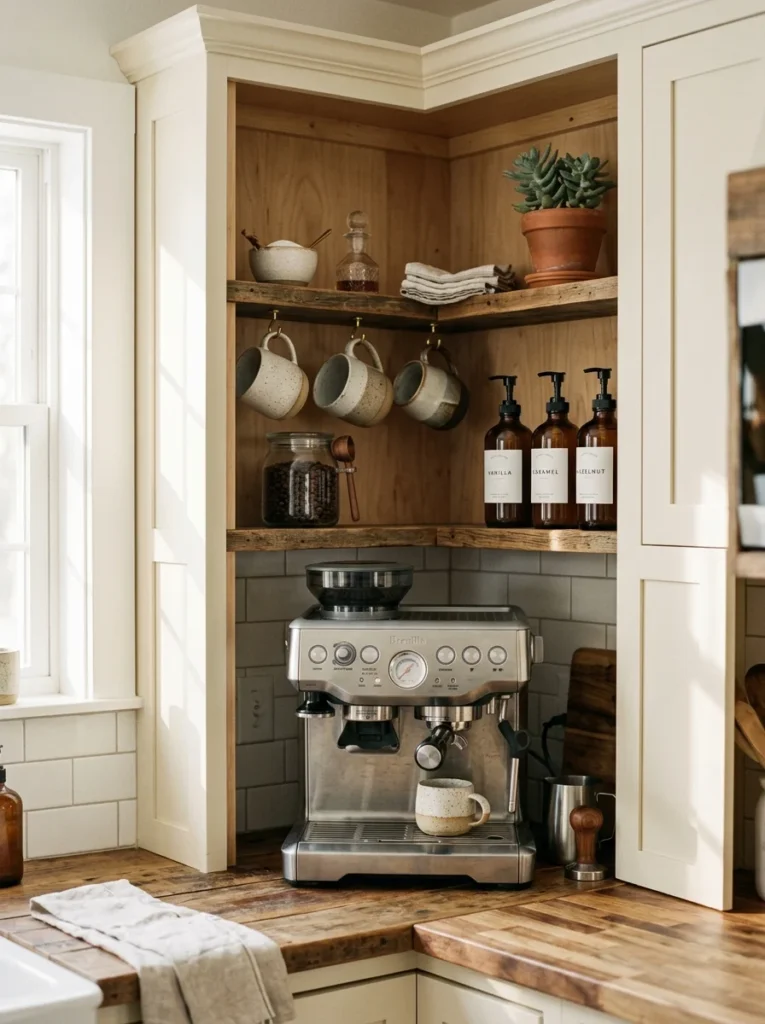
Instead of general storage, dedicating the corner cabinet space to a specific function, like a coffee and beverage station, gives it a clear purpose that’s easier to keep organized. I added a small shelf riser inside mine to hold mugs above the coffee maker, and having everything related to my morning routine in one dedicated corner has genuinely made my mornings smoother. It also stopped random unrelated items from creeping back into the space, since everything now has an obvious reason to be there or not.
10. Vertical Tray Dividers Built Into the Corner
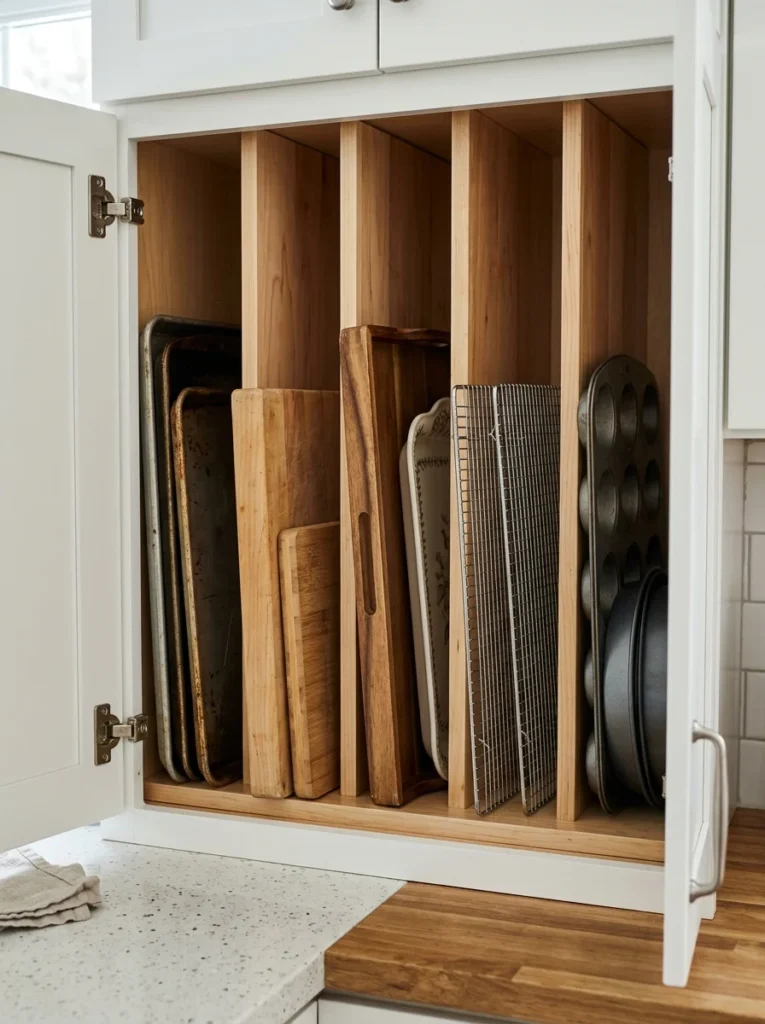
Adding vertical dividers inside a corner cabinet creates narrow slots perfect for storing baking sheets, cutting boards, and trays upright rather than stacked flat. I retrofitted a set of simple wooden dividers into part of my corner cabinet, and it solved a separate problem I’d been having with flat items sliding around and becoming hard to pull out individually, since I no longer have to lift an entire stack just to reach the one sheet pan buried at the bottom.
11. Corner Cabinet With Interior Pull-Down Shelving
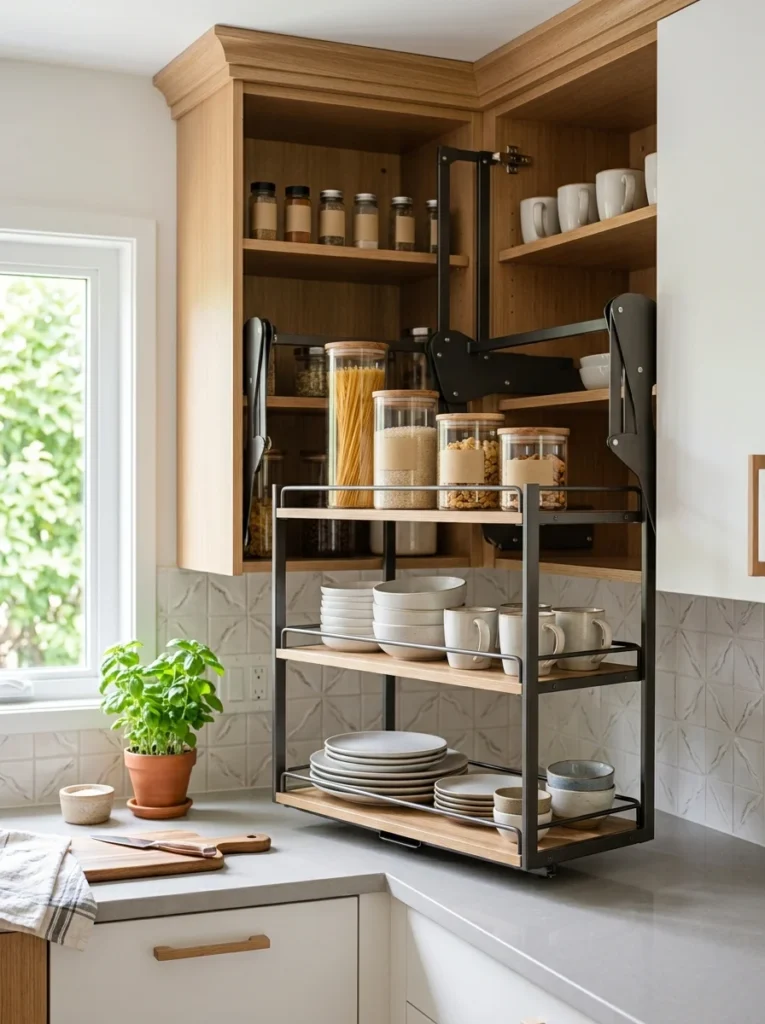
For upper corner cabinets, which come with their own reach problem since they’re often too high to see into clearly, pull-down shelving mechanisms bring the contents down to eye level with a simple pull of a handle. My mother-in-law had this installed in her kitchen after a shoulder injury made reaching into high cabinets difficult, and it’s remained useful for her well beyond the initial recovery period, since it turned out to be more convenient day-to-day than the fixed shelving it replaced.
12. Half-Moon Corner Shelves for Small Appliances
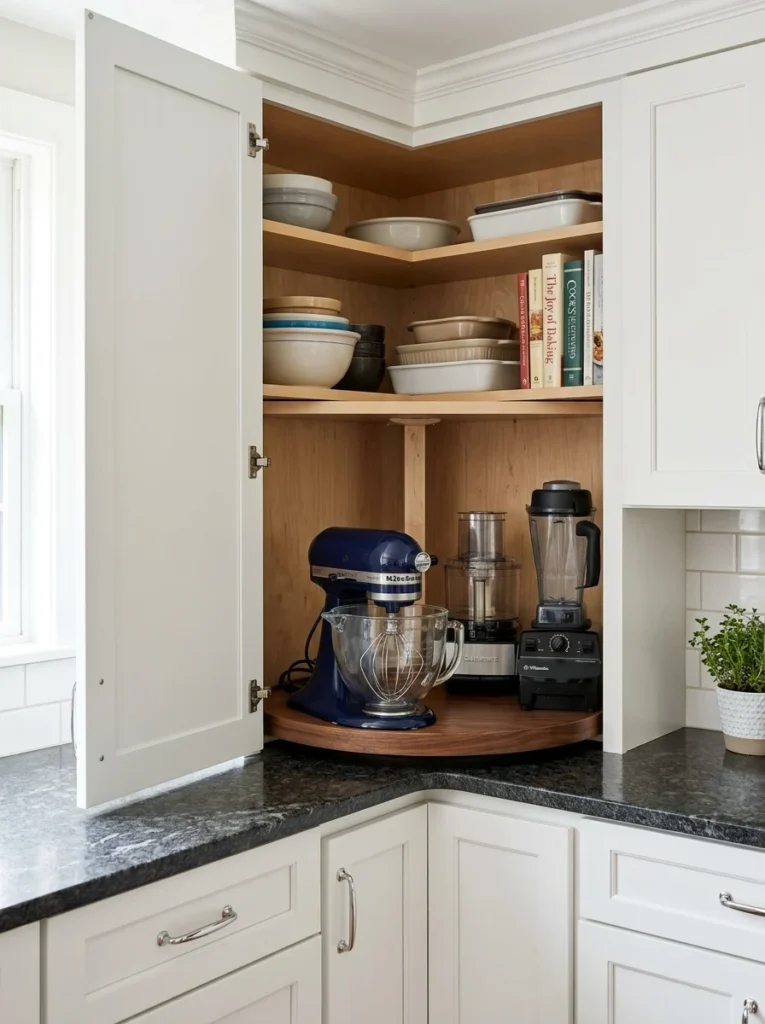
A half-moon shaped shelf insert, sized specifically to fit the curve of a corner cabinet, creates a stable, defined space for small appliances like a stand mixer or food processor that might otherwise slide around inside a standard shelf. I added one of these to store my stand mixer, and it stopped the awkward shuffling I used to do trying to fit it into an oddly shaped gap.
13. Corner Pantry Cabinet With Adjustable Shelving
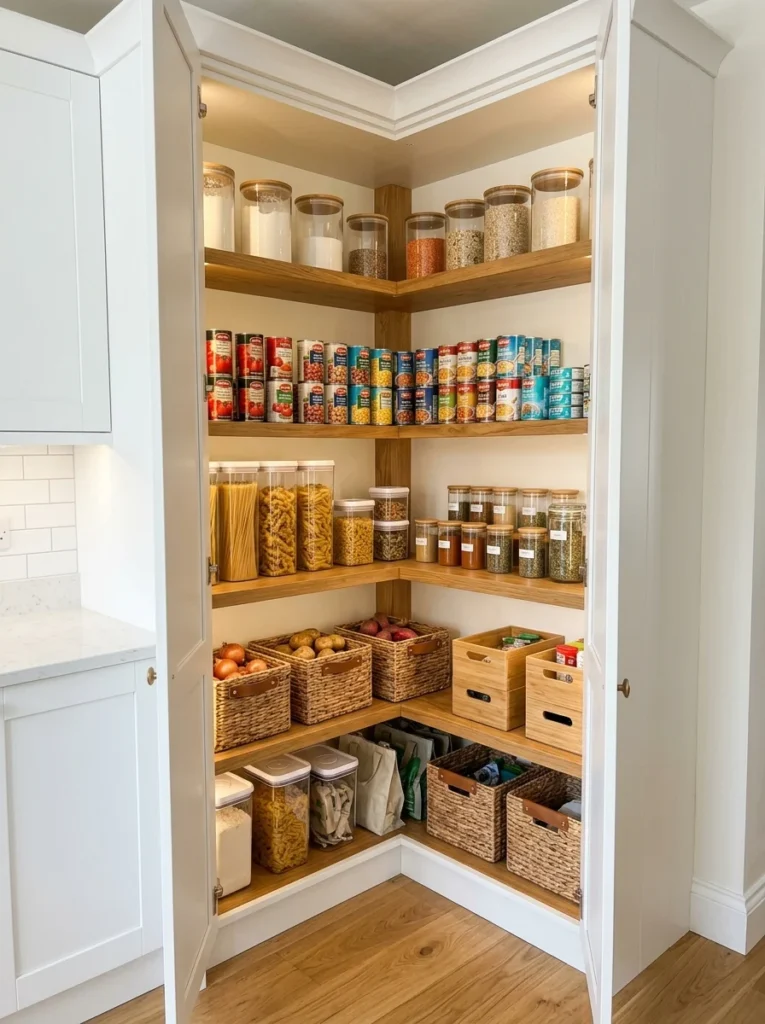
In kitchens with enough depth, converting the corner into a narrow pantry-style cabinet with adjustable shelving allows for customized storage based on can heights, box sizes, or jar dimensions. I adjusted mine seasonally, moving shelves closer together for smaller canned goods during the months I do more canning and preserving, then spacing them out again for bulkier packaged items the rest of the year. That flexibility ended up being more valuable than I expected, since my storage needs genuinely do shift throughout the year depending on what I’m cooking and stocking up on.
14. Corner Cabinet With a Built-In Trash and Recycling Pull-Out
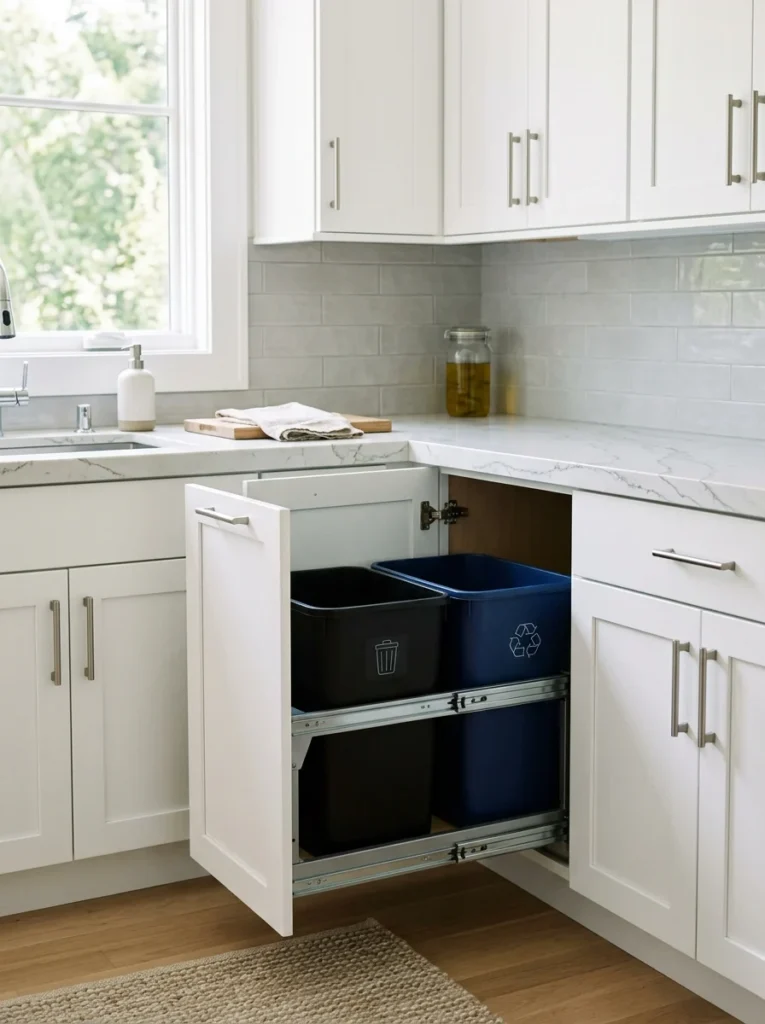
Some corner layouts work well for hiding trash and recycling bins on a pull-out track, keeping them out of sight while still placing them in a naturally central location within the kitchen’s workflow. A friend redesigned her corner cabinet specifically around this function, and having the bins tucked into the corner freed up an entire separate cabinet elsewhere in her kitchen for actual food storage. It also meant guests no longer had to search for where the trash can was hiding, since it lived in a predictable, consistent spot near the main work area.
15. Wire Basket Pull-Outs for Produce Storage
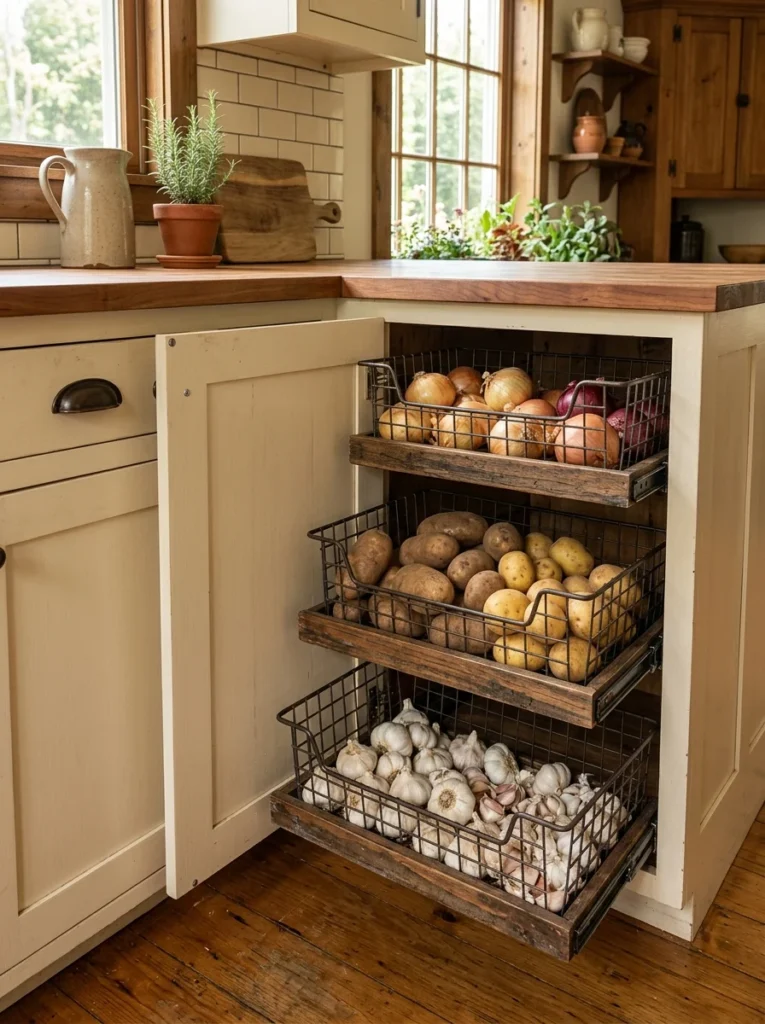
Wire basket systems that pull out from a corner cabinet work particularly well for storing produce like onions, potatoes, and root vegetables that need airflow rather than a sealed container. I added a set of these baskets to the lower portion of my corner cabinet, and the ventilation has noticeably extended how long my produce stays fresh compared to when I stored it in a closed drawer, cutting down on the amount I was throwing away from sprouting or going soft before I got around to using it.
16. Corner Cabinet Lighting for Better Visibility
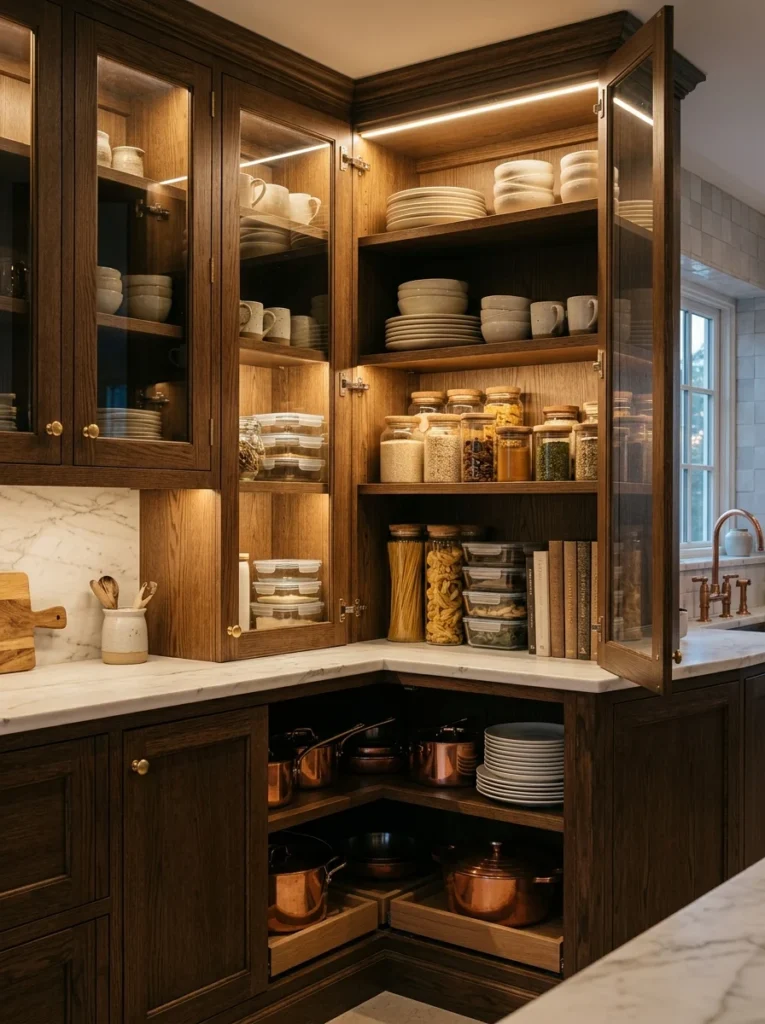
Even the best storage system doesn’t help much if you can’t actually see into the back of the cabinet. Adding a simple battery-operated or hardwired LED strip inside the corner cabinet solved a problem I hadn’t even realized was contributing to my frustration, since half the reason I struggled to find things was simply that the corner was always dimly lit no matter what system I installed. Motion-activated versions, which switch on automatically when the door opens, make this even more convenient since there’s no separate switch to remember.
Final Thoughts
Looking back at those early years of dreading my own corner cabinet, I think the real issue was never a lack of storage space, it was that the space wasn’t designed around how corners actually behave. A flat shelf works fine along a straight cabinet run, but the geometry of a corner creates blind spots and awkward reach zones that need a completely different approach. Once I started treating the corner as its own unique storage puzzle instead of just another shelf, everything got easier, and I stopped dreading opening that door the way I used to.
If you’re dealing with a frustrating corner cabinet right now, my advice is to start with whichever problem bothers you most, whether that’s not being able to see what’s inside, not being able to reach the back, or simply not having a clear system for what belongs there. Solving that one specific frustration first, rather than trying to overhaul the entire cabinet at once, is exactly how my own kitchen corner finally stopped being a black hole and became one of the most functional spots in the room.