
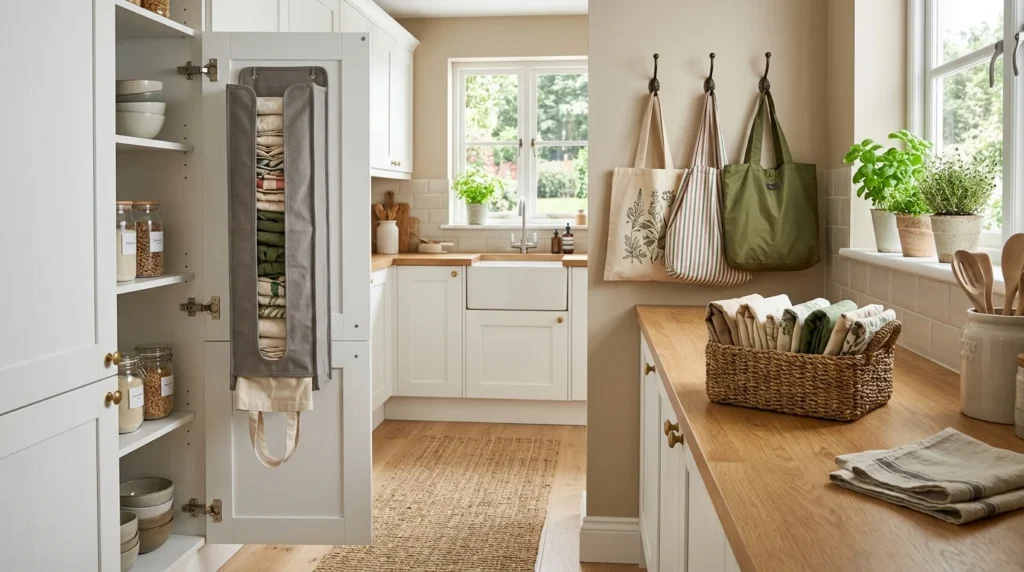
Somewhere in my kitchen, for longer than I care to admit, there was a single overstuffed drawer that had essentially become a black hole for reusable grocery bags, a tangled mass of fabric that made a distinct crunching, resistant sound every time I tried to force it open far enough to shove in yet another bag after unloading groceries. I owned genuinely more reusable bags than any one household reasonably needs, mostly because I could never find the ones I already had when heading out the door, so I’d just grab a few plastic ones at checkout instead, defeating the entire purpose of owning reusable bags in the first place. It wasn’t until that drawer physically stopped closing one afternoon, bags spilling out the moment I opened the cabinet beside it, that I finally admitted this needed an actual system rather than continuing to cram everything into one drawer and hoping for the best.
If your own reusable bags are living in that same overstuffed, unusable drawer, here are 13 storage solutions, each explained in detail, based on what finally worked for me and what I’ve seen work well in other homes since. I’ll also answer some of the specific questions people ask most often about this particular, surprisingly common household problem.
1. Use a Dedicated Fabric Dispenser Bin
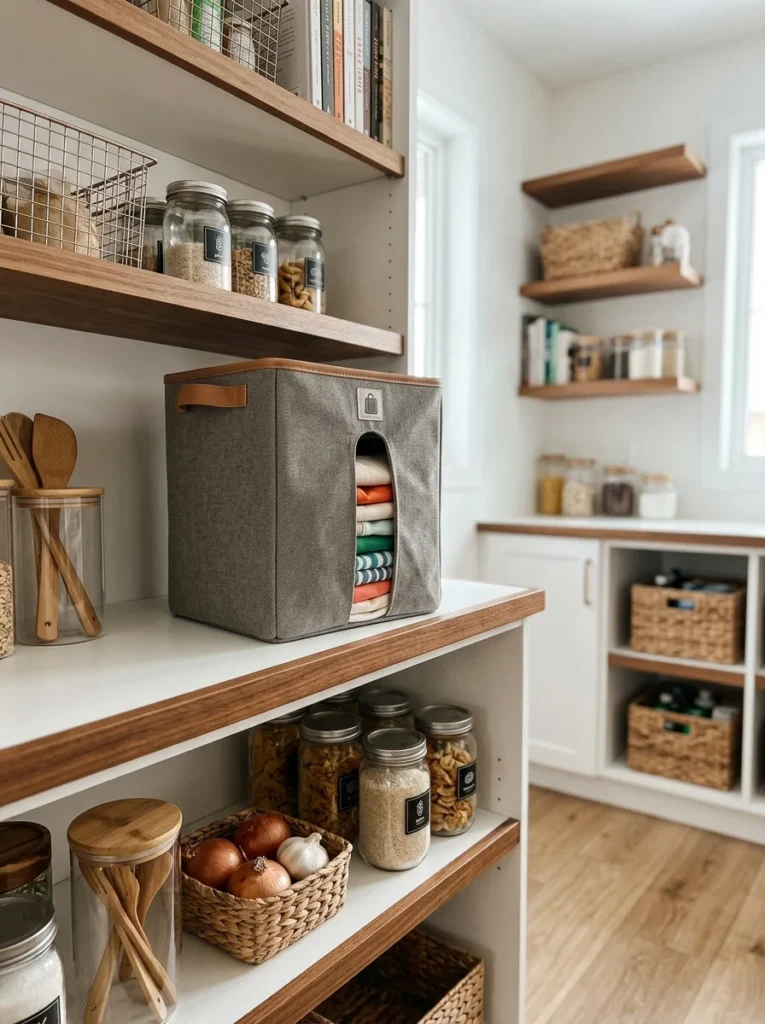
A dispenser-style fabric bin, similar in concept to a tissue box, lets you pull one folded bag out at a time from a small opening, rather than needing to dig through a tangled pile every time you need just one. I switched to exactly this solution specifically, and being able to simply pull one bag free without disturbing the rest has genuinely eliminated the tangled, resistant mess my old drawer used to require every single time. A question I hear often is whether this style of bin actually fits a genuinely large bag collection, and I’d say it depends on your specific household’s collection size, a moderate collection of ten to fifteen bags fits comfortably in most standard dispenser bins, while a genuinely larger collection might need either a bigger bin or a secondary storage solution for overflow beyond your most regularly used bags.
2. Install a Hanging Fabric Organizer With Individual Slots
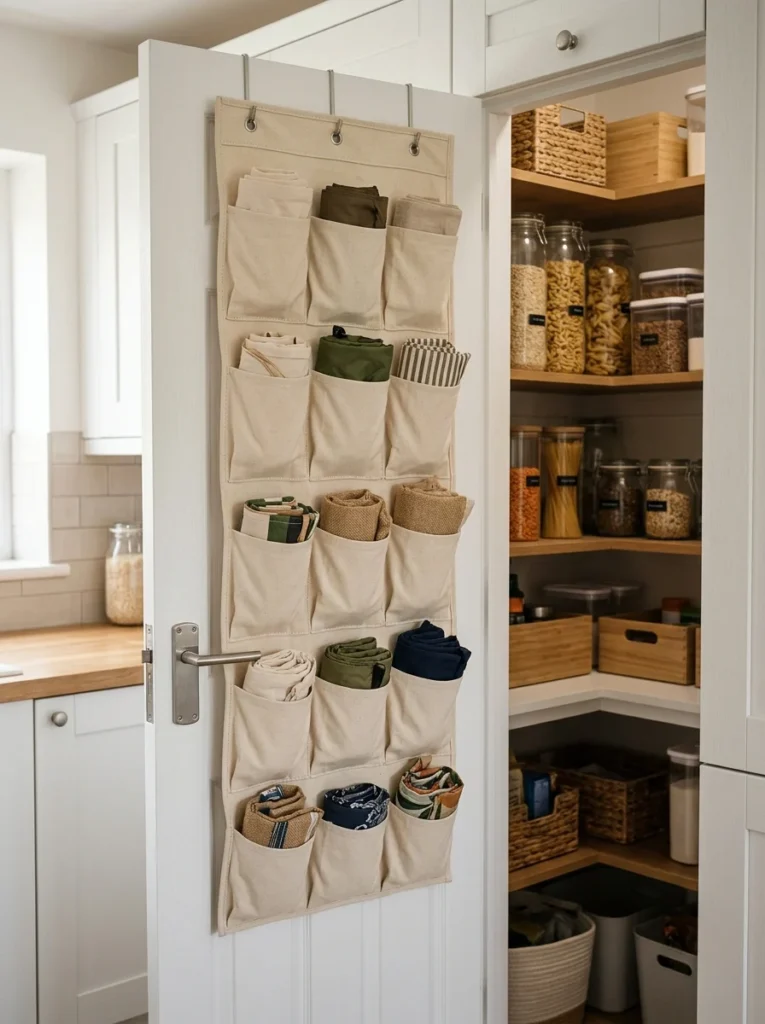
A hanging organizer with several individual fabric pockets, mounted inside a pantry door or closet, gives each bag its own defined slot rather than allowing them to tangle together in one undivided space. A friend uses exactly this solution, hanging hers on the inside of her pantry door, and having each bag in its own visible pocket has made grabbing exactly the number she needs before a shopping trip considerably faster than her previous single-bin system. A common question is whether this style of organizer holds up to frequent daily use, and I’d recommend choosing a genuinely sturdy canvas construction rather than a flimsier mesh version specifically for this application, since bags are pulled in and out considerably more often than some other items commonly stored this way, and a more durable fabric handles that repeated use better over time.
3. Fold Bags Into Small Pouches for Compact Storage
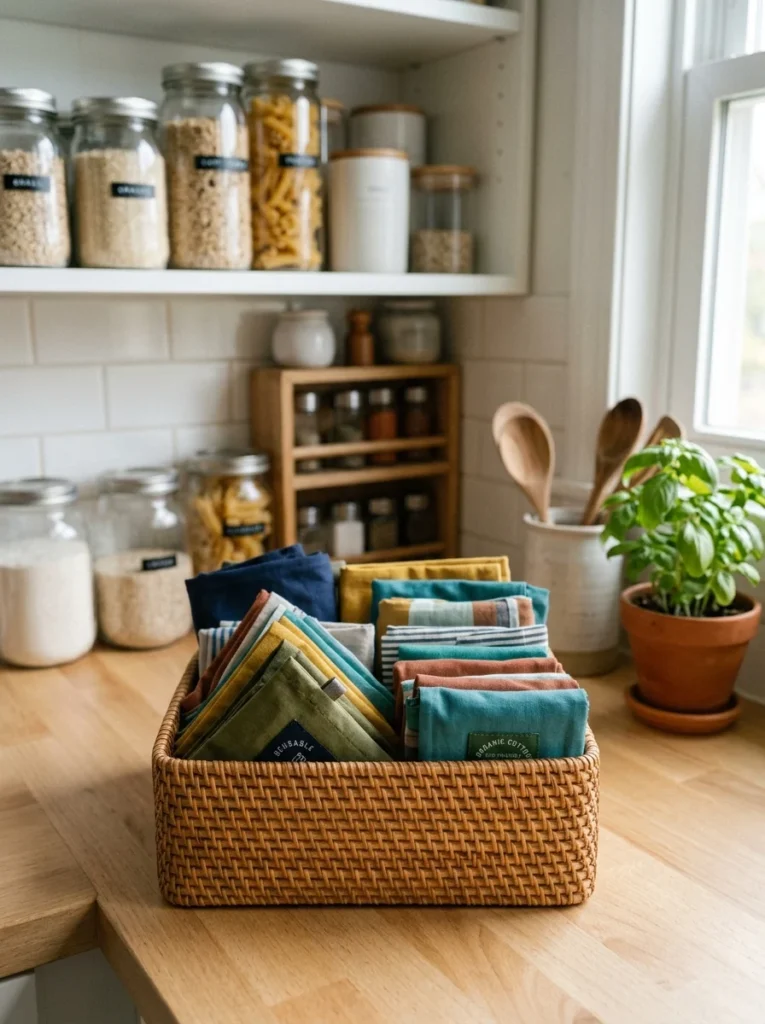
Learning to fold each bag into a small, compact triangle or pouch, a technique widely demonstrated online, transforms a bulky, shapeless piece of fabric into a genuinely small, uniform shape that stacks or stores considerably more neatly than bags simply balled up loosely. I taught myself this folding technique specifically during my own reorganization, and the difference in how much space my collection now takes up, folded neatly compared to loosely crumpled, is genuinely significant. A frequent question is whether this folding technique is worth the extra few seconds each time versus just tossing a bag back unfolded, and I’d say it’s genuinely worth it specifically if you’re storing bags in a smaller container or drawer where space is at a premium, though if you have abundant storage space regardless, this step becomes more about tidiness than genuine necessity.
4. Use a Mounted Hook Specifically for Bag Bundles
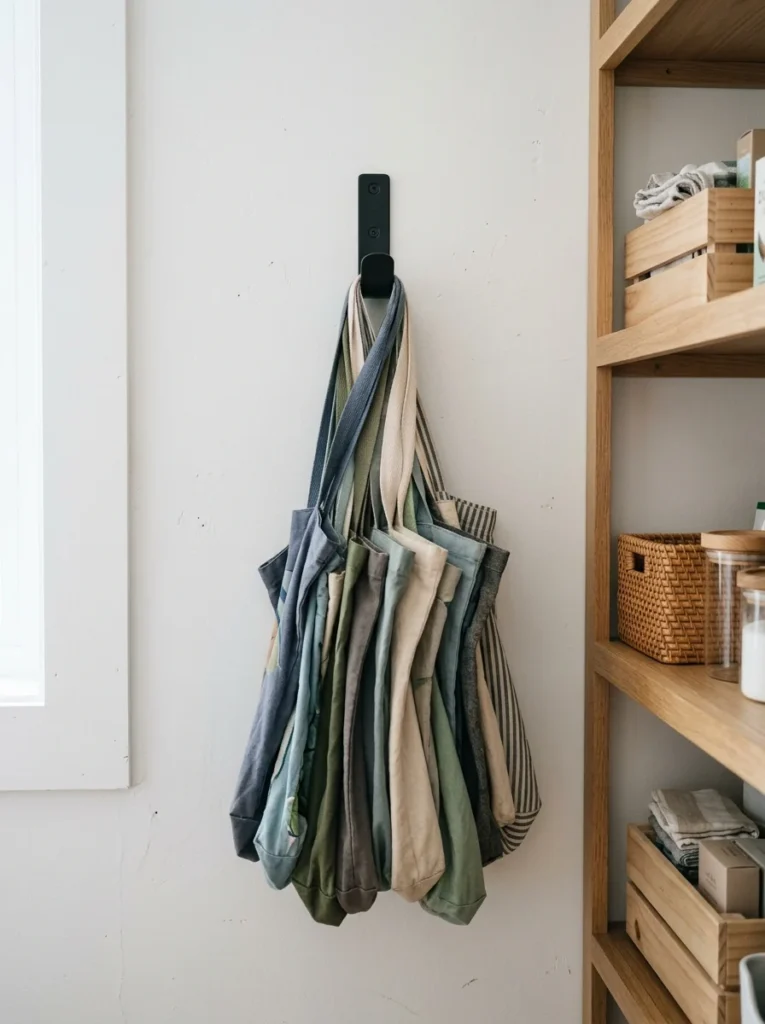
A single sturdy hook, mounted inside a pantry or coat closet, can hold your entire bag collection bundled together with a simple loop or tie, providing genuinely simple, low-effort storage for anyone who doesn’t want to invest in a more elaborate organizational system. I used exactly this solution for a period before eventually upgrading to my current dispenser bin, and even this simple hook approach was a meaningful improvement over my original overstuffed drawer, since at least everything hung together in one visible, defined spot rather than spreading loosely throughout a cramped space. A question I hear is whether bundling bags together on a single hook makes it hard to grab just one or two without disturbing the whole bundle, and I’d say this is a genuine limitation of this particular approach, making it better suited to households that typically grab their entire bag collection at once before a big shopping trip rather than needing to pull just a single bag frequently throughout the week.
5. Store Bags in a Repurposed Tissue Box
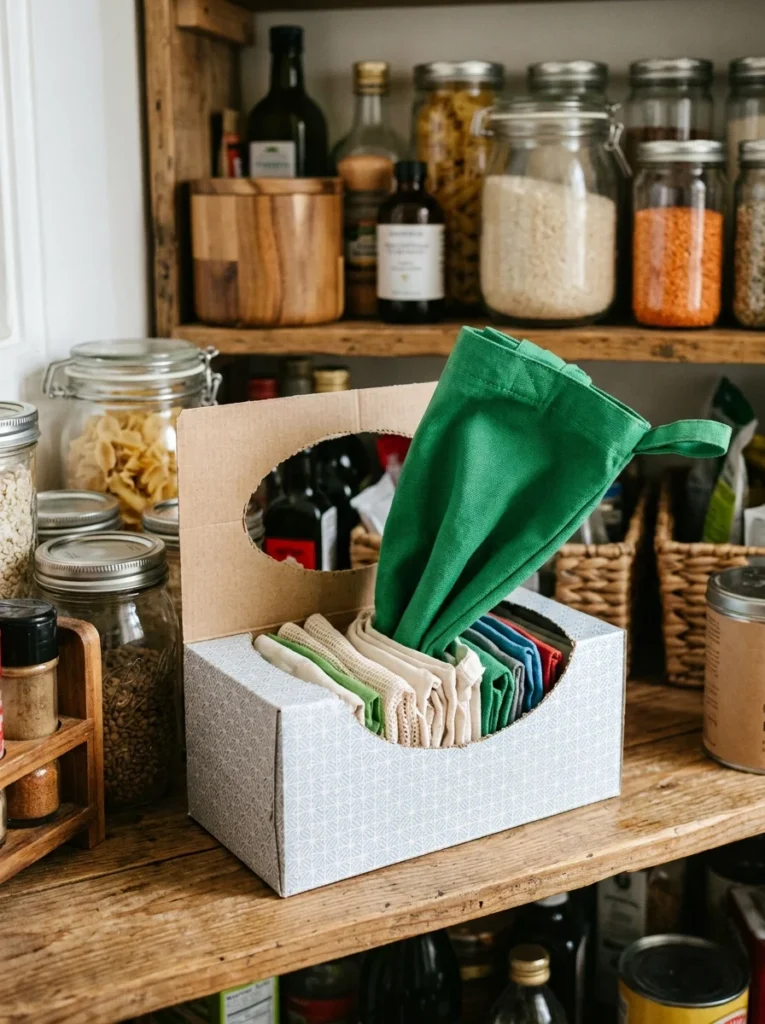
For a genuinely no-cost solution, an empty tissue box with a slightly enlarged opening works remarkably well as an improvised dispenser, letting you pull bags out one at a time in essentially the same way a purpose-made dispenser bin functions, just using something you likely already have on hand. A friend uses exactly this budget solution, and she’s mentioned genuinely not seeing much practical difference between her repurposed tissue box and a purpose-bought version, aside from the box’s less polished, less durable cardboard construction compared to fabric. A common question is how long a cardboard box holds up to this repeated use before needing replacement, and I’d say expect to replace it every several months as the cardboard gradually softens and weakens from repeated handling, making this a genuinely good temporary or budget-testing solution before committing to a more durable, purpose-built option if you find you genuinely like this dispensing method.
6. Add a Small Basket Near Your Door for Grab-and-Go Access
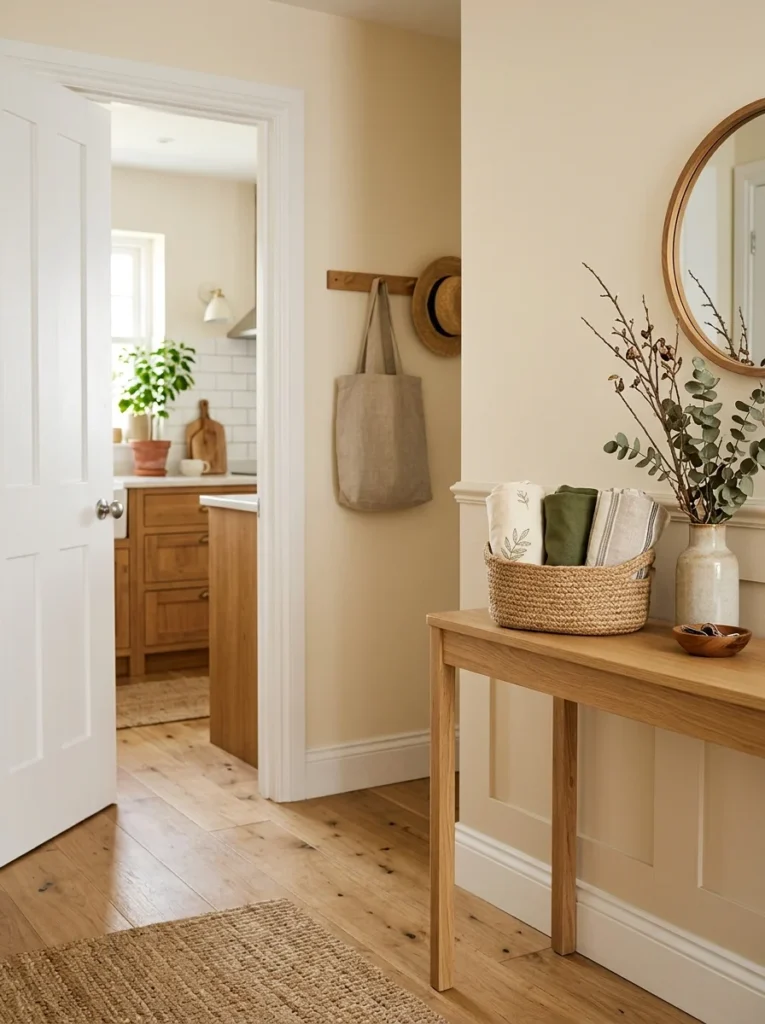
Rather than storing bags exclusively in your kitchen or pantry, keeping a small basket with a handful of your most-used bags near your front door or in your car specifically addresses the common problem of forgetting bags at home despite owning plenty of them somewhere in your kitchen. I keep a small basket by my own door specifically stocked with three or four bags, and having them genuinely positioned along my actual path out the door has meaningfully reduced how often I forget them and end up accepting plastic bags at checkout instead. A frequent question is whether this creates a confusing secondary storage system alongside your main kitchen collection, and I’d say think of it specifically as your active, in-rotation bags, while your kitchen storage holds the remainder of your collection, restocking this door basket periodically from that larger main supply rather than treating the two locations as genuinely separate, unrelated systems.
7. Keep a Set Permanently in Your Car
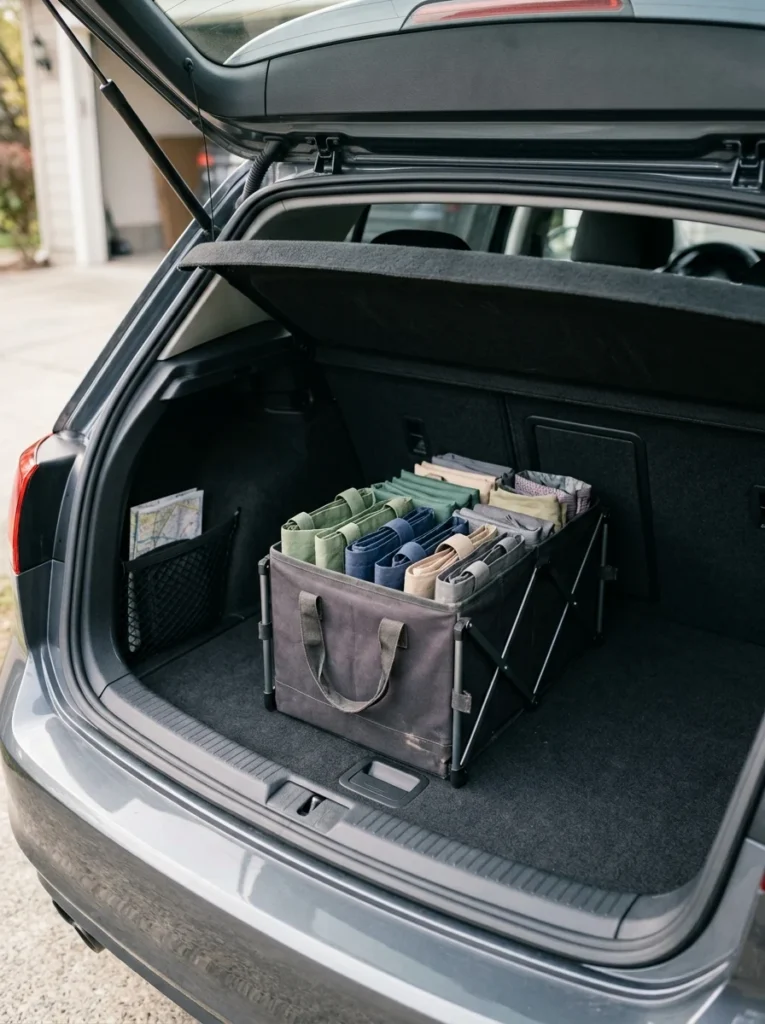
Storing a dedicated set of bags directly in your car’s trunk, whether in a small bin or simply tucked into a side pocket, ensures you have bags available specifically at the moment you’re actually at the store, addressing the forgetting problem even more directly than a basket by your door, since you’re not relying on remembering to grab them before leaving home at all. I keep a small collapsible bin in my own trunk specifically stocked with five or six bags, and having them genuinely already present in the car has eliminated the forgetting problem almost entirely compared to my previous system relying purely on remembering to grab bags before I left the house. A question I hear is whether bags left in a car experience any issues from temperature extremes over time, and I’d say genuine synthetic reusable bags generally hold up fine to normal seasonal temperature swings, though I’d recommend periodically checking for any degradation if you live somewhere with particularly extreme, sustained heat that could affect certain bag materials over many months of continuous storage.
8. Use a Drawer Divider Specifically Sized for Bags
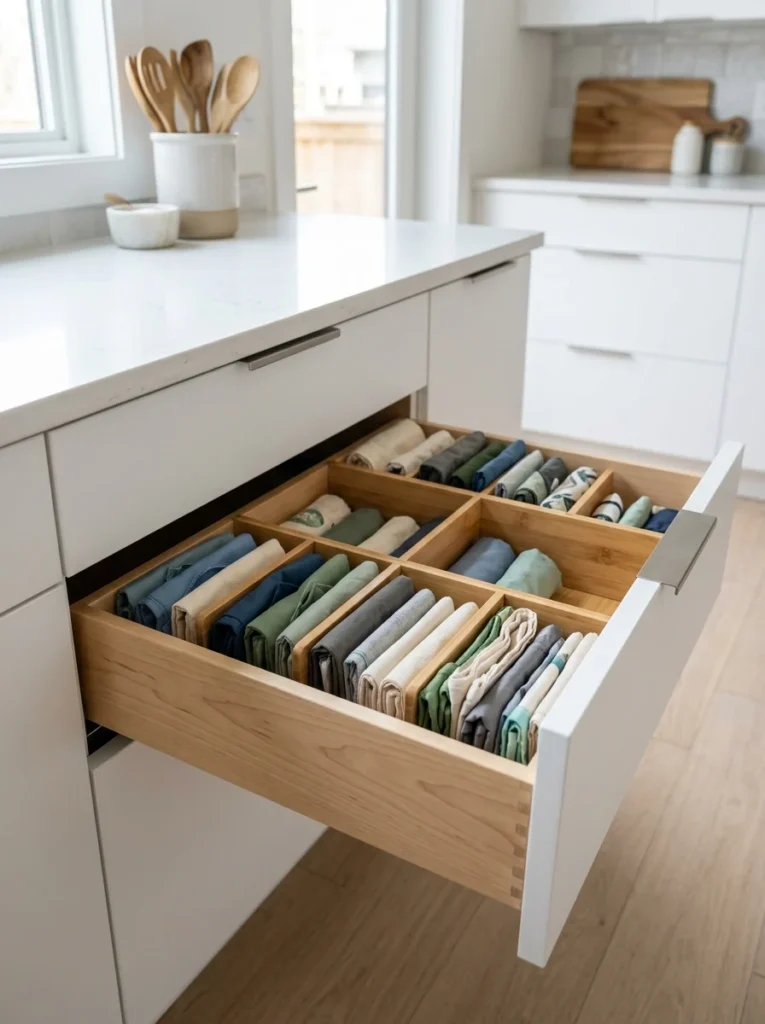
If you’re keeping your bags in a kitchen drawer rather than switching to hanging or dispenser-style storage, adding a simple divider specifically to that drawer prevents the tangled, overstuffed mass that develops when bags are simply piled loosely without any internal organization at all. I added exactly this kind of divider to my own drawer before eventually switching to my current dispenser bin, and even this modest addition meaningfully reduced the tangling and resistance my drawer used to have every time I tried to open it or add another bag. A common question is whether a drawer genuinely remains a good storage location for bags compared to some of the other ideas on this list, and I’d say it works reasonably well specifically if your drawer has adequate depth and you’re willing to add some kind of internal division, while a genuinely shallow or small drawer often struggles to hold a full collection without the overstuffing problem returning regardless of what dividers you add.
9. Separate Bags by Type or Purpose
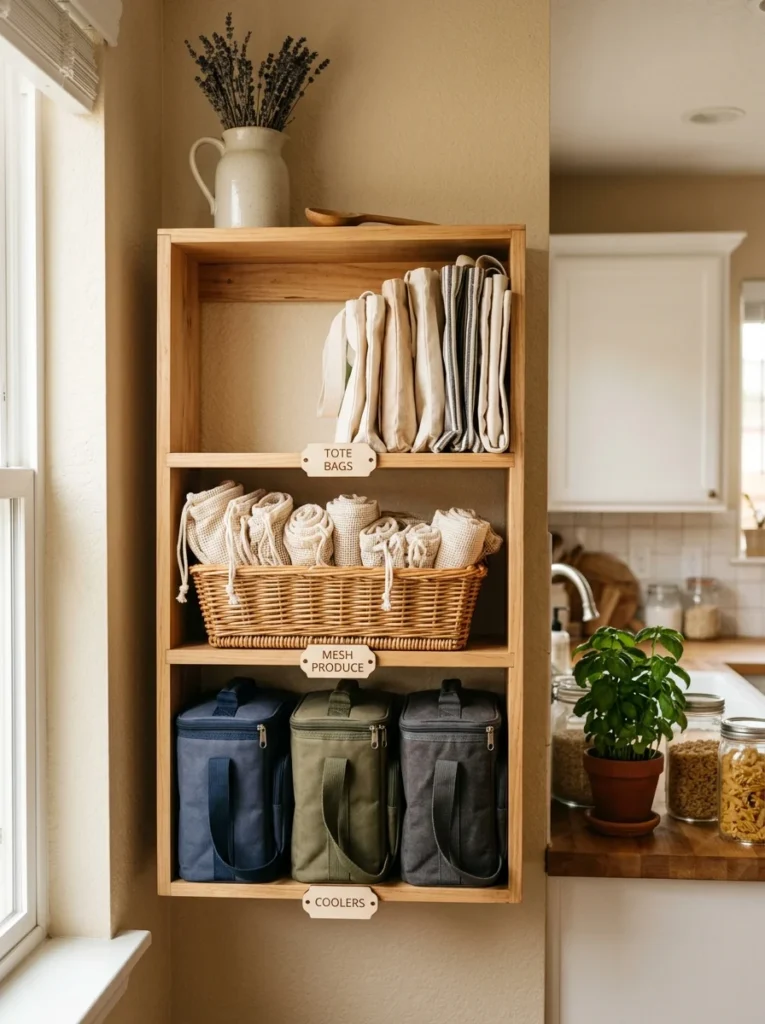
Rather than storing all reusable bags together regardless of type, separating insulated bags for cold groceries, mesh produce bags, and standard tote-style bags into their own distinct storage zones means you can quickly grab exactly the right type for a specific shopping trip rather than digging through a mixed pile to find the insulated bag you need for frozen items. I organize my own collection exactly this way, and having insulated bags in their own designated spot specifically has made packing for a grocery trip considerably faster since I’m not searching through standard totes to locate the right bag for frozen goods. A frequent question is whether this level of separation is genuinely necessary for a smaller, simpler bag collection, and I’d say it becomes considerably more valuable as your collection grows more varied in type, while a household with just a handful of similar, standard tote bags likely doesn’t need this additional layer of categorization.
10. Add a Label or Tag System for Multi-Person Households
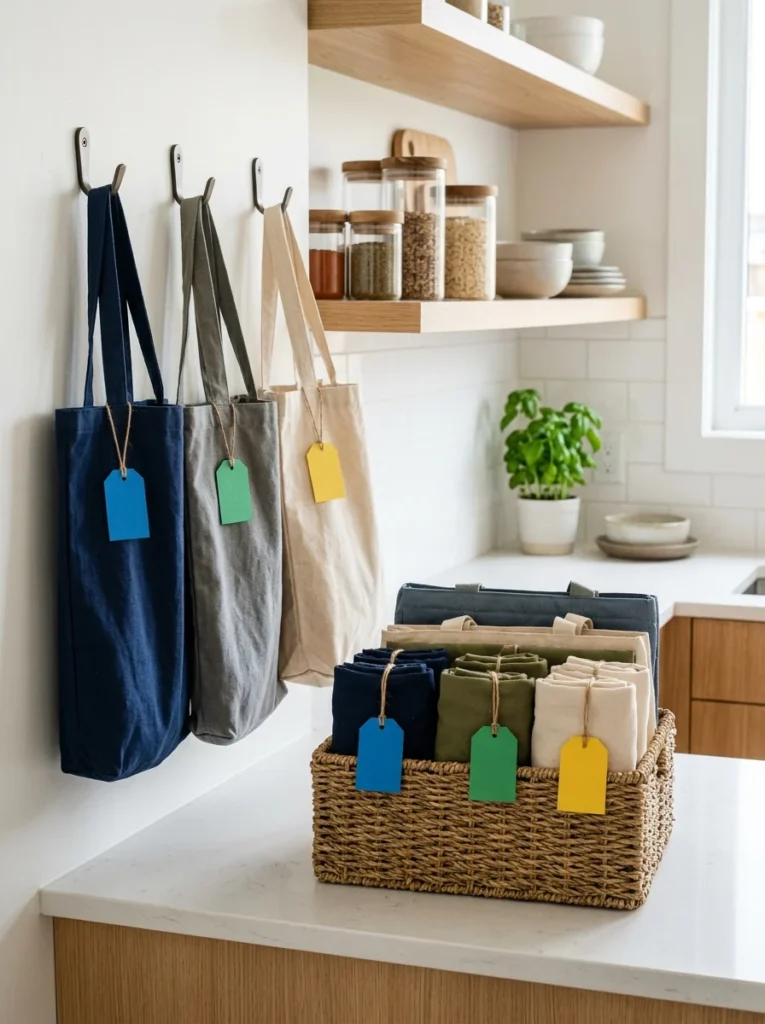
In households where multiple people regularly do the grocery shopping, adding simple tags or a color-coding system to bags can help track which bags are actually in circulation versus left in someone’s car or bag from their last shopping trip, reducing the common frustration of a diminishing bag supply with no clear explanation of where everything went. We started doing a simple version of this once our household grew, and having a rough sense of which bags “belong” to whose car or routine has genuinely reduced some confusion about why the kitchen supply keeps seeming to shrink despite nobody deliberately taking bags elsewhere. A question I hear is whether this feels overly complicated for a smaller household, and I’d say this system matters considerably less for a single person or couple with a shared, simple routine, becoming more valuable specifically as more people and more cars are involved in a household’s actual regular shopping habits.
11. Rotate and Cull Bags Periodically
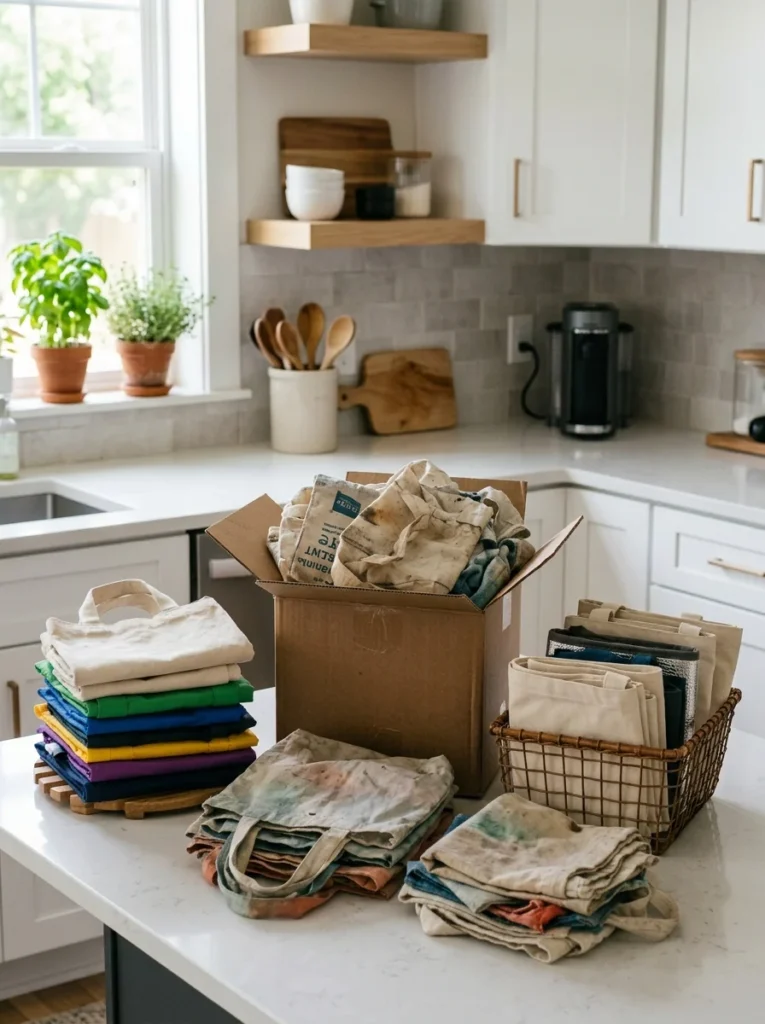
Just as with any other household item, periodically reviewing your bag collection and genuinely retiring ones that are torn, stained, or simply excessive beyond what you actually use regularly prevents your storage system from becoming overloaded with more bags than any reasonable household actually needs to have in circulation at once. I do exactly this every several months, honestly assessing which bags have accumulated wear beyond reasonable use and which promotional or freebie bags I’ve genuinely never once used since acquiring them. A common question is what to actually do with bags you’re retiring, since throwing away reusable bags feels somewhat counterproductive to their original environmental purpose, and I’d recommend checking whether your specific bag material is recyclable through a specialty program, or repurposing sturdy ones for non-food storage uses around the house, rather than simply discarding them in regular trash if a better option exists in your specific area.
12. Use a Wall-Mounted Bag Dispenser With a Cutout Slot
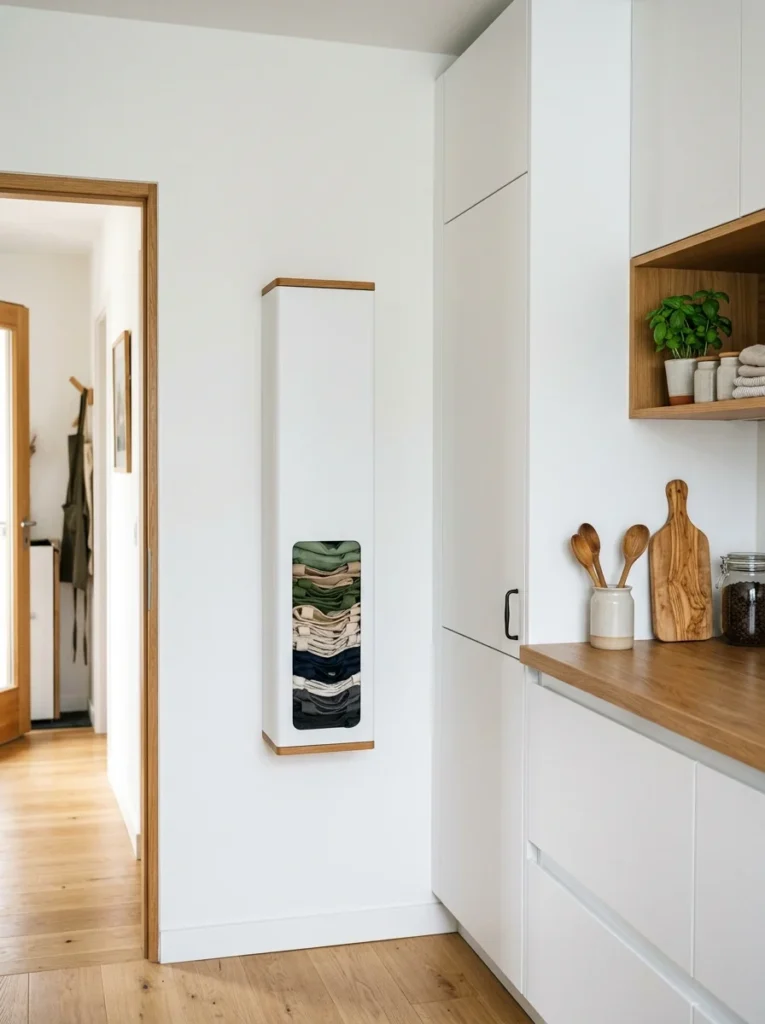
Similar to the dispenser bin concept but wall-mounted rather than freestanding, a dispenser with a simple cutout slot lets you pull bags directly from a mounted unit positioned exactly where you need it, whether near your pantry or beside your kitchen door, without taking up any counter or drawer space at all. A friend installed exactly this style of dispenser specifically, and having it mounted directly at the point where she’s actually packing groceries or heading out the door has made grabbing a bag feel genuinely effortless compared to needing to open a drawer or reach into a bin elsewhere in the kitchen. A frequent question is whether wall-mounted dispensers hold as many bags as a larger bin option, and I’d say generally somewhat fewer given their typically more compact design, making this solution better suited to households wanting quick access to a moderate, regularly refreshed supply rather than storing their entire larger collection in this one specific spot.
13. Commit to Restocking Immediately After Each Trip
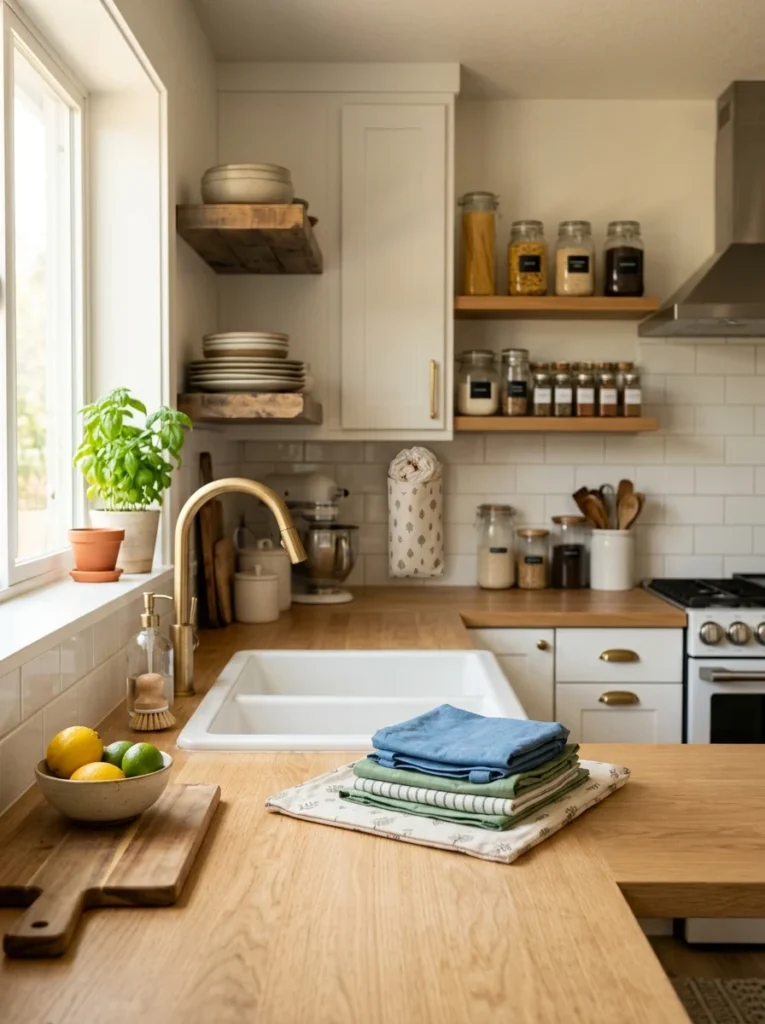
The final and genuinely most important piece of advice isn’t really about storage hardware at all, but rather building the simple habit of immediately returning bags to their designated storage spot right after unloading groceries, rather than letting them sit crumpled on a counter or in your car until you eventually get around to it, at which point they’re often forgotten for the next trip anyway. I’ve made this a genuine non-negotiable habit since my own reorganization, folding and returning bags to my dispenser the moment groceries are put away rather than letting that task linger, and this single habit has done more to keep my system actually functional than any specific storage product I’ve tried. A question I hear often is how to build this habit if it hasn’t stuck despite good intentions, and I’d recommend making your chosen storage solution’s location genuinely convenient relative to where you unload groceries, since a system requiring extra steps or an inconvenient location is considerably less likely to actually become habitual compared to one positioned directly along your natural, existing path through the kitchen.
Final Thoughts
Looking back at that single overstuffed drawer that genuinely stopped closing one afternoon, spilling its tangled contents the moment I opened the neighboring cabinet, it’s honestly a little funny how much thought eventually went into solving what seemed like such a minor household annoyance. Between all 13 of these ideas, the underlying theme is really that reusable bags, precisely because they’re meant to be grabbed quickly and often, benefit enormously from a genuinely low-friction storage system, since even a well-organized but inconvenient solution tends to get bypassed in favor of grabbing whatever’s fastest, plastic bags at checkout included, on a busy day.
If your own reusable bags are living in that same overstuffed, dysfunctional drawer, I’d suggest starting with whichever solution requires the least new purchasing, the tissue box method or a simple hook, before investing in a more elaborate dispenser system, since testing the basic concept first helps confirm which specific approach genuinely fits your household’s actual habits before committing further. From there, refine the system gradually, the same way mine eventually came together, until grabbing a bag on your way out the door stops requiring any thought at all.