
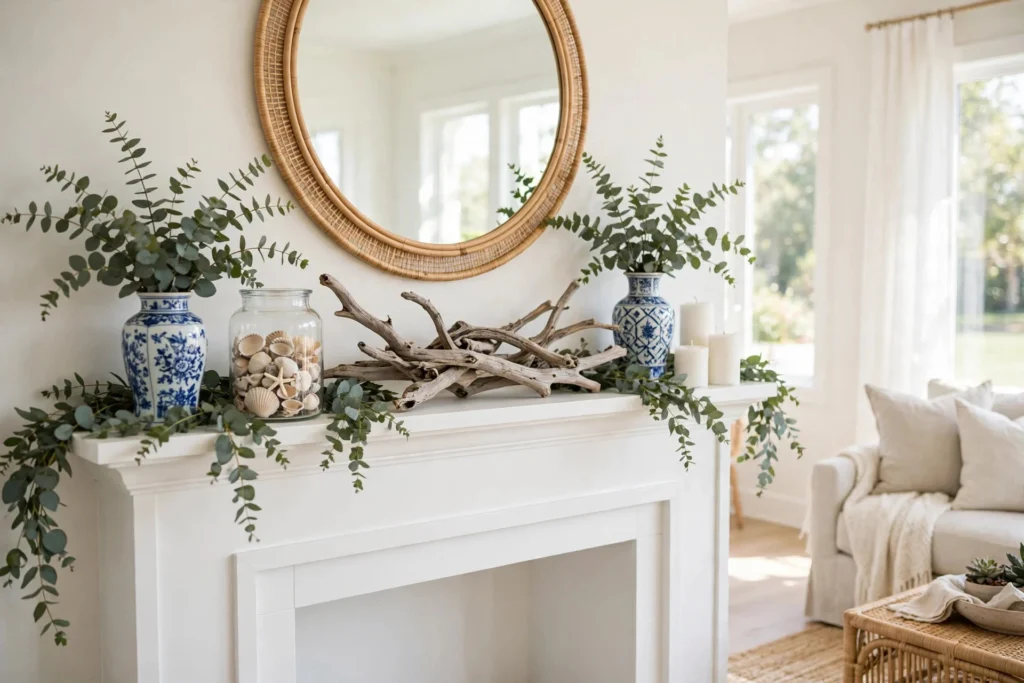
Summer is the one season when the mantel should breathe. No heavy garlands, no dark wood piling up, nothing that makes the room feel warmer than it already is. The best summer mantel decor ideas are light on purpose: white paint showing through, a bit of glass, some greenery, and a few things you picked up on a walk or a beach trip.
I have put together the 14 ideas below from redoing my own mantel every June. Some cost nothing at all, some take an afternoon and a trip to a thrift shop, and all of them work in a real living room with kids, dust, and a fireplace nobody lights for three months. Pick three or four to start with, then swap one or two out as the summer goes on.
1. Clear the Mantel and Start With White: Summer Mantel Decor Ideas
Before you add a single thing, take everything off the mantel and wipe it down. I mean everything, even the clock that has sat there for two years. A clean white or pale-painted mantel is the whole trick to a light summer look, because bare pale wood or white paint reflects the daylight instead of soaking it up. My first summer I tried to style around the old dark candlesticks and a heavy bronze clock, and the mantel still looked like winter in July. Once I cleared it and let the white show, three simple objects were enough. If your mantel is dark wood, a folded white linen cloth or a pale runner across the top does the same job without any paint. Stand back from the doorway and look at it empty for a minute before you start adding things back.
Try this: Leave one third of the mantel completely empty. The blank space is what makes the whole thing feel airy.

2. A Piece of Driftwood as the Centerpiece
A good piece of driftwood does more on a summer mantel than a dozen small decorations. I found mine on a beach walk, a pale gray branch about two feet long, smooth from the water and light enough to lift with one hand. I lay it flat across the center of the mantel, slightly off-center so it looks natural, and that is really the whole idea. If you do not live near a beach, craft shops and garden centers sell driftwood pieces for a few dollars, and a bleached branch from the garden works too once it has dried out. The mistake I made the first time was picking a piece that was too dark and too chunky, and it sat on the mantel like a log. Pale, slim, and a little crooked is what you want. Give it a brush outside before it comes in, because sand hides in every crack.
Try this: Lean the driftwood against the wall instead of laying it flat if your piece is long and thin. It reads like a piece of sculpture.
3. Shells in a Clear Glass Jar
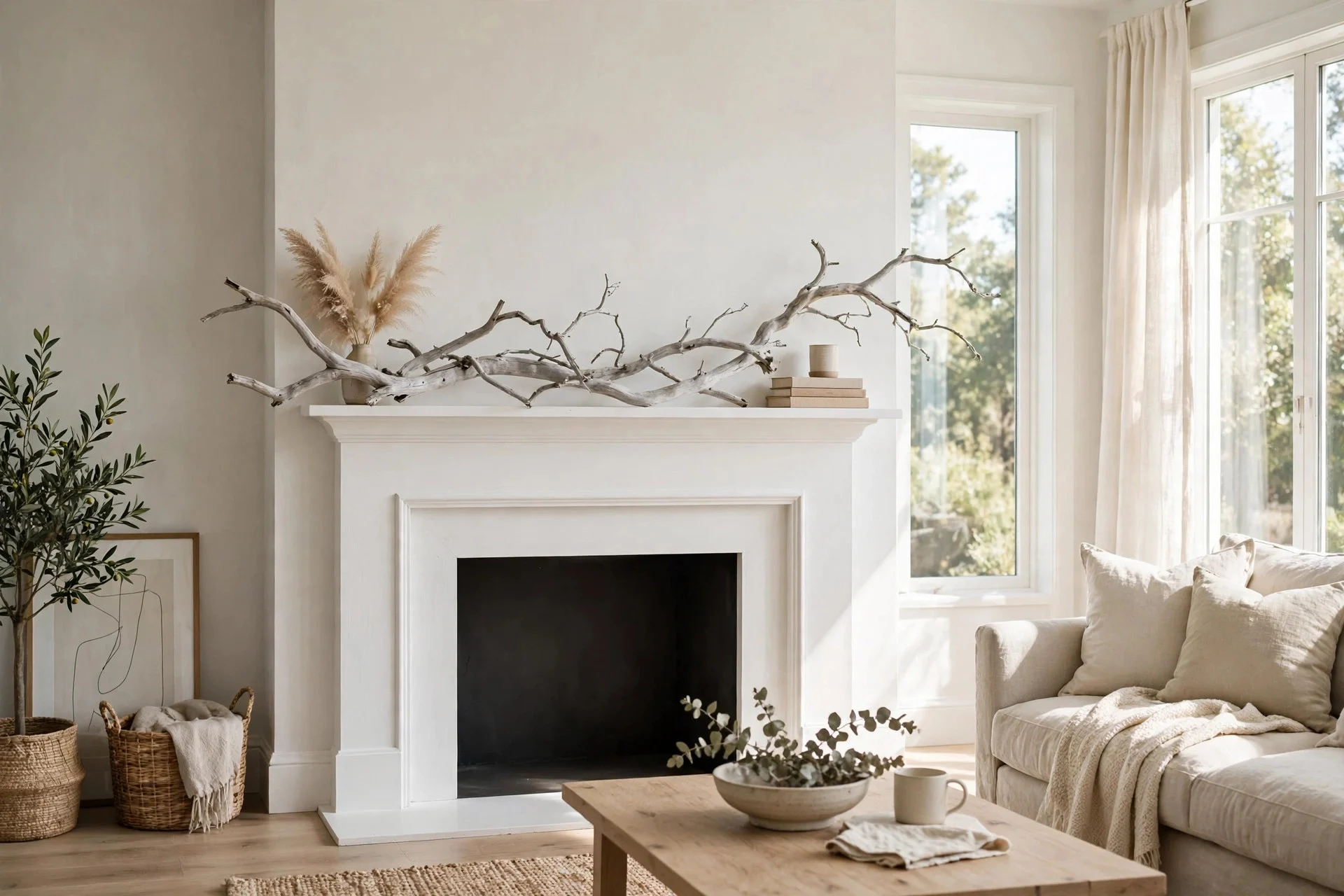
Shells look best when they are grouped together instead of scattered one by one across the mantel. I keep a big clear glass jar, the kind with a wide mouth, and fill it about two-thirds full with shells I have collected over the years. White clams, a few spiral shells, and a handful of tiny ones on top. The glass keeps the whole thing feeling light, and you can see the shapes through the sides. The first summer I tried this I spread the shells loose along the mantel, and they looked like clutter that needed sweeping up. In the jar they look like a collection. If you do not have a shell collection, a bag of mixed shells from a craft shop costs very little, and a clear vase or a tall hurricane glass works just as well as a jar.
Try this: Put the tallest shells at the back of the jar and the flat ones at the front, so you can see the shapes from across the room.
4. White and Cream Candles in Different Heights
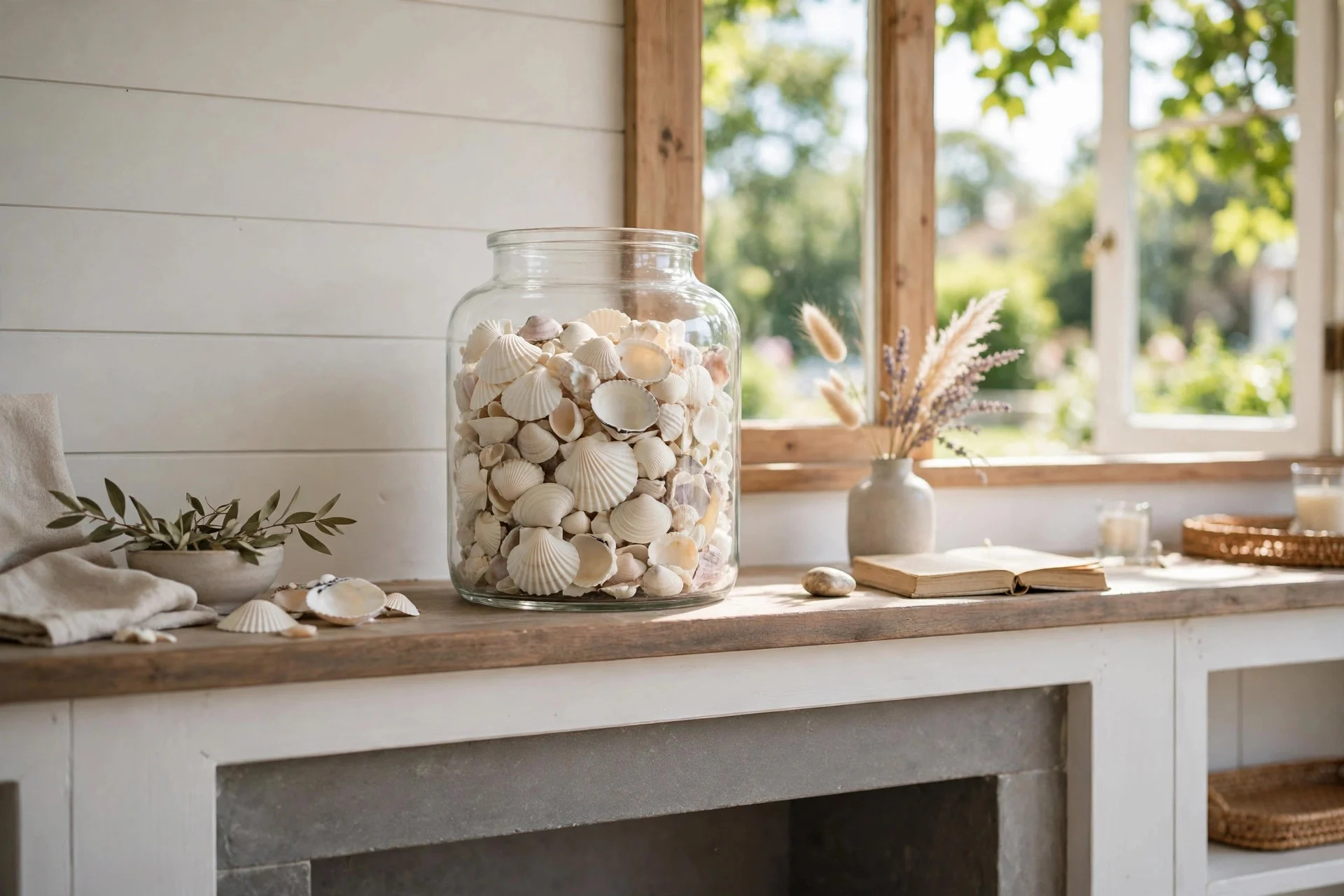
White pillar candles in three different heights are the easiest way to fill one end of a summer mantel. I use plain white and cream candles, no scent, no color, and I set them on a small wooden tray or a flat stone so the wax never touches the mantel itself. Tall at the back, medium in the middle, short at the front, and the group looks finished even before you light anything. I learned to skip the colored candles here, because even a soft pink or pale blue can throw the whole pale palette off. In the evening I light them for an hour while we sit outside with the doors open, and the glow through the open windows is lovely. Battery candles work fine too if you would rather not deal with real flames near curtains.
Try this: Stick to odd numbers. Three candles look styled, four look like a row.
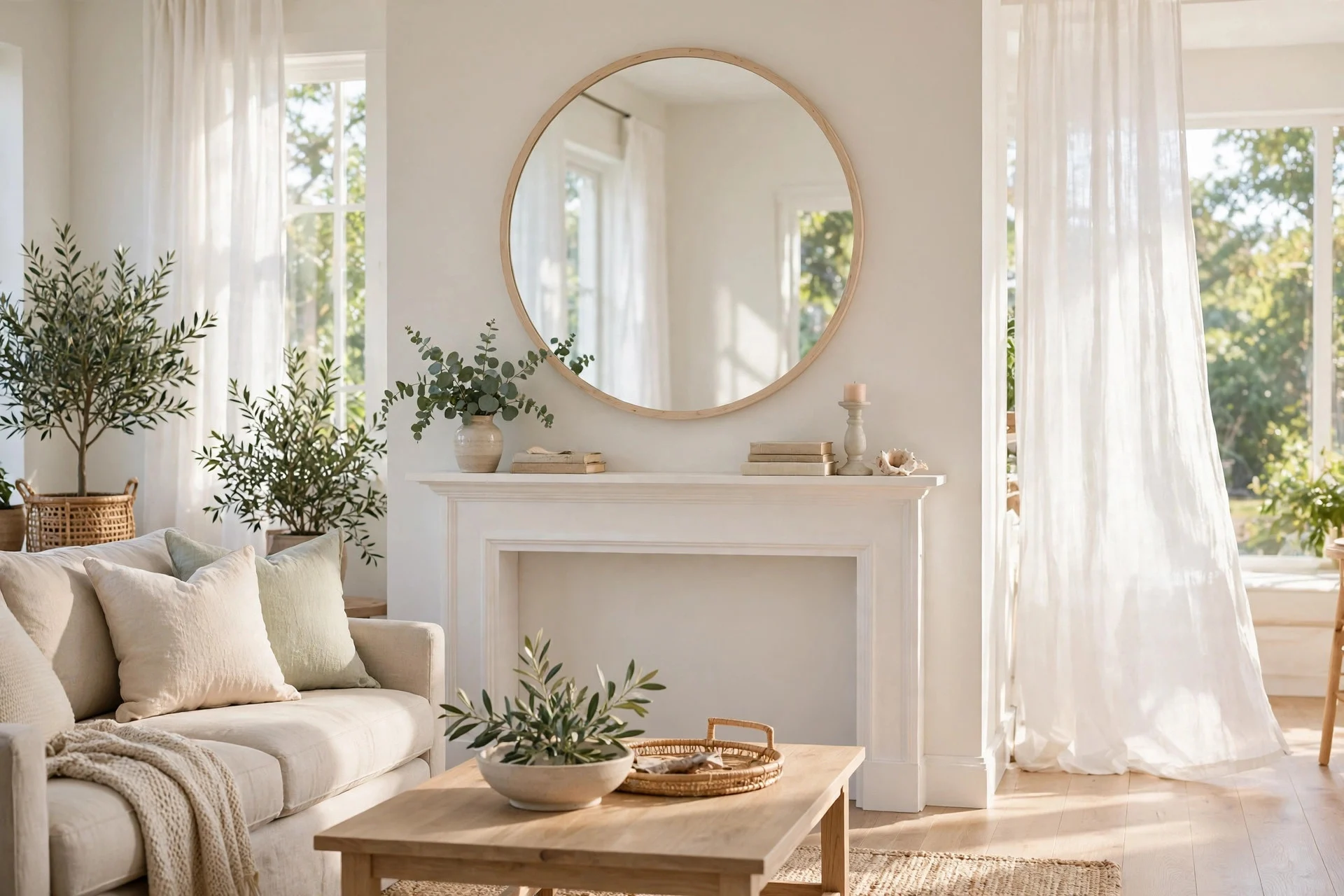
5. A Big Round Mirror to Bounce the Light
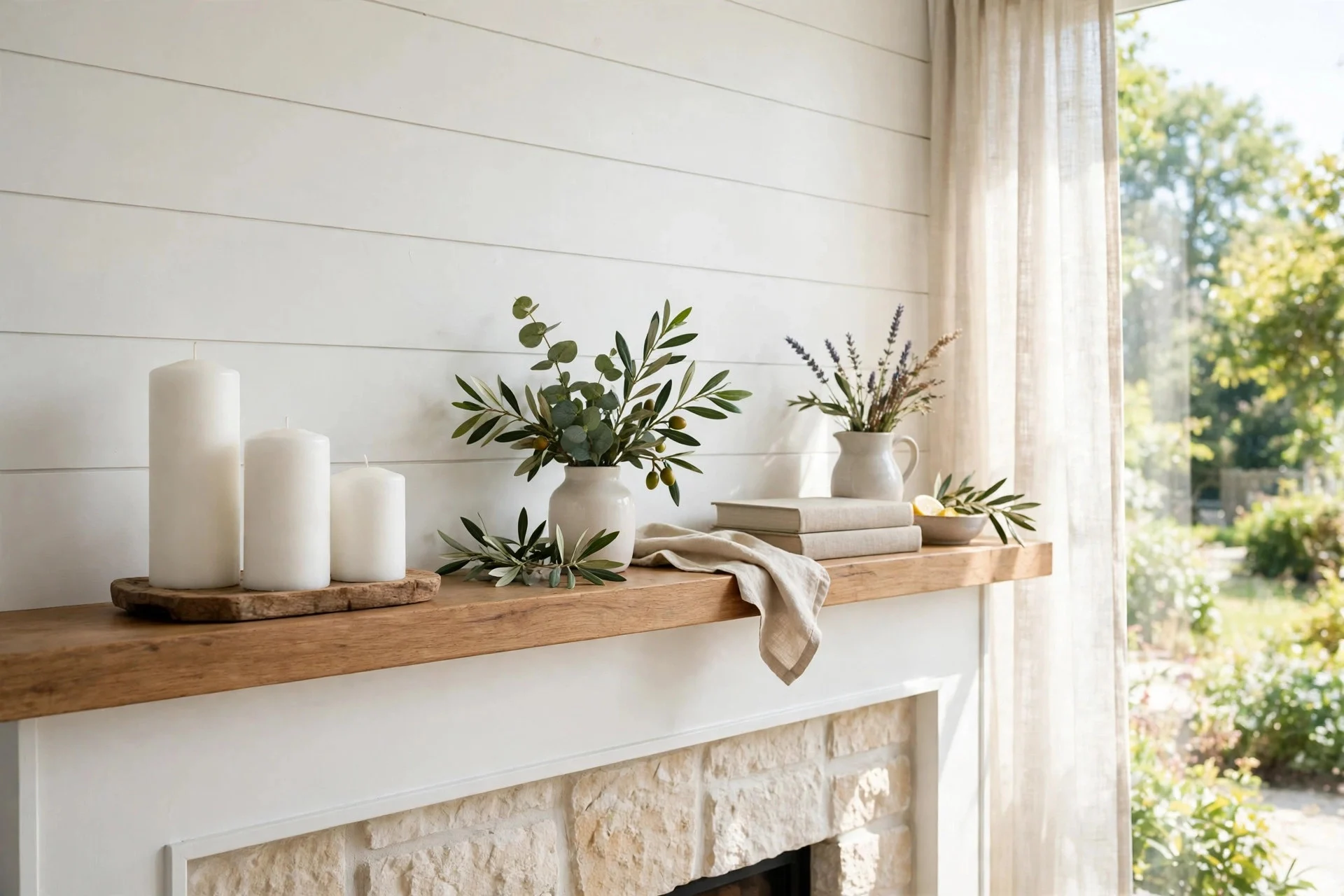
A big round mirror above the mantel is my favorite trick for a dark living room in summer. It catches the daylight from the windows and throws it back across the room, and a round shape softens the straight lines of the mantel underneath. I picked a simple mirror with a thin pale wood frame, about two feet across, and hung it so the bottom edge sits a few inches above the mantel. The first mirror I tried was too small and looked lost on the wall, so now I go as big as the space allows. One thing to check before you hang it: stand where you sit in the evening and see what the mirror reflects. Mine once reflected the ceiling fan, which was not the view I wanted. Angle it slightly, or hang it a touch lower, until it catches a window or the garden instead.
Try this: Wipe the mirror once a week in summer. Dust and fingerprints show up fast in bright light.
6. A Loose Eucalyptus Garland
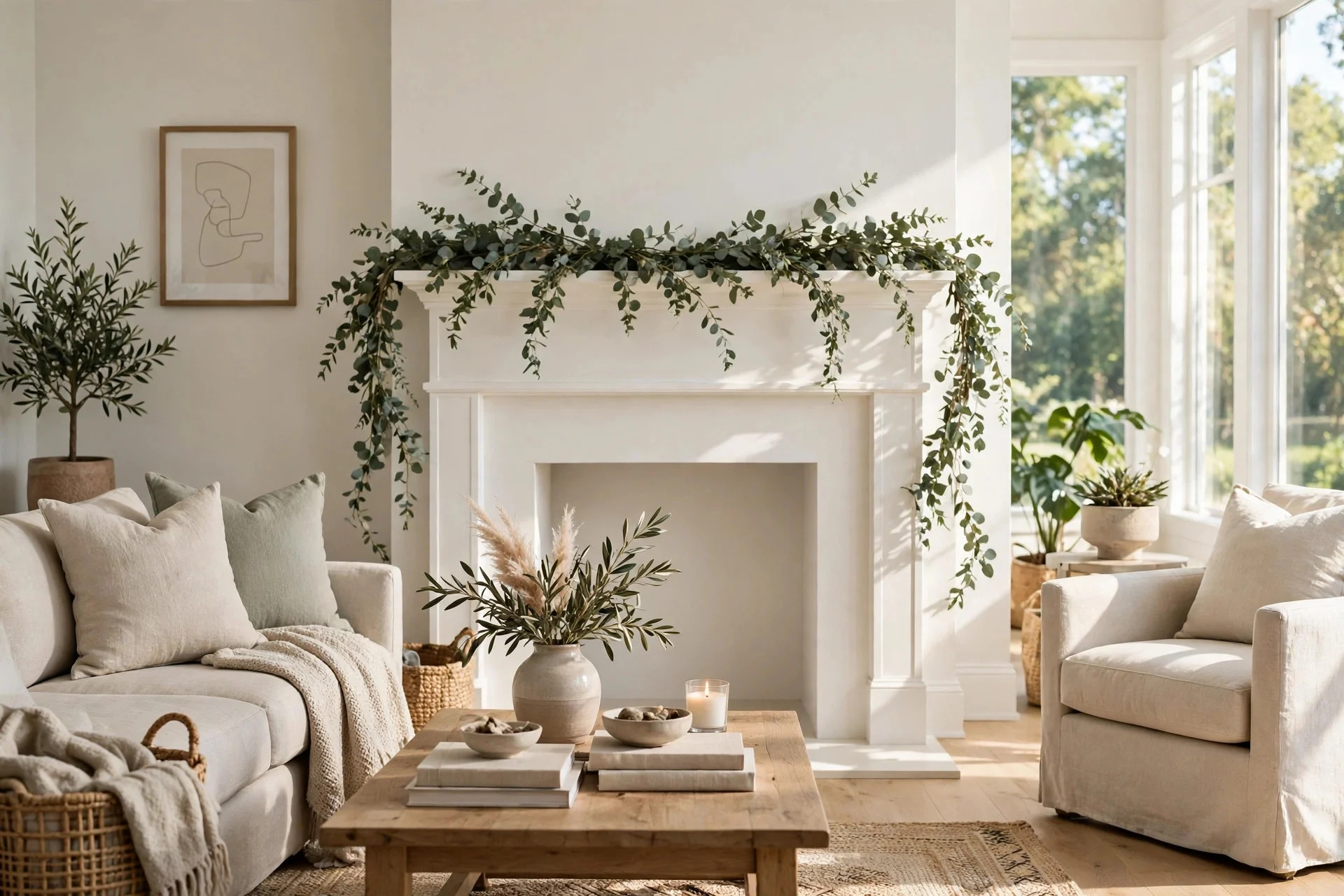
A loose eucalyptus garland draped along the mantel brings in greenery without the heaviness of a pine garland. I use two or three long stems of fresh eucalyptus, laid end to end across the mantel so they overlap a little in the middle, and I let the ends droop down each side by a few inches. It smells faintly lovely for the first week, and as it dries it keeps its soft gray-green color for months. The mistake I made the first year was wiring the stems tight to the mantel in a straight line, and it looked stiff and fussy. Loose is better. Just lay it down and let it settle where it wants to. When the leaves start to go brown, I swap the stems for fresh ones, which costs a couple of dollars at the florist.
Try this: Tuck two or three small white flowers into the garland near the center. They break up the green without adding any weight.
7. A Woven Basket of Dried Pampas Grass
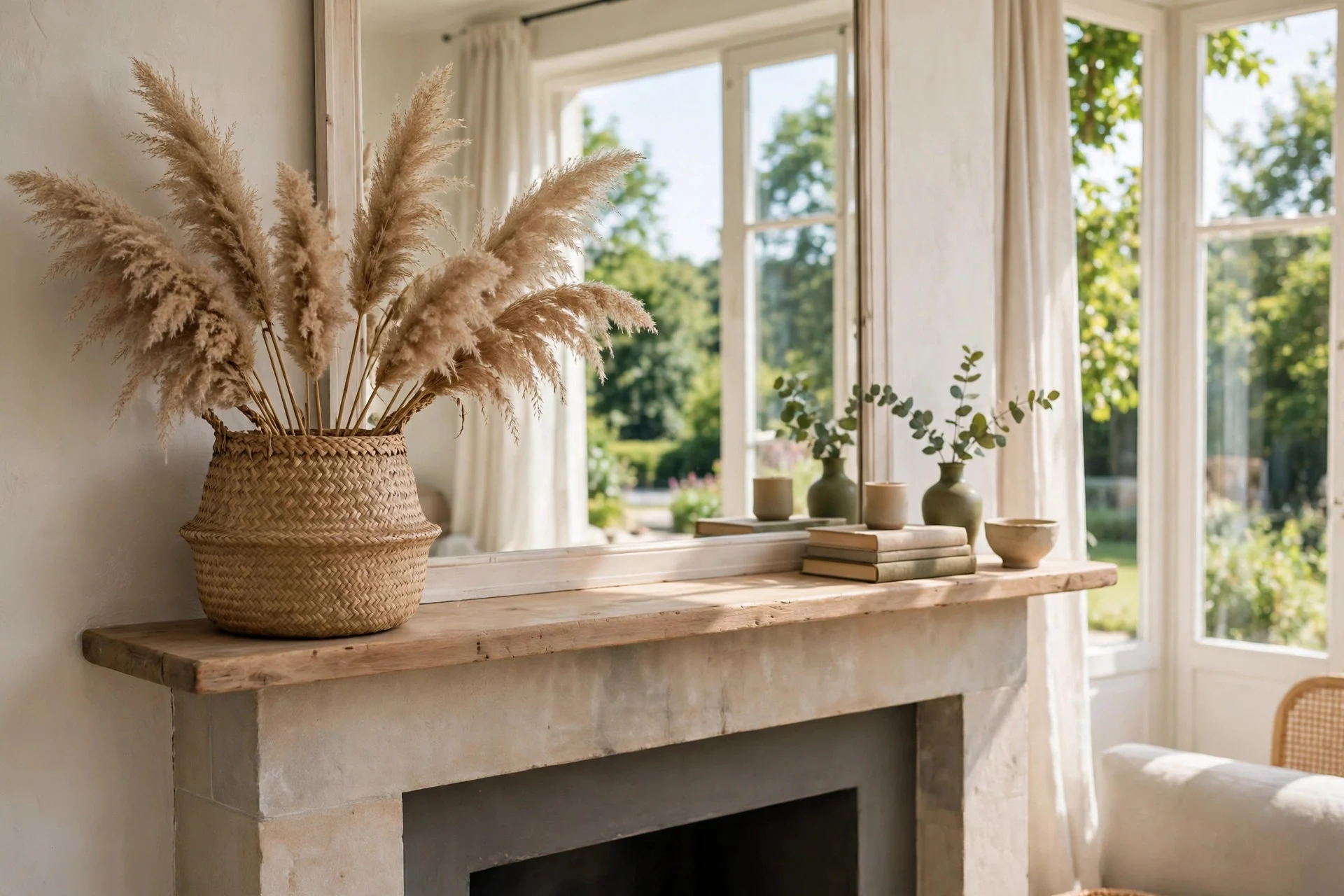
A small woven basket holding a few stems of dried pampas grass is the quickest way to add height to one end of the mantel. I use a low, wide basket in natural seagrass, and I put three or four pampas stems in it, cut to different lengths so the fluffy tops fan out at different heights. It brings in that soft, sandy color that suits summer, and the texture against a smooth white mantel is lovely. Pampas sheds, though, and I learned that the hard way when I put a tall bunch right above the sofa cushions and found fluff everywhere for a week. A quick spray of hairspray over the plumes before you bring them inside holds them together, and I keep the basket at the end of the mantel away from where people sit. If pampas is not your thing, dried wheat or bunny tails work the same way.
Try this: Trim the stems so the tallest plume sits just below the mirror or the picture above the mantel, not poking in front of it.
8. Blue and White Ceramic Vases
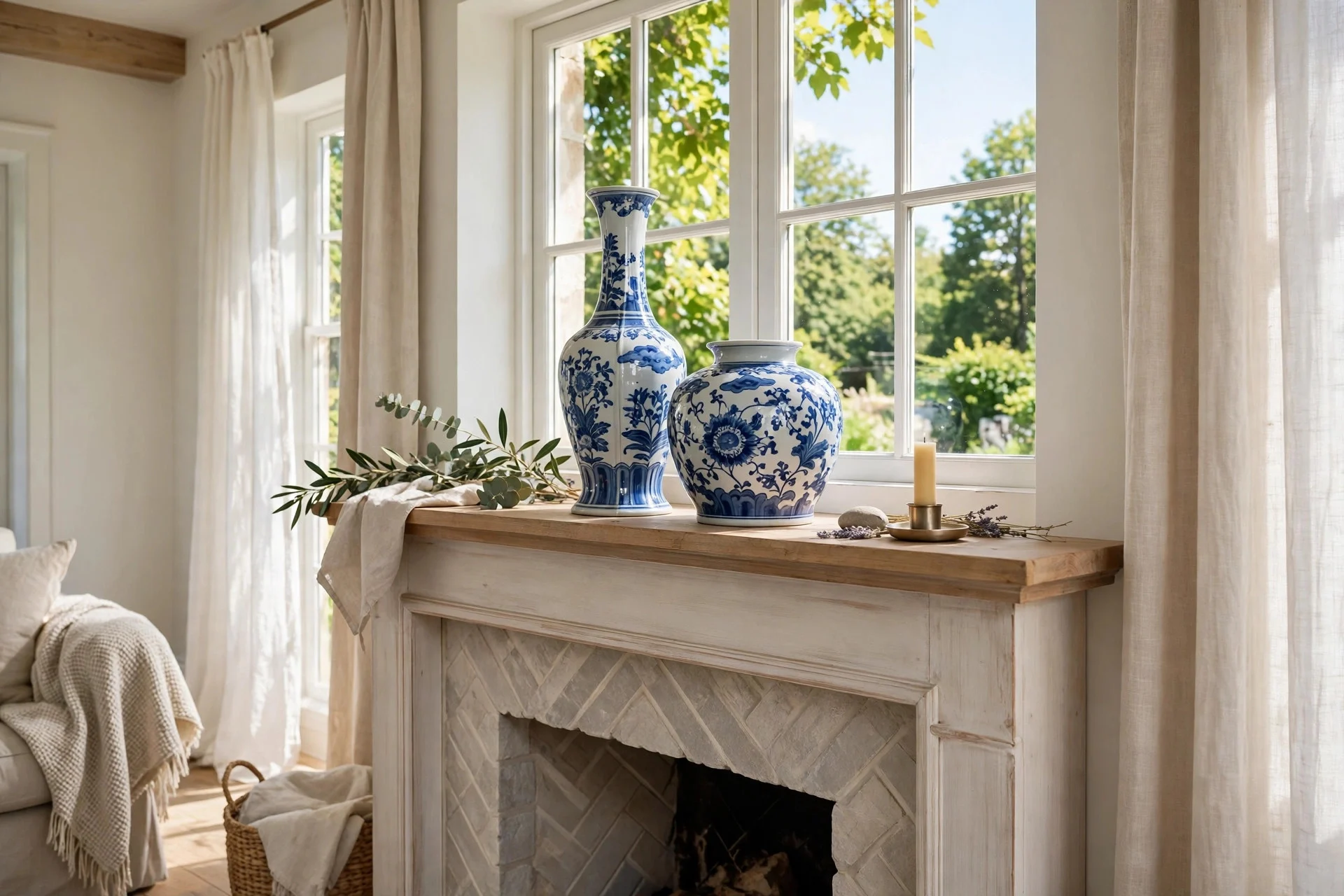
A pair of blue and white ceramic vases is the classic summer mantel move, and it works because the blue reads as cool on a hot day. I keep two vases, one tall and one short, in a simple blue and white pattern, and I set them at one end of the mantel with a little space between them. Sometimes I leave them empty, sometimes I put a stem or two of greenery in the tall one. The first time I tried this I bought a matching set of four and lined them all up in a row, and the mantel looked like a shop shelf. Two is enough. Thrift shops are full of blue and white vases for a few dollars, and they do not need to match exactly. Different patterns in the same blue and white palette look collected rather than bought in a set.
Try this: Put the tall vase on the left and the short one on the right, or the other way round, but keep the taller piece at the outer edge so the middle stays open.
9. A Framed Botanical Print
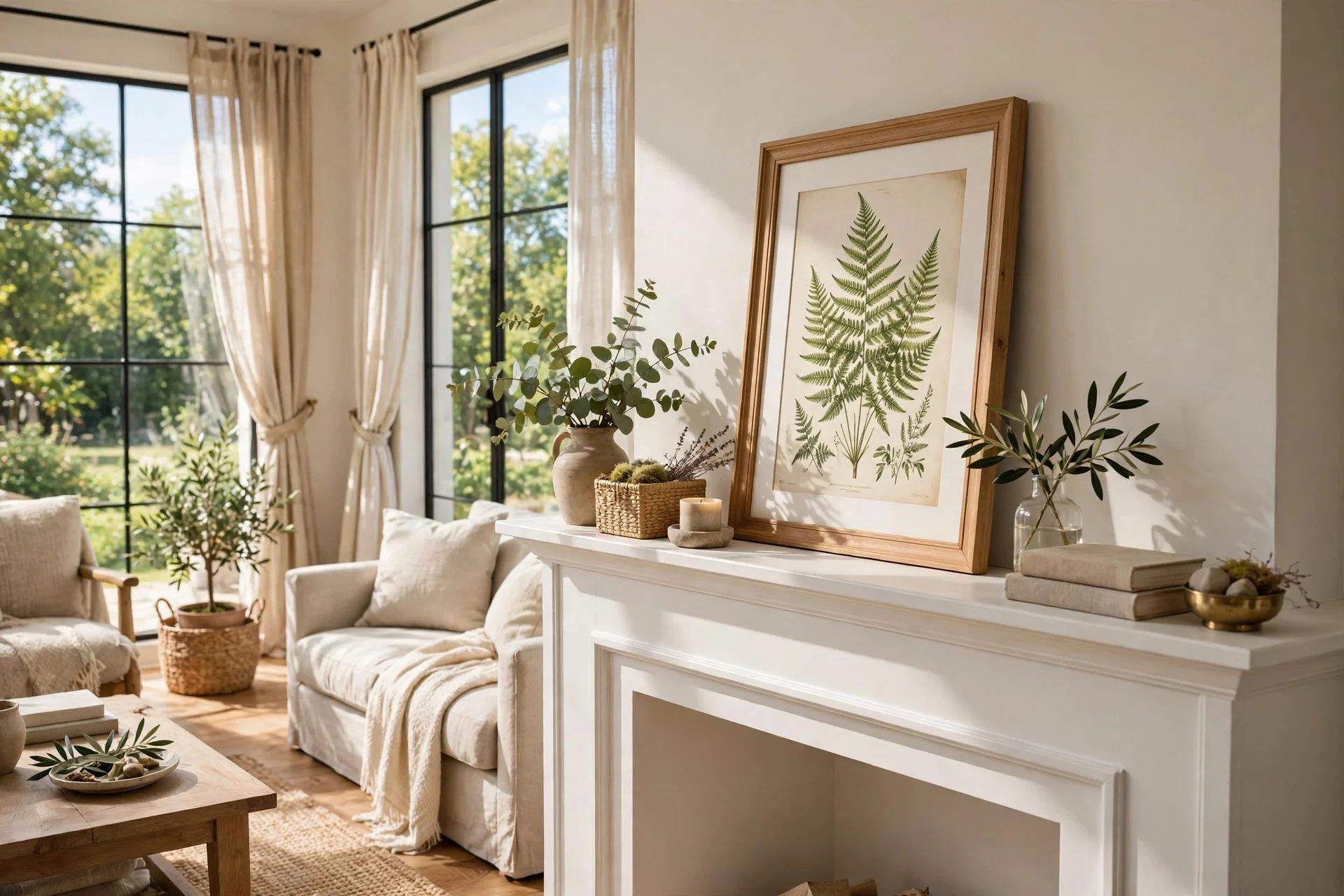
A framed botanical print leaning against the wall above the mantel adds color without adding clutter. I like a simple print of a fern or a palm leaf on a white background, in a thin pale wood frame, and I lean it rather than hang it so I can swap it out when the season changes. Leaning it also means no nails in the wall, which matters in a rented house. The print should be big enough to anchor the wall, about the width of half the mantel at least. I once used a small print and it looked like a postcard that had been left behind. If you do not want to buy a print, press a real fern leaf between two sheets of glass in a floating frame. It costs almost nothing, and it looks far more expensive than it is.
Try this: Lean the frame slightly to one side of center and balance it with a tall vase on the other side.
10. Sea Glass and Aqua Accents
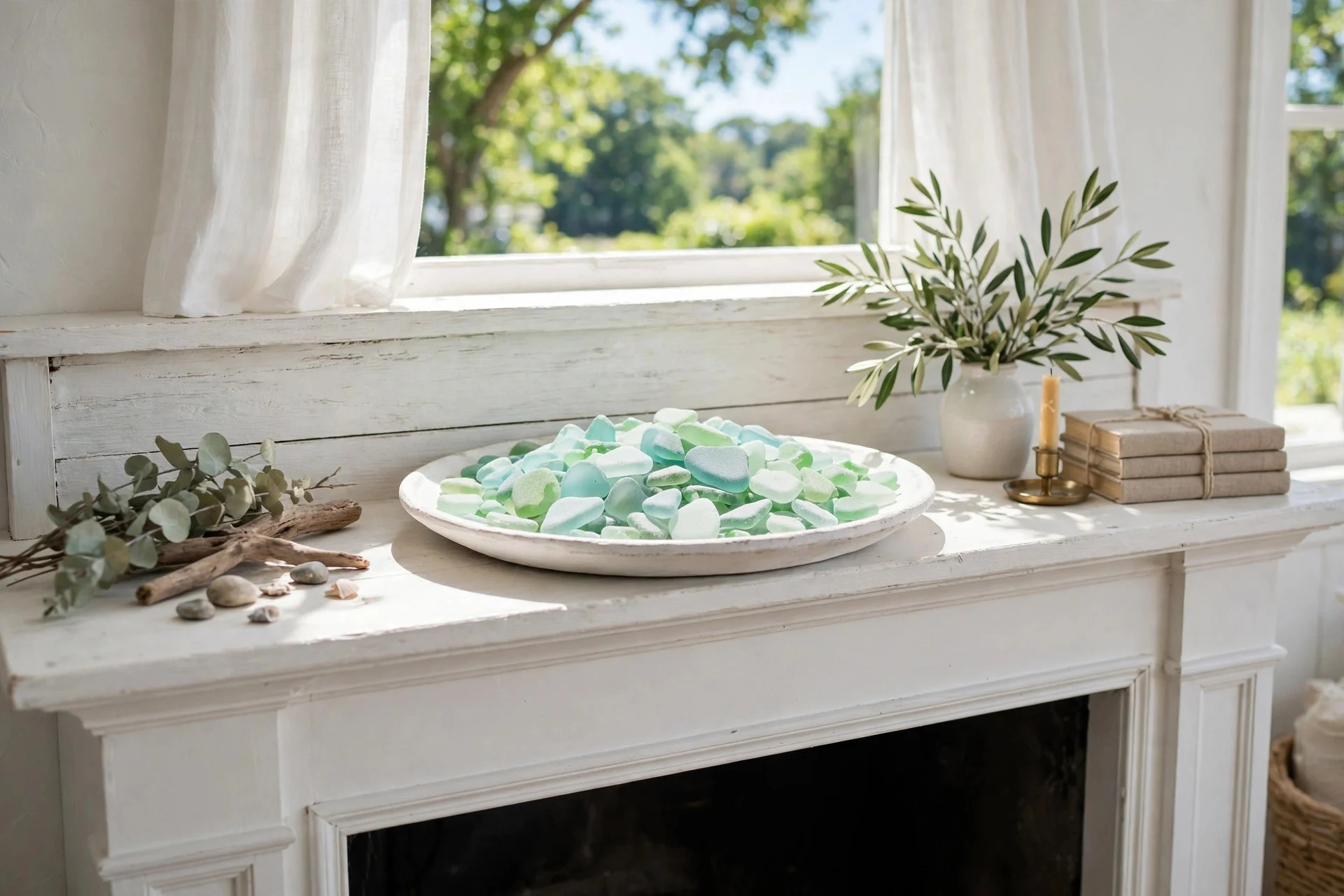
A few small pieces of sea glass are all the color a summer mantel needs. I keep a shallow white dish in the middle of the mantel and fill it with sea glass in soft aqua, pale green, and frosted white. The pieces catch the light and glow a little, and the dish keeps them from rolling around. A small aqua glass bottle or two beside the dish picks up the same color without shouting about it. My first attempt had too much blue: a blue runner, blue candles, blue vases, and the mantel looked like a beach gift shop. Now I keep the color to one small group in the middle and let the white and wood do the rest. You can find sea glass at craft shops, or collect it on a beach and wash it well before it comes inside.
Try this: Use frosted glass rather than shiny. Shiny aqua can look cheap, while frosted glass looks like the real thing.
11. A Light Linen Runner Across the Mantel
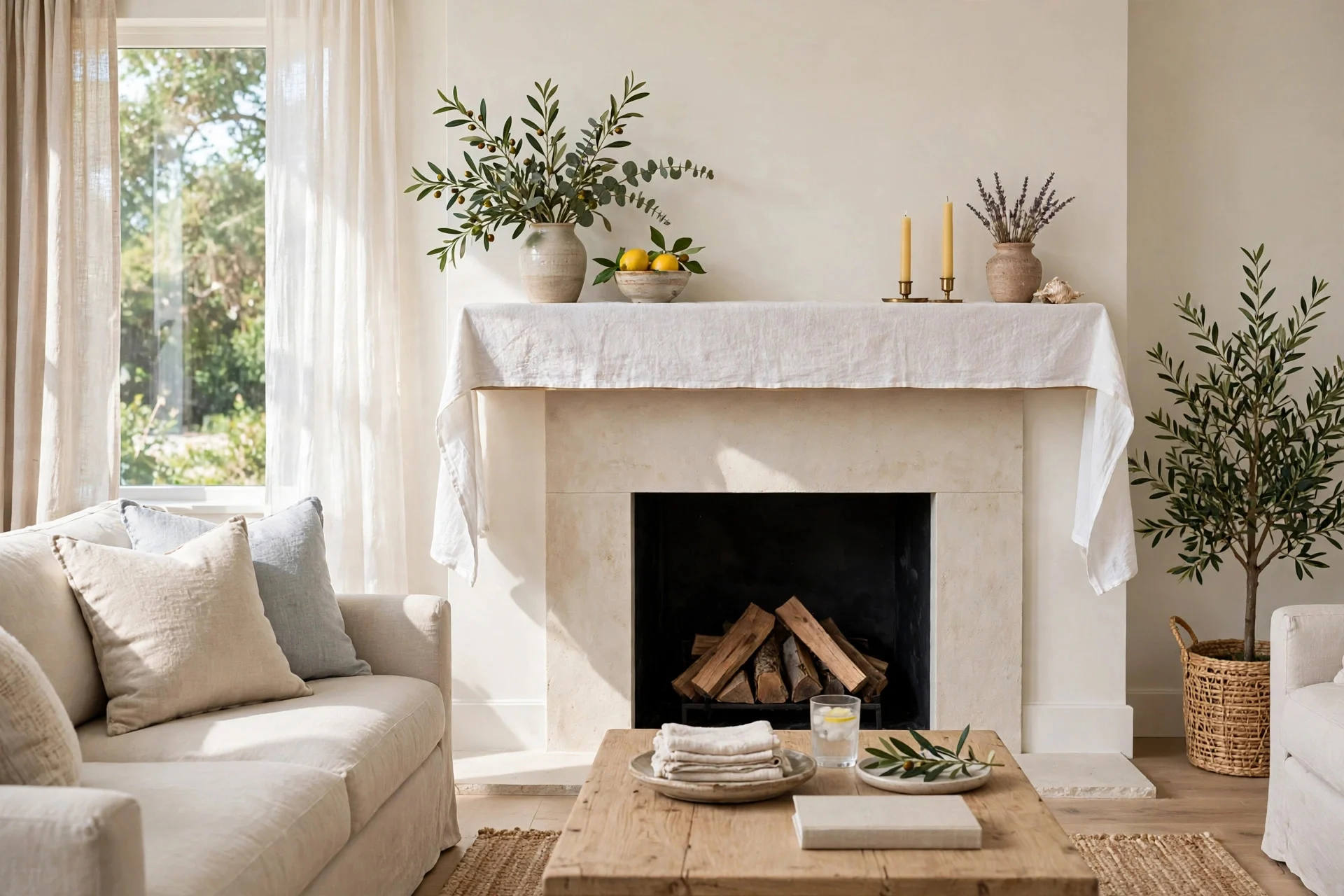
A light linen runner laid across the mantel softens the hard edge and gives everything sitting on it a shared base. I use a plain white or natural linen runner, folded to the width of the mantel, and I let the ends hang down a few inches on each side. It is the same idea as a table runner, just smaller. The fabric catches the daylight and makes the whole arrangement feel soft instead of stark. I learned to iron the runner before I put it down, because a wrinkled runner looks like laundry that got left behind. A runner also protects the mantel from candle wax and vase rings, which is worth it on a painted surface. In late summer I swap the white linen for a pale blue one, and the mantel feels new again without buying anything else.
Try this: Fold the runner in half lengthwise if it is too wide. It should sit on the mantel, not hang over the front edge.
12. Lanterns for Soft Summer Evenings
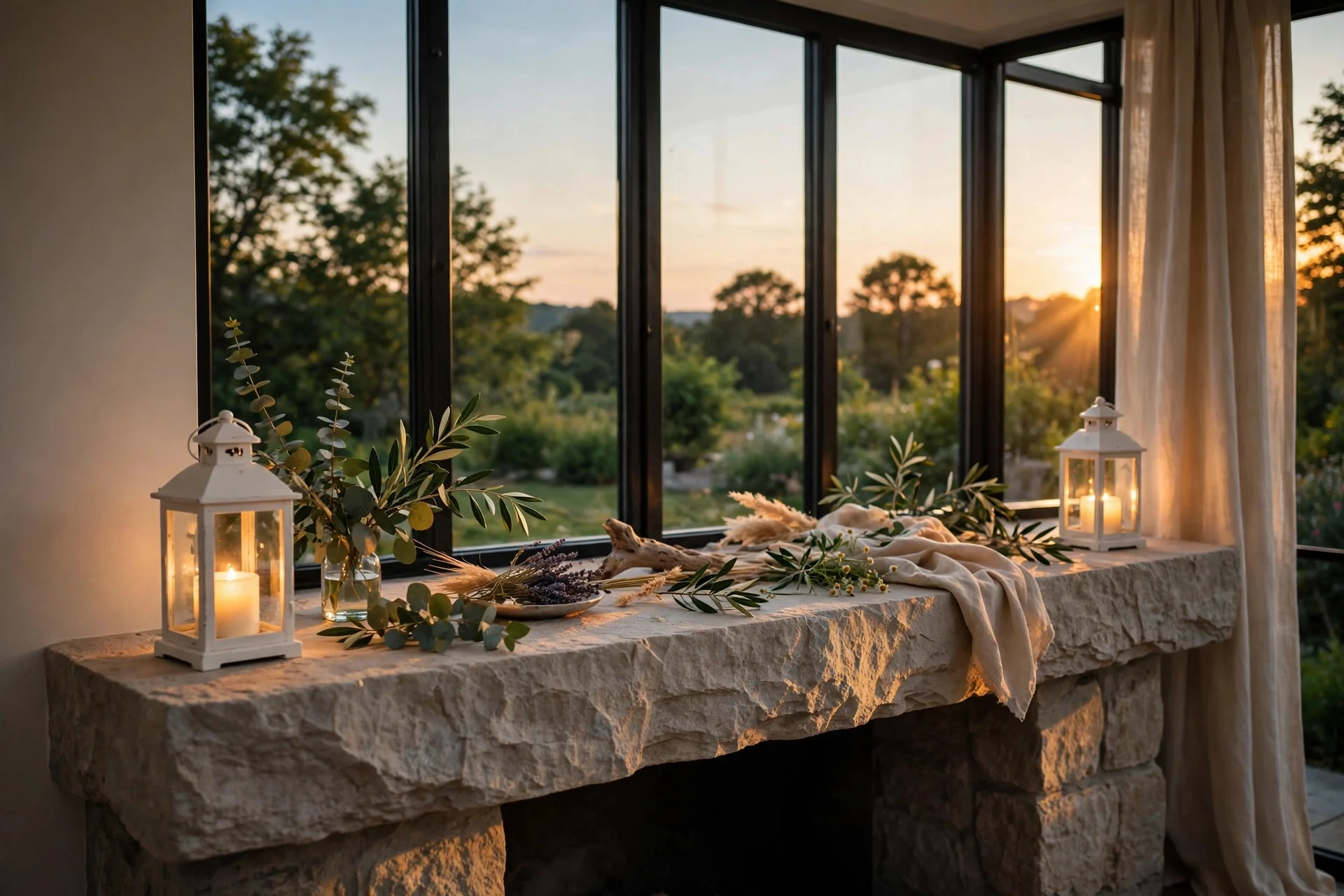
A pair of small lanterns at the ends of the mantel is lovely on a summer evening when the doors are open and the light is fading. I use simple white or glass lanterns, one tall and one short, each with a battery candle inside. They come on with a timer at dusk, so the mantel glows softly without me thinking about it. I use battery candles here because a real flame next to a linen runner and dried pampas grass is a risk I do not want to take, and honestly the warm white battery candles look just as good through glass. The mistake to avoid is putting lanterns in the middle of the mantel, where they block the mirror or the print behind them. Keep them at the ends, low and out of the way, and let the middle stay open.
Try this: Use warm white candles only. Cool white light looks harsh against pale summer colors and kills the soft evening feeling.
13. Fresh Cut Flowers in a Low Vase
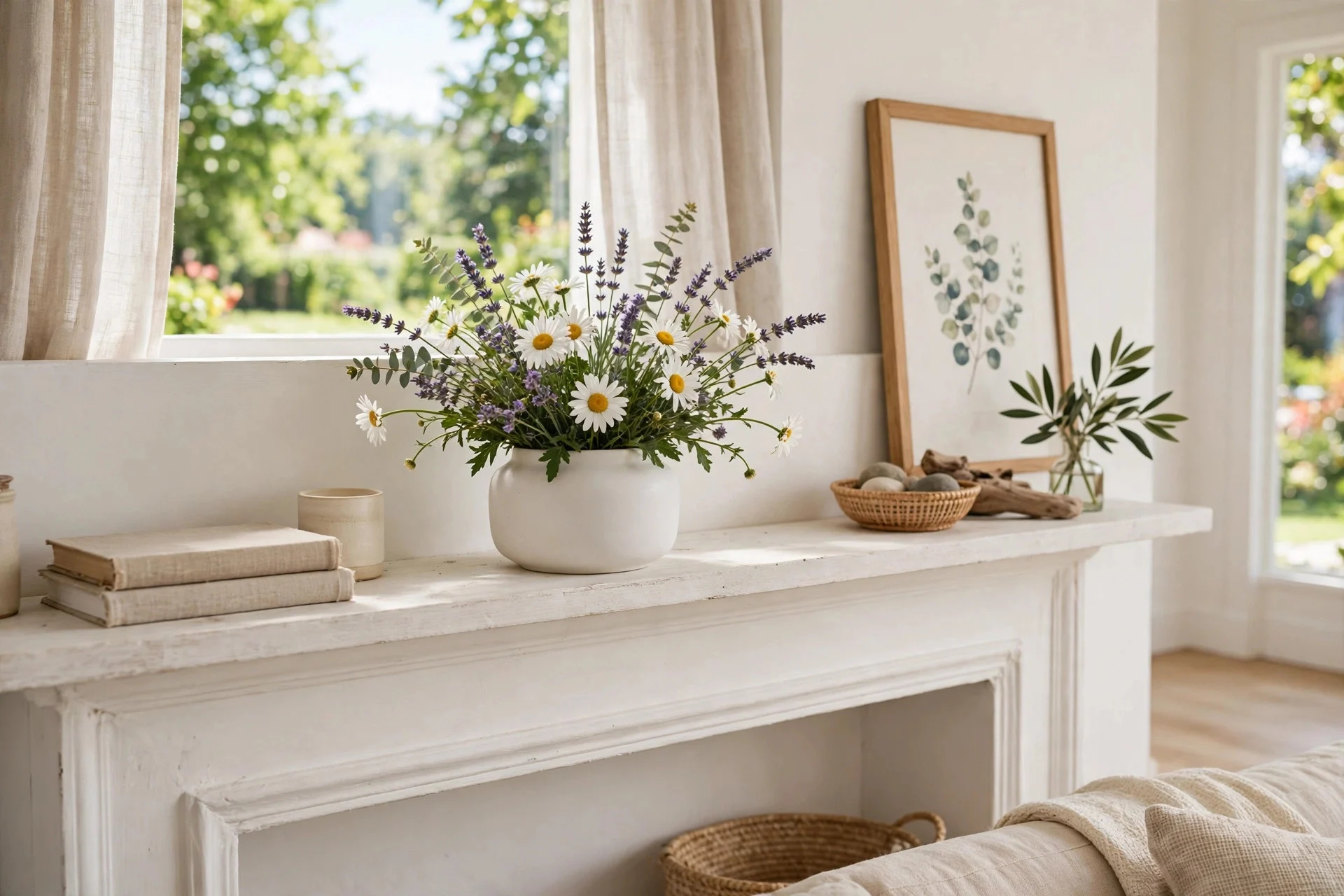
Fresh flowers are the one thing on a summer mantel that should never look arranged too neatly. I use a low, wide vase, white or clear glass, and fill it with whatever is in the garden that week: white daisies, a few sprigs of lavender, or a couple of pale pink roses. I cut the stems short so the flowers sit low and do not block the mirror or the print above the mantel, and I change the water every other day so the flowers last the week. The first summer I used a tall vase with long-stemmed flowers, and they flopped over the front of the mantel and dropped petals everywhere. Low and loose is the way. A jam jar works just as well as a proper vase, and honestly it suits the whole light and airy look even better.
Try this: Add one stem of greenery for every three flower stems. It fills the vase out and keeps the arrangement from looking sparse.
14. A Small Stack of Summer Books Topped With a Shell
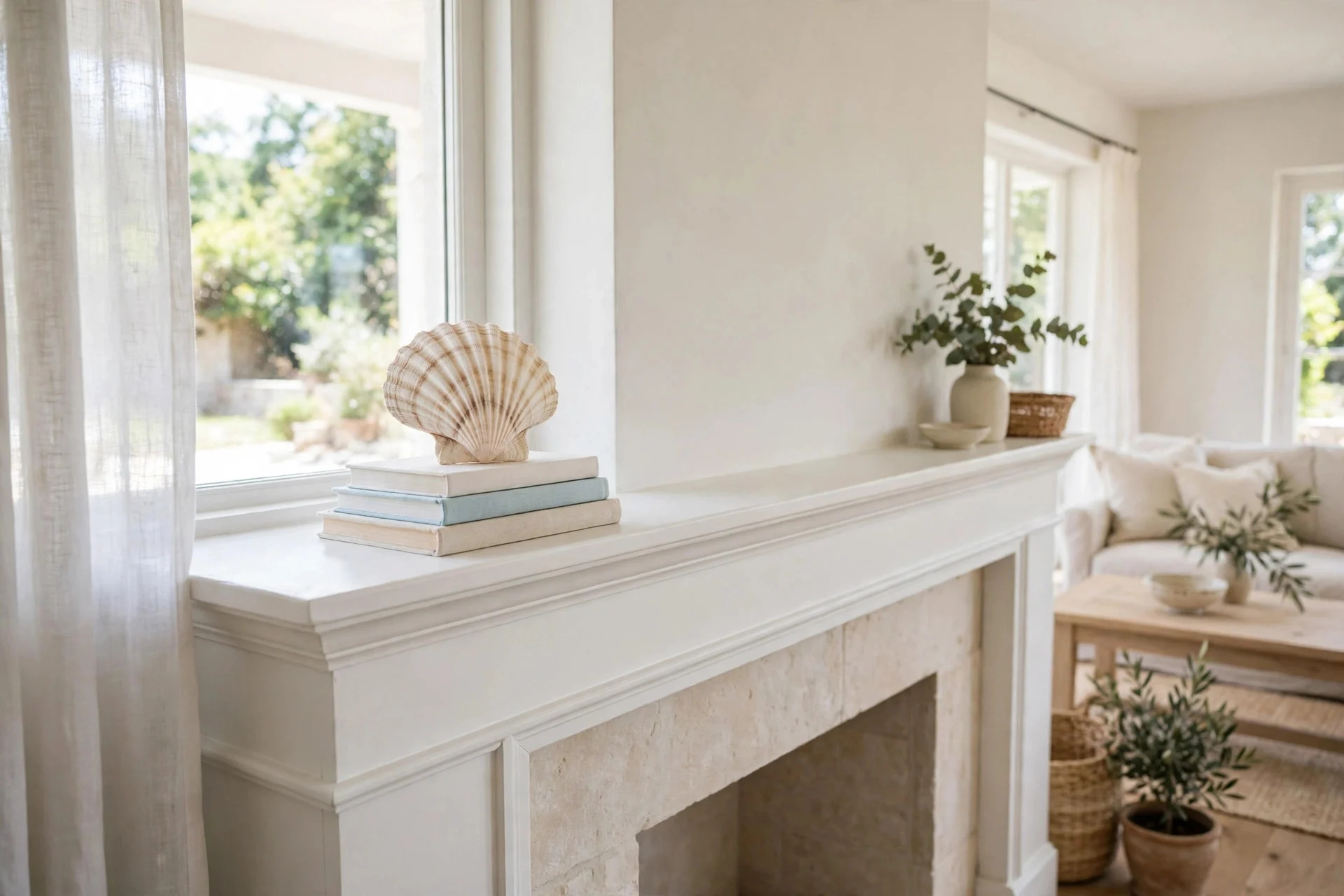
A small stack of two or three books adds a little weight to the mantel without adding any heaviness, as long as the books are light. I pick books with pale covers, a white or sand-colored spine, and I stack them flat at one end of the mantel, largest at the bottom. On top I set a single large shell, a scallop or a conch, lying flat so it does not roll off. It is a quiet little detail, and guests always pick the shell up. The mistake I made the first time was stacking five heavy hardbacks with dark covers, and the mantel suddenly felt like a library shelf. Two or three pale books are plenty, and they give the candles or the vase next to them something to sit beside. If you do not have pale books, turn the spines around so the pages face out.
Try this: Keep the stack low, no higher than the shortest candle nearby, so the mantel keeps its flat, open line.
Frequently Asked Questions
What colors work best for a summer mantel?
White, cream, natural wood, and soft sandy tones work best, with one cool accent like aqua, sea glass blue, or soft sage. Keep the palette to three colors so the mantel feels calm, and let the white and pale wood do most of the work.
How do I keep a summer mantel from looking bare?
Group things instead of spreading them out. A cluster of candles at one end, a vase at the other, and one bigger piece in the middle fills the mantel without clutter. Add one soft texture, like linen or dried grass, and the empty space starts to look intentional.
Can I use real greenery on a summer mantel?
Yes, and eucalyptus and olive branches work best because they dry well and keep their color for weeks. Fresh flowers in a low vase last about a week if you change the water every other day. Keep dried stems away from real candles.
When should I change my mantel over to summer decor?
Late May or early June is a good time, once the heating is off and the windows are open most days. Most of these ideas work all summer long, and you can swap just the flowers or the print in August to freshen the look without starting over.
Final Thoughts
A summer mantel does not need to be perfect or expensive to feel light and welcoming. A clear white surface, a piece of driftwood, a jar of shells, and a few candles are enough to make the room feel like summer the moment you walk in. Pick the ideas that fit your home and your budget, change the flowers when they fade, and let the mantel stay simple all season. The empty space is part of the look, so enjoy it.