
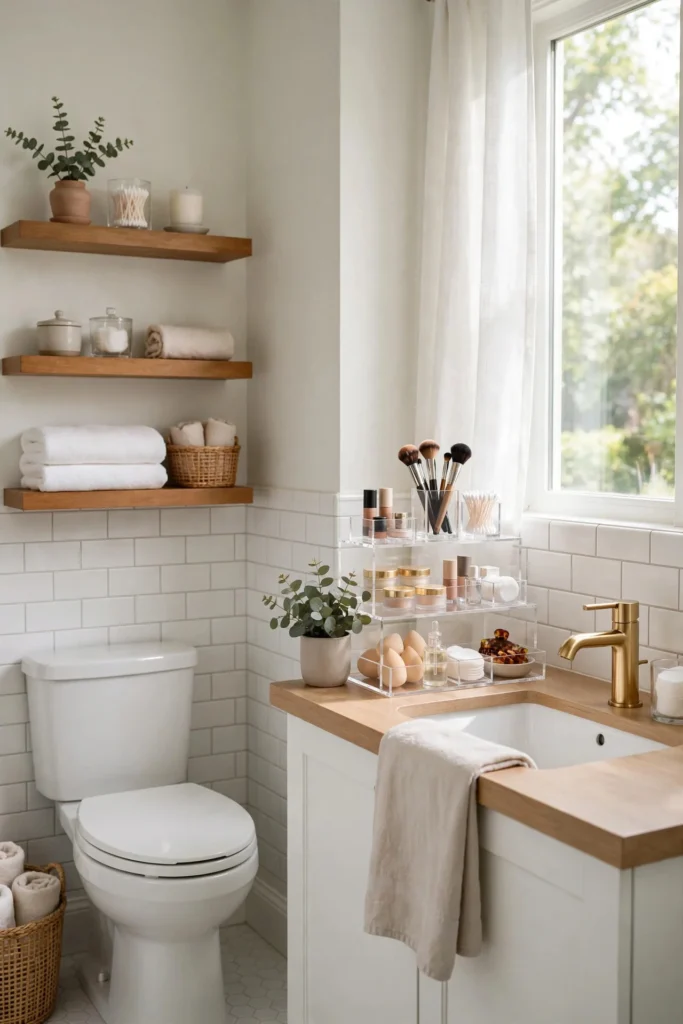
A small bathroom counter disappears fast — foundation, brushes, palettes, and seventeen lipsticks you swear are different shades. And unlike a bedroom vanity, a bathroom has humidity, splashing sinks, and about six inches of usable counter. Storing makeup here takes a different strategy than anywhere else in the house.
These 12 ideas are built for tight bathrooms: vertical storage, inside-cabinet systems, and humidity-smart choices that keep powders dry and brushes clean. Most cost under $25, and several use space you’re currently ignoring completely.
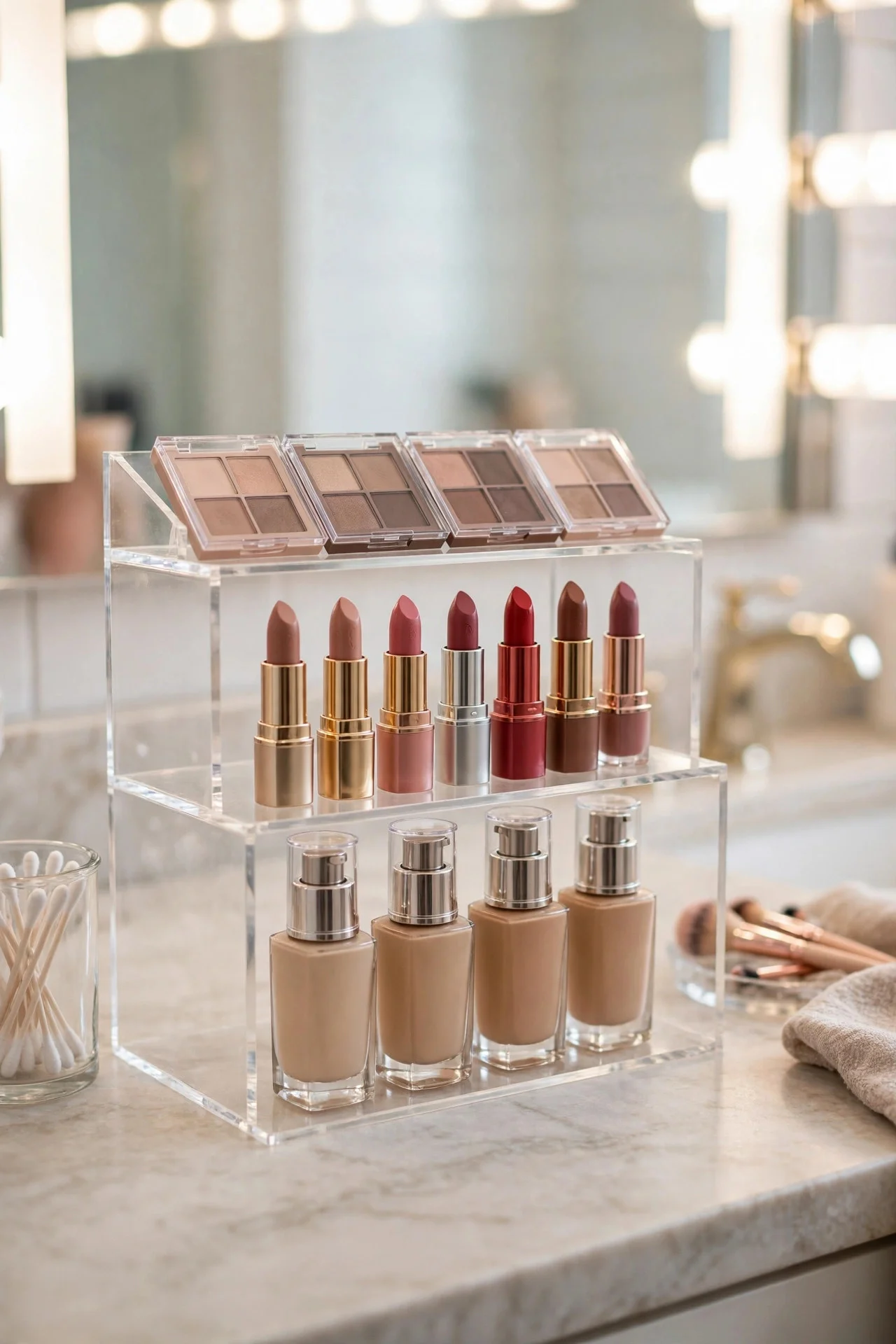
1. Tiered Acrylic Risers on the Counter
A three-tier acrylic riser turns one footprint of counter into three levels of visible storage. Daily foundations and concealers live on the bottom step, palettes stand upright on the middle, and lipsticks line the top — everything visible at a glance, nothing stacked and forgotten. Most risers cost $15 to $20 and fit in a 10-inch square.
Acrylic wipes clean with a damp cloth, which matters when powder fallout and foundation smudges are daily realities. Keep the riser at the back of the counter, away from the faucet’s splash zone, and it’ll hold a full routine in less space than a dinner plate.
Try this: Put only your true daily products on the riser — if you haven’t touched it in two weeks, it belongs in a drawer, not on display.
2. A Magnetic Makeup Board on the Wall
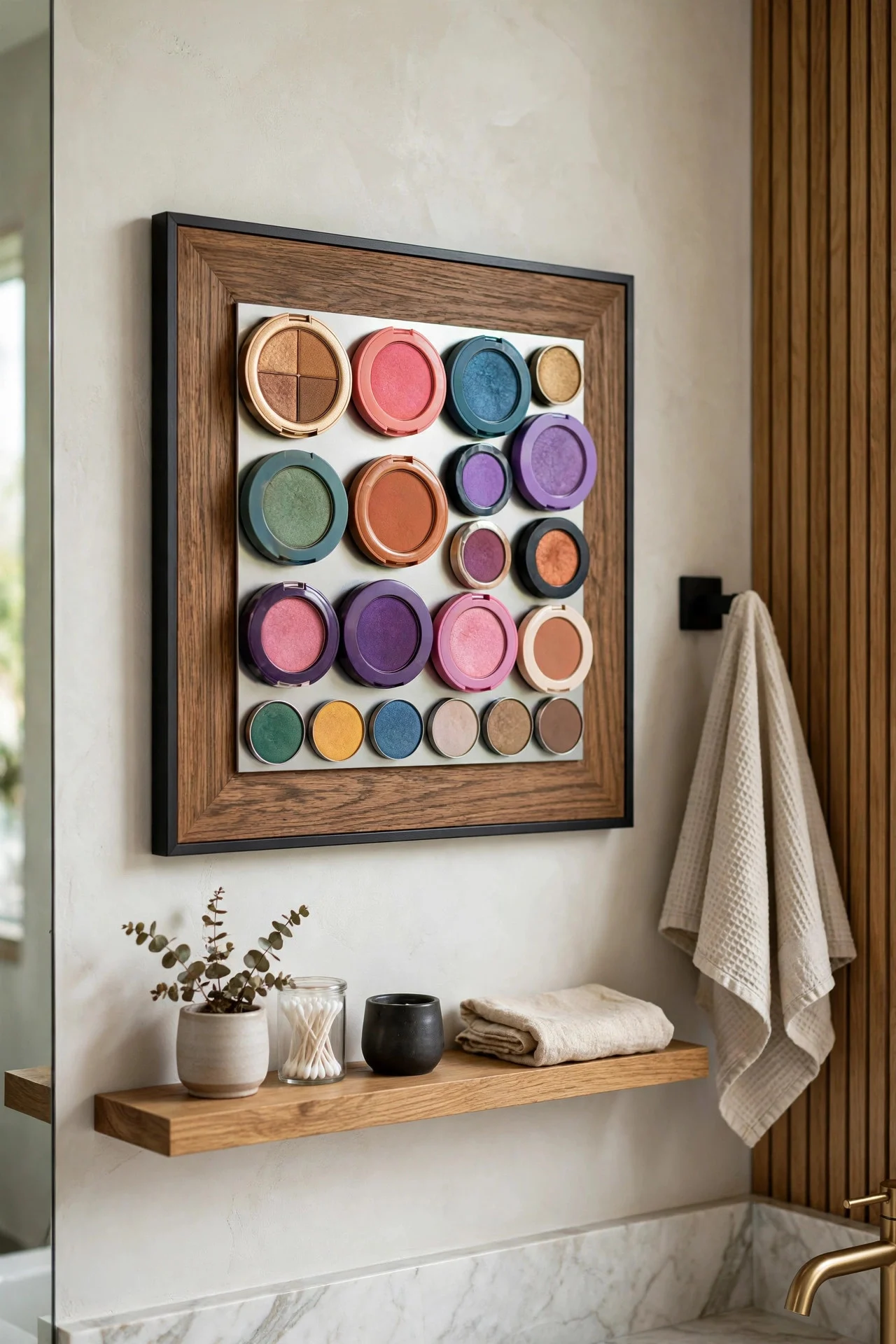
Stick small round magnets to the back of powder compacts, blush pans, and single eyeshadows, then mount a framed sheet of galvanized steel on the wall. Your color products become wall art — visible, grabbable, and off the counter entirely. A 12×16-inch board holds a surprising amount.
Depot your most-used pans into magnetic palettes to shrink the system further. Hang the board inside a cabinet door if you’d rather keep it hidden, or frame it nicely and let it look intentional. Either way, compacts stop avalanching out of drawers.
Try this: Test each magnet’s hold before mounting — heavy compacts need two magnets, not one.
3. Drawer Dividers That Actually Fit
Bathroom drawers become junk drawers the moment dividers are missing. Adjustable bamboo or plastic dividers — about $12 for a set — carve one chaotic drawer into zones: face products, eye products, lips, tools. The spring-loaded kind fit any drawer width without measuring.
Line the drawer first with a washable liner, because makeup drawers get grimy fast. Then assign every category a fixed slot. When a slot overflows, that’s your signal to declutter, not to buy a bigger organizer.
Try this: Stand lipsticks and pencils upright in a small shot glass inside the drawer — they stay visible instead of rolling into the void.

4. An Over-the-Door Pocket Organizer
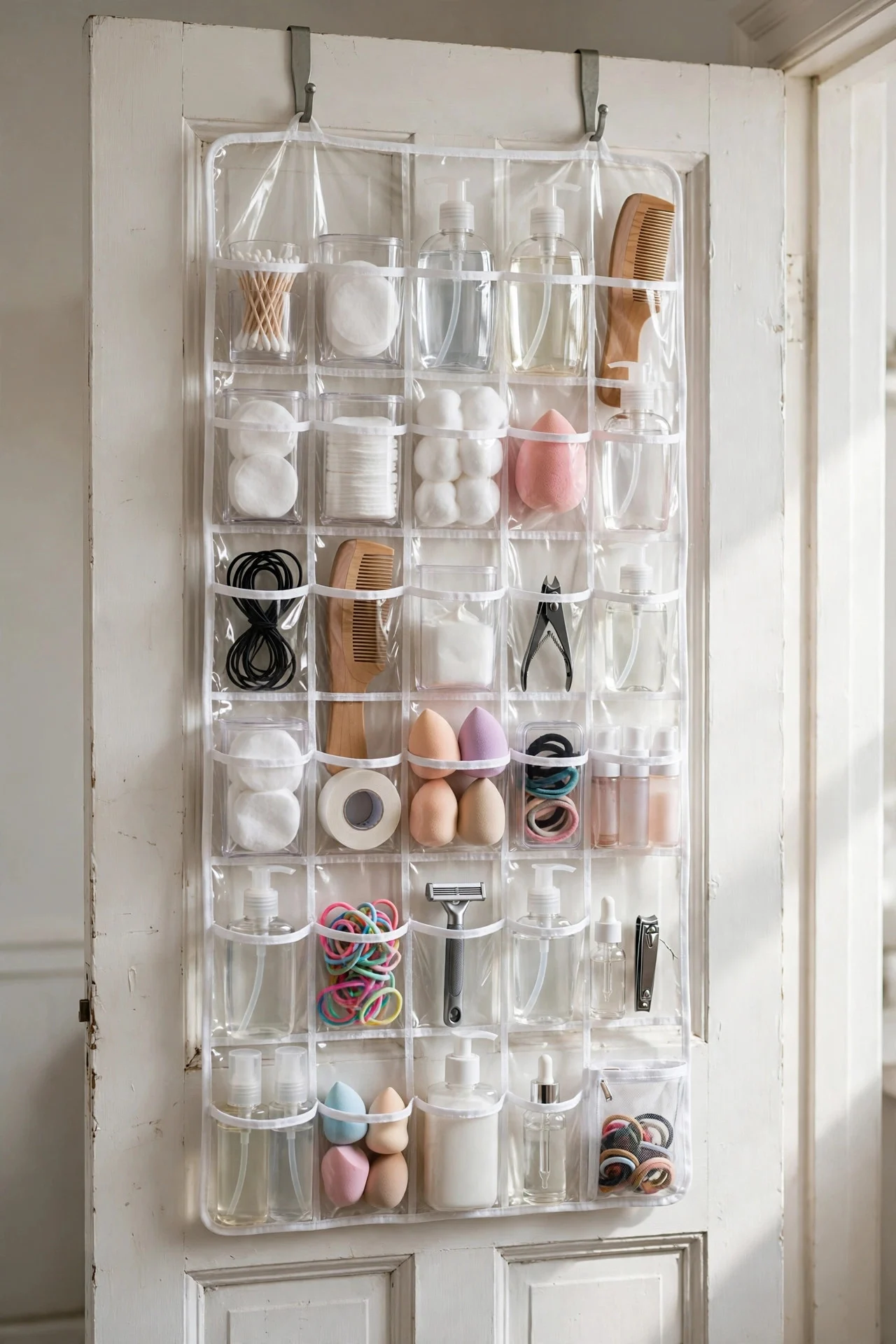
The back of the bathroom door is prime real estate most people waste. A clear over-the-door pocket organizer — around $10 — holds backup products, hair tools, cotton pads, and the “someday” serums without touching a single shelf. The clear pockets mean you actually remember what you own.
Use the top rows for backstock and the middle rows for daily overflow. Because it’s behind the door, it stays invisible when guests visit but accessible every morning. Just check your door clearance first — thick organizers can jam against the frame.
Try this: Dedicate one full row to travel minis so packing for a trip takes five minutes, not a scavenger hunt.
5. A Lazy Susan Inside the Cabinet
Under-sink cabinets are deep, dark, and terrible — products migrate to the back and die there. A 10-inch rotating lazy Susan, about $12, fixes it: spin to reach the toner behind the cleanser. Get the two-tier kind and you double the usable height too.
Group by routine on the turntable — morning products on one side, evening on the other — and add small bins on each tier so bottles don’t topple mid-spin. Measure your cabinet’s interior height before buying; plumbing eats more space than you’d think.
Try this: Put a washable tray under the turntable to catch the inevitable lotion drips and leaks.

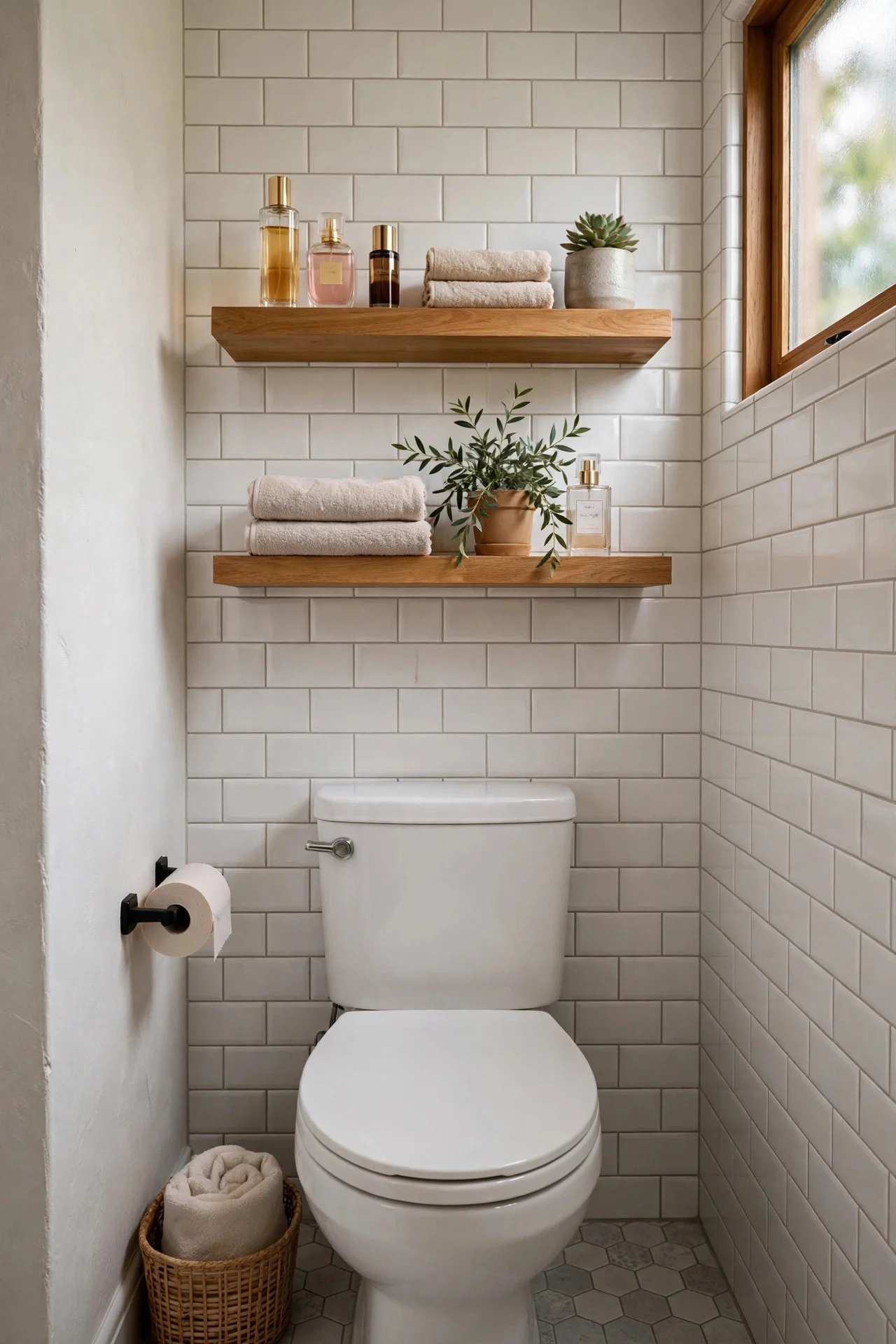
6. Floating Shelves Above the Toilet
The wall above the toilet is usually blank — claim it. Two 24-inch floating shelves hold backup products, pretty perfume bottles, and a small plant, turning dead air into a display. Keep daily makeup lower and relegate these shelves to backstock and decor.
Mount shelves at least 24 inches above the tank so nothing gets knocked off by an enthusiastic lid-lift. In a humid bathroom, favor sealed containers and glass bottles up here; open powder compacts absorb moisture and go chalky fast.
Try this: Style the top shelf with decor and keep products on the lower one — it reads as design, not storage overflow.
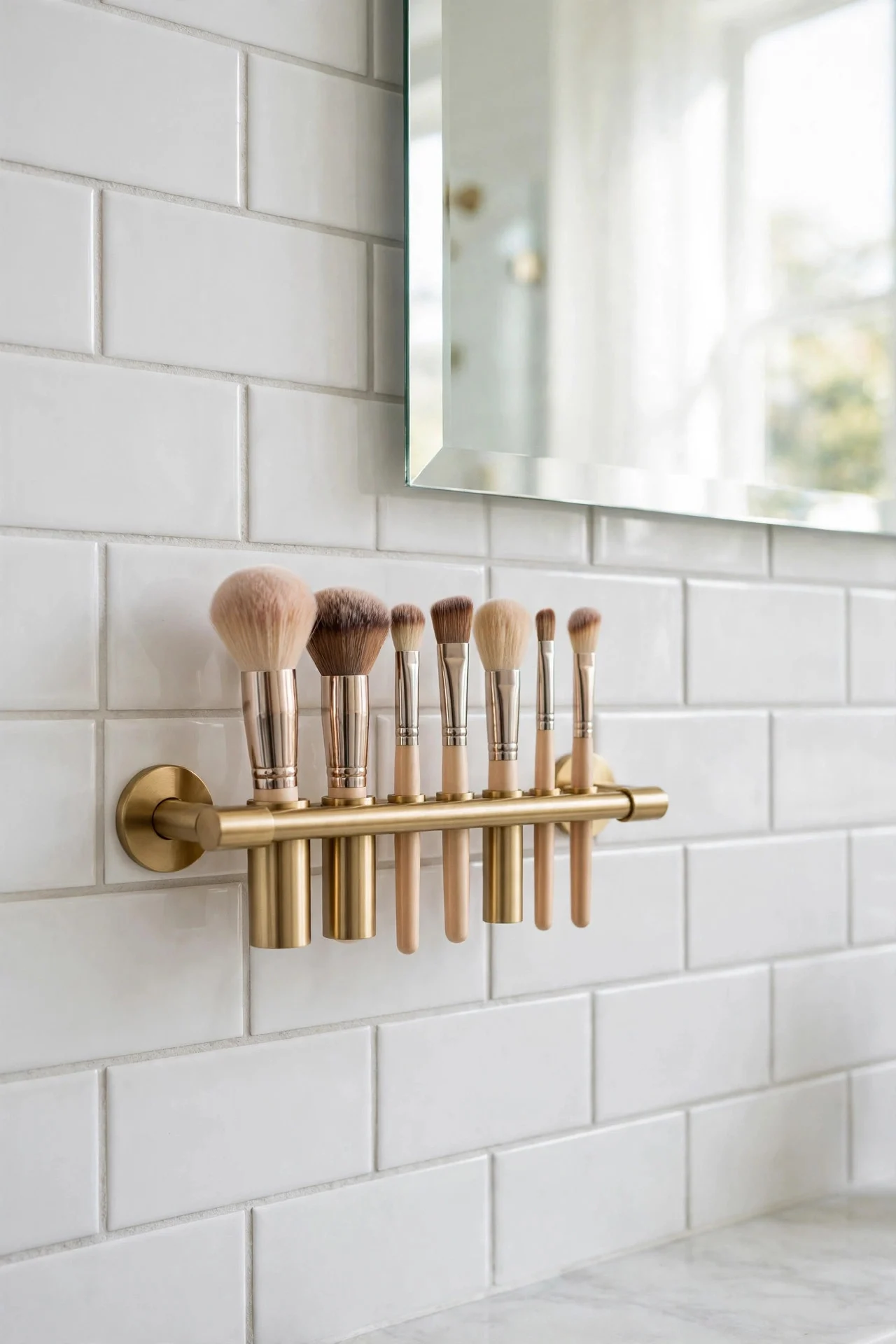
7. A Wall-Mounted Brush Holder
Brushes rolling around a drawer get bent, dirty, and lost. Mount a small wall holder — a repurposed magnetic knife strip with metal ferrules works, or a $8 wall-mounted cup — and brushes stand bristle-up, drying properly between uses. Near the mirror is ideal for your actual routine.
Keeping brushes vertical and ventilated matters more in bathrooms, where damp air slows drying and invites bacteria. Wash brushes weekly, let them dry bristle-down once, then store bristle-up. Never store damp brushes in a closed drawer or bag.
Try this: Sort by use — daily face brushes in front, specialty eye brushes behind — so your hand finds the right one without looking.
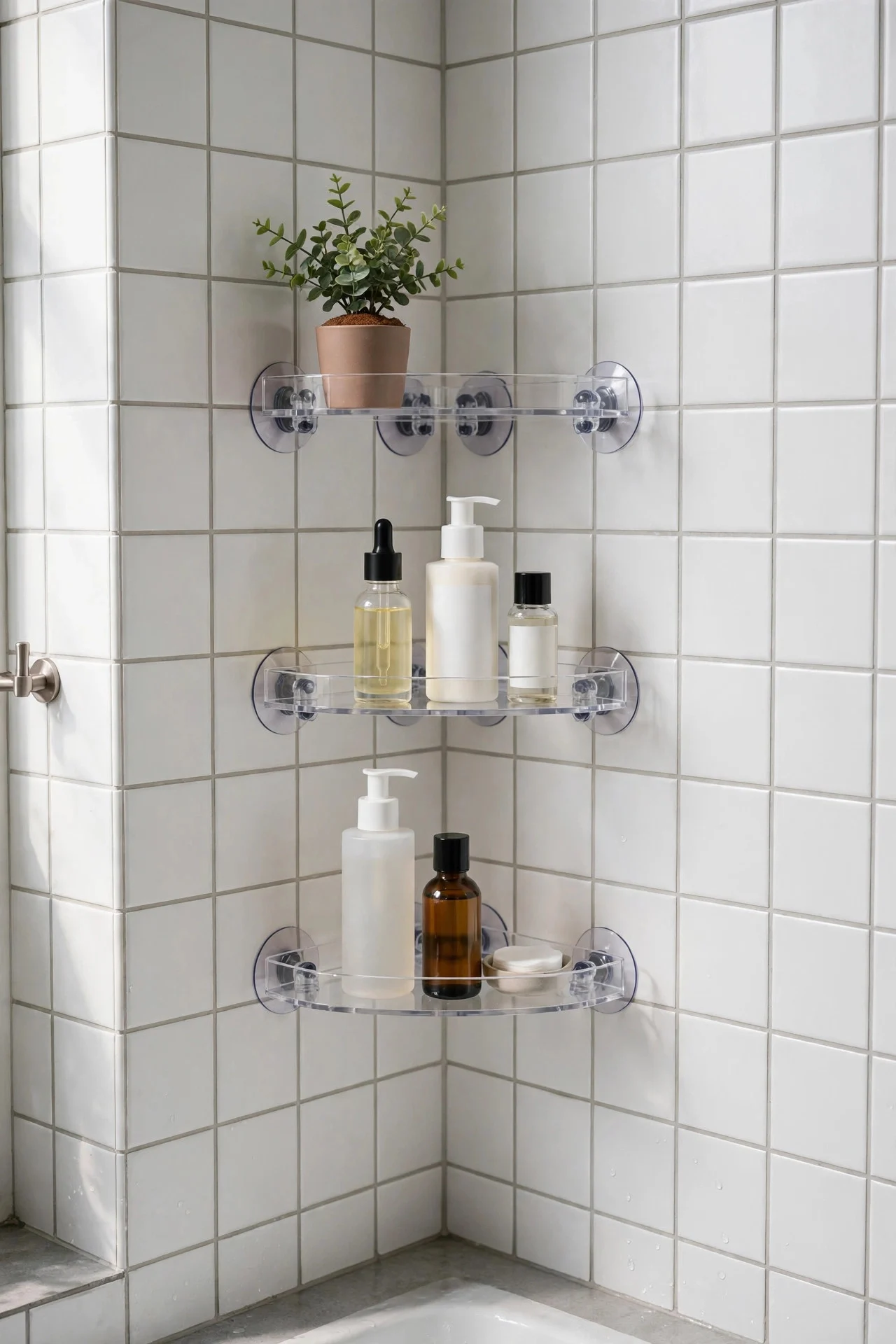
8. Suction-Cup Corner Shelves
Shower and mirror corners go unused in most bathrooms. Heavy-duty suction-cup corner shelves — the good ones hold 10+ pounds — create a home for daily skincare and the makeup you apply right after showering. No drilling, no damage, about $15 for a two-pack.
They work on tile, glass, and mirrors but not on textured walls, so check your surface first. Re-seat the suction cups every few months; humidity slowly loosens them. These are best for lightweight daily items, not your full foundation collection.
Try this: Keep only the five products you use every single morning here — constraint is the point.
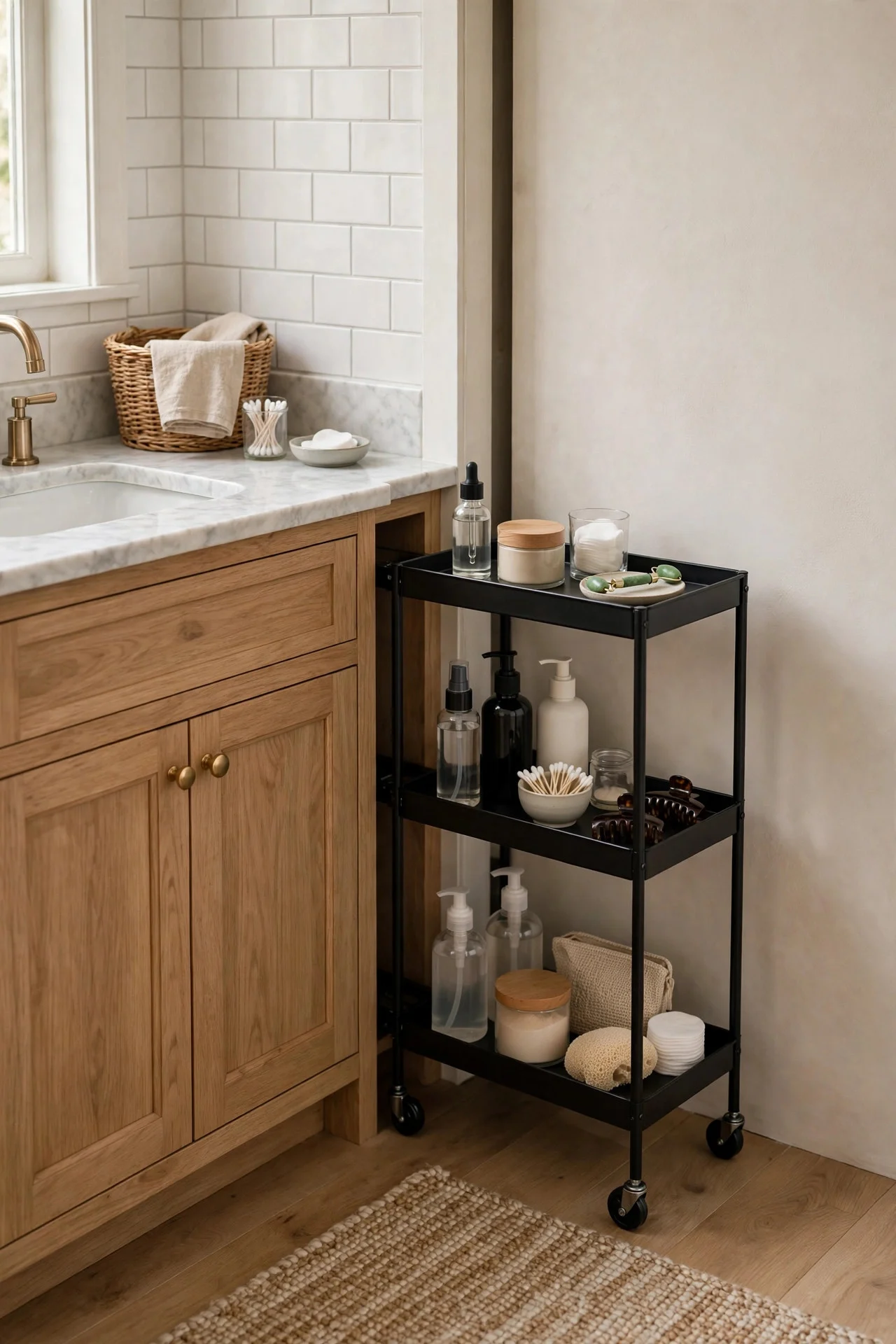
9. A Slim Rolling Cart for the Gap
That 6-inch gap between the vanity and the wall? A slim rolling cart slides right in. Three tiers of narrow storage for about $25, on wheels so it pulls out for full access. It’s the highest-density storage you can add to a small bathroom without drilling a single hole.
Dedicate tiers by category — skincare bottom, makeup middle, hair tools top — and the cart becomes a mobile routine station. When guests come, roll it into a closet and the bathroom looks instantly tidy. Measure the gap first; carts come in 5, 6, and 8-inch widths.
Try this: Add small S-hooks to the cart’s side rails for hanging hair tools by their cords.
10. Stackable Drawers Under the Sink
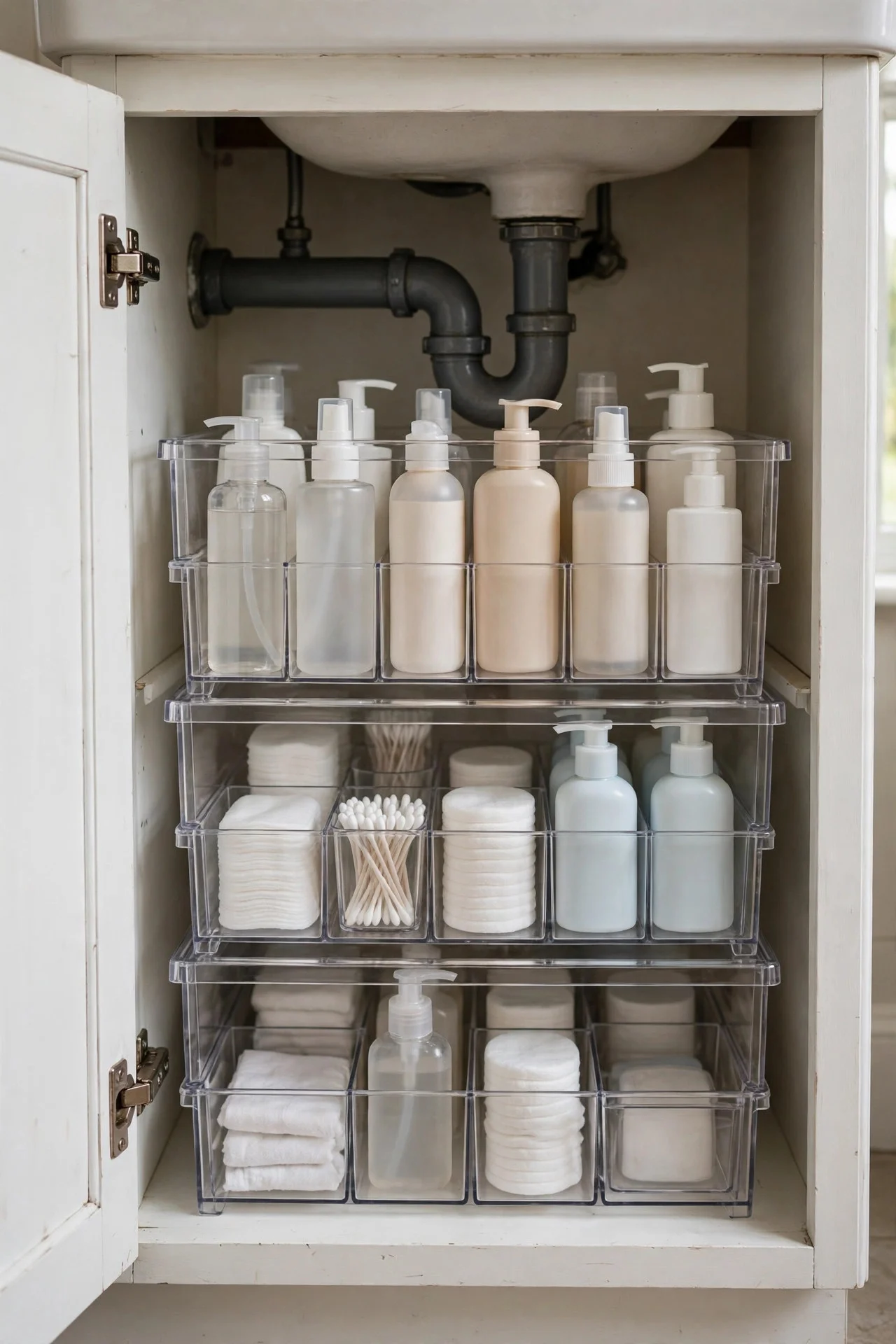
Under-sink space is tall but chaotic. Two or three stackable clear drawers — about $18 for a set — turn that vertical void into organized pull-out storage. Each drawer gets a category: sunscreens, treatments, backup makeup, first aid.
Clear fronts matter here because under-sink lighting is terrible; you’ll actually see what’s inside. Leave room around pipes — measure twice — and put a leak-detecting tray or even a cheap water alarm ($10) on the cabinet floor. A slow pipe drip ruins makeup fast.
Try this: Label each drawer with a label maker — under-sink drawers all look identical in dim light.
11. A Vanity Tray That Corrals the Chaos
Sometimes the answer isn’t more storage — it’s a boundary. A single handsome tray, 12×8 inches, on the counter holds your entire daily routine and nothing else. Perfume bottles, foundation, moisturizer: if it doesn’t fit the tray, it doesn’t live on the counter. Mirrored or marble trays look deliberate, not cluttered.
The tray trick works psychologically: a defined edge stops the slow creep of products across the whole counter. Wipe the tray weekly — it catches every drip and dust mote — and the counter around it stays clear with almost no effort.
Try this: Choose a tray with a raised lip so bottles don’t slide off when you bump it reaching for the faucet.

12. An Ice Cube Tray for the Tiny Stuff
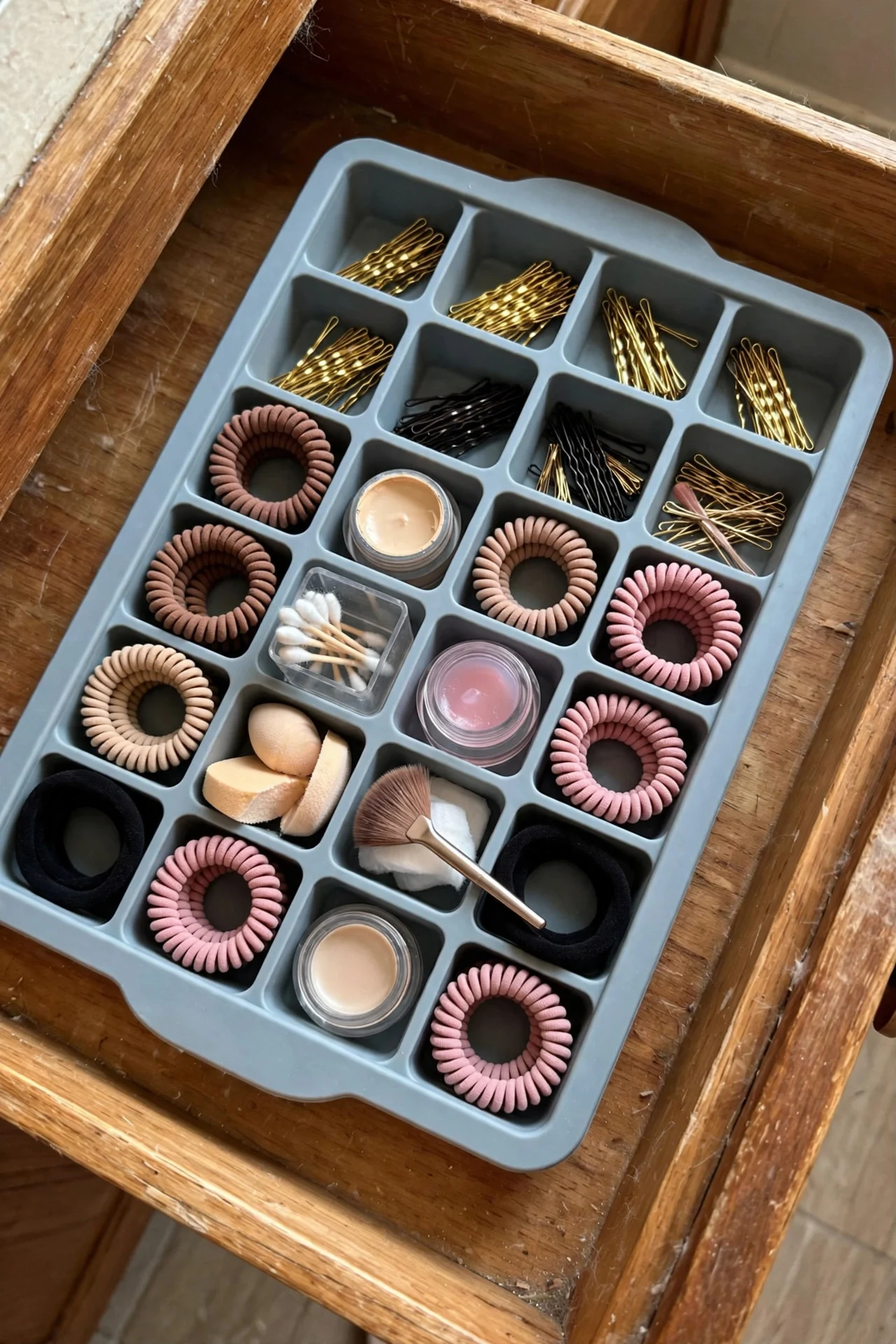
Bobby pins, hair ties, single earrings, brow pencils, sample sachets — the tiny stuff is what makes drawers feel chaotic. A $2 silicone ice cube tray in the drawer corrals every last bit of it into neat little compartments. It sounds silly until you try it.
The flexible silicone makes it easy to pop items out, and it rinses clean in seconds. Use one tray for hair smalls and another for makeup minis. For anything tinier — backings, pins — a weekly pill organizer works the same way with lids that snap shut.
Try this: Keep the tray in the top drawer only — burying tiny items in a deep drawer defeats the whole purpose.
Frequently Asked Questions
How do I store makeup in a humid bathroom?
Keep powders in closed containers or drawers rather than open on the counter — humidity makes them chalky and shortens their life. Store brushes where air circulates so they dry fully, and consider moving expensive palettes to a bedroom drawer if your bathroom gets truly steamy.
What’s the best way to organize makeup with no counter space?
Go vertical and hidden: an over-the-door pocket organizer, a slim rolling cart for the vanity gap, and drawer dividers inside existing drawers. A wall-mounted magnetic board moves color products off every surface entirely.
How often should I declutter my makeup?
Do a quick audit every six months. Toss anything that smells off, separates, or irritates your skin — mascara every three months, liquid foundation within a year of opening. If you haven’t reached for it in six months, you won’t miss it.
Can I store makeup under the bathroom sink?
Yes, with precautions: use stackable drawers to stay organized, keep products away from pipes, and put a tray or water alarm on the cabinet floor to catch leaks early. Sealed products handle it fine; keep open powders higher and drier.
Final Thoughts
Small-bathroom makeup storage is really a game of inches — the back of the door, the gap beside the vanity, the air above the toilet. Claim those forgotten spots and even the tiniest bathroom can hold a full routine without the counter chaos.
Start with one change: dividers in the drawer, or a tray on the counter. Small bathrooms reward small, decisive edits more than big overhauls — pick the spot that annoys you most every morning and fix that first.