

Kids’ rooms have a special talent for looking tidy at 8 a.m. and like a toy store explosion by 8 p.m. The problem usually isn’t the amount of stuff — it’s that nothing has an obvious, kid-friendly home. If cleanup takes more than ten minutes, the system is too complicated for the people actually using it.
These 14 ideas are built around how kids really operate: big open bins, picture labels for pre-readers, low shelves they can reach, and just enough structure that tidying feels doable. Most are cheap, sturdy, and survive the chaos years.
1. Big Open Bins, Sorted by Toy Type
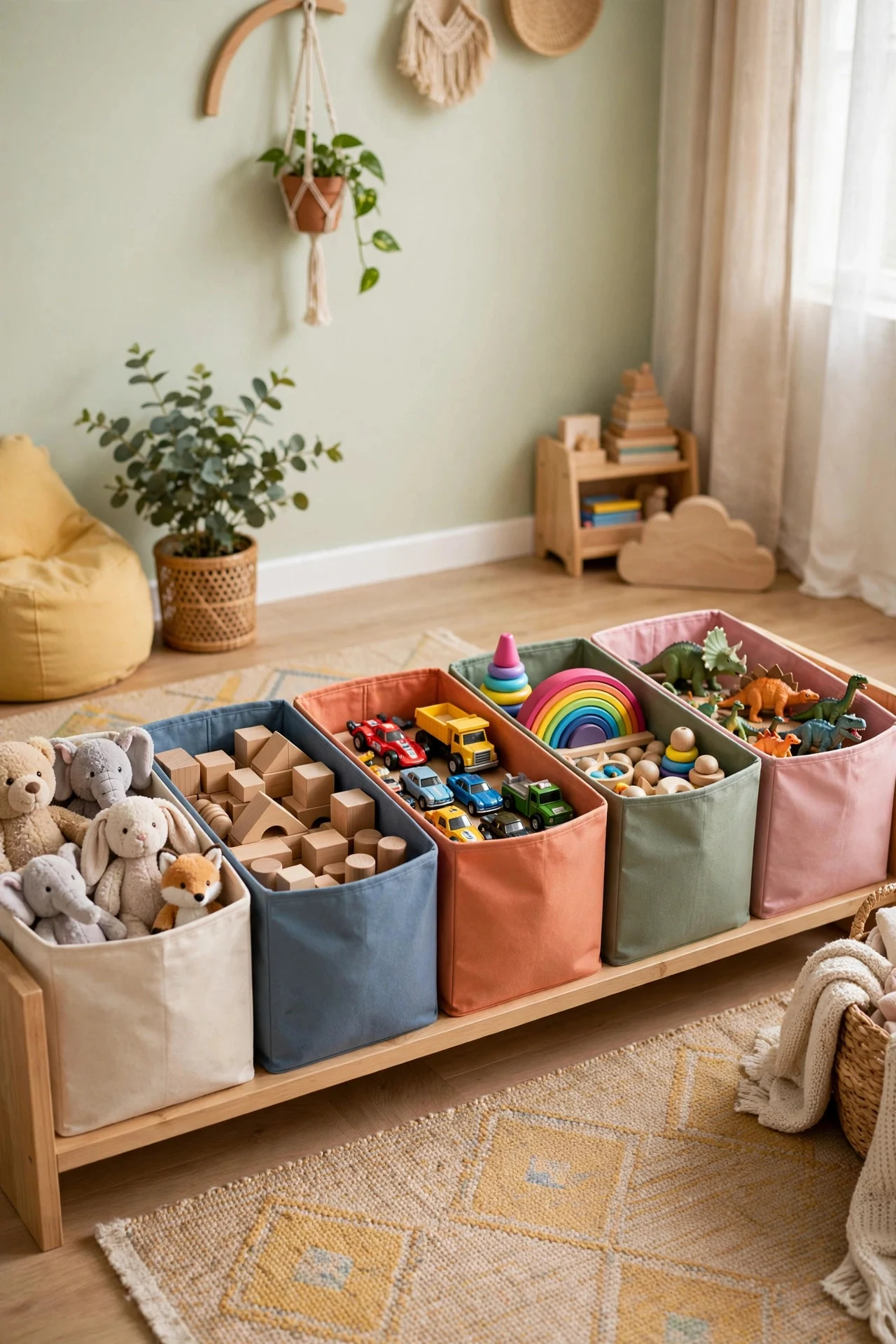
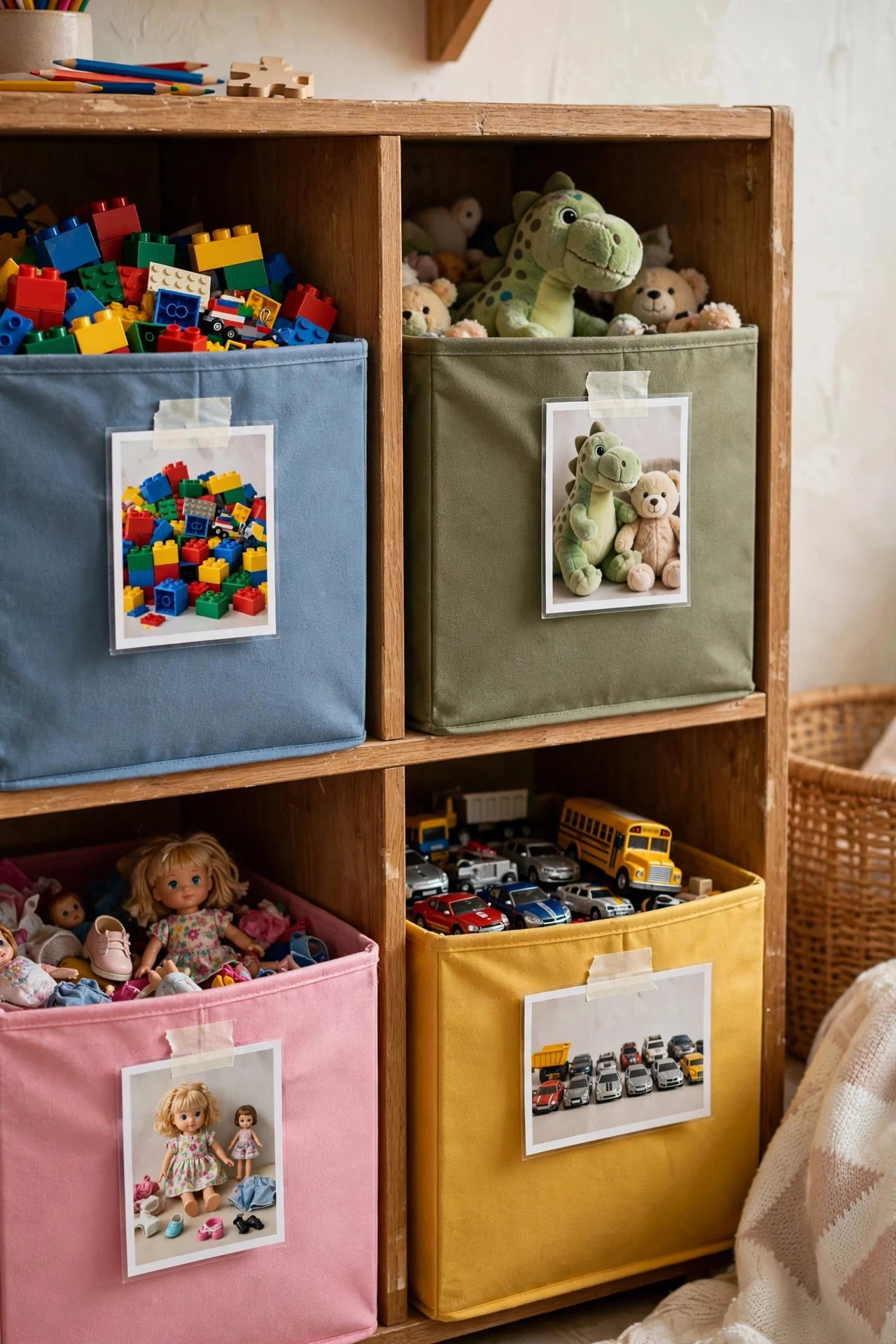
Forget tiny compartments — kids need big, open bins they can toss things into from three feet away. Sort by toy type, not by color or size: one bin for blocks, one for cars, one for dolls, one for art supplies. Four to six bins cover most rooms, and $8 fabric bins from big-box stores do the job.
The open top is the whole point. Lids add a step, and every added step is a reason toys end up on the floor instead. Line the bins along a low shelf or cubby unit so each has a fixed parking spot, and cleanup becomes a sorting game instead of a chore.
Try this: Let kids name the bins themselves — “the vroom box” gets used more faithfully than “vehicles.”
2. Rolling Drawers Under the Bed
The space under a standard bed frame swallows 20-plus cubic feet of storage most families ignore. Low rolling drawers — about $25 each — slide under easily and hold out-of-season clothes, board games, or the Lego sets that are “finished” but too precious to dismantle.
Choose drawers no taller than 8 inches so they clear the frame, and add casters if they don’t come with them. Kids can pull out their own drawer without help, which means the storage actually gets used instead of becoming a dust museum.
Try this: Dedicate one drawer as the “treasure drawer” for special keepsakes — kids protect what feels honored.

3. Forward-Facing Book Ledges
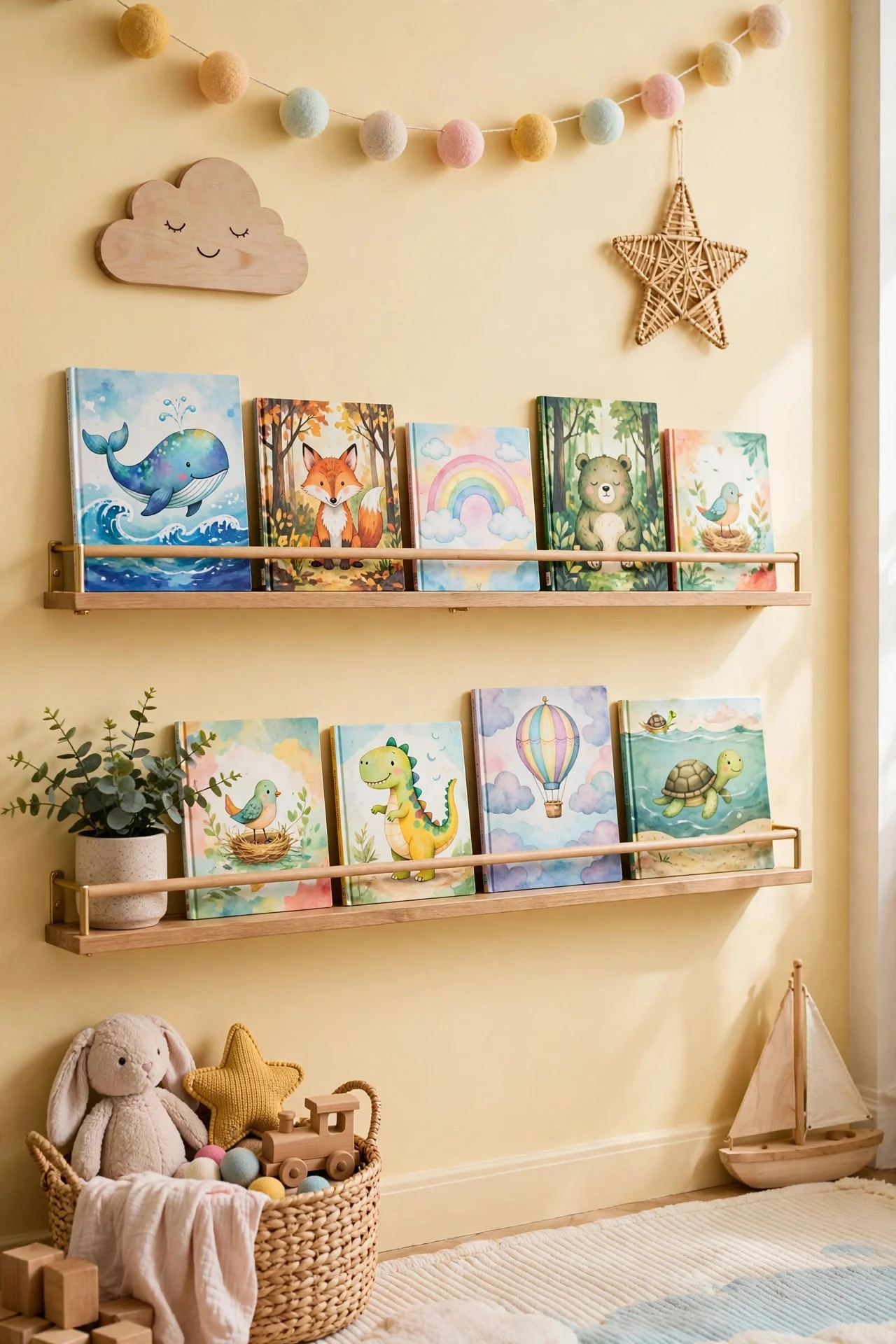
Kids choose books by their covers, so store them cover-out. Narrow picture ledges — 3 to 4 inches deep — mounted at kid height turn books into wall art and make choosing one as easy as grabbing. Three 24-inch ledges cost about $20 in lumber or $30 pre-made.
Mount the lowest ledge around 24 inches high so toddlers can reach, and stagger heights as kids grow. Rotate the displayed books monthly from a closet stash; “new” books reappear and get read again without buying a single one.
Try this: Let kids arrange their own ledges — the ownership makes them more likely to reshelve books.
4. A Corner Toy Hammock
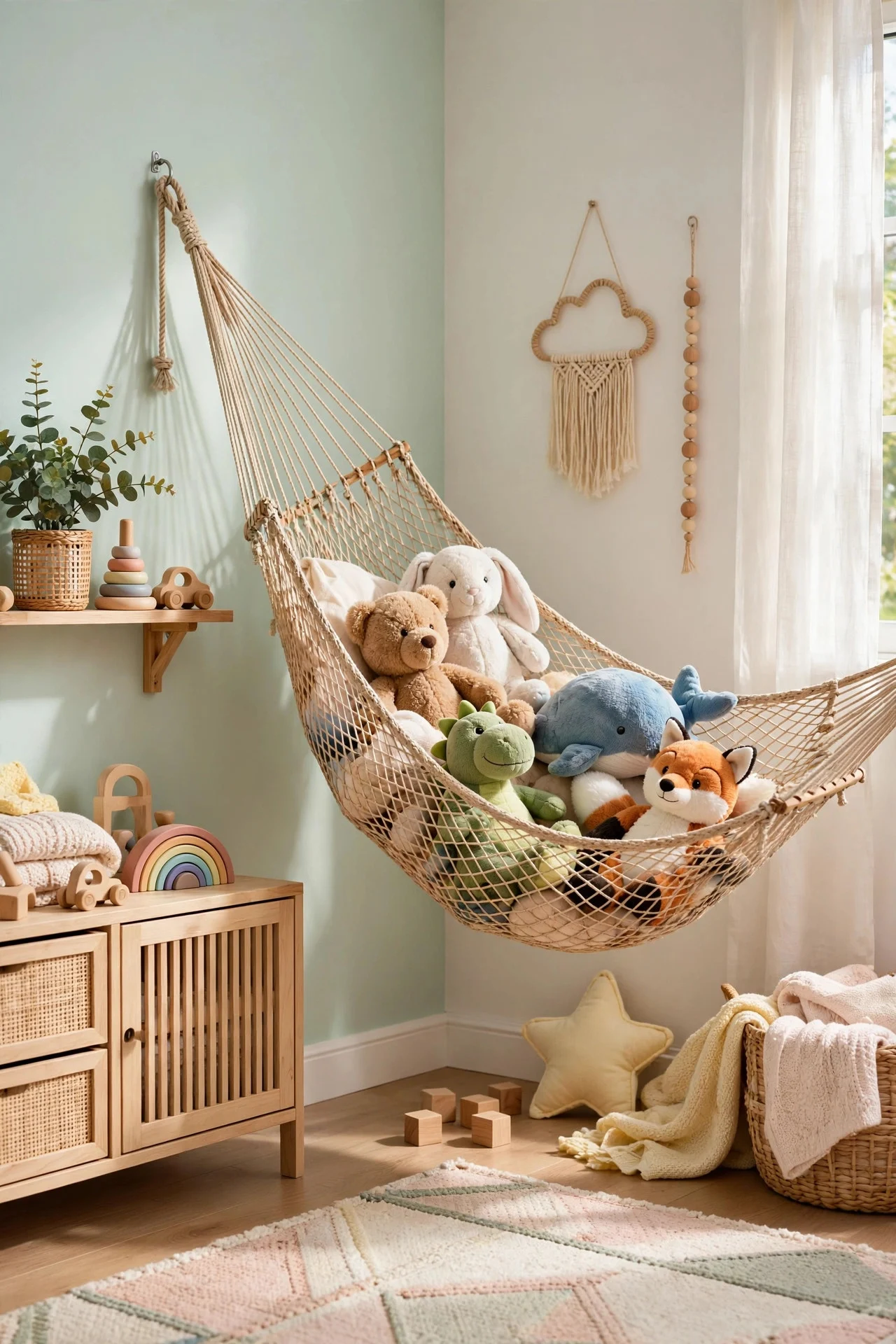
That dead corner where the walls meet? A $12 mesh toy hammock strung diagonally across it holds a mountain of stuffed animals off the bed and floor. It installs with two hooks in about ten minutes and frees an entire shelf’s worth of space.
The hammock works because it’s visible — kids can see every plush and pick their favorite without excavating a pile. Hang it high enough that the bottom of the loaded hammock clears little heads, roughly 4 feet off the floor for the hooks.
Try this: Institute a one-in-one-out rule for stuffed animals once the hammock is full — the hammock’s capacity becomes the natural limit.
5. A Stuffed-Animal Beanbag Chair
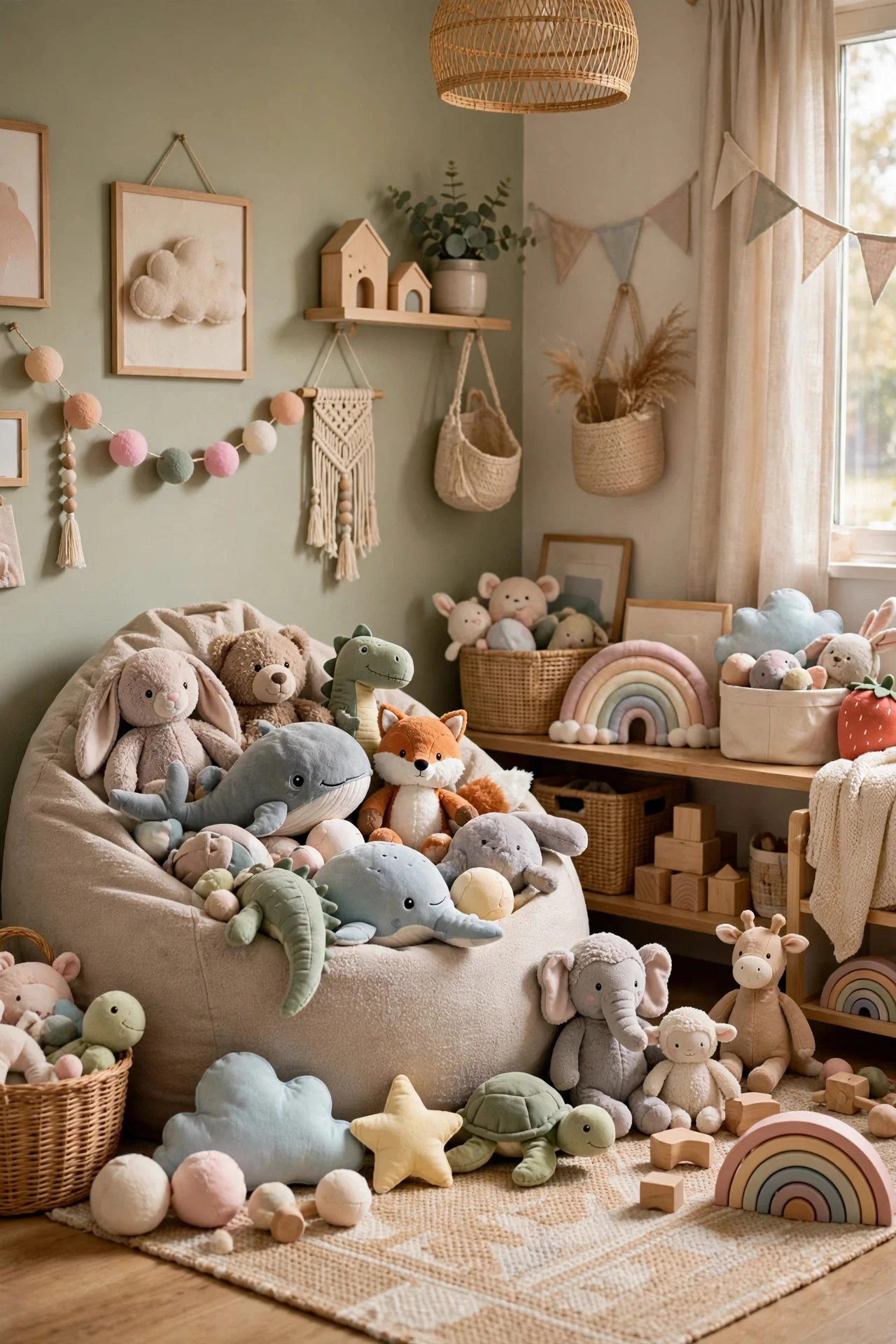
Here’s the genius two-for-one: a beanbag chair cover designed to be stuffed with plush toys. It corrals twenty-plus stuffed animals into seating, costs about $30 empty, and kids genuinely love flopping onto it. The “storage” disappears into furniture.
Choose a cover with a child-safe zipper and washable fabric — it doubles as the guest bed for sleepovers in a pinch. When the collection outgrows the chair, that’s your honest signal that some plush friends need new homes.
Try this: Keep three favorites out on the bed and beanbag the rest — kids bond hardest with a small crew anyway.
6. Cube Shelving as the Room’s Backbone
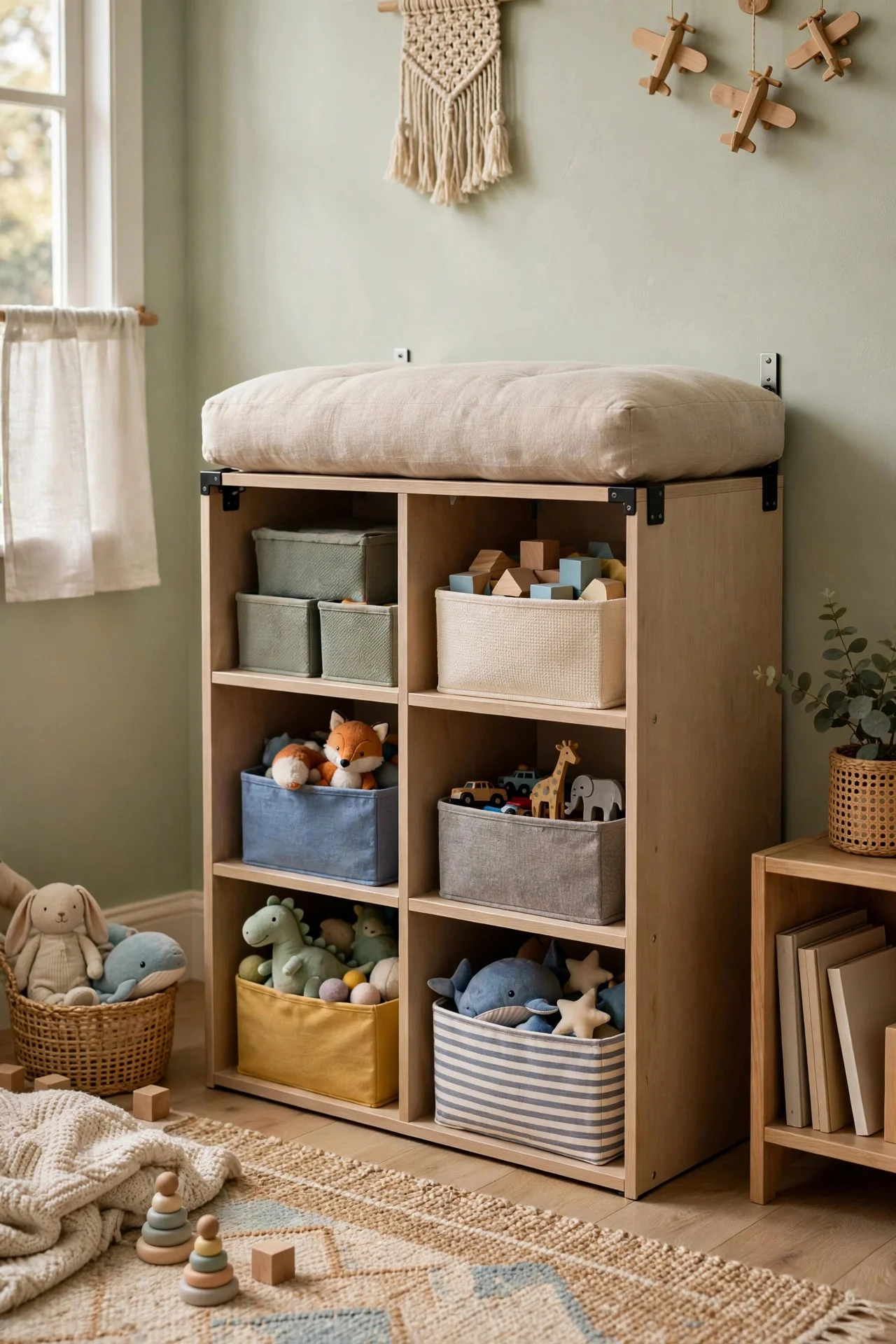
A cube storage unit — the 4×4 or 2×4 kind sold everywhere for $40 to $70 — is the single most useful furniture piece in a kids’ room. Each cube holds one bin, one category, and the whole unit doubles as a room divider, nightstand, or bench with a cushion on top.
Anchor it to the wall — non-negotiable with climbing toddlers. Mix open cubes (for display-worthy Lego builds) with binned cubes (for the chaos), and leave one cube empty on purpose. That empty cube is breathing room for whatever’s currently interesting.
Try this: Put the unit on its side as a low bench along one wall — instant seating plus storage for small rooms.
7. Double the Closet With a Second Rod
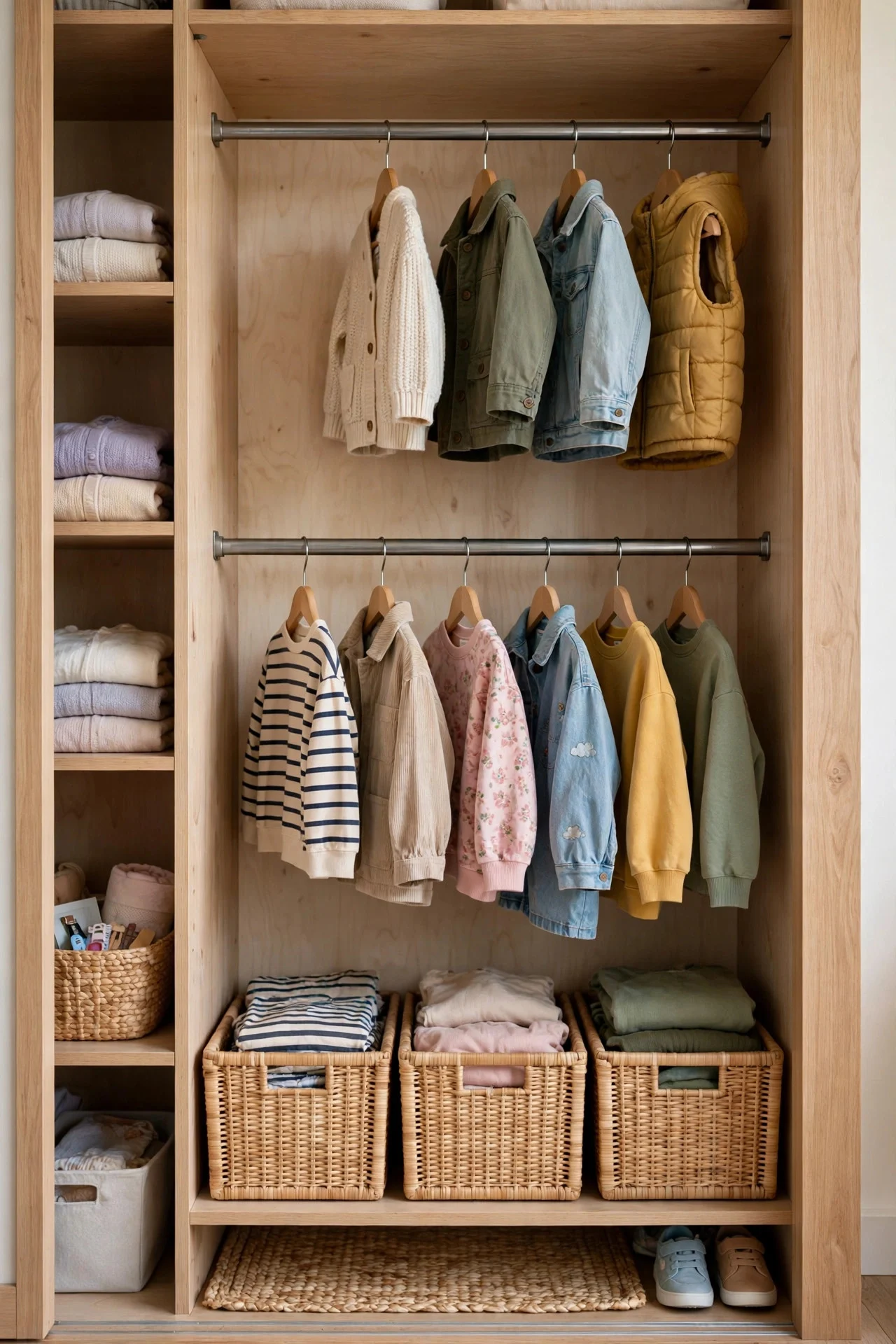
Most kids’ closets have one high rod and a vast empty floor — terrible for short people. Add a second rod at 30 inches high ($15 for rod and brackets) and suddenly there’s a kid-reachable hanging zone plus floor space below for bins and shoes.
Hang everyday clothes on the low rod where kids can dress themselves, and relegate out-of-season stuff to the high rod. The floor bins underneath hold shoes, backpacks, and the costume box. Mornings get measurably calmer when kids can reach their own clothes.
Try this: Organize the low rod by weekday — five outfits visible means zero morning negotiations.
8. A Wire for Displaying Artwork
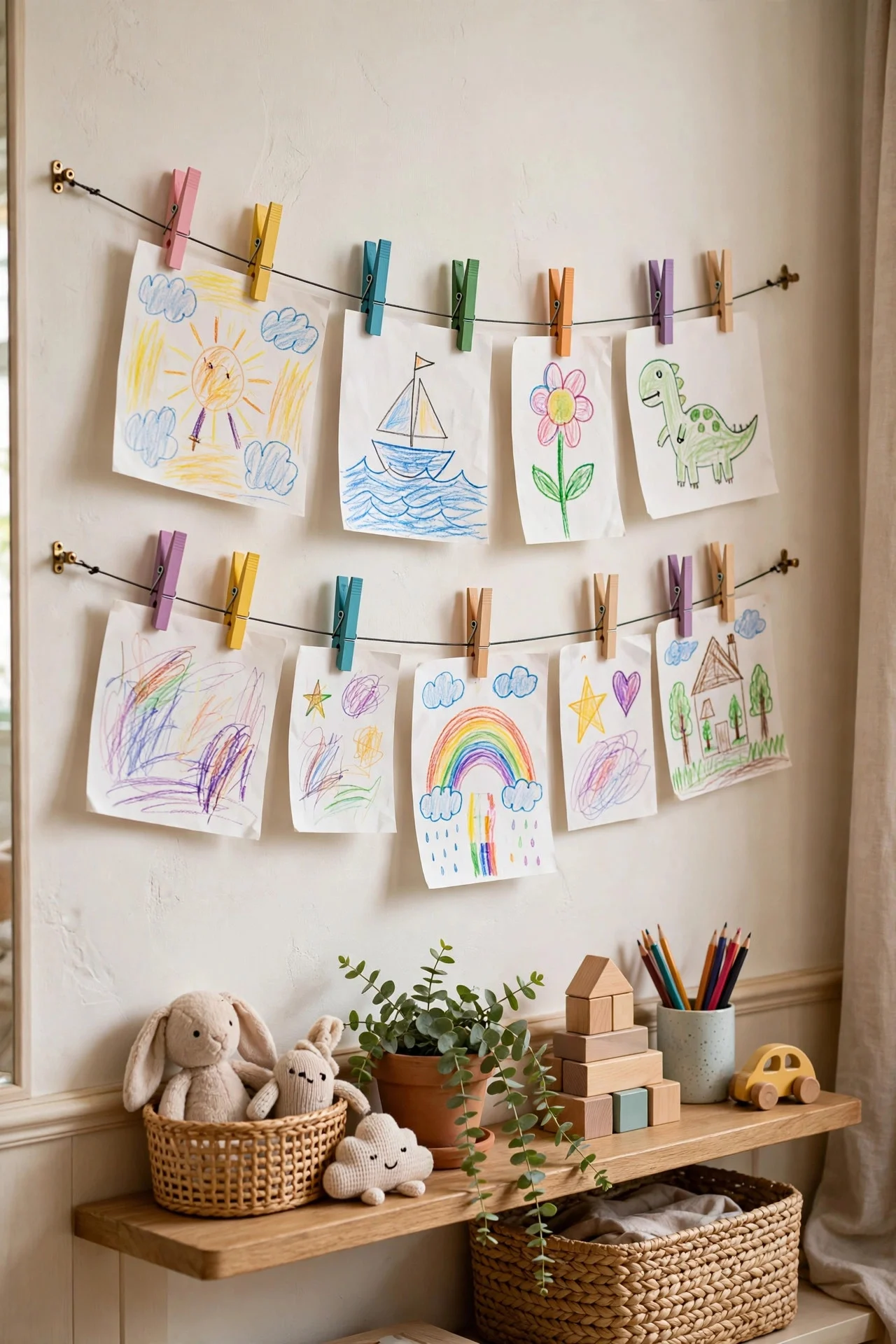
Kids produce art at an industrial rate, and the fridge fills up fast. String a wire or curtain cable across one wall with $3 clothespins, and masterpieces rotate through a proper gallery. It honors the work without turning the whole house into a museum.
Set the rule upfront: the wire holds ten pieces, and adding a new one means choosing one to retire to the keepsake box. Kids accept limits better when the limit is visible and consistent — and the rotating display keeps the room feeling fresh.
Try this: Photograph each piece before it retires — a digital gallery preserves everything without the paper mountain.
9. A Lego Table With Built-In Storage
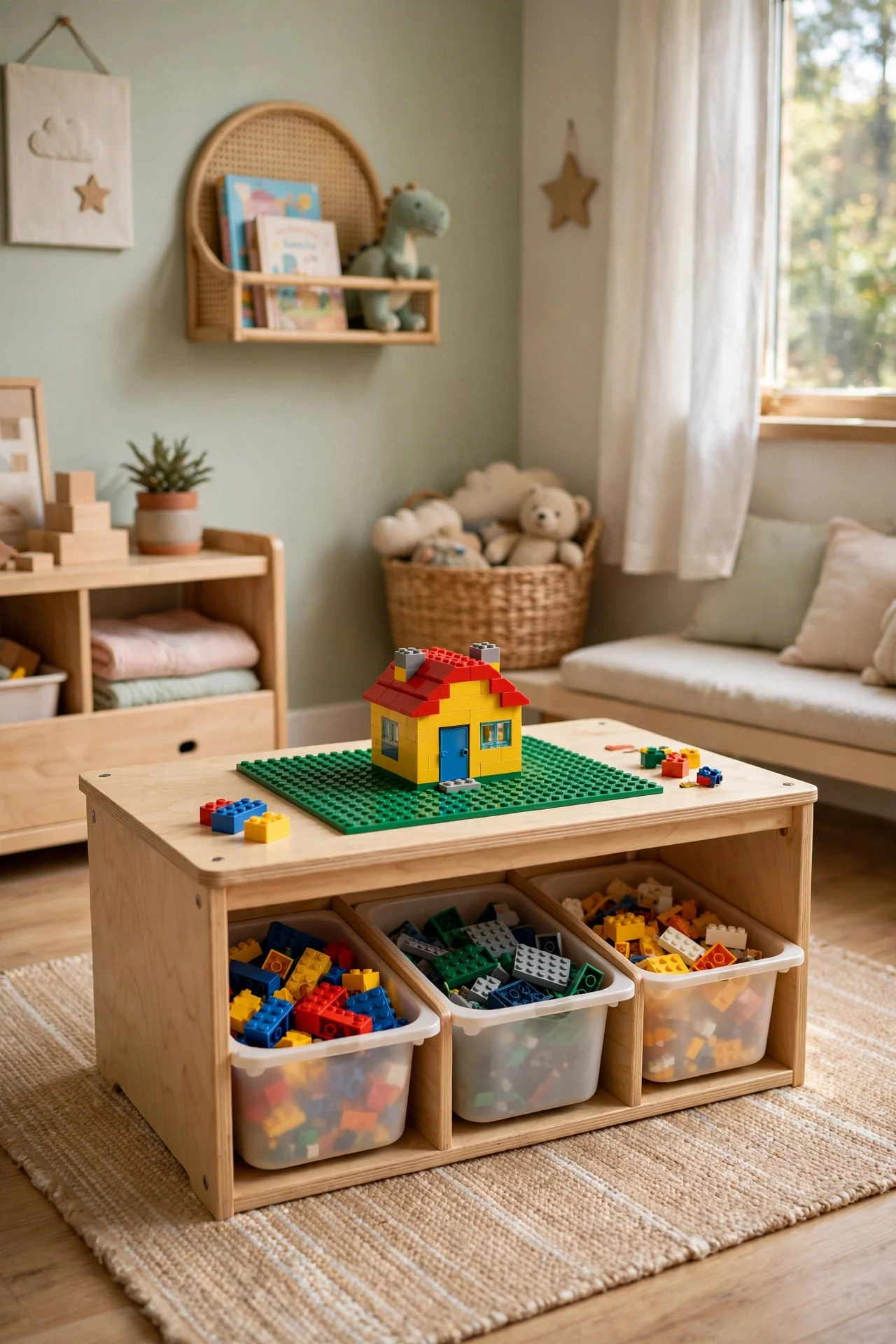
Loose Lego is a foot hazard and a cleanup nightmare. A small table with bins built into the base — DIY from a $25 side table with trofast-style bins, or buy purpose-built around $60 — gives bricks a permanent home and building a dedicated surface.
Add a Lego-compatible baseplate glued to the tabletop and builds survive tidying — just sweep loose bricks into the bins and leave creations intact. Sort bins broadly by color or by “special pieces vs. regular bricks”; fine sorting is a hobby, not a requirement.
Try this: Put a small rug under the table — it catches escapee bricks and defines the building zone.
10. Picture Labels for Pre-Readers
Kids who can’t read can’t follow word labels — but they follow pictures perfectly. Stick a photo of the actual contents on each bin: a snapshot of the cars on the car bin, the crayons on the art bin. Print them at home for pennies and tape them on with packing tape.
Take the photos with your kid holding the items — the personal touch makes them laugh and remember. Update photos when bin contents change, or the system quietly stops working and nobody knows why.
Try this: Add the written word under each picture — kids absorb reading almost by accident this way.
11. The Toy Rotation System
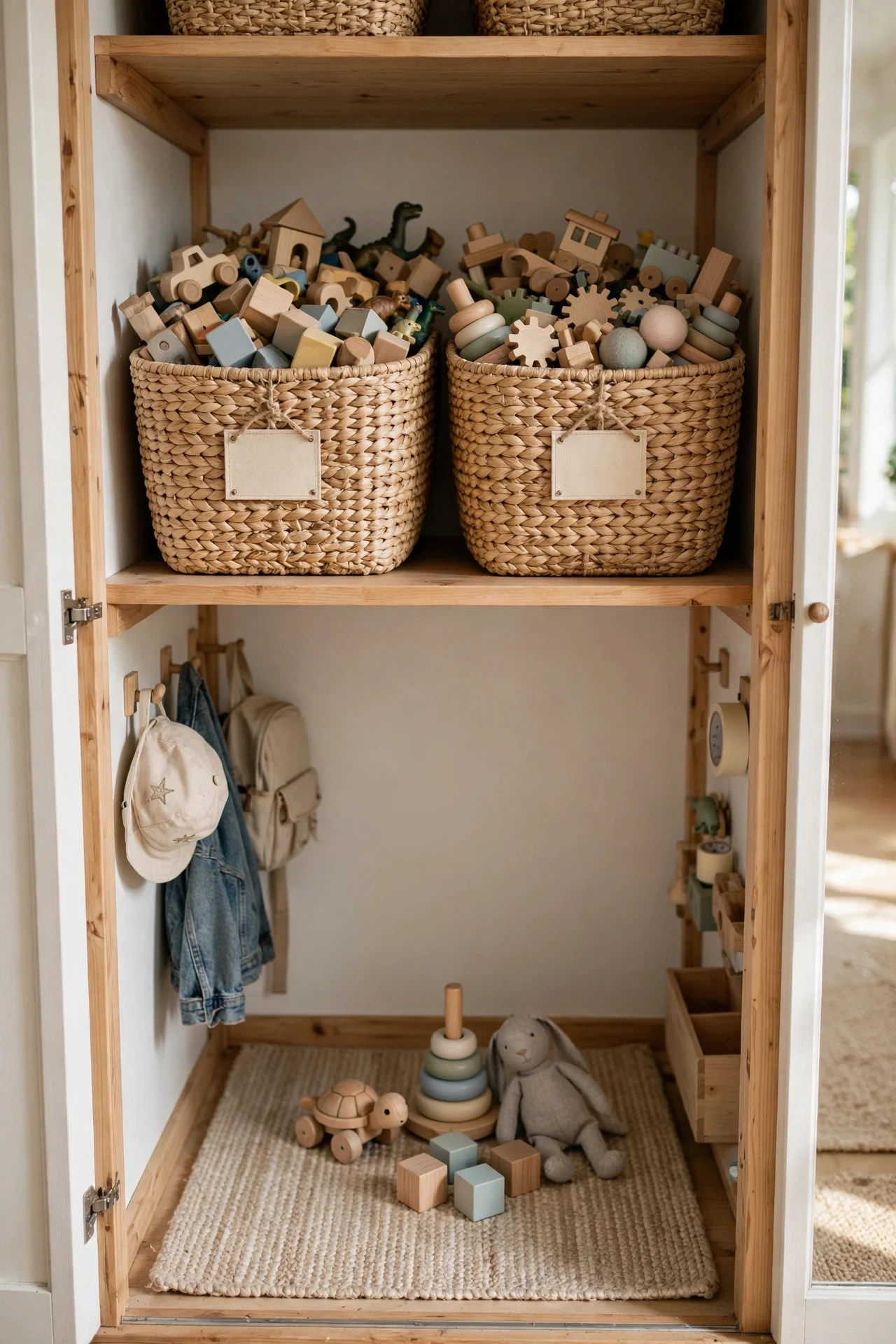
Here’s a secret: kids play more deeply with fewer toys. Box up half the toys into two labeled bins, store them in a closet, and rotate the sets every two to three weeks. The “new” toys get genuine excitement, and cleanup involves half the pieces.
Watch which toys never get missed during a rotation — those are your donation candidates, identified without a single argument. Most families find they can permanently remove a third of toys this way, and nobody notices they’re gone.
Try this: Rotate on the first of the month — a fixed date means you actually do it instead of meaning to.
12. Wall-Mounted Baskets for Plushies and Balls
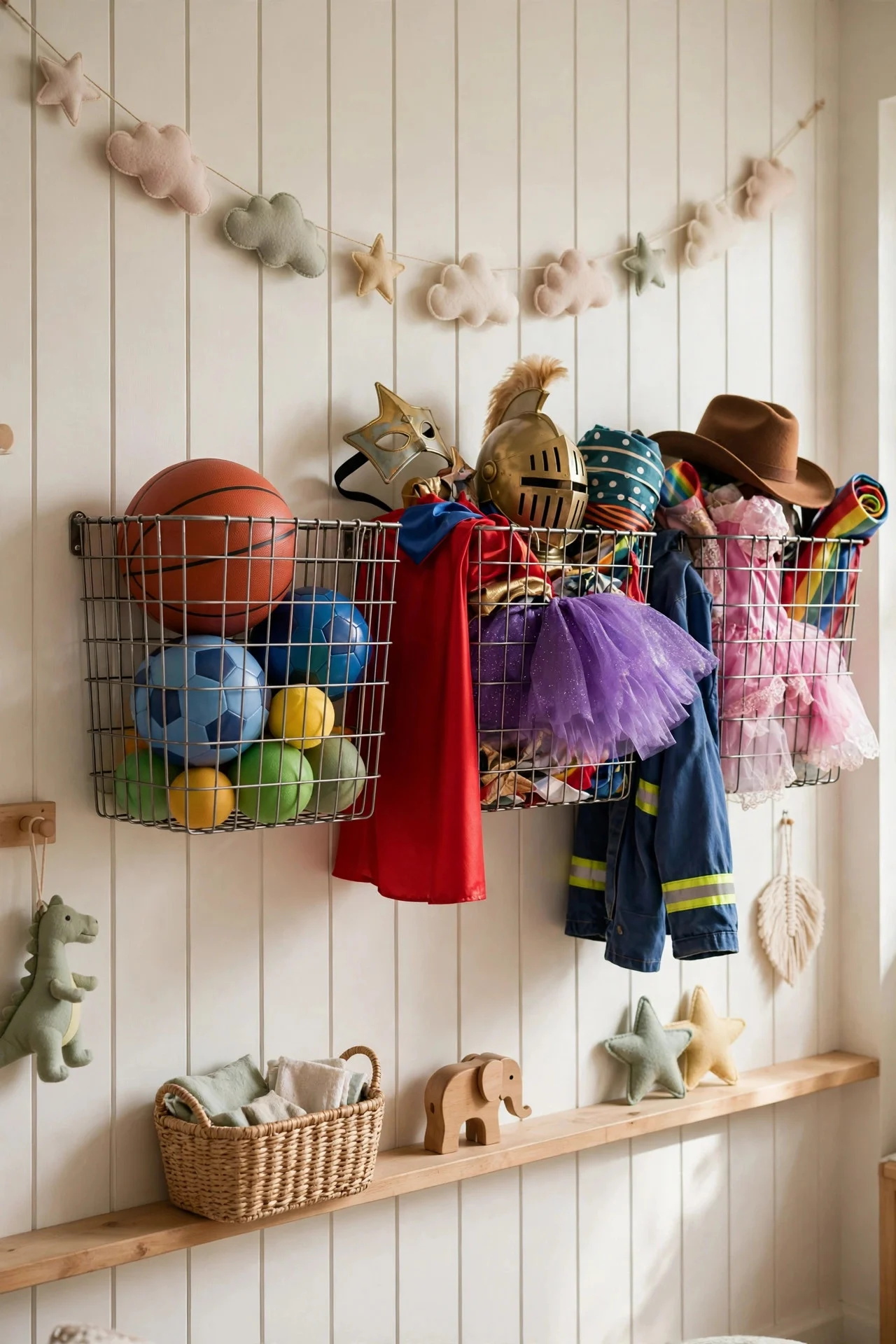
Floor space is precious; walls are free. Mount two or three large wire baskets on the wall at kid height — about $10 each — for balls, dress-up clothes, and the plush overflow. They hold a lot, look tidy, and keep the floor clear for actual playing.
Stagger the baskets at different heights to fit various kid sizes, and keep the lowest one for the most-used items. Wire beats solid here: kids see what’s inside and air circulates, which matters for the dress-up clothes that get sweaty.
Try this: Dedicate one basket to “tonight’s picks” — pajamas, tomorrow’s outfit, and the bedtime book, staged for the evening routine.
13. A Craft Caddy That Travels
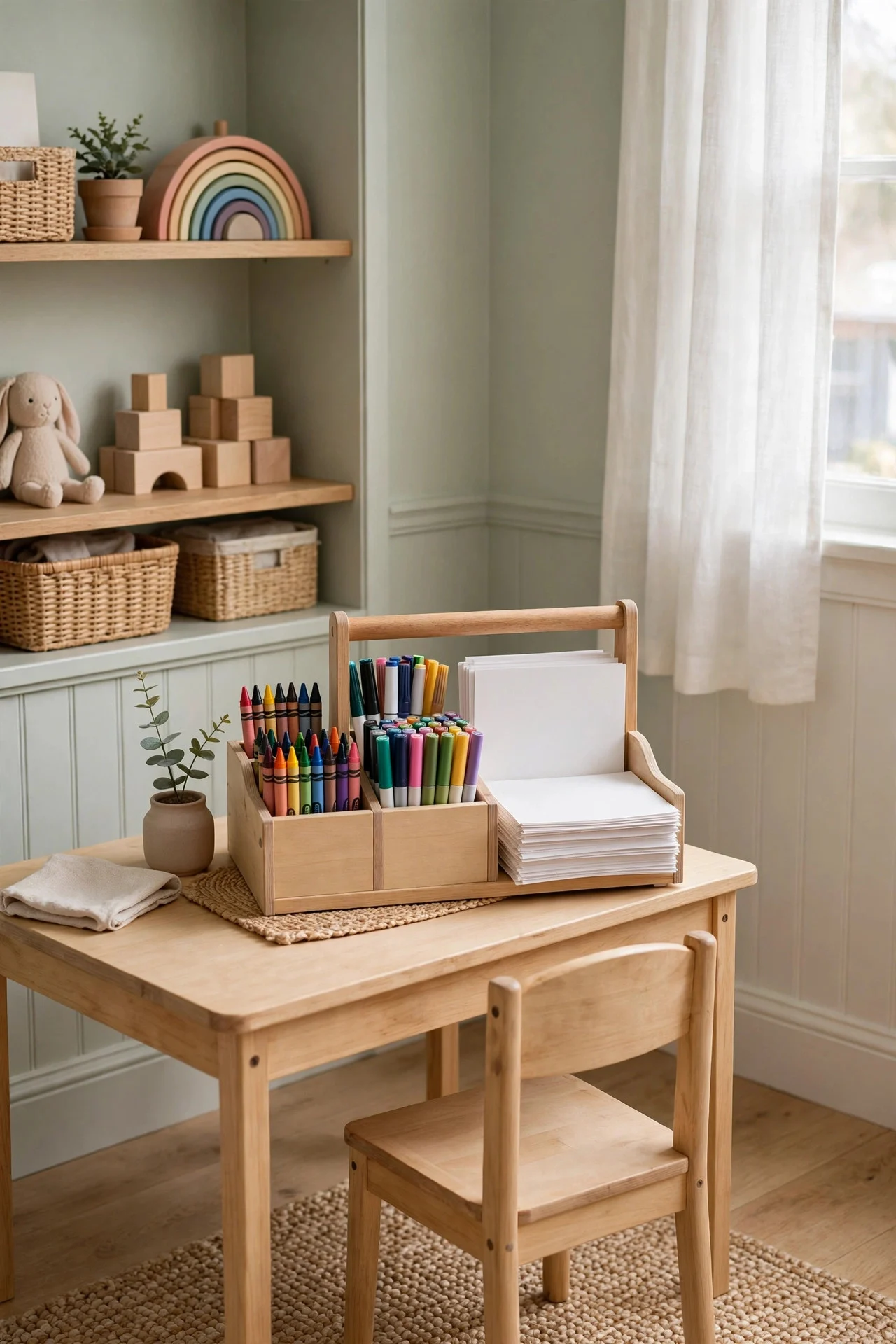
Art supplies migrate to every surface in the house unless they have a portable home. A $15 divided caddy — the kind with a handle — holds crayons, markers, scissors, glue, and paper, and travels from bedroom to kitchen table and back. When craft time ends, the whole kit goes on a shelf.
Restock it monthly and sharpen the colored pencils (dull tools frustrate kids into quitting). Keep the “fancy” supplies — glitter, paint — in a separate parent-controlled box, and the everyday caddy stays genuinely kid-manageable.
Try this: Tape a small trash bag to the caddy’s handle — scraps get contained instead of confetti-ing the room.
14. A Nightstand With Real Storage
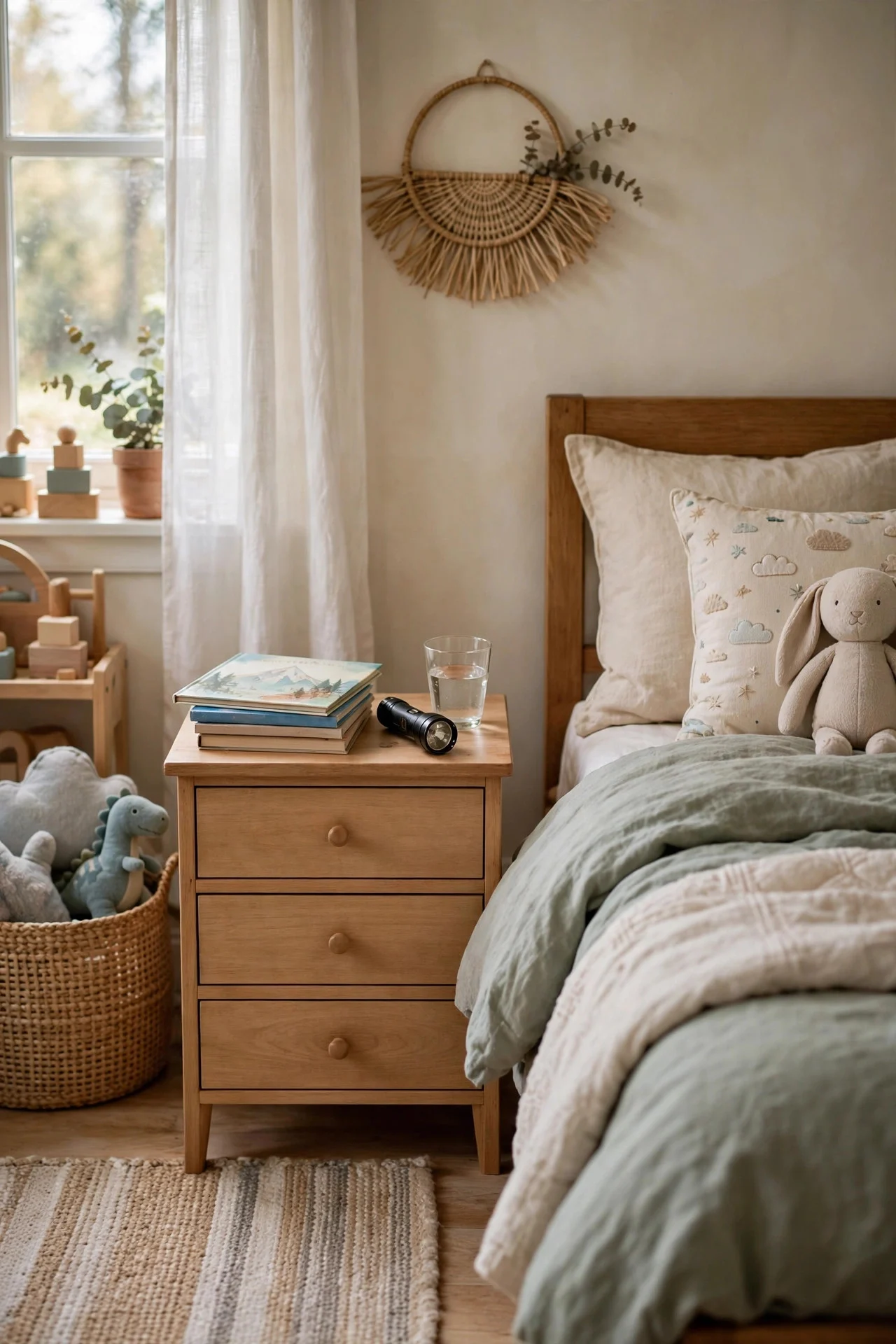
Kids’ nightstands tend to be decorative — a lamp and a leaning tower of books. Swap in a small 3-drawer unit or a cube with a bin ($20 to $30) and the bedside becomes functional: top drawer for the flashlight and water cup, middle for current books, bottom for the journal and treasures.
The bedtime routine smooths out when everything has a drawer — no more hunting for the missing library book at 8:45 p.m. Keep a small tray on top for the glass of water and the lamp, and the surface stays clear by design.
Try this: Add a clip-on reading light to the bed instead of a table lamp — it frees the whole nightstand surface.
Frequently Asked Questions
How do I get my kids to actually clean their room?
Make cleanup stupidly simple: big open bins with picture labels, everything at kid height, and a “ten-minute tidy” timer before dinner. Kids clean what they can do independently — if the system needs adult help, the system is the problem, not the kid.
What’s the best storage for a small kids’ room?
Go vertical and under: cube shelving on walls, rolling drawers under the bed, and a corner hammock for plushies. Keep the floor as clear as possible — small rooms feel twice as big when the floor is open for play.
How many toys should a kid have out at once?
Fewer than you think — most kids play more deeply with a curated set of 10 to 15 toys than with a room full. Try the rotation system: half the toys out, half stored, swapped every few weeks. Watch what never gets missed and donate it.
How do I store stuffed animals without clutter?
Combine methods: a corner hammock for favorites, a stuffed-animal beanbag chair that doubles as seating, and a firm one-in-one-out rule once those fill up. Cap the collection at what those two spots hold and the plush creep stops.
Final Thoughts
The best kids’ room storage isn’t the prettiest — it’s the simplest. Big bins, low shelves, picture labels, and systems kids can run without you. If a five-year-old can put it away alone, it will get put away; if it needs you, it will live on the floor.
Start with the single biggest pain point — usually the toy explosion or the stuffed animal situation — and fix that first. One working system builds momentum, and momentum is what turns a chaotic kids’ room into a manageable one.