
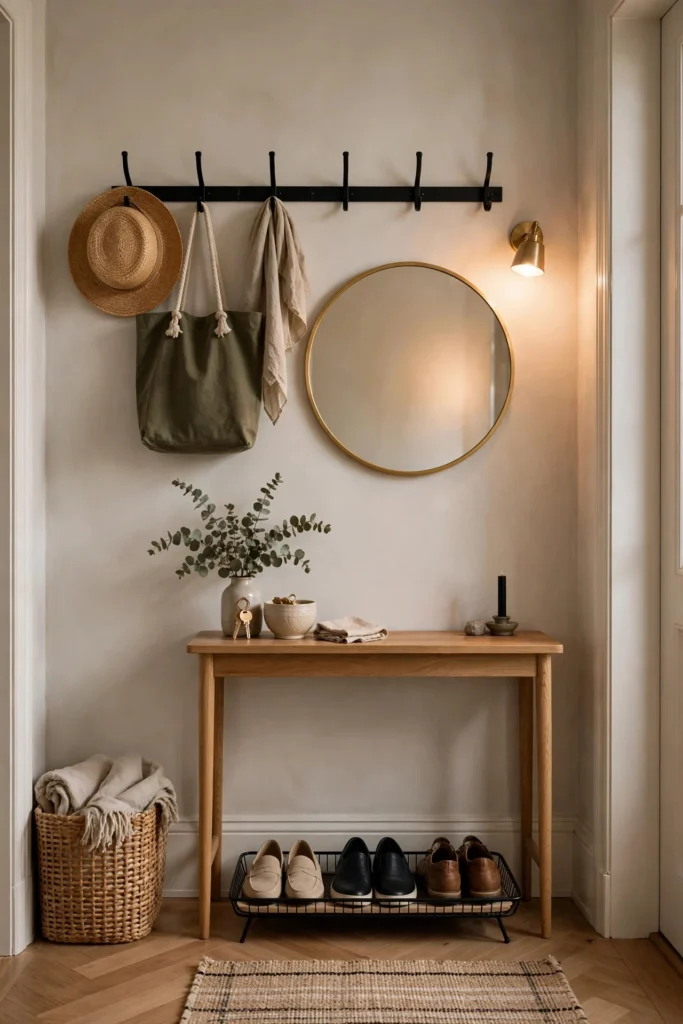
The entryway is the hardest-working square footage in a small home — it’s a coat closet, shoe rack, mailroom, and first impression crammed into maybe twenty square feet. When it fails, the whole house feels chaotic, because every coming-and-going funnels through the mess.
These 16 ideas are designed for tight entries: wall-mounted everything, furniture under 10 inches deep, and systems that handle the daily avalanche of shoes, keys, mail, and bags without eating your living room. Small space, ruthless efficiency.
1. A Wall-Mounted Hook Rail
When floor space is zero, the wall does the work. A 24-inch rail with five sturdy hooks — about $20 — holds the daily coats, the dog leash, and tomorrow’s jacket at grab height. Mount it at 60 inches so coats hang clear of the floor but kids can still reach the lowest hooks.
Screw into studs, not drywall anchors, because a rail of winter coats is heavier than it looks. Assign one hook per person and enforce it — the rail only works when “my hook” is a real rule, not a suggestion.
Try this: Hang a small basket from the end hook for sunglasses and gloves — the tiny things that vanish otherwise.
2. A Console Table Under 10 Inches Deep
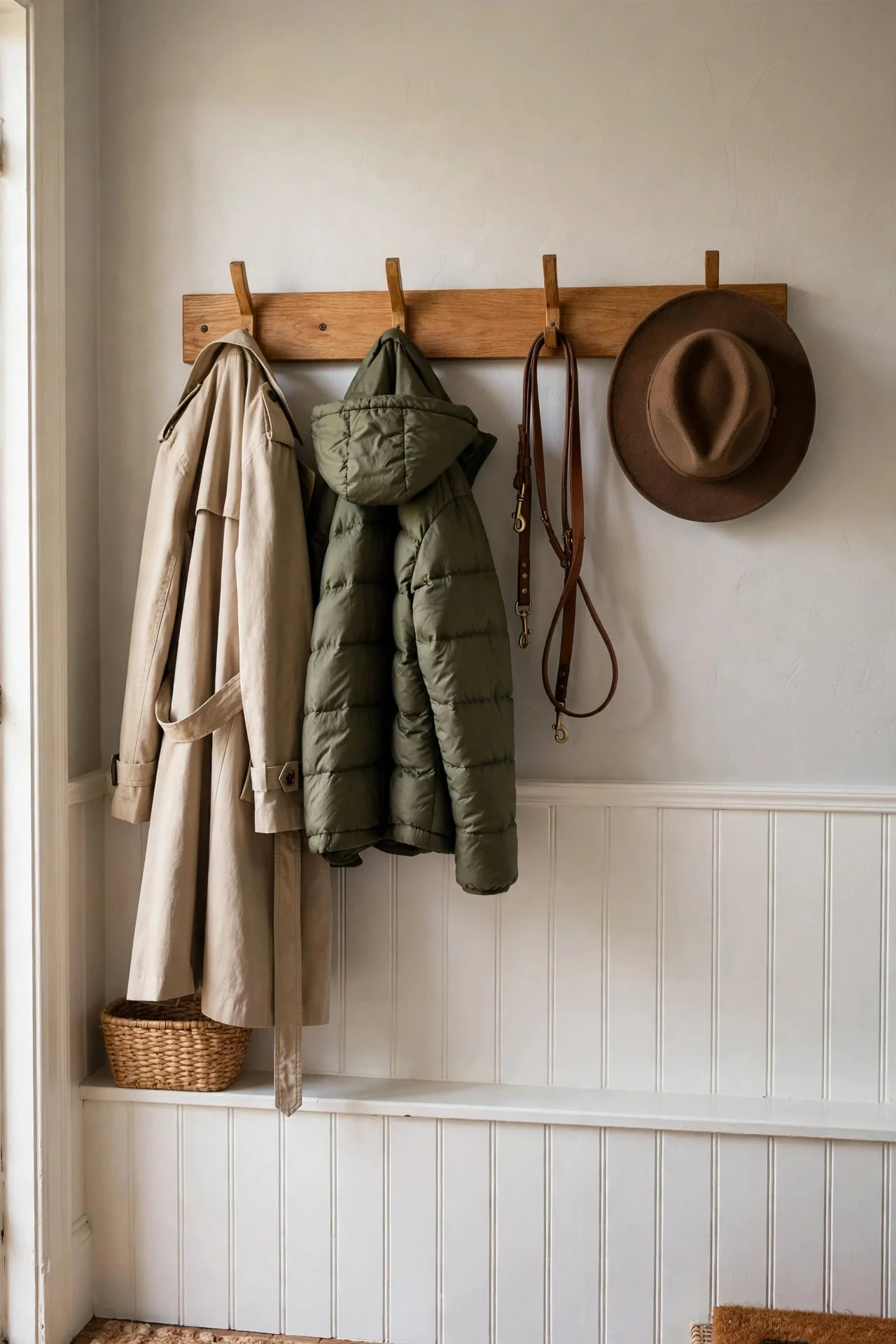
A standard 16-inch-deep console swallows a narrow entry; a 8-to-10-inch-deep one fits where you’d swear nothing could. It holds the key bowl, the mail, a small lamp, and still leaves walkway. Narrow consoles run $60 to $120, or rip a shelf board to depth for a $15 DIY.
Keep the surface styling minimal — tray, bowl, one decor piece. The moment the console becomes a second mail pile, it stops being furniture and starts being clutter with legs.
Try this: Slide flat storage boxes underneath for out-of-season gloves and scarves — hidden, accessible, dust-free.
3. A Shoe Tray by the Door
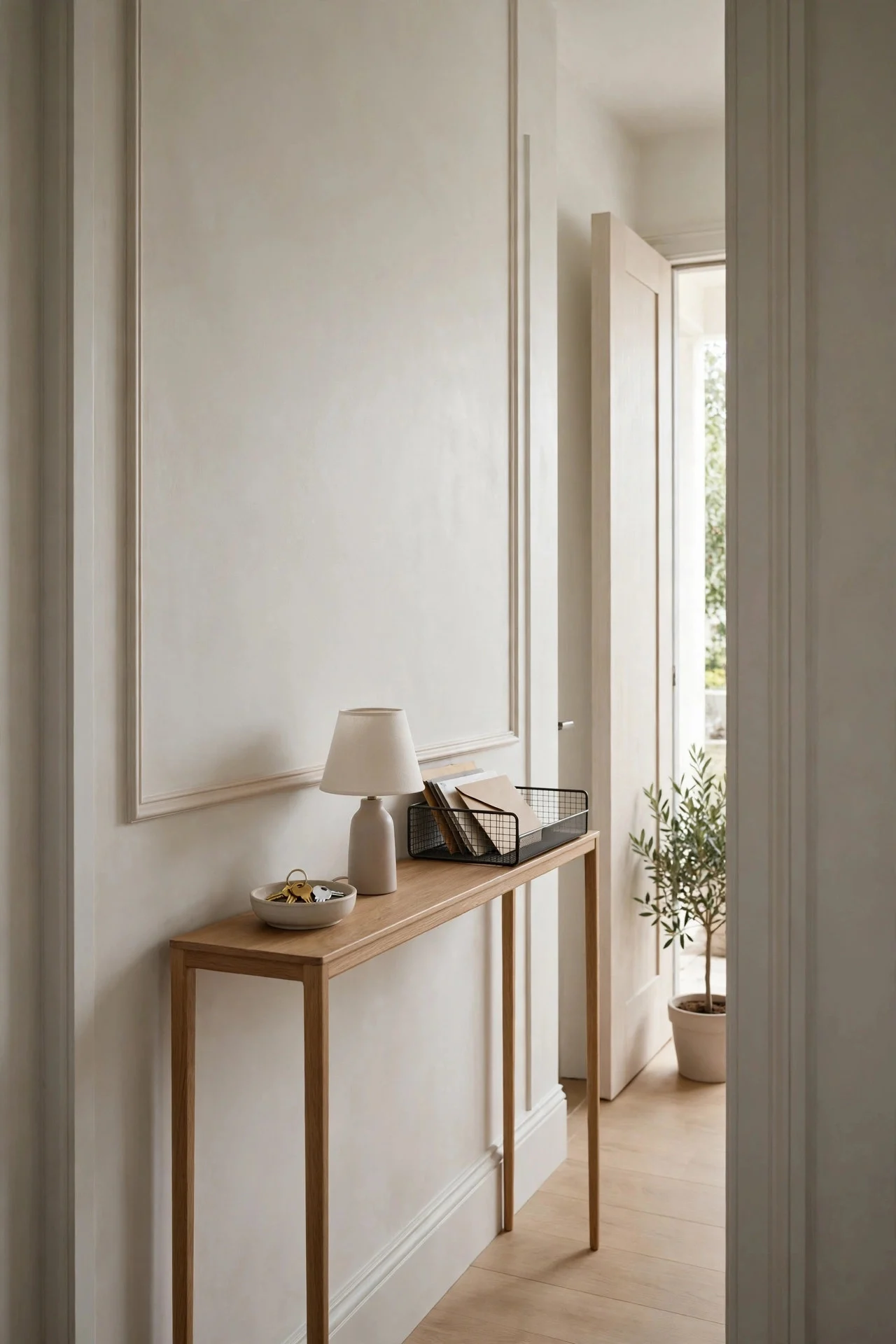
Shoes multiply by the door like rabbits. A $12 boot tray — roughly 30×15 inches — defines exactly how many pairs live in the entry: what fits on the tray stays, the rest goes to bedrooms. The tray also catches the mud, slush, and gravel that otherwise migrates across your floors.
Choose a tray with a raised lip and a wipeable surface; coconut-fiber mats look nice but trap gunk. In wet climates, this single tray saves more floor-mopping than any other entry purchase.
Try this: Cap it at two pairs per person on the tray — the limit is the feature, not a suggestion.
4. Over-the-Door Hooks for Instant Capacity
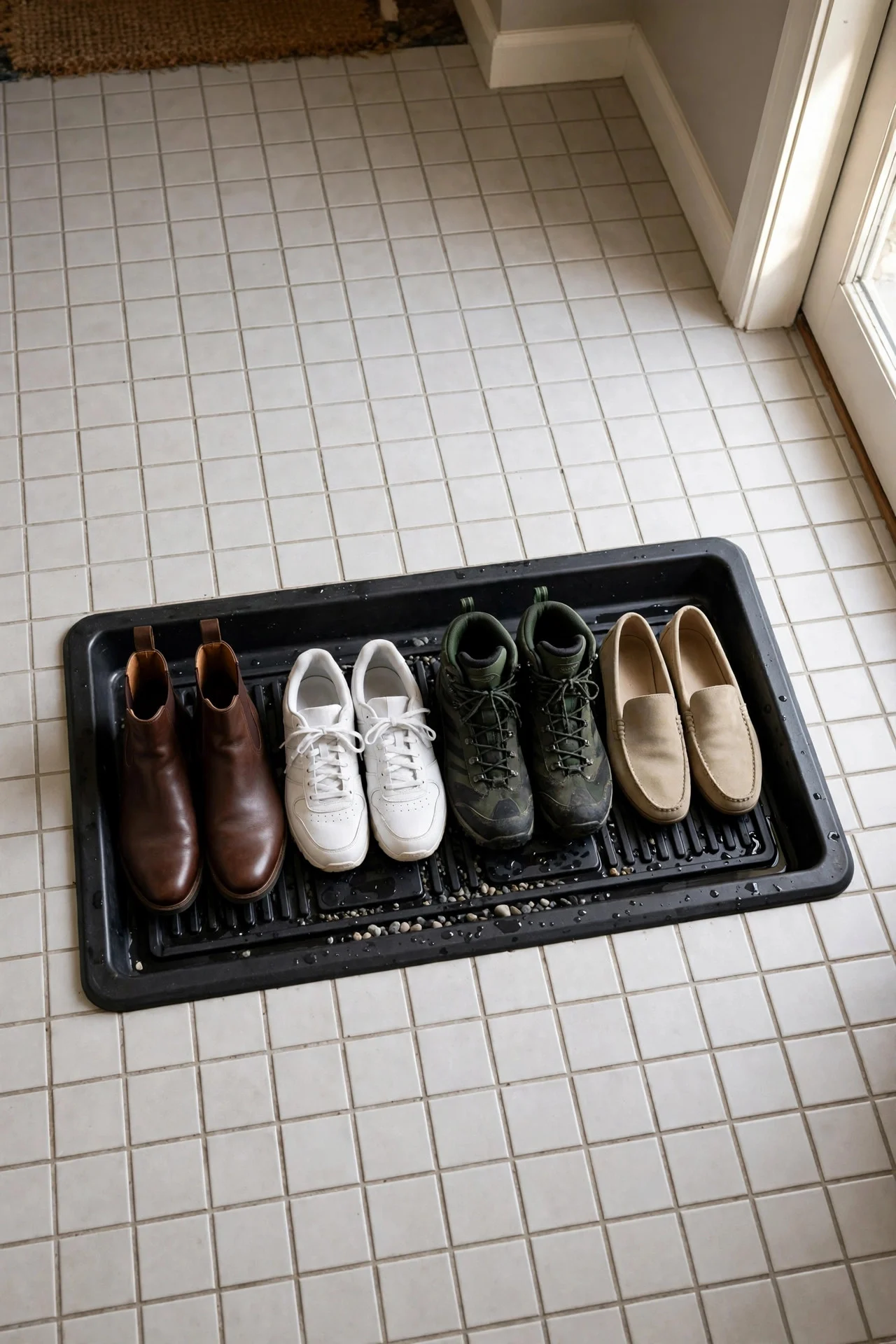
No wall space? No drilling allowed? Over-the-door hooks add four to six hanging spots in ten seconds for about $10. They fit the closet door, the front door, or a bedroom door near the entry — wherever the coats actually land.
They’re not as sturdy as screwed-in hooks, so reserve them for lighter loads: tomorrow’s outfit, the reusable shopping bags, the kid’s backpack. Felt pads on the back prevent door scuffs, and most fit standard interior doors without trimming.
Try this: Dedicate one hook to the “go bag” — library books, returns, donations — so errands leave with you instead of piling up.
5. A Wall-Mounted Mail Sorter
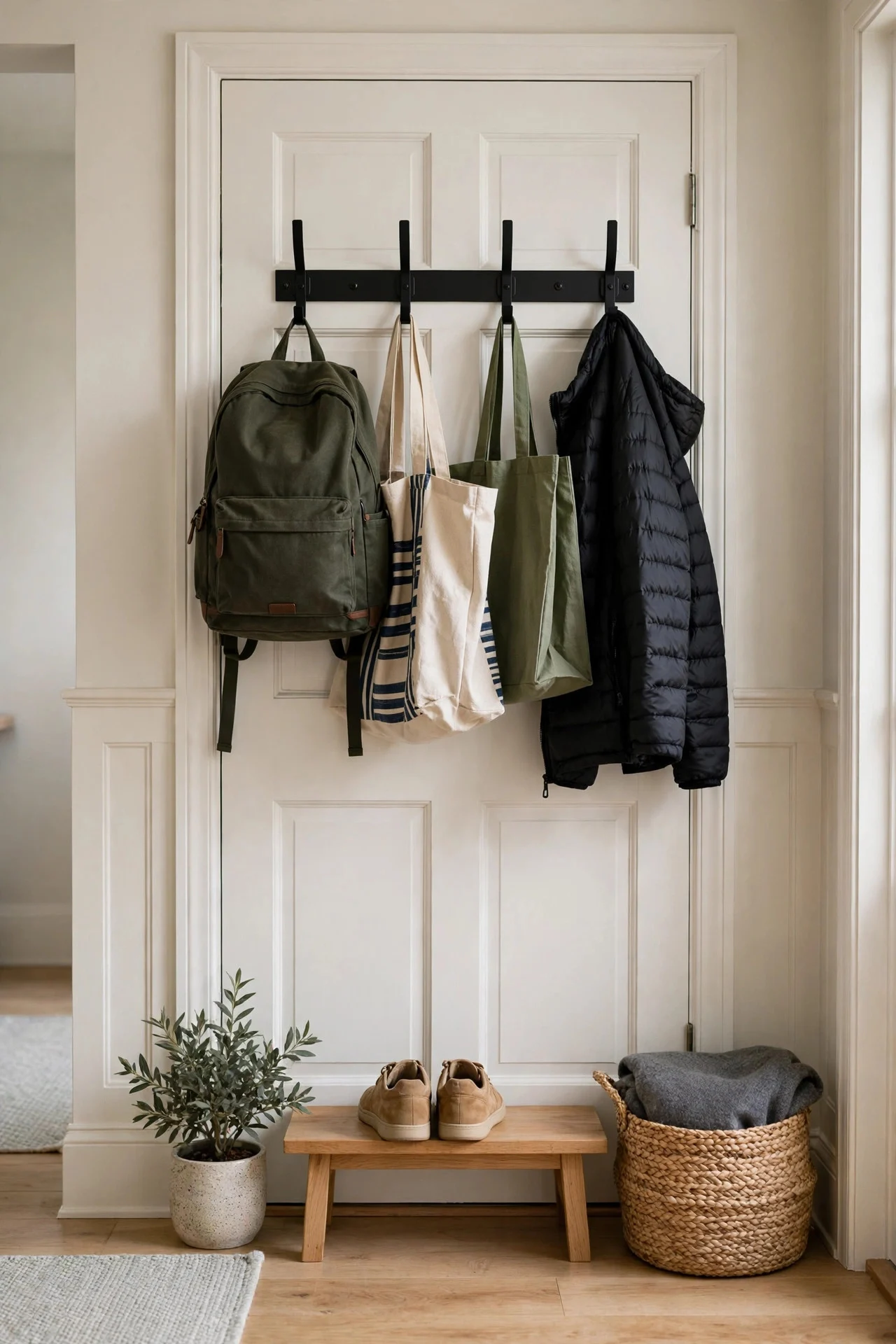
Mail is the #1 entryway clutter source, and a flat pile is where bills go to be forgotten. A wall-mounted sorter with three slots — about $18 — stands upright by the door: incoming, action needed, outgoing. The vertical format means you see everything without digging.
Process the “action” slot weekly and the system stays honest. Mount it at eye level near where you naturally drop the mail, not across the room — convenience beats aesthetics for systems you use daily.
Try this: Put a small recycling bin directly below the sorter — junk mail gets trashed in one motion instead of joining the pile.
6. A Key Bowl With a Landing Rule
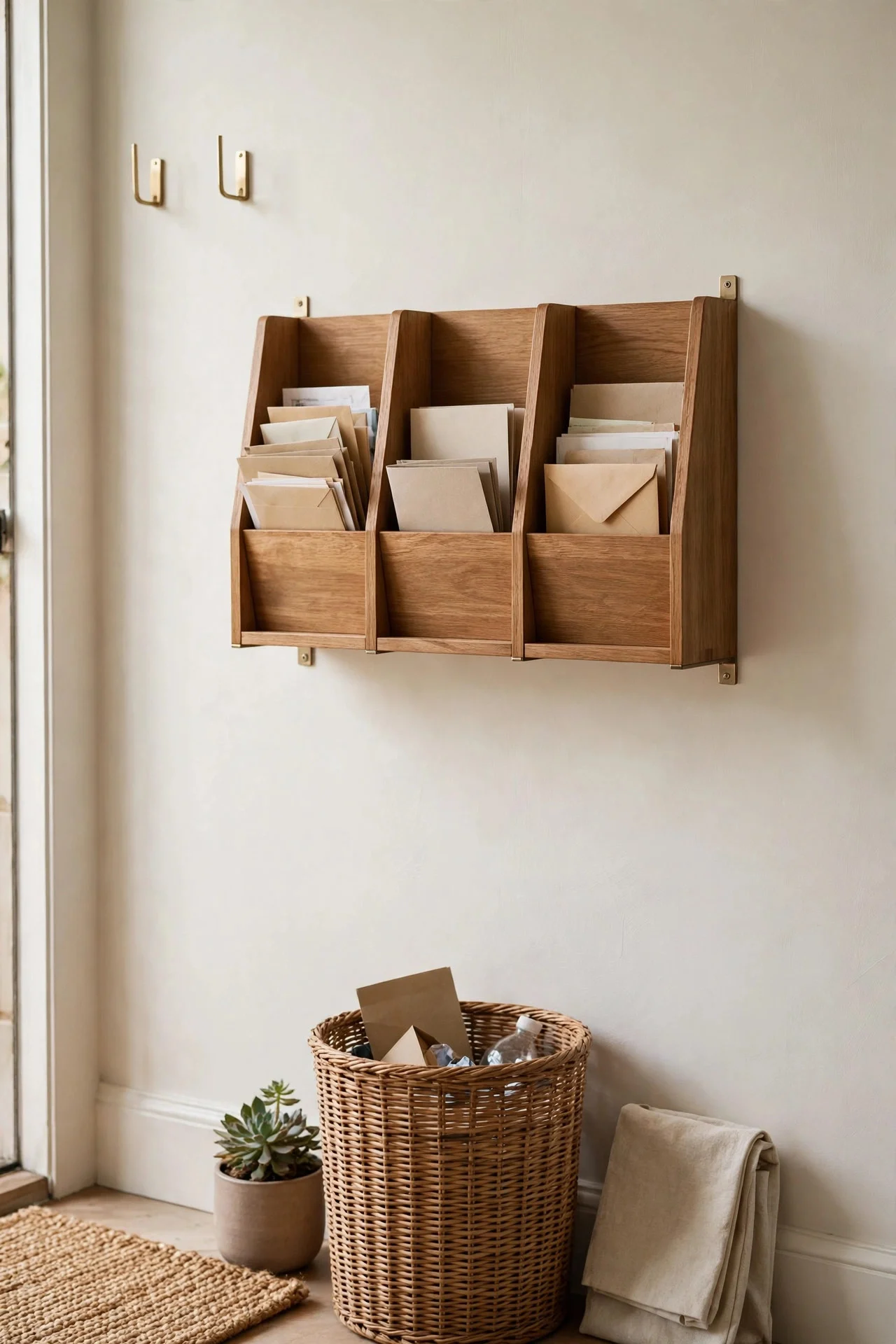
Keys have exactly one home: the bowl by the door. A $10 ceramic bowl or tray on the narrow console, and a household rule — keys land there every single time, no exceptions. The bowl isn’t storage, it’s a habit anchor.
Make it the prettiest object in the entry so using it feels good, not dutiful. Add a second tiny dish for the daily-carry extras: the garage remote, the parking pass, the spare house key for the dog walker.
Try this: If keys still wander, mount a magnetic strip inside a nearby cabinet — some people stick keys better than they drop them.
7. A Compact Corner Hall Tree
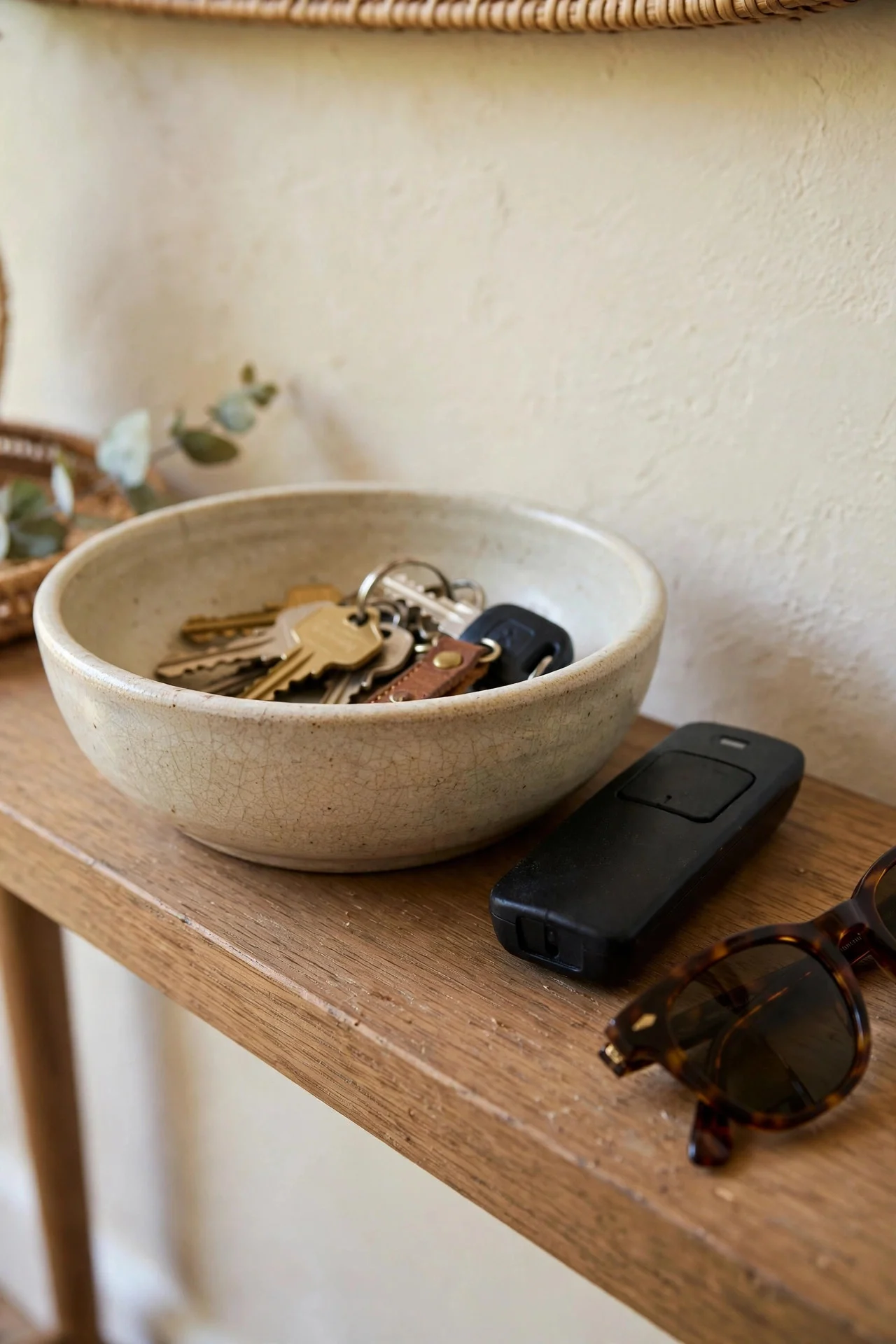
A hall tree combines hooks, a bench, and shoe storage in one footprint — and corner models squeeze into spaces a flat unit can’t. Compact versions run $80 to $150 and handle two people’s full daily gear: coats up top, shoes below, bags on the hooks.
Measure your corner’s true clearance, including baseboards and door swing, before ordering. The bench height — around 18 inches — doubles as a sitting spot for shoe-tying, which kids and grandparents will both appreciate.
Try this: Put a washable cushion on the bench — it makes the unit look like furniture instead of a locker.
8. A Floating Shelf Plus Hooks Combo
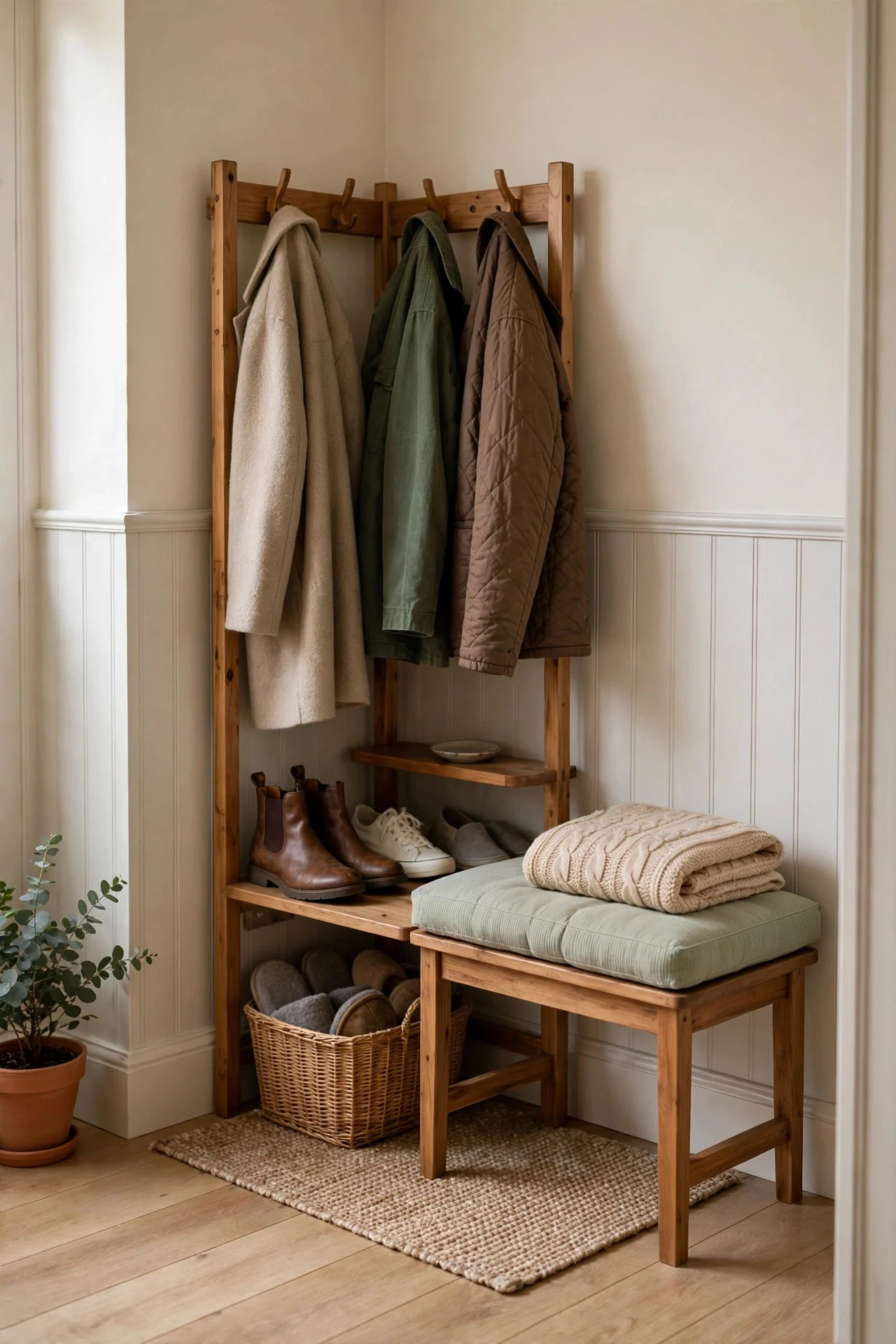
One 36-inch floating shelf at 65 inches high, with a row of hooks mounted beneath it, gives you display space above and hanging space below in a single 6-inch-deep footprint. About $30 total, and it looks custom.
Style the shelf with two or three objects max — a plant, a framed photo, a small basket for mail. The hooks below handle coats and bags. Because it’s all wall-mounted, the floor stays completely clear for shoes and the vacuum.
Try this: Run a slim LED strip under the shelf — entry lighting that doubles as a nightlight for late arrivals.
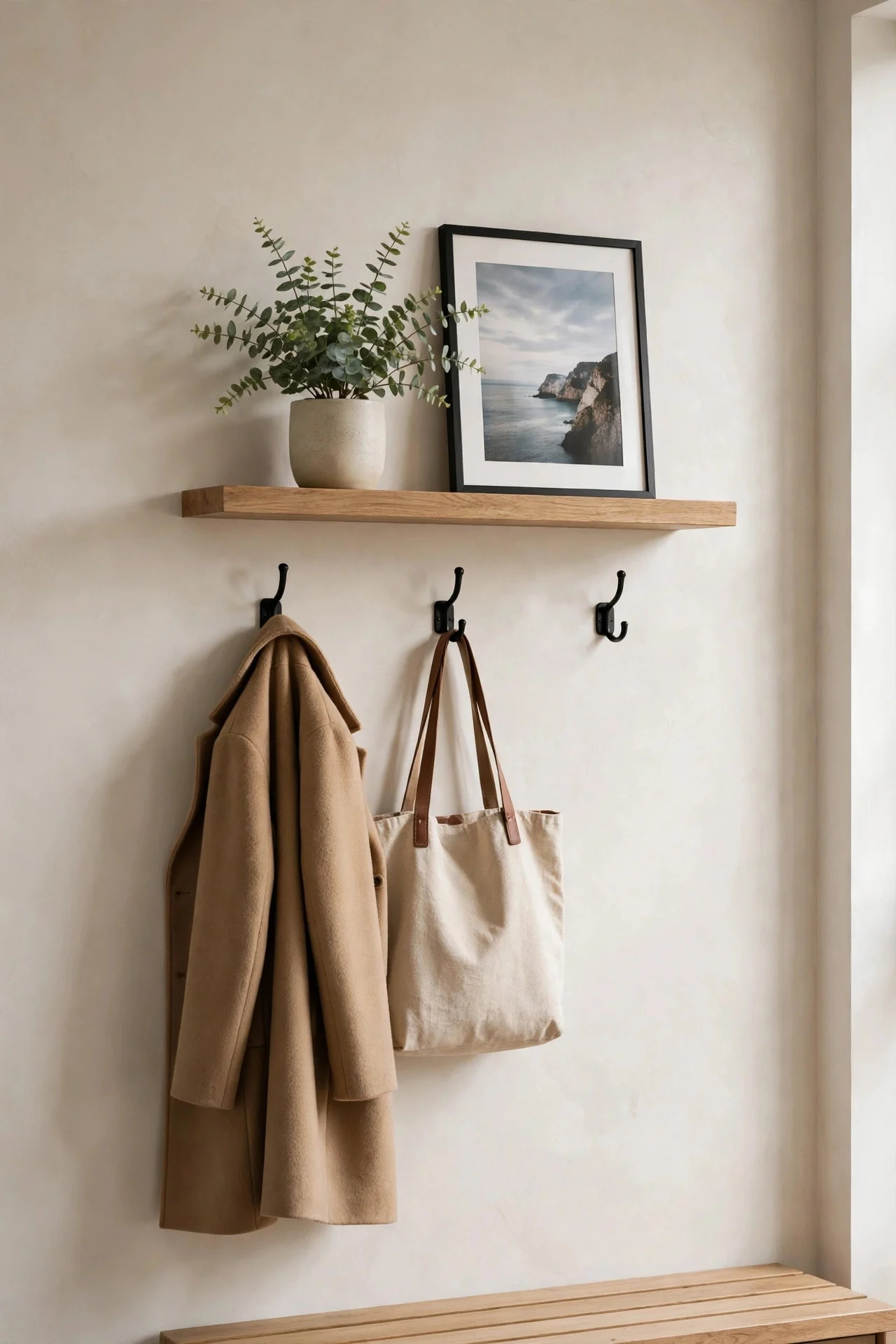
9. One Basket Per Person
In a shared entry, communal piles become nobody’s responsibility. Give each person one basket — $8 to $12 each — on a shelf or under the console: their gloves, hat, sunglasses, and daily extras live there and nowhere else. When the basket’s full, they deal with it.
Label them or color-code by person; in my experience, ownership is what makes shared-space systems survive. Kids’ baskets sit lower, adults’ higher, and the visual boundary stops the slow creep of one person’s stuff across everyone’s space.
Try this: Do a monthly basket dump — everything out, trash the trash, rehome the rest. Five minutes per person.
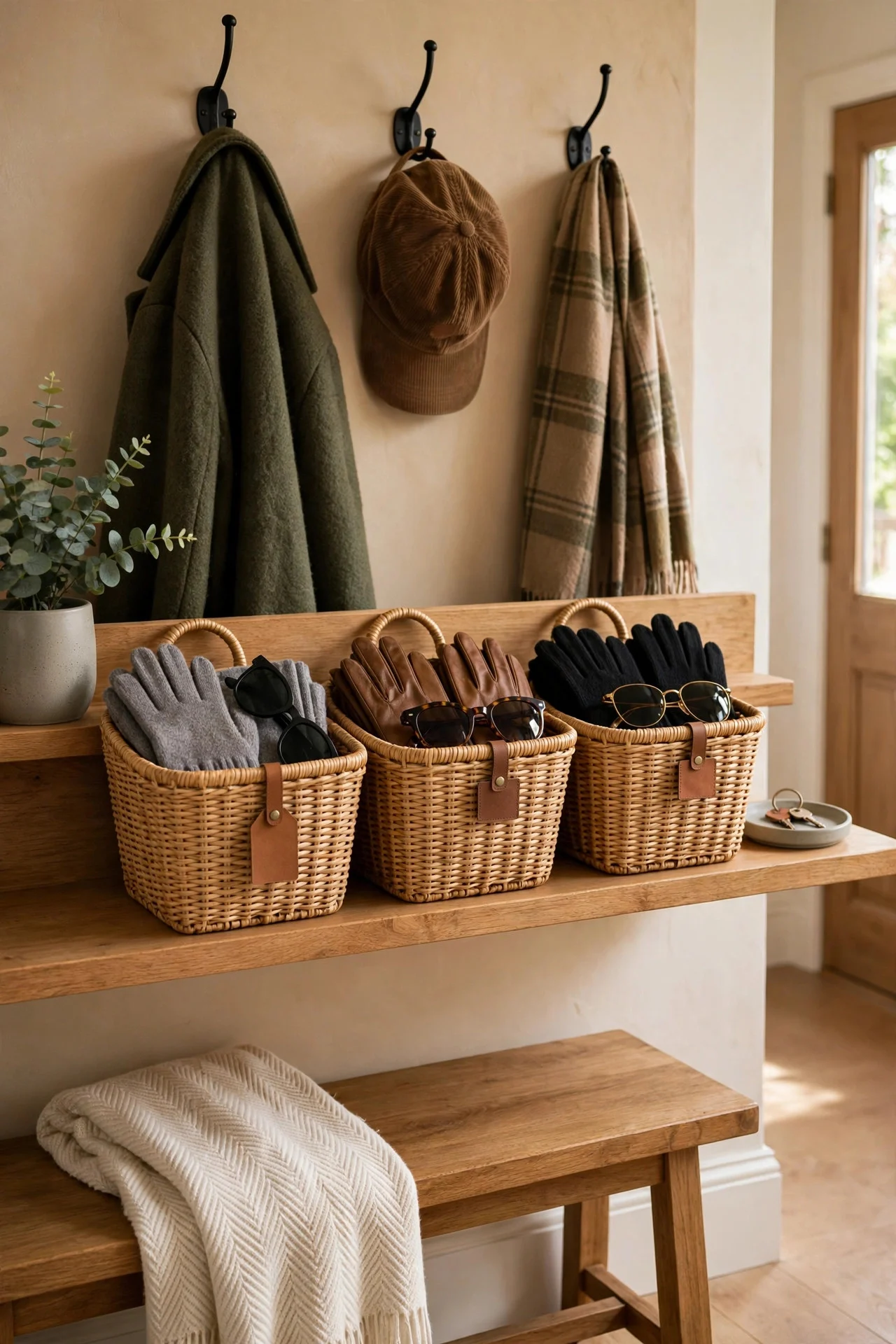
10. A Slim Umbrella Stand
Wet umbrellas have nowhere good to go in a small entry — until you give them a 6-inch-diameter stand in the corner. Slim ceramic or metal stands cost $20 to $35, hold four umbrellas, and the drip tray inside protects your floors.
Tuck it in the dead corner beside the door where nothing else fits. In dry months it holds the reusable shopping bags instead — same footprint, year-round usefulness.
Try this: Toss a few silica gel packets in the bottom — they absorb residual dampness and stop that musty umbrella smell.
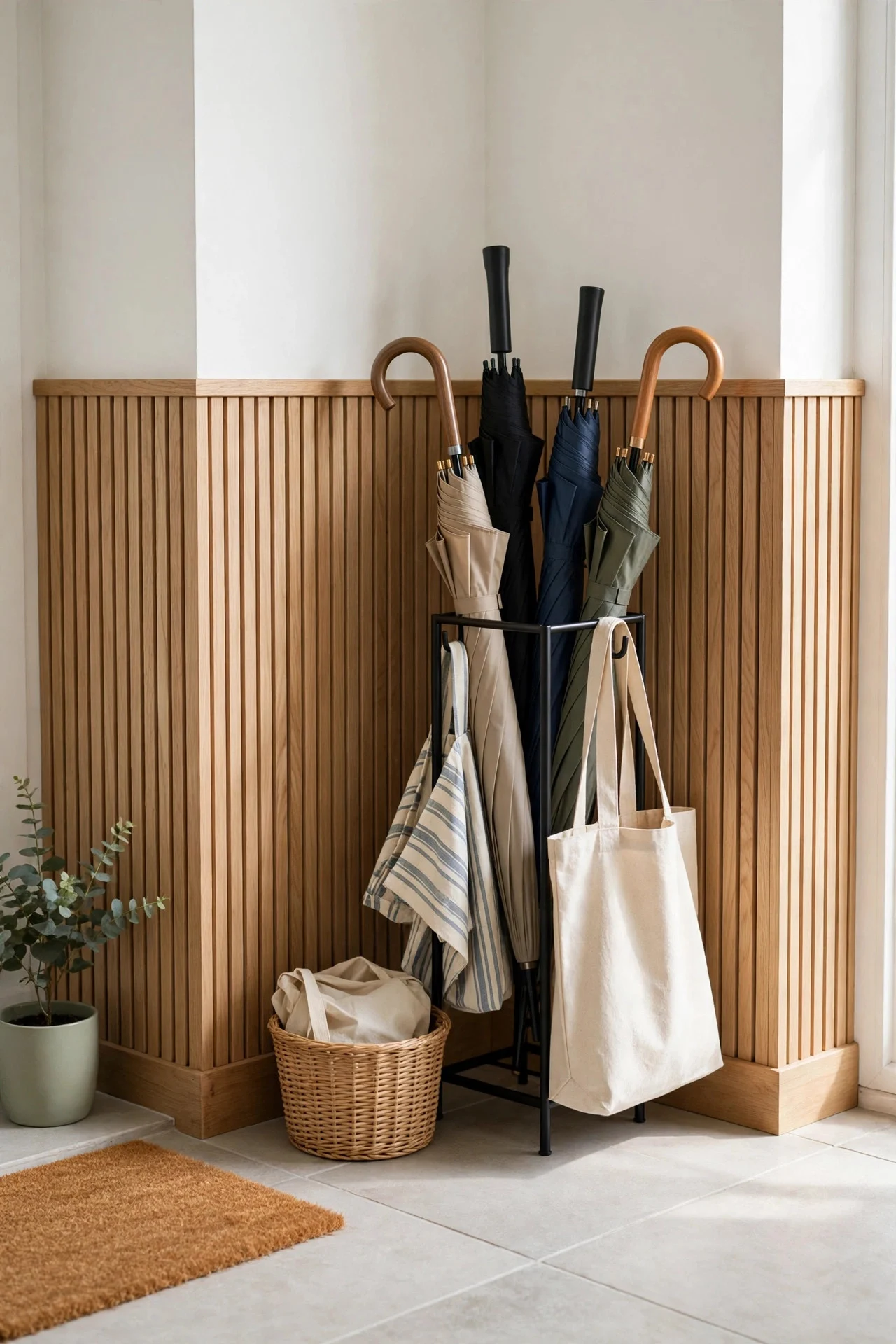
11. A Mirror With Built-In Hooks
A mirror makes a small entry feel twice as big — and models with hooks or a shelf underneath earn their wall space twice over. A 20-inch round mirror with three hooks runs $30 to $50 and handles the last-look check plus today’s bag.
Hang it at a height where everyone sees their face, roughly 60 inches to center. The hooks underneath hold the items that need to leave with you: the purse, the work badge, the kid’s lunchbox.
Try this: Stick a small dry-erase dot on the mirror’s corner for reminders — “permission slip!” beats a forgotten signature.
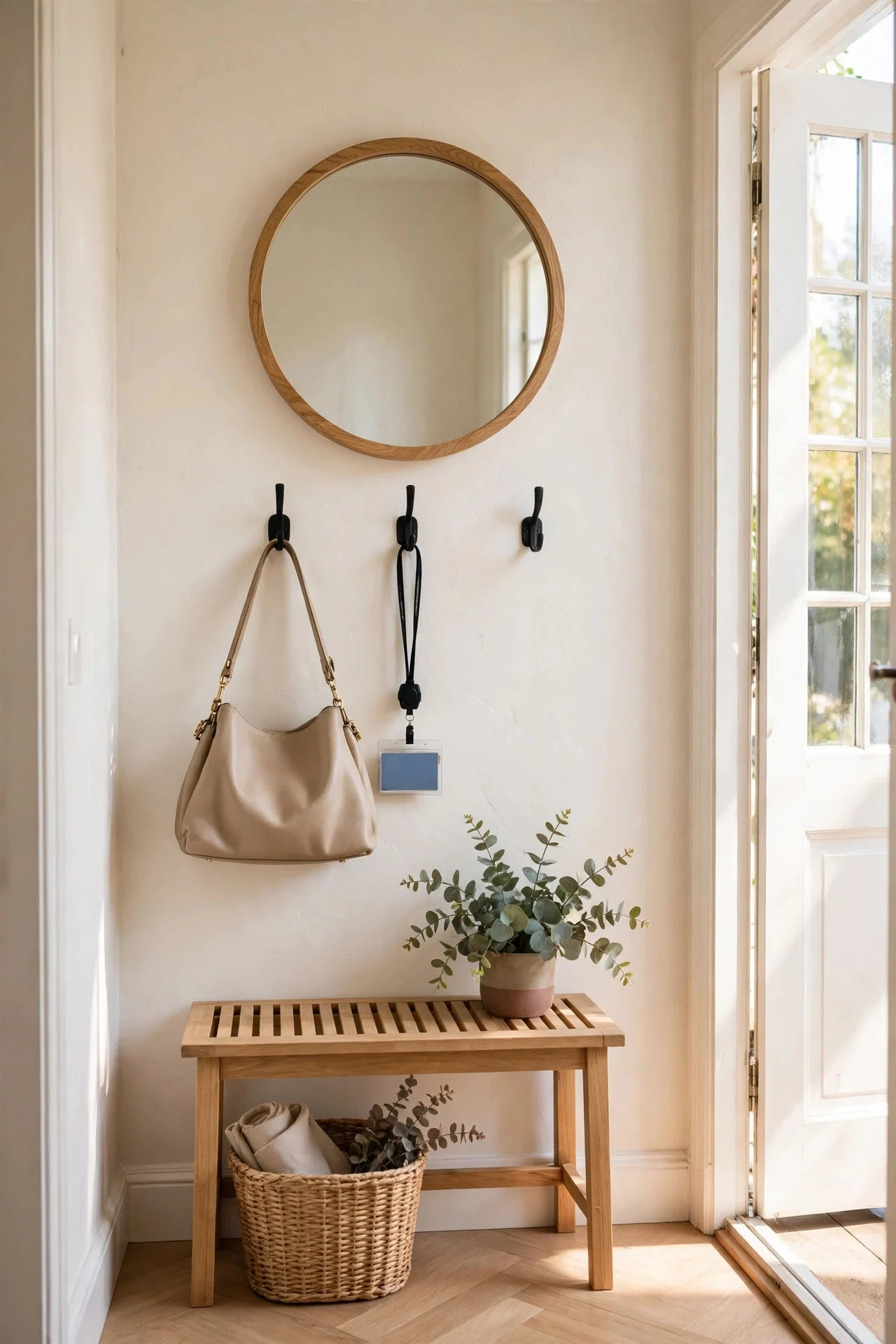
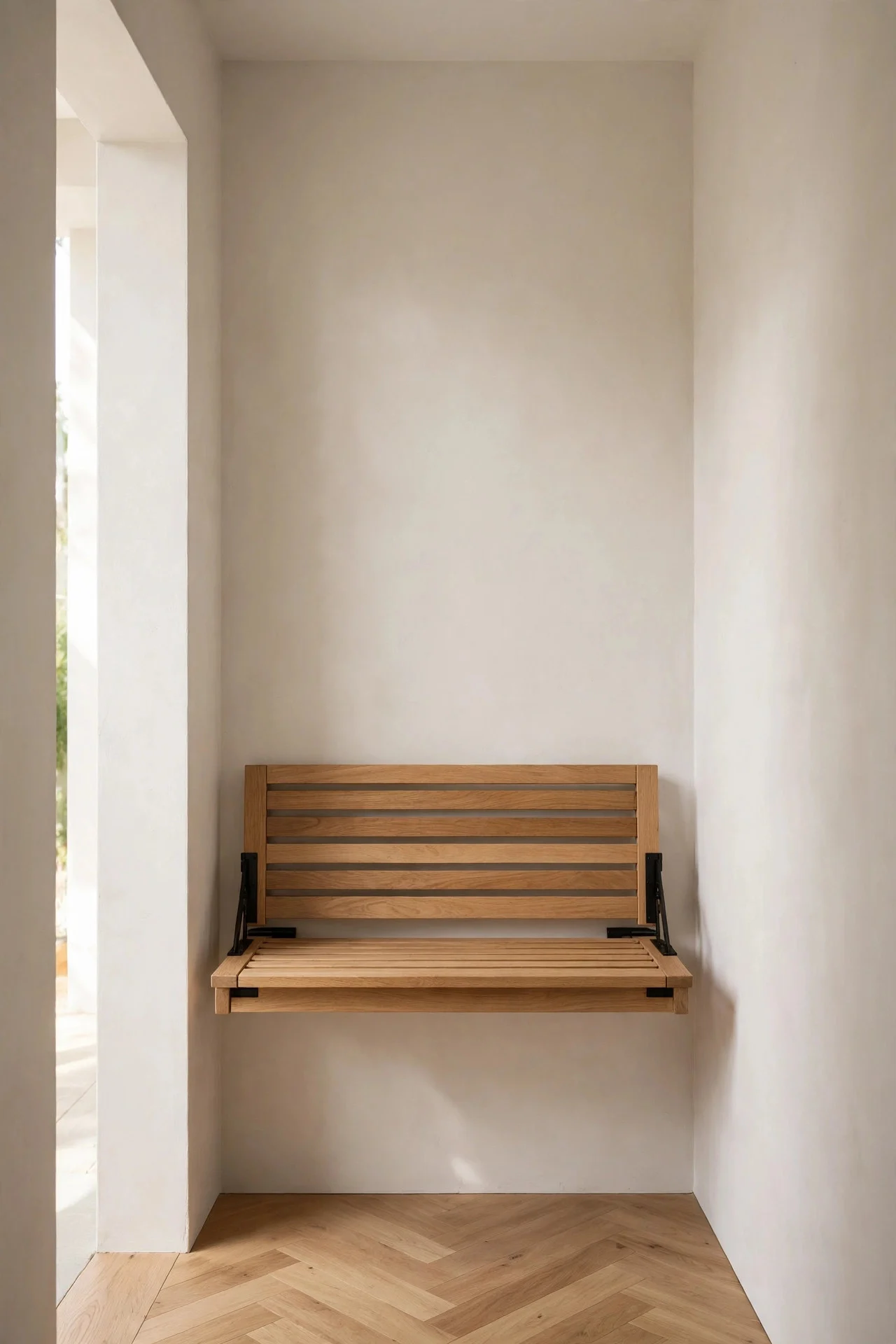
12. A Fold-Down Wall Bench
No room for a bench? Hinge one to the wall. A fold-down seat — about $40 in lumber and heavy hinges, or $70 pre-made — gives you a sitting spot for shoes that vanishes flat against the wall when guests arrive. It needs just 14 inches of wall width.
Mount at 18 inches high with a wall cleat for support, and test it with your heaviest family member before trusting it. Unlike a permanent bench, it never becomes a horizontal surface for mail piles — it simply isn’t there.
Try this: Add a small wall hook beside it at sitting height — the perfect spot for the bag while you tie shoes.
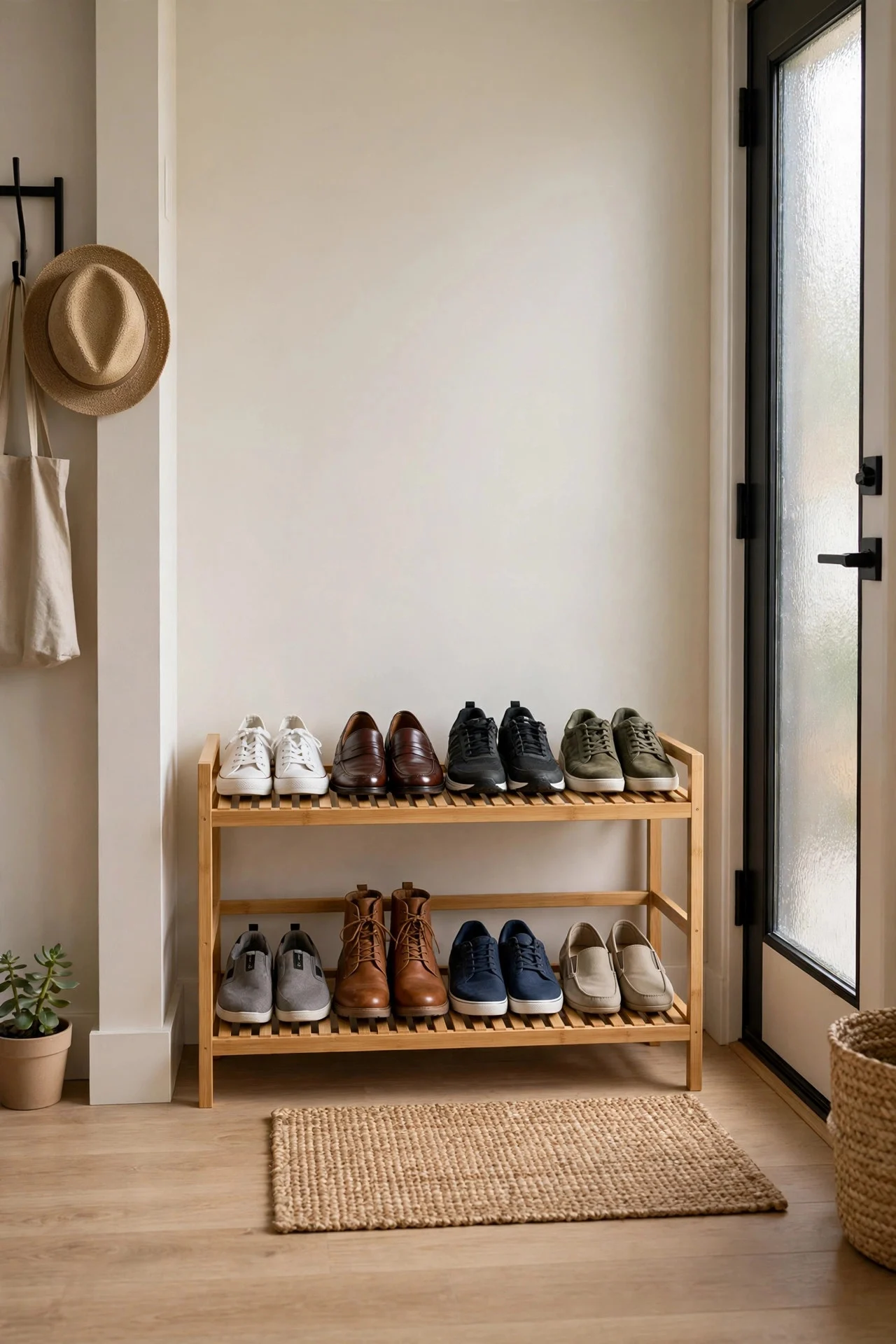
13. A Tiered Shoe Rack, Not a Pile
A two-tier shoe rack — 24 inches wide, $20 — holds eight pairs in the footprint of four. The vertical format is the entire trick: shoes you can see get worn, shoes in a pile get forgotten and rebought. Bamboo racks look decent enough to live in view.
Put daily shoes on the top tier, less-worn on the bottom. If the rack overflows, that’s your purge signal — not your cue to buy a bigger rack. Most adults wear the same six pairs on rotation; the rest can live in bedroom closets.
Try this: Keep a shoehorn hanging from the rack’s side — it speeds up mornings and saves the backs of your shoes.
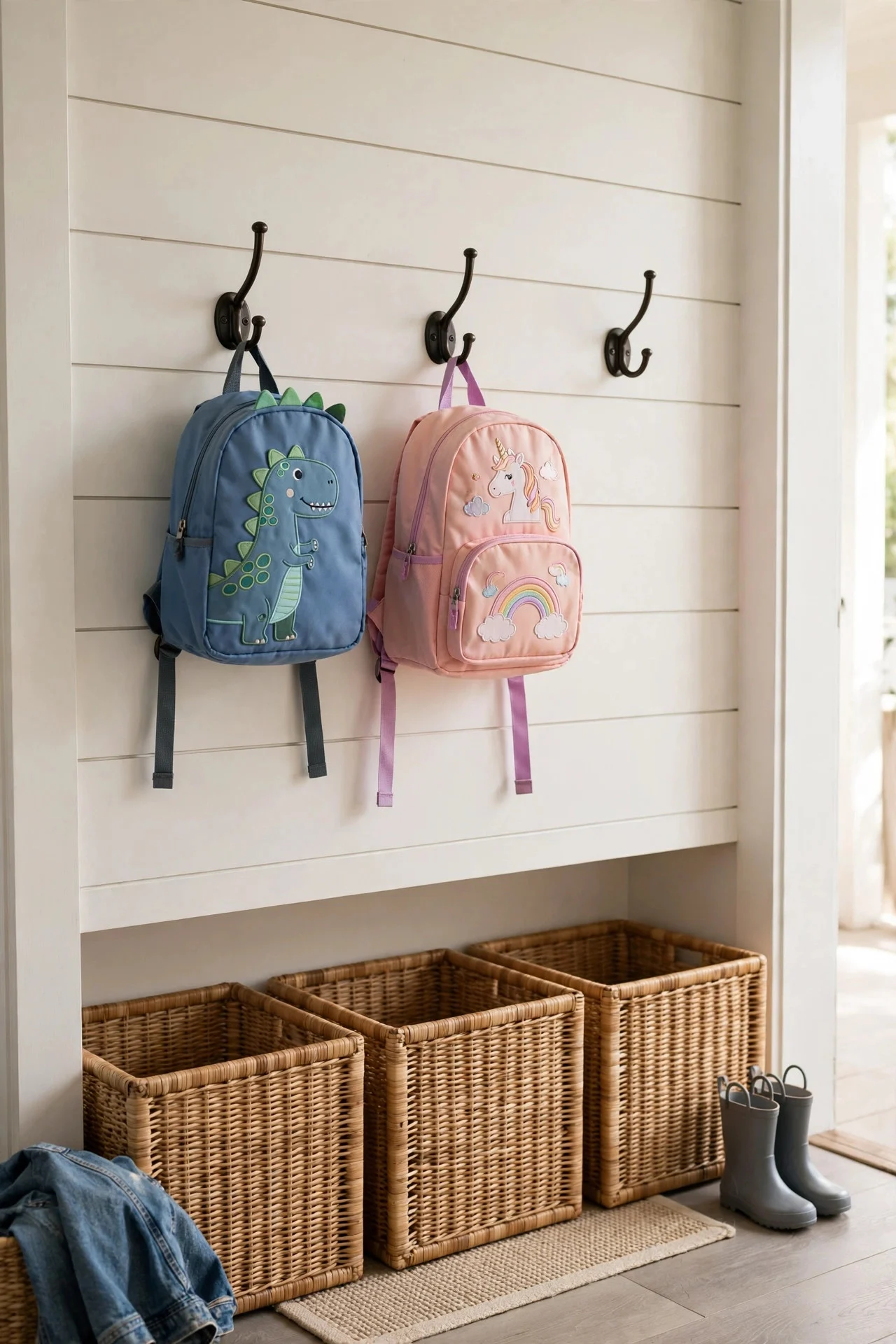
14. Backpack Hooks at Kid Height
Kids’ backpacks are entryway wrecking balls — heavy, bulky, and dropped wherever the kid stops moving. A row of sturdy hooks at 40 inches high, one per kid, intercepts the drop at the source. Heavy-duty single hooks cost $3 each and hold a loaded backpack easily.
Mount them on the wall the kids walk past, not inside a closet they’ll never open. Add a small labeled bin beneath each hook for the lunchbox and water bottle — the full school kit in one vertical column.
Try this: Make hanging the backpack the very first after-school rule — before snacks, before screens. Habit beats reminders.
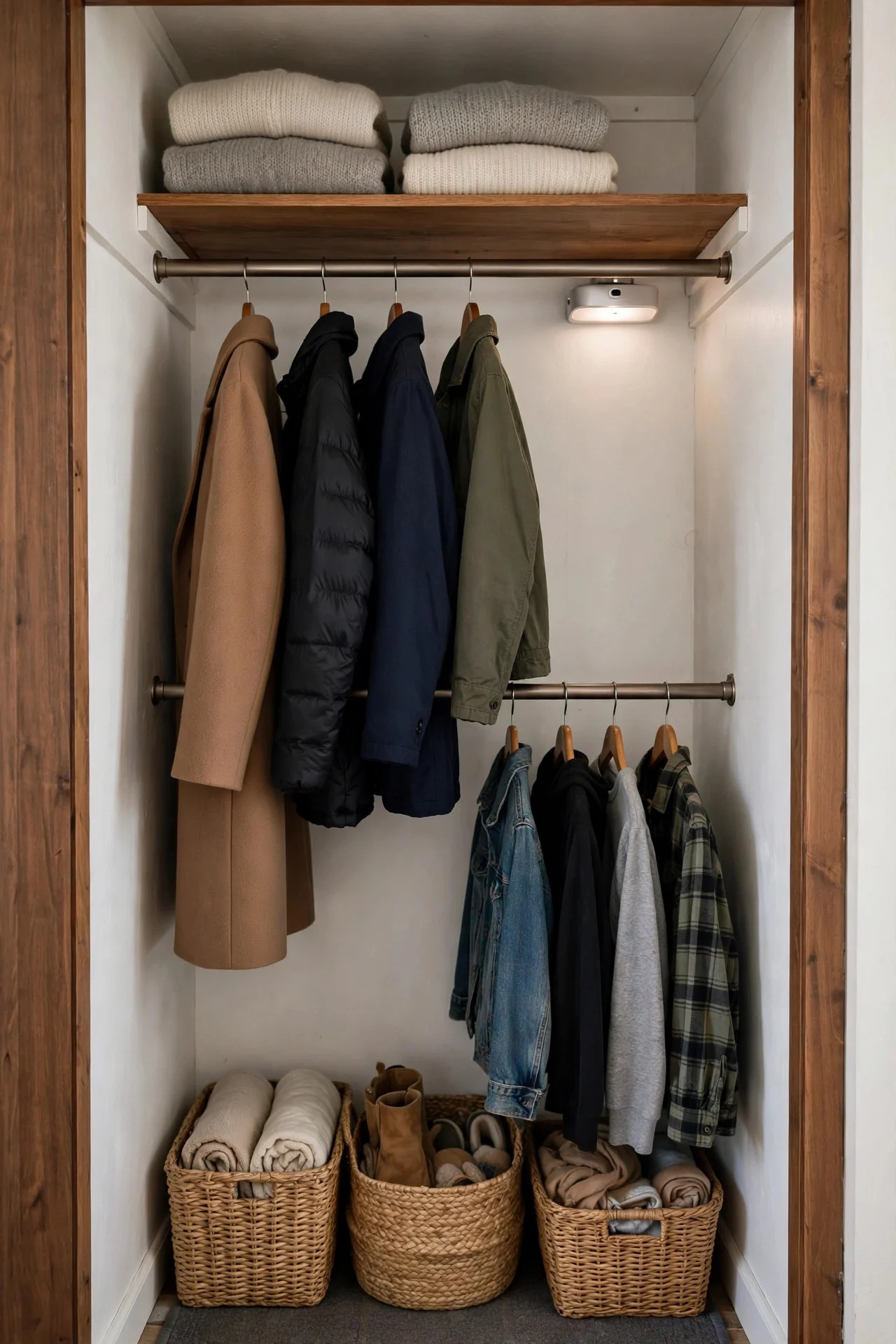
15. Reclaim the Coat Closet
That shallow entry closet is probably storing vacuum cleaners and wrapping paper. Evict the non-entry items, add double hanging rods ($15) and a shelf above, and it becomes a real coat closet: daily coats low, out-of-season up top, shoes and baskets on the floor.
The inside of the closet door takes hooks for bags and the lint roller. A motion-sensor puck light ($8 for two) inside means you can actually see what’s in there — dark closets become dead closets fast.
Try this: Move the evicted items to their true homes first — a closet cleanout fails when the displaced stuff just piles in the hallway.
16. A Command Center for the Week
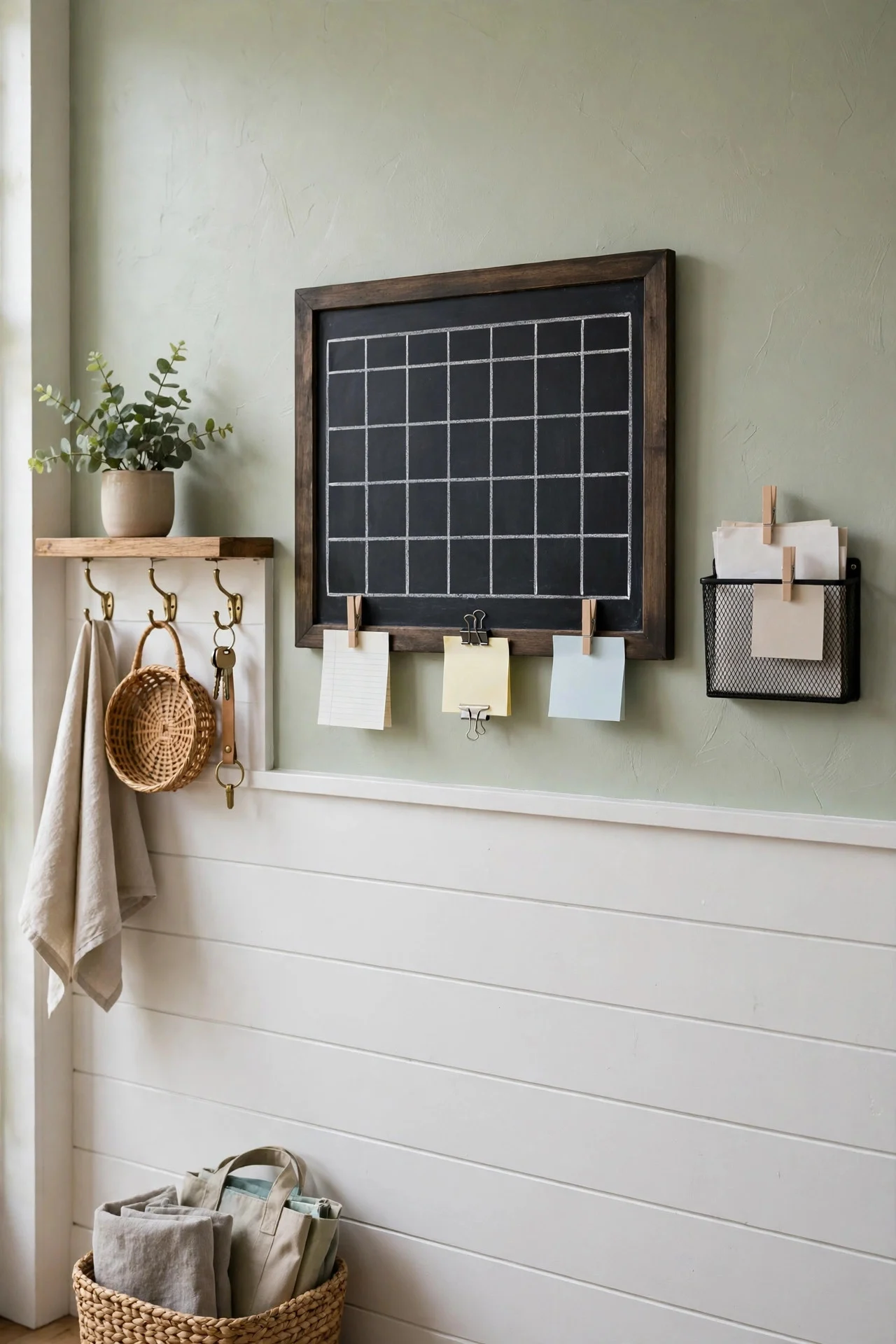
The final piece: one small board — chalkboard, cork, or dry-erase, about $15 — mounted at eye level with the week’s essentials: the calendar, permission slips, the meal plan, outgoing mail clipped below. Everything that used to live in piles now lives in one glance.
Keep it ruthlessly current: Sunday night, wipe and reset for the week. An outdated command center is just wall decor, but a current one quietly runs the household’s logistics from eighteen square inches.
Try this: Photograph the board every Sunday before wiping — the archive catches anything you forgot to act on.
Frequently Asked Questions
How do I organize a very small entryway with no closet?
Go entirely wall-mounted: a hook rail for coats, a floating shelf with hooks below, a slim shoe tray on the floor, and a key bowl on a narrow console. You can fit a complete entry system in a 3-foot-wide wall section without touching the floor.
What’s the best shoe storage for a small entryway?
A two-tier rack or a boot tray with a strict pair limit — usually two pairs per person. The limit matters more than the furniture: entries stay tidy when excess shoes live in bedrooms, not by the door.
How do I stop mail from piling up in the entry?
Mount a wall sorter with three slots (incoming, action, outgoing) and put a recycling bin directly beneath it. Sort mail the moment it arrives — junk goes straight down, and the action slot gets processed weekly.
How deep should entryway furniture be in a small home?
Stay under 10 inches deep for consoles and tables in narrow entries; standard 16-inch furniture eats walkway fast. Wall-mounted options — shelves, hook rails, fold-down benches — use zero floor depth and work in the tightest spaces.
Final Thoughts
A small entryway doesn’t need more space — it needs everything to have exactly one home, sized for the household that actually lives there. Hooks per person, a shoe limit, a mail system, and a key bowl cover 90% of entry chaos.
Start with the pain point that greets you every evening: the shoe pile, the coat mountain, the mail drift. Fix that one thing this weekend, and the whole house will feel calmer when you walk in — which is exactly what an entryway is for.