
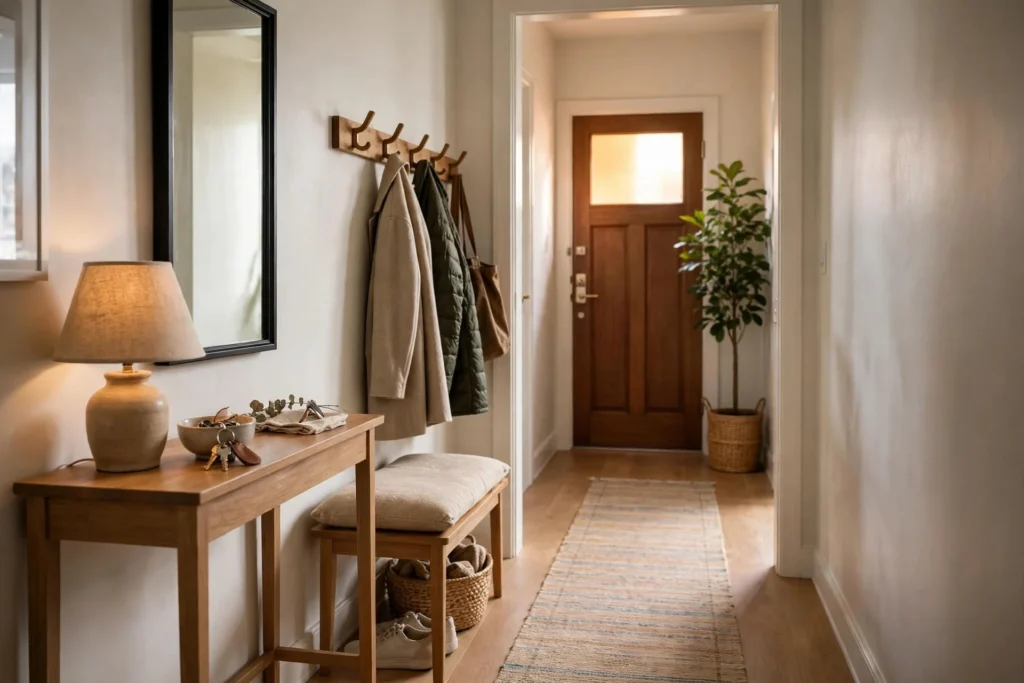
Our flat is so small that the front door opens almost straight into the living room, and for two years our entryway was just a pile of shoes and a coat draped over a chair. I kept thinking I needed a bigger hallway, but these small entryway ideas for apartments work because they use the wall and the door you already have, not extra floor space. Nothing here needs a builder, a big budget, or a landlord’s permission for major work.
I have tried every idea on this list in our own tiny hallway, and I made most of the mistakes first so you do not have to. Some cost nothing, most cost less than a takeaway, and a few need one drill and a free afternoon. Pick the one that fixes your biggest daily annoyance, try it this weekend, and the whole flat will feel calmer the moment you walk in.
1. Small Entryway Ideas for Apartments That Start with a Slim Console Table
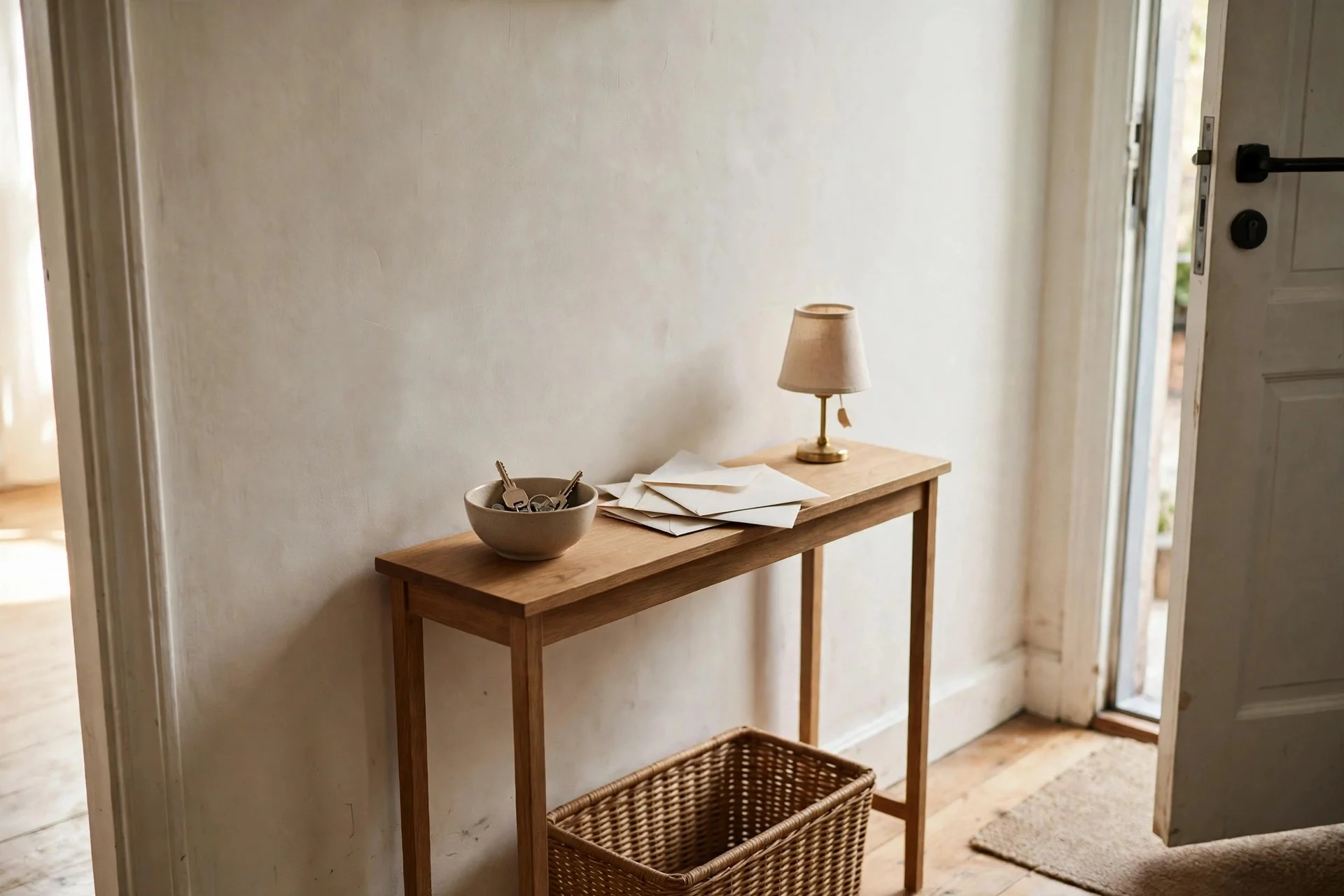
A slim console table is the single best buy for a tiny entryway because it gives you a landing spot without eating the walkway. Ours is only twenty-five centimetres deep, and it holds keys, post, and a small lamp leaving enough room to get the door open. The hallway stopped looking like a dumping ground.
Measure the wall first and pick a table no deeper than thirty centimetres, so nobody brushes past it with a bag. Put it against the longest clear wall near the door, never opposite the door where it blocks the path in. Leave the space underneath empty or slide one low basket under it for shoes.
Try this: measure your wall tonight and tape the outline on the floor with masking tape. Walk past it for a day, and if nobody trips over the tape, that depth is safe to buy.
2. Hang a Mirror to Double the Light
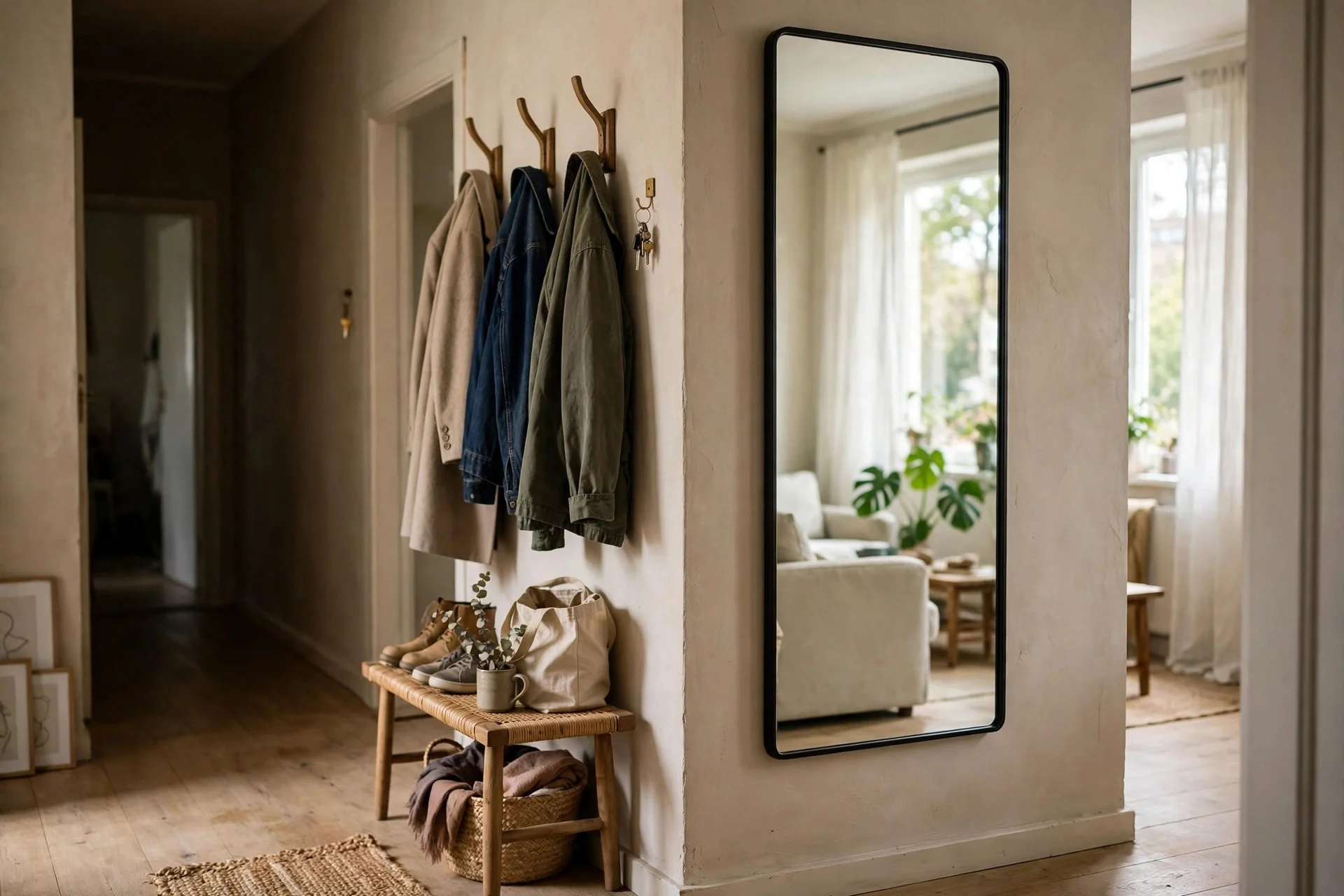
Our hallway had no window and felt like a cupboard until I hung a tall mirror on the wall opposite the living room door. It catches the light and bounces it back down the hall, so the whole entryway feels twice as bright. A mirror also lets you check your coat and hair before you leave.
Pick a mirror at least a metre tall and hang it where it faces a window or a lamp, never a blank wall or the bathroom door. Fix it into a wall plug or a stud, because mirrors are heavier than they look and I once watched one slide down the wall on a picture hook. Hang it at eye level for the shortest person.
Try this: lean a mirror in the spot for a day before you fix it up. If the hallway looks brighter by evening, you have found the right place.
3. Add a Wall Hook Rail for Coats and Bags
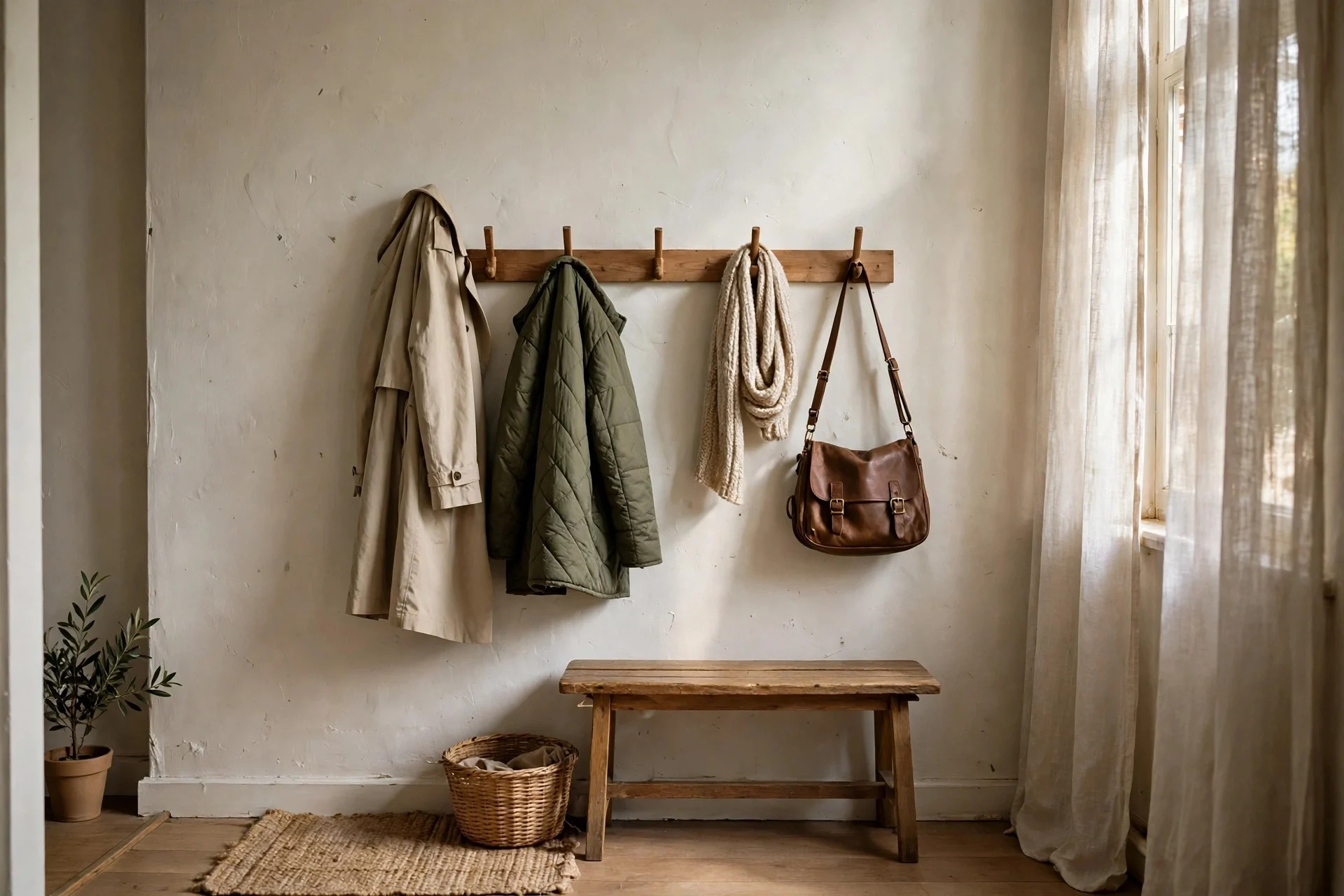
Before we had hooks, every coat in the house ended up on the same dining chair, and guests had to move a pile just to sit down. A simple wooden hook rail fixed that in one afternoon. Coats, bags, and the dog lead all have a home now, and the chair is free again.
Fix the rail at a height everyone in the house can reach, and screw it into wall studs or solid plugs so it holds heavy winter coats. Space the hooks about fifteen centimetres apart, and give each person one hook so nobody hogs them all. I put ours too high and my youngest could not reach it, so measure for the shortest person.
Try this: fit a rail with four hooks this weekend and give every coat a hook of its own. If a hook stays empty for a week, that coat belongs in the wardrobe.
4. Tuck a Shoe Tray by the Door
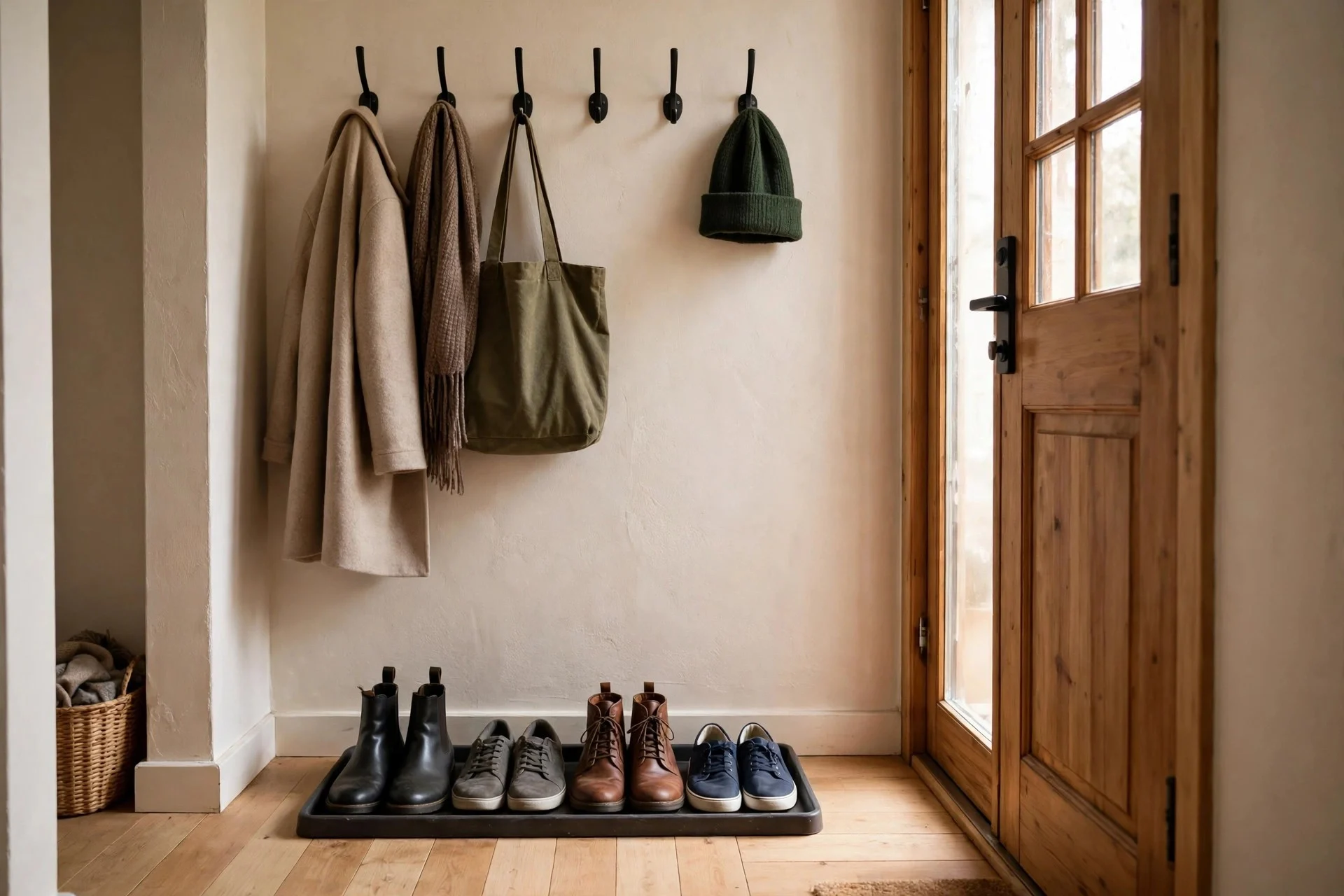
Shoes were our biggest entryway problem because four pairs by the door looked like eight, and wet shoes left marks all over the floor. A shallow boot tray changed that completely. The shoes sit in one neat row, the floor stays dry, and the hallway looks tidy.
Pick a tray that fits the shoes you actually wear most days, not every pair you own, and put it hard against the wall by the door. Choose one with a low lip so shoes slide in easily, and wipe it out once a week. I bought a tray that was too small first, and shoes spilled off the edges, so measure your widest pair before you buy.
Try this: put just the pairs you wore this week on the tray and move the rest to the wardrobe. If the tray still overflows, you need a bigger tray, not more floor space.
5. Use a Slim Bench with Hidden Storage
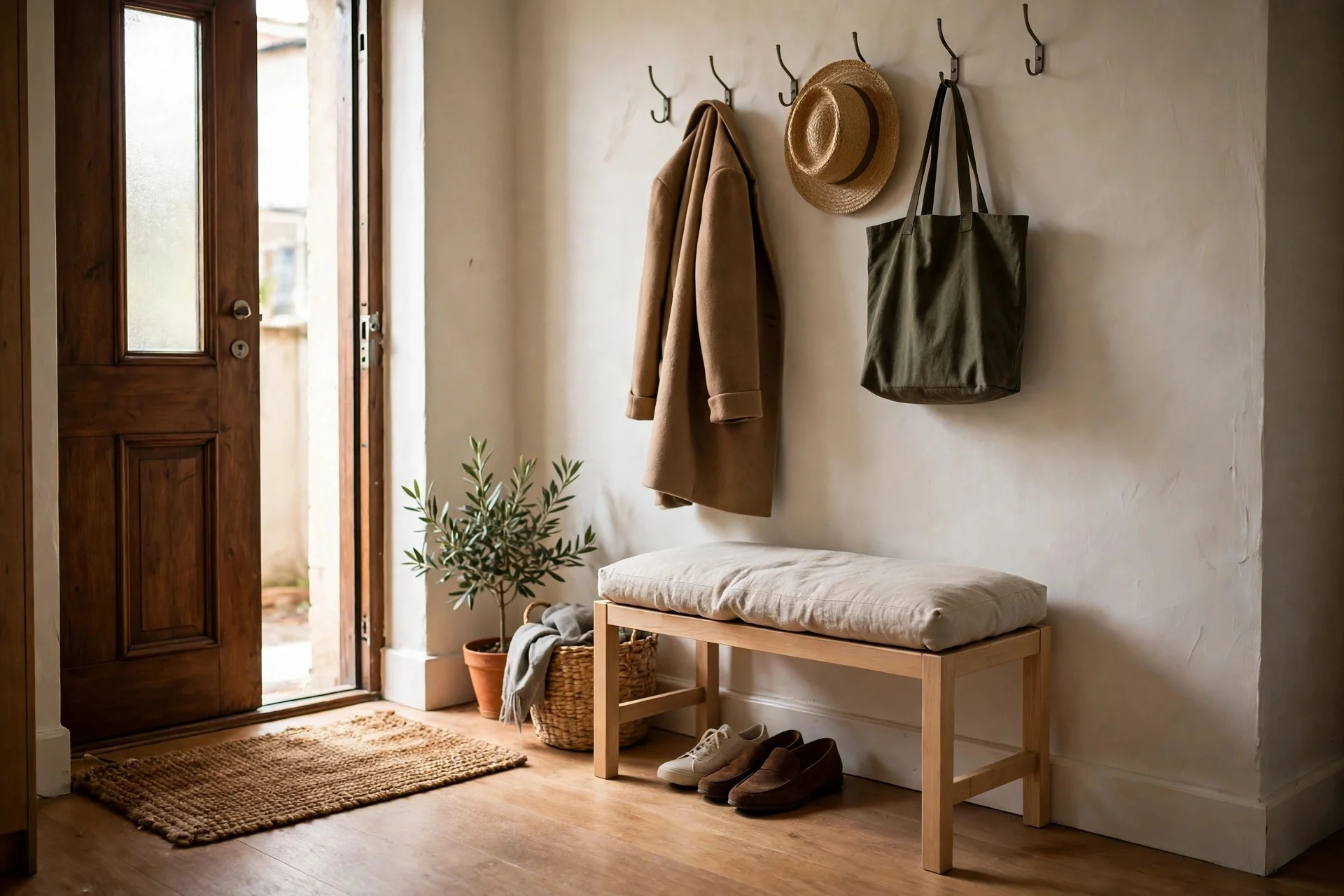
A bench does two jobs in a small entryway: somewhere to sit while you put your shoes on, and a hiding place for the shoes themselves. Ours has a lift-up seat, and inside it live the shoes we wear most, plus the reusable shopping bags. Sitting down to lace up trainers instead of hopping on one foot is a small luxury.
Pick a bench no deeper than thirty-five centimetres, then check the front door still opens fully without catching. Keep only the everyday shoes inside, one pair per person, and add a small cushion on top. I stuffed ours with six pairs at first and the lid would not close, so one pair each is the rule now.
Try this: sit on your bench spot tonight and pretend to put your shoes on. If your knees hit the opposite wall, the bench is too deep — go slimmer.
6. Stick Up Removable Hooks for Keys and Dog Leads
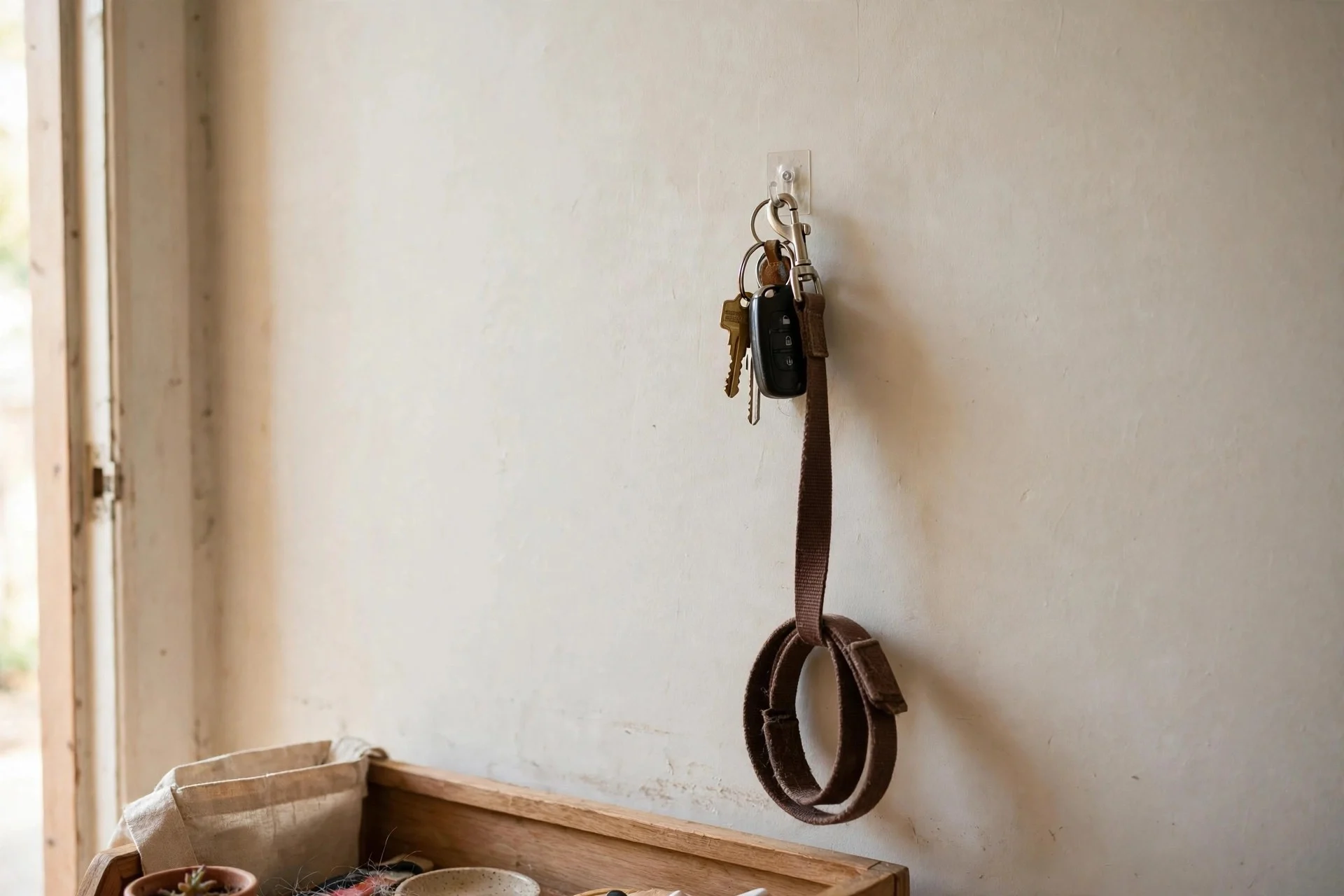
I lost my keys at least once a week before I stuck a small hook right by the door. A removable hook costs almost nothing, needs no drilling, and keeps the keys in the same spot every day. It is the smallest change on this list and the one I would miss most.
Stick the hook at eye level just inside the door, on a clean, dry patch of wall or on the side of a cupboard. Press it firmly for thirty seconds and leave it overnight before hanging anything on it. I stuck mine on a dusty patch and found my keys on the floor the next morning, so wipe the spot first and let it dry.
Try this: hang your keys on the hook the moment you walk in, every time. After a week it becomes a habit, and the morning key hunt is gone.
7. Lay Down a Washable Runner Rug
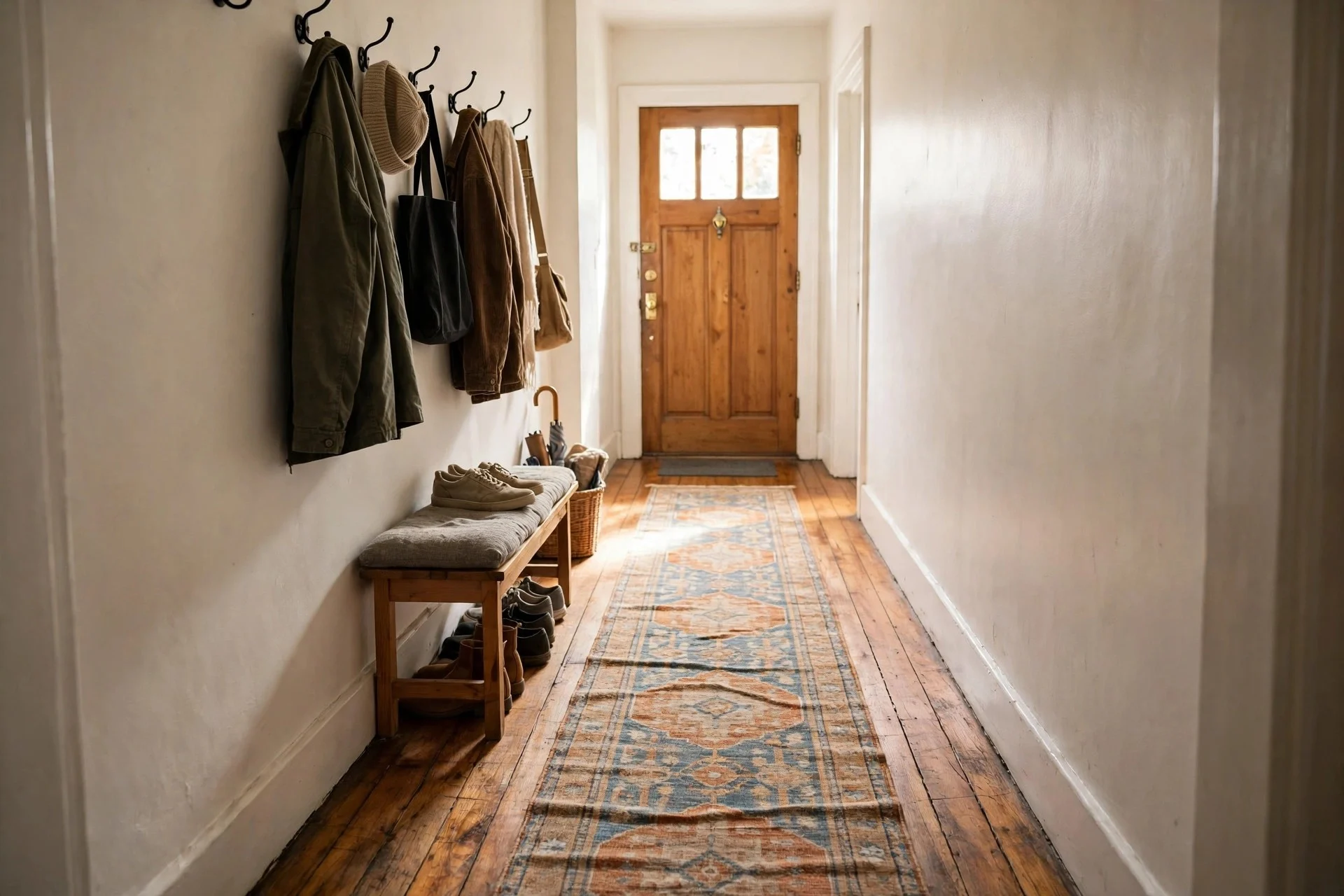
Our hallway floor was cold, scratched, and showed every muddy footprint, and a runner rug fixed all three problems at once. It warms up the walk from the door, hides the scuffs, and makes the hallway feel like a proper room. A washable one is the only kind worth buying, because entryway rugs take the worst of the dirt.
Measure the hallway and pick a runner that leaves ten centimetres of floor showing on each side, so the space looks bigger than the rug. Put a non-slip pad underneath, or it will creep every time someone walks in. I skipped the pad once and tripped over a bunched-up rug for a month, so now the pad goes down first.
Try this: lay the runner down and live with it for a week before you decide on the colour. If it hides the dirt and still looks good, you picked right.
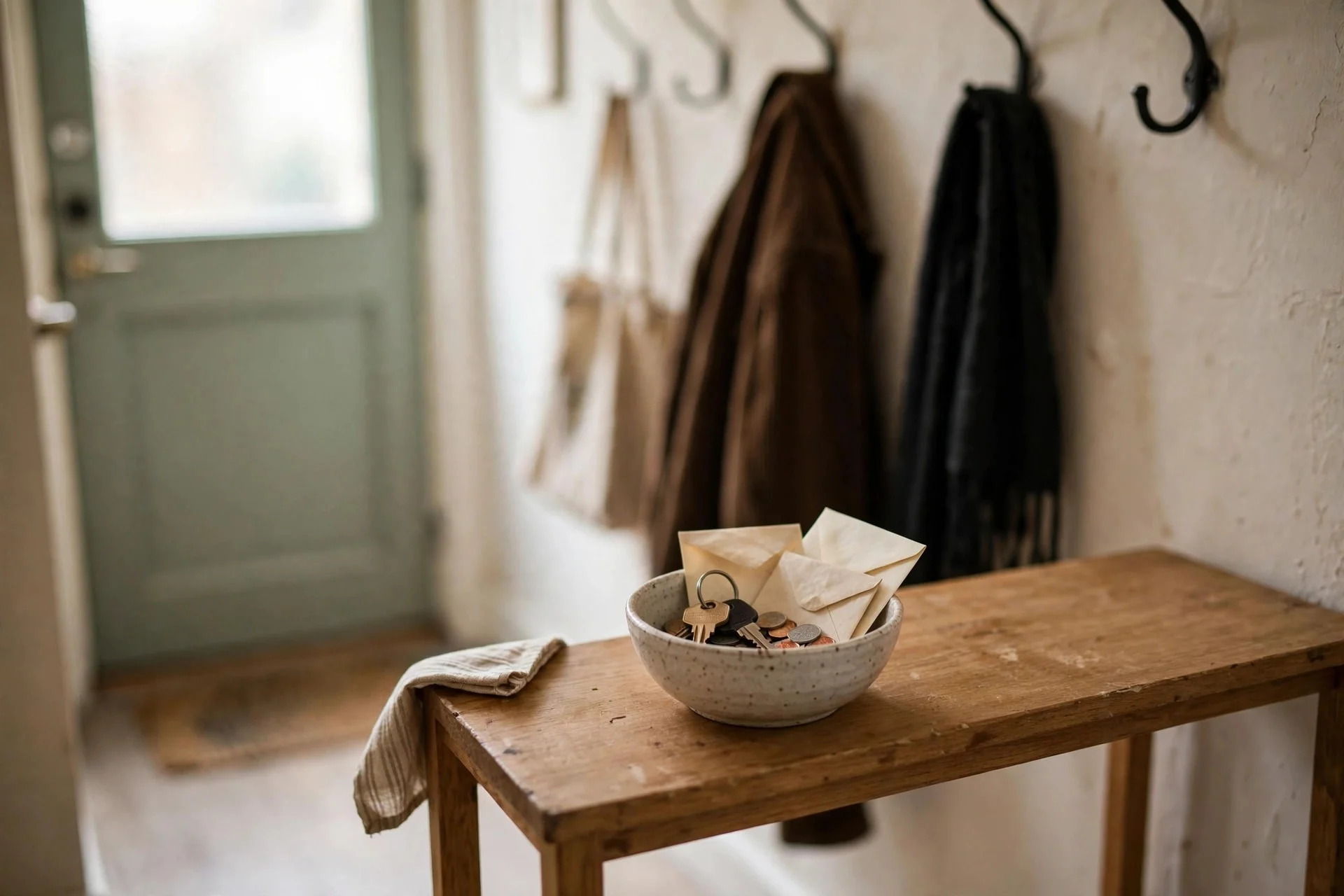
8. Add a Small Bowl or Tray for Keys and Post
A little dish by the door is the difference between knowing where your keys are and turning the flat upside down every morning. Ours is a small ceramic bowl on the console, and it holds keys, loose change, and the post. It looks like decor, but it works like a filing tray.
Pick a bowl or tray big enough for keys, a phone, and a few letters, but small enough to leave half the console clear. Put it on the side nearest the door so you can drop things in without thinking, and empty it once a week. I let ours fill up with old receipts once, and digging the keys out took longer than losing them ever did.
Try this: put a small bowl by the door tonight and use it for one week only. If you reach for it without thinking by day three, it stays.
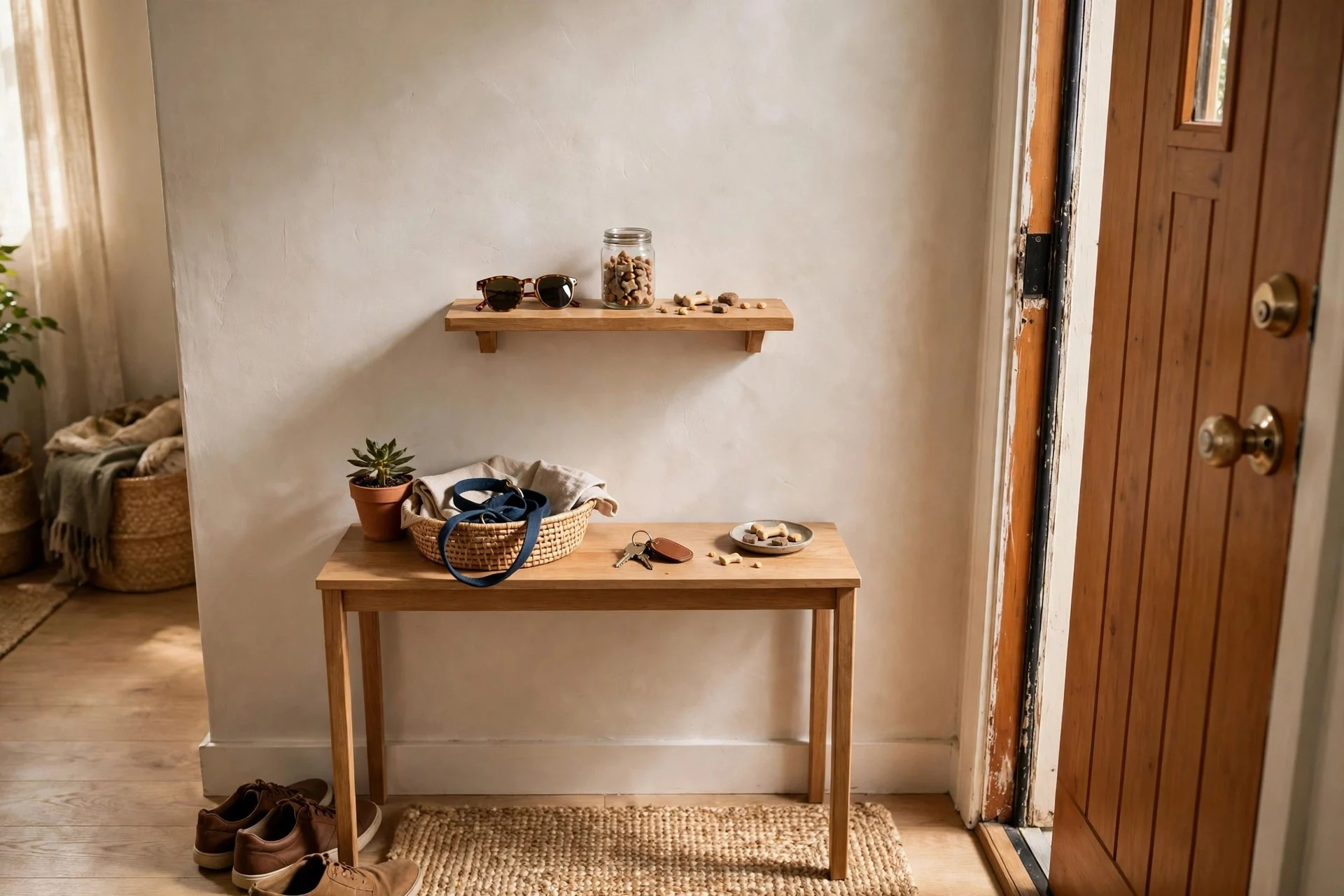
9. Put Up a Floating Shelf for the Bits You Grab Daily
When the console table was full, I put up one small floating shelf above it, and it took the sunglasses, the sun cream, and the dog treats that had nowhere else to go. The shelf keeps the daily bits at eye level where you can grab them on the way out, and the table below stays clear for keys and post.
Pick a short, empty stretch of wall above the console and check for pipes and wires before you drill anything. Use a spirit level and fix the brackets into wall plugs, not just plaster, because a shelf full of jars is heavier than it looks. Keep it to three or four things, and leave some empty space.
Try this: fit one shelf and put only the three things you grab every day on it. If something sits there untouched for a week, it does not belong on the shelf.
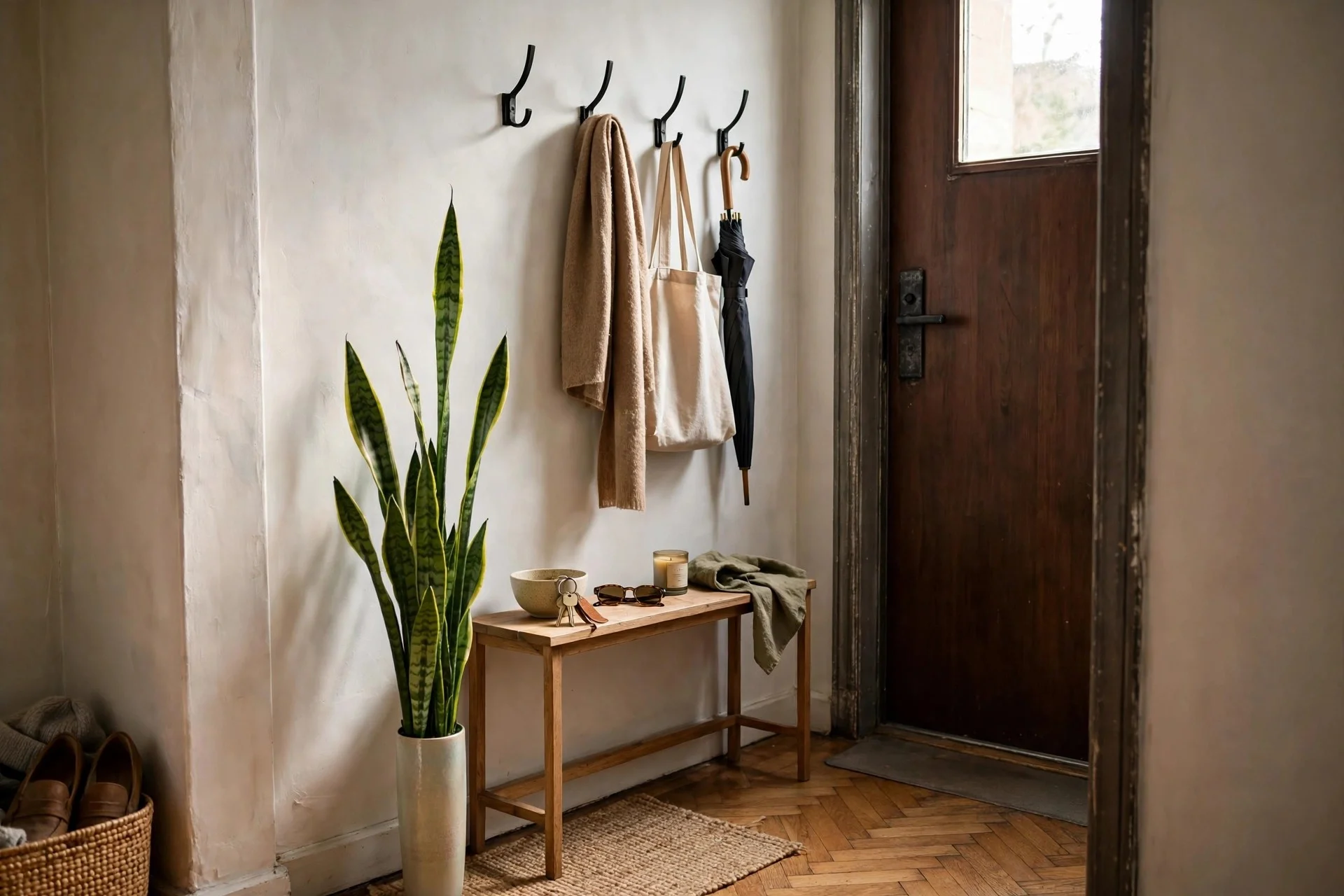
10. Use a Tall Narrow Plant in the Corner
The corner by our front door was dead space until I put a snake plant there, and suddenly the entryway felt alive instead of bare. A plant softens the hard edges of a hallway, and a tall narrow one fits a corner too small for furniture. It is the cheapest way to make a plain entryway look cared for.
Pick a plant that forgives you, like a snake plant or a ZZ plant, and put it in a slim pot that fits the corner without blocking the door. Water only when the top of the soil feels dry, and wipe the leaves once a month. I drowned my first hallway plant by watering it every few days, so now I check the soil first.
Try this: buy one tall narrow plant this week for the emptiest corner. If it is still alive in a month, that is your entryway plant.
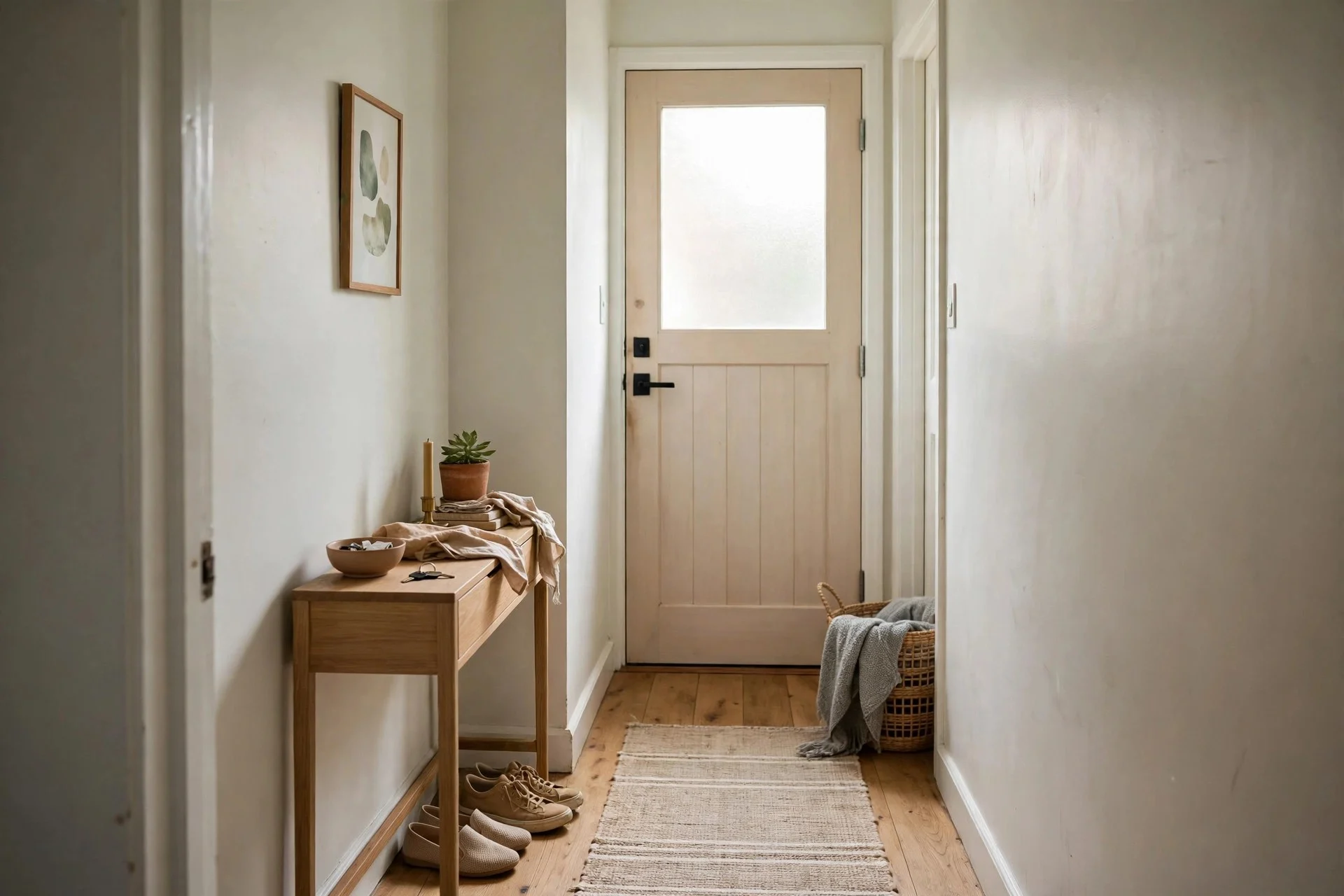
11. Hang a Small Piece of Art at Eye Level
Our hallway walls were blank for two years because I kept saving art for the living room, and the entryway felt unfinished the whole time. One small framed print changed that completely. It gives guests something lovely to look at while they take their coats off, and makes the hallway feel like part of the home.
Pick one print you love and hang it at eye level on the longest wall, not up near the ceiling where nobody looks at it. Keep the frame simple and the colours in line with the rest of the flat, so it feels planned. I hung ours too high at first, so I moved it down a hand’s width and it finally felt right.
Try this: hang one print this weekend and live with it for a week. If you smile when you walk in, the hallway has a personality.
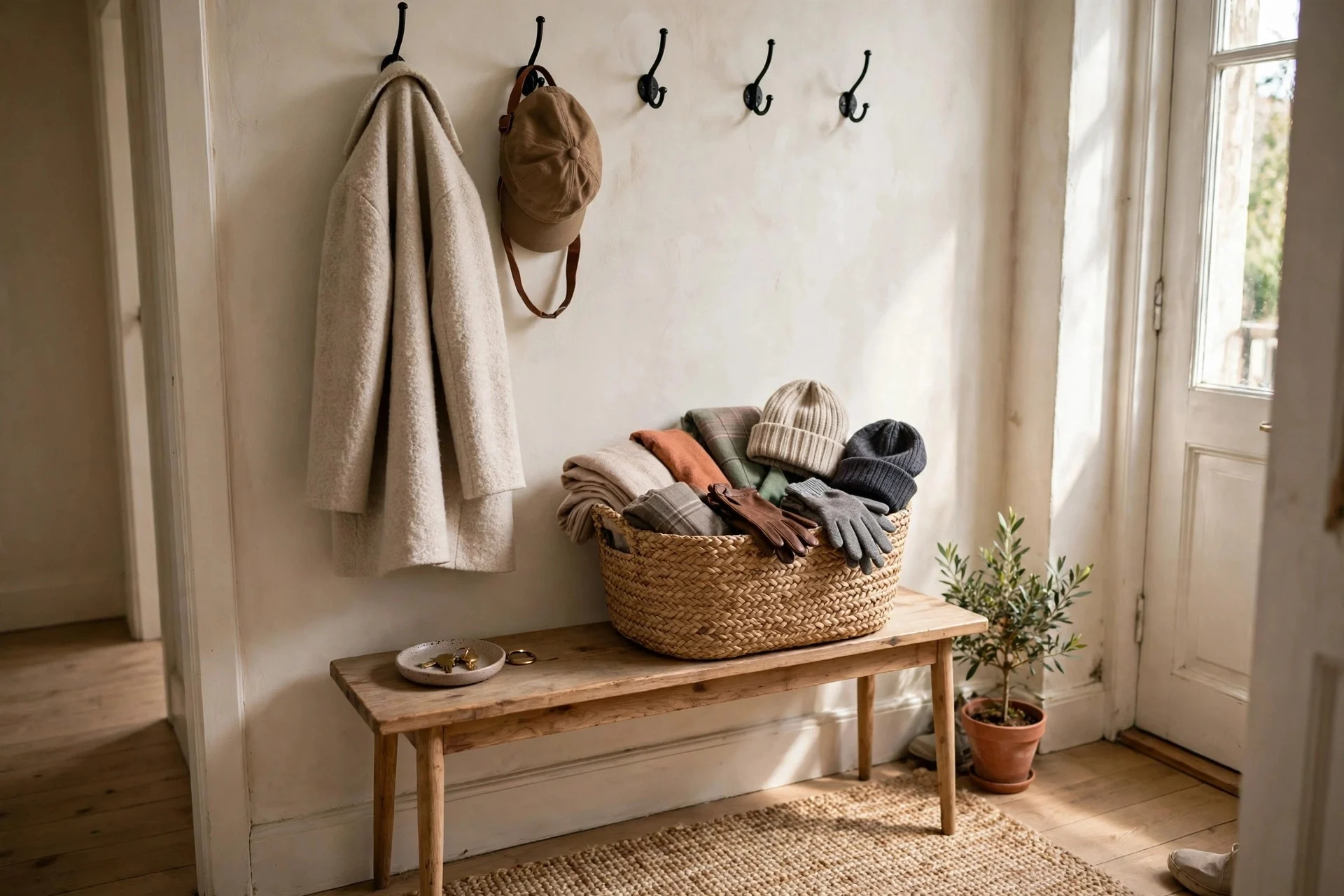
12. Add a Basket for Scarves, Hats and Gloves
Winter accessories used to live in a heap on top of the shoe pile, and finding one matching glove took longer than getting dressed. A single woven basket on the bench fixed that. Scarves, hats, and gloves all go in one place, and grabbing them on the way out takes seconds instead of minutes.
Pick a basket that fits the bench or the shelf you already have, and give it one job only: winter bits, nothing else. Put the things you wear most on top and the spares underneath, and empty it at the end of winter. I threw random things into ours at first, and it turned into the same mess it was meant to fix.
Try this: gather every scarf, hat, and glove in the house into one basket tonight. Anything that does not fit is a spare and can live in the wardrobe.
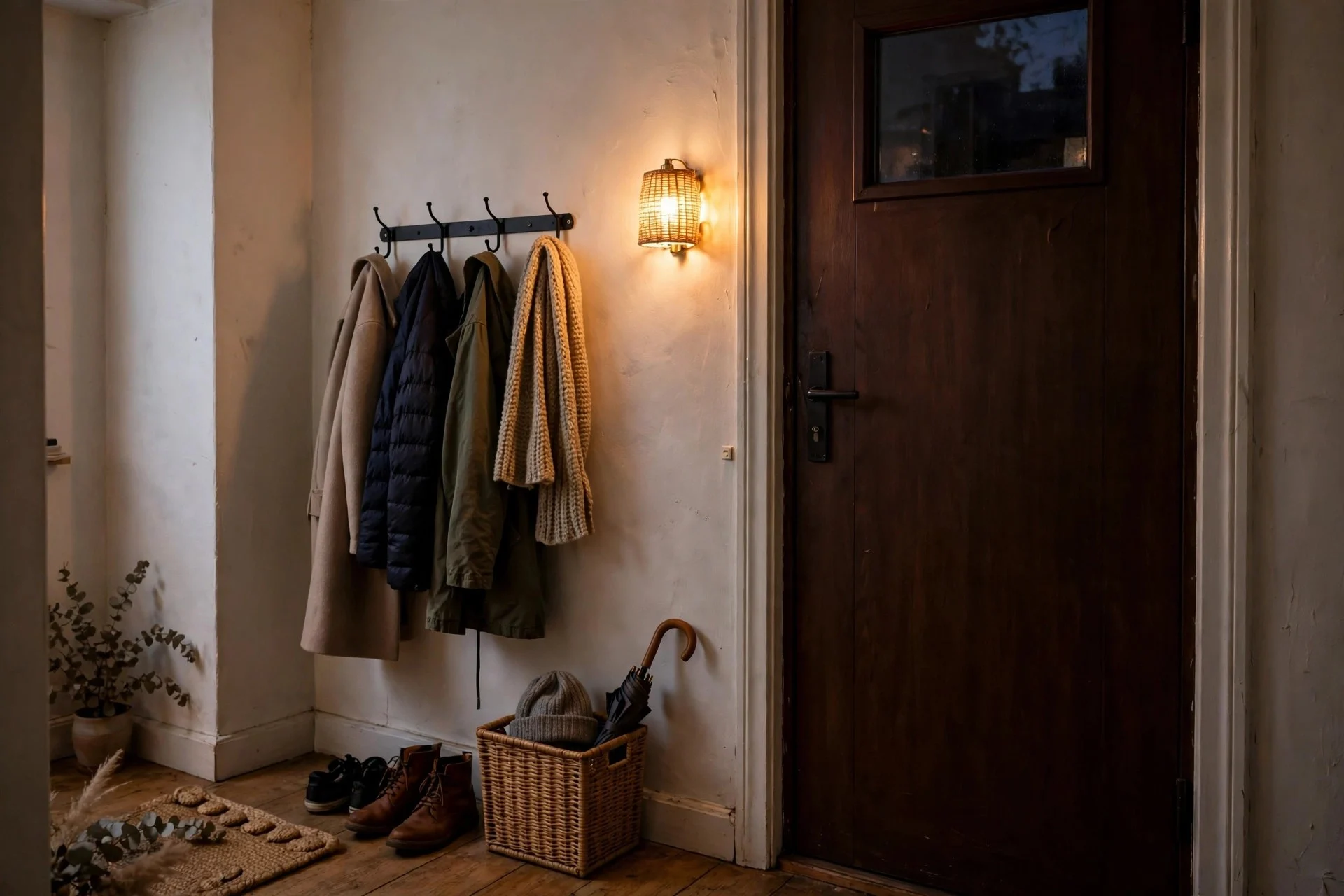
13. Fix a Battery Wall Light Where There Is No Socket
Our hallway had no ceiling light near the door, and coming home to a dark entryway felt unwelcoming every single evening. A battery wall light fixed it for the price of a takeaway. It sticks to the wall, runs on batteries, and gives a warm glow where you hang your coat and kick off your shoes.
Stick the light at shoulder height near the door, on a clean dry patch of wall, and pick a warm bulb so the hallway feels cosy, not like an office corridor. Use rechargeable batteries and keep a spare set in the key bowl. I bought a cold white one first and the hallway looked like a hospital, so warm light is the rule now.
Try this: stick a battery light by the door tonight and switch it on when you come home. If the hallway feels welcoming, the darkest corner is solved.
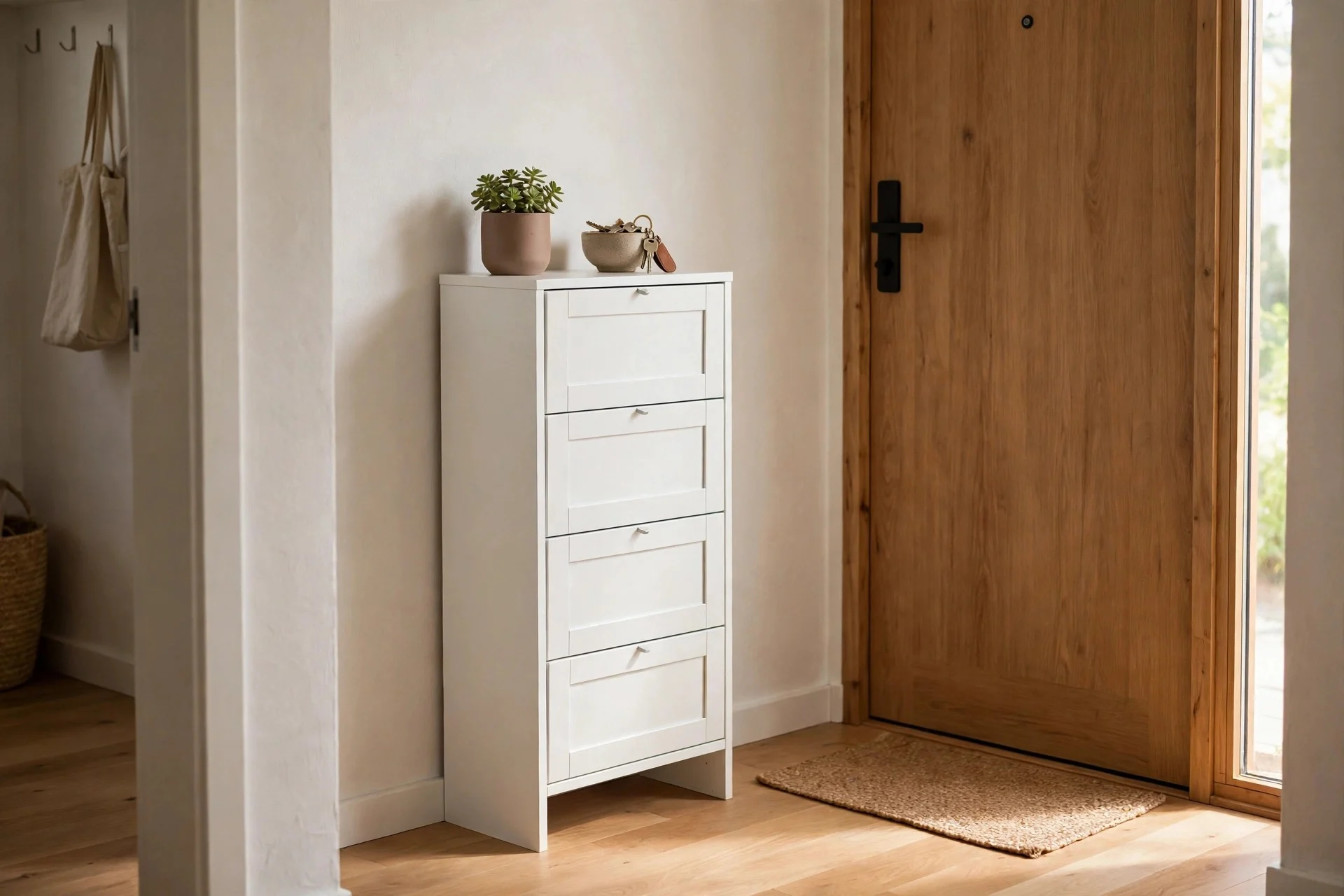
14. Use a Slim Shoe Cabinet Instead of a Shoe Pile
The shoe pile by our door grew until guests had to step around it, and it made the whole flat look messy from the first step inside. A slim shoe cabinet, only fifteen centimetres deep, hid every pair behind tilt-out doors and gave us our hallway back. It looks like furniture, not storage, and the floor stays clear.
Pick a cabinet that holds the pairs you wear most, not every shoe you own, and fix it to the wall so it cannot tip forward when a drawer is open. Keep one pair per person inside and the rest in the wardrobe. I crammed ours with boots first and the doors would not shut, so trainers live in it now and boots go elsewhere.
Try this: count the pairs by your door right now. If it is more than one per person, the extras belong in the wardrobe.
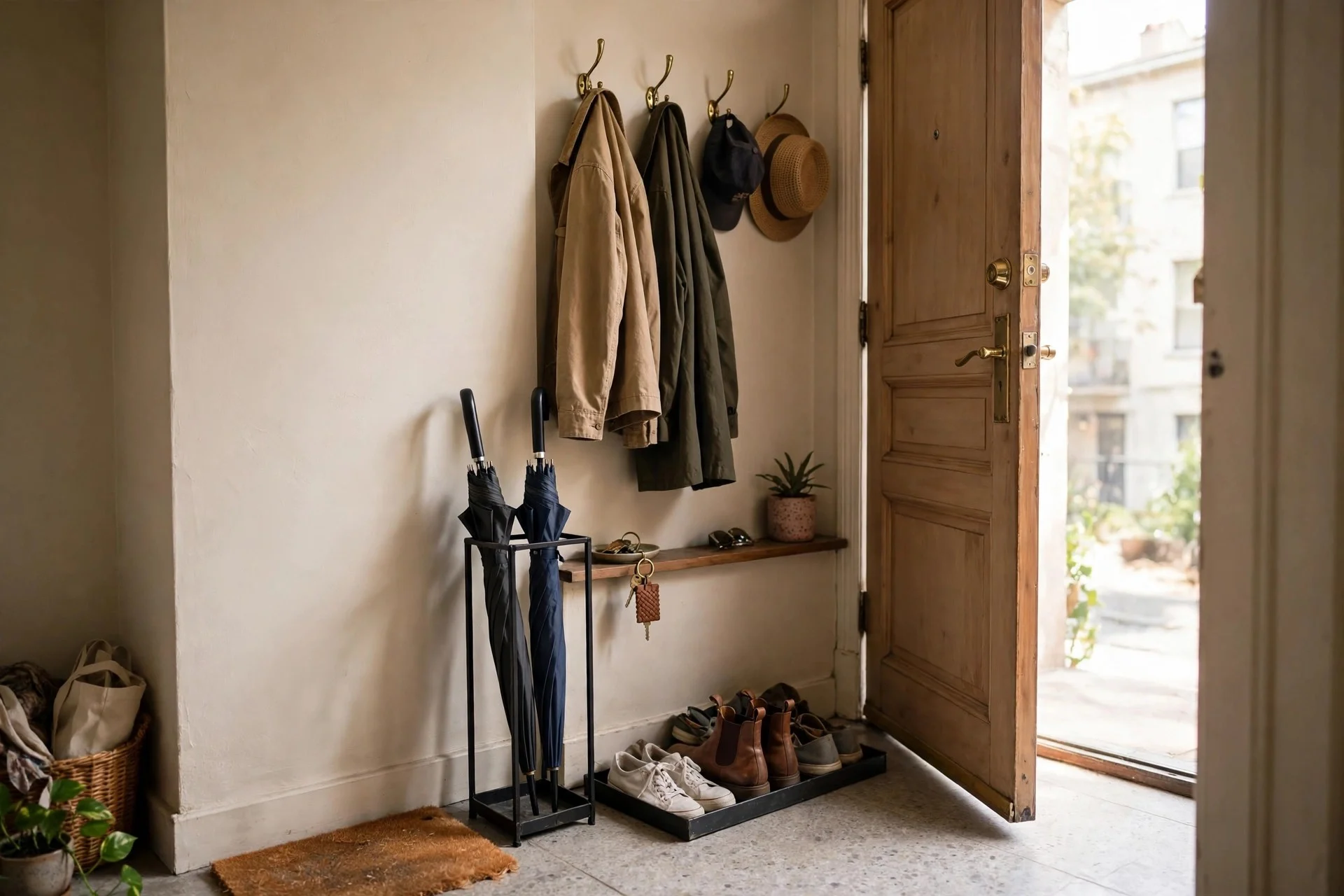
15. Keep a Small Umbrella Stand by the Door
Wet umbrellas used to drip all over our hallway floor, and I lost count of the times I left the house without one on a rainy morning. A small umbrella stand by the door solved both problems. Umbrellas drip into the stand instead of onto the floor, and seeing them by the door reminds you to take one.
Pick a narrow stand that fits between the door and the wall, and put a small drip tray or a folded towel inside it so the floor stays dry. Keep two umbrellas in it at most, one per person. I bought a wide stand first and it blocked the door from opening fully, so narrow is the only shape that works in our hallway.
Try this: put the stand by the door before the next rainy day. If you grab an umbrella without thinking, it has already paid for itself.
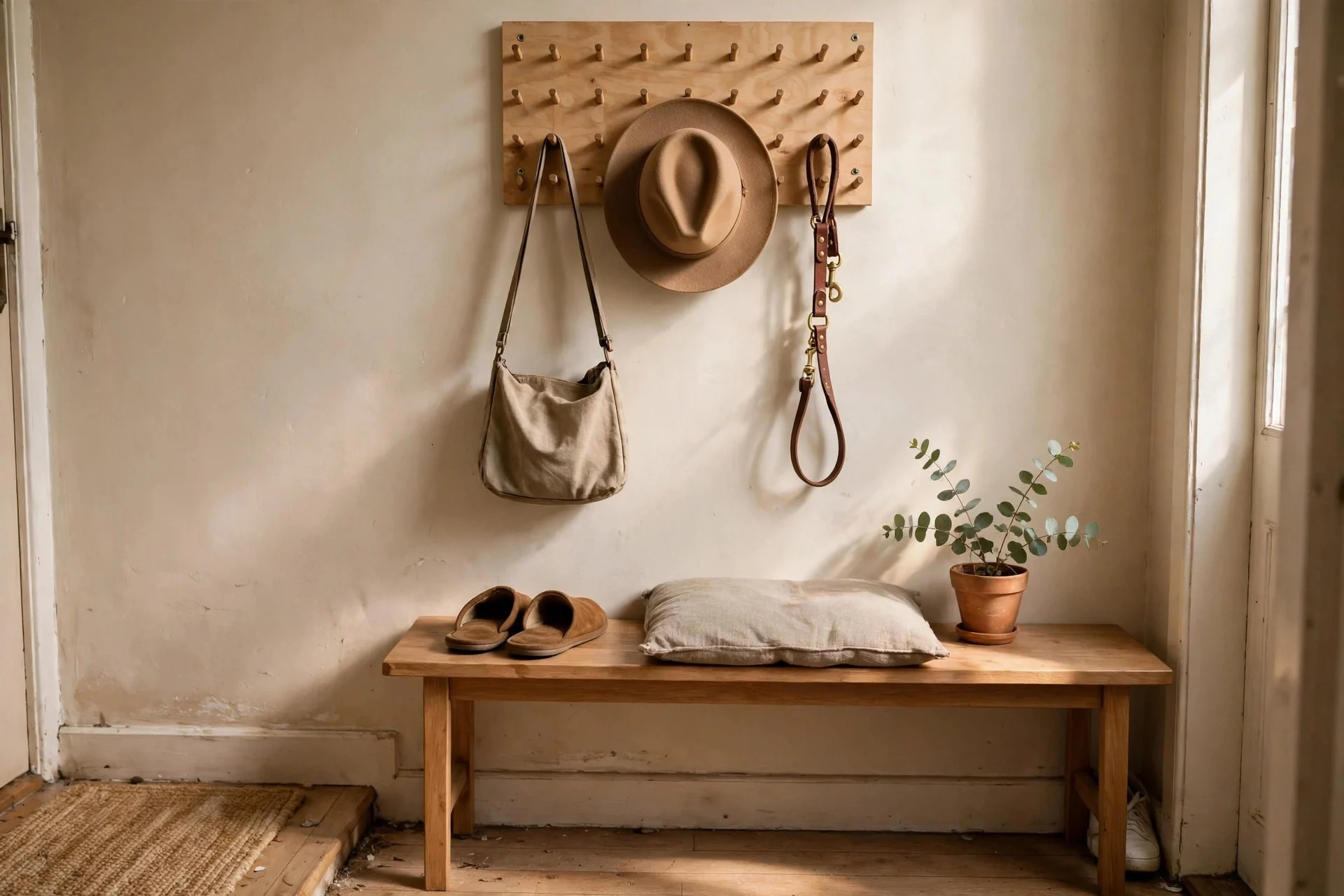
16. Add a Pegboard for Bags, Hats and the Dog Lead
Our hook rail ran out of space fast, because bags, hats, and the dog lead all wanted a hook of their own. A small pegboard gave me room to grow without drilling a dozen new holes. I move the pegs when the seasons change, so winter hats get more pegs in January and sunglasses get them in July.
Pick a pegboard about the size of a tea tray and fix it to the wall with proper plugs, then add four or five pegs to start. Hang the things you grab daily at eye level, the spares higher up, and leave a few holes empty. I filled every hole on day one and had nowhere for the new bag, so now I leave room to grow.
Try this: hang the three things you grab most on the pegboard tonight. If you reach for them without thinking tomorrow, the board stays.
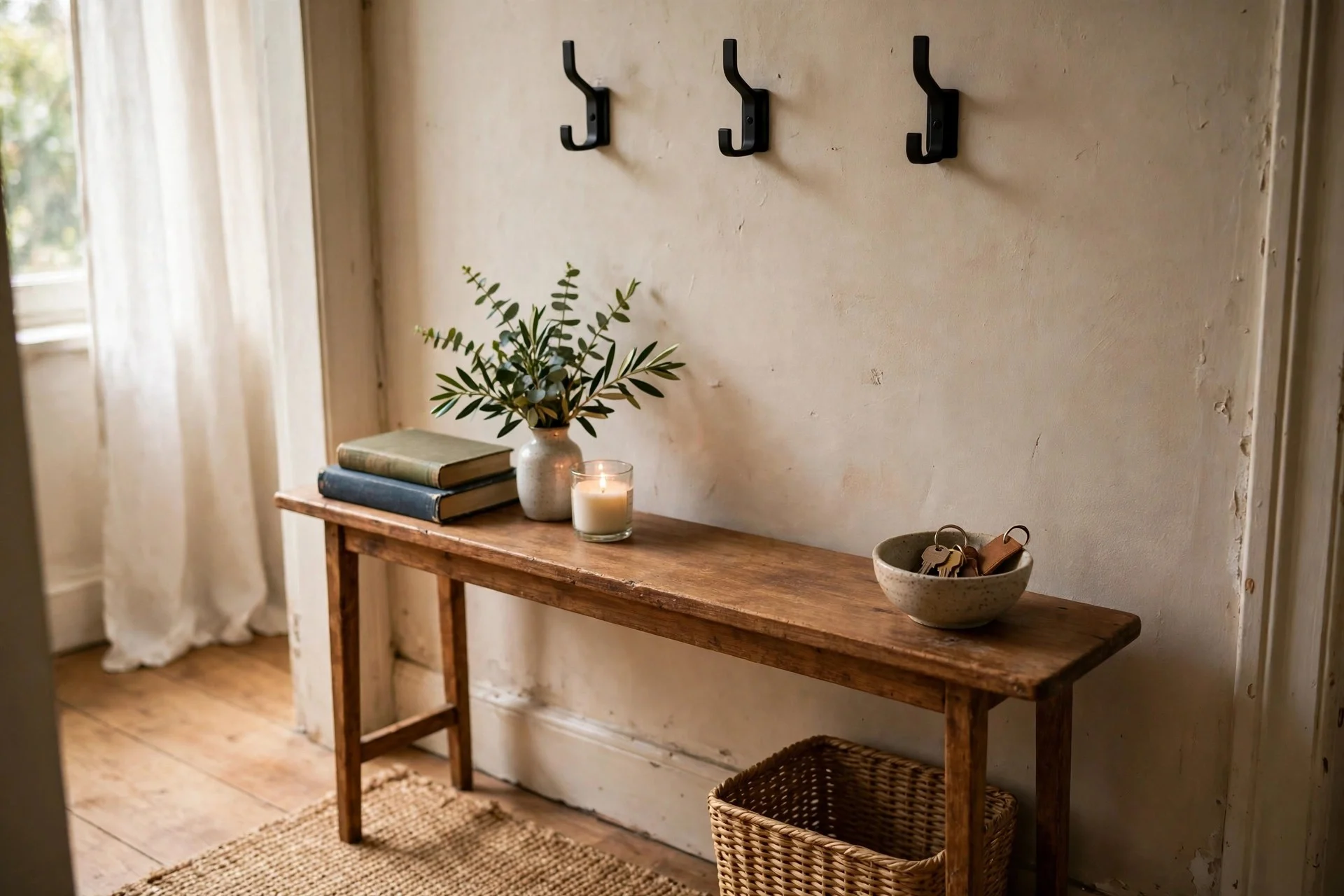
17. Style a Tiny Entryway Vignette with a Candle and a Book
The last step is the fun one, because a tiny vignette makes an entryway feel finished instead of just organised. I put a small candle, two books, and a tiny vase on our console, and guests started complimenting the hallway before they had even taken their coats off. It costs almost nothing if you shop your own shelves first.
Pick three small things you already own, group them on one end of the console, and keep the other end clear for keys. Keep the candle in a jar so it is safe, and swap one thing with the seasons. I crowded five things on the console at first and it looked like a shop window, so three is the magic number.
Try this: gather three small things from around the flat tonight and group them on the console. Step back — if the hallway makes you smile, it is done.
Frequently Asked Questions
How do I make a small apartment entryway look bigger?
Keep the floor clear, hang a mirror opposite a light source, and use slim furniture that hugs the wall. Light colours on the walls and one runner rug down the middle make a narrow hallway feel wider than it really is.
What should I put in a tiny entryway first?
Start with the three things that fix daily annoyances: hooks for coats, a tray or bowl for keys, and somewhere for shoes. Once those three have a home, add a mirror and a rug, and the rest is decoration.
Can I decorate a rental entryway without drilling?
Yes, and most of these ideas need no holes at all. Use removable hooks, a leaning mirror, a freestanding bench, and a runner rug with a grip pad. If you do want a hook rail, ask the landlord first, because one small rail is usually fine.
How do I keep a small entryway tidy every day?
Give everything one home and follow the one-in, one-out rule: a new coat means an old one goes to the wardrobe. Spend two minutes each evening putting shoes on the tray and keys in the bowl, and the hallway stays tidy by itself.
Final Thoughts
A small apartment entryway does not need a bigger hallway, it just needs a home for the things that land there every day. I started with hooks and a key bowl, and now walking in feels calm instead of chaotic. Pick the idea that fixes your worst daily annoyance, try it this weekend, and let the hallway welcome you home properly.