
When we moved into our first tiny house, I thought decorating it would be easy because there was so little space to fill, but the opposite turned out to be true. Every object had to earn its place, and the best tiny house decor ideas are the ones that make a small room work harder without making it feel crowded. Nothing in this list needs a big budget or a builder, just a bit of planning and a willingness to let go of things that do not help.
I have tried all eleven ideas in this list in tiny houses and small flats of my own, and I have made plenty of mistakes along the way. Some of these cost nothing at all, most cost less than a weekly shop, and a few need one free afternoon and a drill. Pick one idea, try it this weekend, and see how much bigger the same tiny room can feel.
1. Tiny House Decor Ideas That Start with a Fold-Down Table
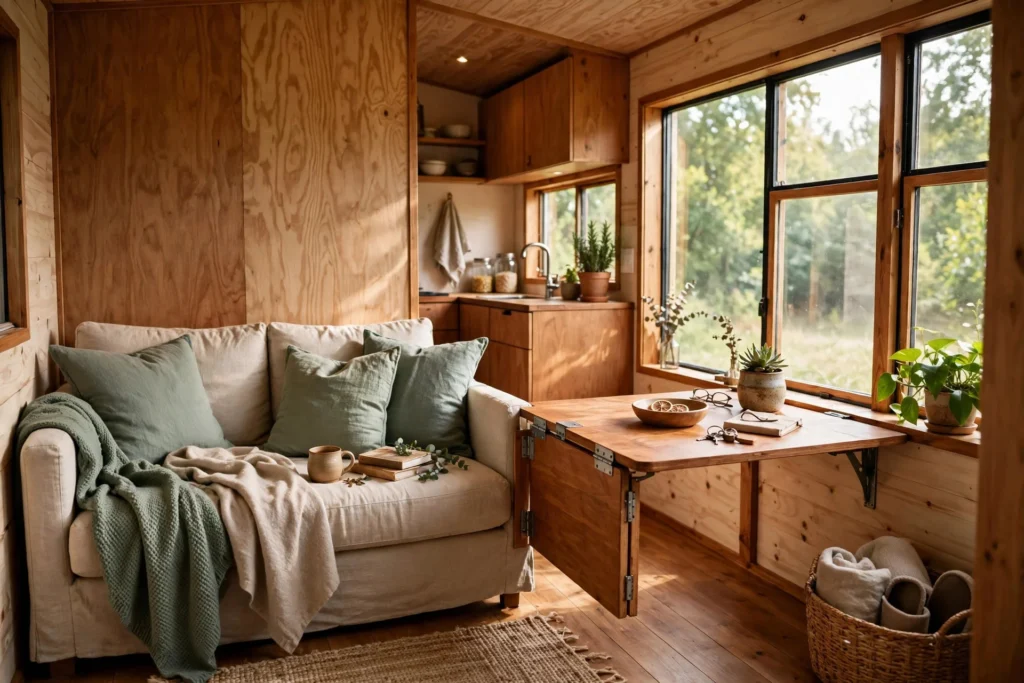
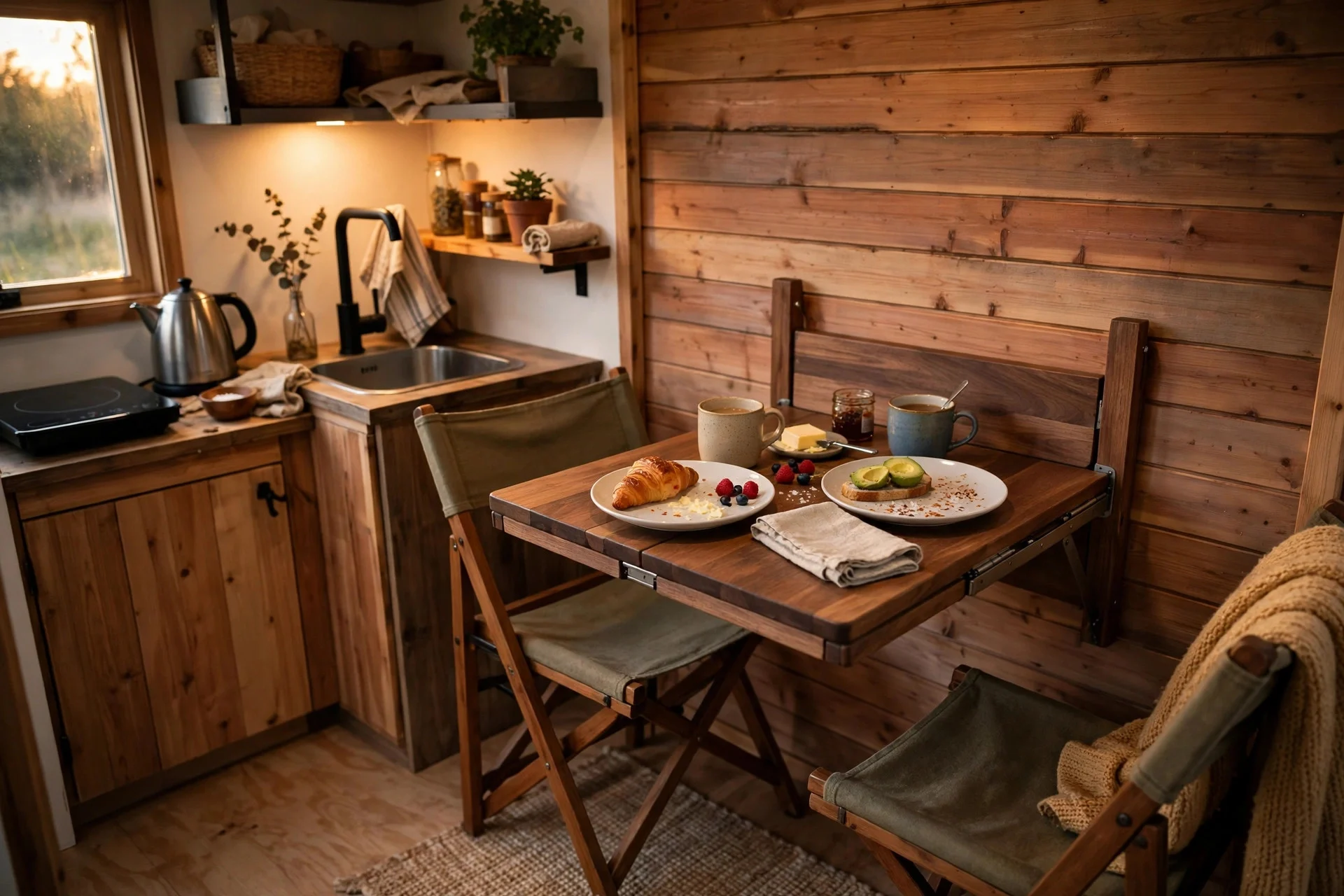
A fold-down table was the first thing I fitted in our tiny house. Fixed to the wall, it folds flat when we are not eating and pops up in seconds when we are. It gave us a proper dining spot without giving up a single square foot of floor space.
Pick a wall near the kitchen or a window, then fix a sturdy bracket at table height, about thirty inches from the floor. Screw it into the studs, not just the plaster, because a table full of dinner plates is heavier than it looks. Test it folded and unfolded a few times before you trust it with a full meal.
Try this: fit the table this weekend and keep two folding chairs tucked behind the door. I mounted mine too low at first and kept banging my knees, so measure from a chair you actually sit on.
2. Build Storage Into the Stairs
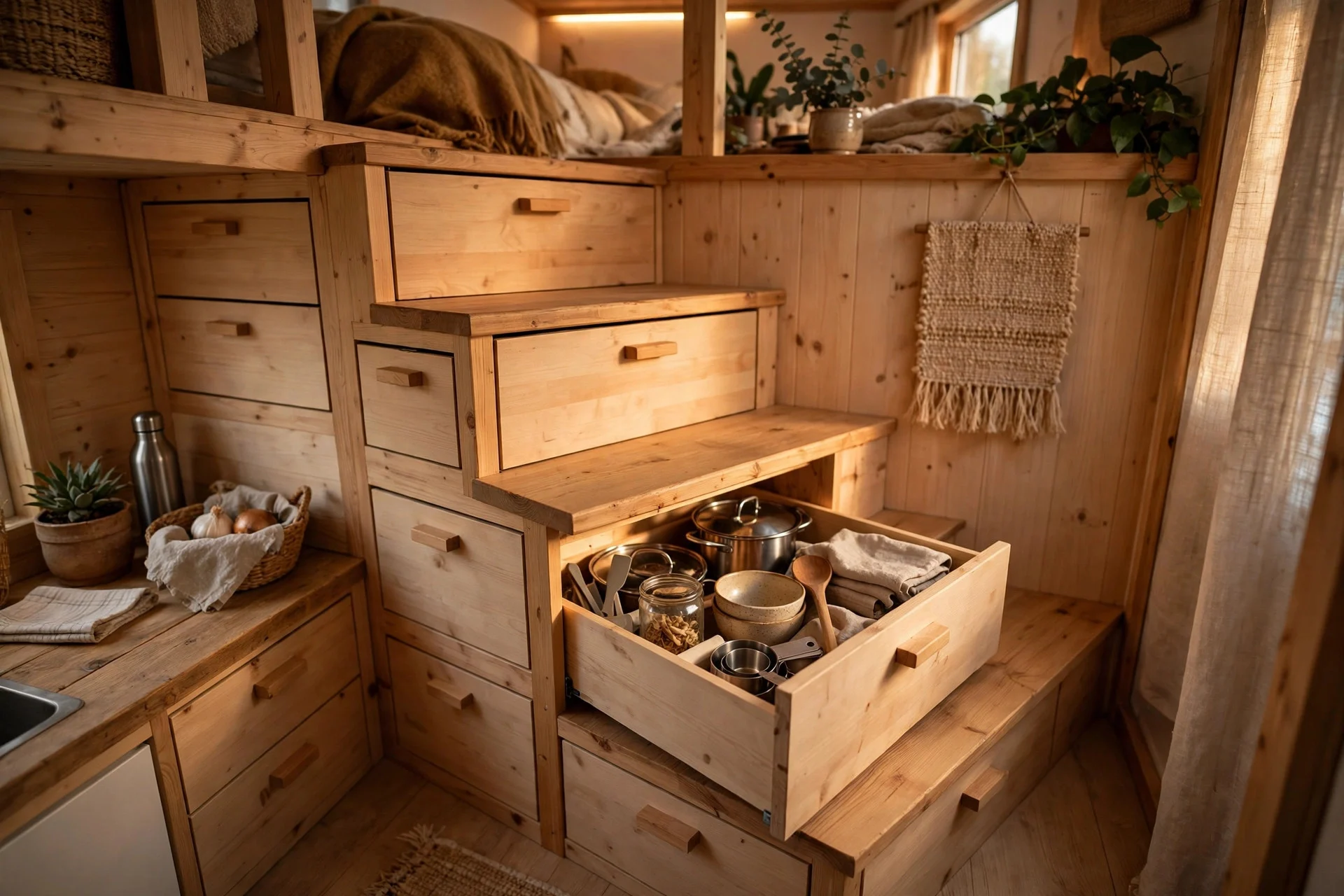
The stairs in a tiny house are usually dead space, but mine hold half our kitchen. I fitted pull-out drawers into the risers, and now the pots, the baking trays, and the dog food live inside the steps instead of piled on the counter. It is the best use of space I have found in a small home.
Measure each riser and build or buy a drawer box that fits it snugly, then mount it on full-extension runners so you can reach right to the back. Put heavy things low and light things high, and label the fronts if you have a lot of them. I built one drawer too deep at first and it jammed on the floor, so measure twice.
Try this: turn just one stair riser into a drawer this month. If you love it as much as I did, do the rest one at a time.
3. Pick a Sofa Bed That Actually Sleeps Well
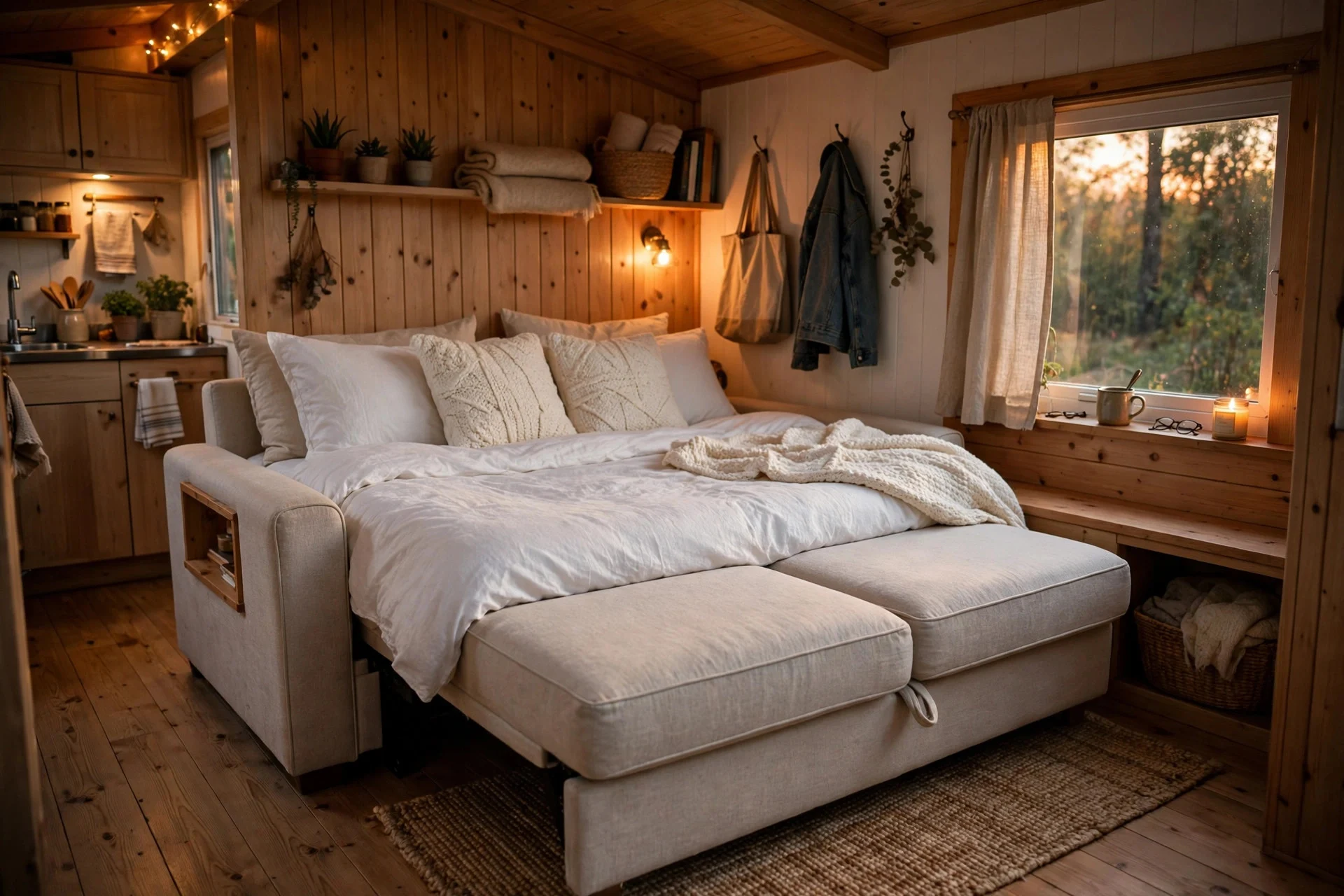
Our first sofa bed was a nightmare, a thin mattress over a metal bar that left everyone with a sore back. The one we have now has a proper thick mattress that folds out flat, and guests genuinely sleep well on it. In a tiny house, the sofa is the bed, so it has to do both jobs properly.
Test the sofa bed in the shop: lie on it for five minutes, check for bars or lumps. Pick a firm mattress over a soft one, because soft ones sag fast with daily use. Keep the bedding in a basket beside it so making the bed takes two minutes, not twenty.
Try this: before you buy, ask the shop to let you fold it out and lie on it. I bought my first one online without testing it, and that mistake cost me a year of bad sleep for our guests.
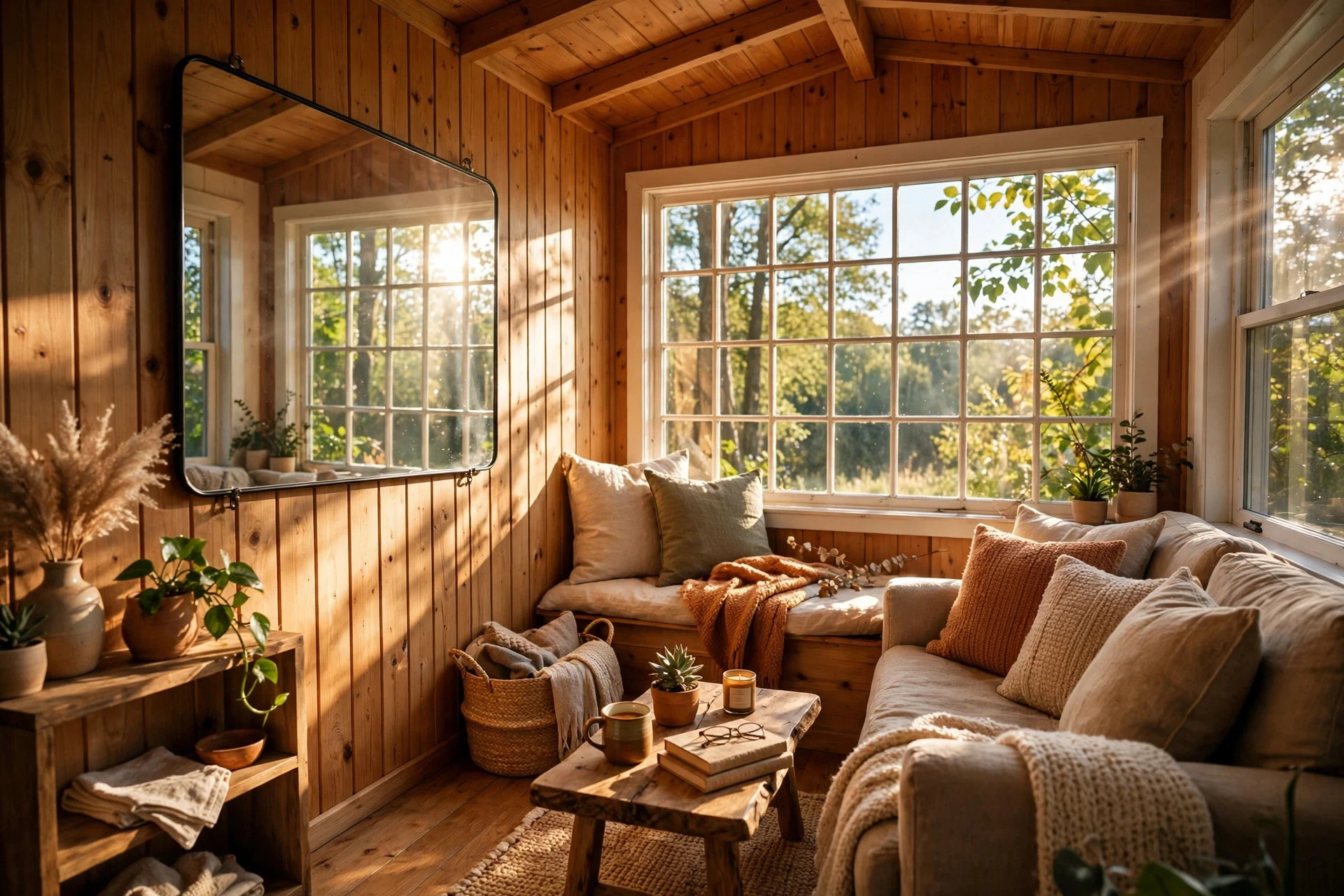
4. Hang a Big Mirror Opposite the Window
A big mirror is the oldest tiny-room trick I know, and in a tiny house it works even better than in a flat. I hung one opposite our window, and the light doubled overnight. The room looked wider, brighter, and a bit bigger, for the price of one secondhand mirror.
Hang or lean the mirror where it reflects the window, the garden, or a lamp, never a blank wall or a pile of laundry. Check the fixings can take the weight, because old mirrors are heavier than they look, and I once hung one on a picture hook that bent. If you lean it, make sure the bottom sits flat and it cannot slide.
Try this: prop a mirror opposite your brightest window before you fix it up. If the light does not improve, move it until it does — the right spot is worth hunting for.
5. Let Every Piece of Furniture Do Two Jobs
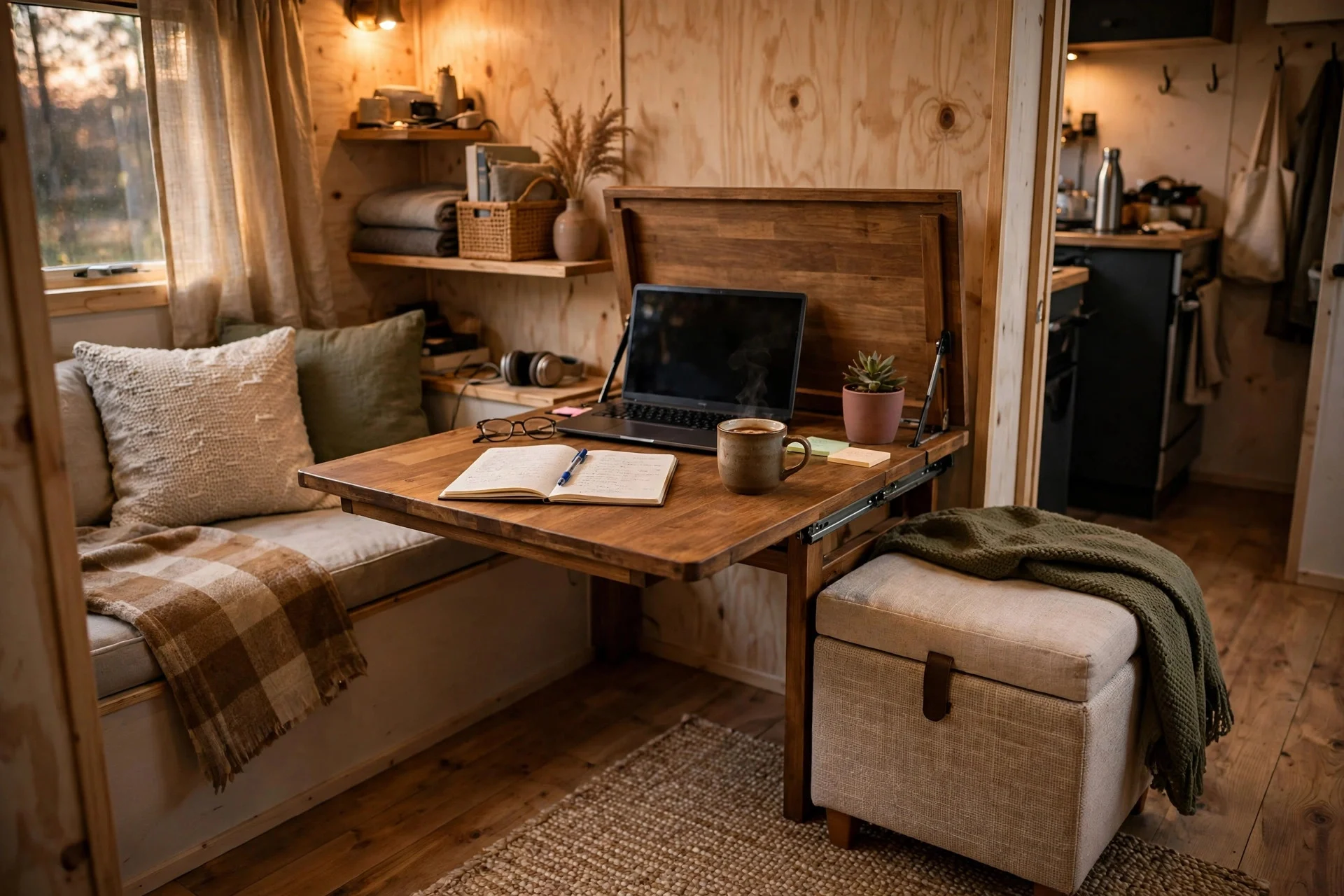
In a tiny house, single-purpose furniture is a luxury you cannot afford, and I learned that the hard way. Our coffee table now lifts up into a desk, the footstool opens up as a blanket box, and the bench hides our shoes. Each piece works twice as hard, so we need half as many things.
Walk through your house and name the job each piece does, then ask what second job it could take on. A bench can store shoes, a side table can hold the board games, and an ottoman can hide the spare bedding. Buy the double-duty version next time you replace something, and sell or give away the piece that only does one thing.
Try this: pick one piece this week and give it a second job. I turned our plain footstool into a blanket box with one afternoon, and it freed a whole shelf.
6. Use the Walls All the Way to the Ceiling
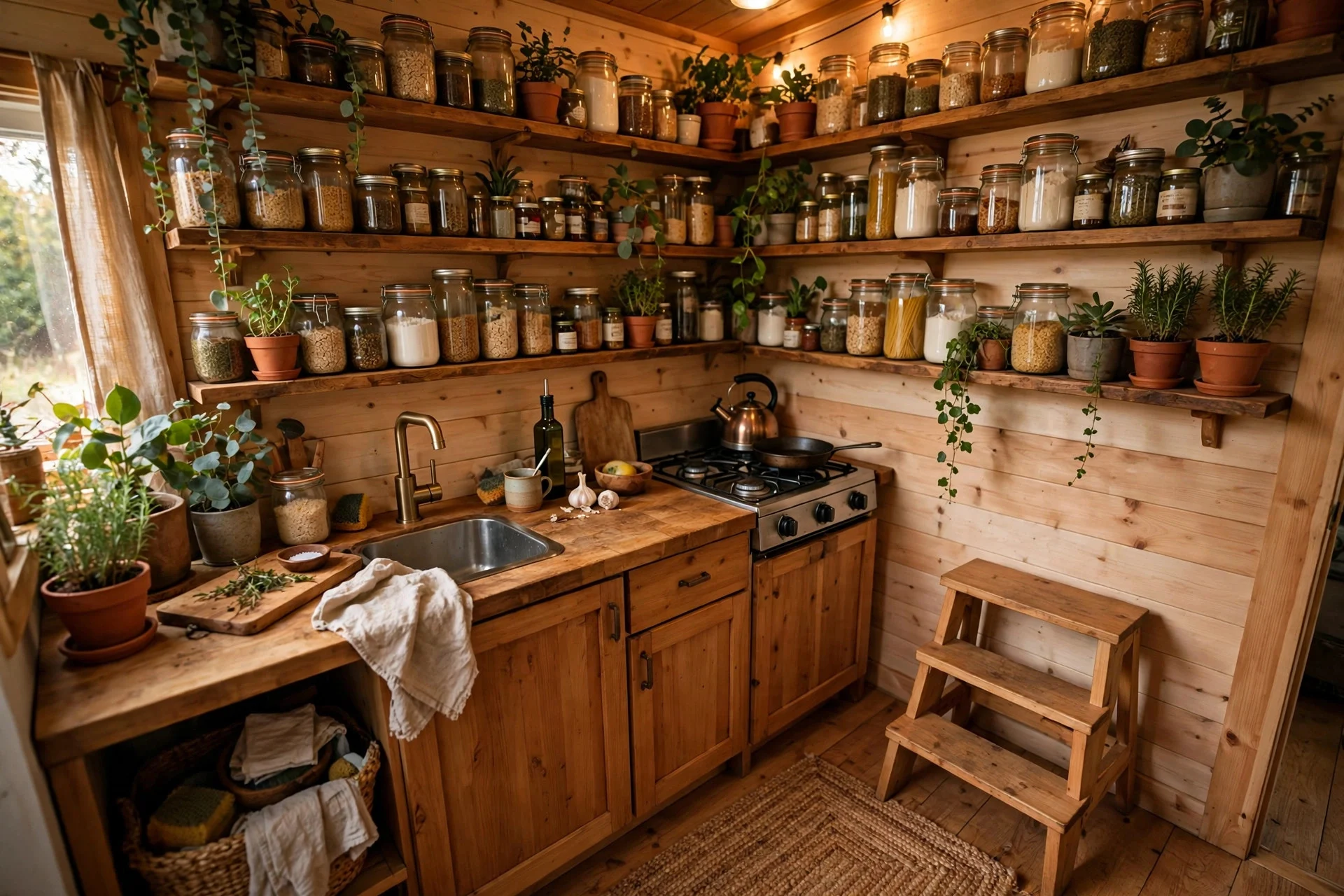
Floor space is precious in a tiny house, but wall space runs to the ceiling and most of us waste the top half of it. I put shelves up high in the kitchen for the things we use once a month, and hooks near the door for hats and bags, and the counters were clear. Going up was the cheapest storage I ever bought.
Start with one high shelf in the room that feels most crowded, and fix it into the studs so it holds real weight. Put the everyday things at arm height and the rarely used things up high, with a step stool nearby. I stacked books on the top shelf once and they fell, so keep the top shelf light.
Try this: fit one high shelf this weekend and move five things off the counter onto it. If the room feels calmer, add a second shelf.
7. Stick to Three Colours, No More
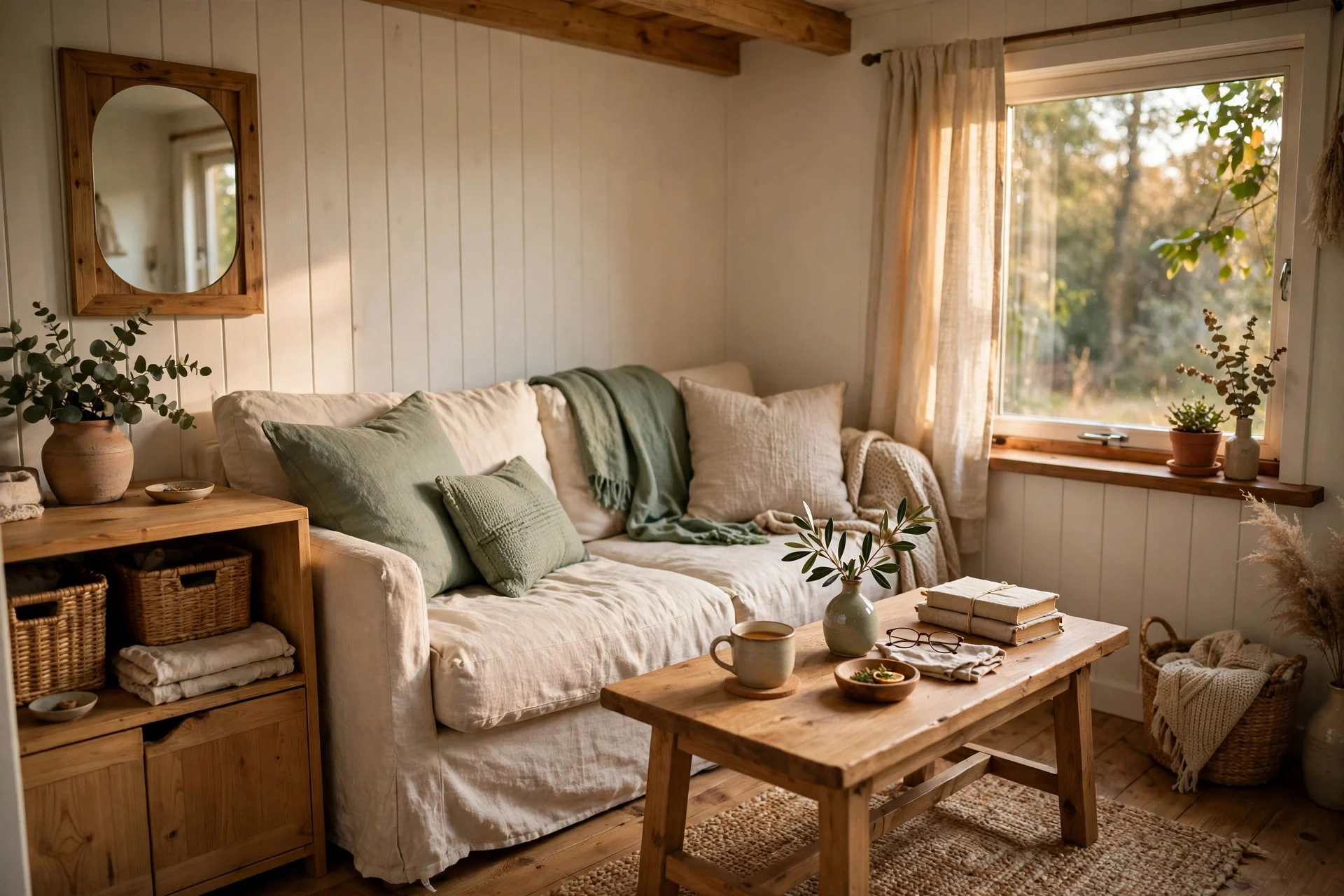
Our first tiny house looked messy no matter how tidy it was, and the problem was colour: every room had a different palette and nothing matched. I picked three colours, warm white, sage green, and natural wood, and used them everywhere. The whole house suddenly looked planned, calm, and bigger than it is.
Choose one light neutral for the walls, one soft colour you love for cushions and throws, and one natural material like wood or rattan. Repeat those three in every room, and say no to anything that does not fit, even if it is pretty. I bought a bright red rug once, and it clashed with everything until I gave it away.
Try this: write your three colours on a card and keep it in your phone. Check every new buy against it before you pay, and the house will stay calm on its own.
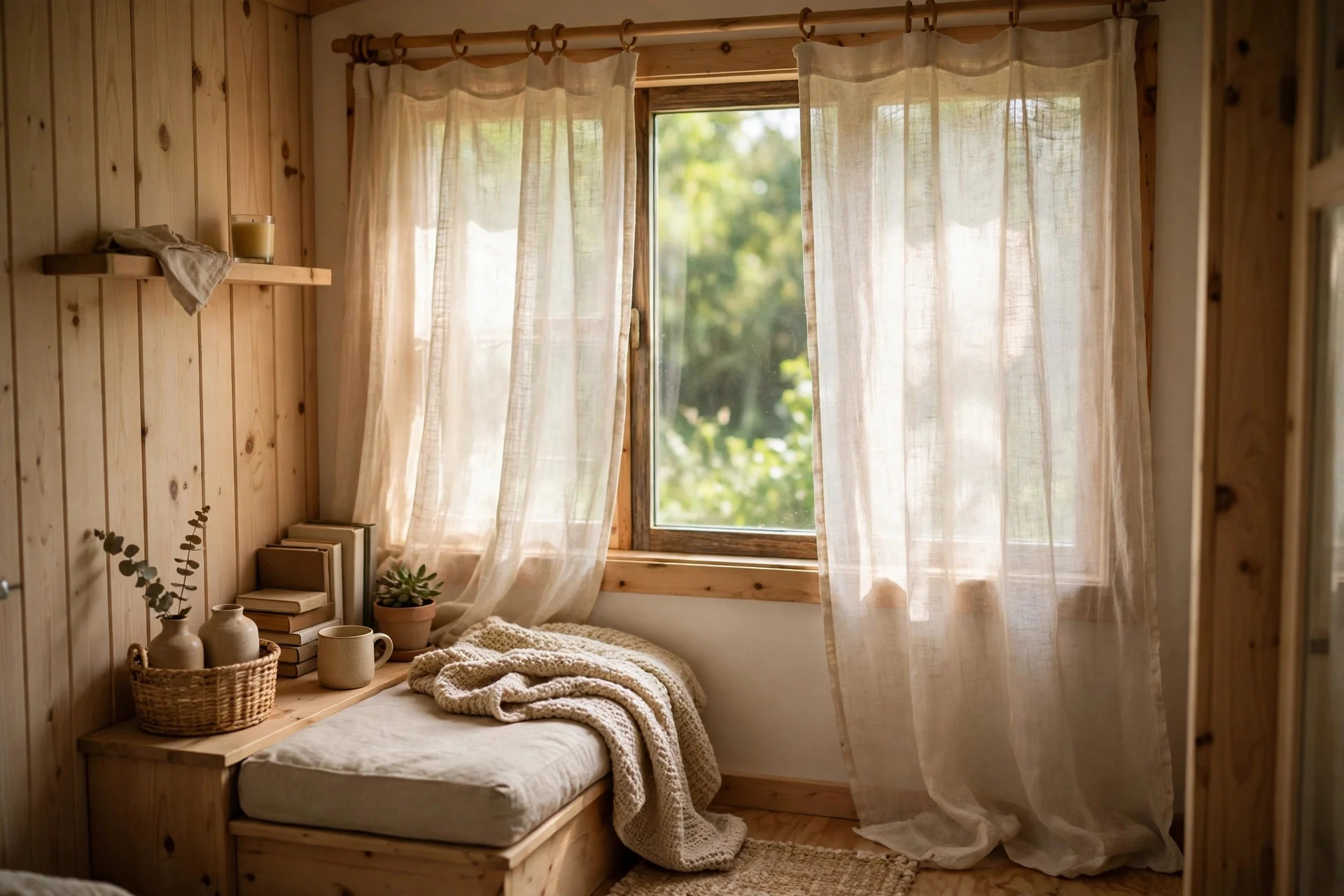
8. Swap Heavy Curtains for Light Sheers
Heavy curtains ate half the light in our tiny house and made the windows look small and gloomy. I swapped them for light linen sheers, and the rooms brightened up the same day. The sheers still give us privacy, but the daylight comes through, and the windows look twice as big.
Measure the window, then hang a slim rod just above the frame and let the sheers fall to the sill or the floor. Pick a light fabric in your main neutral colour so it blends with the walls, and wash them twice a year because they show dust fast. I hung mine too short and they looked like they had shrunk in the wash.
Try this: swap the curtains in one room this week and live with it for a few days. If the room feels brighter, do the rest of the house the same way.
9. Hide the Clutter in Matching Baskets
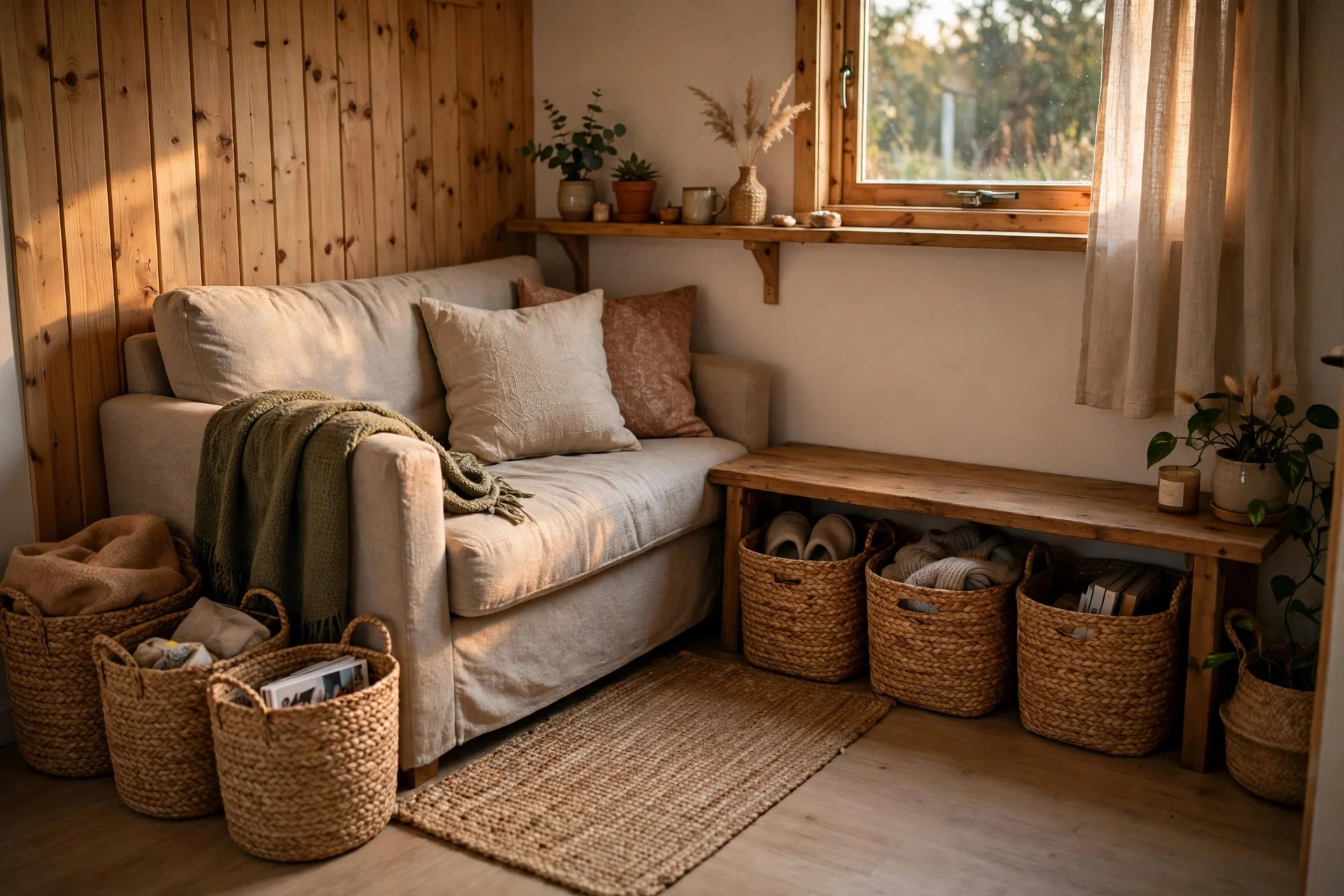
Every tiny house has stuff with nowhere to go: blankets, chargers, magazines, the remote controls. Matching baskets solved that for me because they hide the mess and look like decor at the same time. I keep one by the sofa for throws, one under the bench for shoes, and one on the shelf.
Pick baskets in the same natural material, like seagrass or wicker, so they look like a set even if they came from different shops. Give every basket one job and one home, and put the thing you use most in the easiest basket to reach. I bought a pretty basket with no job once, and it collected junk until I gave it a purpose.
Try this: put one basket where the mess gathers most — by the sofa, by the door, or in the bathroom. If it fills up in a week, you have found its job.
10. One Plant Per Room Is Plenty
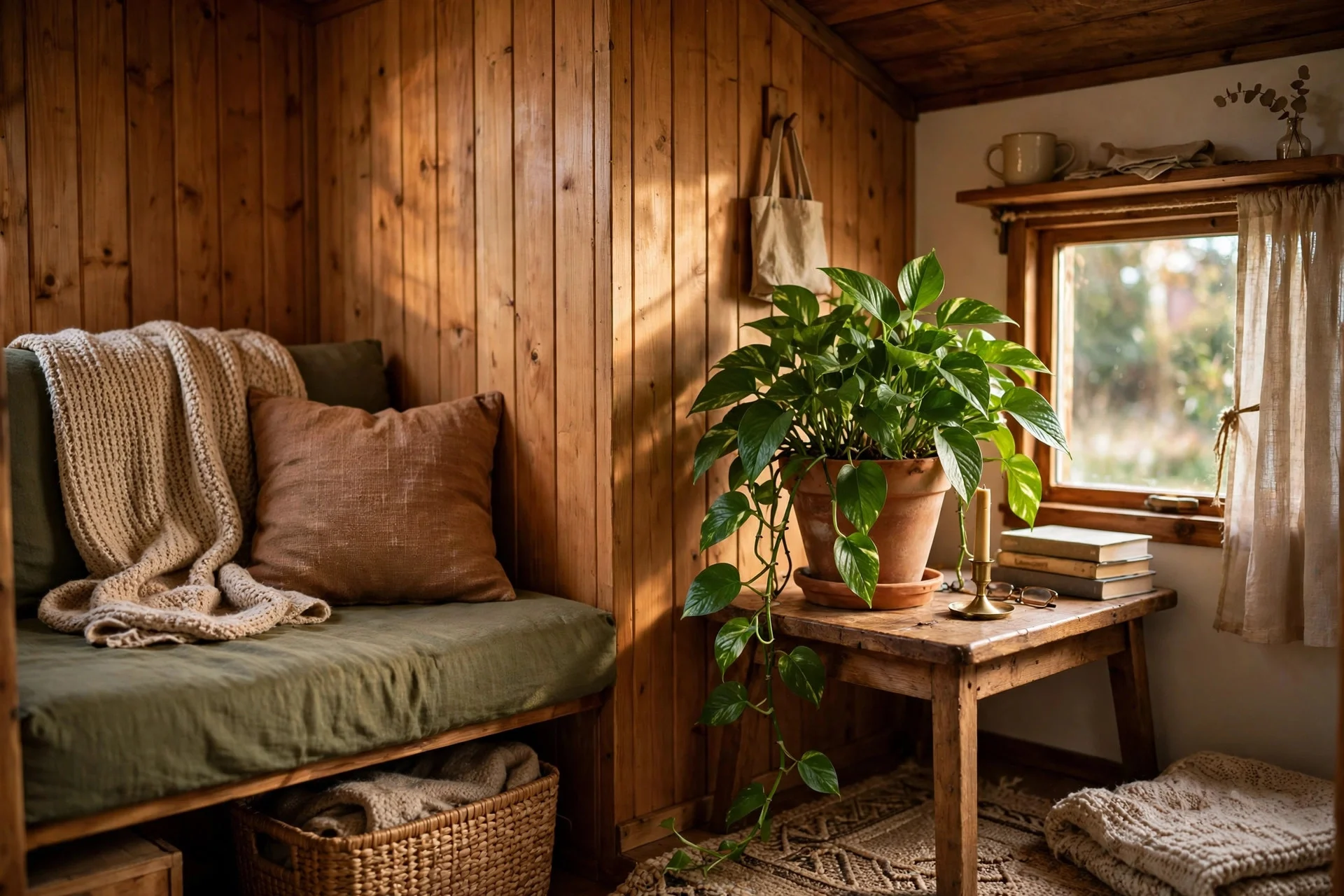
I once filled our tiny house with plants, but within a month the shelves were crowded, the watering took forever, and the rooms felt smaller. Now I keep one plant per room, a big healthy pothos or a snake plant, and the house feels green without feeling like a jungle.
Pick one easy plant per room that suits the light it will get: a snake plant for a dark corner, a pothos for a shelf near a window. Water only when the top of the soil feels dry, and use a pot that matches your three colours. I killed a fern by watering it every day, so now I check the soil first and water less.
Try this: choose your one plant per room this week and give the rest away to friends. One strong plant in the right pot looks better than ten struggling ones.
11. Keep One Surface Clear in Every Room
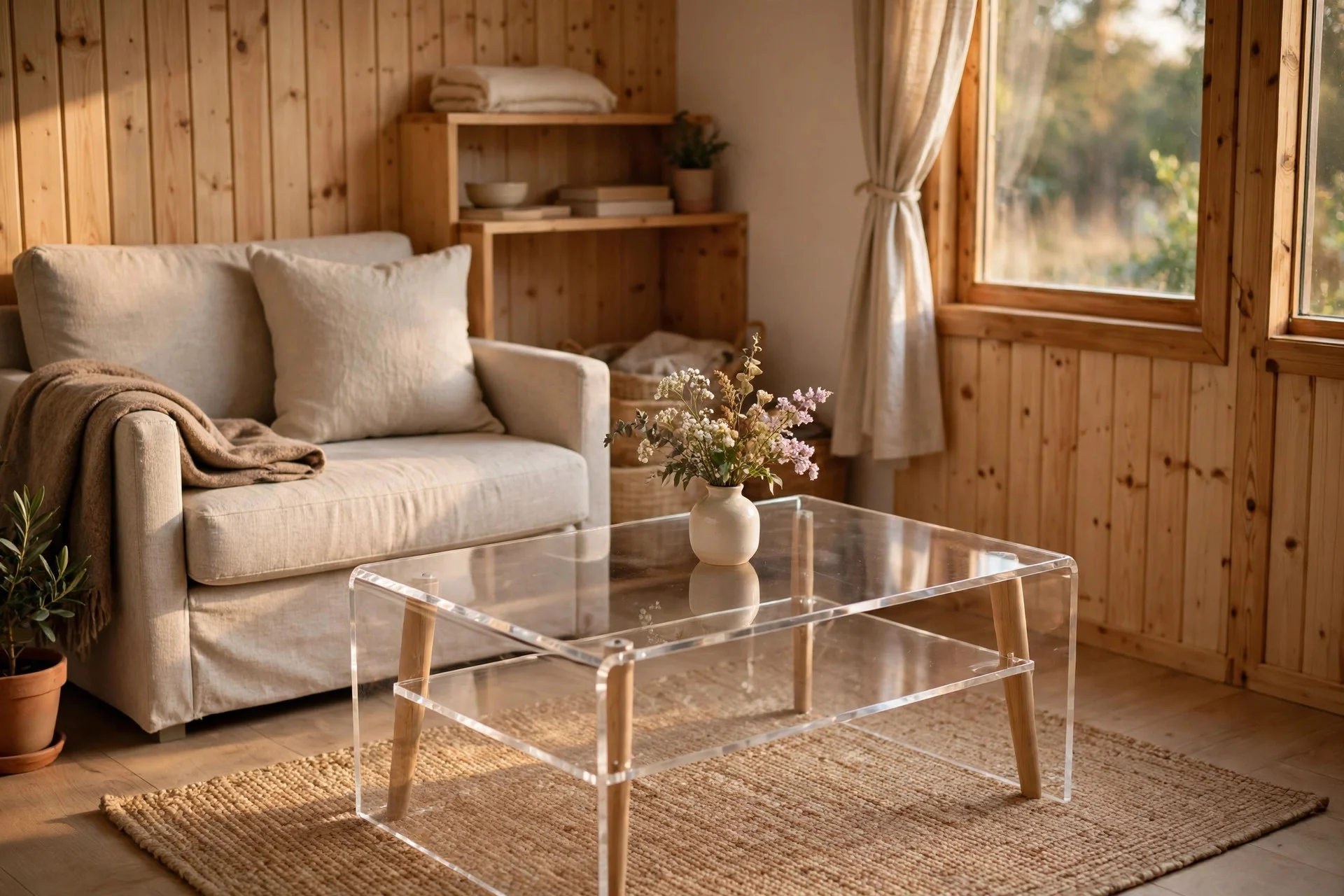
The fastest way to make a tiny house feel chaotic is a cluttered surface in every room, and I lived with that for years. Now I keep one surface clear in each room: the kitchen counter, the coffee table, and the top of the dresser. That empty space makes the whole house feel calmer, even when the rest of life is busy.
Pick the surface that bothers you most and clear it completely, then put back only one thing you love, like a candle or a small vase. Everything else needs a home in a basket, a drawer, or a cupboard. Do a two-minute tidy every evening, and the clear surface will stay clear without much effort.
Try this: clear one surface tonight and leave it empty until morning. If you wake up and the room feels calmer, you have found your new daily habit.
Frequently Asked Questions
How do I make a tiny house feel bigger without knocking down walls?
Light, mirrors, and clear floors do the work. Hang a mirror opposite a window, swap heavy curtains for light sheers, keep one surface clear in every room, and use furniture that folds away. A room with clear walkways and light walls always feels bigger than one packed with furniture.
What is the best furniture for a tiny house?
Look for pieces that do two jobs: a sofa bed with a proper mattress, a lift-top coffee table, a bench with shoe storage, and a fold-down table. Measure everything twice, because a piece that is even a few inches too big will eat the walkway and make the whole room feel cramped.
How much storage does a tiny house really need?
More than you think, but it should be hidden. Stair drawers, high shelves, baskets, and under-bench storage hold the everyday things out of sight. Give every item a home, and if something has no home, it probably does not belong in a tiny house.
Can a tiny house feel cosy and not just minimal?
Yes, and the trick is warmth, not clutter. Stick to three colours, add soft textures like a wool throw and a linen cushion, keep one plant per room, and use warm light in the evenings. Cosy comes from texture and light, not from owning more things.
Final Thoughts
A tiny house does not need to feel like a compromise, and it certainly does not need more stuff to feel like home. I have lived small for years now, and the rooms I love most are the ones where every piece works hard, every colour matches, and one surface stays clear. Pick the idea that feels easiest, try it this weekend, and let the rest follow one small change at a time.