

A reach-in closet is the hardest-working storage spot in most homes — and the easiest to waste. The average reach-in is only about 24 inches deep, yet most of them hide a dead zone of unused vertical space above the shelf, a jumbled floor, and shelves where things go to disappear. Sound familiar?
The good news: small closets respond beautifully to a few smart moves. You don’t need a custom built-in or a renovation budget. Below are 18 reach-in closet organization ideas that maximize every inch — each one specific, affordable, and tested in real closets, not magazine spreads. Pick the ones that fit your messiest zone and start there.
1. Double-Hang Everything You Can
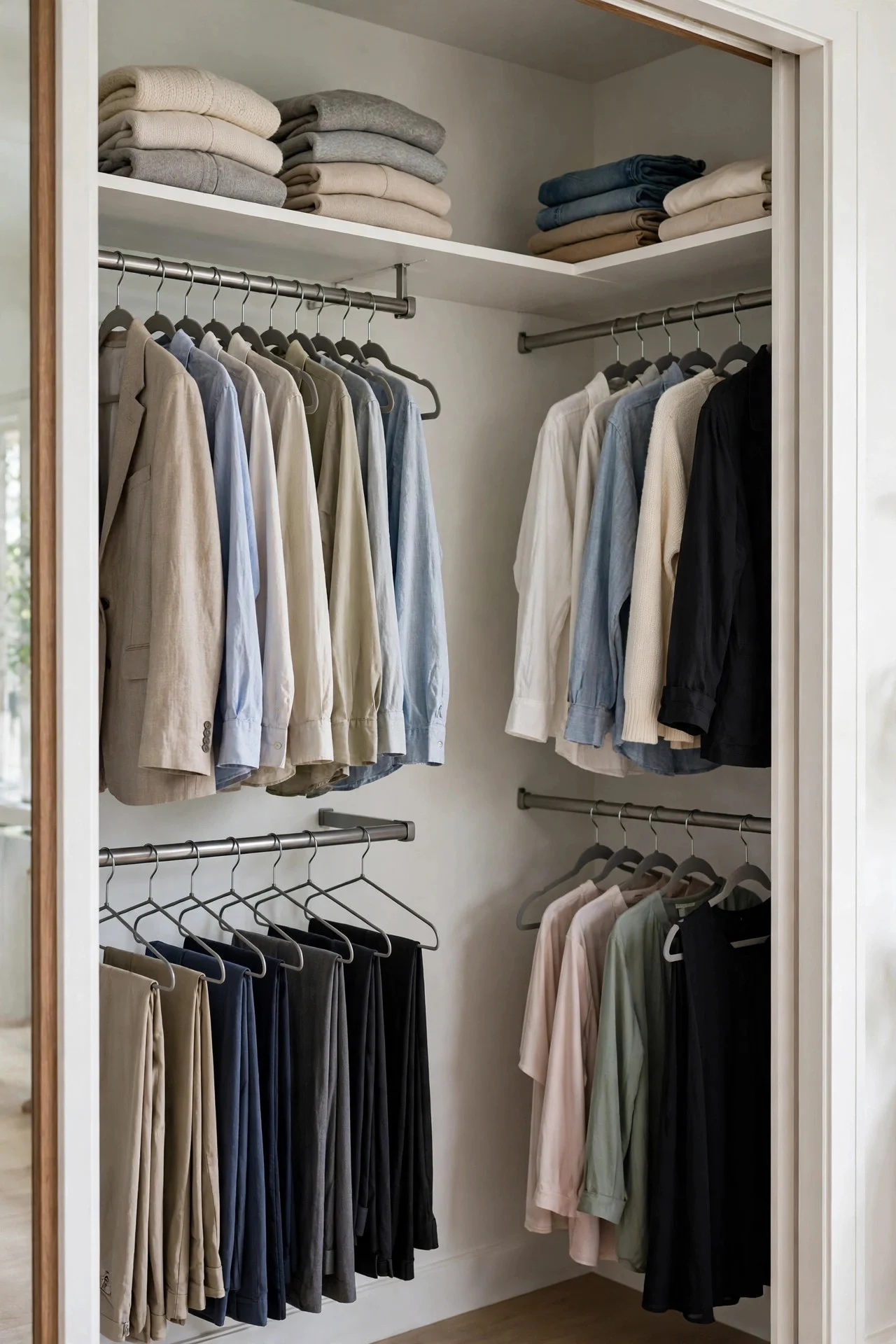
Most reach-ins waste the bottom half of the closet. Shirts, blouses, and folded pants only need about 40 inches of hanging height, so one long-hang section for dresses and coats, and two-tier hanging rods everywhere else, roughly doubles your capacity overnight.
Add a freestanding double-hang rod (around $25–40 at big-box stores) or mount a second rod with brackets screwed into the side walls. Leave 42 inches between rods so clothes don’t bunch. Long items go in one reserved section.
Try this: Before buying anything, sort hanging clothes into “needs 60 inches” vs “needs 40 inches” — most people discover only 20% of their closet truly needs full-length hanging.
2. Put Slim Hangers on a Rotation Schedule
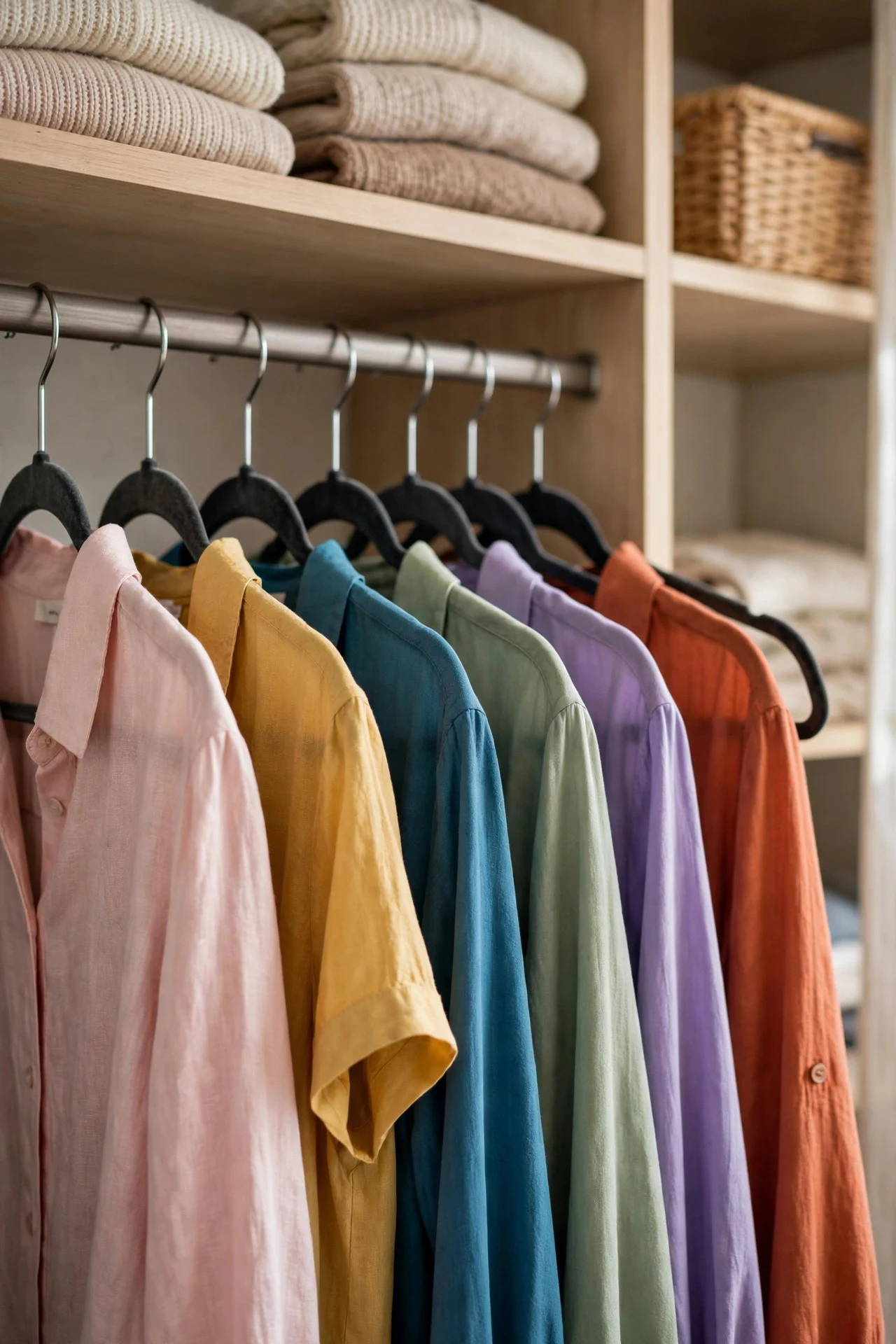
Bulky plastic and wood hangers eat up to 4 extra inches of rod space per dozen. Slim velvet hangers (about 5mm thick) let you fit roughly 30% more garments on the same rod, and the flocked surface keeps slippery tops from sliding off.
Swap hangers all at once rather than gradually — a mixed closet still looks chaotic even if it’s technically organized. Keep one style throughout: slim velvet for everyday, padded for suits.
Try this: Donate your old hangers the same day you switch. If they stay in the house, they’ll migrate back into the closet within a month.
3. Turn the Top Shelf Into a Bin System
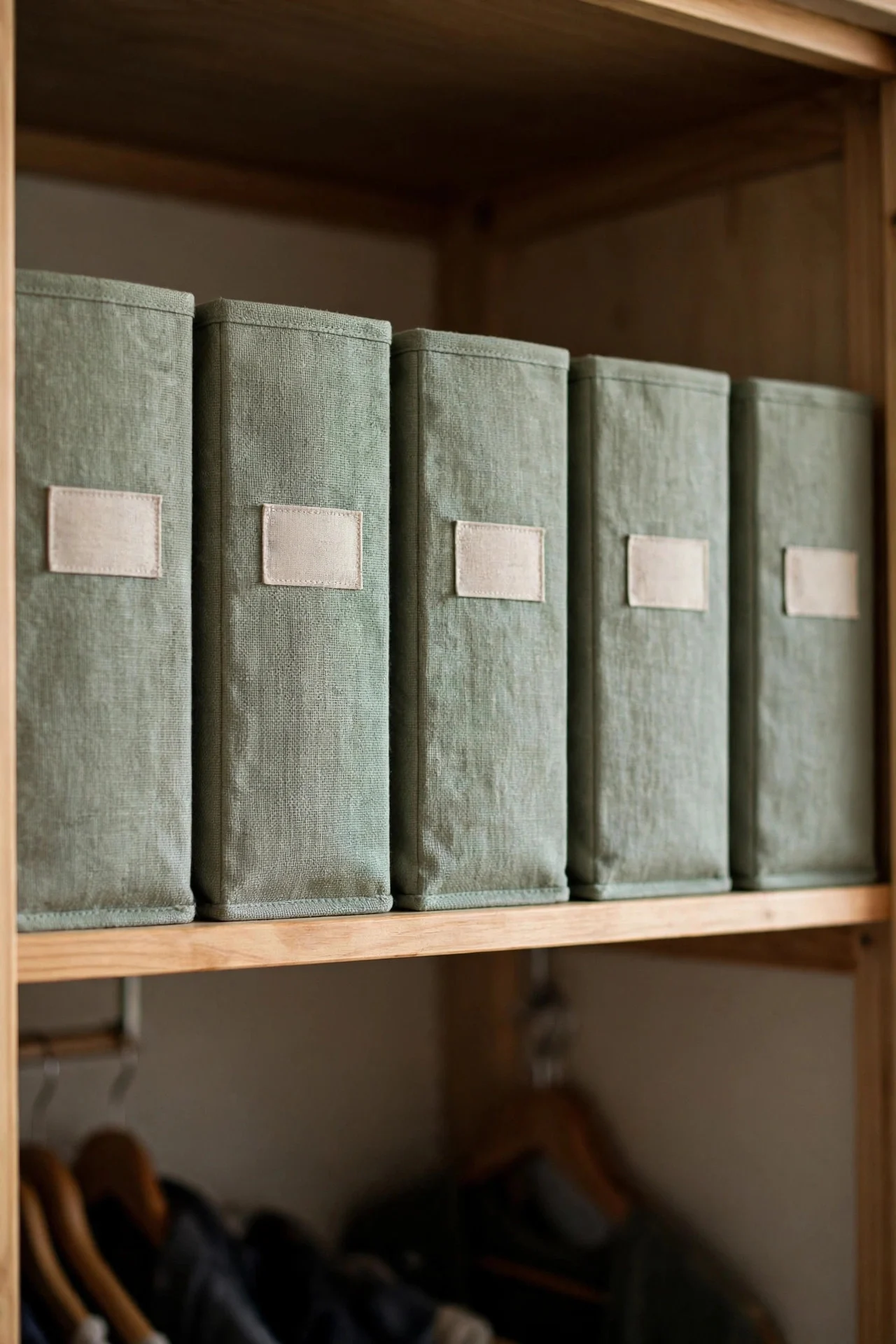
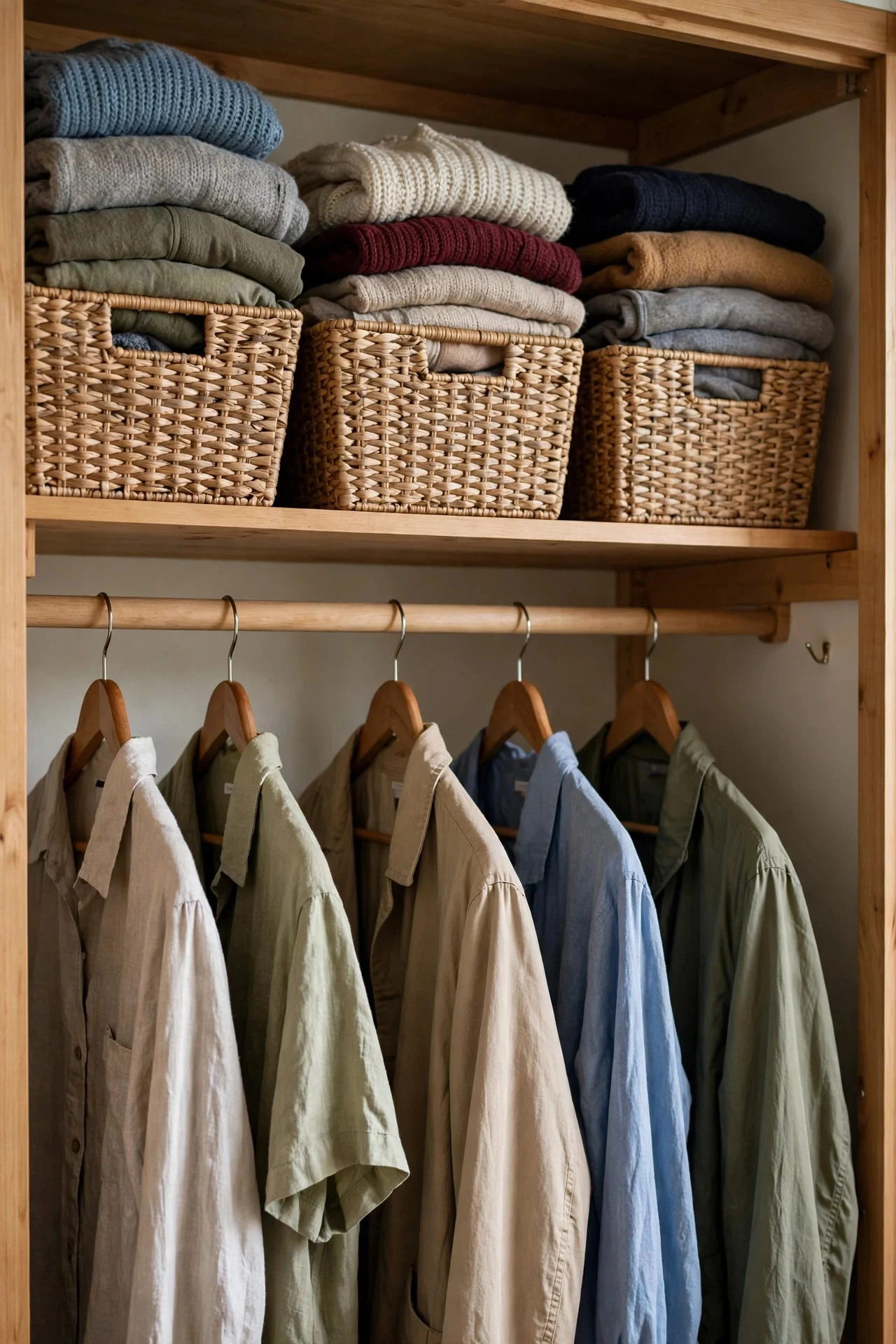
That high shelf is where bags, off-season items, and random boxes go to be forgotten. Standardize it: three to five identical bins, each labeled, with nothing loose allowed. Clear fronts or labels mean you never pull down six bins to find one scarf.
Use bins no taller than 10 inches so they clear the shelf comfortably and you can read the labels from below. Under $8 each at home stores, and identical sizes stack if you ever reconfigure.
Try this: Label by category, not by season — “Swim & Beach,” “Wool & Heavy Layers” — so the system survives your next purge.
4. Hang a Fabric Shelf Organizer on One Side
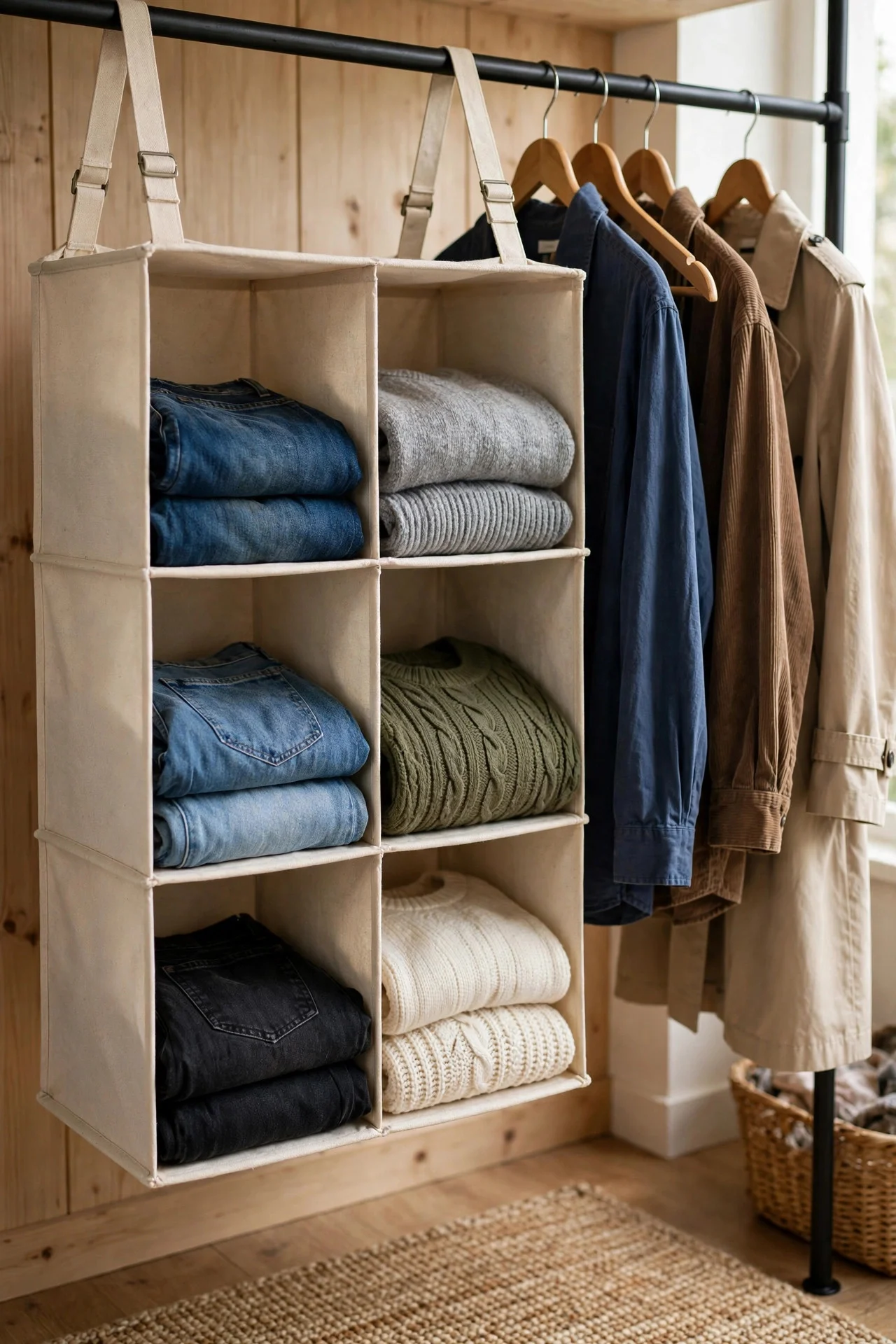
A hanging cubby organizer (usually 6 shelves, about 12 inches wide) hangs from the rod and turns dead horizontal space into folded storage for jeans, tees, and sweaters. No drilling, no tools, costs around $12–15.
Dedicate it to one category per cubby and fold everything the same size — the KonMari file-fold works beautifully here because you can see every item at a glance. Put daily-wear at eye level and less-used items up top.
Try this: Anchor the bottom shelf with something heavy like jeans so the organizer doesn’t sway when you pull things out.
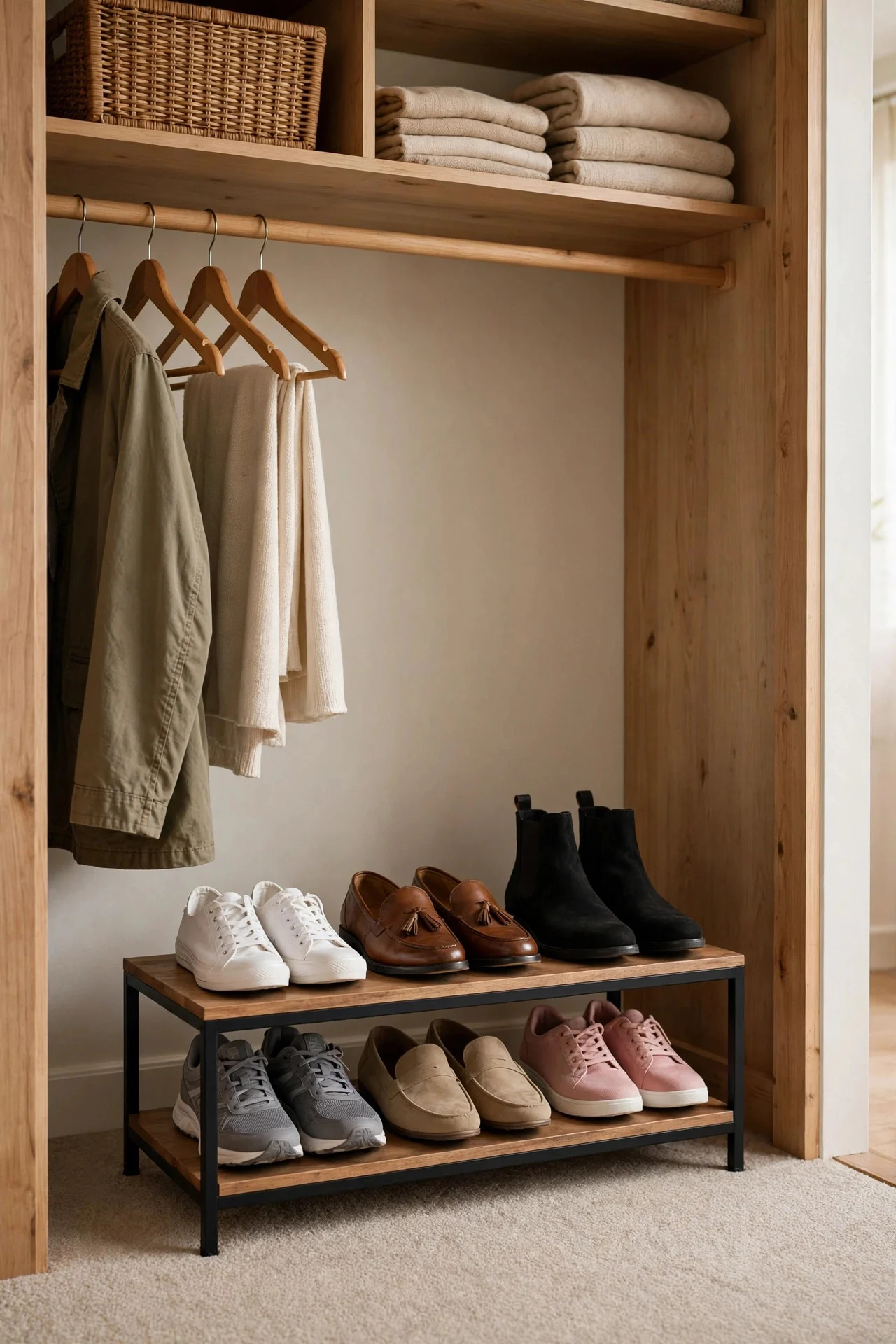
5. Reclaim the Floor With a Low Shoe Rack
The floor of a reach-in is prime real estate, and it’s usually a tangle of shoes. A two-tier low rack (roughly 12 inches tall) holds 8–12 pairs in a 3-foot closet and keeps every pair visible instead of buried under others.
Measure your floor depth first — some reach-ins are only 20 inches deep, so check the rack fits before it ships. Boots go on the top shelf of the rack or along the sides.
Try this: Store out-of-season shoes in labeled boxes on the top shelf and keep only current-season pairs on the rack — instant breathing room.
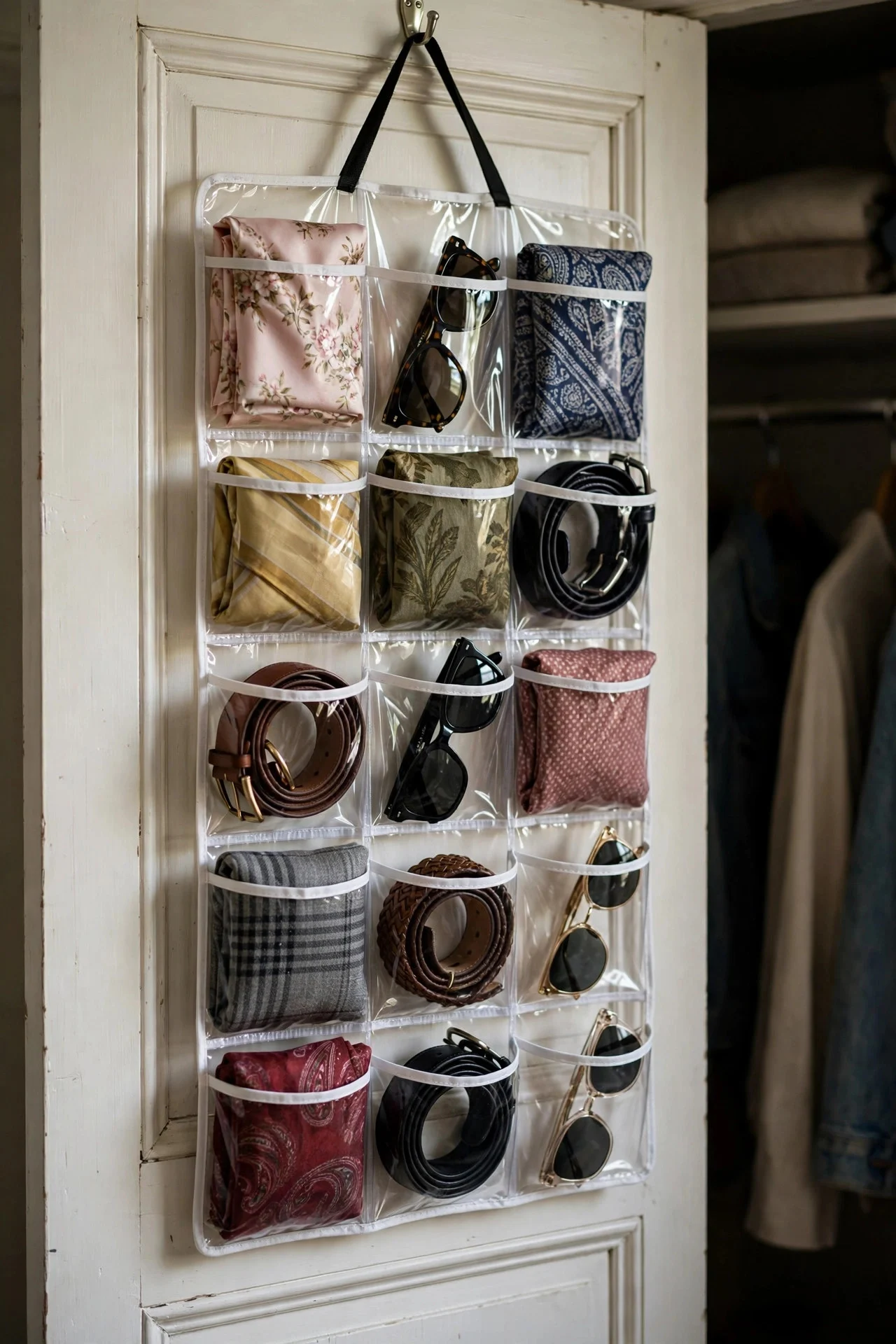
6. Mount an Over-the-Door Organizer
The inside of the closet door is free storage square footage. An over-the-door pocket organizer holds belts, scarves, sunglasses, small bags, and grooming items — things that otherwise clutter shelves and drawers.
Choose clear pockets so nothing hides. Standard organizers are 24-pocket; that’s plenty. If your door has louvered panels, use adhesive-backed hook versions instead of over-door hooks to avoid rattling.
Try this: Assign the door organizer strictly to accessories — the moment clothes go in there, the pockets stretch and the whole thing sags.
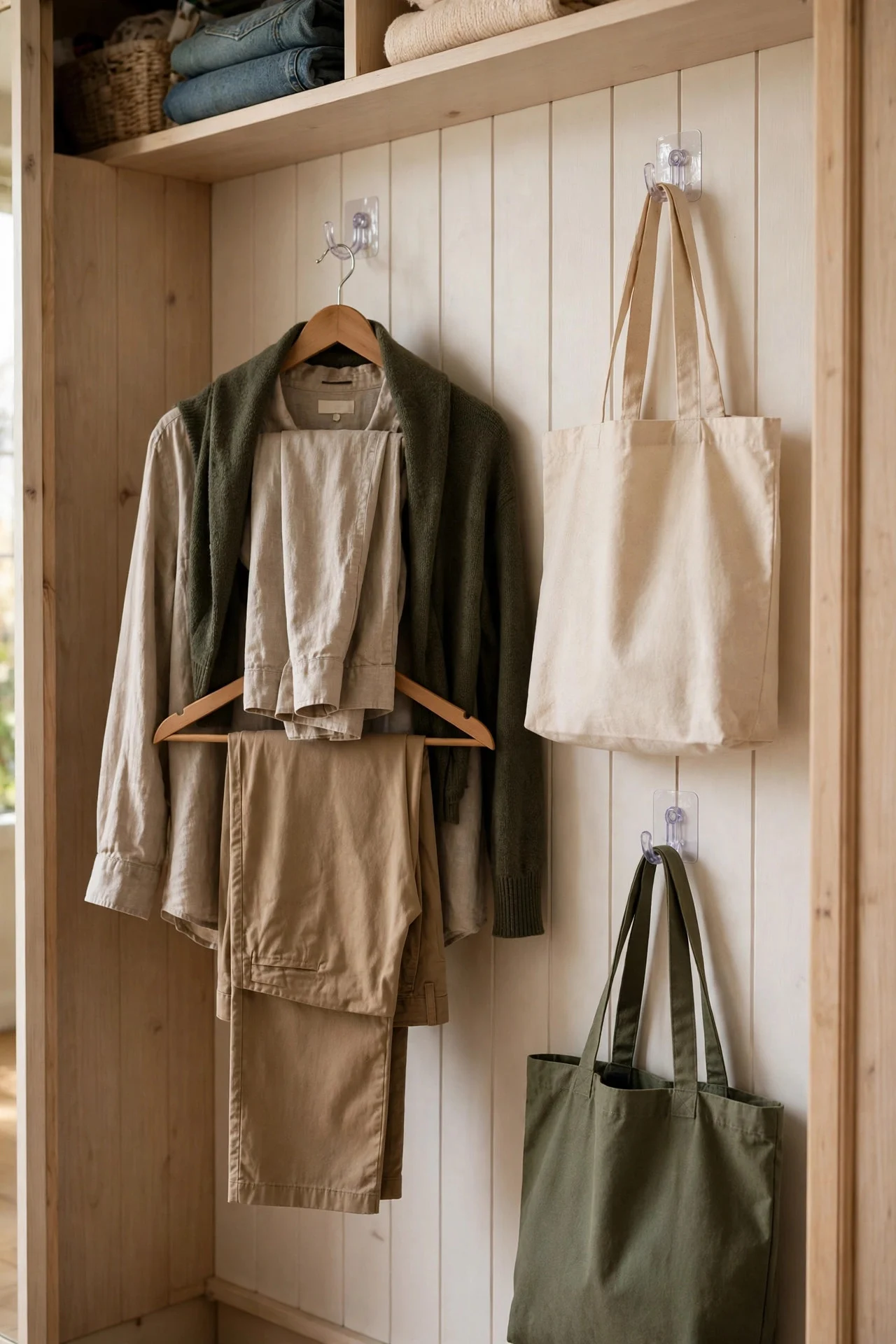
7. Add Hooks to the Inside Walls
Those blank side walls inside the closet? Perfect for command-hook rows or screw-in hooks holding tomorrow’s outfit, a robe, reusable tote bags, or a lint roller. It’s the kind of small move that changes your morning routine.
Place hooks at staggered heights — one at 60 inches for the outfit, one lower for bags. Adhesive hooks hold up to 7.5 lbs on smooth painted surfaces, plenty for daily items.
Try this: Put a hook right by the closet door at shoulder height for “tomorrow’s outfit” — picking clothes the night before saves real morning minutes.
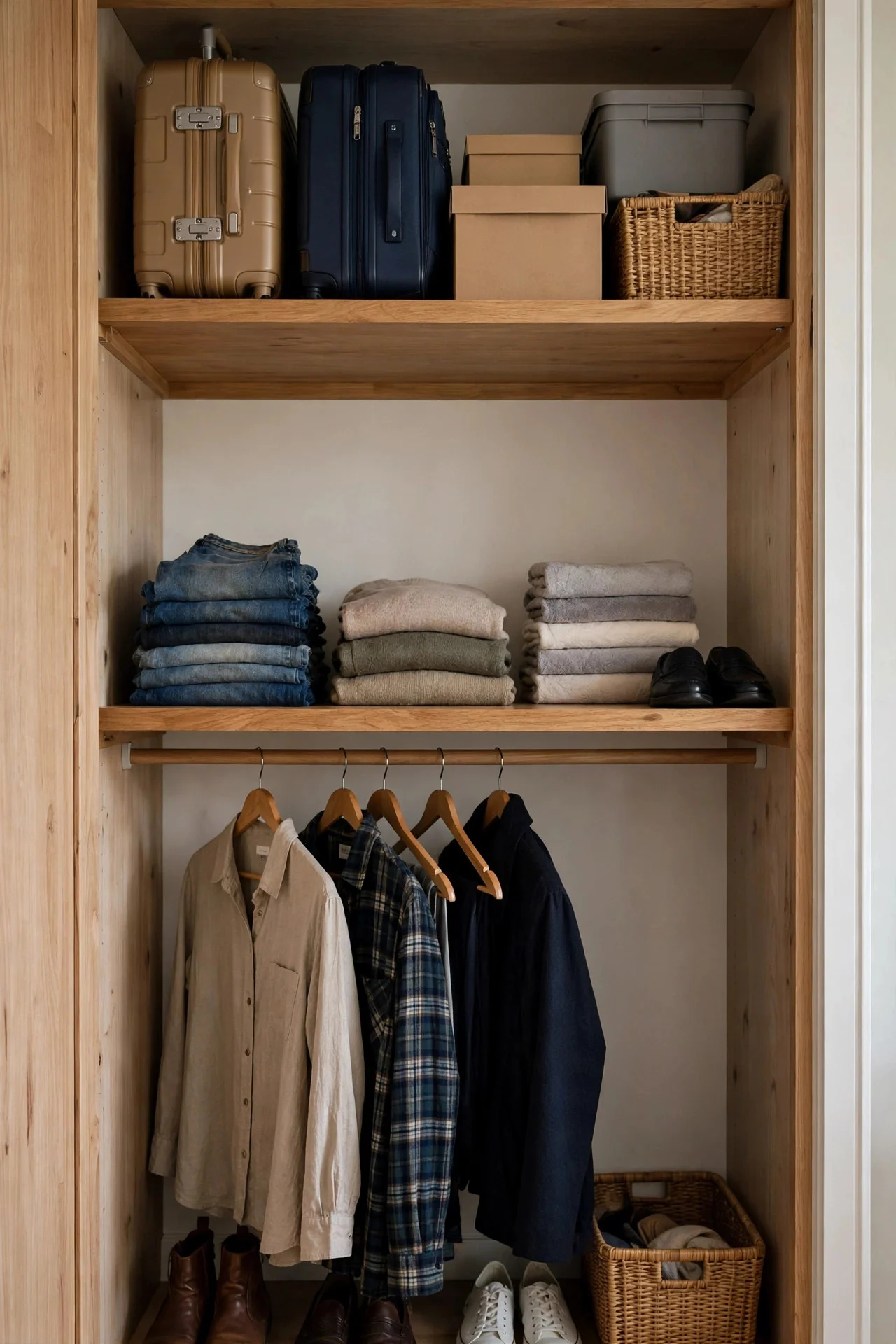
8. Install a Second Shelf Above the Existing One
Most reach-ins have one shelf mounted at 80 inches, with 16–20 inches of dead air above it. A second shelf up there creates a whole new zone for luggage, memory boxes, and rarely touched items.
Use adjustable standards and brackets so you can move it later, and keep the shelf 12 inches deep (not full 16) so it’s easier to reach over. Store anything here you touch fewer than four times a year.
Try this: Keep a small folding step stool inside the closet if you use this shelf — without it, the zone becomes a black hole.
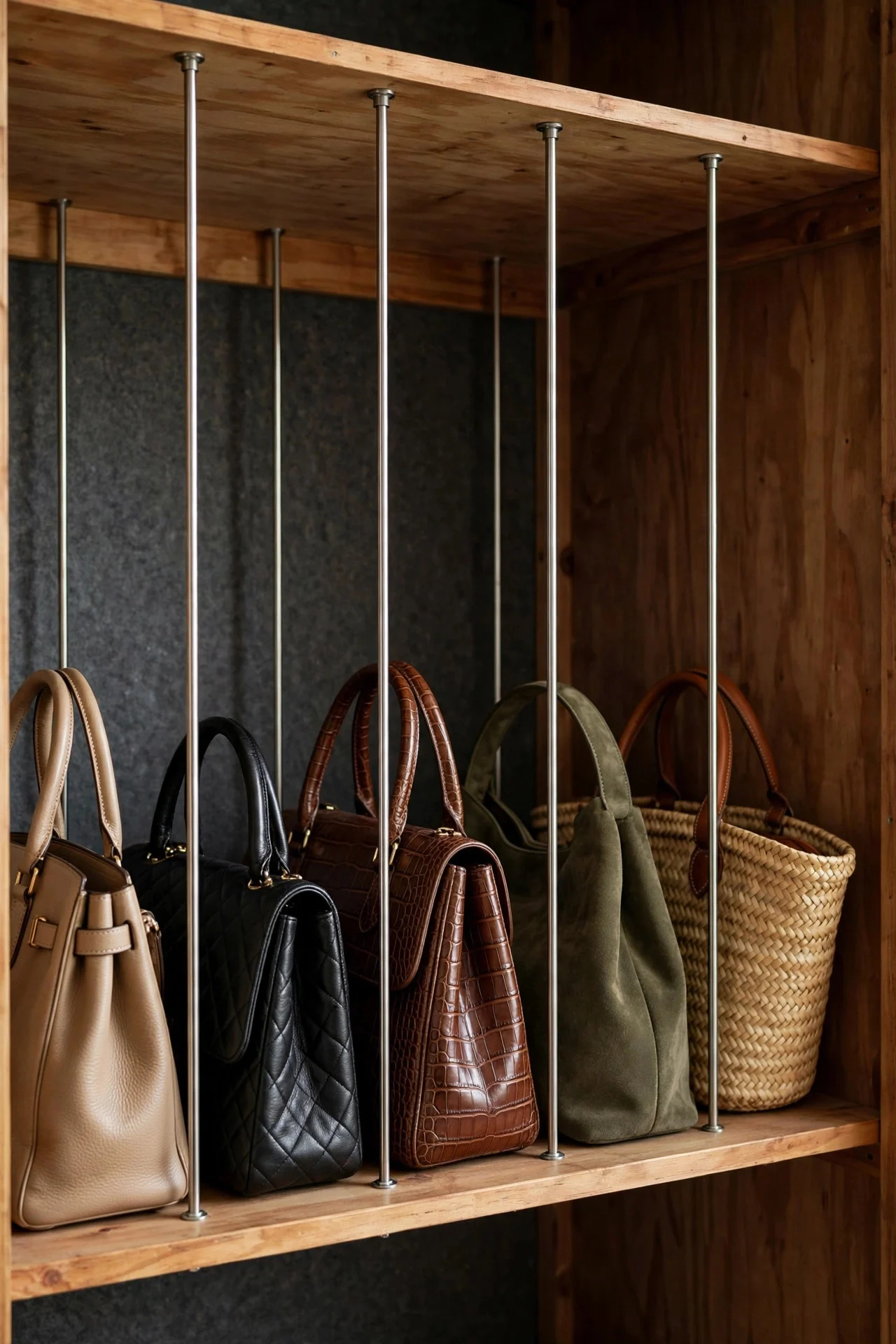
9. Use Tension Rods to Divide Deep Shelves
Deep shelves turn into horizontal piles where the thing you want is always at the bottom. A $6 tension rod set vertically across a wide shelf creates dividers for purses, clutches, or folded items — instant cubbies, zero drilling.
Space them about 10–12 inches apart. They hold back items upright like bookends and make every shelf section function like its own compartment.
Try this: Use this trick on the shelf above the rod for handbags — standing bags upright instead of stacking them prevents the dreaded slump.
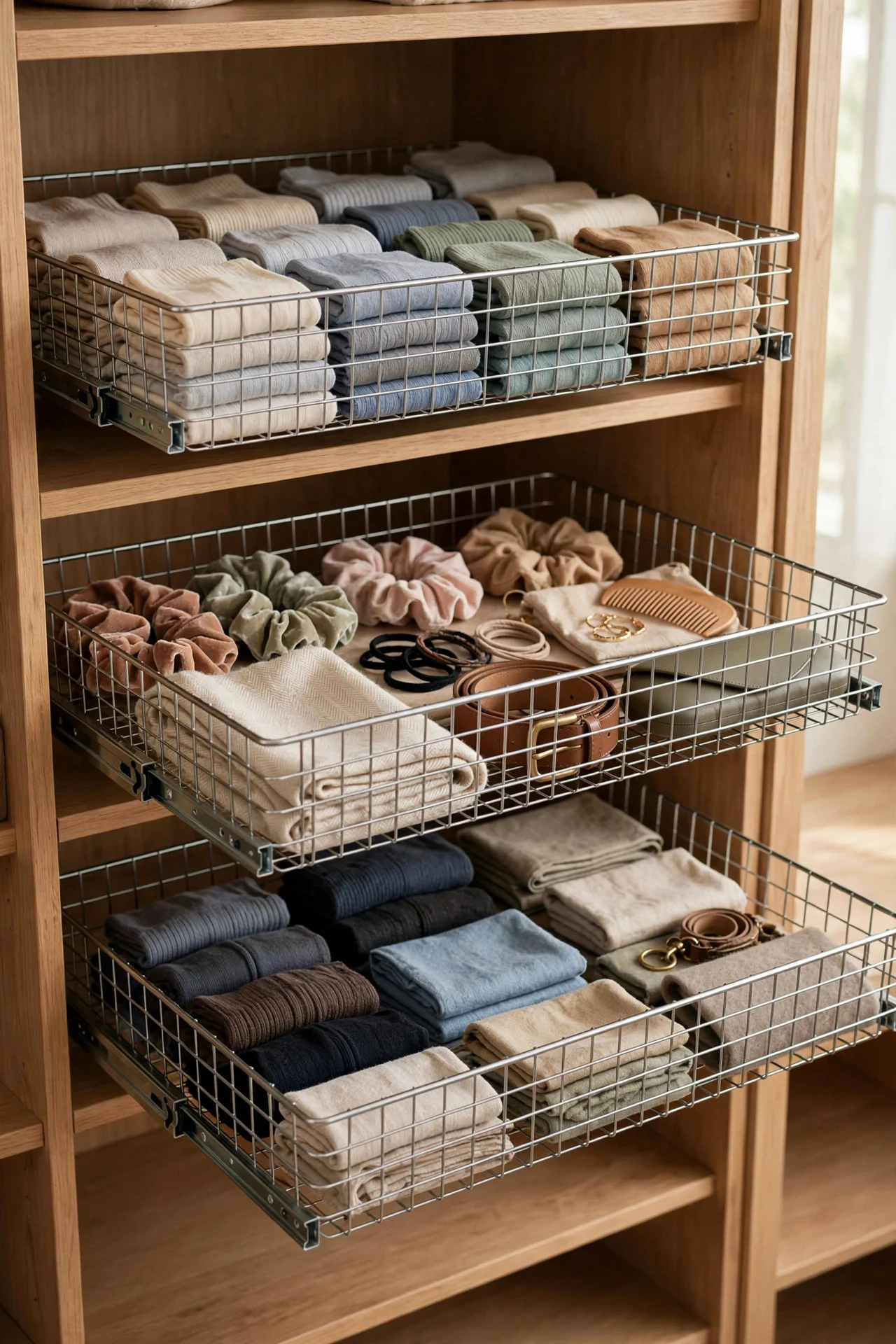
10. Add Pull-Out Baskets for Awkward Zones
Shelves that are too deep or too high for daily use become junk zones. Wire or plastic pull-out baskets (roughly $10 each) turn them into drawers you can actually reach into — great for socks, underwear, and accessories.
They work best on shelves between waist and eye level. One basket per category, and never fill past the point where you can see the bottom.
Try this: Pull-out baskets beat stacking bins for daily-use items — lids are the enemy of things you touch every morning.
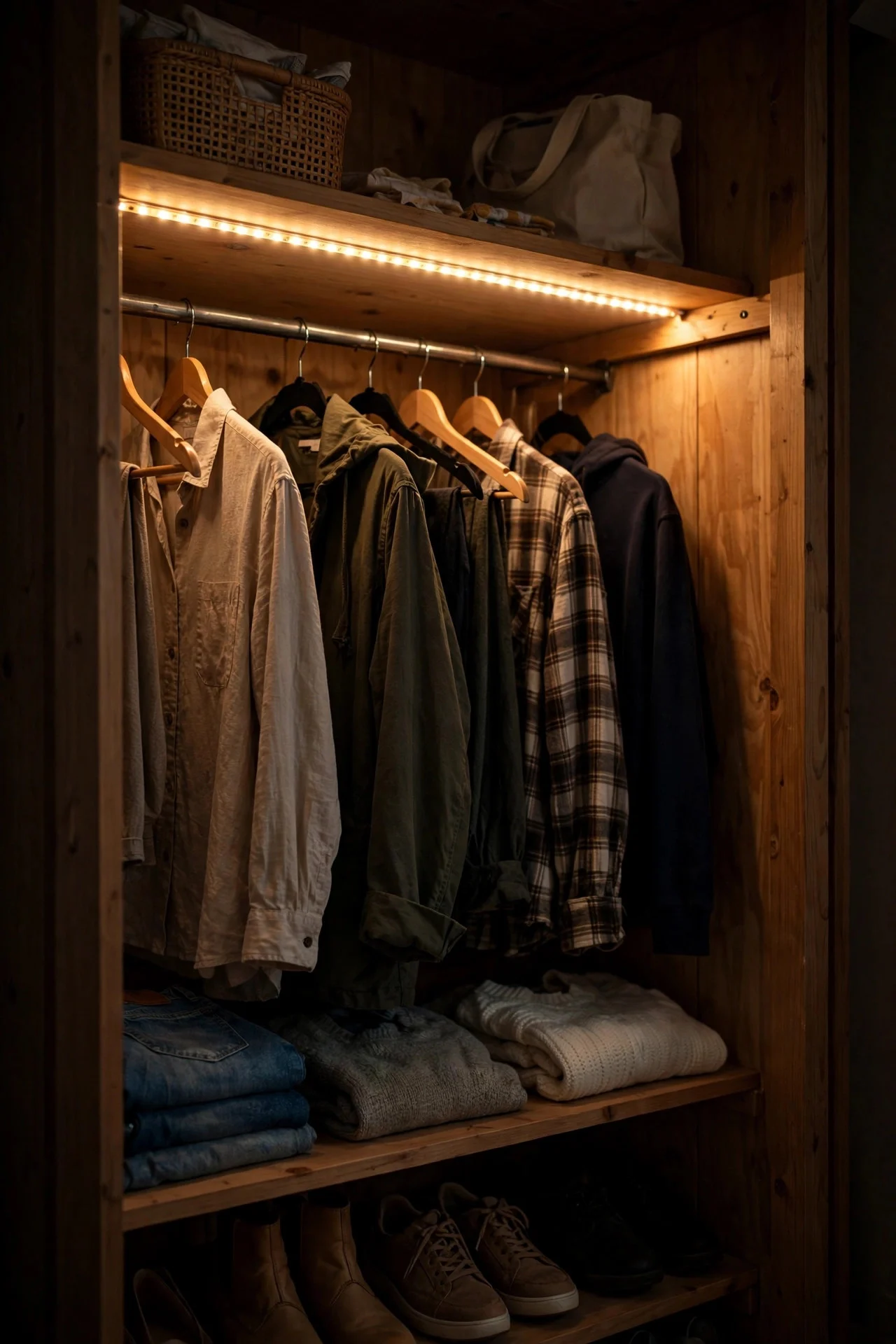
11. Light It Up With Motion-Sensor LEDs
Dark closets stay messy because you can’t see what’s in there. Battery-powered motion-sensor LED strips or pucks cost about $15 for a multi-pack, stick on in minutes, and switch on when you open the door.
Run one strip along the top shelf underside so it washes light down over hanging clothes — that’s where visibility matters most. Change batteries roughly twice a year.
Try this: If your closet shares a wall with the bedroom, set lights to the warm (3000K) tone so midnight wardrobe checks don’t blast you awake.
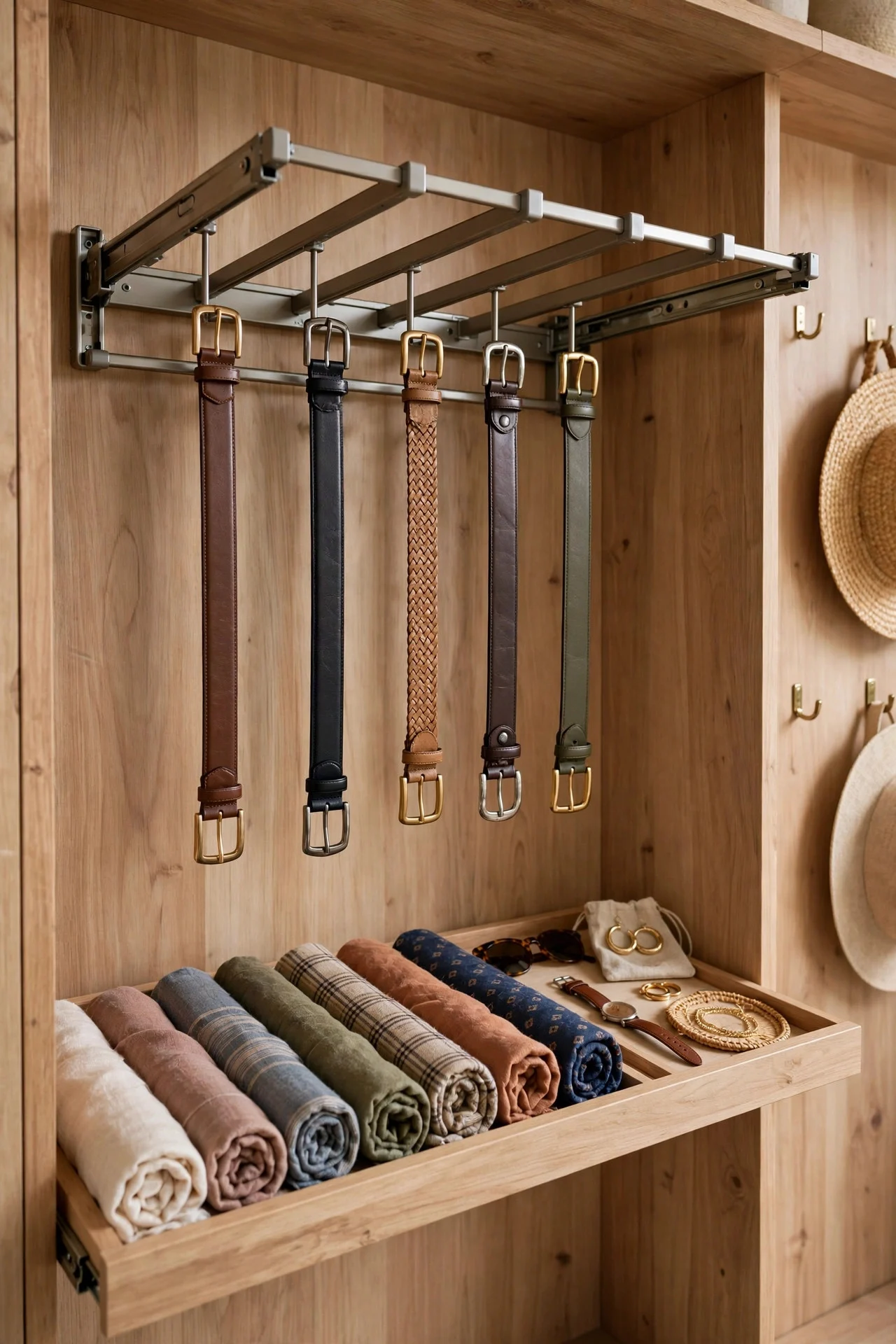
12. Create a Belt, Tie, and Scarf Station
Accessories tangled on a single hook never survive. A pull-out belt rack or a multi-hook wall rack keeps every belt visible and uncreased, and rolled scarves in one hanging cubby stay neat without a single knot.
Mount the rack on the inside wall or the door at eye level. One rack holds 15–20 belts — more than most people own.
Try this: Roll scarves instead of hanging them; a shoebox-sized bin holds a dozen rolled scarves and fits in one fabric cubby.
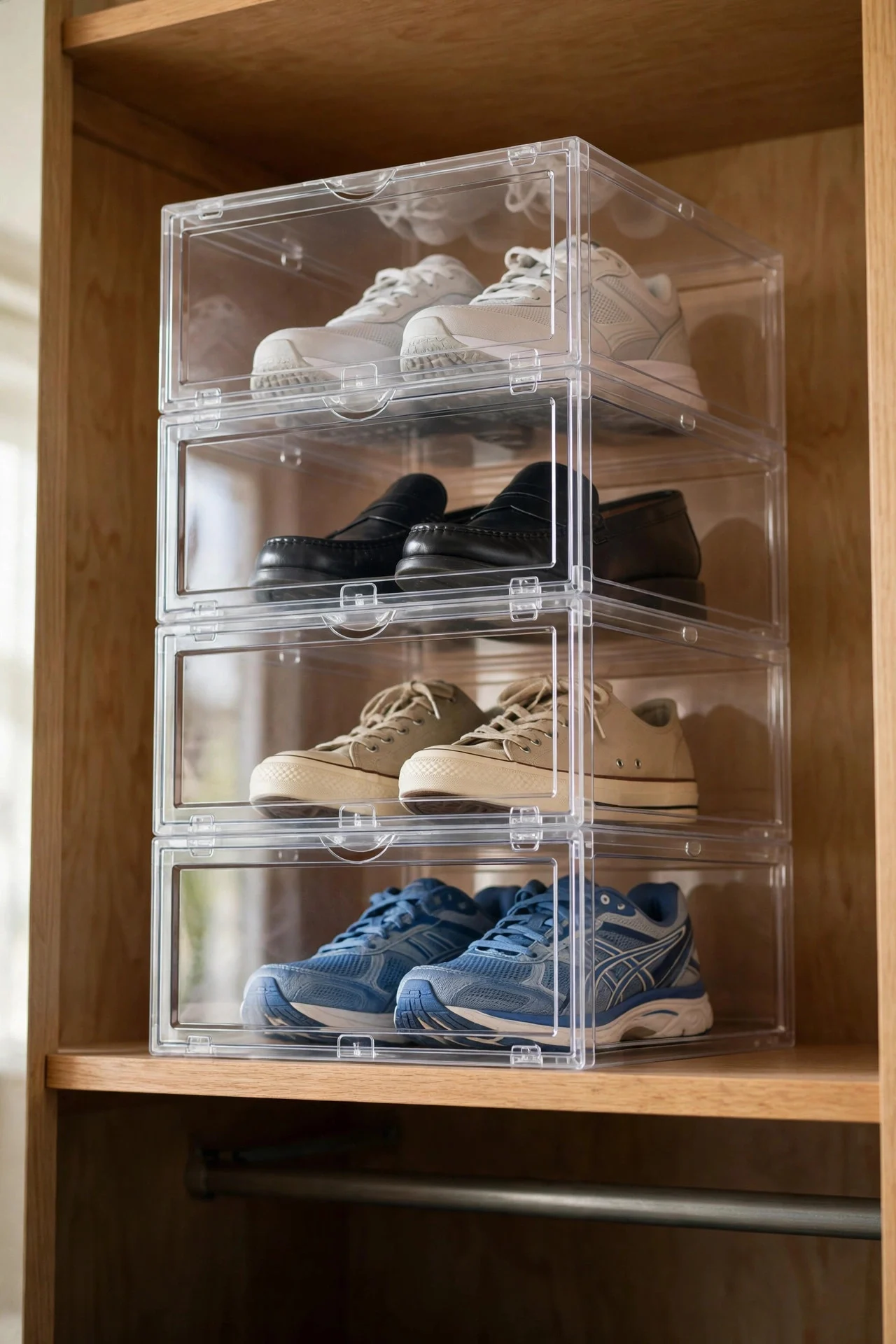
13. Use Clear Shoe Boxes for the Upper Shelf
Shoes stacked loose on the top shelf get dusty and forgotten. Clear drop-front shoe boxes (about $20 for a set of six) stack neatly, keep dust off, and let you see every pair without opening a single box.
They’re modular, so one box per pair scales with your collection. Keep this system for the shoes you wear monthly, not daily — daily shoes belong on the floor rack.
Try this: Photograph each pair and tape the photo to the box end if your boxes aren’t fully clear — finding shoes becomes a one-glance job.
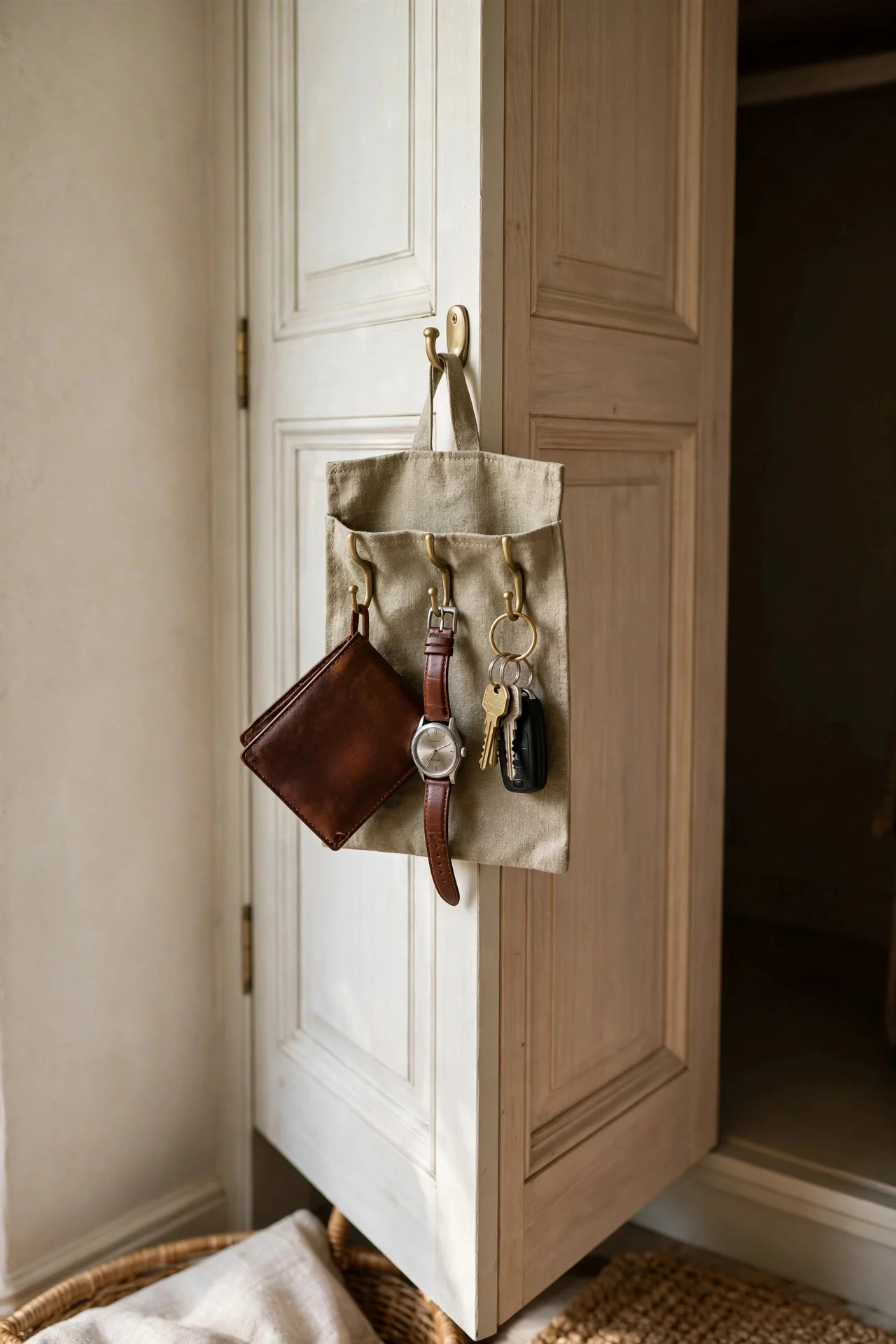
14. Corral Small Items in a Hanging Valet
Wallets, watches, keys, and sunglasses migrate all over the house unless they have a home. A hanging closet valet — basically a small fabric organizer with hooks — keeps them together right where you get dressed.
Mount it on a hook near the door or hang it from the rod end. The point is proximity: the items you grab last are the ones that need to be closest to the exit.
Try this: Pair the valet with a small dish on top of the dresser — one landing spot, zero lost keys.
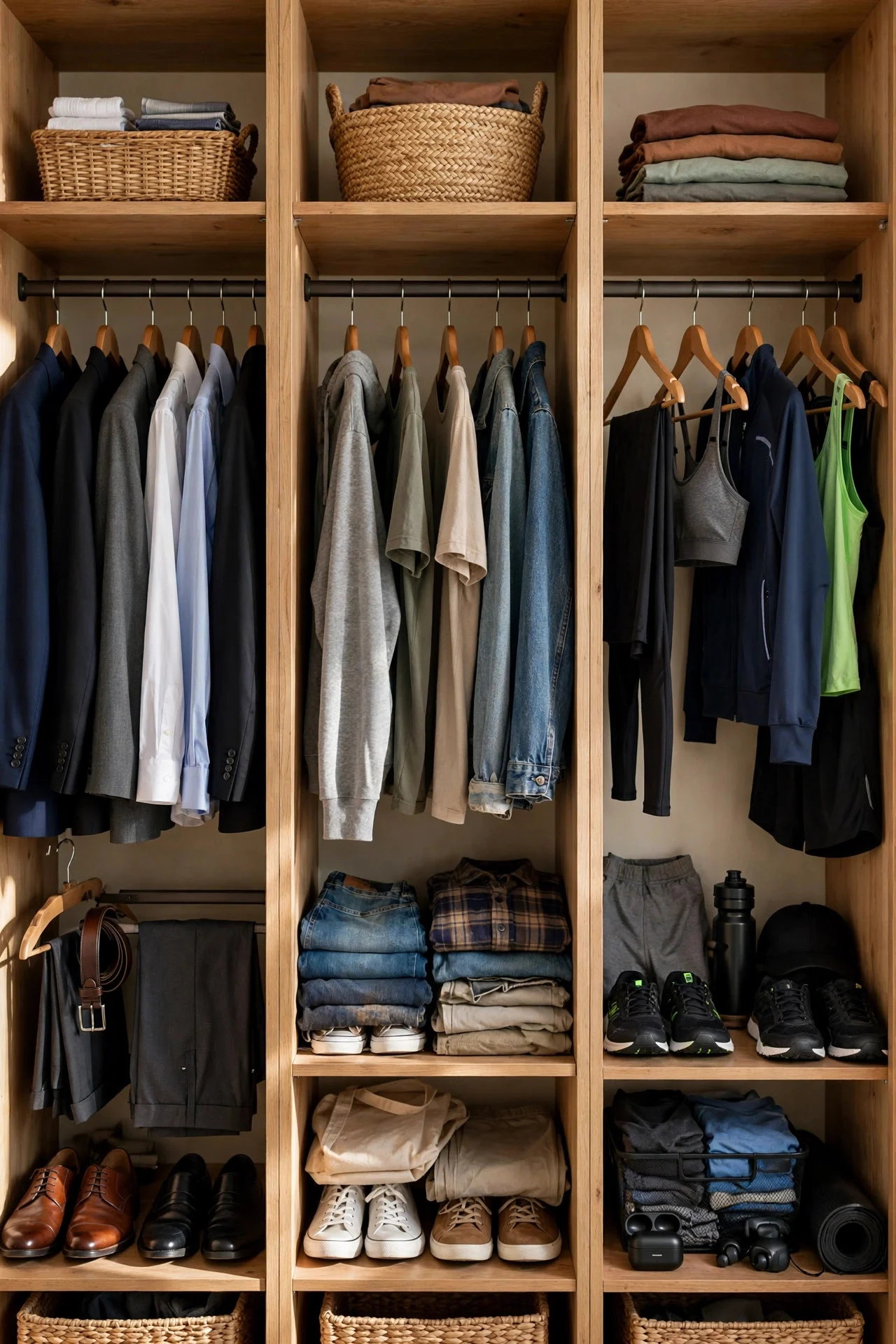
15. Divide the Closet Into Daily Zones
The biggest reason organized closets fall apart: everything lives everywhere. Split the closet into zones — work clothes in one section, casual in another, gym and sleep near the bottom — and your maintenance drops to almost nothing.
Put your most-worn zone at eye level in the center. Rarely worn (formal, ski gear) goes high or to the far side. When something drifts, it has an obvious home to return to.
Try this: Use different hanger colors per zone for the first month — it trains the habit faster than labels do.
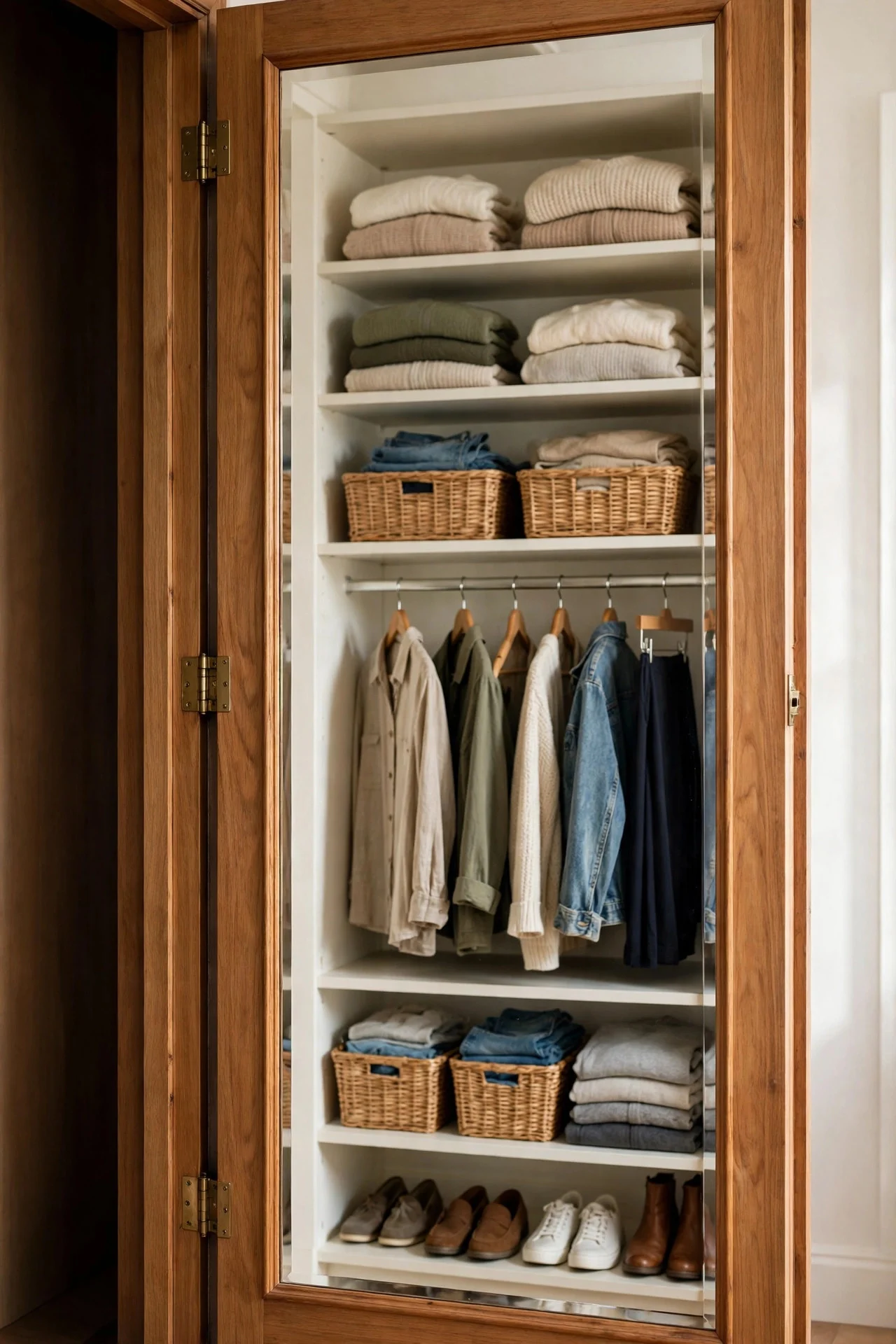
16. Put a Small Mirror on the Door
A full-length mirror on the inside of the closet door makes a small closet feel twice as big and saves a trip to the bathroom for outfit checks. Lightweight over-door mirrors run about $20 and hang without screws.
It also reflects the LED light back into the closet, which brightens dark corners surprisingly well. Make sure the door still closes fully before you walk away.
Try this: Pair the mirror with a hook beside it for the outfit you’re considering — try-on station, done.
17. Run a Seasonal Rotation Twice a Year
A reach-in holds roughly half a wardrobe comfortably. Pack the other half away twice a year — winter coats and boots out in October, swim and linen in by April — and your closet breathes for six months at a time.
Use the labeled bins on the top shelf or under-bed boxes for the off-season stash. The whole swap takes about 90 minutes if your bins are already labeled.
Try this: Do the rotation when the clocks change — it’s an easy calendar anchor you won’t forget.
18. Enforce a One-In, One-Out Rule
Organization products can’t fix a closet that keeps growing. The simplest maintenance system ever: every new item that enters means one item leaves — donated, sold, or trashed. It caps the inventory at what the space can hold.
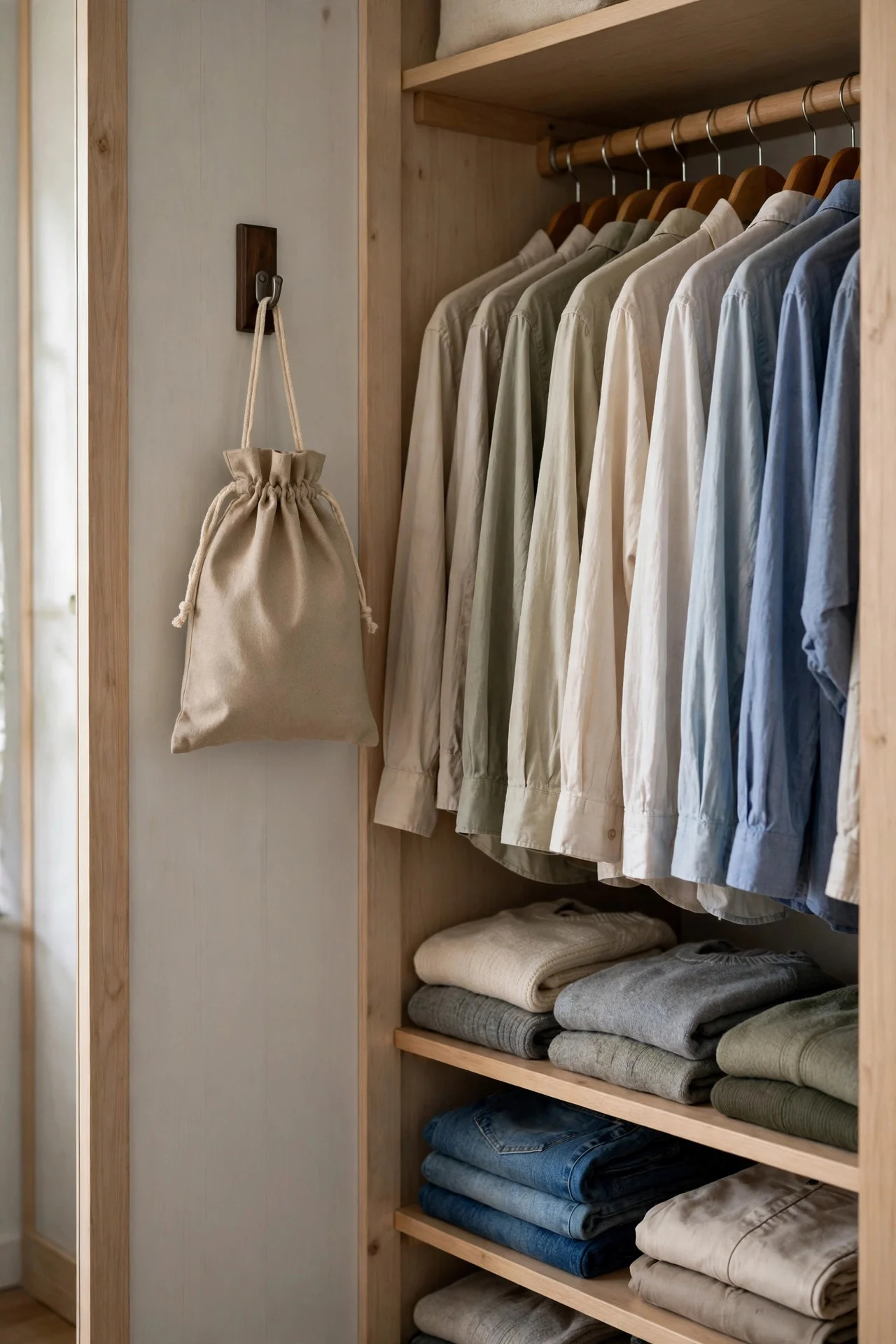
Keep a small donation bag hanging on the inside hook. When it’s full, it goes to the charity shop — no sorting marathons required.
Try this: Snap a photo of your closet today, then again in a month. The visual proof keeps the rule honest.
Frequently Asked Questions
How do I organize a reach-in closet with no built-ins?
Start with the rod: double-hang where possible and switch to slim hangers. Then add non-permanent products — a fabric hanging organizer, over-the-door pockets, a floor shoe rack, and labeled bins for the top shelf. None of it needs drilling, and it works for renters too.
What’s the best way to use the space above the shelf?
Add a second shelf 16 inches above the existing one for luggage and rarely used items, or standardize the top shelf with identical labeled bins. Just don’t let loose items pile up there — that shelf becomes a junk zone fast.
How many clothes should a reach-in closet hold?
Comfortably, about 30–50 hanging items plus folded clothes, depending on the closet’s width. If you have to force hangers apart to see anything, you’ve outgrown the space — rotate seasonally or edit the wardrobe.
What are the cheapest closet organization upgrades?
Slim hangers, tension-rod shelf dividers, adhesive hooks, and a fabric hanging organizer all cost under $15 each and make the biggest visible difference. LED motion lights are the best-value single upgrade for dark closets.
Final Thoughts
A reach-in closet will never be a walk-in, and it doesn’t need to be. These ideas work because they match the way you actually use the space — daily zones at eye level, rarely touched items up high, and every inch given a job. Start with the rod and the hangers; those two changes alone usually double what the closet can hold comfortably. The rest is refinement.