
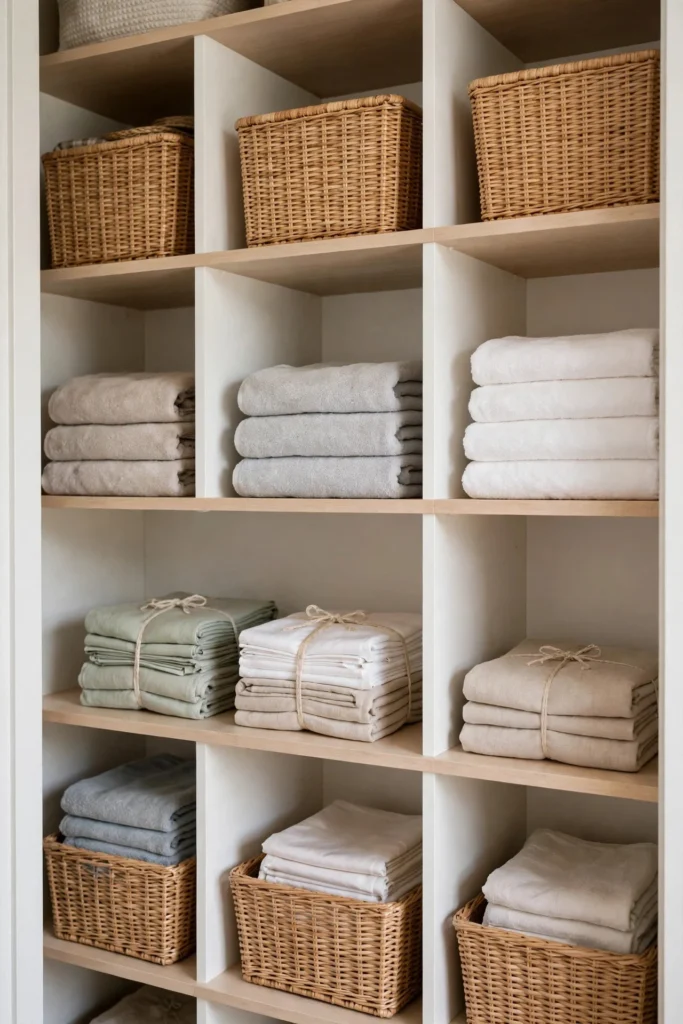
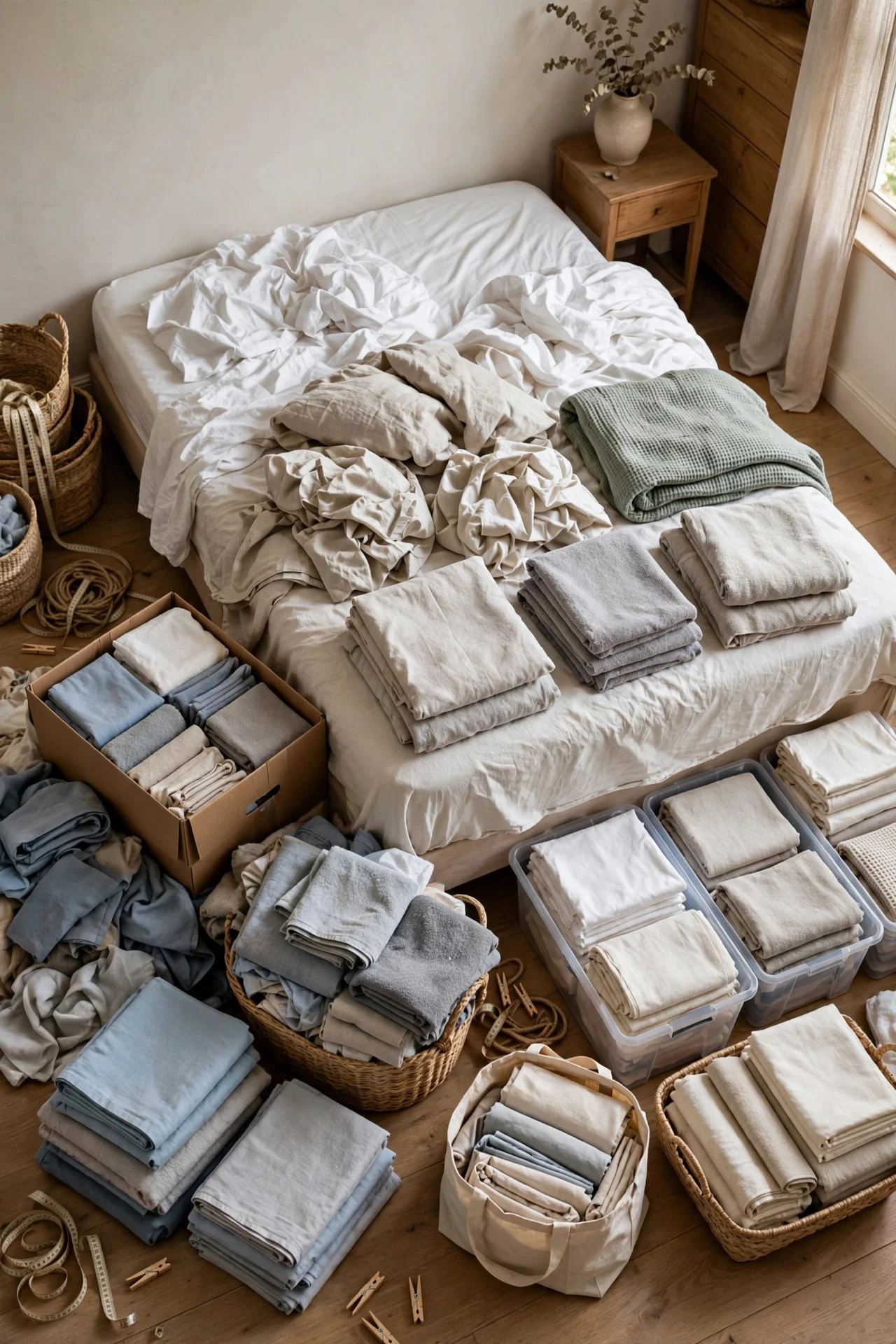
Linen closets have a special talent for looking organized for exactly one day after you fold everything, then slowly avalanching into a textile landslide. The fitted sheets rebel, the towel stacks lean, and somehow there’s a tablecloth from 2019 you’ll never use again.
The secret is that linens need structure more than most things — fabric has no rigidity, so the system has to provide it. These 17 linen closet organization ideas give every sheet, towel, and blanket a defined home, using folding tricks, the right containers, and a little ruthless editing.
1. Fold Fitted Sheets the Flat Way
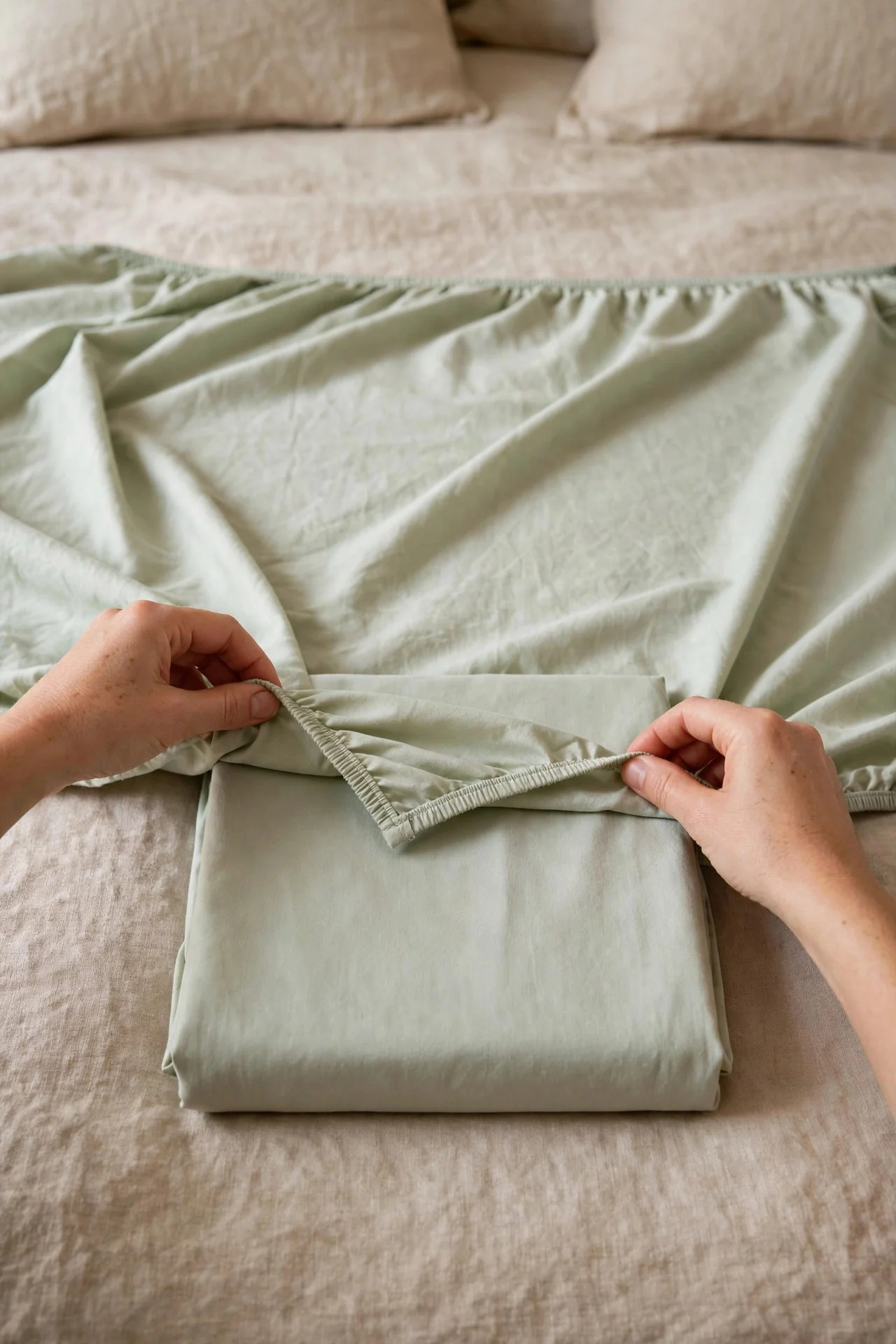
Fitted sheets are the reason linen closets look messy — those elastic corners refuse to fold neatly. The fix: tuck each corner into the next to create a rectangle, then fold the rectangle into thirds. It takes 60 seconds once you learn it and produces a flat, stackable package.
There are good video tutorials if the written instructions confuse you — watch once, practice twice, and it’s muscle memory. Flat-folded fitted sheets stack like any other sheet.
Try this: Fold the fitted sheet immediately after drying — warm fabric folds flatter and the elastic hasn’t set into wrinkles.
2. Store Sheet Sets Inside a Pillowcase
The bundle trick: fold the fitted sheet, flat sheet, and one pillowcase, then tuck the whole set inside the second pillowcase. One neat package per bed, labeled by size — “Queen,” “Twin” — and you never hunt for a missing pillowcase again.
It also keeps sets together through the wash cycle: dirty sets go in as a bundle, clean sets come back as a bundle. Write the size on the pillowcase hem with a fabric marker.
Try this: Keep one spare set per bed in active rotation and store the rest elsewhere — two sets per bed is plenty.
3. Sort Towels by Size and Color
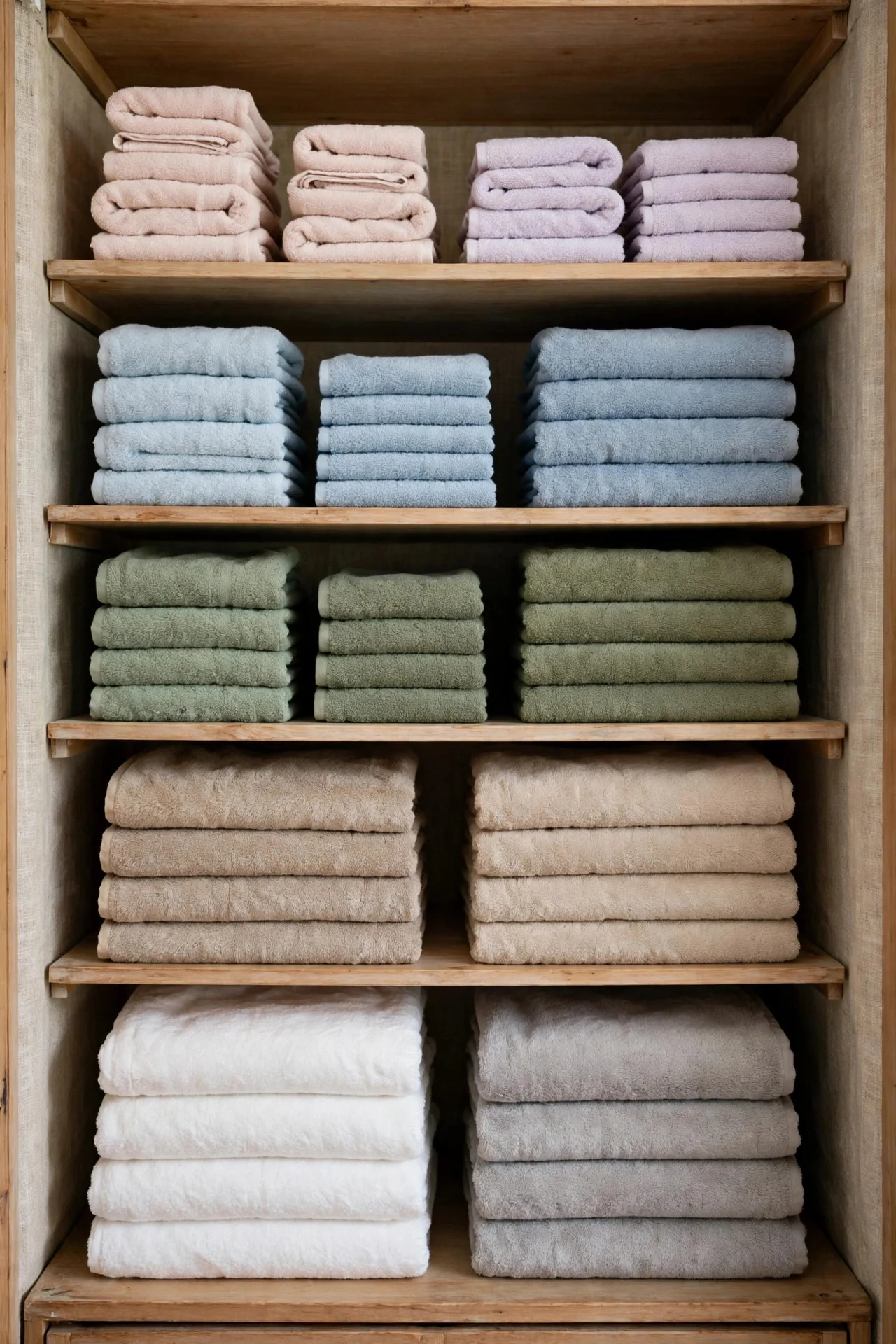
Towels stacked randomly look chaotic even when they’re clean. Sort by size — bath sheets, bath towels, hand towels, washcloths — then by color within each size. The visual calm is immediate, and grabbing what you need becomes automatic.
Roll hand towels and washcloths instead of folding them; rolled small towels take less space and don’t unfold when you pull one out. Bath towels fold in thirds to fit standard 12-inch-deep shelves.
Try this: Assign one color family per bathroom — white for the guest bath, gray for the kids — and sorting becomes self-maintaining.
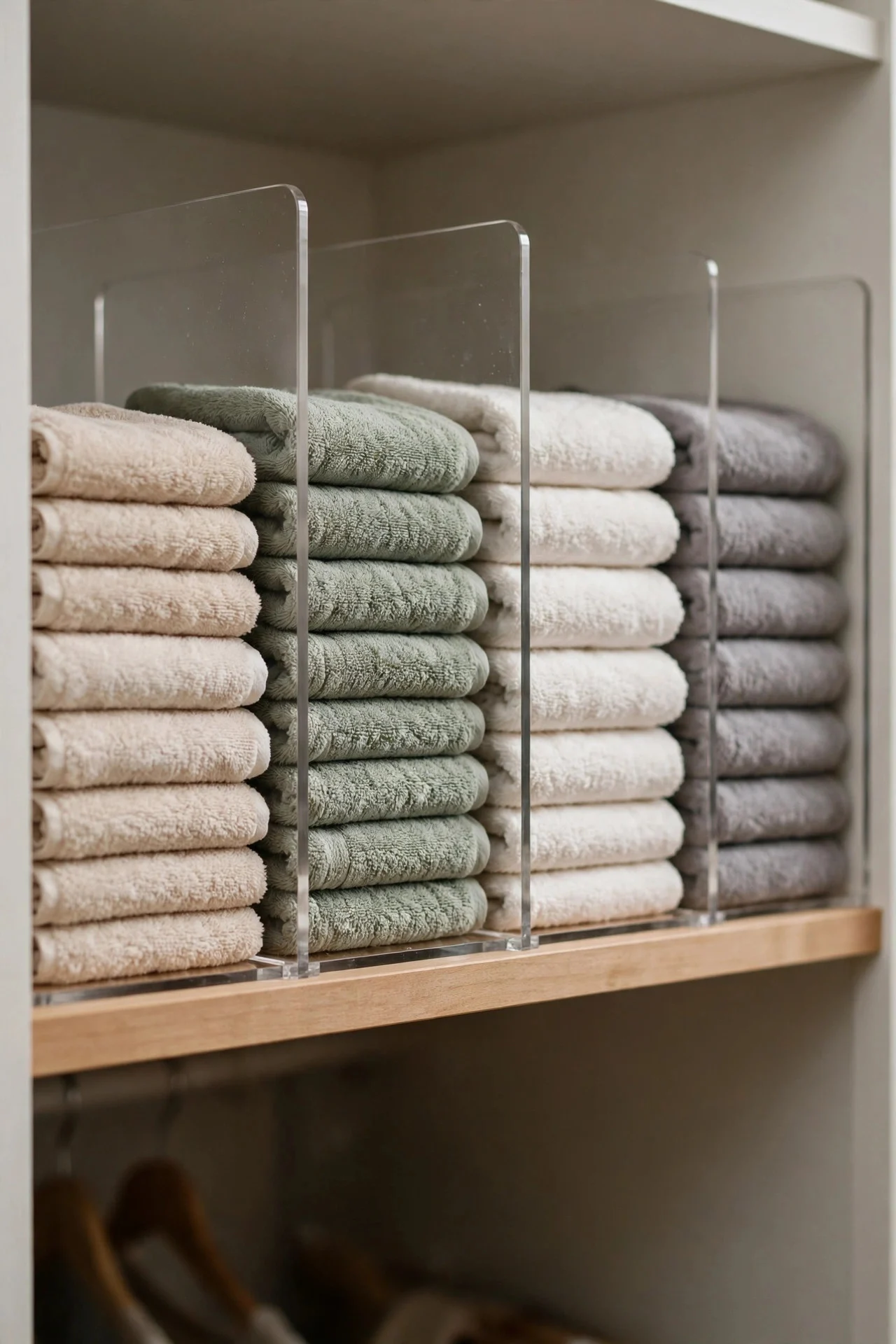
4. Use Shelf Dividers to Stop the Lean
Tall stacks of towels and sheets lean and topple because there’s nothing holding them upright. Acrylic or wire shelf dividers ($10 for a set) create bookend-like sections on each shelf, keeping stacks vertical and separated by category.
Space dividers about 10–12 inches apart for towel stacks. They clamp onto the shelf without tools and move whenever your categories change.
Try this: Put dividers between sheet sets and towels even if the stacks are short — the visual boundary keeps categories from blending.
5. Label Every Shelf Clearly
Linen closets serve the whole household, and “just put it back neatly” means different things to different people. Simple labels — “Queen Sheets,” “Bath Towels,” “Beach” — on each shelf section end the guesswork. A label maker or chalk tape, five minutes.
Labels also expose overstocking: when the “Guest Towels” section overflows, it’s obvious you own too many, not that the shelf is too small.
Try this: Label the shelf edge, not the wall behind — the label stays visible even when the shelf is full.
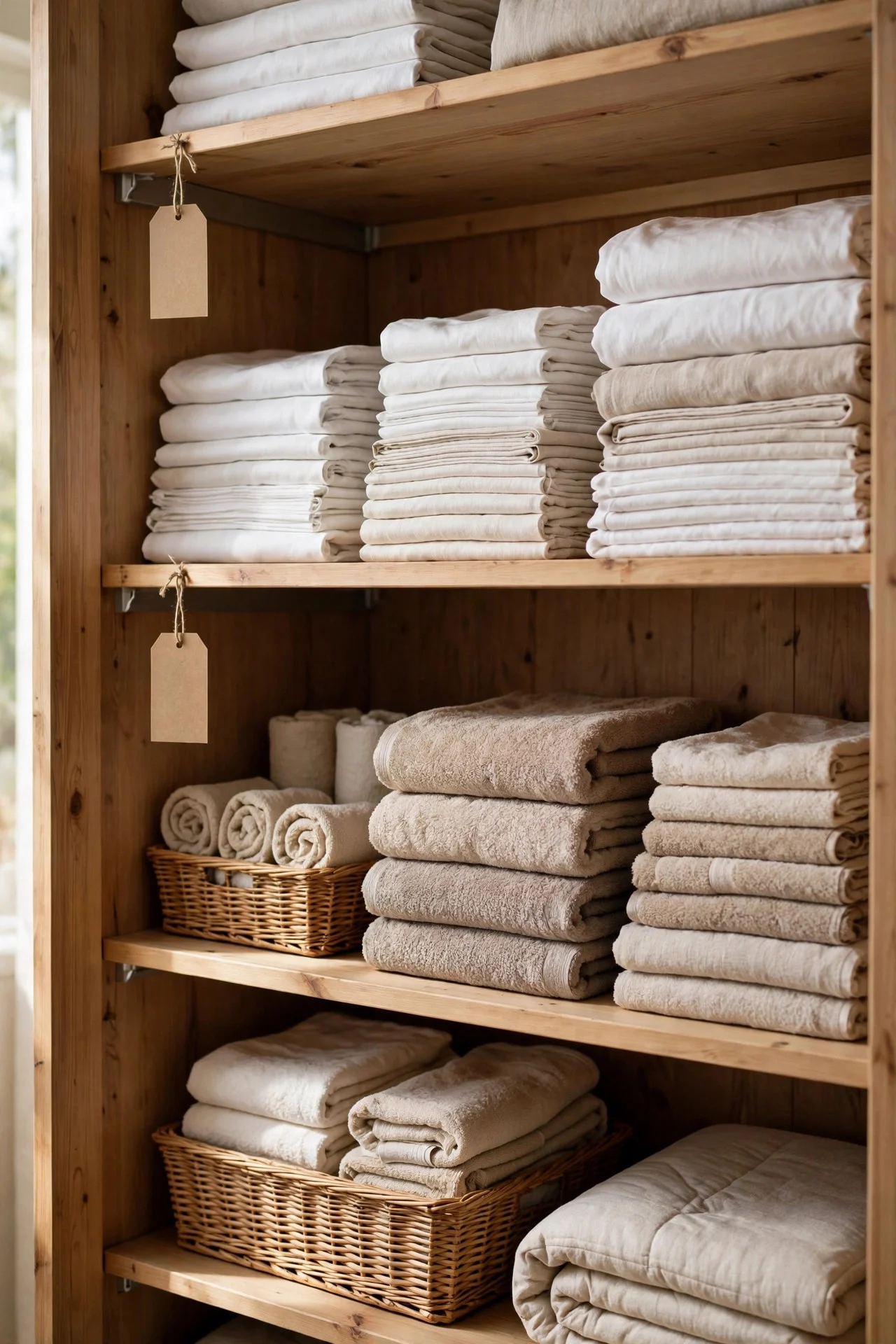
6. Corral Small Items in Labeled Bins
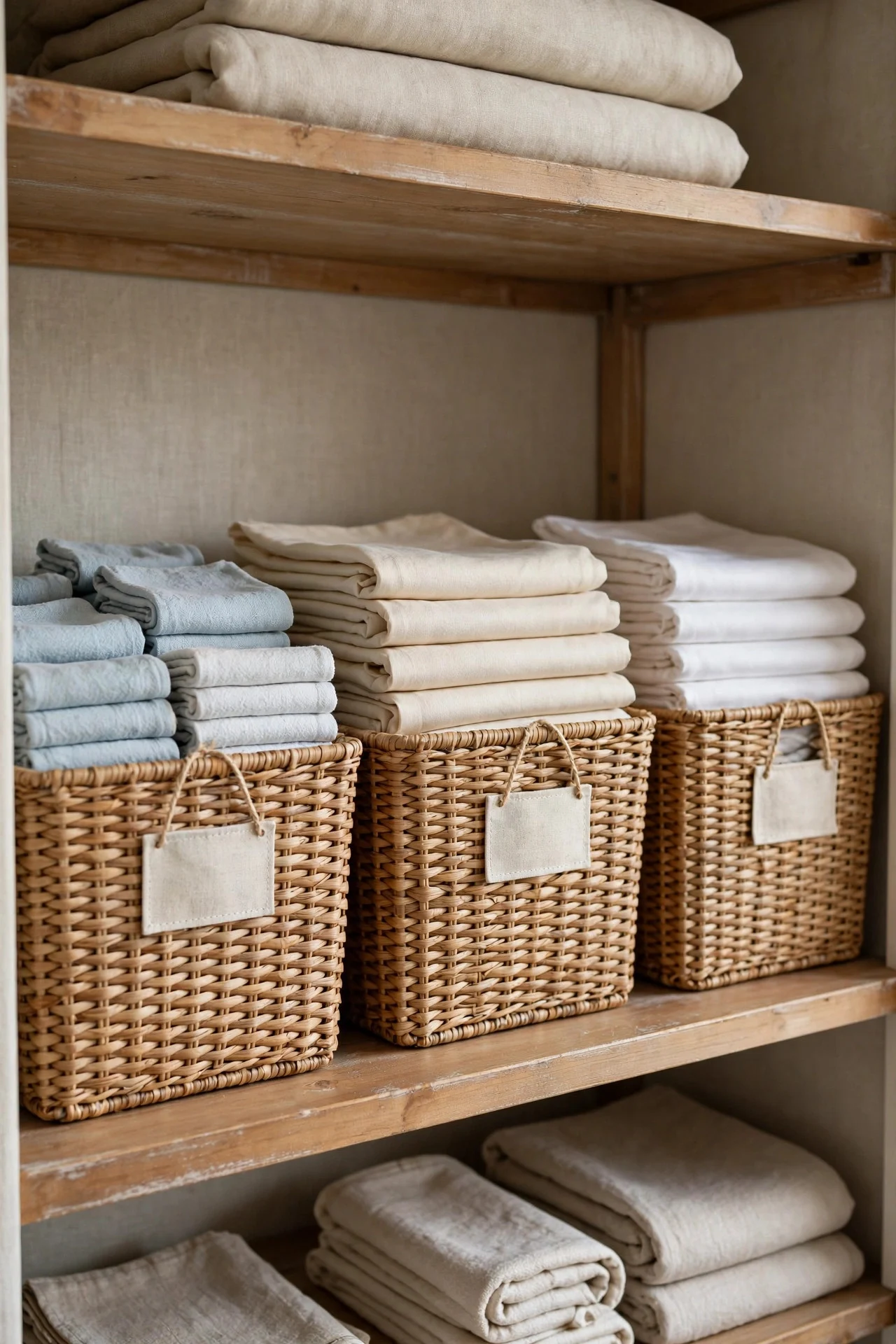
Washcloths, pillow protectors, mattress pads, and spare pillowcases are too small to stack neatly and too big to ignore. Medium bins (about 11 x 8 inches) — one per category, labeled — keep them contained and easy to pull down.
Fabric bins look nicer on open shelving; clear plastic bins make contents obvious. Either way, one category per bin — mixed bins become junk bins within weeks.
Try this: Put the bins you reach for least on the highest shelf — frequency of use decides height, always.
7. Roll Blankets Instead of Folding
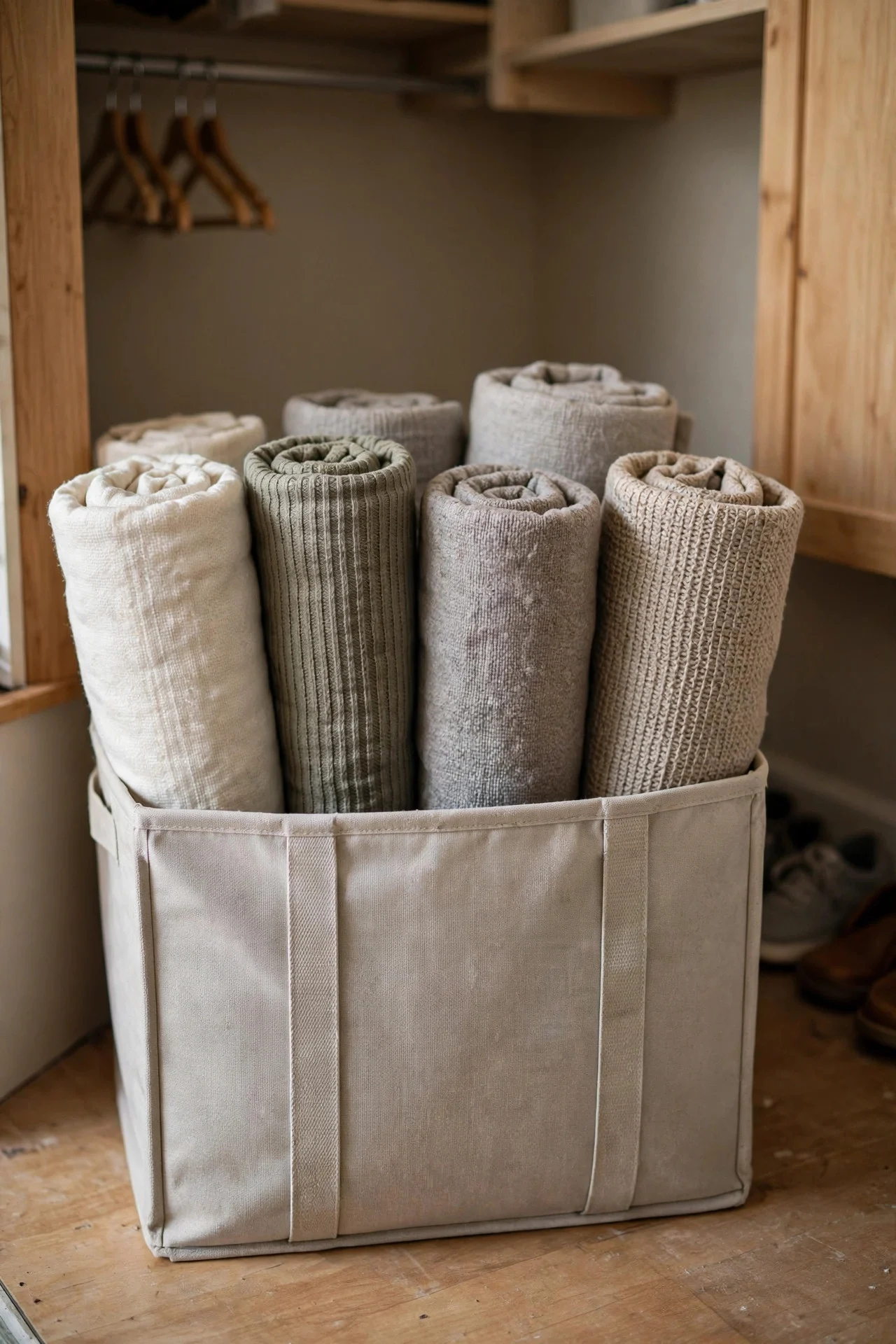
Blankets and quilts folded in squares become bulky, unstable stacks. Rolling them — like a sleeping bag — produces compact cylinders that stand upright in a bin or on a shelf and pull out without disturbing the rest.
Roll from one short end to keep the roll tight. A rolled throw takes roughly half the shelf space of a folded one and looks tidier doing it.
Try this: Store rolled blankets in an open-top bin on the closet floor — the heaviest items belong low.
8. Keep a “Donate” Bag for Worn Linens
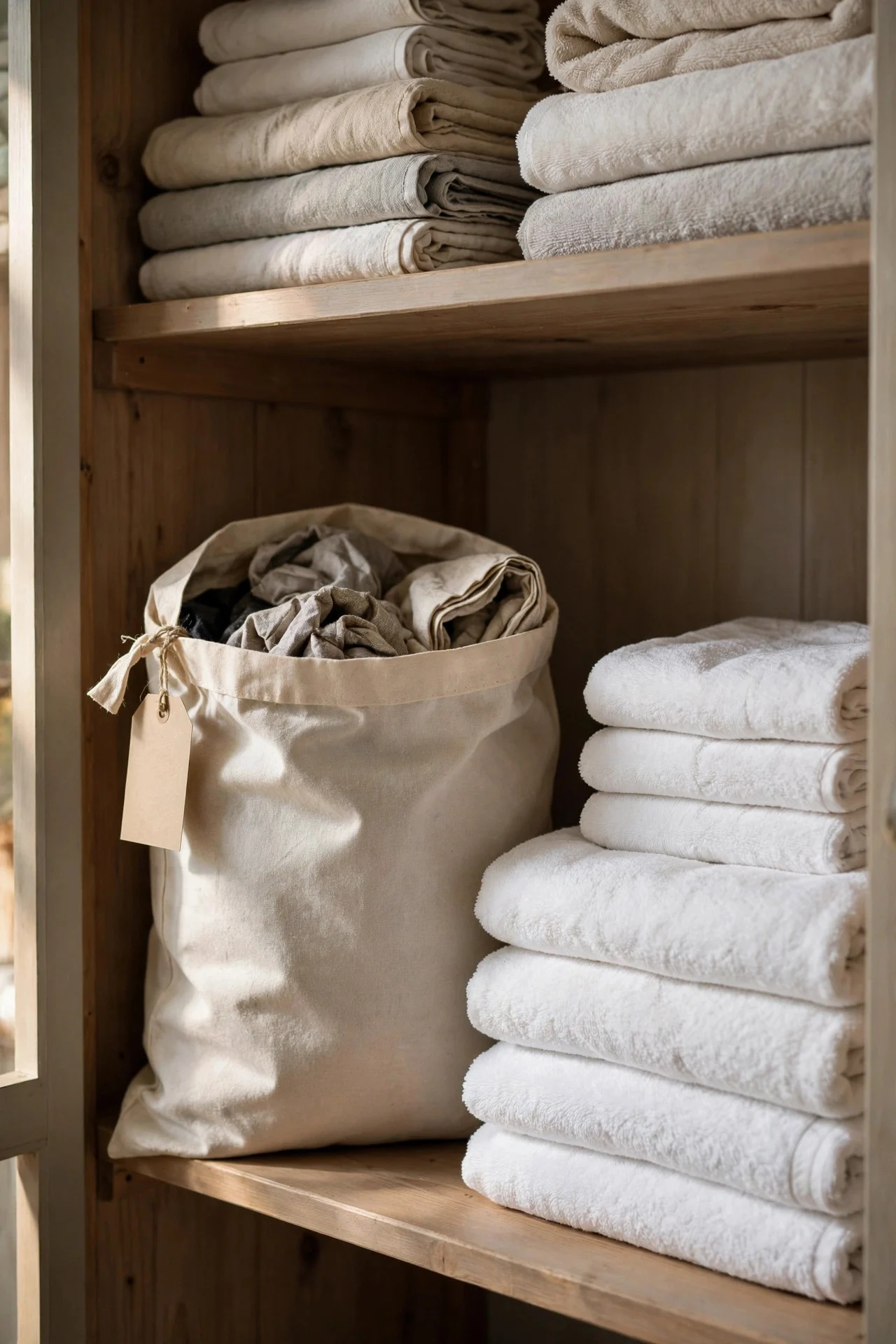
Towels get scratchy, sheets get thin, and somehow they stay in the closet for years out of guilt. Keep a bag in the closet labeled “donate/rag” — worn-but-usable goes to animal shelters (they always need towels), truly dead ones become cleaning rags.
When the bag’s full, it leaves. No second-guessing, no “maybe I’ll use it.” The one-in-one-out rule works beautifully for linens because they wear out on a predictable cycle.
Try this: Animal shelters accept old towels and blankets year-round — call ahead, then drop the bag on your next errand run.
9. Store Seasonal Bedding Up Top
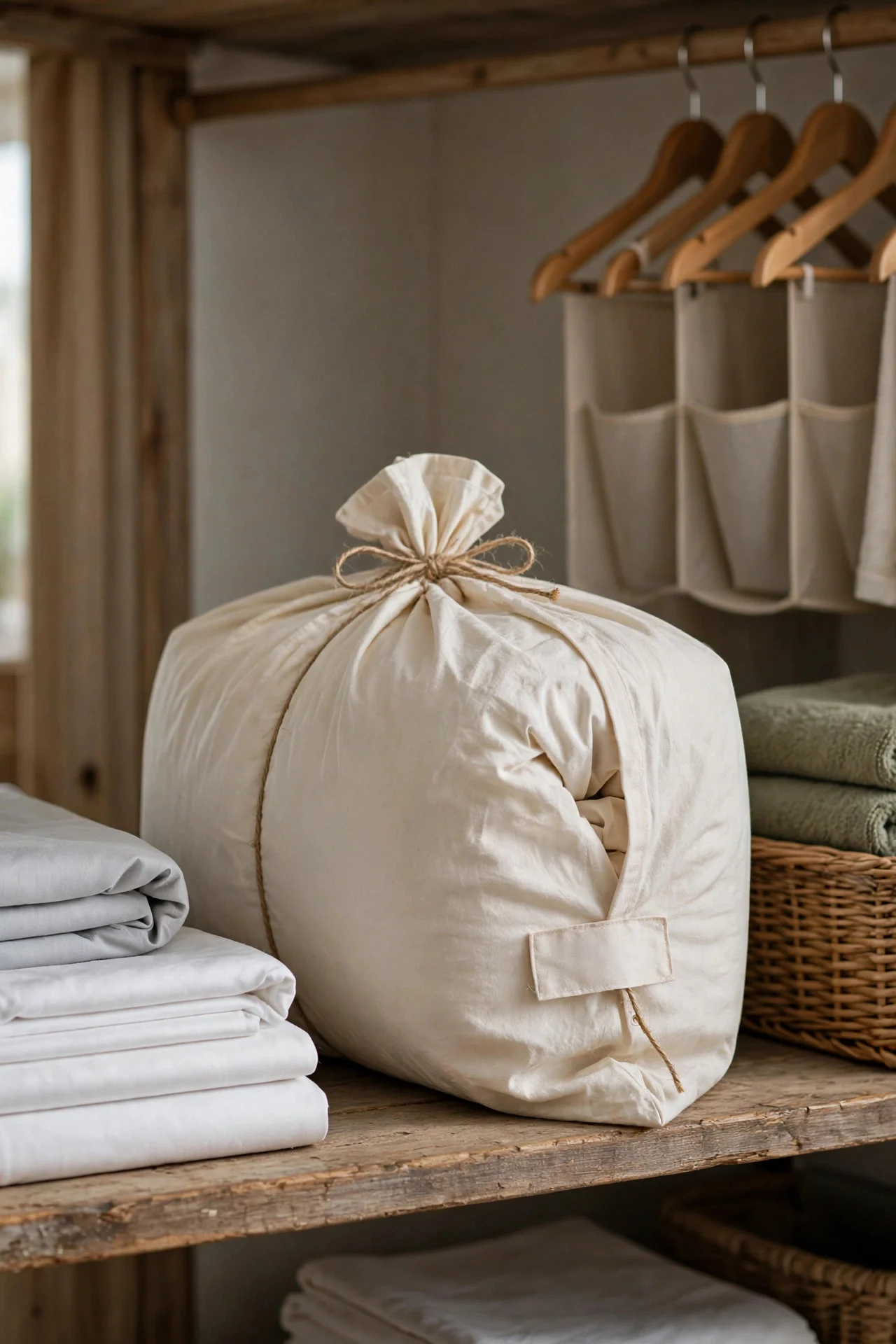
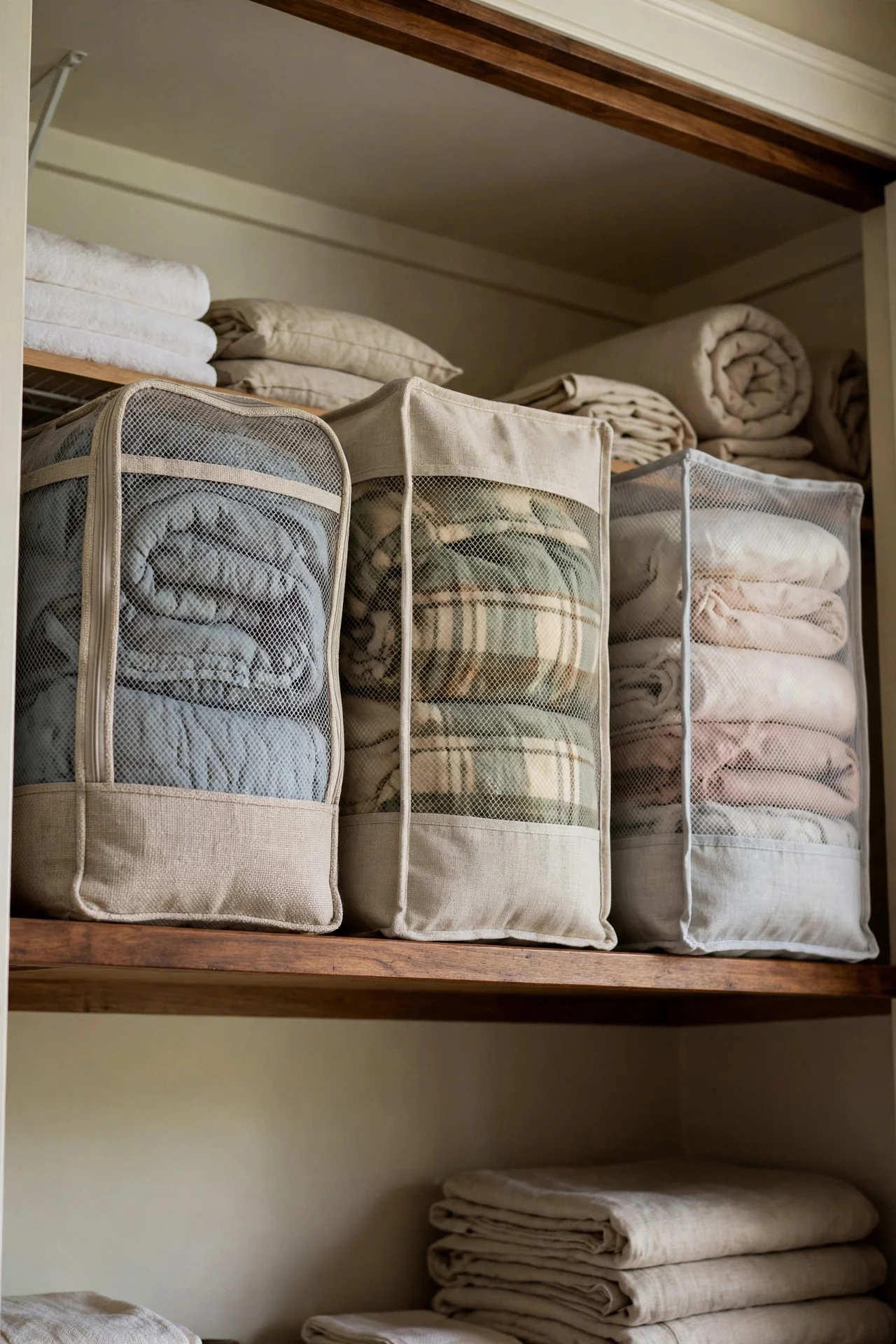
Heavy winter duvets and flannel sheets don’t need prime real estate in July. The top shelf — hardest to reach — is for off-season bedding in breathable cotton storage bags. Vacuum bags work for bulky comforters if space is tight.
Label each bag with its contents and the bed it fits. Swap seasons in spring and fall; the whole exchange takes 20 minutes if the bags are labeled.
Try this: Toss a cedar block or lavender sachet in each bag — stored bedding smells fresh instead of musty when it comes back out.
10. Use Vacuum Bags for Bulky Comforters
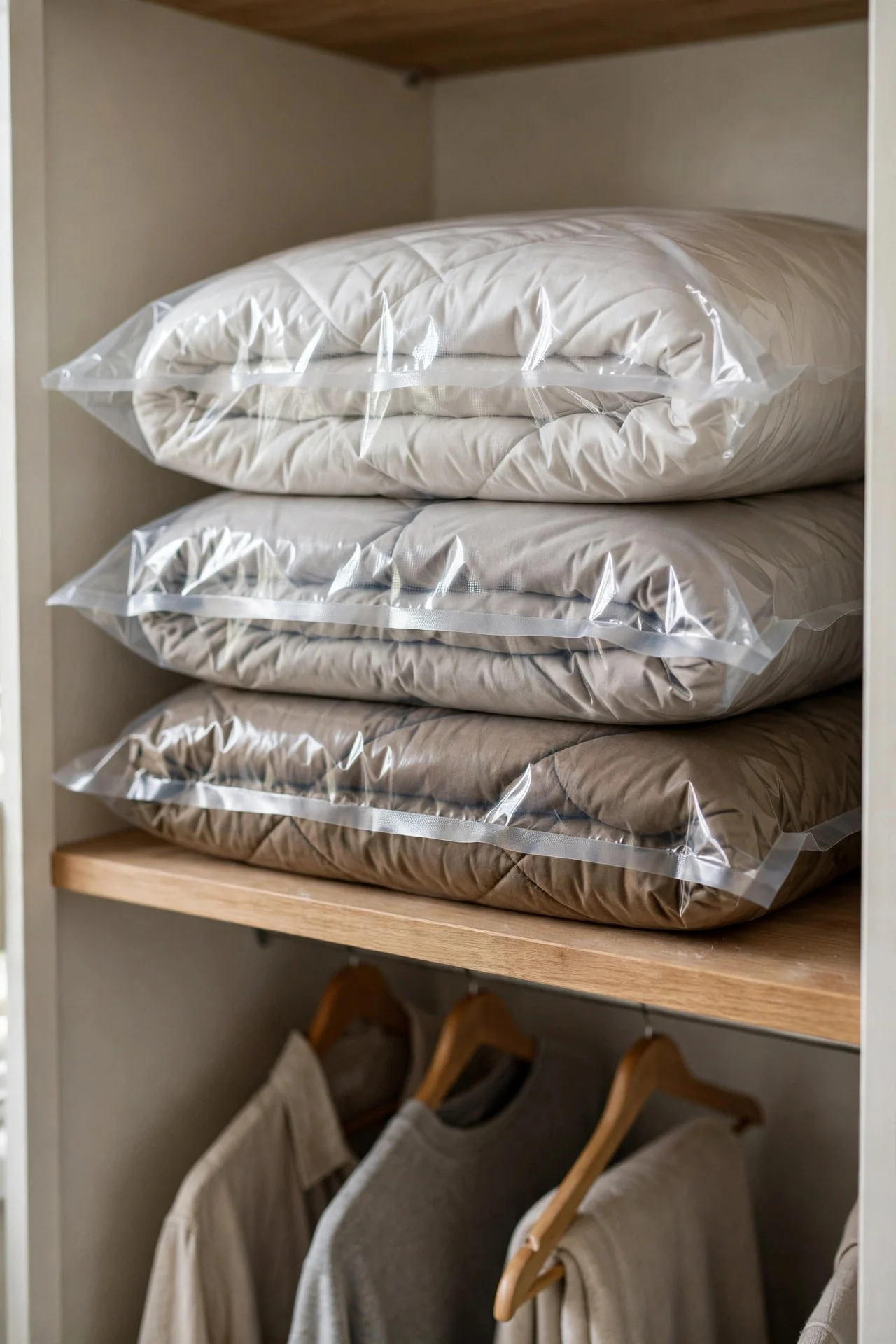
Comforters and duvet inserts are space hogs. Vacuum storage bags compress them to about a third of their volume — a king comforter goes from shelf-hog to slim package. A set of bags costs around $15 and they’re reusable for years.
Don’t vacuum-seal down or feather items for more than a few months — the fill can lose loft. Synthetic fills handle long-term compression better.
Try this: Fluff compressed bedding in the dryer with dryer balls for 15 minutes when it comes out of storage — good as new.
11. Add a Narrow Shelf for Medicines and First Aid
Many linen closets double as the medicine spot. Dedicate one narrow shelf — or a small lidded bin on a shelf — to first aid and everyday medicines, separated from the linens. It keeps them findable in a hurry and away from curious kids if the closet has a high shelf.
Check expiration dates twice a year and toss what’s past. A small bin labeled “first aid” beats a jumble of boxes every time someone needs a bandage fast.
Try this: Keep a printed list of emergency numbers taped inside the closet door — it’s the spot everyone checks in a minor crisis.

12. Fold Towels in Thirds for Uniform Stacks
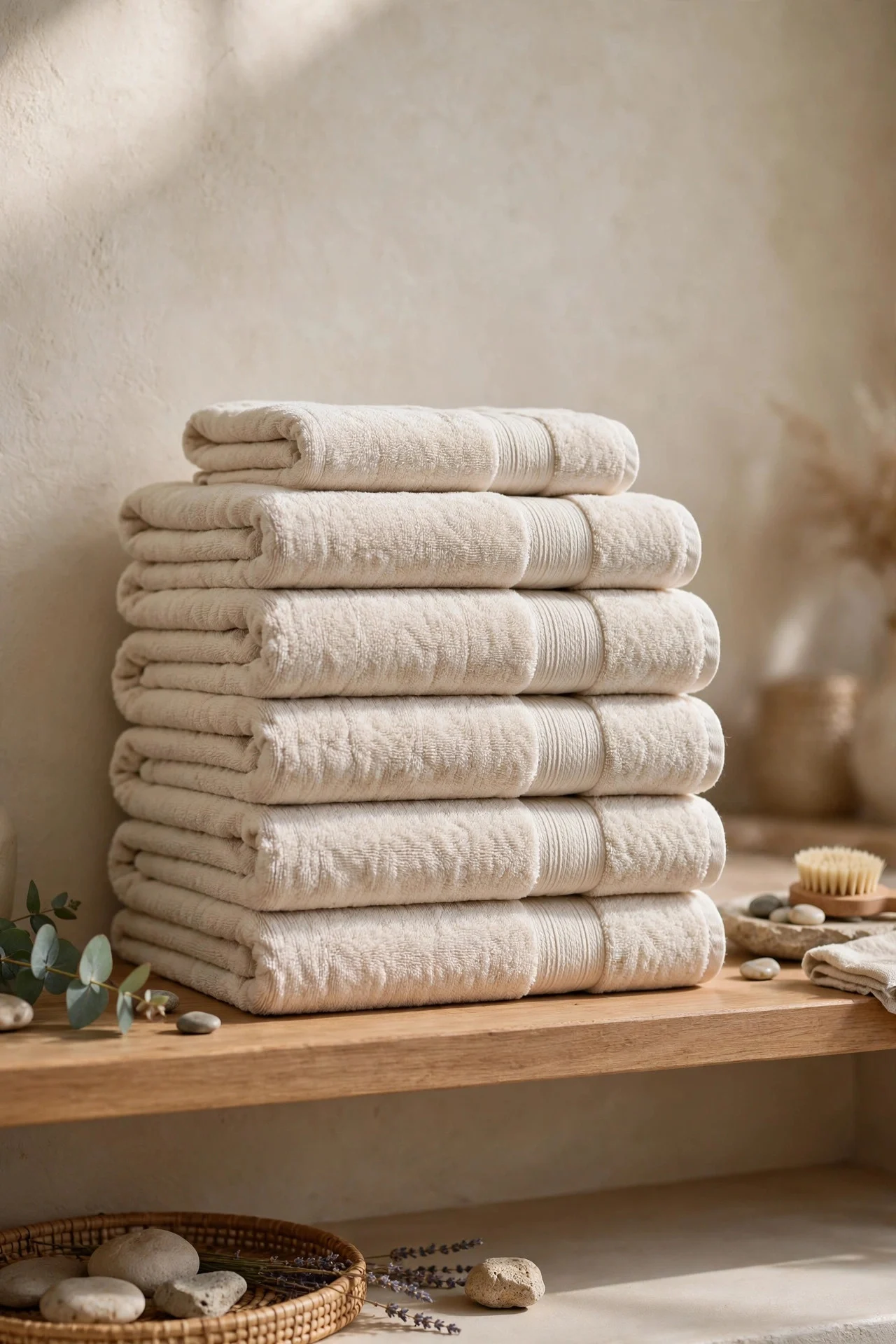
The spa look isn’t magic — it’s just consistent folding. Fold bath towels in thirds lengthwise, then in half or thirds again, so every towel is the same width. Uniform stacks look calm, stay stable, and fit the shelf exactly.
Measure your shelf depth and fold to match — 12-inch shelves want 12-inch-wide folds. Consistency matters more than the specific method.
Try this: Fold one “template” towel and keep it on the shelf — anyone putting laundry away matches the template.
13. Use the Door for Extra Storage
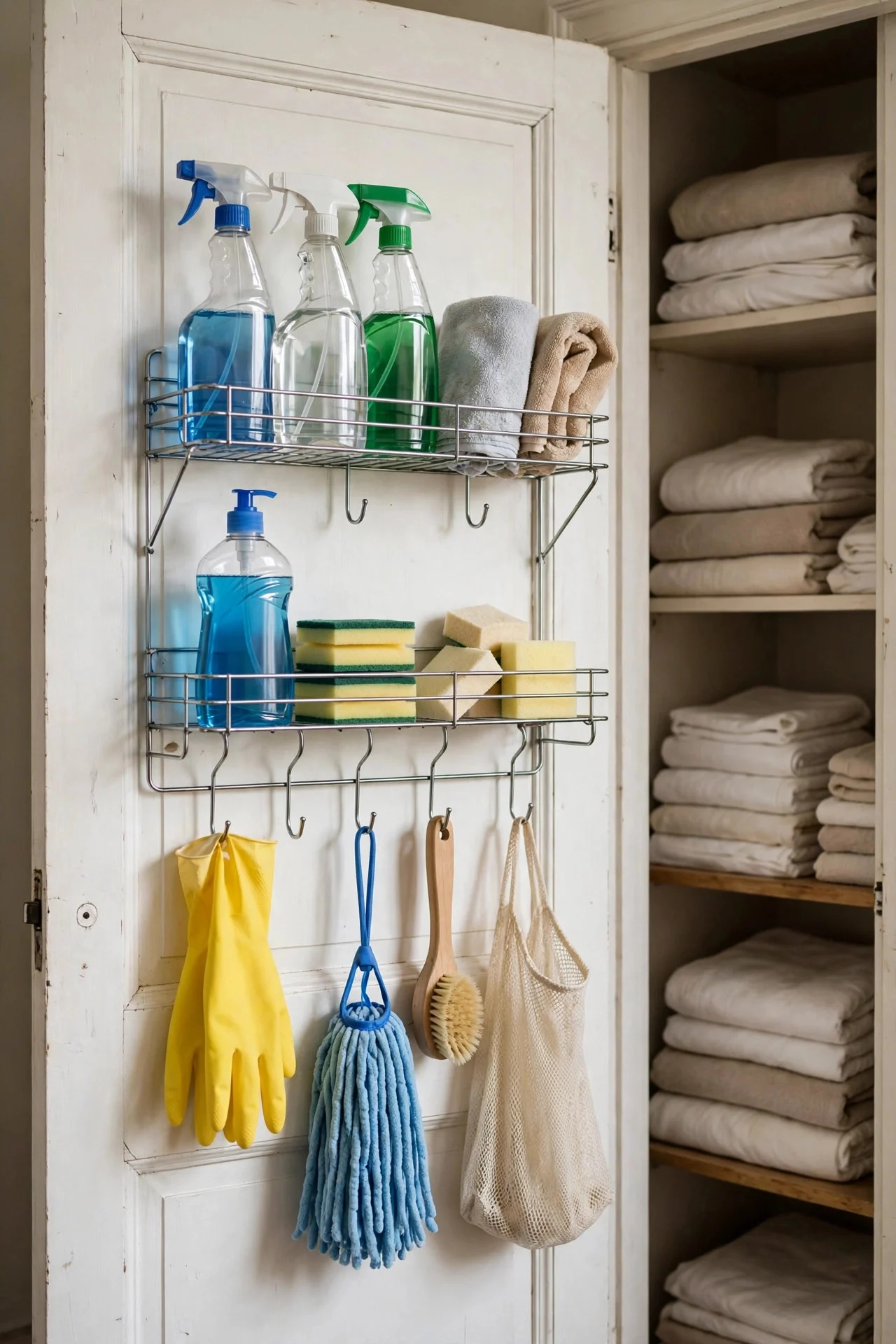
The inside of the linen closet door can hold a surprising amount: an over-the-door wire rack for cleaning supplies, adhesive hooks for a lint roller and small dustpan, or a hanging organizer for stain treatment and sewing kits.
This is ideal for the household extras that don’t fit the linen categories but live in the closet anyway. Keep door storage light so the hinges don’t strain.
Try this: Hang a small caddy on the door for the items you grab most — lint roller, fabric spray, spare batteries.
14. Separate Everyday From Guest Linens
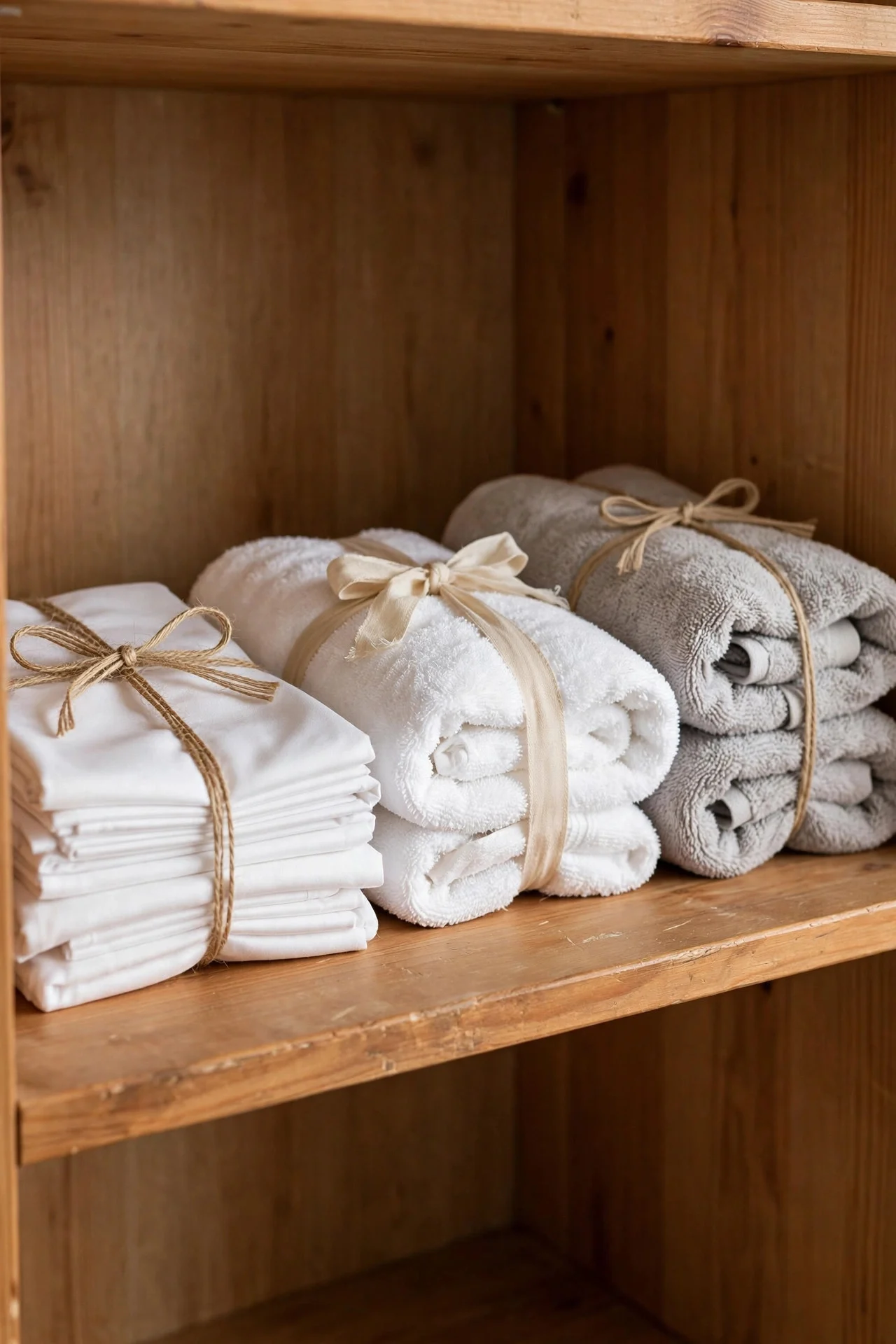
Guest towels and sheets used four times a year shouldn’t compete for space with daily items. Give guests their own shelf or bin — a “guest set” bundle per spare bed, tied with a ribbon or in a labeled bag, ready to hand over.
This also protects the good stuff: guest linens stay pristine because nobody’s using the “nice” towels for the dog’s bath.
Try this: Include a small card in each guest bundle noting what’s inside — guests stop asking, you stop explaining.
15. Store Table Linens Vertically Like Files
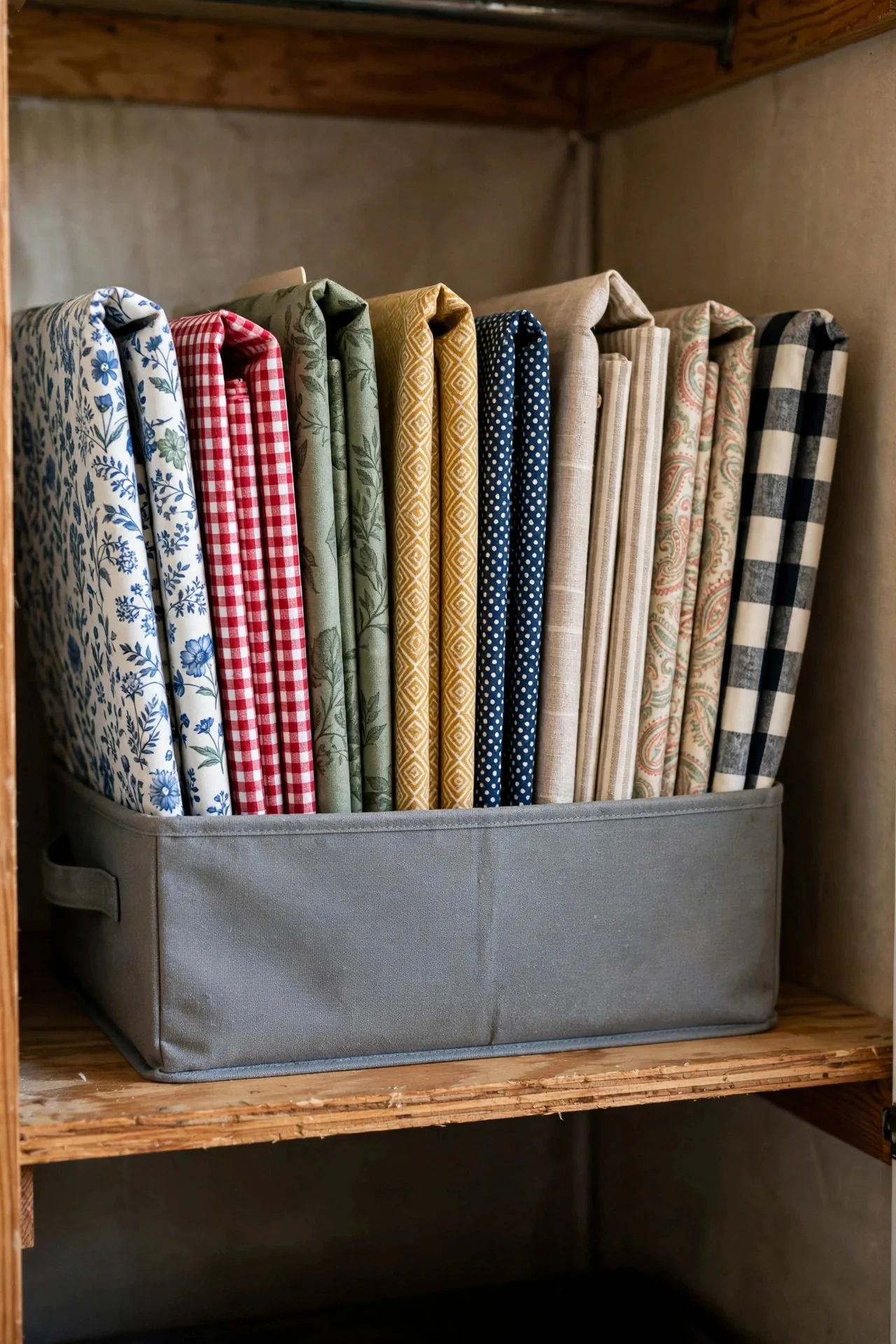
Tablecloths and napkins stacked flat become a wrinkled mess at the bottom of the pile. Fold them once, then file them upright in a bin or on a shelf like file folders — you can see every pattern and pull one without disturbing the rest.
This works for placemats too. Sort by occasion or color, and the holiday tablecloth stops hiding behind the everyday ones.
Try this: Roll cloth napkins around their matching rings before filing — the set stays together and looks gift-ready.
16. Keep One Shelf Completely Clear
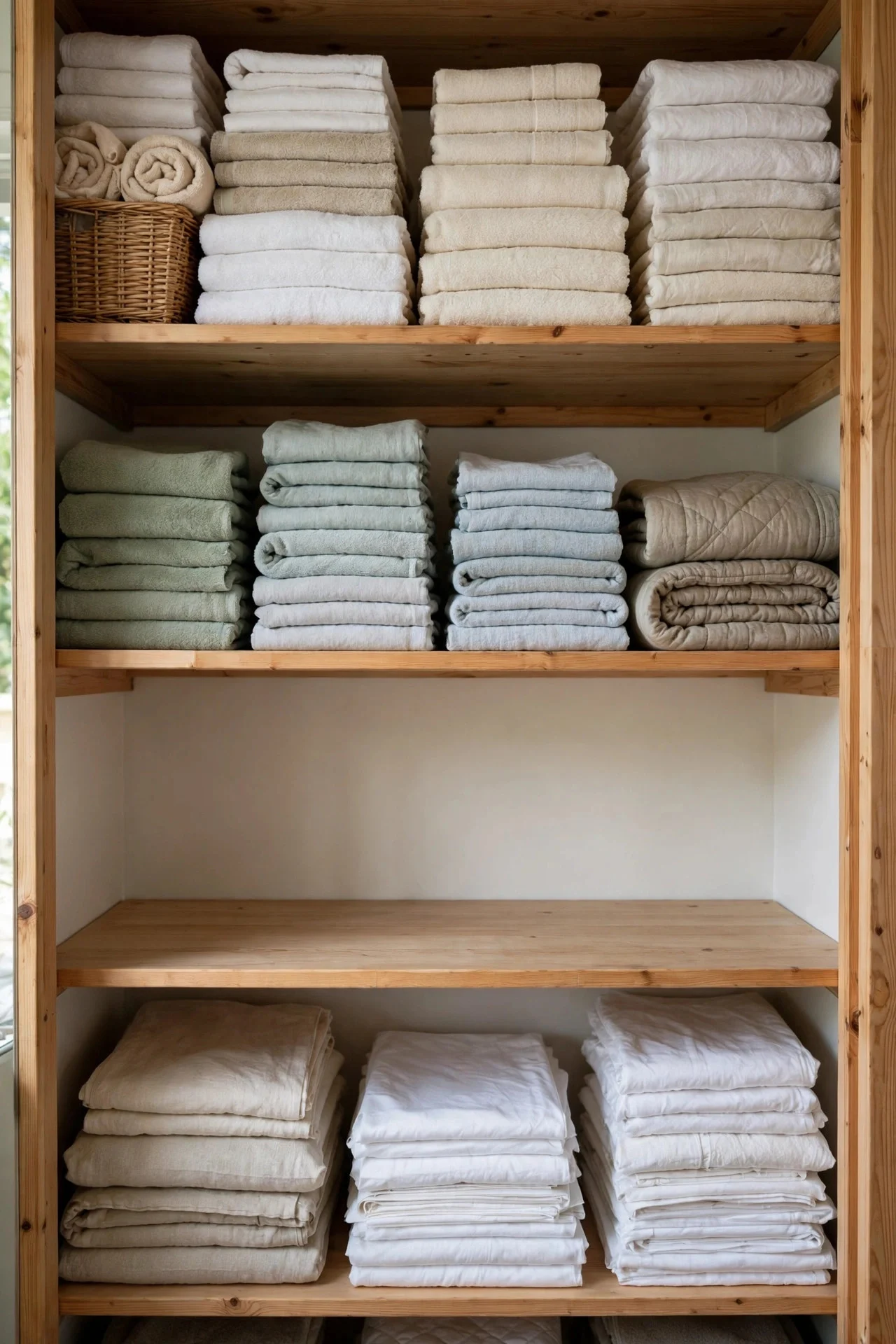
Counterintuitive but powerful: leave one shelf (or half a shelf) empty as a landing zone for laundry in transit. Clean sheets waiting to go to bedrooms, towels fresh from the dryer — they need somewhere to sit that isn’t “the wrong shelf.”
Without a landing zone, in-transit laundry ends up on the floor or crammed wherever there’s a gap, and the system degrades. The empty shelf is the system’s pressure valve.
Try this: If the shelf stays empty for weeks, you’re over-allocated — shrink the zone and reclaim the space.
17. Do a Yearly Linen Audit
Once a year, pull everything out. Check for thinning sheets, scratchy towels, stained tablecloths, and the sets for beds you no longer own. Most closets shed a third of their contents in this audit — and the remaining linens finally fit.
The rule: two to three sets per bed, one week’s worth of towels per person, plus guest sets. Anything beyond that is storage, not usefulness.
Try this: Audit in spring when you’re swapping seasonal bedding anyway — one big session instead of two.
Frequently Asked Questions
How many sheet sets and towels should I actually keep?
Two to three sheet sets per bed and about a week’s worth of towels per person, plus one guest set per spare bed. More than that rarely gets used — it just makes the closet harder to maintain.
What’s the best way to fold a fitted sheet?
Tuck each corner into the next to form a rectangle, then fold the rectangle into thirds. It takes practice — watch a video once — but the result stacks flat like a regular sheet.
How do I stop my linen closet from getting messy again?
Use shelf dividers to keep stacks upright, label every section, bundle sheet sets in pillowcases, and keep one shelf clear as a landing zone. Then audit yearly and remove what wore out.
Where should I store bulky comforters and blankets?
Vacuum bags for off-season comforters (a third of the space), rolled blankets in floor bins for daily throws, and breathable bags on the top shelf for seasonal bedding. Heaviest items always go low.
Final Thoughts
A linen closet works when fabric gets the structure it can’t provide itself — dividers for the stacks, bundles for the sets, bins for the small stuff, and labels so everyone plays along. Fold the fitted sheets flat, audit once a year, and keep that one shelf clear. It’s a small closet; it just needs a firm hand.