
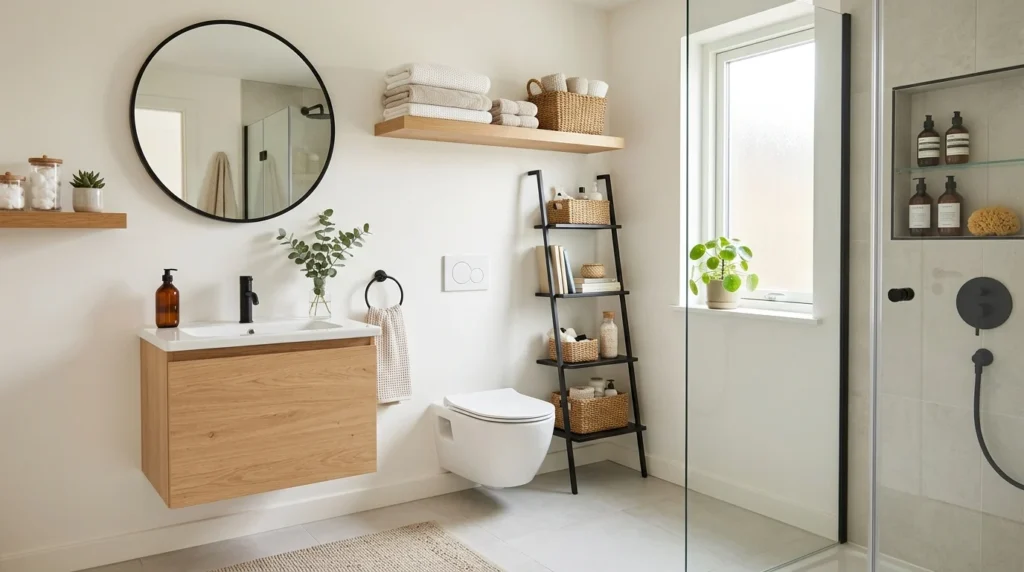
I once counted eleven bottles balanced on the edge of my bathtub. Shampoo, two conditioners I couldn’t remember buying, a razor, three half-empty body washes, and a bar of soap that had been sitting in a puddle so long it had basically dissolved into the tile. My bathroom is small, no linen closet, one narrow cabinet under the sink, and for a long time my solution to “not enough storage” was just letting things pile up wherever there was flat surface available. It wasn’t until I actually sat down and mapped out where I needed things versus where they were currently living that I realized the problem was never really about lacking space. It was about not using the space I already had in any organized way, and it took a fair amount of trial, error, and one fairly embarrassing suction-cup shelf disaster before I landed on a system that actually stuck. Shelving, more than any other single change, is what fixed it.
1. Install a Corner Shelf in the Shower Itself
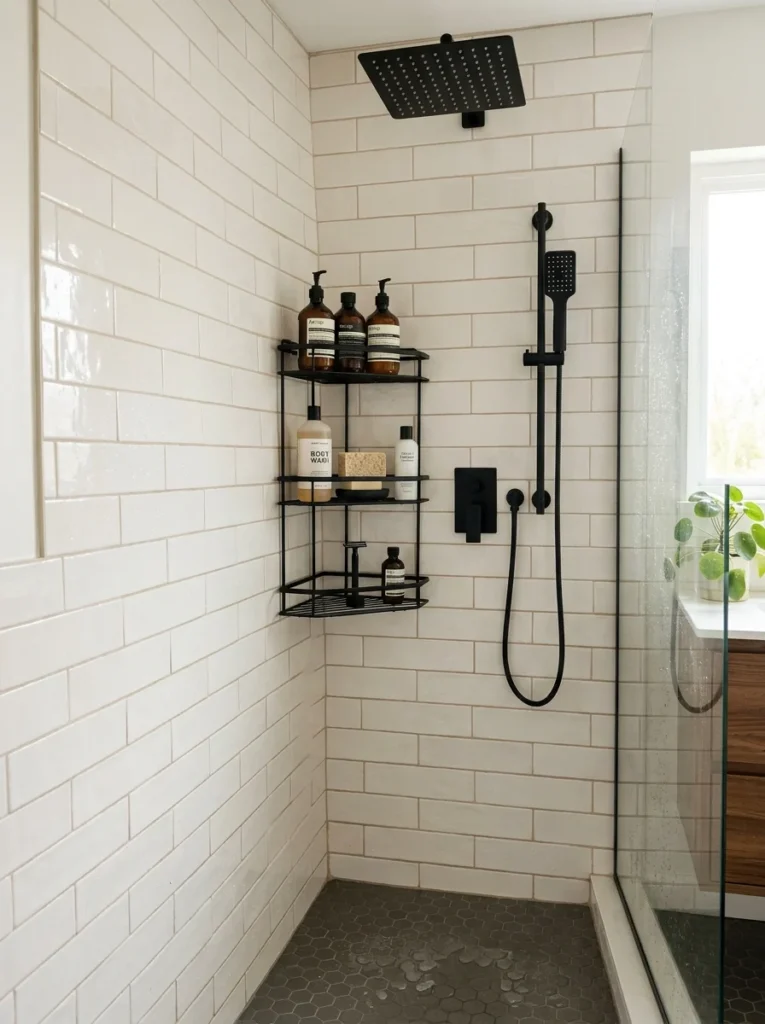
The eleven bottles on my tub edge disappeared almost entirely once I added a simple corner shelf unit mounted directly in the shower. It sounds obvious in hindsight, but I’d never actually measured whether one would fit in my specific shower’s corner, and it turned out there was more usable space there than I’d assumed.
2. Add a Floating Shelf Above the Toilet
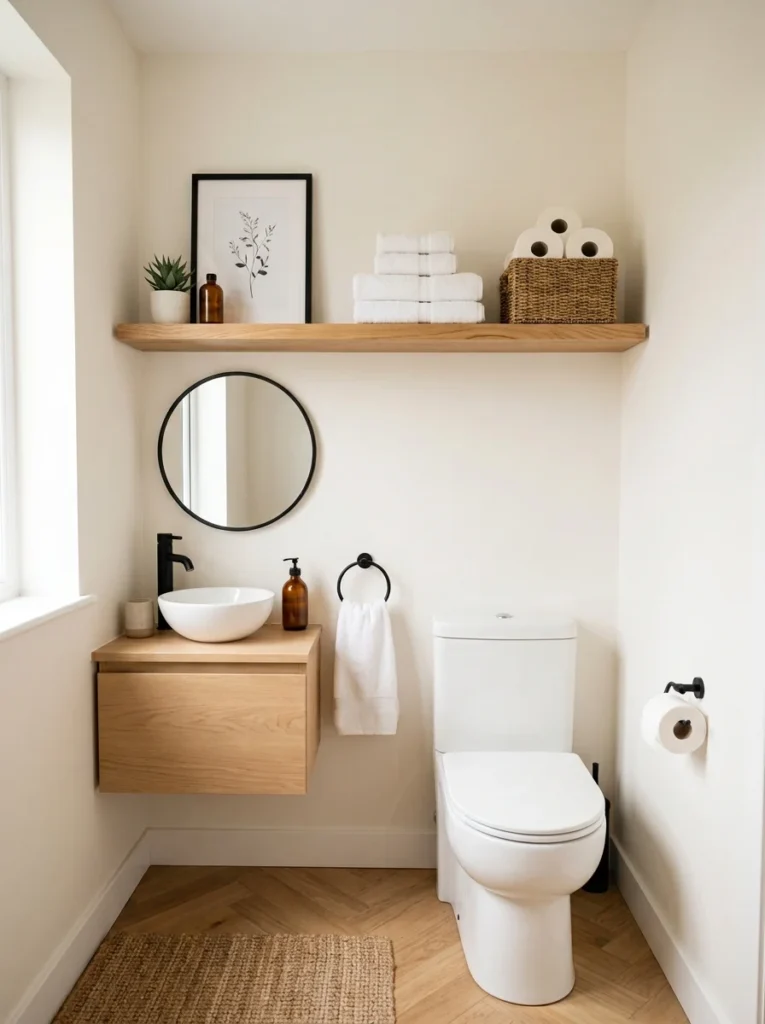
The wall above my toilet sat completely blank for years, which is strange considering how much unused vertical space it actually represented. A single floating shelf there now holds folded hand towels and a small basket of extra toilet paper, storage that didn’t exist anywhere else in the room before.
3. Use a Ladder Shelf for Height Without Drilling
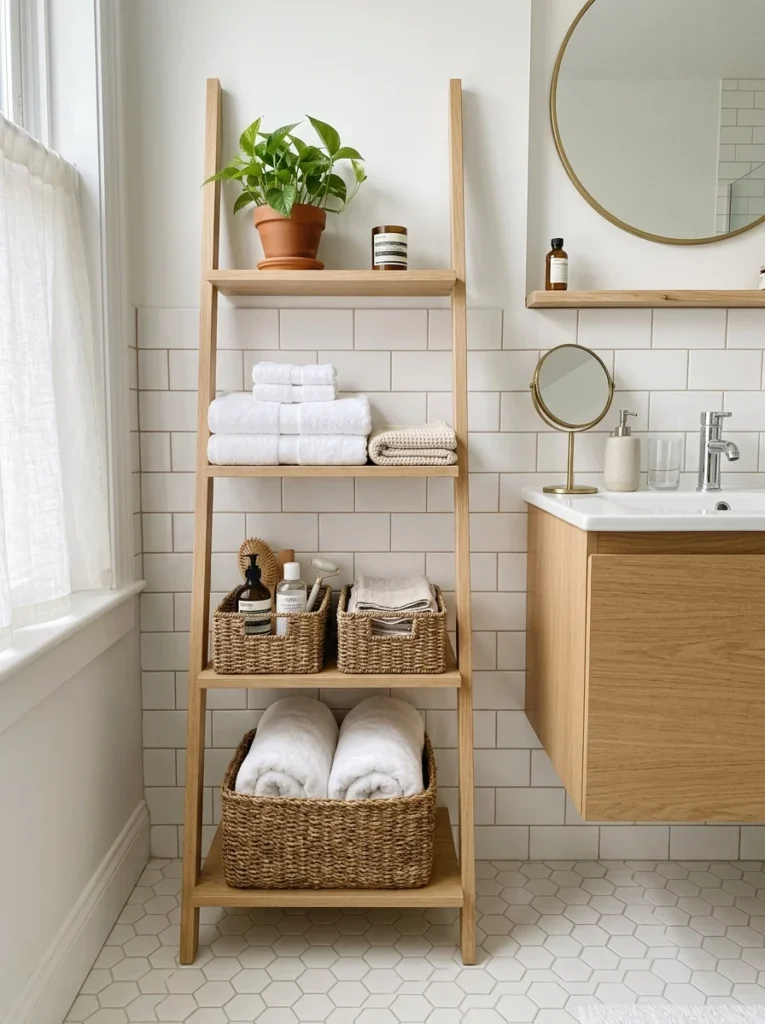
Renting meant I was hesitant to drill extra holes into the wall for more shelving. A leaning ladder shelf solved this completely, since it just rests against the wall using its own weight and gave me four extra tiers of storage without a single new hole.
4. Recess a Shelf Into the Wall Between Studs
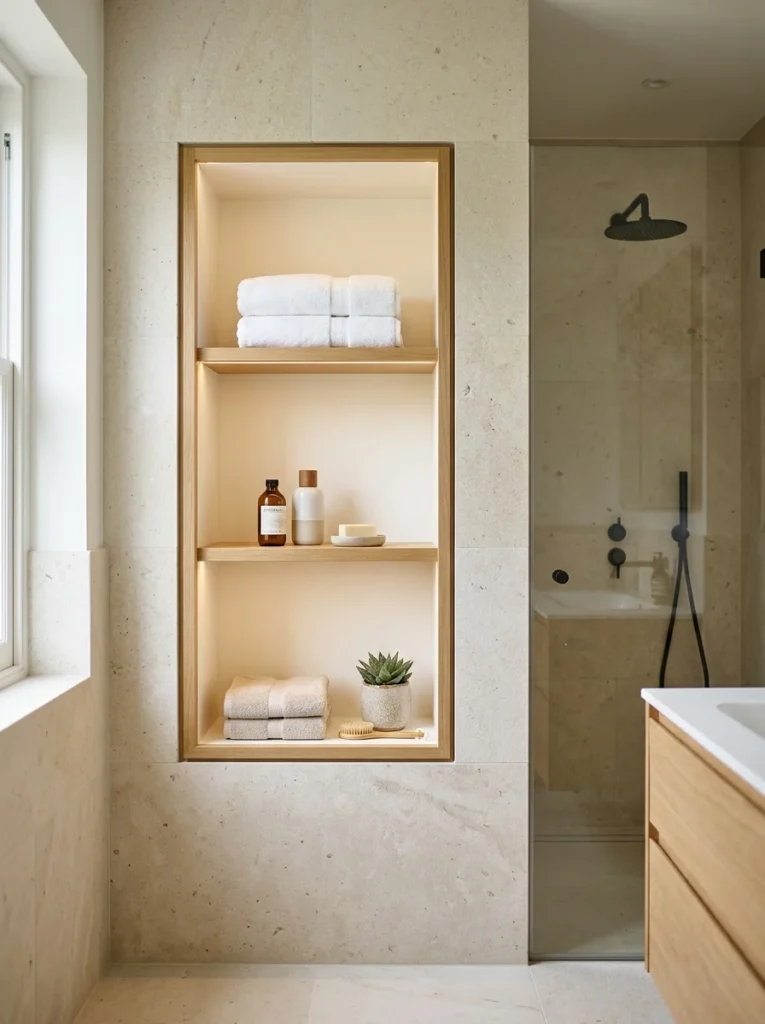
This was a bigger project than most on this list, but recessing a shallow shelf into the empty space between two wall studs beside my shower gave me built-in storage that didn’t protrude into the room at all. It required opening the drywall temporarily, but the amount of usable space it added relative to how little room it took up made it worth the extra effort.
5. Choose Open Shelving for Items You Use Daily
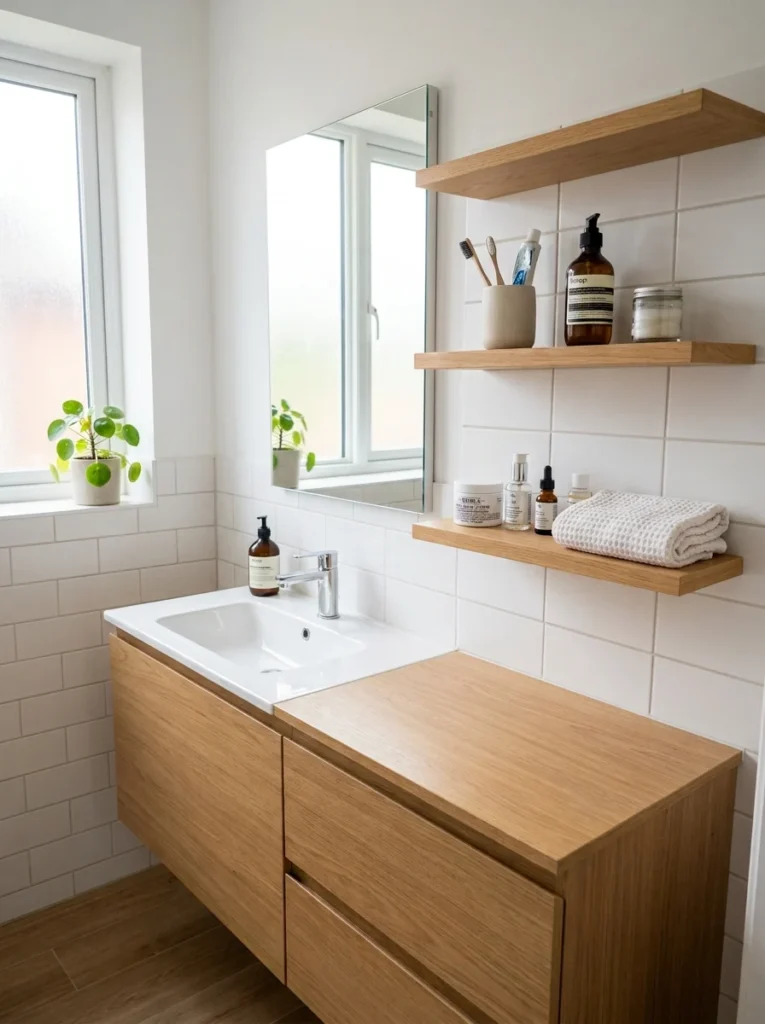
I debated between open shelves and a closed cabinet above my sink for a while. Open shelving won out because it meant I could see and reach my everyday items, toothbrush holder, face wash, without opening a door every single time, which sounds minor but adds up over dozens of daily uses.
6. Reserve Closed Storage for Anything You Don’t Want on Display
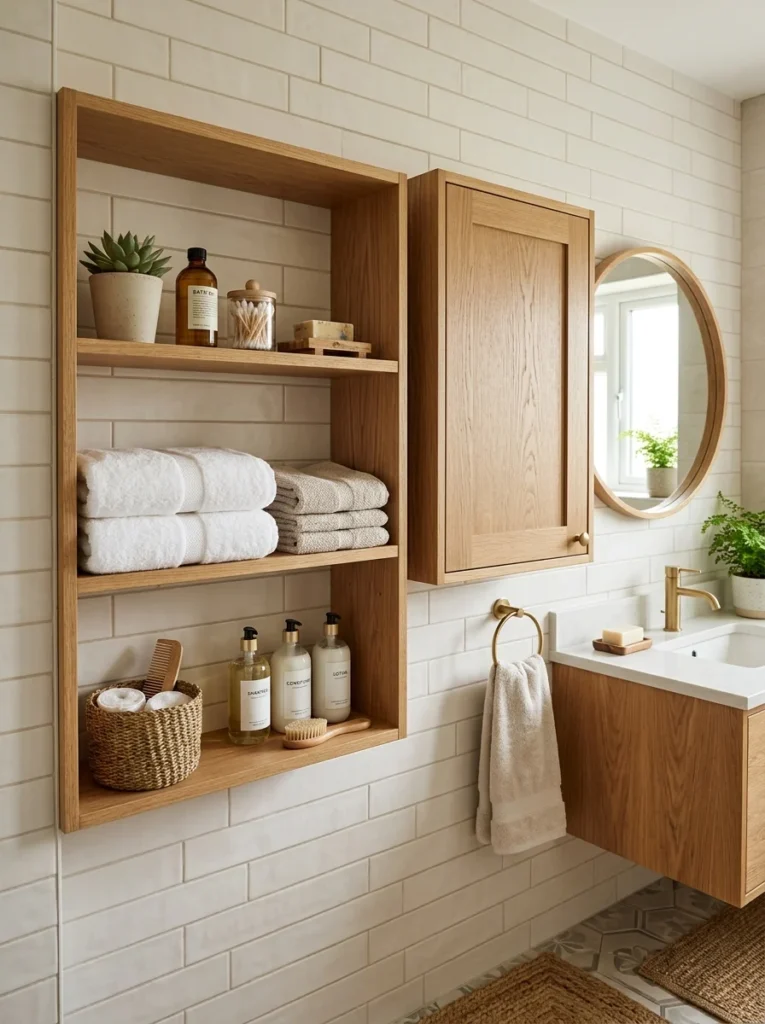
While open shelving worked well for daily items, anything less visually tidy, extra medication, feminine hygiene products, cleaning supplies, went into a small closed cabinet instead. Mixing open and closed storage rather than choosing one exclusively let me keep the room looking tidy while still having genuinely functional storage for less attractive items.
7. Add a Shelf Inside the Vanity Cabinet Itself
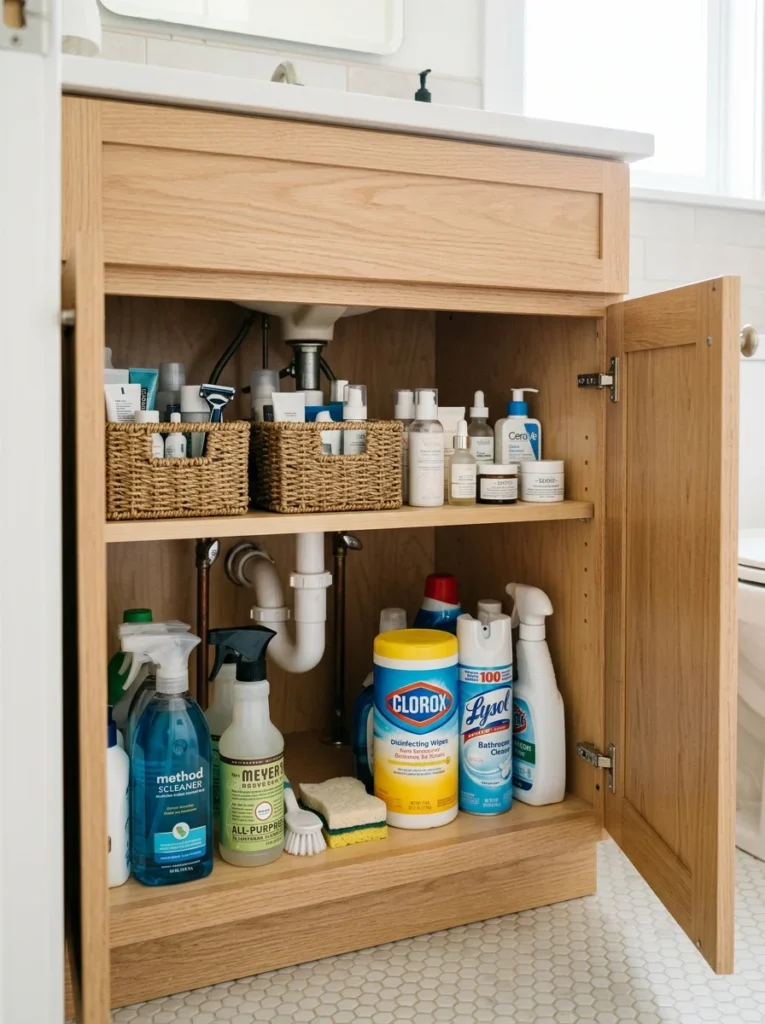
My under-sink cabinet had one single shelf when I moved in, which meant tall items and short items all competed for the same vertical space with a huge gap wasted above anything short. Adding an adjustable shelf insert doubled the cabinet’s effective storage without changing its footprint at all.
8. Use Tension-Mounted Shelves Inside Existing Cabinets
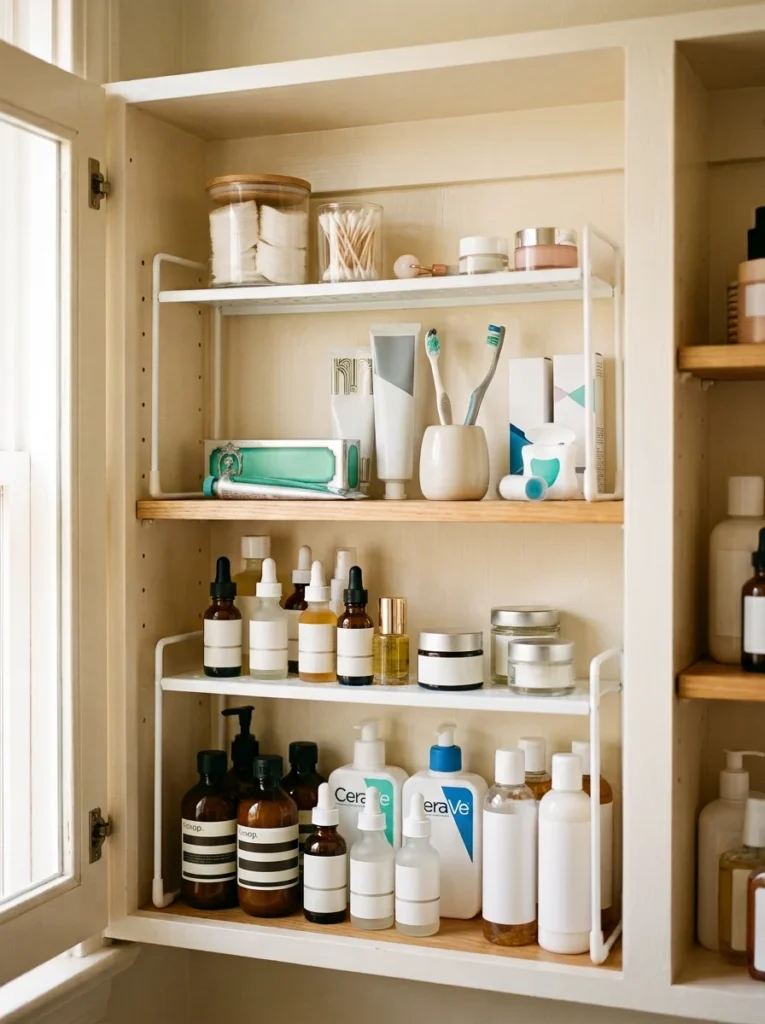
Similar to the point above, but for cabinets where a permanent shelf wasn’t practical to install, tension-mounted shelf risers let me stack items in what used to be wasted vertical space above shorter bottles, all without any hardware or drilling involved.
9. Mount a Narrow Shelf Beside the Mirror
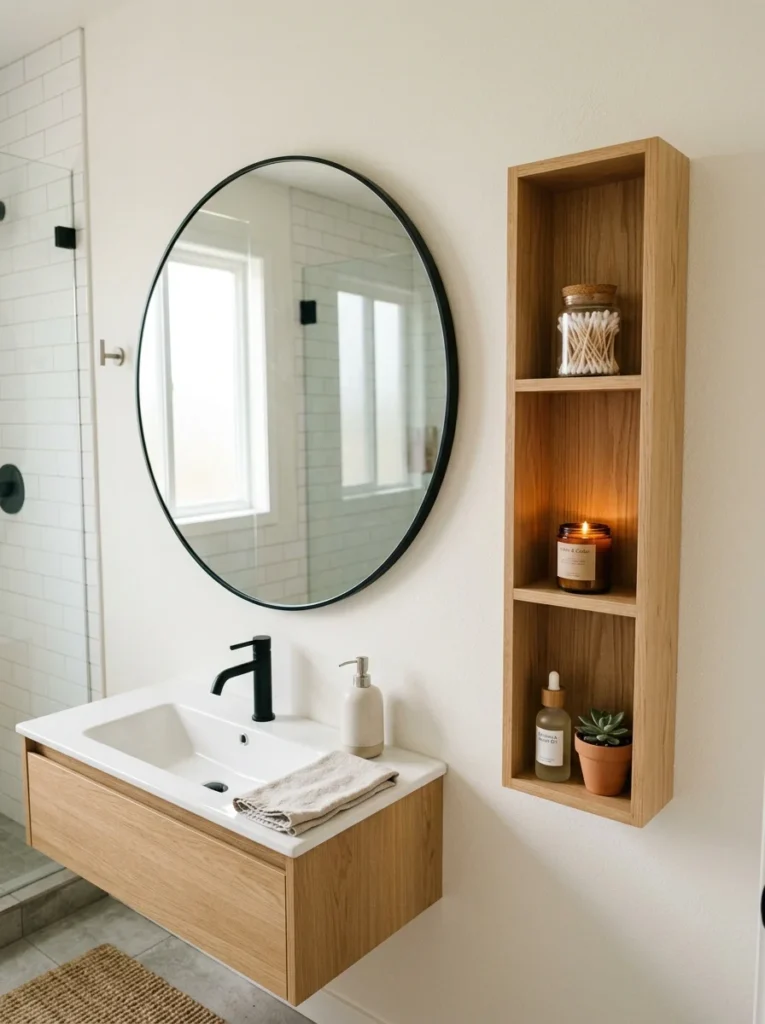
The wall space directly beside my bathroom mirror had always been empty, mostly because I hadn’t considered it as anything other than blank wall. A narrow, six-inch-deep shelf there now holds a small jar of cotton swabs and a candle, using space that had genuinely never crossed my mind as storage before.
10. Choose Glass Shelves for a Small Bathroom
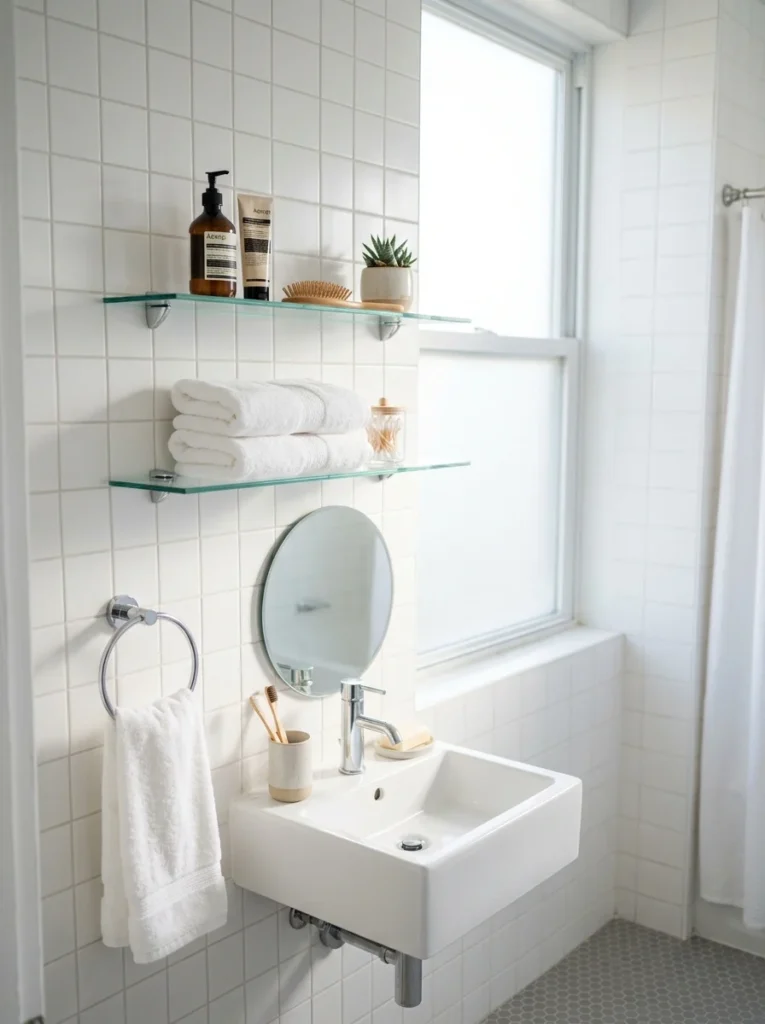
My bathroom is on the smaller side, and solid wood shelving, while nice looking on its own, made the whole wall feel visually heavier once installed. Switching to glass shelves in the same locations let light pass through them, which kept the room feeling more open despite having the same amount of actual storage.
11. Use Baskets on Open Shelves to Keep Things From Looking Cluttered
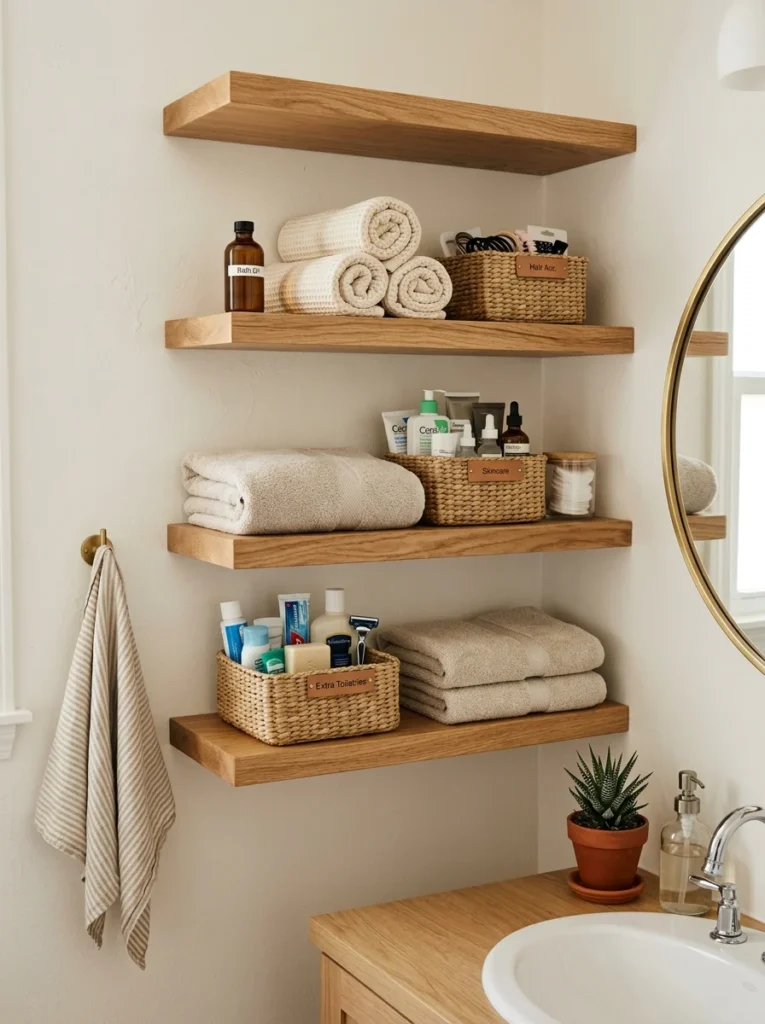
Open shelving without any additional organization just meant visible clutter instead of hidden clutter. Placing small woven baskets on each shelf, one for hair accessories, one for skincare samples, let me keep the open-shelf look while still corralling smaller items that would otherwise look messy sitting loose.
12. Add a Shelf Above the Door
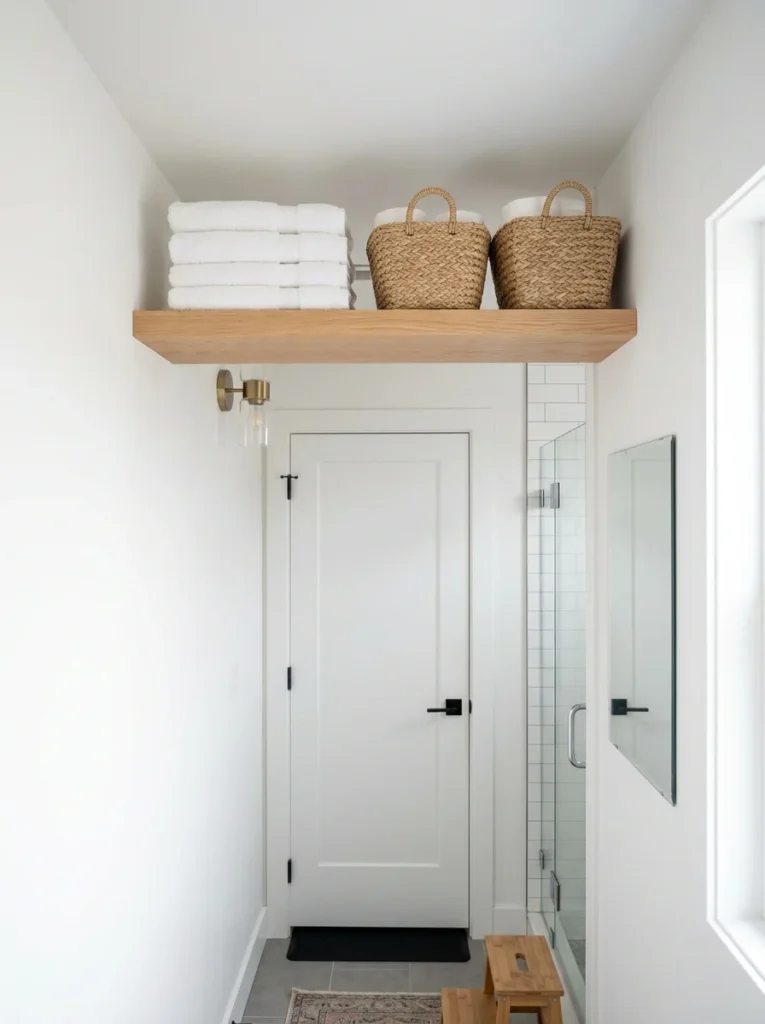
This is one of the more overlooked spots in almost any bathroom. The wall above my bathroom door had roughly a foot of completely unused vertical space, and a shallow shelf installed there now holds extra towels I don’t need daily access to, essentially turning dead space into a small linen closet substitute.
13. Use a Rolling Cart as a Mobile Shelf Unit
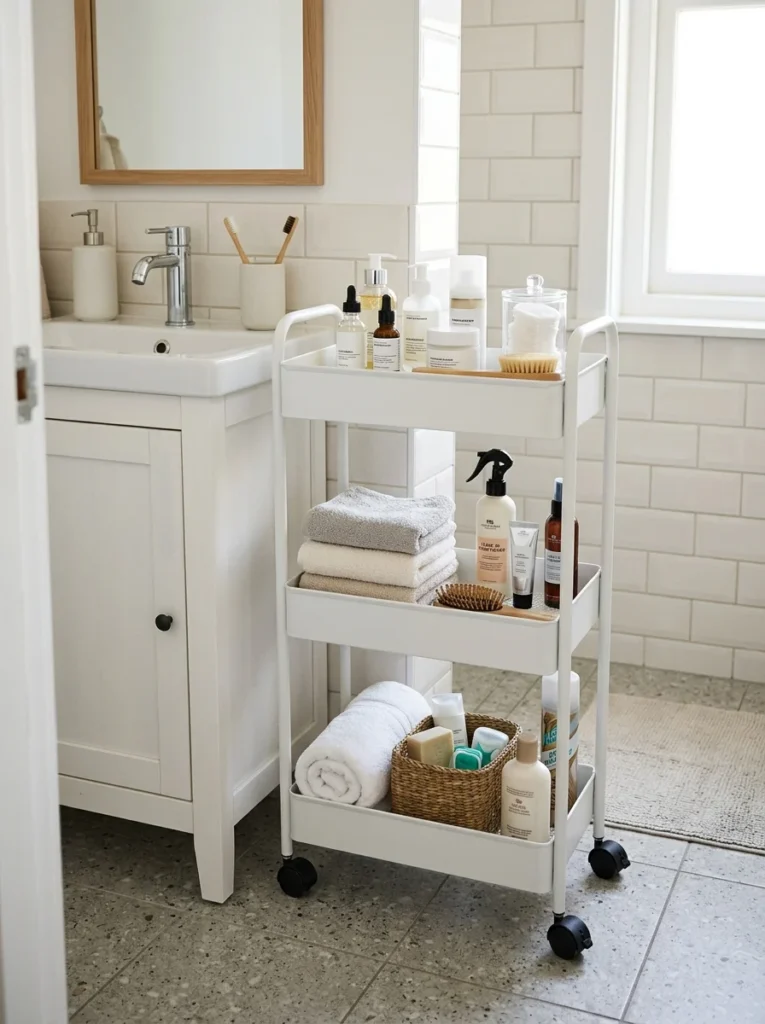
For a period when I was between more permanent shelving solutions, a slim rolling cart with three tiers gave me flexible storage I could reposition depending on what I needed at the time. It ended up staying permanently beside my vanity because the flexibility of being able to roll it out of the way turned out to be genuinely useful during cleaning.
14. Match Shelf Brackets to Your Existing Fixtures
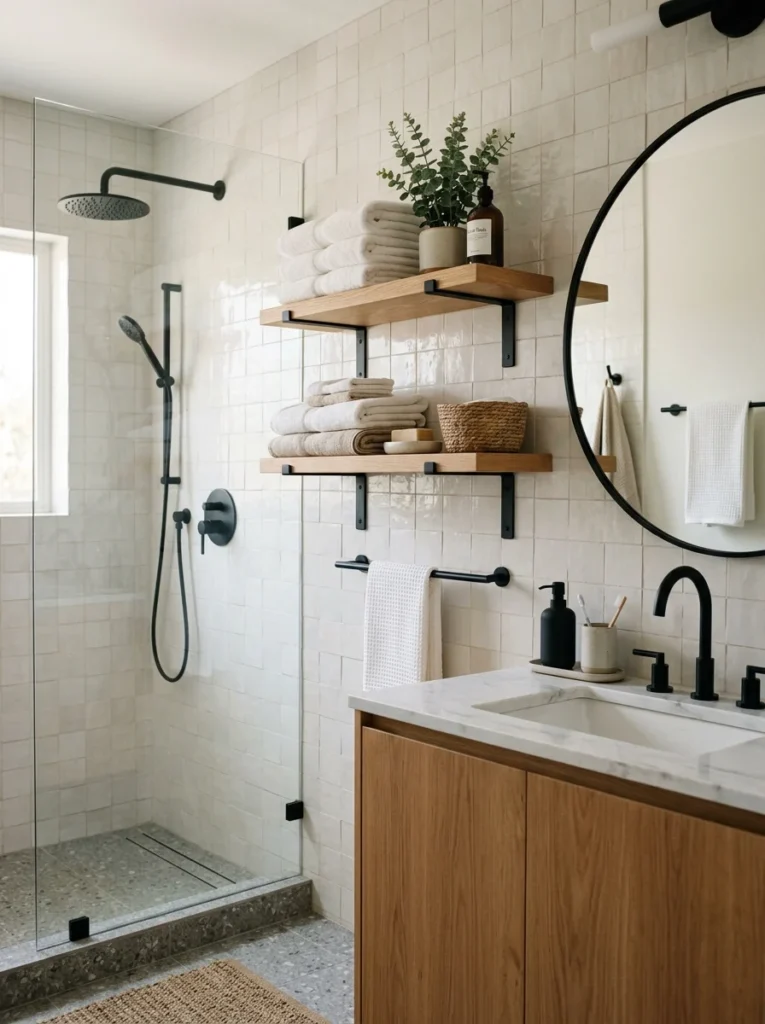
I initially installed shelf brackets in a plain silver finish without considering that my faucet and towel bar were both a matte black. The mismatch was subtle but noticeable once I actually looked for it, and swapping to matching black brackets tied the whole room together in a way I hadn’t expected simple hardware color to matter for.
15. Add a Small Shelf Specifically for Candles or Diffusers
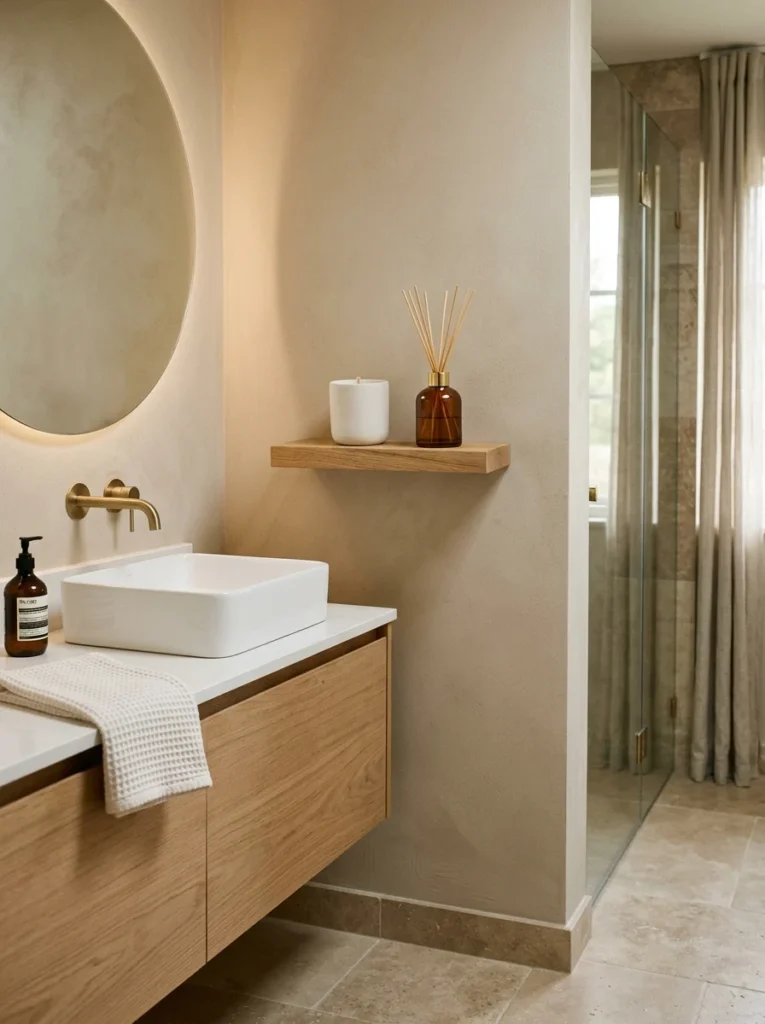
My bathroom never had anywhere designated for a candle or diffuser, so they’d rotate between the toilet tank and the edge of the sink depending on the week. A small dedicated shelf near the door gave these items a permanent, sensible spot away from water splash zones, which extended how long the candles actually lasted before getting damaged by moisture.
16. Use Vertical Dividers on Shelves to Stop Items From Toppling
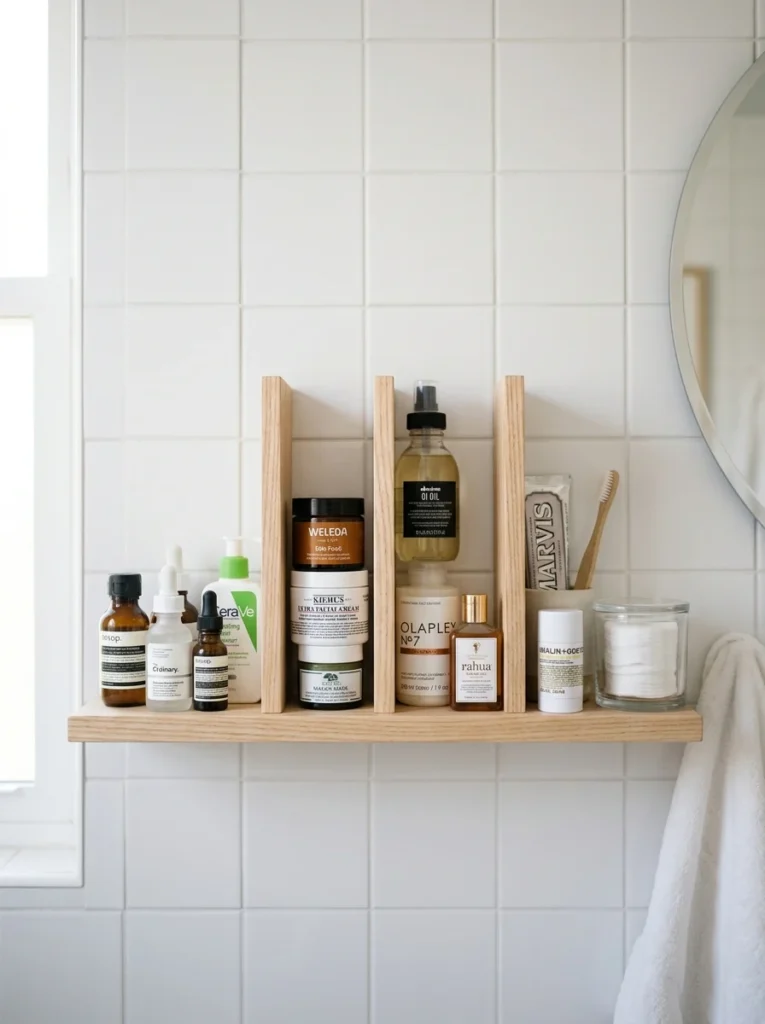
Bottles and jars on a plain flat shelf tend to lean and eventually topple, especially in a small bathroom where the shelf itself is often narrow. Adding small vertical dividers, essentially bookend-style separators, kept items upright and organized by category instead of sliding into a jumbled row every time the door closed and the air pressure shifted them slightly.
17. Reassess Your Shelving Every Few Months
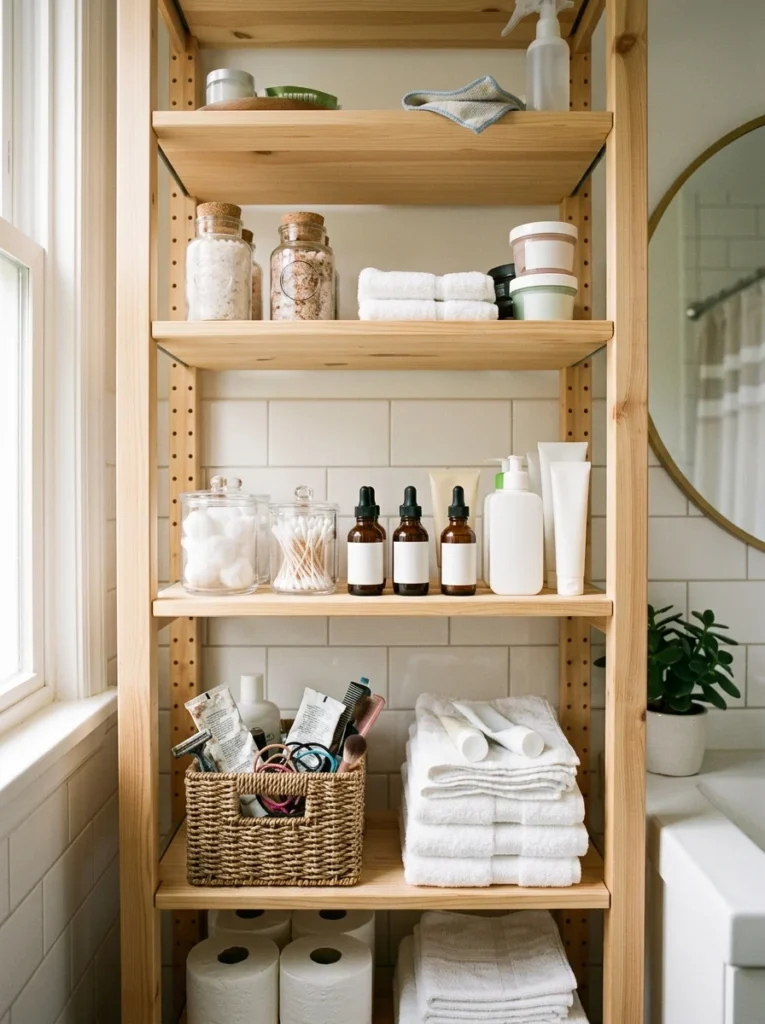
The setup that worked for me a year ago isn’t quite the same one that works now, mostly because the products I use have changed along with the season. I do a quick reassessment of what’s on each shelf every few months, moving out anything I’ve stopped using and adjusting which items get prime, easy-to-reach placement based on what I’m actually reaching for daily at that point.
The Cost and Time Breakdown
None of these changes required a professional or a major renovation budget. The corner shower shelf, floating shelf above the toilet, and ladder shelf together cost under one hundred fifty dollars, and I installed all three myself over a single weekend. The recessed wall shelf was the one exception, since opening the drywall meant patching and repainting afterward, and that project alone took closer to a full week between the actual cut-in, letting joint compound dry, and repainting to match the surrounding wall.
If I were prioritizing based on cost versus impact, the ladder shelf gave me the most storage for the least money and effort, since it required no tools beyond unfolding it and leaning it against the wall. The recessed shelf looked the most polished once finished, but it was by far the most time-consuming project on this entire list, and I’d only recommend it if you’re already comfortable with basic drywall work or willing to hire someone for that specific part.
How I Decided What Went on Which Shelf
Once I had more shelves than I knew what to do with, I realized a second problem had quietly emerged — deciding what belonged where. My rule now is simple: anything I reach for daily goes on a shelf I can access without bending or reaching above my head, anything used weekly goes slightly higher or lower than that prime zone, and anything used only occasionally, extra bar soap, backup razors, goes into the highest or most enclosed spot available. This sounds like an obvious system in hindsight, but before I actually thought it through, my daily toothbrush holder and my rarely used heating pad were sitting on the exact same middle shelf purely because that’s where there happened to be room when I first set things up.
What I Got Wrong Along the Way
The corner shower shelf was actually my second attempt, not my first. The initial one I bought used suction cups instead of an actual mount, and it fell off the wall within two weeks, taking a full bottle of conditioner down with it. I learned the hard way that anything holding real weight in a wet environment needs a proper mounted bracket, not an adhesive or suction solution, no matter how convenient the installation promises to be.
I also initially over-shelved one wall, adding four floating shelves stacked closely together that ended up looking cluttered and slightly overwhelming rather than organized. Removing the bottom shelf and spacing the remaining three further apart made the same amount of storage look noticeably calmer, which taught me that more shelves aren’t automatically better once you cross a certain density in a small room.
Where the Bathroom Stands Now
There isn’t a single bottle balanced anywhere in my shower or on the edge of my tub anymore. Every item in the room has a specific shelf it belongs to, and the reassessment habit means that’s stayed true even as my actual products have changed over time. None of this required a full bathroom renovation or even particularly expensive materials — it mostly required treating the walls, corners, and awkward gaps as real storage opportunities instead of just empty space to be decorated around. If your own bathroom feels like it’s fighting you every morning, worth checking first whether the problem is really a lack of space, or just space that’s never been asked to do anything useful yet.