
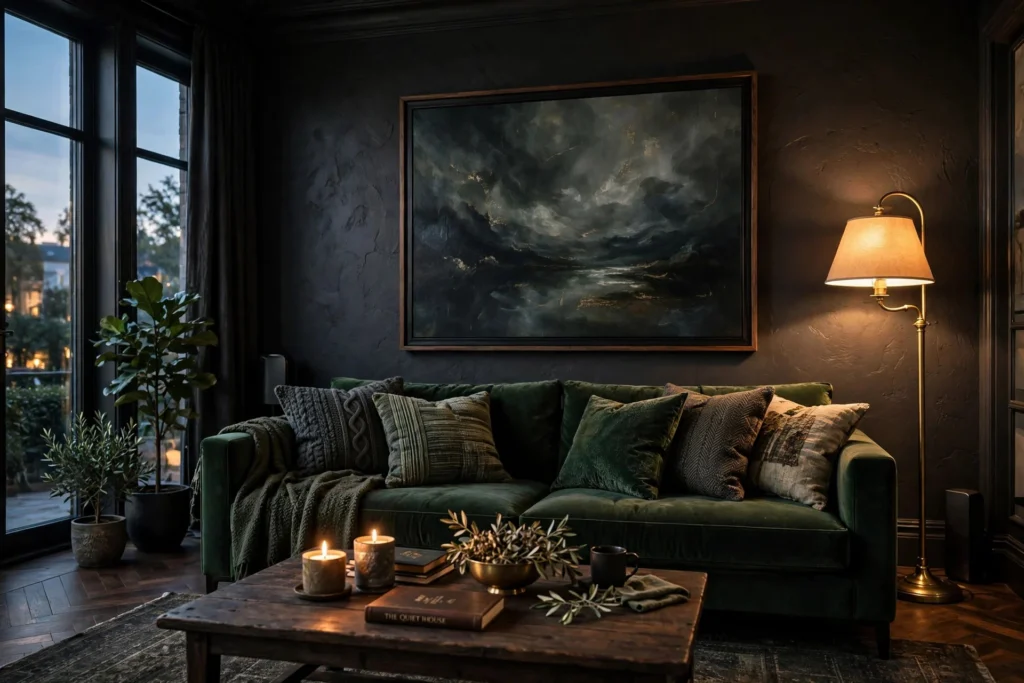
Dark living room decor ideas work best when the room still feels warm and lived in, not cold or cave-like. A deep wall colour, a soft velvet sofa, and a lamp glowing in the corner can make an ordinary evening feel calm and a little bit special. The trick is balance: pair dark colours with warm wood, soft fabric, and plenty of gentle light.
I have tried dark rooms both ways — the flat, gloomy version and the rich, cosy version — and the difference is always in the details. Below are 16 ideas you can mix and match, one at a time, until your living room feels moody and sophisticated in a way that still suits real life, with kids, pets, mugs of tea, and all.
1. Dark Living Room Decor Ideas Start With a Charcoal Wall
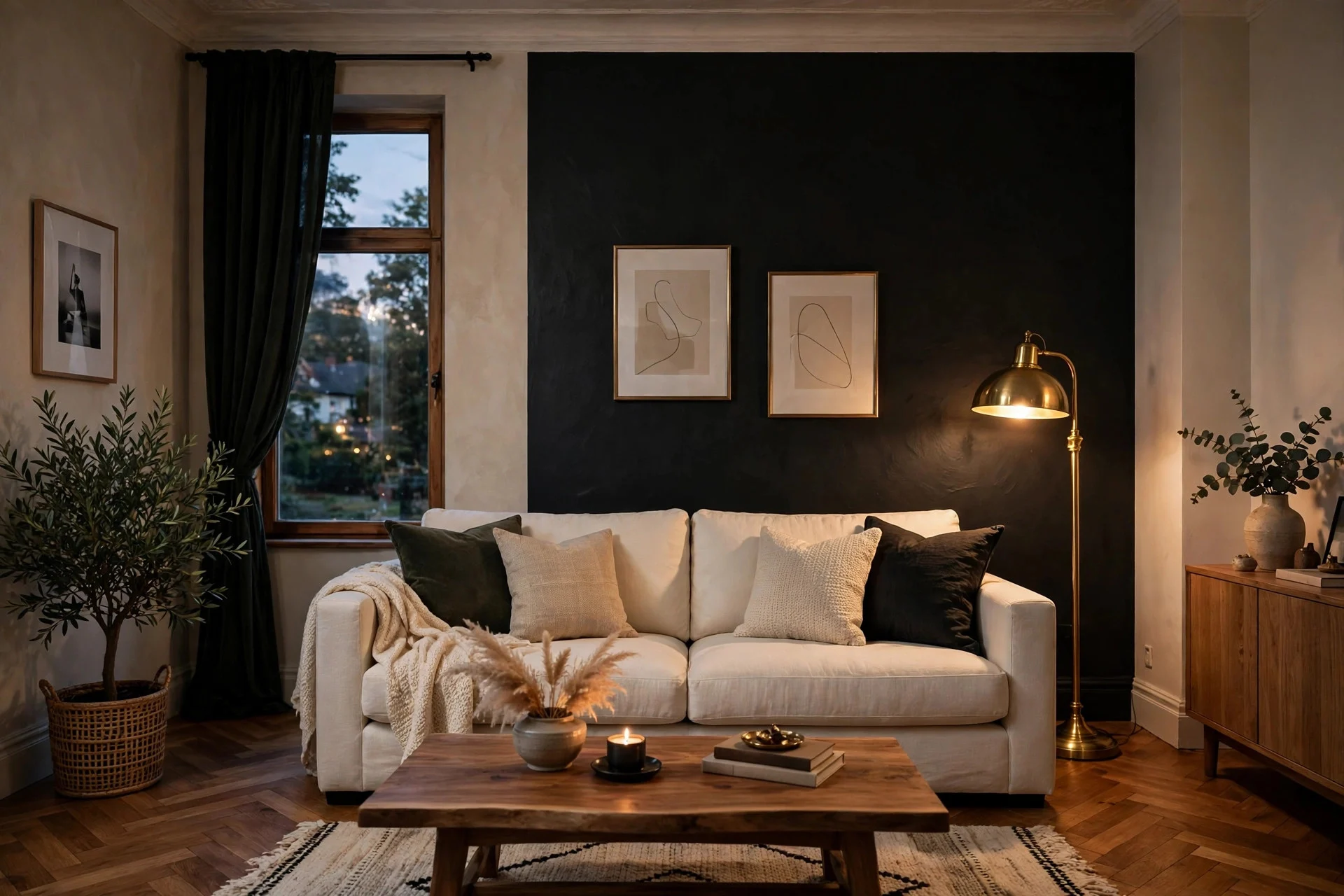
A single charcoal wall gives the whole room a backbone without swallowing the light. Pick the wall behind your sofa, clean it well, and use a matte or eggshell finish so it looks soft rather than shiny. Paint two coats, letting the first dry fully, and step back in daylight before you judge the colour. I tried this in a small room and my first mistake was painting every wall dark, which made the corners disappear. One wall was plenty, and the sofa suddenly looked like it belonged there.
Try this: paint just the sofa wall charcoal and keep the other walls warm white, then add one brass lamp beside the sofa.
2. Choose a Deep Green Velvet Sofa
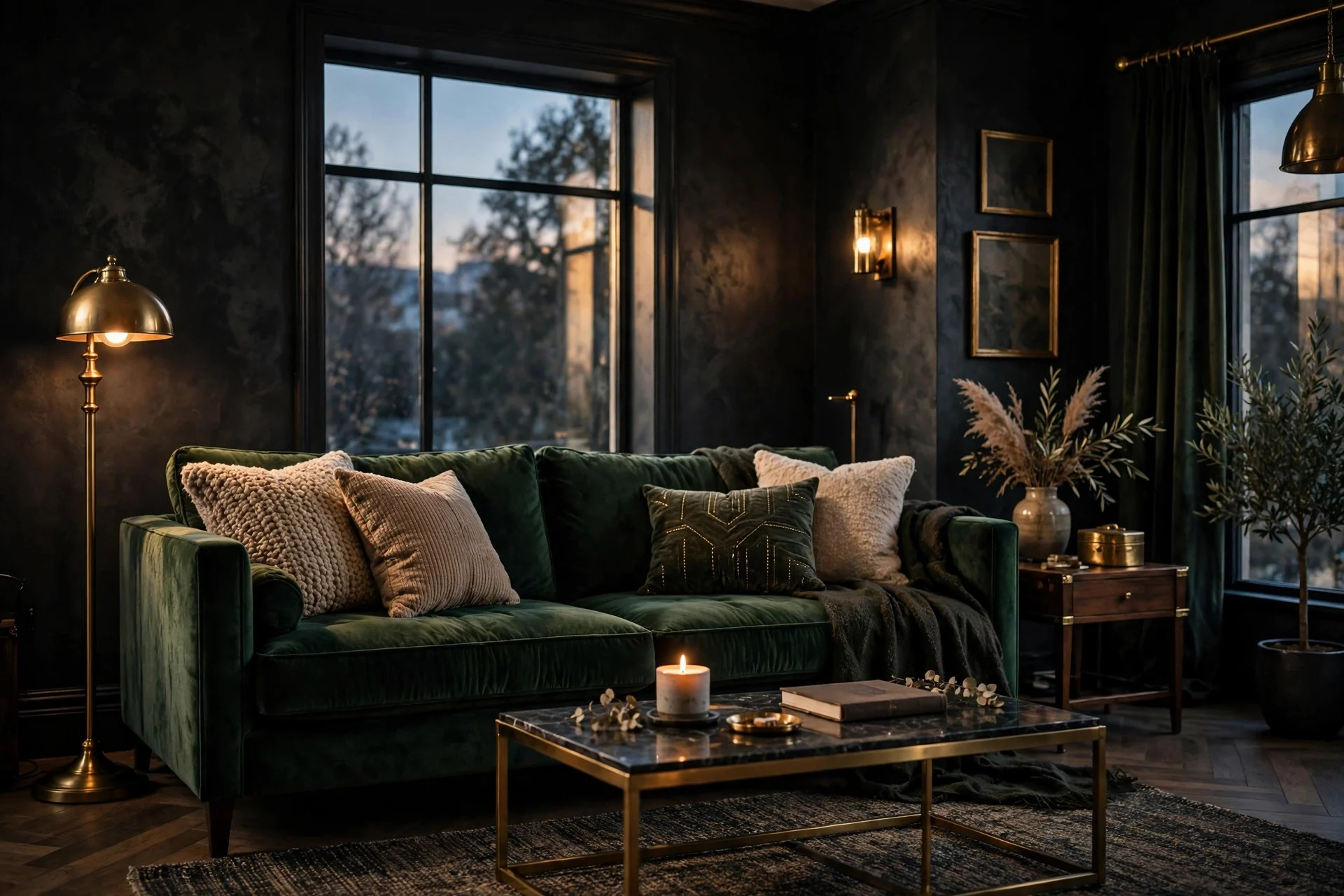
A deep green velvet sofa is the fastest way to make a dark room feel rich instead of plain. Velvet catches the light in a soft way, so the colour shifts a little through the day, and green sits happily next to wood, brass, and cream. Measure your room first, leave space to walk around it, and check the seat depth before you order. I once bought a sofa that looked perfect online but sat too deep for my short legs, so now I always sit on one first. Pick a sturdy fabric if you have pets, and keep a soft brush nearby for dust.
Try this: pair the green sofa with cream cushions and a dark wood coffee table for a calm, classic look.
3. Add Black Built-In Shelves
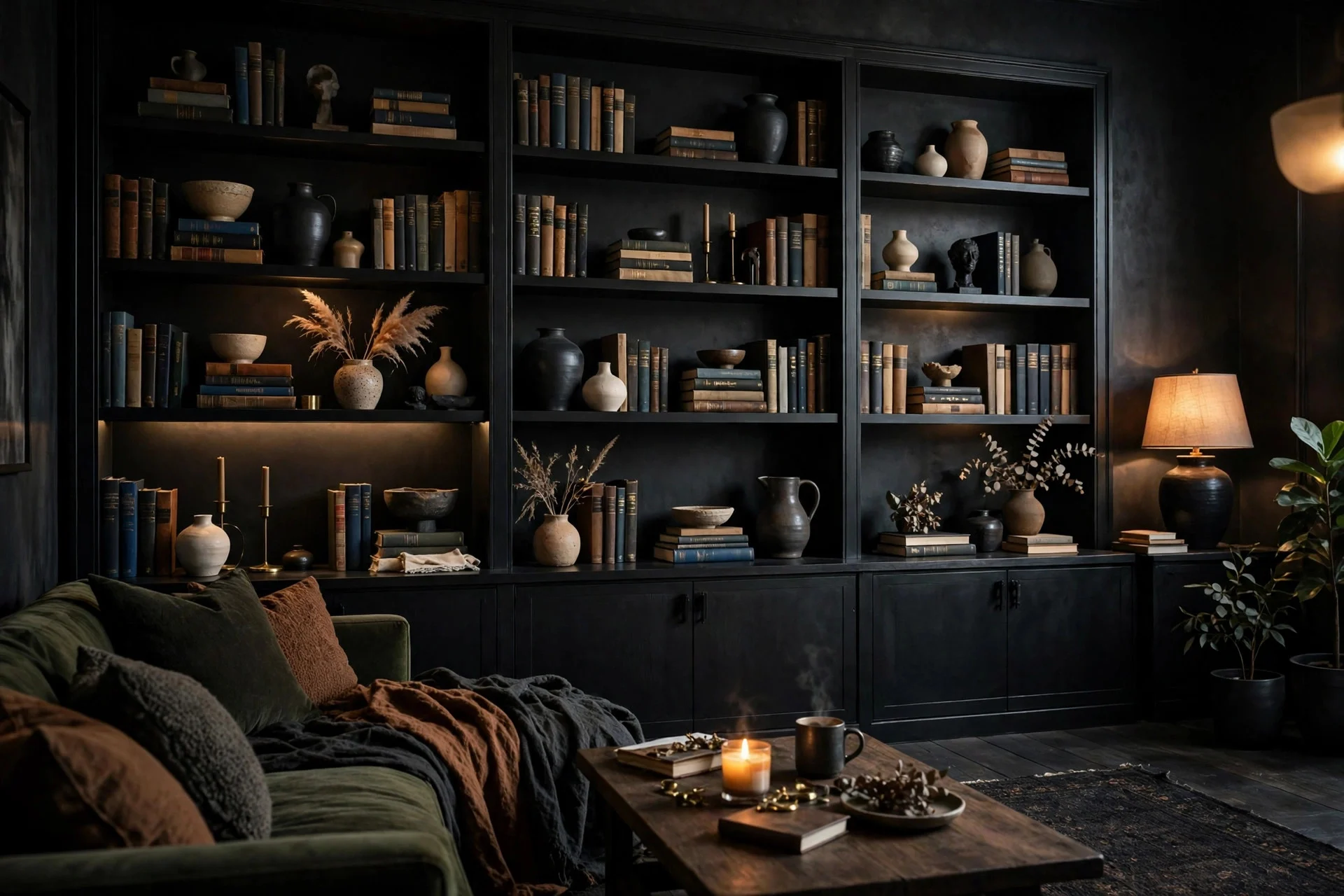
Black built-in shelves turn a plain wall into storage and a display in one move. They frame the television or the fireplace, hide clutter behind closed lower cabinets, and give books and bowls a place to live. Start by measuring the wall, plan a mix of open shelves and closed doors, and paint the backs the same black so the shelves look deep. I tried open shelves everywhere once and spent every weekend dusting them, so now I keep the top open and the bottom closed. Leave breathing space between objects, and group things in threes.
Try this: style the shelves with books, one plant, and a brass bowl, leaving some empty space.
4. Hang a Moody Gallery Wall
A moody gallery wall fills a dark room with personality without needing new furniture. Choose prints in deep greens, browns, and charcoal, mix landscapes with simple line art, and use dark frames so the whole group reads as one piece. Lay the frames on the floor first, take a photo, and then hang the largest piece at eye level. I tried hanging frames straight on the wall once and ended up with a crooked row and too many nail holes, so the floor plan step is now non-negotiable for me. Keep the spacing even, about two fingers wide, for a tidy finish.
Try this: use paper templates on the wall first, then swap in the real frames one by one.
5. Layer Warm Low Lighting
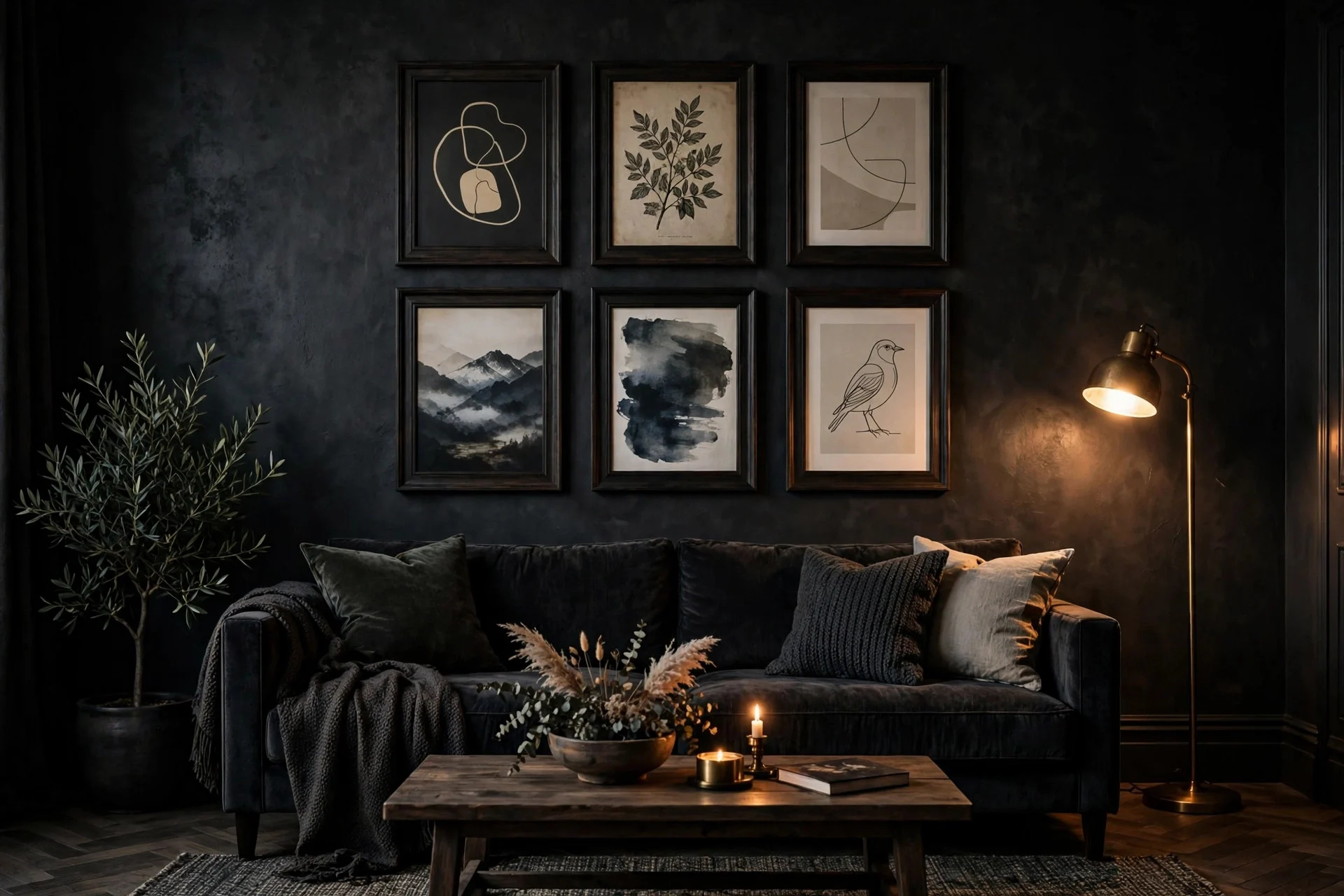
Warm low lighting is what keeps a dark living room cosy instead of gloomy. One bright ceiling light flattens everything, but a mix of a floor lamp, a table lamp, and a few candles makes the room glow in layers. Start by switching bulbs to warm white, place one lamp at each end of the sofa, and add candles on the coffee table. I tried a cool white bulb in my dark room once and it made the walls look grey and tired, so I changed it the same evening. Use dimmers where you can, and keep cords tucked behind furniture for a clean look.
Try this: turn off the ceiling light after dinner and use only lamps and candles for an hour.
6. Bring In Dark Leather Chairs
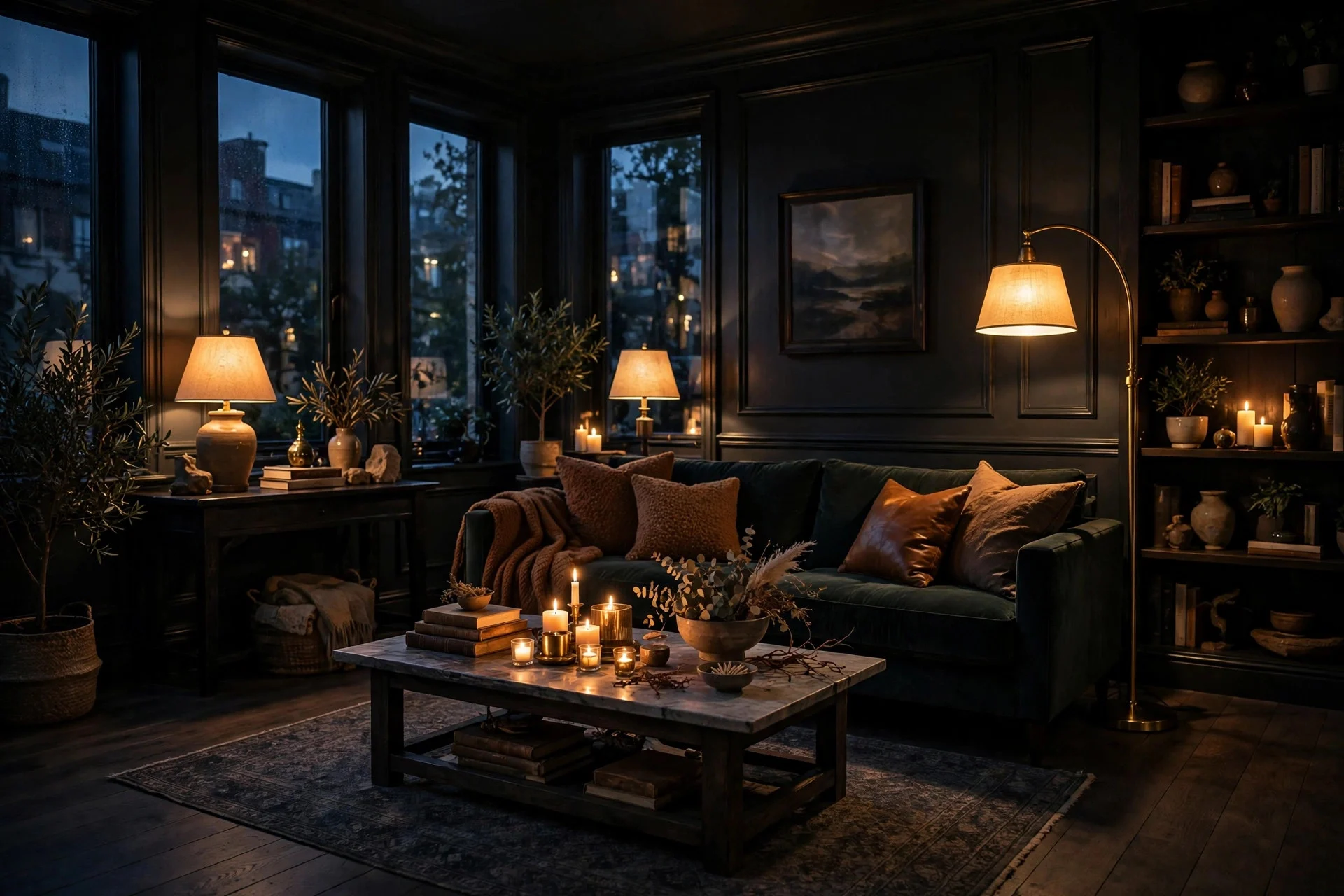
Dark leather chairs add a grown-up, lived-in feel that only gets better with age. A pair of cognac or espresso chairs beside the sofa gives guests a proper seat and breaks up a room full of soft fabric. Check the leather type, sit in the chair for a few minutes, and make sure the arms are at a comfortable height for reading. I tried stiff new leather chairs once and regretted it for months until they softened, so now I look for chairs that already feel broken in. Wipe them down now and then, and condition the leather twice a year to stop it drying out.
Try this: add a small sheepskin or wool throw over one chair arm to soften the leather.
7. Try a Rich Navy Accent Wall
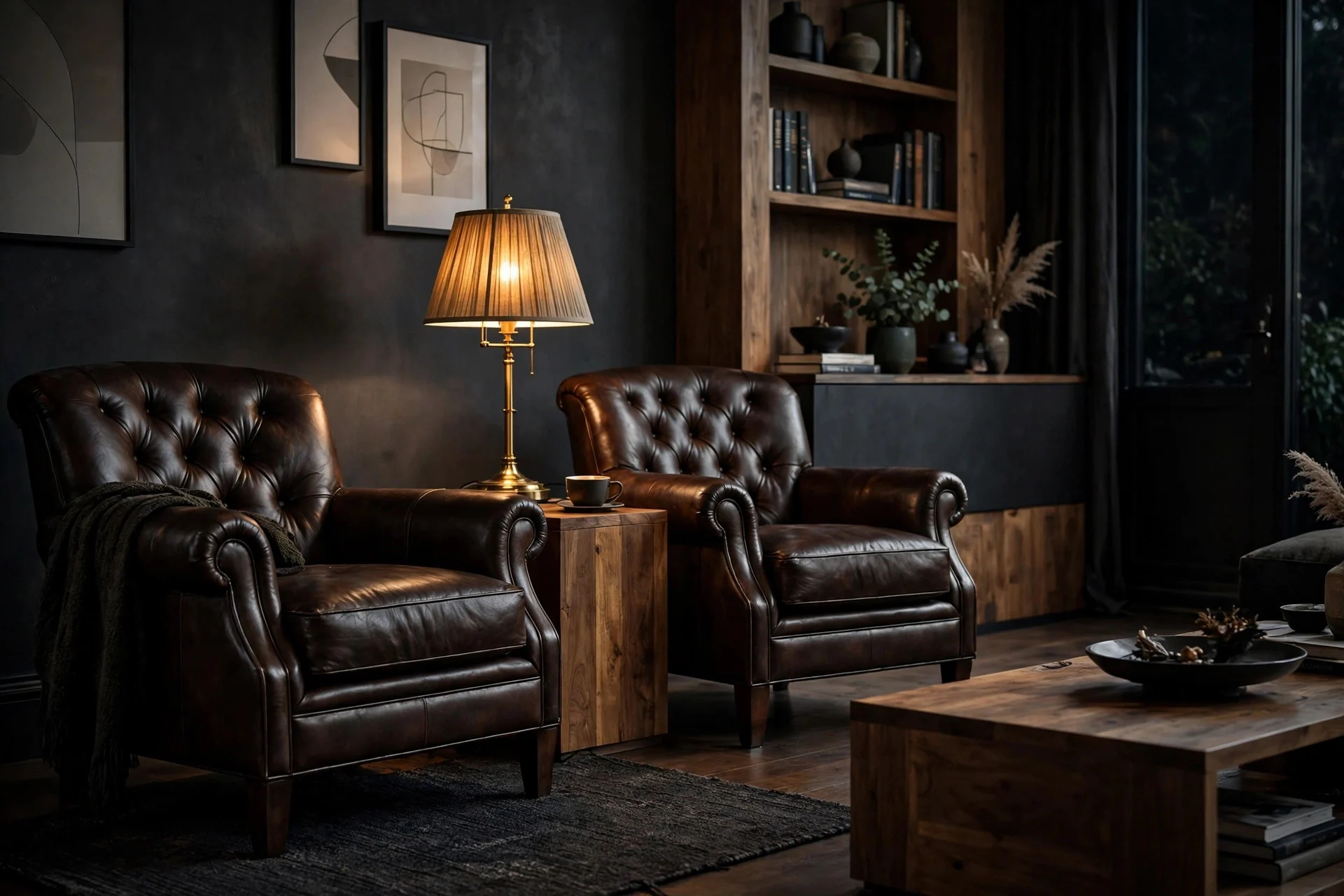
A rich navy accent wall feels deep and calm, and it works well if pure black feels too harsh for your home. Navy pairs beautifully with cream, brass, and warm wood, and it makes white trim look crisp. Test a large swatch on the wall, look at it in morning and evening light, and then paint two coats with a roller for a smooth finish. I tried a navy that looked perfect in the shop but turned purple under my warm bulbs, so testing at home saved me from a full repaint. Keep the rest of the room light enough that the navy reads as a feature, not a cave.
Try this: paint the wall behind the television navy so the screen blends in when it is off.
8. Mix In Brass and Gold Details
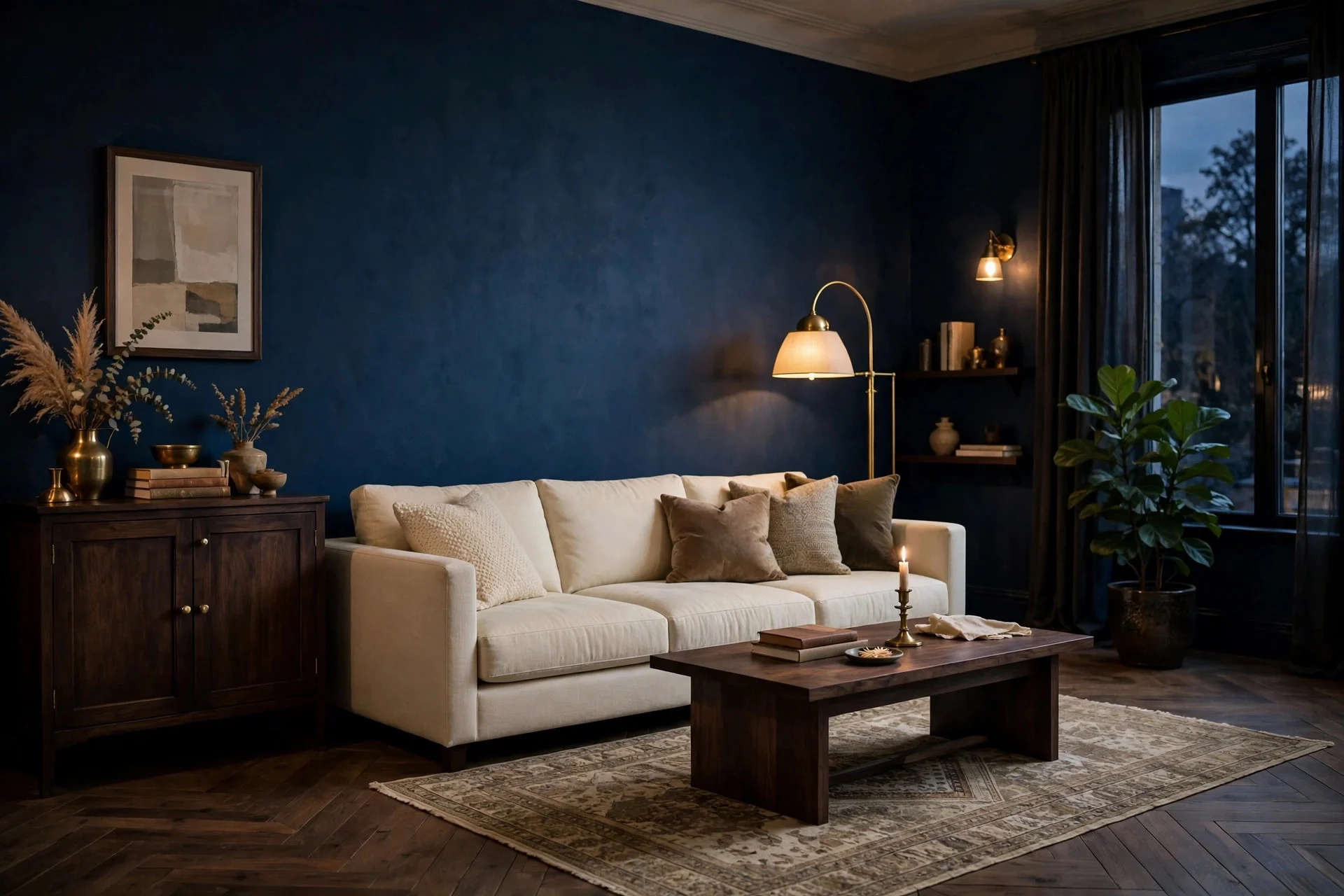
Brass and gold details are the jewellery of a dark living room, catching the lamplight and stopping the room from feeling flat. A brass lamp base, a gold-framed mirror, or small brass handles can lift the whole space without a big spend. Start with two or three pieces, keep the finish the same warm tone, and spread them around the room instead of bunching them together. I tried mixing shiny gold with cool silver once and the room looked confused, so I stick to warm metals now. A little goes a long way, and fingerprints wipe off easily with a soft cloth.
Try this: swap your plain lamp for a brass one and add a small brass bowl to the coffee table.
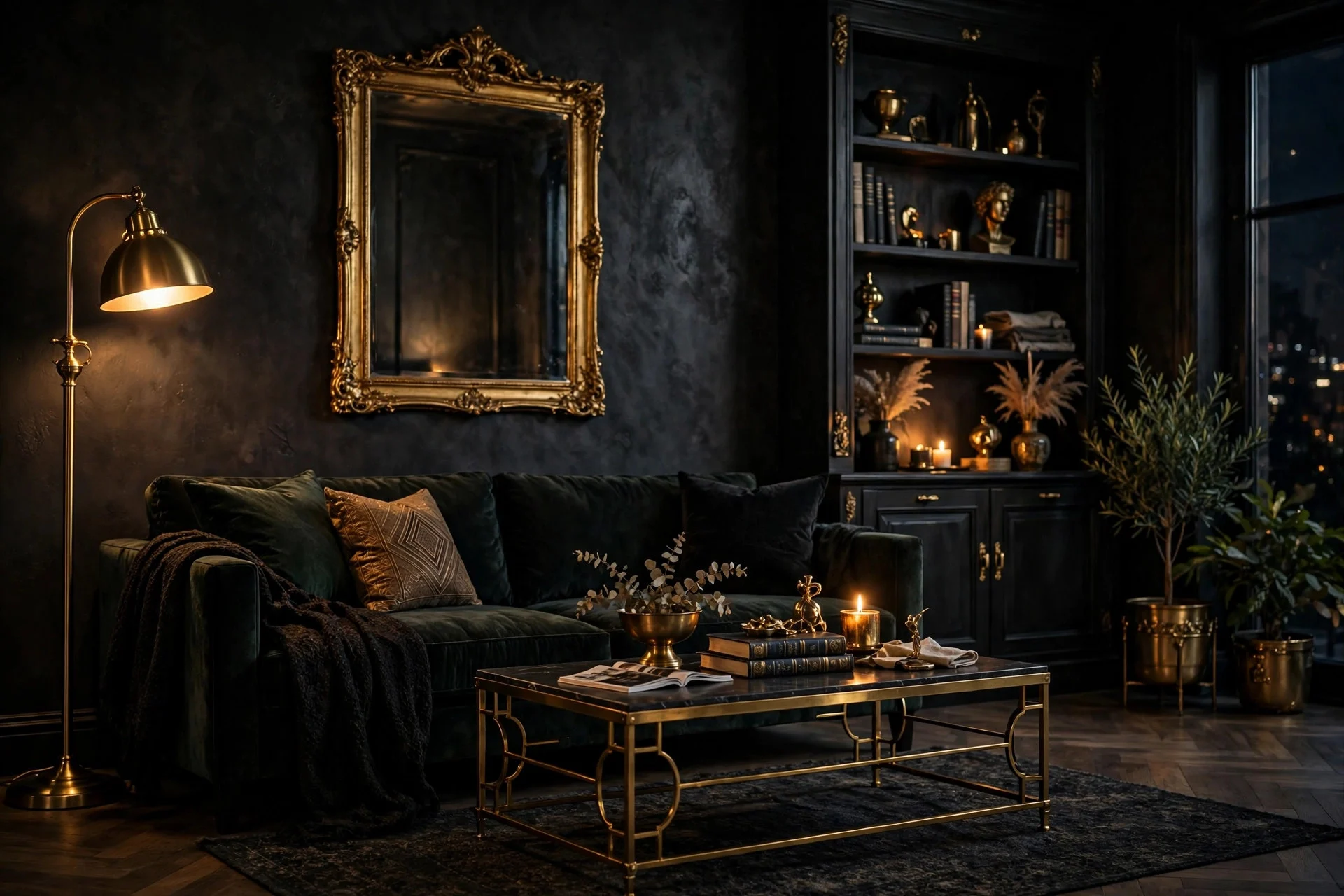
9. Ground It With a Dark Wood Coffee Table
A dark wood coffee table grounds the seating area and gives the room a solid centre to gather around. Walnut and stained oak both work well, and a simple rectangular shape suits most sofas. Measure the gap between the sofa and the table, leave about a forearm’s length so legs fit comfortably, and pick a height close to the seat cushions. I tried a glass table in a dark room once and it vanished against the rug, while the wood one I replaced it with made the whole corner feel settled. Style it lightly with a book, a candle, and a small plant, and leave room for cups.
Try this: use a tray on the table to corral books and candles and keep the surface tidy.
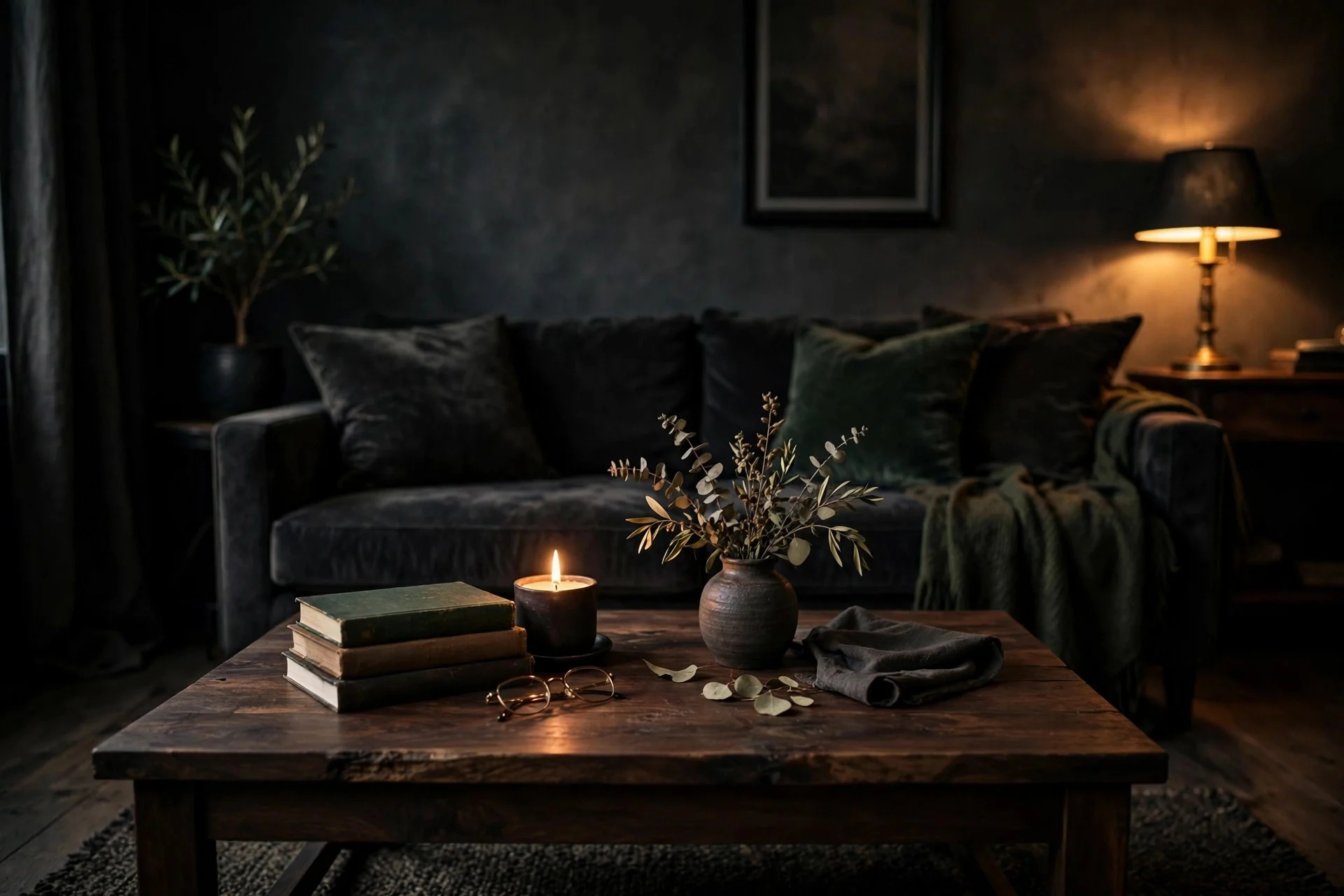
10. Pile On Dark Textured Throws and Pillows
Dark textured throws and pillows are the easiest way to make a dark sofa feel inviting. Mix a chunky knit, a soft velvet, and a woven linen in charcoal, forest green, and rust, and the sofa stops looking flat. Start with two pillows at each end, drape a throw over one arm, and step back to check the balance. I tried matching sets once and the sofa looked like a shop display, so now I mix textures and let one colour repeat in two places. Wash covers on a gentle cycle, fluff pillows daily, and keep a spare throw folded in a basket nearby.
Try this: add one rust pillow to a charcoal sofa for a small pop of warmth.
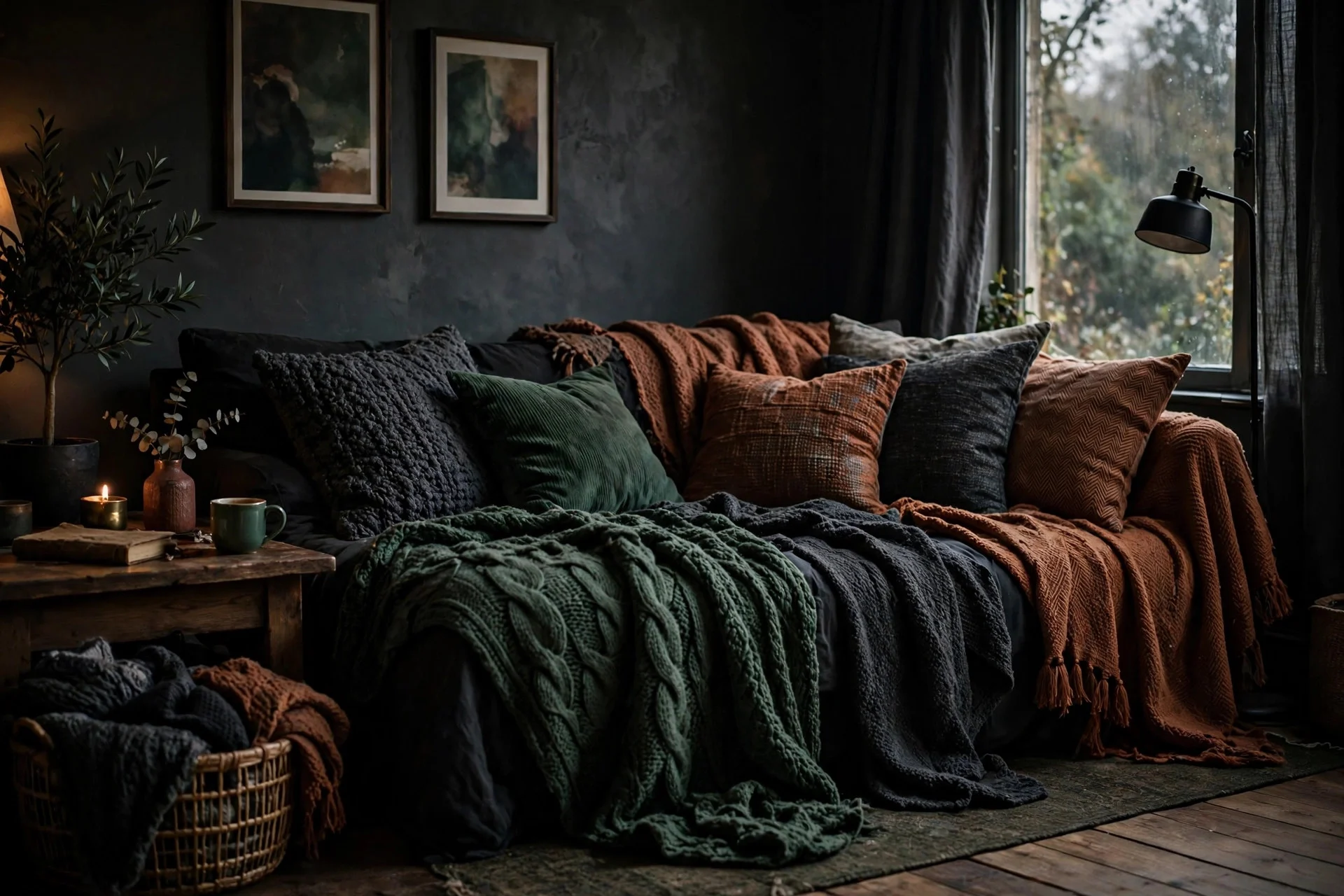
11. Make the Fireplace the Dark Focal Point
Painting the fireplace surround dark turns it into the natural focal point of the room, even when the fire is not lit. A black or deep charcoal mantel frames the flames, hides soot marks, and gives the wall above a perfect home for art or a mirror. Clean the surface well, use heat-safe paint on the surround, and paint two thin coats for a smooth finish. I tried a pale mantel in a dark room once and it floated oddly on the wall, while the dark version pulled the whole room together. Keep the mantel styling simple, with candles or a small stack of books.
Try this: hang one large mirror or artwork above the dark mantel to bounce light around.
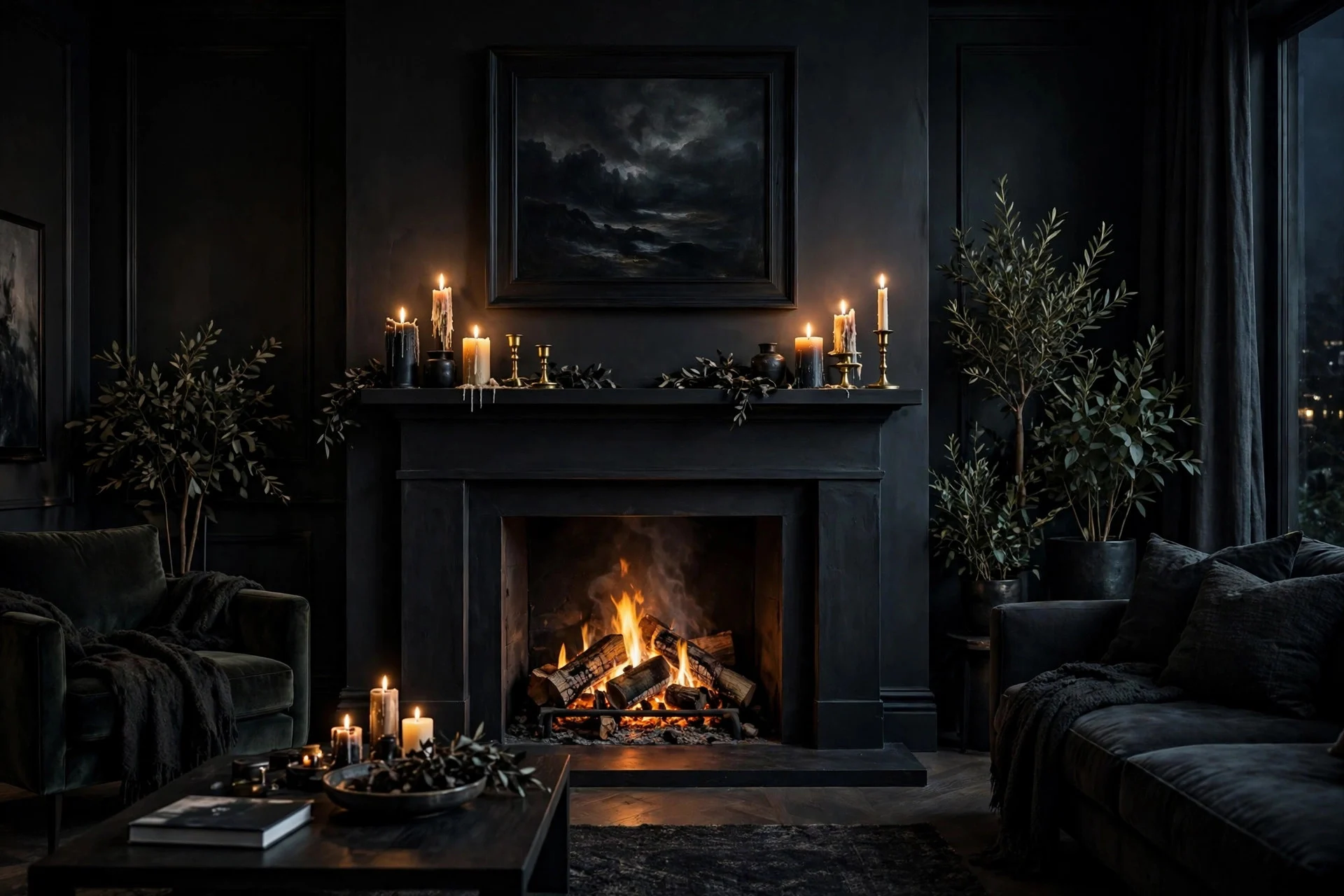
12. Hang Floor-to-Ceiling Dark Curtains
Floor-to-ceiling dark curtains make the windows look taller and the room feel finished, like a good frame on a picture. Choose a heavy fabric in charcoal or deep green, hang the rod close to the ceiling, and let the curtains pool just slightly on the floor. Measure twice, buy panels a little wider than the window, and steam out the creases before you hang them. I tried short curtains once and the windows looked stubby, so now I always go long. Lined curtains also block draughts and help the room feel warmer on cold nights, which is a quiet bonus.
Try this: hang the rod six inches above the window frame to make the ceiling feel higher.
13. Go Big With One Moody Artwork
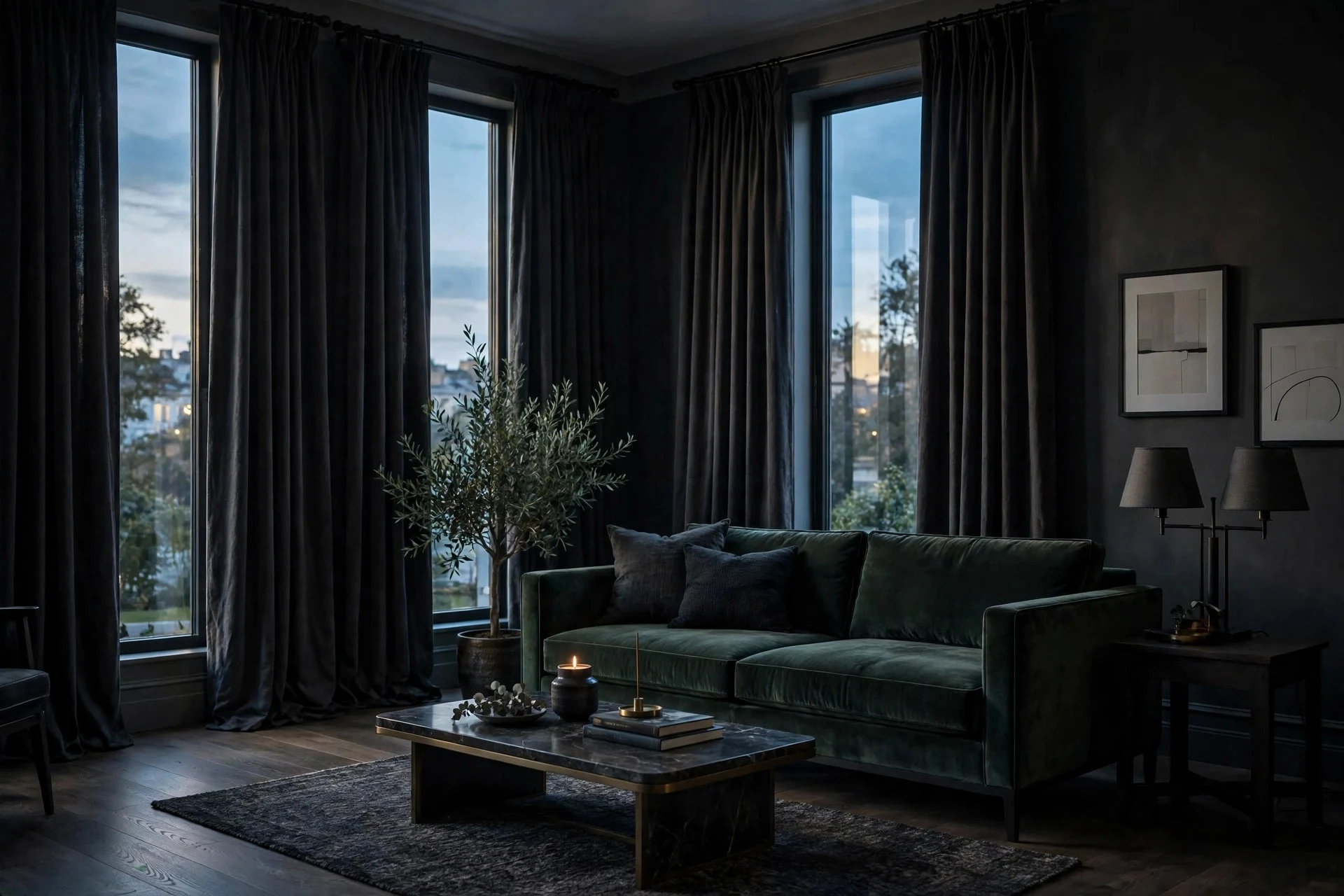
One large moody artwork can do the work of ten small pieces, giving a dark wall a clear focal point. Look for a landscape, an abstract, or a still life in deep tones, and choose a size that fills about two-thirds of the sofa width. Hang it so the centre sits at eye level, use proper wall fixings for the weight, and check it with a level. I tried a tiny print above a wide sofa once and it looked lost, so size is the lesson I keep relearning. A simple dark frame keeps the focus on the picture, and a small picture light above it makes the colours glow at night.
Try this: lean a large framed artwork on the floor first to test the size before hanging it.
14. Anchor the Room With a Dark Rug
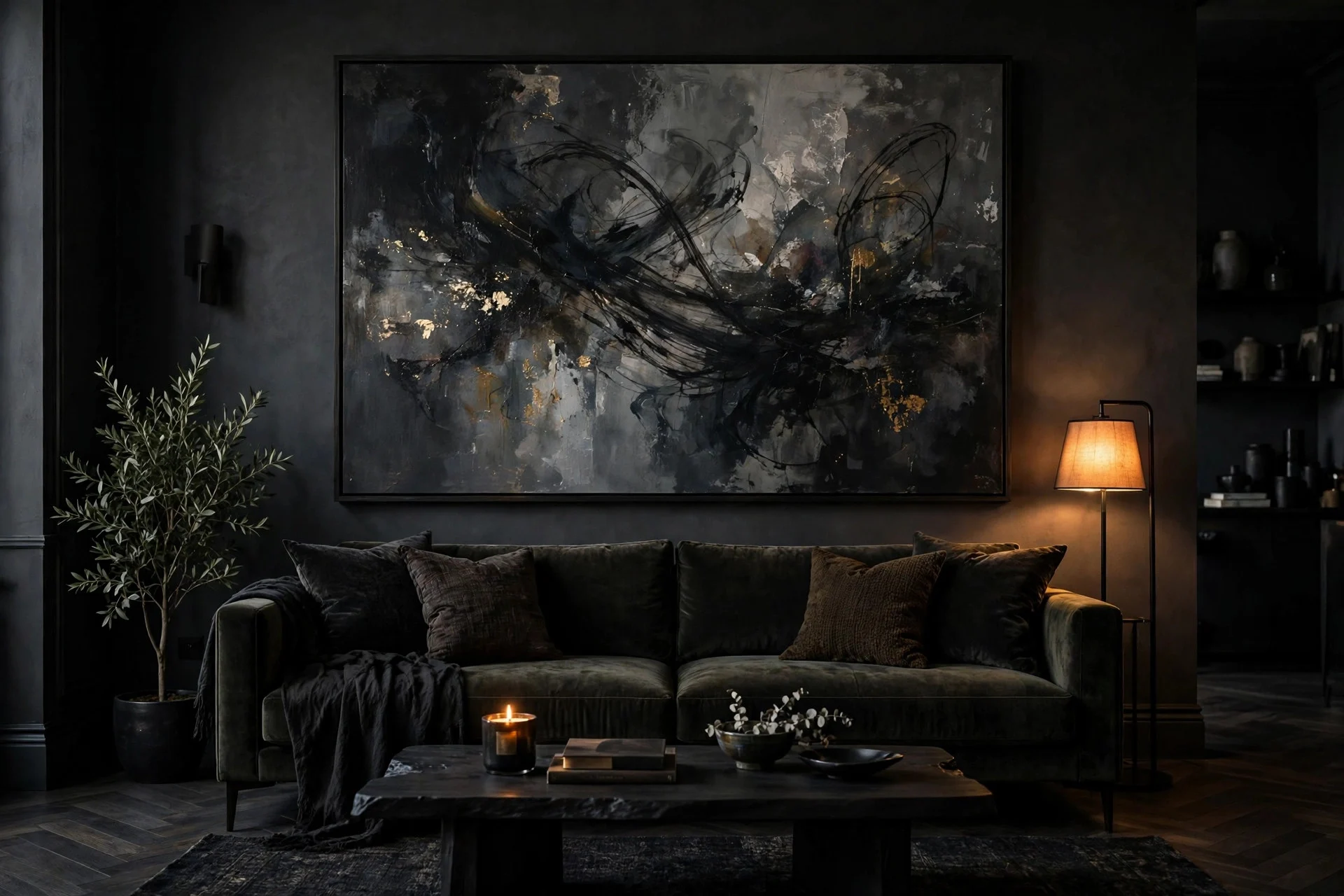
A dark rug anchors the furniture and stops the seating area from floating on a bare floor. Pick a pattern with charcoal, cream, and a touch of rust or green, and size it so the front legs of the sofa and chairs sit on it. Measure the seating area first, leave a border of floor showing around the edges, and use a rug pad underneath to stop slipping. I tried a rug that was too small once and the room looked like the furniture was standing on a postage stamp, so I sized up and it changed everything. Vacuum weekly, rotate it twice a year, and blot spills straight away.
Try this: choose a rug at least eight inches wider than your sofa on each side.
15. Add a Black and Brass Floor Lamp
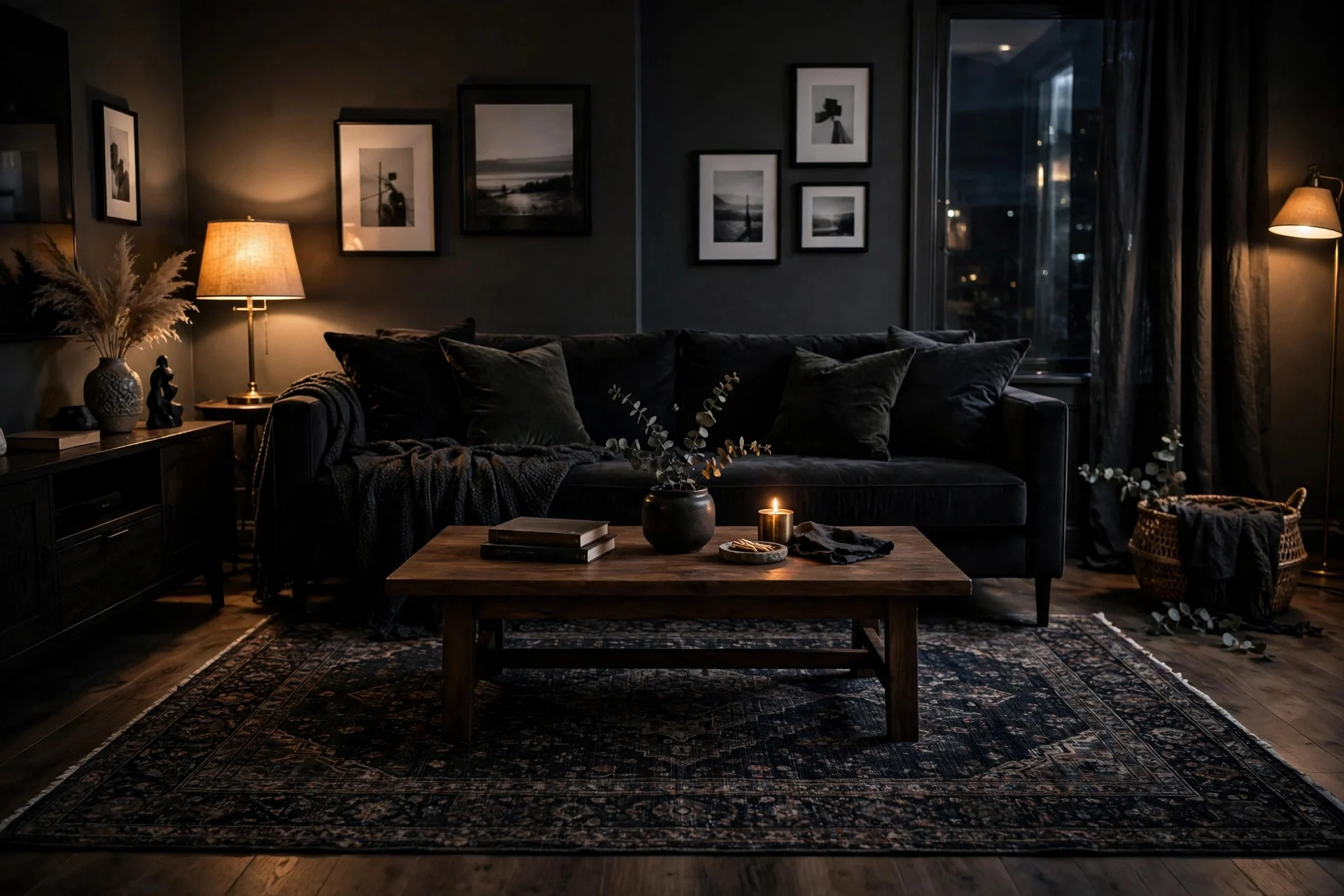
A black and brass floor lamp adds height, warm light, and a sculptural shape to a dark corner that would otherwise sit empty. An arched or slim tripod design works well beside a reading chair, and the brass detail ties in with other warm metals in the room. Place it behind or beside the chair, angle the shade toward your book, and use a warm bulb. I tried a lamp that was too short once and it lit the ceiling instead of my book, so height matters more than I expected. Check the base is stable, keep the cord against the wall, and dust the shade now and then.
Try this: place the lamp beside your reading chair and add a small side table for tea.
16. Finish With a Candlelit Reading Corner
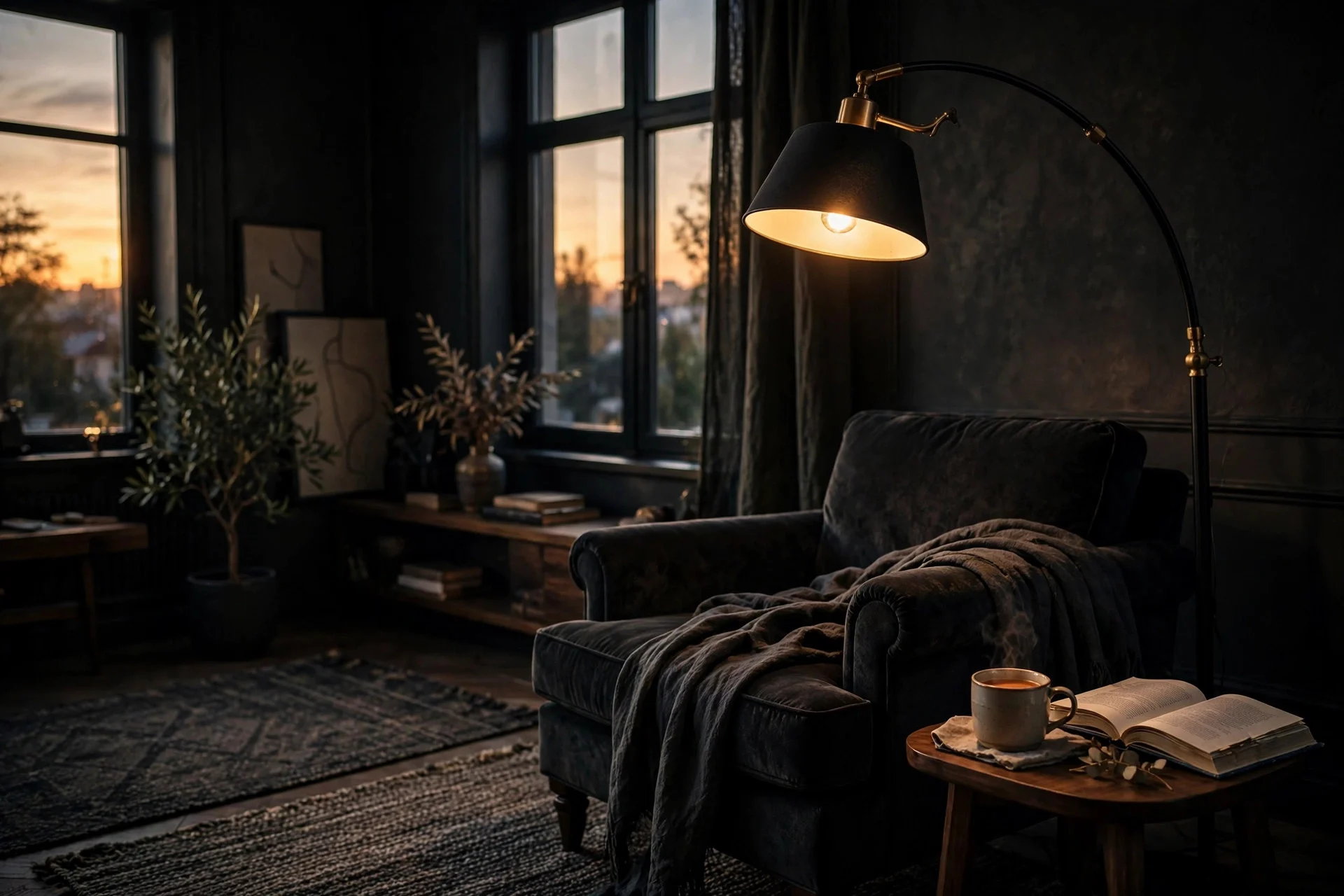
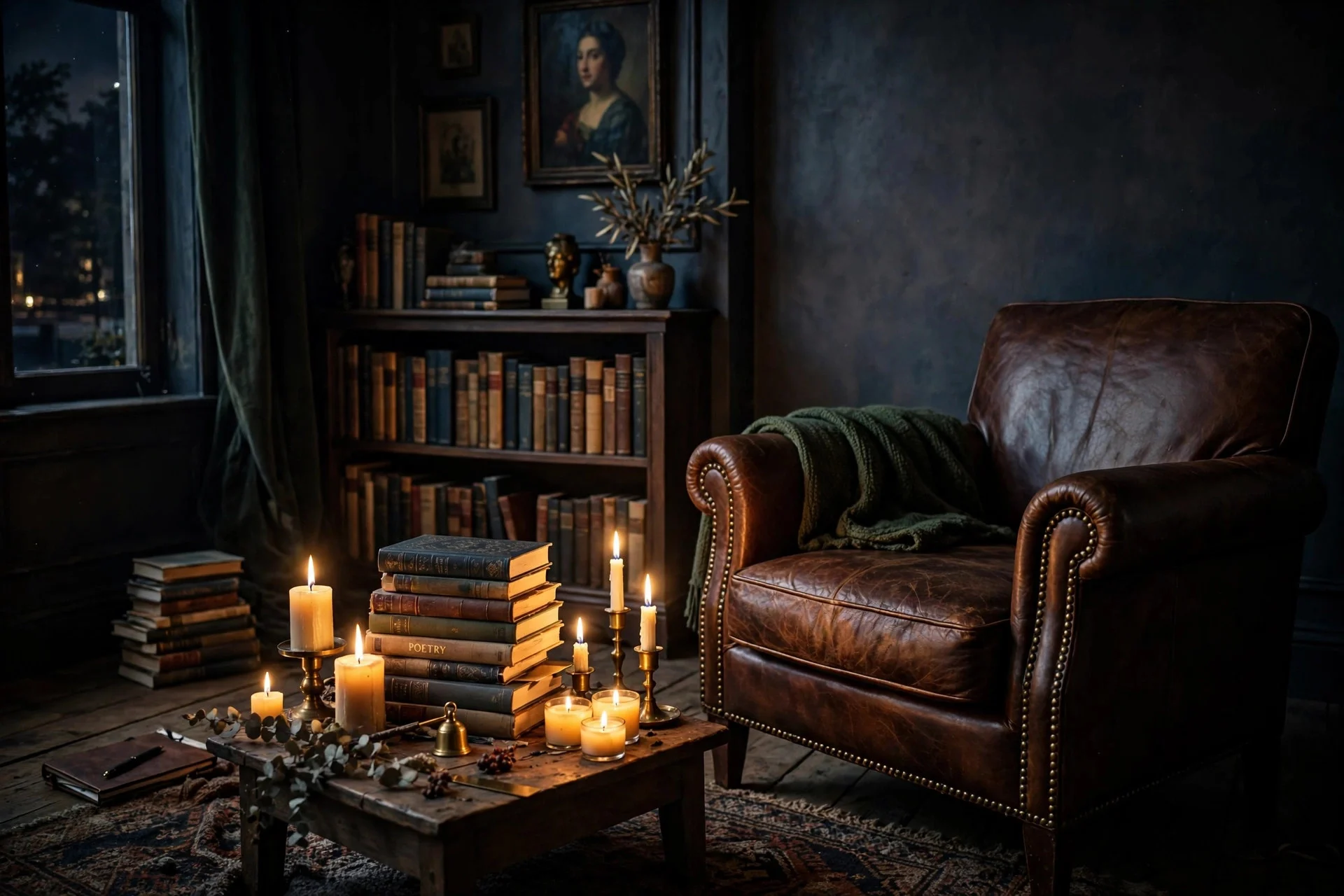
A candlelit reading corner is the soft ending a dark living room needs, a small spot that feels made just for quiet evenings. Pick a comfortable chair, add a floor lamp and a side table, and keep a stack of books and a few candles within reach. Start with the chair in a corner that gets some daylight, add a throw and a cushion, and light the candles only when you are sitting there. I tried putting my reading chair in the darkest corner once and never used it, so a little daylight matters. Keep matches in a small jar nearby, and never leave candles burning unattended.
Try this: keep a basket of books beside the chair so the corner always looks ready to use.
Frequently Asked Questions
Will a dark living room make my small room look smaller?
Not always. One dark wall, or a dark sofa against lighter walls, can actually add depth and make the room feel cosier rather than smaller. Keep the ceiling light, use warm lamps, and add a mirror to bounce light around. The trick is balance, not painting every surface dark.
What colours go best with dark living room walls?
Warm wood, cream, brass, deep green, rust, and navy all sit well with charcoal and black walls. Start with one warm metal and one warm wood tone, then add soft fabrics in cream or rust to keep the room from feeling cold.
How do I keep a dark living room from feeling gloomy?
Use several warm light sources instead of one bright ceiling light, add texture with throws and cushions, and leave some light surfaces in the room. A mirror, a light rug edge, or cream cushions all help the dark colours feel rich rather than heavy.
Is a dark sofa hard to keep clean?
Dark fabric hides some marks but shows dust and pet hair more clearly, so a quick brush or vacuum once a week helps. Choose a washable cover or a sturdy fabric if you have kids or pets, and keep a lint roller in a nearby drawer.
Final Thoughts
A dark living room works when it feels warm, soft, and easy to live in. Start with one idea from this list — a charcoal wall, a green velvet sofa, or simply better lighting — and live with it for a week before you add the next one. Small changes build up, and the room will tell you what it needs next.
The best dark rooms are not perfect showrooms. They have a worn book on the table, a throw that slips off the arm, and a lamp that gets switched on every evening. Pick the ideas that fit your home and your budget, and make the room yours.