
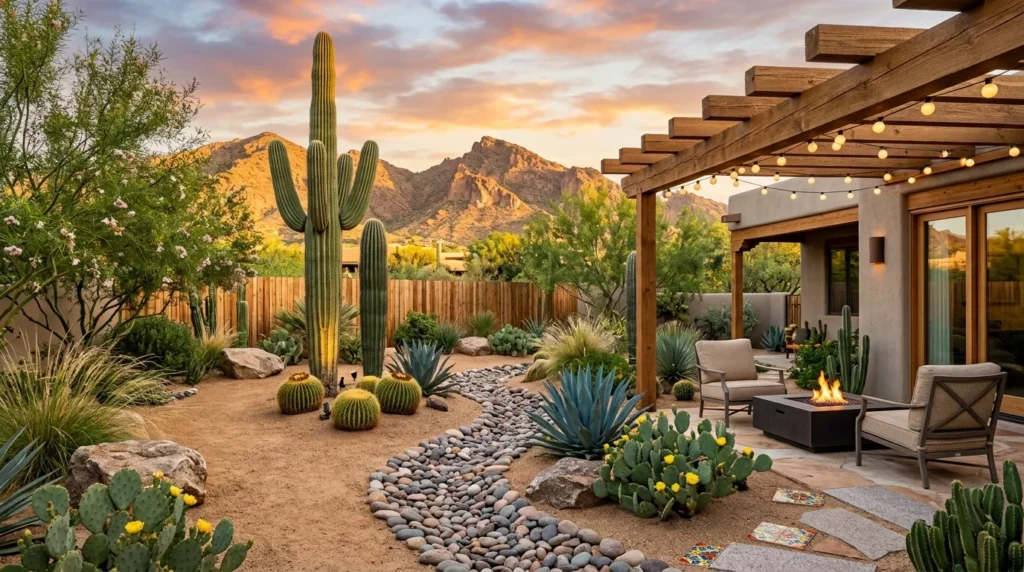
When we bought our house outside Phoenix, the backyard was basically a rectangle of dirt with a few scattered rocks and one struggling patch of grass that never had a real chance against the summer heat. Coming from a state where every yard I’d ever had was green lawn and shade trees, I genuinely didn’t know where to start. My first instinct was to fight the desert, hauling in sod and trying to keep it alive through July, and that instinct cost me more money and frustration than I care to admit before I finally gave up and decided to work with the climate instead of against it.
That shift in thinking changed everything. Once I stopped trying to force a green, water-hungry yard onto a desert lot, the space actually started to come together, and it ended up looking more intentional and striking than the grass yard I’d been chasing ever could have here. Three summers later, our backyard regularly gets compliments from neighbors who are now redoing their own yards using some of the same ideas. Here are 21 of them, based on what’s actually worked through three brutal Arizona summers.
1. Decomposed Granite Instead of Grass
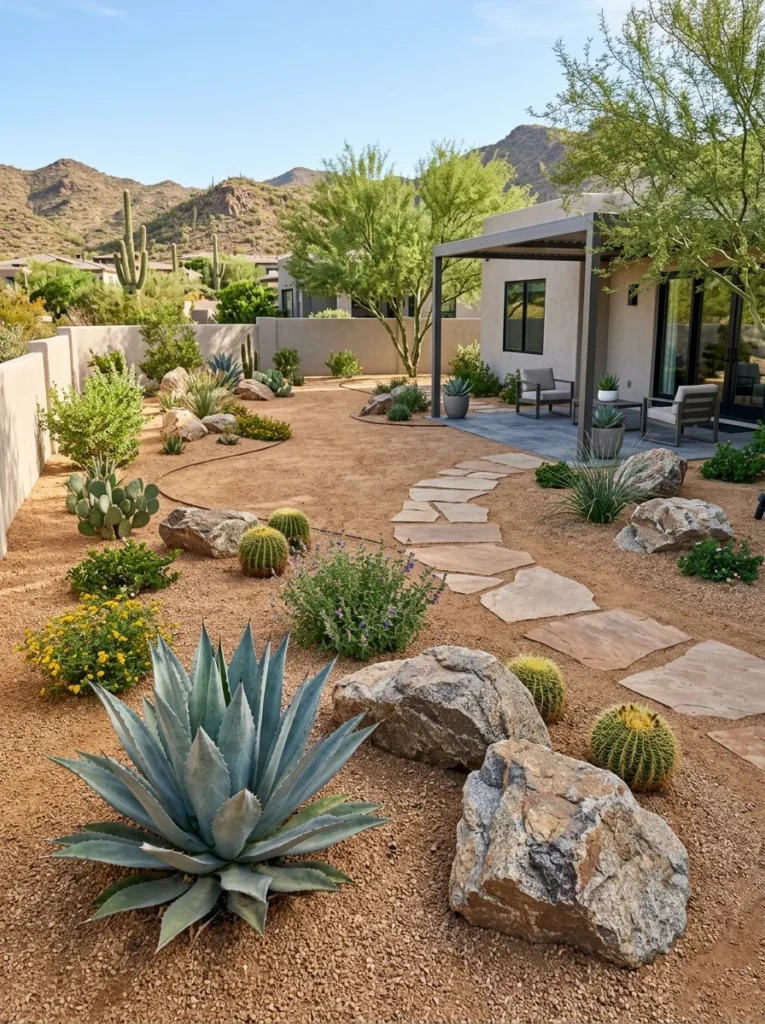
Swapping grass entirely for decomposed granite was the single biggest change we made, both for water savings and for how much lower maintenance the yard became. It comes in a range of warm desert tones, drains well during our rare heavy rains, and doesn’t require mowing, watering, or the constant battle against dead patches that grass here demands.
2. A Cluster of Saguaro and Barrel Cacti
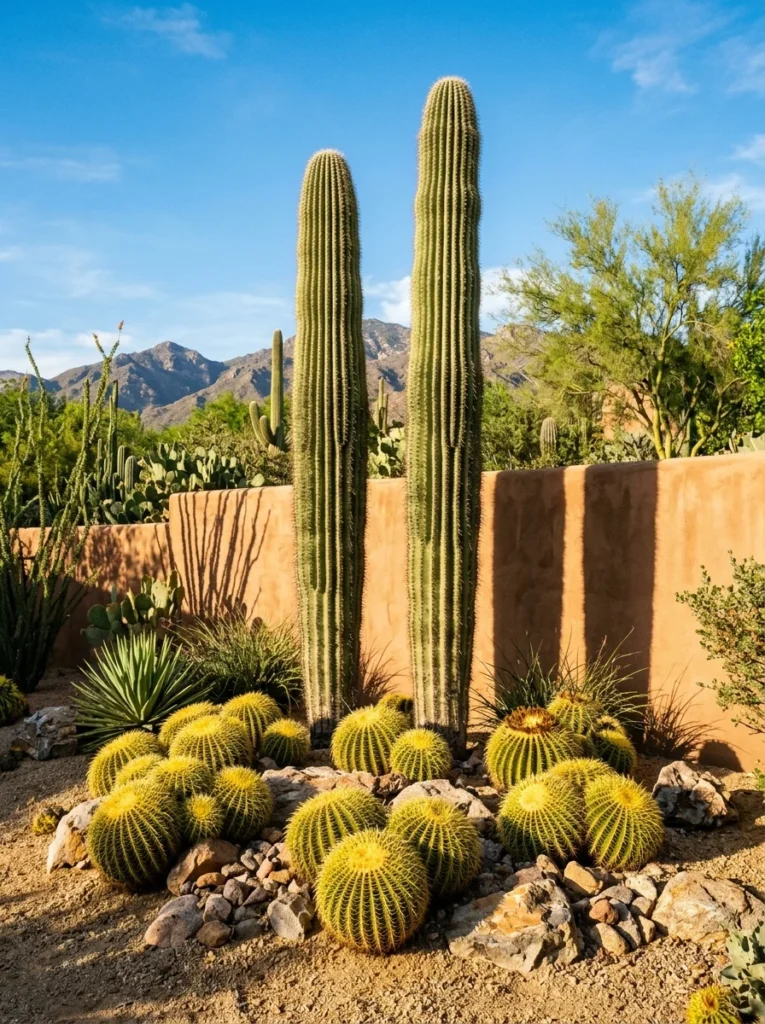
Rather than scattering cacti randomly around the yard, we grouped a few saguaros with smaller barrel cacti at their base, mimicking how they naturally cluster in the wild. The height variation between the two creates a striking focal point, and grouping them together made watering and care far more manageable than spacing individual plants across the whole yard.
3. A Shade Sail Over the Patio
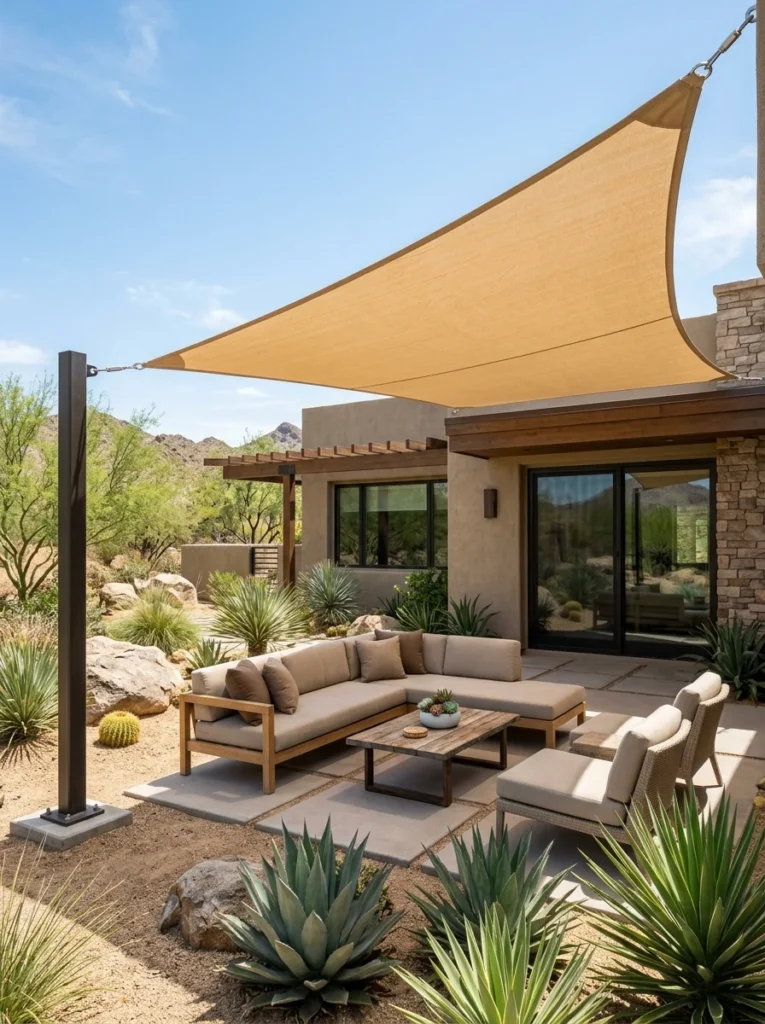
Without mature trees, direct sun exposure was one of our biggest challenges, so a triangular shade sail over the main patio area made an enormous difference in how usable the space actually was during the hottest months. It’s a fraction of the cost of a permanent structure and can be repositioned or replaced easily if you want to change the layout later.
4. Desert Willow Trees for Natural Shade
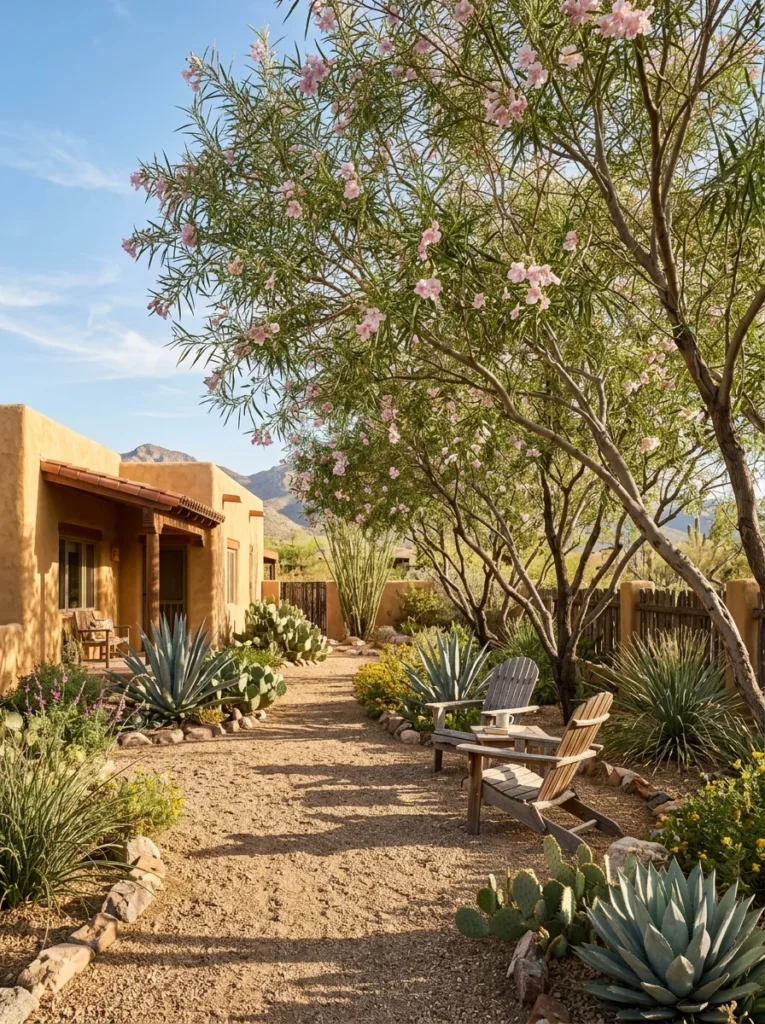
For actual living shade, desert willows turned out to be one of the best choices for our climate, since they’re drought-tolerant once established and grow relatively quickly compared to many other desert-adapted trees. We planted two on the western side of the yard specifically to block late afternoon sun from hitting the house.
5. A Dry Riverbed Feature
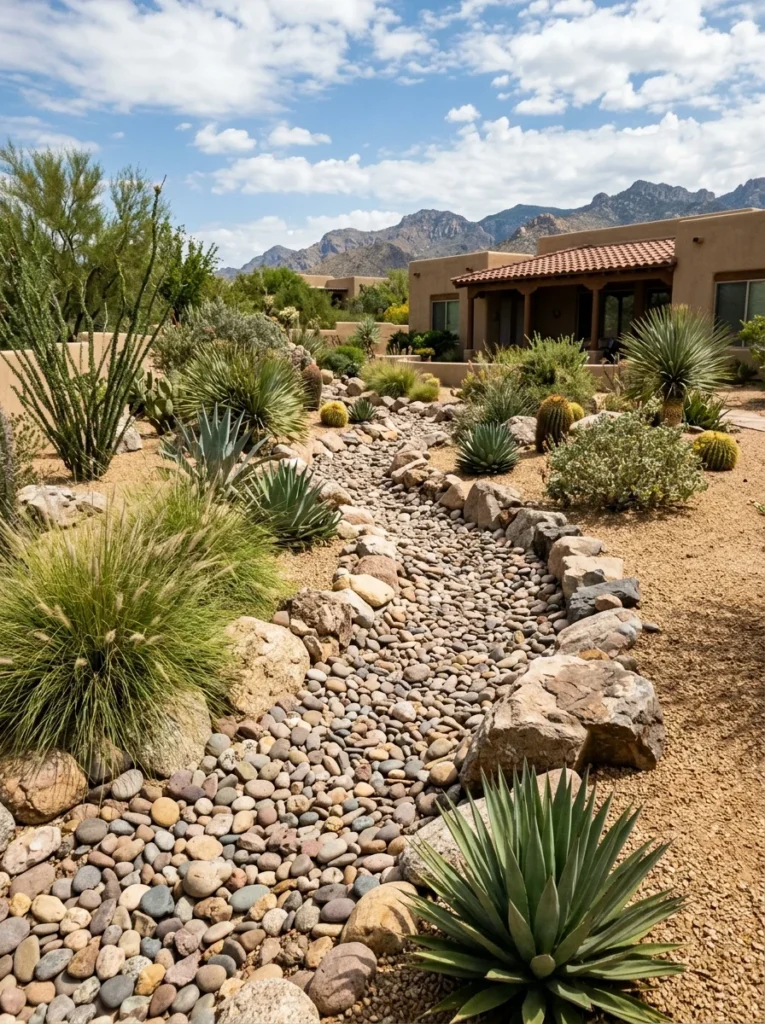
A meandering dry riverbed, lined with smooth river rock and flanked by drought-tolerant grasses, gave our yard a sense of movement and structure that flat gravel alone didn’t provide. It also happens to serve a practical purpose during our occasional monsoon downpours, directing water runoff away from the house foundation.
6. String Lights Across the Patio
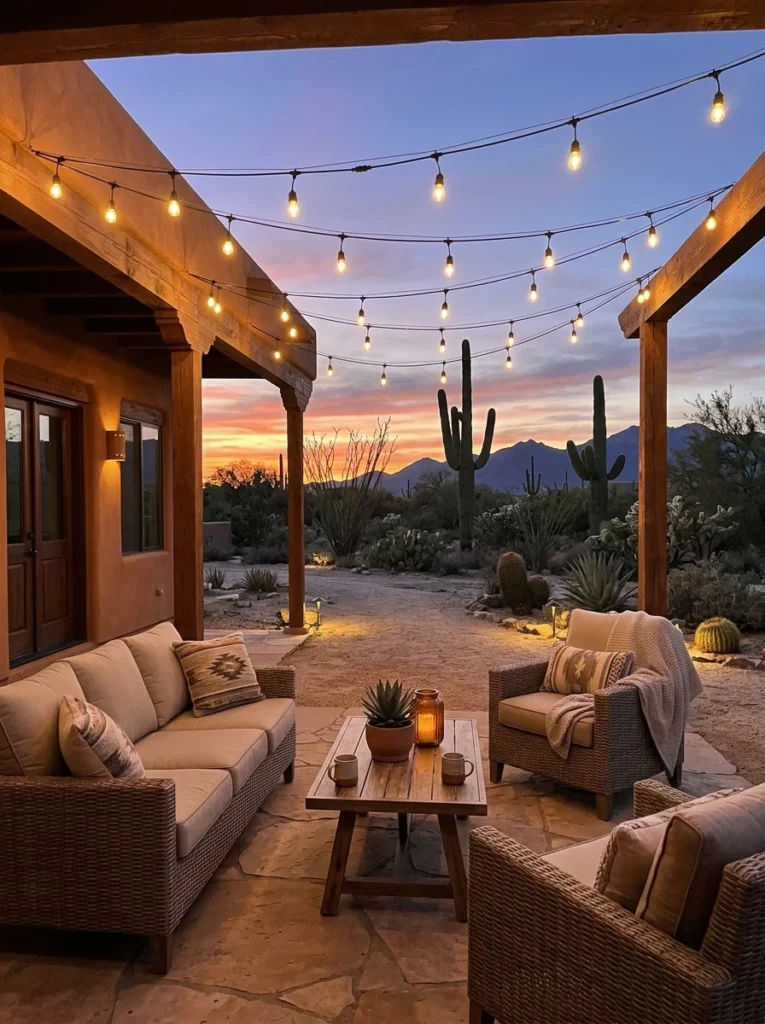
Desert evenings cool down fast and can be genuinely beautiful once the sun sets, so we strung warm white string lights across the patio to make the space usable well into the night. It’s an inexpensive addition that made a huge difference in how often we actually use the backyard after work, once the daytime heat has passed.
7. A Fire Pit for Cool Desert Nights
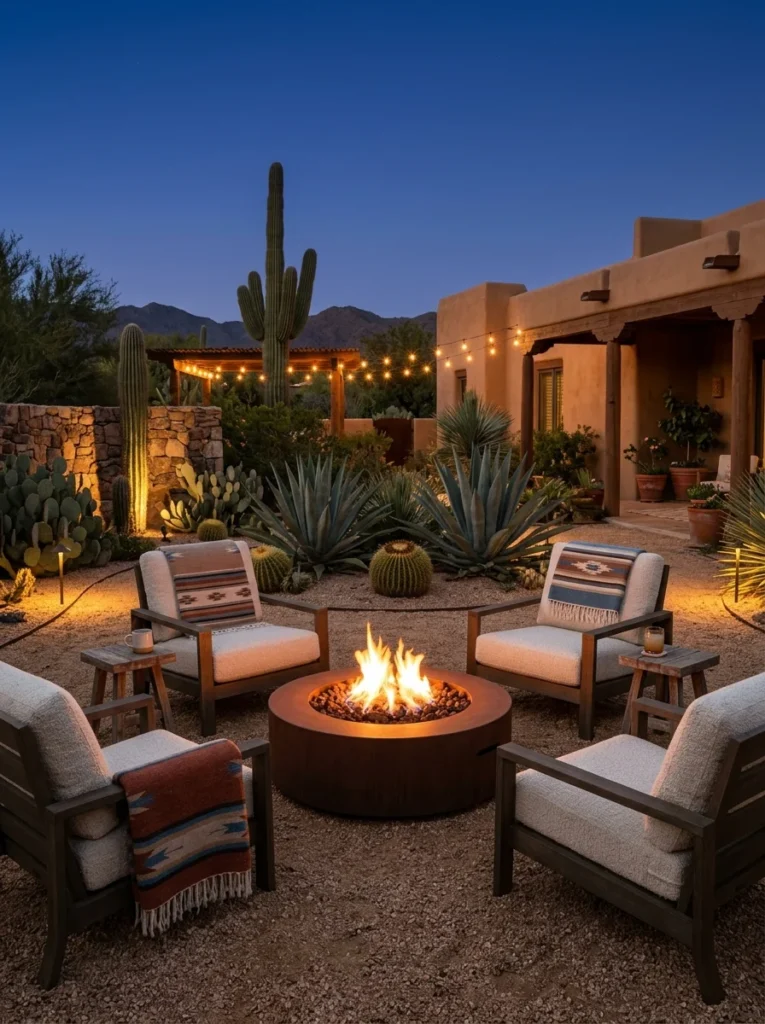
Even in summer, desert nights can cool down considerably once the sun goes down, and a simple gas fire pit became one of the most-used features in our whole yard. Unlike a wood-burning option, it doesn’t add extra heat and smoke to an already warm climate, and it can be turned on and off instantly on the nights when it’s actually comfortable enough to sit outside.
8. Agave Plants as Architectural Accents
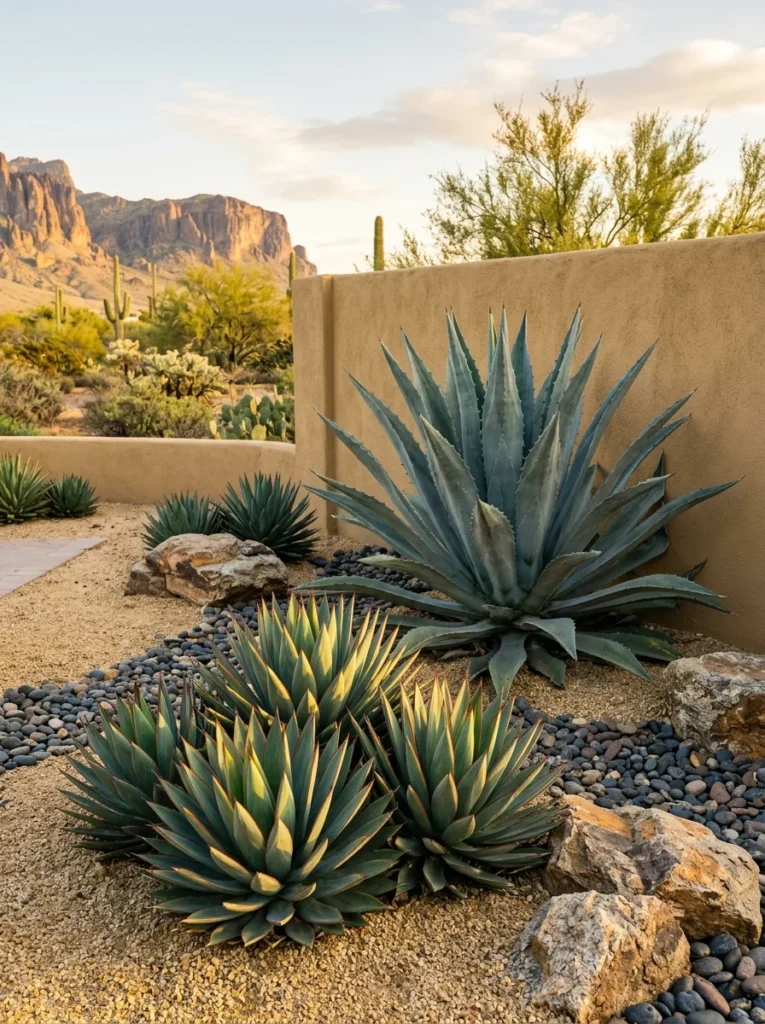
The bold, sculptural shape of agave plants adds structure to a desert landscape in a way that softer plants simply can’t. We planted a few different varieties, ranging from small blue glow agave to a much larger American agave near the back fence, and the variety in size and color kept the landscaping from feeling repetitive.
9. A Pergola With Desert-Adapted Vines
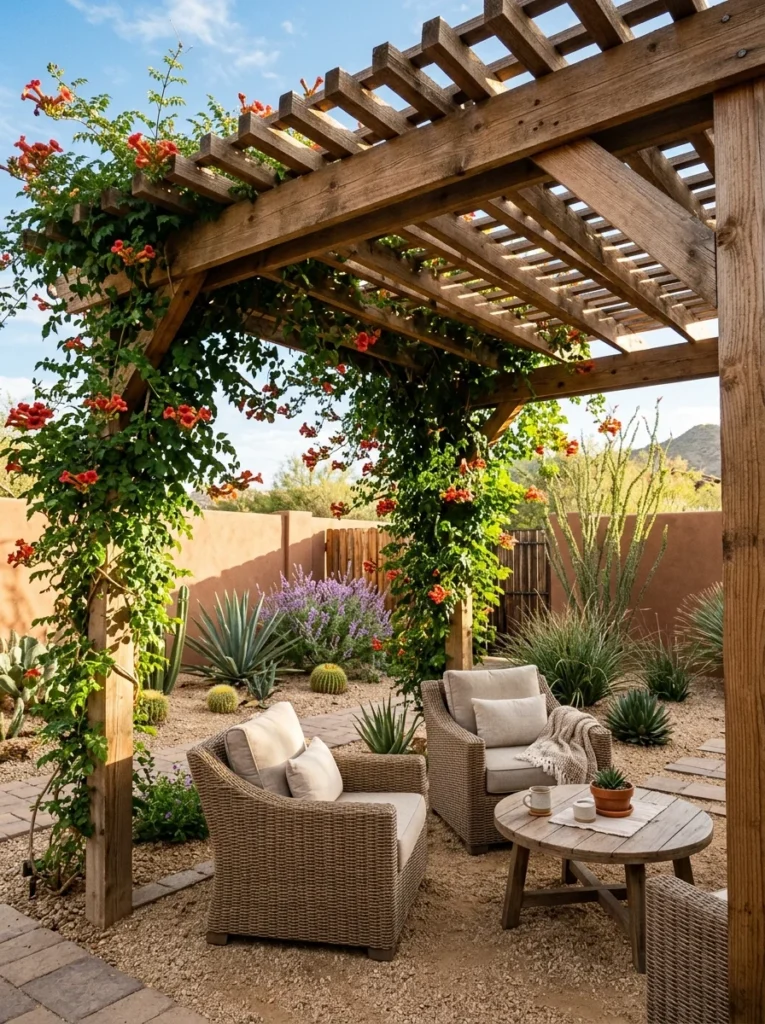
Rather than a solid roof structure, a wooden pergola planted with a drought-tolerant vine like trumpet vine gives filtered shade that still allows some airflow through, which matters enormously in a climate where trapped heat under a solid structure can actually make an area less comfortable rather than more.
10. Colorful Talavera Tile Accents
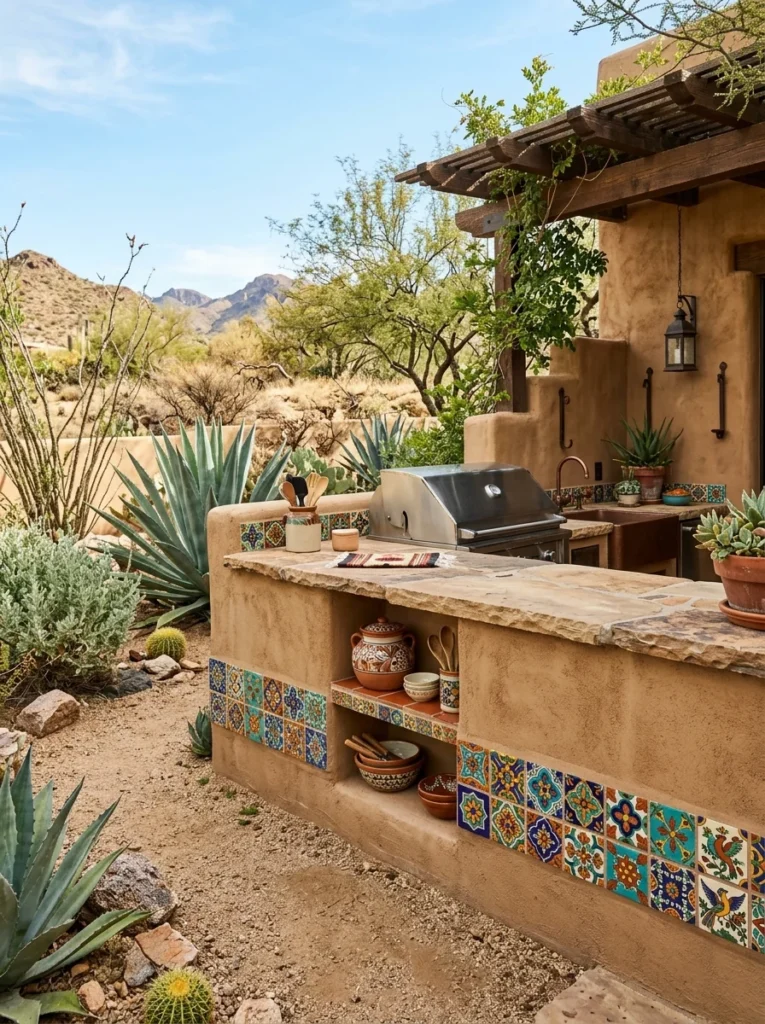
Bringing in a few Talavera tile accents, whether set into a low wall, a fountain, or stepping stones, adds a pop of color against the neutral tones that dominate most desert landscaping. We used a strip of patterned tile along the base of our outdoor kitchen counter, and it’s become a small detail that guests notice immediately.
11. A Low-Water Succulent Garden
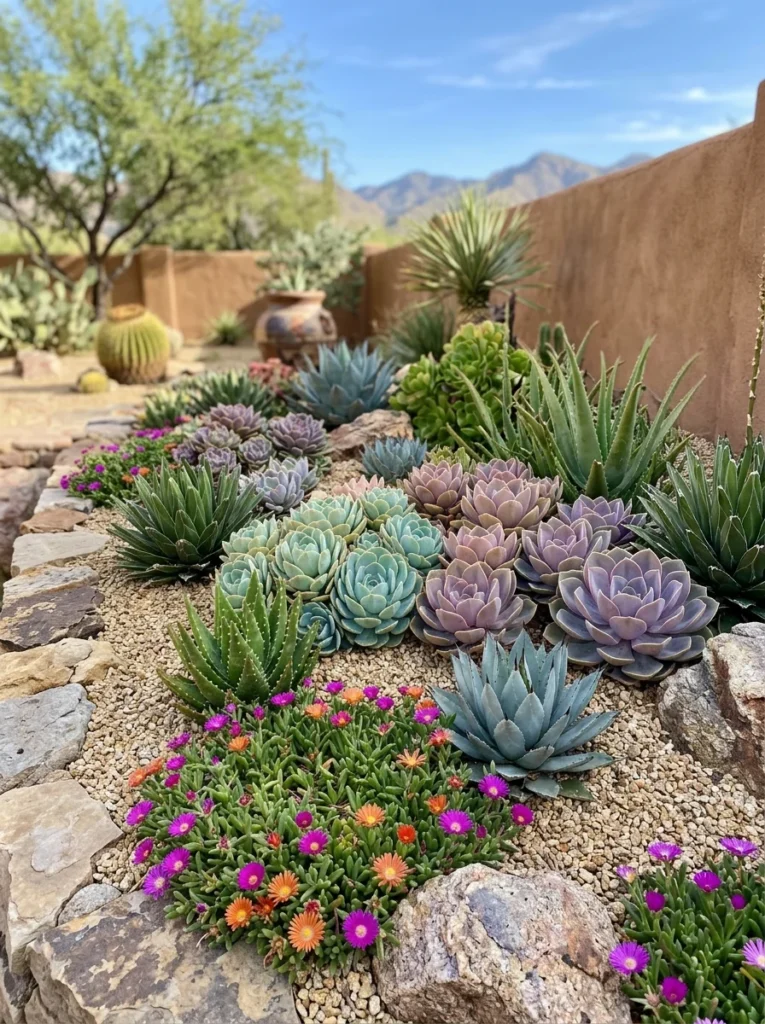
A dedicated succulent bed near the entryway gave us a spot to experiment with color and texture on a smaller, more manageable scale than the rest of the yard. Different varieties of echeveria, aloe, and ice plant filled in quickly and created a lush-looking display despite needing very little water to maintain.
12. An Outdoor Kitchen With Shade Coverage
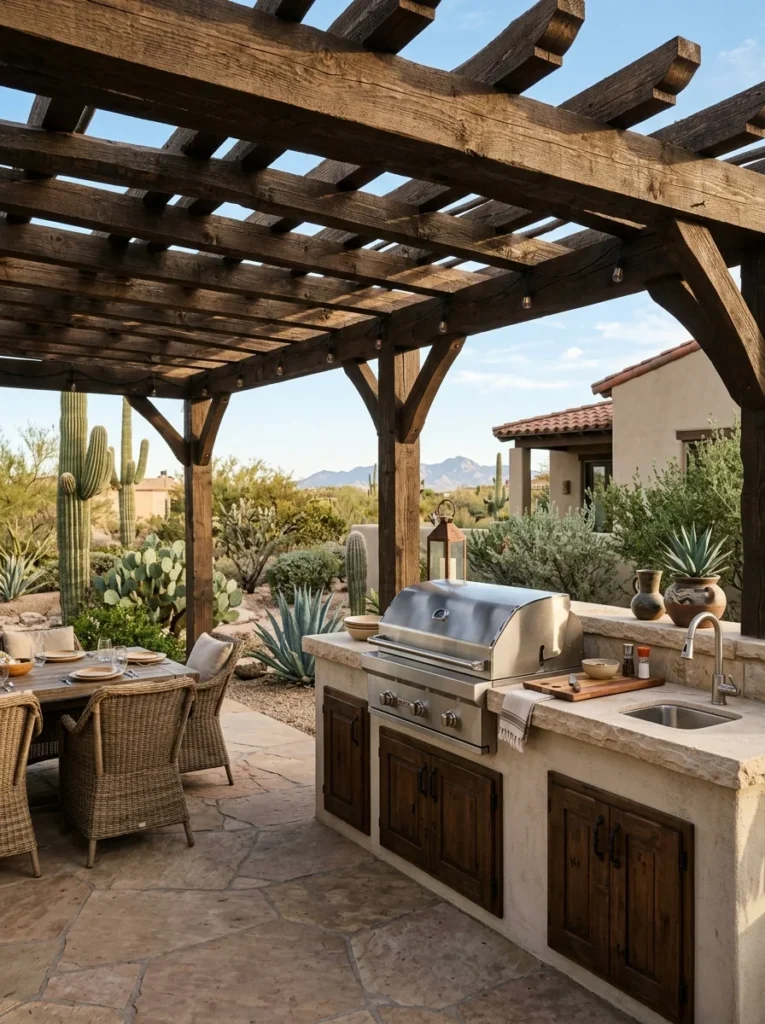
Cooking outside in Arizona is genuinely enjoyable for most of the year as long as the kitchen area has proper shade coverage. We built ours under the same pergola structure as our seating area, which meant we weren’t standing in direct sun while grilling during the hotter months.
13. Wildflower Seeding for Spring Color
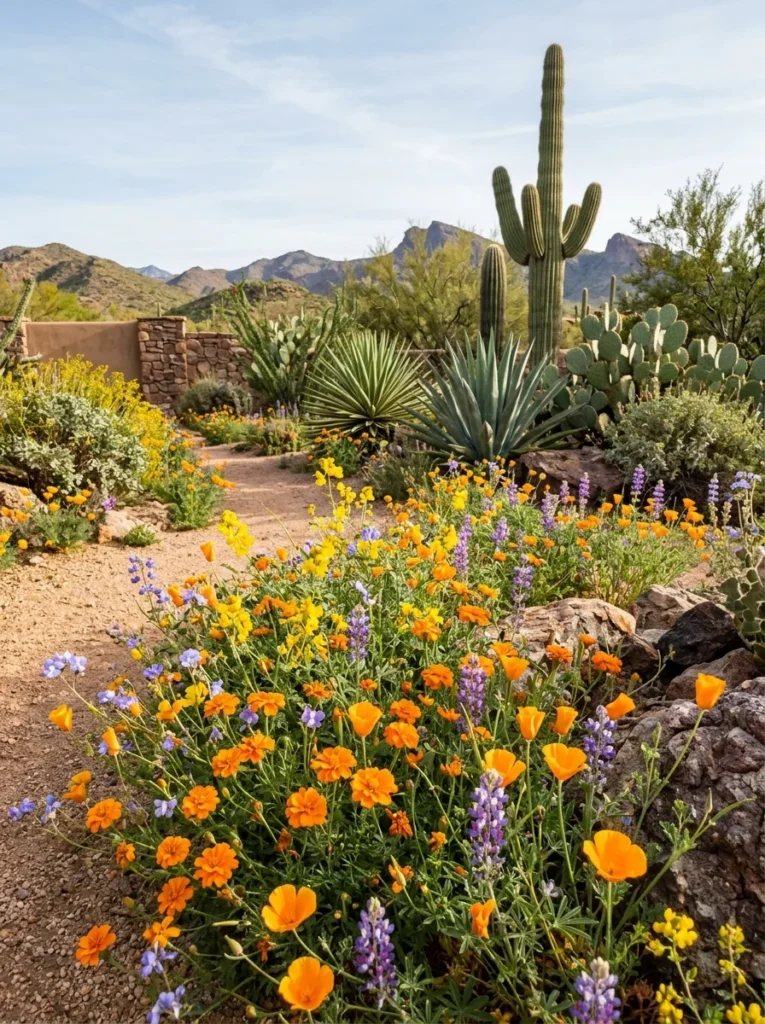
Desert landscapes aren’t permanently brown and gray. Seeding a section of our yard with native desert wildflowers gave us a burst of orange, purple, and yellow every spring that most visitors don’t expect from a desert yard, and the seeds themselves are inexpensive and require minimal effort beyond initial watering to establish.
14. Ocotillo Planted Along the Fence Line
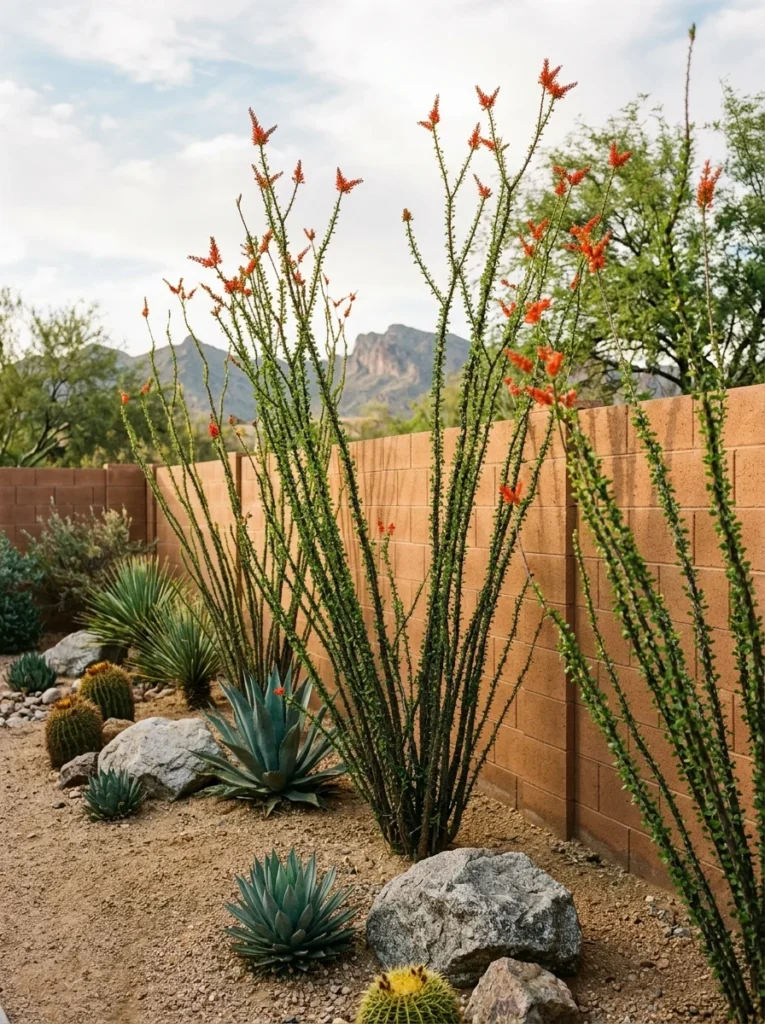
Ocotillo’s tall, whip-like branches add height and movement along a fence line without blocking views the way a solid hedge would. After rain, they leaf out with small green leaves and occasionally bright red flowers, giving the yard a completely different look for a few weeks at a time throughout the year.
15. A Cooling Water Feature
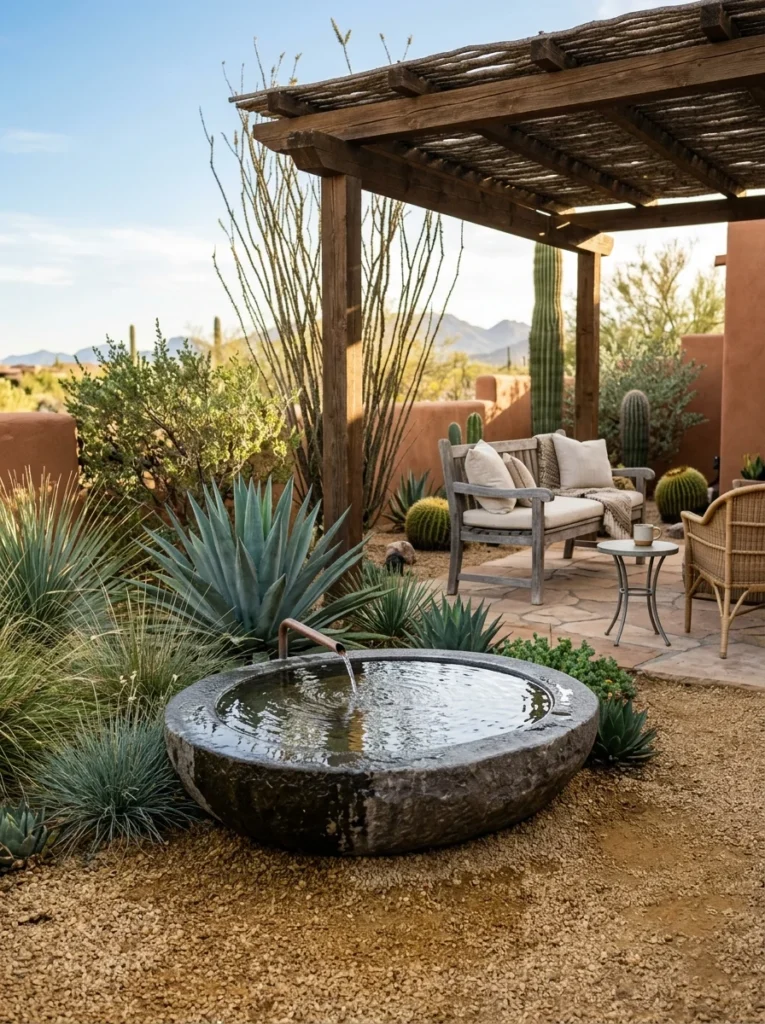
A small, recirculating water feature near the patio adds both a visual focal point and a subtle cooling effect to the immediate area around it. We chose a low, simple basin fountain rather than anything elaborate, both to keep evaporation loss manageable and to keep maintenance simple in a climate where standing water needs regular attention.
16. Native Grasses for Texture
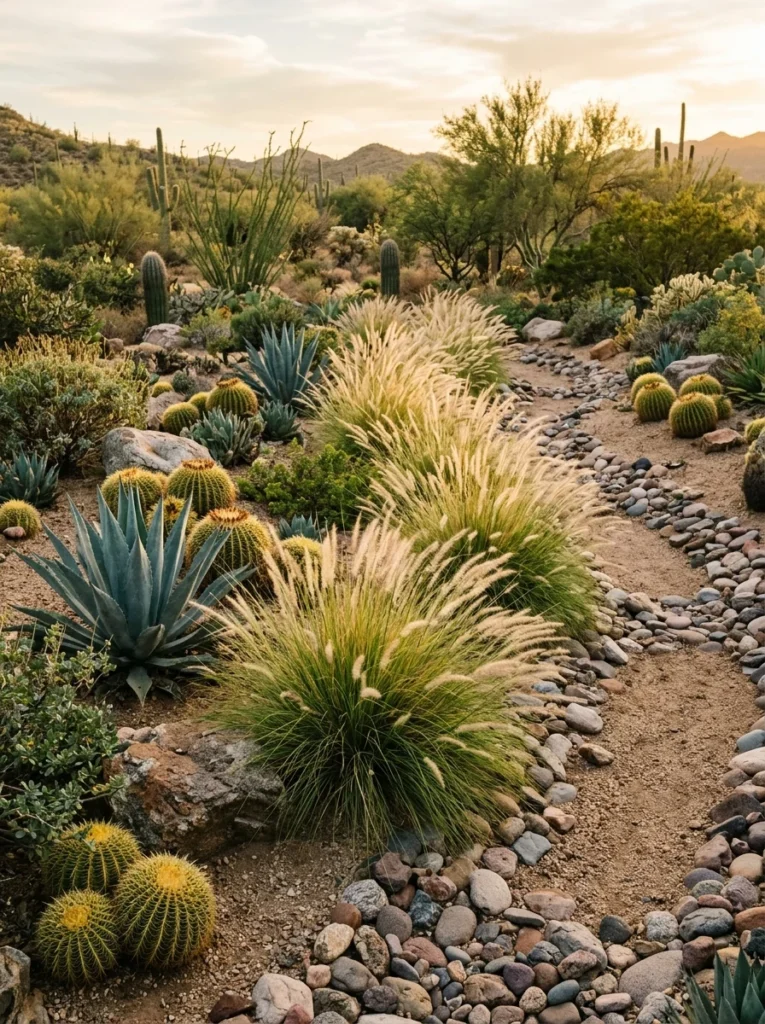
Deer grass and other native desert grasses add a soft, textural contrast to the more rigid, architectural shapes of cacti and succulents throughout the yard. Planted in loose clusters near our dry riverbed, they move gently in the wind and soften what would otherwise be an almost entirely hardscape-dominated space.
17. A Ramada for Full Shade Coverage
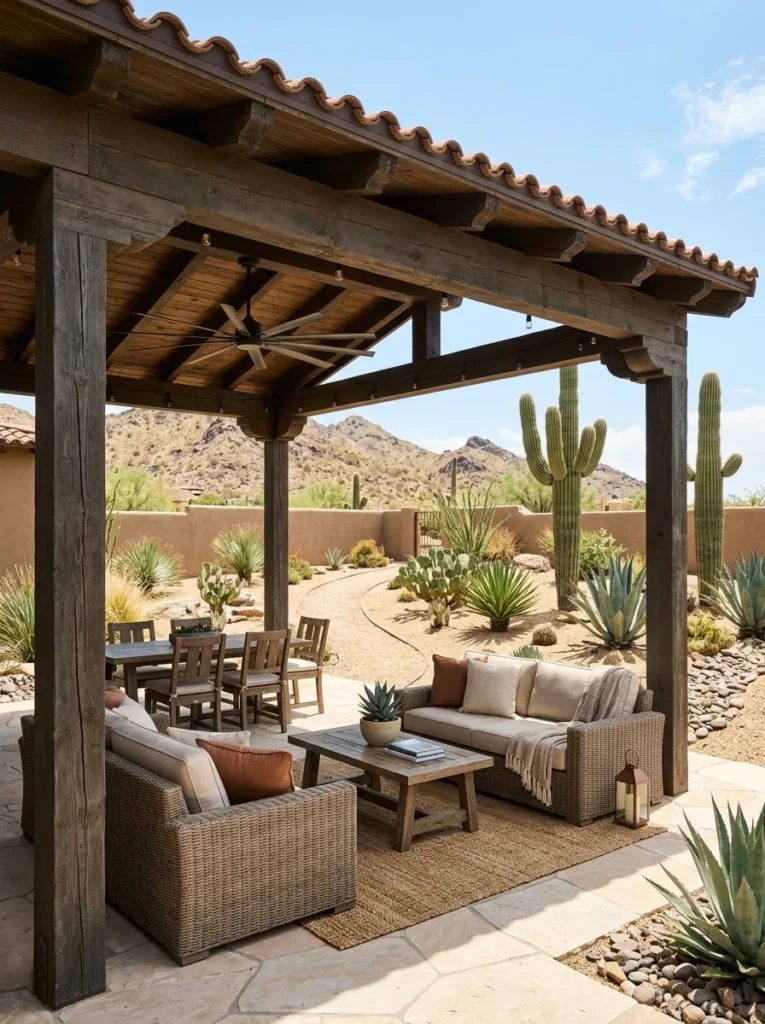
For the section of yard where we wanted complete shade rather than the filtered light a pergola provides, a solid-roofed ramada structure gave us a reliable, cool retreat during the hottest parts of the day. It’s become the default spot for afternoon gatherings during summer, when the rest of the yard is simply too hot to sit in comfortably.
18. Rock Mulch in Varying Sizes
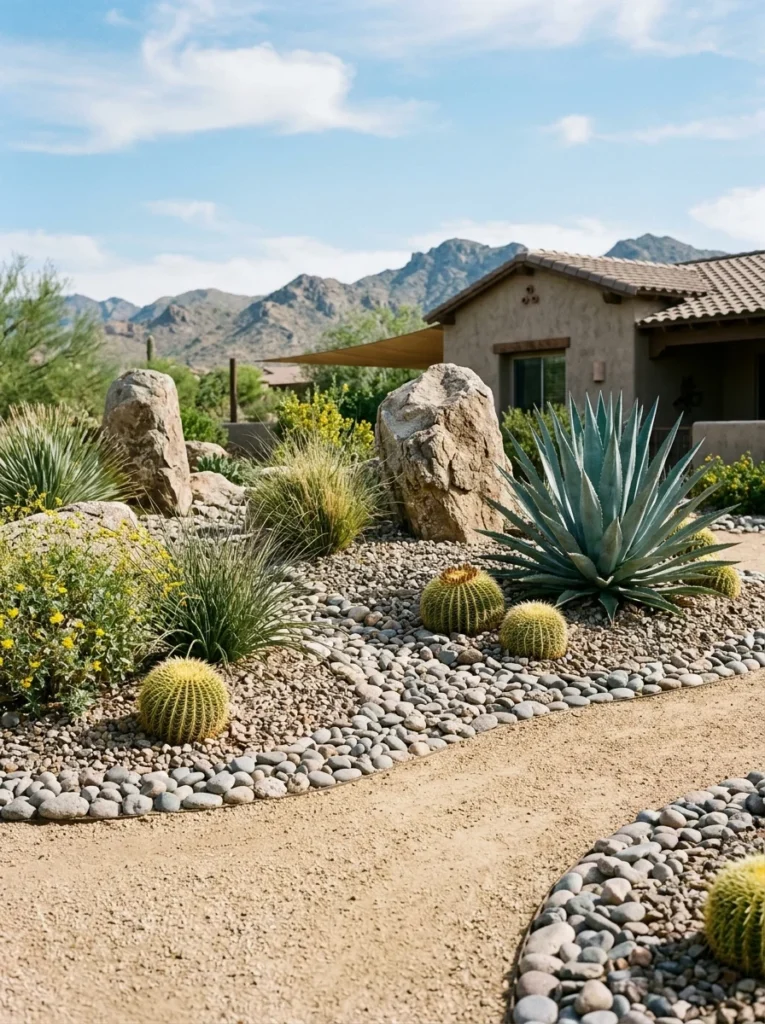
Instead of using a single uniform gravel size throughout, mixing larger boulders with medium river rock and finer decomposed granite created much more visual depth than flat, single-size gravel alone. It’s a small design choice, but it’s part of what keeps our yard from looking like a generic gravel lot.
19. Prickly Pear Cactus for Color and Texture
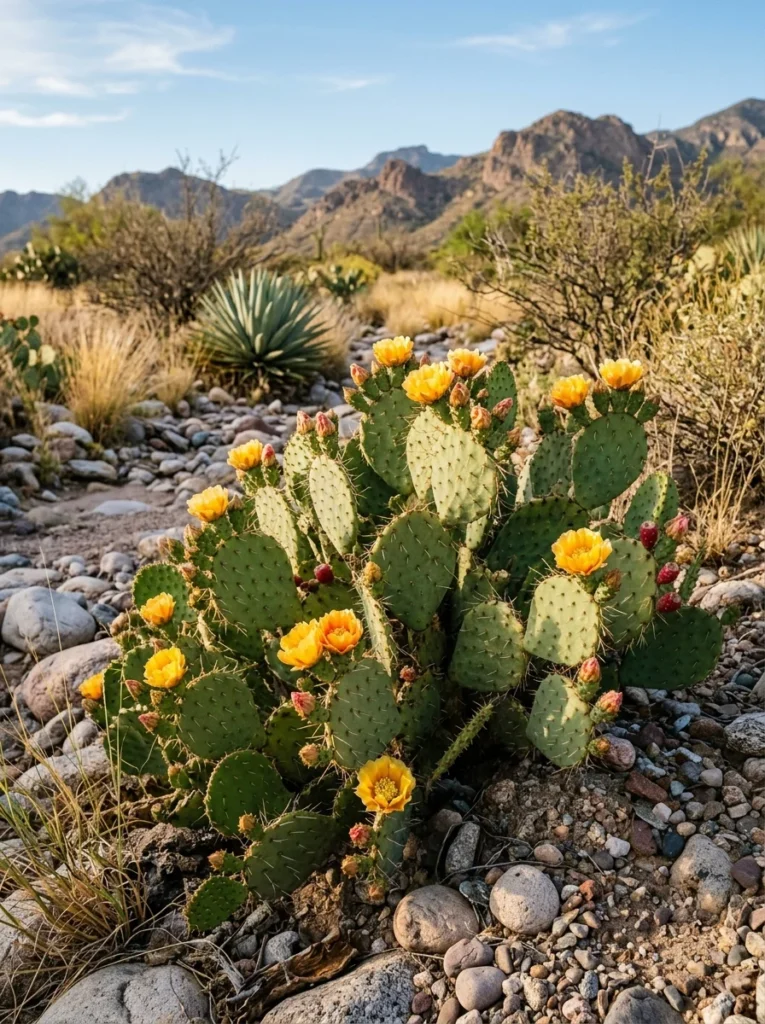
Prickly pear adds both striking paddle-shaped structure and, depending on the variety, vibrant purple, orange, or yellow flowers in spring. We planted a cluster near our dry riverbed feature, where the contrast between the flat rock and the sculptural cactus pads creates one of the most photographed corners of our yard.
20. Desert-Adapted Turf Alternatives
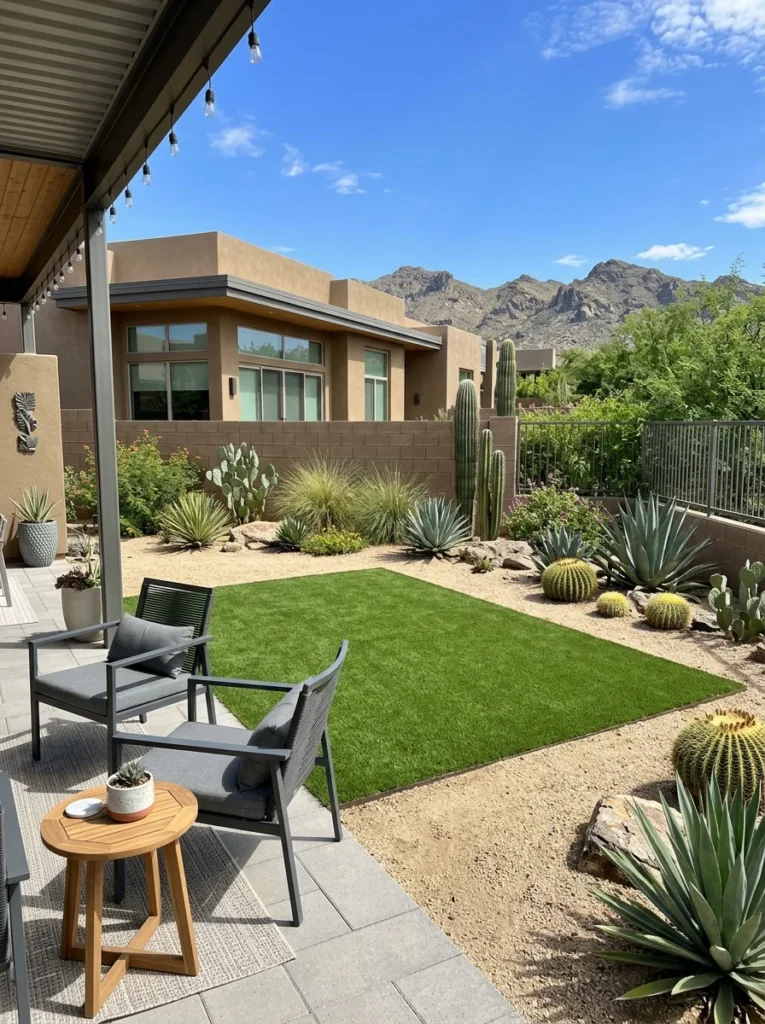
For the small section where we still wanted a patch of usable green space for our dog, we chose a low-water, desert-adapted turf variety rather than standard cool-season grass. It requires significantly less water than traditional lawn while still giving us a soft, walkable green patch near the patio.
21. Low-Voltage Landscape Lighting on Cacti
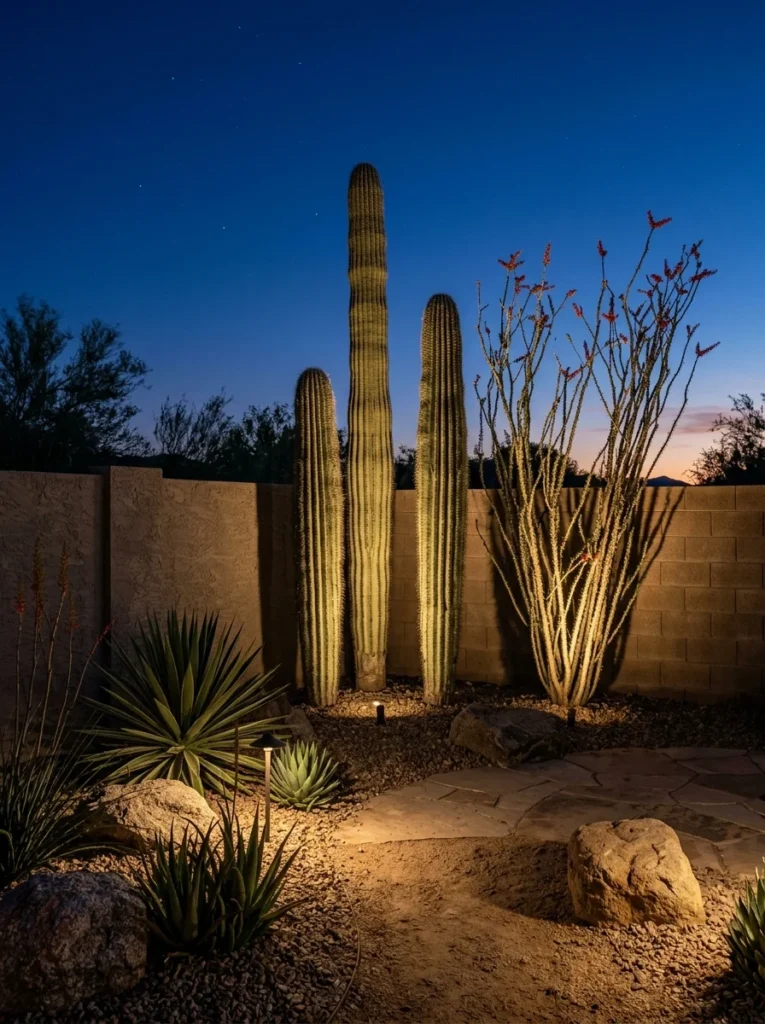
Uplighting a few of our taller saguaros and ocotillo with simple low-voltage landscape lights transformed how the yard looks after dark, casting dramatic shadows against the block wall behind them. It’s a detail that costs relatively little to install but completely changes the character of the space once the sun goes down.
Getting the Water Balance Right
One thing I underestimated when we started this project was how much thought actually goes into desert irrigation, even for drought-tolerant plants. Everything in our yard runs on a simple drip irrigation system rather than sprinklers, which delivers water directly to each plant’s root zone instead of losing a huge percentage to evaporation the way overhead watering does in our climate.
I also learned that “drought-tolerant” doesn’t mean “no water,” especially in the first year or two while a plant is establishing its root system. Several of our cacti and desert trees needed regular deep watering for their first two summers before we could scale back significantly, and skipping that establishment period on a couple of early plantings is the main reason we lost a few plants that first year.
Common Mistakes to Avoid in Desert Landscaping
Beyond watering, a few other lessons from our own trial and error are worth passing along. Planting too densely, the way you might in a more temperate climate, tends to backfire in the desert, since many desert plants need significantly more room to spread than their small nursery size suggests. We had to relocate two agave plants after just one growing season because they outgrew their original spacing far faster than expected.
Ignoring afternoon sun exposure when placing seating areas is another mistake we made early on, positioning our first patio set in a spot that got brutal direct western sun every single afternoon. Moving it to a spot shaded by the house itself during peak hours made an enormous difference in how often we actually used it.
Choosing Plants Based on Your Specific Microclimate
Even within the Phoenix area, we learned that microclimates within a single yard can vary enough to change what actually thrives in a given spot. The side of our house that gets reflected heat off a block wall runs noticeably hotter than the front yard, and a couple of plants that struggled near that wall did fine just twenty feet away in a less exposed spot.
Before committing to a full planting plan, I’d recommend spending a few weeks simply observing your yard at different times of day, noting which areas get full sun all day, which get afternoon shade from the house or existing structures, and which spots tend to collect water after a rare rain. That observation period saved us from repeating a couple of costly planting mistakes in year two that we’d made blindly in year one.
Elevation matters too, more than I expected before we started. Areas of Arizona at higher elevation than the Phoenix valley floor can handle plants that would struggle with valley heat, and the reverse is also true, so it’s worth checking which desert plants are actually suited to your specific region rather than assuming everything labeled “desert-friendly” will automatically thrive at your exact elevation and sun exposure.
Frequently Asked Questions
How much does it cost to convert a grass yard to desert landscaping? Costs vary widely depending on how much of the work you do yourself versus hire out, but in our experience, the decomposed granite and basic hardscaping alone were dramatically cheaper than what we’d been spending trying to keep grass alive, and the long-term water savings continued to add up well beyond the initial installation cost.
Do desert plants really need less maintenance than grass? Once established, yes, significantly less. Our biggest ongoing maintenance now is occasional pruning and an annual check of the drip irrigation system, compared to the weekly mowing, edging, and constant watering grass required in the same climate.
Is it possible to have a colorful desert yard, or is it mostly just brown and green? It’s absolutely possible, and honestly one of the most surprising parts of this whole project for us. Between spring wildflowers, flowering cacti, colorful Talavera tile accents, and seasonal blooms on plants like ocotillo, our yard has meaningful color for a large part of the year, just on a different schedule than a traditional grass and flower garden would follow.
How long does it take for a desert landscape to look established? In our experience, the hardscaping elements like decomposed granite, boulders, and the dry riverbed looked finished almost immediately after installation, but the planting itself took closer to two full growing seasons before it started to feel filled in and mature rather than sparse. Cacti in particular grow slowly, so patience matters more with desert landscaping than it does with fast-growing grass or common ornamental shrubs.
Do I need a professional landscaper, or can this be a DIY project? We did the vast majority of our yard ourselves, including the irrigation layout, though we did hire help for moving and placing a couple of the larger boulders and one mature saguaro, since both were genuinely too heavy and awkward to handle safely on our own. For anyone comfortable with basic yard work, most of the smaller planting and hardscaping tasks on this list are very manageable as a weekend DIY project.
Planning Your Budget in Phases
Looking back, one of the smartest things we did, mostly by financial necessity rather than a grand plan, was breaking the whole project into phases spread across about a year and a half rather than trying to do everything at once. The first phase covered removing the old grass and laying down decomposed granite and basic irrigation lines, which gave us a clean, functional base even before any plants went in.
The second phase focused on the hardscaping elements: the dry riverbed, the pergola, and the patio shade sail, since those structural pieces needed to be in place before we could plan plant placement around them. Trees and larger anchor plants like the saguaro and agave clusters came in phase three, followed by the smaller filler plants, succulents, and wildflower seeding in a final phase once we had a better feel for how the space was actually being used.
Spreading the cost out this way not only made the project financially manageable, it also gave us the benefit of living with each phase for a while before committing to the next, which led to a few smart adjustments, like relocating our fire pit closer to the patio, that we wouldn’t have known to make if we’d designed and installed everything in one single push.
Final Thoughts
Looking at our backyard now, full of texture, color, and life despite receiving a fraction of the water our old grass yard demanded, it’s strange to remember how much I resisted this direction at the start. I spent that first summer trying to force a landscape that never belonged in this climate to begin with, and it wasn’t until I let go of that and started designing around what actually thrives here that the yard finally started to feel like it fit the house and the desert around it.
If you’re just starting your own desert backyard project, my honest advice is to resist the urge to plant everything at once, the way I did in year one. Start with the hardscaping and irrigation layout first, add a handful of anchor plants like a tree or two and a few larger cacti, and then fill in gradually over a couple of seasons. That slower approach not only saved us money by avoiding the plant losses that came from rushing the first year, but it also gave us the chance to actually see how the light and shade moved through the yard before committing to a final layout.
What I’d tell anyone moving to the desert from a greener climate, since that’s exactly the position I was in three years ago, is to give yourself permission to let go of what a “nice yard” looked like back home. The desert has its own kind of beauty, one built around texture, structure, and the way light hits rock and cactus at different times of day, rather than uniform green. Once I stopped measuring our yard against a standard that never fit this climate, I actually started enjoying the process of building something that belonged here, and three summers later, it’s genuinely one of my favorite parts of the house.