
For the longest time, the walls in my kitchen were completely bare except for a calendar magnet holding up a takeout menu I never actually used. It wasn’t a conscious design choice, it just never occurred to me that a kitchen needed the same decorating attention as a living room or bedroom. That changed the day a friend came over for coffee and said, almost as an offhand comment, “your kitchen just needs something on the walls.” I brushed it off at first, but the comment stuck with me, and over the next few months I slowly turned that blank, forgettable wall space into what’s now genuinely my favorite part of the apartment to show people.
If your kitchen walls are as bare as mine used to be, here are 20 ideas, each explained in detail, based on what I tried myself and what I’ve picked up watching other people transform their own kitchens.
1. Open Shelving With Curated Dishware
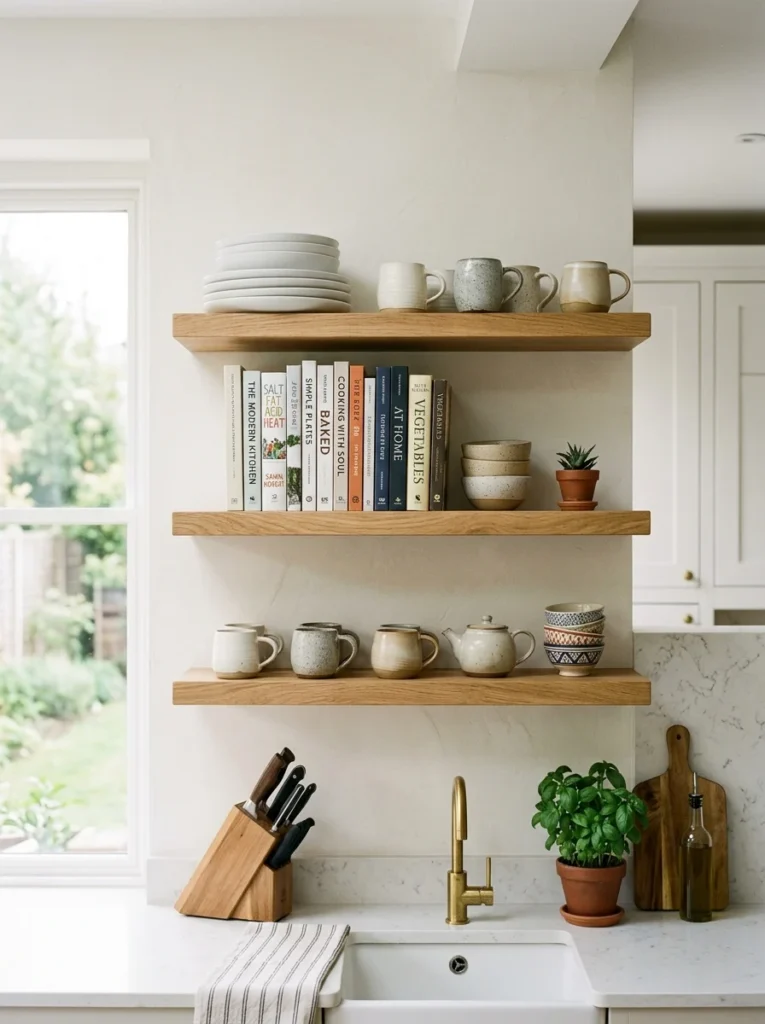
Replacing even one upper cabinet with open shelving was the single change that made my kitchen feel the most transformed, and it wasn’t even primarily about decoration, it was about function too. I display my everyday plates, a few mismatched vintage mugs I’ve collected over the years, and a small stack of cookbooks, and somehow having these items visible rather than hidden behind cabinet doors makes the whole kitchen feel more personal and less like a showroom. The key to making open shelving look intentional rather than cluttered is editing carefully: I only keep dishware I actually think looks good on display, and anything chipped or mismatched in a way I don’t like goes back into a closed cabinet. Grouping items by color or material also helps a lot, stacking white plates together rather than scattering different colors across the shelf randomly. If you’re nervous about committing to open shelving permanently, removing just one cabinet door and leaving the shelves as they are is a low-cost way to test whether you like the look before doing any actual construction or shelf installation.
2. A Gallery Wall of Food-Related Art
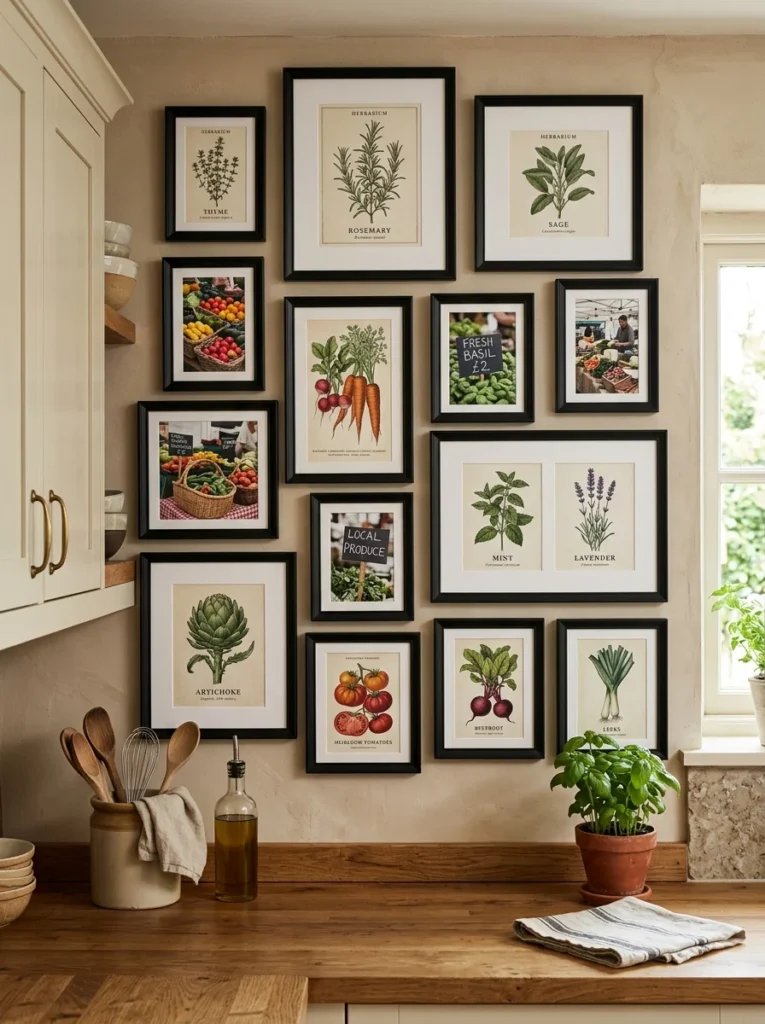
I built a small gallery wall using a mix of botanical prints of herbs, a vintage-style illustration of vegetables, and a black-and-white photo I took at a local farmers market, all framed in matching thin black frames. Keeping the frame style consistent, even though the art itself varies quite a bit, is what makes the whole arrangement look pulled together instead of like a random assortment of things I liked individually. I’d recommend laying the frames out on the floor first, experimenting with the arrangement before putting a single nail in the wall, since it’s much easier to adjust spacing on the ground than to keep patching and repainting a wall you’re not happy with. A kitchen gallery wall works particularly well above a console table, a small empty stretch of wall near the table, or even filling the awkward space beside a refrigerator that often goes completely undecorated. The food-related theme ties the art directly to the room’s purpose, which somehow makes it feel more intentional than generic art that could belong in any room of the house.
3. Statement Wallpaper on One Wall
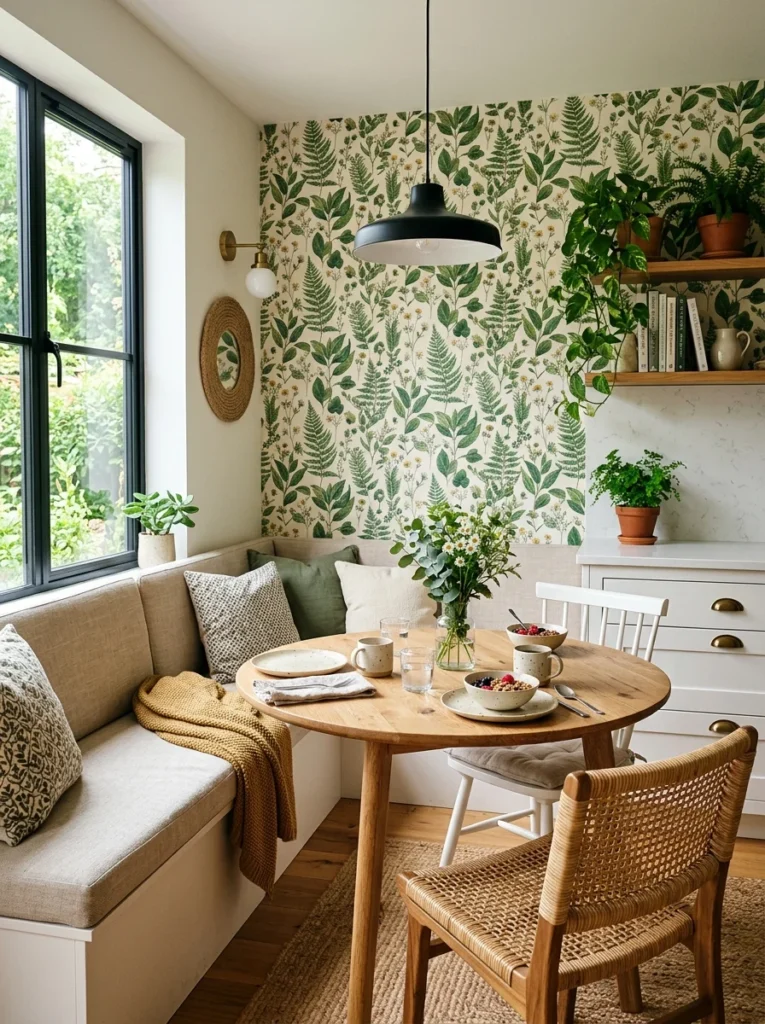
I was hesitant about wallpaper for years, mostly because I associated it with dated, floral patterns from decades ago, but a single accent wall in a bold botanical print near my kitchen table completely changed my opinion. Modern peel-and-stick wallpaper options have made this a genuinely low-commitment project, since they can be removed without damaging the wall underneath if you eventually want to change the look. I chose a wall that wasn’t near the stove or sink, since grease and moisture can affect certain wallpaper materials over time, and I’d recommend doing the same if you’re considering this for your own kitchen. A single wallpapered wall, rather than the entire room, keeps the look from feeling overwhelming while still making a strong visual statement the moment you walk in. If you’re renting and worried about a landlord’s approval, peel-and-stick versions are specifically designed to be a safe, reversible option, which is exactly what made me comfortable trying it in the first place.
4. A Chalkboard or Message Board Wall
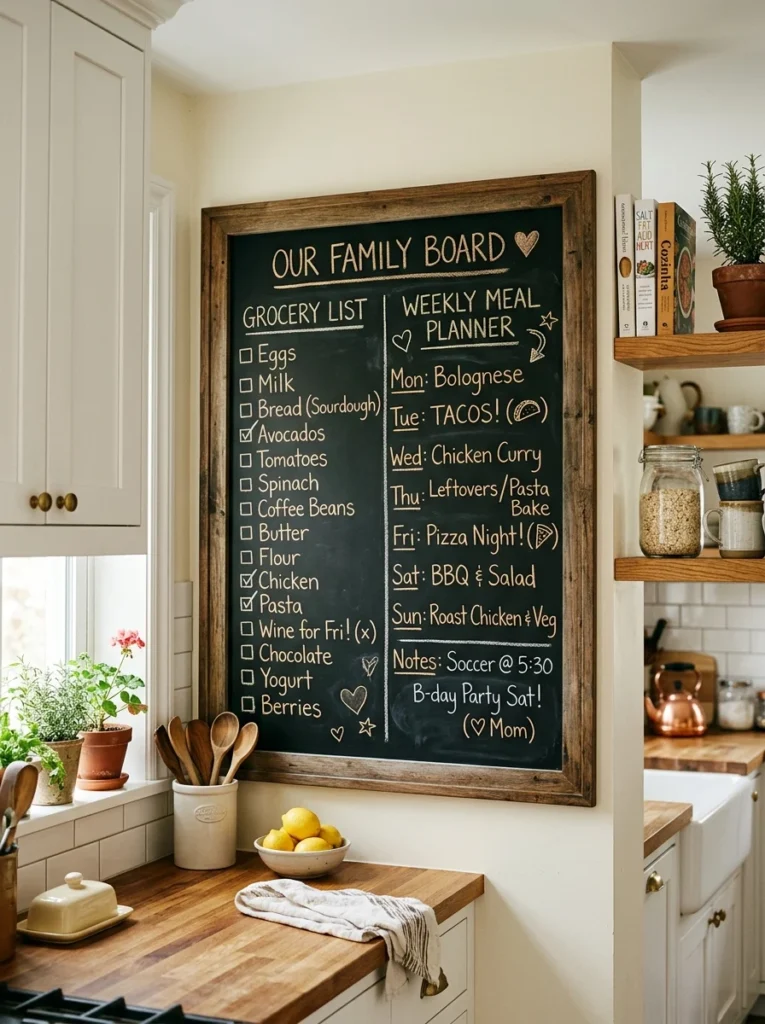
Beyond pure decoration, I painted a small section of my kitchen wall with chalkboard paint, and it’s turned into one of the most genuinely used surfaces in the entire apartment, whether that’s a grocery list, a quick note to my roommate, or just a doodle from a friend visiting for dinner. It adds a slightly playful, personal element to the room that static art simply can’t replicate, since it changes constantly based on whatever’s actually going on in the household that week. I kept mine to a fairly small section, about two feet by three feet, rather than covering an entire wall, since a small chalkboard area still provides plenty of writing space without dominating the room visually. Framing the chalkboard section with simple wood trim gave it a more finished, intentional look rather than just a random patch of dark paint on an otherwise white wall, which is a detail I’d genuinely recommend if you try this idea yourself.
5. Hanging Pot Racks as Functional Decor
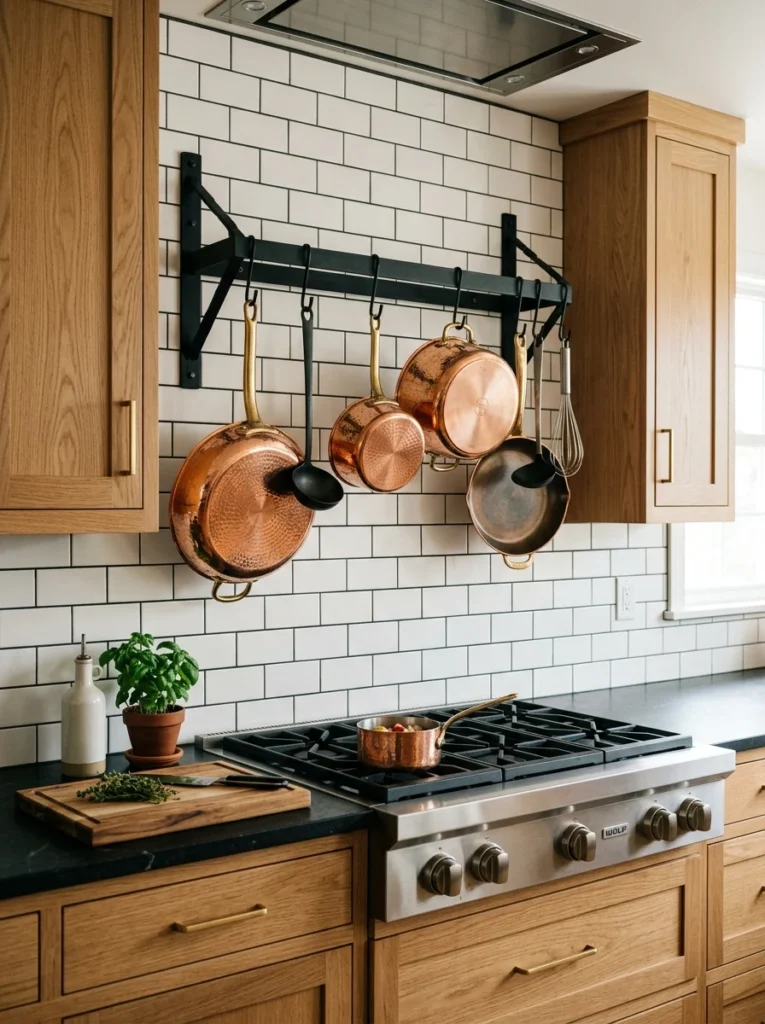
A hanging pot rack solved two problems at once for me: it freed up an entire cabinet that used to be crammed full of pots and pans, and it added visual texture and warmth to an empty stretch of ceiling and wall space above my stove. I chose a wall-mounted version rather than a ceiling-hung one, since my kitchen ceilings are fairly low, and it still holds six or seven pots and pans within easy reach while cooking. Beyond the practical storage benefit, there’s something about seeing well-used copper or cast iron cookware displayed openly that gives a kitchen a slightly more professional, lived-in feeling, almost like a restaurant kitchen. I’d recommend organizing pots by size, largest on the outer hooks and smallest toward the center, both for visual balance and so you’re not constantly rearranging things to reach whatever’s buried in the back. This is one of those ideas that works especially well if your actual cookware looks good enough to display, which might mean it’s finally time to retire that one dented pot to a cabinet instead.
6. Floating Wood Shelves for Plants and Jars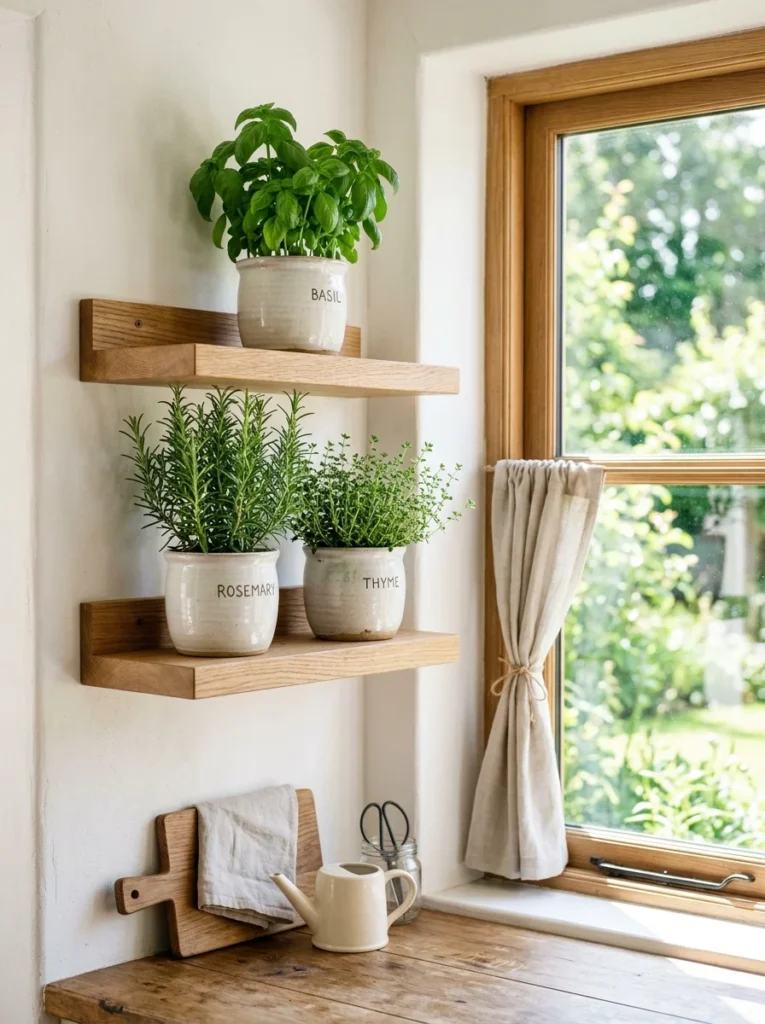
I installed two floating wood shelves above my kitchen window specifically to hold small potted herbs, and the greenery against the raw wood grain has become one of my favorite little details in the whole room. Beyond plants, floating shelves work well for displaying a small collection of glass jars filled with pasta, grains, or spices, turning everyday pantry staples into part of the room’s visual interest rather than hiding them away in a cabinet. Choosing a wood tone that contrasts with your existing cabinetry, lighter wood against darker cabinets or vice versa, helps the shelves stand out as an intentional design element rather than blending in and going unnoticed. I’d recommend keeping the items on each shelf to a curated few rather than filling every available inch, since floating shelves tend to look better with some breathing room between objects rather than a cluttered, packed appearance. Herbs in particular need a spot with decent natural light, so positioning these shelves near a window, as I did, serves both a decorative and genuinely practical purpose.
7. A Large Statement Clock
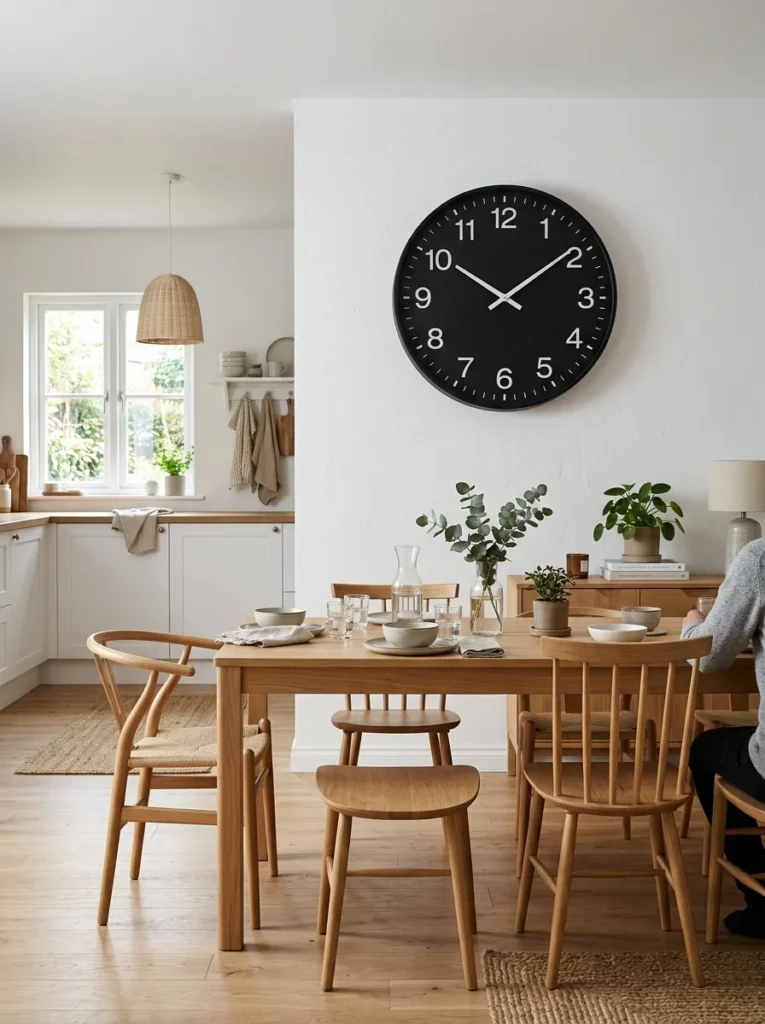
An oversized wall clock might sound like an old-fashioned choice, but mine, a simple black metal design about two feet in diameter, has become a surprisingly effective focal point on an otherwise plain wall near my kitchen table. Unlike most decor items, a clock also serves a constant practical function, which somehow makes it feel less indulgent than purely decorative pieces while still adding real visual weight to the room. I chose a minimal design with thin black hands and no numbers, just simple line markers, since it matches the clean, modern feeling of the rest of my kitchen without competing with the other decor around it. Scale matters a lot here: a small clock on a large blank wall tends to look lost and accidental, while an appropriately oversized one reads as an intentional statement piece. If your kitchen leans more traditional or farmhouse in style, a distressed wood-framed clock can achieve the same visual anchoring effect while still fitting that different aesthetic.
8. Woven Baskets as Wall Art
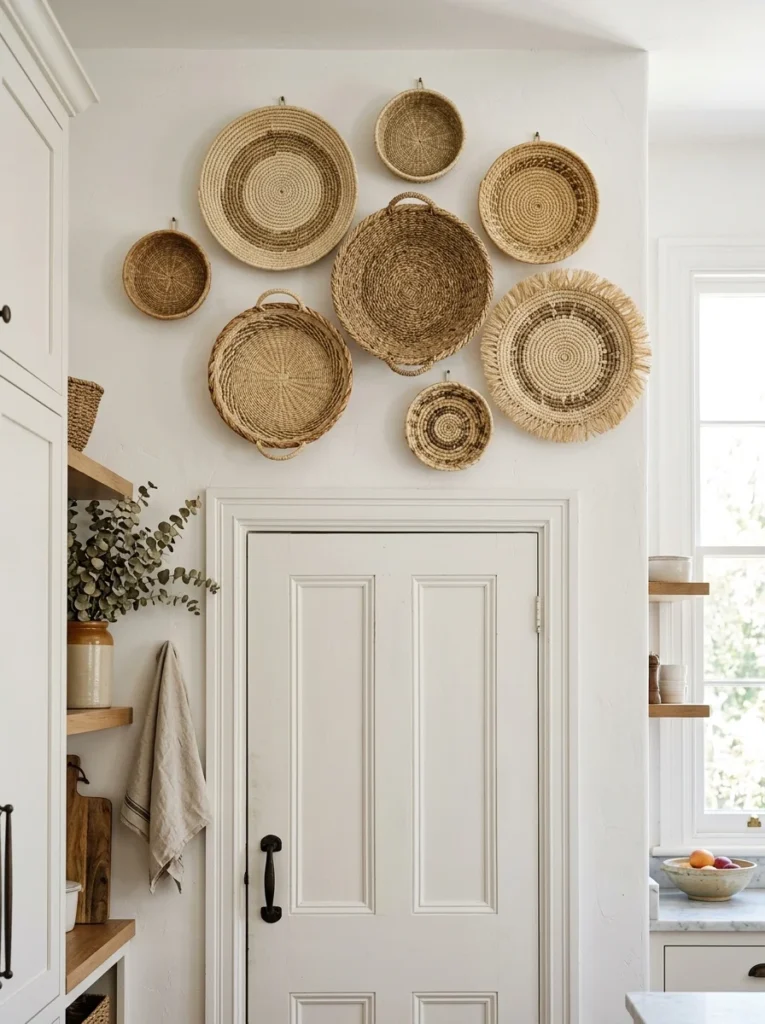
This was an idea I borrowed directly from a boho-styled kitchen I saw on a trip, and it turned out to be one of the cheapest, easiest additions on this entire list. I arranged five flat woven baskets of varying sizes in a loose cluster on the wall above my pantry door, and the natural texture adds warmth in a way that flat printed art simply doesn’t. Each basket just needs a small nail or hook, so there’s no heavy mounting hardware required, which makes this an easy weekend project even for someone without much DIY experience. Mixing basket sizes and slightly different weave patterns within the same cluster keeps the arrangement visually interesting rather than looking like a uniform, mass-produced set. This idea works particularly well in kitchens that already lean toward warm, earthy tones, since the natural fiber texture reinforces that same organic feeling that wood and rattan furniture bring to other rooms of the house.
9. A Mounted Wine or Stemware Rack
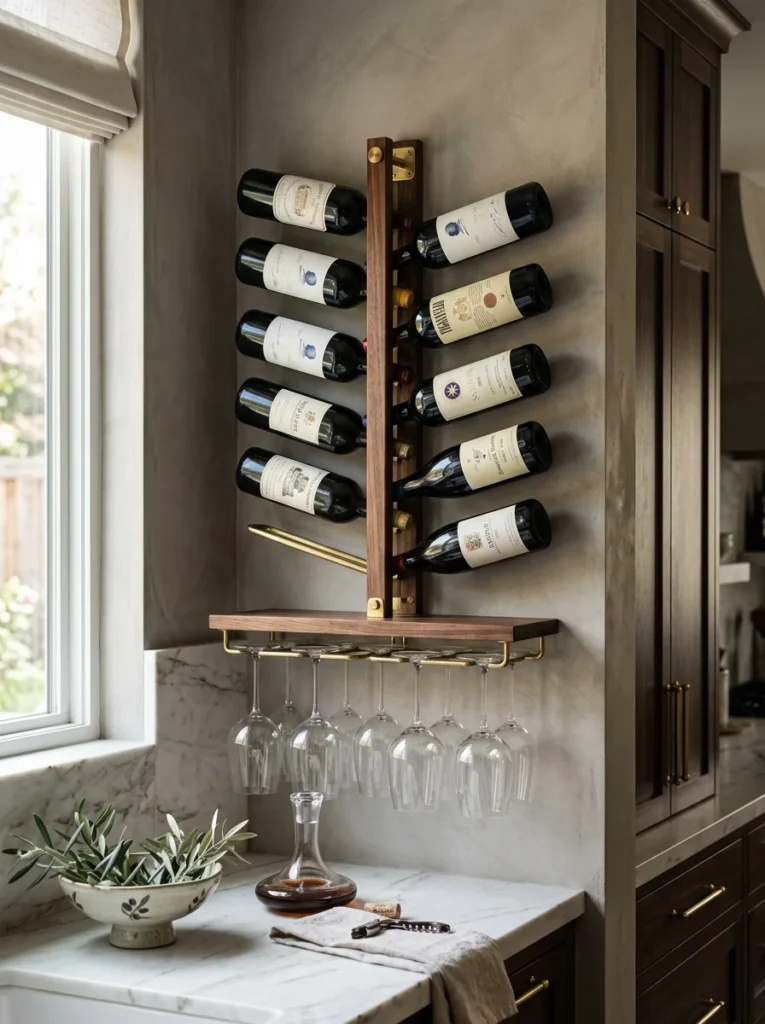
Beyond just decoration, a mounted wine rack combined with hanging stemware storage turned an awkward blank corner of my kitchen into what’s now essentially a small home bar setup, and guests notice it immediately when they walk in. The dark glass of the wine bottles combined with the delicate shape of hanging wine glasses adds a level of visual interest that a plain empty wall simply can’t provide on its own. I mounted mine on the wall between my upper cabinets and the ceiling, a strip of space that was previously completely unused and, frankly, invisible until I put something there. This idea works especially well if you already enjoy wine regularly, since it keeps everything within easy reach rather than storing bottles in a closet or cabinet somewhere out of sight. For anyone who doesn’t drink wine but likes the aesthetic, similar mounted racks are available for displaying decorative bottles or even cookbooks, achieving a comparable visual effect with a completely different function.
10. Vintage or Antique Kitchen Tools as Display
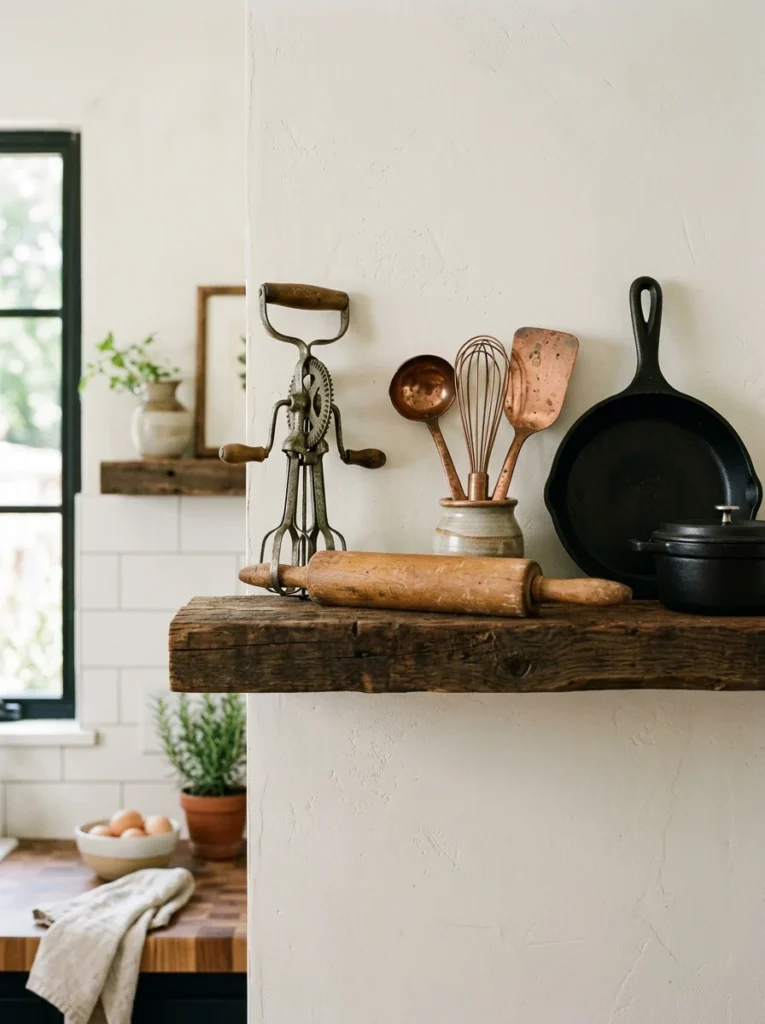
My grandmother’s old hand-crank egg beater sat in a drawer for years before I finally mounted it on a small shelf near my stove, alongside a few other vintage kitchen tools I picked up at estate sales specifically because they had that same worn, well-used character. There’s something about displaying genuinely old kitchen items, rather than new decor made to look vintage, that adds a level of authenticity and personal history that’s hard to fake. I’d recommend starting with any family kitchen items you might already have tucked away in storage, since those carry sentimental value on top of the visual interest, before shopping for additional pieces at antique shops or estate sales. Grouping several small vintage tools together on a single shelf or a section of pegboard creates more visual impact than scattering single items across different parts of the kitchen. This idea pairs particularly well with a farmhouse or vintage-inspired kitchen aesthetic, though even a single well-chosen antique piece can work as an accent in a more modern kitchen if you’re intentional about the placement.
11. A Pegboard Organization Wall
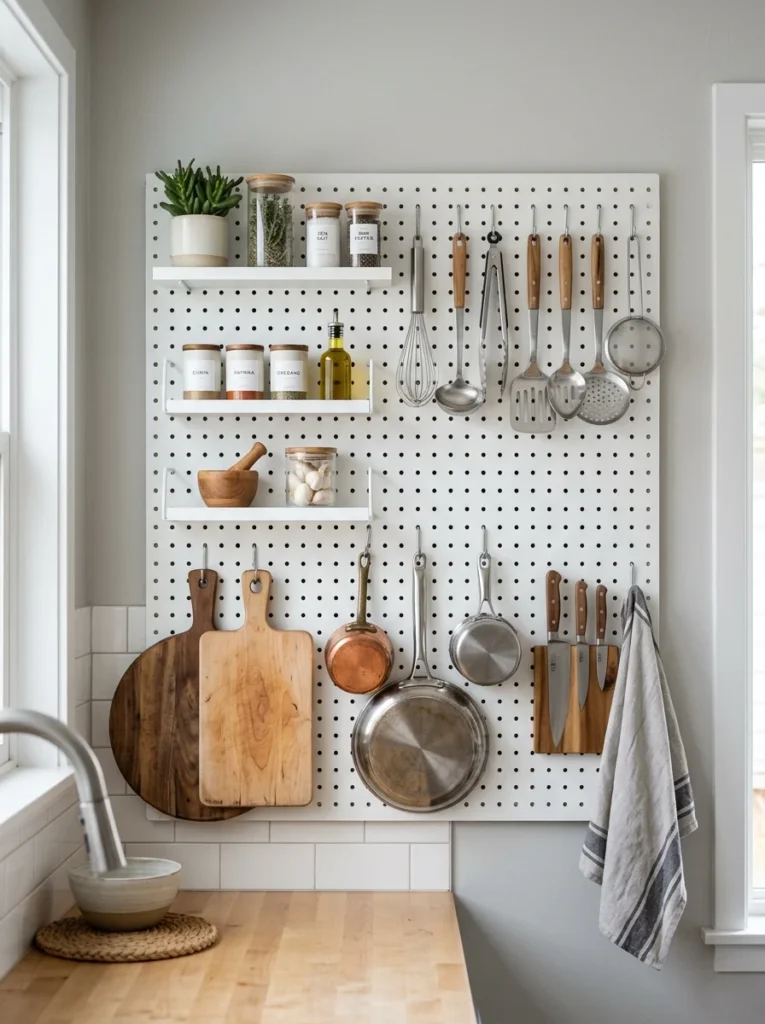
Borrowed directly from professional kitchens, a pegboard mounted on one section of wall gave me a completely customizable, endlessly rearrangeable display for everything from cooking utensils to small pots, and I’ve genuinely rearranged it probably a dozen times since installing it as my needs and collection of tools have changed. I painted mine the same color as the surrounding wall so it blends in as a texture rather than standing out as an obviously utilitarian object, though a contrasting color is also a popular choice if you want the pegboard itself to be more of a visual statement. Hooks and small shelves can be repositioned in seconds without any additional tools, which makes this one of the most genuinely flexible options on this entire list as your kitchen needs evolve over time. This works particularly well above a prep counter or stove, keeping frequently used tools within easy reach while doubling as an ever-changing piece of functional wall art that’s never quite the same twice.
12. Framed Vintage Recipe Cards or Family Recipes
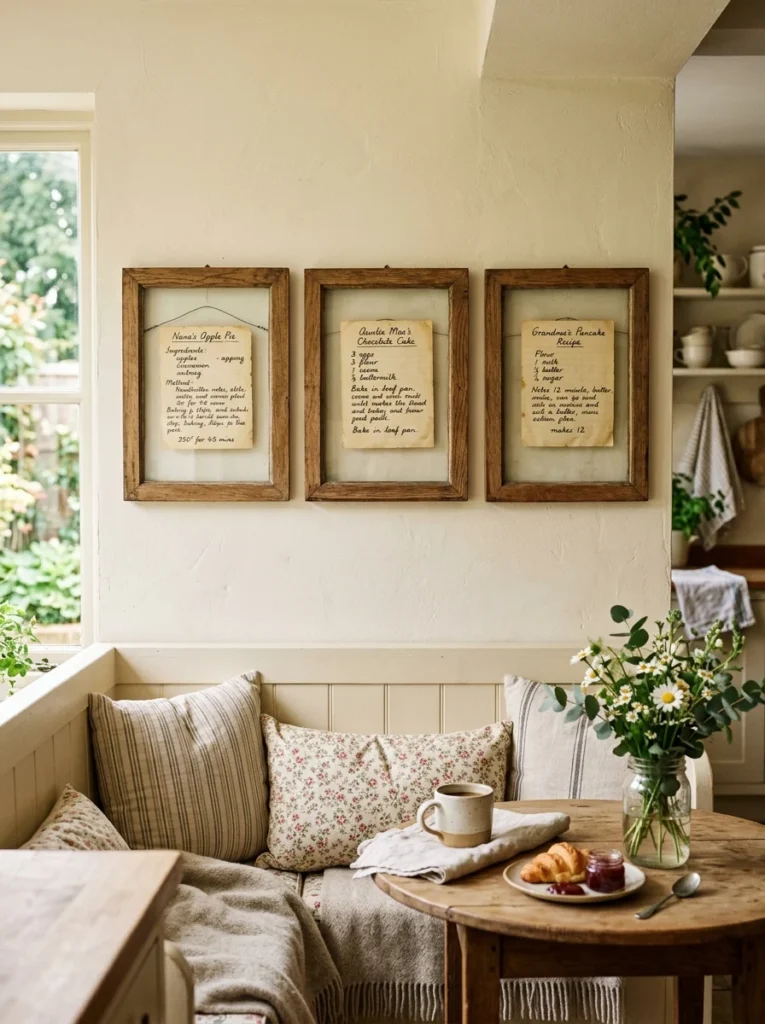
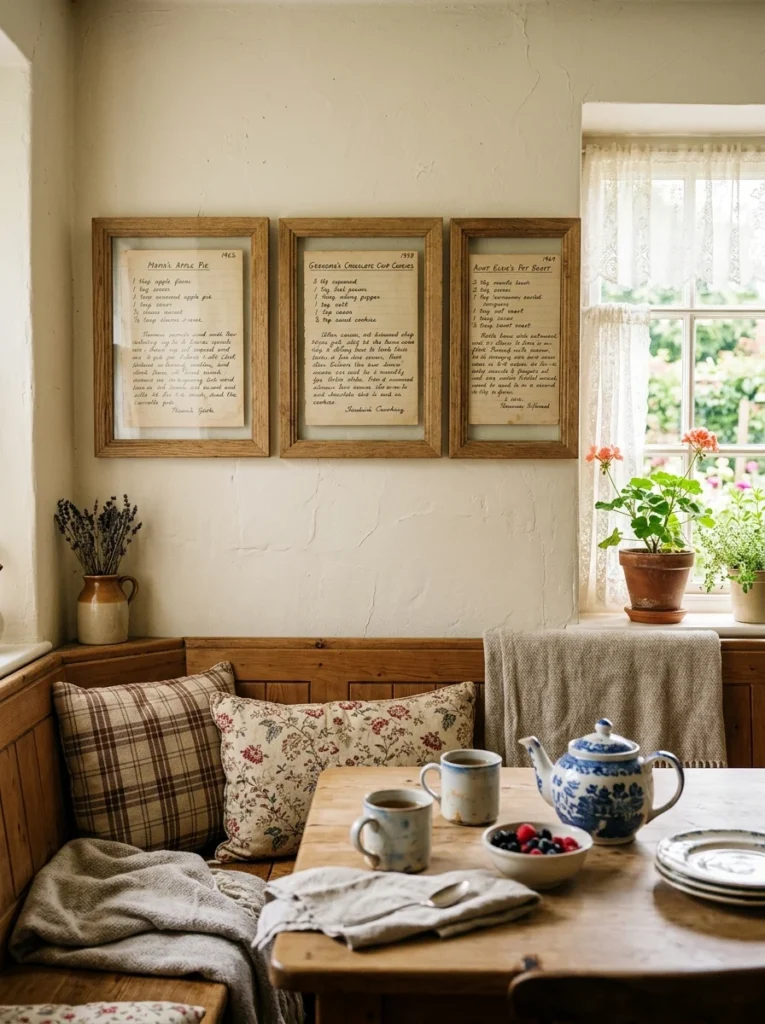
I framed three of my grandmother’s handwritten recipe cards, stains and all, and hung them in a small cluster near my kitchen table, and it’s consistently the thing visitors ask about first when they notice it. There’s something genuinely moving about seeing actual handwriting rather than a printed recipe, and the slight imperfections, a coffee stain, a crossed-out ingredient, add a layer of authenticity that no amount of styled decor can replicate. If you don’t have family recipe cards of your own, even a single favorite recipe written out by hand and simply framed can carry that same personal, storytelling quality. I’d recommend using acid-free matting if you’re framing an original document you want to preserve long-term, rather than a photocopy, since regular paper and adhesive can degrade original handwriting over time. This idea works especially well as a small, personal touch mixed into a larger gallery wall arrangement rather than as the sole piece of art in the room, giving it context alongside other decorative elements.
13. A Herb Wall or Vertical Garden
A small vertical garden mounted on an empty section of wall near my kitchen window has become both a genuine source of fresh herbs for cooking and one of the most visually striking elements in the entire room. I used a simple modular planter system with individual pockets for basil, mint, and parsley, watering it once every few days, and the ongoing greenery adds a living, changing quality that static decor items can’t match. Beyond the visual appeal, having fresh herbs literally within arm’s reach while cooking has genuinely changed how often I actually use fresh herbs instead of dried ones, since the barrier of walking to a store disappears entirely. Placement near a window with reasonable natural light matters a lot here, and I’d recommend researching which specific herbs tolerate your particular kitchen’s light levels, since some, like basil, need considerably more sun than hardier options like mint. This idea requires slightly more ongoing maintenance than most others on this list, but the payoff, both visual and practical, has made it worth the extra watering and occasional trimming.
14. Mixed Metal Wall Sconces
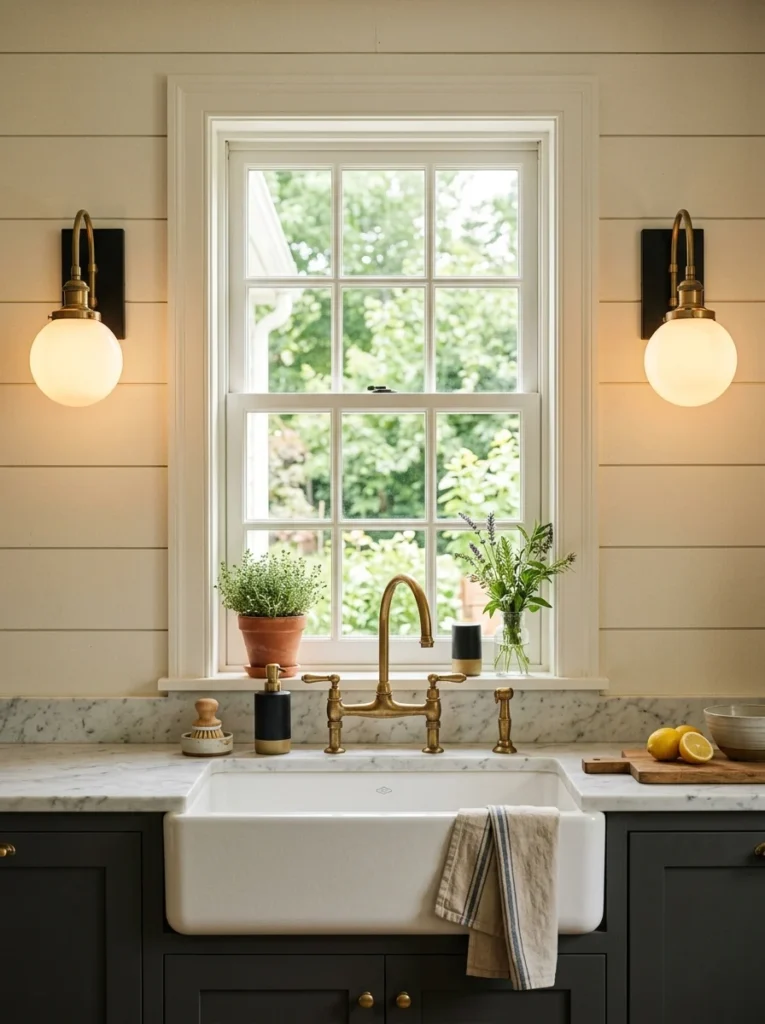
Replacing my single overhead kitchen light with two wall-mounted sconces flanking a window above my sink added both better task lighting and a genuinely decorative element that a purely functional overhead fixture never provided. I chose a mixed metal finish, black fixtures with brass detailing, to tie into the other hardware throughout my kitchen rather than introducing a completely new, unrelated metal tone. Sconces work particularly well in spots where you’re doing detailed work, like washing dishes or prepping food near a window, since the light comes from the side rather than straight overhead, reducing shadows in a way that overhead lighting alone often can’t achieve. This is a more involved project than most others on this list, since it typically requires an electrician unless you’re comfortable with basic electrical work yourself, but the combined lighting and decorative impact makes it one of the higher-value upgrades if your budget allows for it. Even swapping out a single existing light fixture for a more decorative version, without adding an entirely new one, can achieve a similar visual upgrade with considerably less effort.
15. A Cork or Bulletin Board Display
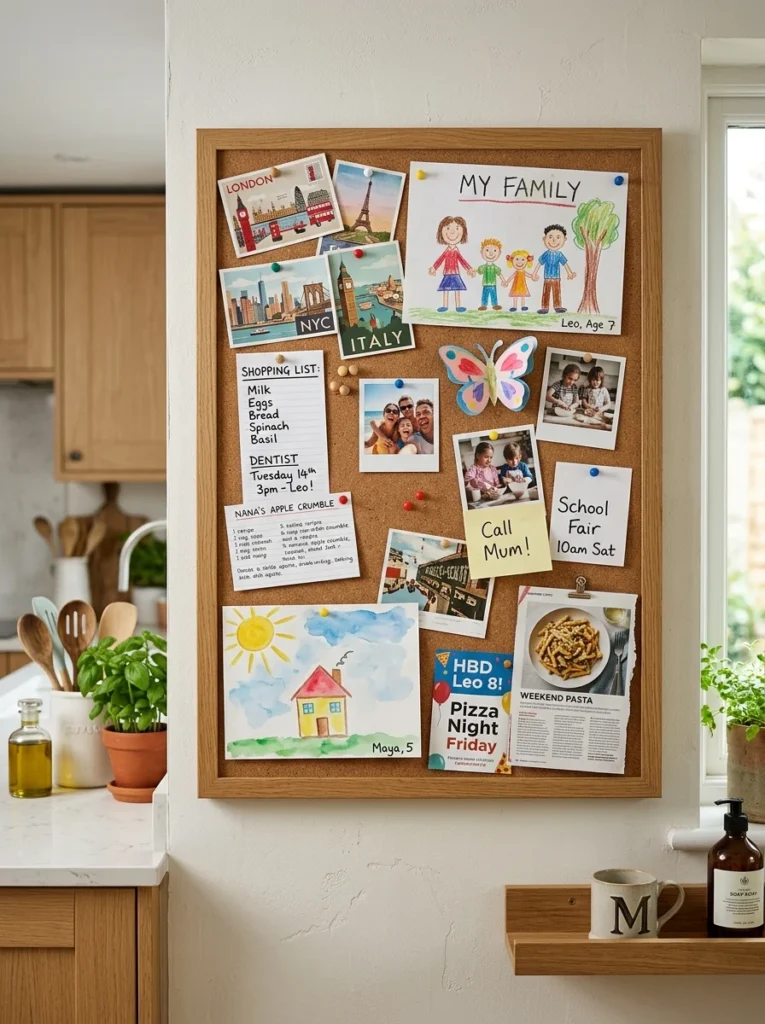
A large cork board, framed in the same wood tone as my open shelving, gives me a dedicated spot for postcards, kids’ artwork, and the occasional handwritten note, functioning almost like a rotating, ever-changing gallery wall that never requires new nail holes. I positioned mine near the kitchen entrance, since that’s where mail and notes naturally tend to accumulate anyway, making the board a genuinely useful catch-all rather than just another decorative object competing for wall space. Framing the cork itself, rather than using a plain unframed board, elevates the whole thing from looking like an office supply into something that reads as an intentional piece of kitchen decor. I’d recommend choosing a frame color that matches your other kitchen hardware or wood tones, the same principle of visual consistency that applies to gallery walls and open shelving throughout the rest of this list. This idea works particularly well in households with kids, since it gives their artwork and school notices a dedicated, visible spot rather than ending up scattered loose on the refrigerator door.
16. A Mounted Television Disguised as Art
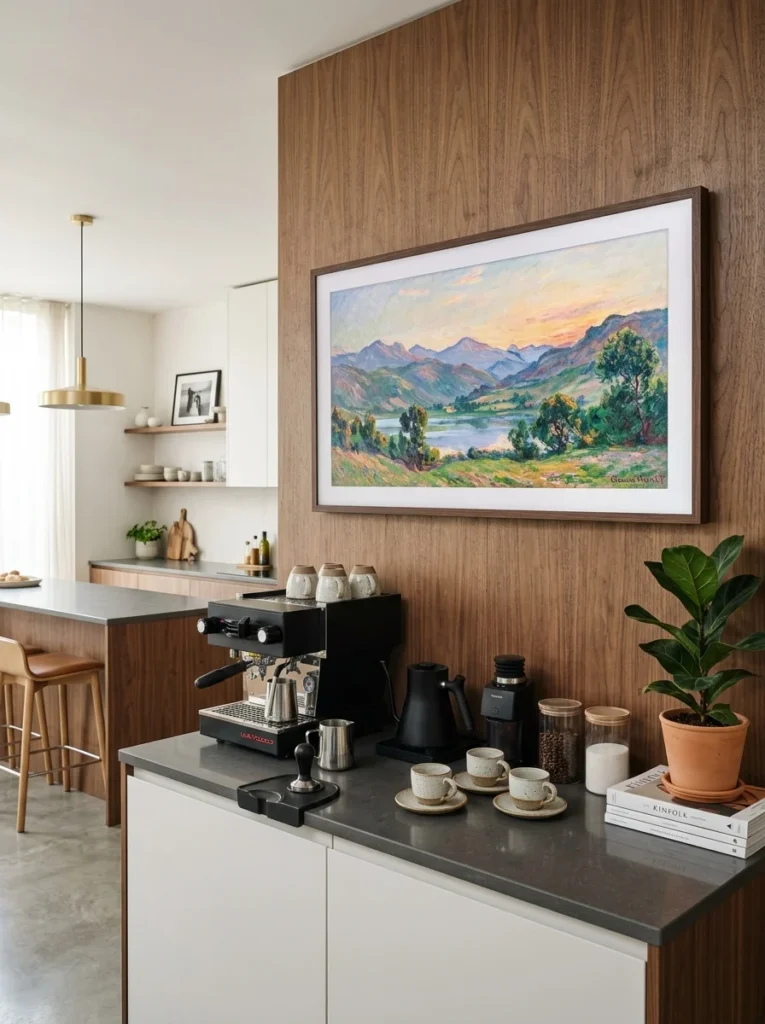
For anyone who likes watching something while cooking, a mounted television that displays artwork or a digital clock when not actively in use solves the awkward problem of a blank black screen interrupting an otherwise carefully decorated kitchen wall. A friend of mine installed one of these art-mode televisions above her kitchen counter, and unless you know to look for it, it genuinely reads as a framed piece of digital art rather than an electronic device, at least until she turns on the actual programming. This is admittedly a bigger investment than most other ideas on this list, but for households that already wanted a kitchen television anyway, choosing this style over a standard model means you’re not sacrificing wall aesthetics for the sake of function. Mounting height matters quite a bit here, positioned high enough to avoid interfering with cabinet doors or splatter from cooking, while still being at a comfortable viewing angle from the kitchen table or island. This idea works best in kitchens with a more modern, tech-forward aesthetic overall, since the concept itself leans contemporary compared to some of the more rustic or vintage ideas elsewhere on this list.
17. A Mirror to Reflect Light and Space
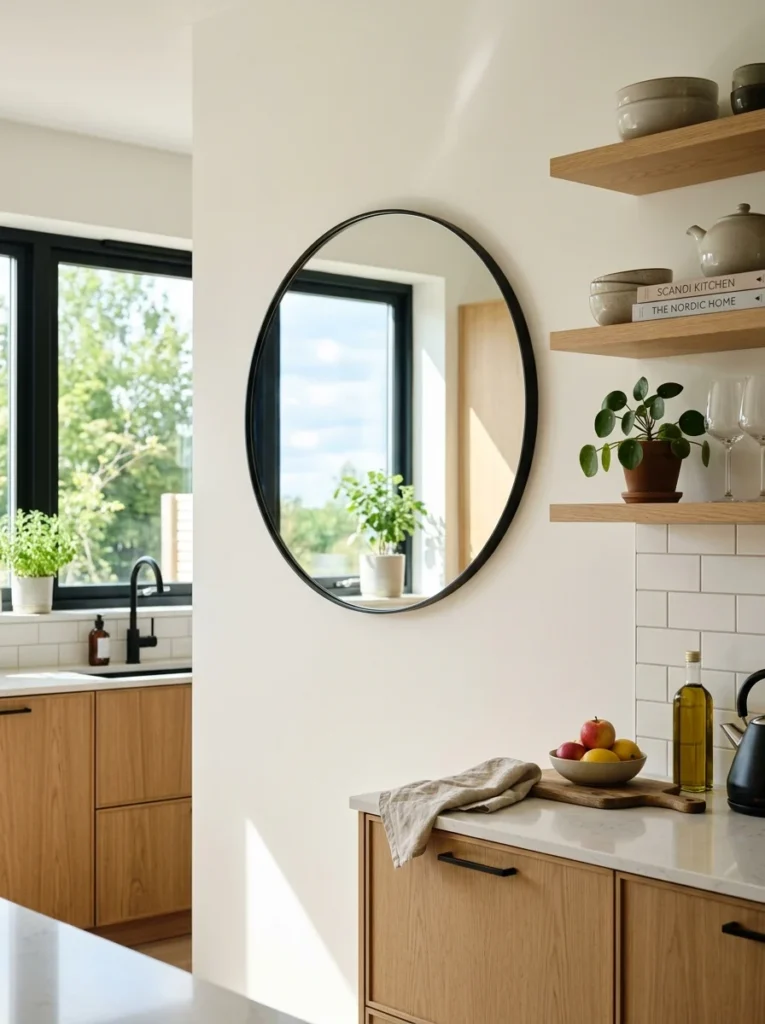
I added a medium-sized round mirror on the wall opposite my kitchen window, and it noticeably brightens the room by bouncing natural light back across the space, an effect I genuinely didn’t expect to be as significant as it turned out to be. Beyond the practical lighting benefit, a mirror in an unexpected room like a kitchen adds a slightly unconventional, interesting visual element that most people don’t think to include outside of bathrooms and entryways. I chose a simple black-framed round mirror to match my other black hardware accents, though a more ornate, vintage-style frame can work beautifully in a farmhouse or traditional kitchen aesthetic instead. Positioning matters quite a bit here, since you want the mirror reflecting either a window or a light fixture rather than a blank wall, in order to actually achieve that light-bouncing effect rather than just adding a decorative object for its own sake. This is a particularly good option for smaller or darker kitchens, since the combination of added light and the illusion of extra depth can make a cramped space feel noticeably larger.
18. A Neon or LED Sign With Personality
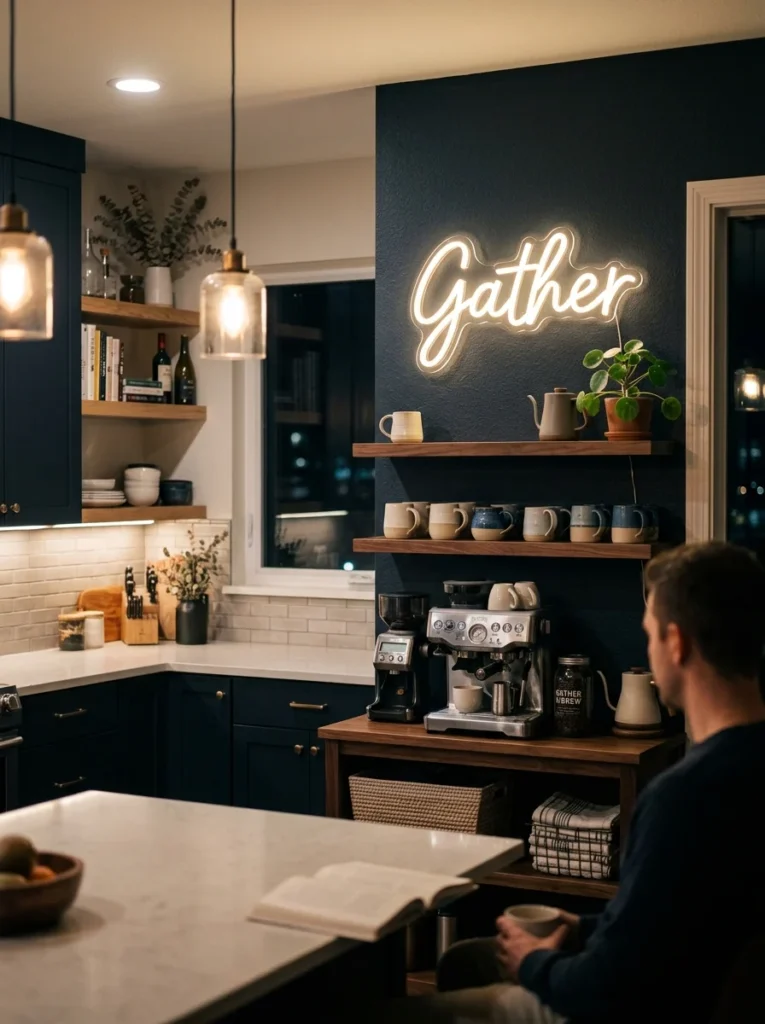
A small neon-style LED sign reading a short, simple phrase above my kitchen doorway has become an unexpectedly popular detail whenever I have people over, adding a playful, slightly unconventional touch that contrasts nicely against the more traditional elements elsewhere in the room. Modern LED versions run considerably cooler and use far less electricity than genuine glass neon, making them a much safer and more practical option for a kitchen environment where heat and moisture are already ongoing considerations. I’d recommend choosing a short phrase or single word rather than a lengthy quote, since simplicity tends to read better as a design object rather than as something you actually have to stop and read every time you walk past it. This idea works particularly well in a kitchen that already has a slightly playful, personality-driven design approach, though even a single subtle sign can add a nice contrast in an otherwise more serious, minimalist kitchen. Plugging it into an outlet with a simple timer means it turns on automatically in the evening, adding a warm glow to the room without requiring you to remember to switch it on yourself.
19. A Backsplash That Extends as Wall Art
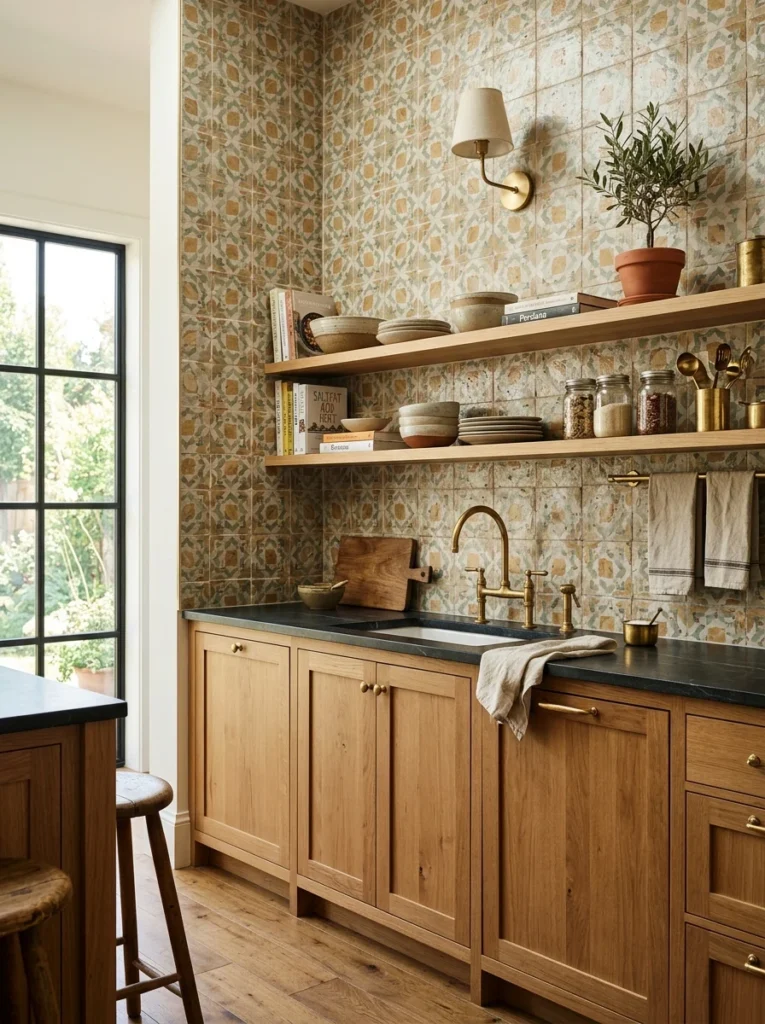
While technically a fixed renovation rather than easily changeable decor, extending a decorative tile backsplash beyond just the area directly behind the stove and sink, wrapping it around an entire accent wall, transforms what’s usually a purely functional element into one of the room’s primary design features. A neighbor did this with a beautiful patterned cement tile that wraps from her stove all the way around to a nearby open shelving unit, and the continuous pattern ties that whole section of the kitchen together in a way that a smaller, stove-only backsplash never could have achieved. This is a bigger investment and typically requires professional installation, but for anyone already planning a kitchen renovation, extending the backsplash design is a relatively small additional cost that has an outsized visual impact on the finished room. Choosing a pattern or color that complements rather than competes with your cabinetry and countertops is essential here, since this becomes such a dominant visual element once it’s installed across a larger area. This idea works particularly well paired with open shelving, since the extended tile becomes the backdrop for whatever dishware or decor items you choose to display on the shelves themselves.
20. Rotating Seasonal Decor
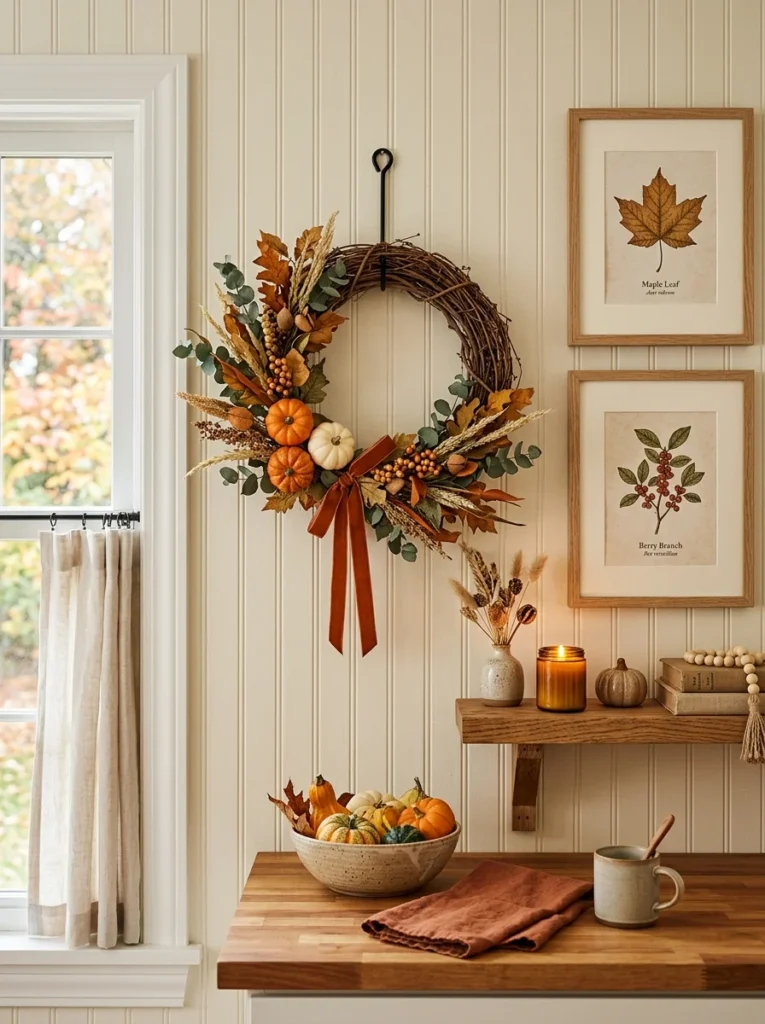
The final idea isn’t a single specific item but rather an approach I’ve adopted for one small, dedicated section of wall, usually near my kitchen entrance, that I intentionally change out every few months depending on the season. In fall, that spot might hold a small dried wreath or a cluster of autumn-toned art, while in spring, I’ll swap in something with fresh florals or brighter colors. Keeping this rotating spot small and clearly defined, rather than redecorating the entire kitchen seasonally, makes the whole practice manageable rather than becoming an overwhelming, constant project. This approach keeps the kitchen feeling current and intentional throughout the year, rather than static and unchanging, and it gives me a low-stakes way to experiment with new decor ideas without committing to a permanent change for the rest of the room. I’d recommend choosing lightweight, easily hung items for this rotating spot specifically, simple hooks or a small piece of removable adhesive strip work well, since you’ll be swapping things in and out multiple times throughout the year rather than mounting anything permanently.
Final Thoughts
Looking back at that original bare wall with nothing but a takeout menu pinned to it, it’s genuinely surprising how much personality and function a kitchen’s walls can hold once you actually start paying attention to them. Between all 20 of these ideas, the common thread is really about treating the kitchen with the same decorating intention you’d naturally give to a living room or bedroom, rather than viewing it as purely a functional space that doesn’t need the same visual thought.
If you’re staring at your own blank kitchen walls right now, I’d suggest starting small, one open shelf, a single gallery wall, or even just a couple of wall hooks, rather than trying to tackle everything on this list at once. That’s exactly how my own kitchen came together, one small addition at a time, until one day I looked around and realized it had actually become my favorite room to spend time in.