
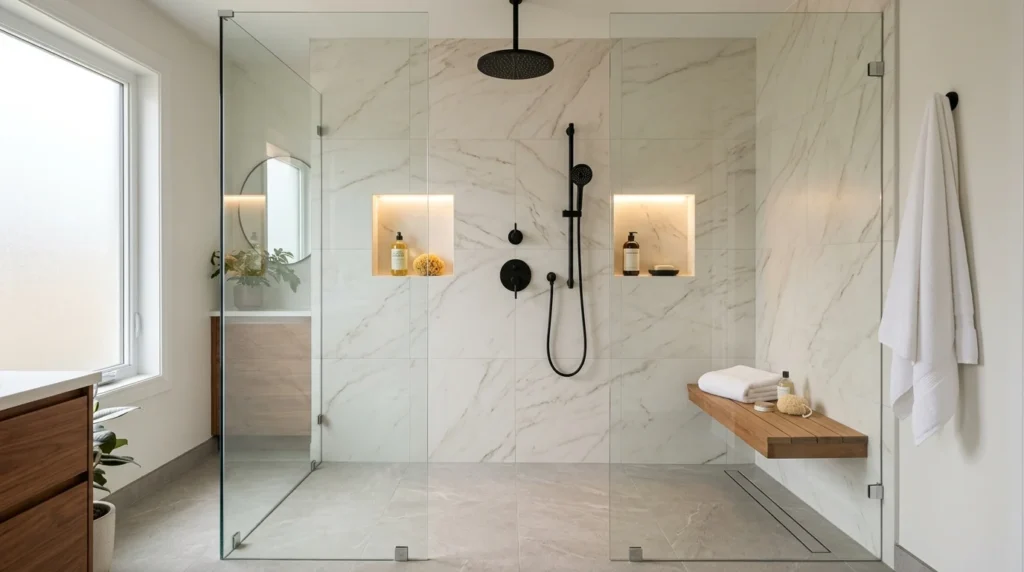
Three years ago, my shower was the one part of my home I dreaded the most.
Not because it didn’t work — it functioned fine. But every morning I stepped into a cramped, dated enclosure with yellowing grout, a flimsy glass door that never quite closed properly, and a showerhead that delivered all the pressure of a garden watering can. Starting the day in that shower made me feel like I was living in a place I hadn’t really committed to. Like I was still in a temporary space, waiting for my “real” life to begin.
Then I renovated it.
I didn’t knock down walls or move plumbing. I didn’t spend a fortune. I made a series of deliberate, well-researched improvements over about eight months. And the result transformed not just the shower — but my entire morning routine and how I felt about my home.
I now genuinely look forward to my shower every single morning. It feels like a five-star hotel spa experience. And that shift — from dreading a room to loving it — is something I want to help every single person reading this achieve in their own home.
These are the 17 shower renovation ideas I’ve personally researched, many of which I’ve tried myself, and all of which are genuinely worth copying this year.
Why Your Shower Deserves Real Investment
Before we get into the ideas, let me explain why the shower specifically is worth renovating before almost anything else in your bathroom.
The shower is the most frequently used fixture in the average home. Most adults use it once a day, every day. Over a year, that’s 365 interactions with a single space. Over ten years, that’s 3,650. The cumulative effect of starting every single day in a beautiful, functional, spa-like shower versus a dated, cramped, frustrating one is genuinely significant — not just aesthetically, but psychologically.
Interior designers consistently rank bathroom renovations — and shower renovations specifically — among the highest-return home improvement projects, both in terms of property value and quality of daily life.
In other words: invest in your shower. It gives back more than almost anything else.
Now, let’s get into the ideas.
1. Go Frameless With Your Shower Glass
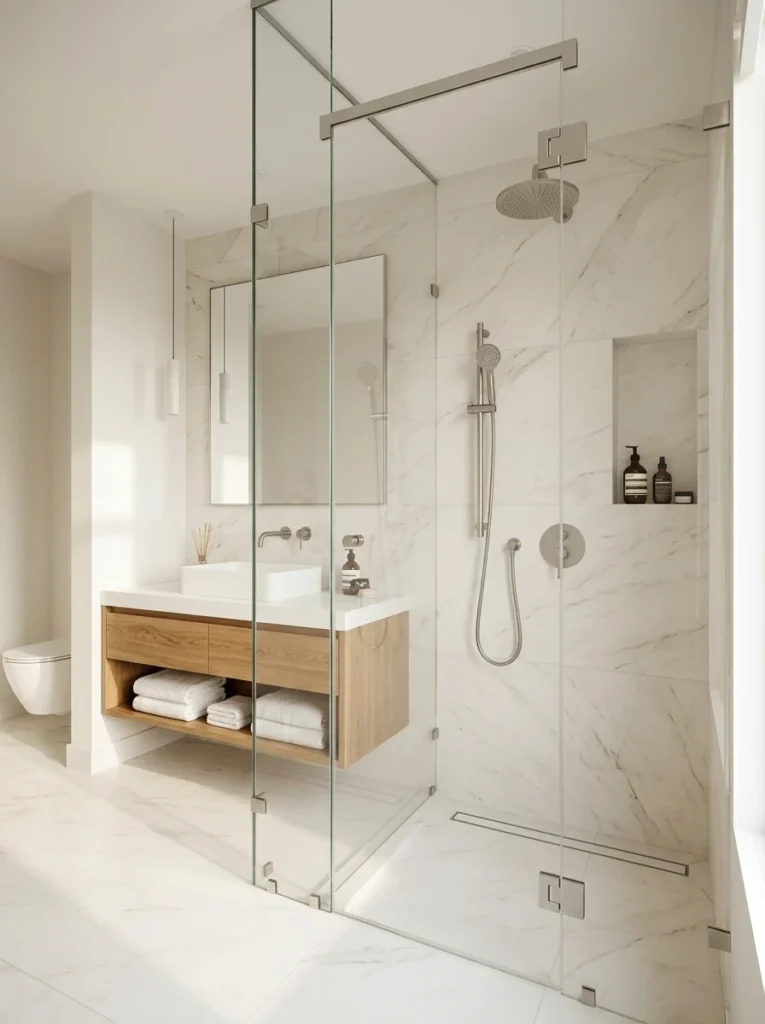
If your shower has a framed glass enclosure — the kind with visible metal channels around every pane — replacing it with a frameless glass enclosure is the single most dramatic upgrade you can make without changing the tile or plumbing.
Frameless glass enclosures have a sleek, contemporary look that immediately reads as expensive and high-end. They also make the shower appear larger because there are no visual interruptions — the eye travels through the glass without stopping.
The practical advantages are significant too. Frameless enclosures have fewer crevices where mould and soap scum can accumulate, making them far easier to keep clean.
When I replaced my old framed shower door with a frameless glass panel, the bathroom felt like it had been professionally renovated overnight. The shower enclosure itself was unchanged — same tiles, same fixtures — but the frameless glass transformed the entire feel of the space.
Cost range: $600–$2,000 depending on the size and configuration. Premium investment, but extraordinary impact.
2. Install a Rainfall Showerhead
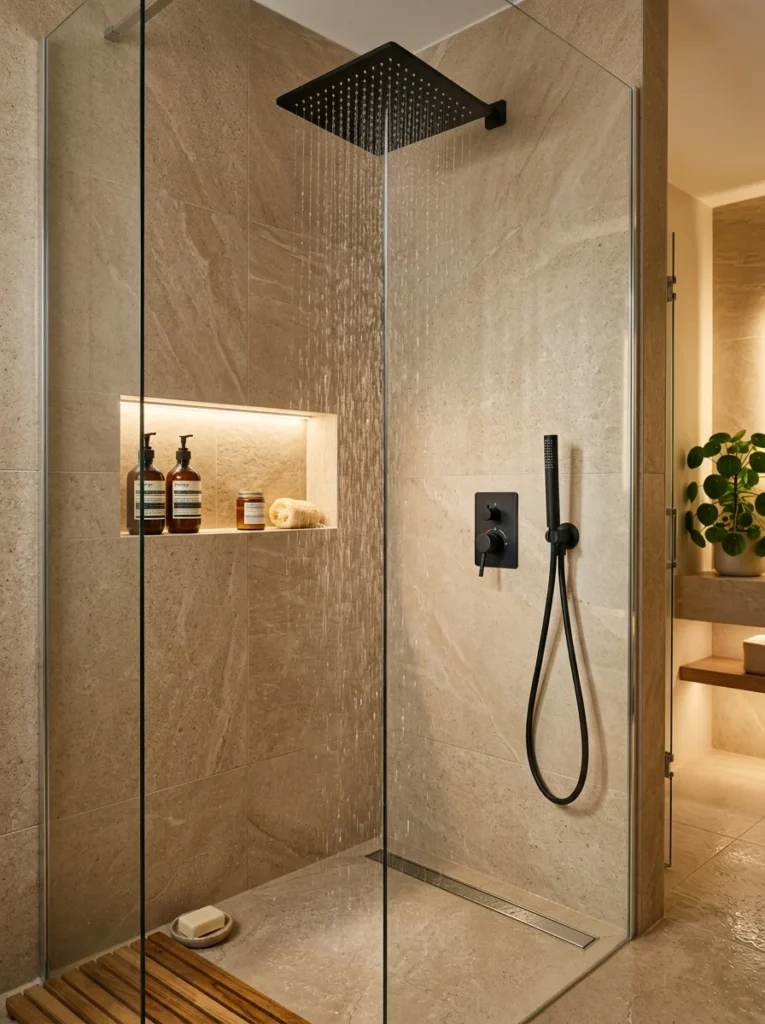
The single most impactful, affordable upgrade you can make to any shower is replacing the standard showerhead with a rainfall model.
A rainfall showerhead — typically mounted overhead and oriented to deliver water straight down, like rain — transforms the sensory experience of showering completely. It feels indulgent, calming, and genuinely spa-like in a way that a standard wall-mounted showerhead never does.
Installation is usually straightforward and can be done without a plumber in most cases. Many rainfall showerheads attach to the existing water supply arm with a simple adapter.
I installed a matte black rainfall showerhead in my shower. It cost $95 and took about 45 minutes to fit. It was the first renovation I made, and it immediately changed how I felt about the shower every single morning.
Best options to look for: Models with multiple spray settings, at least 8 inches in diameter, and in a finish that matches your other fixtures (matte black, brushed brass, or brushed nickel are the most popular choices in 2026).
3. Tile Floor to Ceiling in a Single Material
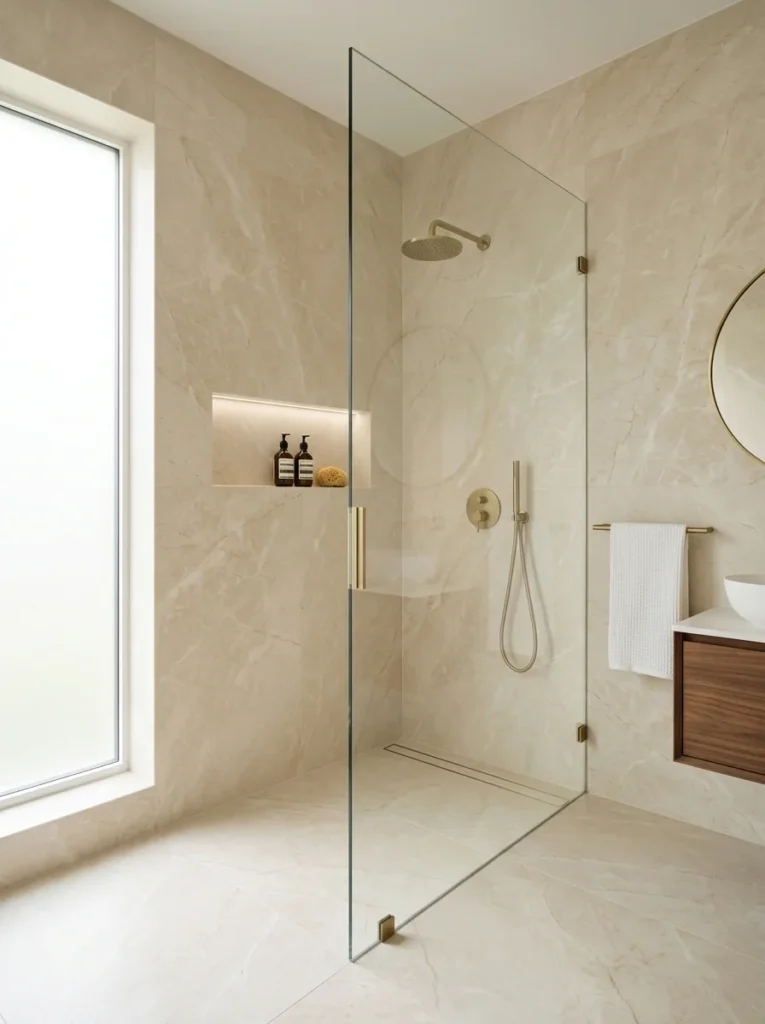
One of the most powerful design moves in shower renovation is tiling the walls floor-to-ceiling in a single tile — no mixing, no borders, no interruptions. Just one continuous material from the floor to the top of the wall.
This approach is used constantly in high-end hotel bathrooms and luxury spas because it creates a sense of visual calm and spatial generosity. The eye has nothing to interrupt it, so the space reads as larger and more considered than it actually is.
Large format tiles — 60x120cm or even bigger — work especially well for this approach. The fewer grout lines, the more seamless and luxurious the result.
In 2026, the most popular choices for this treatment are large-format white or cream marble-effect porcelain, slate-look tiles in warm grey tones, and terrazzo-effect tiles in soft, muted palettes.
4. Add a Steam Function
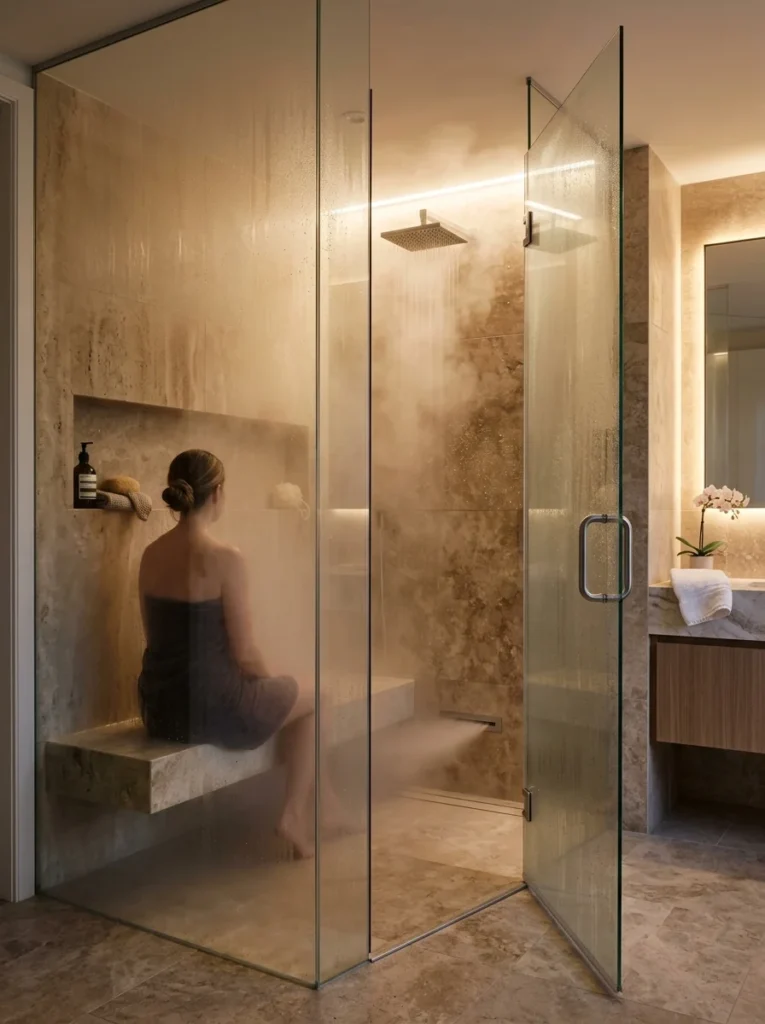
If you want to take your shower renovation into genuinely luxurious territory, consider adding a steam function.
A steam shower generator — installed in a sealed shower enclosure — heats water to produce steam, turning your shower into a personal steam room. The health benefits are well-documented: improved circulation, respiratory relief, muscle relaxation, and skin hydration.
Steam shower units have become significantly more affordable in recent years. Basic units start at around $500 for the generator itself, with installation costs on top.
This is a renovation I’m personally planning for my next bathroom update. I’ve used steam showers in hotels and spas enough times to know that the experience is transformative — and having one at home, every morning, would be genuinely life-changing.
5. Regrout and Deep Clean the Existing Tile
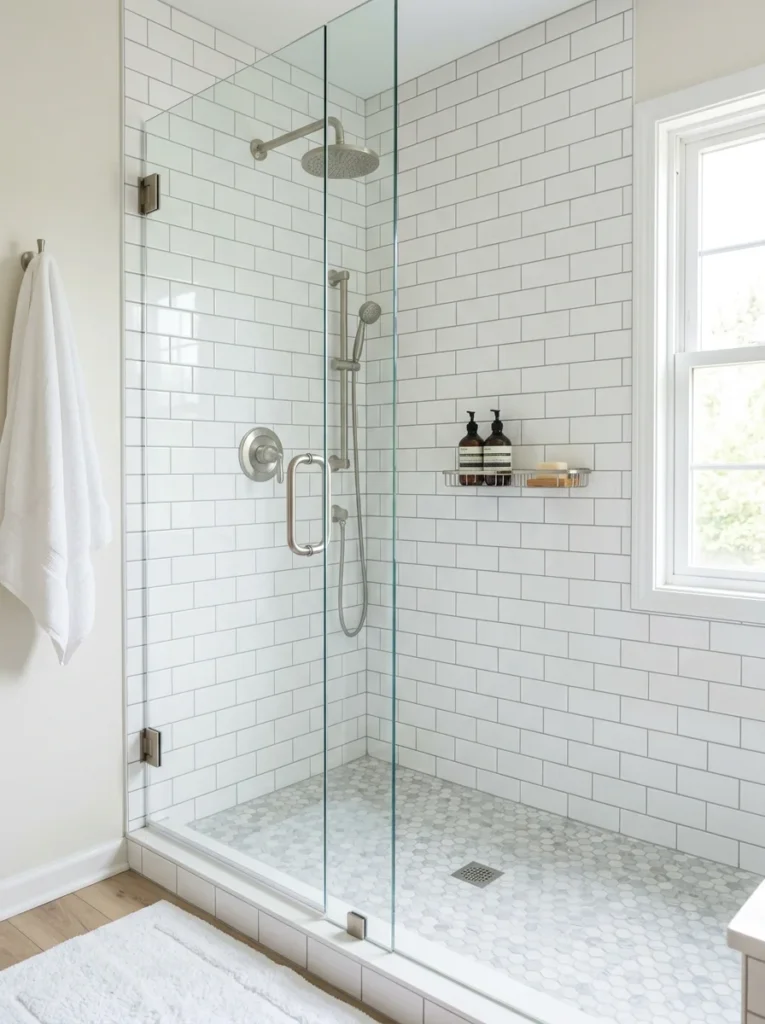
This idea costs almost nothing and has a bigger impact than most people expect.
Grout darkens, stains, and cracks over time. Yellowed, mouldy grout makes even beautiful tiles look neglected and dirty. Regrouting — removing the old grout and applying fresh — can make a ten-year-old shower look brand new without replacing a single tile.
I did this in my guest bathroom before attempting any other renovation. The transformation genuinely shocked me. Tiles I had considered replacing suddenly looked beautiful again. The whole bathroom felt cleaner and fresher, even though nothing structural had changed.
DIY or professional? Regrouting is achievable as a DIY project with some patience and the right tools (a grout saw, fresh grout, a grout float). For large showers or extensive work, a professional tiler will complete it faster and more cleanly.
6. Install Recessed Wall Niches
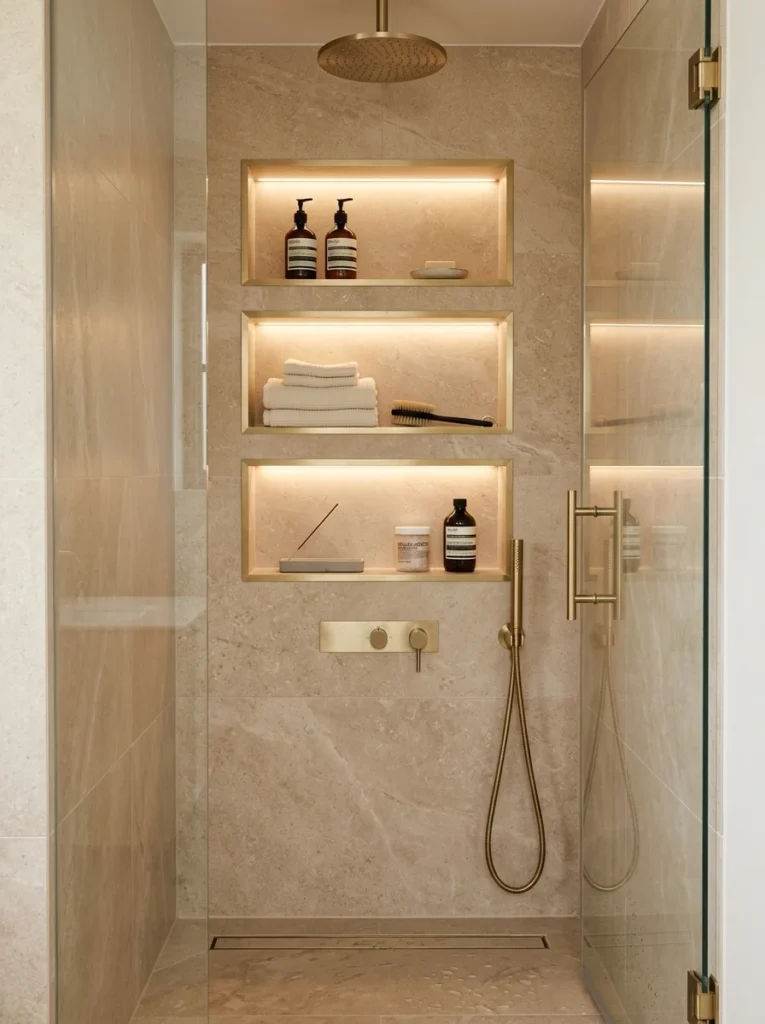
Nothing dates a shower more than wire caddies hanging off the showerhead or plastic shelving units stuck to the wall with suction cups.
A recessed wall niche — a built-in shelf set into the wall itself, flush with the tile — is the clean, permanent, architecturally considered solution. It stores shampoo, conditioner, body wash, and razors without adding visual clutter or creating awkward projections into the shower space.
Niches are typically installed during a tile renovation when the walls are opened up, but some can be retrofitted depending on the wall construction.
For maximum impact: install two or three stacked niches of varying heights, tile them in the same material as the shower walls, and consider running a thin metal strip along the edge for definition. The result looks custom-designed and intentional.
7. Switch to a Walk-In, Barrier-Free Design
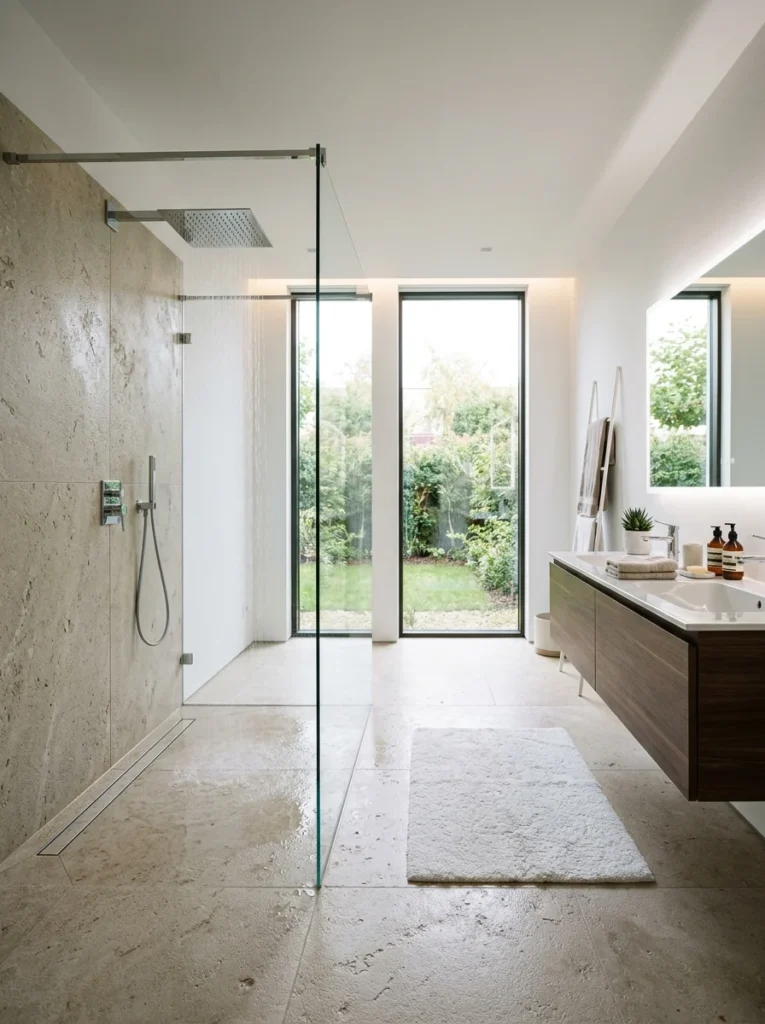
The walk-in shower — no door, no threshold, just an open entry — is consistently one of the most requested features in modern bathroom renovation.
Also called a wet room or barrier-free shower, this design removes the physical boundary between the shower area and the rest of the bathroom floor. The floor slopes gently toward a drain, water is contained by the layout rather than a door, and the visual effect is one of pure, seamless luxury.
Walk-in showers are also more accessible — ideal for older homeowners or anyone thinking about long-term livability — and significantly easier to clean than enclosed designs.
This is a more substantial renovation requiring waterproofing of the floor and potentially some structural changes, but the result is one of the most dramatic and enduringly popular bathroom upgrades available.
8. Add Underfloor Heating
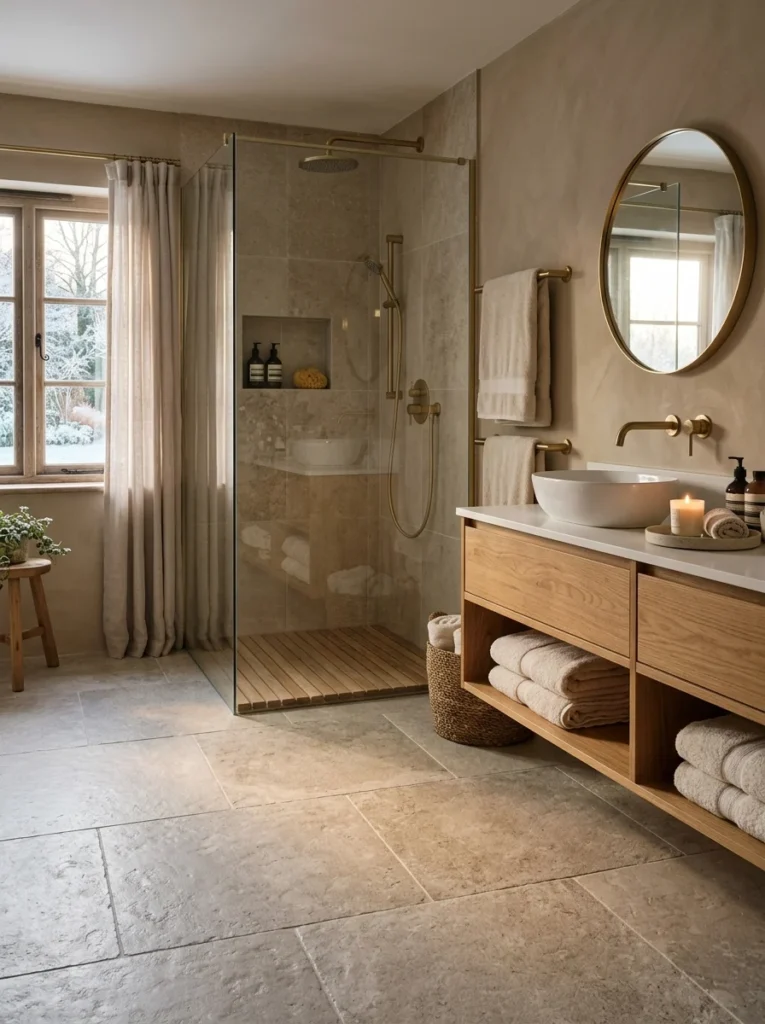
Cold tile underfoot first thing in the morning is a genuinely unpleasant experience — and one that’s completely solvable with electric underfloor heating.
Electric underfloor heating mats are installed beneath the floor tiles and connected to a thermostat. They warm the tiles to a comfortable temperature, making the act of stepping out of the shower onto a cold floor a thing of the past.
The installation cost is relatively modest — typically $300–$800 for materials and installation in a standard bathroom — and the running cost of a bathroom underfloor heating system is very low given the small area involved.
I had underfloor heating installed in my main bathroom when I renovated the shower. In winter, it is genuinely one of the most appreciated luxuries in my home. Guests always notice it and always mention it.
9. Use Marble or Marble-Effect Tiles
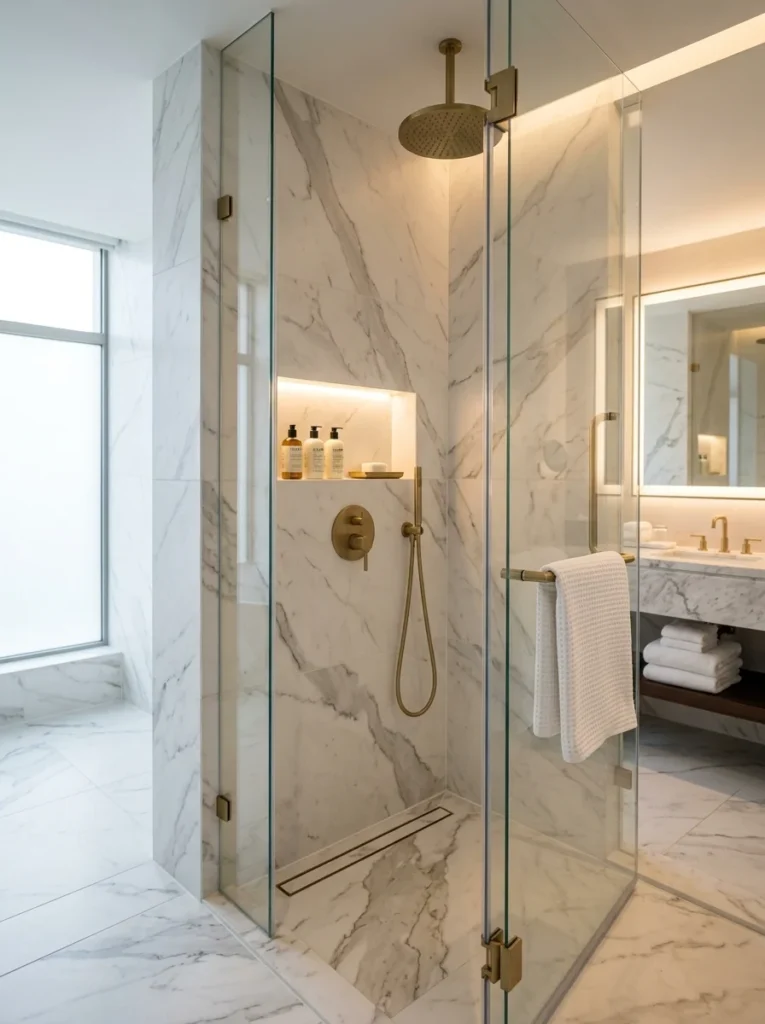
Marble has been associated with luxury bathrooms for thousands of years — from Roman bathhouses to modern five-star hotels. And in 2026, the desire for marble in shower spaces is stronger than ever.
Genuine marble is beautiful but expensive, heavy, and requires careful maintenance. The good news: porcelain tiles with marble-effect printing have reached a quality level where even design professionals struggle to distinguish them from the real thing at normal viewing distances.
Marble-effect porcelain tiles combine the look of luxury marble with the durability, affordability, and low maintenance of porcelain. In large format sizes (60x120cm or larger), with minimal grout lines, the effect is genuinely stunning.
For an extra touch of authenticity, use matching marble-effect tiles on both the walls and floor, with slightly different vein patterns on each surface — exactly as you’d see in a real marble installation.
10. Install a Body Jet System
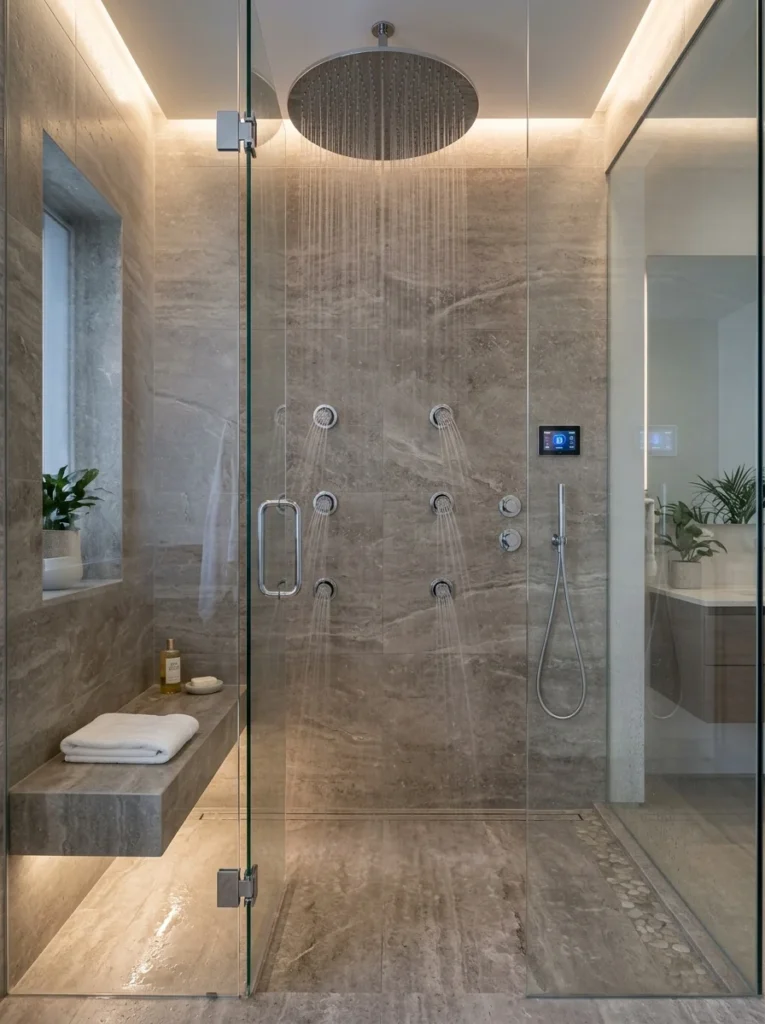
For the ultimate spa-shower experience, a multi-directional body jet system delivers streams of water from multiple fixed points in the shower walls, surrounding your body from all sides.
Combined with a rainfall overhead showerhead, a body jet system creates a shower experience that rivals anything you’d find in a five-star spa.
Body jets require slightly more water pressure than a standard shower and need to be installed when the shower walls are open, making them a natural addition to a full shower renovation. The number of jets typically ranges from four to twelve, depending on the space available and the budget.
This is a genuinely premium upgrade — but for anyone who values the shower experience and has the budget for a full renovation, it is one of the most impactful additions possible.
11. Add a Teak Wood Bench or Stool
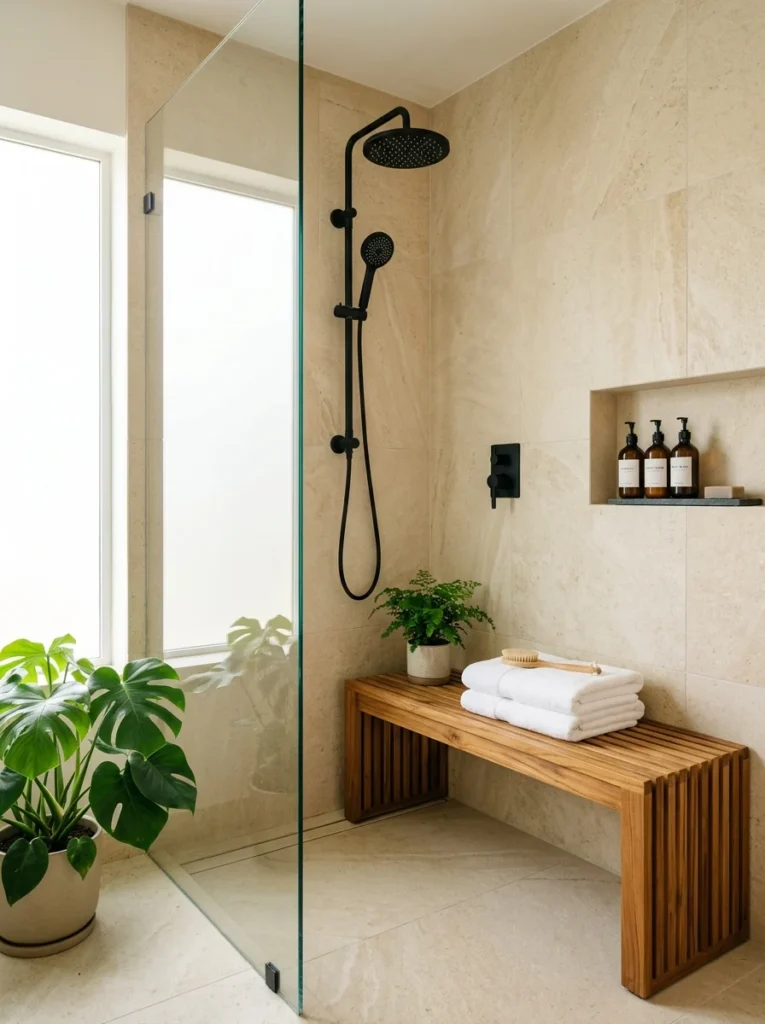
A shower bench — particularly one made from teak or another water-resistant hardwood — adds a level of comfort and luxury that transforms the shower from a purely functional space into something closer to a spa environment.
Shower benches serve practical purposes too: they provide a surface for shaving, a place to sit while deep conditioning your hair, or simply somewhere to rest and let the water run over you without standing the entire time.
In 2026, built-in teak benches are especially popular — installed flush with the wall, with slatted teak planks across the top, and tile-covered sides that match the shower walls.
A freestanding teak stool is a more affordable, no-installation-required alternative. A good teak shower stool costs $80–$150 and adds immediate warmth and character to any shower.
12. Choose Matte Black Fixtures Throughout
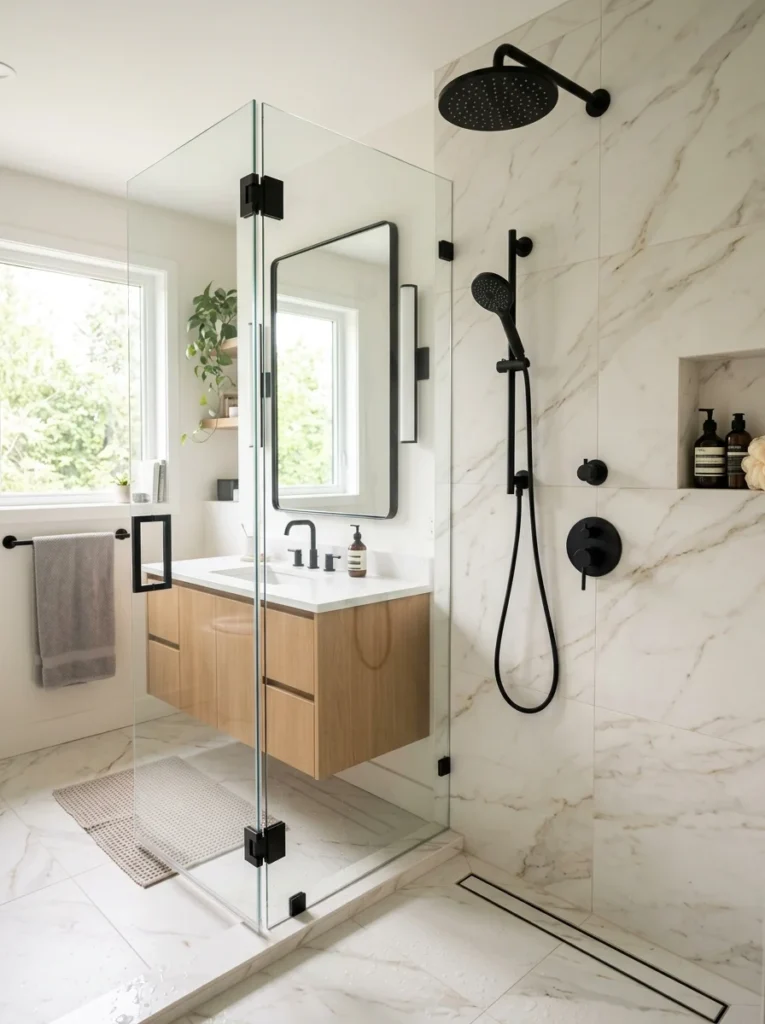
Fixture finish is one of those details that separates a considered renovation from a random collection of choices.
In 2026, matte black is the dominant fixture finish for modern, contemporary, and even transitional bathroom styles. Matte black showerheads, valves, handles, towel bars, and drain covers create a cohesive, high-contrast look that reads as current and intentional.
The key is consistency. All visible fixtures in the shower — and ideally the entire bathroom — should share the same finish. Mixing chrome, brass, and nickel in a single space is one of the most common mistakes homeowners make, and it’s what makes bathrooms look incoherent and unfinished.
Choose a finish you love, buy everything in it, and apply it consistently. The result looks professionally designed every time.
13. Install Vertical Tile Patterns
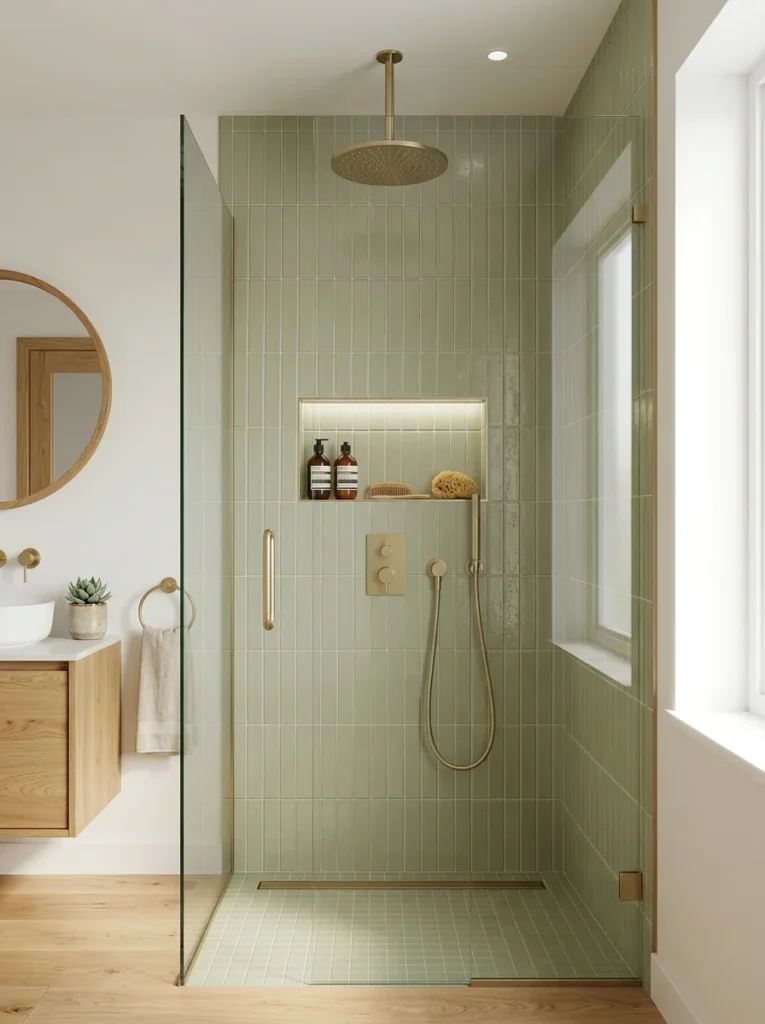
Most tiles are laid horizontally or in a standard brick pattern. But changing the orientation of the tile — laying rectangles vertically, for example — completely changes the visual character of the shower.
Vertical tile layouts draw the eye upward, making the ceiling appear higher and the space feel taller and more generous. This is particularly effective in showers with standard ceiling heights that can feel compressed.
In 2026, long, thin rectangular tiles (sometimes called “pencil tiles” or “subway plank tiles”) laid vertically in soft, warm tones are especially on trend. They feel architectural and considered in a way that standard horizontal layouts often don’t.
14. Add a Built-In Sound System
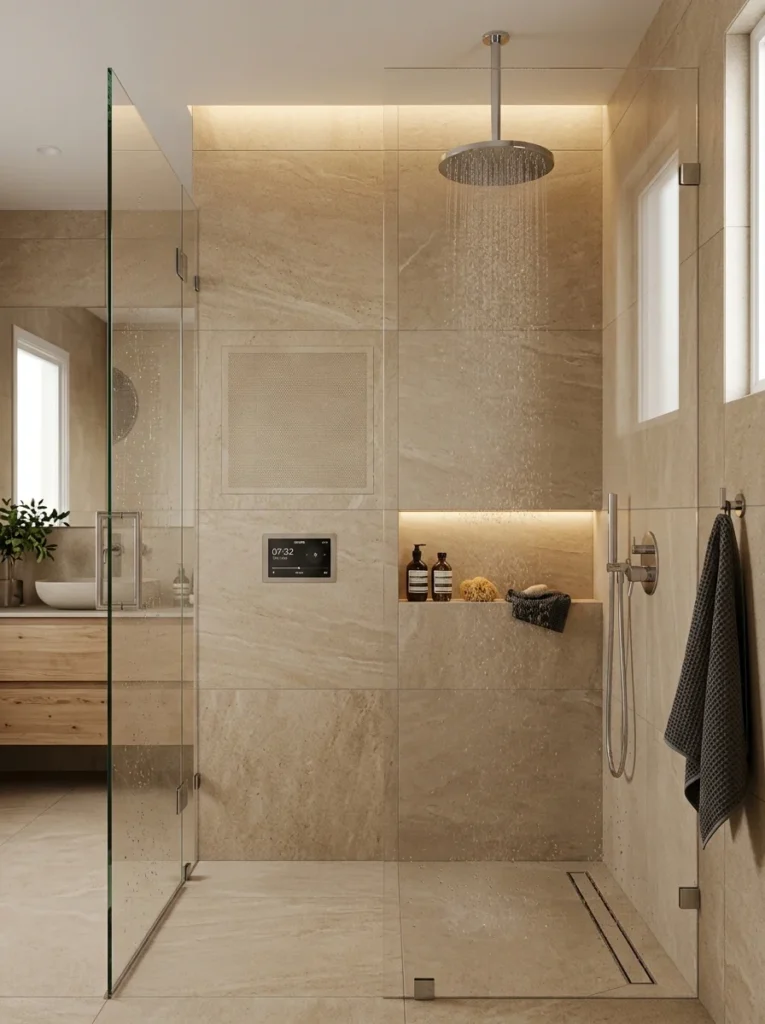
Showering is one of the few truly private, uninterrupted moments in most people’s days. Making it also an audiophile experience — with music, a podcast, or a radio program — transforms it from a routine into genuine daily pleasure.
Waterproof Bluetooth speakers designed for shower installation are available at every price point, from $30 wall-mounted units to fully recessed in-wall speaker systems that deliver genuinely high-quality audio.
I installed a simple waterproof Bluetooth speaker on the wall of my shower. It connects automatically to my phone when I enter the bathroom. The difference it makes to my morning routine is completely disproportionate to the cost.
15. Apply an Anti-Limescale and Easy-Clean Glass Coating
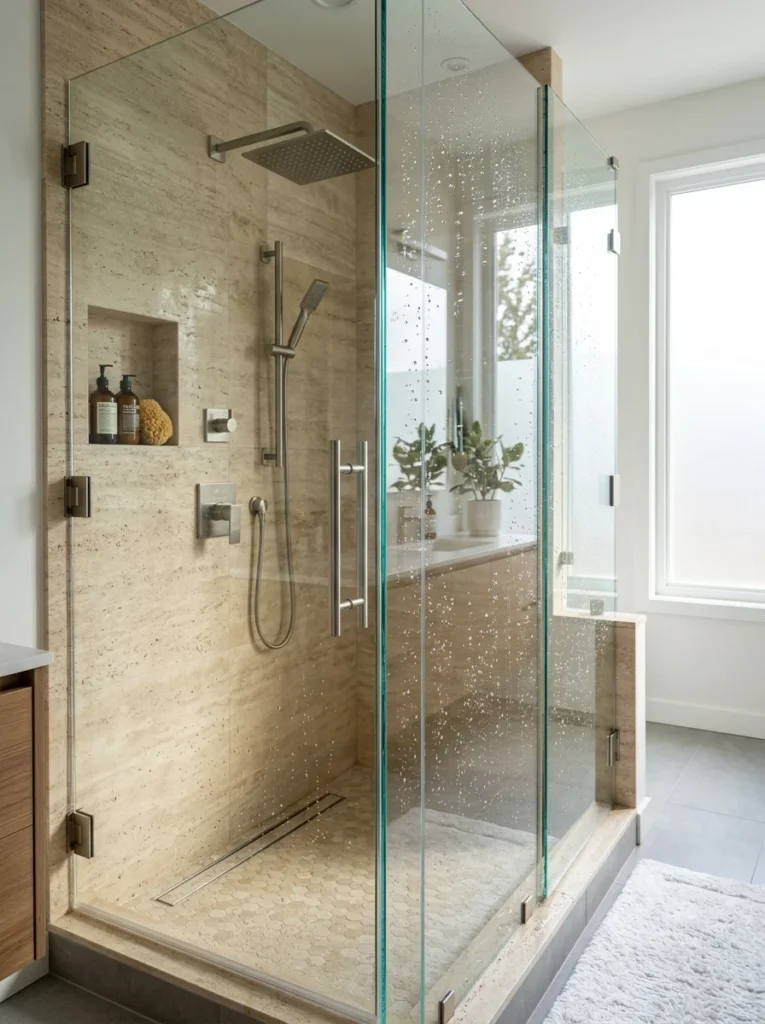
This is not a glamorous idea, but it is one of the most practically impactful things you can do to a shower.
Glass coatings — applied either during manufacture or as an aftermarket product — create a hydrophobic surface that repels water, soap scum, and limescale. Water beads and rolls off rather than drying on the surface and leaving marks.
In hard water areas (which includes most of the UK, parts of the US, and much of Europe), limescale on shower glass is a constant battle. A good glass coating can reduce cleaning frequency dramatically and keep your shower looking pristine with minimal effort.
Several professional glass coating products are available online, or you can request a coated glass panel when ordering a new frameless enclosure.
16. Introduce Warm Lighting Inside the Shower
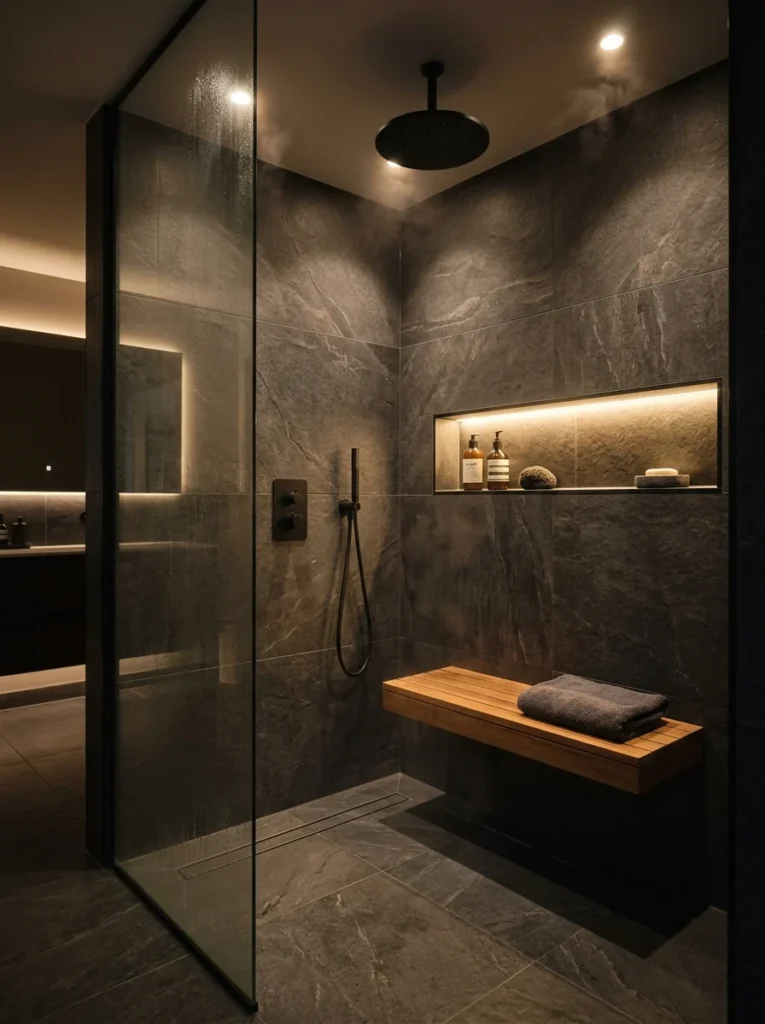
Standard shower lighting — a single overhead fitting outside the enclosure — is functional but uninspiring.
Installing a waterproof recessed light (or multiple lights) inside the shower enclosure itself changes the atmosphere dramatically. Combined with warm-toned bulbs, in-shower lighting creates an intimate, flattering quality of light that makes the whole experience feel more luxurious.
Some homeowners go further, installing LED strip lighting along the shower niche or under the bench — creating a soft ambient glow that is genuinely beautiful, particularly in the evening.
All lighting inside a shower enclosure must be rated IP65 or higher for water resistance. This is non-negotiable for safety.
17. Create a Wet Room With Continuous Floor Tiles
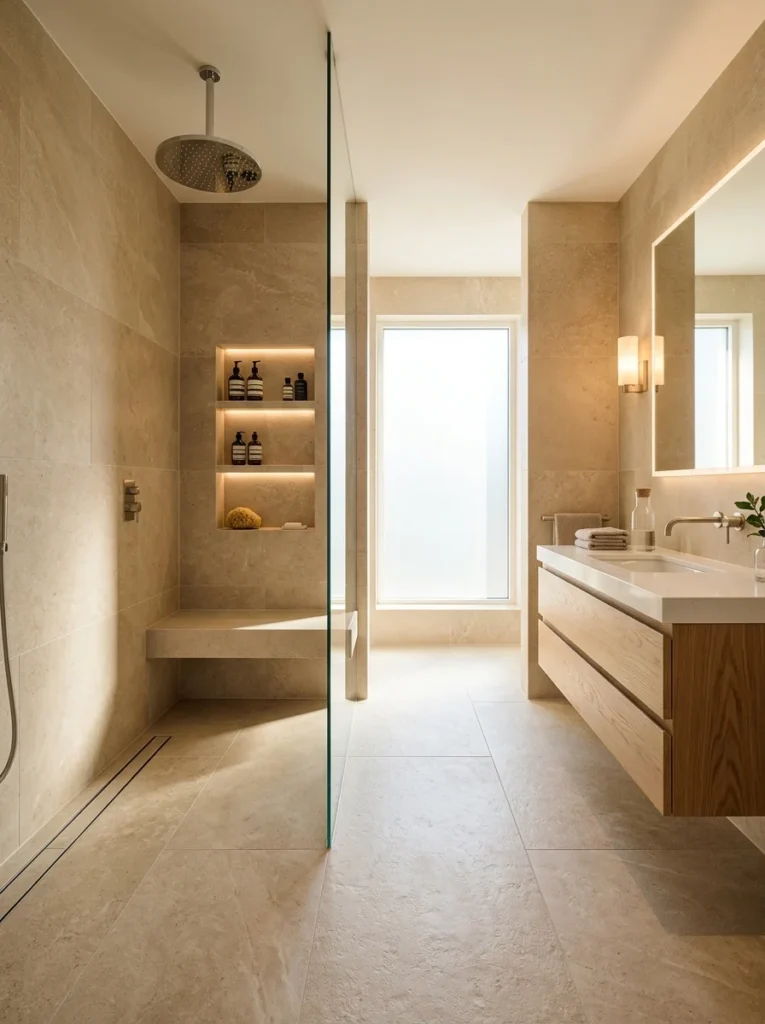
The most dramatic and transformative shower renovation idea — and the final one on this list — is converting the entire bathroom into a wet room with continuous flooring throughout.
In a wet room, the same floor tile runs from the entrance of the bathroom all the way into the shower area, with no threshold or transition. The entire floor is waterproofed and slopes subtly toward a drain. The shower exists as a zone defined by where the water falls rather than by any physical enclosure.
The result is a bathroom that feels like a luxury spa suite — generous, seamless, and visually coherent in a way that no conventional bathroom with a separate shower enclosure can match.
This is the most substantial renovation on this list — it requires full floor waterproofing, careful drain placement, and the right tile choice — but it is also, without question, the most transformative. Homes with wet-room bathrooms consistently achieve higher valuations and are among the most desired features in the current property market.
How to Plan Your Shower Renovation
Now that you have 17 ideas to work with, here’s the practical framework I use when planning any shower renovation:
Step 1 — Define your budget honestly. Shower renovations range from $100 (a new showerhead) to $15,000+ (a full wet room conversion). Know what you’re working with before you start designing. Then prioritize the ideas that give you the most impact within that budget.
Step 2 — Identify your biggest pain points. What do you actually dislike about your current shower? Is it the pressure? The look? The cleaning burden? The size? Fix the real problems first, then add the nice-to-haves.
Step 3 — Choose a consistent style. Pick one aesthetic direction — modern spa, natural organic, classic luxury, industrial minimal — and let every decision flow from it. Fixture finish, tile style, accessories — all of it should speak the same visual language.
Step 4 — Think about maintenance honestly. A beautiful shower that’s a nightmare to clean will frustrate you within weeks. Consider maintenance as seriously as aesthetics. Large-format tiles, frameless glass with coating, and good ventilation all reduce the cleaning burden significantly.
Step 5 — Hire the right people. Shower renovation involves waterproofing, which is a critical element. Poor waterproofing causes damp, mould, and structural damage. If you’re doing anything beyond cosmetic changes, invest in a qualified tiler and bathroom installer. The cost of fixing bad waterproofing far exceeds the cost of doing it right the first time.
What My Shower Renovation Taught Me
Here are the most important personal lessons from my own shower renovation journey:
The showerhead matters more than almost anything else. Before changing a single tile, upgrade your showerhead. It changes the entire sensory experience immediately, at low cost.
Grout color is a decision, not an afterthought. Dark grout hides staining but makes a space feel smaller. White grout looks clean and bright but requires more maintenance. Choose deliberately.
Ventilation is as important as aesthetics. Without proper ventilation, even the most beautiful shower will develop mould problems. A good bathroom fan is not optional.
The accessories complete the picture. Beautiful tiles and fixtures are the foundation, but the matching towels, a bamboo bath mat, quality soap dispensers, and a good plant near the window are what make the space feel genuinely designed.
A great shower changes your mornings. This sounds obvious, but the cumulative effect of starting every day in a space you love is genuinely significant. It’s worth every penny and every hour of planning.
Final Thoughts
Your shower is one of the most intimate and frequently used spaces in your entire home. It deserves the same attention, investment, and design thinking that you’d give to your living room or kitchen.
The 17 ideas in this guide range from a $25 speaker to a full wet room conversion. Whether you have $100 or $10,000 to spend, there is something on this list that will meaningfully improve your shower experience this year.
Start with the idea that solves your biggest problem or delivers the most impact within your budget. Then keep going, one upgrade at a time. The shower of your dreams is closer — and more achievable — than you think.
Which of these 17 shower renovation ideas are you most excited to try? Share your thoughts in the comments — I’d love to know what direction you’re heading in with your bathroom this year.