
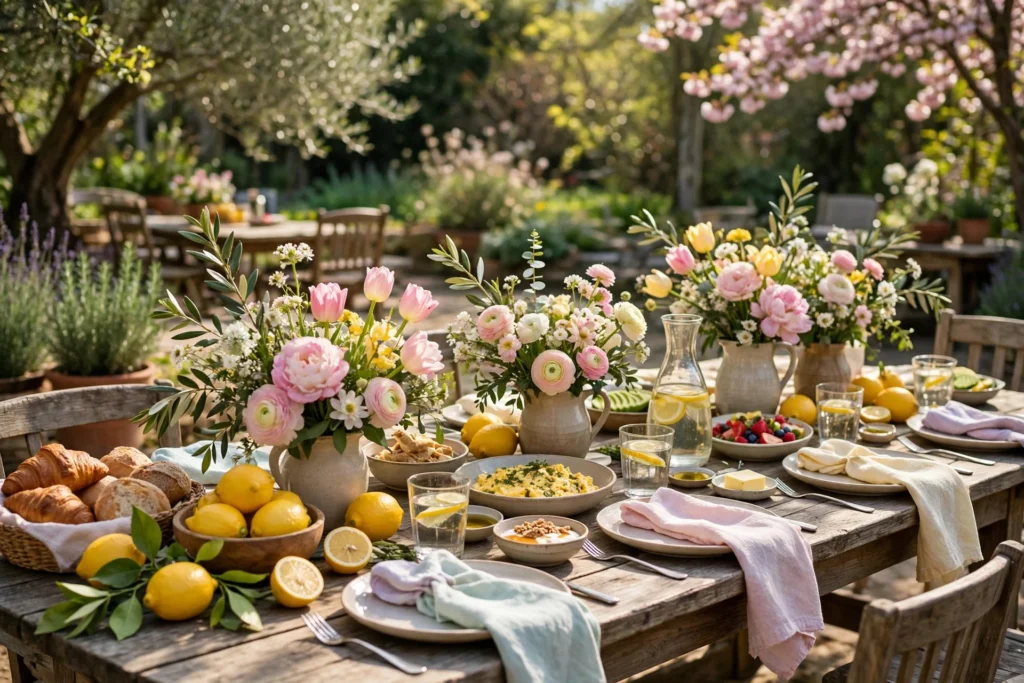
Spring brunch has a relaxed kind of magic. The light is softer, the windows are open, and everyone seems a little happier sitting down together. If you want a table that feels fresh without a lot of fuss, these spring table decor ideas are a good place to start. You do not need a big budget or a closet full of matching pieces — just a few thoughtful touches that make the whole table feel like spring.
Below you will find 15 ideas you can mix and match, whether you are hosting two friends or a full house. Pick the ones that fit your table, your dishes, and the food you already plan to serve. Most of them take ten minutes or less, and none of them require special skills. Start with one or two, see how they look, and build from there.
1. A Crisp White Tablecloth Base
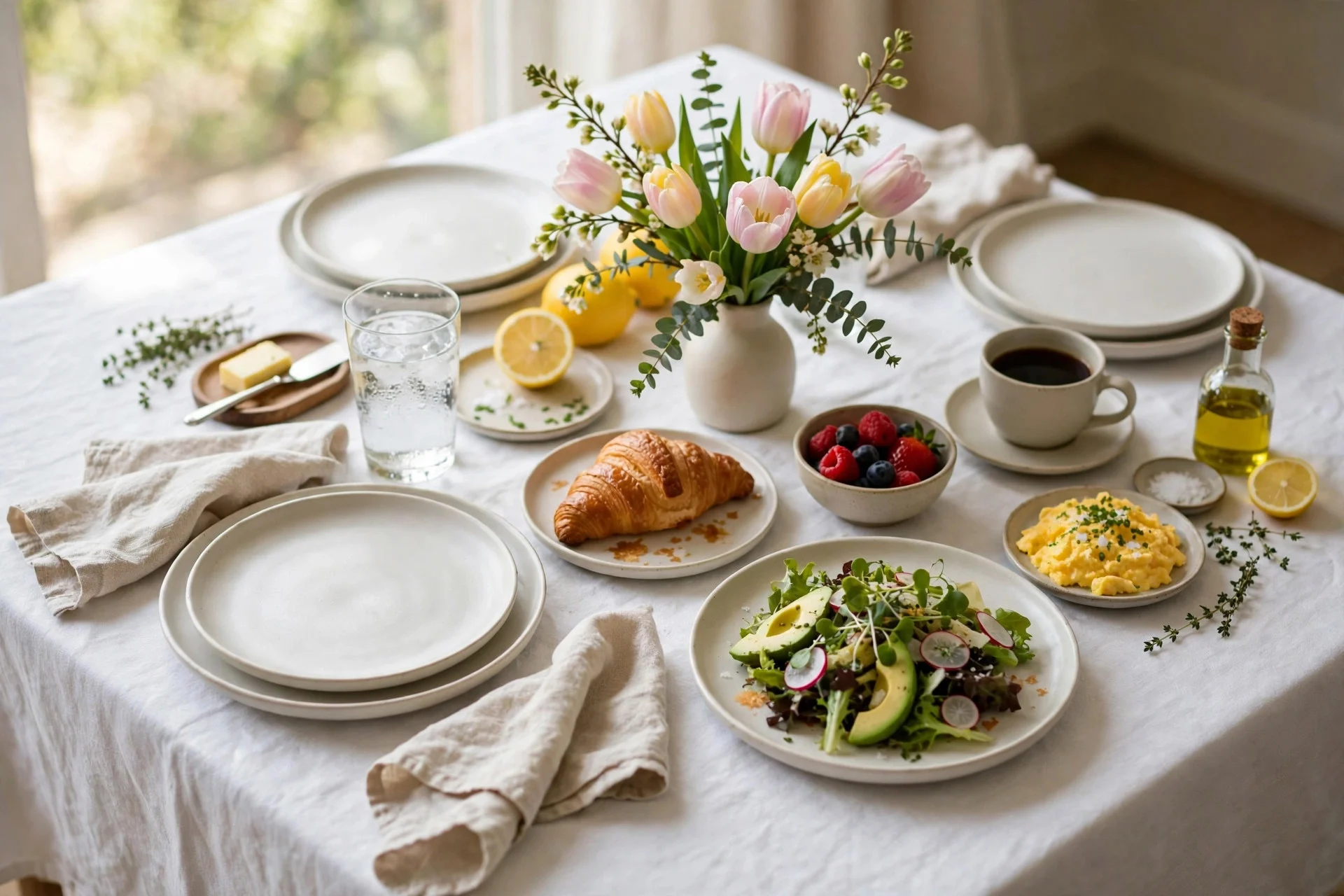
A clean white tablecloth is the simplest way to reset a table for spring. It hides a scratched surface, brightens the whole room, and lets your plates, flowers, and food stand out. White also works with every color, so you can change napkins or flowers next time without buying a new cloth.
To do it, first wipe the table and lay the cloth so it hangs evenly on all sides. Then smooth the folds with your hands. Last, set one plate down and check the drape before you add anything else. I tried this and learned that ironing matters less than even hems — a cloth that hangs straight looks neat even with a few wrinkles.
Try this: Layer a thin runner or a few sprigs of greenery on top so the white does not look too plain.
2. A Low Floral Runner Down the Center
A low floral runner keeps the table pretty without blocking anyone’s view. Instead of one tall bouquet in the middle, you spread small blooms along the center so guests can talk across the table and still reach the food. It feels generous and garden-like, even if you only use grocery-store flowers and a few stems from the yard.
Start by laying a strip of fabric or kraft paper down the center. Then place small jars or short glasses along it, and add two or three stems to each one. Finish by tucking in a little greenery to fill gaps. I tried this and learned not to pack the jars too tightly — loose stems look more natural, and they last longer when air can move around them.
Try this: Use one main flower color and one soft filler so the runner looks planned, not random.

3. Pastel Napkins With Simple Rings
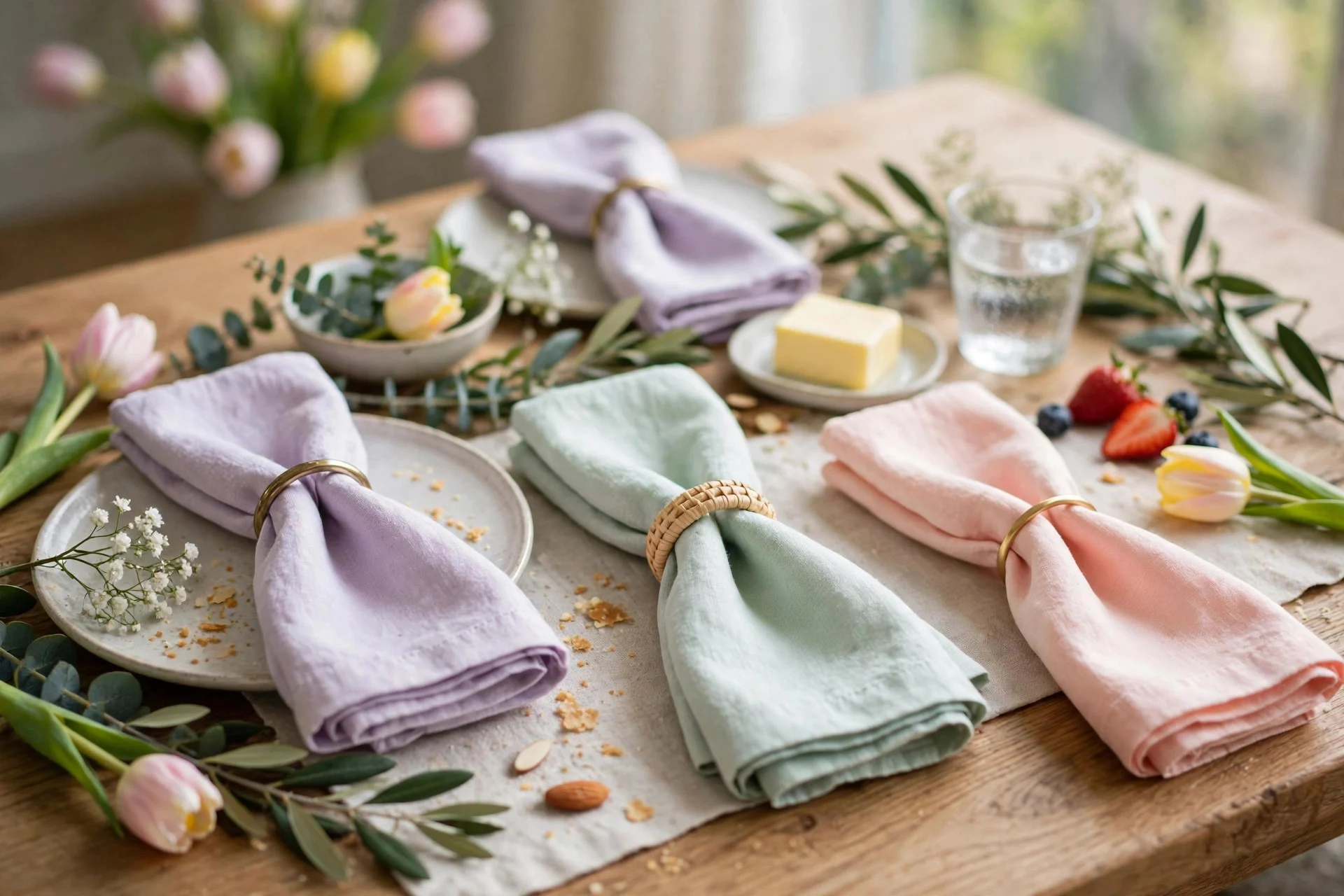
Pastel napkins are a quick way to bring spring color to the table without repainting anything. Soft pink, mint, butter yellow, or pale blue all work, and a simple ring pulls the whole setting together. Cloth napkins feel nicer than paper for brunch, and you can wash and reuse them all season.
First, fold each napkin into a simple rectangle or a loose roll. Then slide a plain wooden, gold, or rattan ring over it, and lay it across the plate or beside it. If you do not have rings, a piece of twine tied in a small bow does the same job. I tried this and learned to fold napkins the night before — it sounds small, but it saved me a rushed ten minutes on brunch morning.
Try this: Mix two pastel shades at the table instead of using one color for everyone.
4. Mismatched Vintage Plates
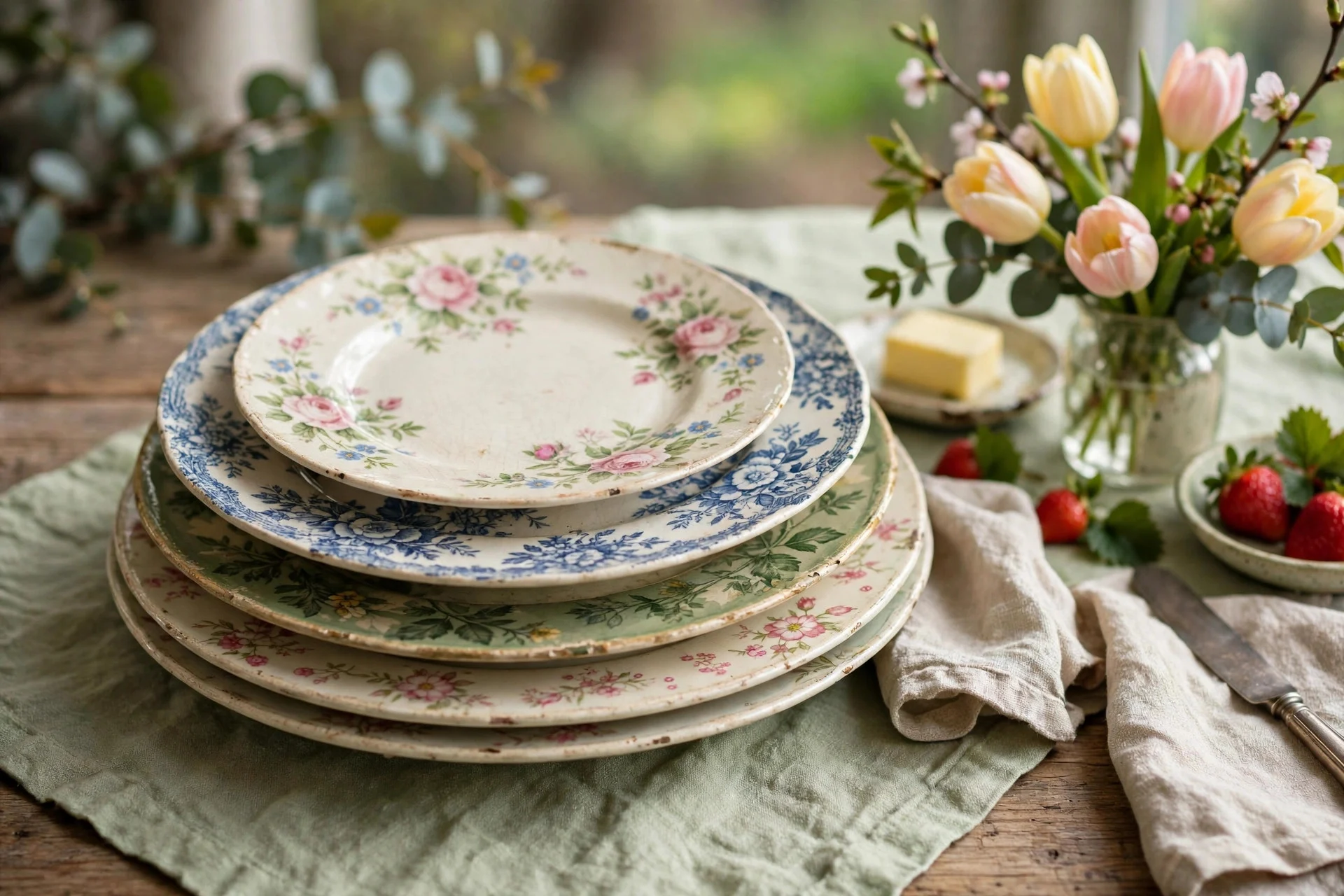
Mismatched vintage plates give a spring table a warm, collected-over-time feel. You do not need a full set. A floral plate here, a plain cream one there, and a soft blue plate at the end can look charming together, especially when the rest of the table stays simple. Thrift shops and your own cupboard are good places to start.
Pull out every pretty plate you own and group them by soft colors, not by pattern. Then set one at each place, keeping the same size so the table still feels balanced. Last, add a plain bowl on top if you want layers. I tried this and learned to check the backs for chips before guests arrive — one chipped plate at the head of the table is all anyone will notice.
Try this: Keep the tablecloth and napkins plain so the plates can be the stars.
5. Citrus as Table Decor (Lemons in a Bowl)
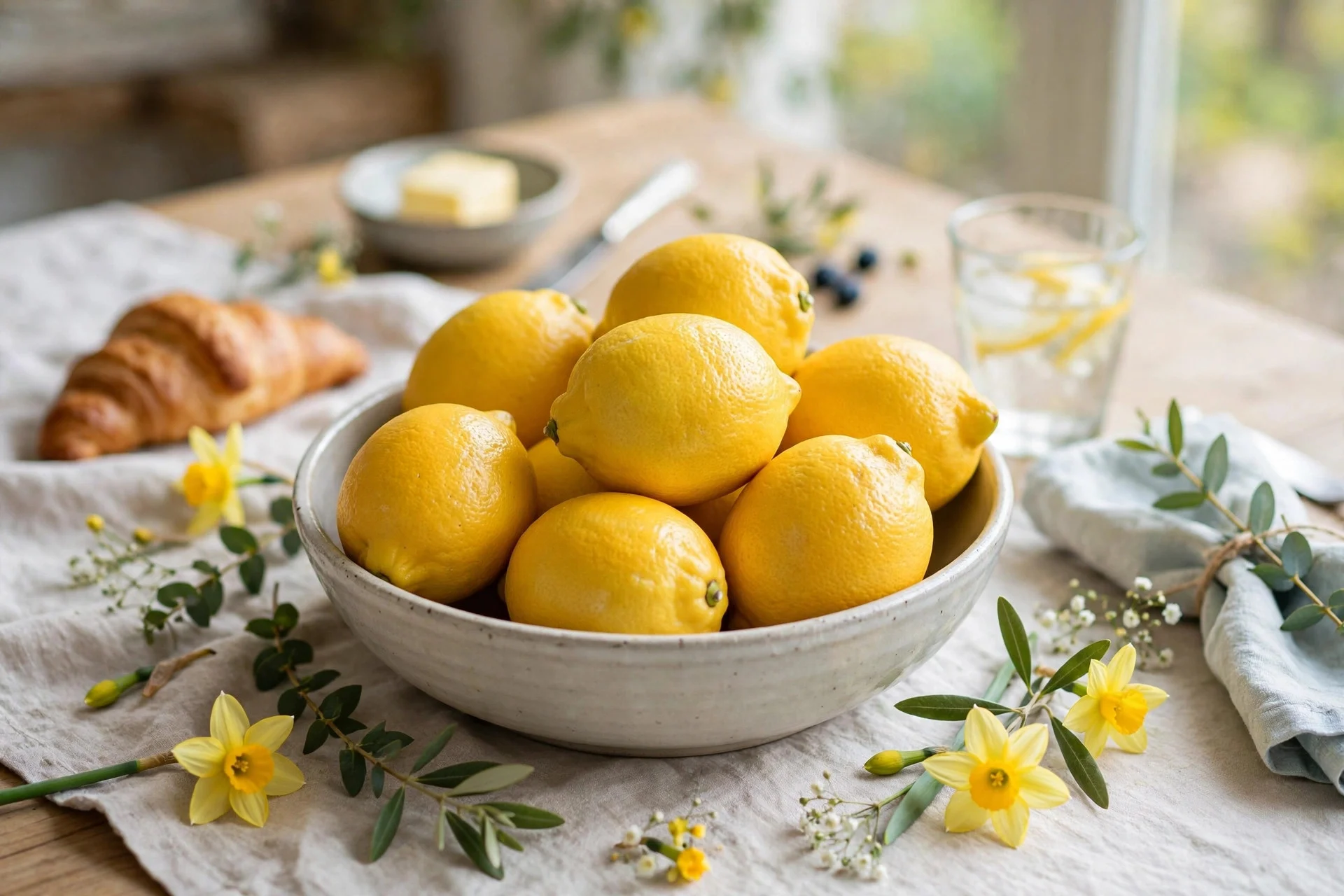
Lemons in a bowl are spring decor you can eat later, which makes them hard to beat. The bright yellow wakes up a white or wood table right away, and the scent is fresh without being strong. A bowl of lemons also fills an empty spot in the center without costing much or needing any arranging skill.
Pick a bowl you like — glass, ceramic, or wood all work — and wash and dry the lemons first. Then pile them loosely, with a few leaves tucked in if you have them. Place the bowl where it will not block the food, and keep a couple of lemons aside for drinks. I tried this and learned to use real lemons, not fake ones, because guests always pick them up and the weight gives it away.
Try this: Add two or three limes or a small orange for a little extra color.
6. Individual Bud Vases at Each Setting
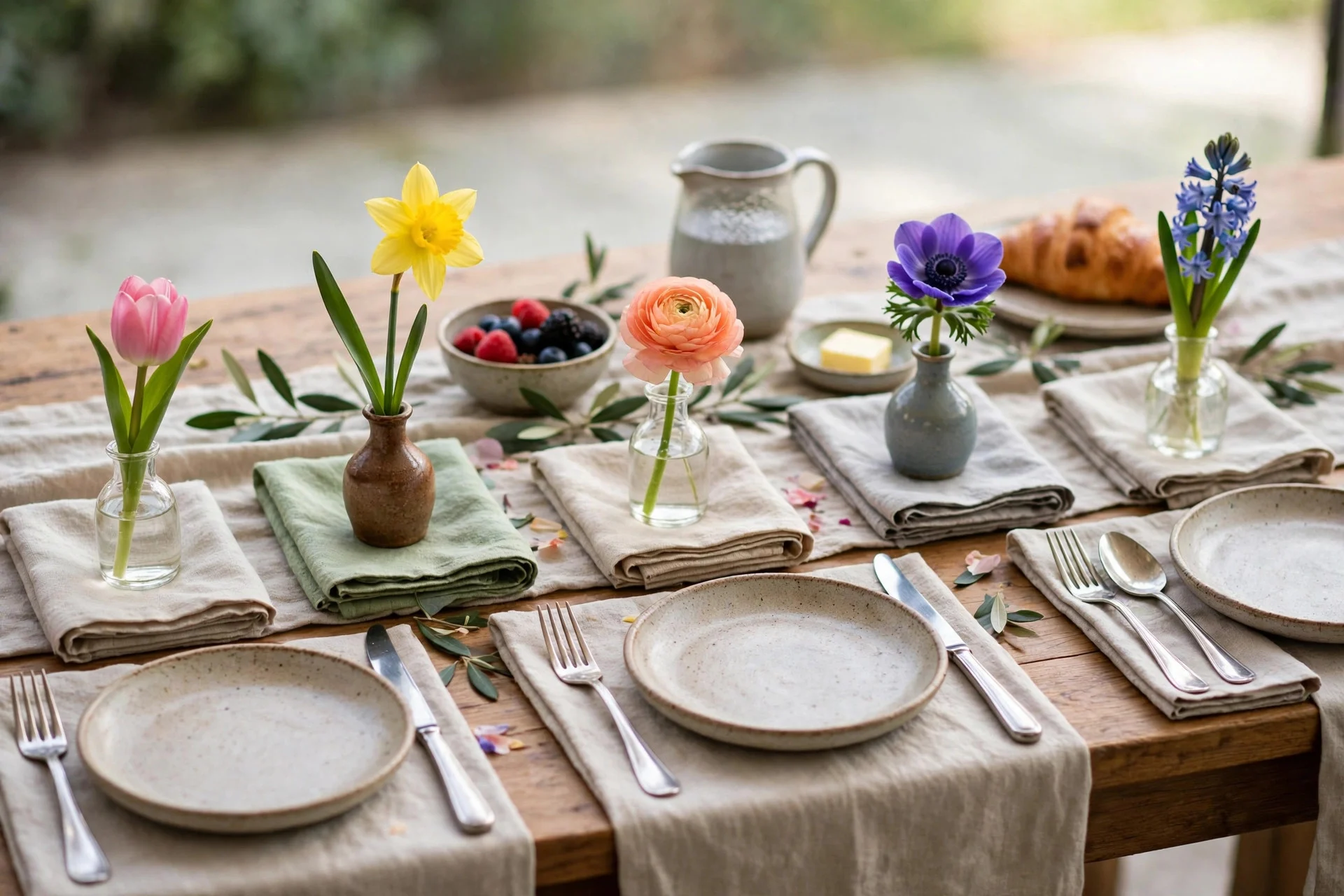
A tiny bud vase at each place setting makes every guest feel specially welcomed. One stem is enough — a tulip, a daffodil, or a sprig of blossom — and the small size means no one has to talk around a big bouquet. Guests can even take their flower home.
Gather small bottles, jars, or bud vases, one per guest, and fill them halfway with water. Then trim each stem at an angle and place one in each vase. Set a vase just above the plate or at the top right corner of each setting. I tried this and learned to keep the stems short — a tall stem in a tiny vase tips over the first time someone reaches for the salt.
Try this: Use the same flower in every vase for a tidy look, or mix colors for a garden feel.
7. A Tiered Stand for Brunch Treats
A tiered stand turns ordinary brunch food into a little display. Muffins, scones, fruit, and small pastries look better stacked on two or three levels than spread flat on plates, and the stand saves table space too. It also gives guests a clear place to help themselves without crowding the main dishes.
Start with the heaviest items on the bottom tier and the lightest on top. Then group similar foods together — pastries on one level, fruit on another — and leave a little space so nothing looks squashed. Place the stand near the center but off to one side so it does not block conversation. I tried this and learned not to overload the top tier; don’t make my mistake of stacking scones three high and watching them slide.
Try this: Line each tier with a small paper doily or a linen napkin for a finished look.

8. Handwritten Place Cards
Handwritten place cards add a personal touch that printed cards just cannot match. They tell guests you thought about where they would sit, and they double as a small keepsake. You do not need fancy handwriting — clear, simple letters on a small card look lovely, especially with a flower or a leaf tucked behind.
Cut card stock into small rectangles, or buy blank place cards, and write each name in your best everyday handwriting. Then fold or prop each card on the plate or lean it against a glass. If you have time, add a tiny drawing or a pressed leaf. I tried this and learned to write the names the day before — rushing them on brunch morning made my handwriting worse, not better.
Try this: Use a soft-colored pen, like sage green or dusty pink, instead of plain black.

9. Gold or Wood Flatware That Warms the Table
Gold or wood flatware warms up a spring table in a way plain steel sometimes does not. Gold feels a little festive, while wood feels relaxed and natural, and both pair well with white plates and pastel napkins. You do not need a full new set — even mixing in a few gold serving pieces can change the feel of the table.
First, decide which mood you want: gold for a dressier brunch, wood for a casual one. Then set the flatware in the usual order, and polish gold pieces quickly so they catch the light. If you use wood-handled pieces, keep them out of long soaks. I tried this and learned to test wood-handled cutlery with the actual food first — some handles are pretty but awkward with heavier dishes.
Try this: Pair gold flatware with cream napkins and wood flatware with linen napkins.

10. A Light, Bright Table for a Small Space
A small table can still feel like spring if you keep it light and bright. The trick is to leave breathing room: fewer decorations, lighter colors, and nothing tall in the middle. A small space actually suits brunch well, because everyone sits close and the table feels cozy rather than cramped.
Start with a light cloth or a bare wood surface, then add just one small centerpiece, like a single jar of flowers. Then use slim plates and fold napkins flat instead of standing them up. Keep serving dishes on a nearby counter so the table stays clear. I tried this and learned to count chairs, not decorations — when every seat is full, even one extra vase makes the table feel crowded.
Try this: Sit near a window if you can, since daylight does half the decorating for you.

11. Fresh Herbs as Place-Setting Garnish
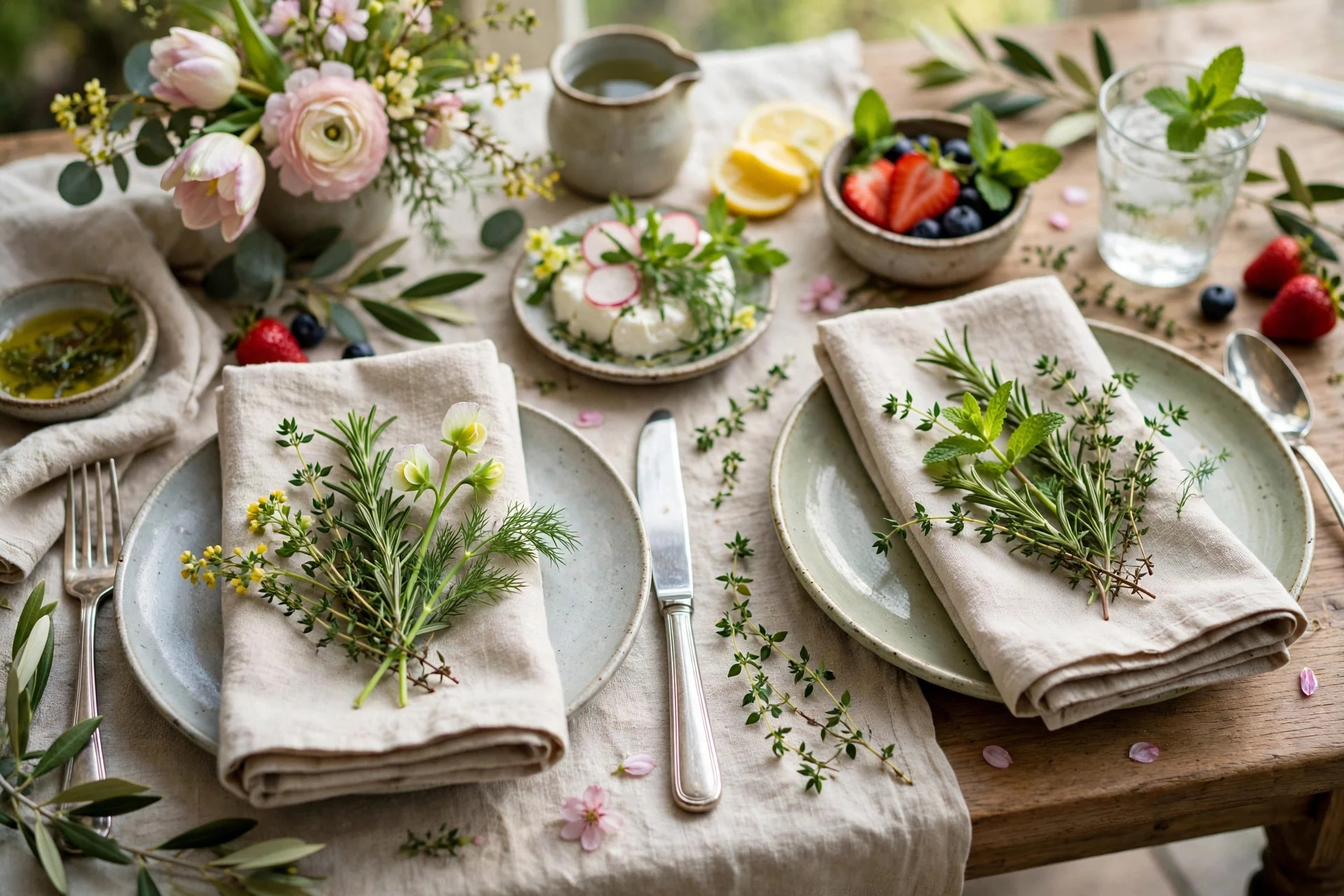
Fresh herbs are one of the cheapest and prettiest garnishes for a spring table. A sprig of rosemary, mint, or thyme on each napkin adds color and a lovely scent, and guests can drop it into their drink or onto their plate. Herbs also bridge the gap between decor and food, which fits brunch perfectly.
Pick herbs that smell good and hold up out of water for an hour or two, like rosemary or mint. Then rinse and pat them dry, and lay one small sprig across each folded napkin or tie it with twine. Keep a few extra sprigs in a glass of water in case one wilts. I tried this and learned that mint wilts faster than rosemary in a warm room, so I now save mint for last-minute placing.
Try this: Match the herb to the menu — mint with fruit, rosemary with savory dishes.
12. A Make-Ahead Centerpiece (Done the Night Before)
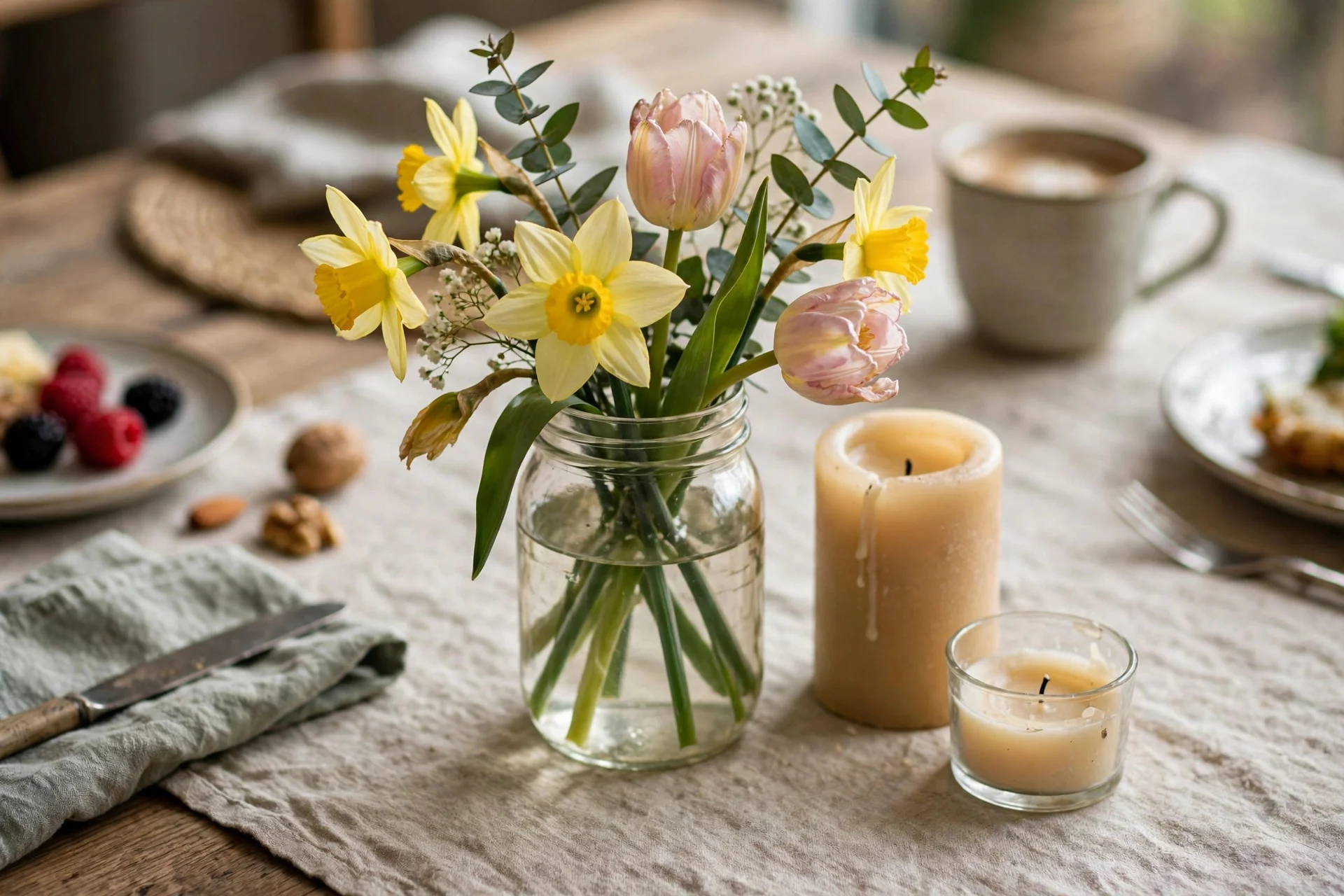
A make-ahead centerpiece is the secret to a calm brunch morning. If the centerpiece is finished the night before, you can focus on food and guests instead of arranging flowers while the coffee brews. Simple arrangements hold up well overnight, especially if they use hardy flowers and a little water.
The night before, fill a jar or a low bowl with water and arrange your flowers loosely. Then store it in a cool spot, out of direct sun, and cover it lightly if your house is dry. In the morning, just trim any drooping stems and set it in the center. I tried this and learned to take a quick photo of the arrangement at night — in the morning I could see at a glance if anything had shifted or needed fixing.
Try this: Choose tulips, daffodils, or greenery, which all hold up better overnight than delicate blooms.
13. A Spring Table for Kids at Brunch
Kids enjoy brunch more when the table feels made for them, not just borrowed from the adults. A spring table for kids can be colorful, sturdy, and a little playful — think unbreakable cups, paper placemats they can draw on, and a small treat at each seat. It keeps little hands busy and saves your nicer pieces.
Set a separate kids’ area if you have room, or just give kids their own end of the table. Then use plastic or melamine plates, add a coloring placemat, and place a small flower at each spot. Keep drinks in cups with lids if you can. I tried this and learned to skip glass vases at the kids’ table — don’t make my mistake of placing a tall glass vase where an elbow could reach it.
Try this: Let each child pick their napkin color; it makes them feel part of the setup.
14. Soft Candle Glow Even in Daylight
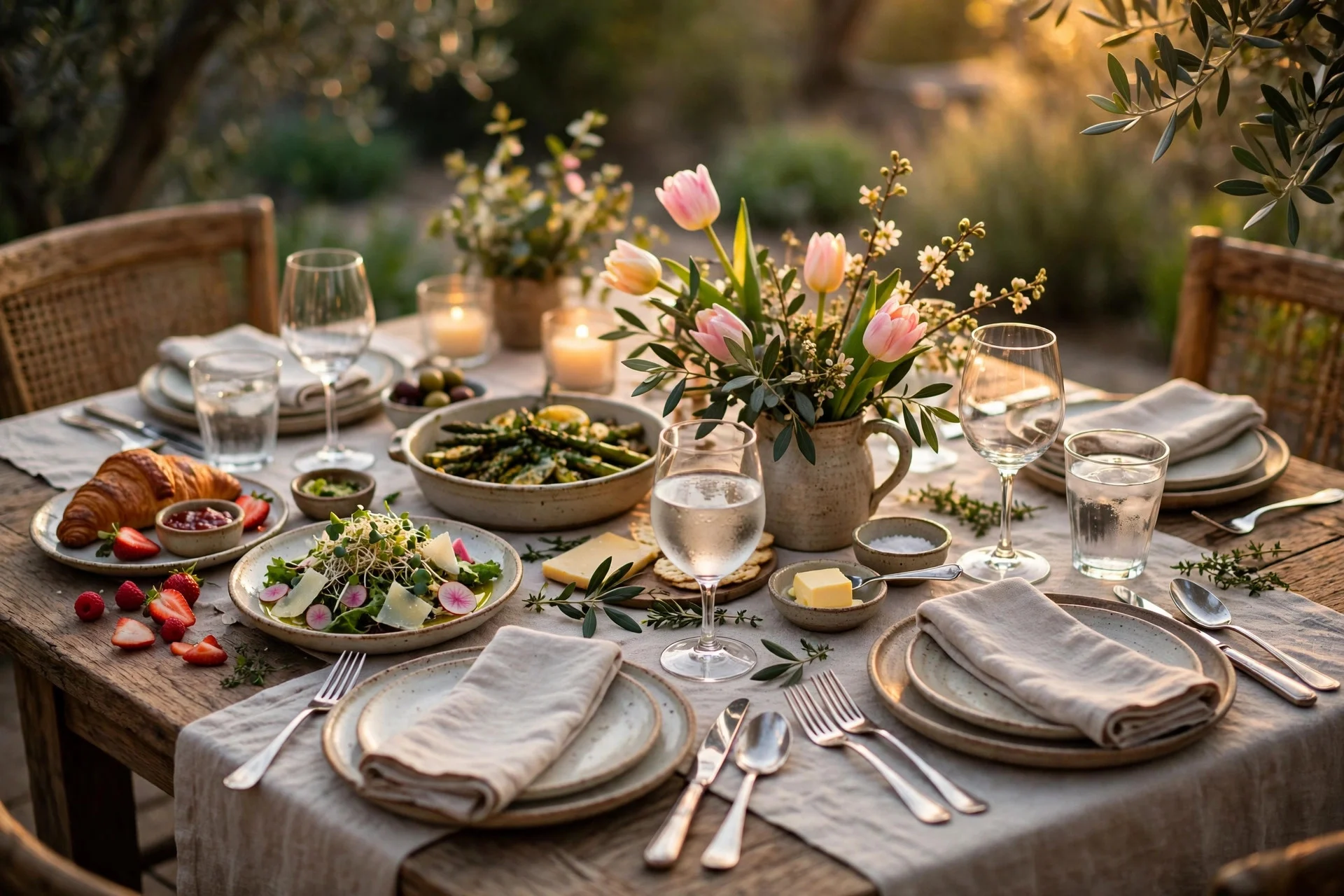
Candles are not just for dinner. In daylight, a few small candles add a soft glow that makes a spring table feel warm and a bit special, especially on a cloudy morning. The key is to keep them low and simple so they read as gentle light, not as a formal dinner setup.
Choose short pillar candles, tea lights in glass holders, or small votives, and group them in odd numbers. Then place them away from napkins and flowers, and light them just before guests sit down. If you have kids or pets around, use battery candles instead. I tried this and learned to light candles last, after all the food is out — lighting them first meant I kept moving them while I set dishes down.
Try this: Use unscented candles so they do not compete with the smell of the food.

15. A Brunch Table That Works for Dinner Too
If you love your spring table, why take it down after brunch? With a few small swaps, the same setup can carry you straight into dinner. Keep the base — the cloth, the plates, the flowers — and change the mood with lighting, glasses, and one or two extra touches. It saves time.
After brunch, clear the food but leave the cloth, flowers, and place settings in place. Then swap juice glasses for wine or water glasses, add candles, and lay out a fresh set of napkins if needed. Finish with a small evening touch, like a bowl of fruit or a new candle. I tried this and learned to keep a spare set of napkins ready — brunch napkins rarely look fresh enough for a second meal.
Try this: Add a simple salad plate on top of the brunch plate to signal the change to dinner.
Frequently Asked Questions
How do I decorate a spring brunch table on a budget?
Start with what you own: a white cloth, plain plates, and glasses you already have. Add one fresh touch, like grocery-store flowers or a bowl of lemons, and keep the rest simple. Small changes usually make a bigger difference than buying a whole new set.
What flowers last longest on a spring table?
Tulips, daffodils, and hardy greenery tend to hold up well for a day or two, especially in cool water out of direct sun. Trim the stems at an angle and change the water if you set the arrangement out the night before.
Can I use a spring table setup for dinner?
Yes. Keep the cloth, plates, and flowers, then swap glasses, add candles, and refresh the napkins. Those three changes are usually enough to shift the table from brunch to dinner.
How do I keep a small table from looking crowded?
Use one low centerpiece, fold napkins flat, and move serving dishes to a nearby counter. Leave a little empty space at each setting so guests have room for their plate and glass.
Final Thoughts
A spring brunch table does not need to be perfect to feel special. Pick a light base, add a few fresh touches, and leave room for people to sit close and talk. The best tables are the ones where guests feel welcome right away, not the ones with the most decorations. Try one or two of these ideas at your next brunch, see what works in your space, and keep the ones you love for next time. Spring will do the rest.