
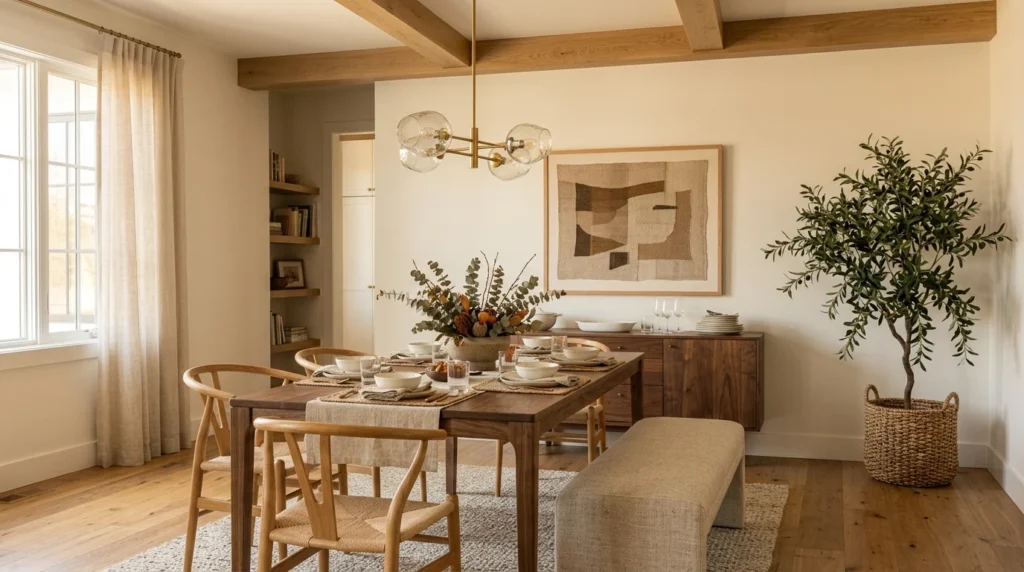
We hosted our first real dinner party in this house before the dining table had even arrived. Six people, folding card tables pushed together, mismatched chairs dragged in from the living room and the porch. Everyone said it was a fun, casual night, and it genuinely was, but I remember standing in the kitchen afterward thinking the room itself hadn’t done any of the work that evening. It was just a space where a good group of people happened to sit. Once the actual table arrived a few weeks later, and I started paying attention to how it was set, lit, and surrounded, I realized how much that one piece of furniture actually shapes the mood of every meal, not just the big dinner parties but the ordinary Tuesday nights too, and even the quiet weekday breakfasts that make up most of what actually happens at that table over the course of a year.
1. Let the Table Size Match the Room, Not Just the Guest Count
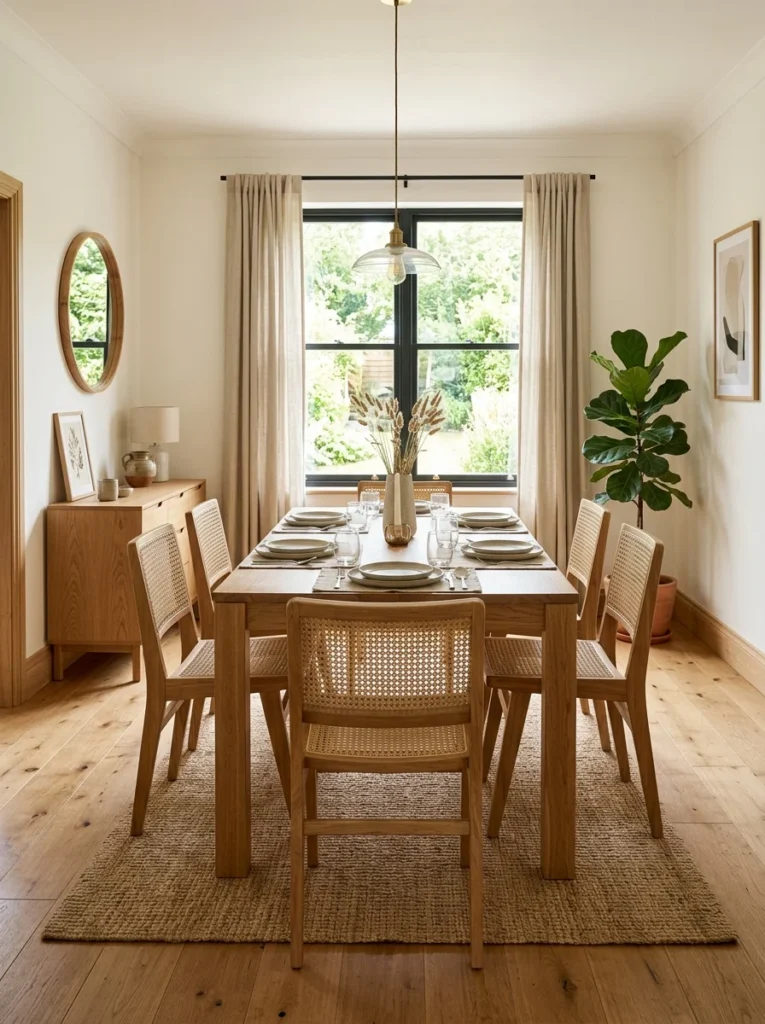
I almost bought a table sized for eight because that’s how many people I imagined hosting eventually. In my actual dining room, a table that large would have left barely two feet of clearance on any side. Sizing for the room itself, with realistic walking space around it, mattered more than sizing for an aspirational guest list I rarely reached anyway.
2. Choose a Wood Tone That Complements, Not Matches, Your Floors
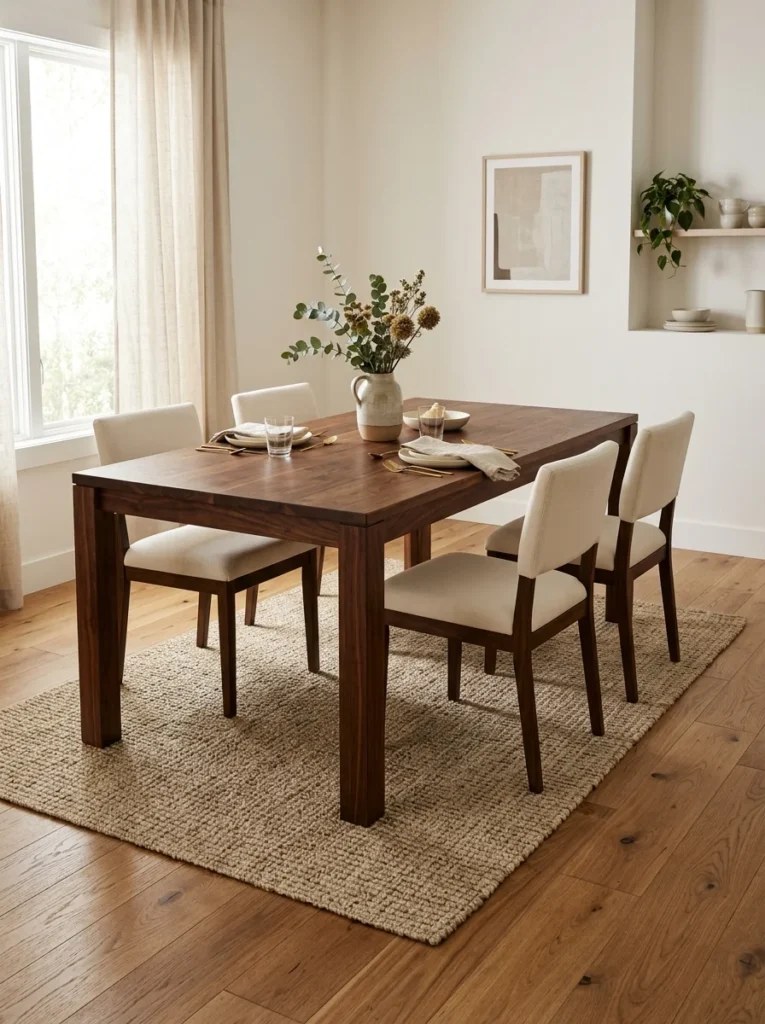
I assumed my table needed to closely match my hardwood floor tone to look intentional. In practice, a slightly different wood tone, warmer than the floor rather than identical to it, gave the room more depth and kept the table from visually disappearing into the floor beneath it.
3. A Round Table Changes the Whole Feel of Conversation
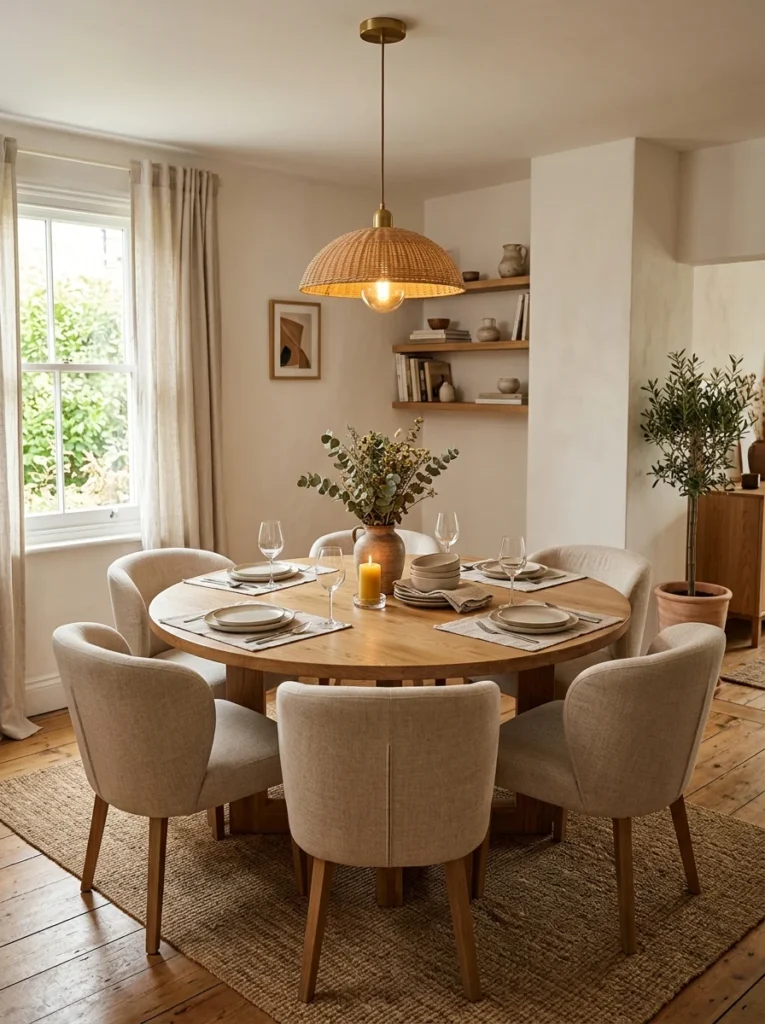
Our first table was rectangular, and conversation tended to split into two separate discussions happening at either end. Switching to a round table for a smaller space genuinely changed this — everyone could see and hear everyone else, and dinners started feeling more like one shared conversation instead of two parallel ones.
4. Mismatched Chairs Can Look Intentional With the Right Consistency
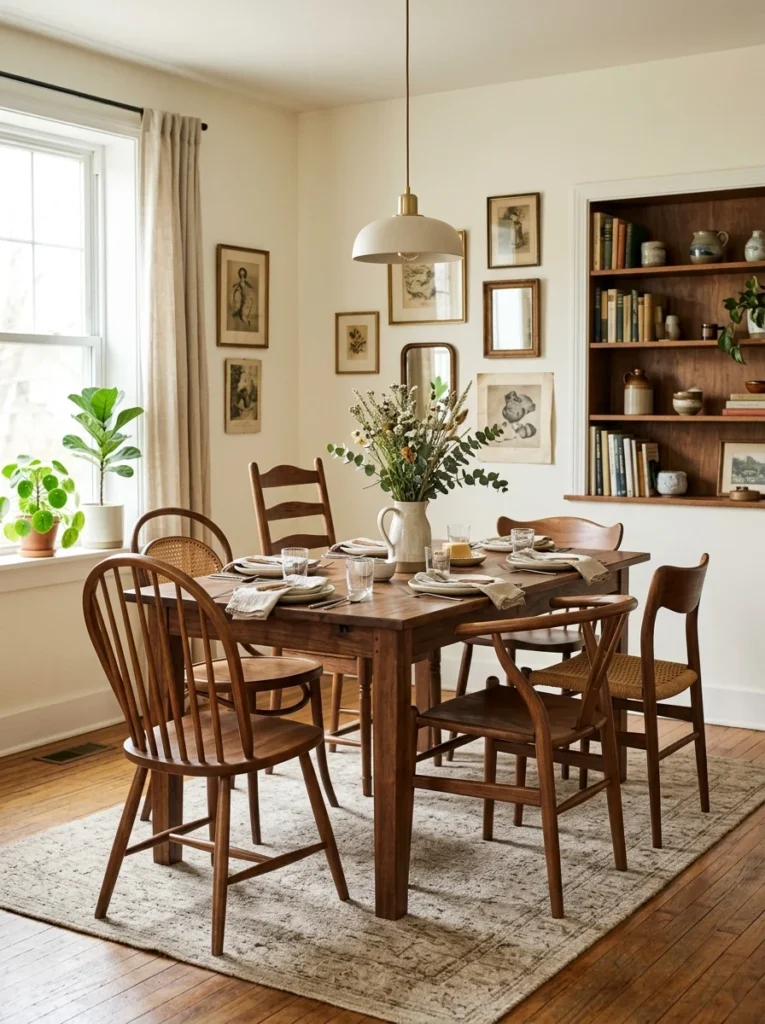
I was nervous about mixing chair styles at first, worried it would look like leftover furniture rather than a deliberate choice. Keeping all the mismatched chairs in the same wood tone, even with different shapes, made the variety read as curated rather than accidental.
5. A Bench on One Side Adds Flexibility
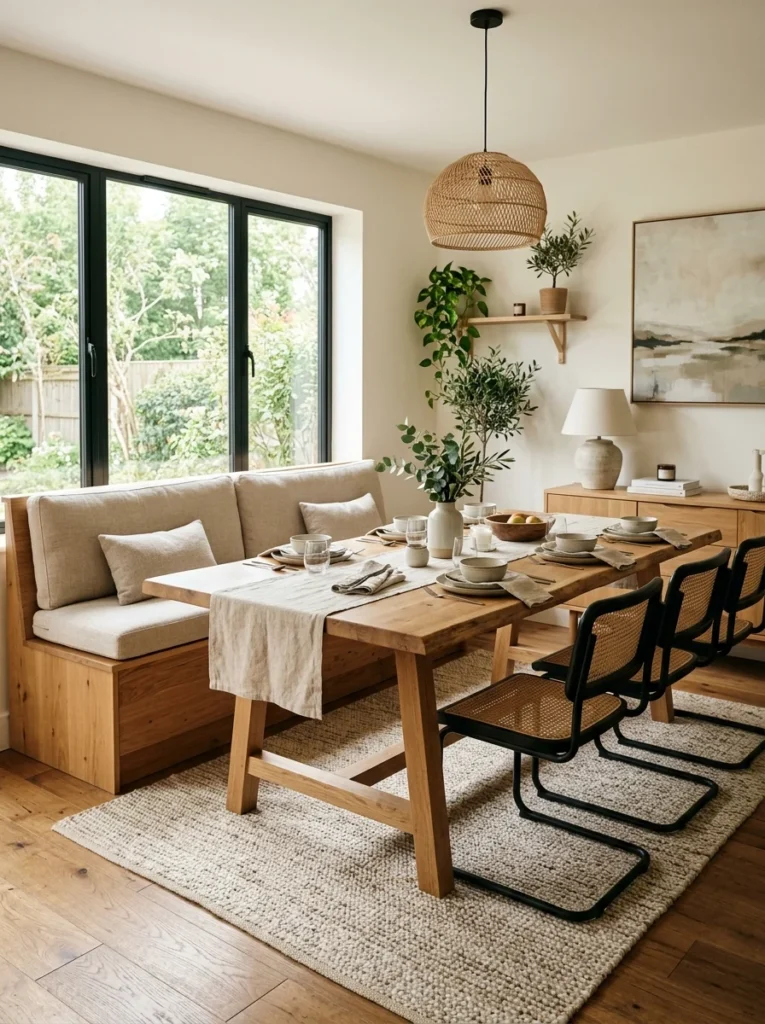
Adding a bench along one side of the table instead of individual chairs meant we could seat two more people in a pinch without needing extra chairs stored somewhere. It also gave the table a more relaxed, less formal feel on ordinary nights when it wasn’t fully set for guests.
6. Pendant Lighting Over the Table Anchors the Whole Room
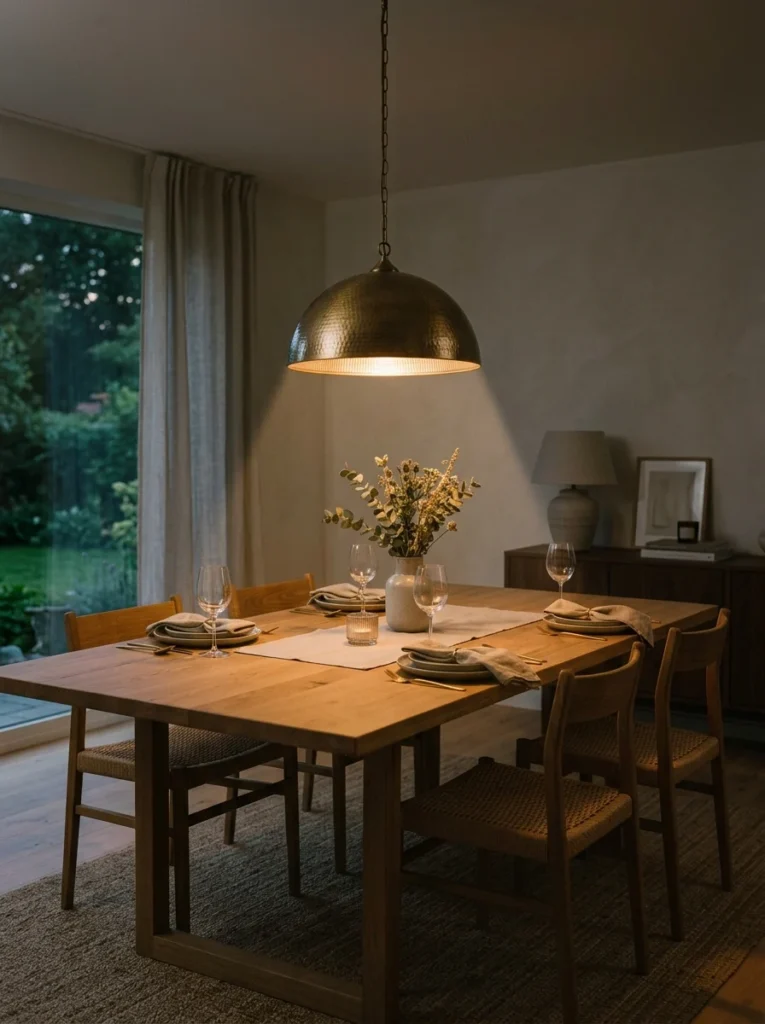
Before adding a pendant light directly above the table, the room’s lighting came entirely from a ceiling fixture positioned slightly off-center, which left the table itself in slightly uneven light. A properly centered pendant fixture made the table feel like the clear focal point of the room rather than one furniture piece among several under generic overhead light.
7. A Runner Instead of a Full Tablecloth Feels More Everyday
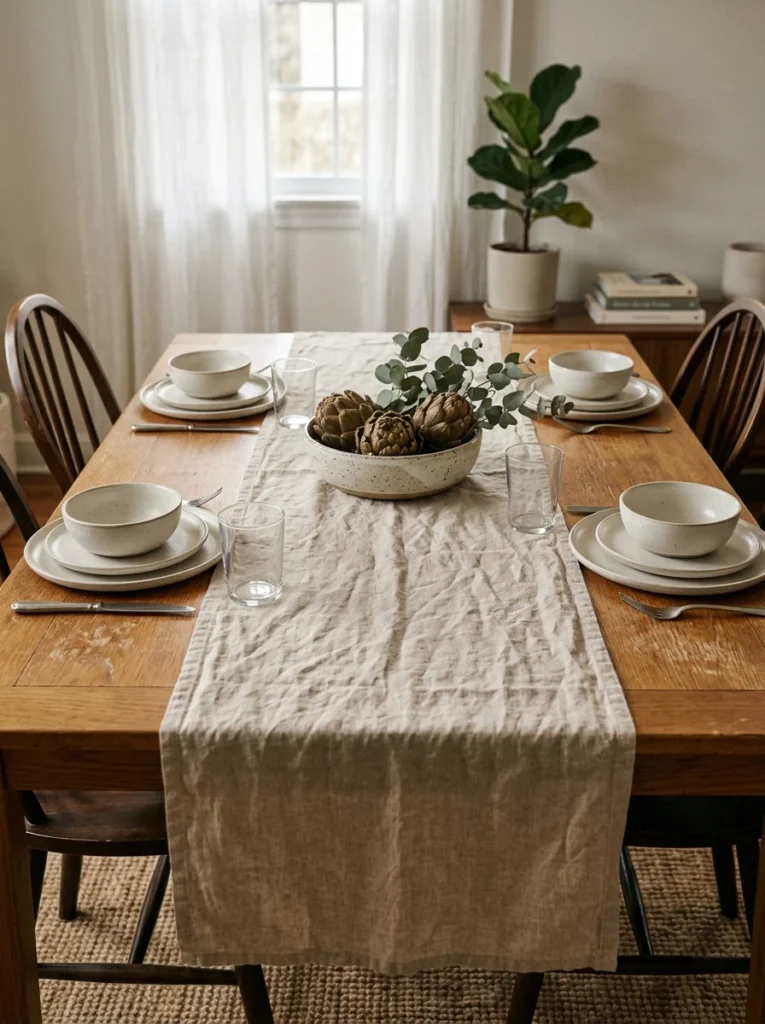
Full tablecloths felt like they were reserved for holidays, which meant the table sat bare most of the year. A simple linen runner down the center works for both everyday meals and slightly nicer occasions, and it’s become something I actually use weekly rather than saving for special events.
8. Keep a Simple Centerpiece That Doesn’t Block Sightlines
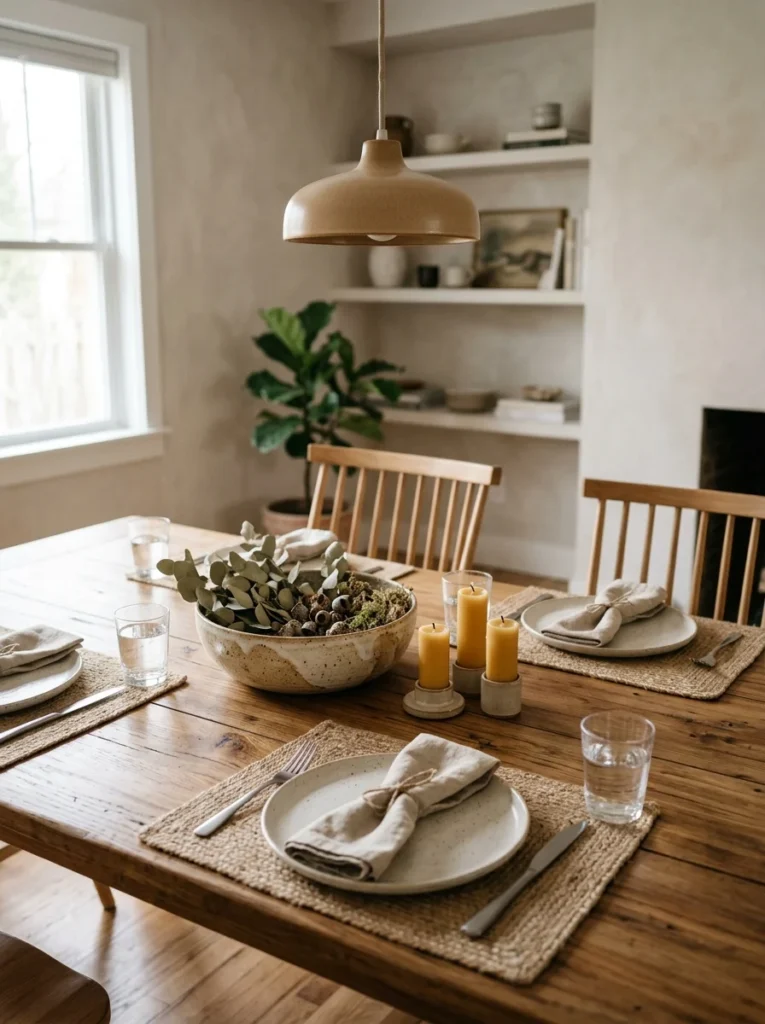
Our first centerpiece was a tall vase of flowers that, while pretty, blocked half the table from view when people sat across from each other. Switching to a low, wide bowl or a short cluster of candles kept the table looking styled without cutting off conversation across it.
9. Choose a Table Shape That Fits Your Room’s Traffic Pattern
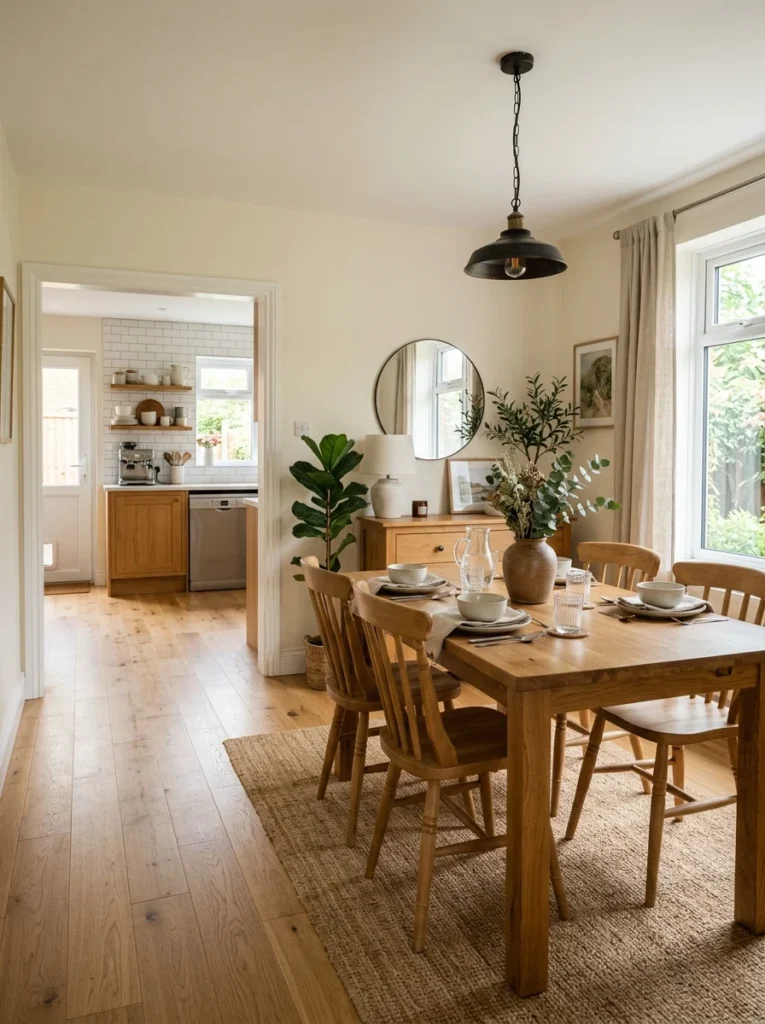
Our dining room has a doorway on one side that people pass through constantly on the way to the kitchen. A rectangular table oriented so its long side faced away from that doorway kept chairs from blocking the main walking path, something I hadn’t considered until I noticed guests constantly scooting their chairs in during meals.
10. Layer a Woven Placemat Under Each Setting
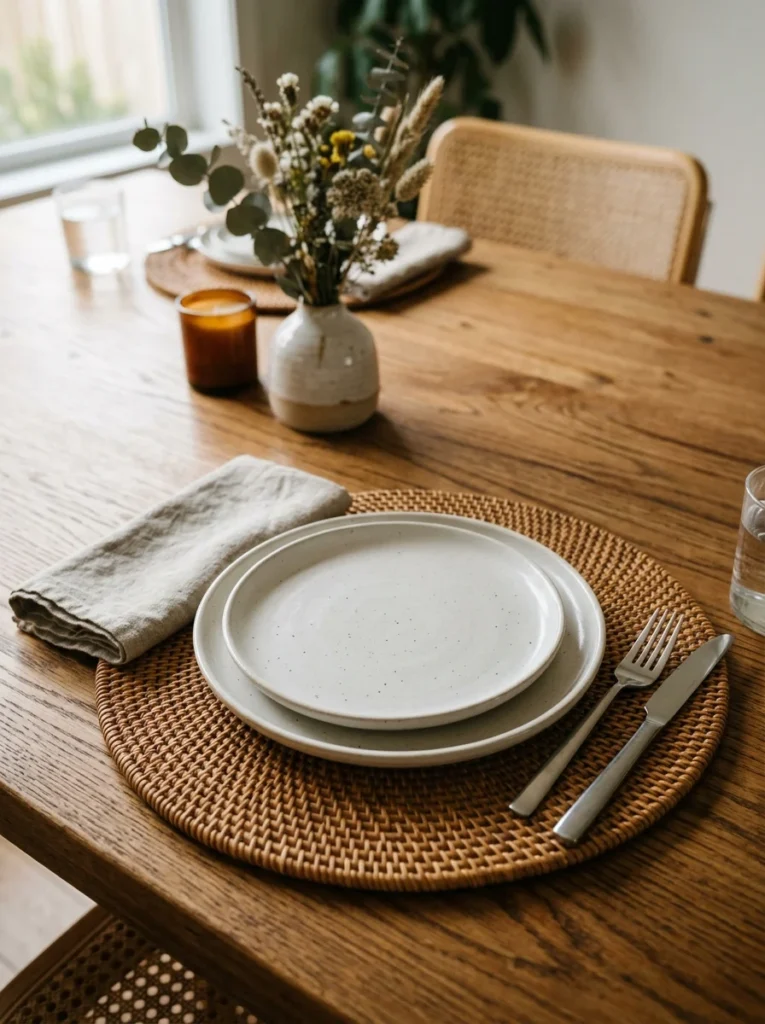
Simple woven placemats under each plate added texture to the table without adding visual clutter, especially useful on the days we’re not using the full runner setup. They’re also easier to wipe clean after meals than a full tablecloth, which matters more on a regular Tuesday than it does at a formal dinner.
11. Add a Sideboard or Buffet Nearby for Serving
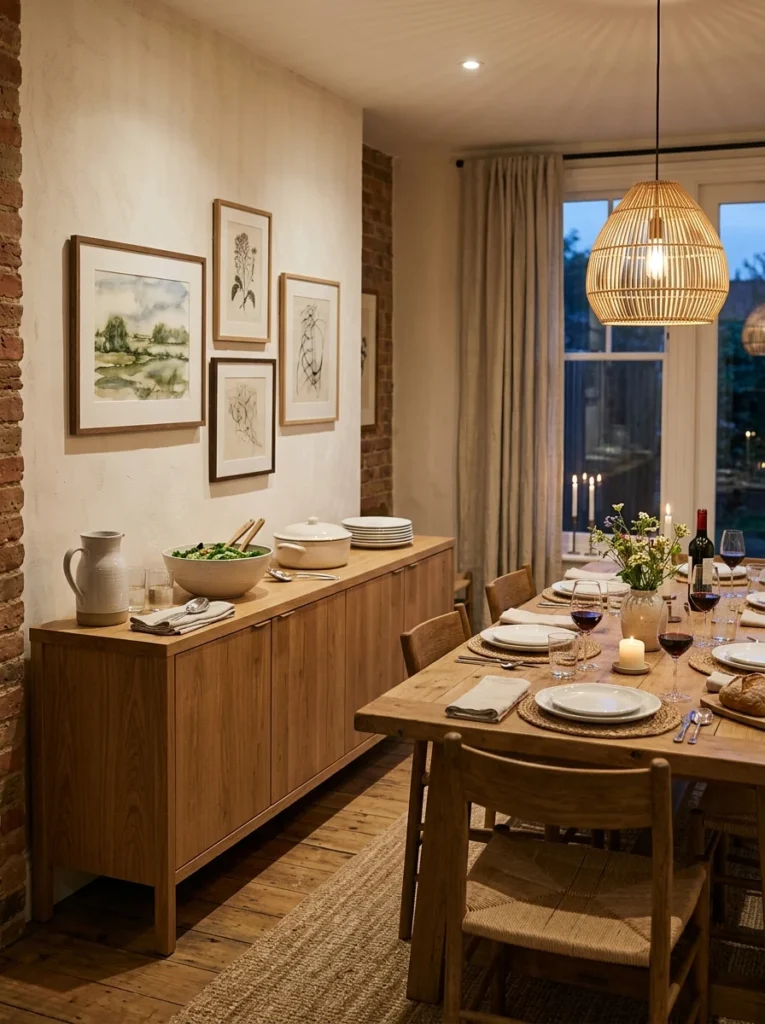
For the first year, we served every meal directly from the kitchen, which meant a lot of back-and-forth trips during dinner parties. Adding a simple sideboard against the dining room wall gave us a spot to stage serving dishes closer to the table, cutting down significantly on interruptions during meals with guests.
12. Rugs Under Dining Tables Need to Be Sized Correctly
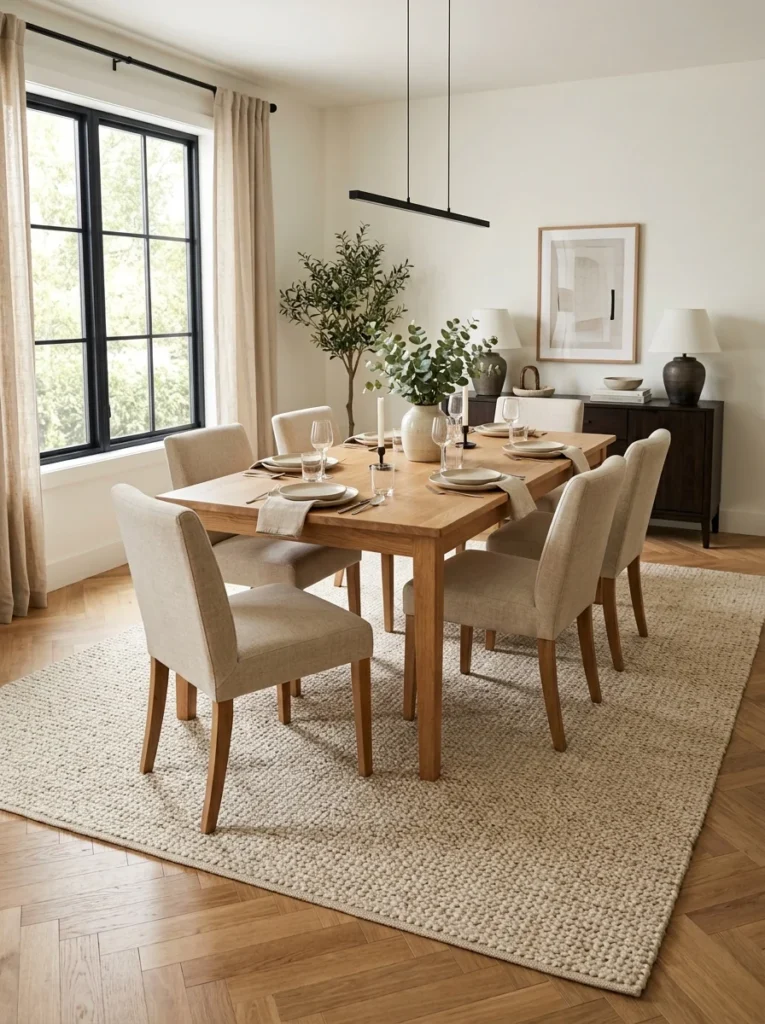
Our first area rug under the table was sized just for the table itself, which meant chair legs constantly caught the rug’s edge when pulled out. Sizing up so the rug extends at least two feet beyond the table on all sides let chairs slide freely without snagging, a detail that seemed minor until it was fixed.
13. Use Dimmable Overhead Lighting for Evening Meals
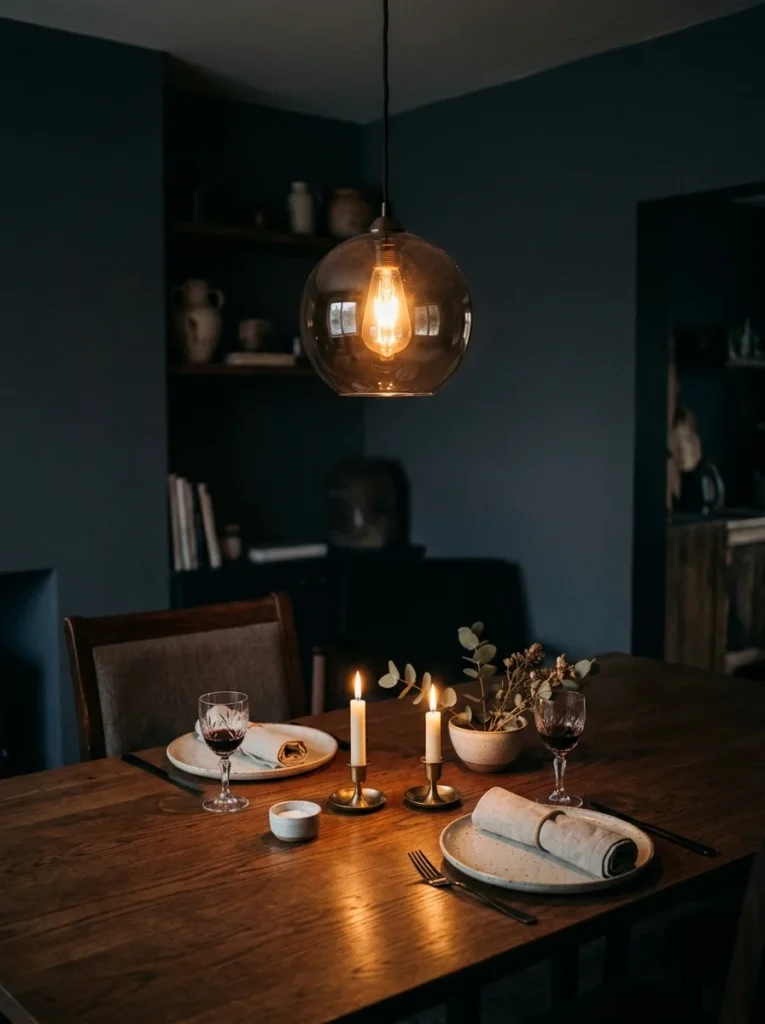
The pendant light over our table originally had no dimmer, which meant it was either fully bright or off entirely. Adding a dimmer switch let us shift from bright, functional lighting for everyday breakfast to a softer glow for dinner, and that flexibility changed how the same fixture could serve completely different moods throughout the day.
14. Let the Chairs Be Comfortable Enough for Long Meals
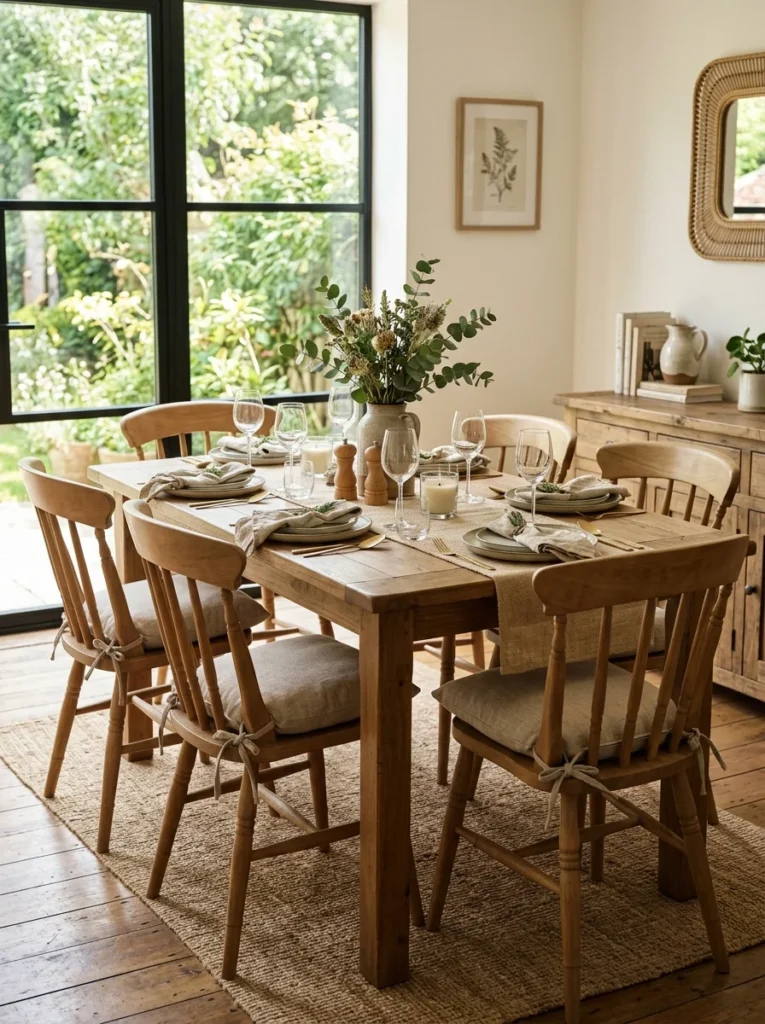
Our original dining chairs looked great but had almost no cushioning, which meant guests started shifting uncomfortably after about forty-five minutes at the table. Adding simple tie-on cushions to the seats extended how long people naturally stayed at the table without anyone needing to say anything about discomfort.
15. A Statement Chandelier Can Replace Several Smaller Decor Choices
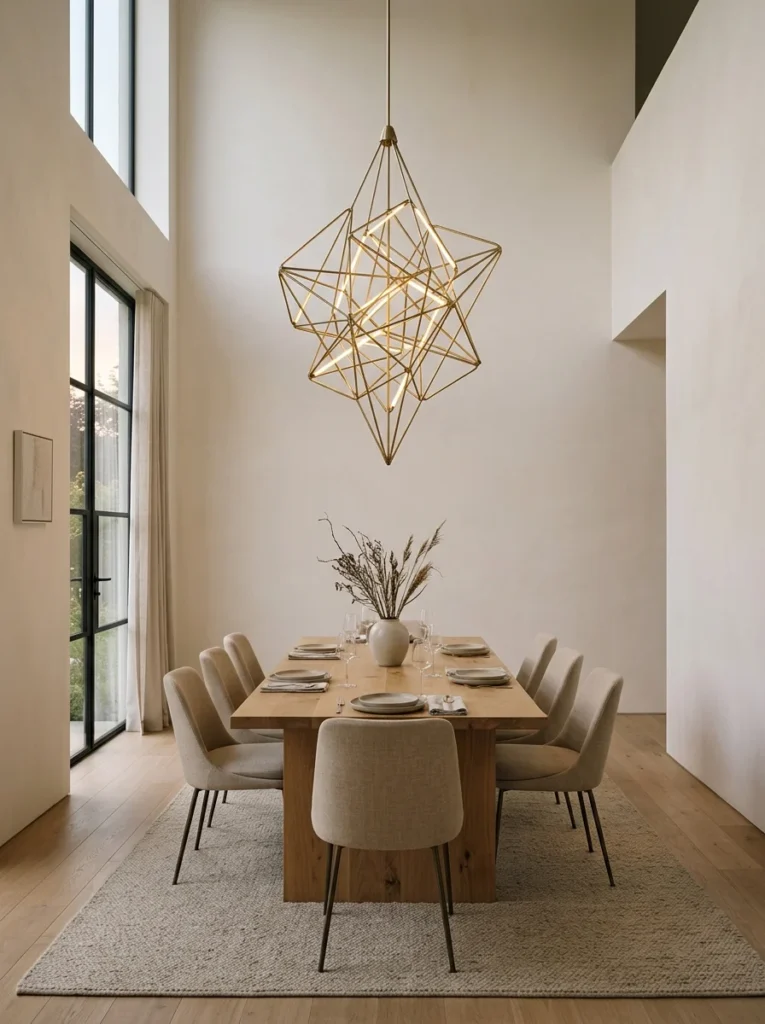
Once we installed a chandelier with real presence over the table, several smaller decor decisions we’d been debating, wall art, a mirror, extra shelving, suddenly felt unnecessary. The fixture itself became the room’s main visual statement, which actually simplified the rest of our decorating decisions rather than adding to them.
16. Keep Extra Leaves or an Extendable Table for Flexibility
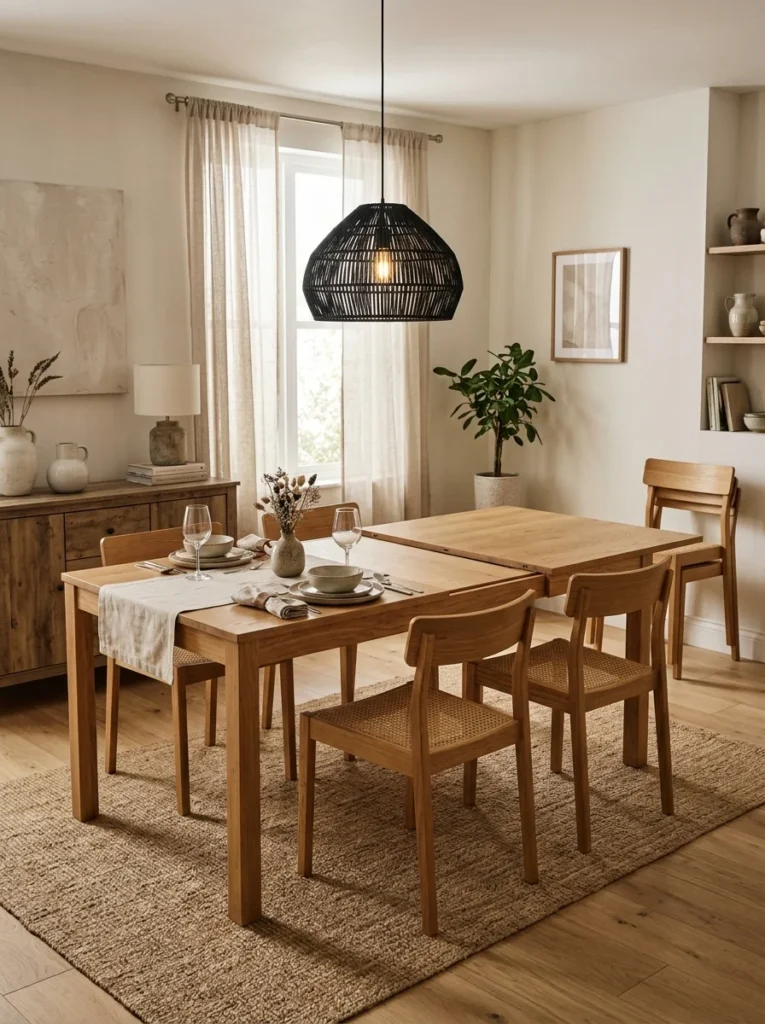
We chose an extendable table with a removable leaf, which meant everyday meals happened at a smaller, more intimate size, while larger gatherings could expand the table without needing an entirely separate piece of furniture stored elsewhere. It’s a small detail that’s paid off more times than I expected when hosting unexpectedly grew from four to seven people.
17. Add a Piece of Art at Eye Level From a Seated Position
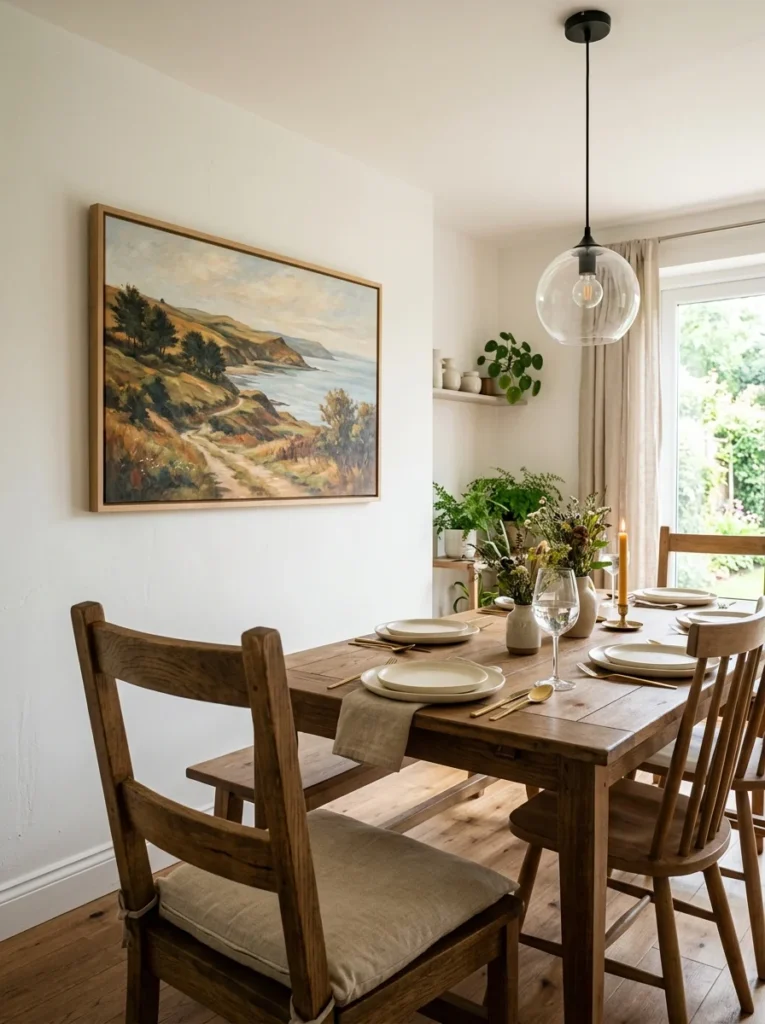
Wall art in our dining room was originally hung at standing eye level, which meant it looked slightly too high once we were actually seated at the table. Lowering it a few inches to match a seated sightline made the room feel more considered from the position we actually experience it most, which is sitting down.
18. Let Natural Materials Balance a More Formal Table
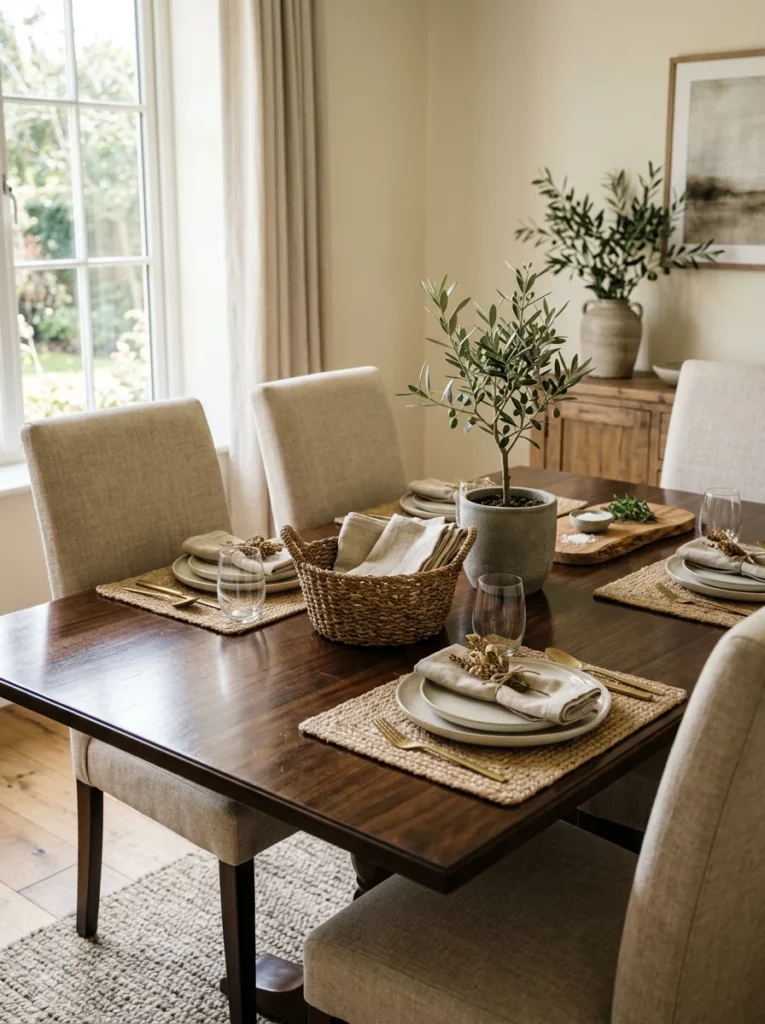
Our table itself is a fairly polished, formal wood finish, and it risked feeling stiff or overly serious on its own. Adding natural elements nearby, a woven basket for napkins, a wooden serving board, a simple potted plant, softened the formality without changing the table itself.
19. Keep the Table Mostly Clear Between Meals
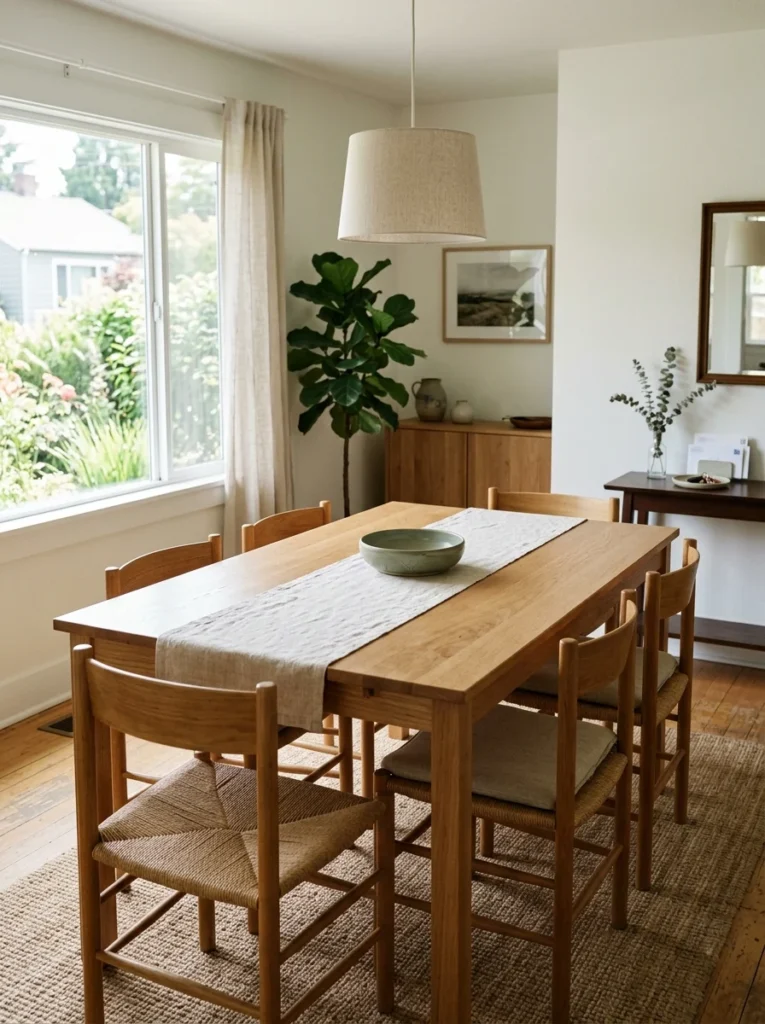
For a while, mail, keys, and random household items accumulated on the table between meals, turning it into a catch-all surface rather than a dining space. Designating a different spot near the entryway for that daily clutter meant the table stayed genuinely ready for meals instead of needing to be cleared off first every single time.
20. Let the Table Reflect How You Actually Use the Room
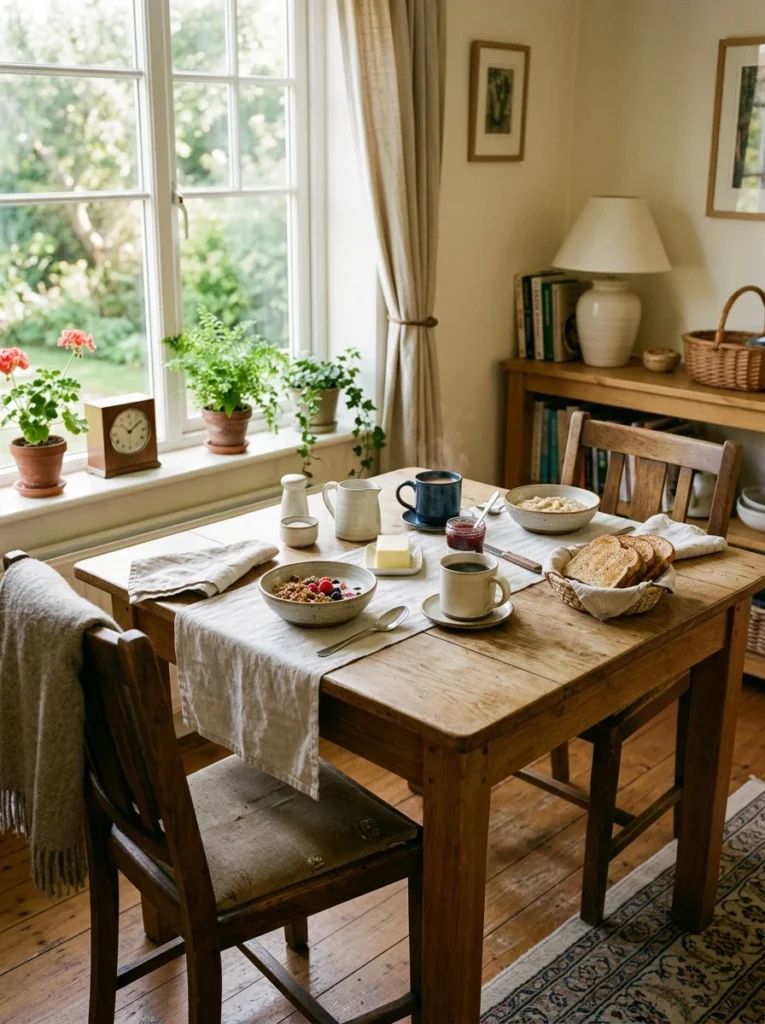
The biggest shift in how our dining room felt didn’t come from any single design choice, but from accepting that we use this table for quick weekday breakfasts far more often than for formal dinner parties. Designing around that daily reality, comfortable chairs, a simple everyday runner, flexible lighting, mattered more than designing around the occasional big event.
A Mistake That Took Almost a Year to Notice
For the first several months in this house, I hadn’t realized how much the table’s placement relative to the window was affecting how the room felt during the day. It sat slightly too far from the natural light, tucked closer to the interior wall, which meant meals during the day always felt a bit dim despite a perfectly good window on the opposite side of the room. Shifting the table just under two feet closer to the window, and rearranging the chairs accordingly, brought in noticeably more daylight during breakfast and lunch, something I only discovered by accident while rearranging for a cleaning project. It’s a reminder that even a well-chosen table can undersell itself if its position in the room isn’t given the same consideration as the piece itself.
How Much All of This Actually Cost
Between the table, the pendant light, the rug, and the various smaller additions like the runner and cushions, the full project came out to a bit under two thousand dollars spread out over close to a year, since we bought pieces gradually rather than furnishing the whole room at once. The table and chairs were by far the largest expense, but several of the changes that made the biggest day-to-day difference, the dimmer switch, the properly sized rug, the tie-on cushions, cost relatively little compared to their impact on how often we actually enjoyed sitting there. If I were prioritizing again with a limited budget, I’d get the lighting and seating comfort right before spending heavily on the table itself, since a great table surrounded by uncomfortable chairs and flat lighting still falls short of the mood a dining room can actually create.
What That First Dinner Party Taught Me, Looking Back
That night with the folding tables wasn’t a failure by any means, the company made the evening regardless of the furniture underneath it. But once the real table arrived and I started paying attention to how it changed the room, I understood something I hadn’t before: a good dining table isn’t just a surface to eat on, it’s the piece of furniture that quietly sets expectations for how a meal is going to feel the moment people walk into the room and see it. Six months in, it’s rare for anyone to comment specifically on the table itself, which I’ve come to think is actually the sign it’s doing its job — the room simply feels right, and nobody has to think about why.